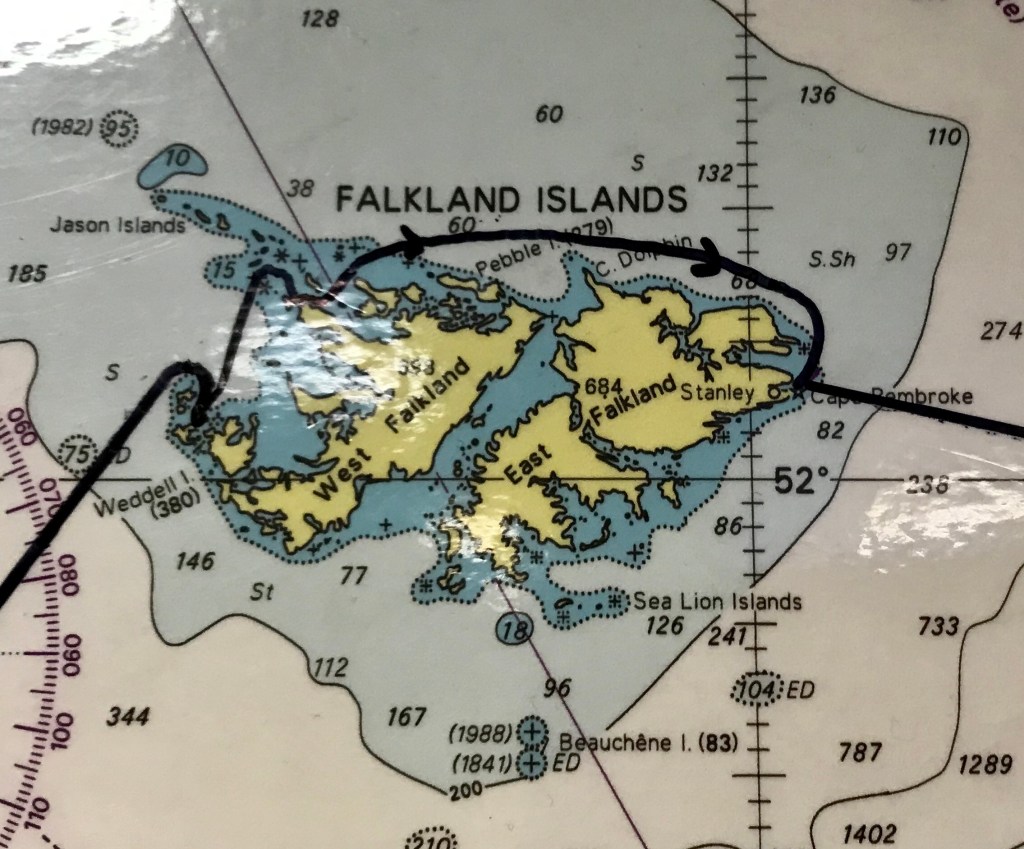
Our second day in the Falkland Islands and this time on the East island. A map might help.
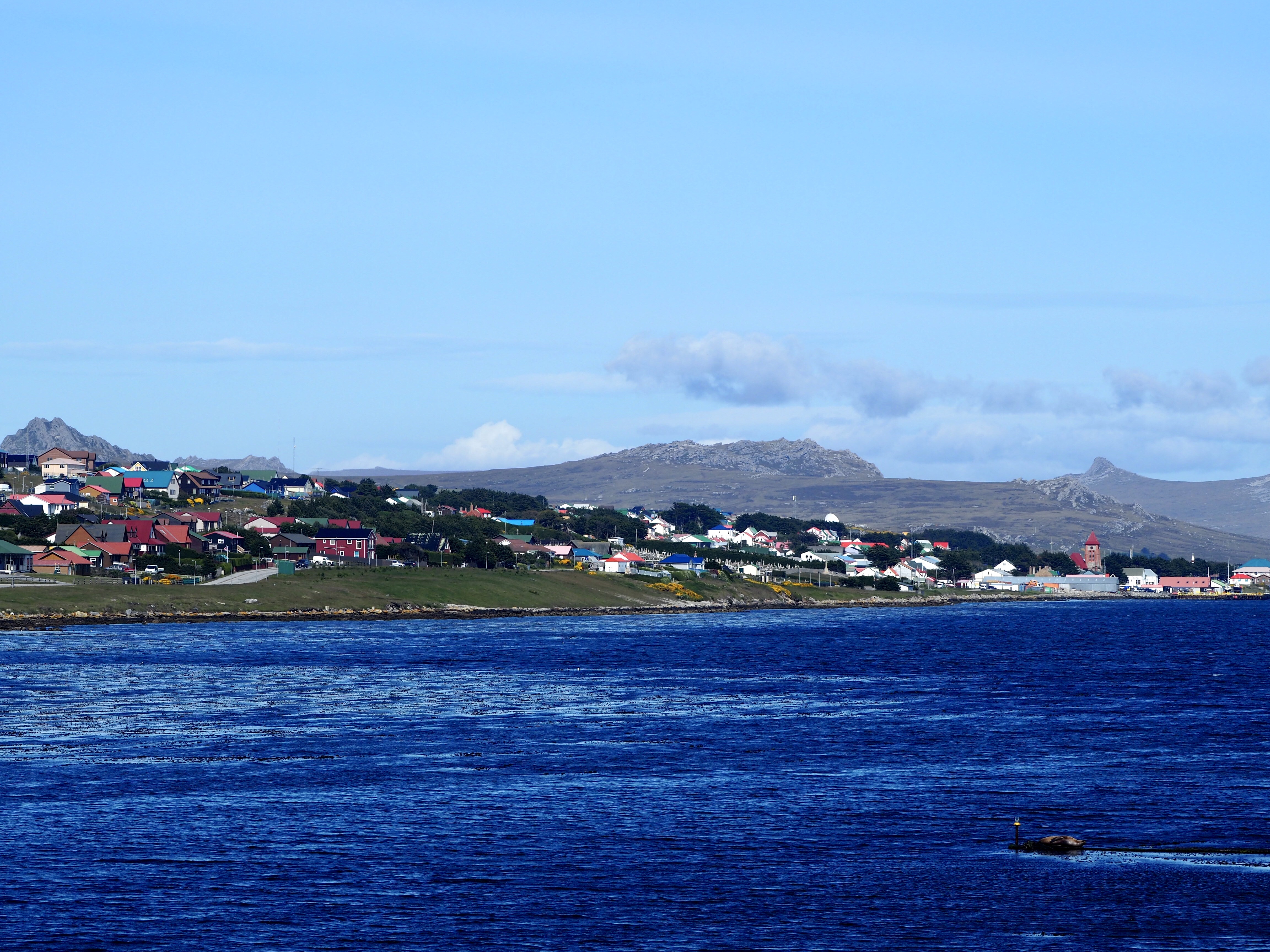
So we are to spend most of our Christmas Eve in the capital, Stanley. A real treat in that we had been granted permission to dock, so no zodiacs needed. There were two other cruise ships visiting that day, but they had to use their tenders. This also meant we could simply walk into town – about forty minutes, or take the provided shuttle buses.
So a bit about Stanley. It has a population of approximately 2500 residents (total of the Falklands about 3000). Highlights include a superb museum, the war memorial, Government House with its botanic gardens and the cathedral with its whalebone arch. It has its own currency – The Falkland Islands pound however they also accept British pounds, US dollars and credit cards.
This was our view as we arrived.
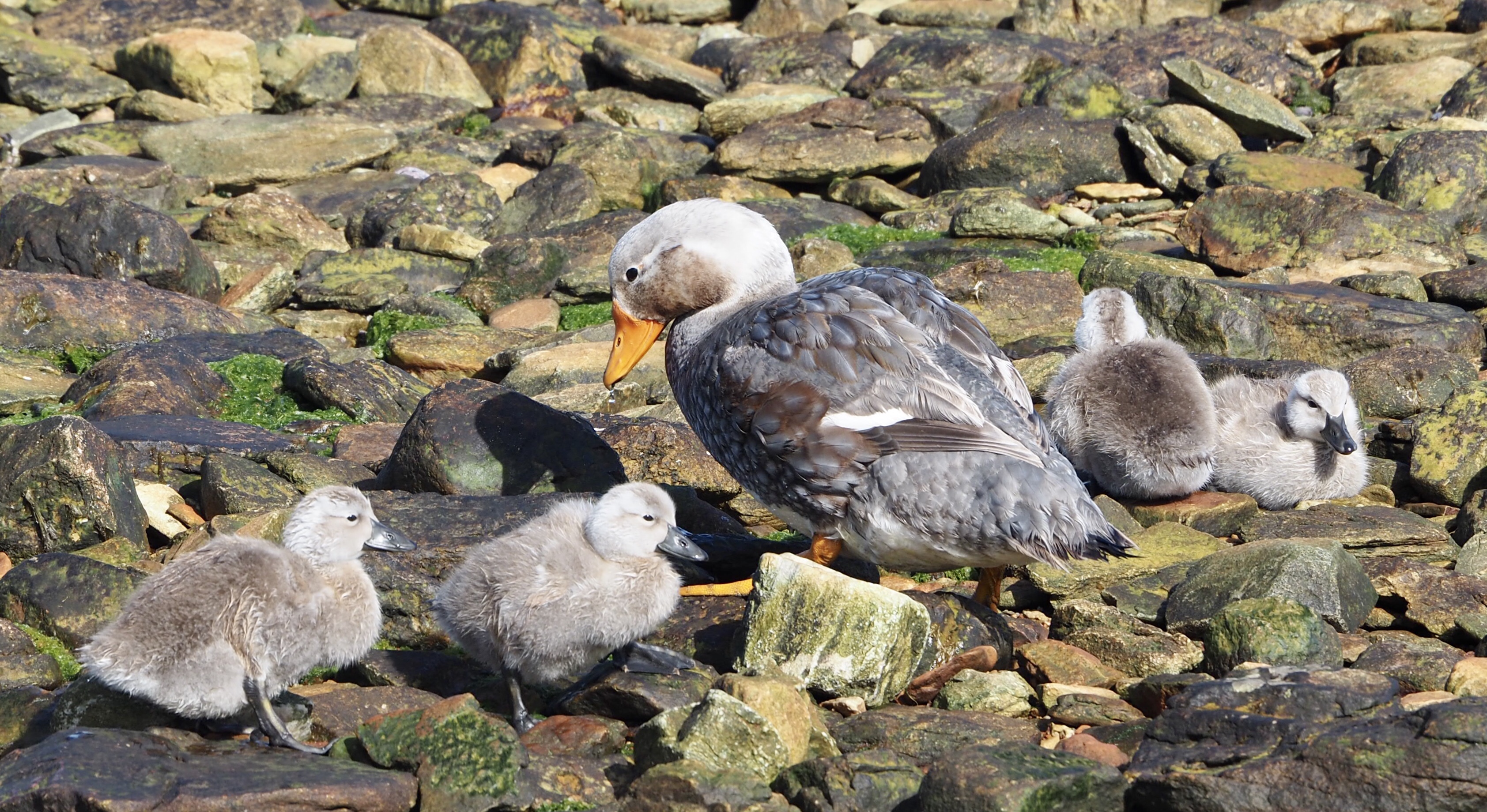
On our walk in we spotted a family of steamer ducks.
Signs tell you what is what around the place.
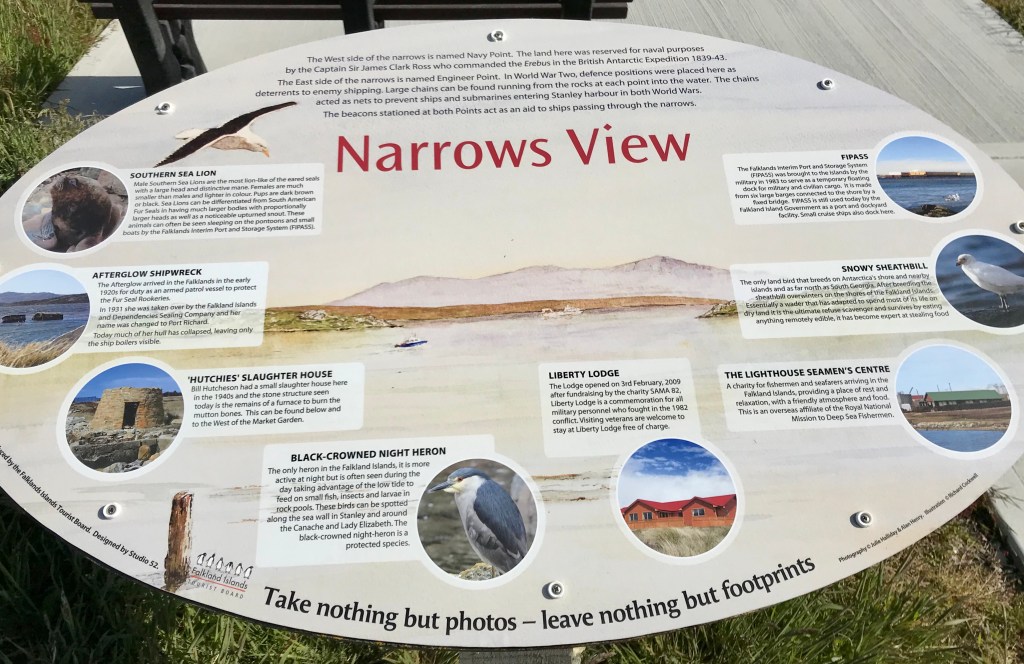
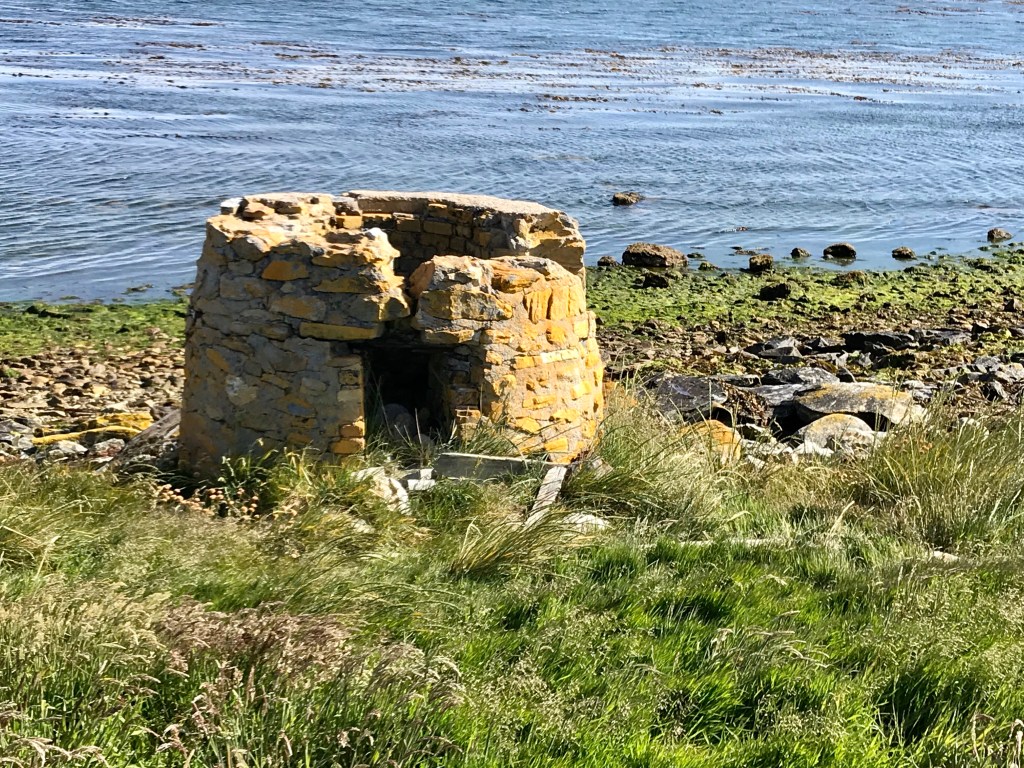
This is what remains of Hutchies Slaughter House mentioned on the sign.
We were fascinated by the huge names on the hills opposite.
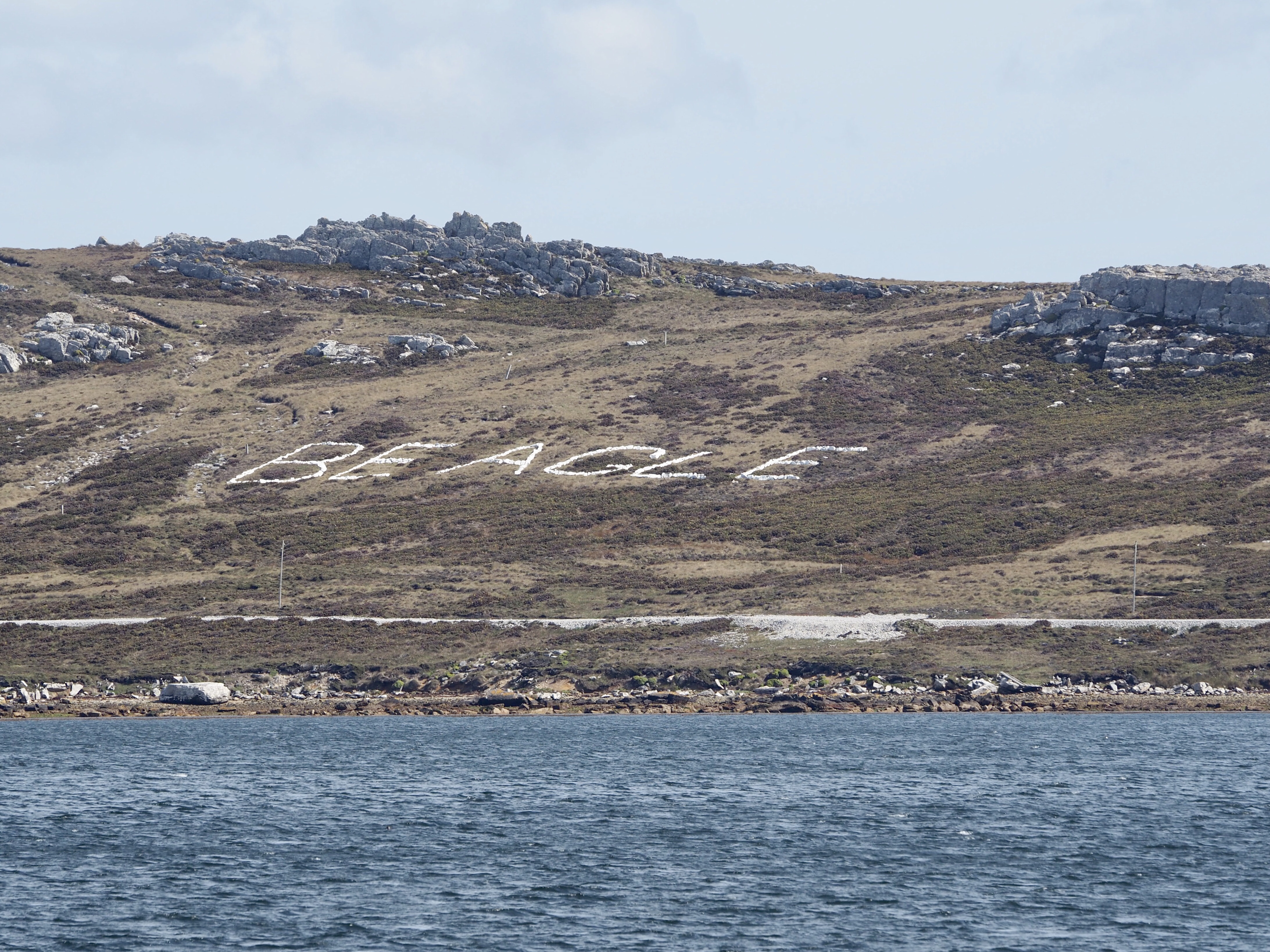
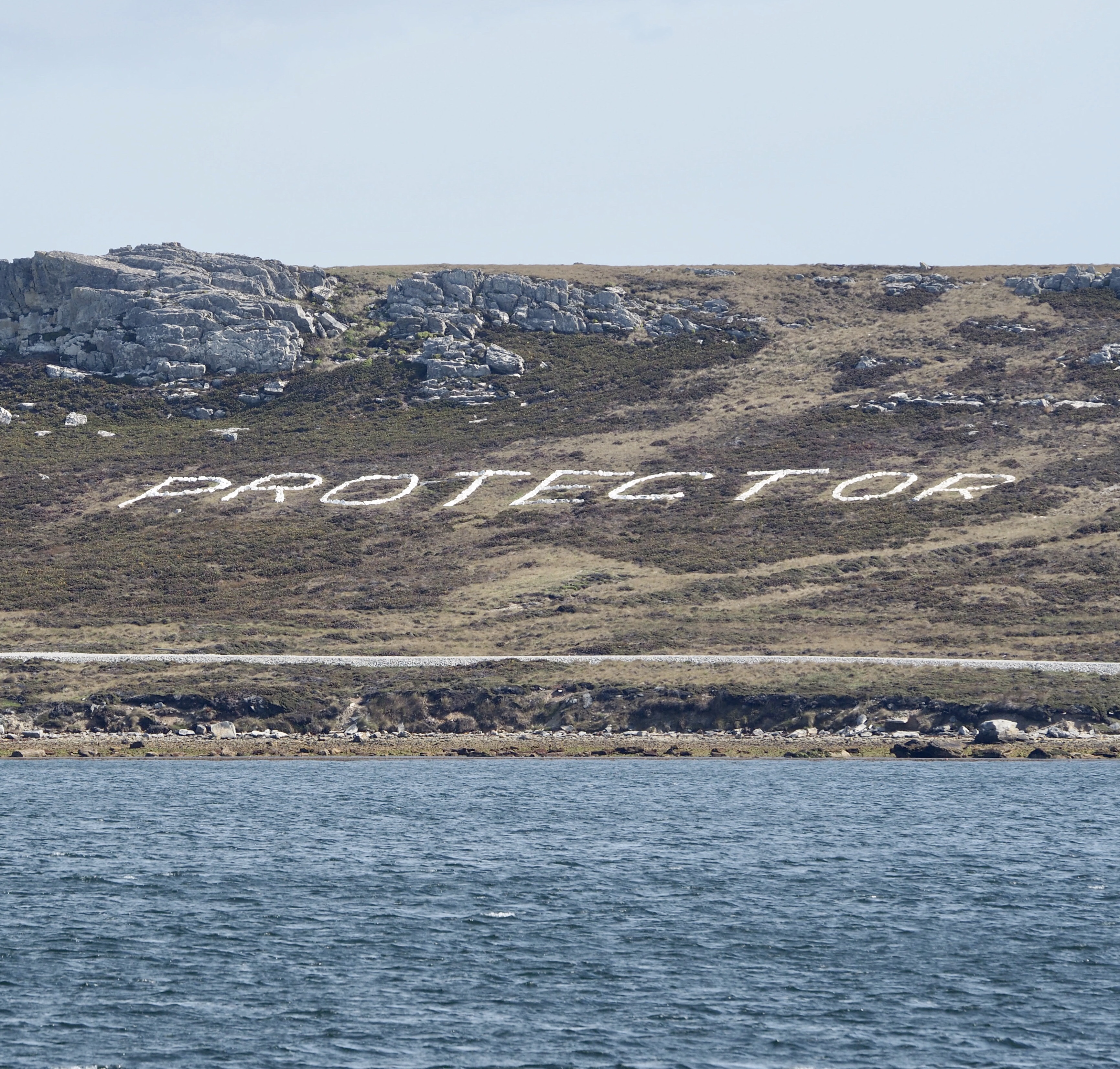
It took me some research to discover their meaning. (Had meant to ask our historian on board but totally forgot!) I found one site that discusses it and this is what it says:
Displayed prominently on the slopes of the Camber directly across from Stanley, these names honor the vessels of the Royal Navy which have served in either the Antartic Ice Patrol or have been directly assigned to protect the Falkland Islands. The letters average 10m/32ft high by 5m/16ft wide and are made out of white-painted stones, the names are laid out by the crew members of each ship once permission is granted by Falkland Islanders.
These names commemorate the following ships:
HMS Barracouta – A Cruizer Class Brig-Sloop which patrolled the Falklands in the 1810’s to police and protect fishing interests around the islands. en.wikipedia.org/wiki/Cruizer-class_brig-sloop
HMS Beagle – A Cherokee Class Brig Sloop which stopped in the Falklands during her Second round-the-world voyage, which was accomplished with naturalist Charles Darwin aboard ship. en.wikipedia.org/wiki/HMS_Beagle
HMS Protector (A146) – The only ship of her class, converted to an Antarctic patrol vessel in the early 1950’s and deploying to the Falklands for the first time in the winter of 1955/56. The ship would make a further twelve deployments to the Falkland Islands and the British Antarctic Survey bases during her career. en.wikipedia.org/wiki/HMS_Protector_(A146)
HMS Endurance – This name honors the service of both Antarctic Ice Patrol/Icebreakers which have borne pennant number A171 for the Royal Navy from the period of 1967-1991 and again from 1991-2008. en.wikipedia.org/wiki/HMS_Endurance
HMS Dumbarton Castle (P265) – A Castle Class Patrol Vessel which served as South Atlantic Guard Ship based at Mare Harbor and assigned to patrols around the Falkland Islands and South Georgia Islands from the 1990’s through 2008. en.wikipedia.org/wiki/HMS_Dumbarton_Castle_(P265)
HMS Clyde (P257) – The current South Atlantic Guard Ship assigned to the Falkland Island, the Clyde is a River Class Patrol Vessel which is slated to be stationed in the Falkland Islands through 2018.
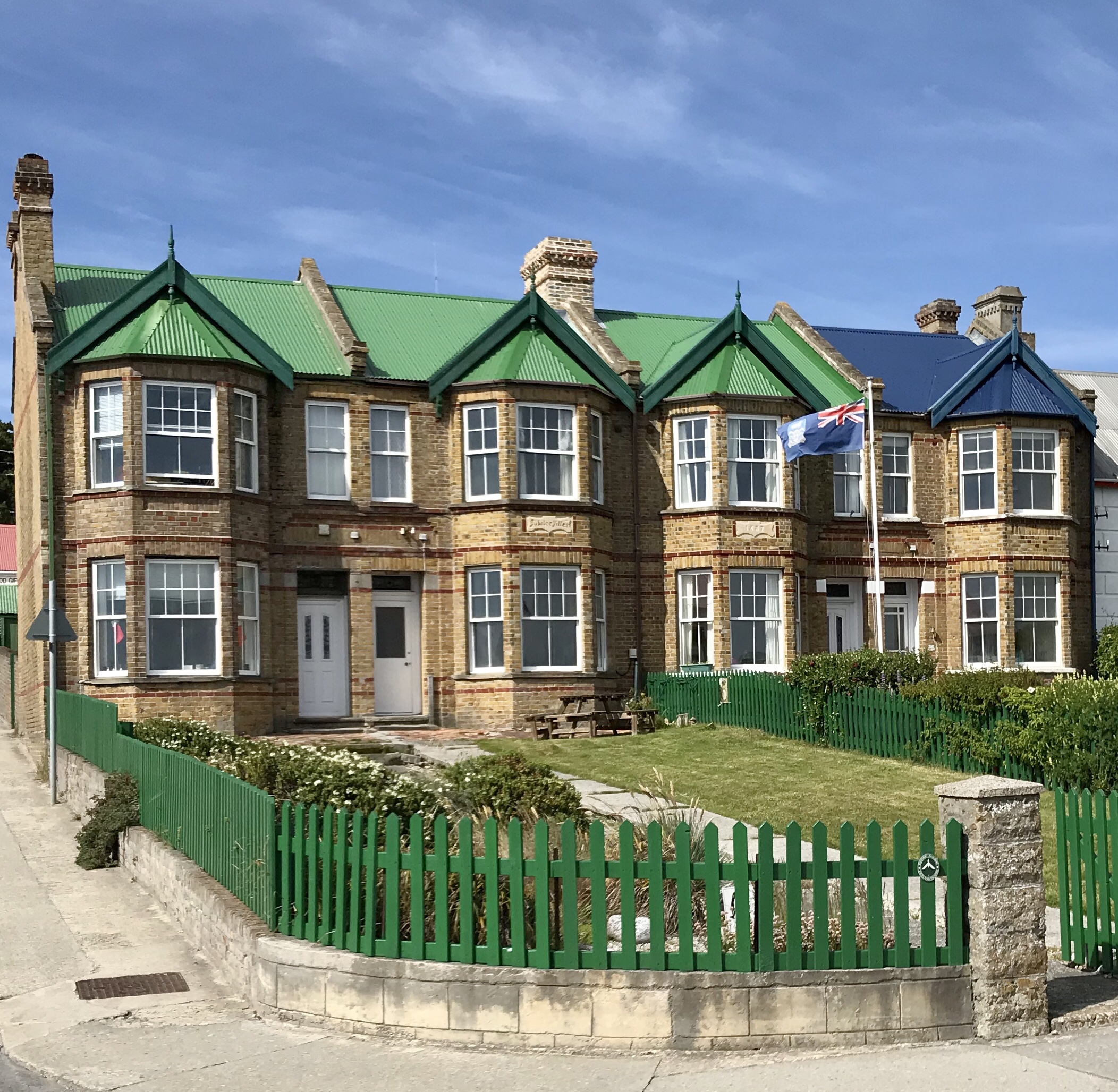
So there you have it. This row of houses had been mentioned as something to look out for. They are the jubilee villas and some of the oldest buildings in town.
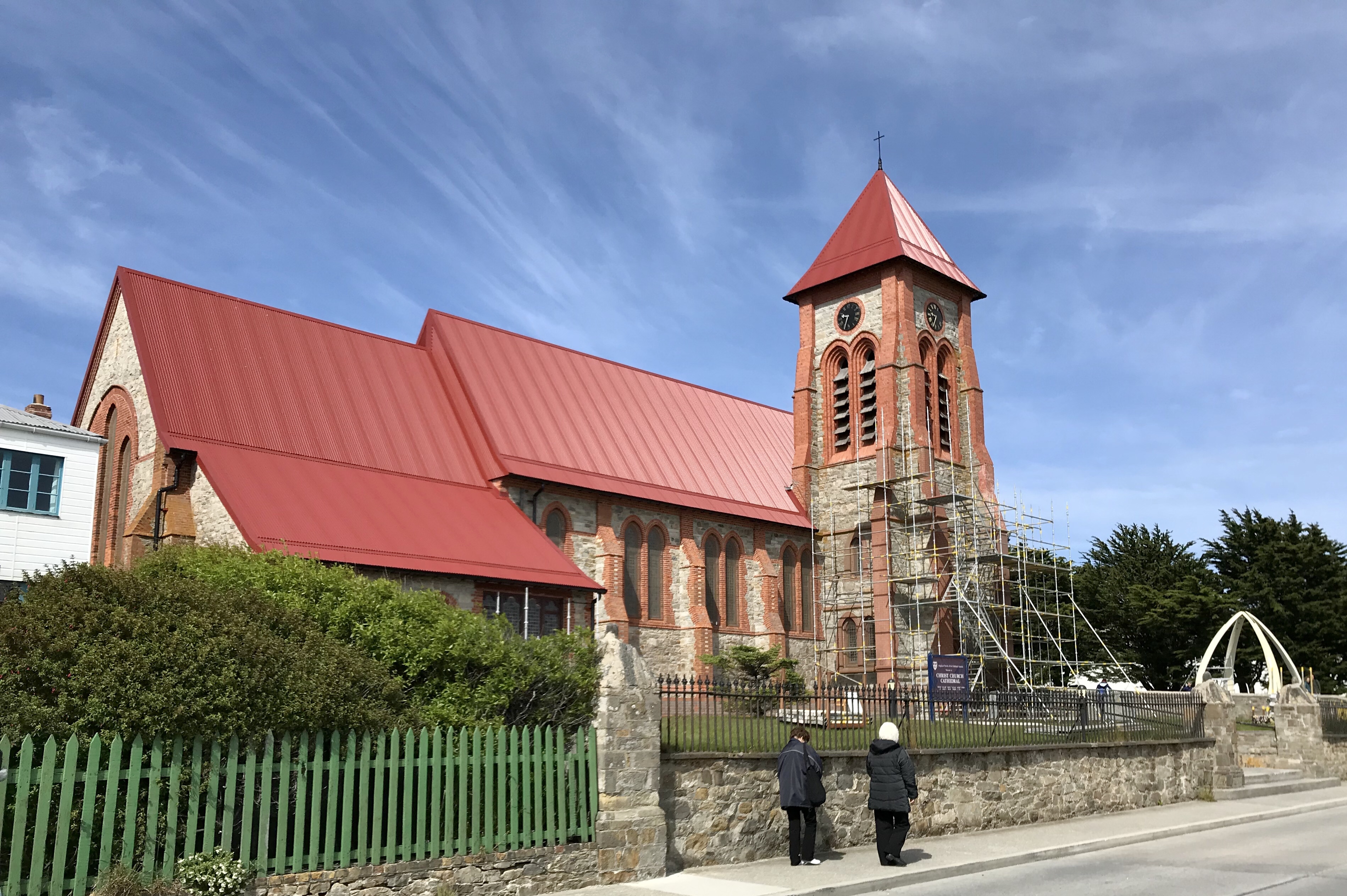
Next stop the Anglican Christ Church Cathedral – the southernmost church in the world.
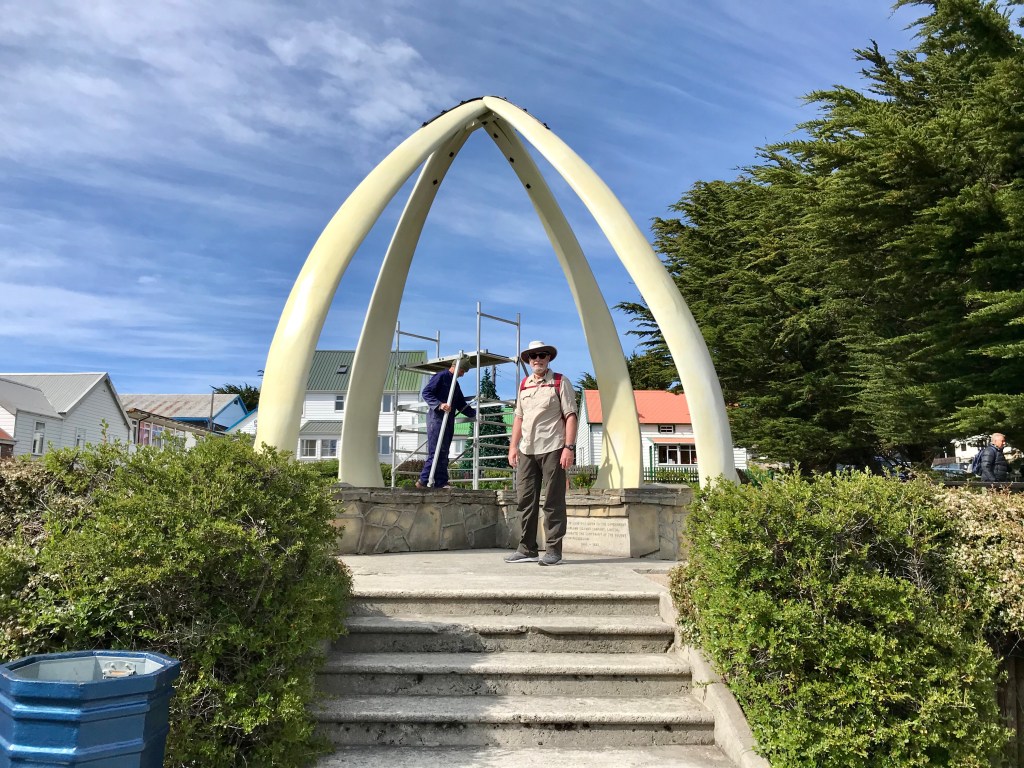
The whale bone arch is made from the jaw bones of blue whales.
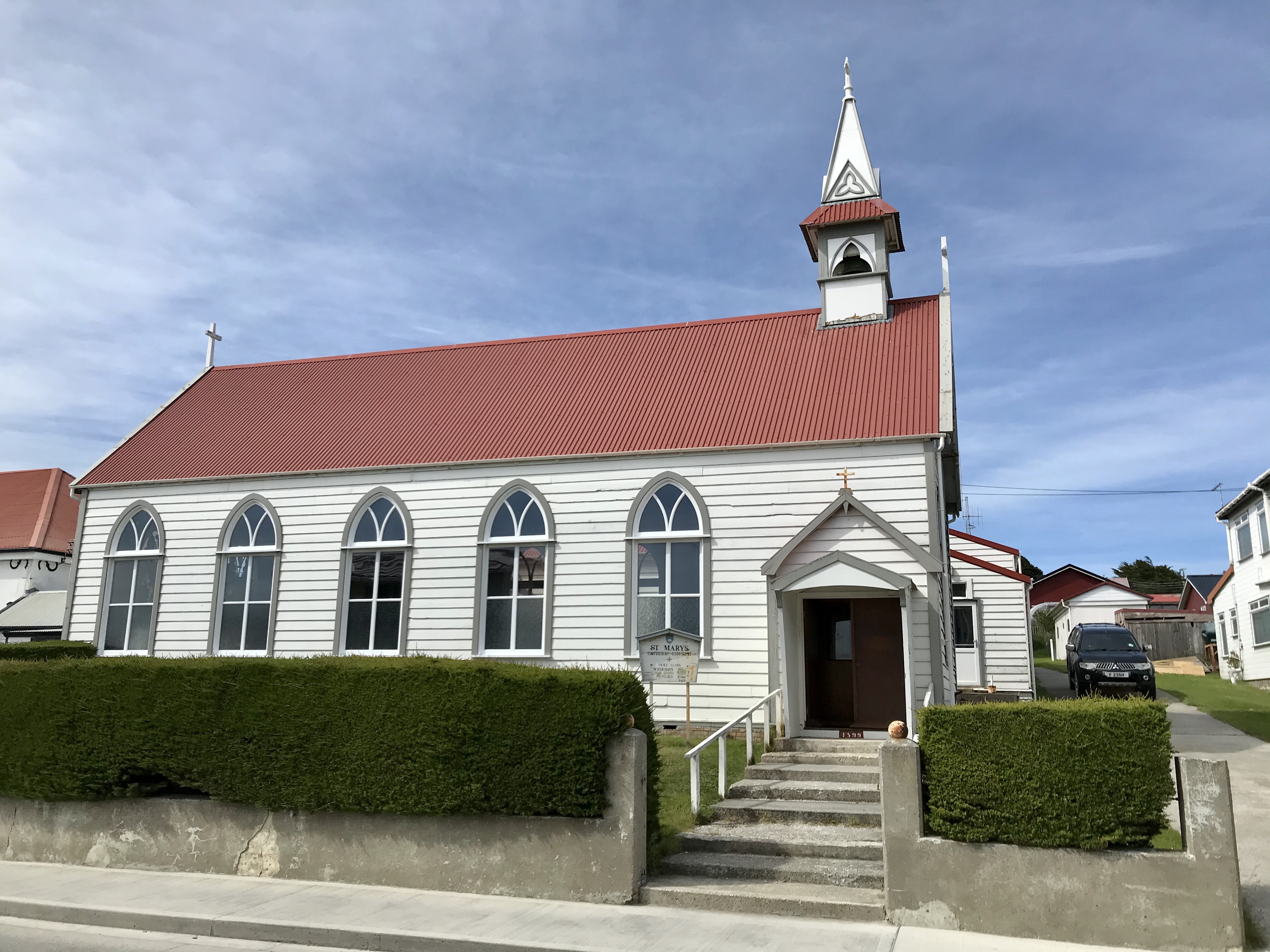
Not far away was the Catholic Church.
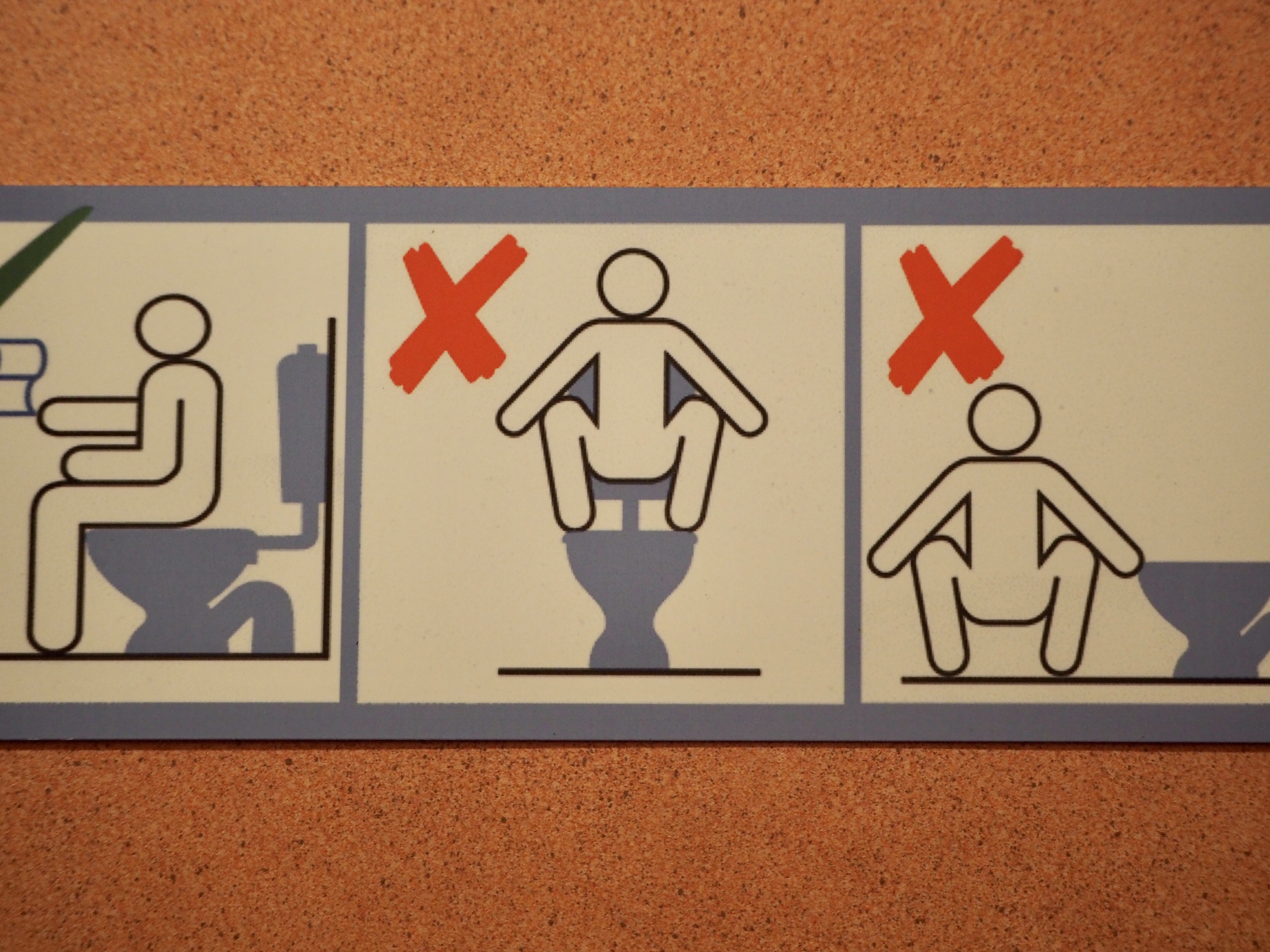
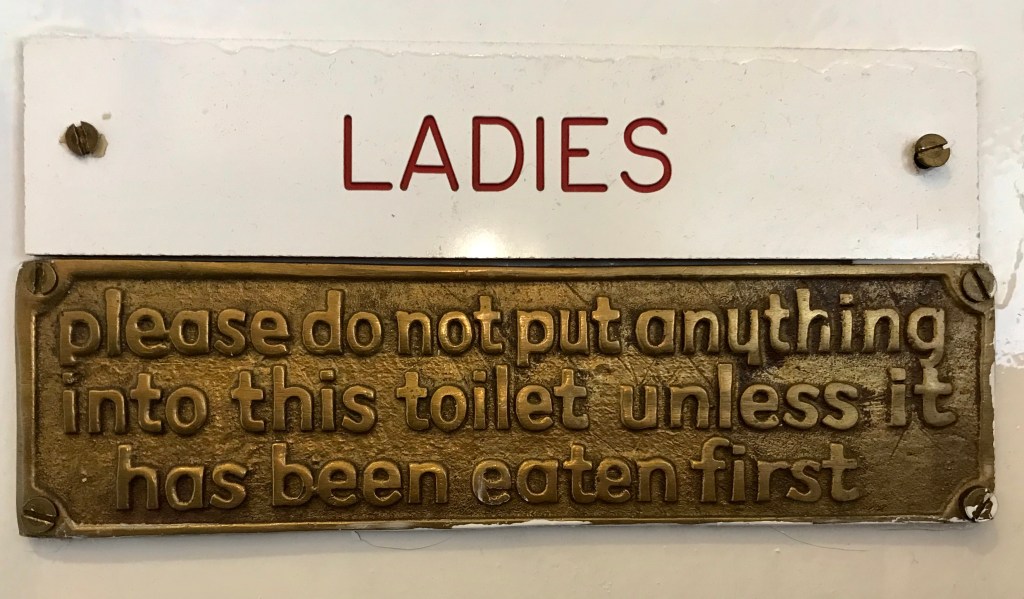
Today was also a day for interesting signs – mostly to do with toilets. Make of them what you will.
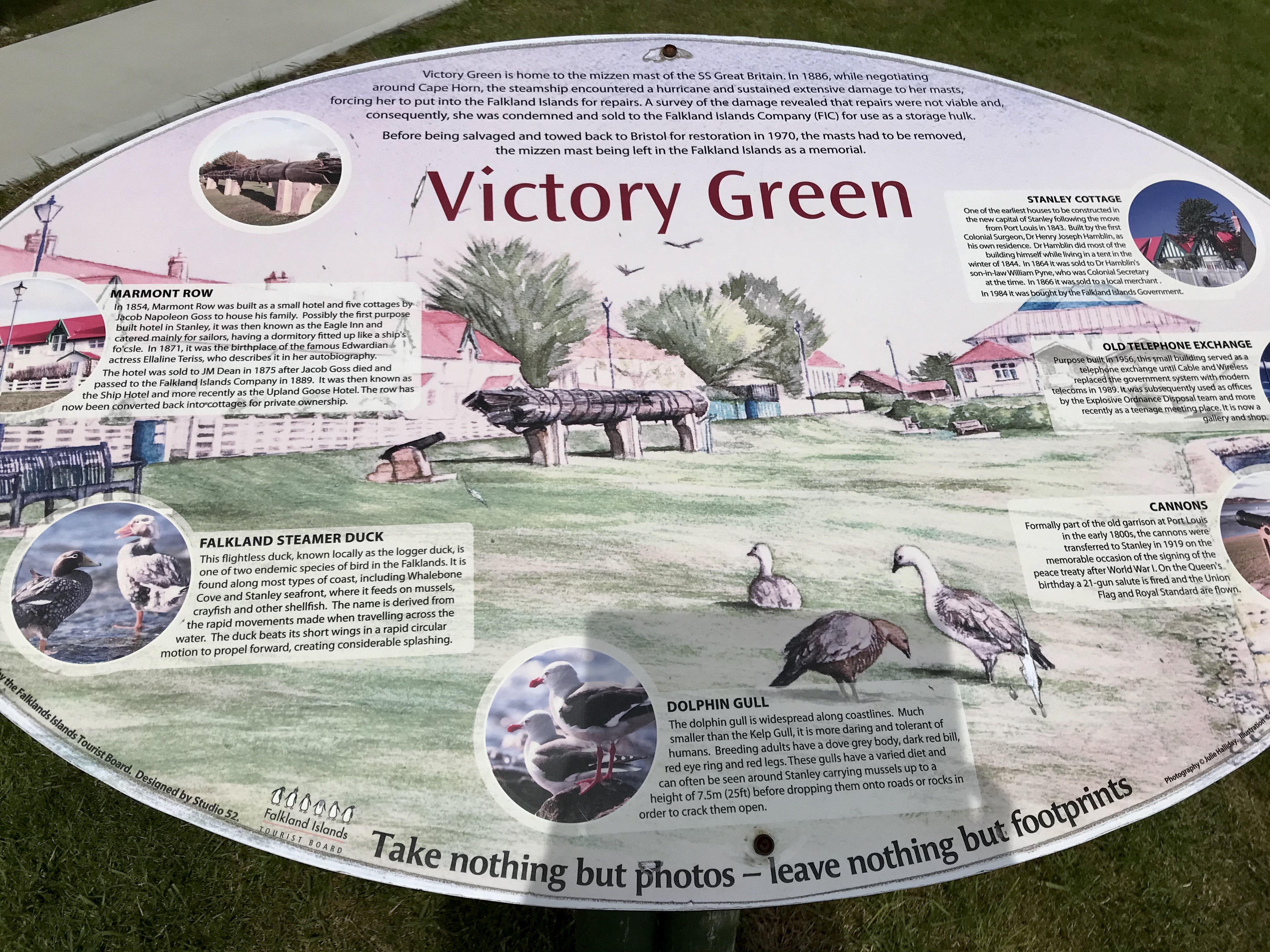
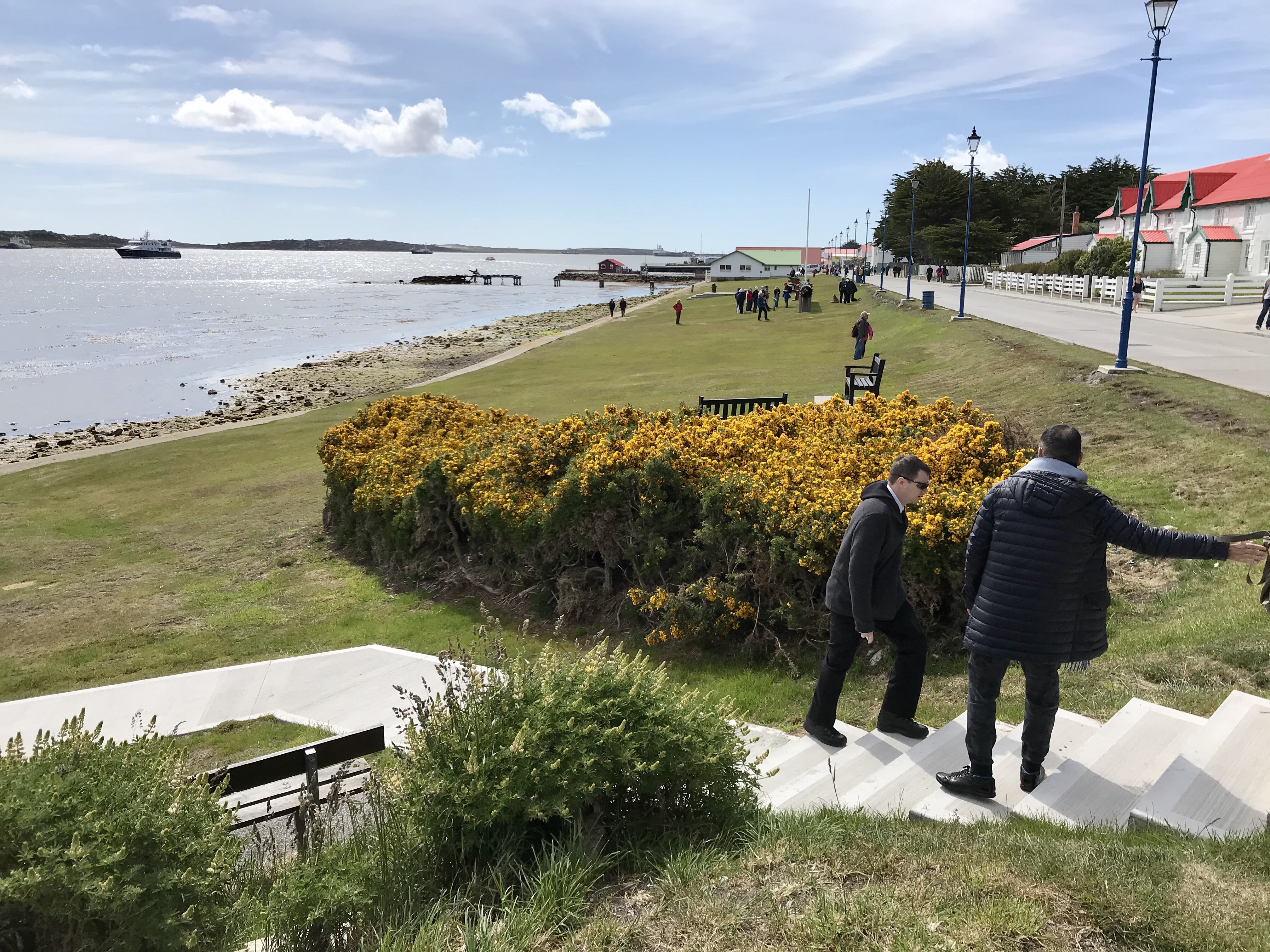
We headed to Victory Green.
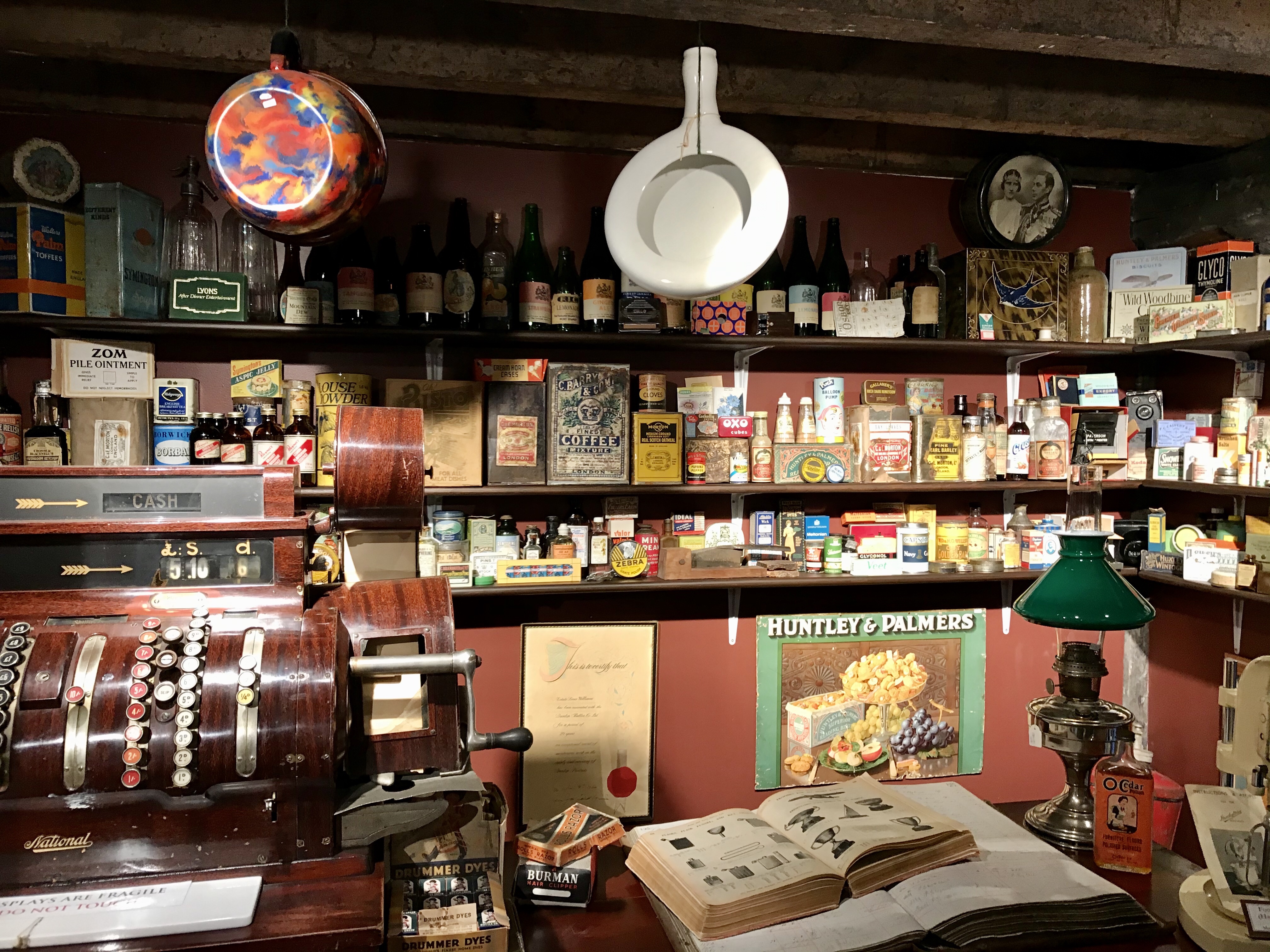
We spent quite a bit of time in the museum which covered the entire history, lots on the Falklands War and even natural history.
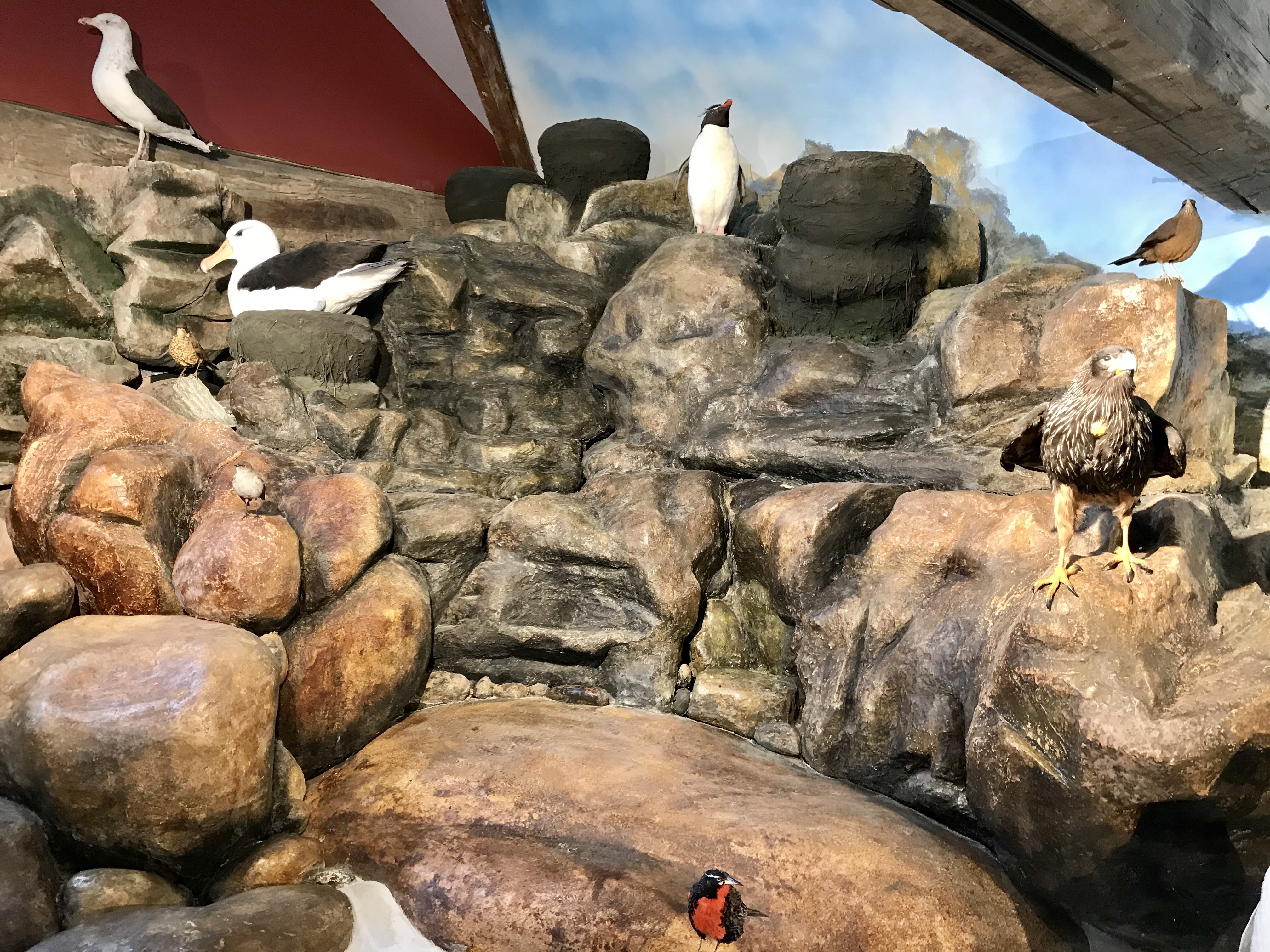
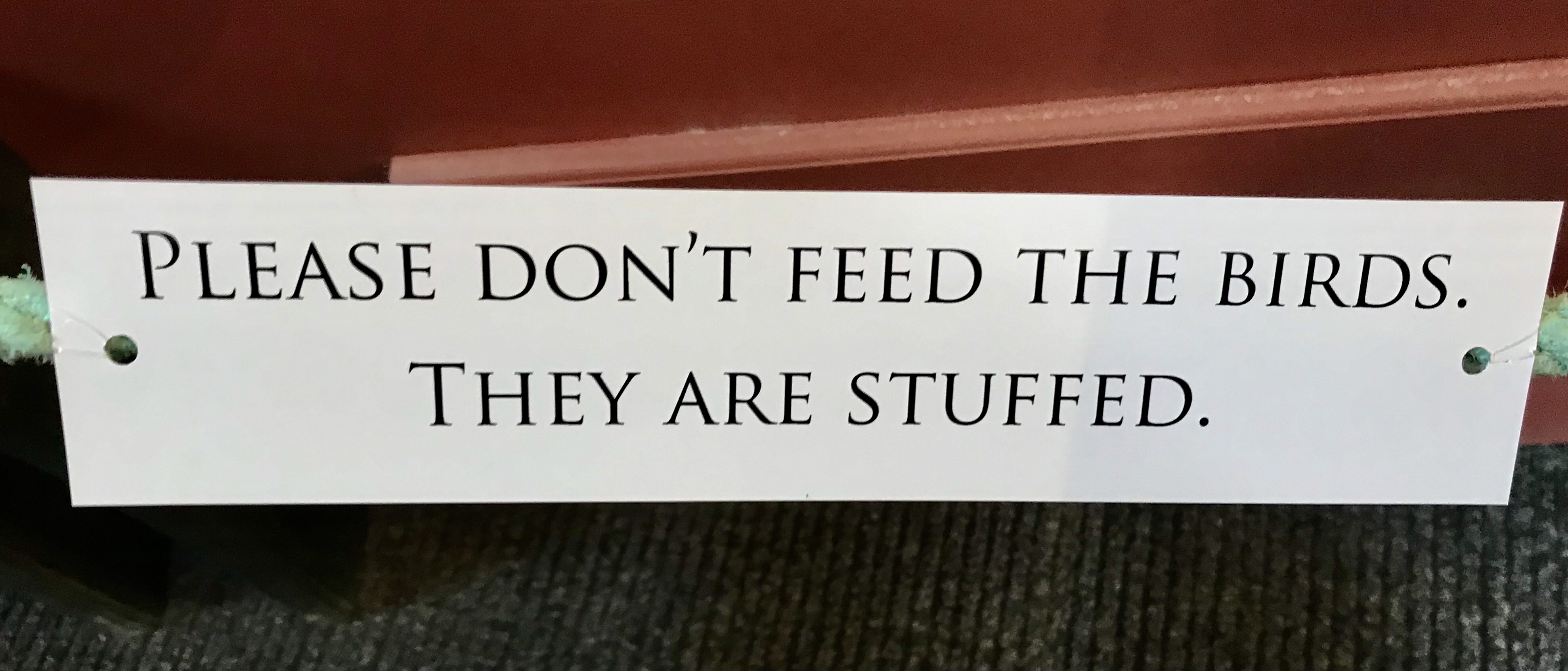
The bird display was excellent but the sign that went with it put me in hysterics.
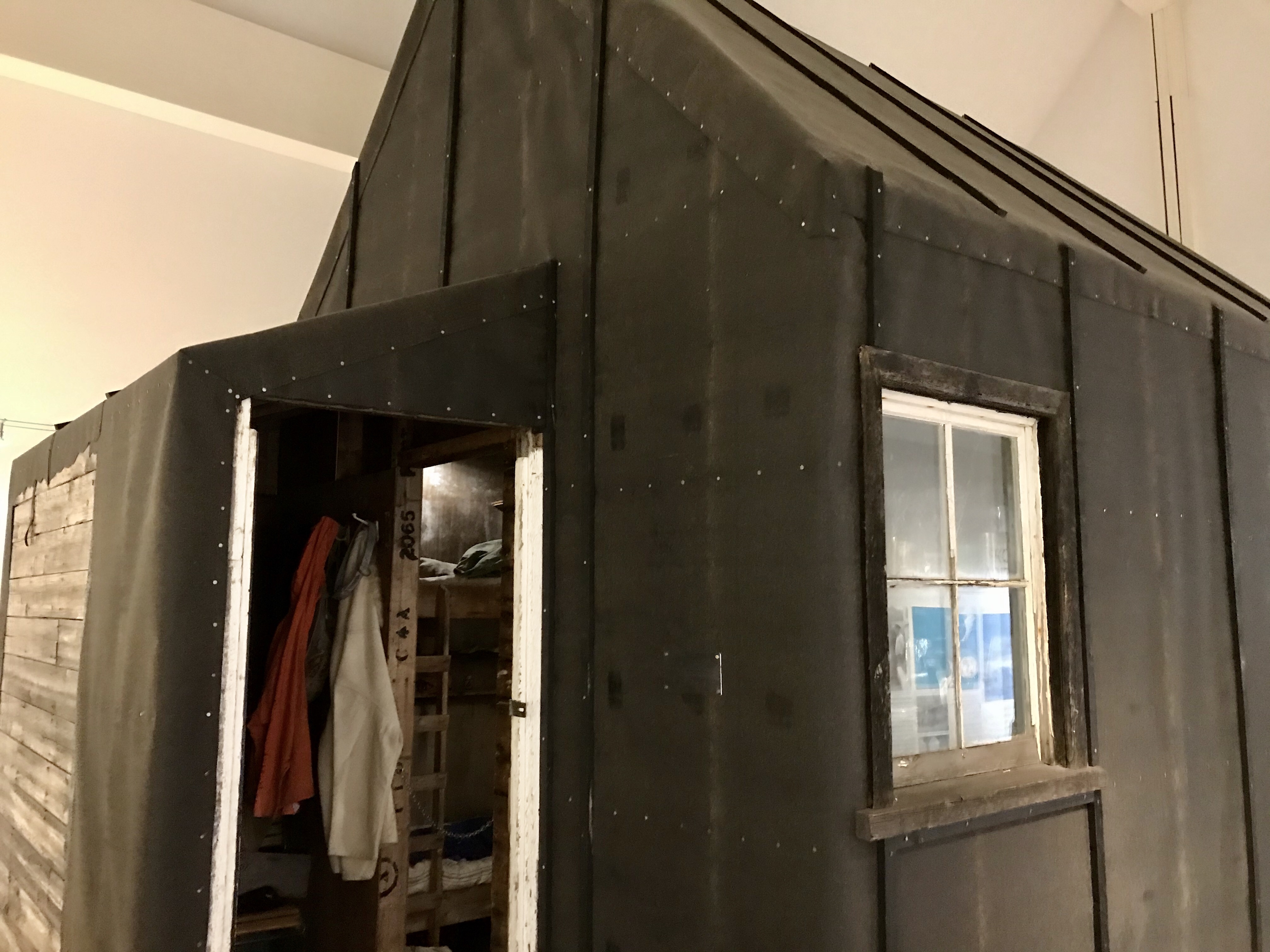
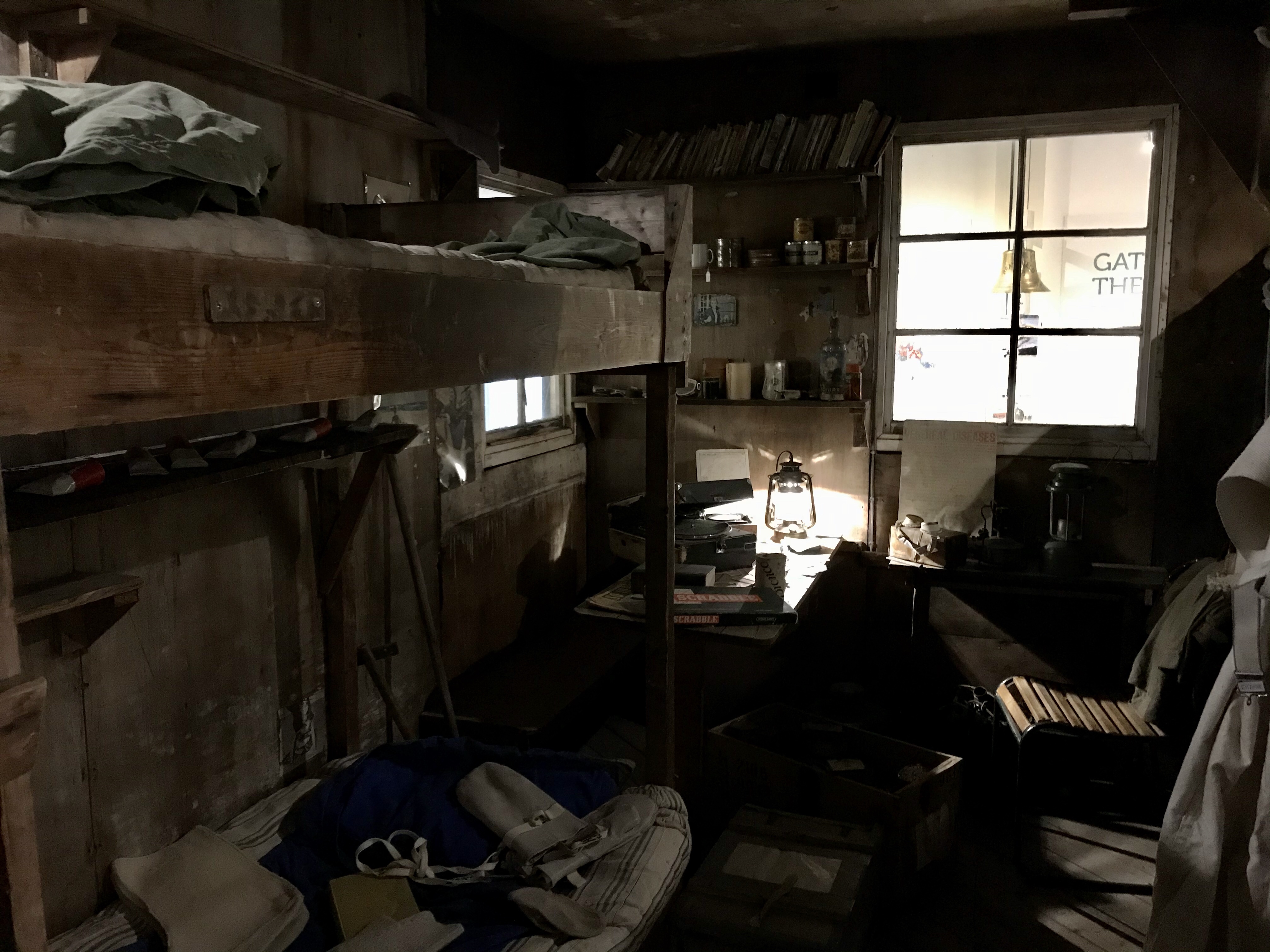
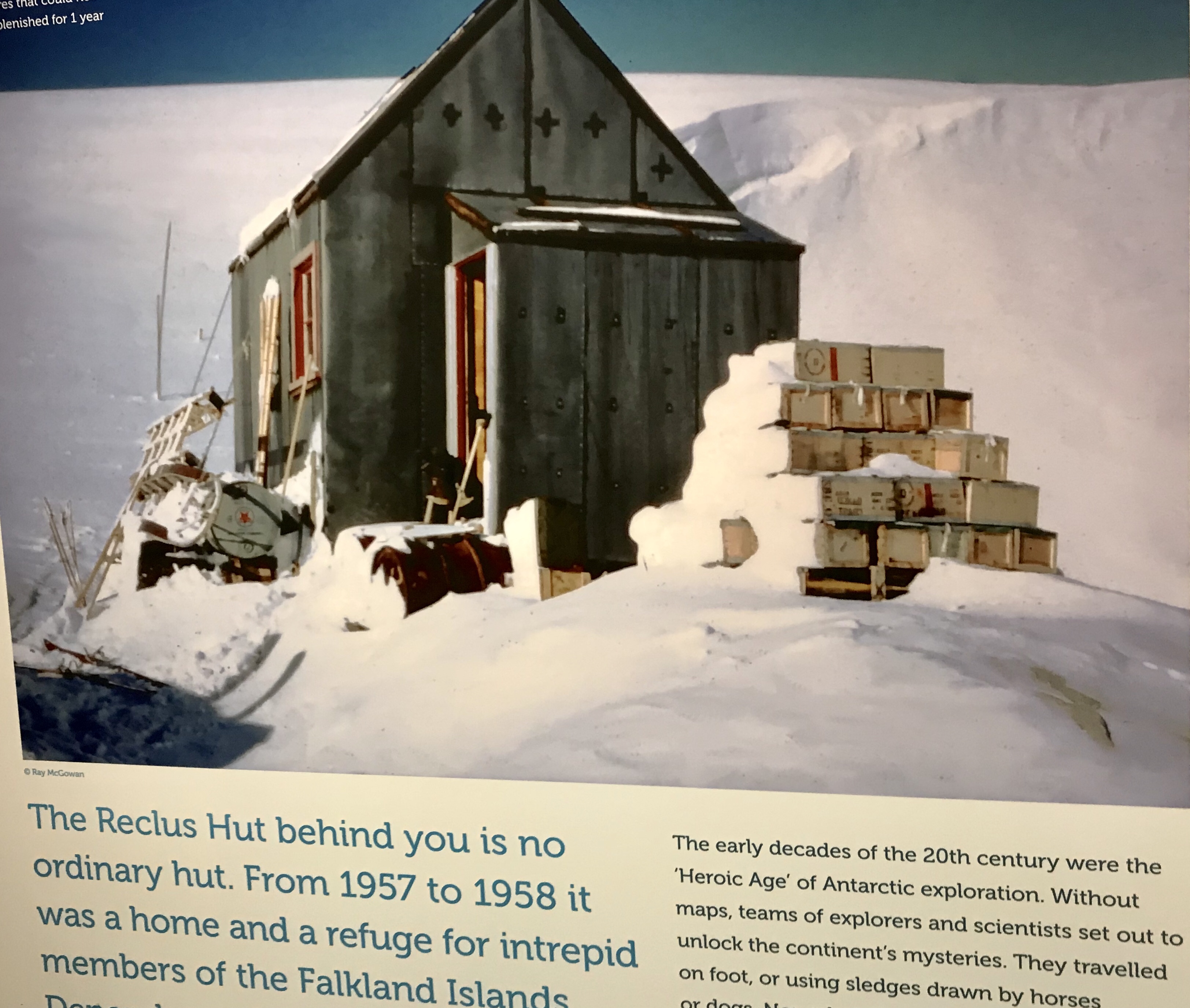
There is even a rebuilt Antarctic hut in the museum.
Back outside and here are a few places that caught our eye.
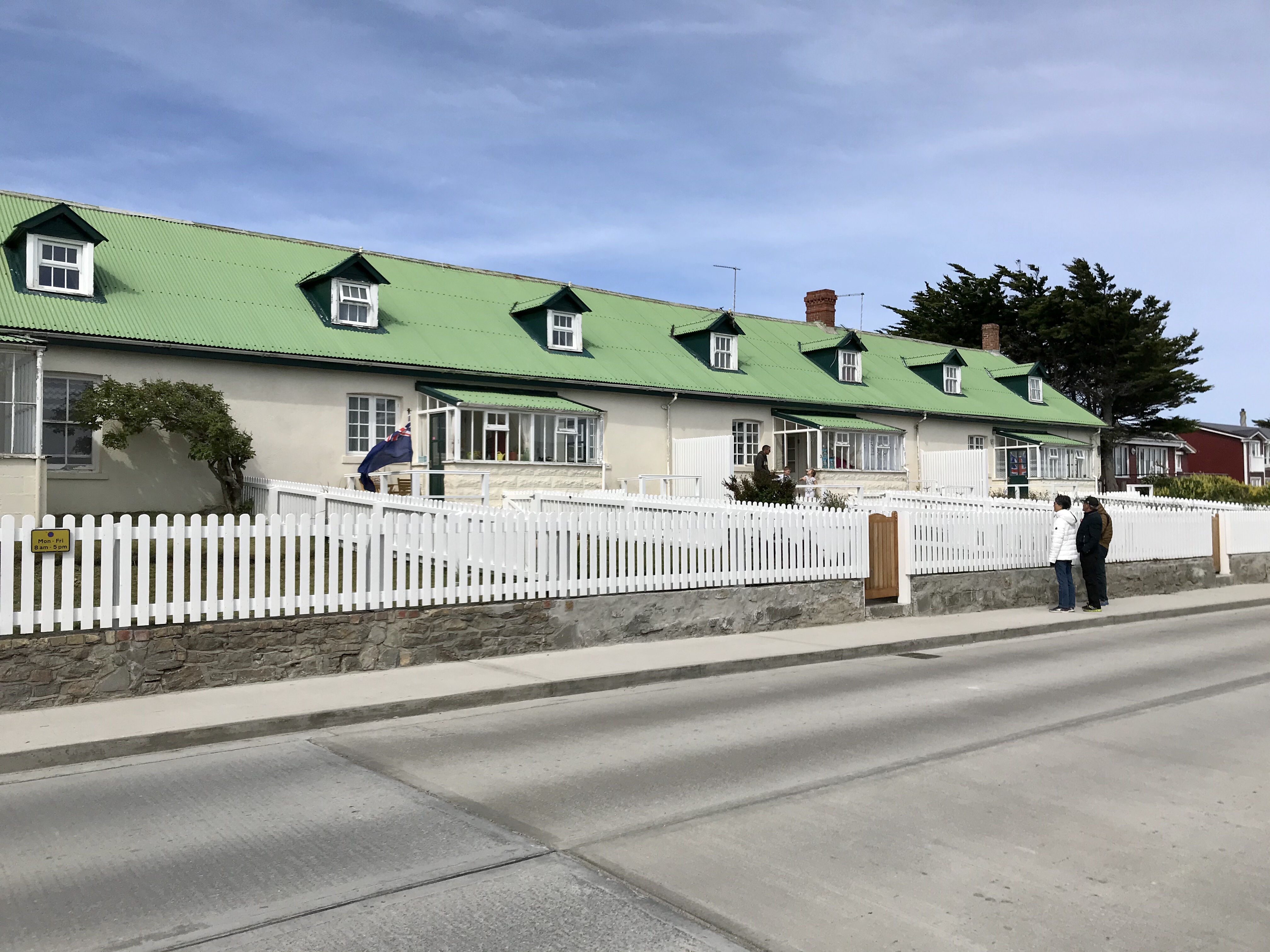
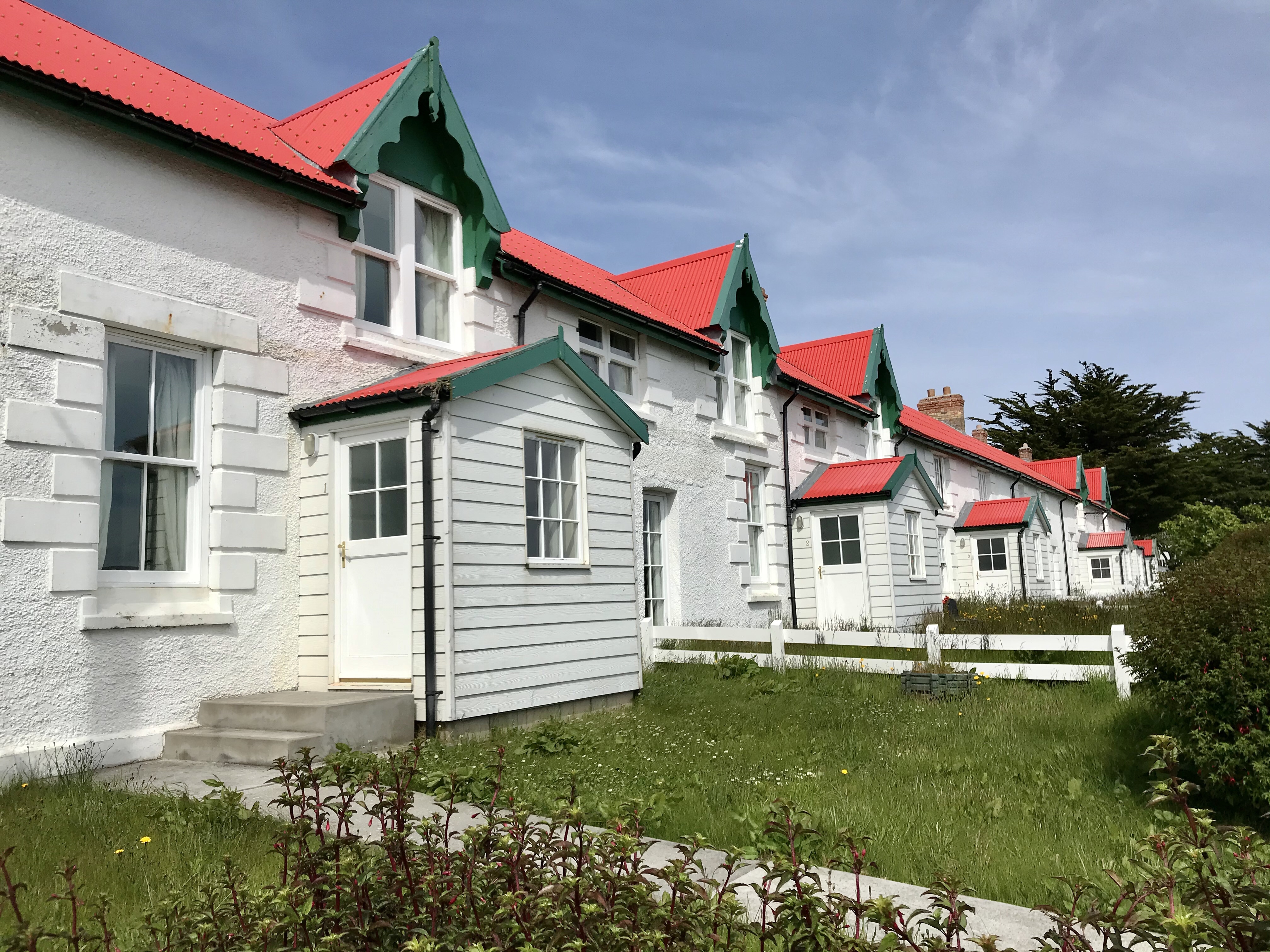
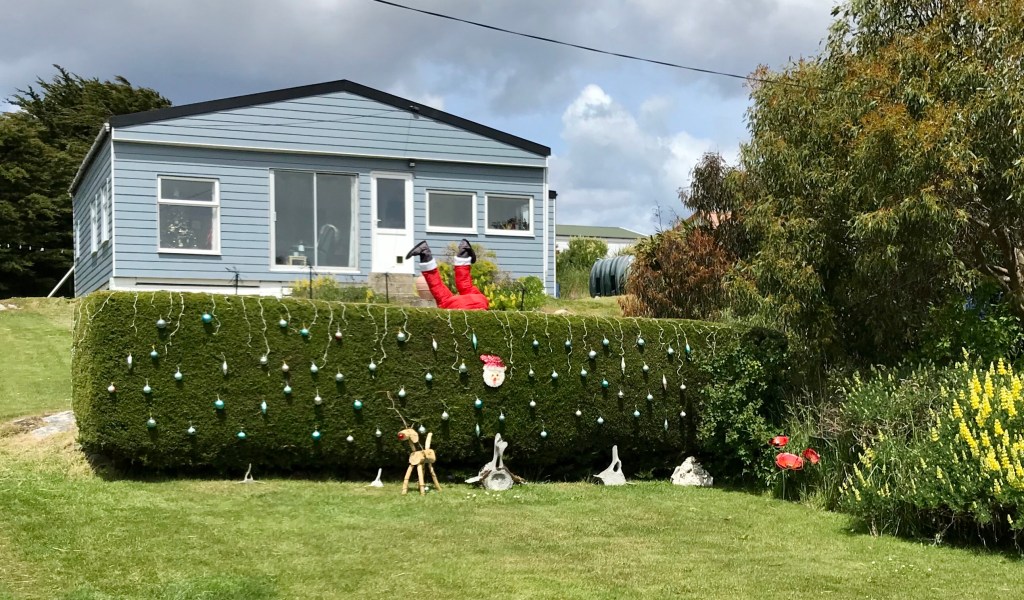
Christmas spirit wasn’t visible in many places, but those that had bothered had fun.
One resident has created a display of whale bones in an attempt to make people understand what we lose by whaling.
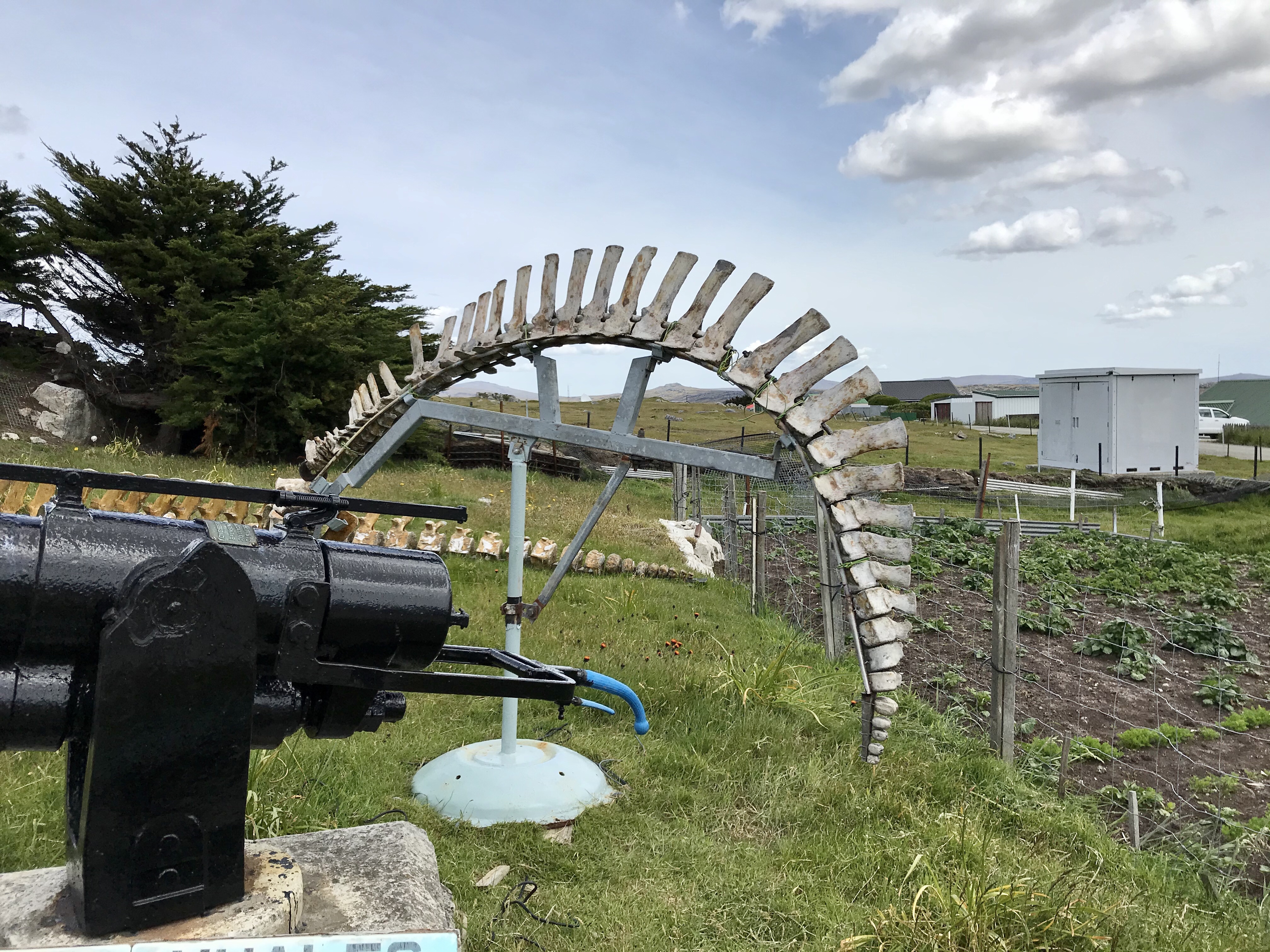
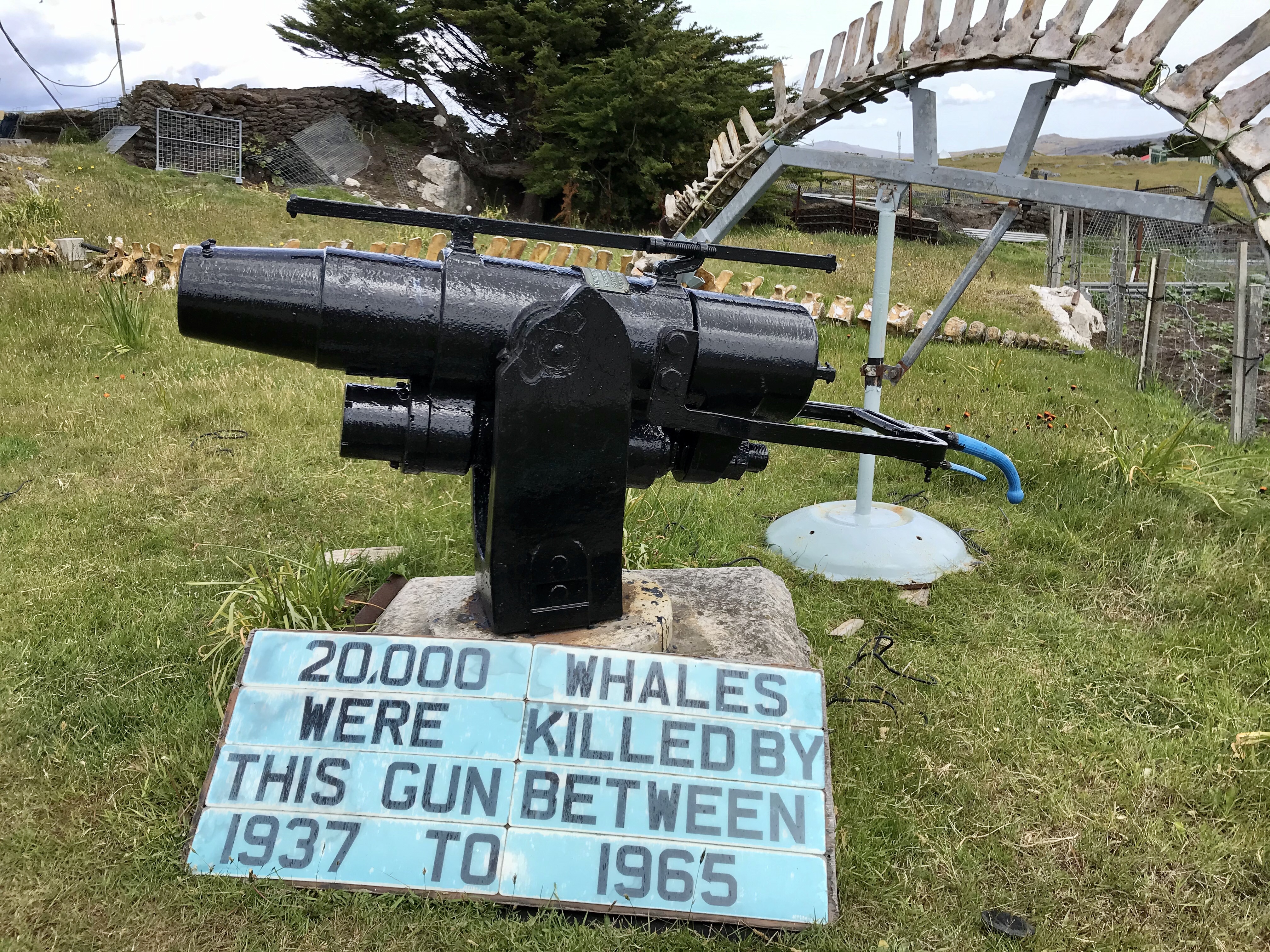
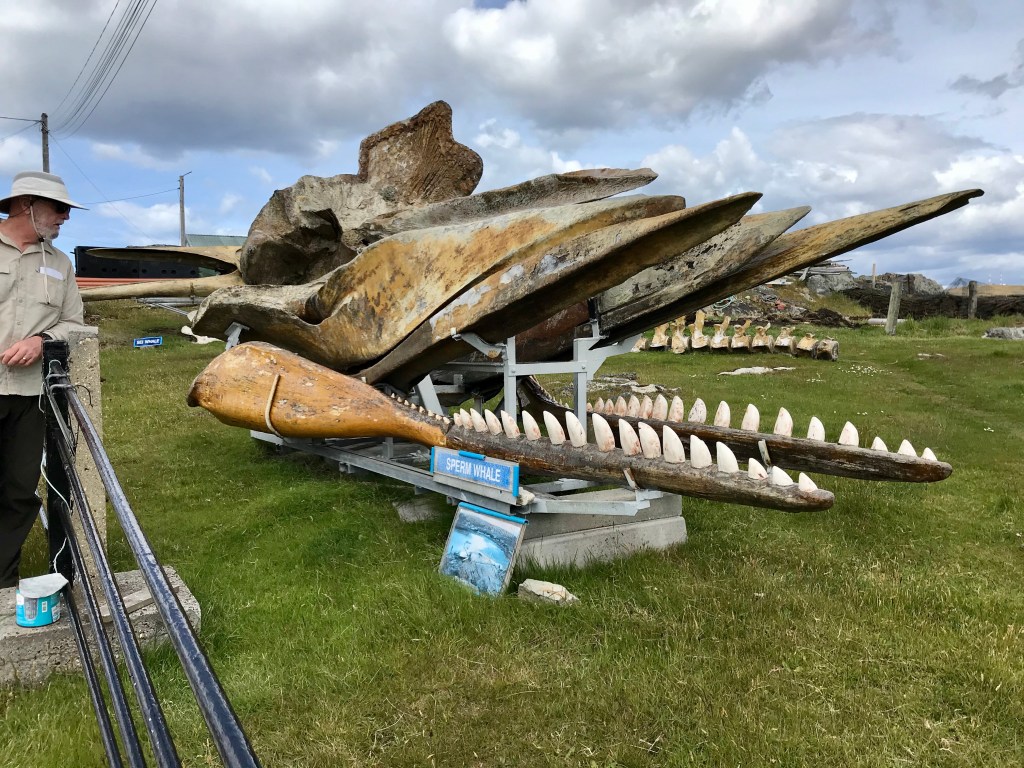
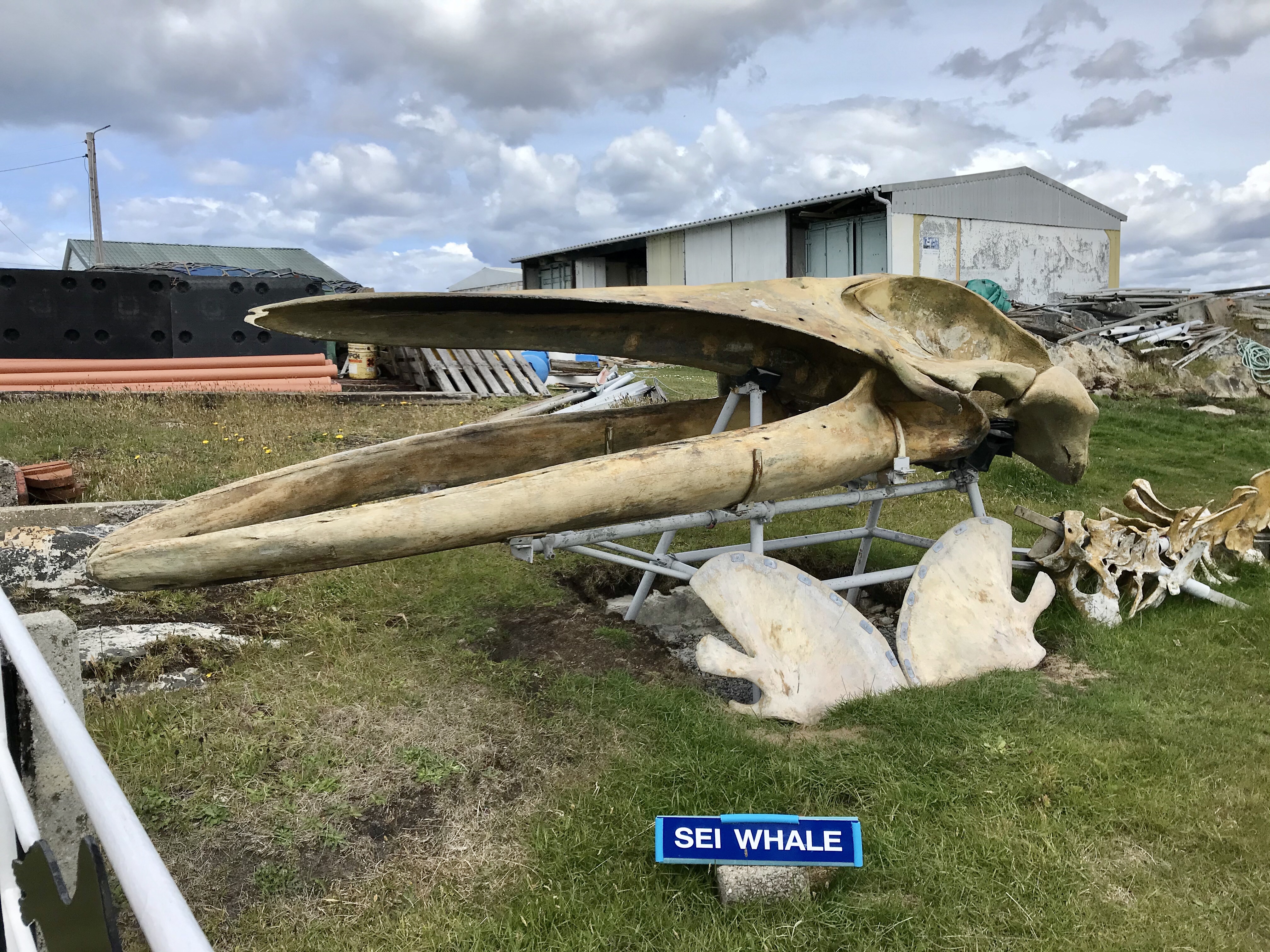
Interesting things in back yards here.
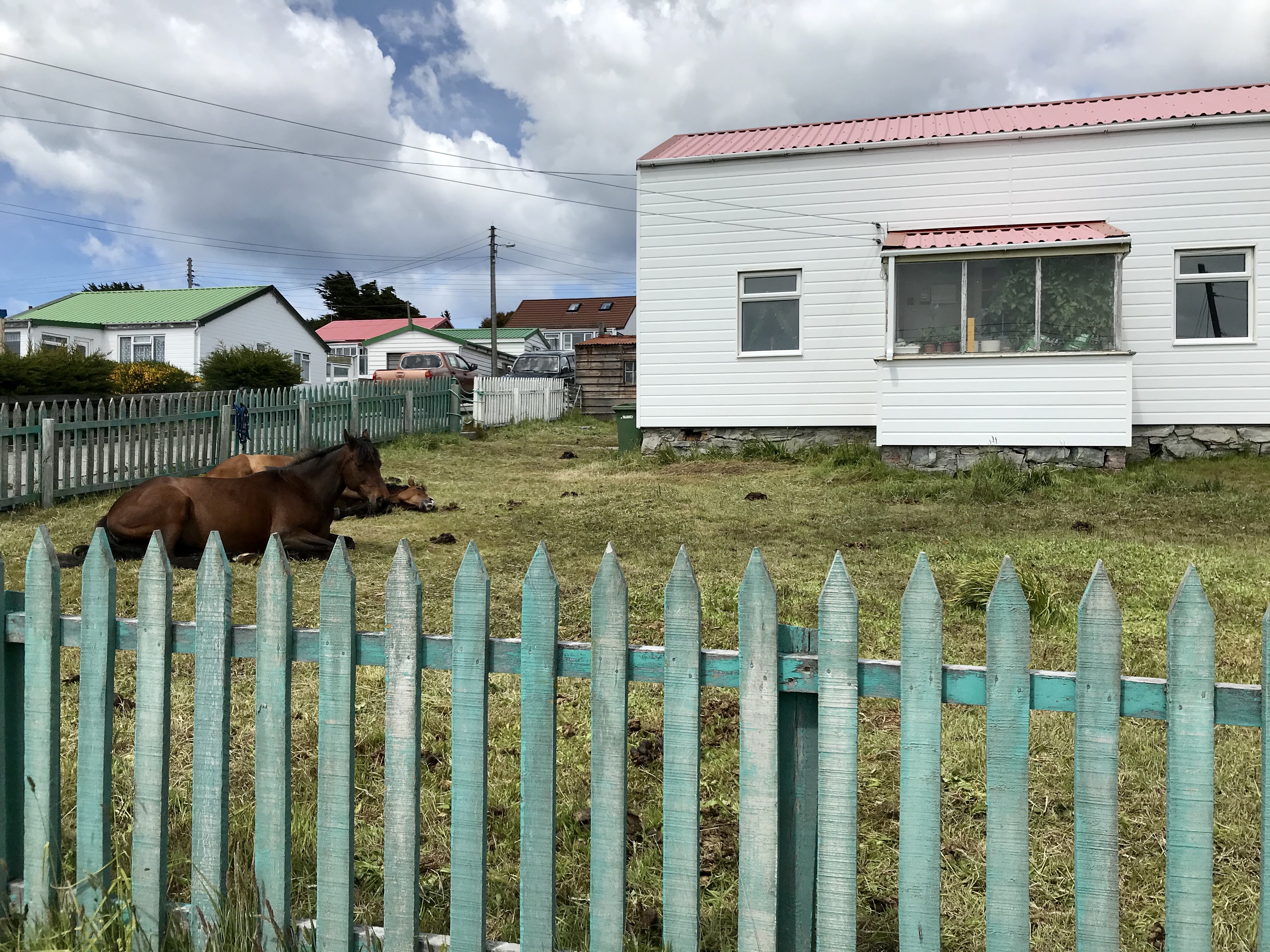
We had heard of the gnome garden so went looking for it. It was quite a find.
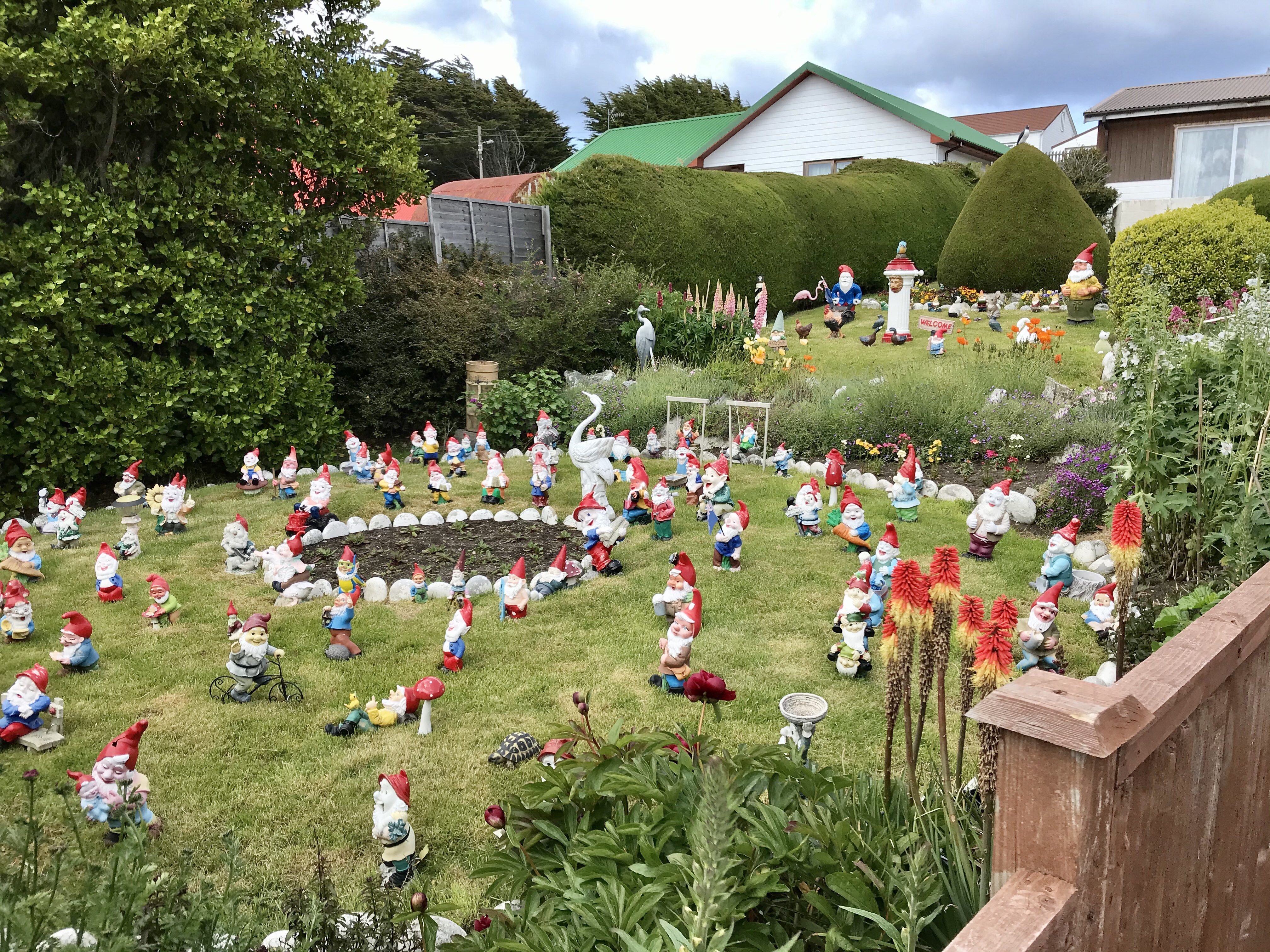
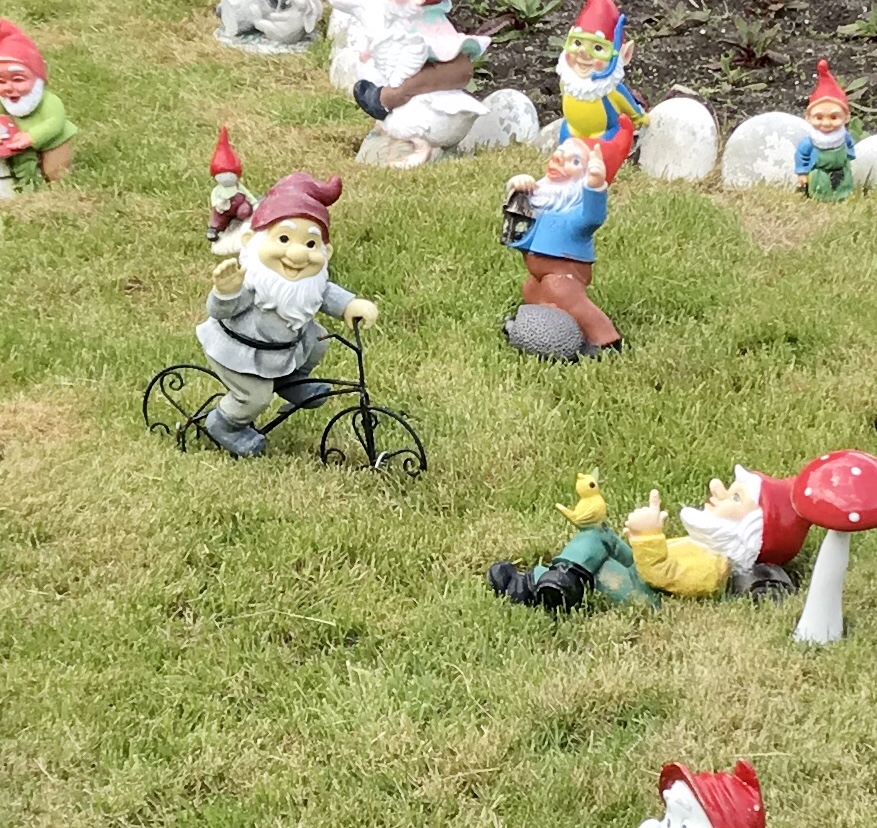
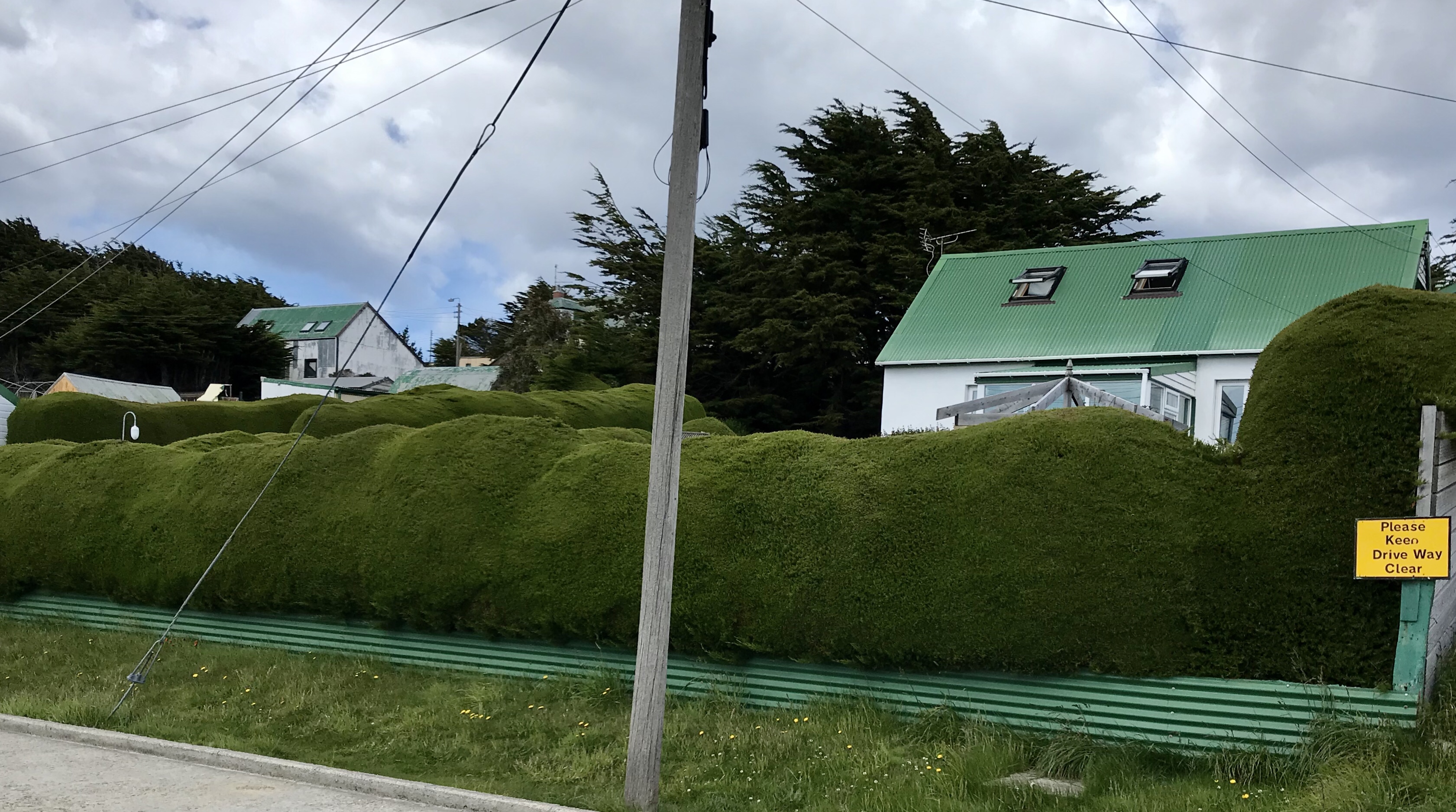
Interesting hedges.
So time for lunch, fish and chips and the beer of the day. Not an obvious pub from the outside.
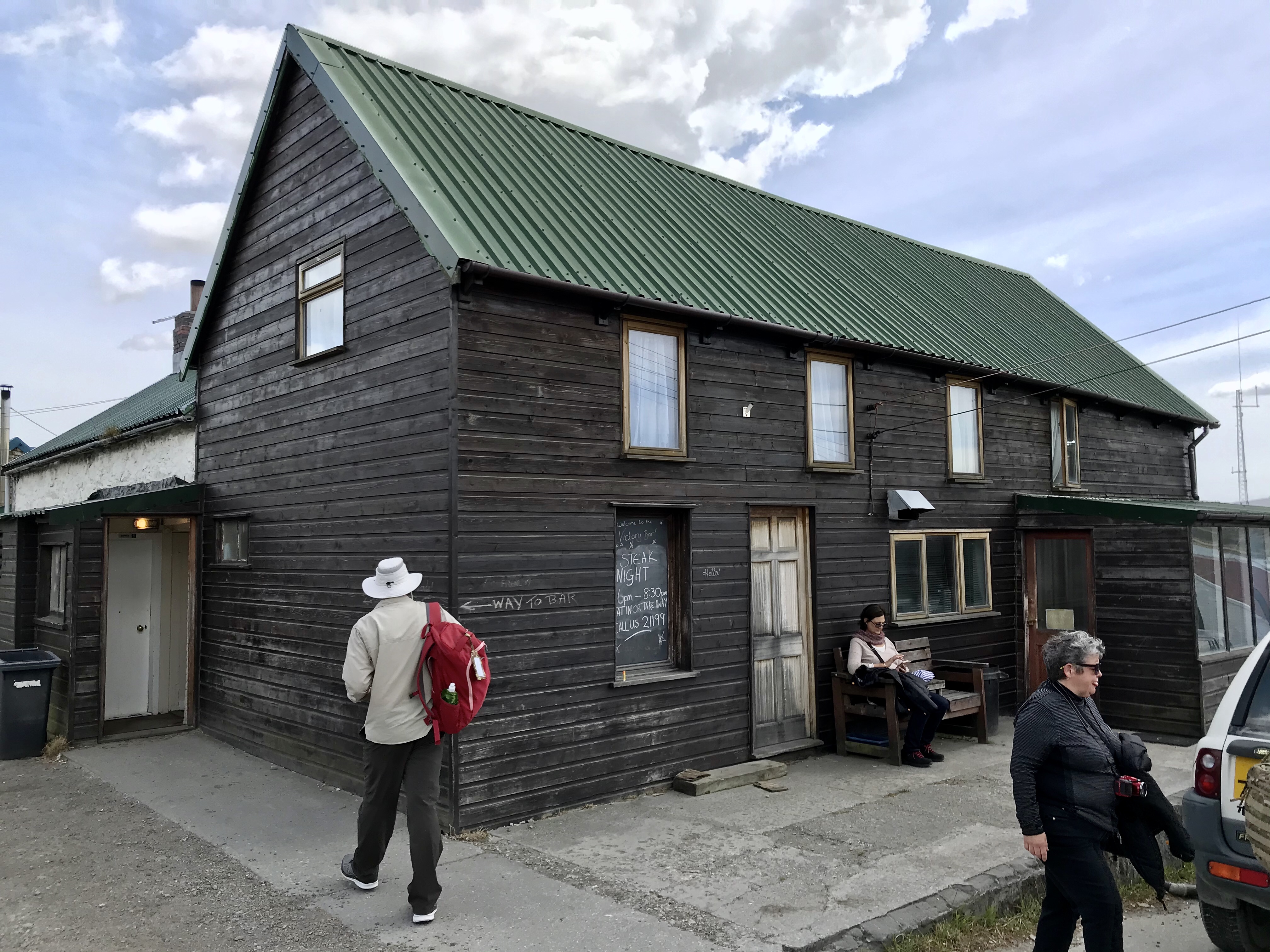
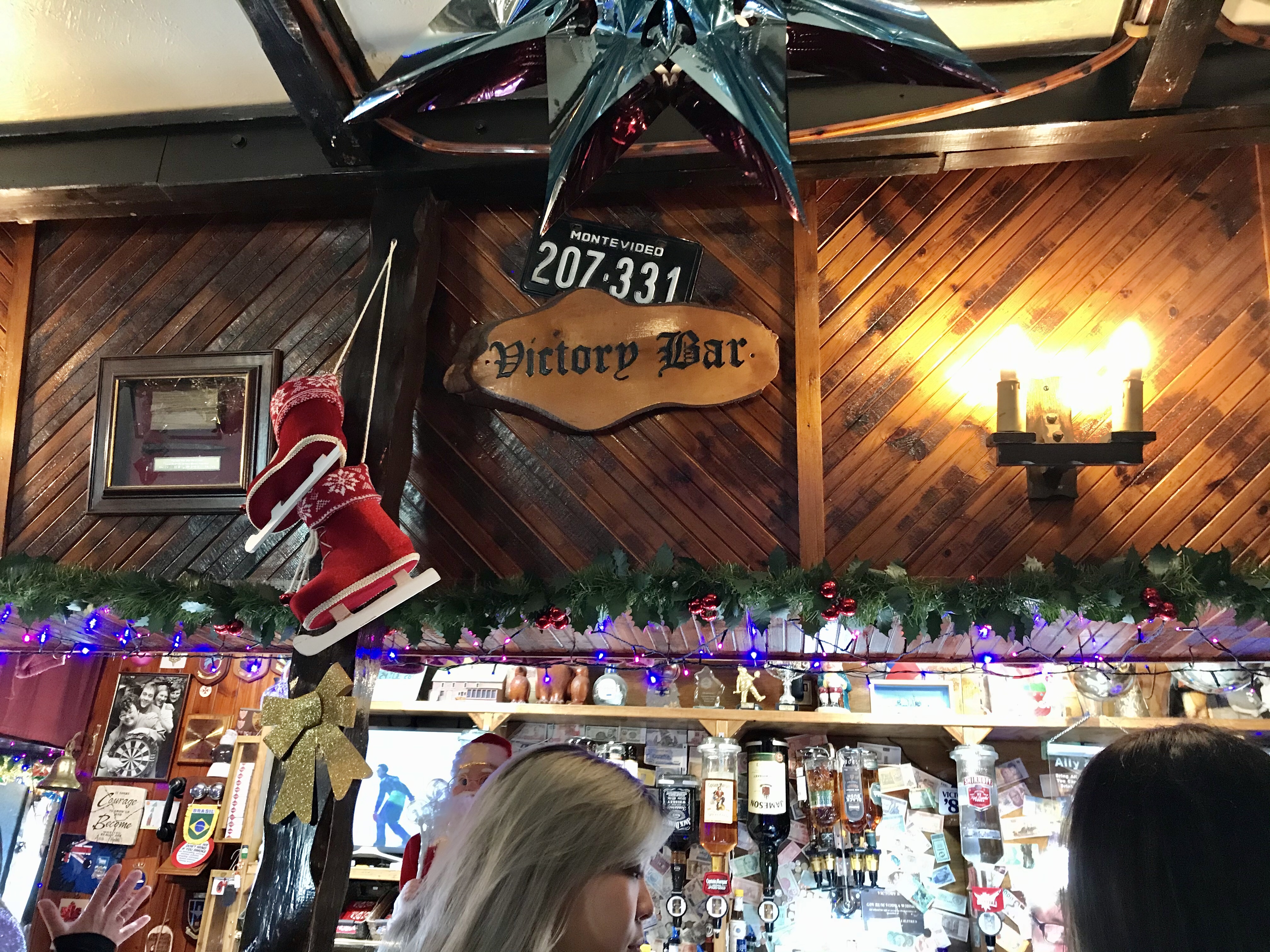
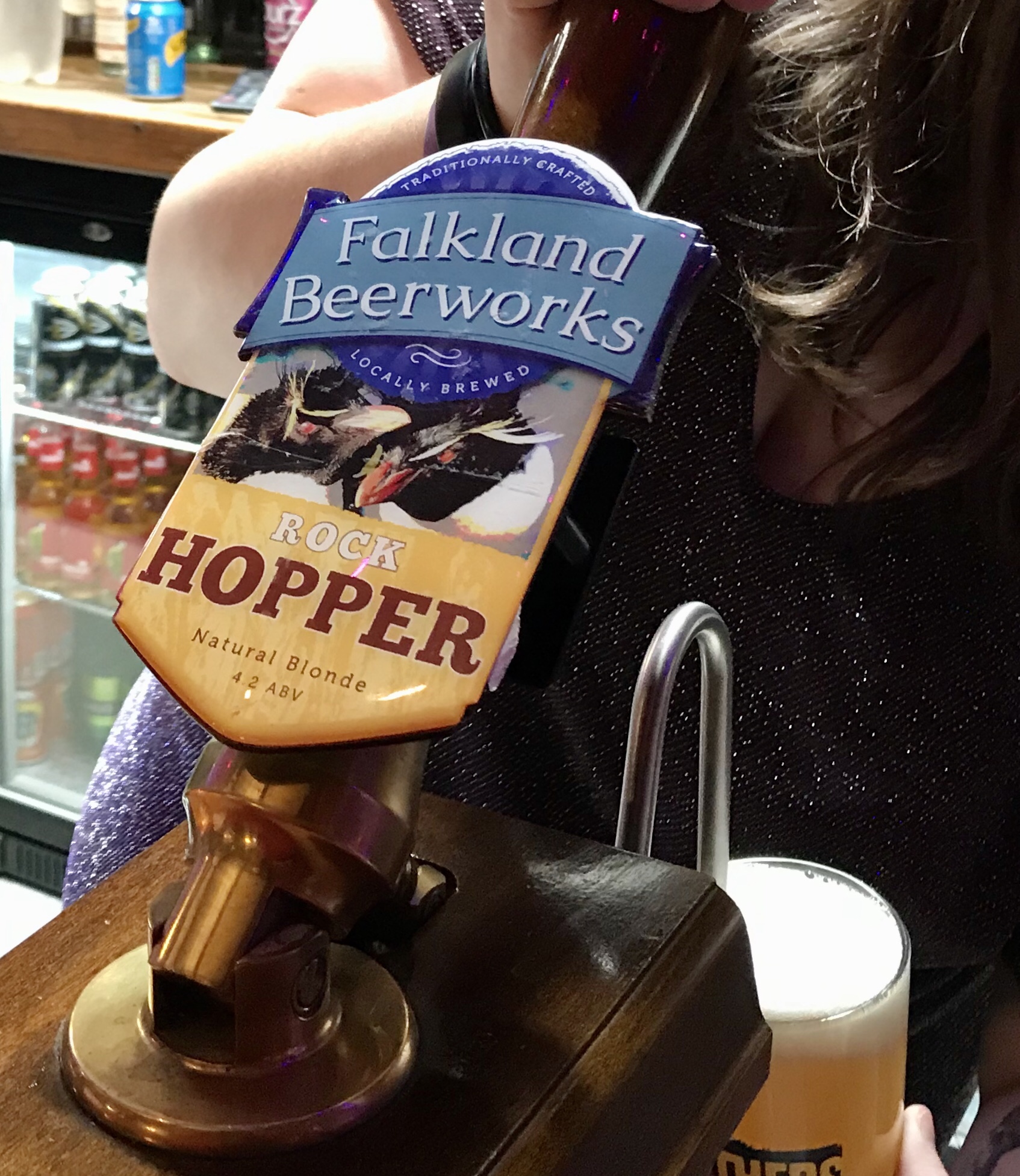
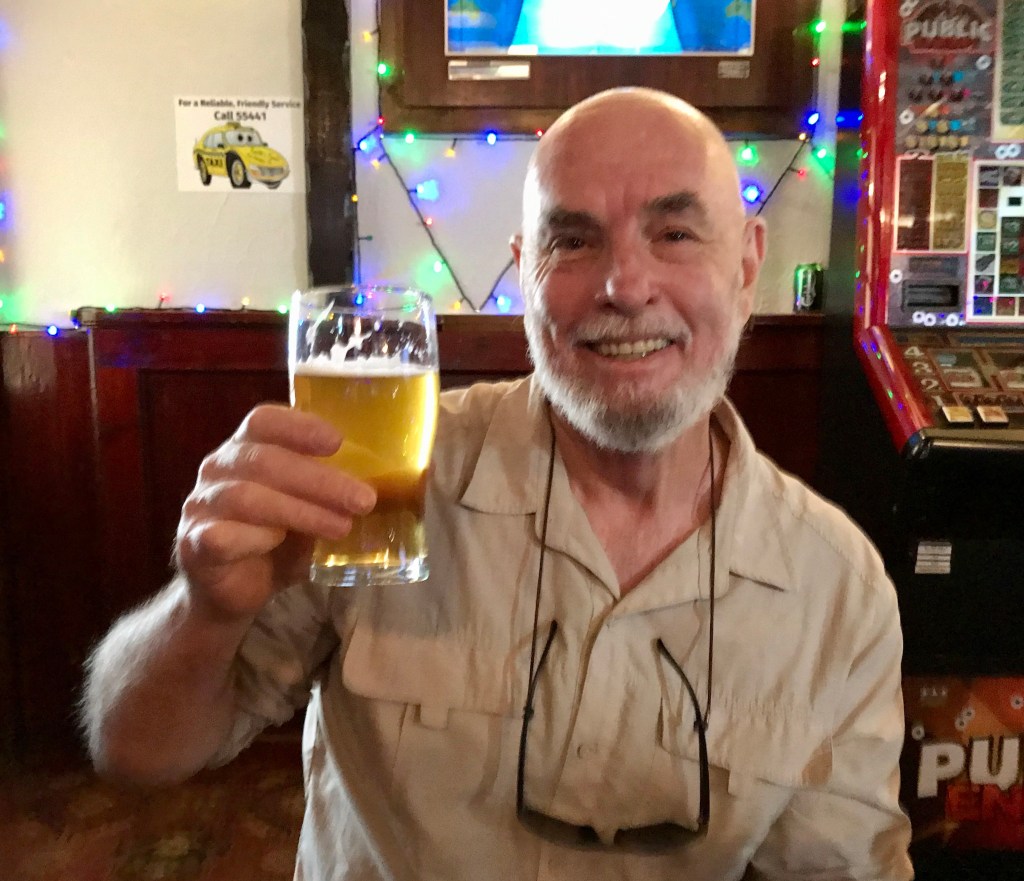
The beer rated a 3.5. Let’s face it, Garrie really is a lager man. Seems I was too busy chatting to new friends, Cheryl & Mike to take a pic of the fish and chips which were great.
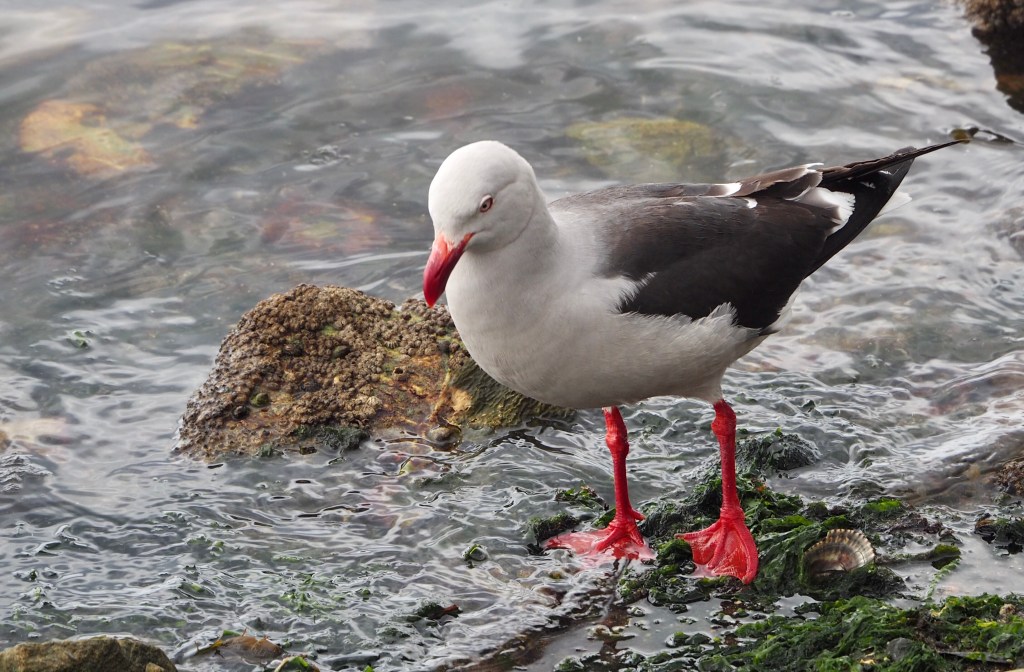
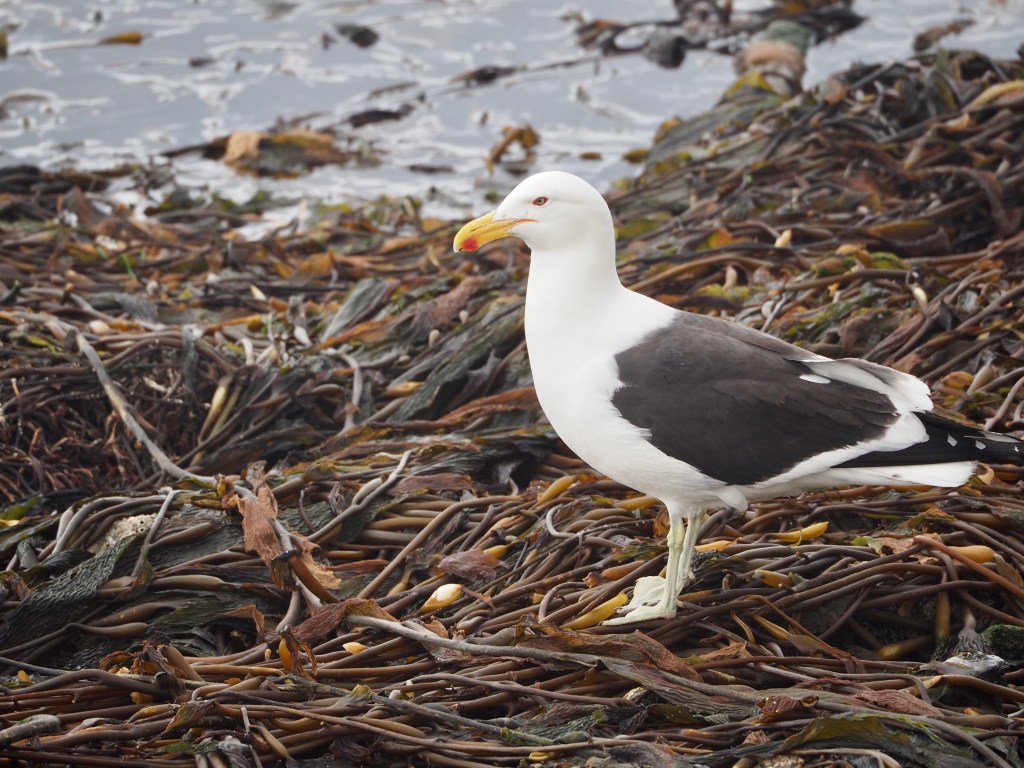
A couple of seagull types on the way back to the ship.
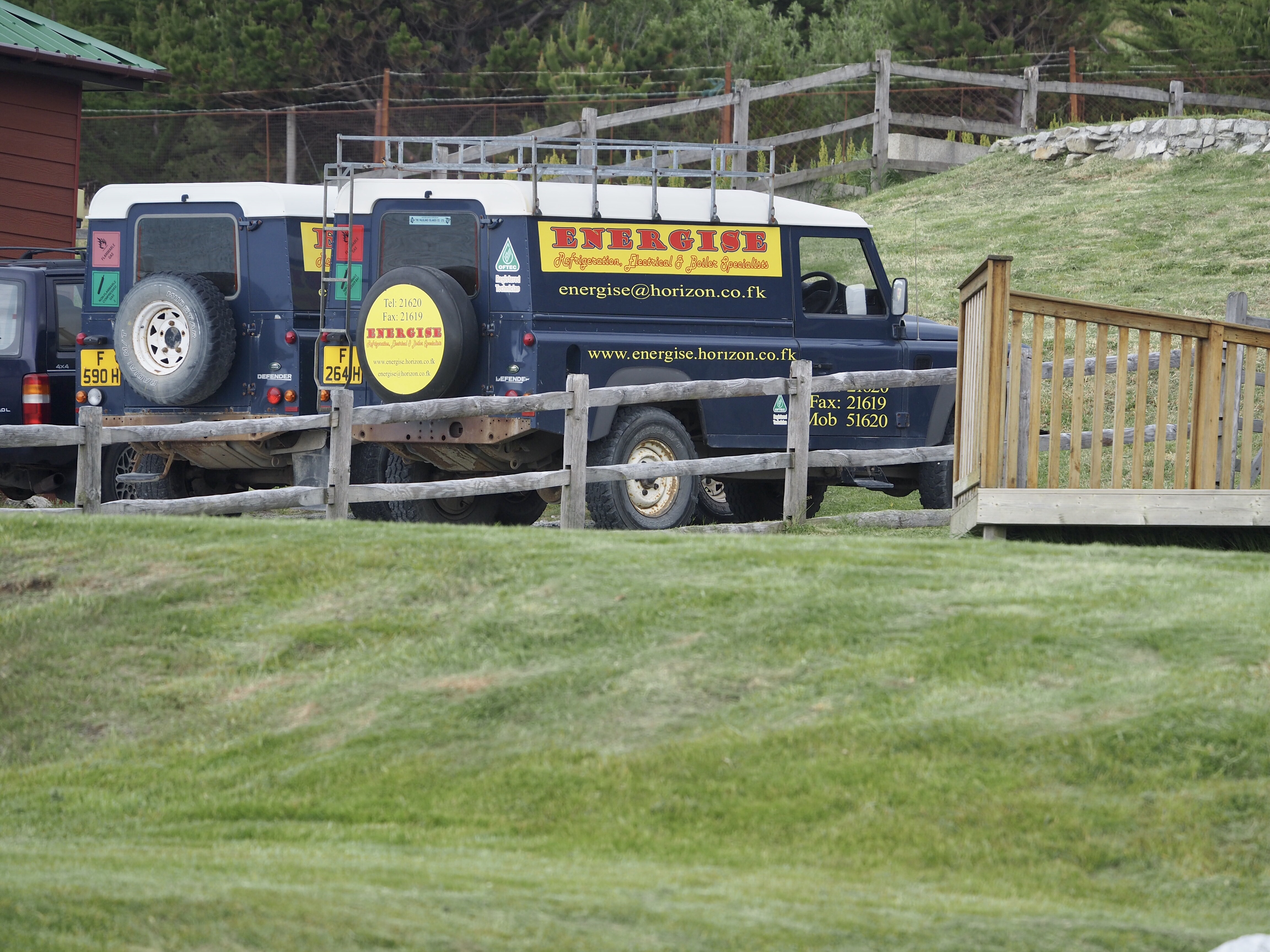
Oh and Dad would be thrilled by the number of land rovers on the island.
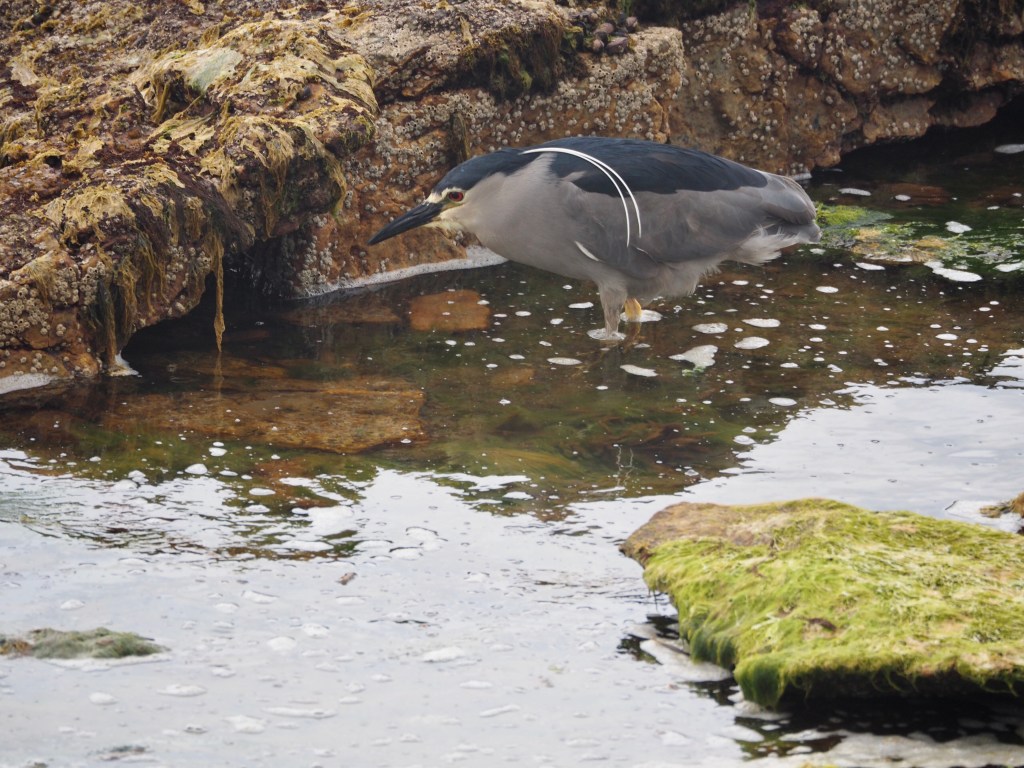
We also spotted a night heron. We certainly did some steps – well over 18,000 by day’s end.
Back on board, sorted photos again and then another afternoon craft session for those creating hats for this evening. I did need one or two bits to complete my Antarctic version of the Aussie cork hat.
Movie about the Falklands was shown in the lounge. A BBC 4 program – The Falklands Most Daring Raid. It was about the long distance raid – in fact the longest distance bombing raid in history – that disabled the runway in Stanley, stopping the Argentinians using the runway to attack the British Fleet after they had invaded the Falklands in 1982. Good documentary if you can find it. Popcorn was provided and also Falklands brewed beers available. We are looked after well but feeling pretty tired after such a big day.
We were told by a passenger that the cruise prior to ours had had an unbelievable experience. A group in a zodiac were watching an orca chasing a penguin when suddenly the penguin landed in the zodiac. Wow. I haven’t had this confirmed but what an experience that would be.
Time for the daily recap and briefing. Austin on rocks (thought of you Rod). Plate tectonics. The Scotia Plate. Pangea supercontinent. Falklands originally part of Africa. Fascinating stuff – took a pic for you Rod.
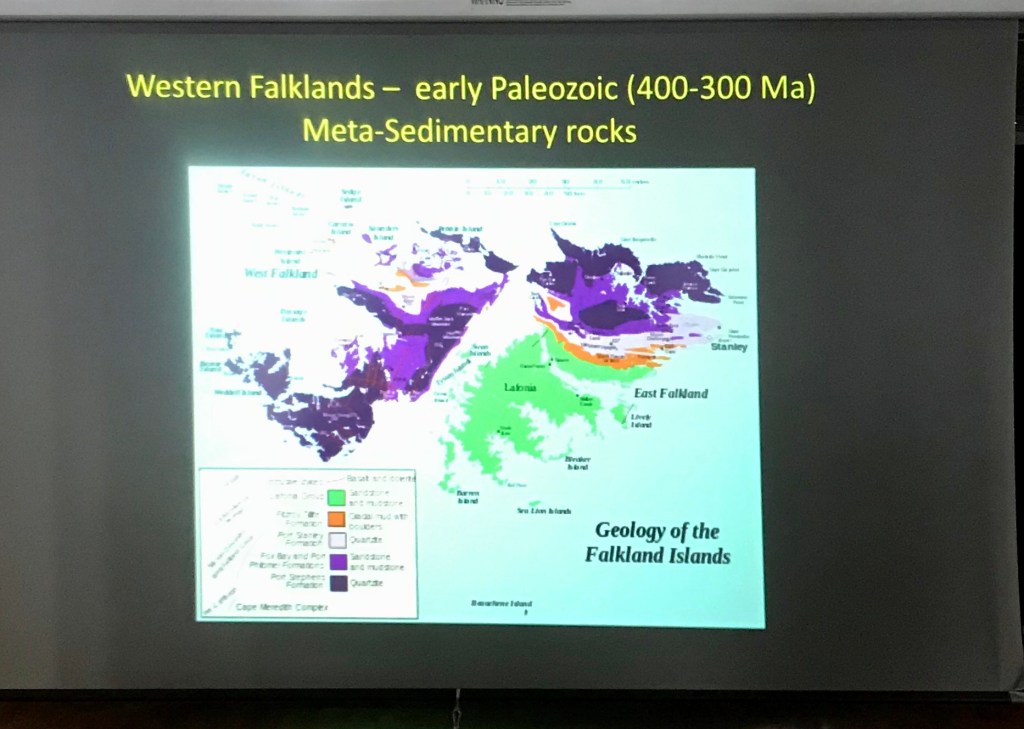
Rock hoppers love quartzite. Then DJ on plants. 348 species on the Falklands (177 introduced). Yellow gorse introduced. Marram grass (introduced). Tussock grass – native – yesterday afternoon. Up to 3m tall. Fabrice. Talking penguins. Sealers used penguins as a substitute for firewood. Then used for oils. 250 skins made only a small amount. The great auk was killed out. 3 million penguins killed. Stopped about 100 years ago after the great auk became extinct.
Claire geopolitics. Fishing the main industry in the Falkland Islands. Squid is big. 250 nautical miles from the islands is a British exclusive economic zone. The squid jiggers create bright light (which can be seen from space). 300,000 tonnes per year in illegal take which is more than the legal amount. Albatross with radar being used to try to stop this illegal fishing.
Finally our expedition leader Solan. 750 nautical miles to South Georgia. (900km). Tomorrow, (Christmas Day), there will be a deep clean operation to ensure we don’t transfer anything from the Falklands to South Georgia. Wind event moving past us. Should be gone by the time we get to South Georgia.
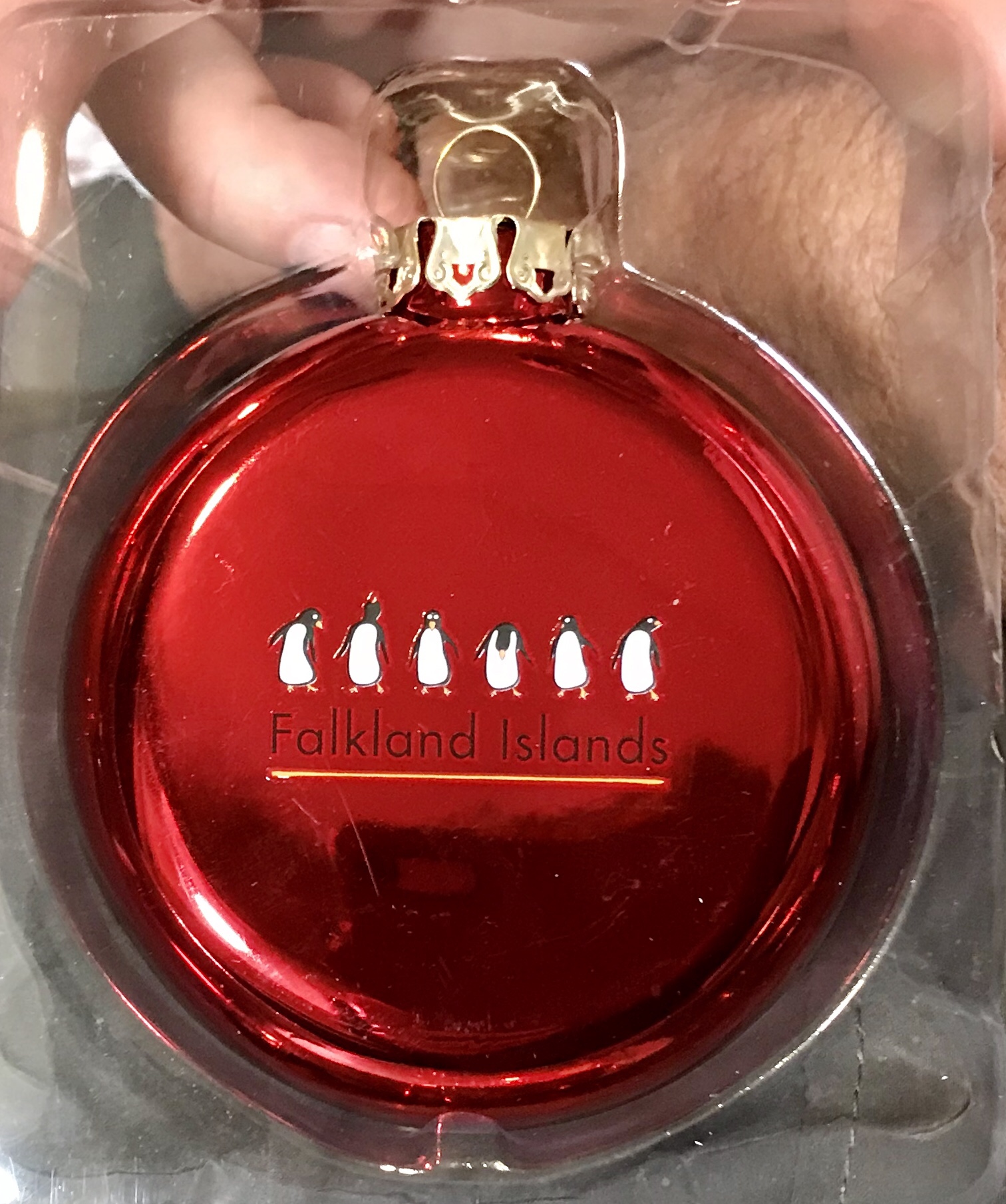
Oh I almost forgot that I picked up a second Christmas dec in the Falklands.
So now time for the Christmas Eve market dinner and hat competition. Still this post is already long enough so I think I’ll leave that until tomorrow. Ciao.

 Antarctica 2019
Thanks for the geological map, Cheryl! Think Austin the geologist will retire soon and need replacing?
LikeLike
You never know but DJ is also a rock nerd so we had two on board.
LikeLike