Our blogs to date have been about trips outside of Australia, (with the exception of the Kangaroo and Cycling blogs…), however this year we have decided to do a bit more at home. We have trips planned to Queensland soon and I have started a brand new blog which will capture all of the trips within Australia.
Want to join in the fun?
Sign-up for the new blog landdownunder.travel.blog by clicking on this link and entering your email address where instructed. We’d love to have you along.
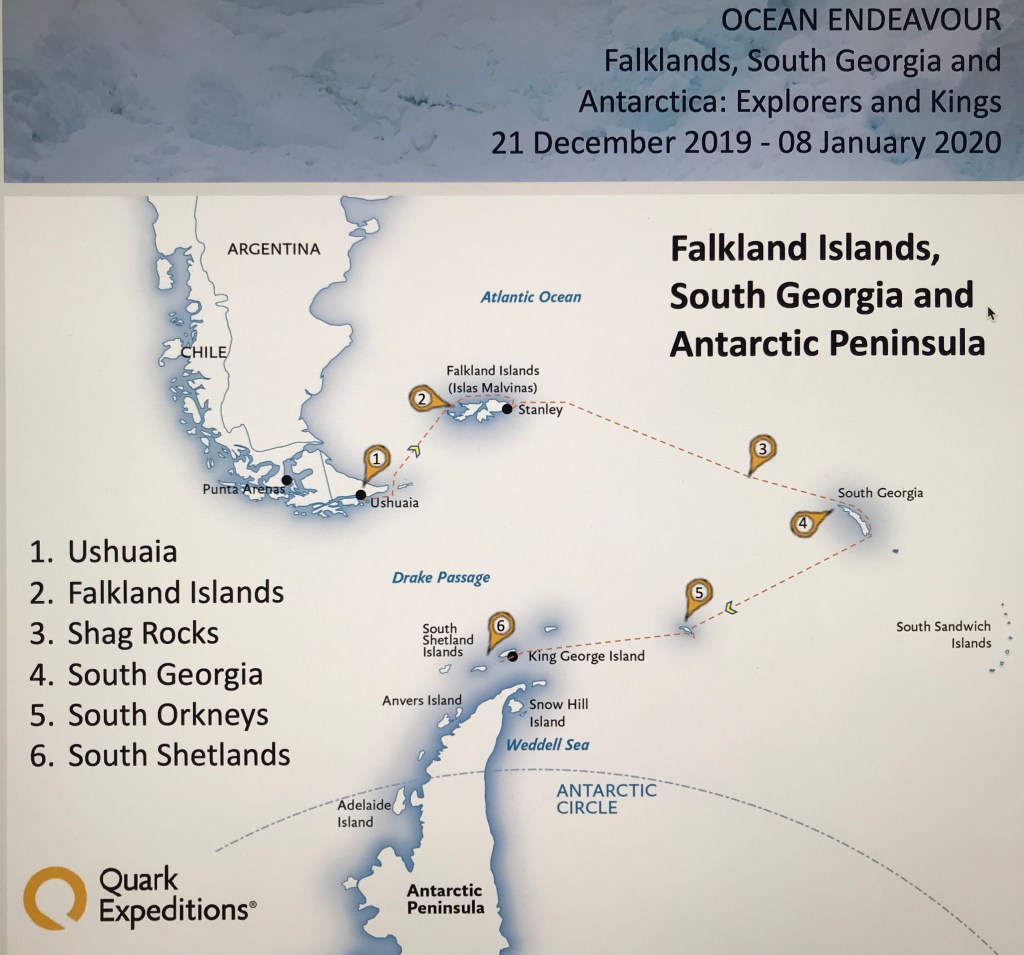
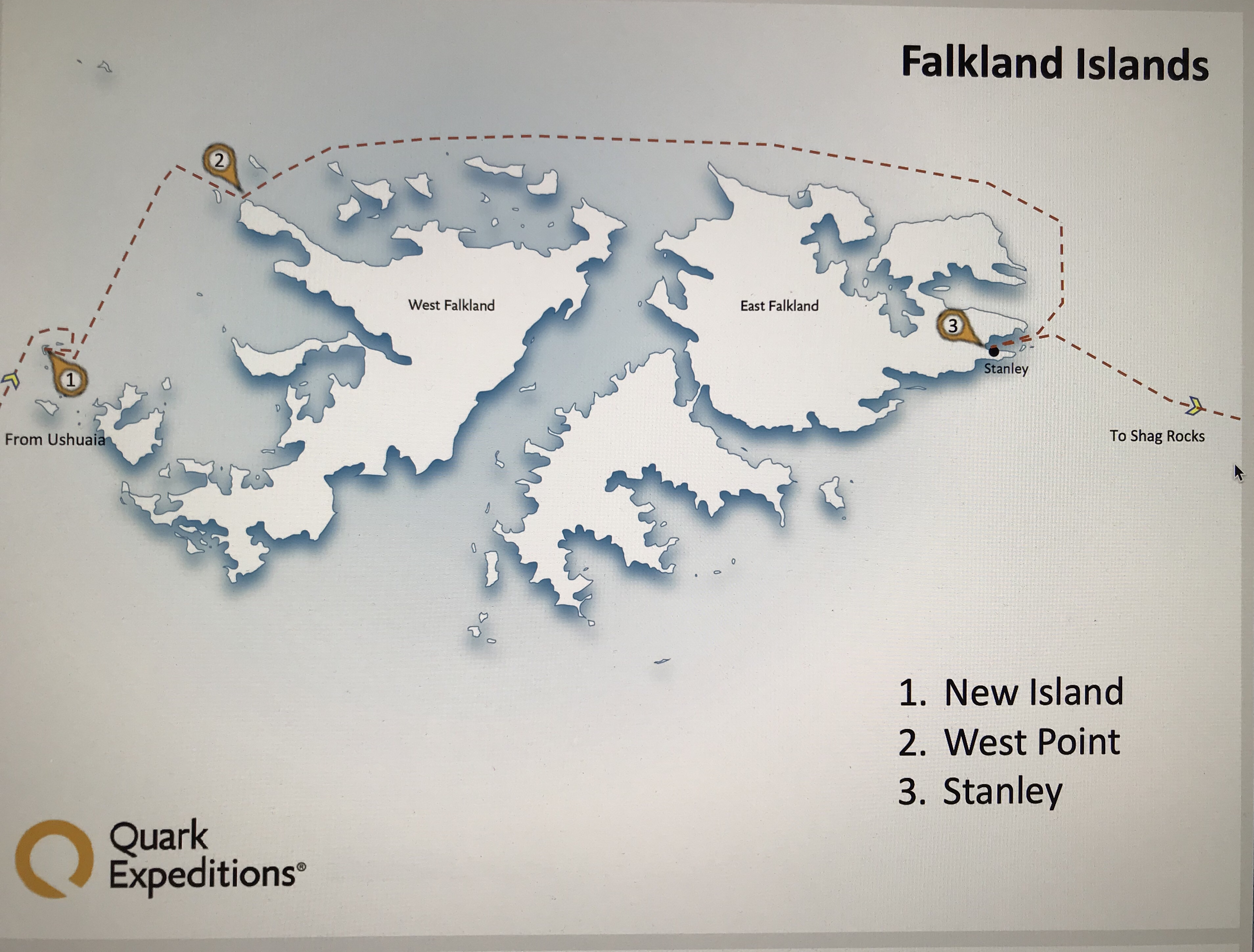
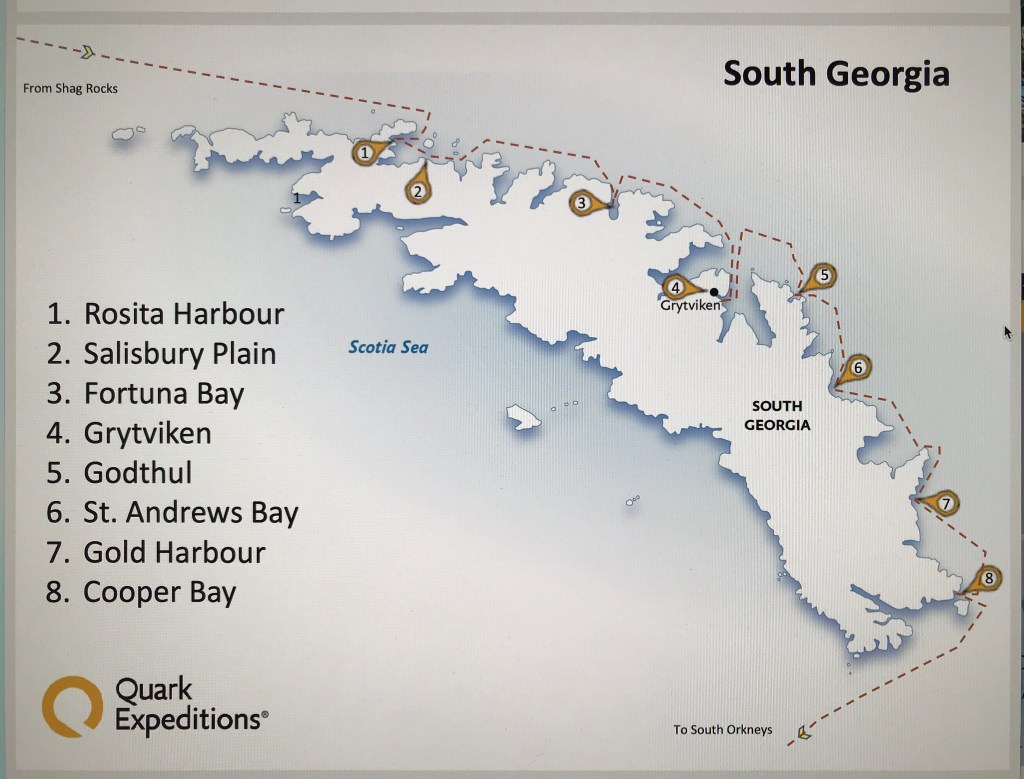
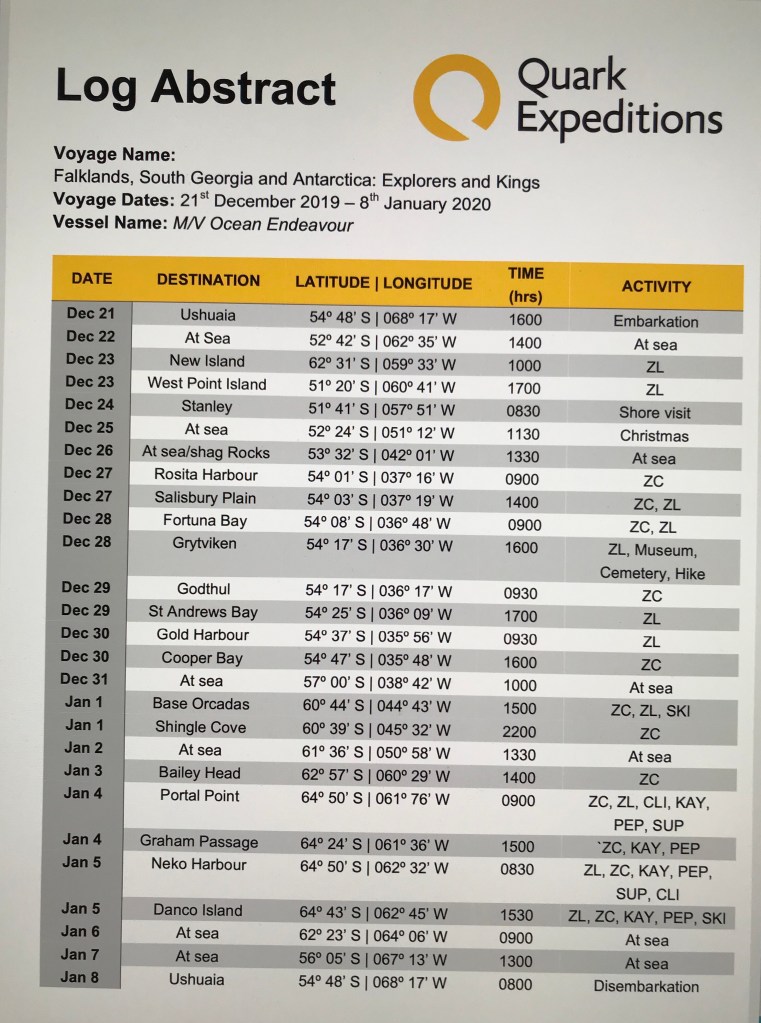
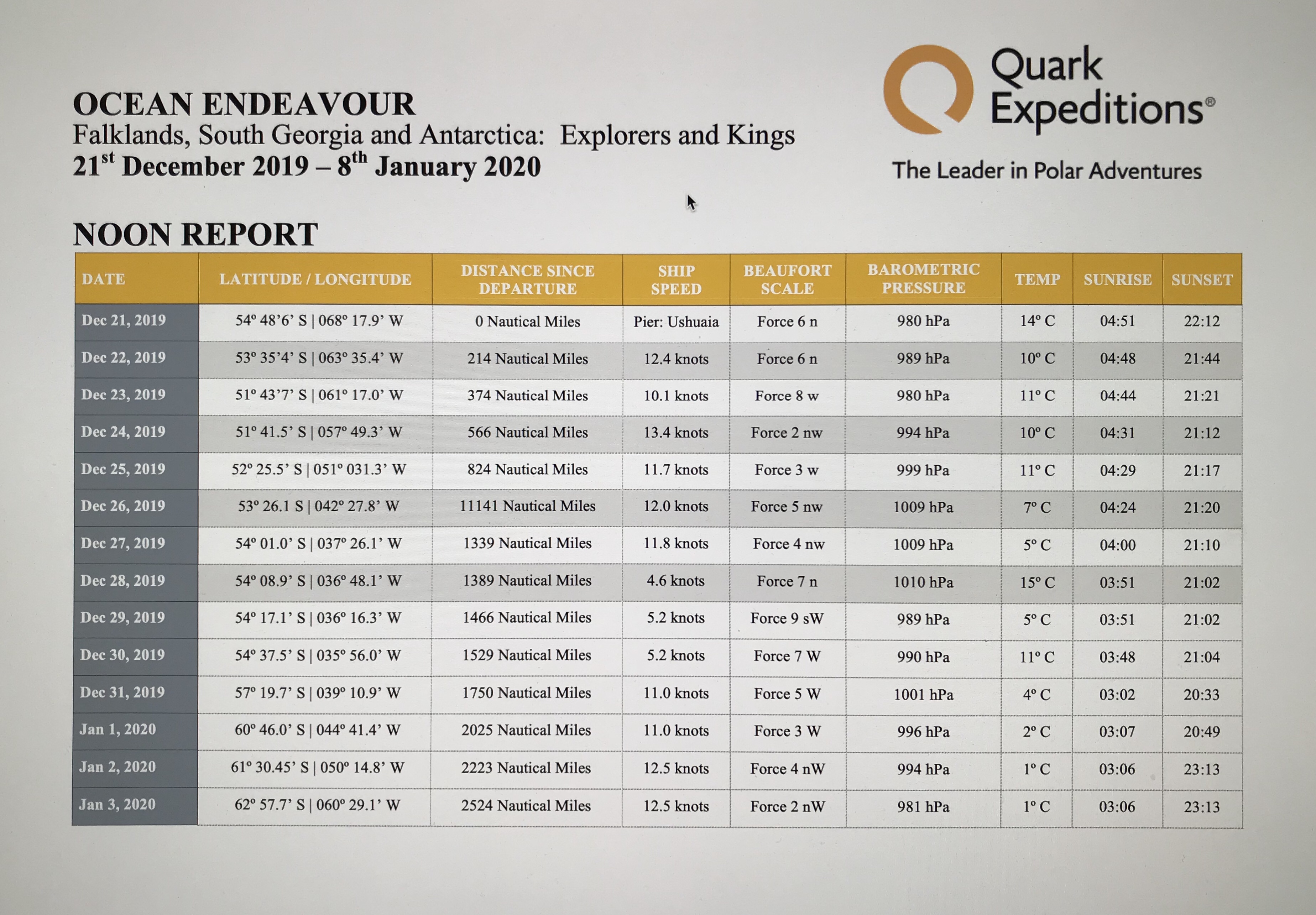
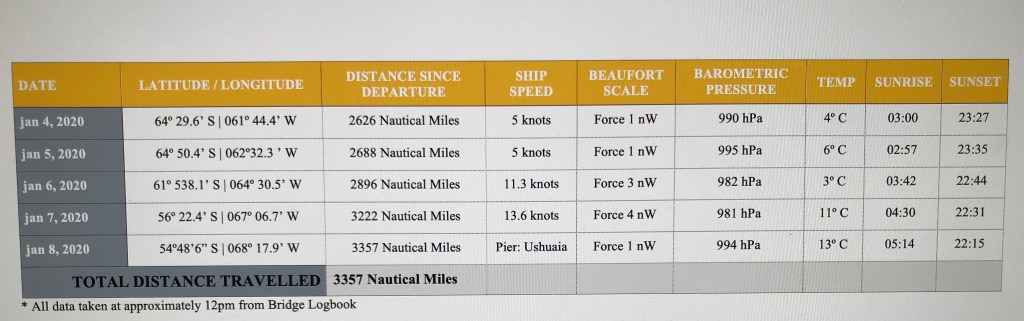
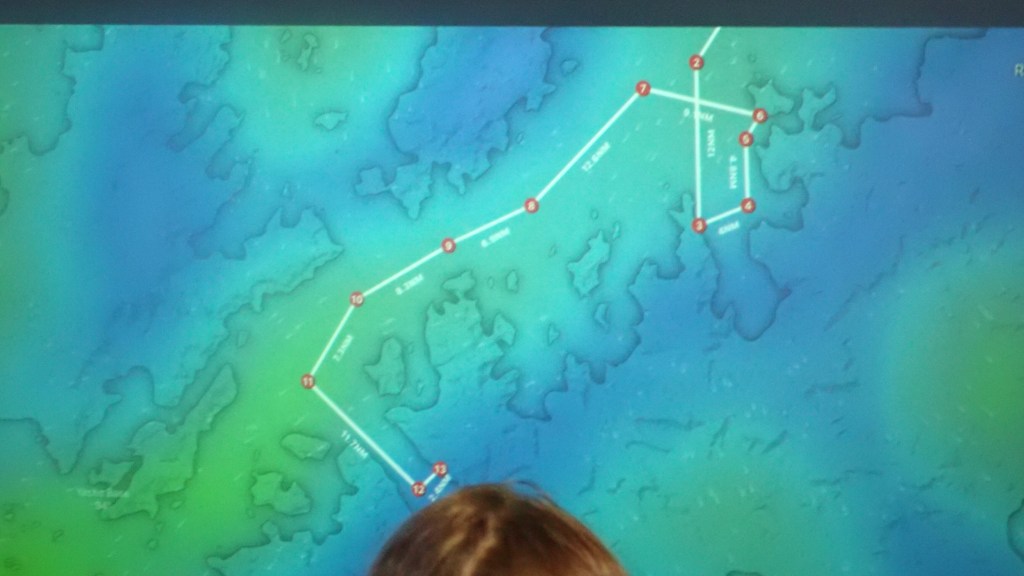
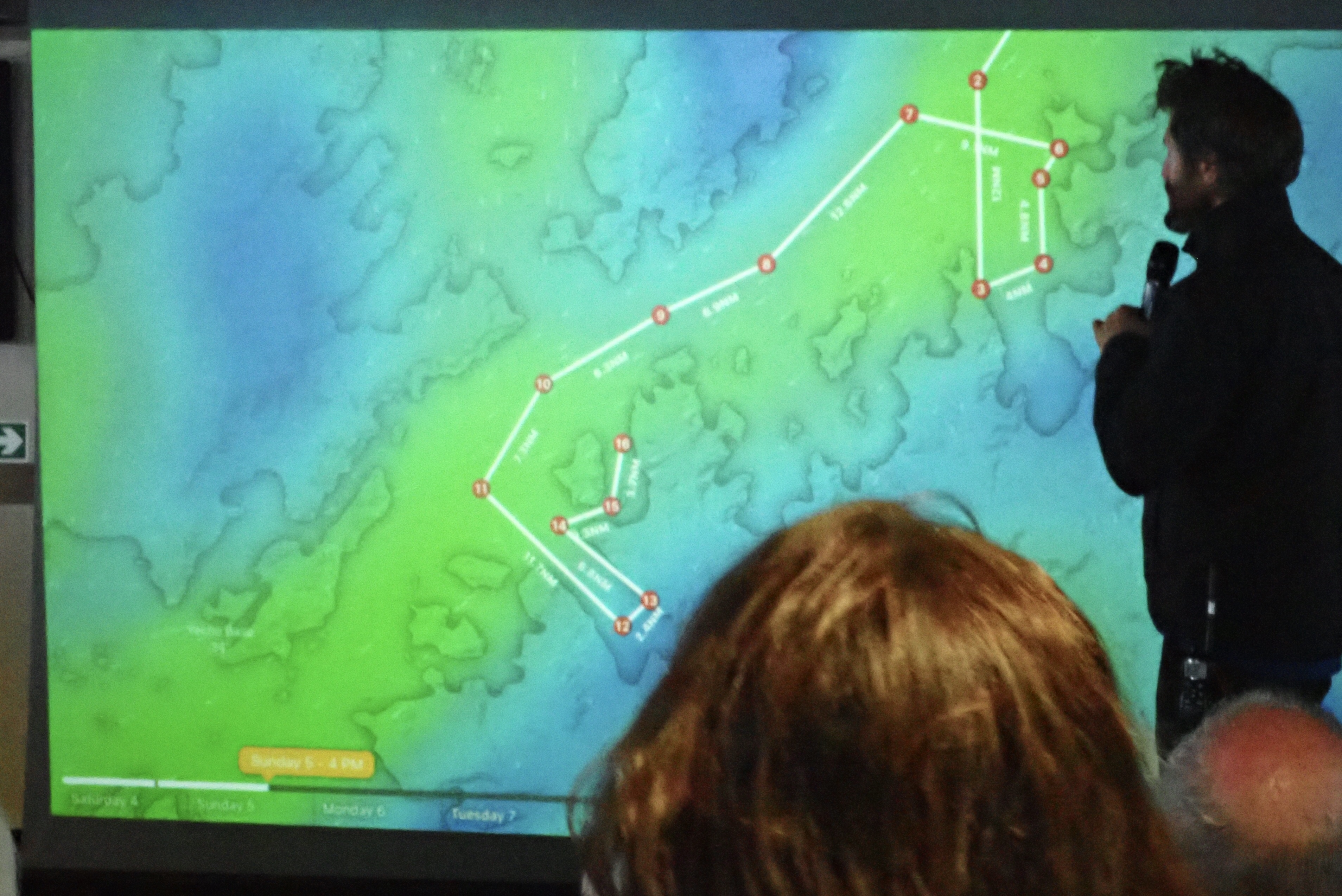
Well this was one amazing trip and one we would so much recommend. Let’s start with the trip maps.
Logs were kept on a daily basis and included in the information sent to us post trip.
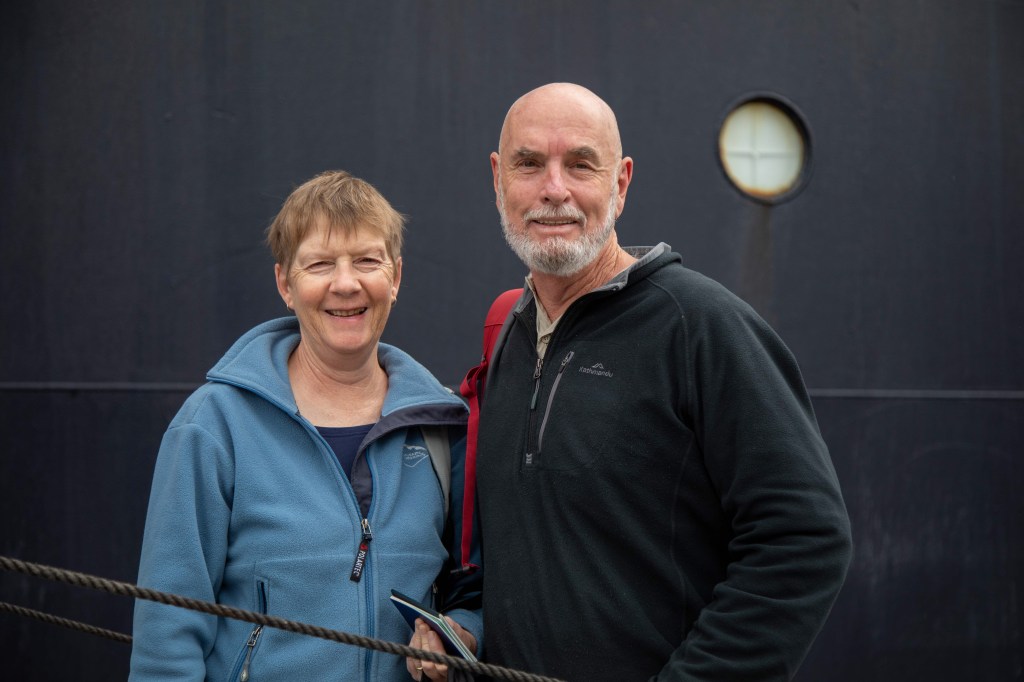
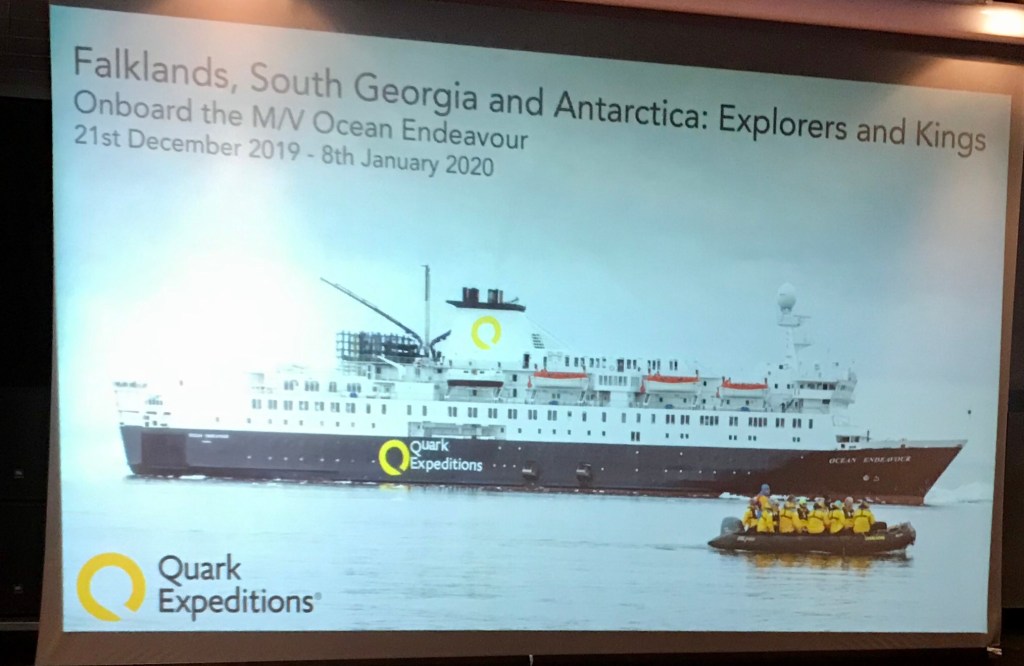
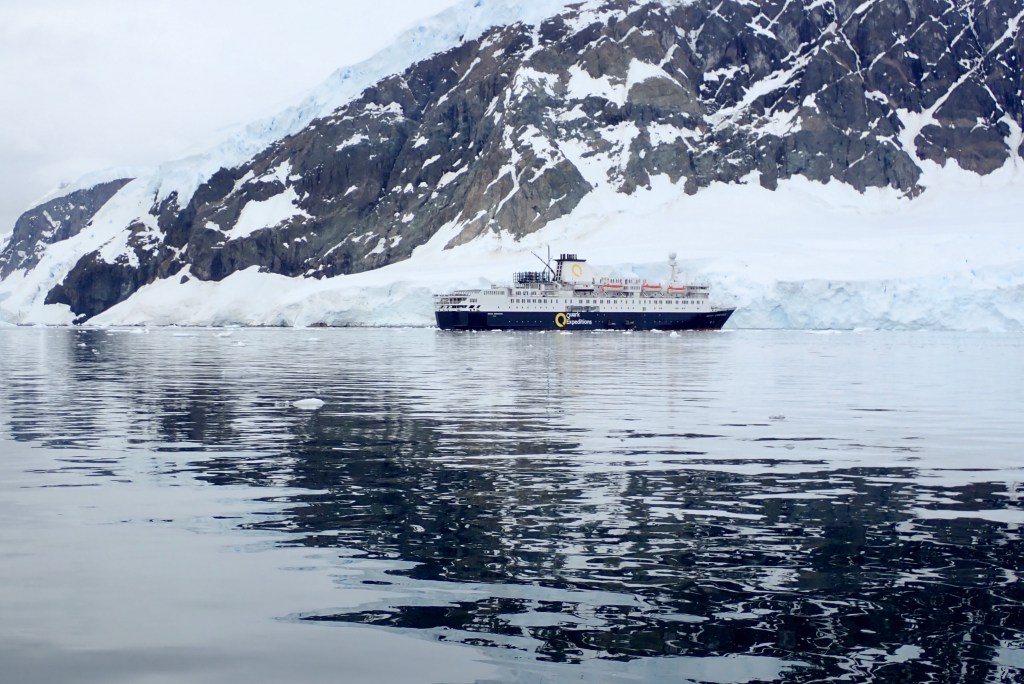
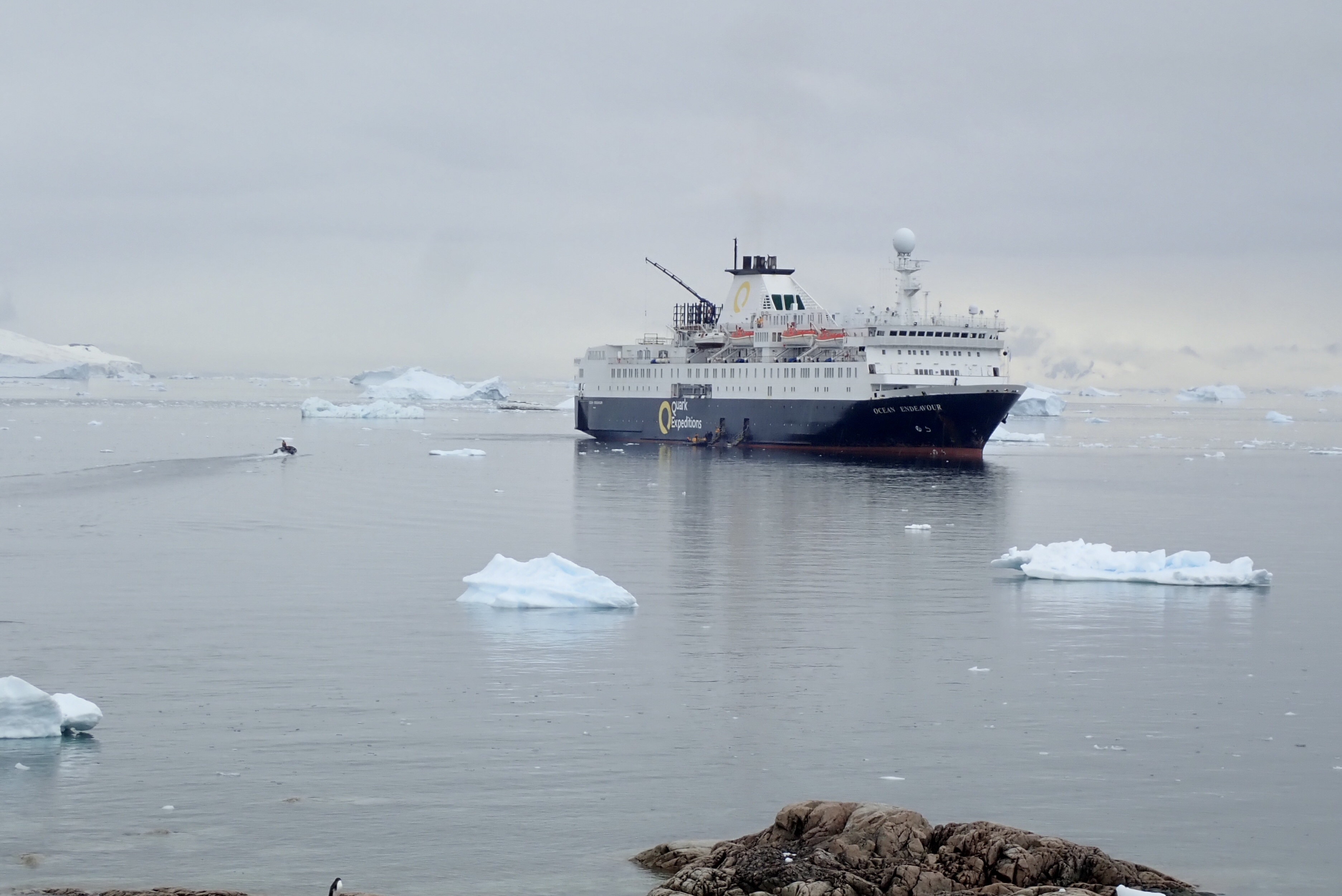
Here we are about to board the Ocean Endeavour back in December 21st.
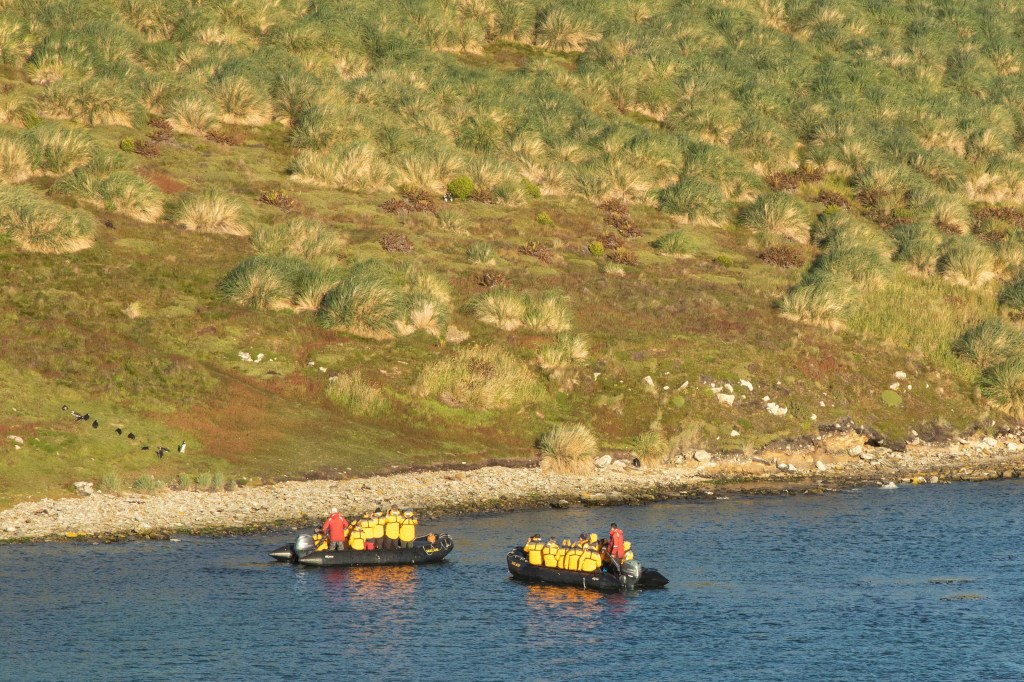
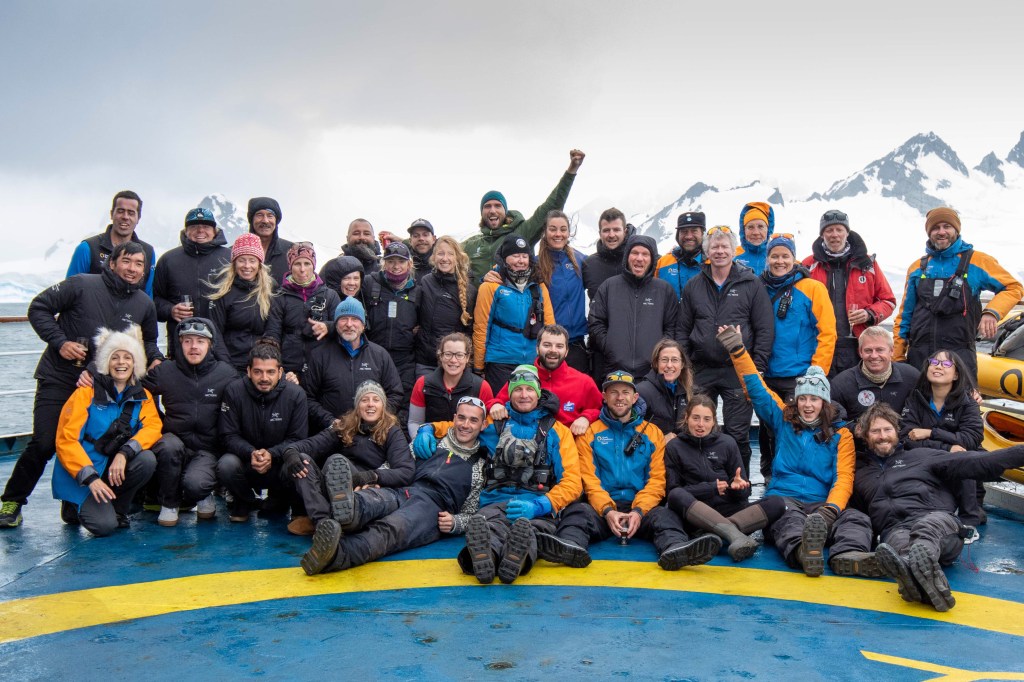
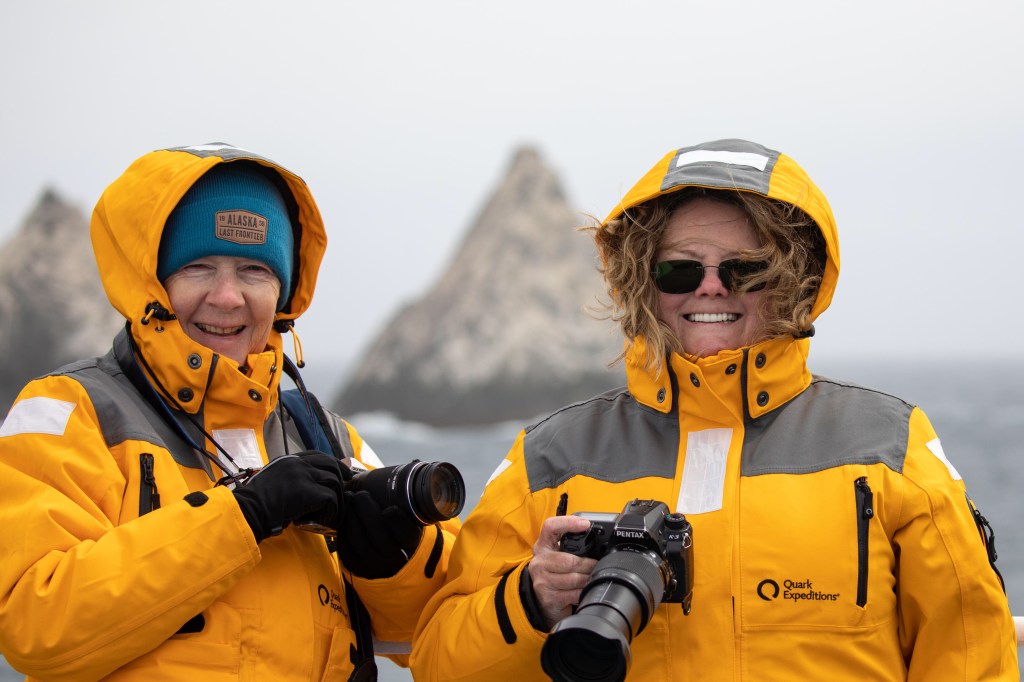
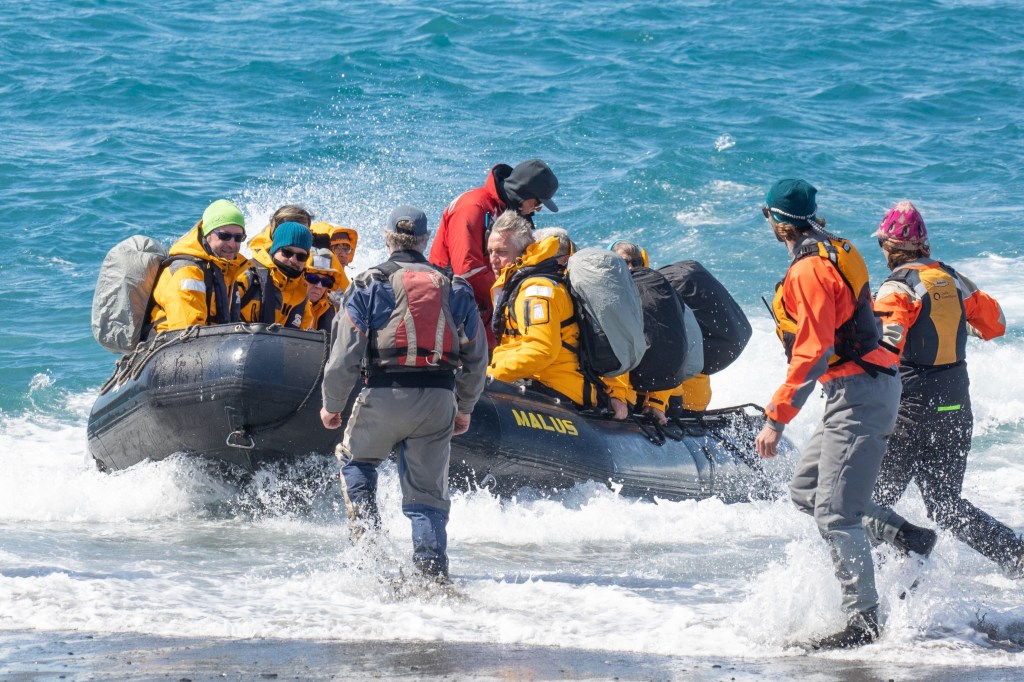
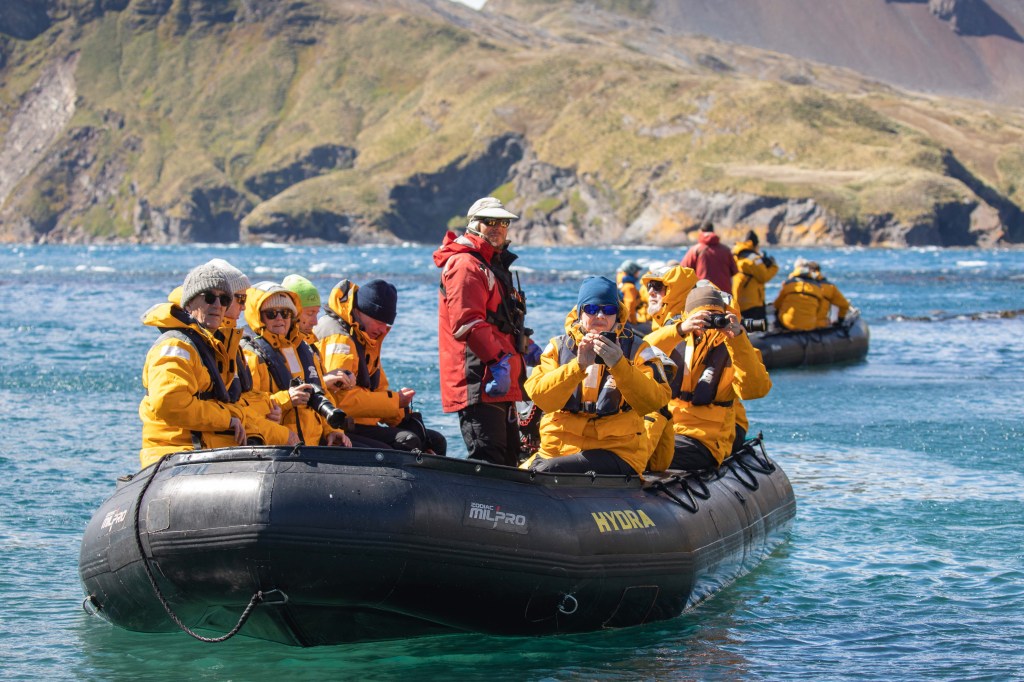
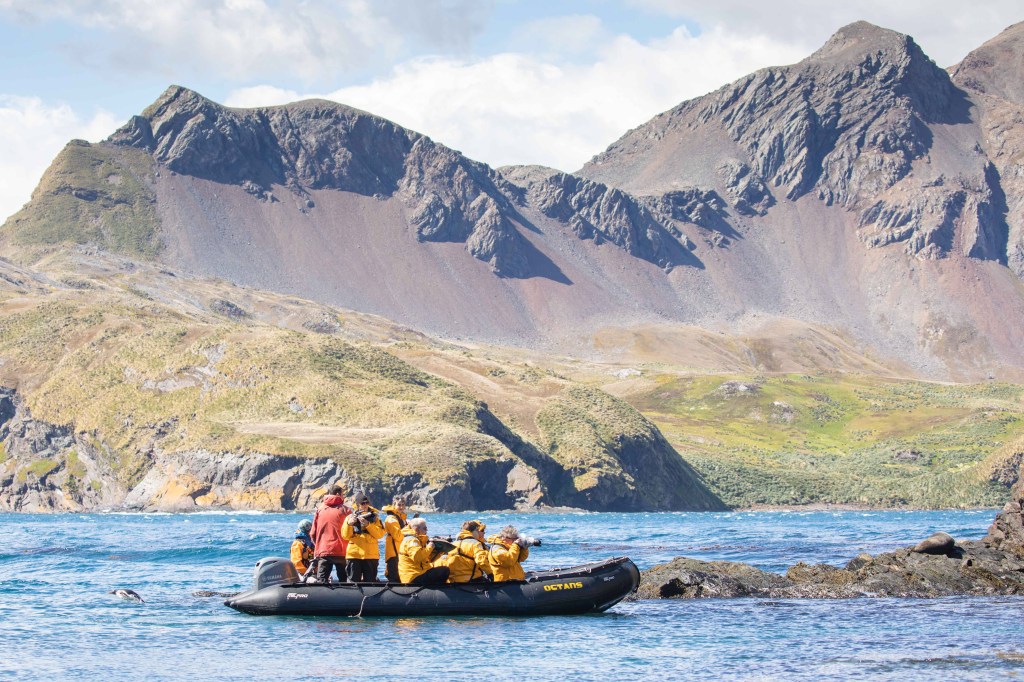
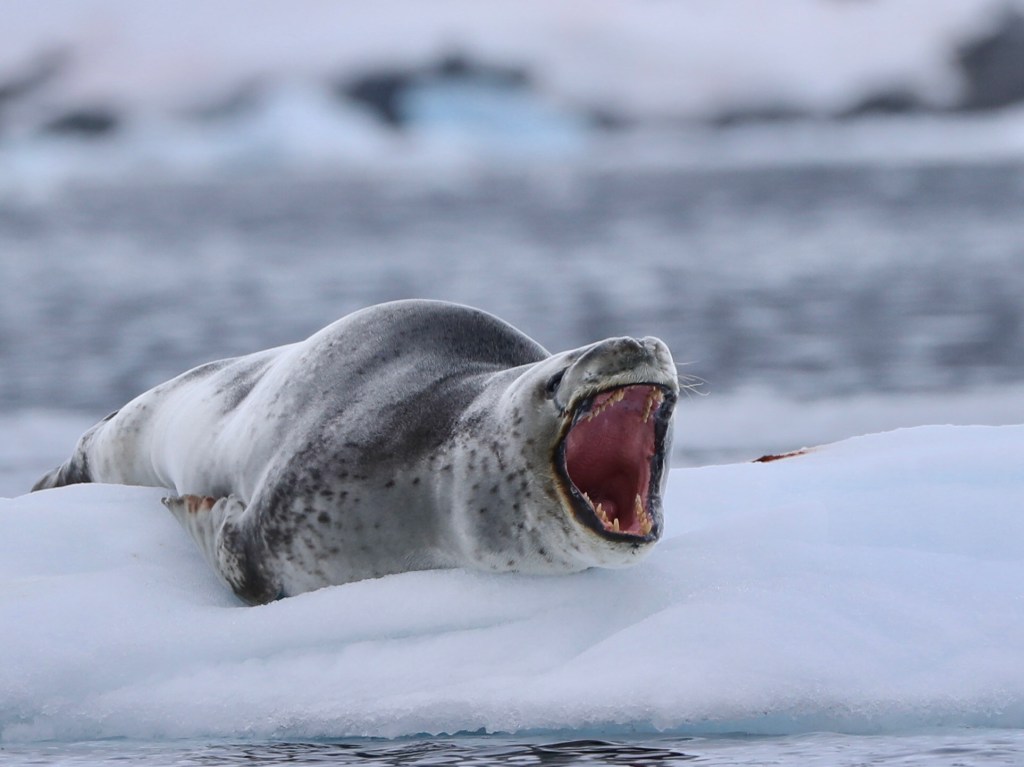
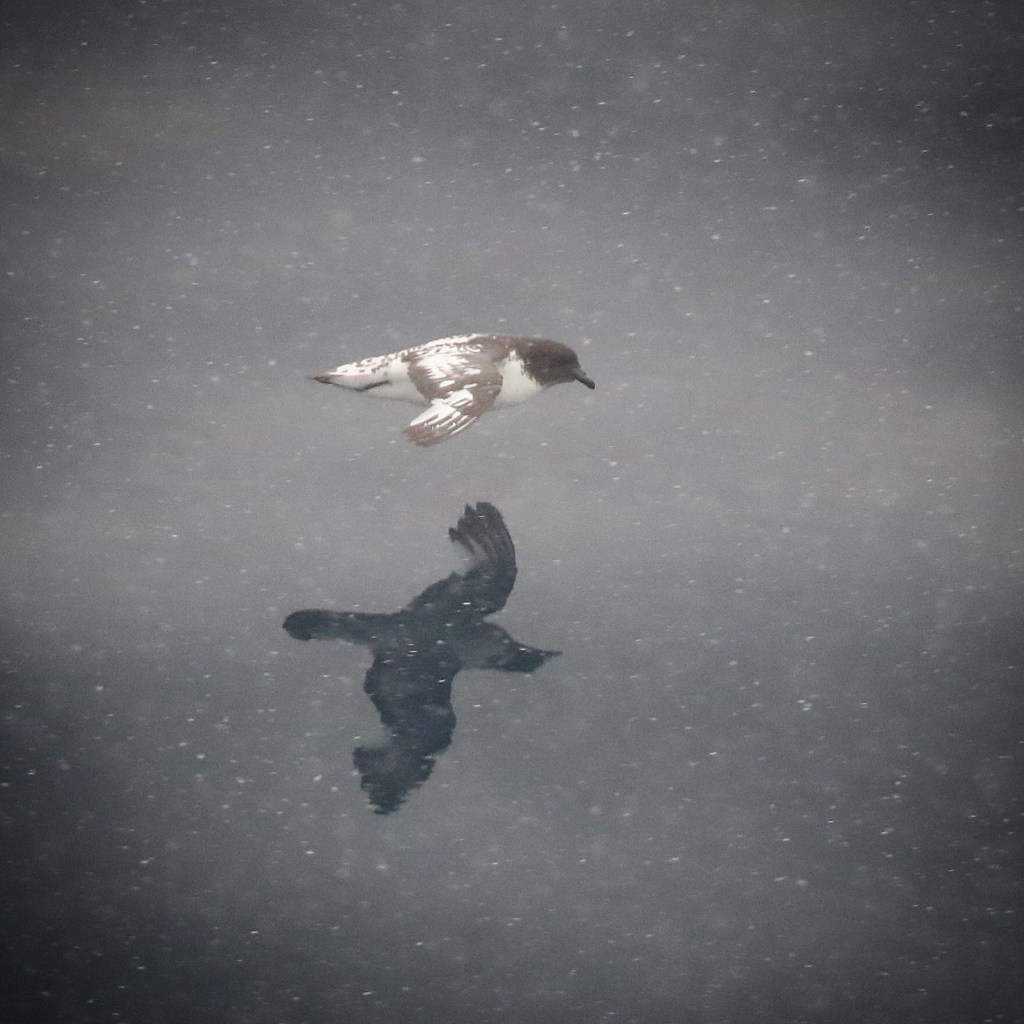
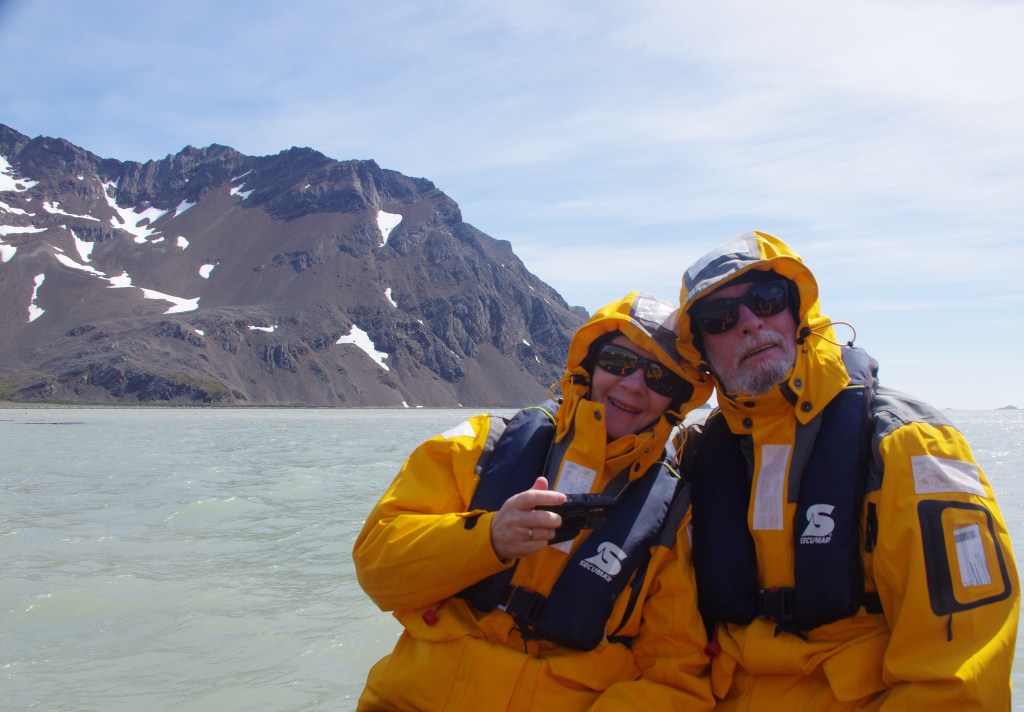
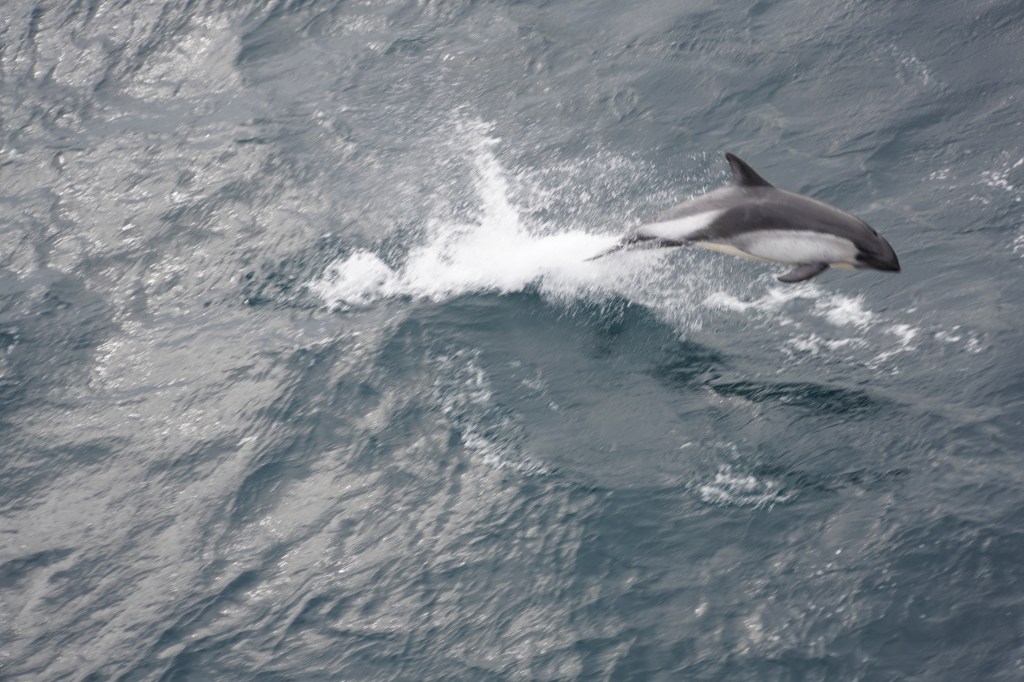
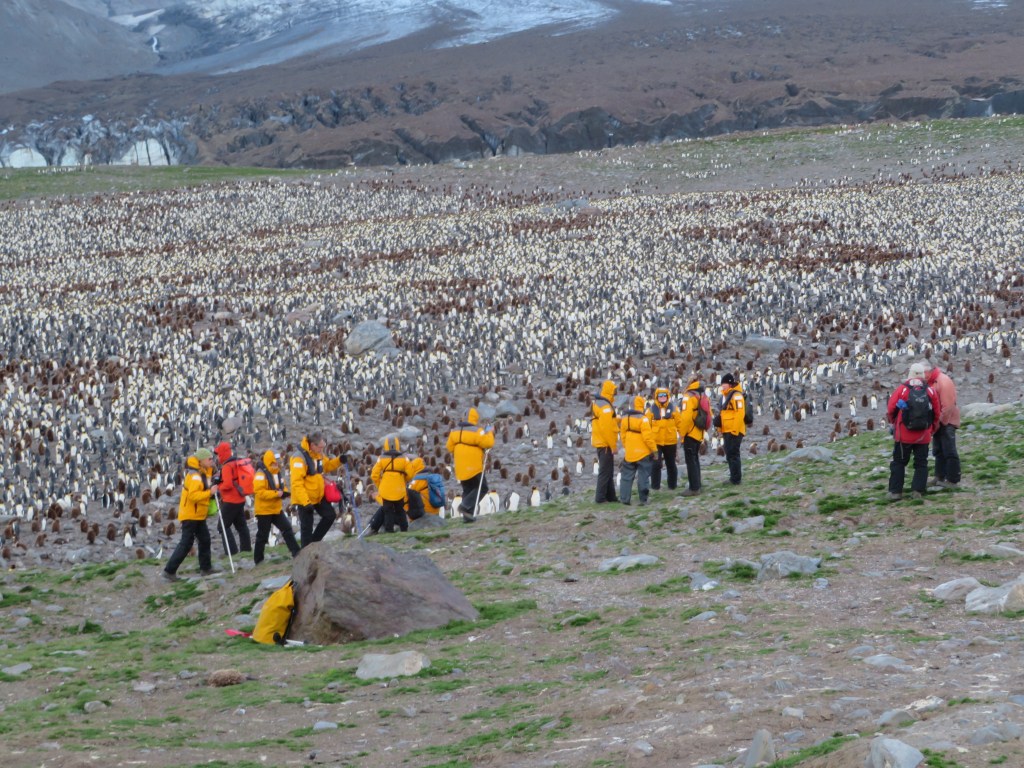
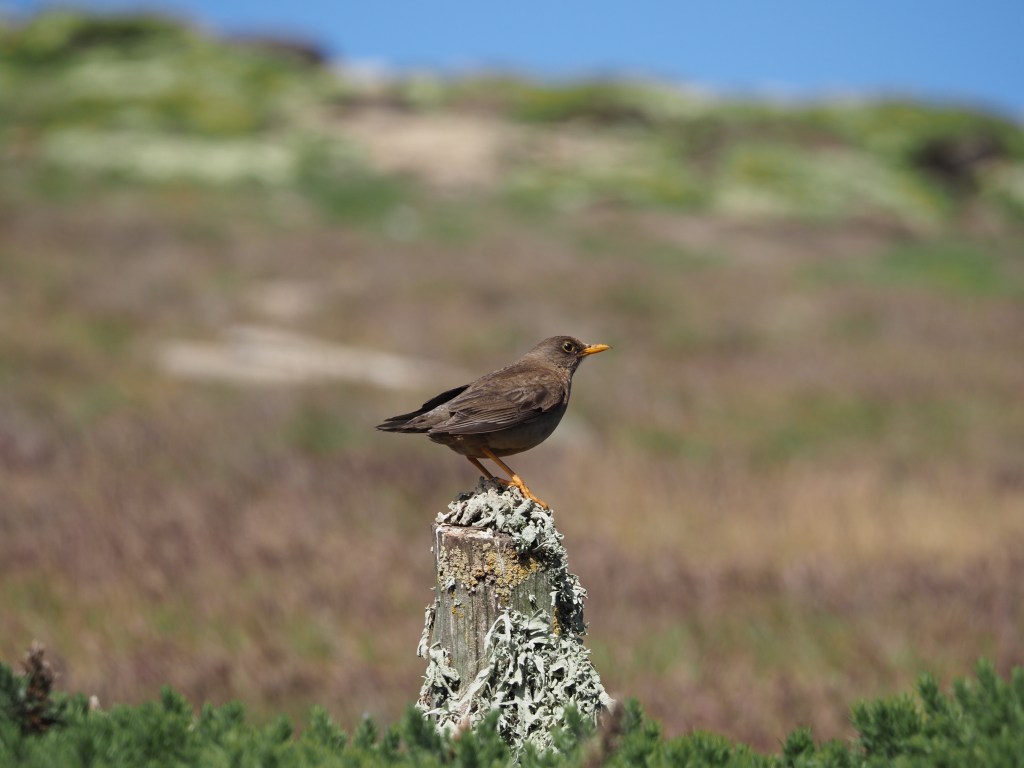
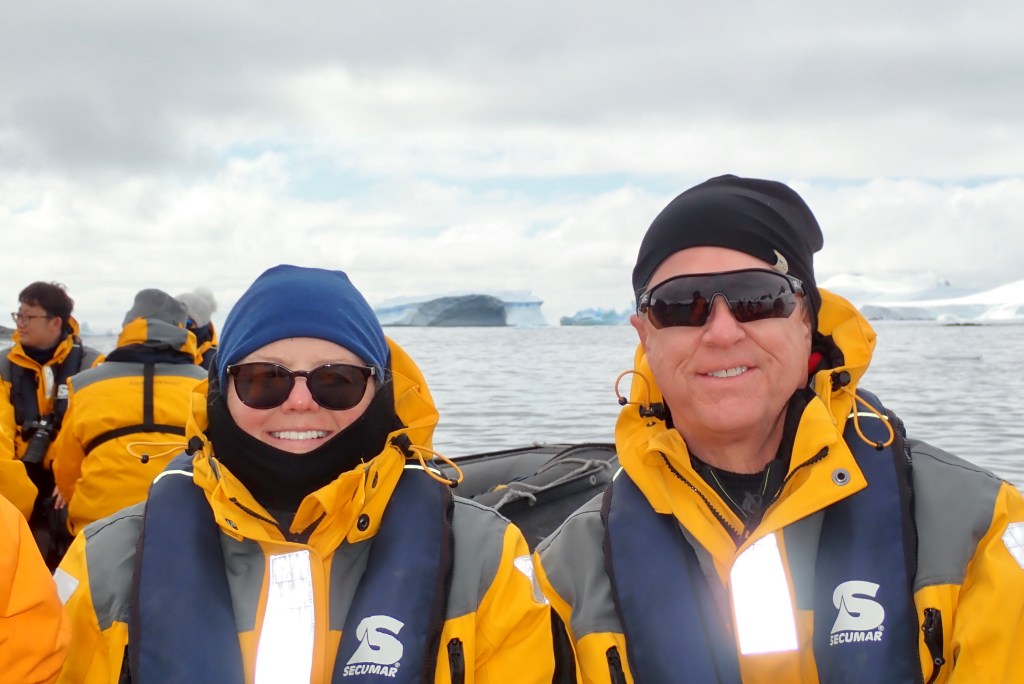
Photo by Michelle Sole.We could be in one of the zodiacs looking at the Magellanic penguins on the Falkland Islands. Photo by Michelle Sole.Our wonderful expedition team. Photo by Michelle Sole.The two Cheryl’s at Shag Rocks. Picture by Michelle Sole.We’re not on this zodiac but a great shot by Michelle of a surf landing.We’re on this one. You’ll spot Garrie fairly easily on the right and I am hidden next to him. Picture is again Michelle’s.Another shot by Michelle that I just loved.No one’s name on this one but what a great shot of this leopard seal’s teeth.Another great pic with snow as well but no name. It’s a cape petrel.The two of us by the other Cheryl.We missed this moment. I think it is a Peale’s dolphin but how special. No name attached.Just the shear amazement of being with so many penguins.Tori’s great pic of a pipit on the Falklands.Again no photographer name but a great shot of a group being briefed by Solan having just landed by zodiac.What a magical pic of what we experienced.Action shot by Sergei Fedorov
Too many magical moments to pick just one. The seven different types of penguins, the multiple seals, the ice bergs, it was simply all so amazing. A couple of my favourite pics.
We would recommend this trip so much but please include the Falkland Islands and South Georgia and if you want to check out Quark Expeditions you now have the link.
So what comes next? Well at this point the next major trip is a river cruise in Russia, Moscow to St Petersburg with my good friend Debbie in August so no beers of the day as Garrie won’t be there, (he isn’t a fan of Russia and I am a fill in as Deb’s husband didn’t want to go either), but if you have seen our bike riding blog , (written on what is now ancient technology), you will know Deb and I know a bit about fun too! Join us then.
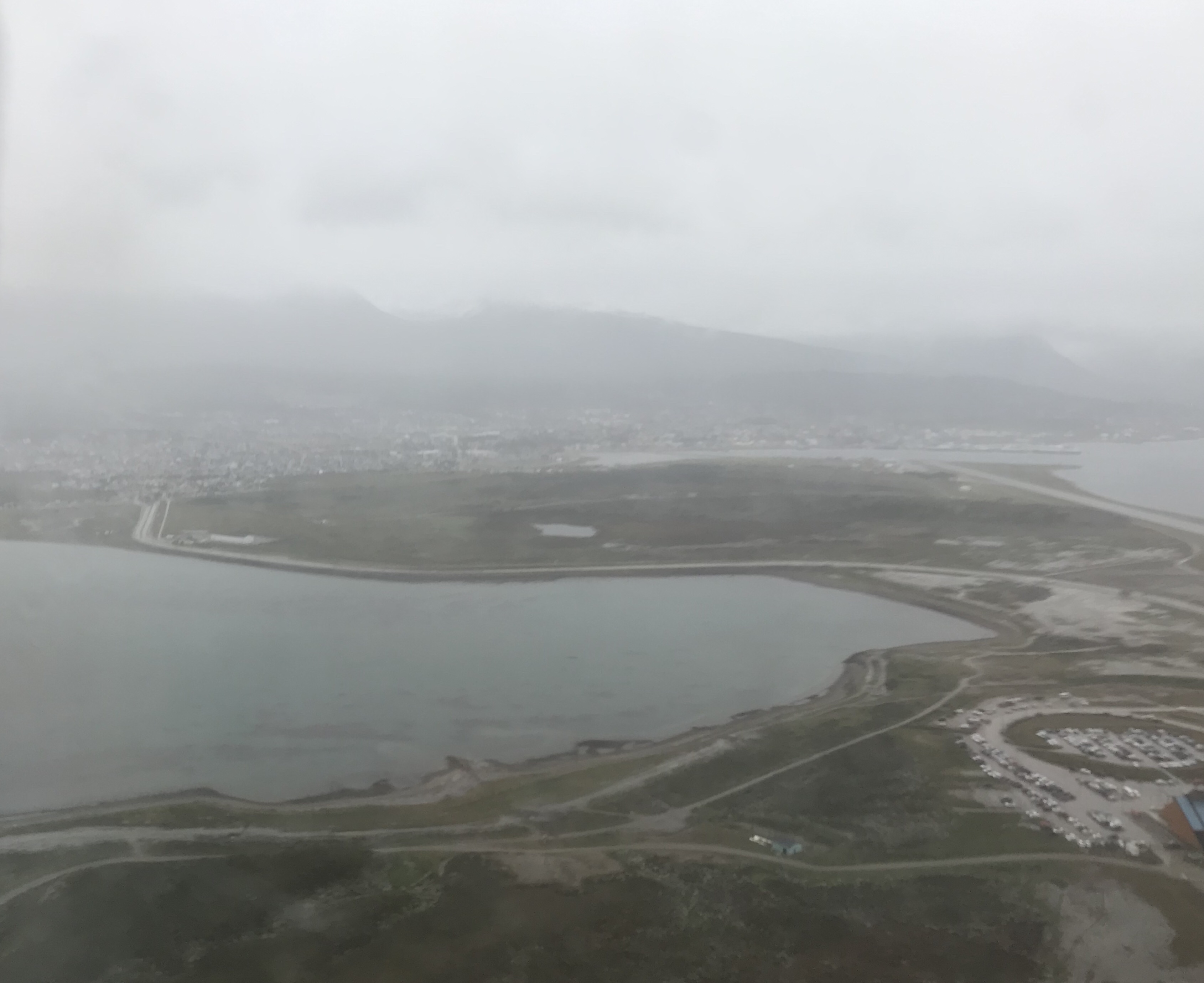
Sadly time to say goodbye to the Ocean Endeavour and a quick hello and then goodbye to a very cold and wet Ushuaia.
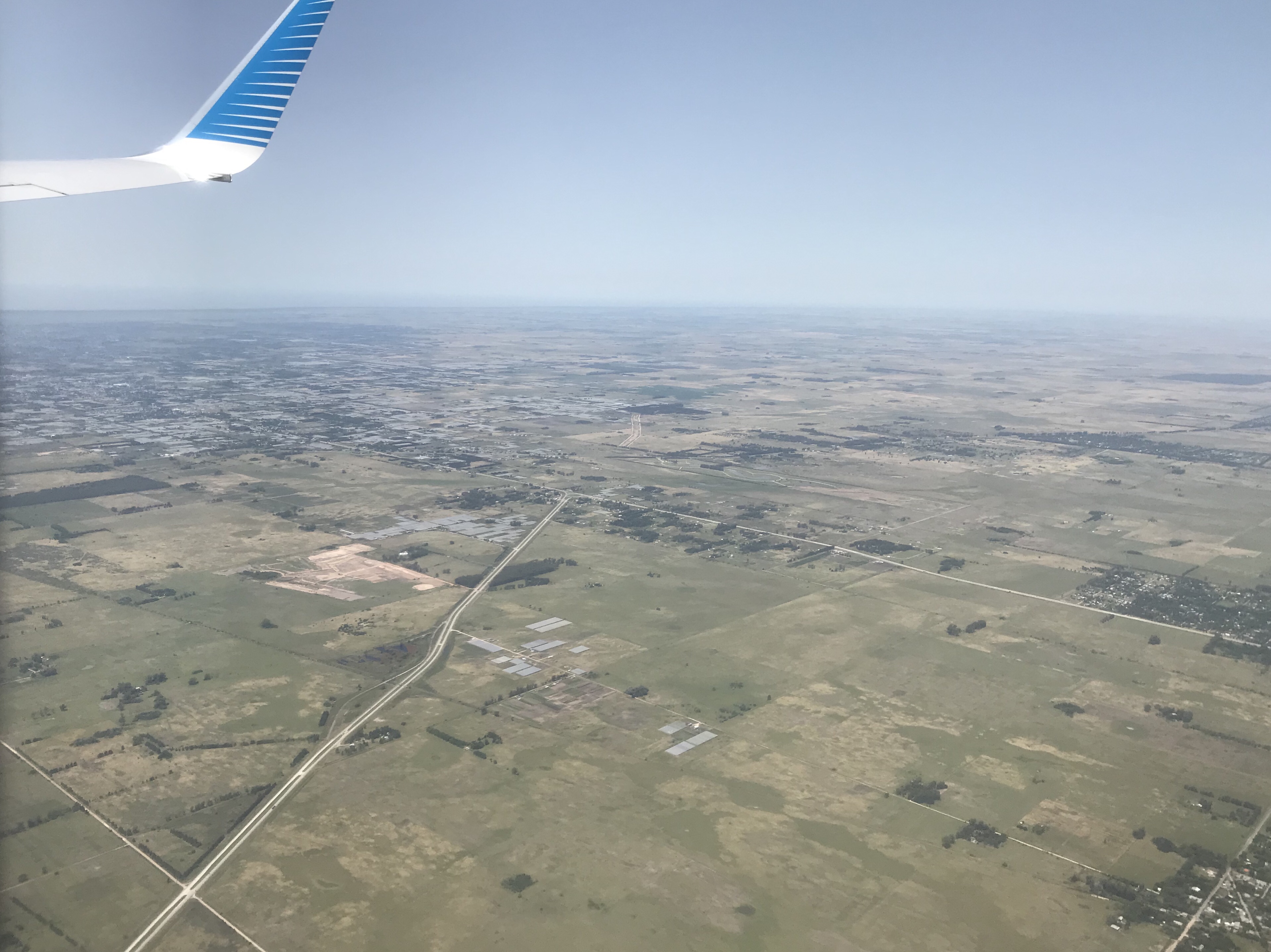
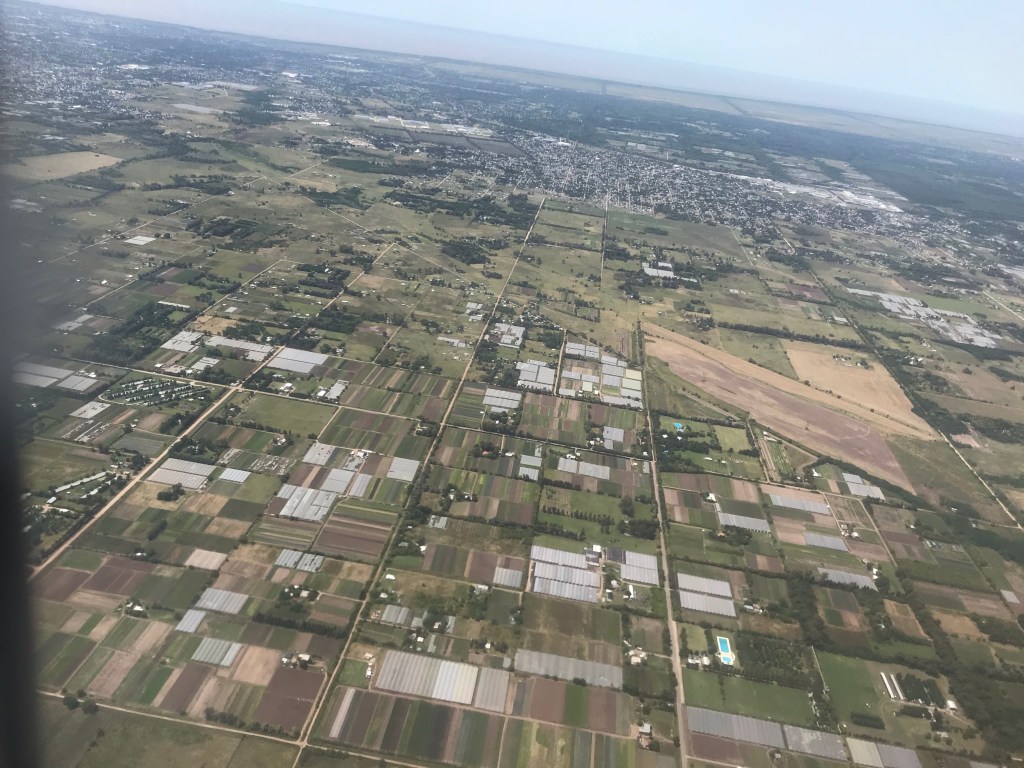
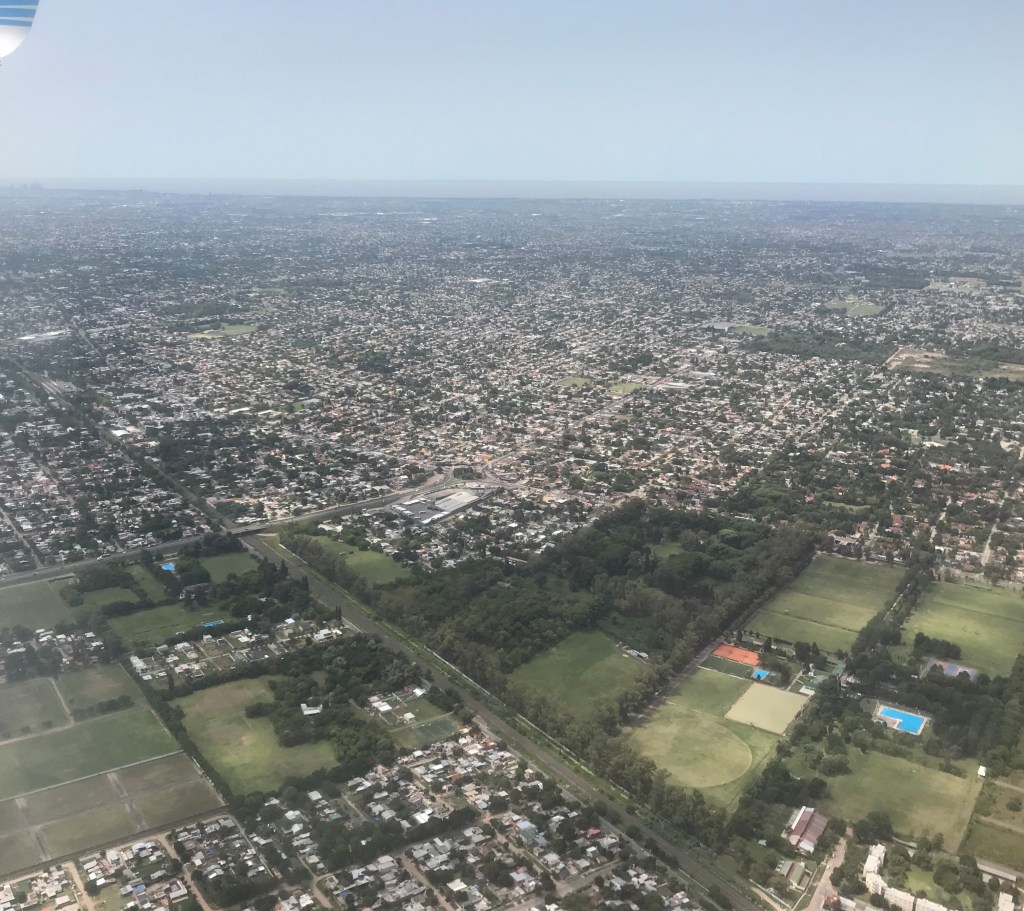
And then hello to a dry and hot Buenos Aires.
Firstly, and remembering I am still coughing better than any fur seal and feeling even worse, our driver was not waiting for us at the airport. I was too ill to look properly at my organisational sheet and remember that it was a Peregrine driver and that I had a phone number for them, so I asked the Quark people to ring the hotel who didn’t know anything about a driver – for obvious reasons.
So the lovely Quark people suggested we take a taxi to the hotel. They also told us not to go outside to the black and white cabs, (who charge what they please and often double the official rate), but to queue within the terminal for an official taxi.
Long story short it took almost two and a half hours to get out of the airport. Then we had the cab driver from hell who scared us both and me particularly when he drove close to the concrete road dividers that take me back to the “elephant incident” of 1999.
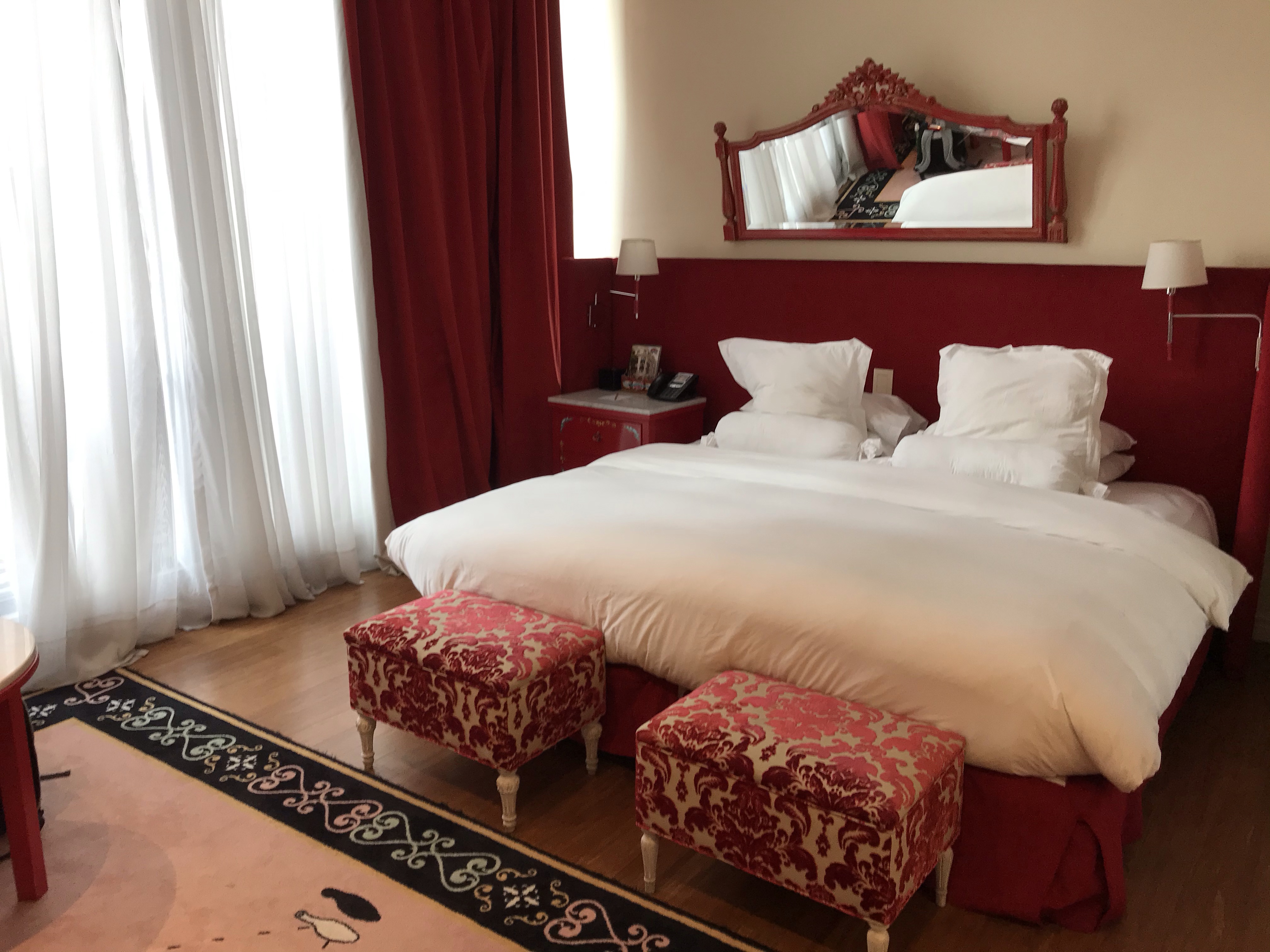
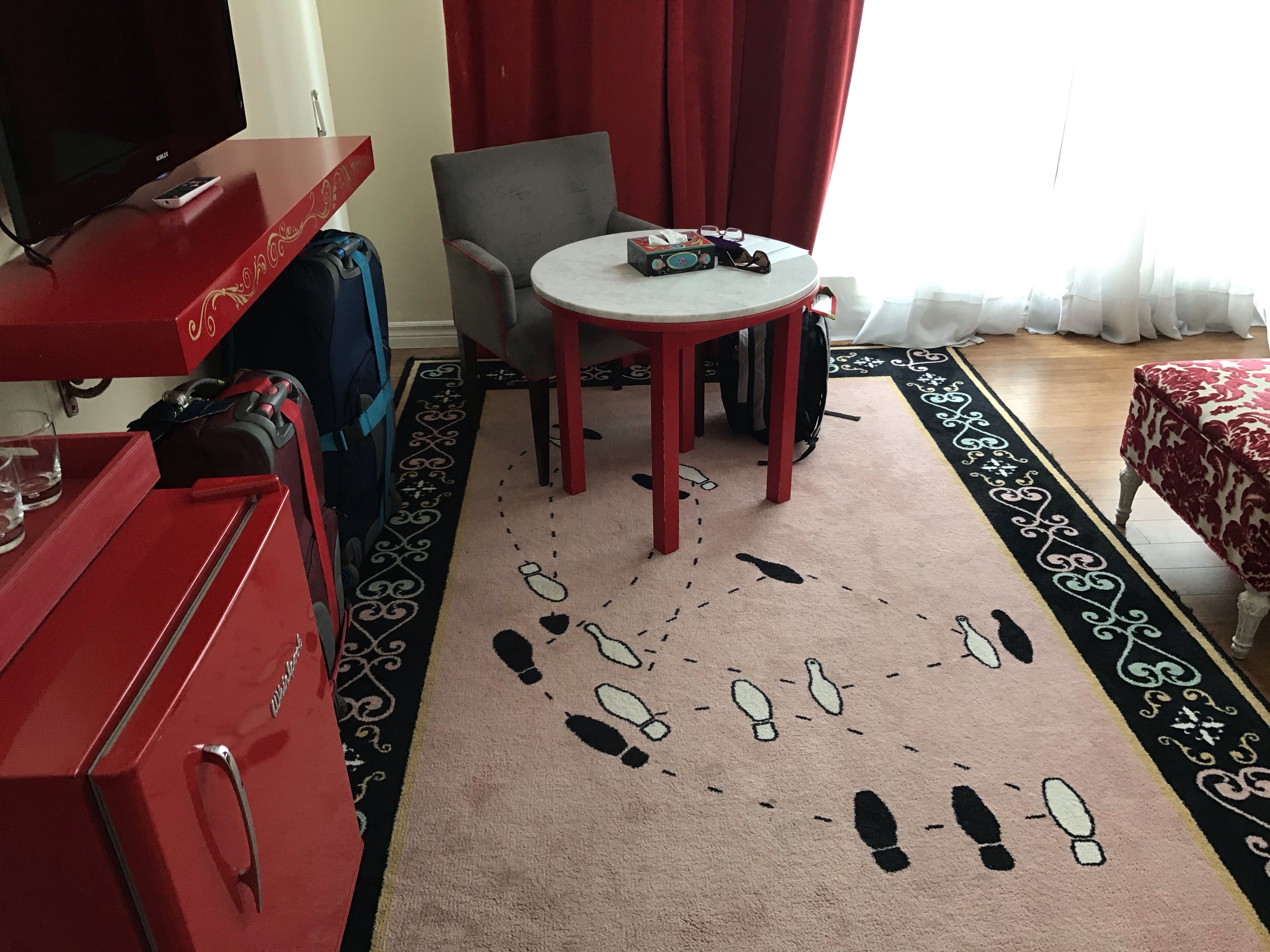
Finally we arrived at our very quirky hotel – the Tango de Mayo Hotel. Yes it is all about colour and the tango.
Sadly I was way too exhausted and sick to appreciate it and just collapsed into bed for the next day and a half until we were ready to fly home (apart from a trip to a local chemist, who had little English but who leapt into action when she heard my cough providing cough mixture and lozenges).
Sadly the hotel was not well sound proofed and was on a very busy road, so is not one we would recommend.
We had a day trip booked for the next day and Garrie went but much of it was to places we had been pre the cruise and he did not take a camera. He also skipped the tango evening which didn’t start until late and we had an early morning flight, via Santiago to Sydney.
So I was “that” passenger. You know the one you hear as you board and hope they are not sitting anywhere near you. The one with the horrible cough, that gets worse the more you try to suppress it, and the dripping nose you hope will go no where near the toilet you might want to use mid flight. Next time you board a flight and hear “that person”, maybe think a wee bit more kindly about them. I know I will.
Our plane landed in Sydney after the last flight to Coffs had left so we stayed at Rydges at the airport for one final night before heading home the next morning. I was simply too sick to take more photos or to take other notes.
So all that is left now is the wrap-up, however wait for it as it will include photos of us taken by others, some more animal pics and a few other maps and bits and pieces that finish off this very unique trip.
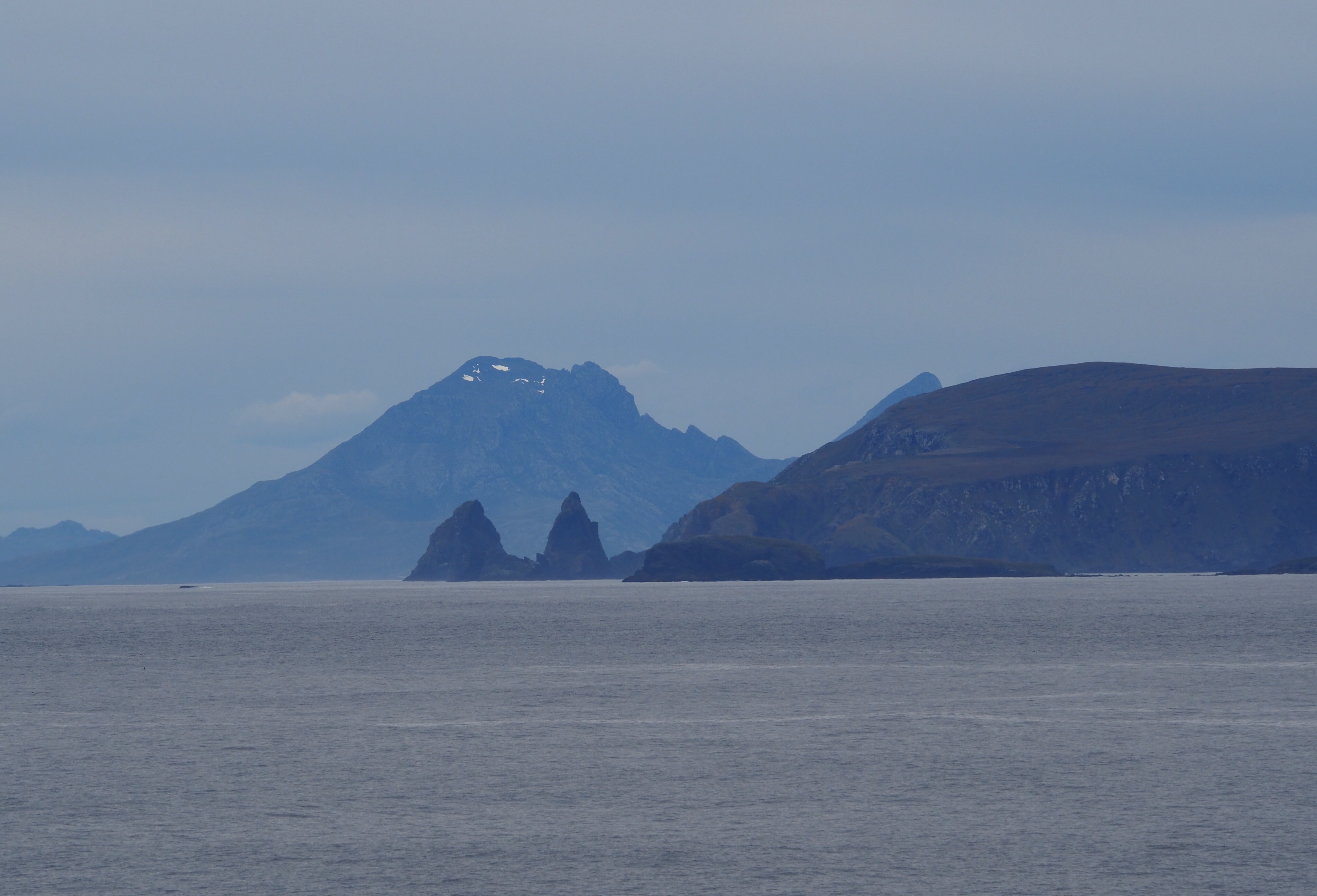
Yes Cape Horn is certainly an extra bonus. 10 degrees so a virtual heatwave too.
Garrie has become addicted to Seinfeld and I spent half the night coughing. (Janet and Doug probably still remember the sound from the Bike & Barge in 2014).
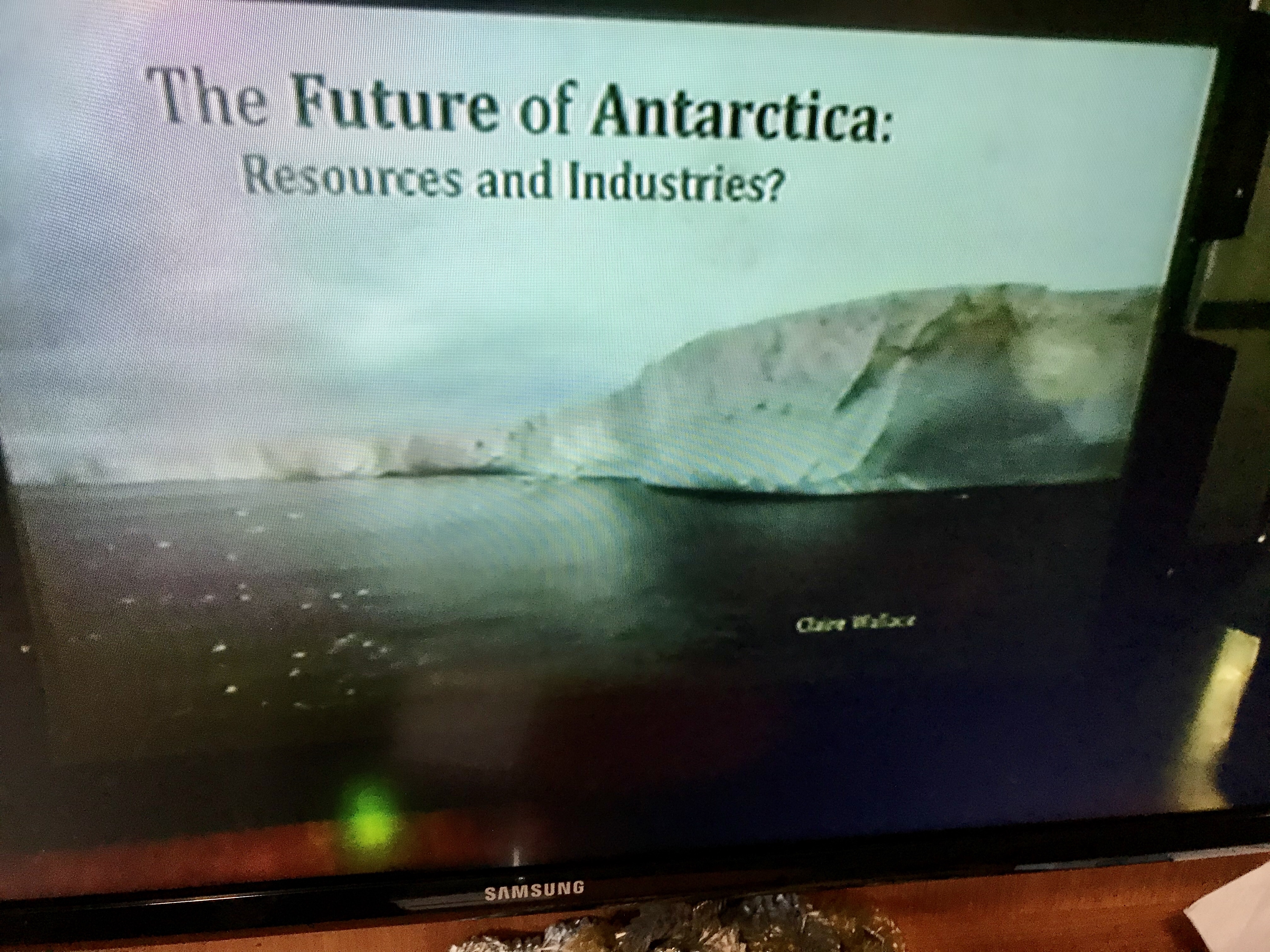
Presentation: The Future of Antarctica –Industries and Resources with geopolitics specialist Claire.
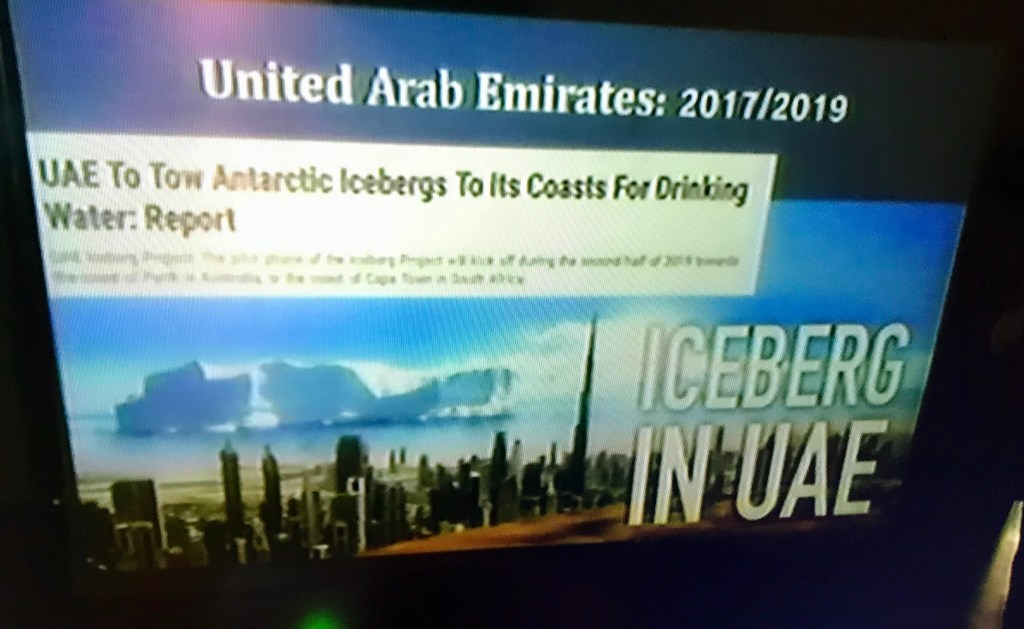
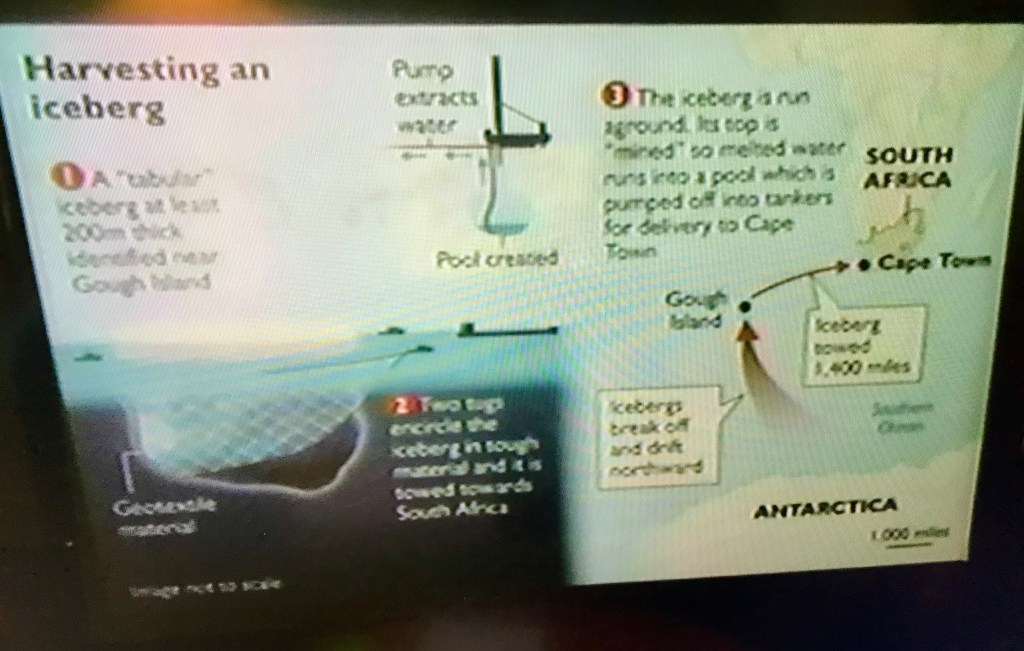
Clearly I was watching from our room again as these are pics of the TV but frankly I have almost no memory of it.
Morphed from whaling and sealing to fisheries of krill and tourism. Antarctic ice berg harvesting. Talked about. They are fresh water. Source of fresh drinking water. First raised in 1978. Feasibility studies. Costs vs rewards. Died off. Difficult to do. 2017 UAE didn’t happen in 2019 but intending to try this year.
Cost US$50-60million for one ice berg. Also Africa considering after the drought in Cape Town. Ownership issue, invasive species, underwater sea cables, traffic separation schemes – running into other ships. Maximum 1 knot to stop accelerated melting even then 50% expected to go.
Tourism. Started in the 1970s. Antarctic peninsula the most popular. Ships work well as don’t need anything on land. Can fly to avoid the Drake to small strip on king George island. No flying to the Ross sea area – no landing. Can get to interior Union Glacier – blue ice runway. Has to be temporary facilities if doing anything on land. Tents. Mountaineering expeditions. Proximity to South Pole. And highest peak on the continent. Mt Vinson. Also Antarctic marathon. More competition now in Antarctica. Fat bike to the South Pole. “Firsts” ie a women wanted to be the first to drive a tractor to the South Pole. Internal tourism small numbers. Main nationalities US, Australia, European countries and China.
Expedition cruises. 34,000 to 43000 in ten years. There are many more cruises that just drive by. If over 500 you cannot disembark. Under 500 you can but just 100 on shore at a time. Quark was the second down here. 45000 last year. Still very small in comparison to other areas of tourism. Concerns that they are concentrating in one area (the peninsular) and short time span. Moving to more purpose built ships. 28 operators now in the Antarctic. 19 purpose built ships coming out soon. Looking at emissions too. Electrical power (diesel back-up). Official sites have to be booked so only one vessel at a place at a time. Less flexibility with more ships. Argentinian boat sank the explorer sank 2007. Also environmental pollution issues eg oil spills – specific type of fuel has to be used. Search for the Beserk 2011 it sank off Ross sea ice shelf. He was denied permits but went anyway. Three people died. He went again without permits but Chile caught him and he is in goal.
Minerals and hydrocarbons. Limited knowledge of what is here – treaty prohibits exploration. Australians found diamonds. Presumed could be oil here due to the Gondwana history.
2048 the mineral ban could change but 3/4 majority needed to change it. $230 per barrel before it becomes viable as so expensive to extract it here. China interested in resources. Seabed collection might be just legal – nodule mining. In its infancy. Seabed floor isn’t considered as part of the treaty ban.
Presentation: Climate Crisis…Really? The Facts, Impacts, and Mitigation of Climate Change with your geologist & glaciologist David J in the Nautilus Lounge
Climate and weather are not the same thing. Based on fact NOT opinion. Climate has changed ever since the beginning. But records indicate normal climate change takes place over millions of years, not the current situation. Today’s warming is due to the burning of coal, oil and gas. Ice cores and some go as deep as two miles in depth. They provide clues. Oldest 123,000 years Greenland 800,000 years ago in cores from Antarctica. Co2 stable until the industrial revolution. Carbon isotopes also show the same thing. Carbon 12 ratio to carbon 13. 97% scientists agree. Expert consensus is a powerful thing. Smoking analogy. 194 of 195 countries signed onto the Paris agreement (US did not). Rate of change faster than some animals and plants can adapt. Oceans and corals. Increasing water temperatures and increasing acidity creating issues, both created by human induced climate change. Loss of coral undermines tourism, incoming storms, fishing industry. They are akin to tropical rainforests. Once bioversity is lost… krill and ice melt. Need the right temperature for breeding and food source of phytoplankton. They feed on sea ice and as shelter. As warming less food source could lose 80% of their habitat. Agriculture will be hit, lower ground water, temperature increases, food will also become less nutritious- less zinc, iron and protein. Loss of food security. Mosquito borne diseases and increase in asthma. Tick borne diseases. We are destroying our own habitats.
Motivator to action. Current technology is available to make the changes and will give out economic benefits. Improved fuel economy. More public transport and encourage cycling. More efficient buildings. Get rid of coal. Forest management. Soil management. Some companies pushing hard eg GE. Nike, waste reduced by 60%. United Airlines – geared turbo fan engine. Amsterdam all electric cars by 2030. Congress stopped trump pulling out of Paris.
Personal actions. Make it work for you. Smart power strips – check them out. Buy less stuff!! Eat less meat esp. beef and lamb. Your next car. Let MPs know we are concerned about climate change. Spread the word. In order for someone to put energy into protecting the place unless you have a connection so flying etc. worth it if it empowers others.
Yet another excellent presentation filled with facts. If only our leaders would stop the greed and heed the need for change. 😢
The Drake still being kind and we are making good time towards Cape Horn expecting to arrive around 1.45pm.
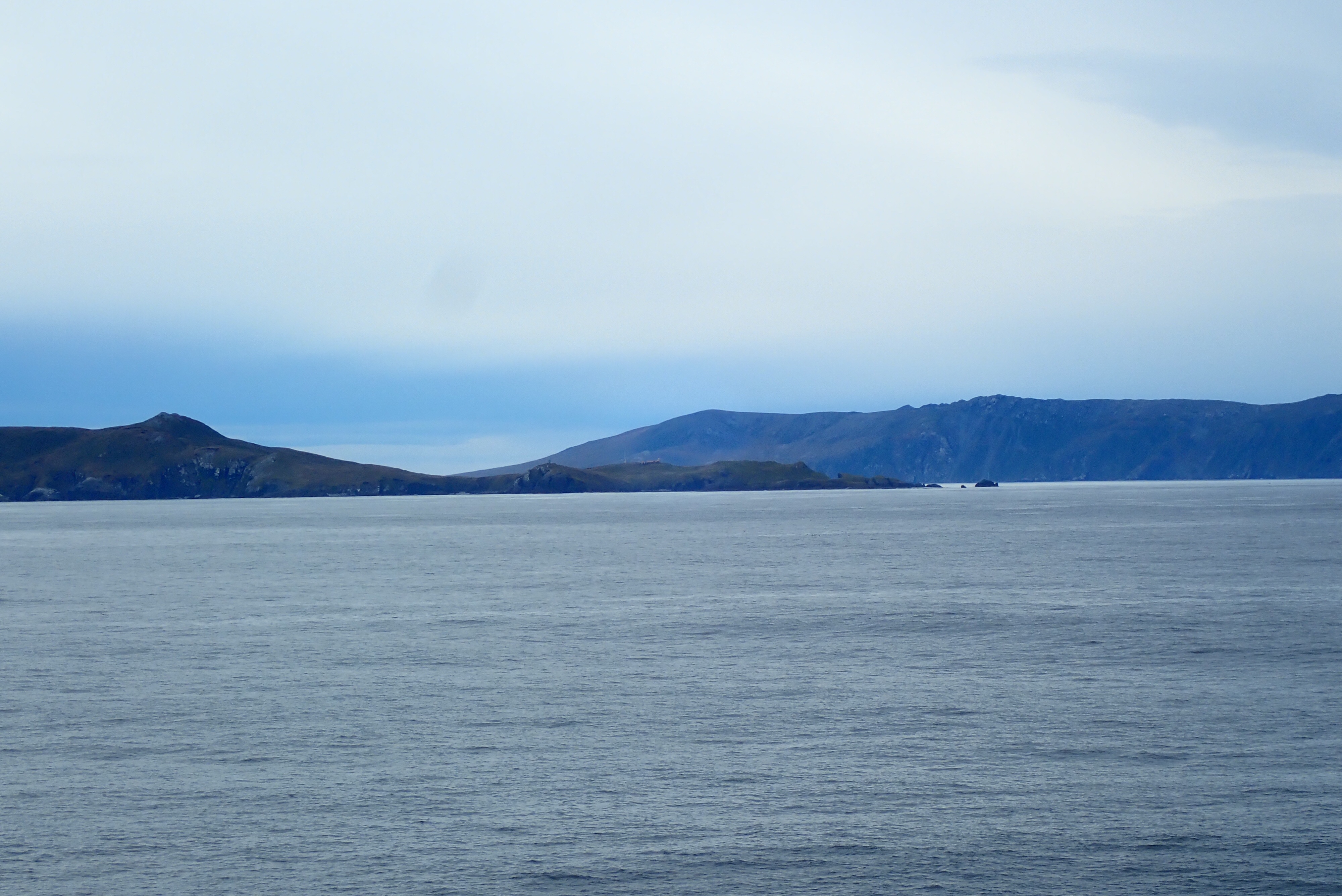
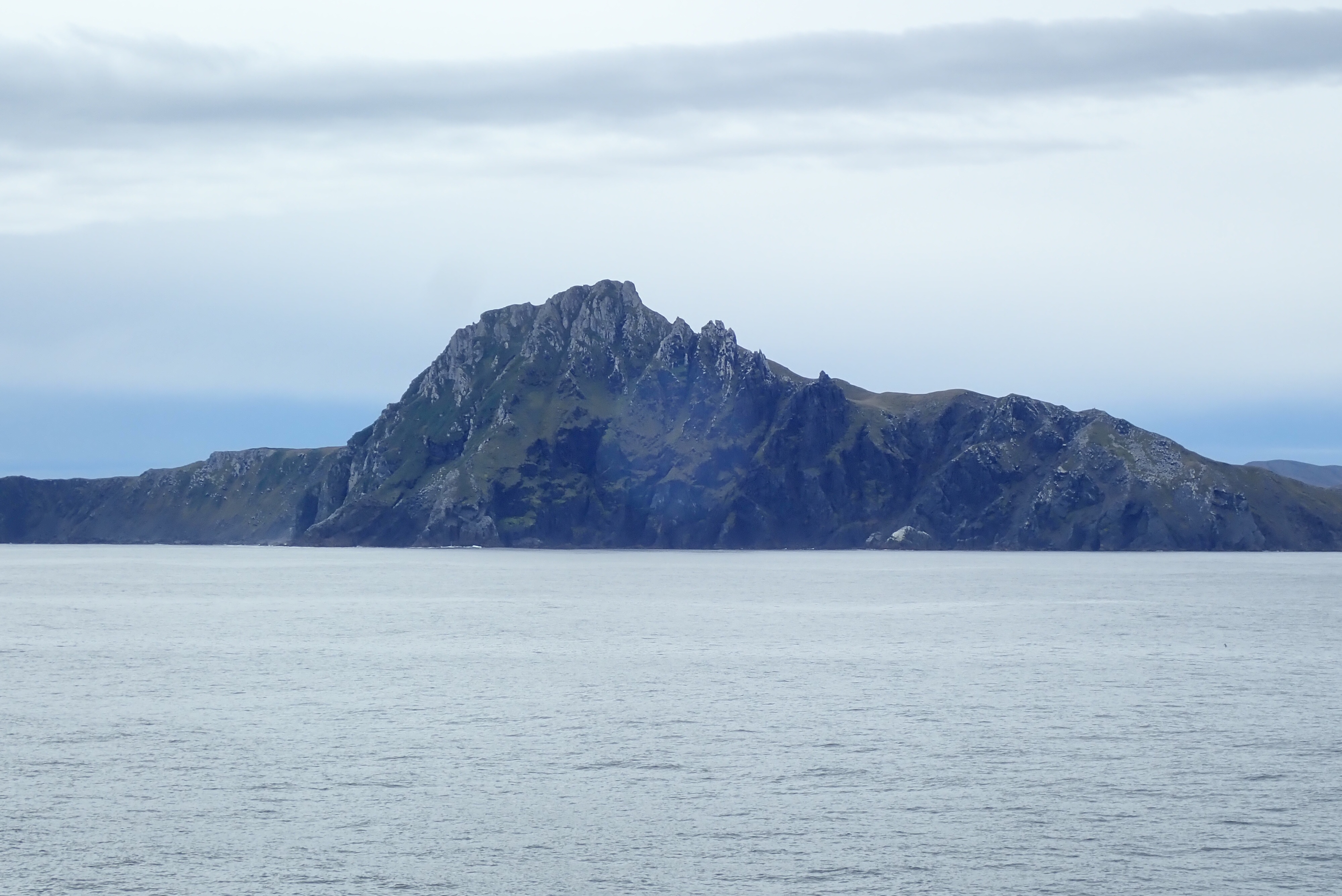
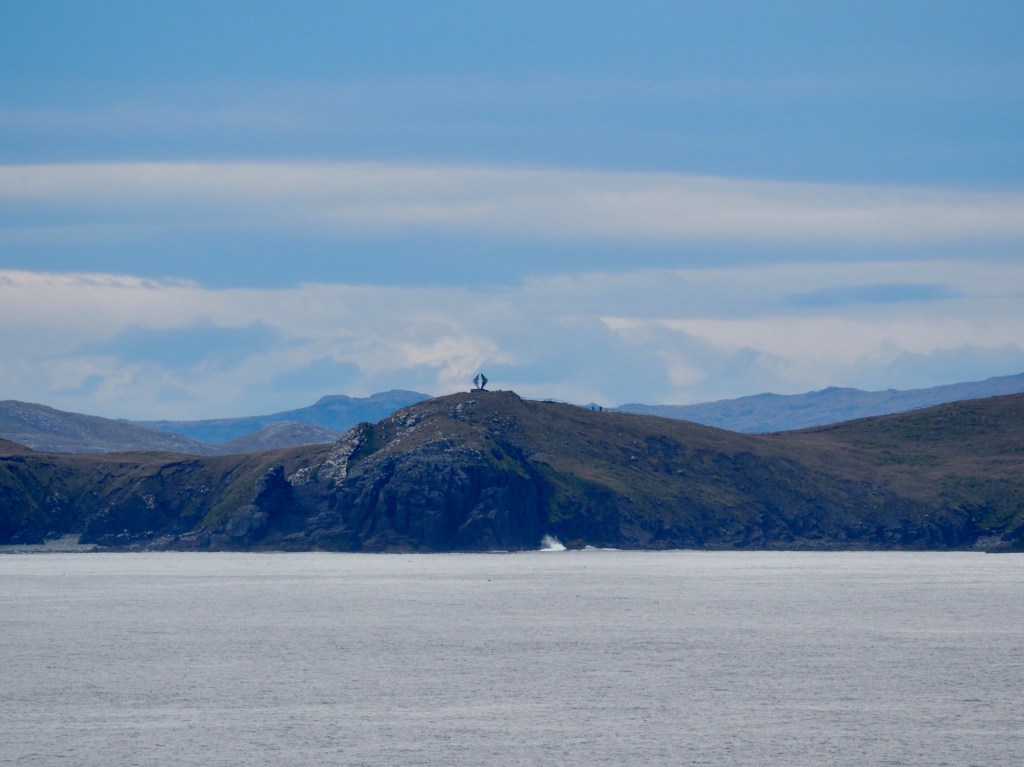
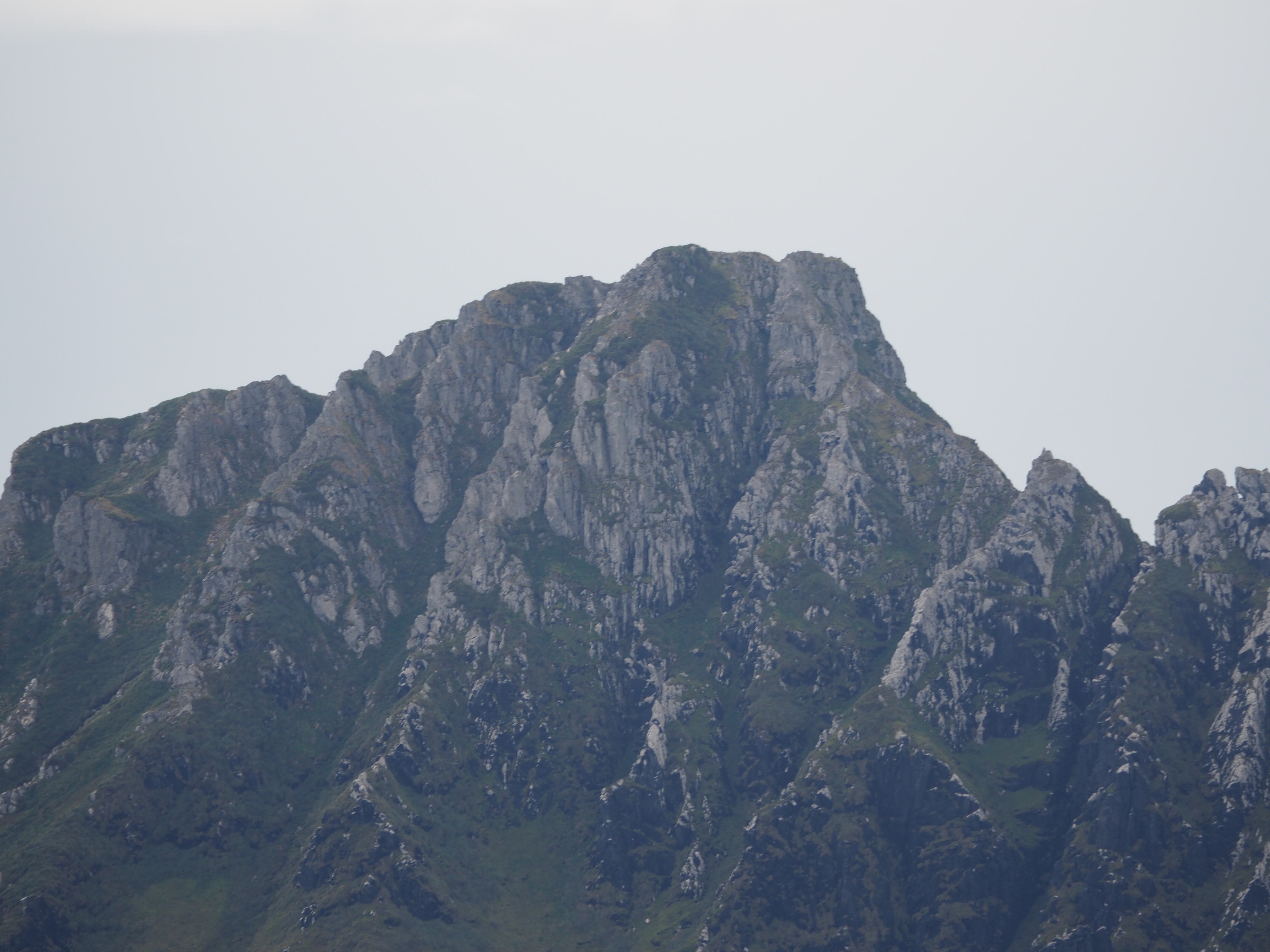
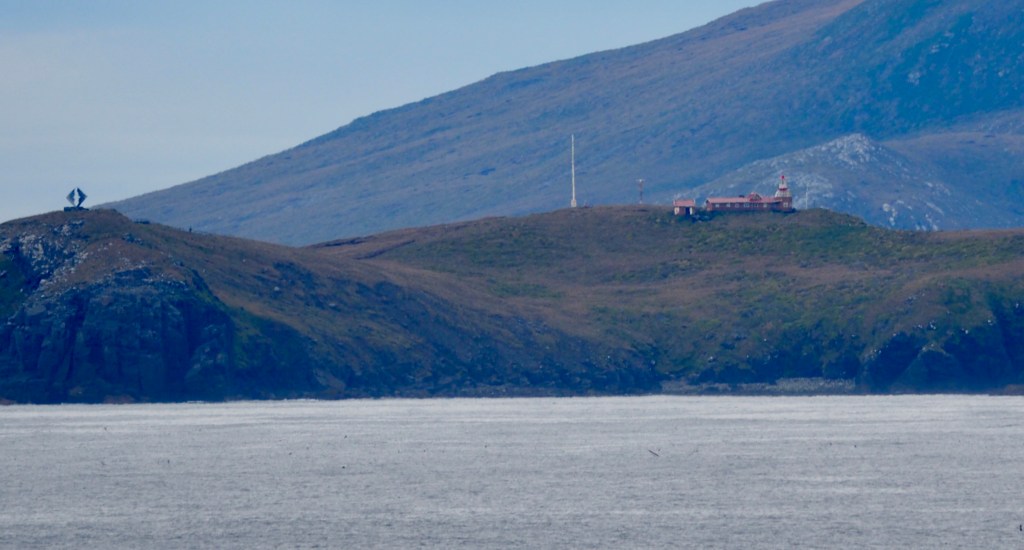
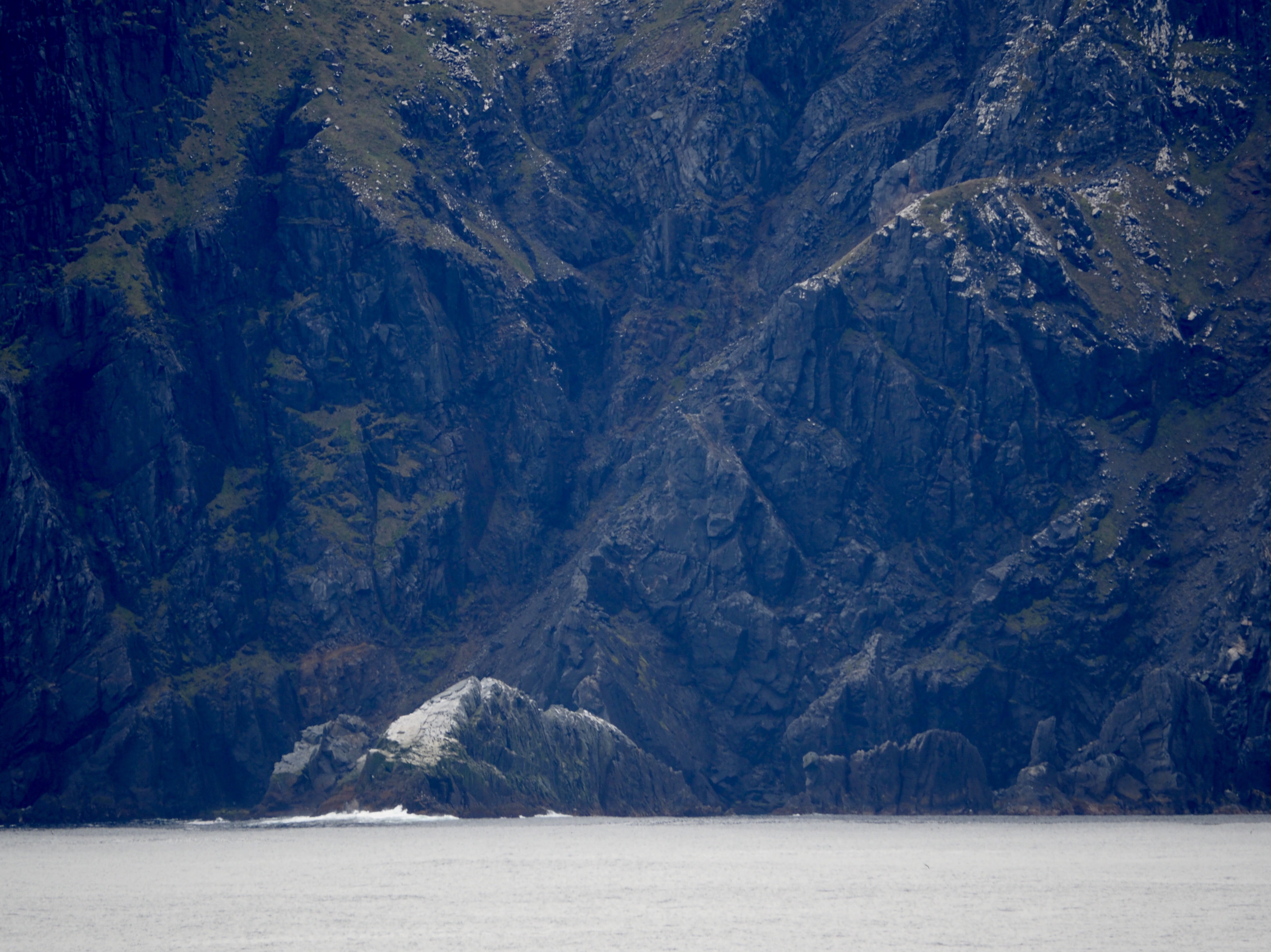
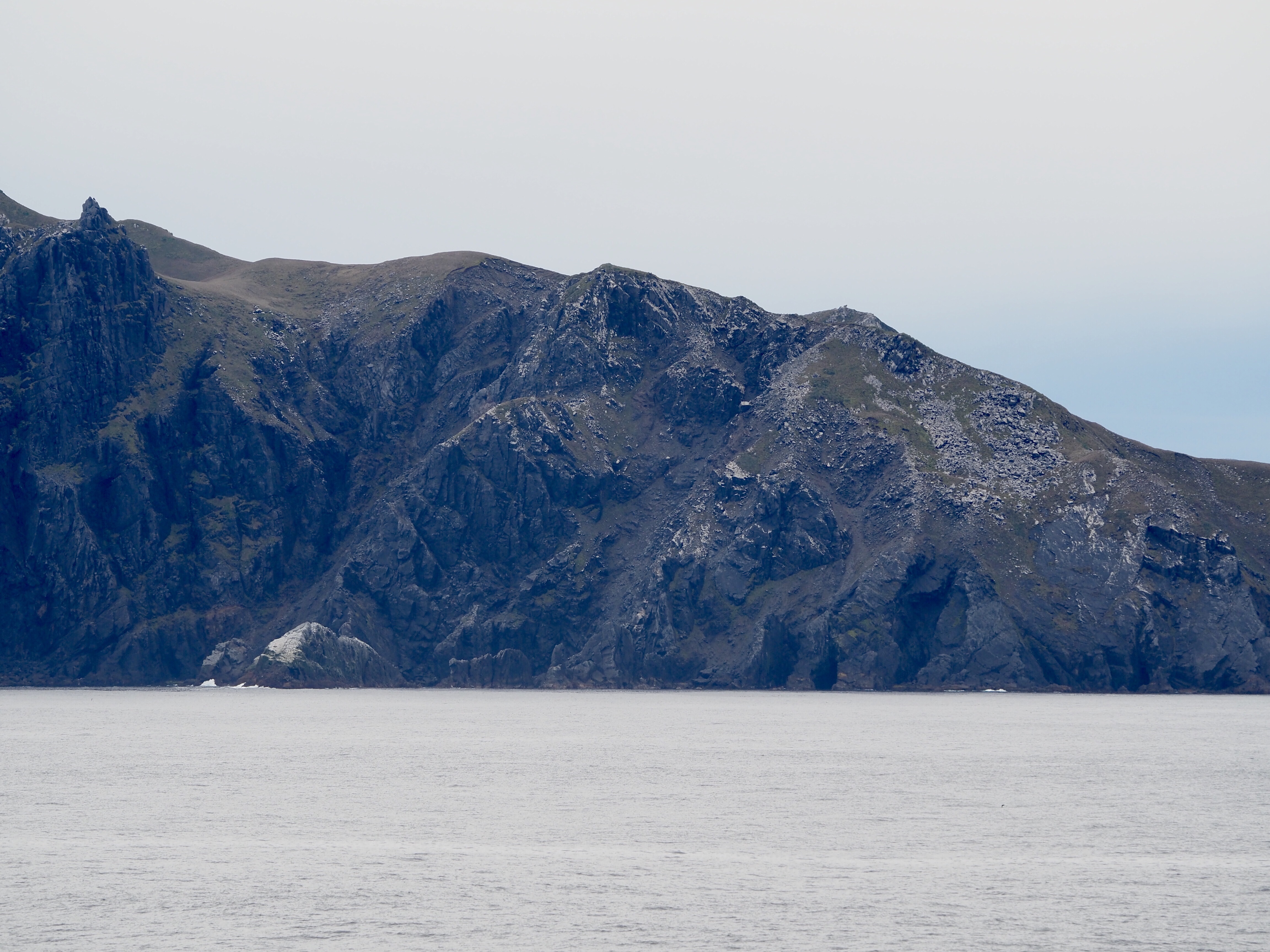
Cape Horn marks the most southern point where the open waters of the Atlantic and Pacific Oceans meet, meaning that ships can sail around the South American continent without making use of privately controlled passages. Cape Horn’s history is full of human endeavour and bravery, as sailors sought to push the limits of human achievement. Rounding Cape Horn is said to be the nautical equivalent of reaching Mount Everest’s summit. It’s also considered part of the fastest route to sailing around the world.
It could not have been calmer. Hard to believe what had happened here to ships in the past.
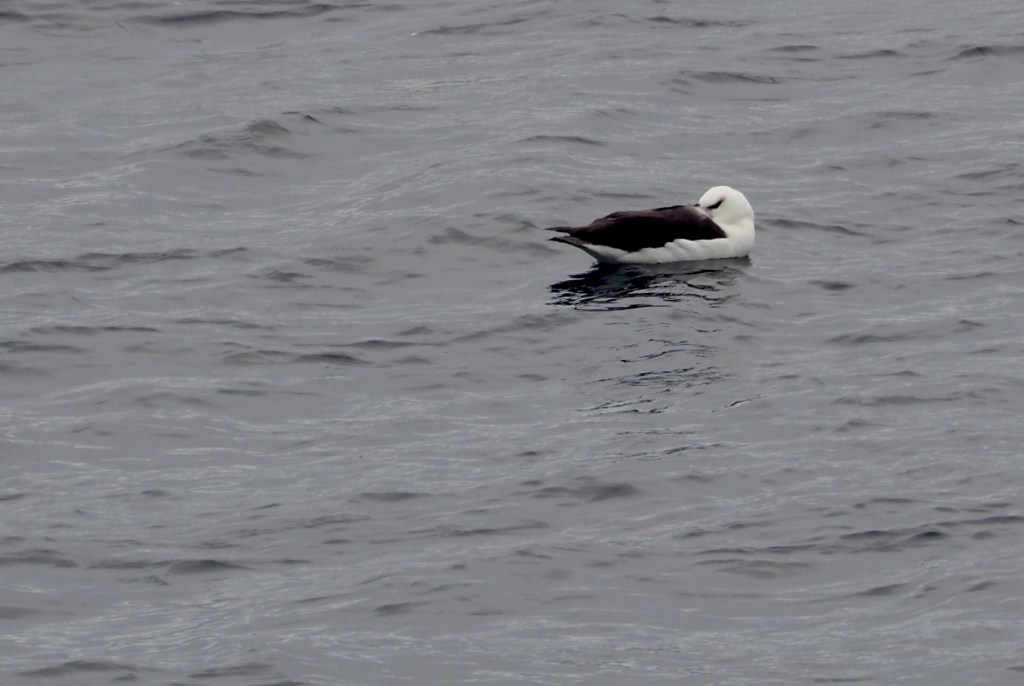
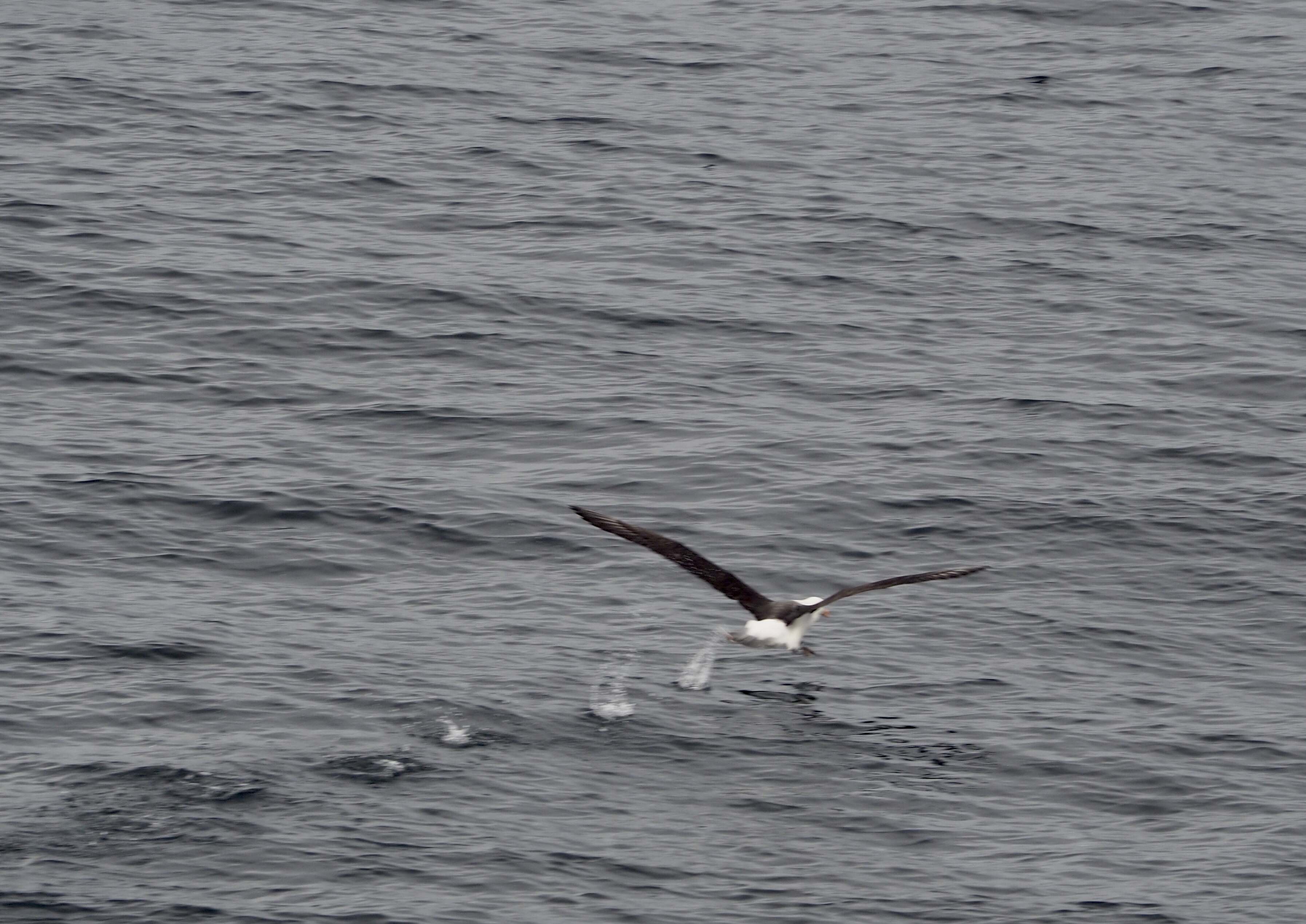
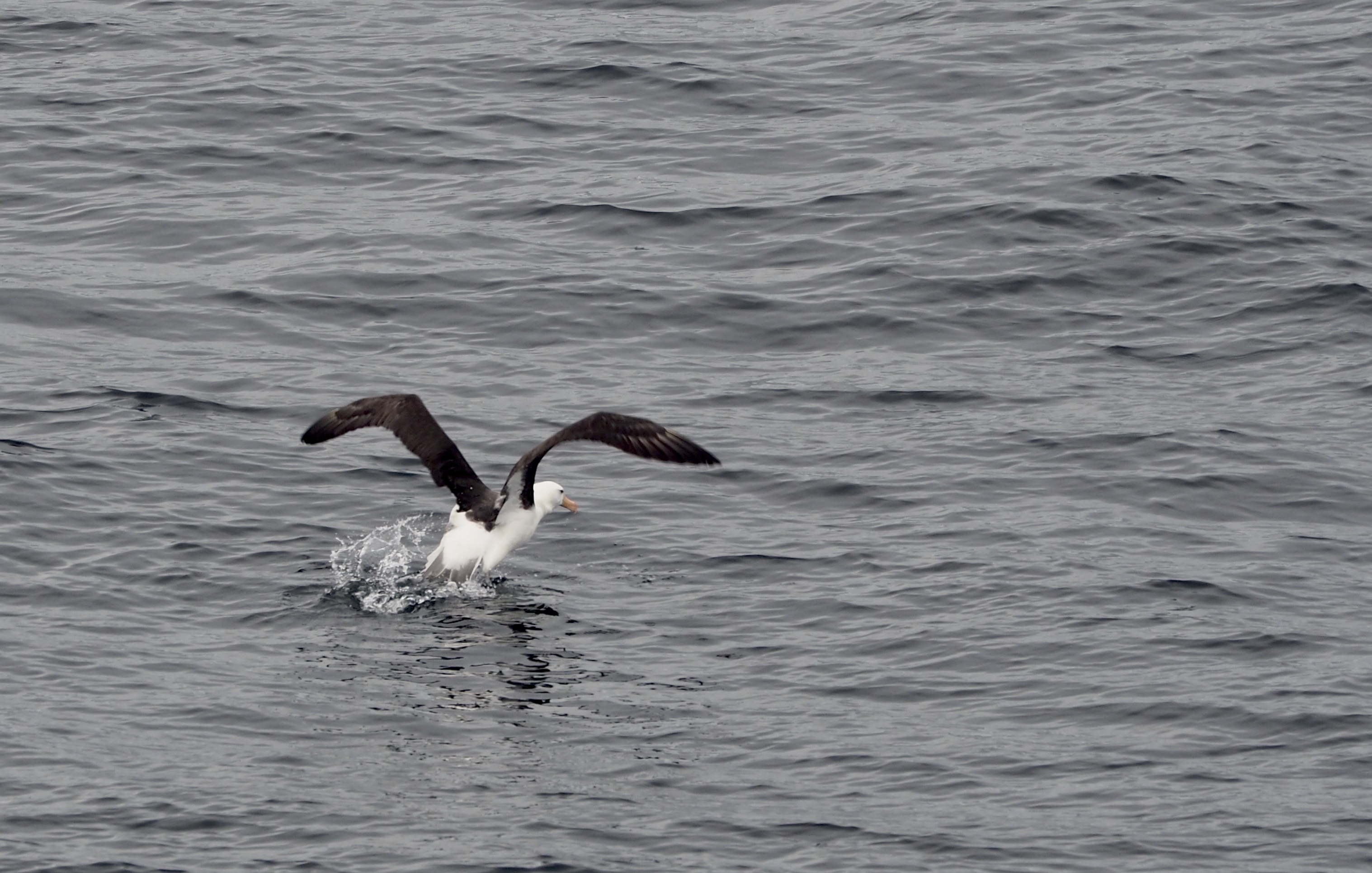
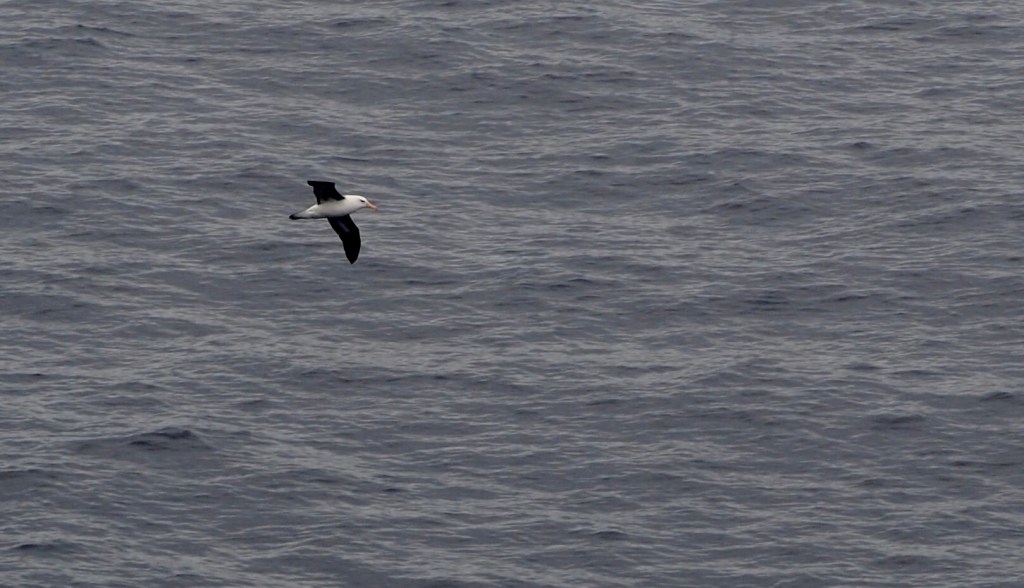
Plenty of black browed albatross around.
See the albatross that marks Cape Horn?
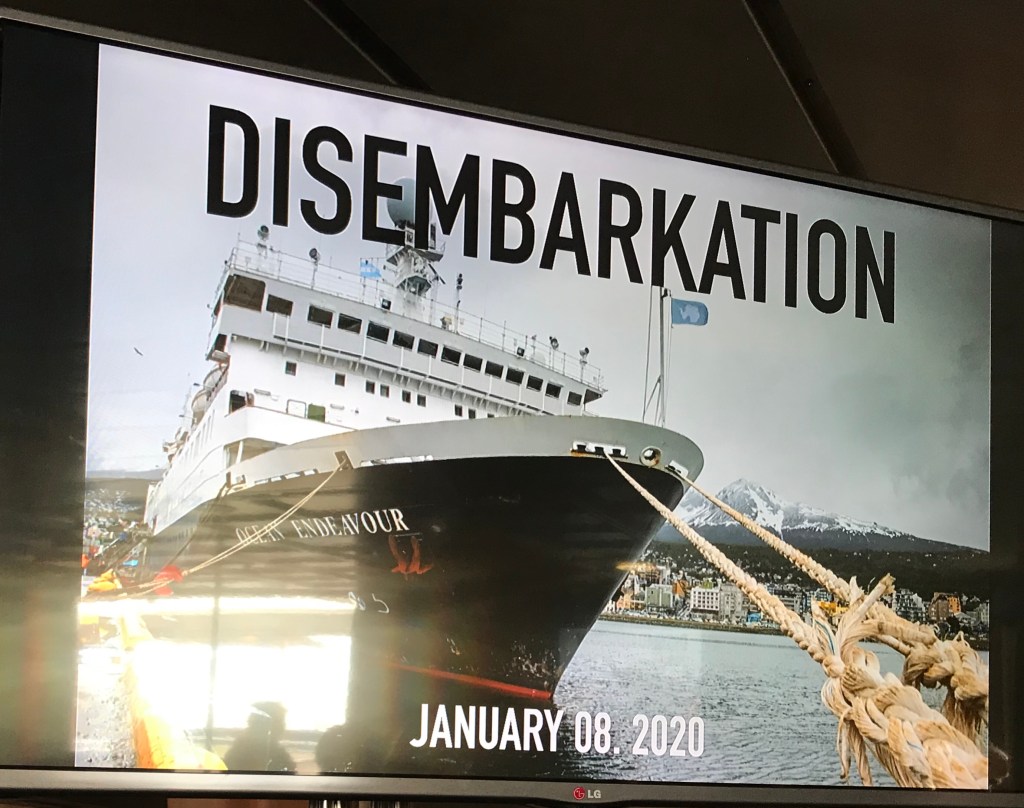
2.45pm there was a Disembarkation Briefing with Jaymie. All the information we needed about the disembarkation process tomorrow morning in Ushuaia. 😢😢😢
Had to laugh at the “Reintroduction to adulting” section which included “How to fold your parka.” Amazing how small it becomes when folded correctly. They also told us about our photo journal which will be available in a few weeks and which we have a year to download. It includes all the photos we contributed, photos the official photographer, Michelle, took, maps etc.
Our luggage must be in the corridor by 7am. 6.30 breakfast. 7am – 7.45 passports returned. Announcement re boarding passes. 8.30am disembark. By deck. Snack bag at reception. Expecting 9 degrees wet in Ushuaia and 32 degrees in Buenos Aires.
Then we watched a Movie about rounding Cape Horn. Taken in 1920s and narrated by the same person in 1980s. Capt Irving Johnston. Some calm days but some very stormy days too. Again we have been blessed.
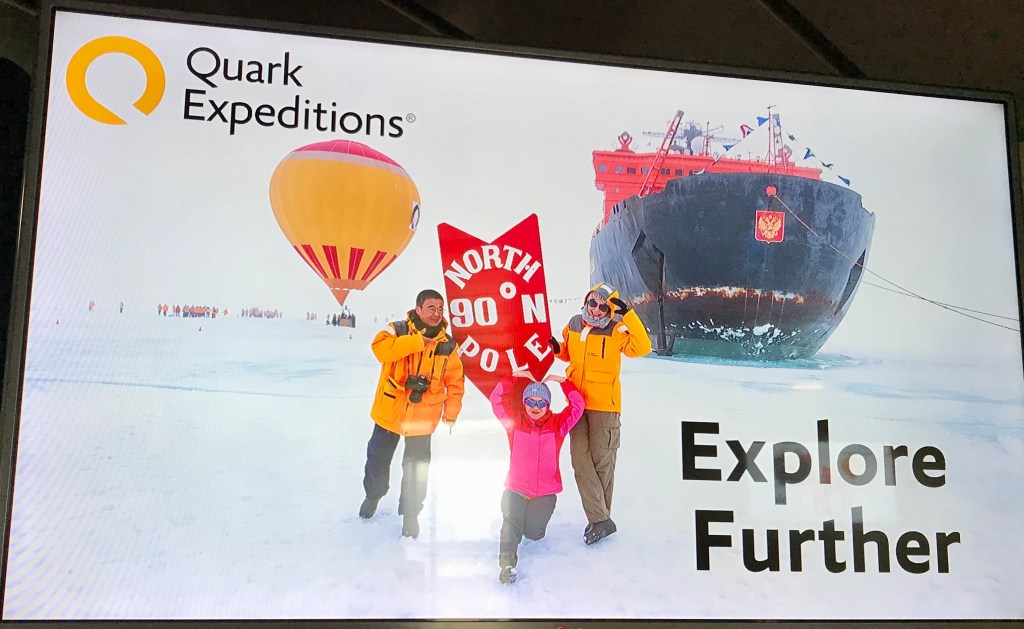
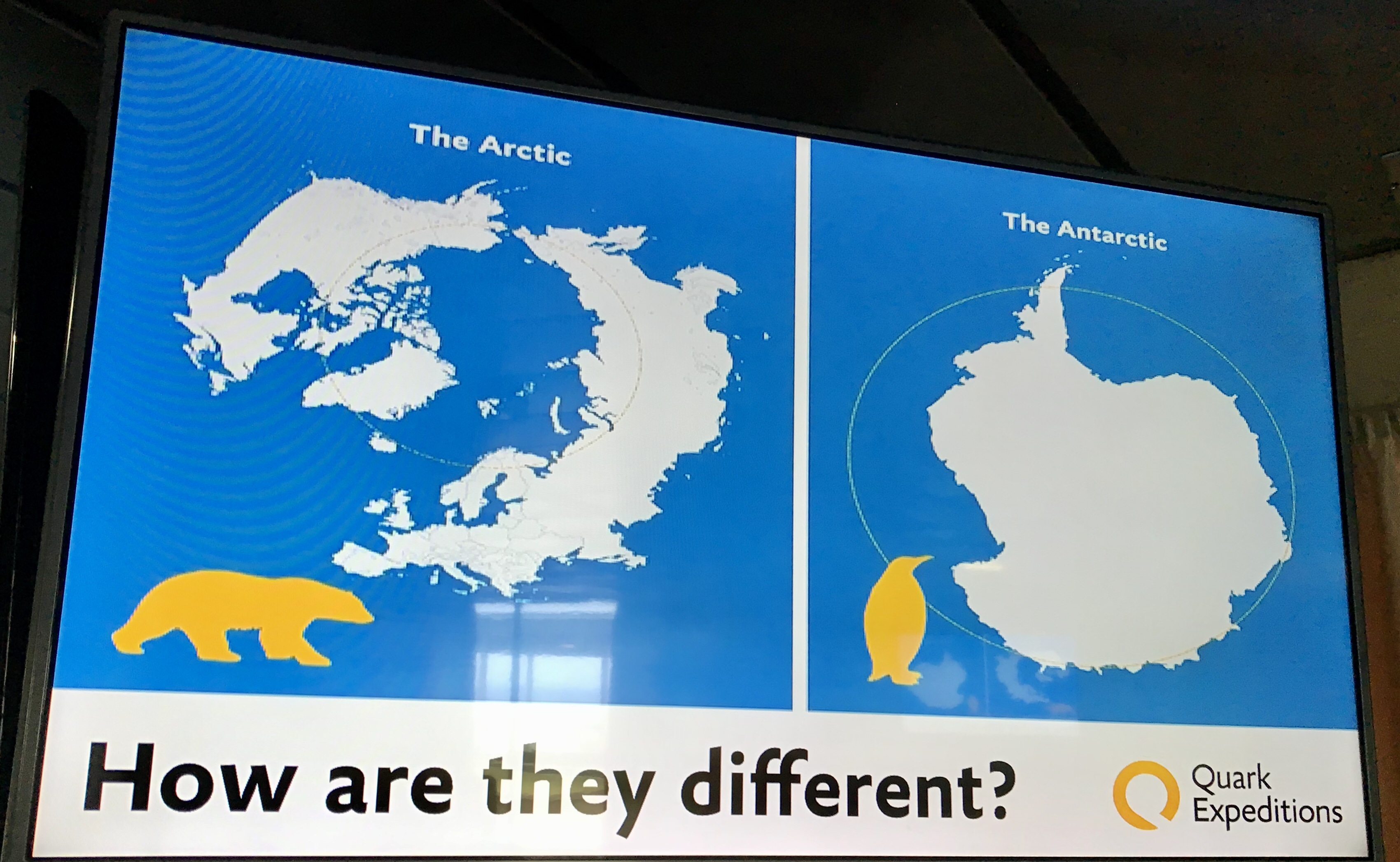
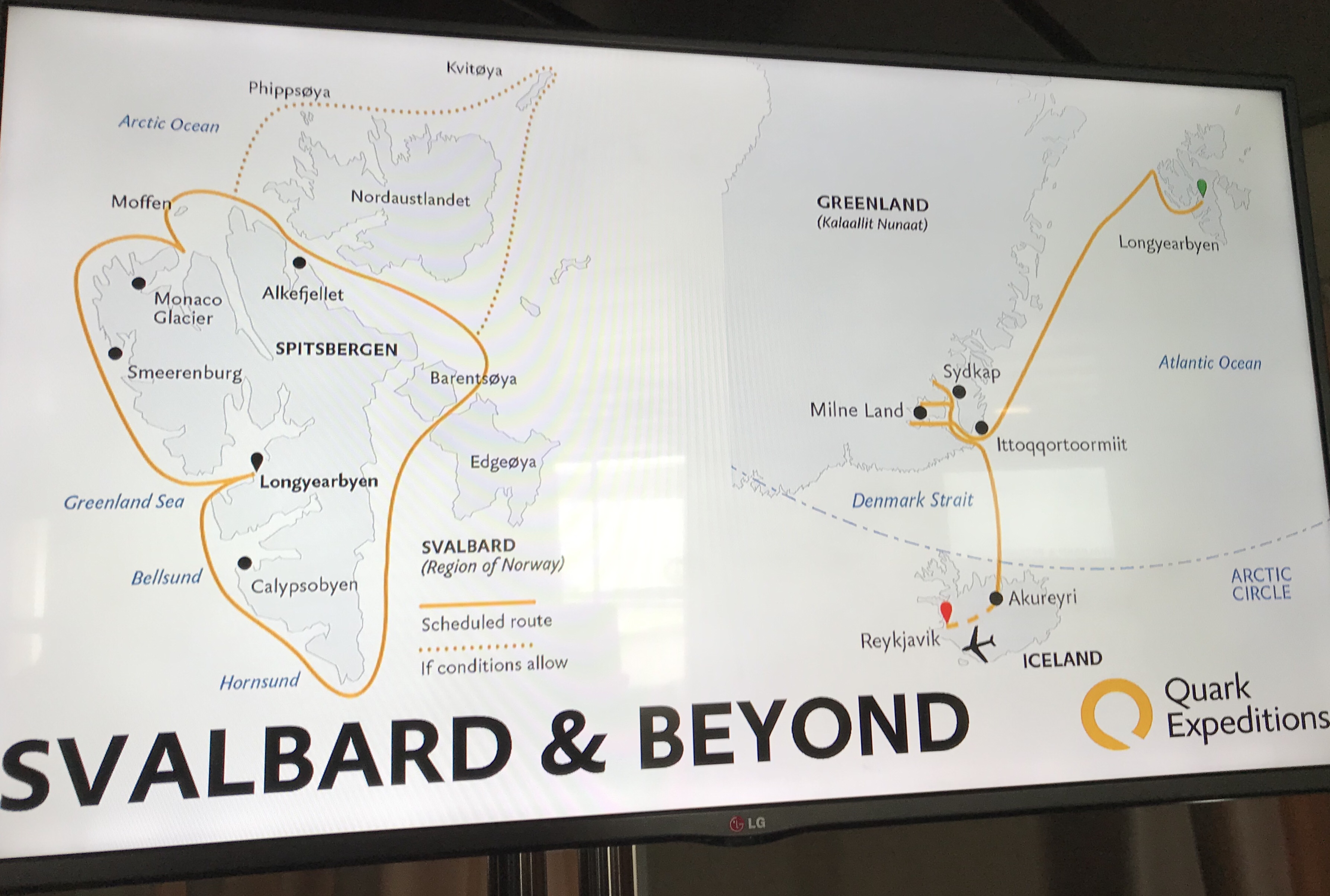
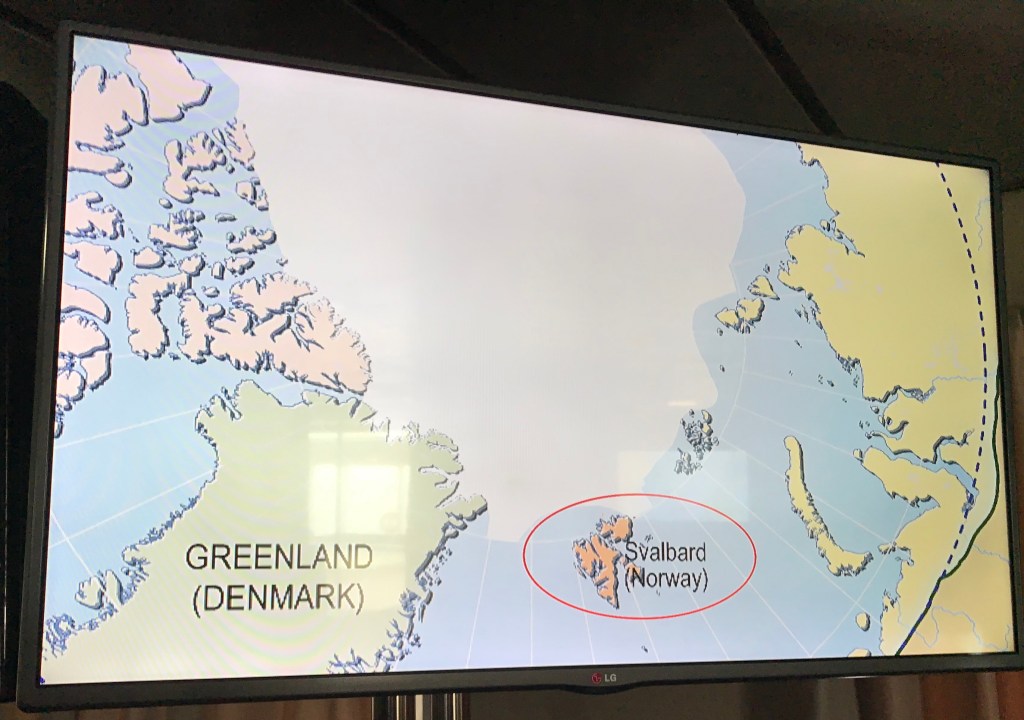
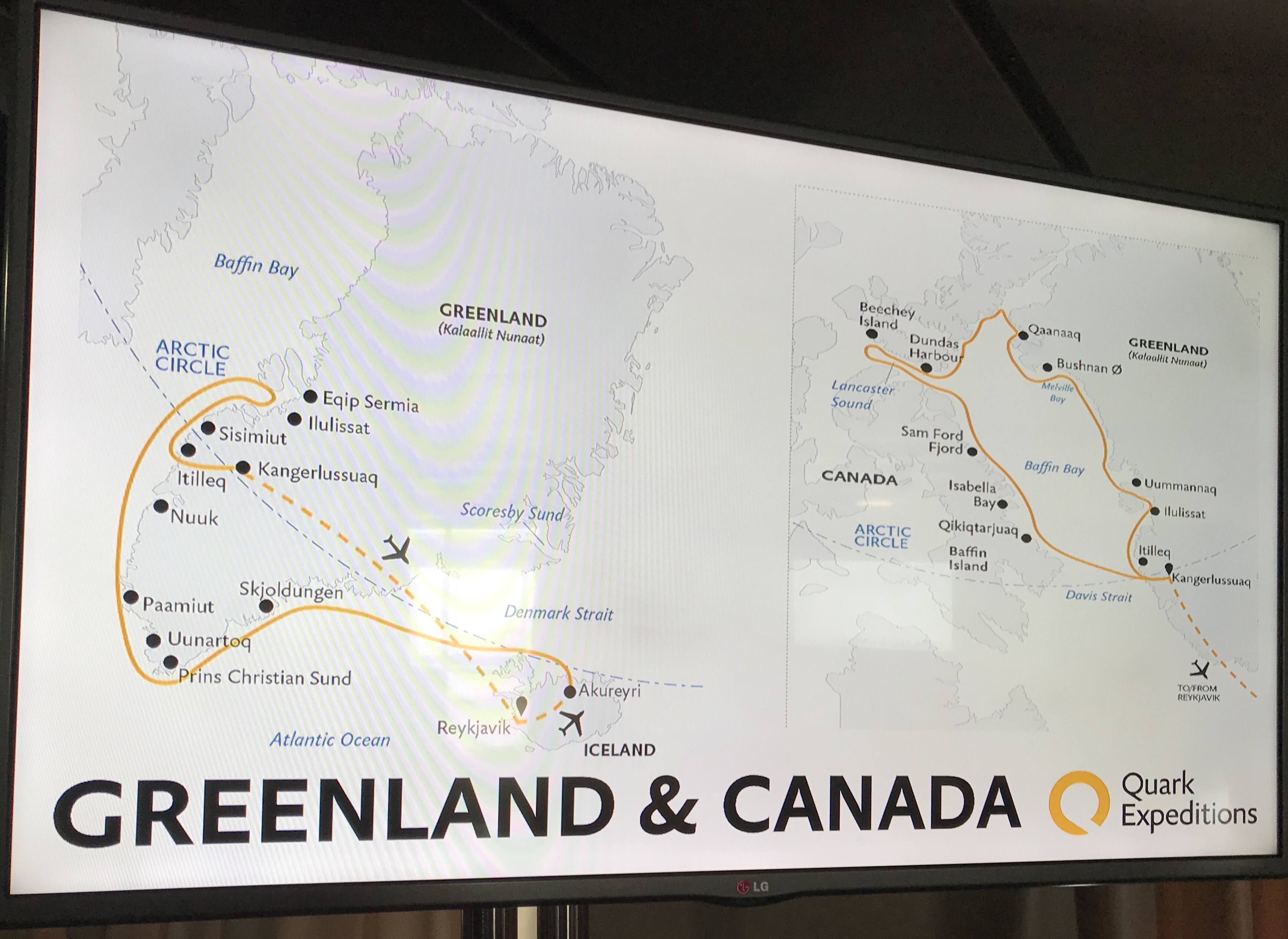
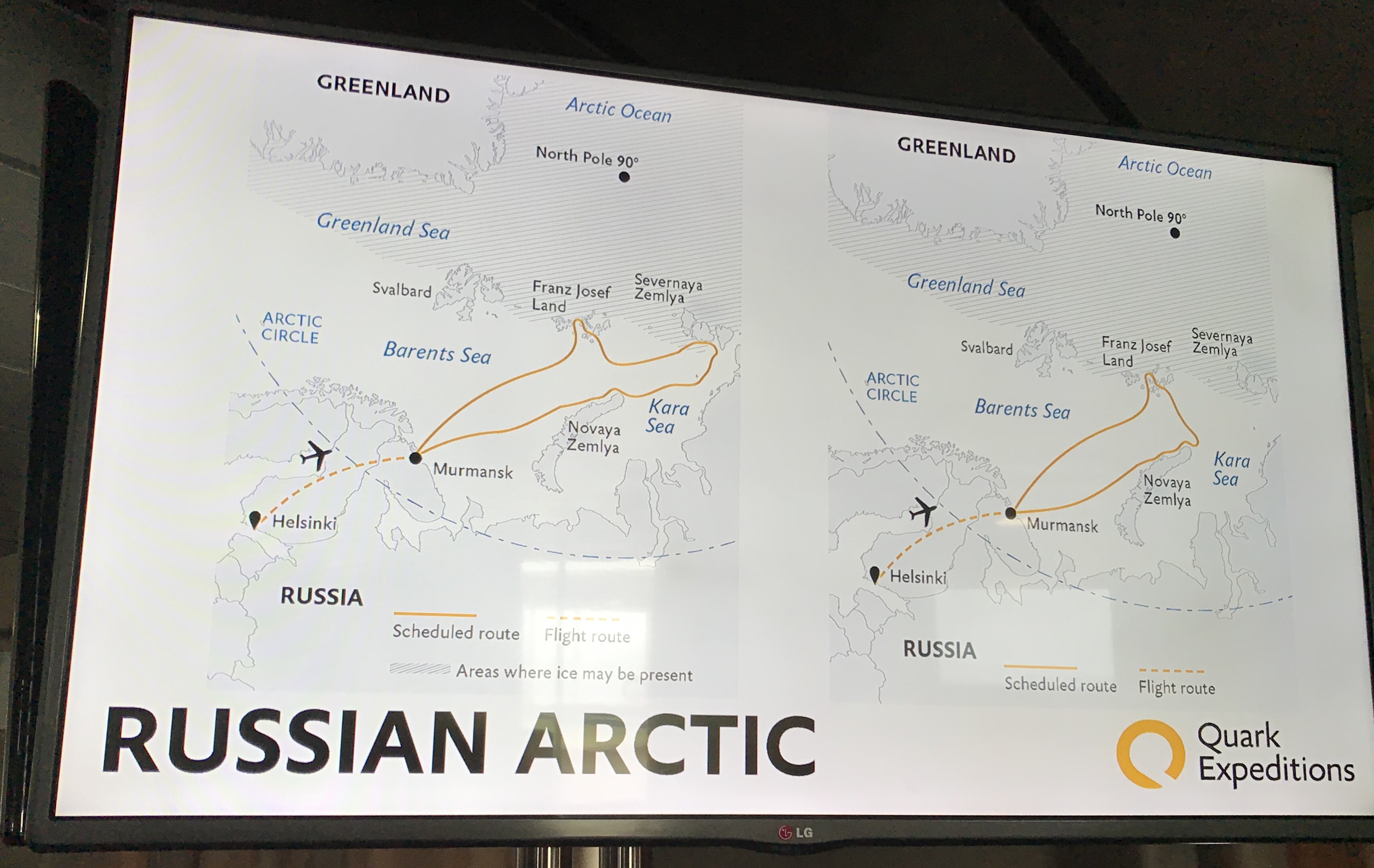
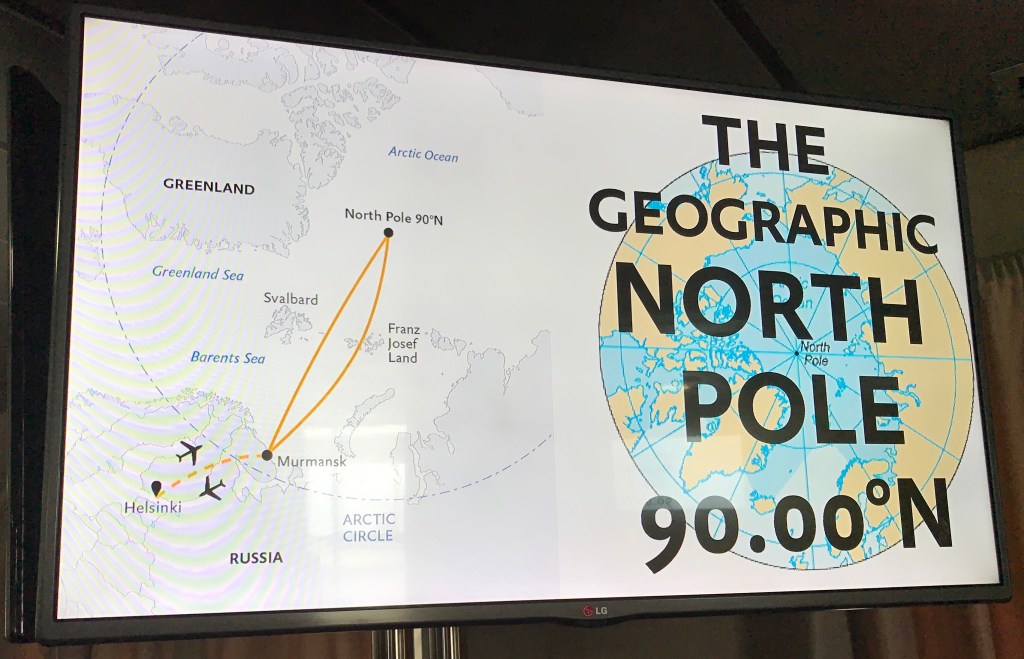
Presentation: Explore Further – Travelling to the Arctic with Quark in the Nautilus Lounge.
Some very interesting video clips. Obviously you see Polar bears not penguins.
Sea birds. Communities of indigenous peoples. Small ships and zodiacs. More space to roam, fire arm bearers accompany you. Svalbard. Mid May to late August best time.
Svalbard or add Greenland and iceland. Sea ice see earlier in season. Svalbard best chance to see a bear. Early see them on sea ice. Seals. Walrus. Blue whale good population near Svalbard see every two to three trips. June to August see. Walrus same June to August. Birds. June. Arctic fox when birds are on eggs. Ice. World’s third largest glacier. Flowers. High concentration.
Greenland and Canada, norse history. (Vikings). Inuits. Musk Ox Canada sometimes parts of Greenland. Very shy. Beluga whales. Arctic foxes, walrus. Animals widely spread out. Community visits. Greenland is the most similar to Antarctic scale regarding ice. Sledge dogs. Canada – windswept. Feeling alone. Vast areas of desolation. Inuit specialist on the expedition team. Great hiking. Tourism in its infancy there. Narwhal if very lucky.
Russian arctic. Rarely visited, seldom seen and magical. Abandoned soviet research stations. Landscapes. Groups split to hiking groups. Walrus and bears.
Geographic North Pole. Much different to any other. Russian federation ice breaker. A bit more rugged than the Ocean Endeavour. Helicopter tours. Watching the ship pushing through ice. Guarantee polar bears. Walrus. Wildlife diminishes as towards the pole. Main objective to get to the pole. Look for an ice flow to put a couple of hundred people onto. Hot air balloon optional but helicopters included. BBQ on the ice. Takes 4-6 days to get there. 5-6 degrees can be at North Pole.
Yes the Artic is very tempting, though I think there will be less wildlife and a need for an even bigger zoom.
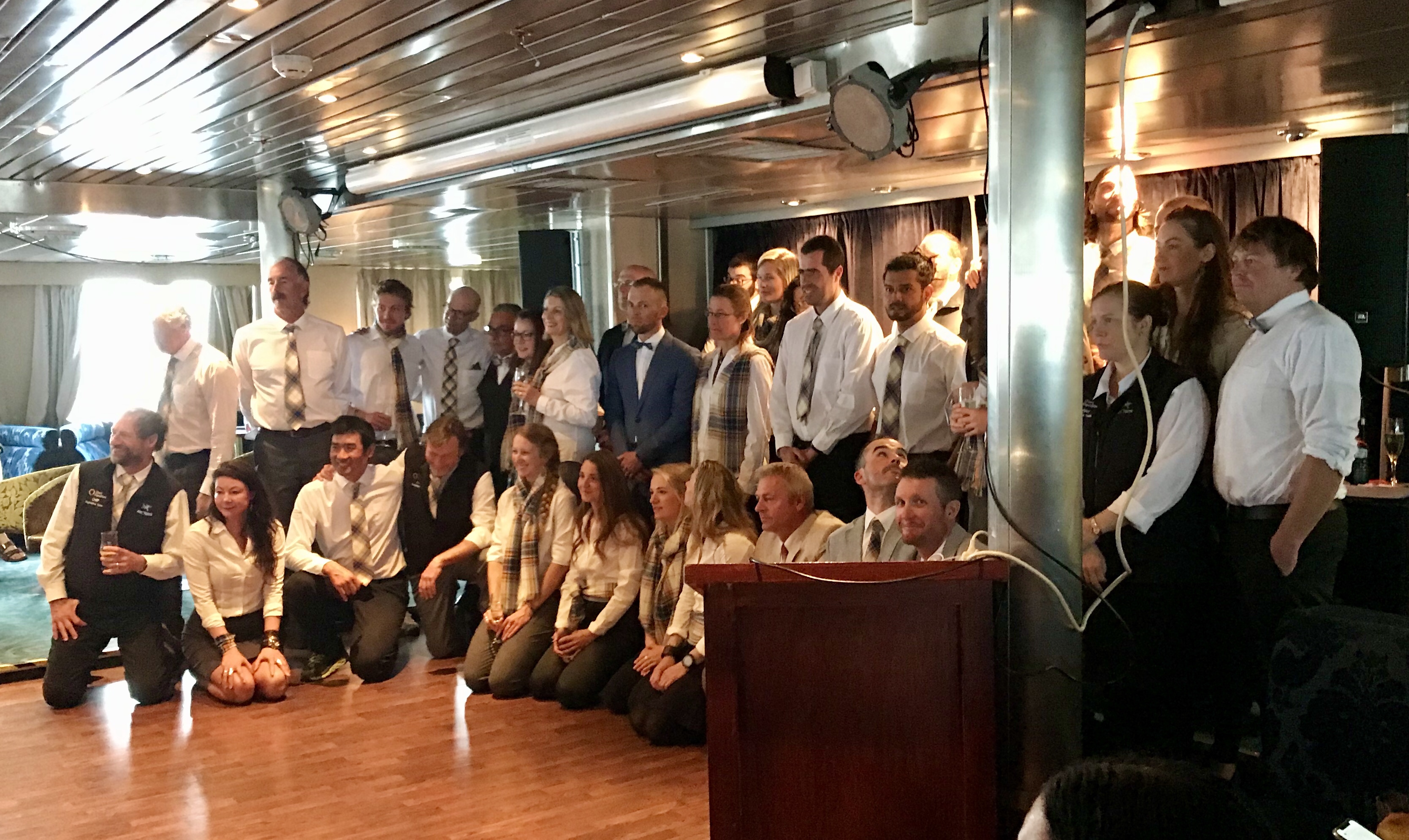
Captain’s Farewell Cocktails – Captain Dmytro Ashanin. Standing ovations for the Captain and the Expedition team.
Clearly this has been a remarkable trip for us all and including Solan and the Captain. Many more excursions than completed on average and some of the very best places.
Farewell Dinner where we met the 80 member hospitality crew. They served 14000 meals on this trip.
After dinner we joined Michelle & the Expedition for our Voyage Slideshow! Over 2000 photos submitted but Michelle whittled it down to a brilliant 25 minute film. Possible 9 stills were mine. So thrilled we will receive a copy of this.
So sad to be heading to bed for the last time on this totally amazing journey. Tomorrow back to Buenos Aires.
The events board on the TVs around the ship also include photographs and I was chuffed to see a couple of my pics on the events board today.
Well we have found the “Drake Lake” rather than “the most dreaded piece of ocean on earth” and long may it last.
I am improving, thankfully, but still am washed out so, though Garrie is disappointed we don’t have rough seas, I am very happy for the Drake Lake.
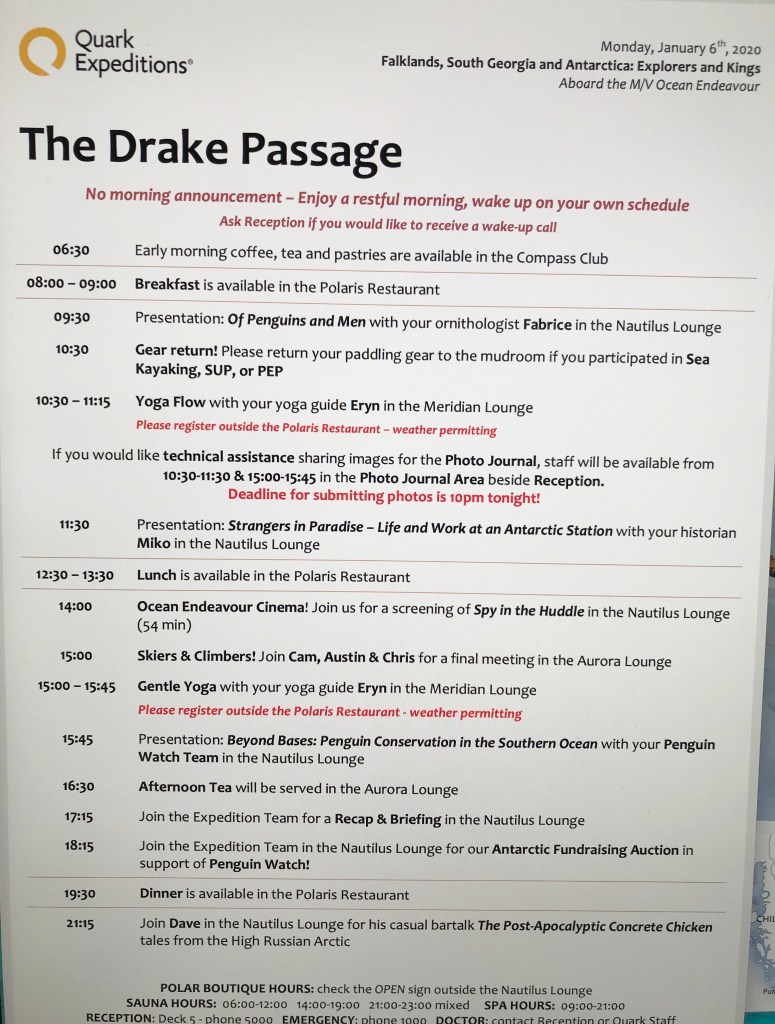
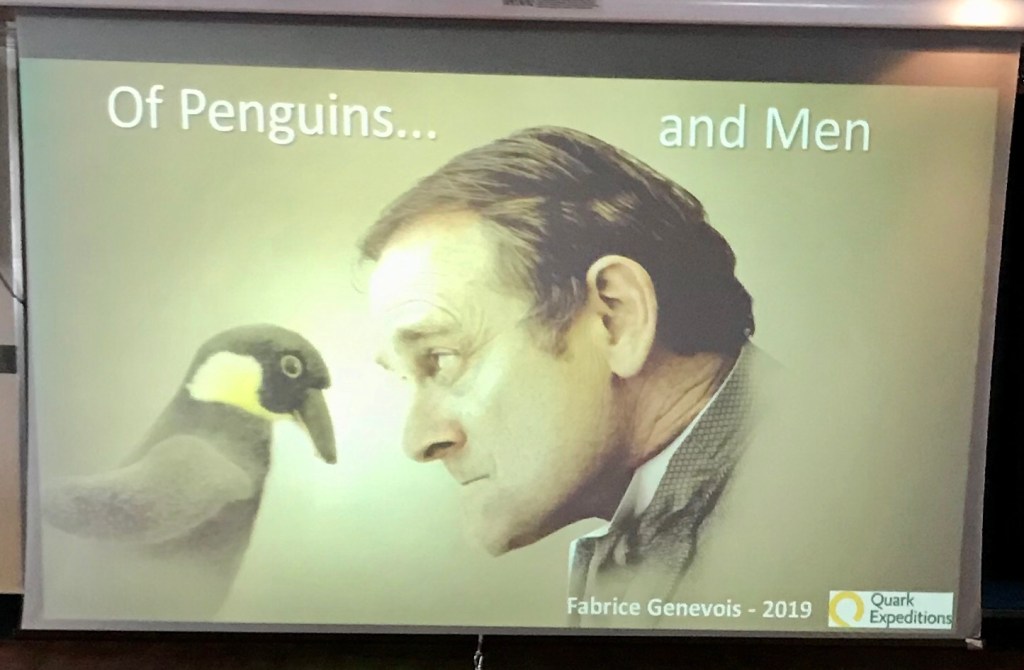
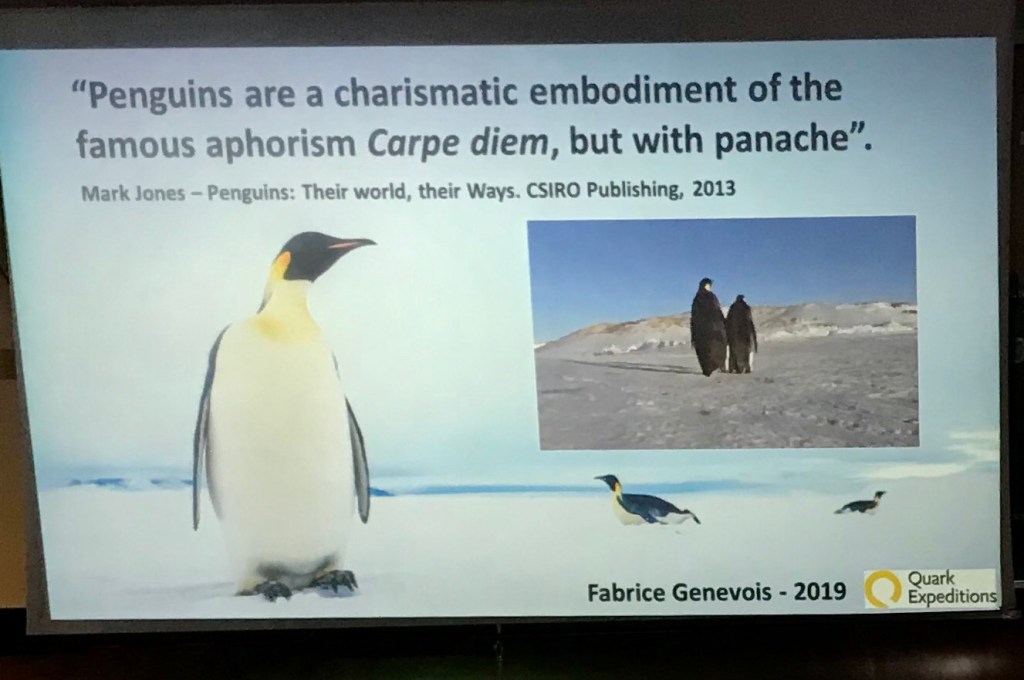
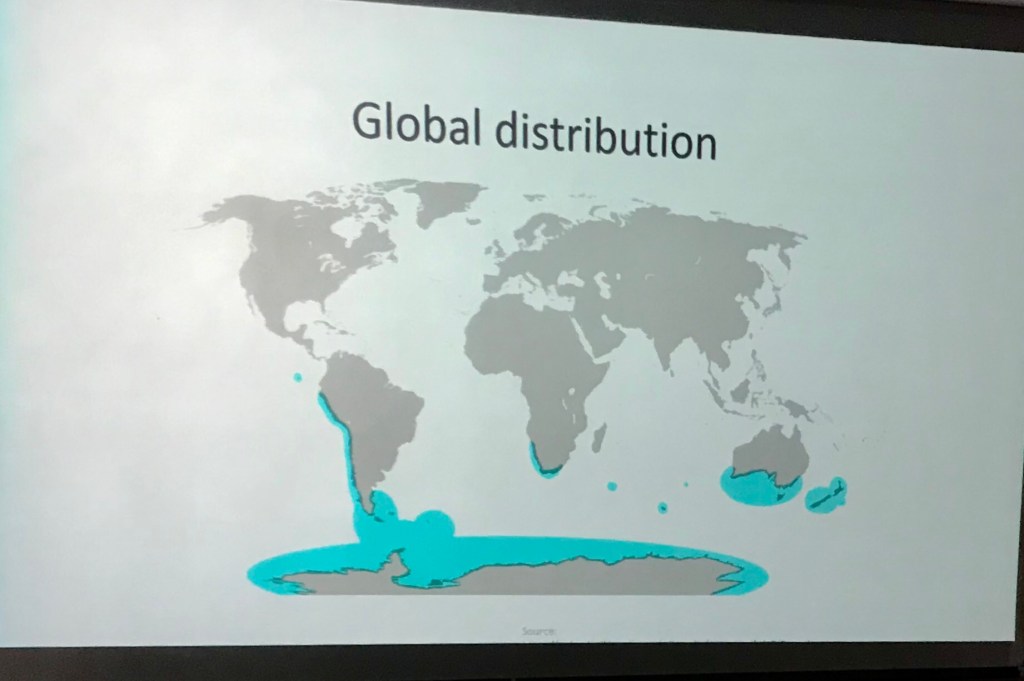
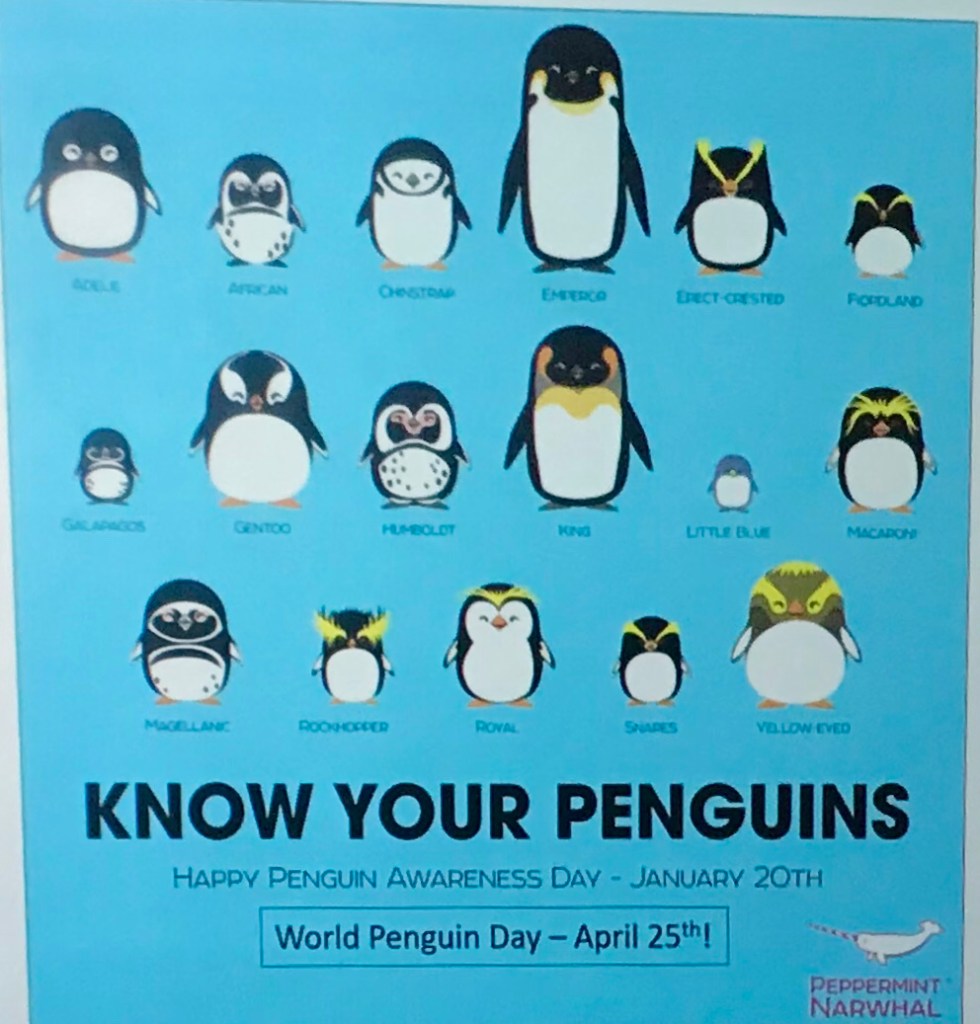
Presentation time: Of Penguins and Men with ornithologist Fabrice in the Nautilus Lounge
What connects us to penguins? From discovery to “happy feet”. Some species are in danger.
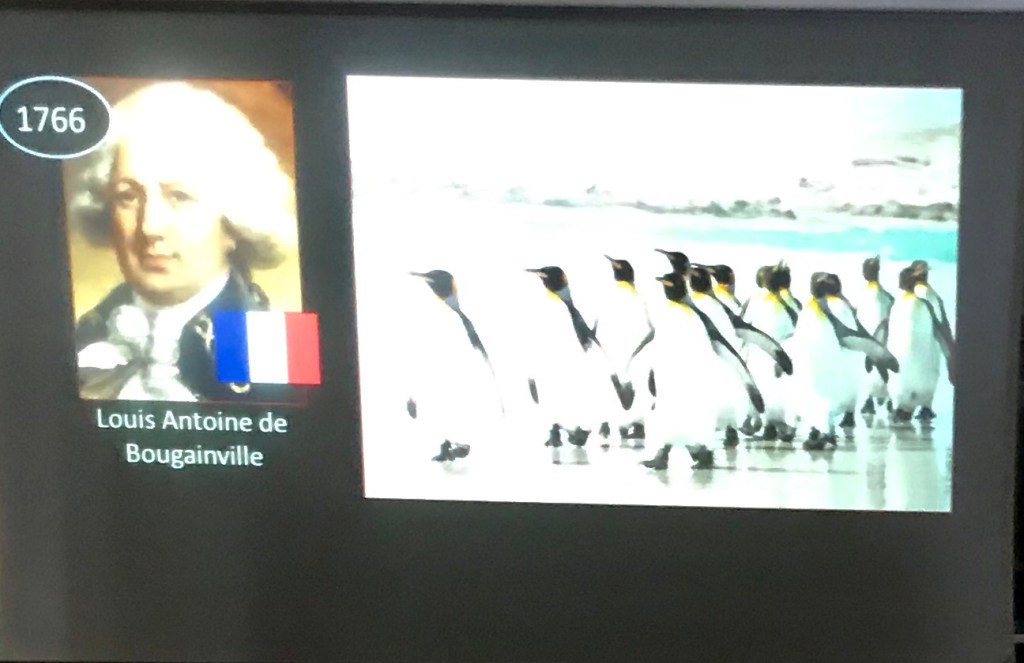
Generally live in remote areas so hidden from Europeans. Vasco de gama 1497 jackass penguins African. Next 1520. Magellanic penguin. (Magellan). Francis drake 1578 described as type of a duck or geese that could not fly. They were easy to catch to eat. Caught a lot. Thomas cavendish killed 14000 in one day. 17th century Dutch maps showed penguins. Scientists start to get involved in the 17th century found it hard to classify them. Carl Von Linne 1758 first to say if you have feathers you are a bird he described the jackass penguin. 1766 first to describe as magnificent.
James Cook first to realise they are truly oceanic creatures. John Forster described the chinstrap, gentoo, magellanic. Cook samples included the “woolly penguin” they were actually king penguin chicks. Emperor penguins 1842. Stones in belly. This also led to the indication that Antarctica had land – rock. Adelie named for a discovers wife. Sealers also killed penguin to eat and to use as fire wood. Also used for machine oil. 3 million king and emperor killed which in terms of numbers is more than the number of whales killed.
1918 things stopped as they realised the slaughter was widespread. Public opinion forced an end. Hoosh – ways to cook penguin. Many expeditions only survived because of penguins. Shackleton’s for example. Elephant island is in the south shetlands. Comparisons of penguins to human society.
Edward A Wilson part of Scott expedition artist. He was convinced they were the link between reptiles and birds. However Penguin was not the missing link. Herbert Ponting photographer 1903. First photos of penguins. 1932 started to be used in marketing. 1935 penguin publishing established. 1938 book “mr popper’s penguins” children’s book. Then movies. 1964 mary Poppins penguins first appeared in movies. 1993 life in the freezer bbc David Attenborough. 2005 March of the penguin. 2006 Happy Feet – scientific advice so natural history accurate. 2019 penguins Disney. Penguins attract people – zoos most popular animal. First in a zoo 1914 from South Georgia in Edinborough zoo. They are not allowed to catch any wild penguins now so have to breed in zoo. Sea world San Diego. Wild encounters still the best way to see them.
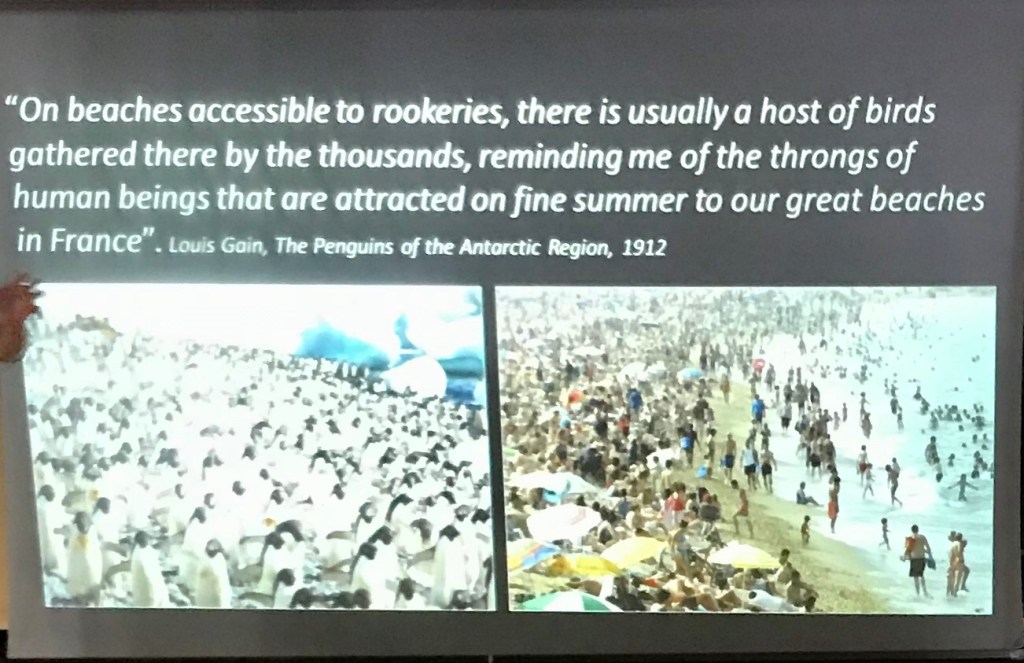
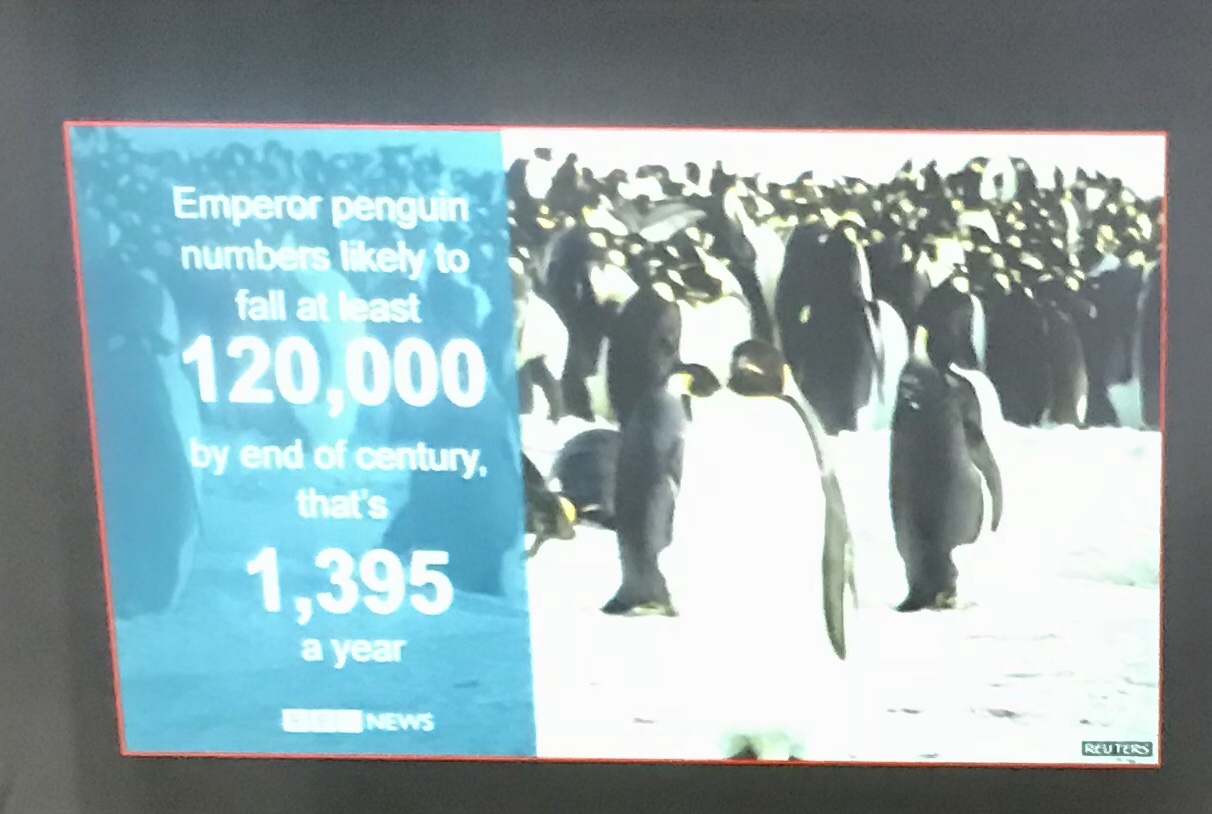
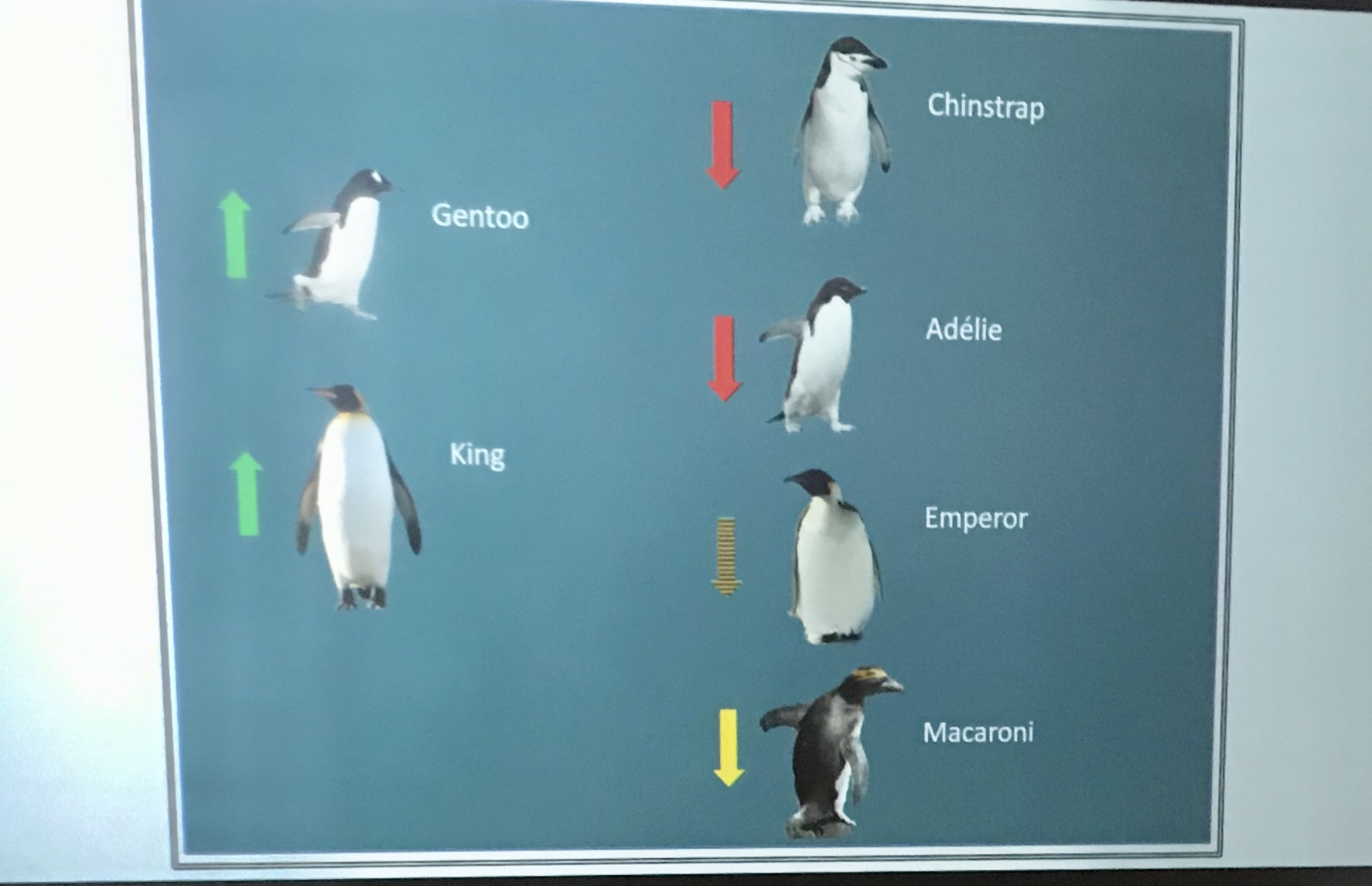
So why are we so connected? Beautiful cold and remote places. They are also funny creatures. They bring happiness and smiles. They are a reflection of ourselves – walk like babies. Elegant – tuxedo suits. We don’t like apes as much as penguins because they are too close to us. Each penguin type have different personalities. Be your own penguin. Dedicated parents. They seem indestructible. They have survived millions of years of evolution but the problem is can they survive the next 50 years because of us?? only 1% of African penguins left. Plastic pollution and fisheries also a problem. Rockhoppers and Magellanic penguins suffering because of fisheries. Climate change. Ocean temp change changes distribution of their prey eg emperor penguin. Needs sea ice to breed.
Presentation: Strangers in Paradise – Life and Work at an Antarctic Station with your historian Miko in the Nautilus Lounge.
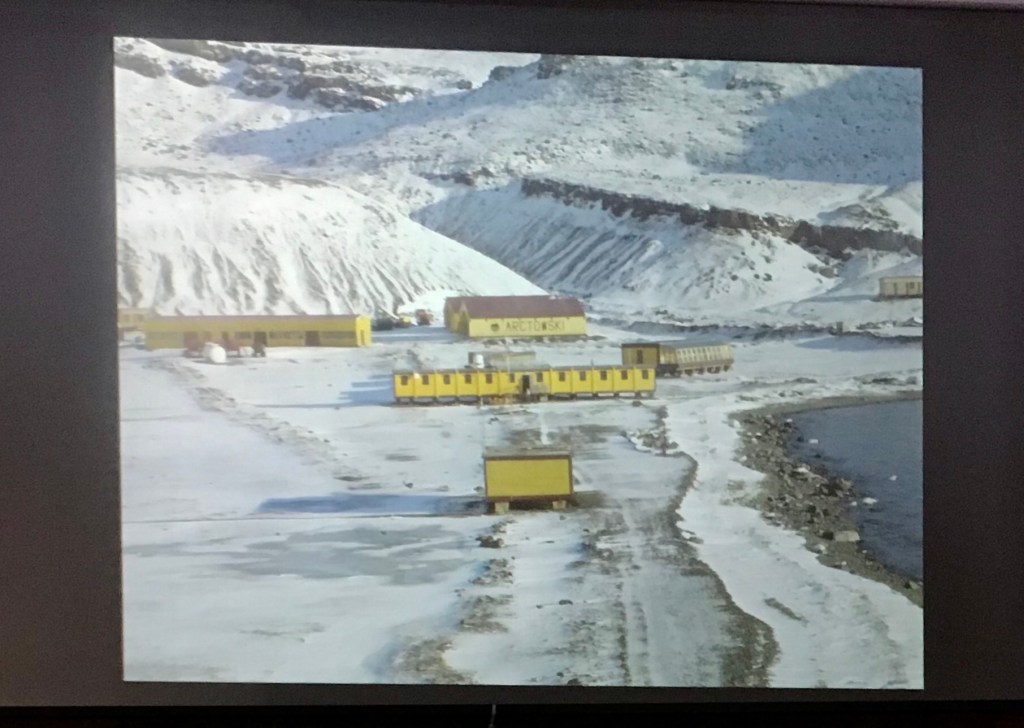
2002 came for a year and now keeps coming back. Three years at the Polish Antarctic station. King George Island. Part of South Shetland.
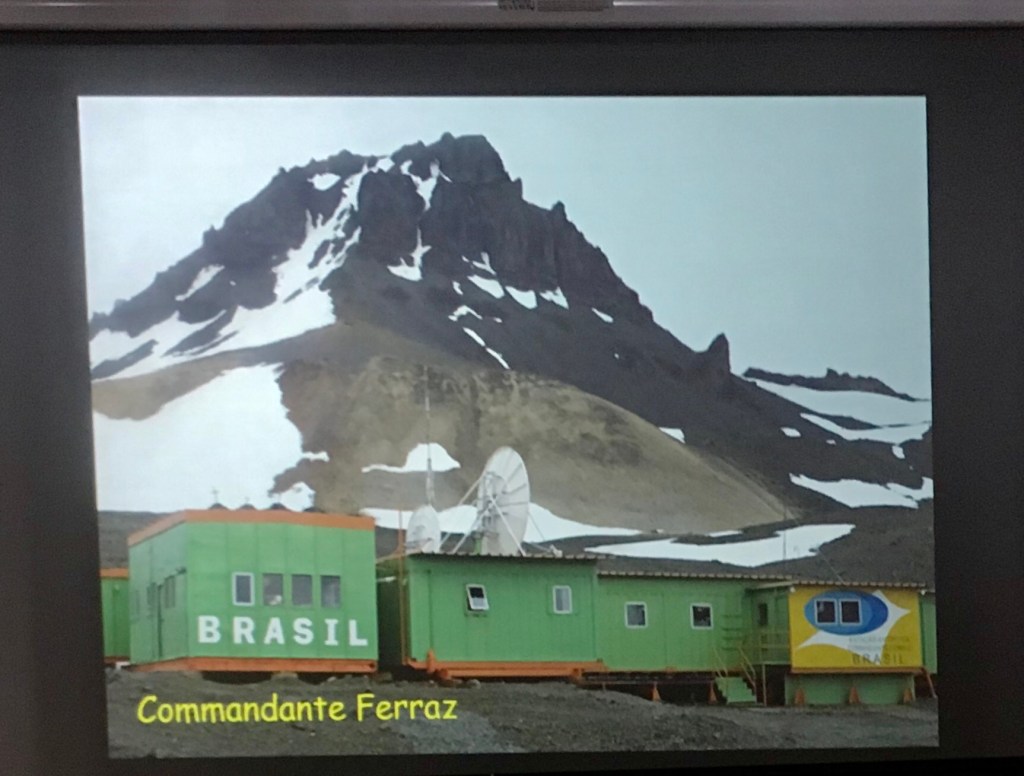
Highest density of international stations. 8 permanent and 3 summer camps. Approx. 80 km in length. Summer doesn’t really get dark. 24 hours a day to offload the ship bringing fuel and food for at least three years. Takes three days. Most polar stations the buildings are bright colours – helps in snow storms.
Buildings spread out to alleviate the problem of Fire not being able to spread. Diesel generators. Population of about 30 on average. Summer very busy.
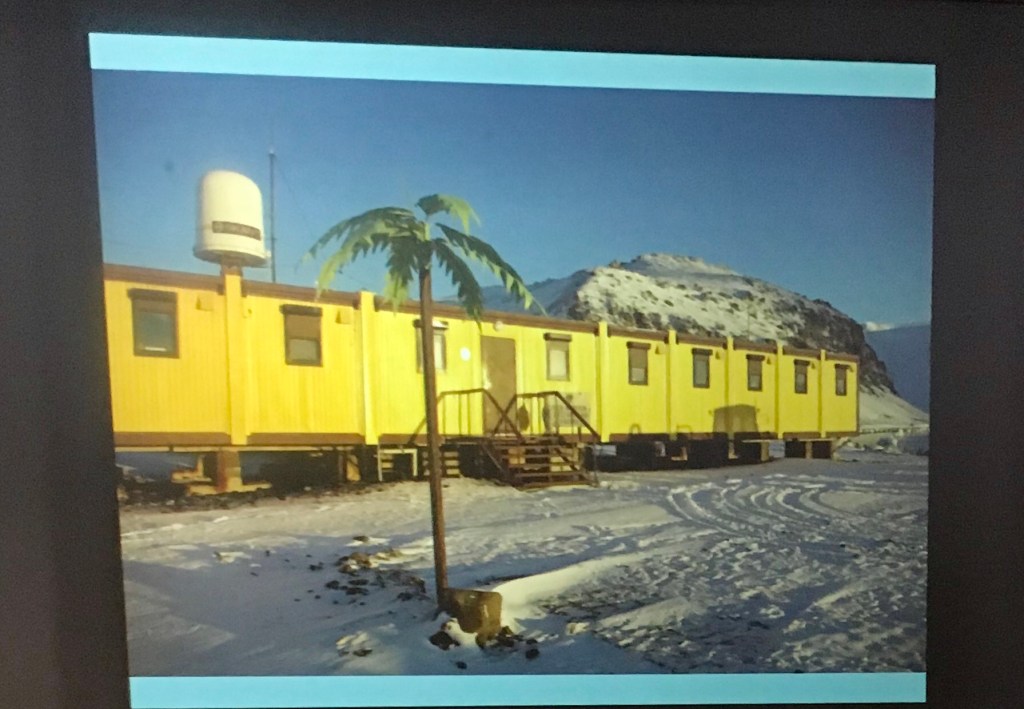
Snow can block the doors so all open inwards so you can get out. Can tunnel out or use an opposite door if it is a drift situation. In arctic other way as better polar bears are closing the door rather than easily opening it. Metal palm tree when Miko was station leader but next station leader had it removed as thought it inappropriate. Windy over 100 gusts of over 100kmh in one day. Many well over 250kmh. Roof blown off. Often after extreme weather events the following day is calm so they could fix it. Crevices can be seen in summer but not in winter. Miko fell down crevices twice. First with friends. Second in his own and fell 5m down. Often experienced people die – complacency kills.
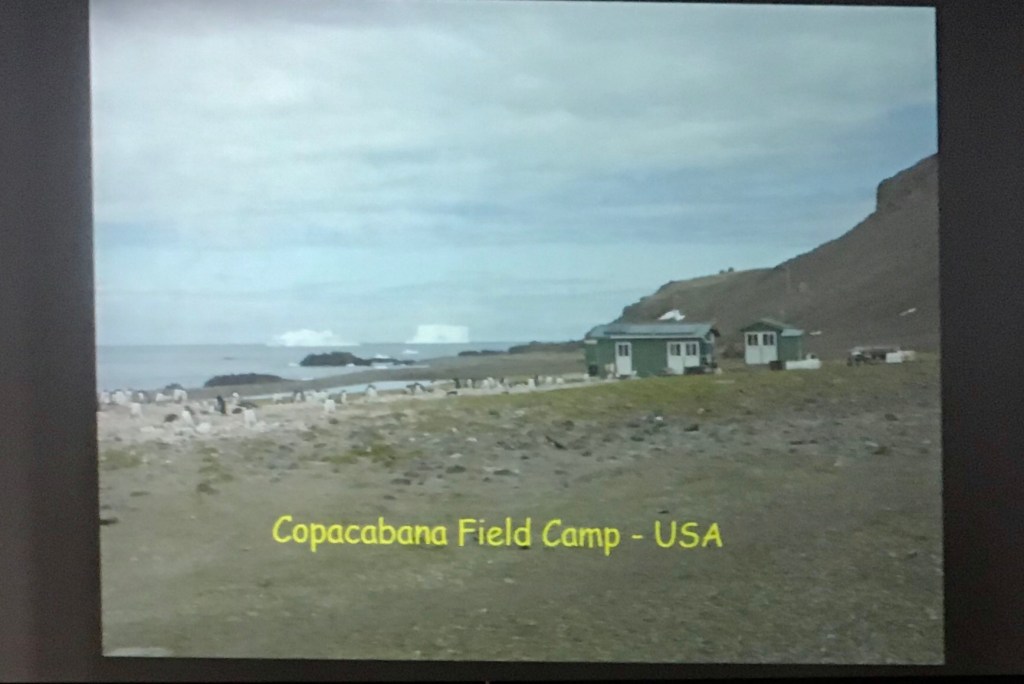
USA camp called Copacabana (not its official name). Usually ladies there and near the beach. They go to the polish station to shower and wash clothes. Close relationship. Winter much more isolated as ice stops boats but not solid enough for snow mobiles. Traditional new year swim. Also swim on your birthday. A fur seal snuggled to him in the night he was in a tent. (He was on the inside of the tent and the seal outside).
Special thing about Antarctic is that all stations cooperate and look after each other as it is always potentially deadly. Only place in the world. External politics doesn’t matter.
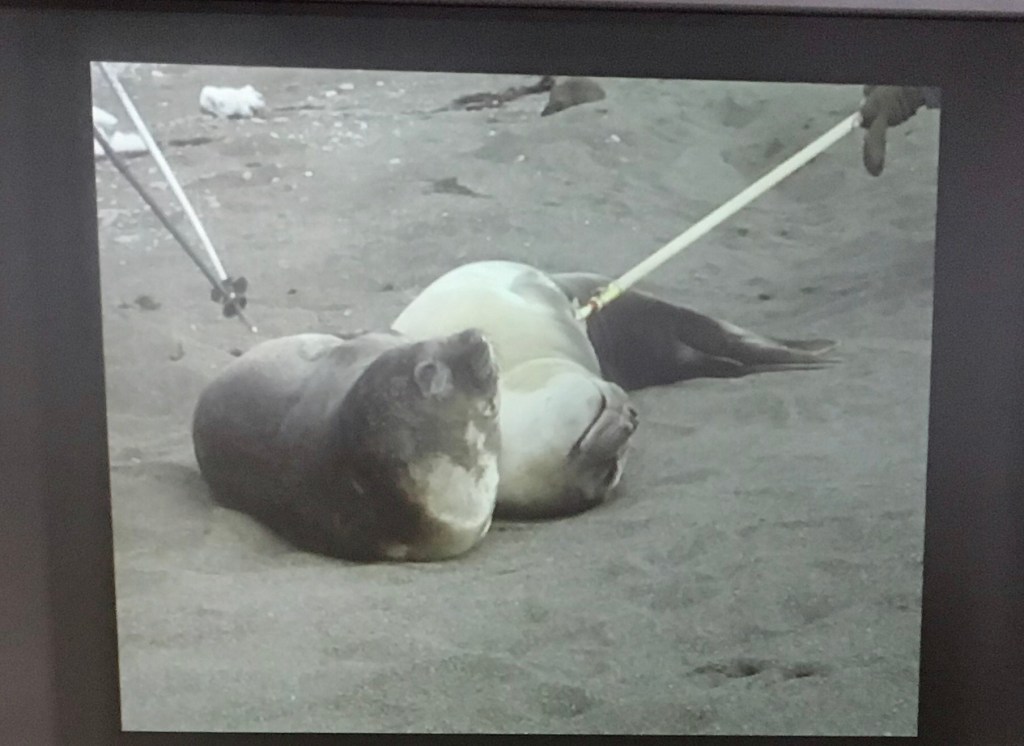
Main challenge is survival. Antarctica reminds you to be humble and be careful. Sedating elephant seals – large needle stab and run, but have to keep them from going into the water or they would drown. 20 minutes until they sleep. Taking DNA samples which the seals enjoyed as you can see.
Plastic issues. They are the locals we are the guests. Skuas came into station and stole polish sausage. Steal from BBQs. Adelie penguins seen to kill two skuas. They jump and try to pull them down as they fly over. Partner came to try to help the first and was also killed by the penguins. Penguins also seen to kill skua chicks – penguins are not stupid. Winter population at the station about 8. Lots of book reading. Still a few hours of daylight makes life easier. Living in the middle of a beautiful postcard.
After lunch Ocean Endeavour Cinema! A screening of Penguin – Spy in the Huddle Narrated by David Tennant. Excellent and more parts to see.
Swell now definitely increasing but not causing us any issues.
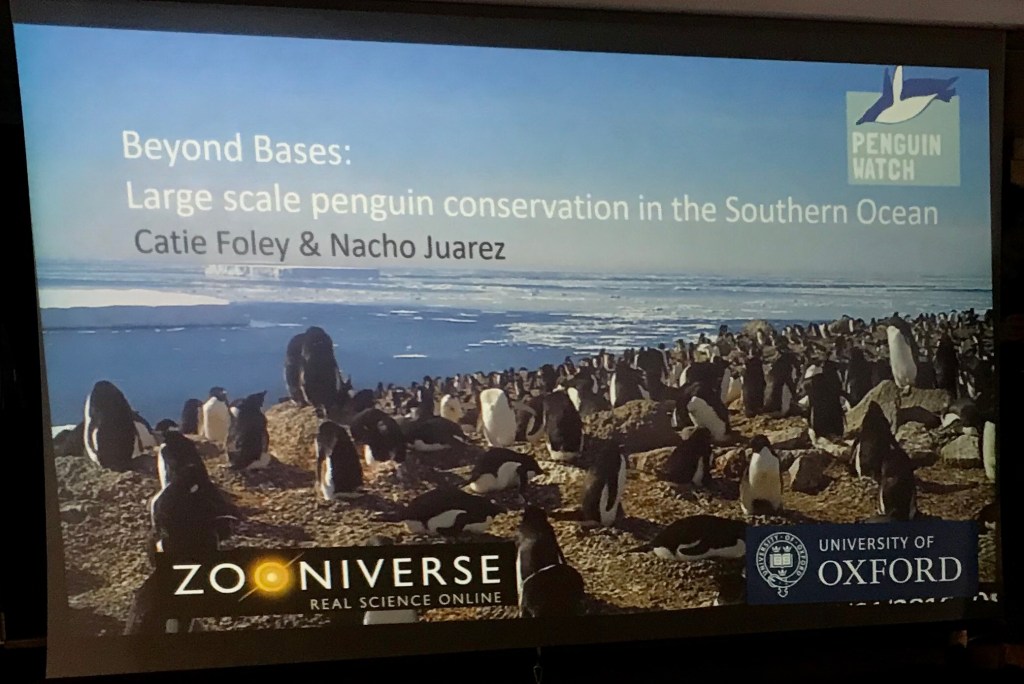
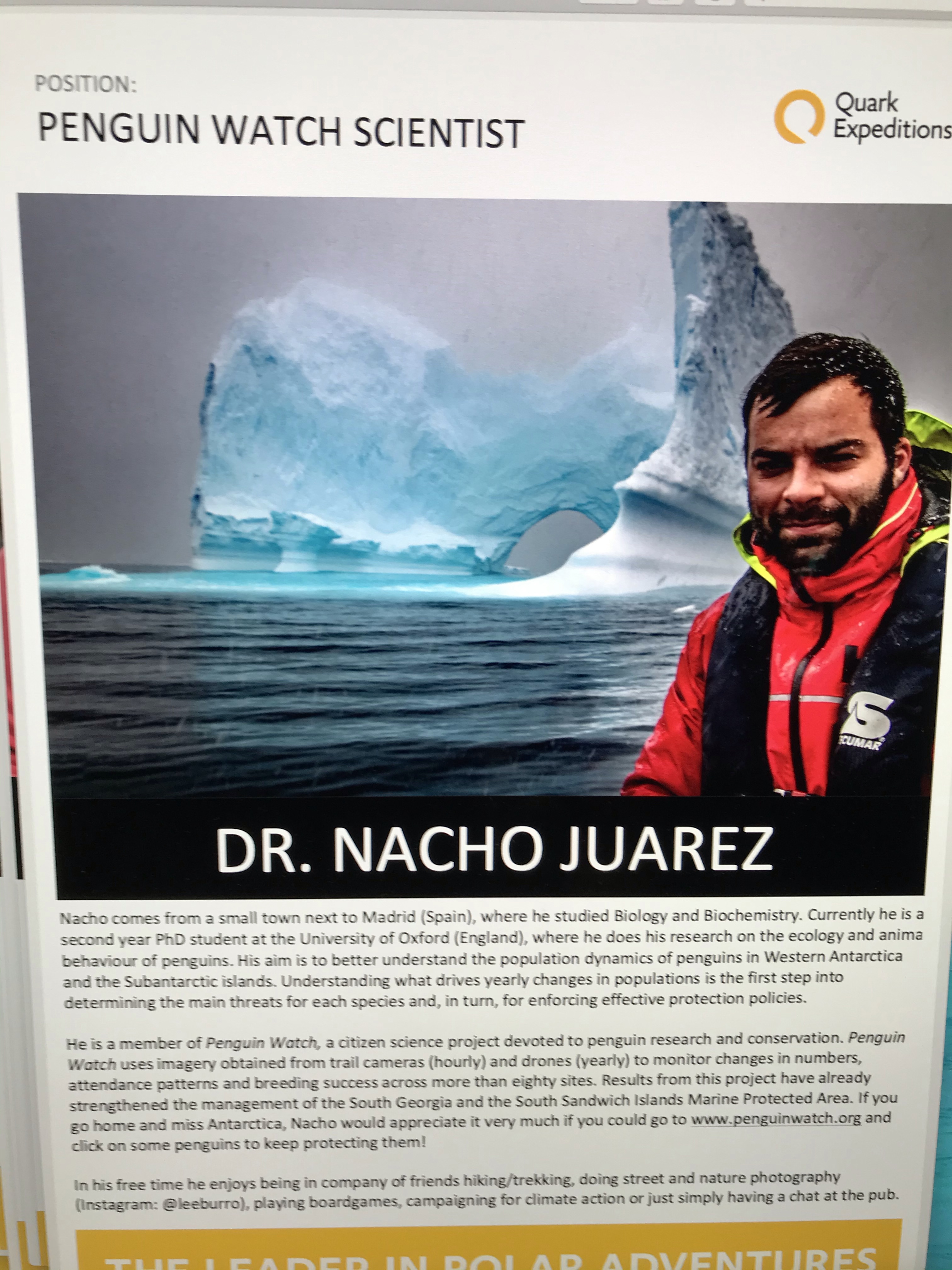
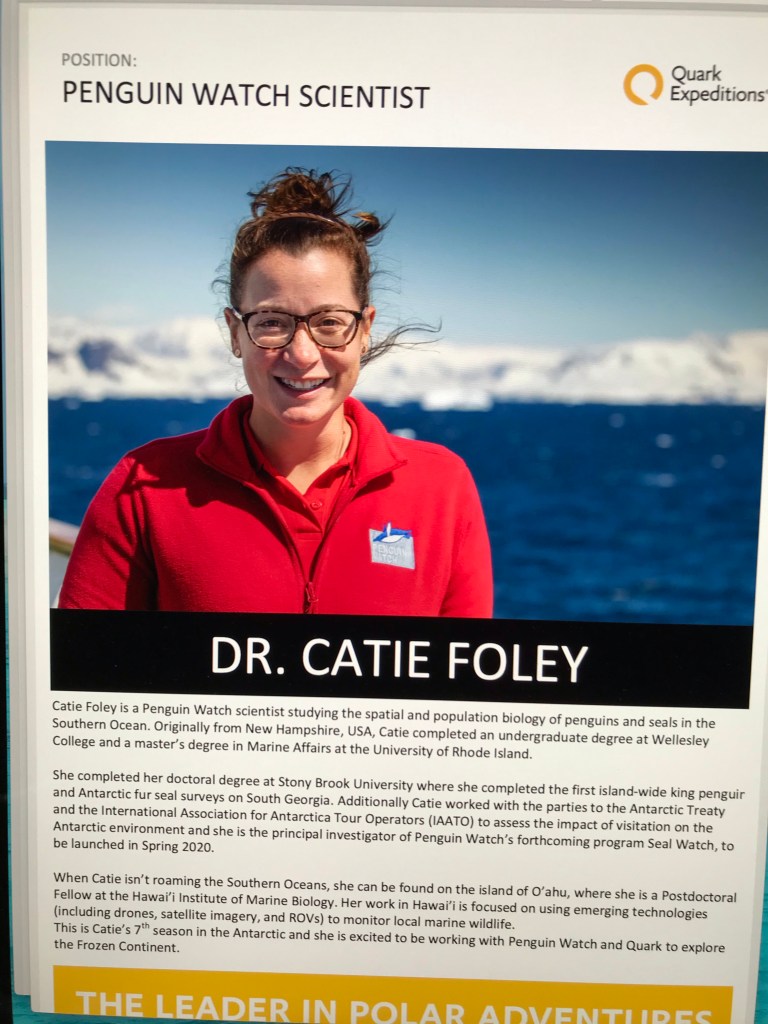
Presentation: Beyond Bases: Penguin Conservation in the Southern Ocean.
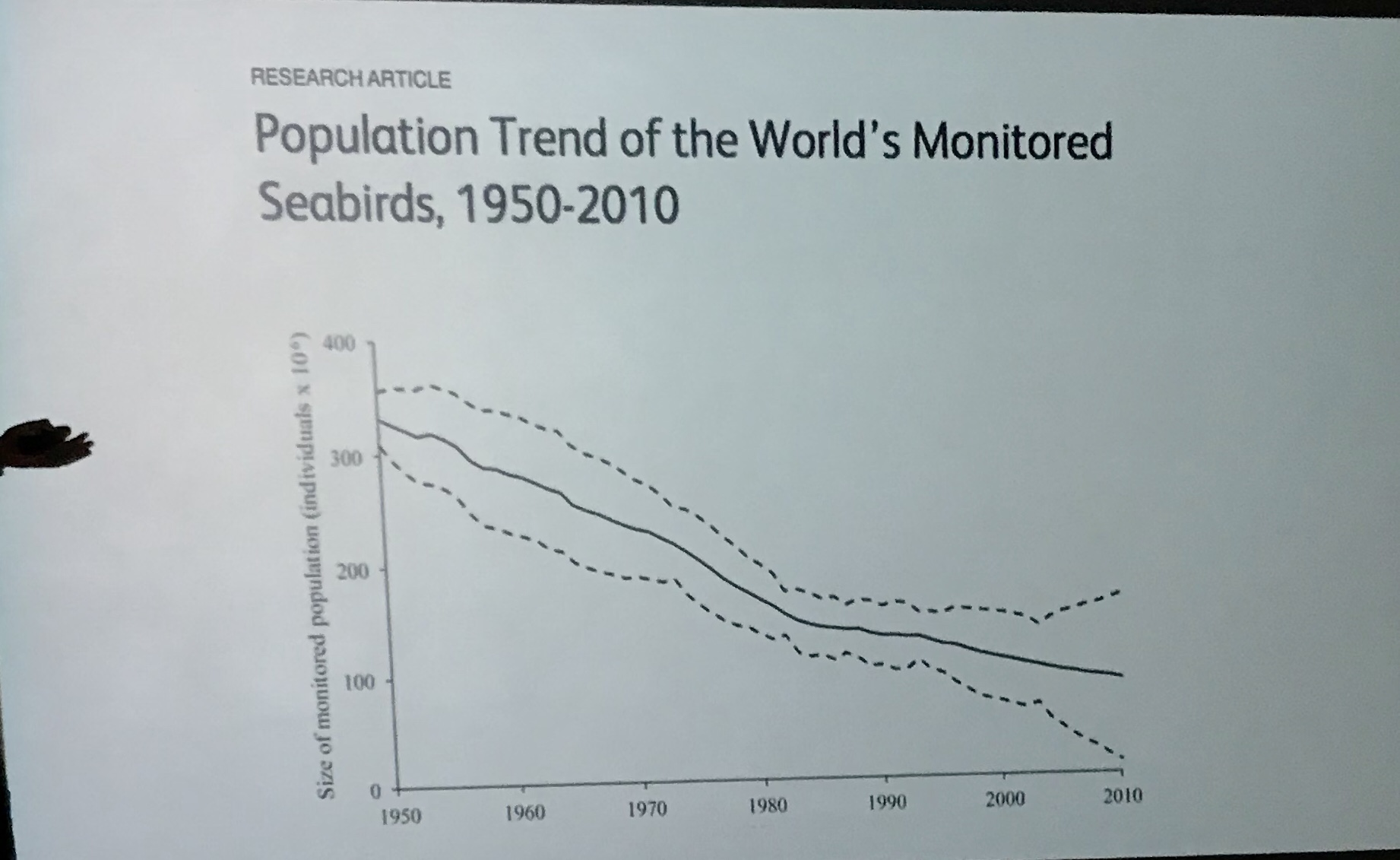
Penguins offer a great opportunity to gain insight into oceans at large. Threats – gill nets, long lines, over fishing, invasive species, oil spills, habitat loss and degradation and climate change.
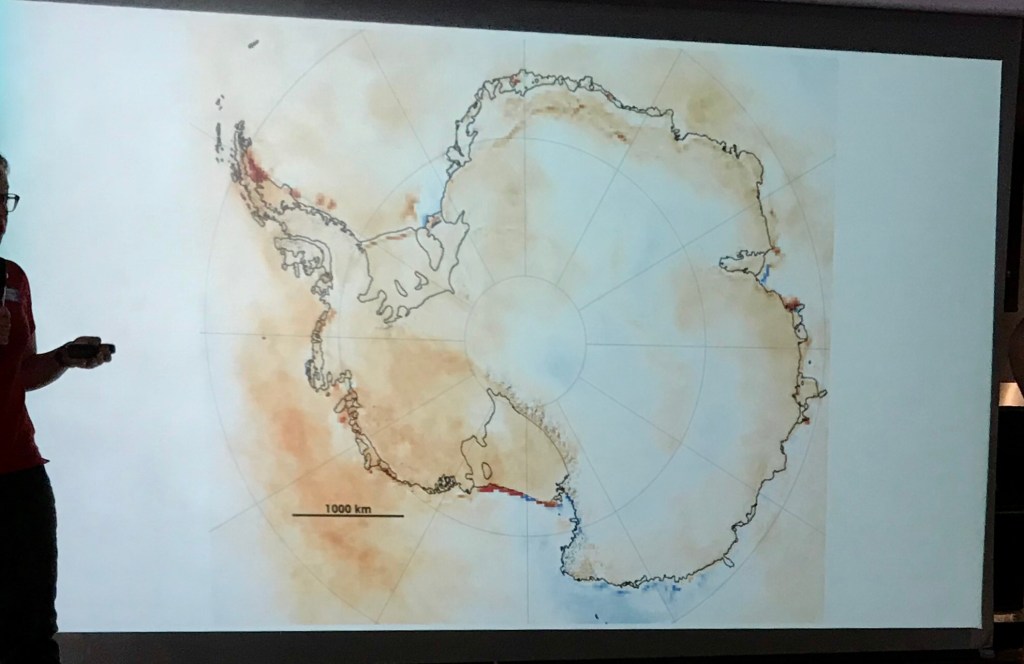
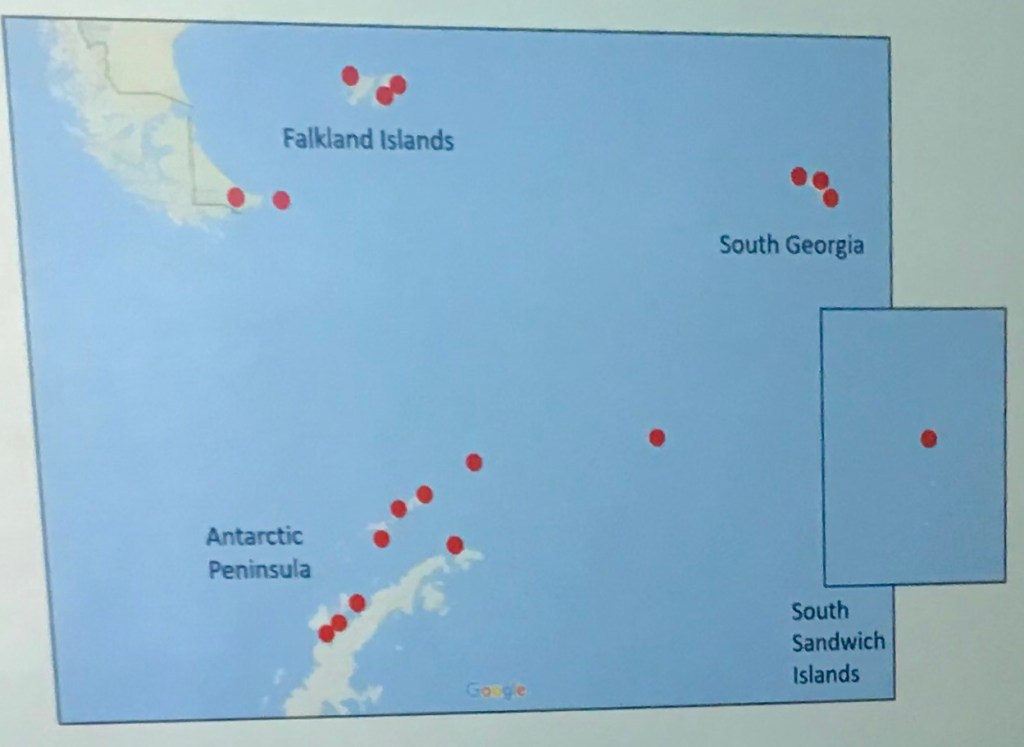
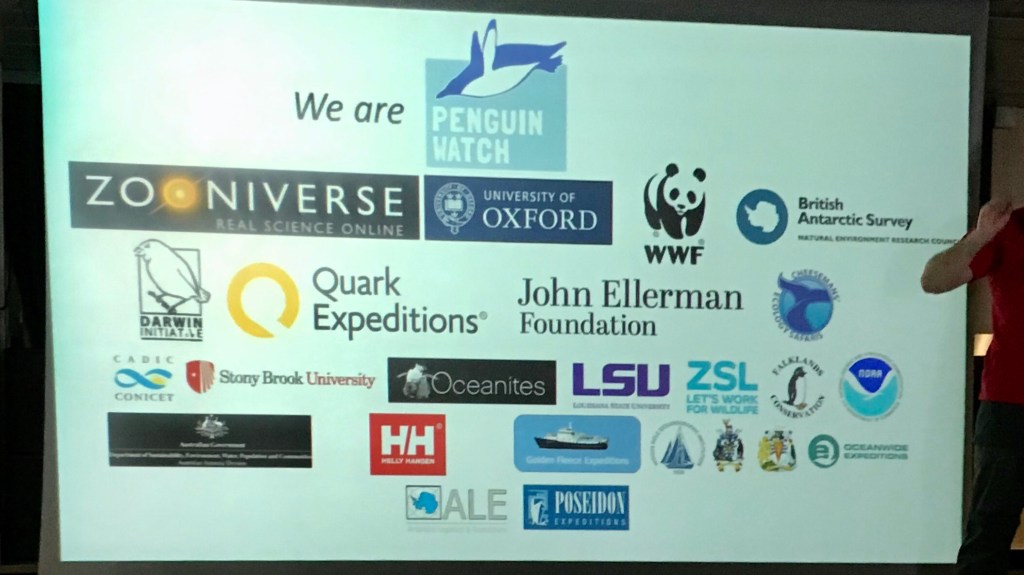
Red areas above average temperatures and blue below average temps. Decline in sea ice and that causes decline in krill. Fisheries taking them for krill oil and aquaculture. penguinwatch.org. Brush tailed penguins. 80 cameras capturing Half a million images a year. (Red dots show camera locations)
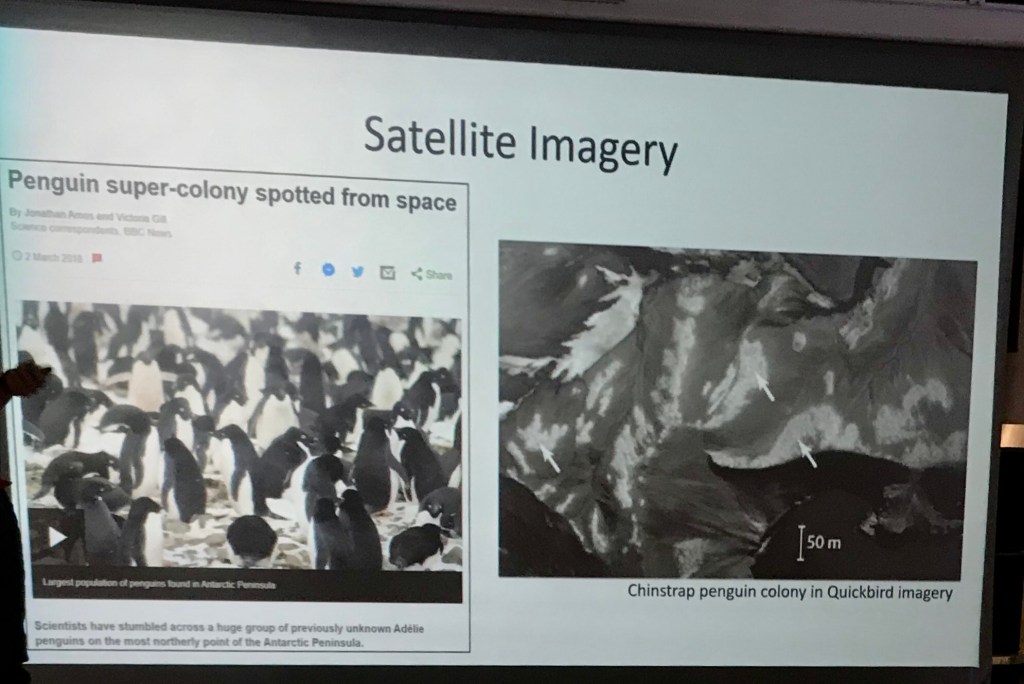
Cameras help us understand behaviour and reasons for chick deaths ie snow storms. Can see camera images on their website. Drones used to survey the population of a whole colony. Also use satellite imagery. They look for guano stains.
Can figure out populations from guano stain changes. Can visit all the colonies via their website and see how they are doing. Adelie declining in many areas but in one area are growing, information going to make policy decisions. Guano Samples to find out what they are eating and also parasites.
1 newly discovered penguin colony (Jamie’s Gentoo colony). Quark an important part of allowing this work. Pelagic Australis to get to the South Sandwich Islands. They are going as there are 1.3 million nesting birds. There was an eruption in 2014 in March – moulting time so no idea what has happened since. They know there have been previous eruptions and penguins have come back. Seal watch also coming. Zooniverse. Weddell seals can be individually identified by their markings.
Lots of organisations support their work so support those organisations.
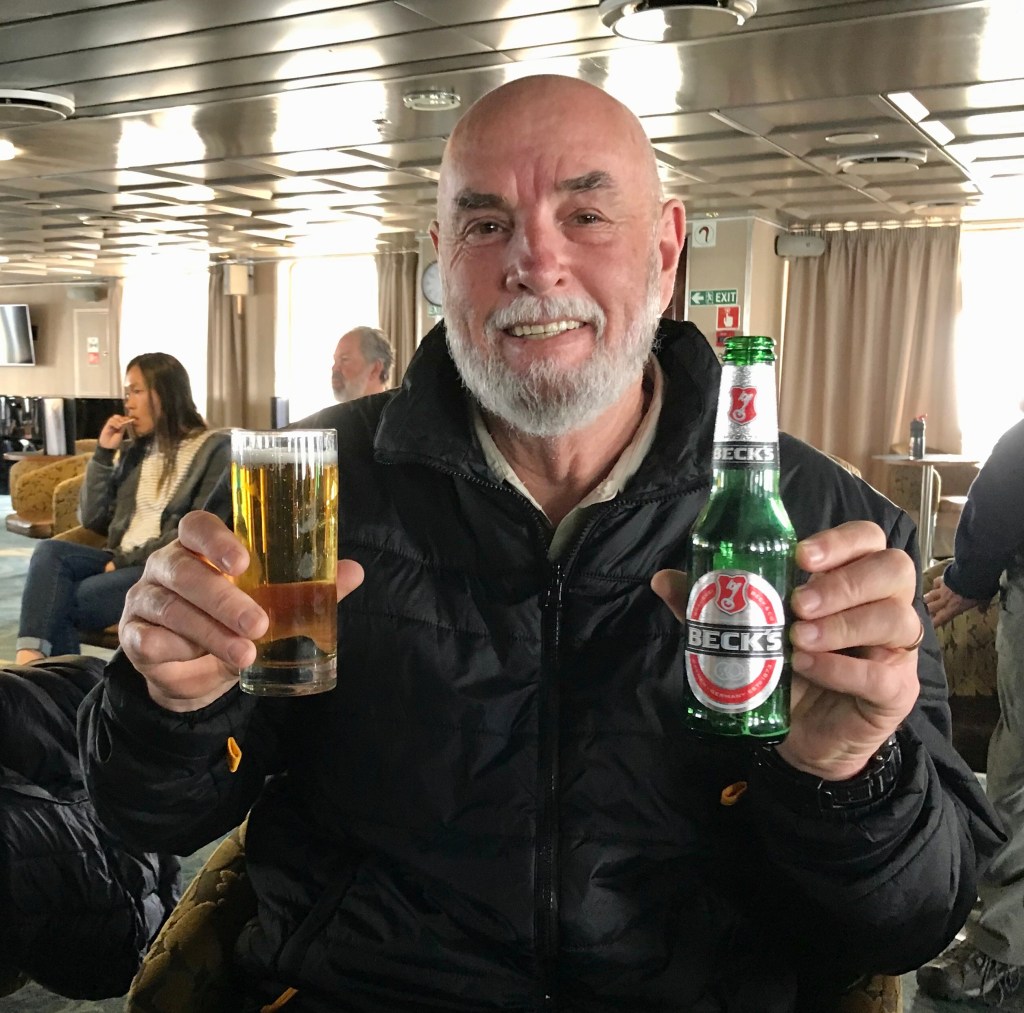
Beer of the day Becks – rated a 4 and he has had it before.
Miko – Belgian expedition. 1897-99. The Gerlache Strait named for the leader of the expedition looking for more information on Antarctica. Amundsen first to South Pole and first to see North Pole. (Norwegian). Nansen of the Antarctic- the cat. 3 languages, 6 nationalities. Plagued with problems. Wiecke island named for a lost sailor from this expedition. Stuck for the winter. First expedition to spend winter here. Ship not released for nearly a year. Used explosives and many ideas to get themselves free. Scurvy and mental problems from darkness. Danco died of a heart attack. Danco island named for him. Raw meat can save from scurvy but crew didn’t want to eat it.
Claire – profound realisation of how amazing this place is. We have a new view of the polar regions. Conservation “polar ambassador program” we can sign up to. Blog etc.. signup at reception. Yes I signed up. Maybe I’ll promote conservation via this trip?
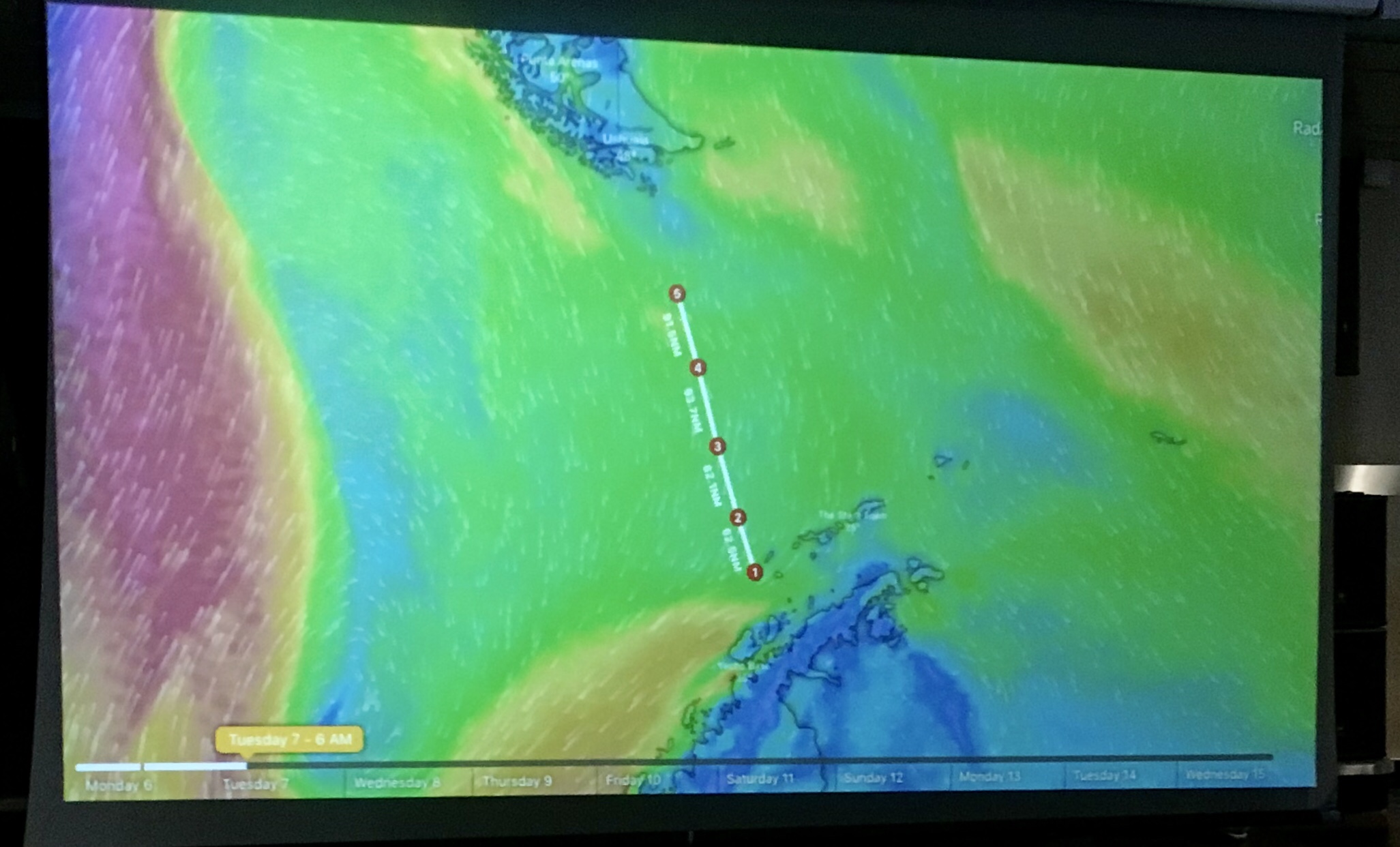
Solan. Not significant weather currently however system to the left coming in and will disrupt the next cruise.
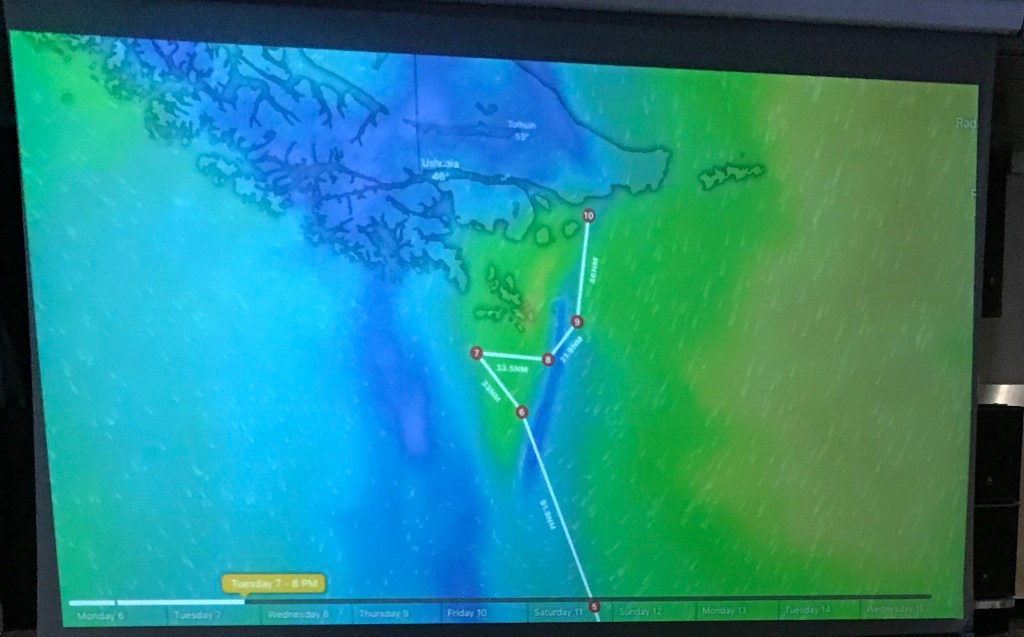
Aiming to visit Cape Horn. Pacific side and round it to the Atlantic side. Midday tomorrow. At the 12 nautical mile limit we ask Chile for permission to approach and see if we can do this.
How exciting that we might see Cape Horn tomorrow.
Time for the fundraising auction.
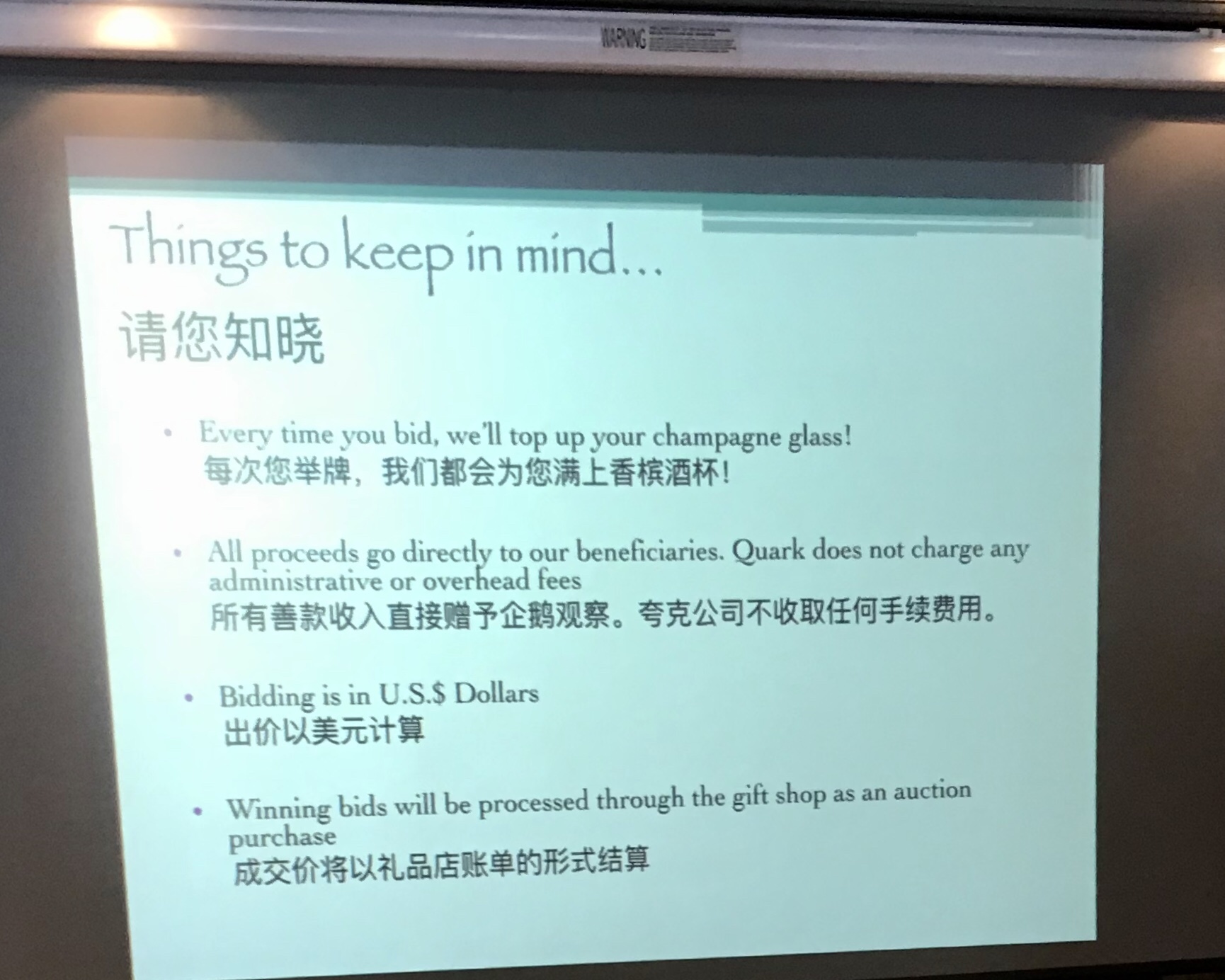
Gotta love the rules.
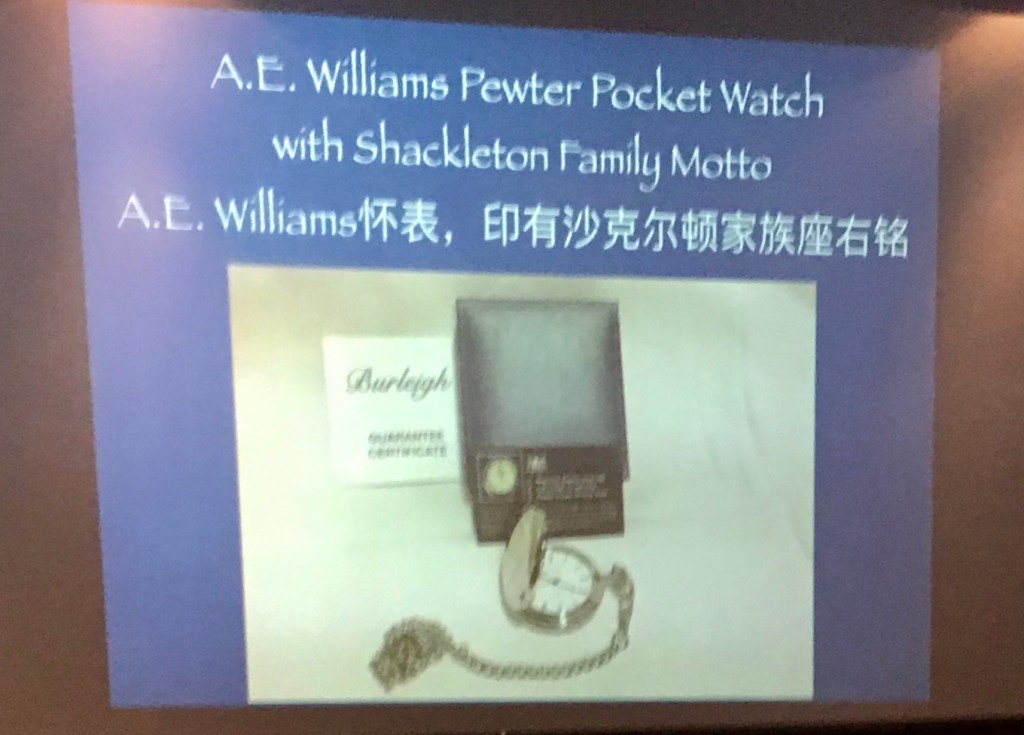
Some fascinating items auctioned.
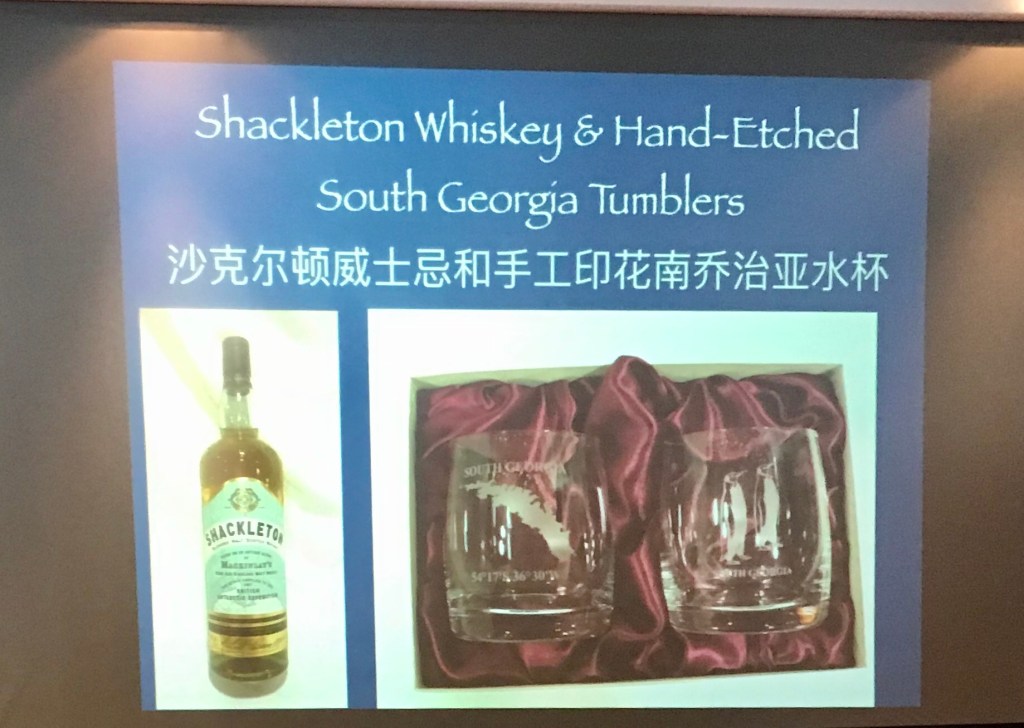
Loads of things from silk cushion covers to coins and whiskey and tumblers and a container of glacial ice from the piece we picked up yesterday morning. The Whiskey and tumblers sold for $400.00. Propellor off a zodiac driven by Stefano. (The one who parked on the iceberg). Sold for $350. Falkland Islands hand-woven wool blanket. $450. Expedition flag. $750.
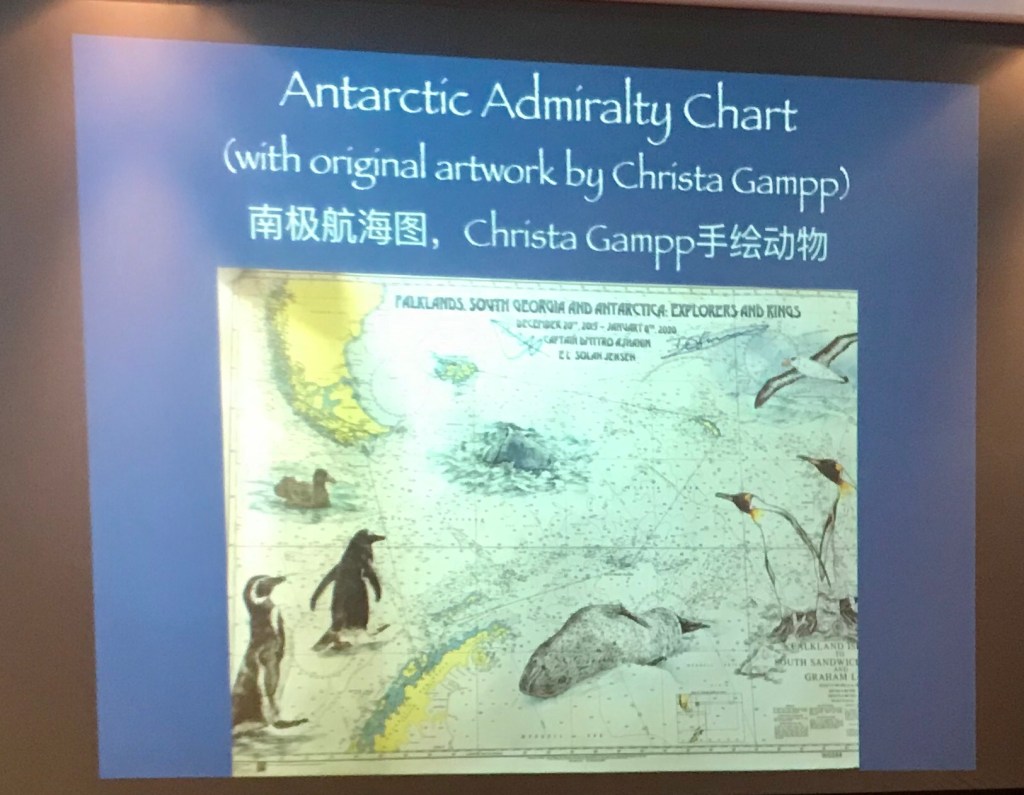
This Admiralty Chart. Christa, who also ran the boutique, did the artwork. $10,000 paid for it. Total raised. $13,765.00 but I have a feeling it was much more than that and someone missed counted….
I have broken the habit of a lifetime and am no longer coughing on my hand but into the crook of my arm per modern suggestions.
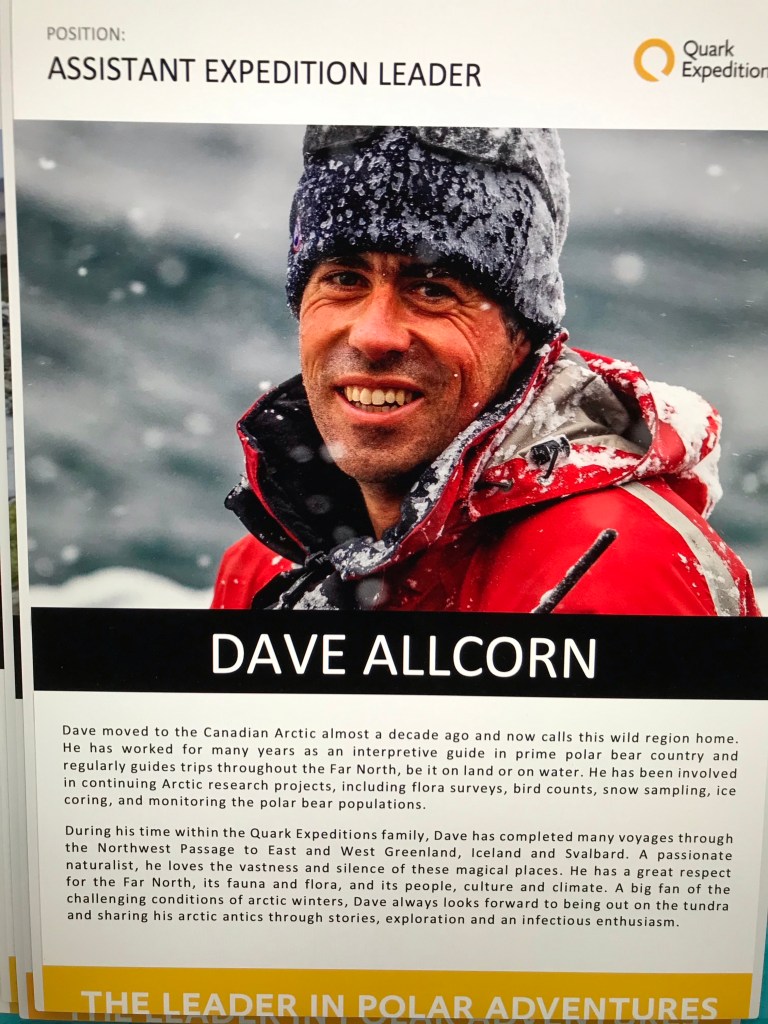
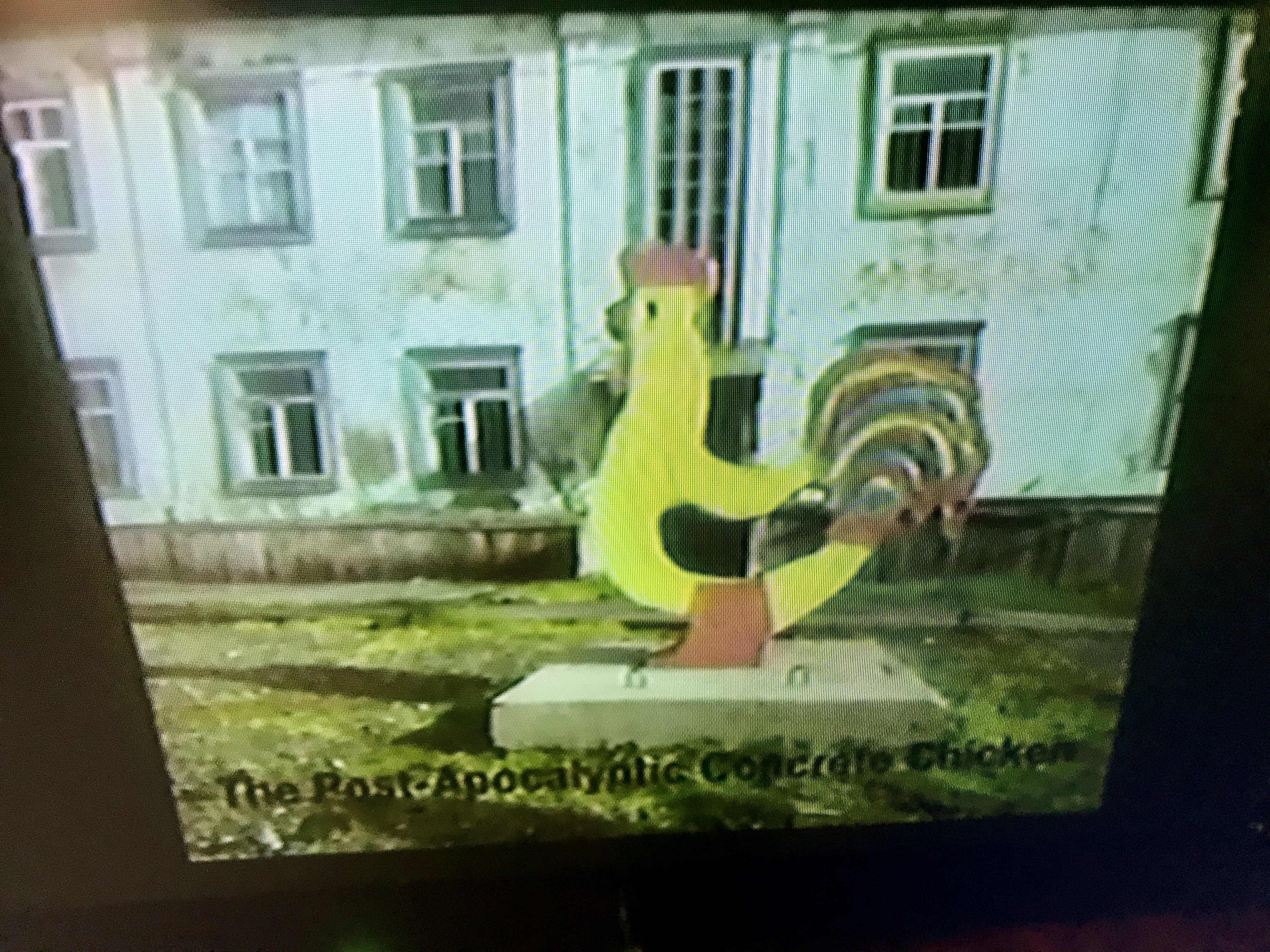
After dinner we were invited to Join Dave in the Nautilus Lounge for his casual bartalk The Post-Apocalyptic Concrete Chicken. Tales from the High Russian Arctic
We missed this again though I have a pic of the concrete chicken. I am still barking in a way that a fur seal would admire.
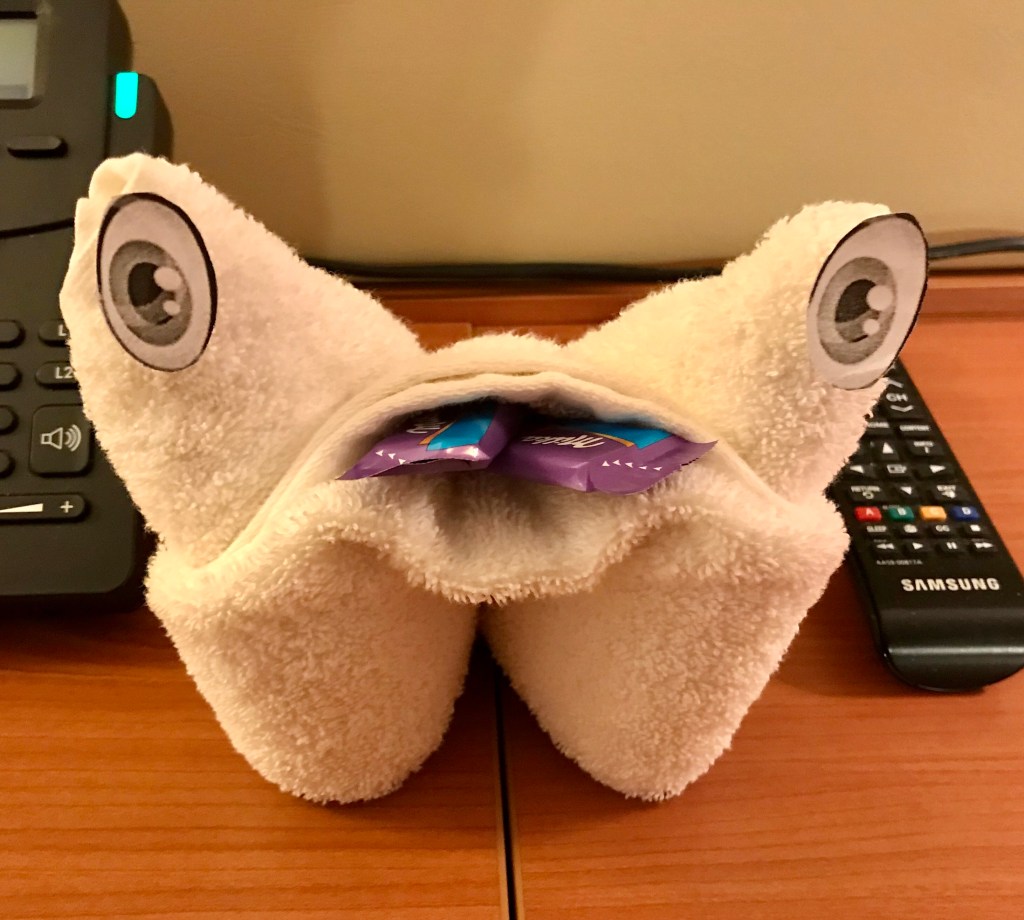
Finally another towel creature – a frog greeted us in our room. Time for bed and tomorrow Cape Horn! (The purple things are our nightly chocolates – usually on the pillows.)
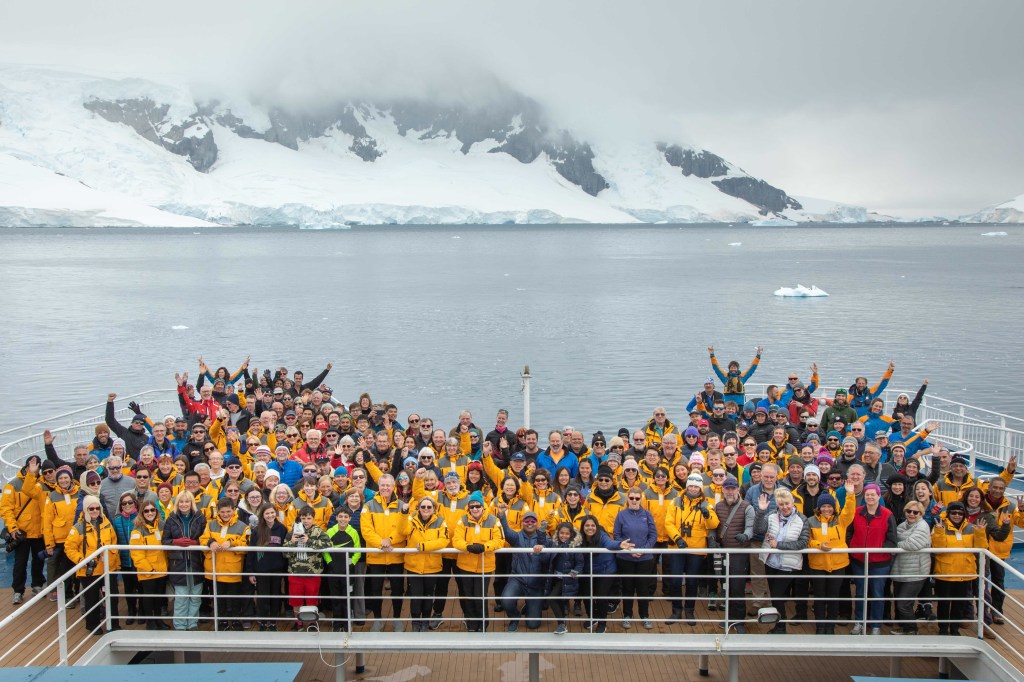
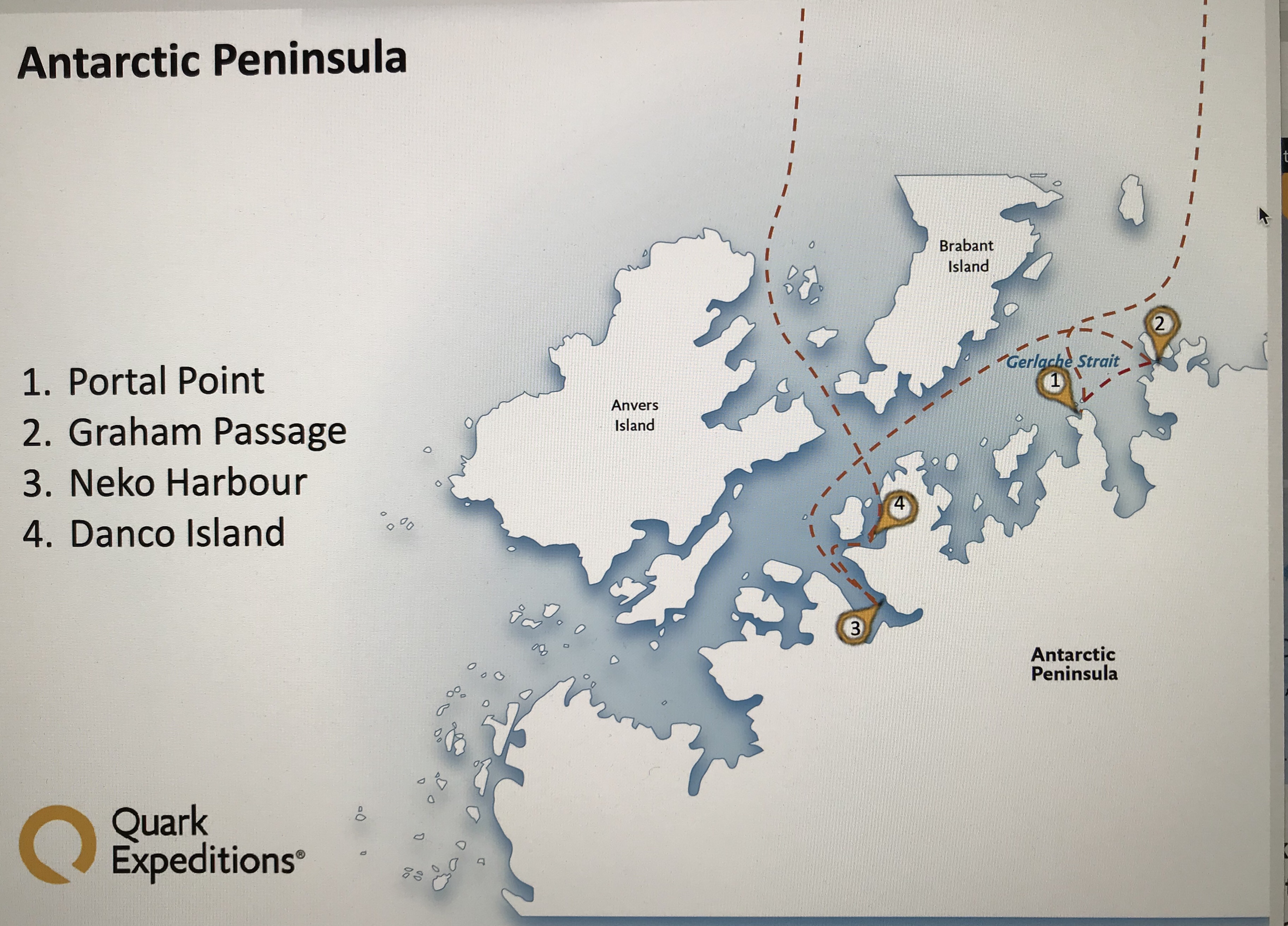
So Cuverville was changed to Danco island due to weather conditions. We also had our group photo taken.
Front row just left of middle.
It was much colder outside and as my nose is running like a tap and I am exhausted I have opted out of our last zodiac cruise and landing. 😢
As sick as I have been these past couple of days this is still the most magical of experiences, but I just couldn’t make it for the final trip out so Garrie ran amok with both the wide angle and the zoom camera and I have just added two of his pics to the ships photo journal.
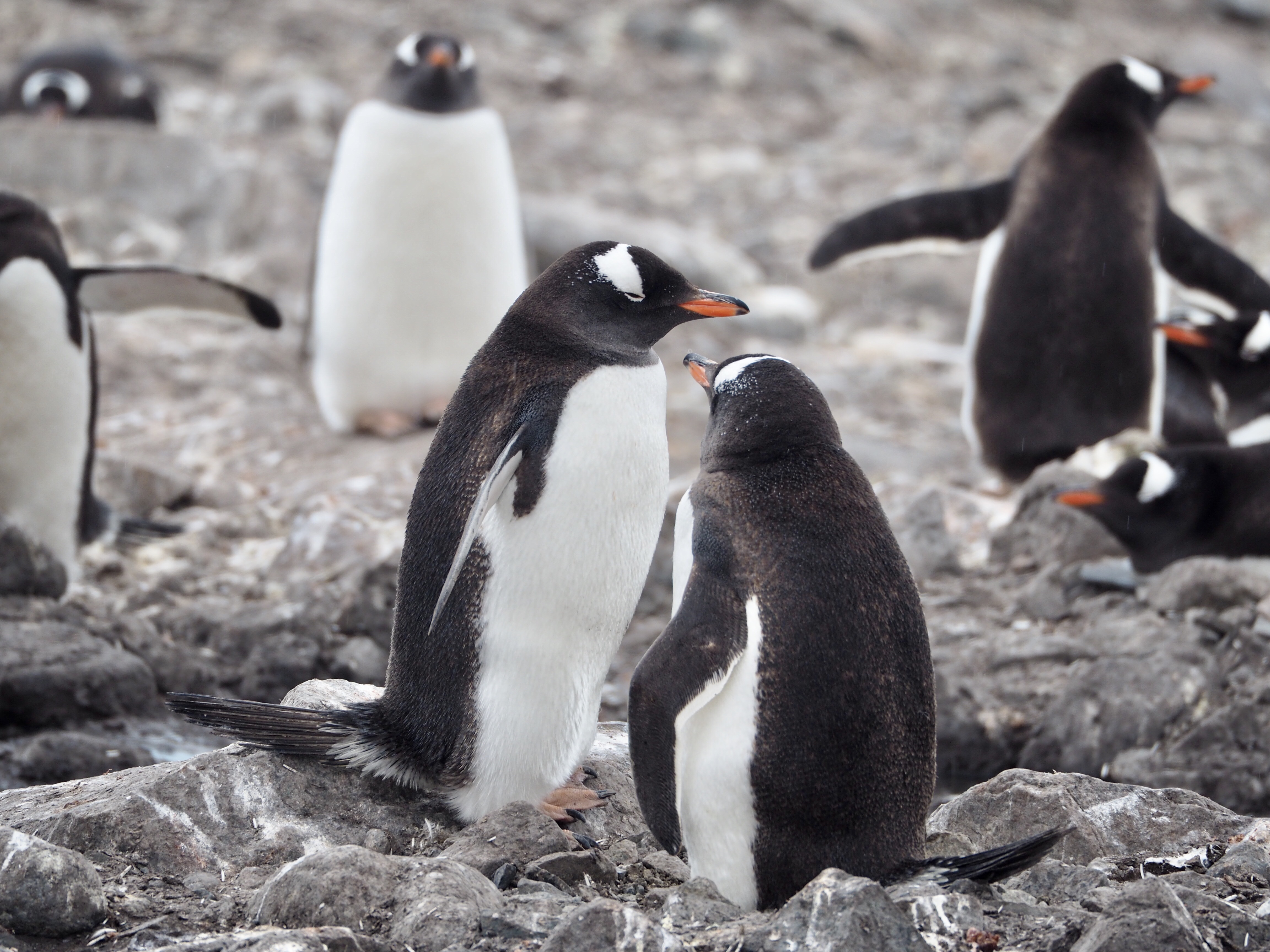
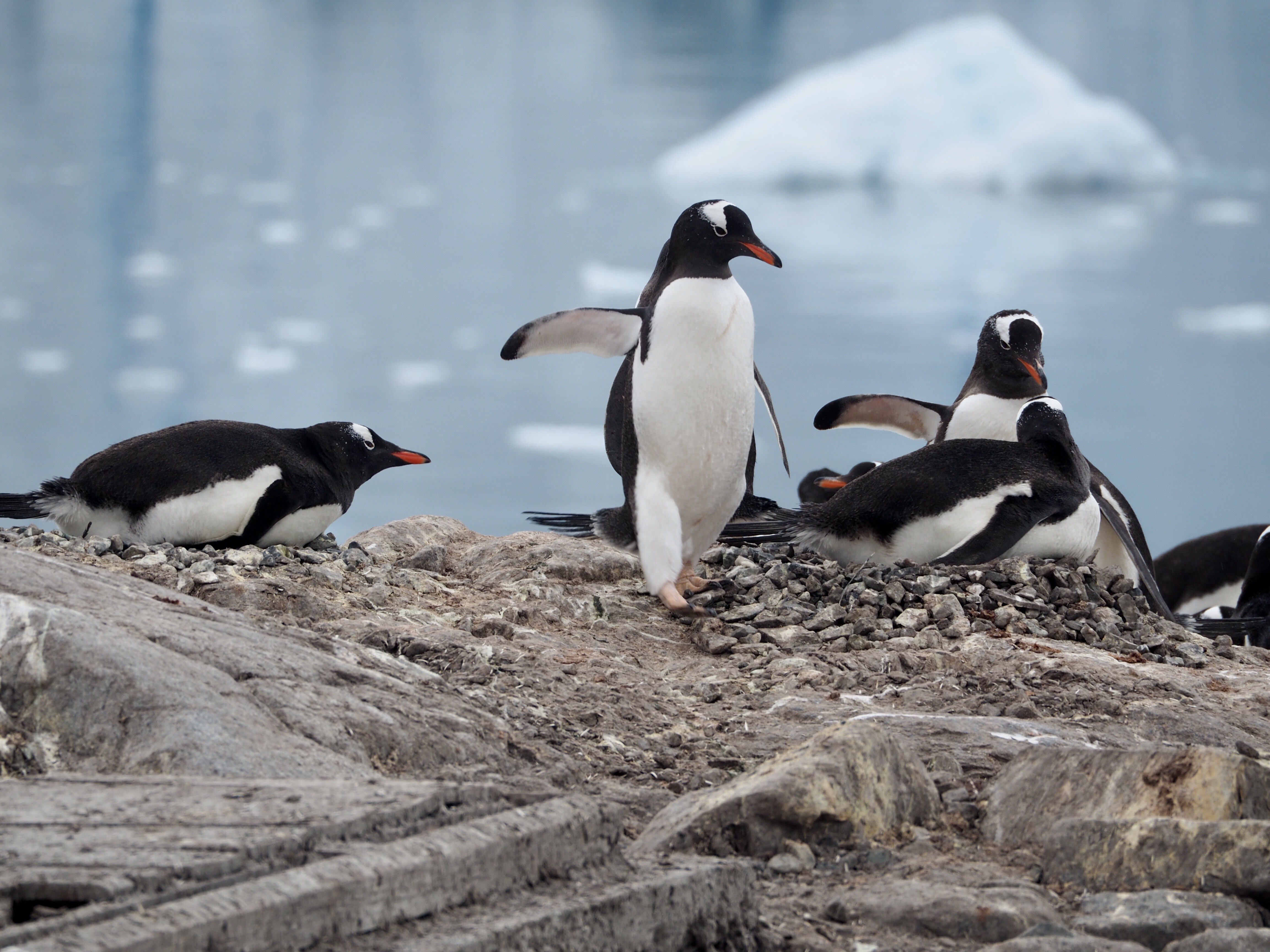
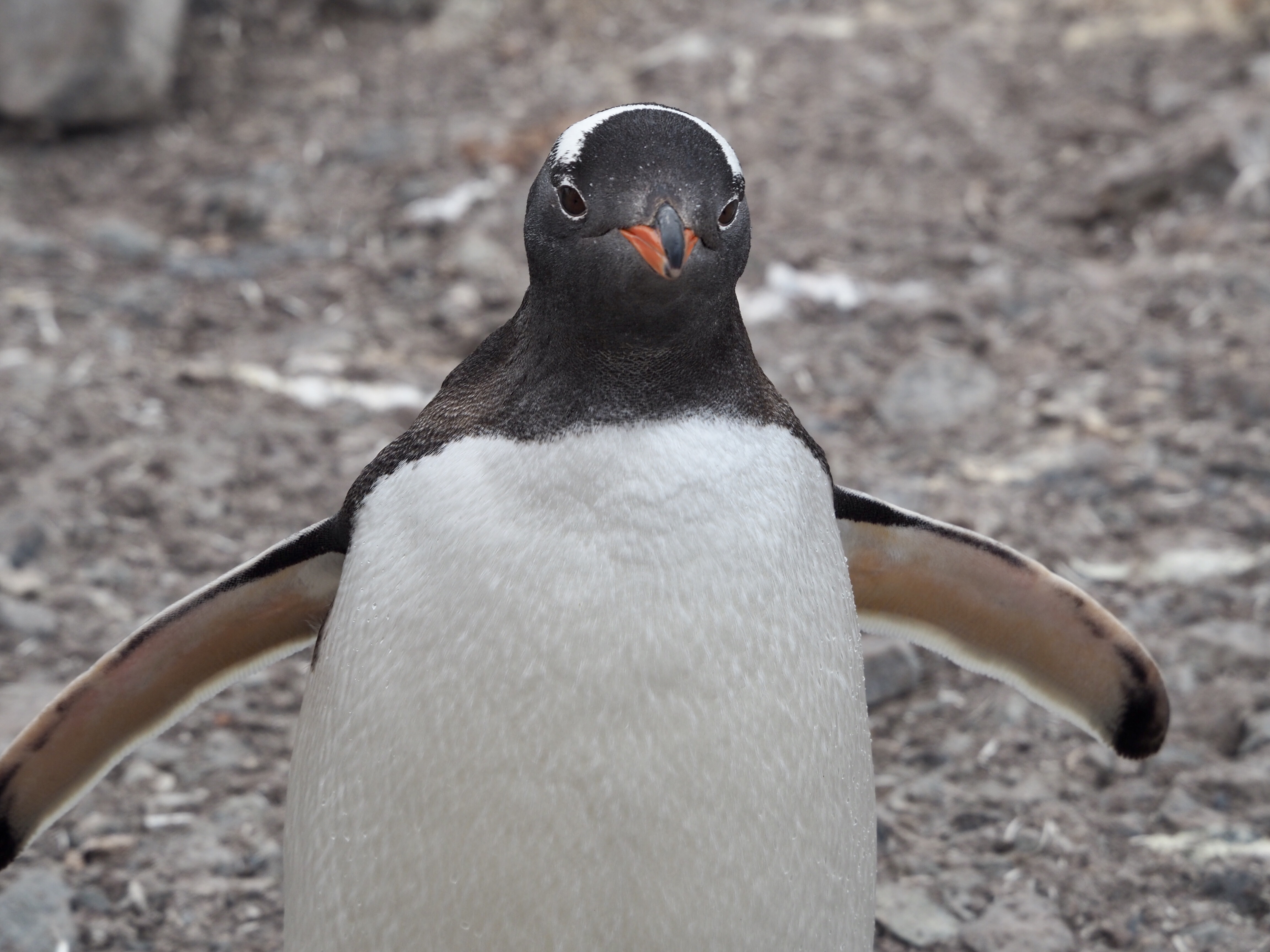
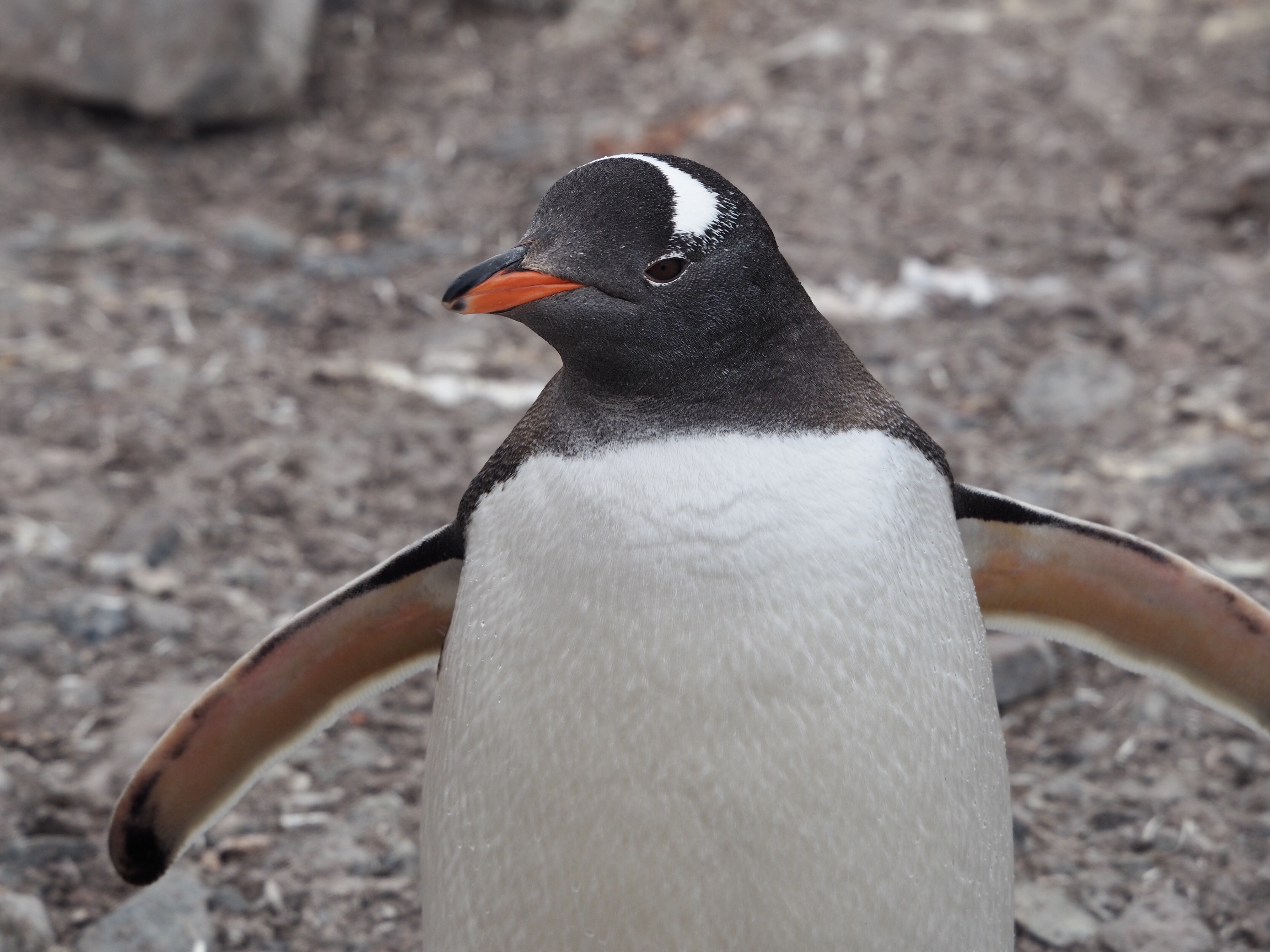
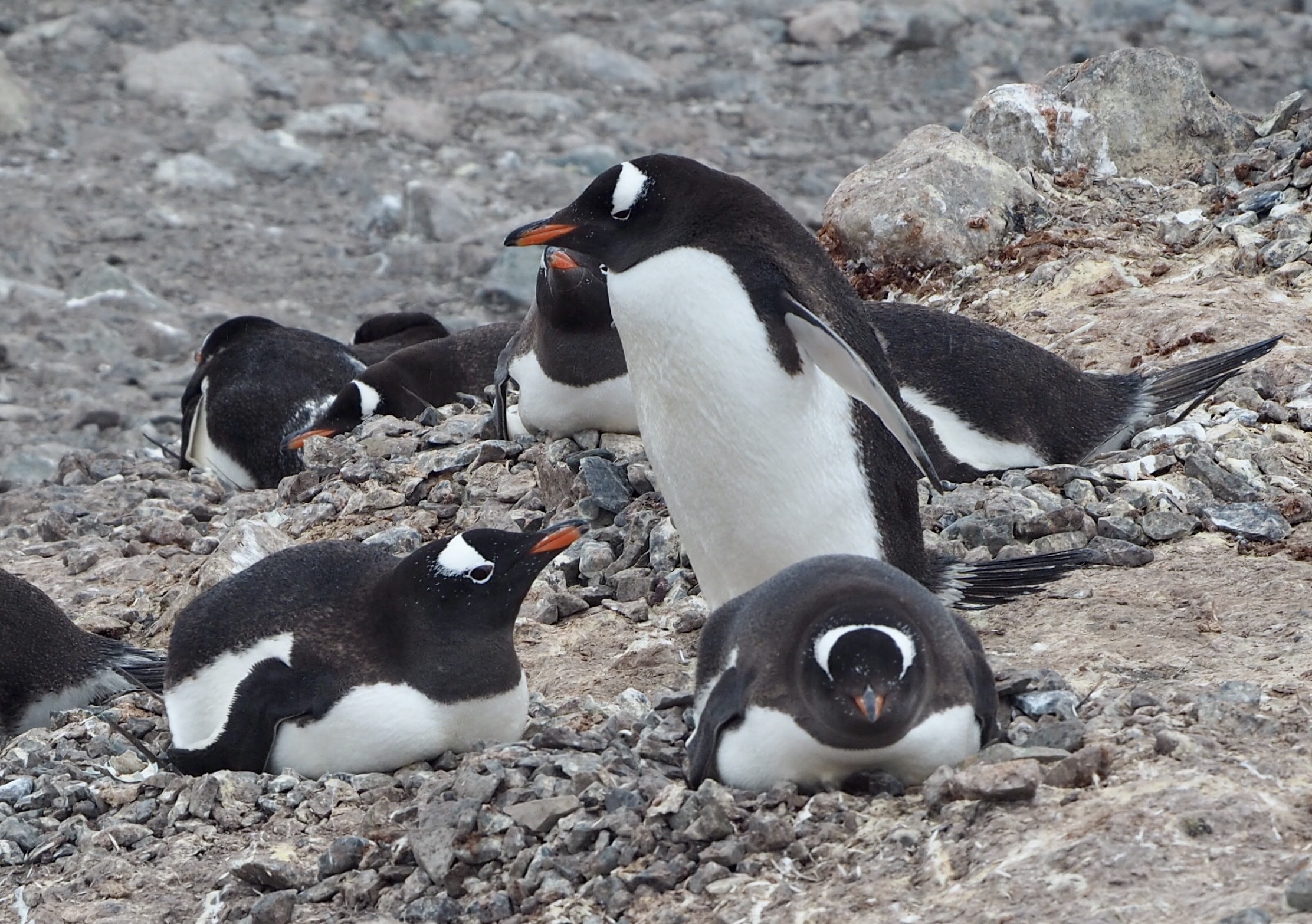
Gentoo penguins.
Garrie took a few good photos but they didn’t see anything I hadn’t seen before which I was grateful for. Gigantic ice bergs and a leopard seal, plus more whales and some gentoo penguins. Fantastic to hear the whales blowing once again in the silence that is Antarctica.
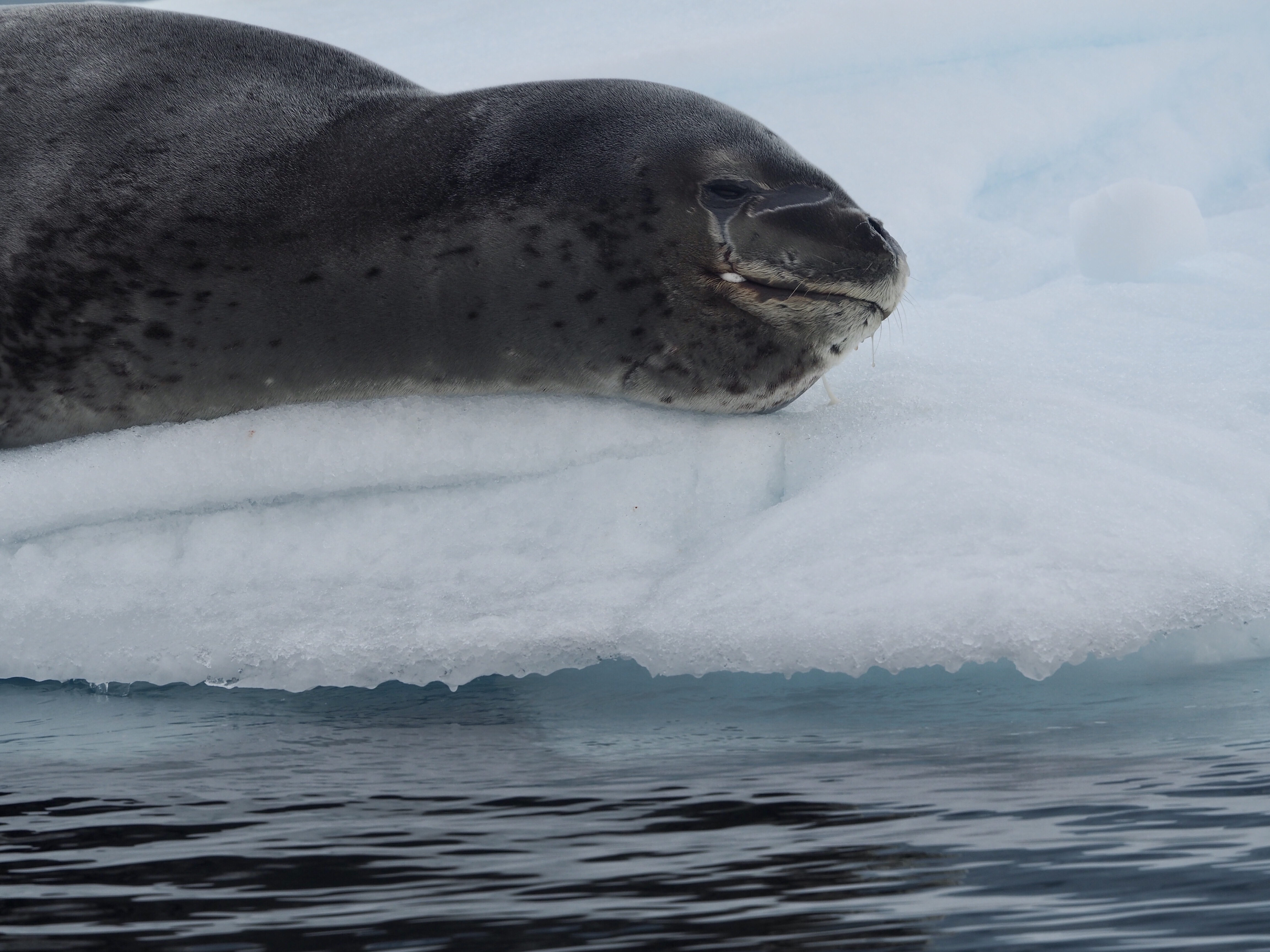
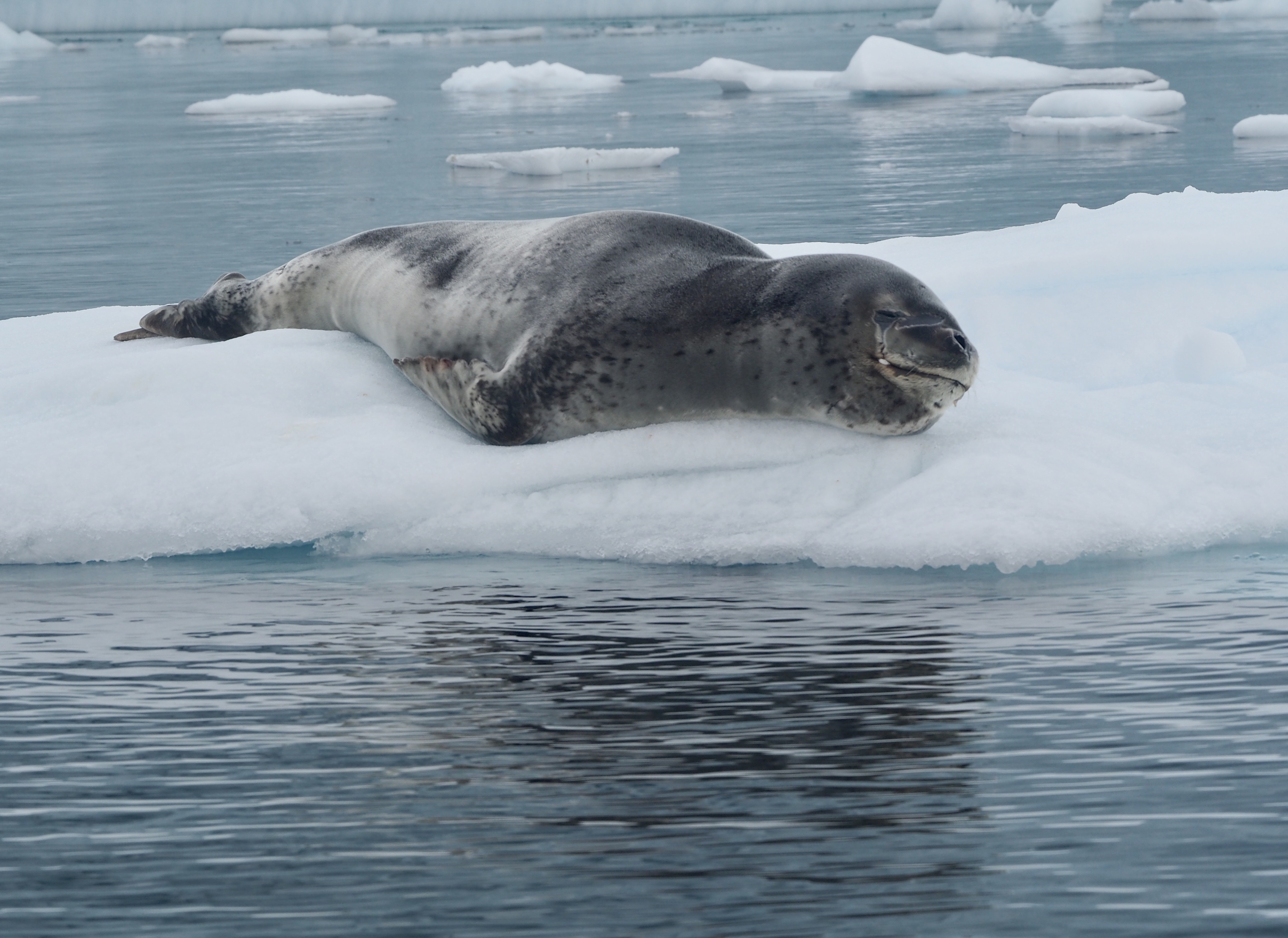
Leopard seal.
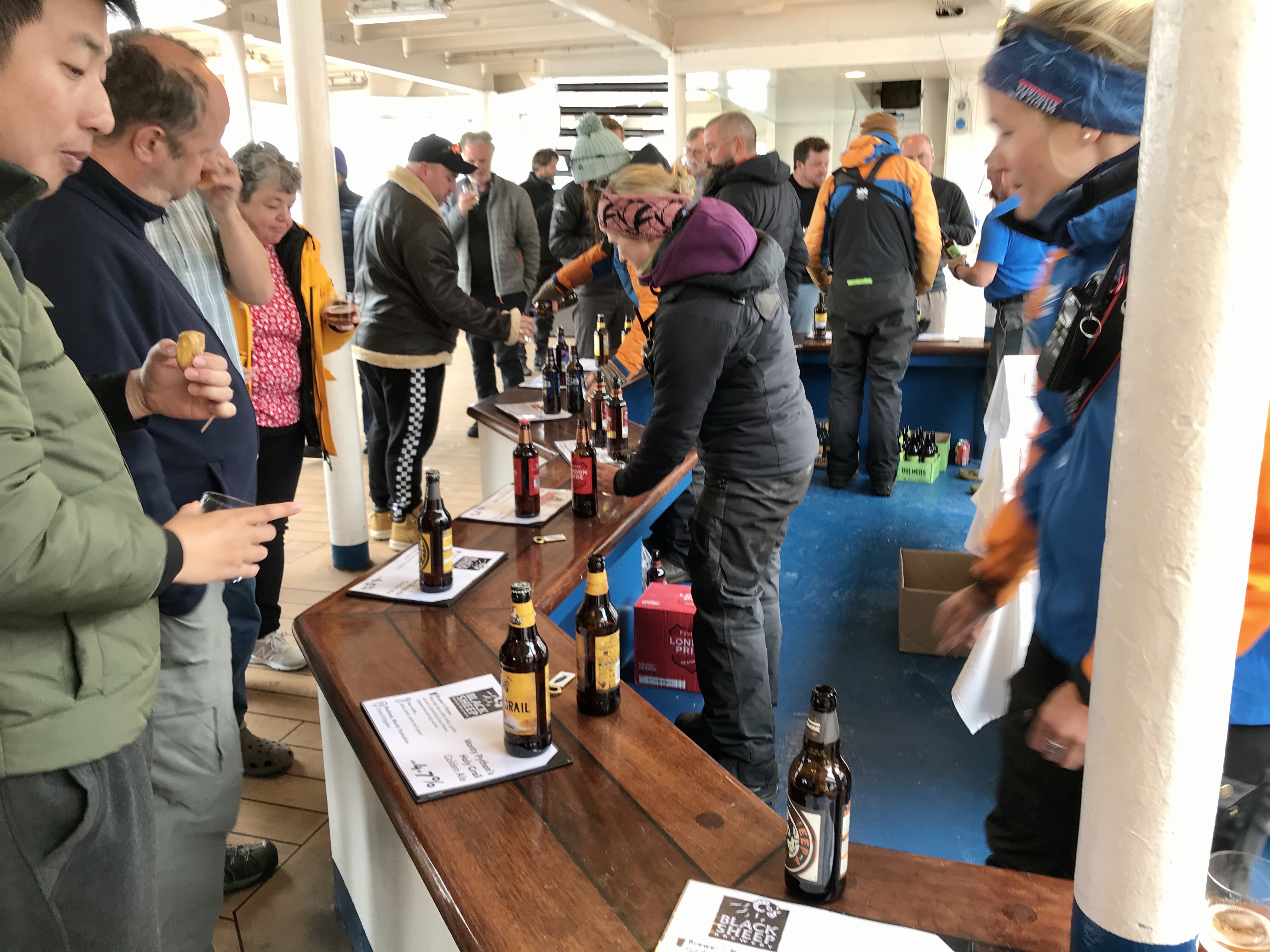
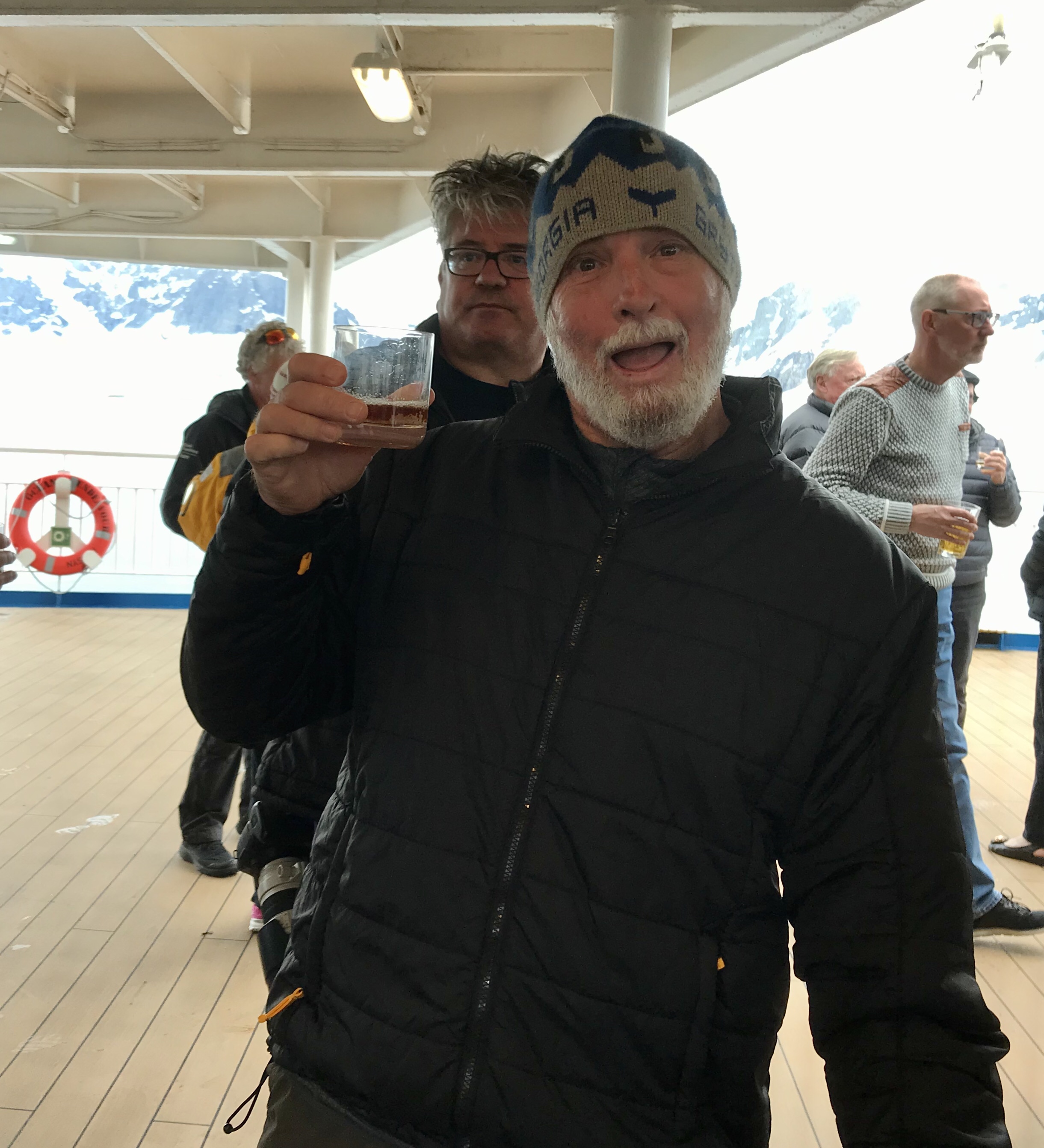
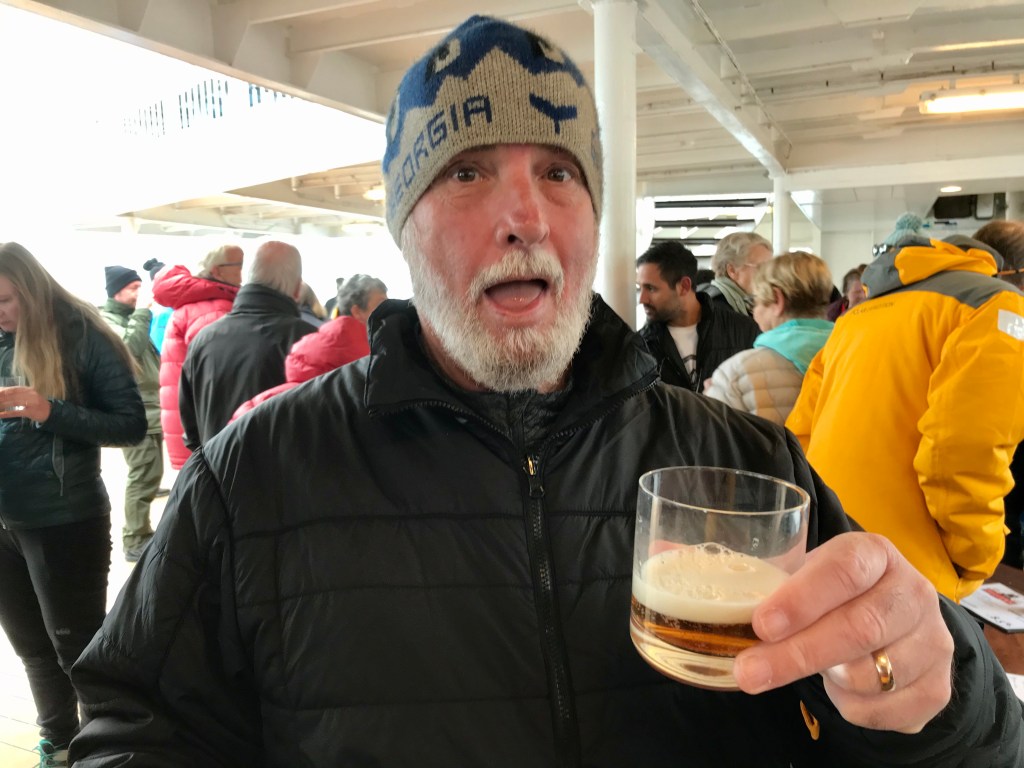
When they returned I joined them and Solan & the Expedition Team on deck 6 aft for a Farewell Toast to Antarctica (with beer tasting from the Falklands!).
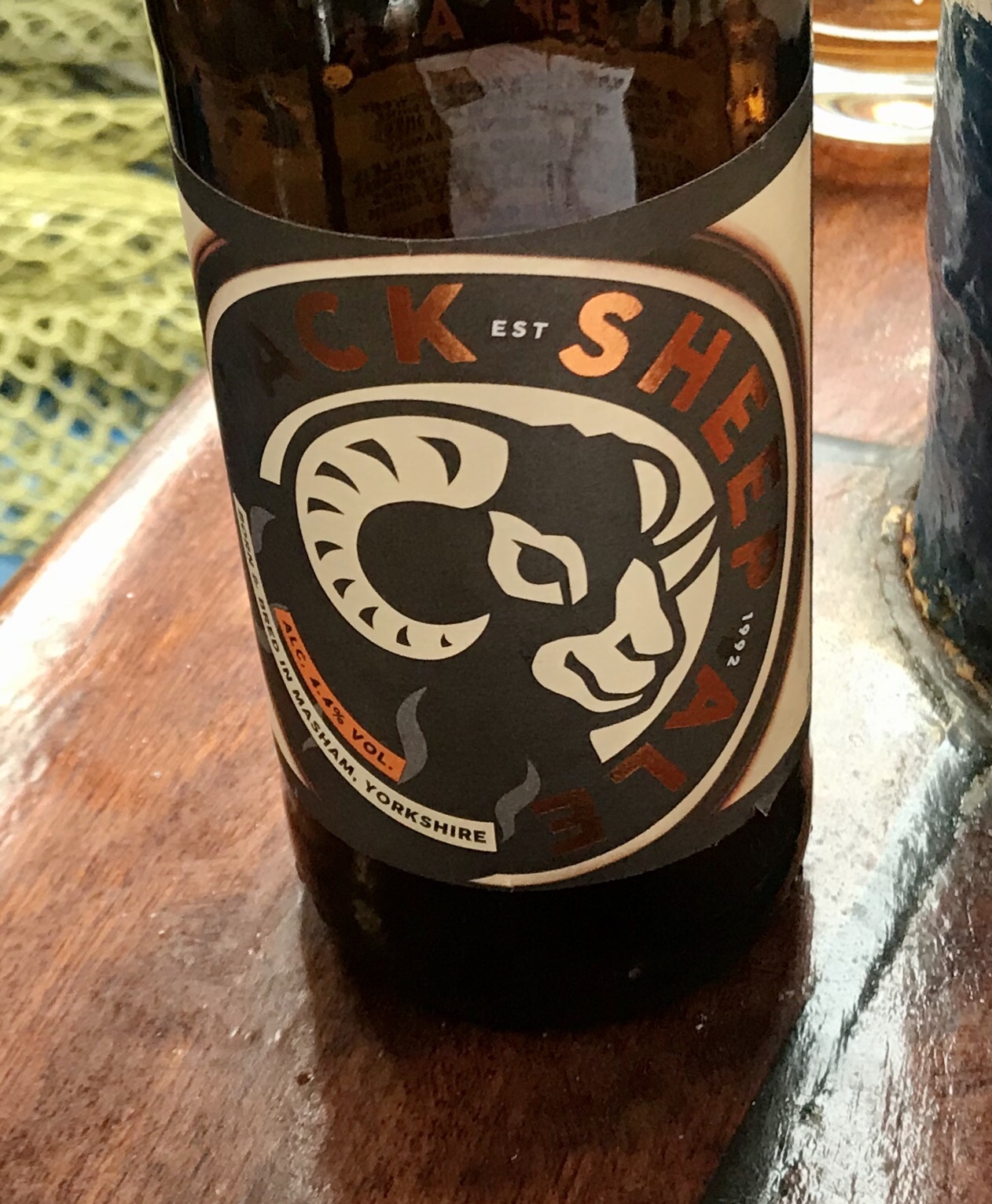
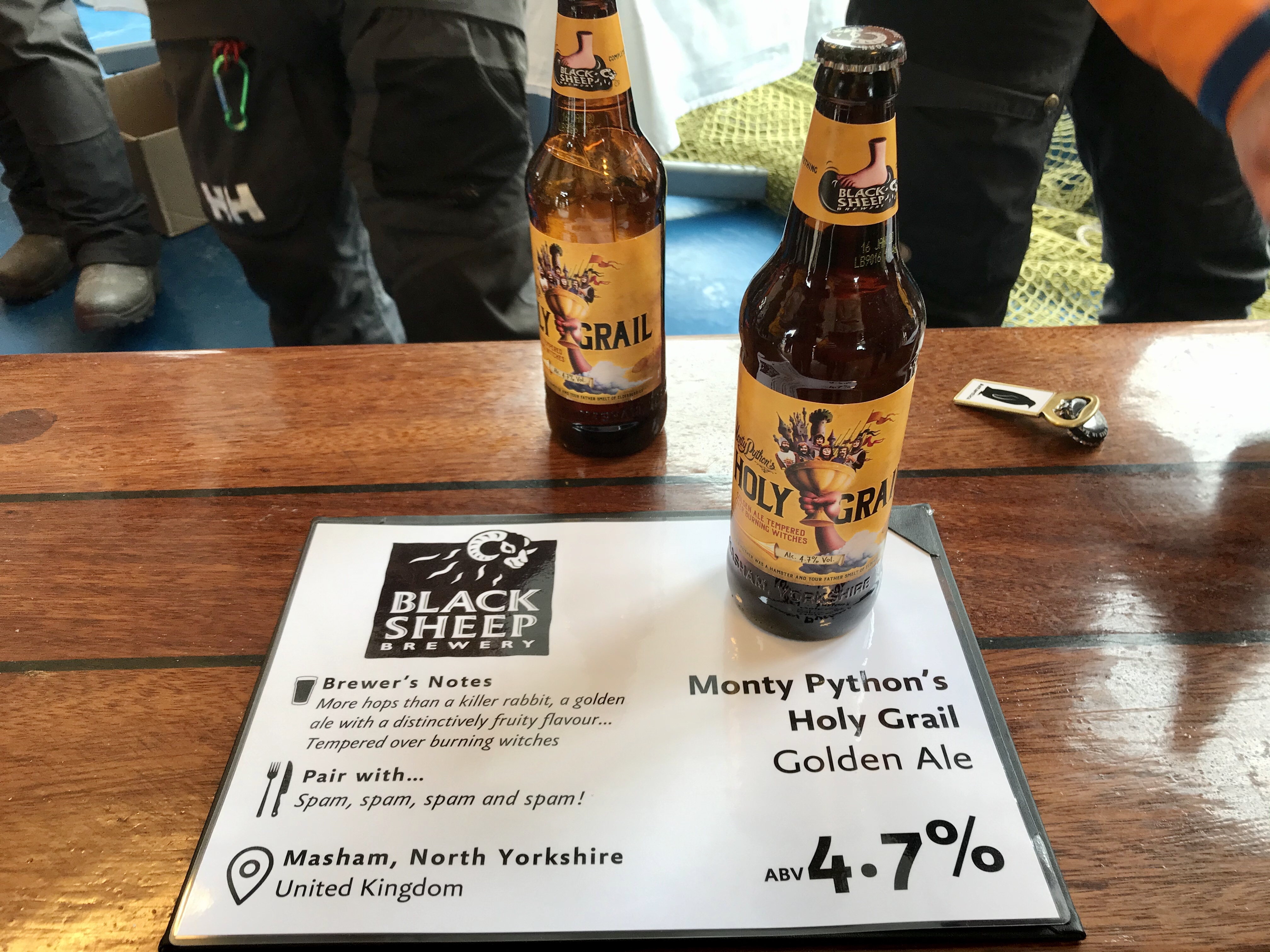
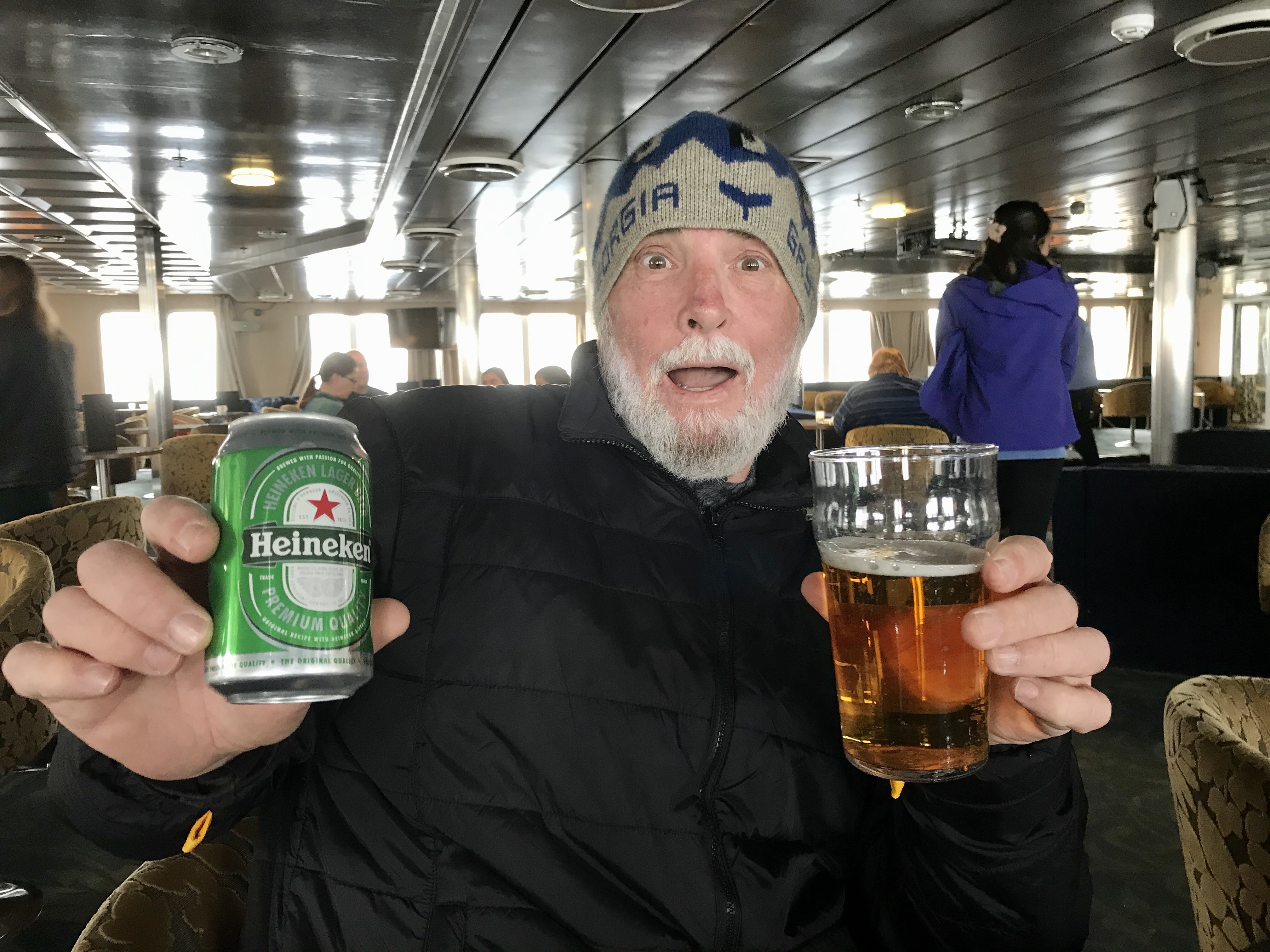
Three beers of the day today. A couple of many Falkland Islands choices – not Garrie’s thing, but the Heineken rated a 7.5
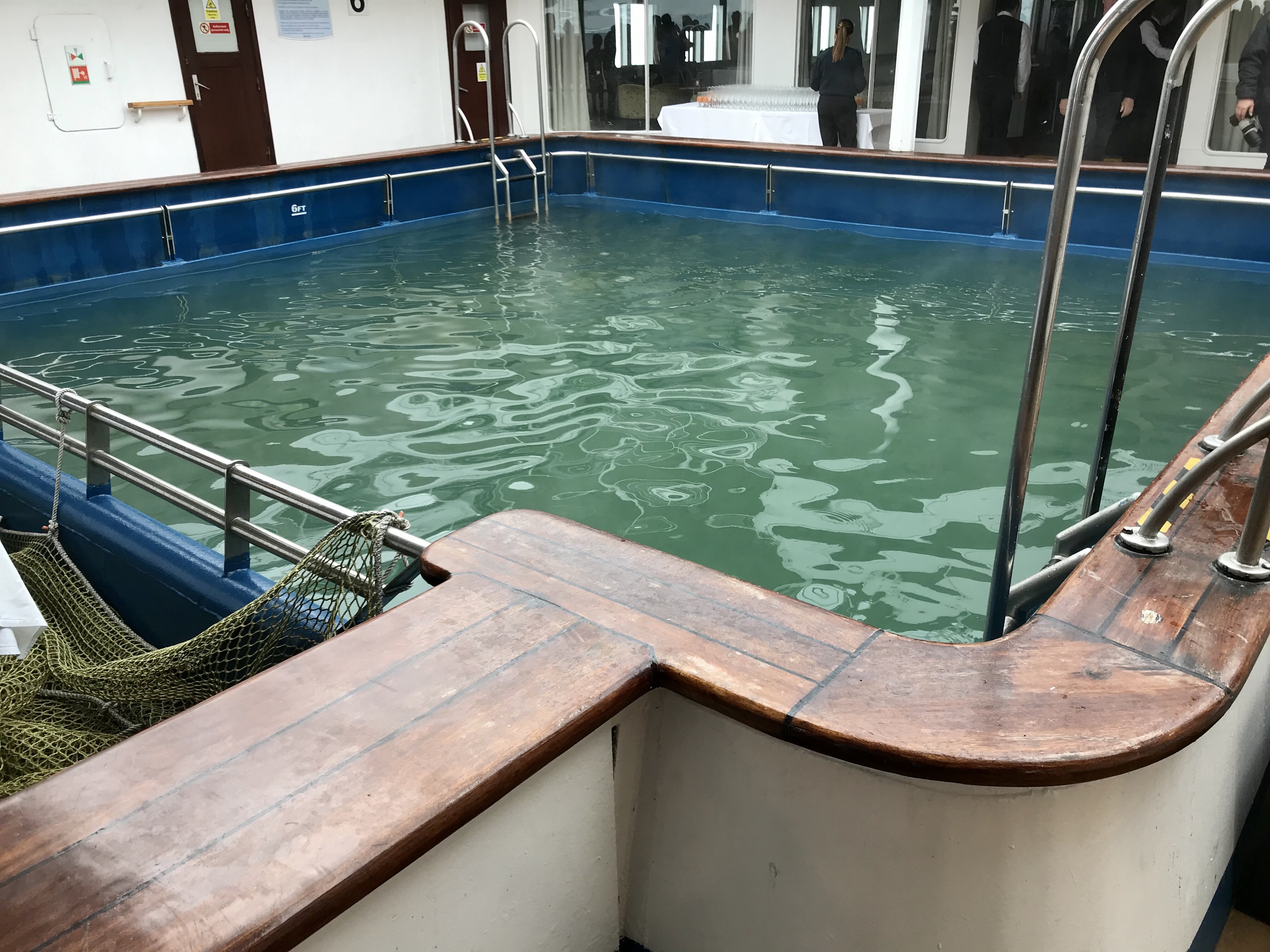
Oh and this did all take place next to the swimming pool which had been filled so those doing the polar plunge had a fast way to warm up.
OK I think the funny faces are my fault as I told him to be more animated!
That night we had a Lobster dinner. I didn’t take a pic. Sadly my appetite disappeared once I became ill and wine tasted horrible to me too.
We sadly watched the last of the Antarctic continent pass by as we ate dinner and then it started to snow heavily.
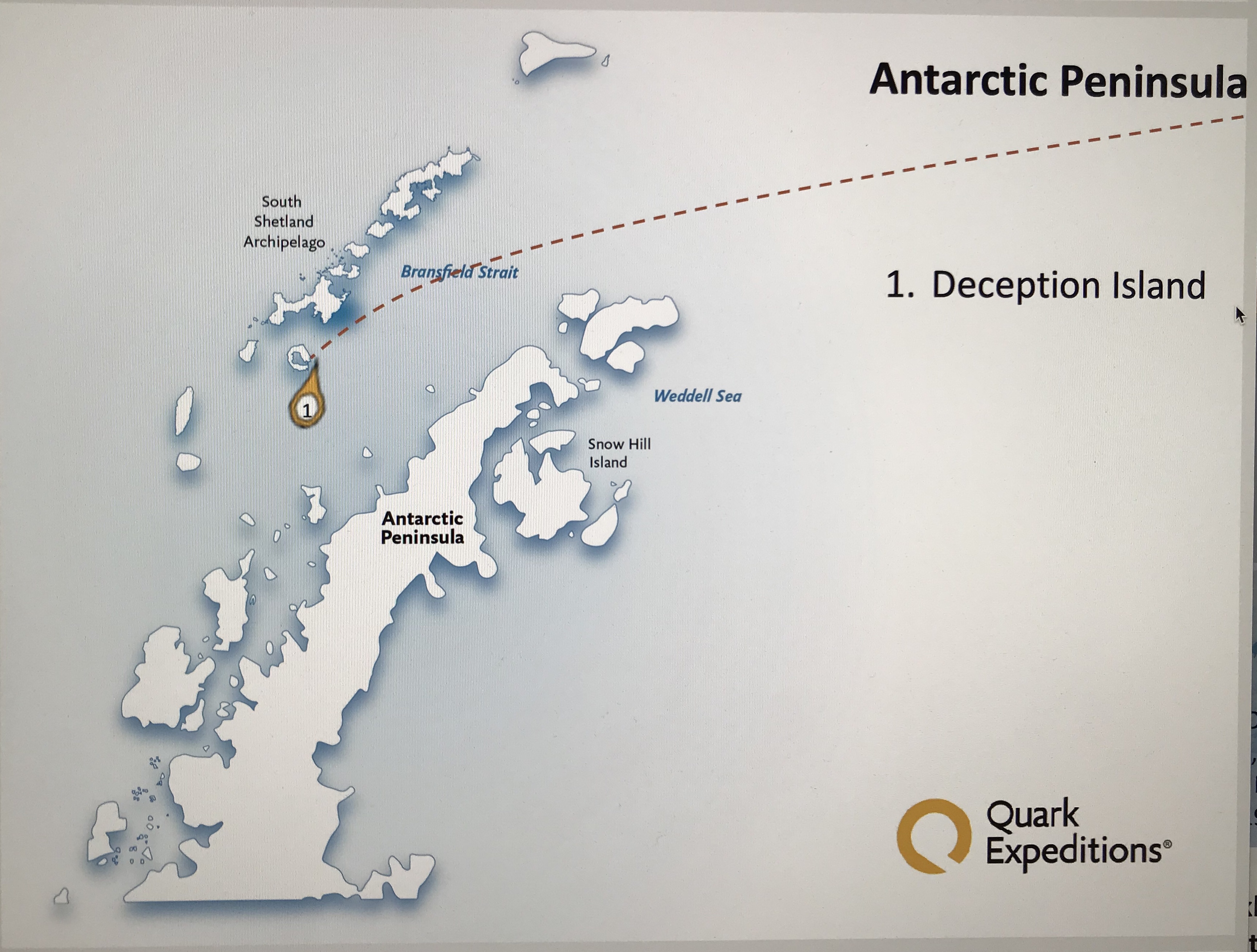
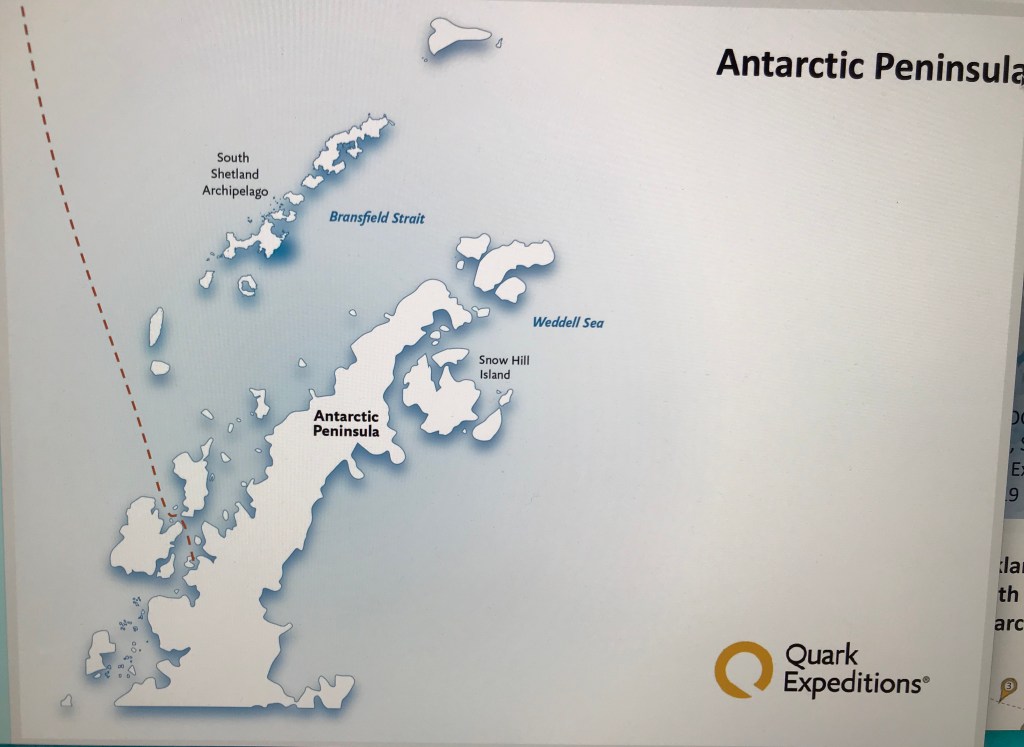
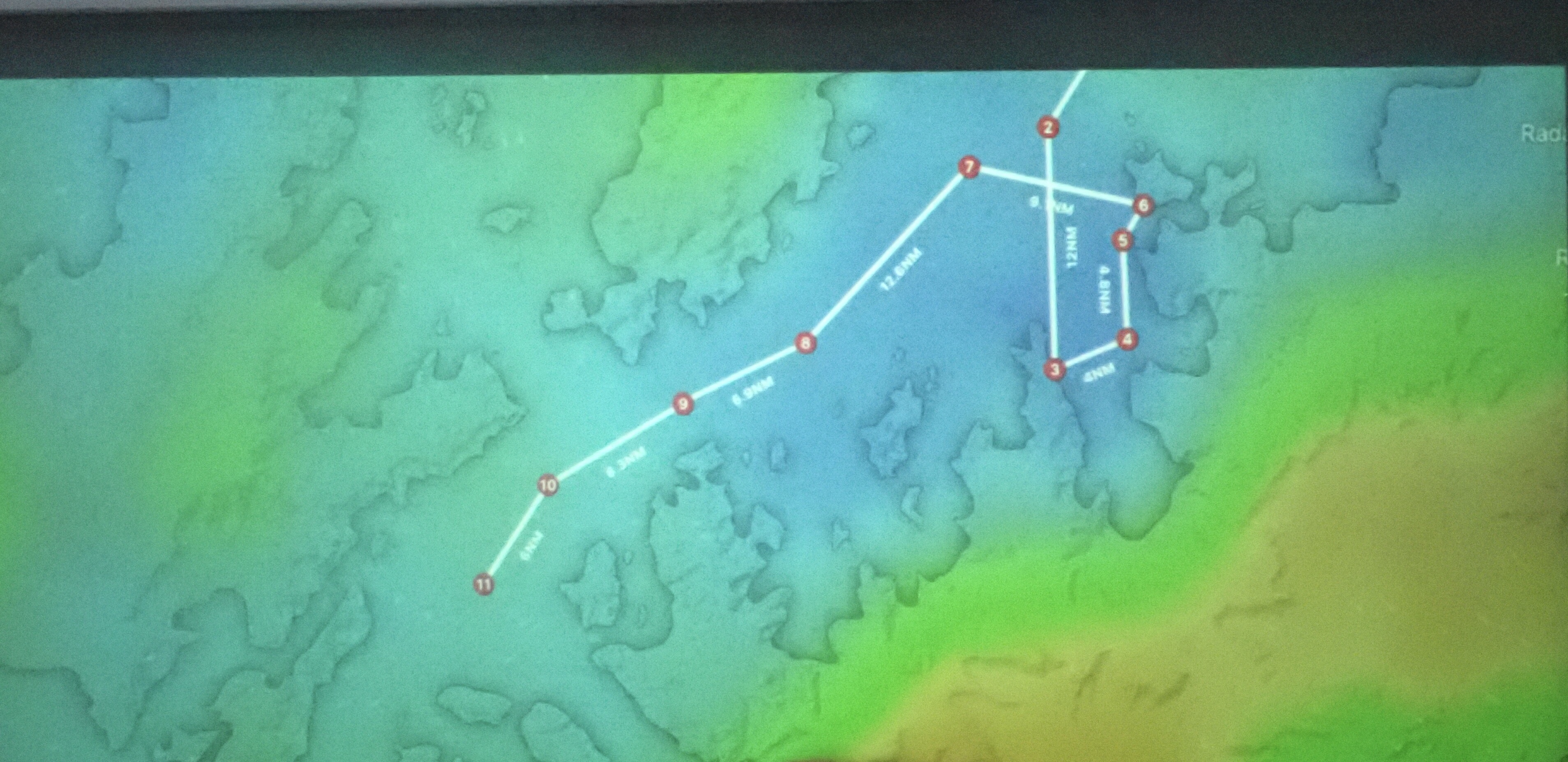
We were told that by 10.30pm we would be back to the Bransfield strait and would be hitting the dreaded drake passage about 3am. Yes folks there is more to come. I’ll end today with a map of our last couple of days in Antarctica.
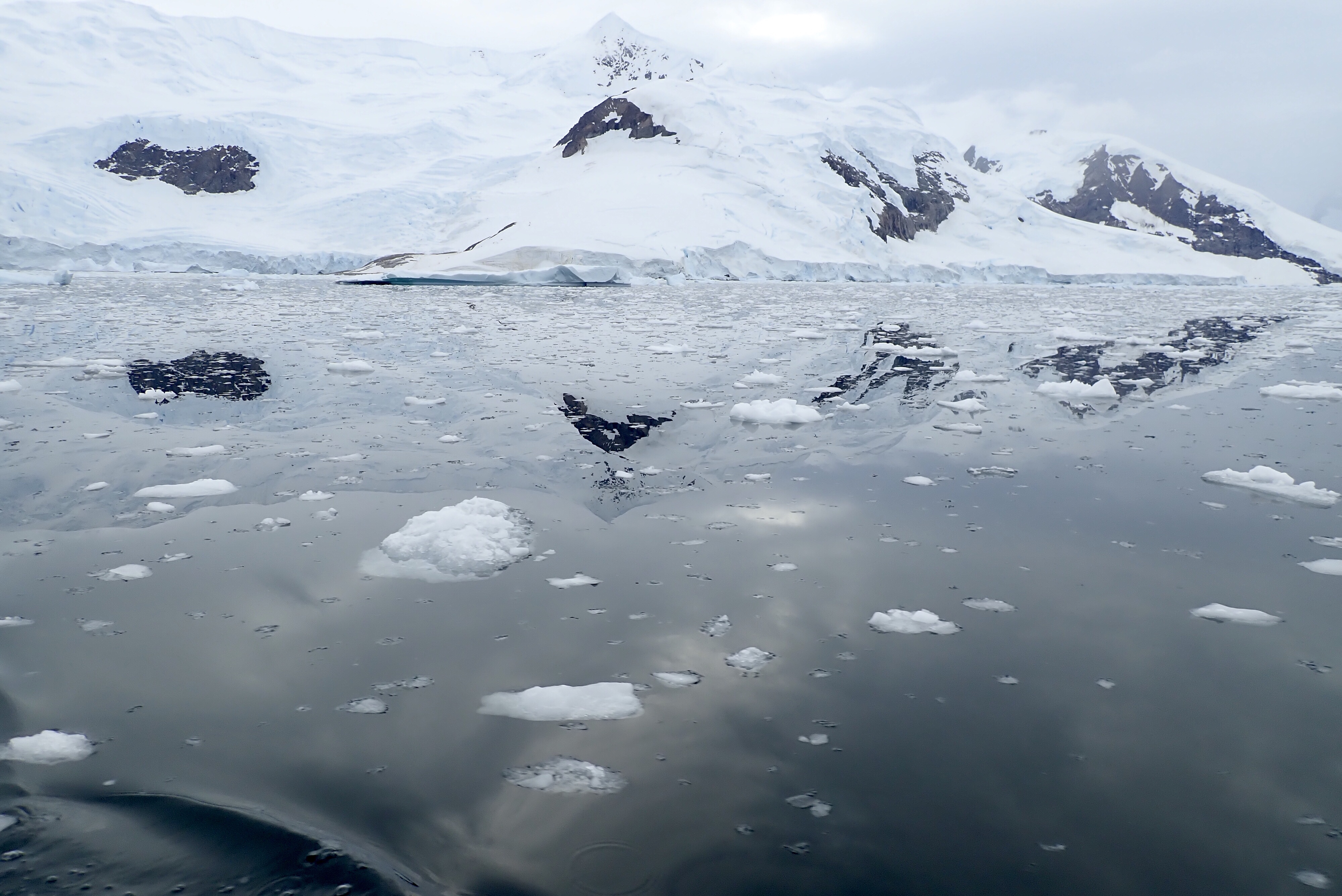
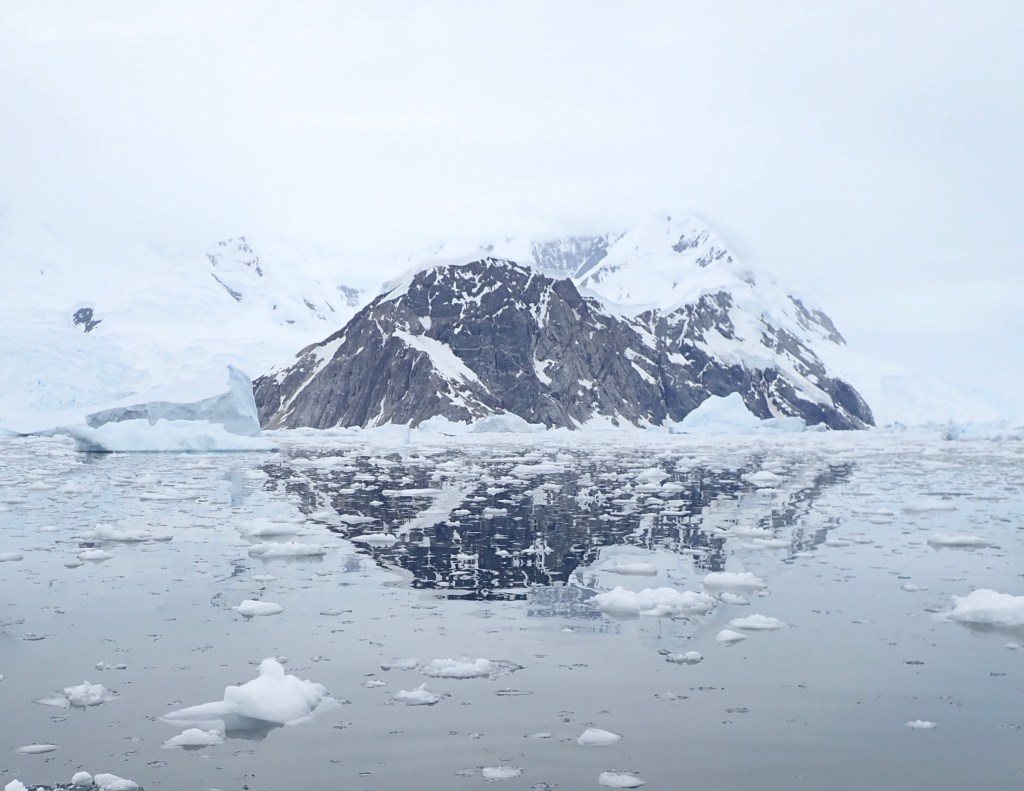
3 degrees and calm. It’s glassy on the water. I threw up again this morning but am going out. How can you miss this magnificent land?
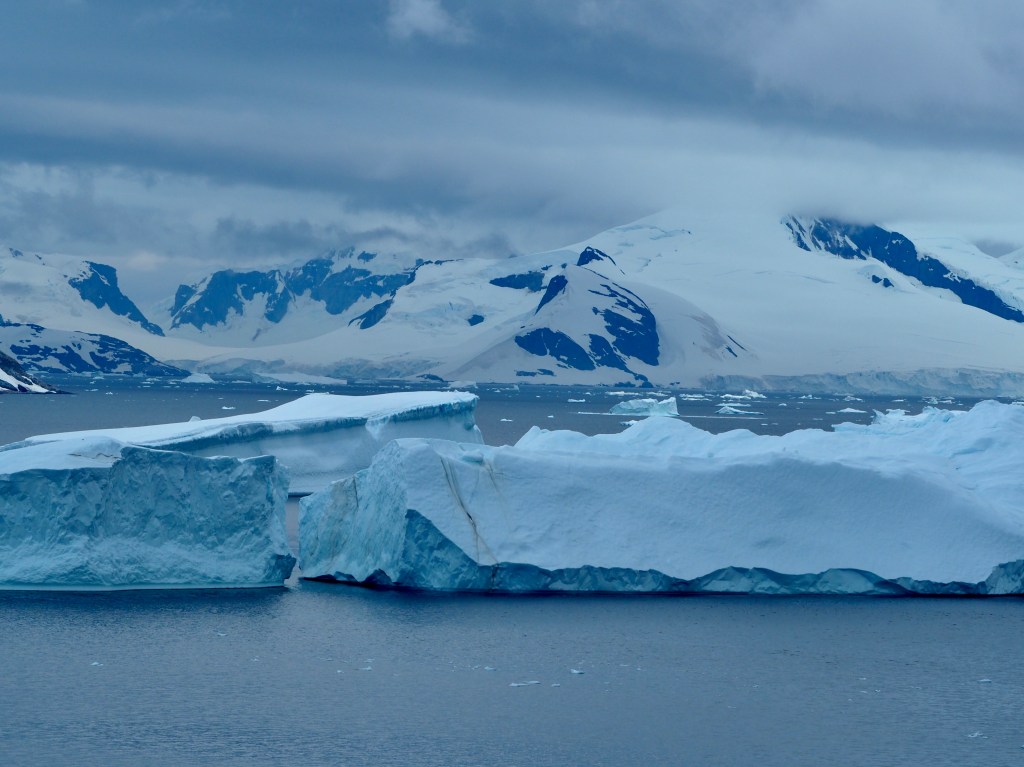
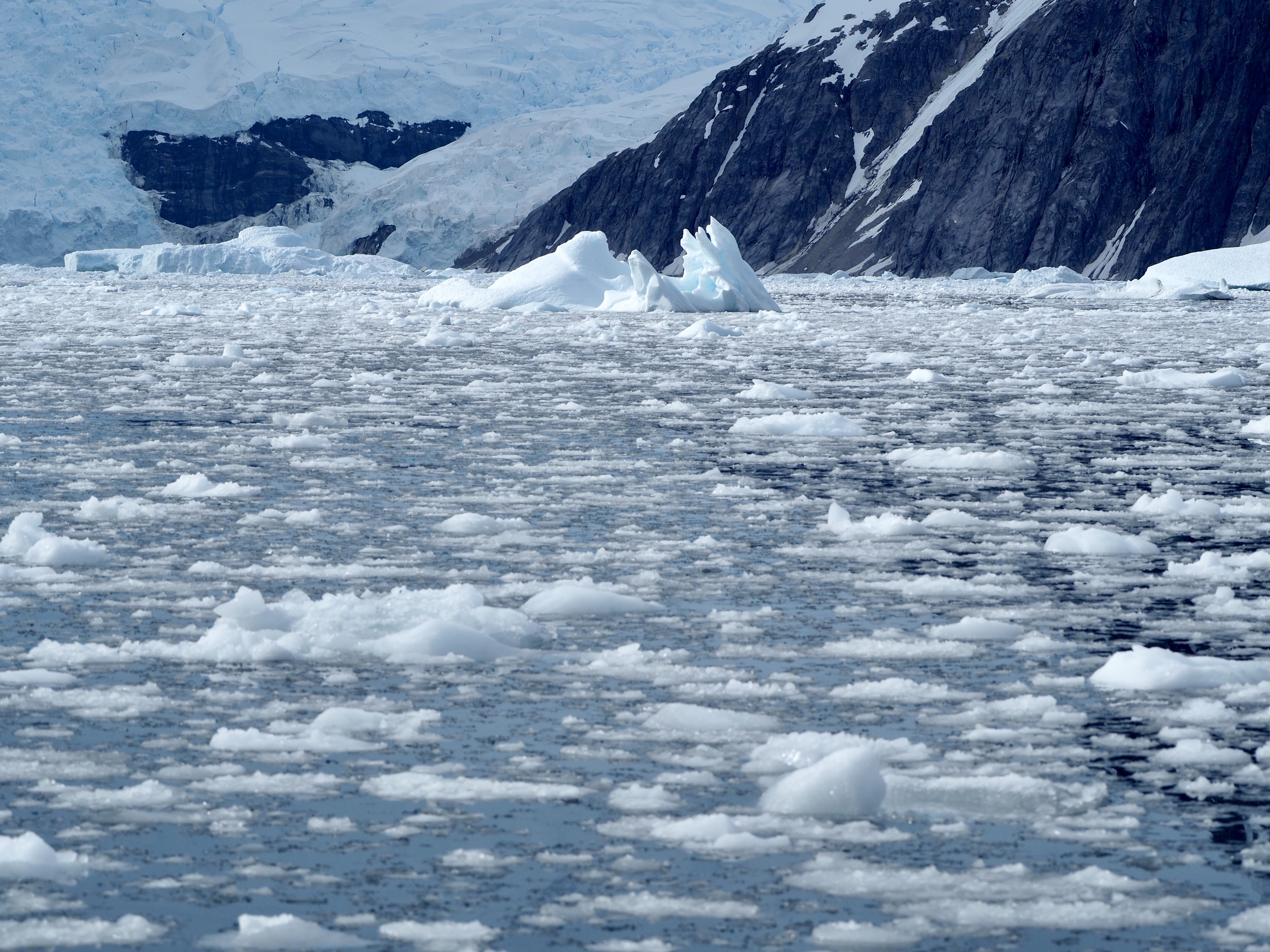
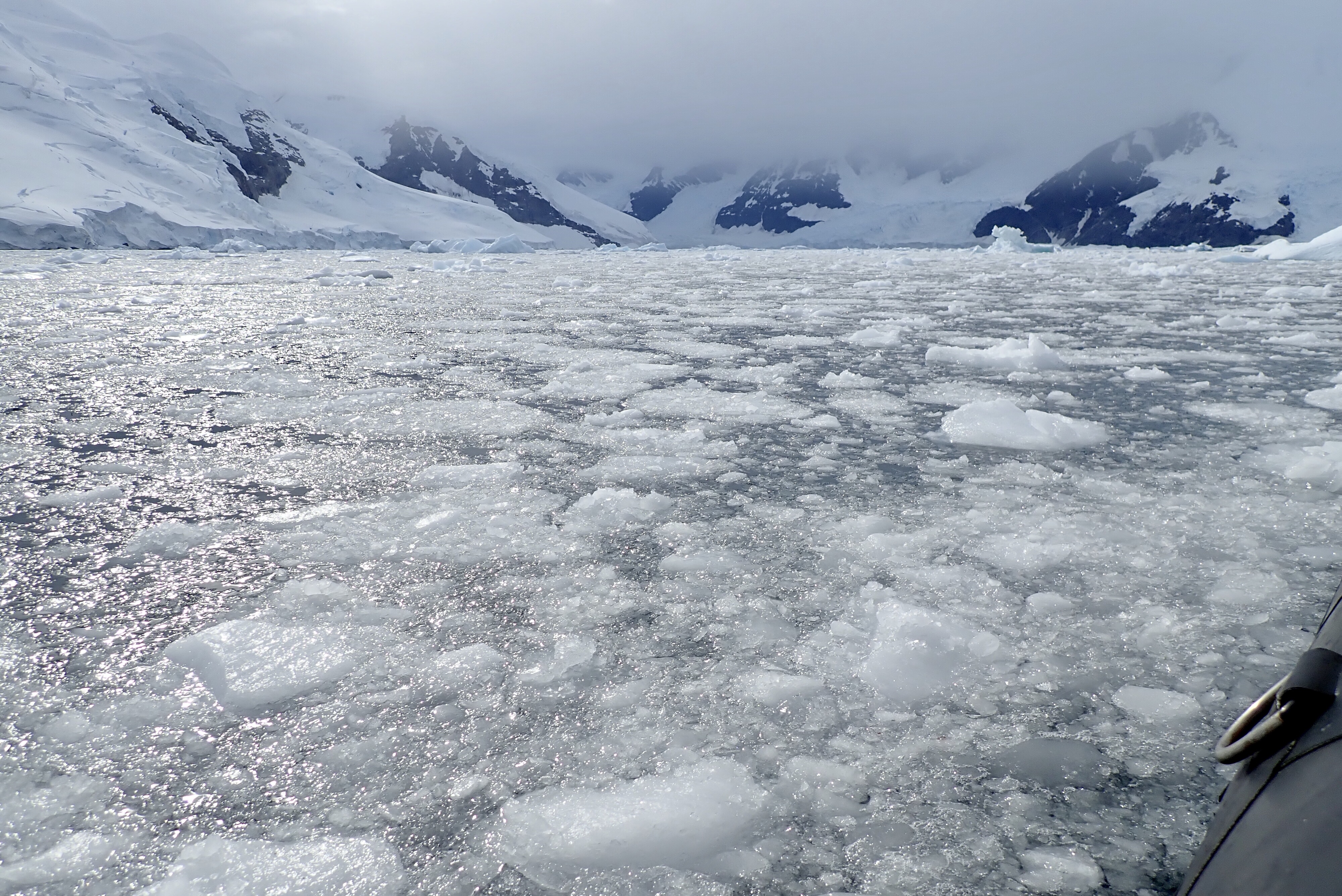
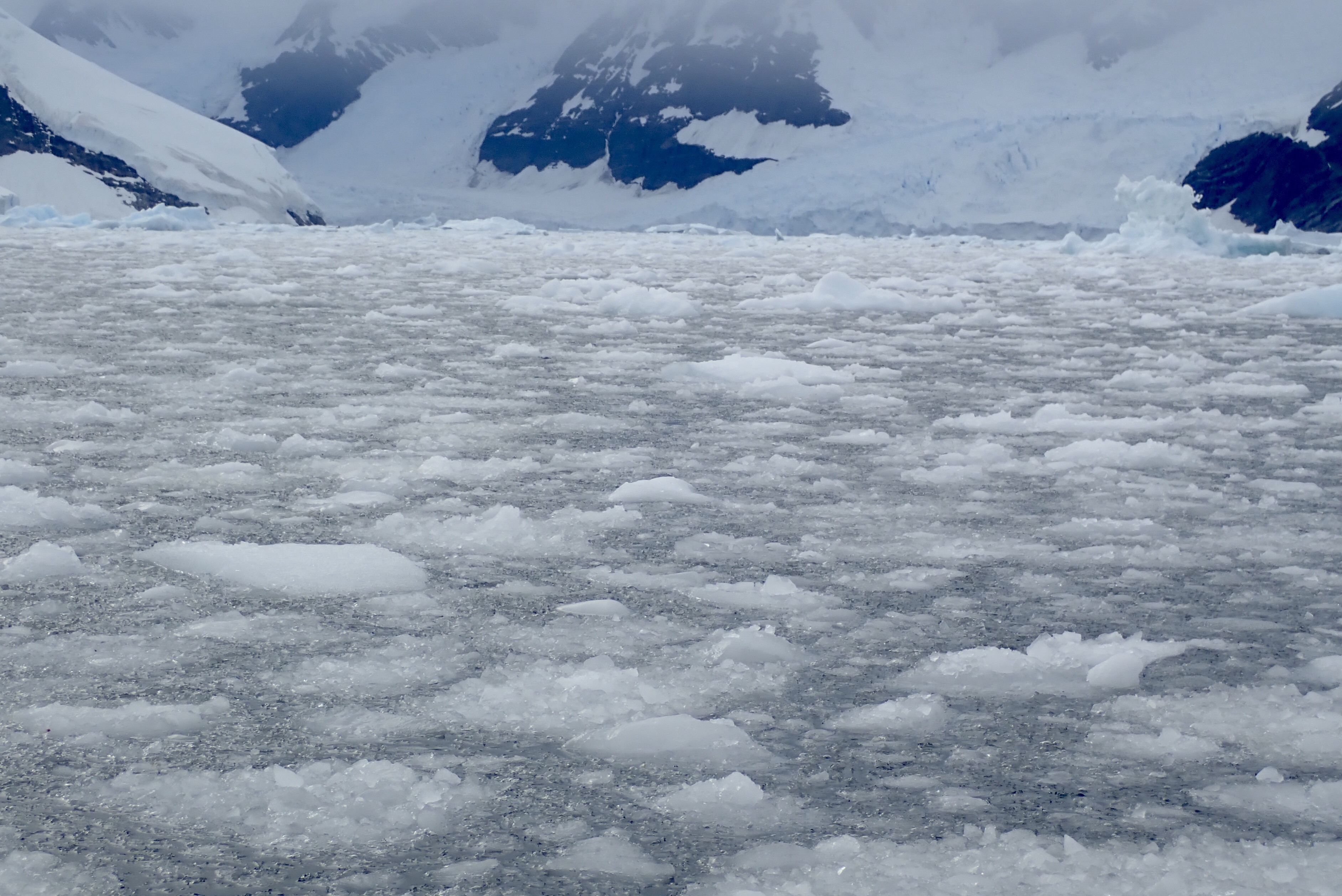
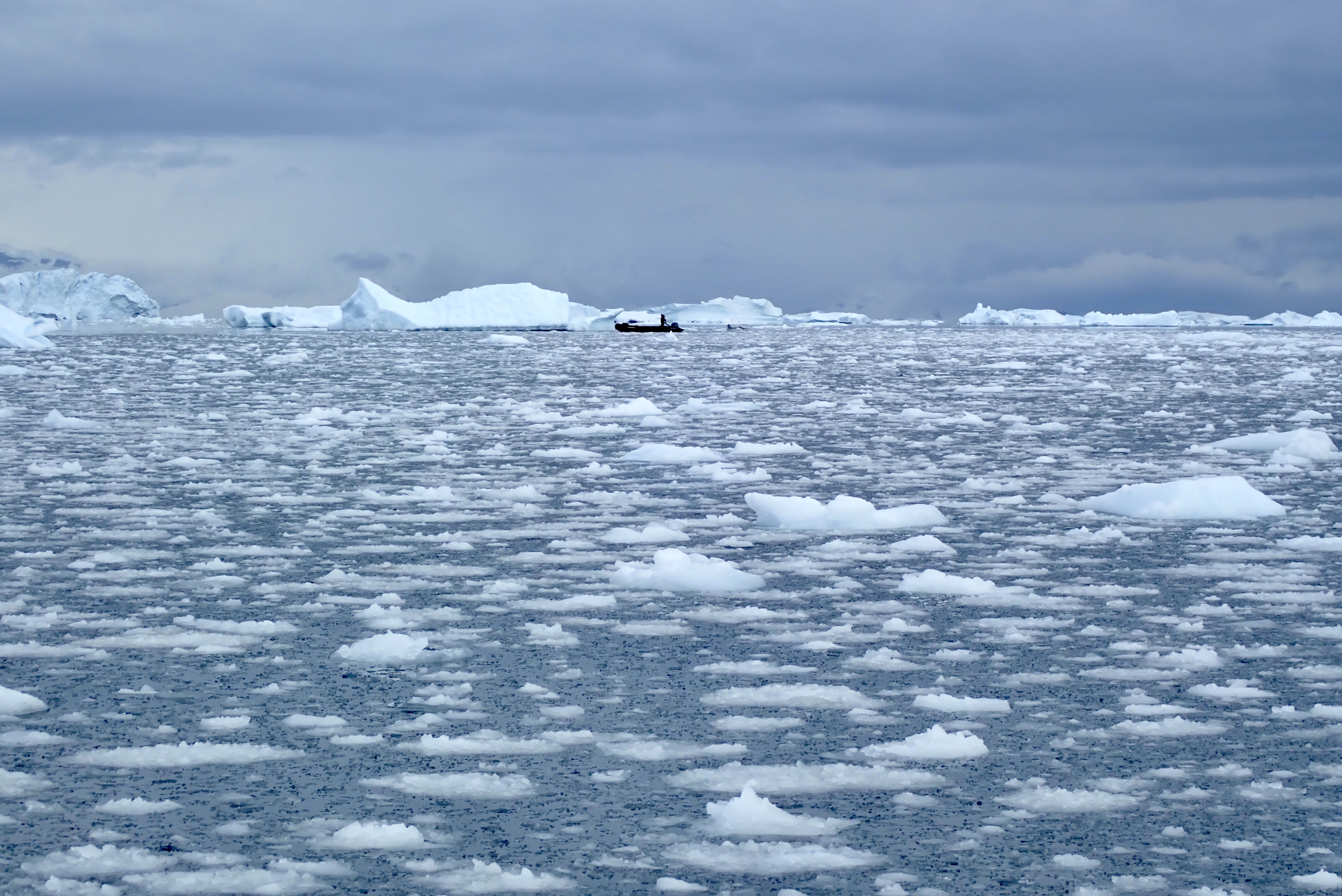
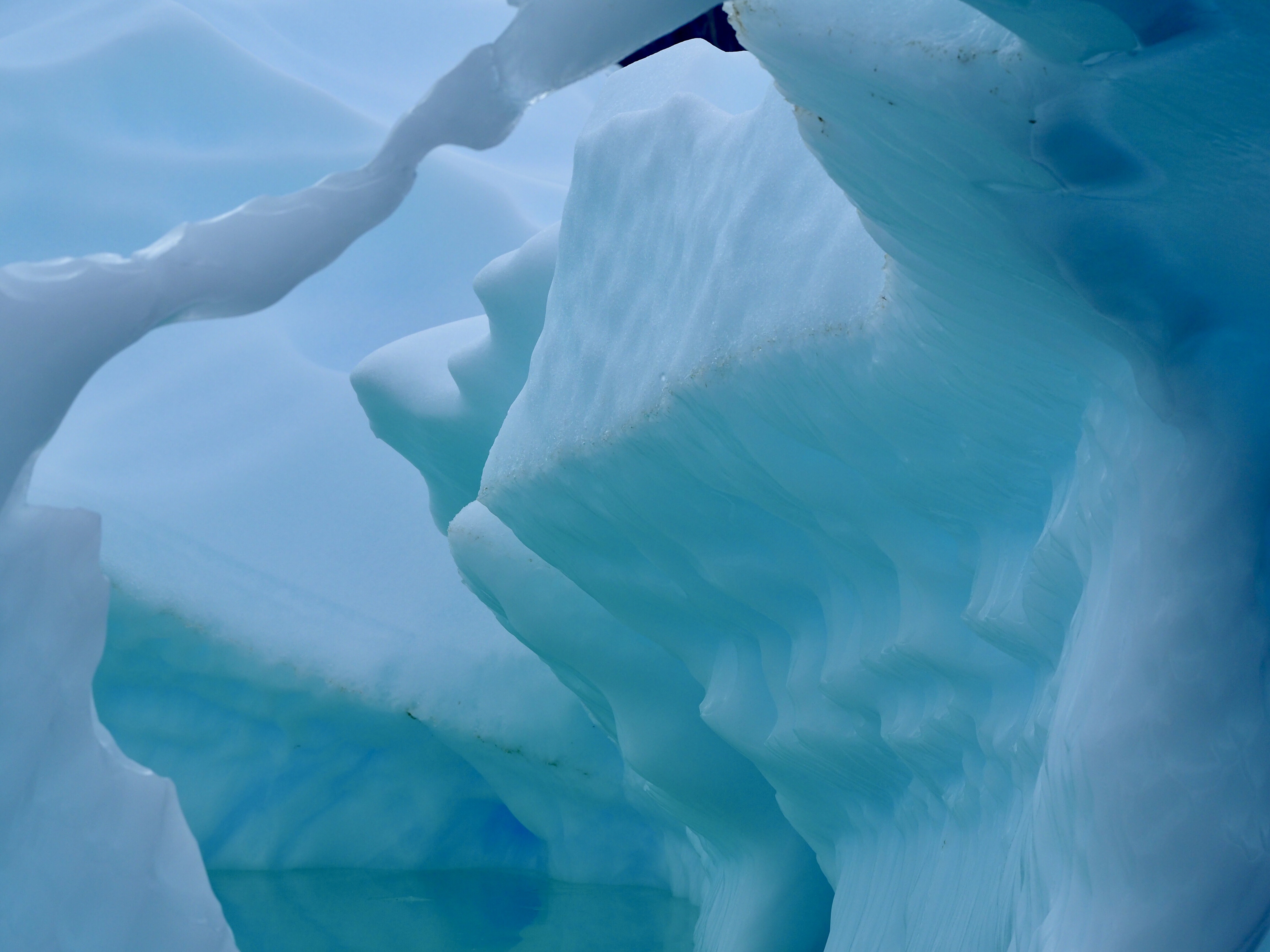
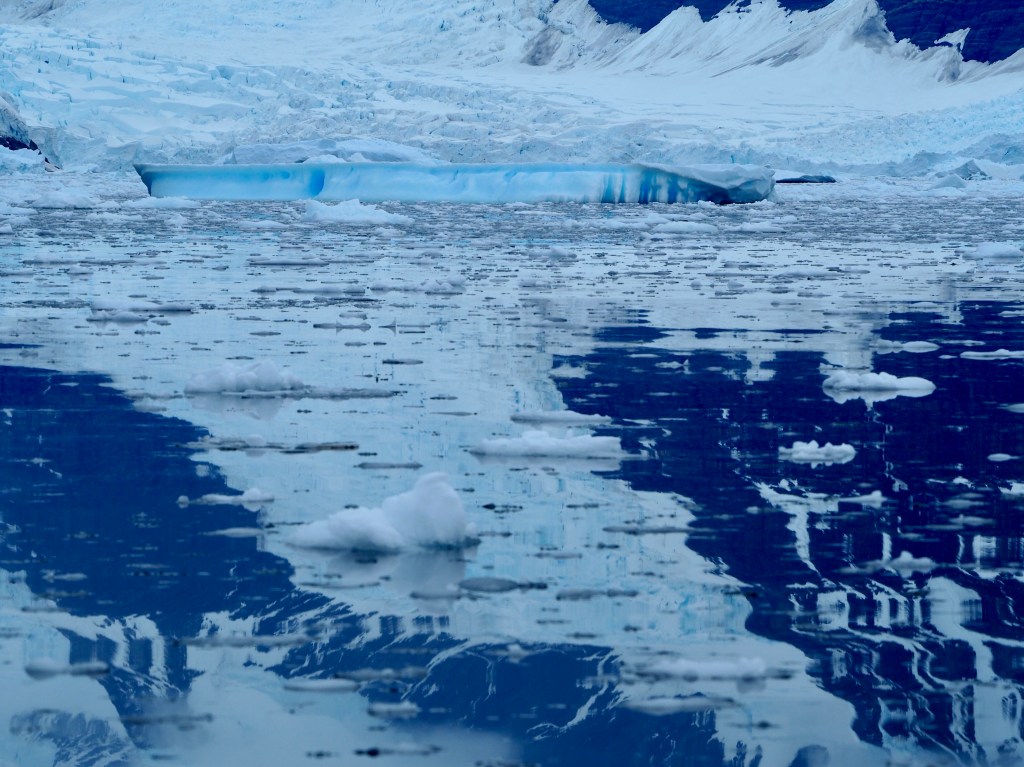
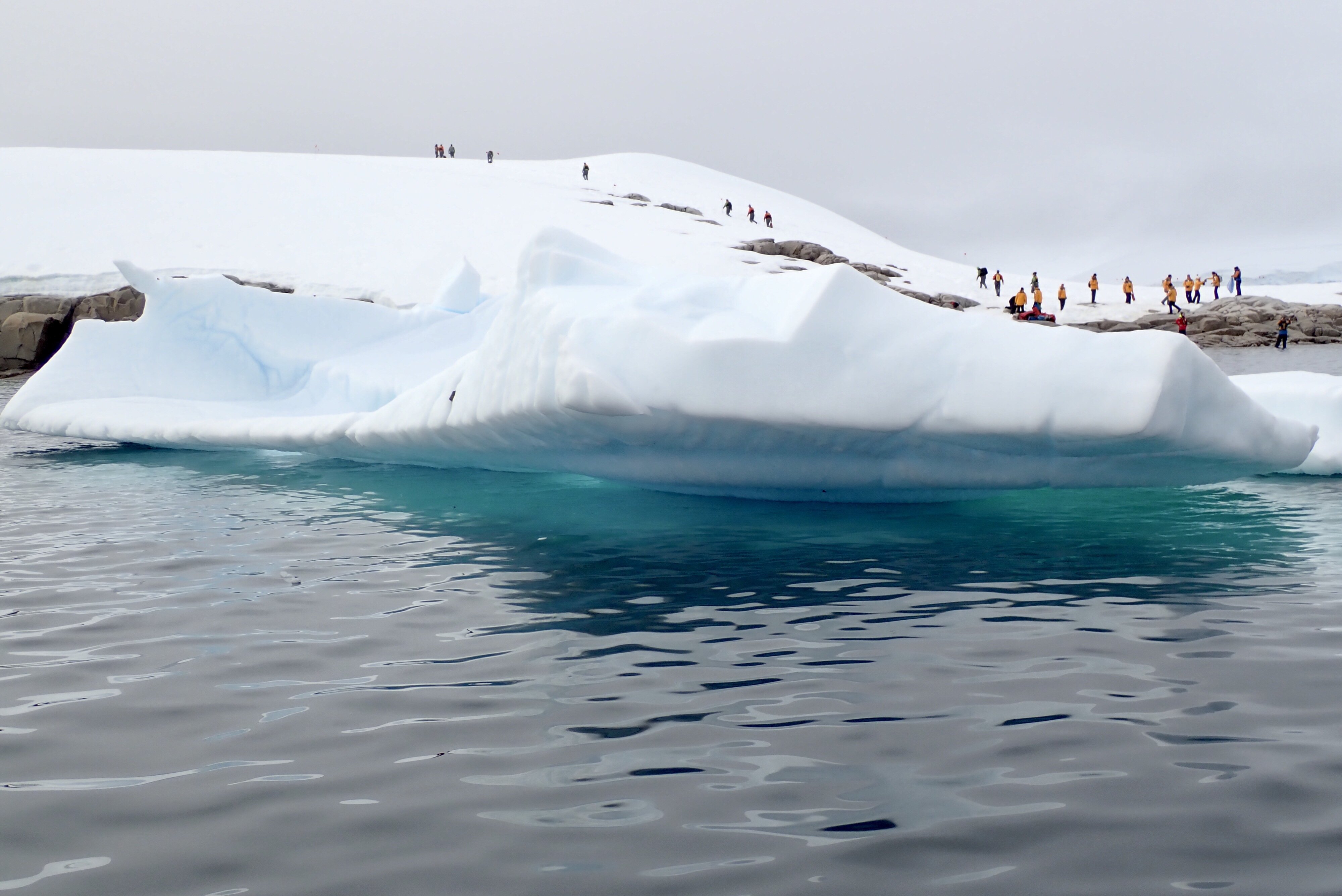
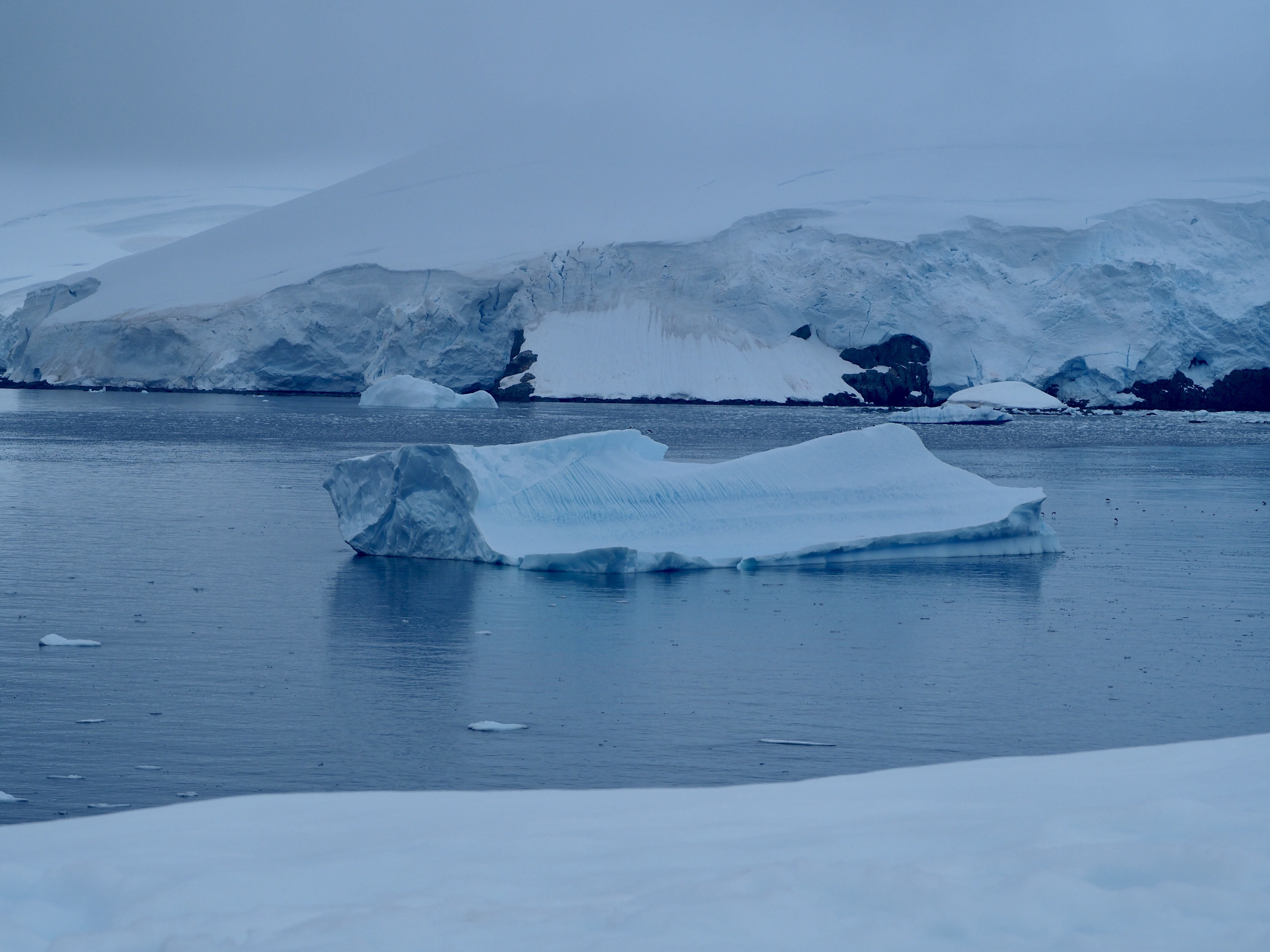
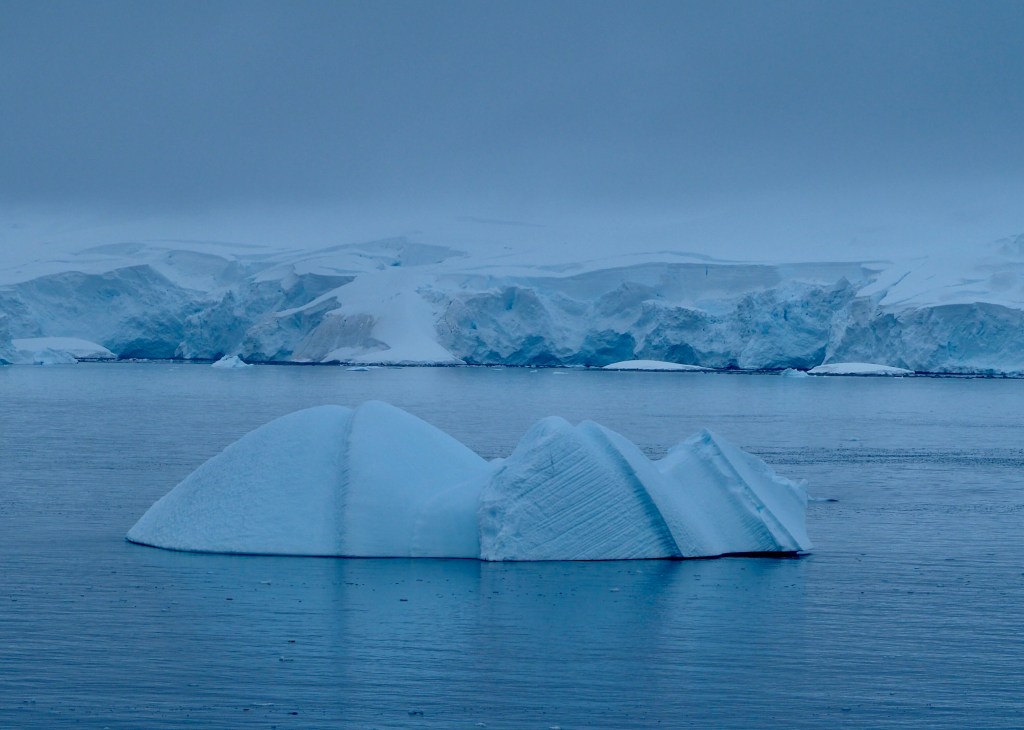
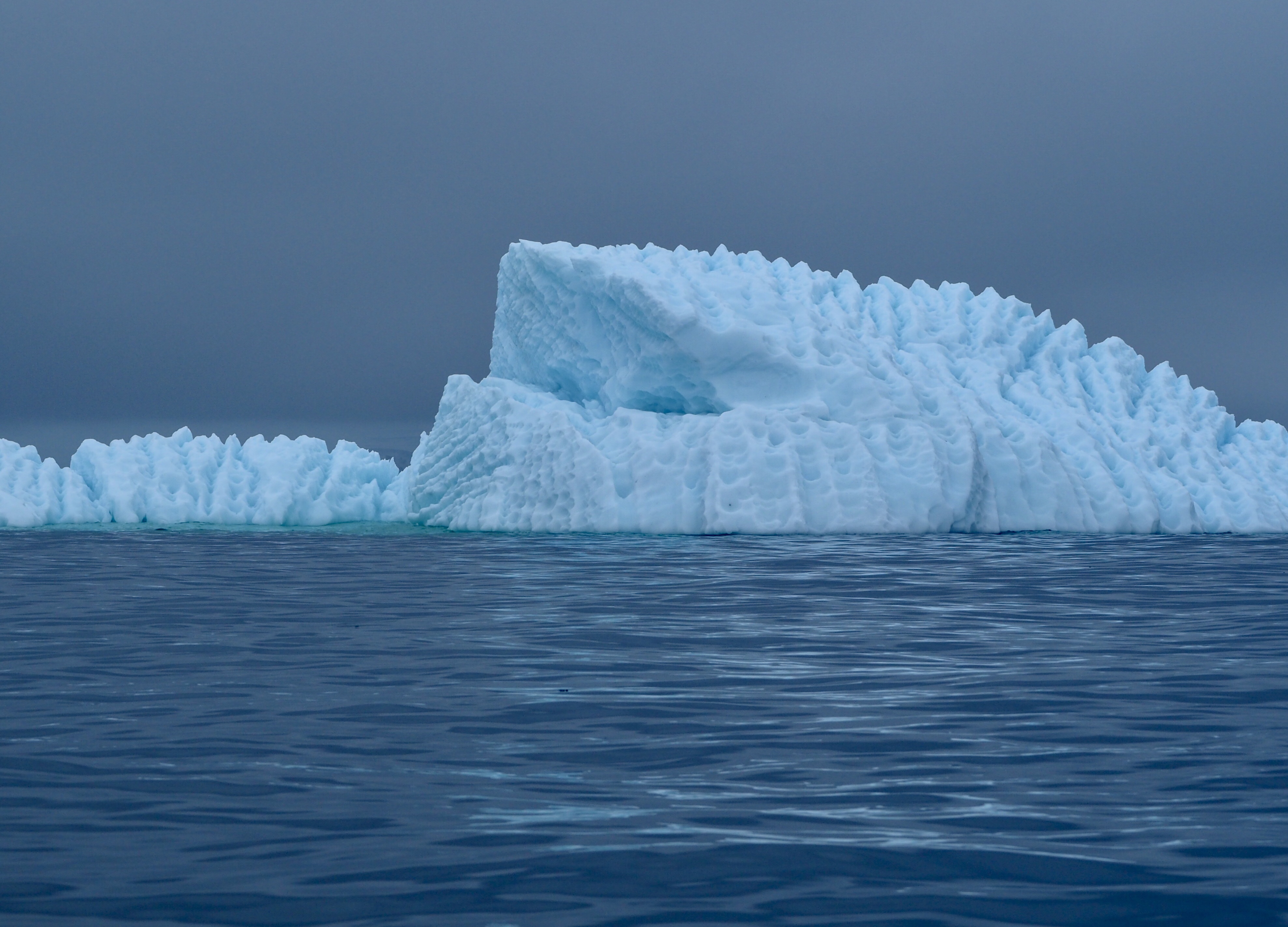
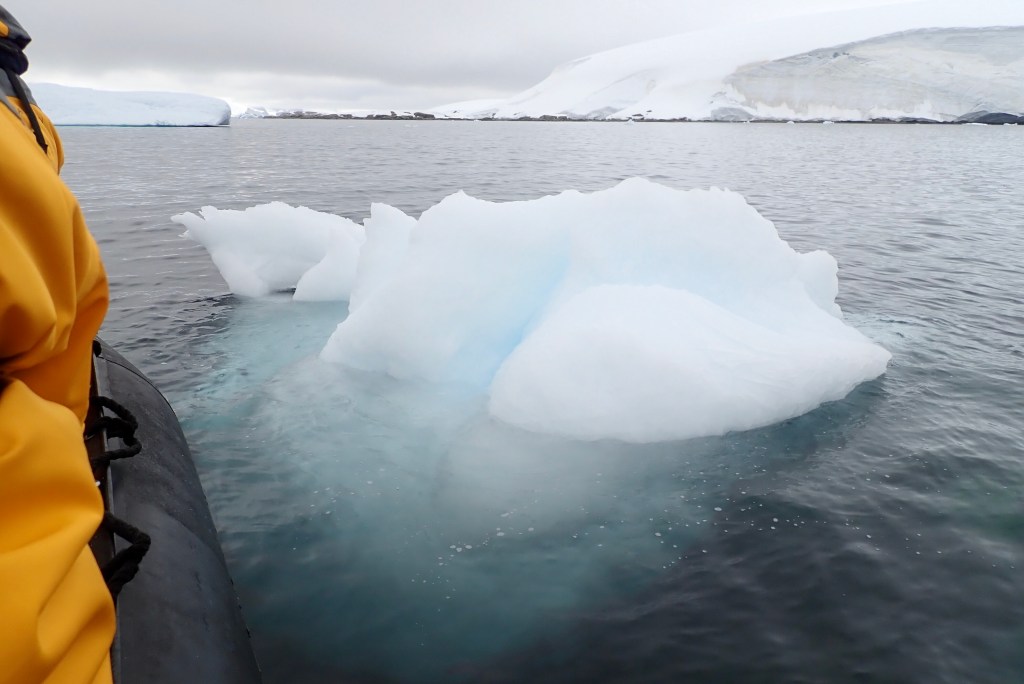
Not a lot of wildlife, in fact just a couple of penguins on our cruise but the ice was amazing, along with the icebergs. Every iceberg is different and it is hard not to take every single one. This time last week boats could not get in here as it was totally blocked with ice.
Just amazing to zodiac through the ice.
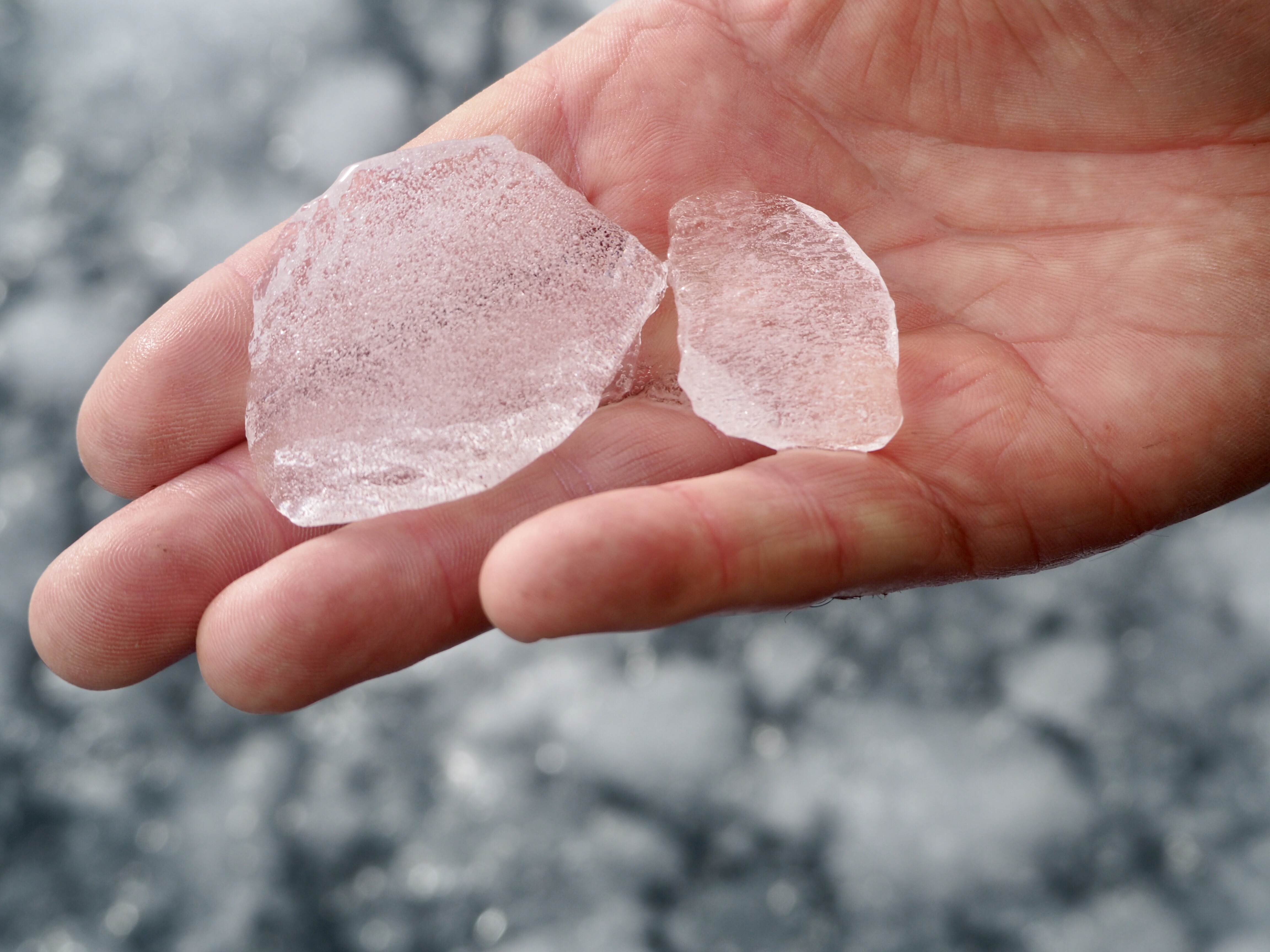
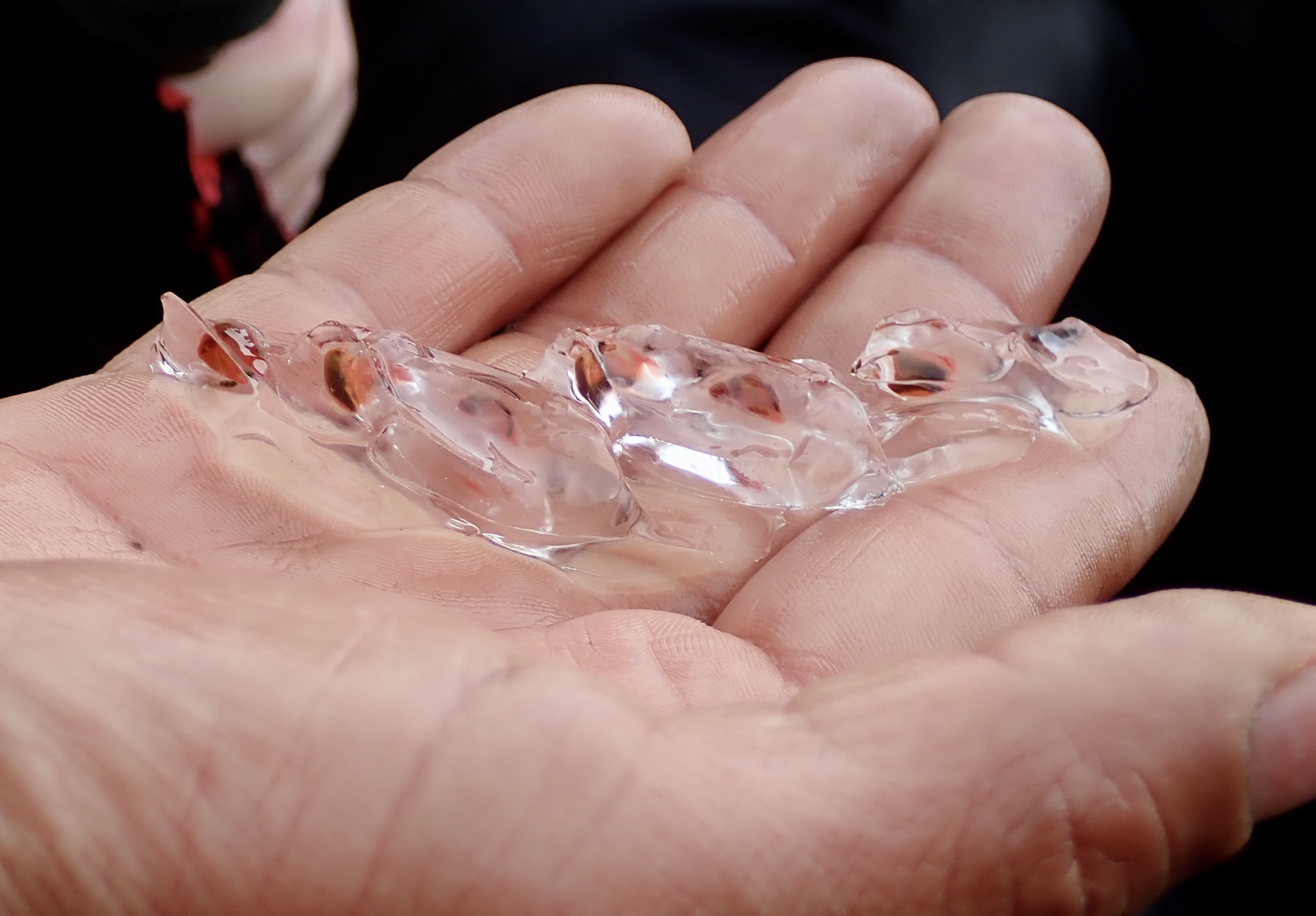
Garrie picked up a couple of pieces.
I took a video of it.
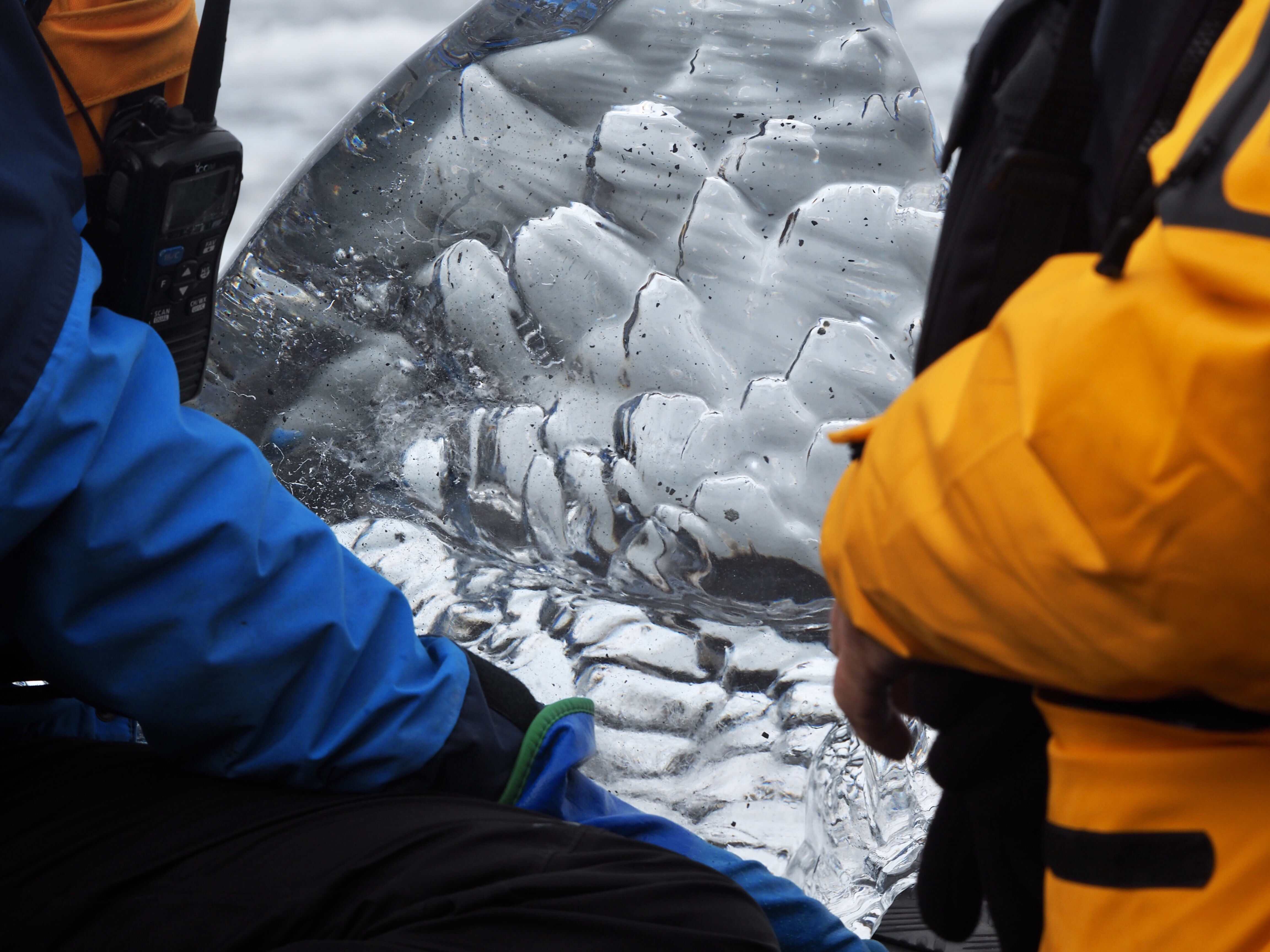
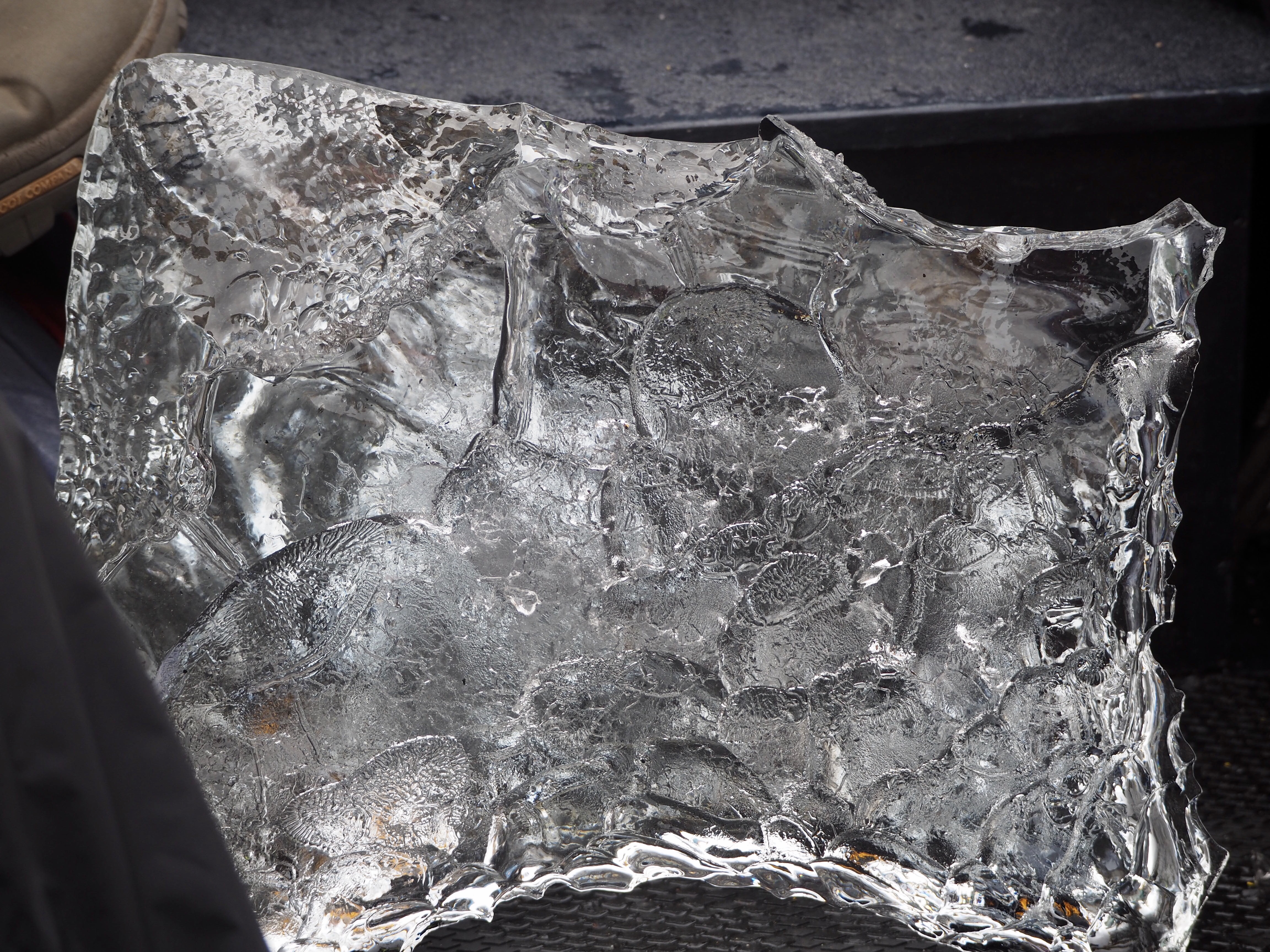
We picked up a piece of “Growler” ice which has had all the air pressed out of it and it looks black as it floats in the water.
We took it back to the ship and it was melted and bottled as part of a charity auction.
I forgot to mention that Garrie took on the wide angle camera today. I just am not up to managing two cameras feeling the way I feel. He captured some nice reflections.
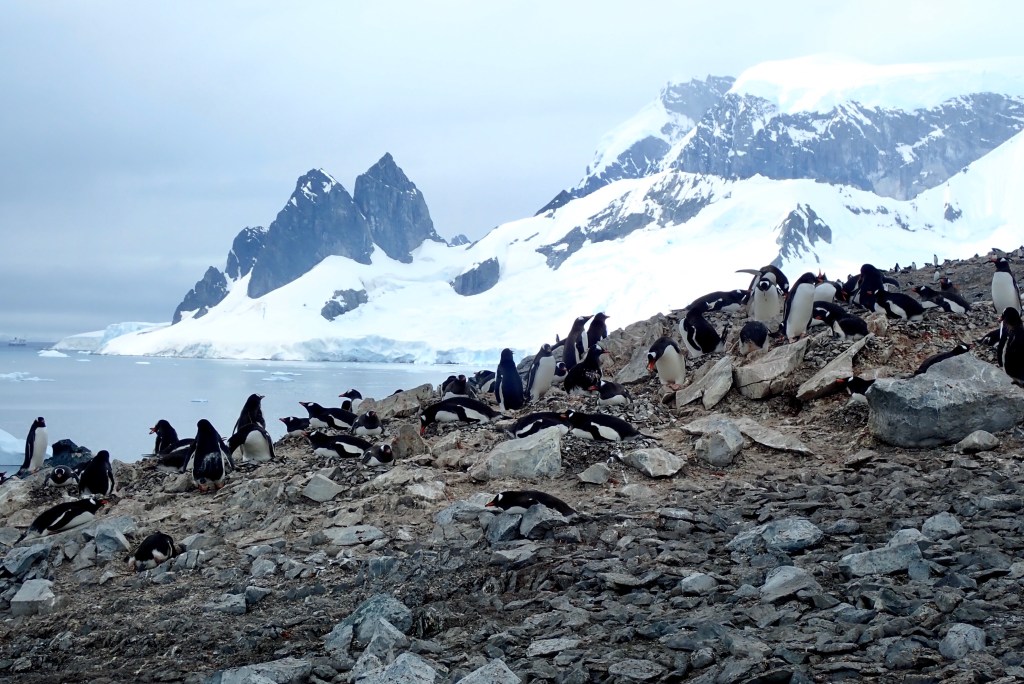
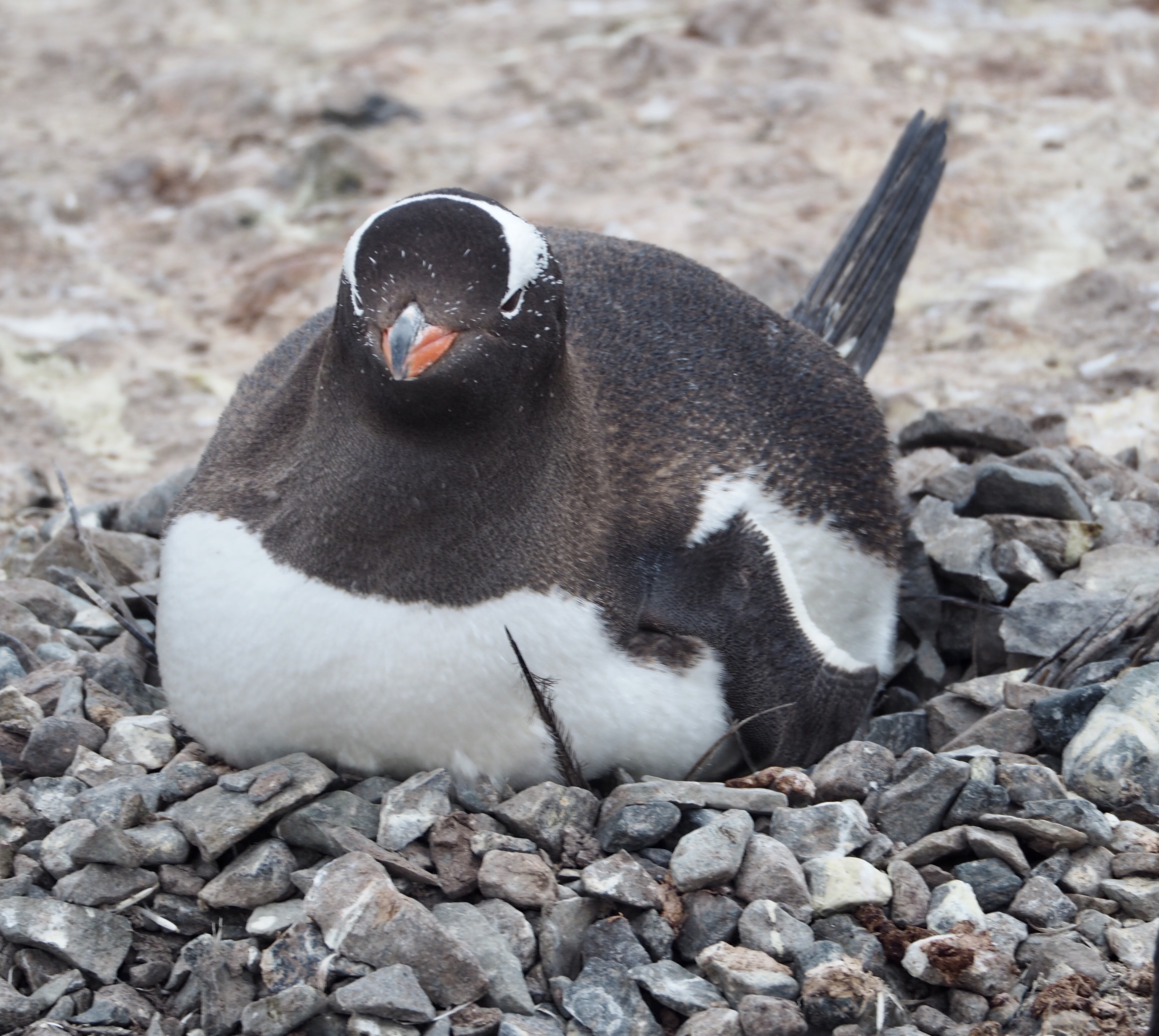
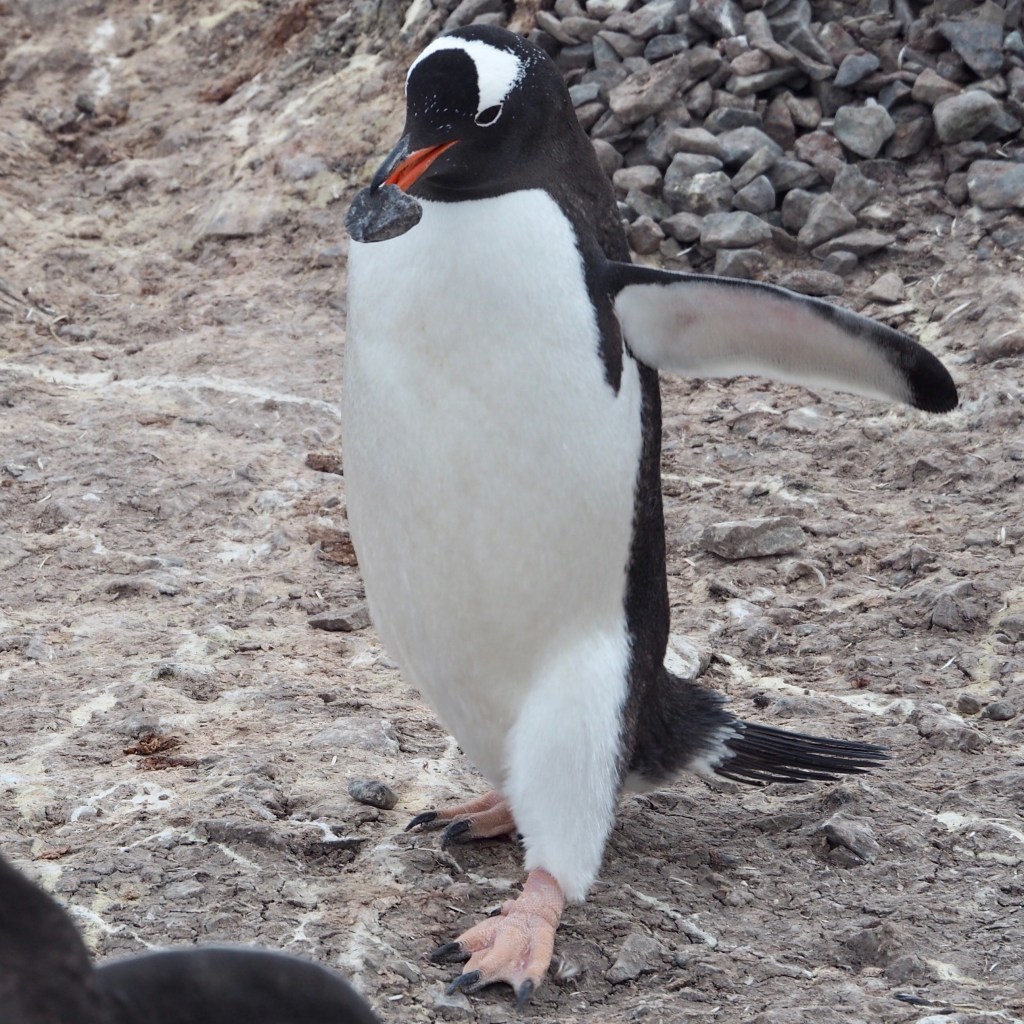
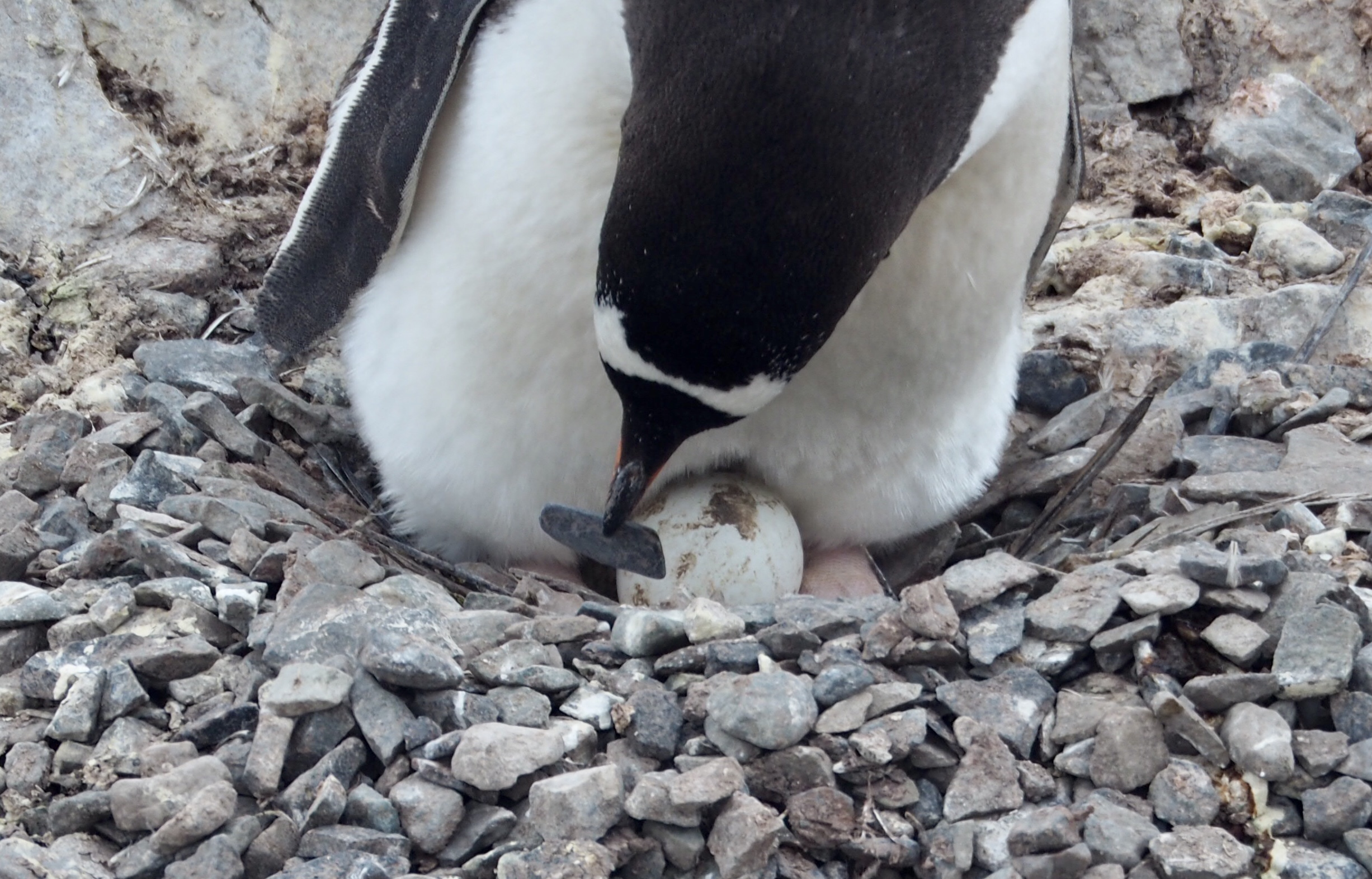
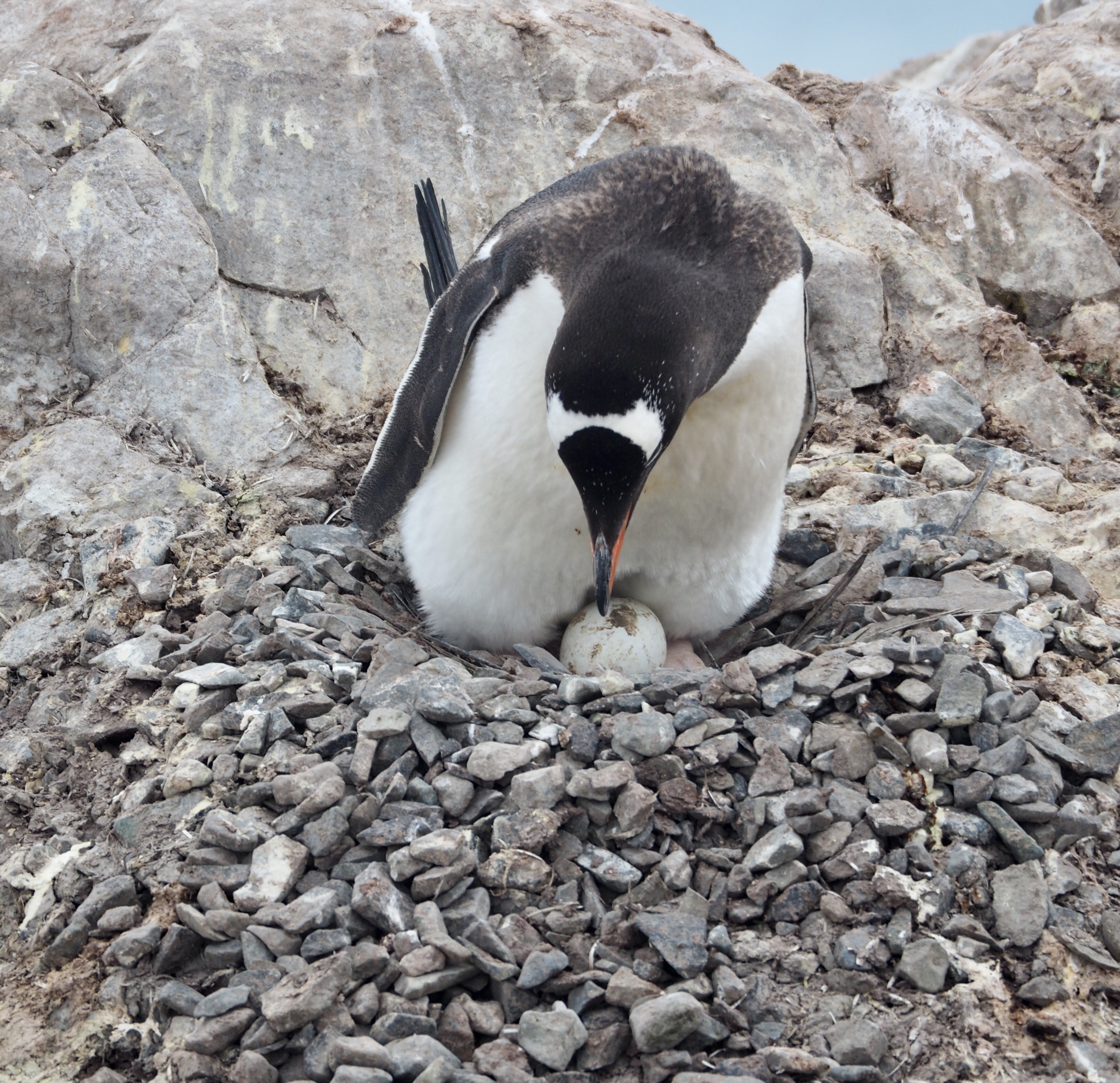
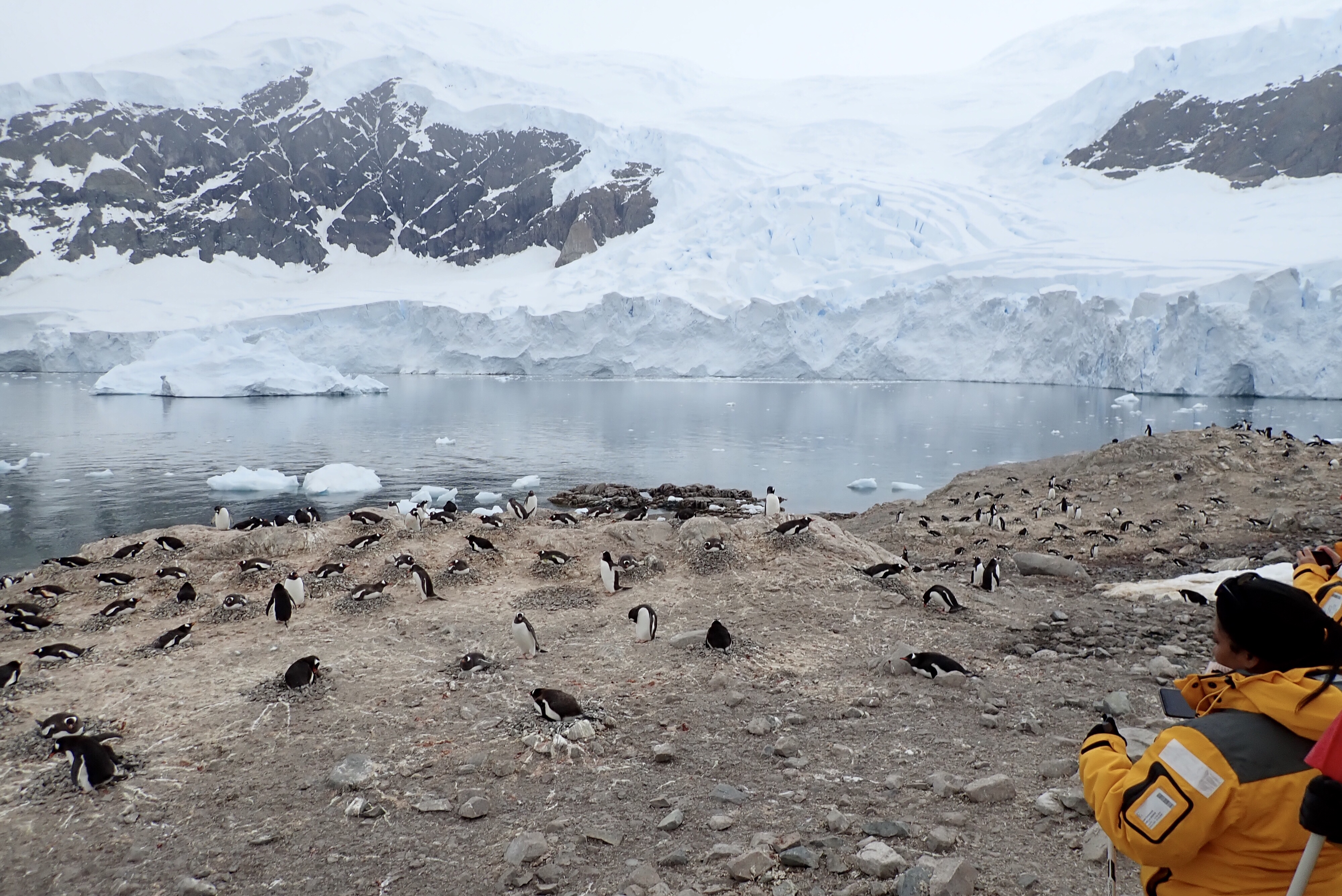
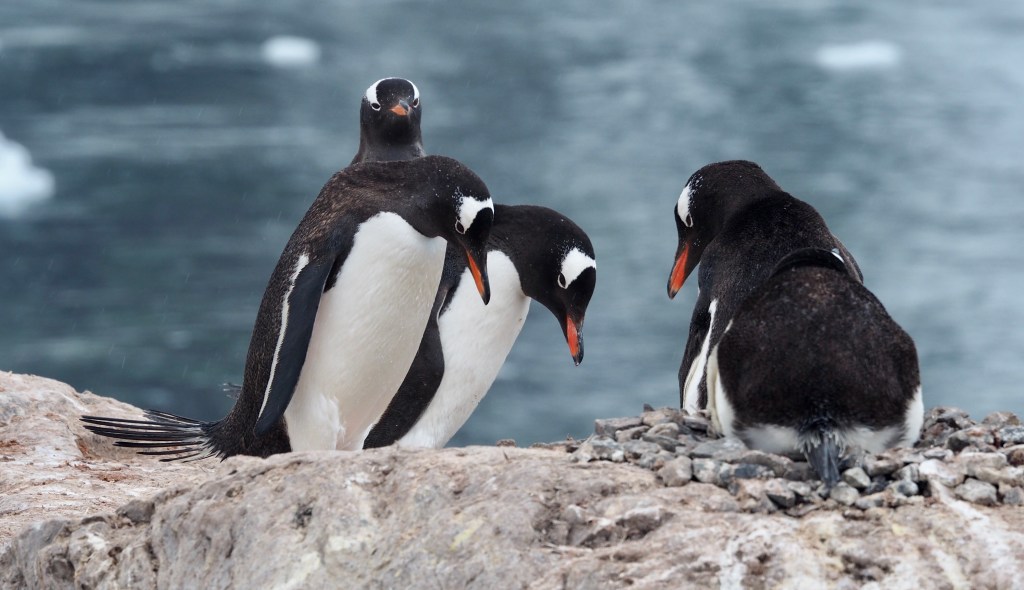
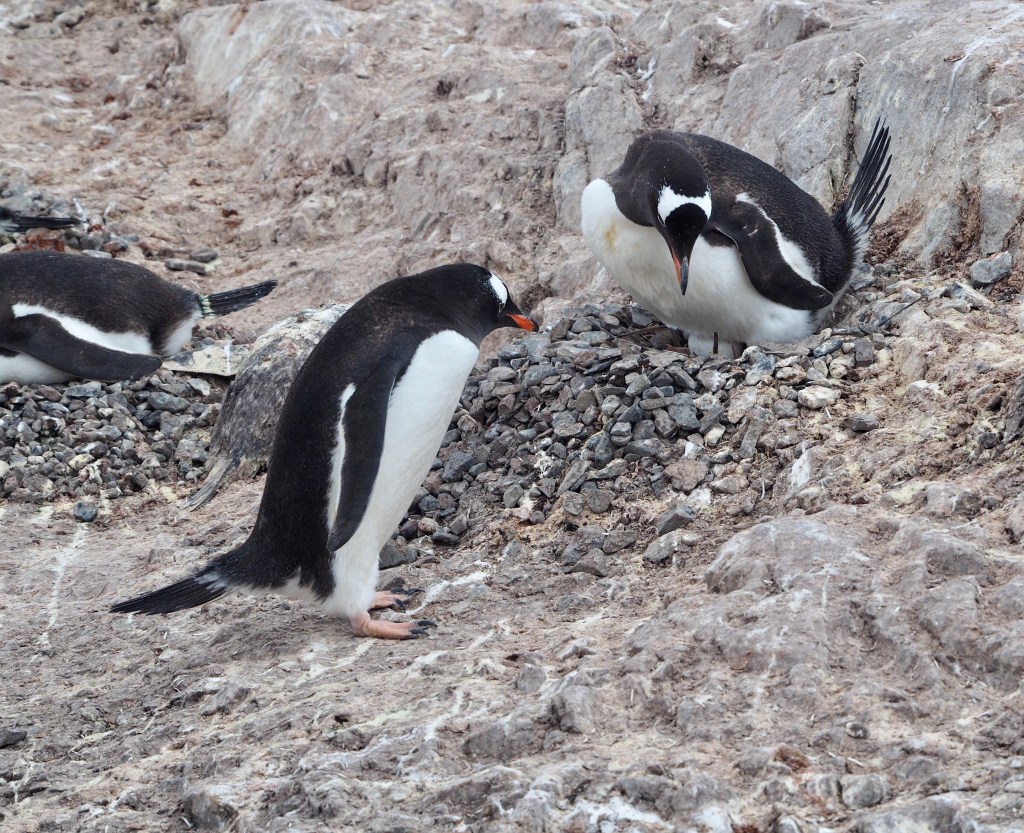
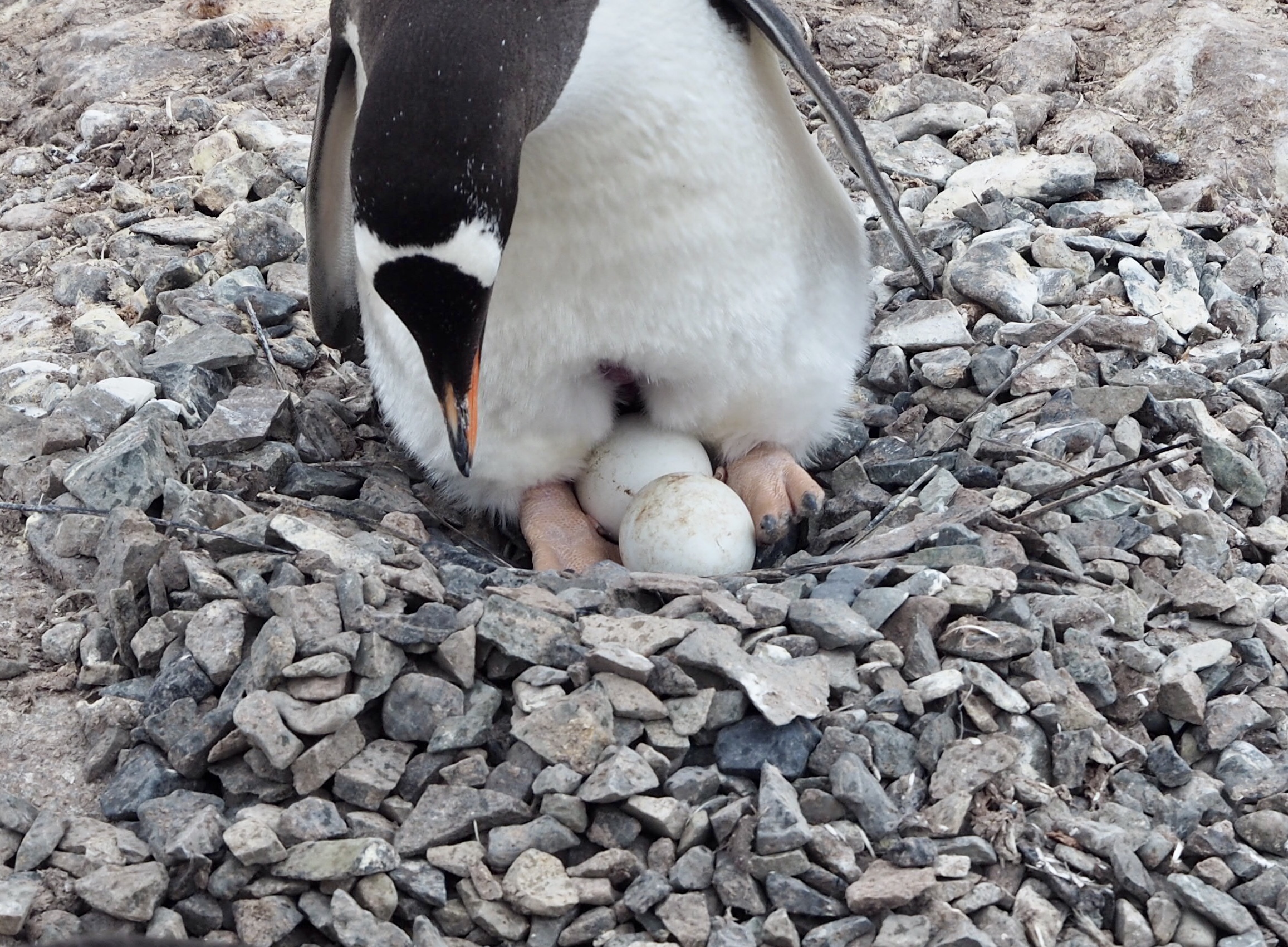
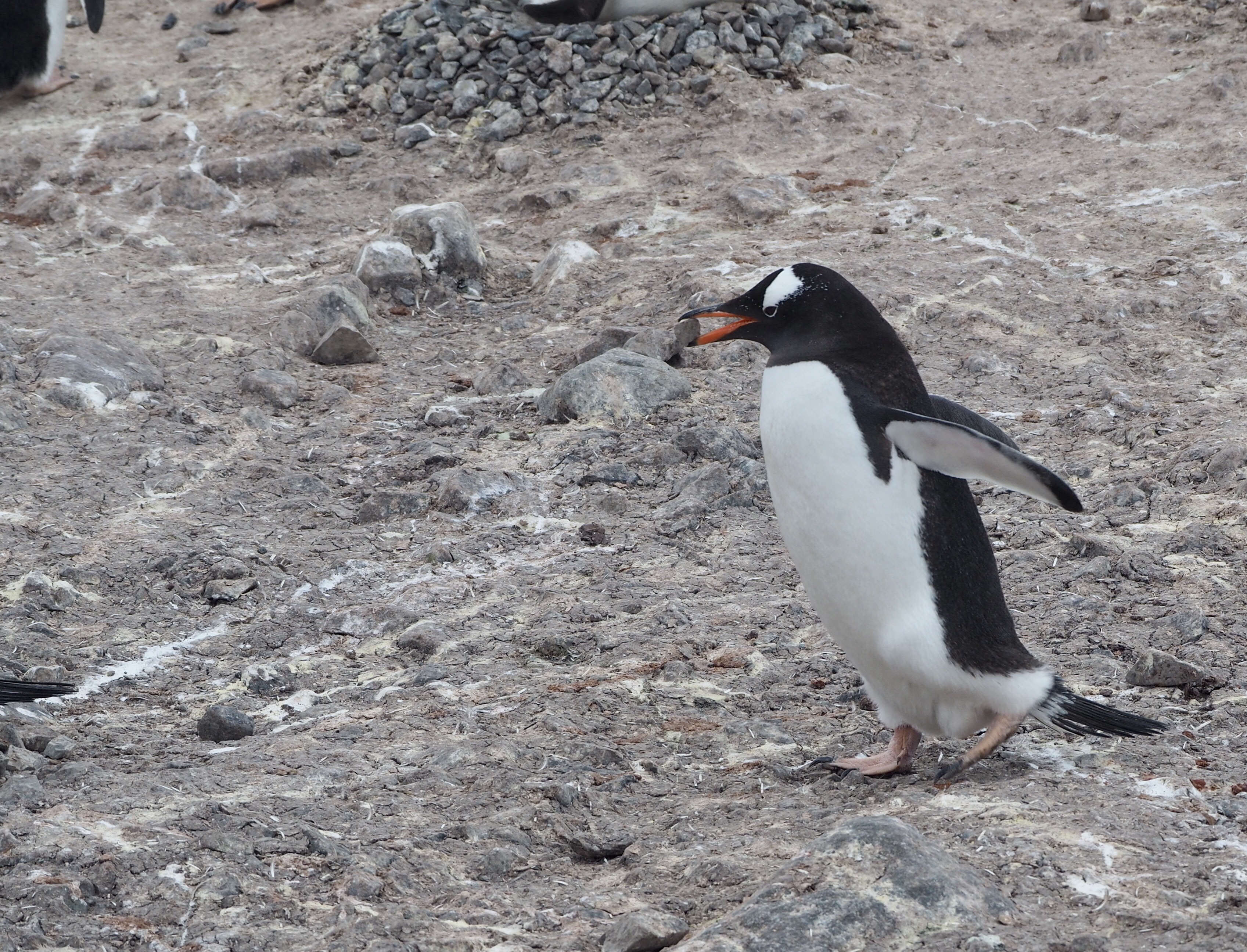
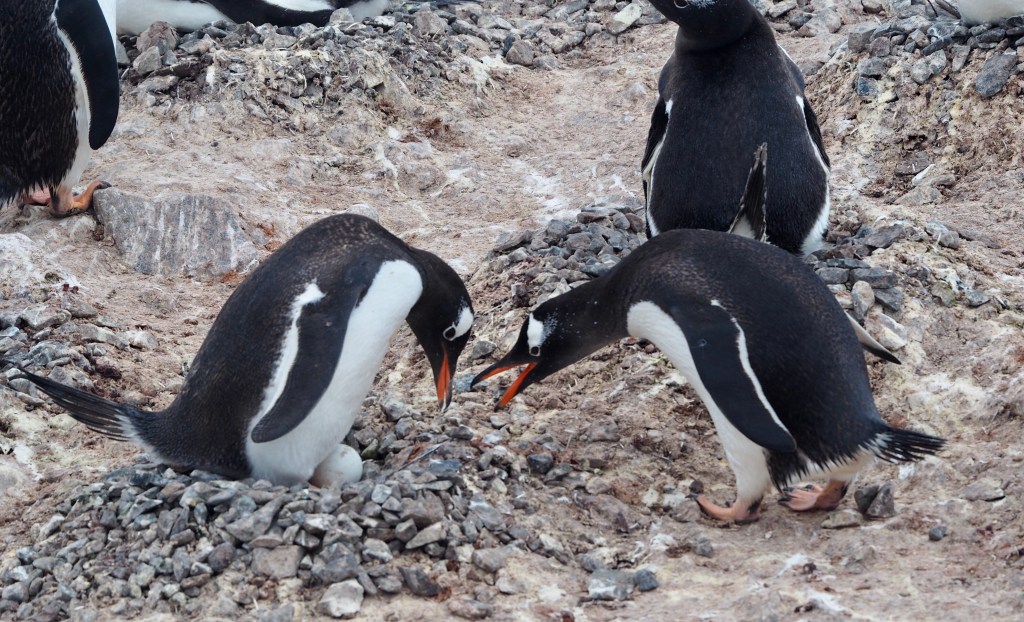
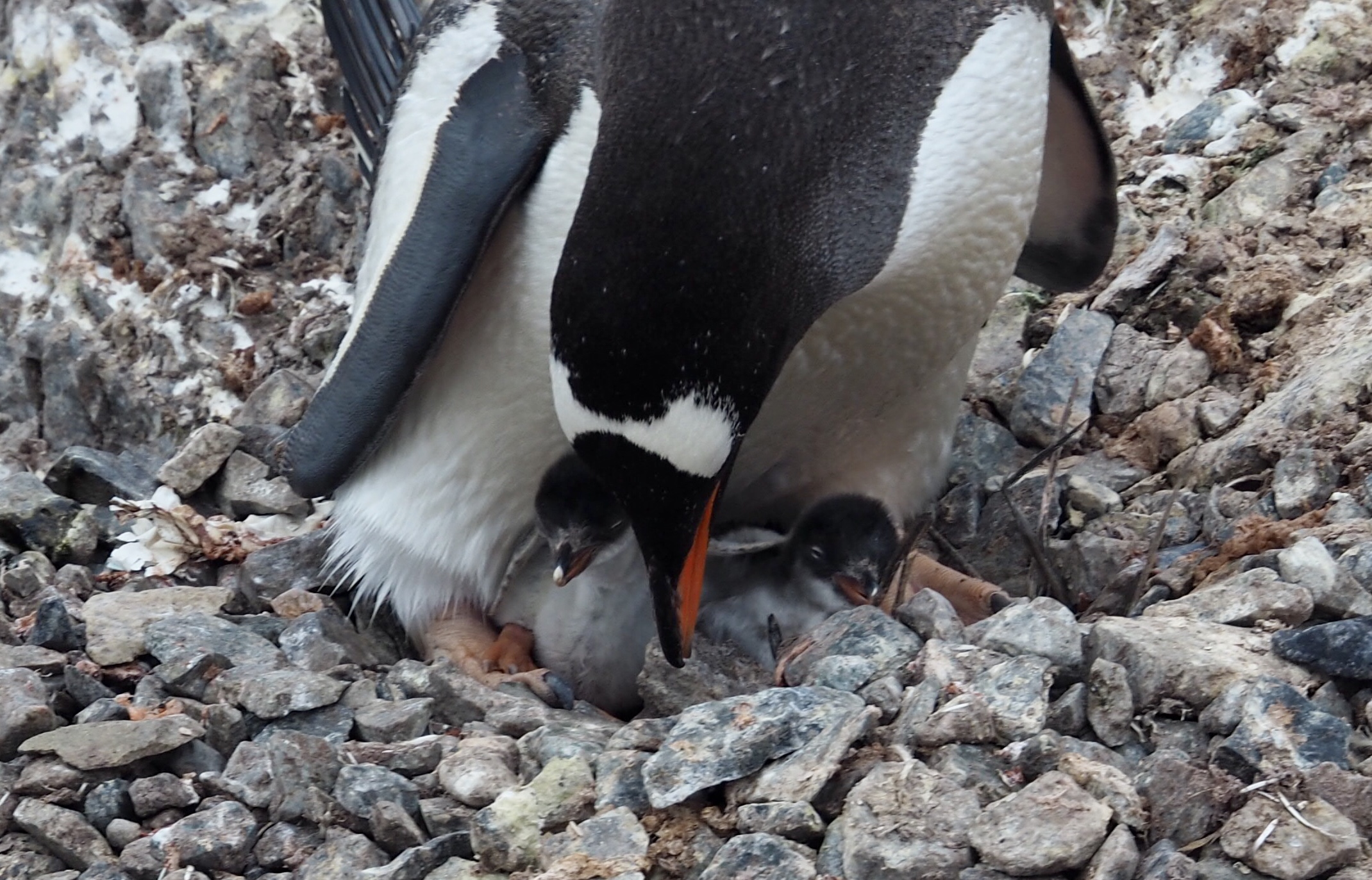
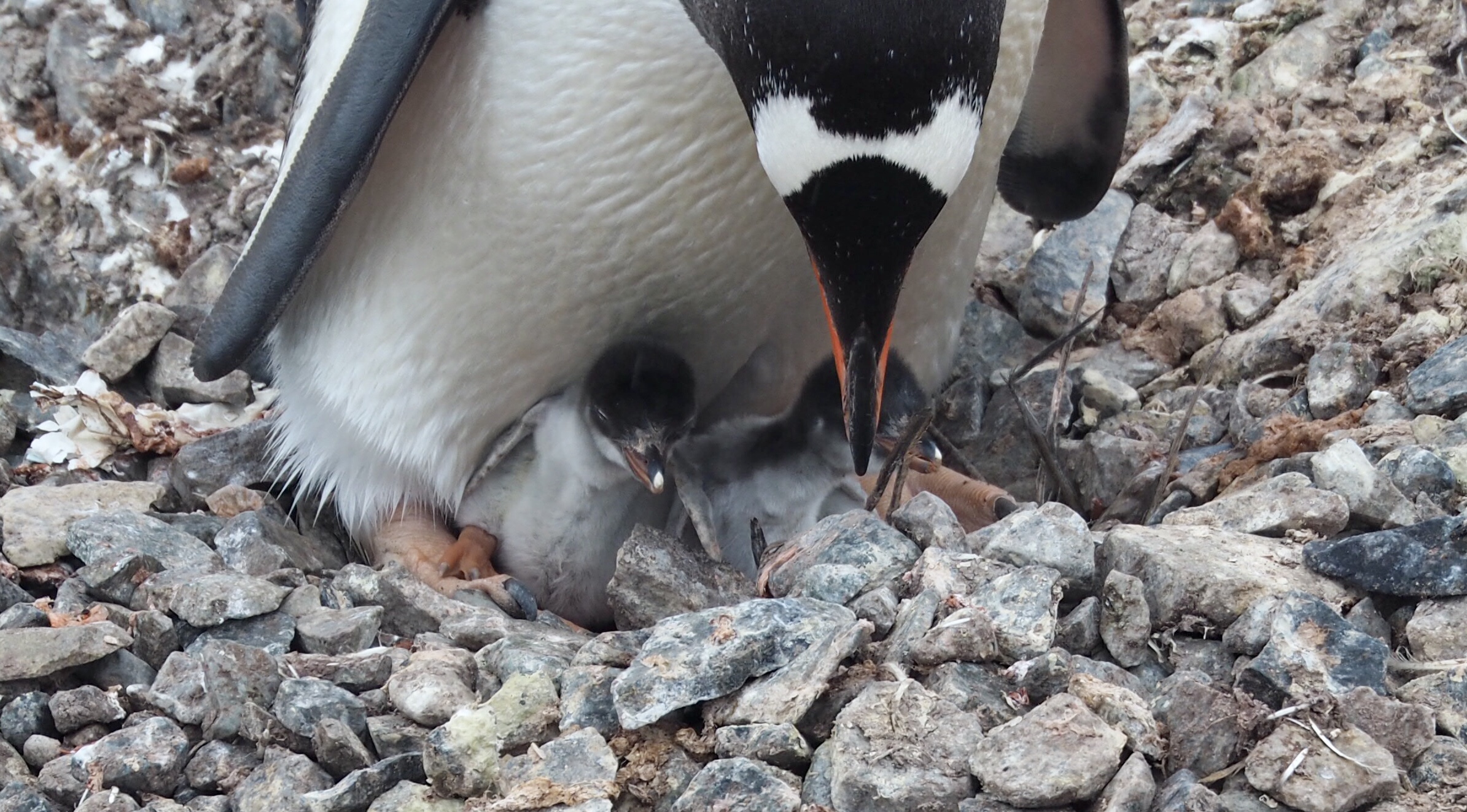
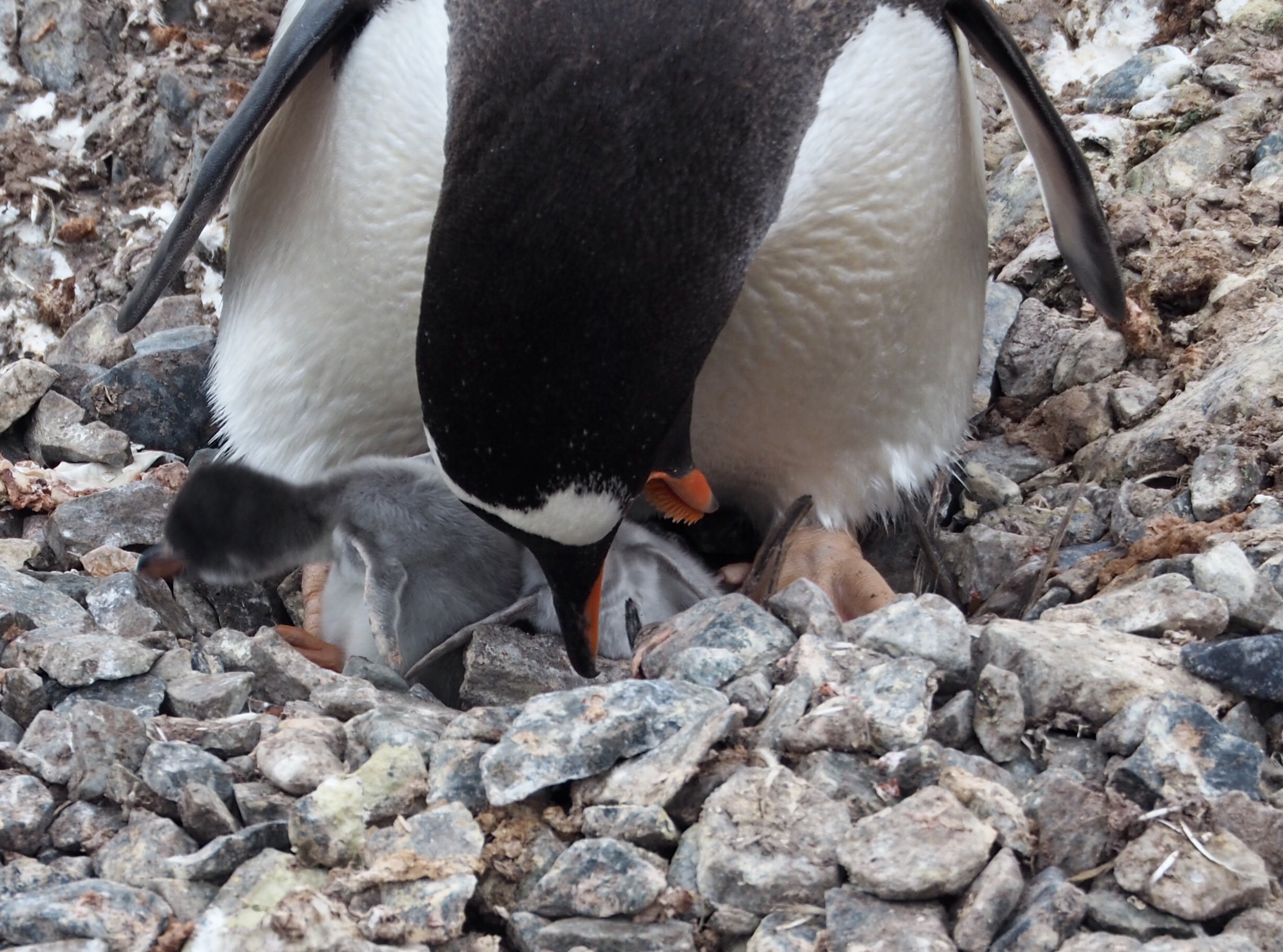
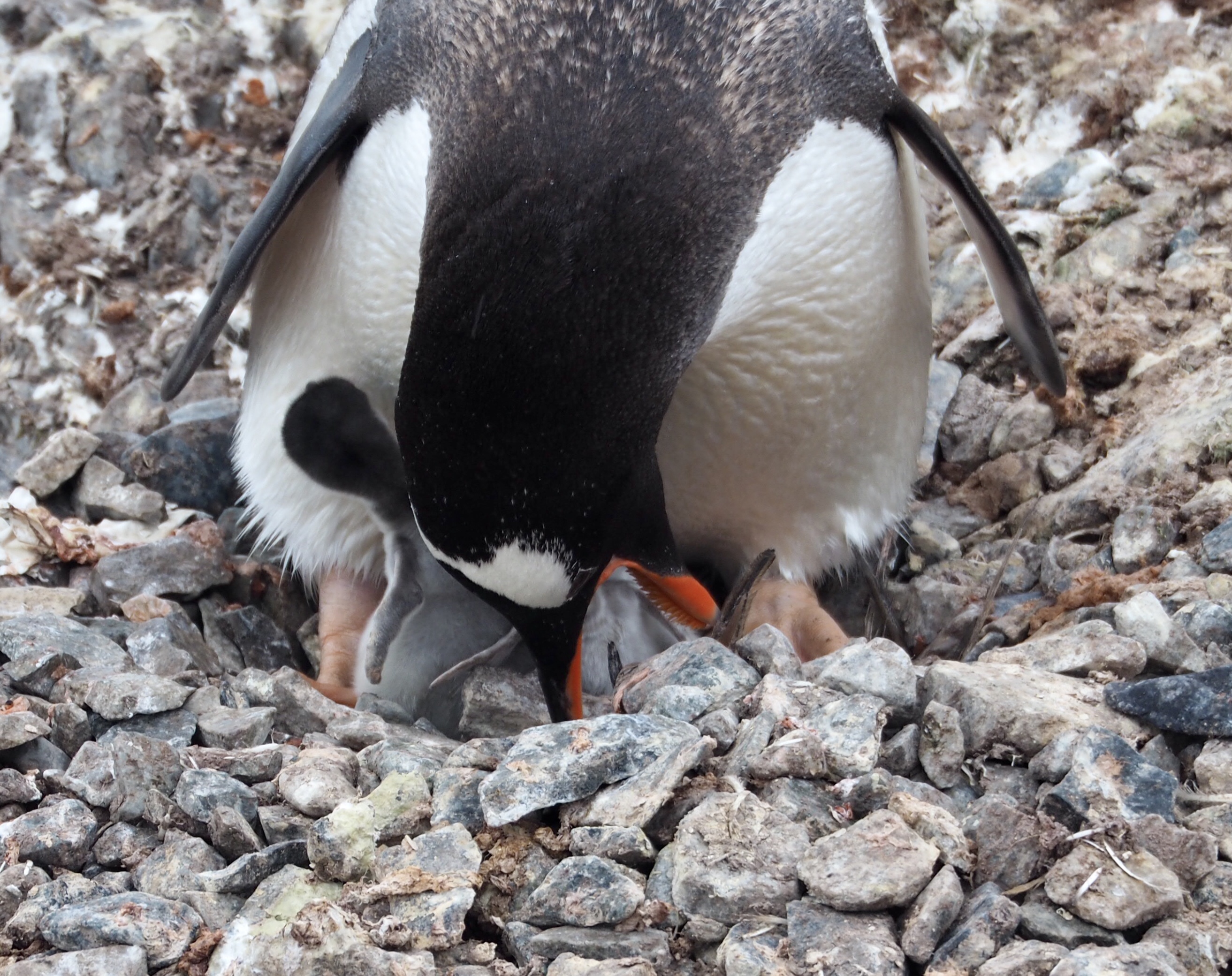
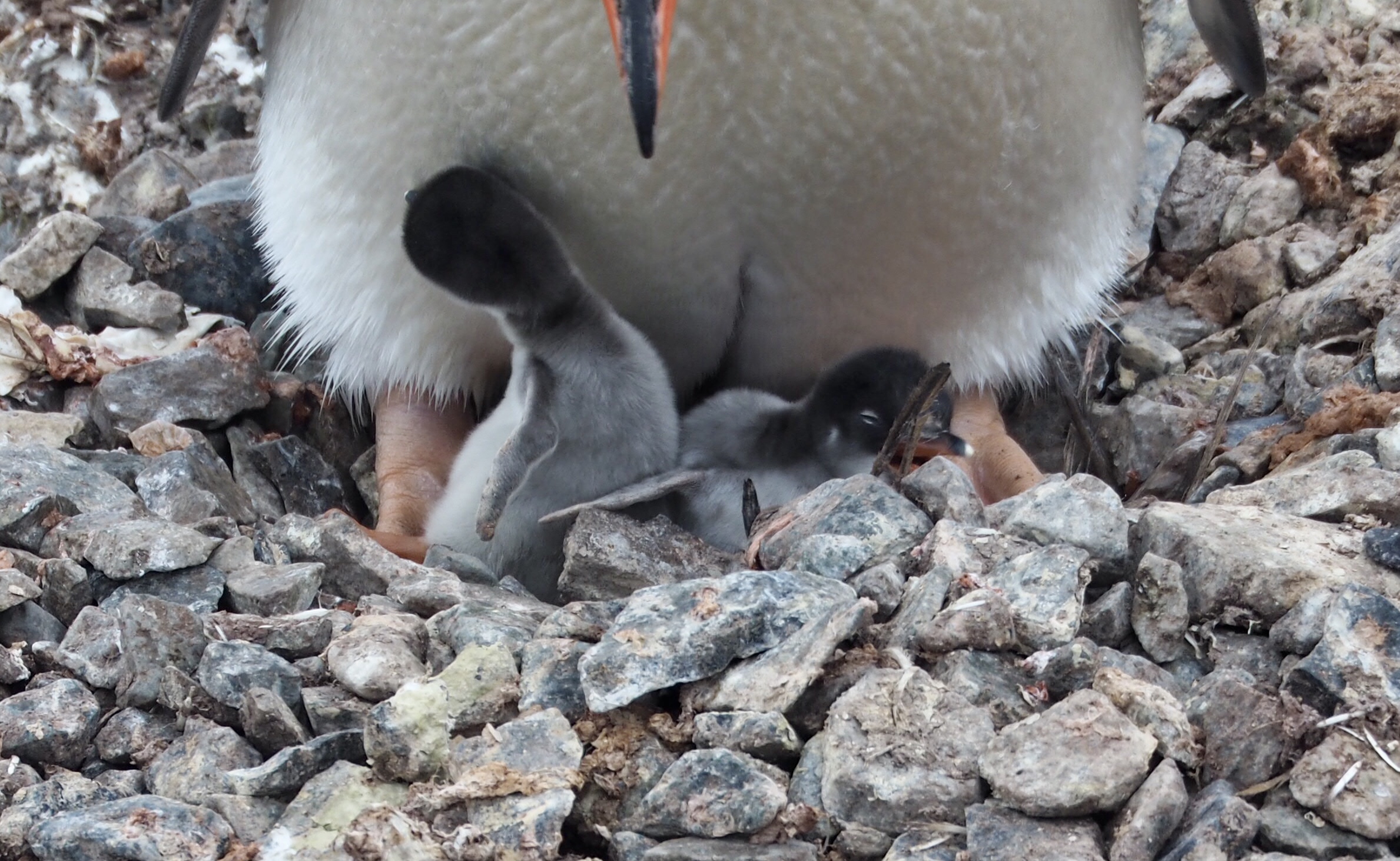
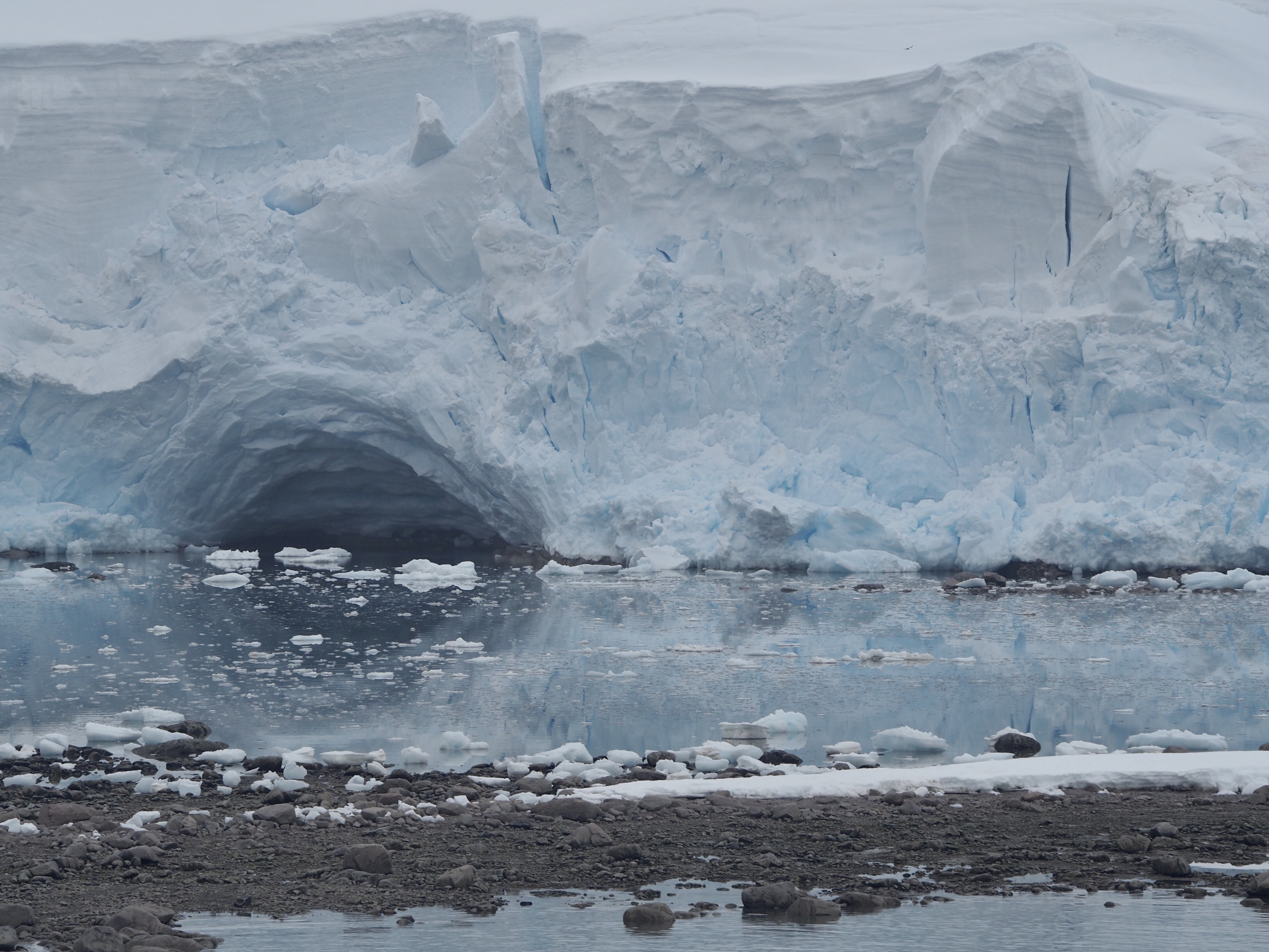
For the land segment we spent quite a bit of time at a gentoo colony managing to see eggs and some chicks that were just a few days old. The end of the glacier nearby was cracking like gun shots and everyone wanted to see a huge chunk fall off but alas it wasn’t meant to be. Fun watching the penguins stealing rocks from other nests for their own. Managed to take a chick being fed but the chicks aren’t as sharp as I’d like them to be.
Stone in beak.Stealing rocks.
Do I look sick? I felt it.
Rock in beak.
Here come the chicks I promised.
There ends the morning excursion and we realised this afternoon is our last of the trip. Yes folks, it’s nearly all over.
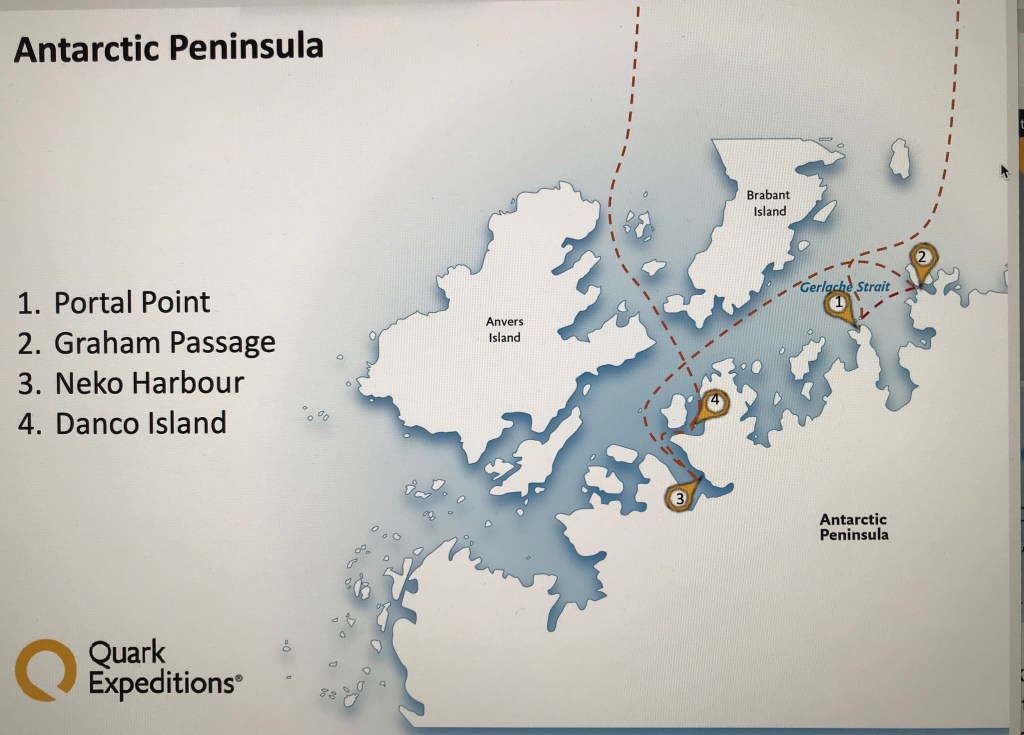
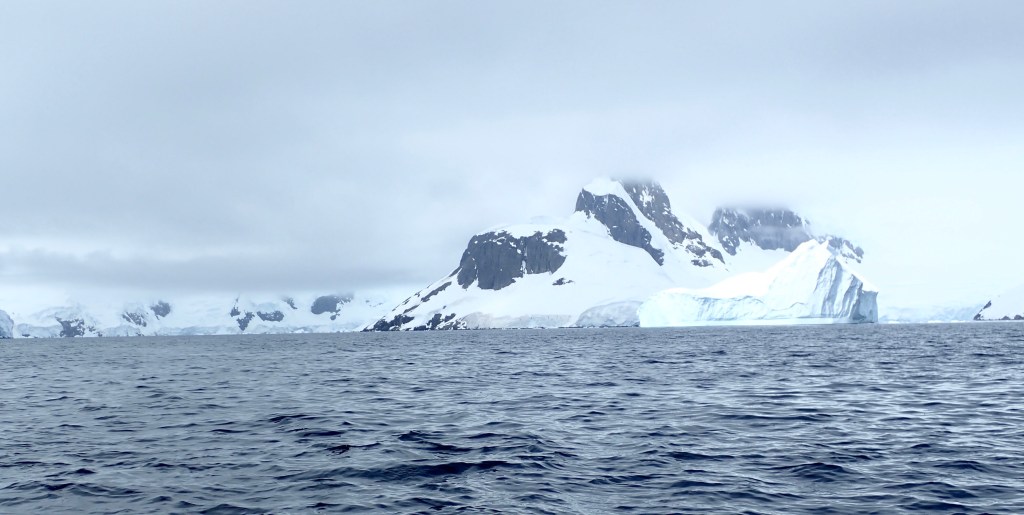
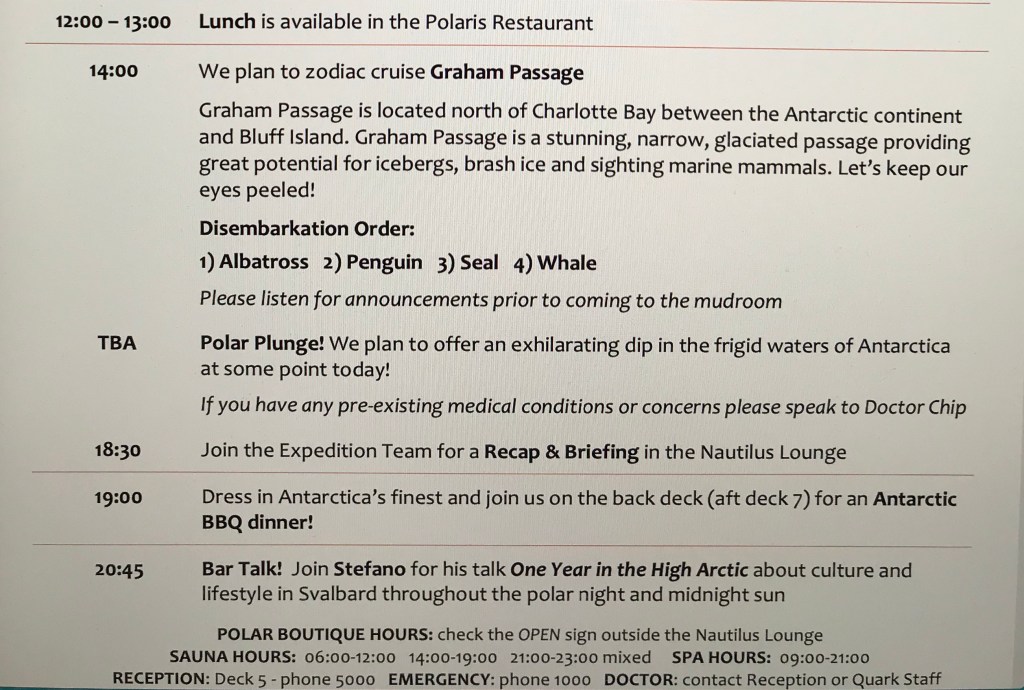
Having spent an amazing morning at Portal Point, Charlotte Bay we are now heading for Graham Passage.
So, as the blurb above says, Graham Passage is located north of Charlotte Bay between the Antarctic continent and Bluff Island.
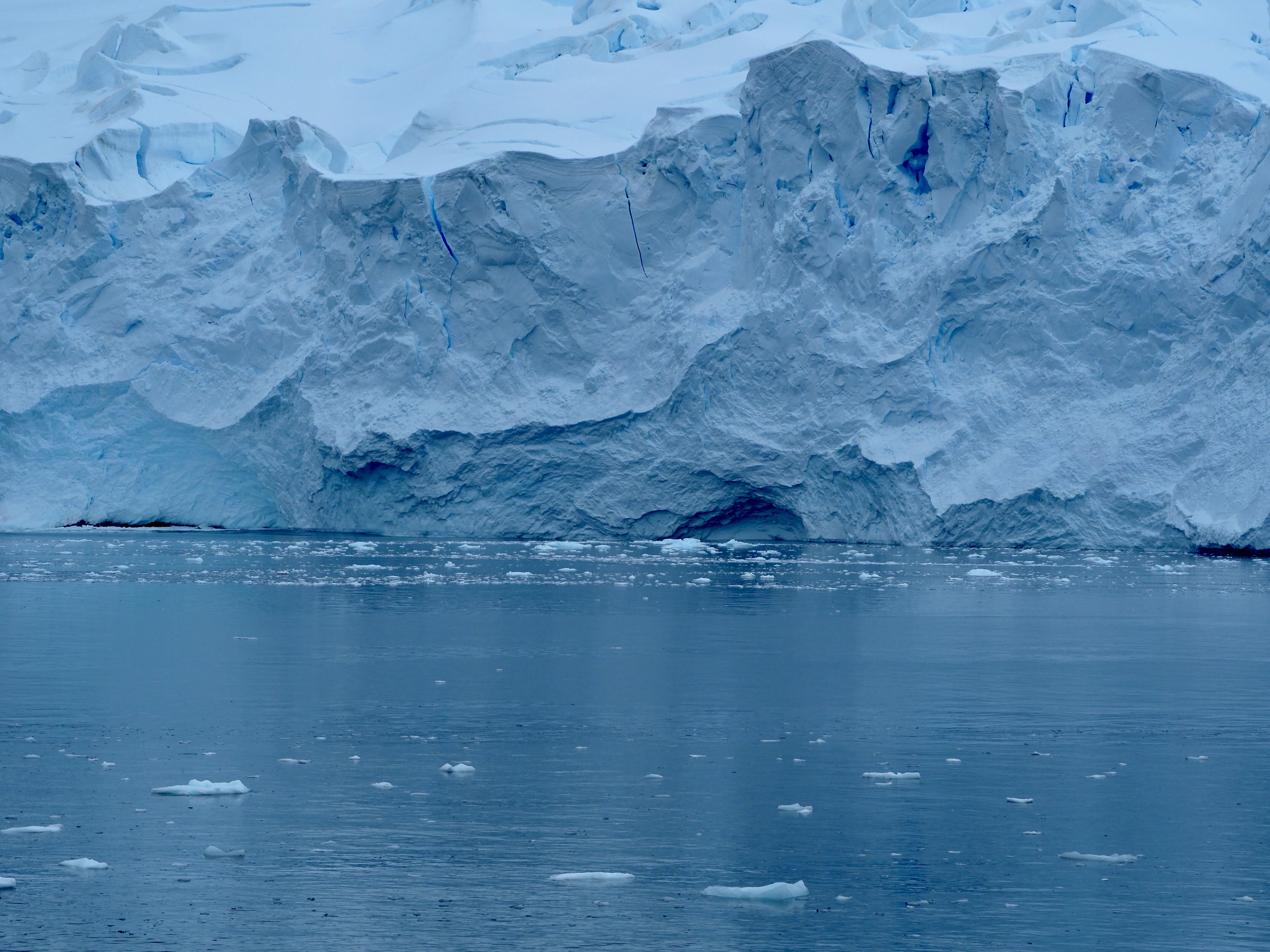
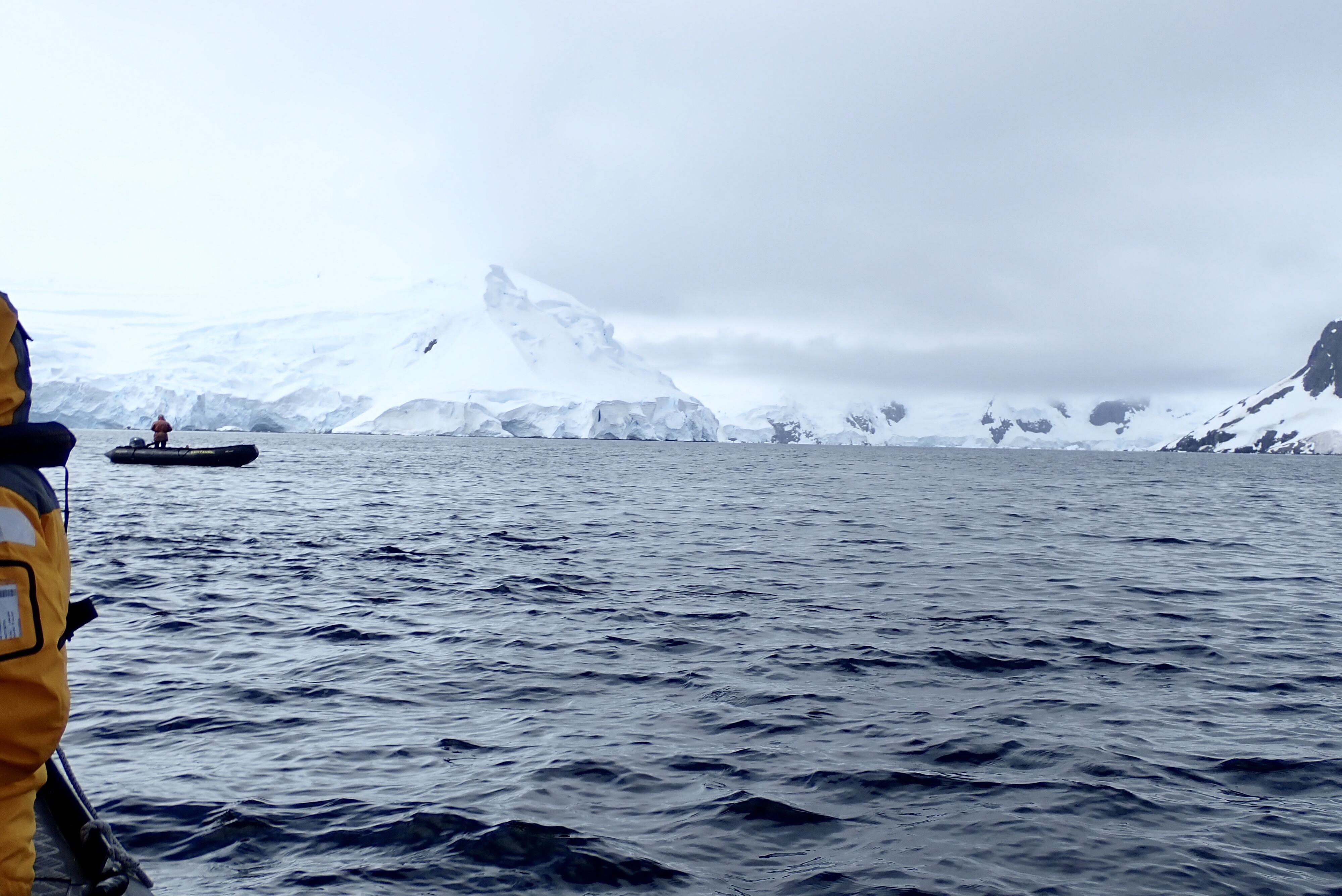
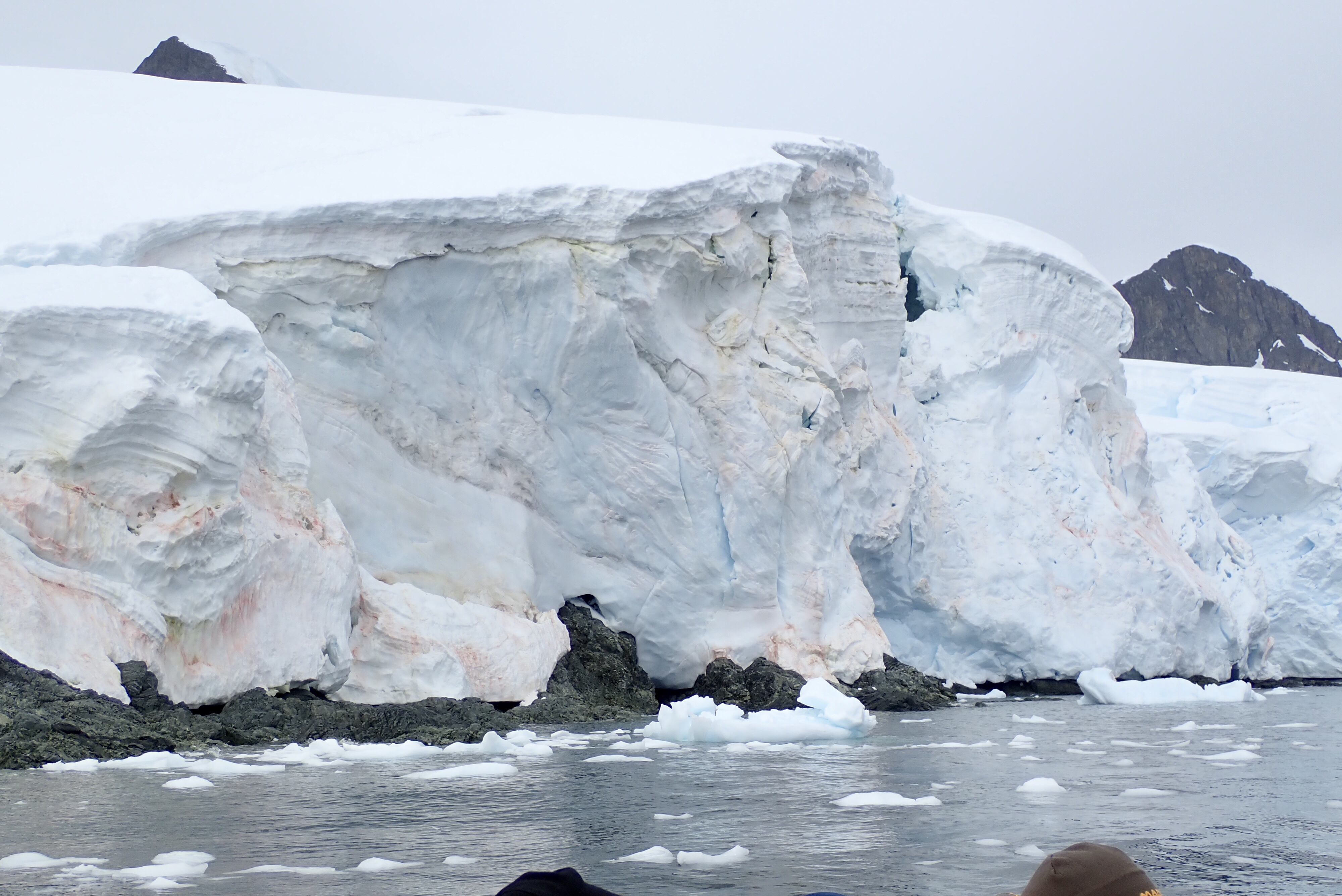
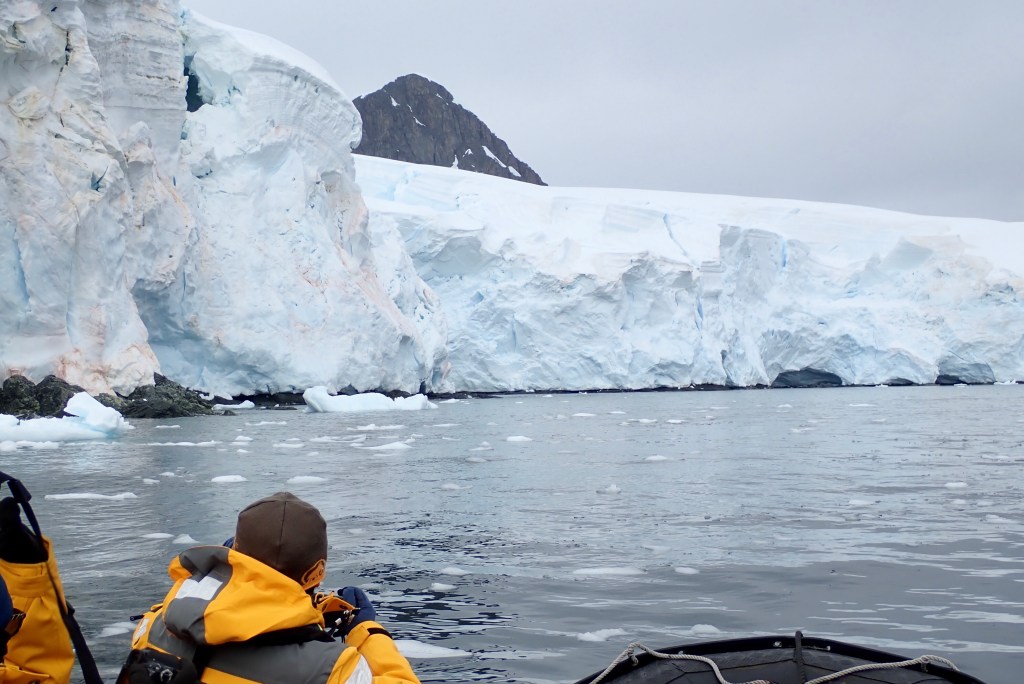
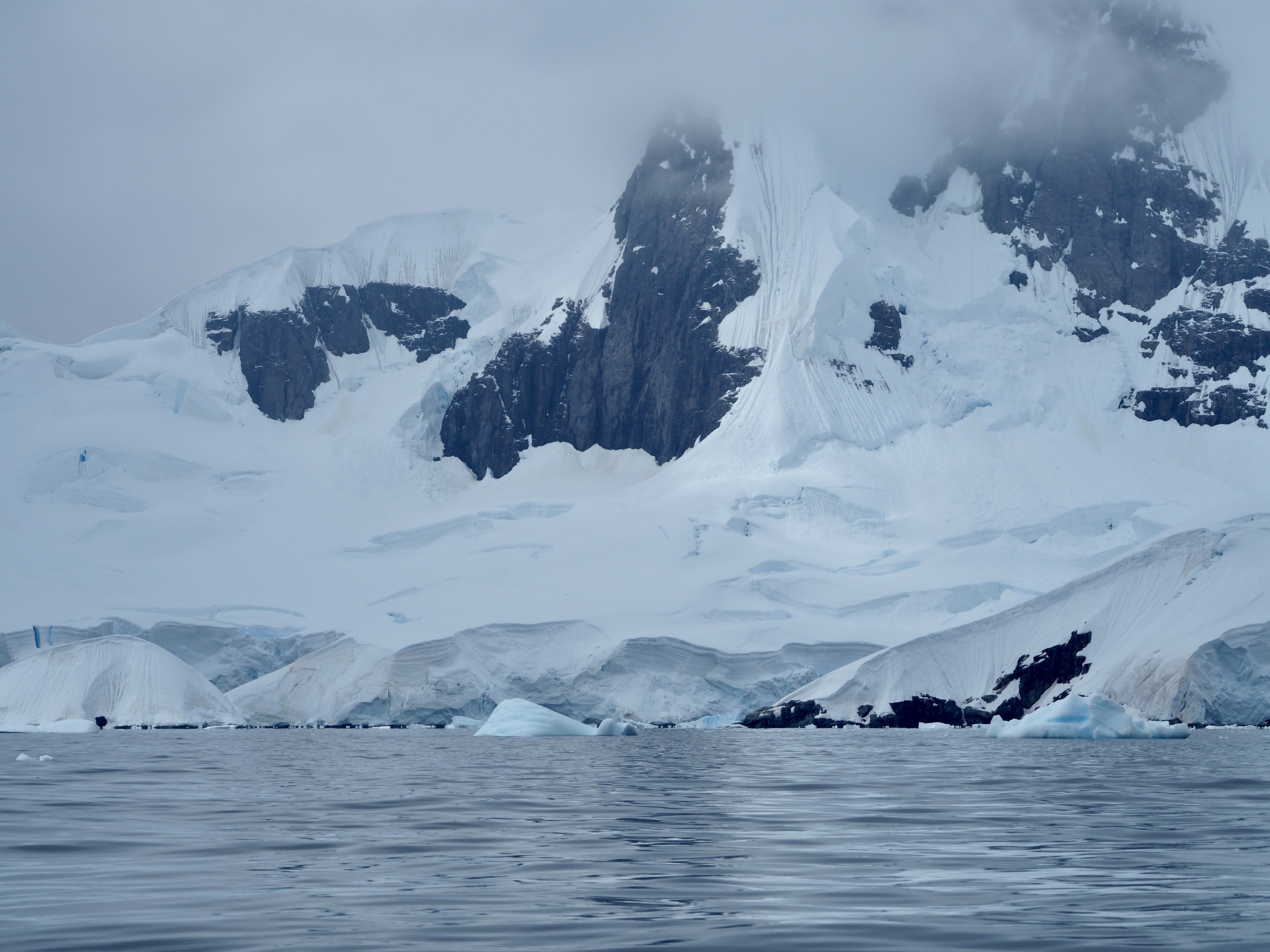
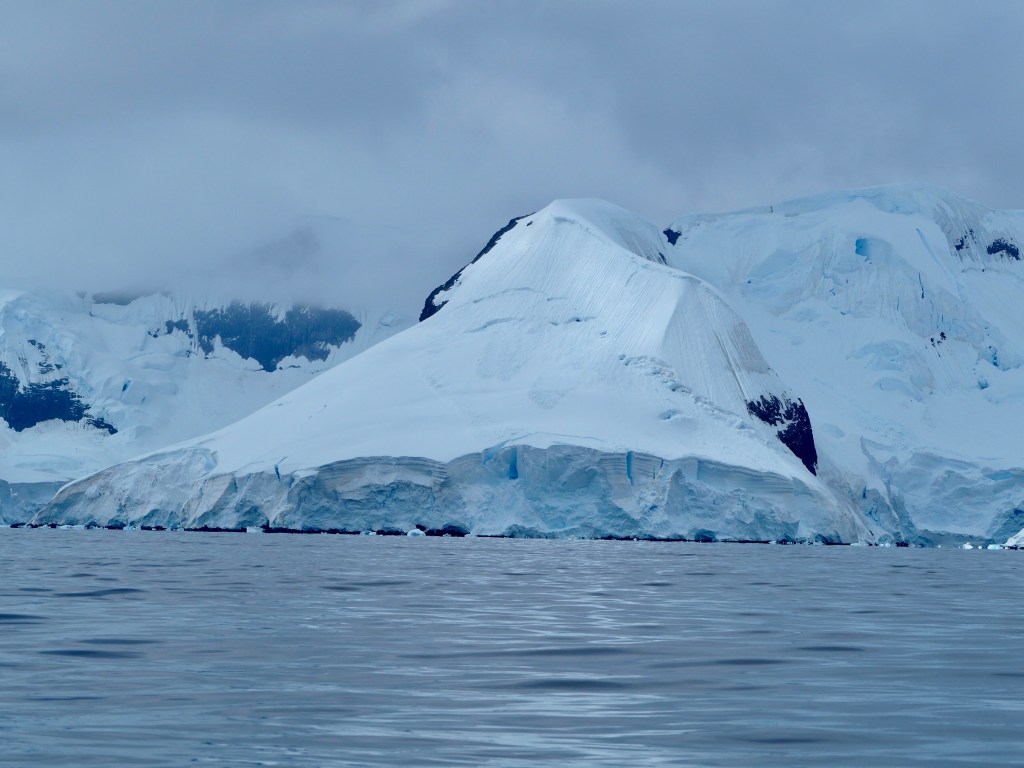
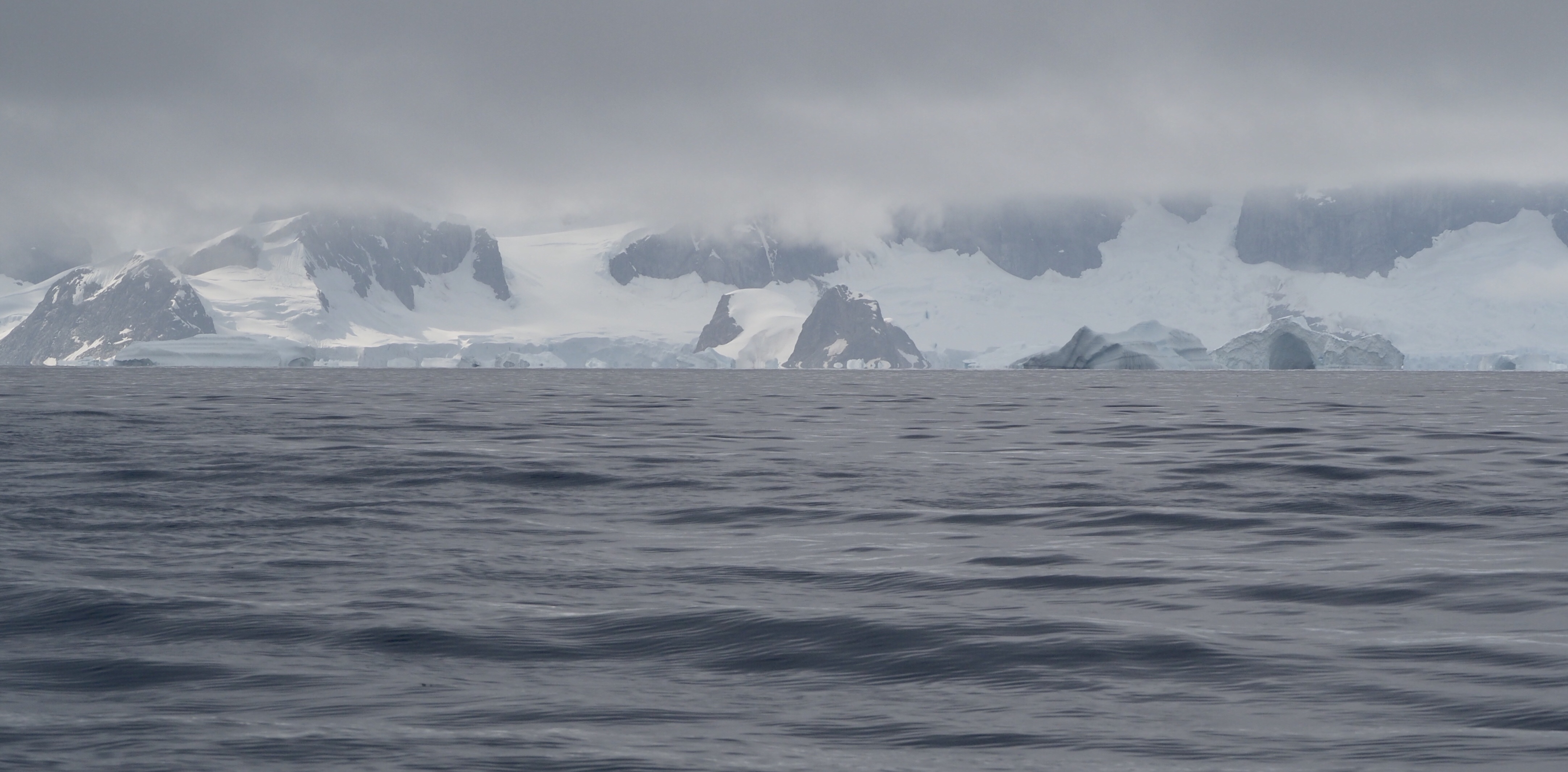
It is indeed a stunning, narrow, glaciated passage providing great potential for icebergs, brash ice and sighting marine mammals.
Ensuring we had reasonably distance in case ice sheared off. It can cause quite a wave.
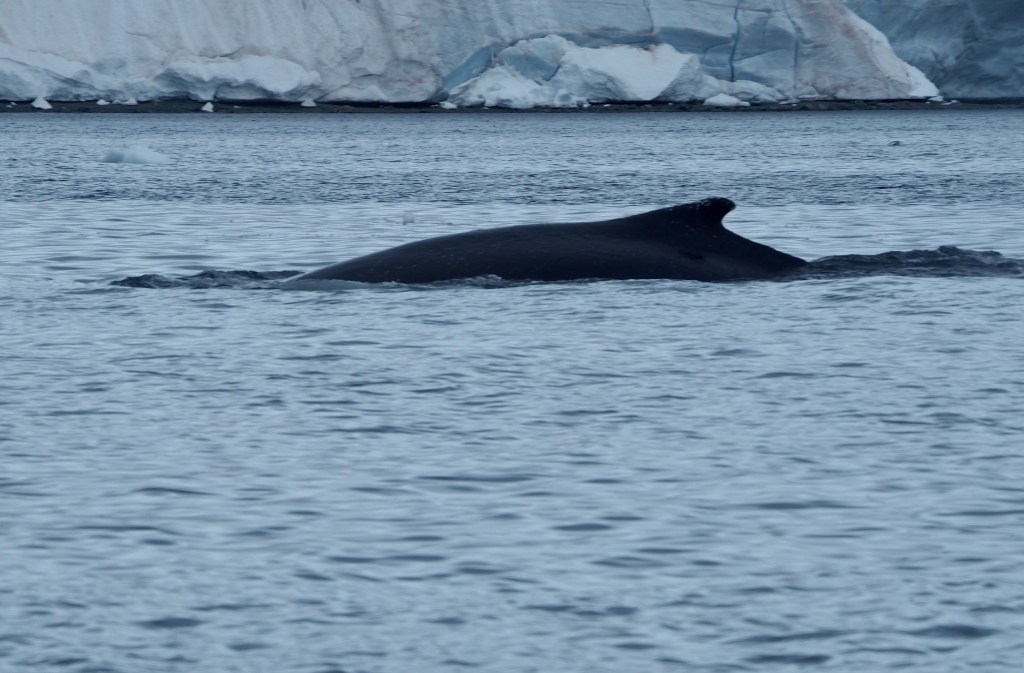
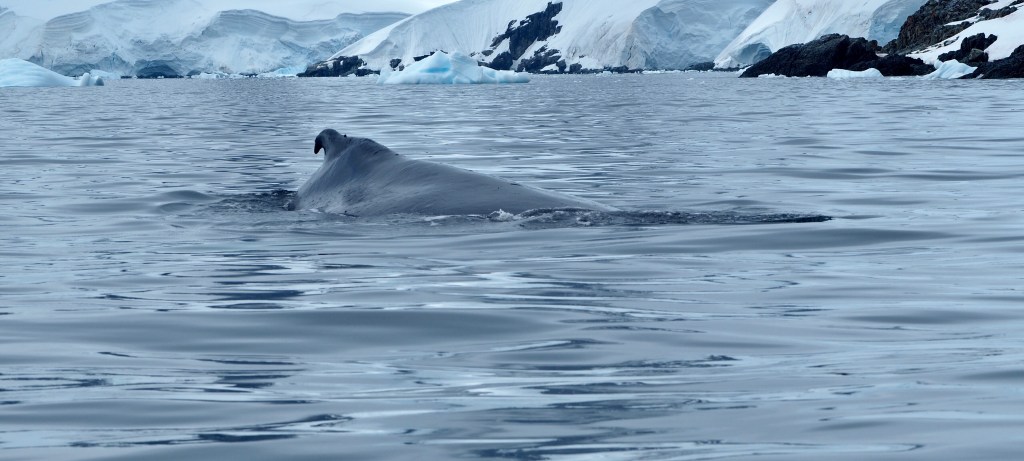
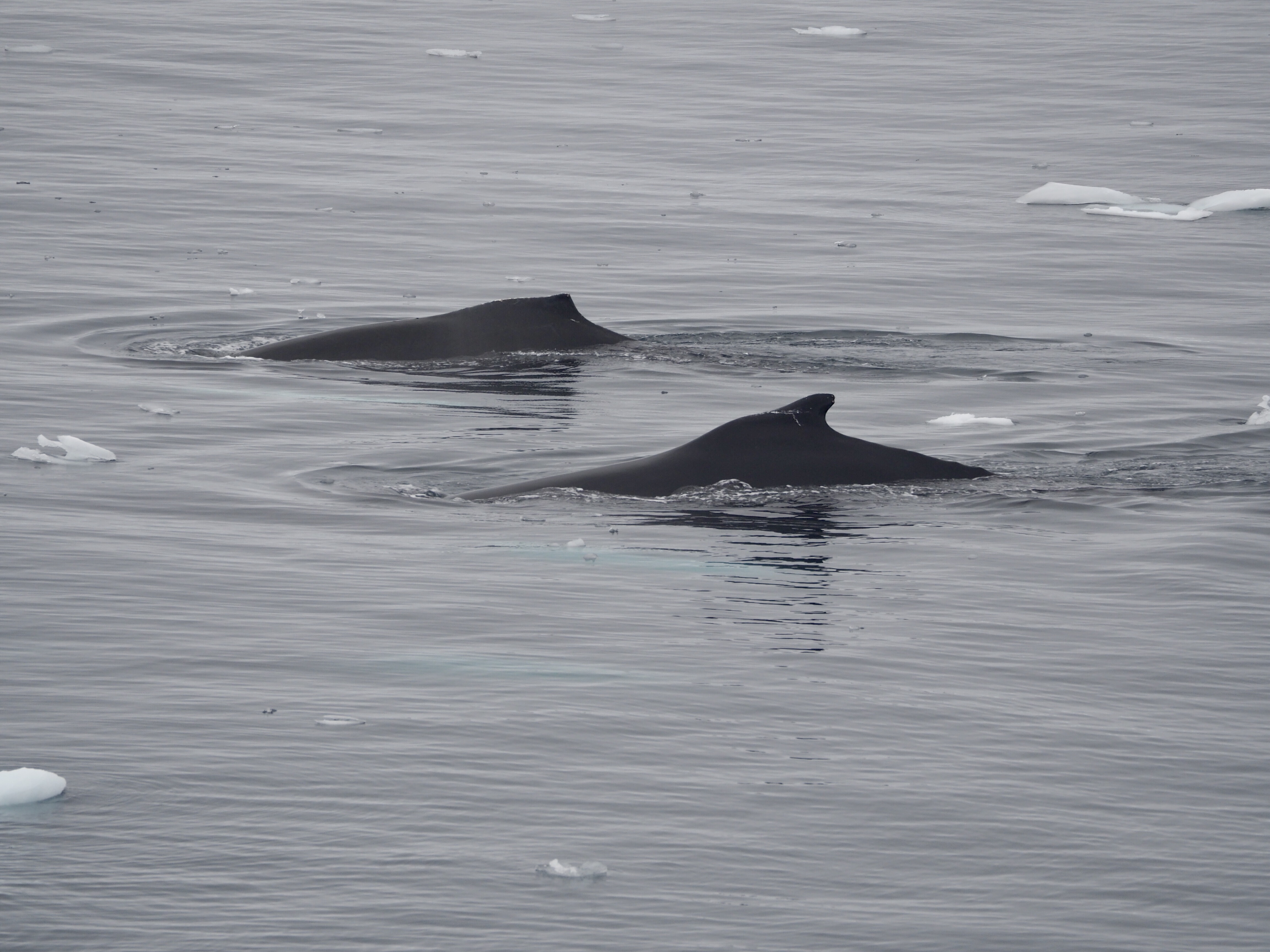
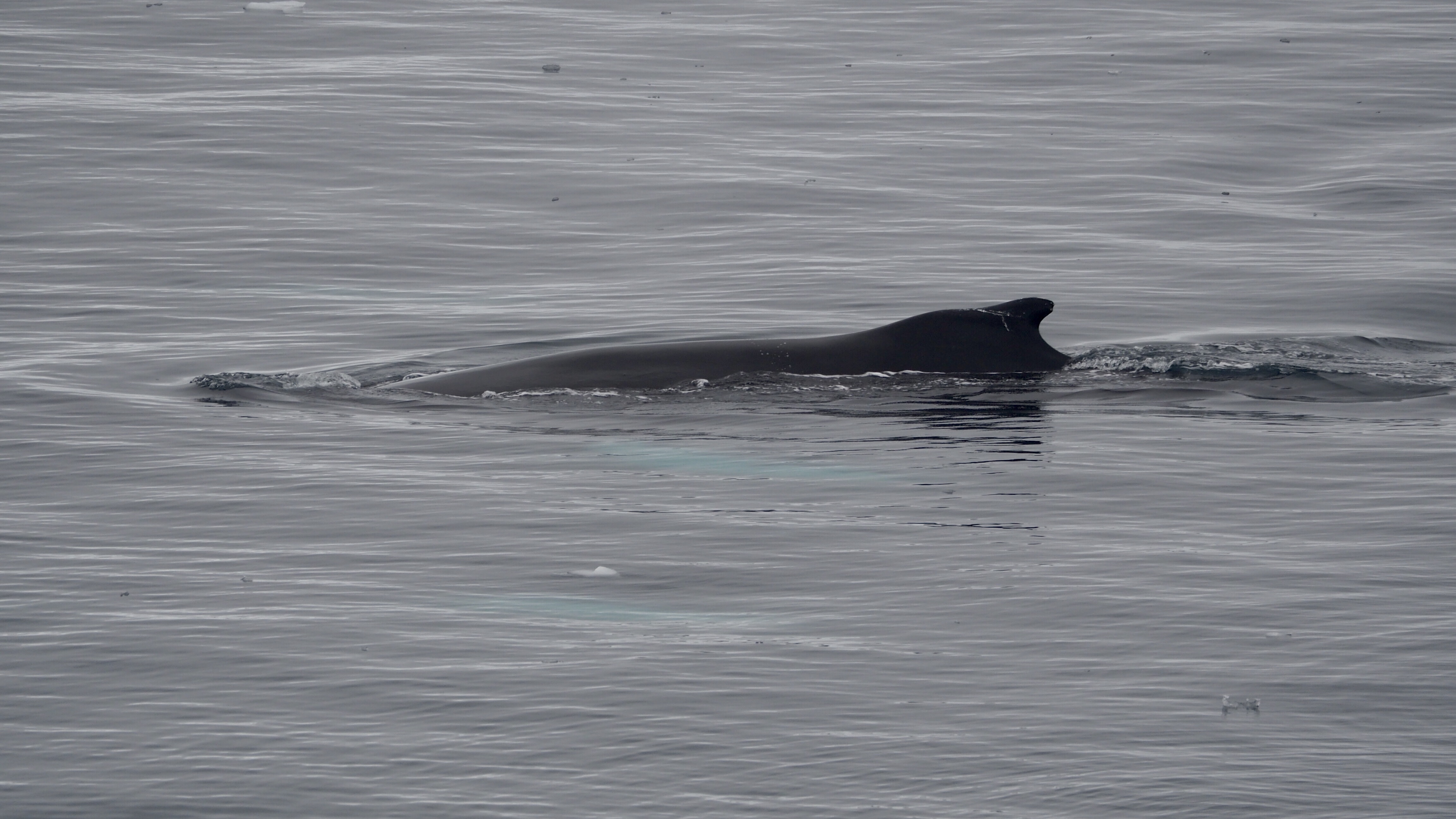
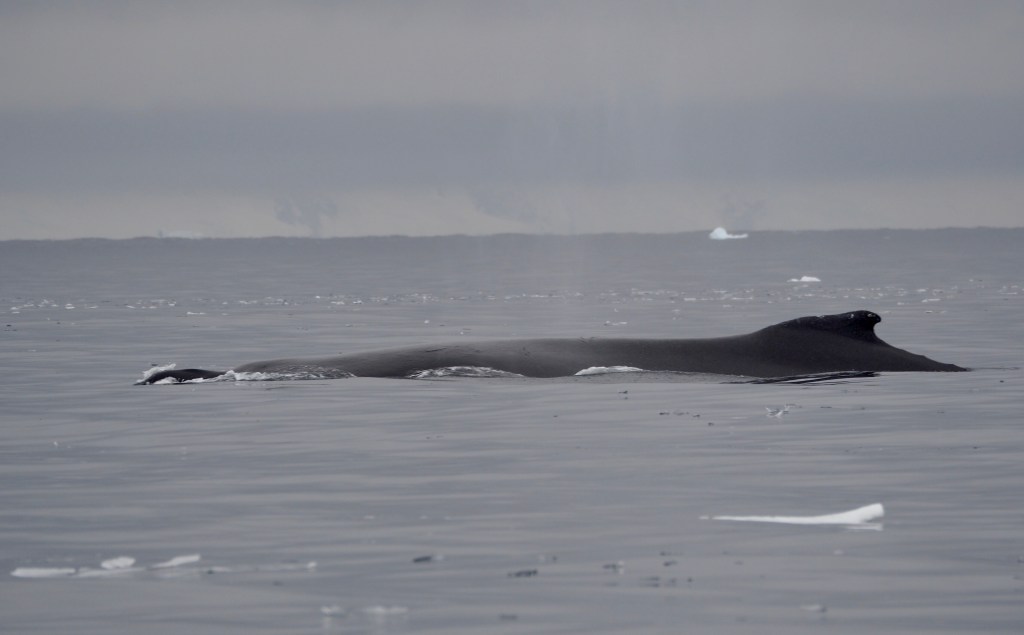
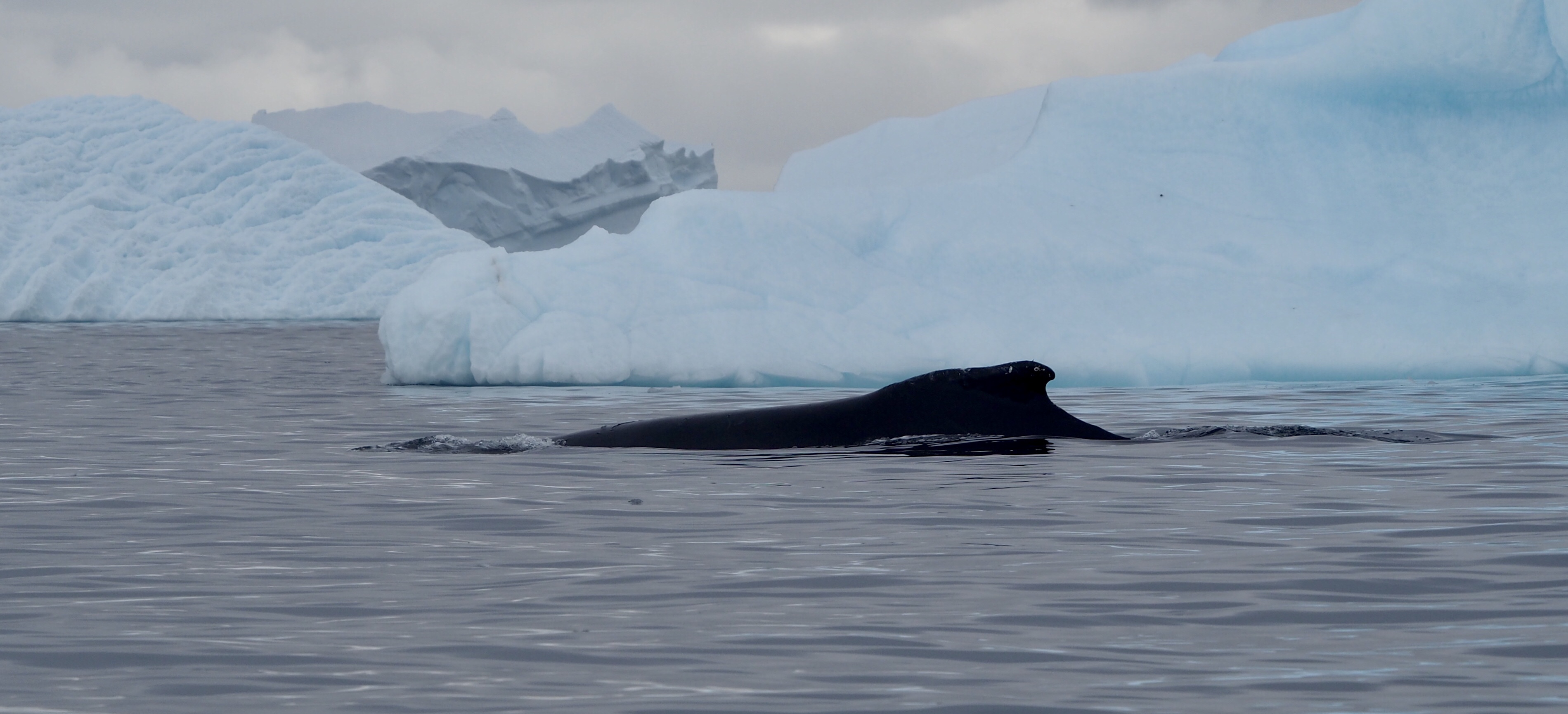
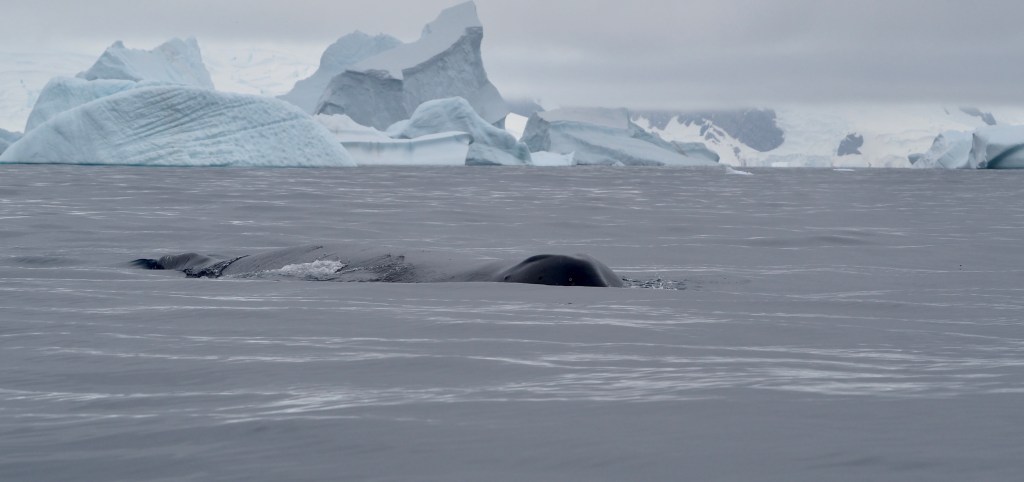
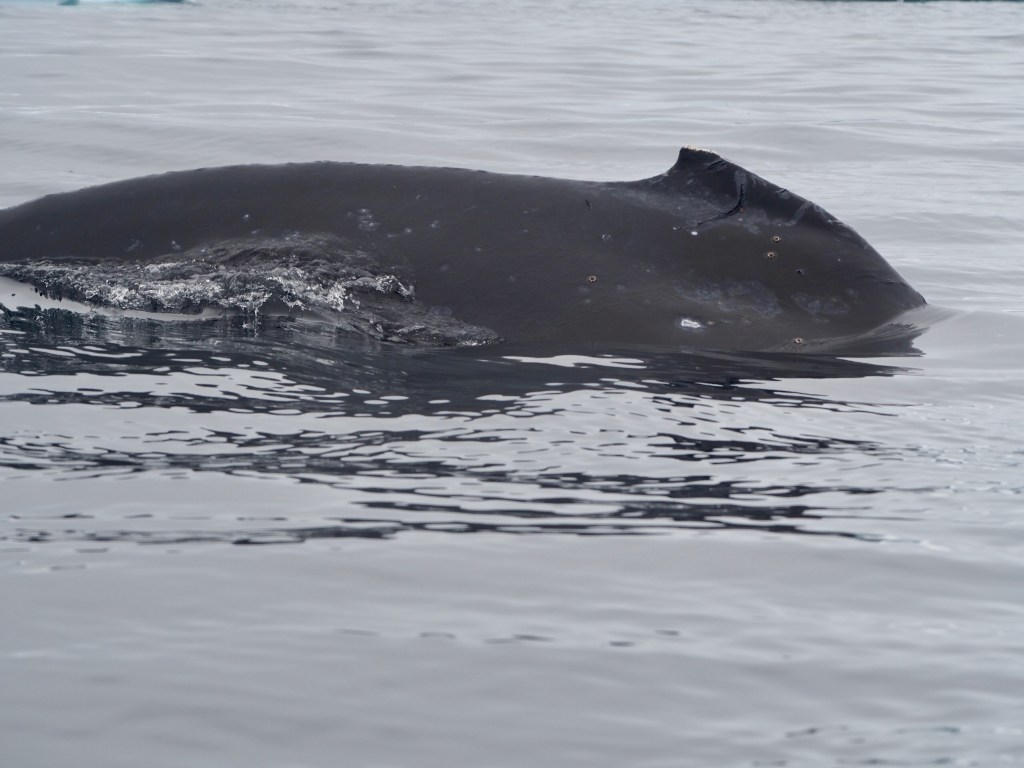
Hump back whale.
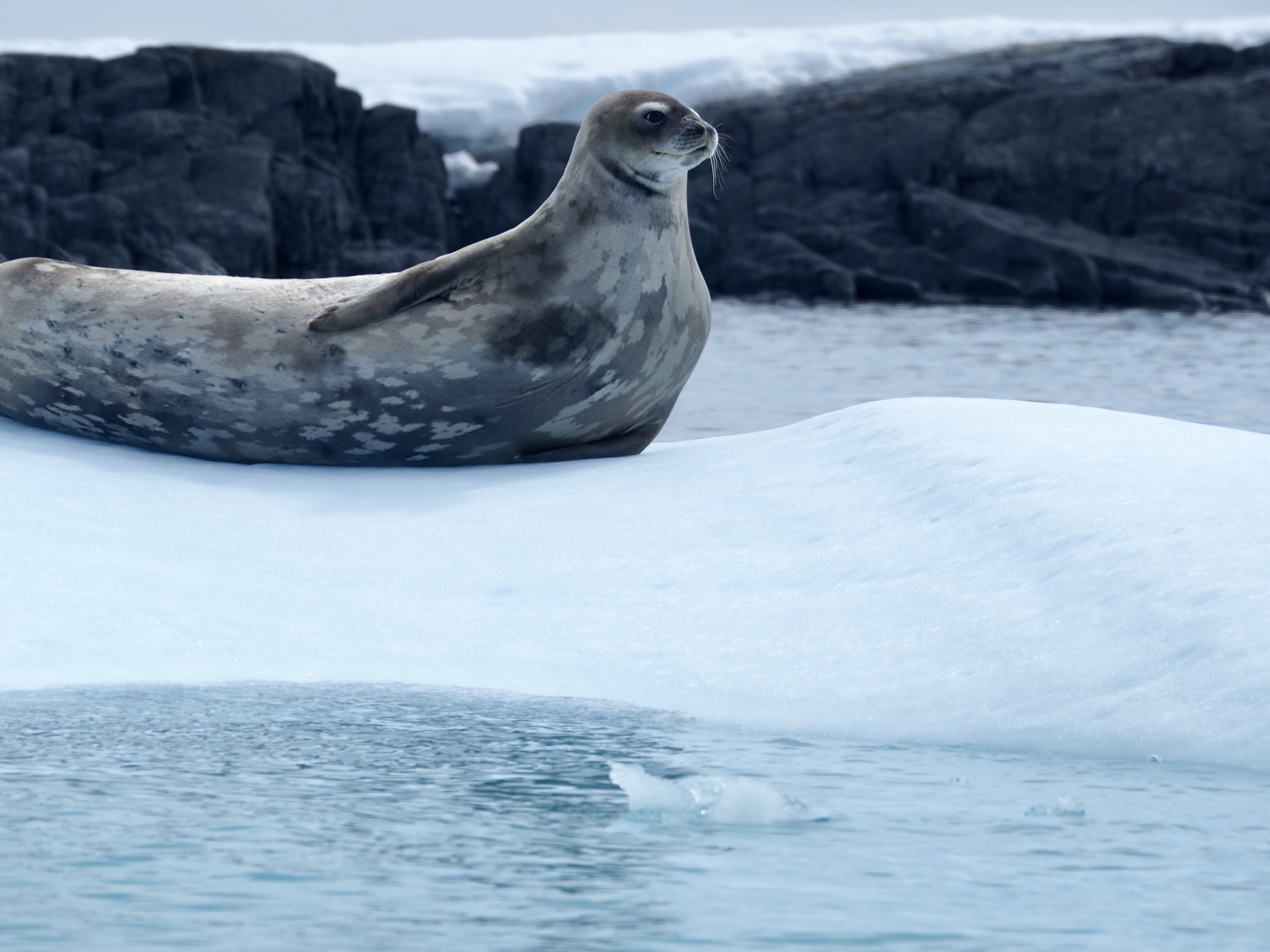
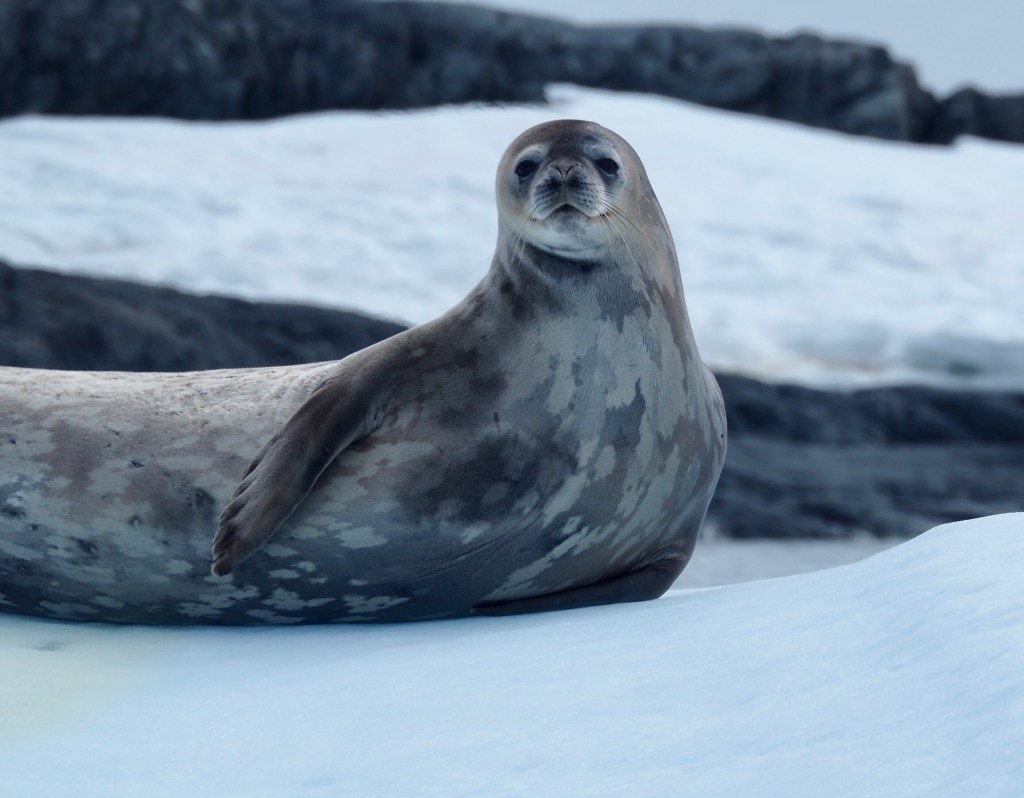
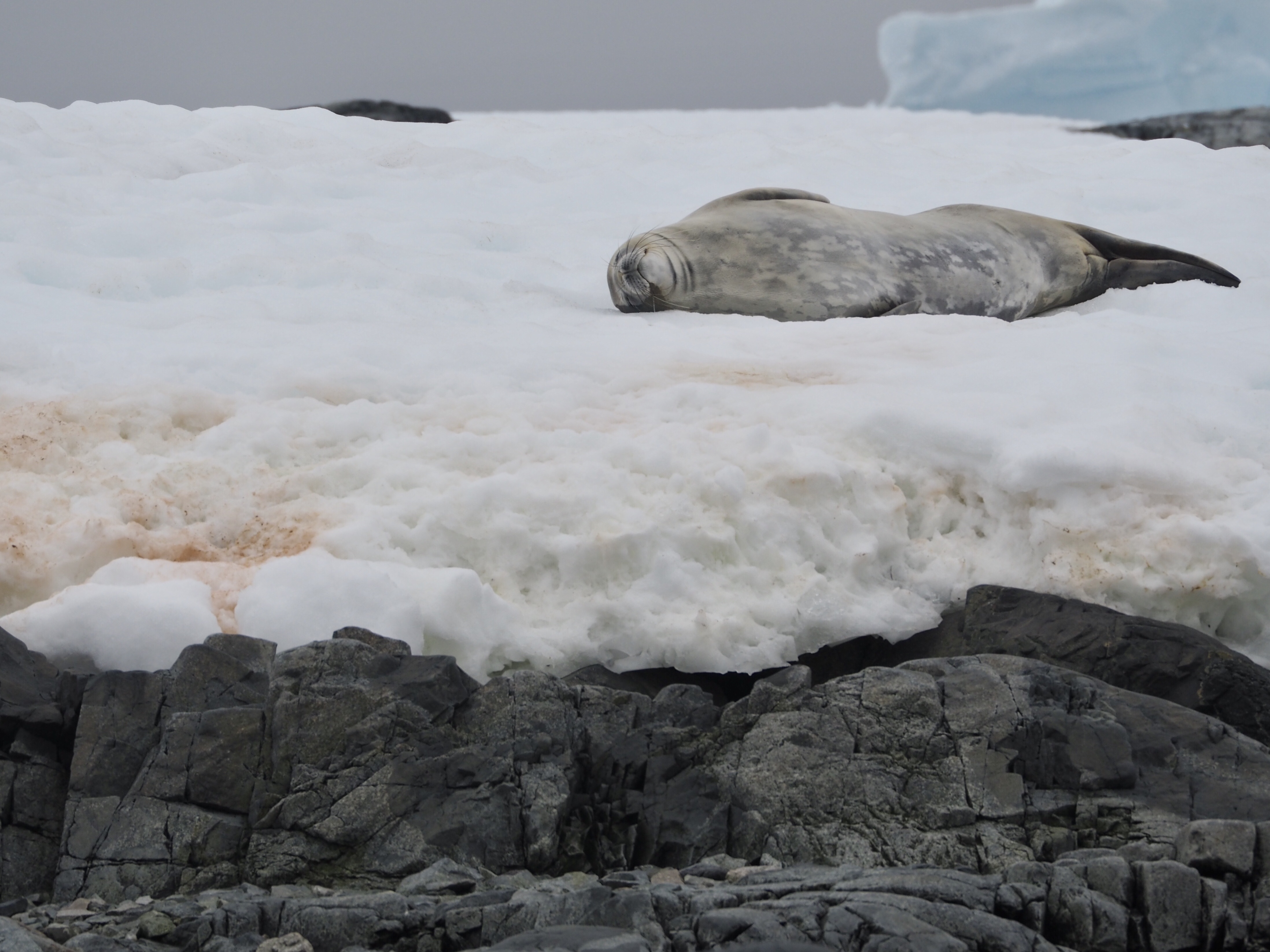
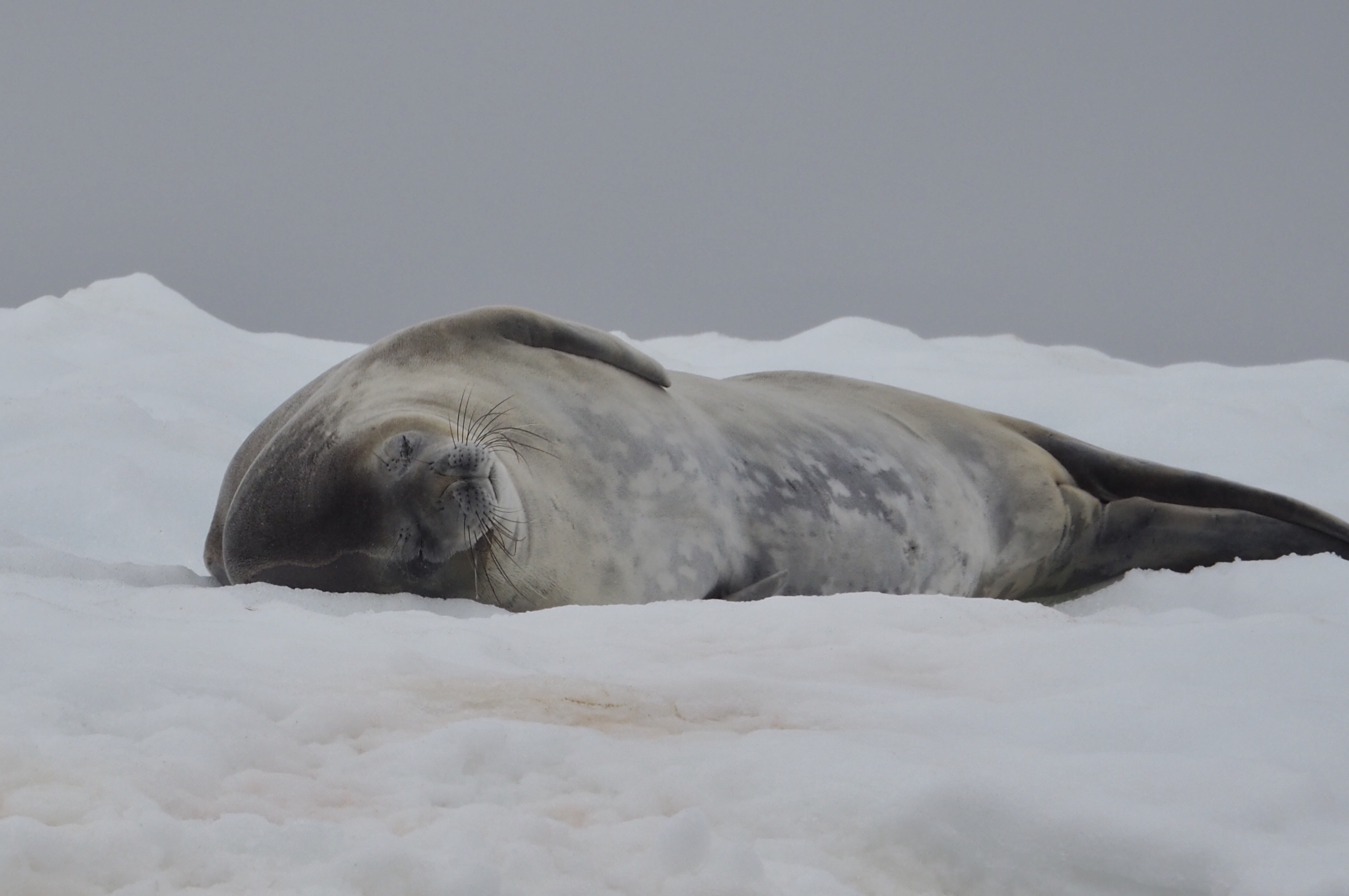
More Weddell seals around.
At one point we did land and everyone but me left the zodiac to explore. I simply did not have the energy.
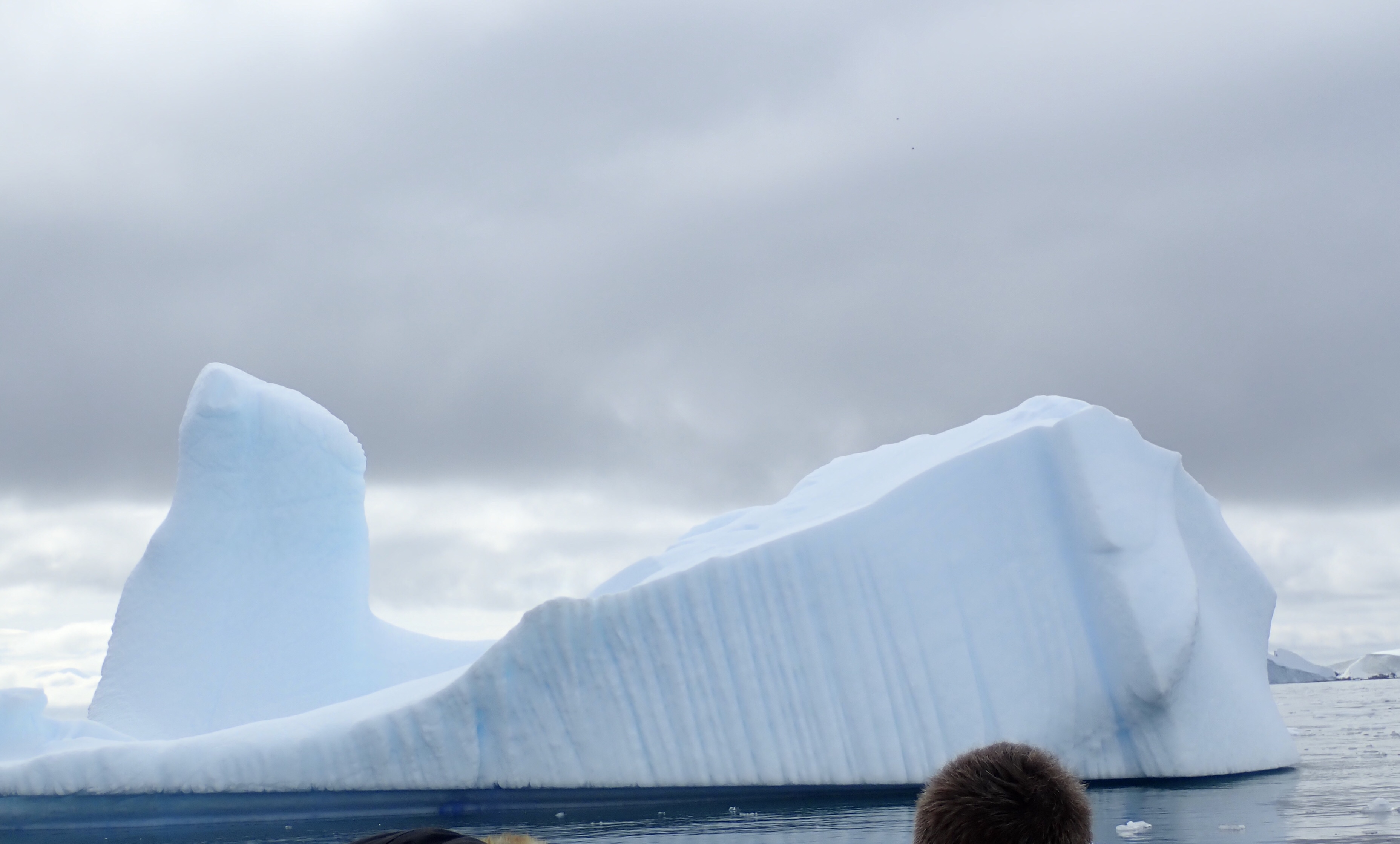
An iceberg that looks like a whale to me.
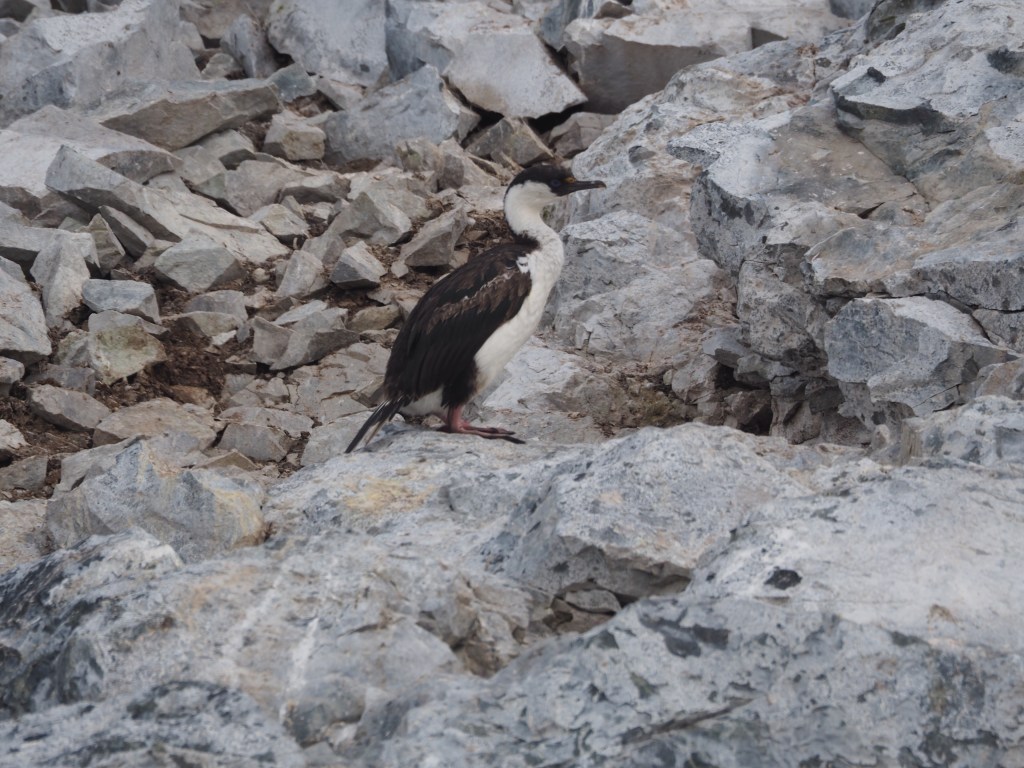
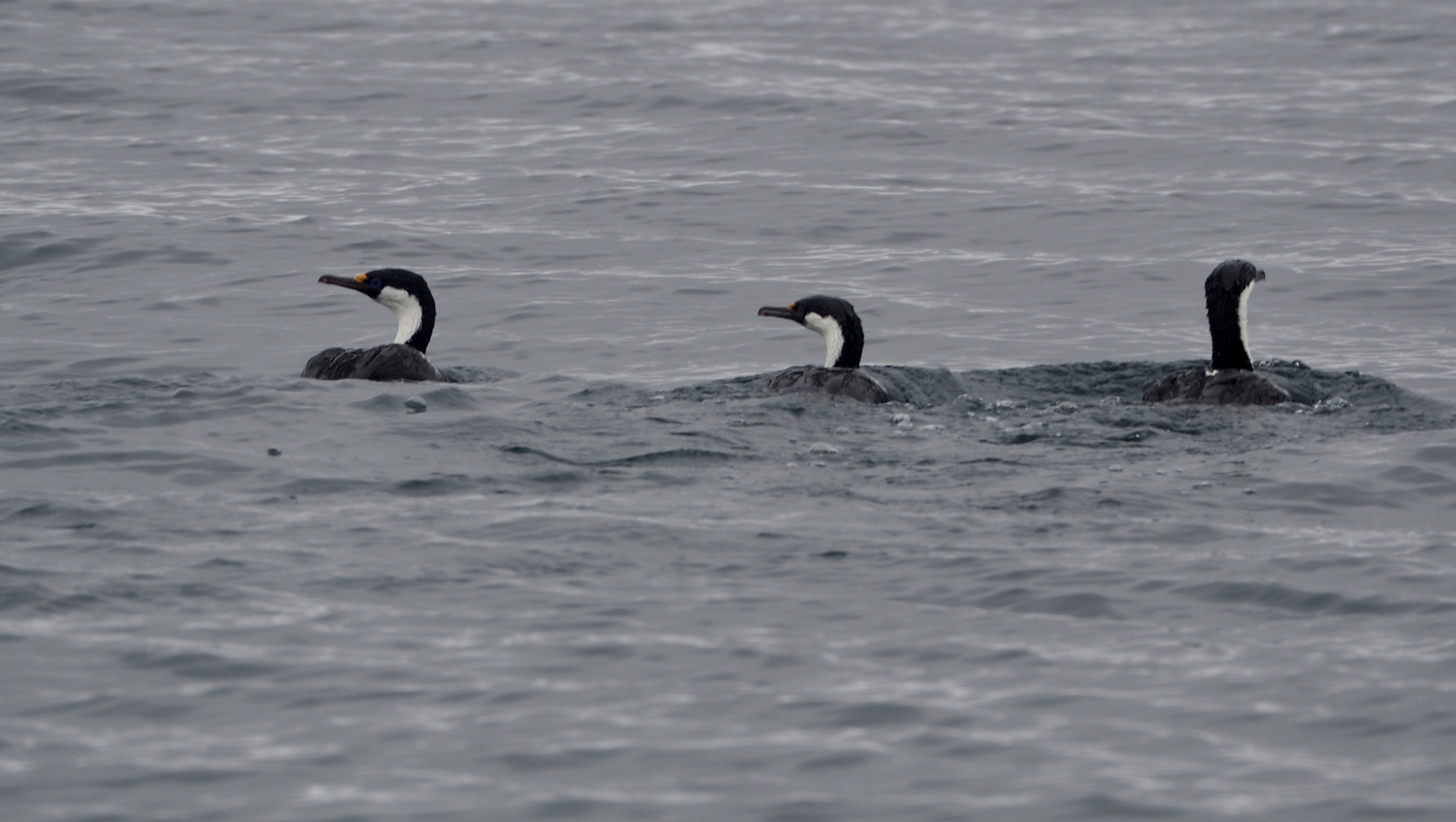
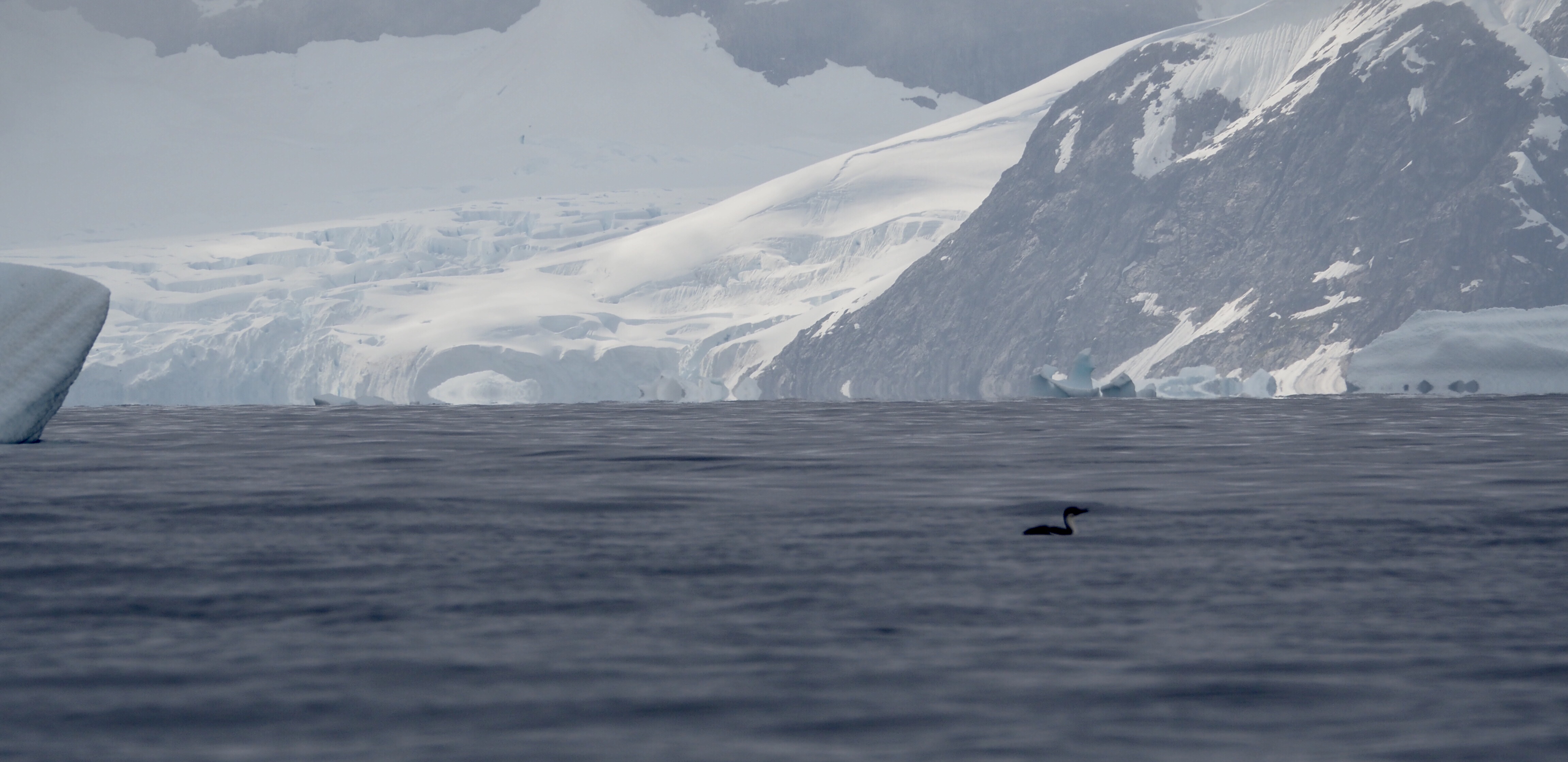
These two did their best to keep me smiling.Antarctic shag.
Even though we had great company and clearly fabulous scenery, I ended up not enjoying the last part of the zodiac. I was so tired and just collapsed into bed after a hot shower as I was shaking so violently.
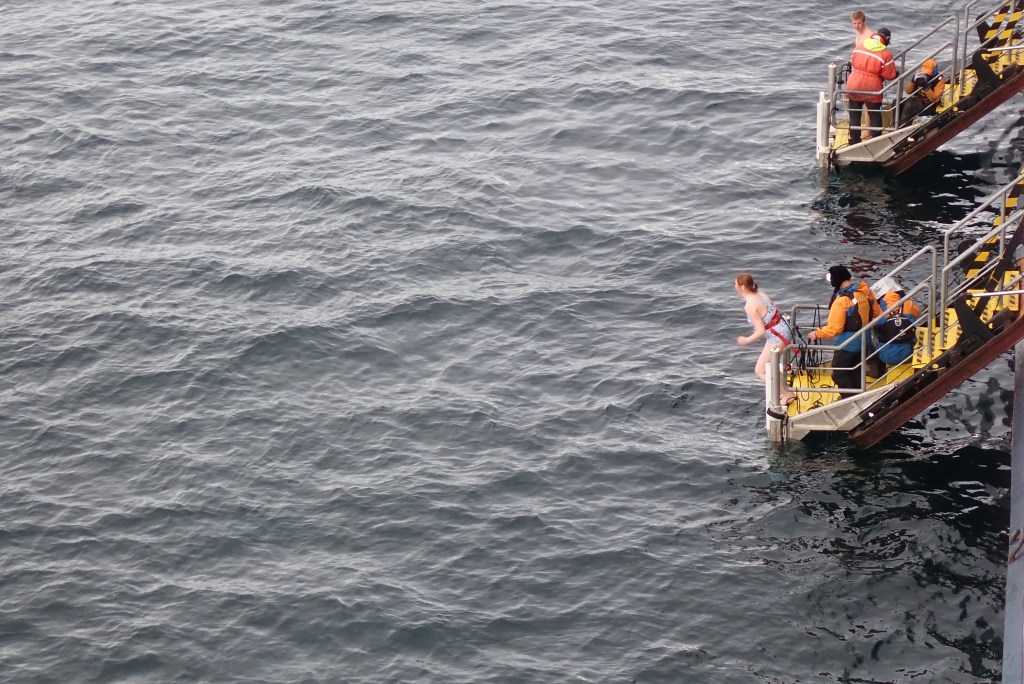
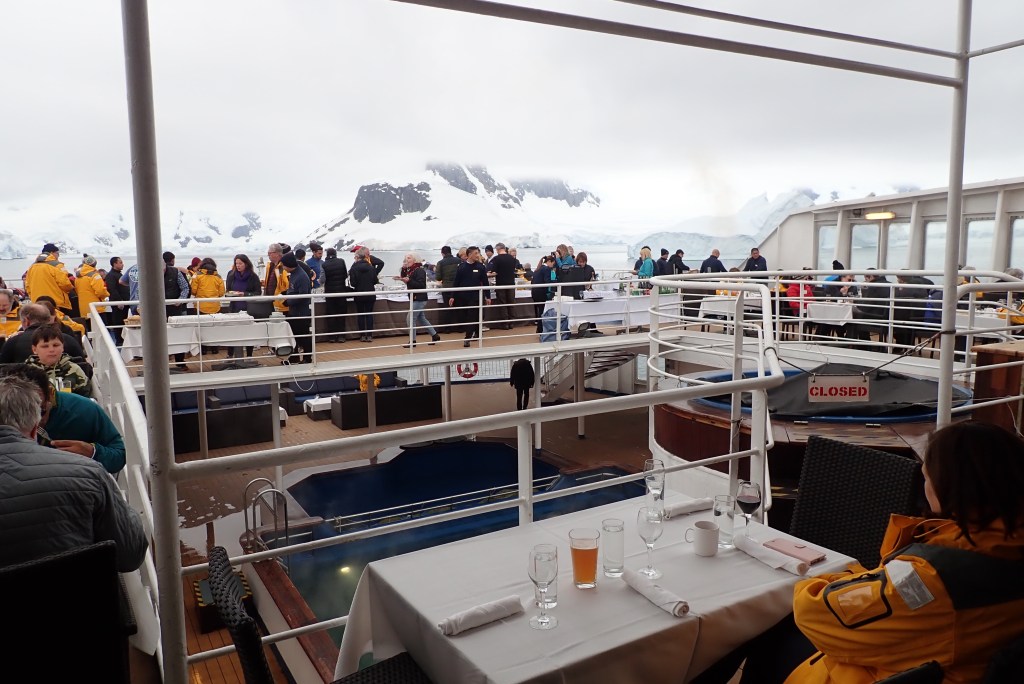
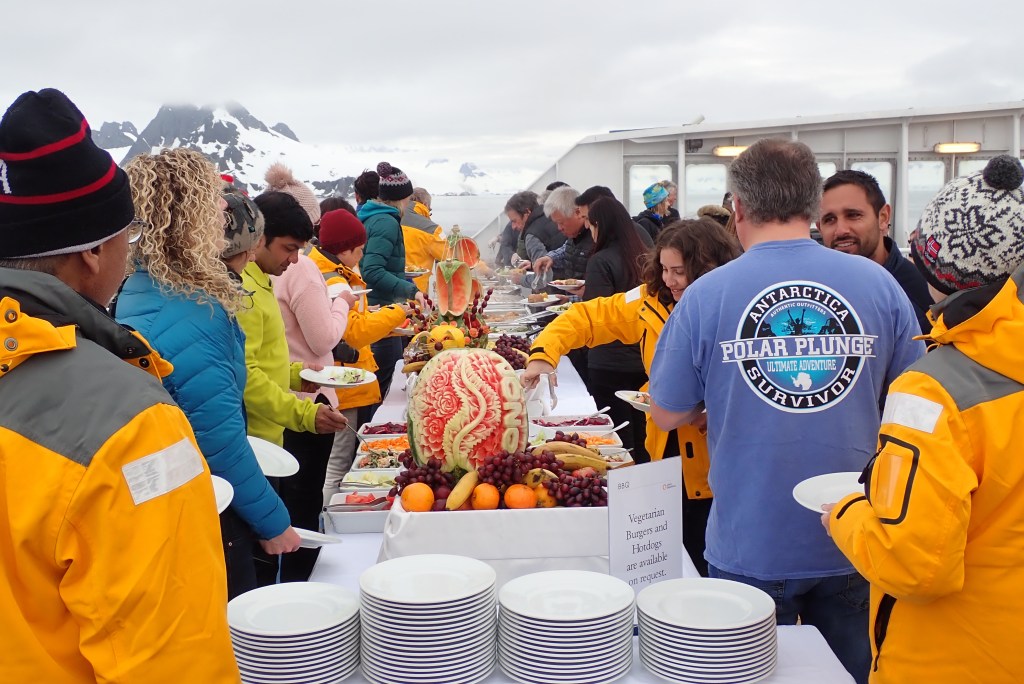
I didn’t go to see the polar plunge or the BBQ but Garrie bought me some food and took some photos. Finally he has picked up a camera. 😀 I think he did a great job, what do you think?
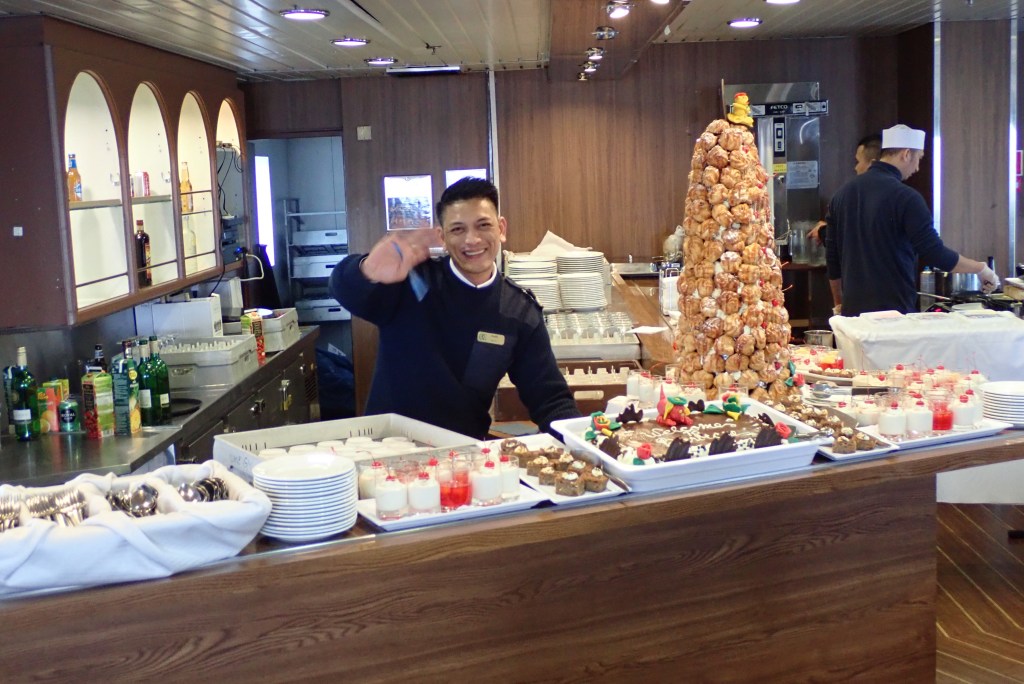
About to take the plunge. (Not me I was in bed).BBQ out on deck.Note polar plunge t-shirt. Crazy person for plunging and then for wandering around in a t-shirt!Kevin with the delightful desserts.
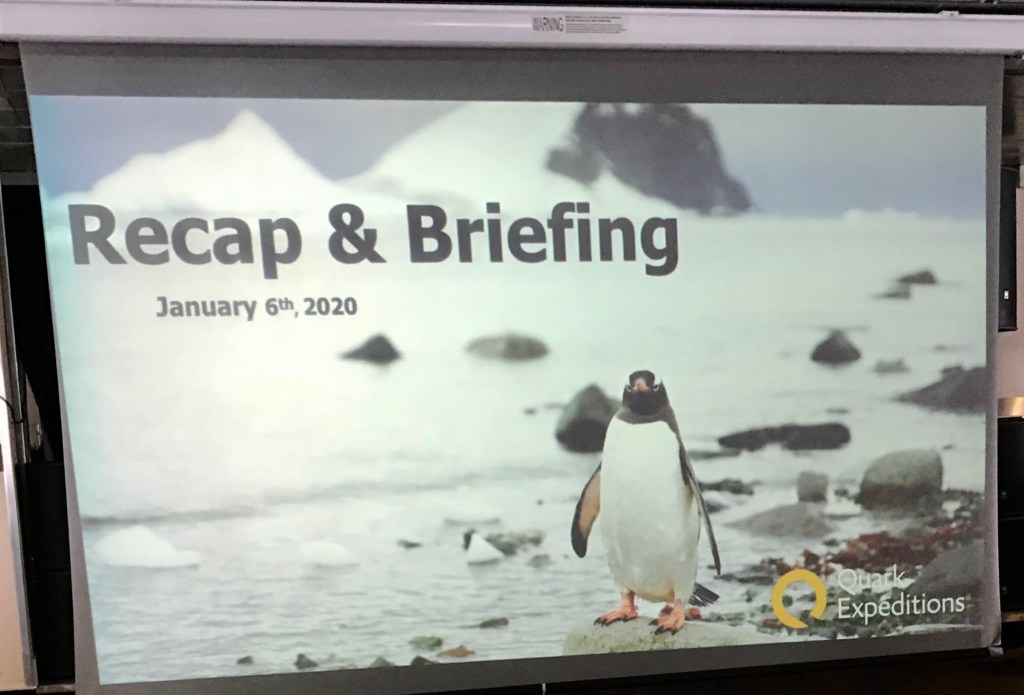
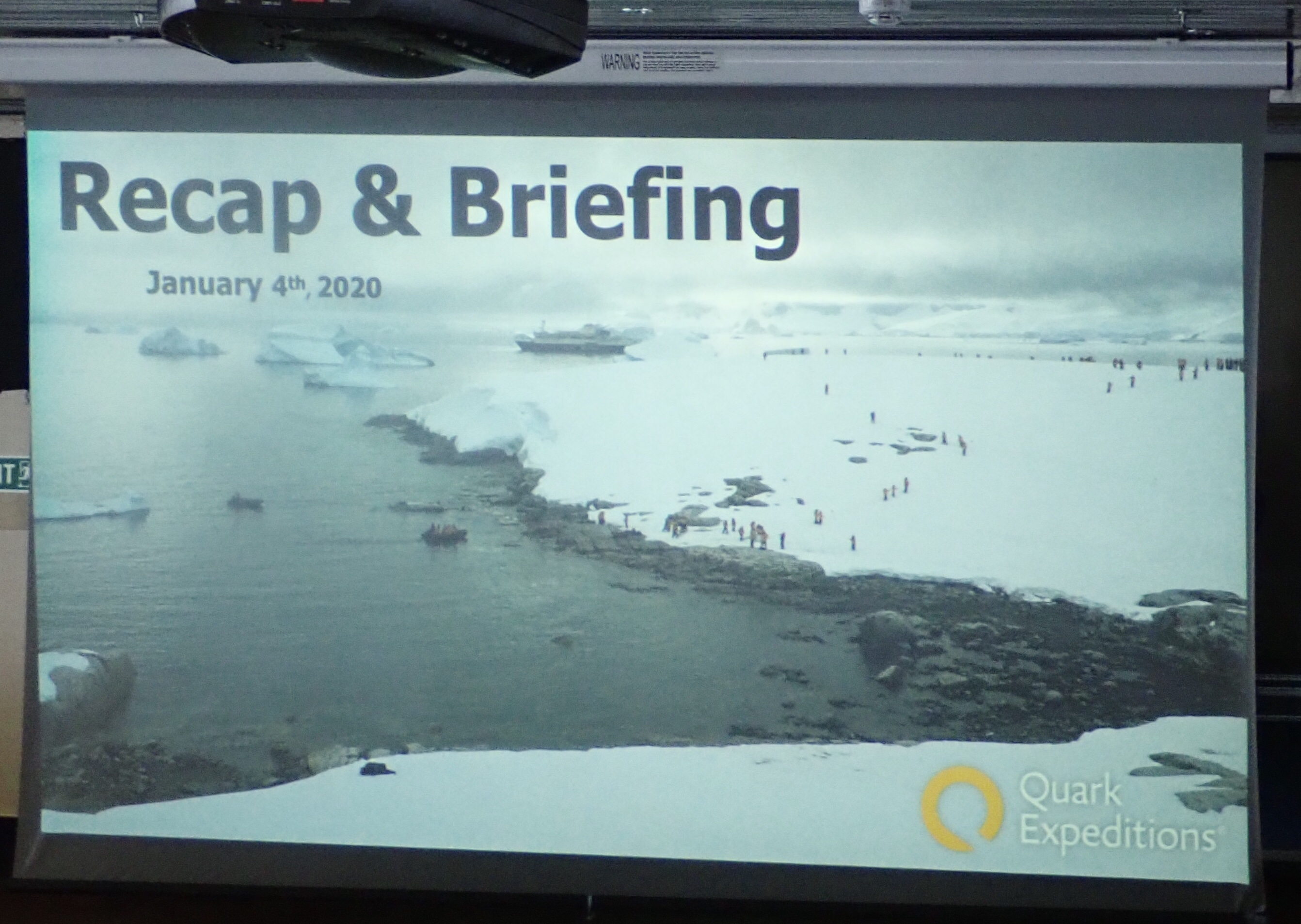
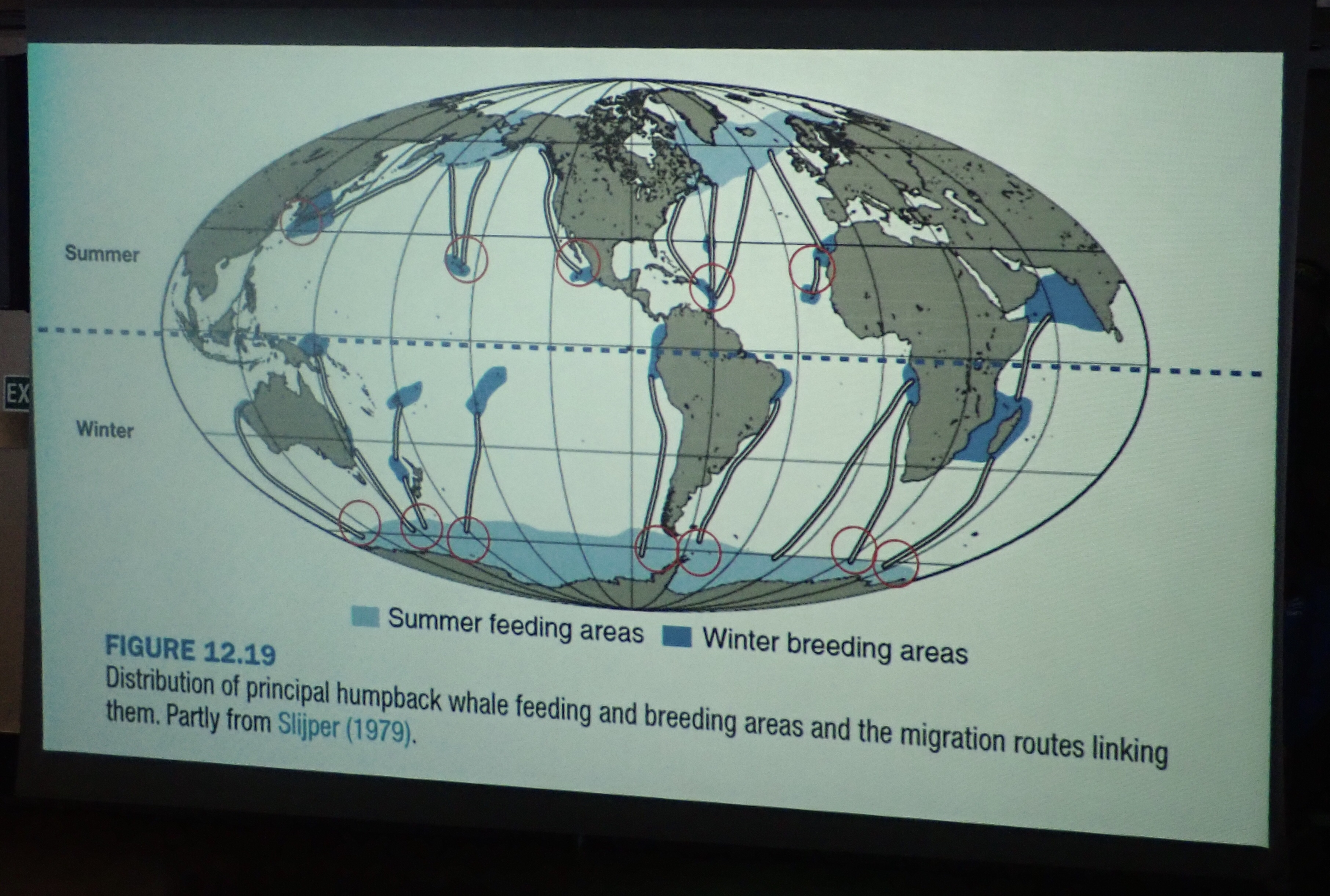
There was a Recap and Briefing but I could not even watch it in the cabin I was so ill. Again Garrie took a few pics. Clearly info on humpbacks and where we are heading next.
I must have been sick as I feel I have seen some of these photos for the first time, though I know I took most of them. Ah well let’s see what tomorrow brings.
2 degrees and calm. Visibility variable. Sadly I am barking like a fur seal! Ah well such is life at least it is a good excuse not to do the polar plunge this afternoon. I am not sure I would have the strength to haul myself back out.
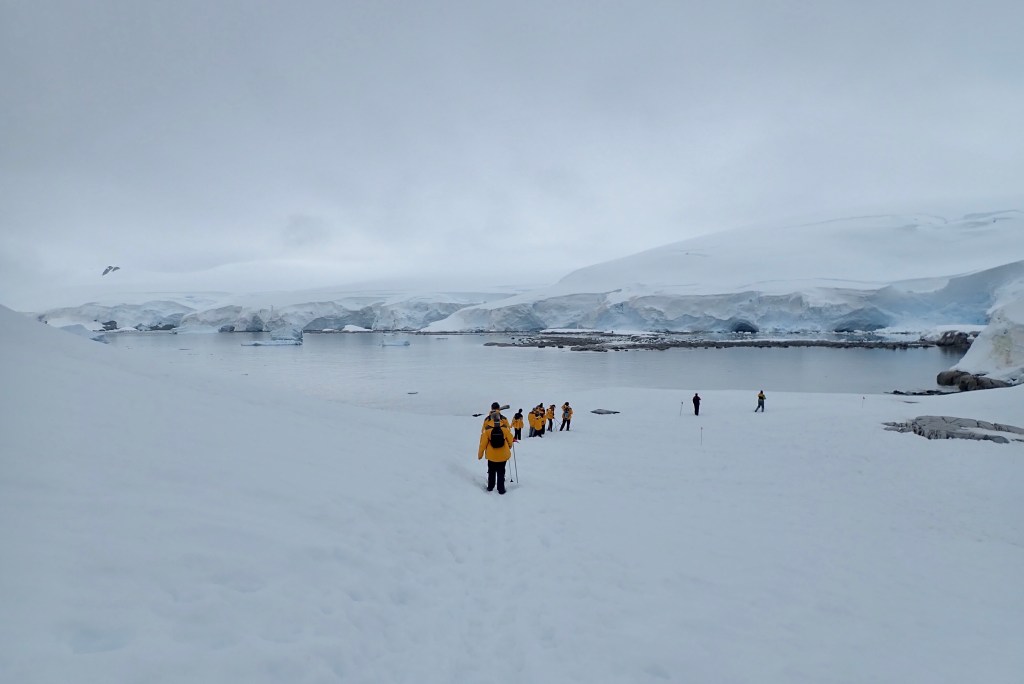
We plan to land and zodiac cruise at Portal Point.
Portal Point lies at the entrance to Charlotte Bay on the Reclus Peninsula, on the west coast of Graham Land. It was named by the British after they built a refuge hut at this site in 1956, enabling them to use a nearby snow slope as a gateway up onto the Peninsula plateau. The hut was occupied between 1956 and 1958 when regional survey and geology research were conducted. The building was dismantled in 1997 and taken to the Falkland Islands where it is now an exhibit in the museum at Stanley. (We saw it). Portal Point is surrounded by mountains, crevassed glaciers and glacial tongues that extend down to sea level. This is a continental landing!
One penguin, a few weddell seals and heaps of humpbacks and amazing ice bergs. I am still not feeling great but I was not going to miss out on standing on my seventh continent.
Garrie is grinning all the time but, as he says, taking everything in is hard. It is a dream come true. You feel as if you are in a documentary. Everywhere you turn is different.
Brightness is also overwhelming. My eyes hurt every time I took my sunglasses off to take a photo. The landscape is simply amazing.
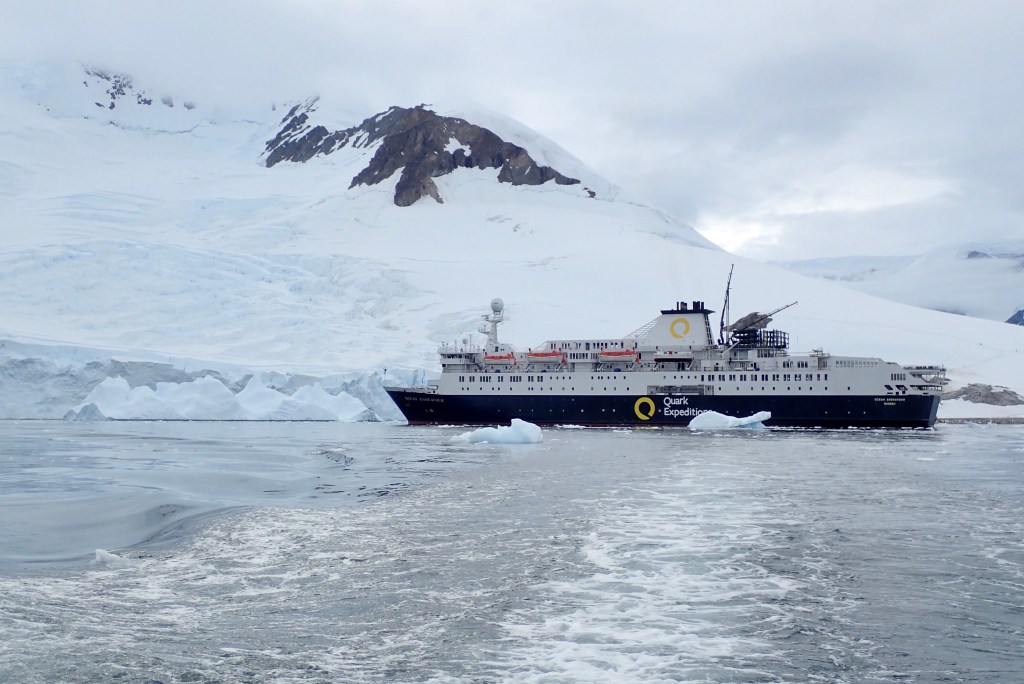
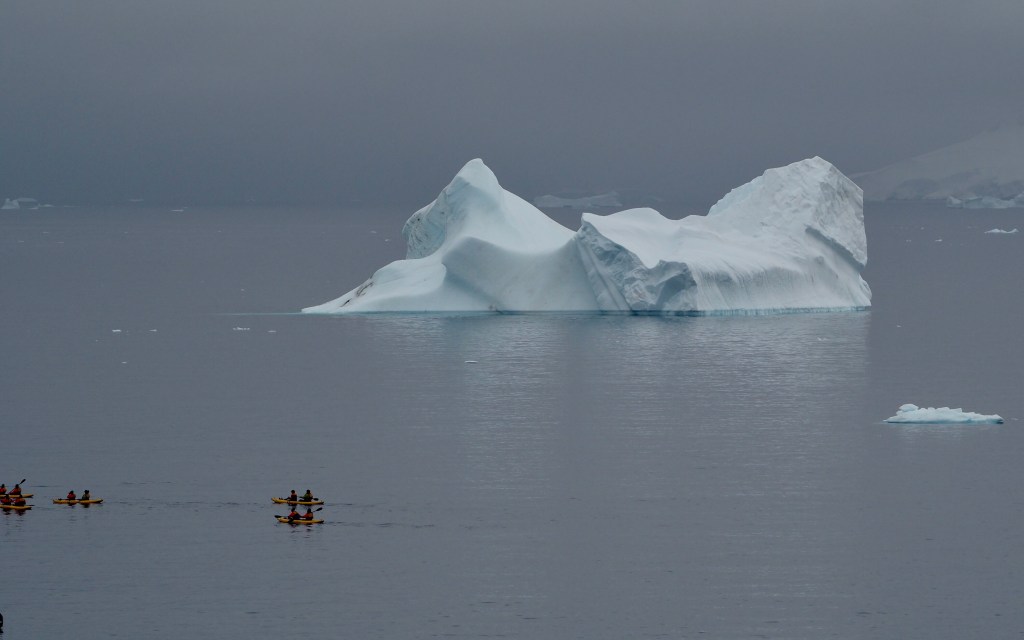
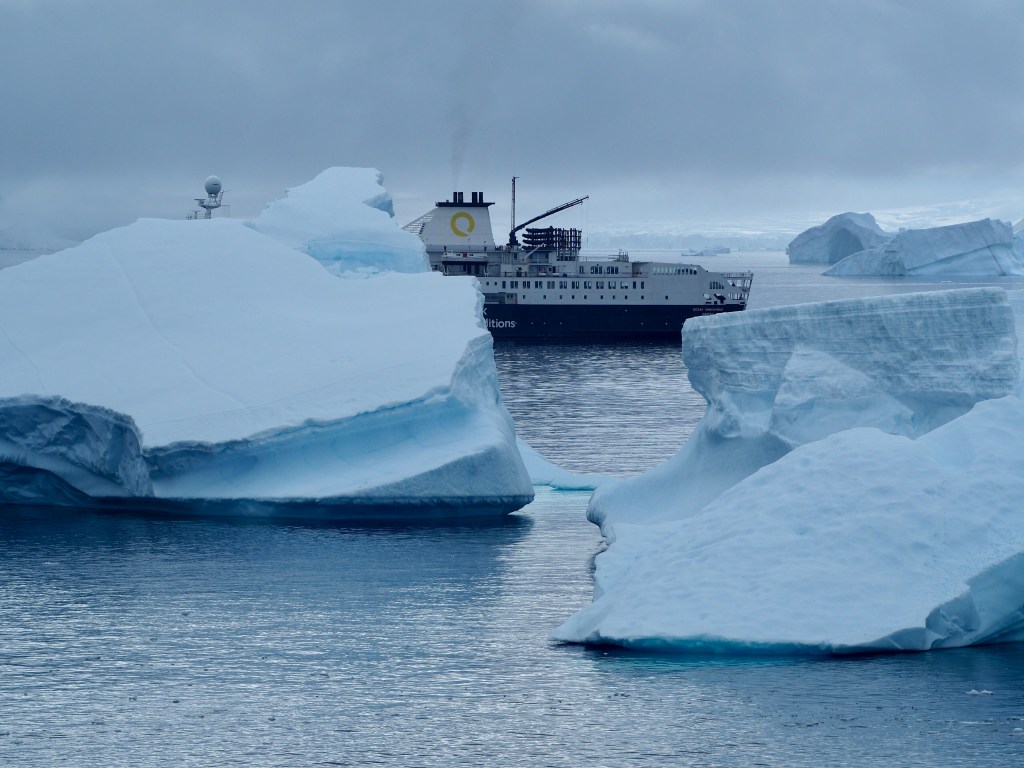
Kayakers out at last.Our ship adds perspective but nothing but seeing them live really explains how huge some icebergs are.
The silence is fantastic – we could hear the humpbacks blowing from the land and we had a few come very close to the zodiac.
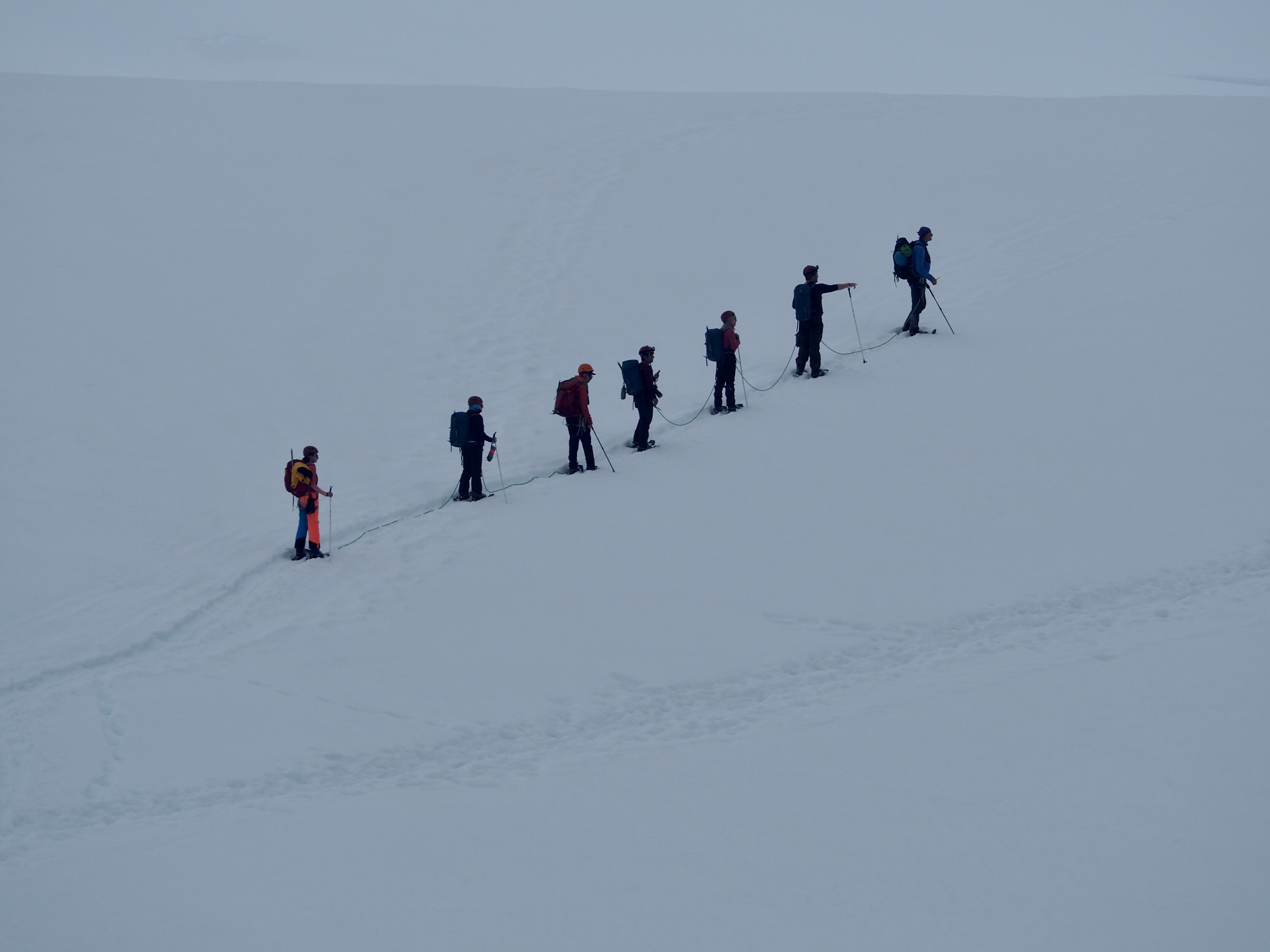
Our mountaineering group. Sadly I struggled to walk the flat area. I imagine their views were fantastic. Roped together in case of hidden crevasses.
Still it’s not bad down here either.
A bit hard to tell what type of seal this is but think he was a weddell.
Our walking track.
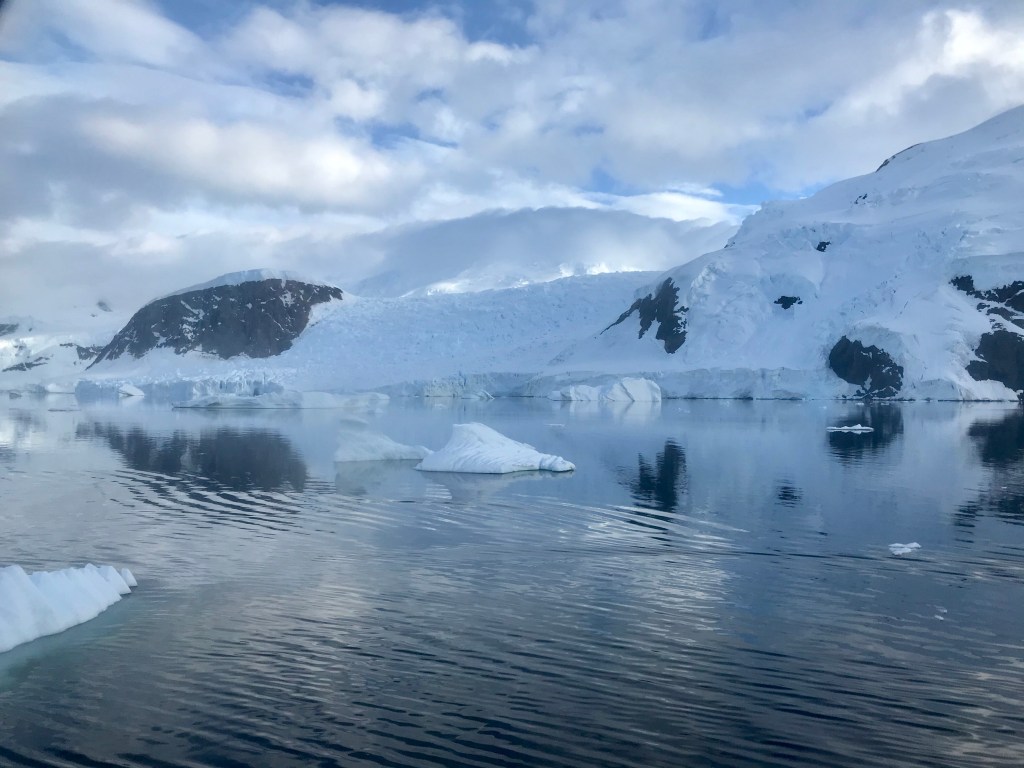
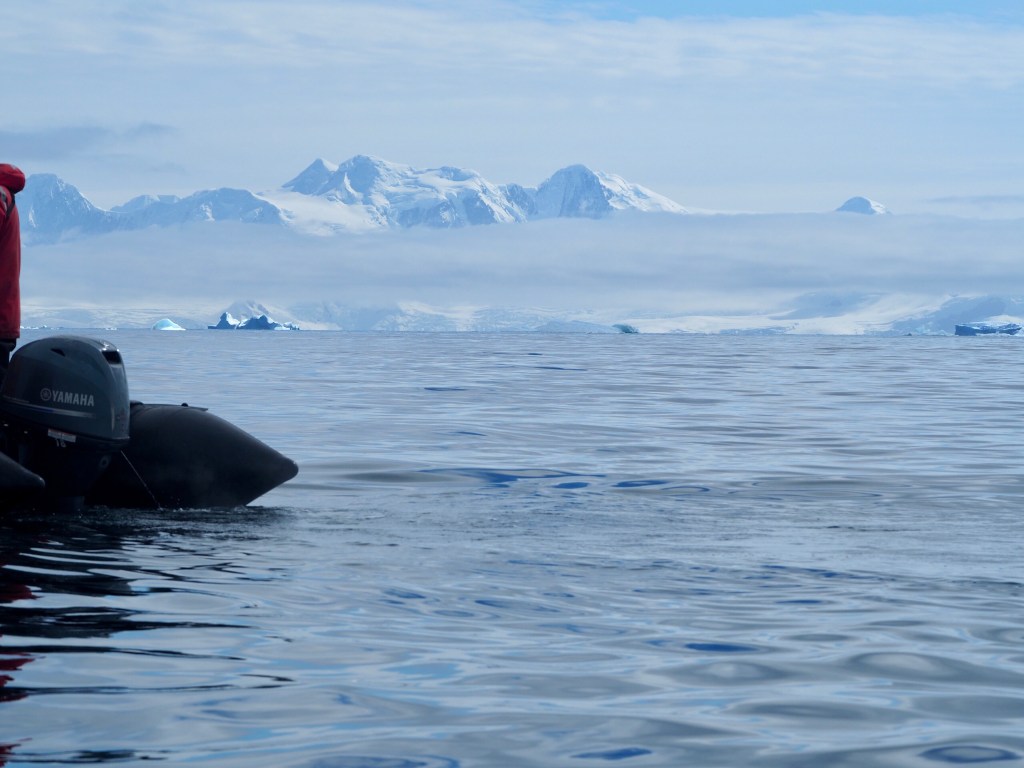
Again incredibly lucky as it was like a millpond and sometimes it can be rough and windy. Our zodiac cruise was also spectacular.
We saw the humpbacks “logging” which is when they just about come to a standstill on top of the water and are sleeping.
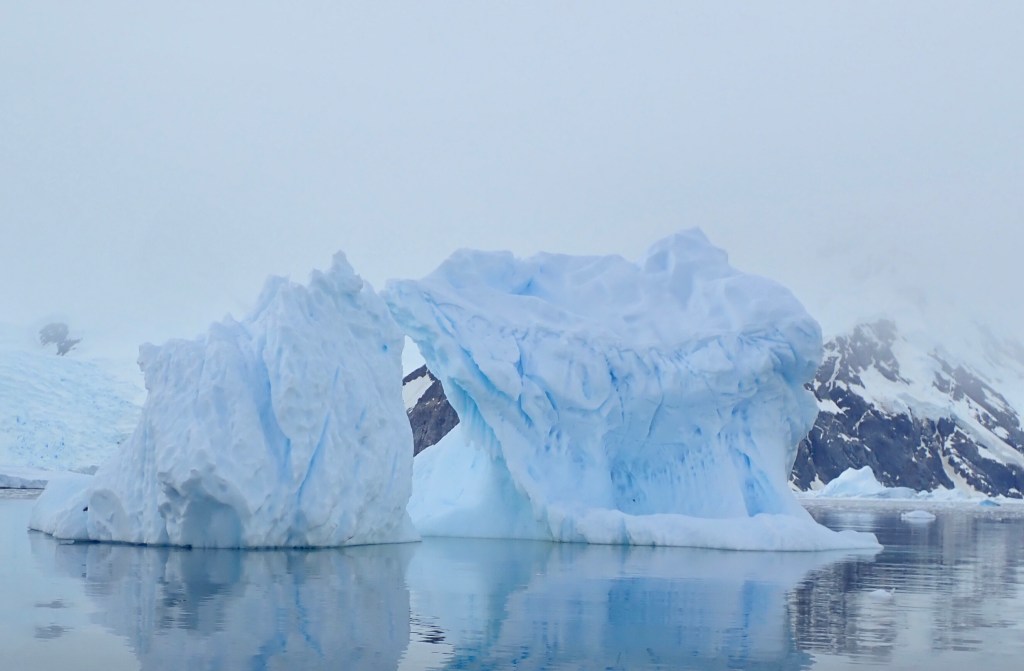
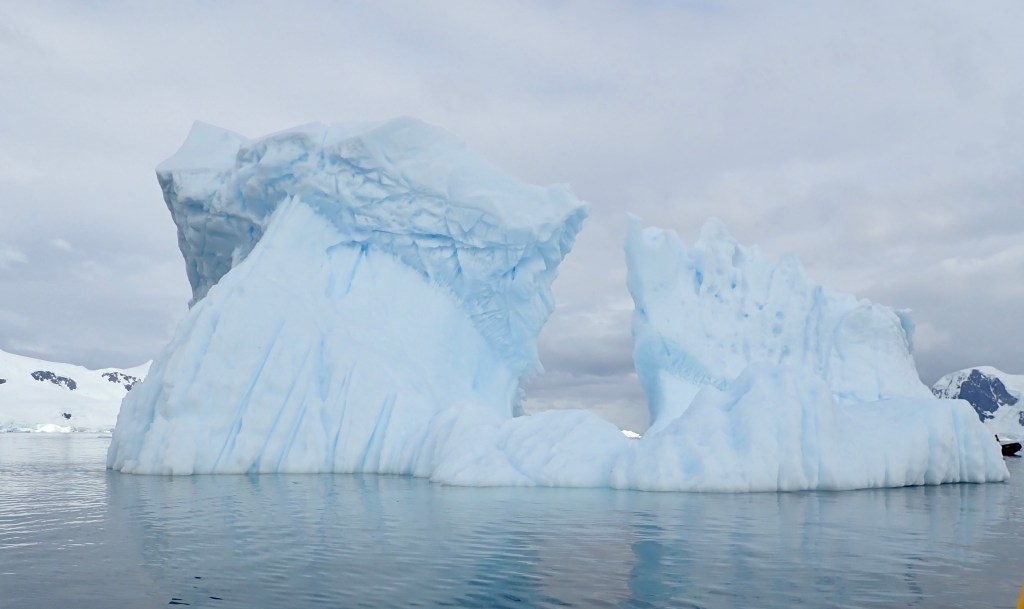
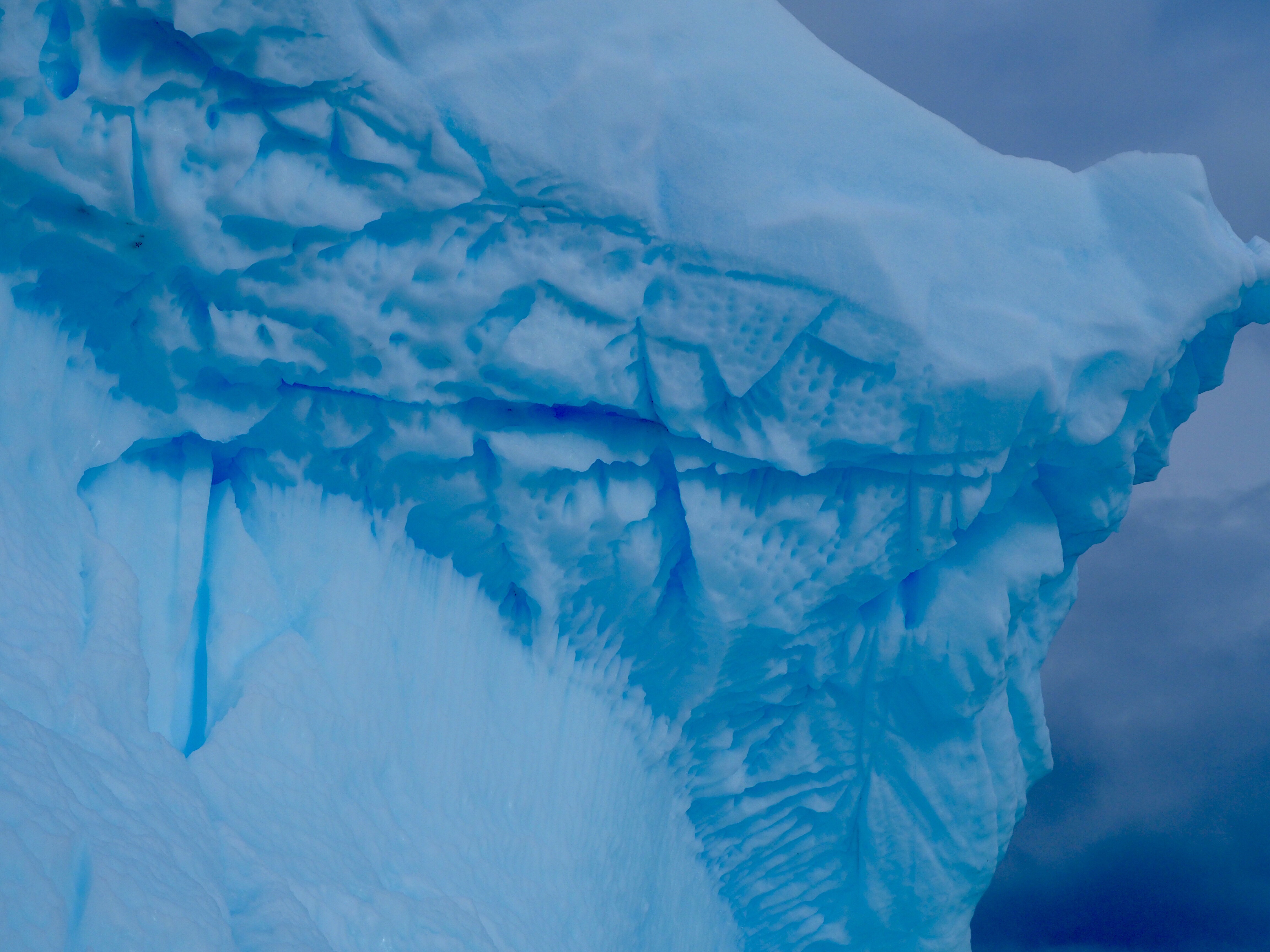
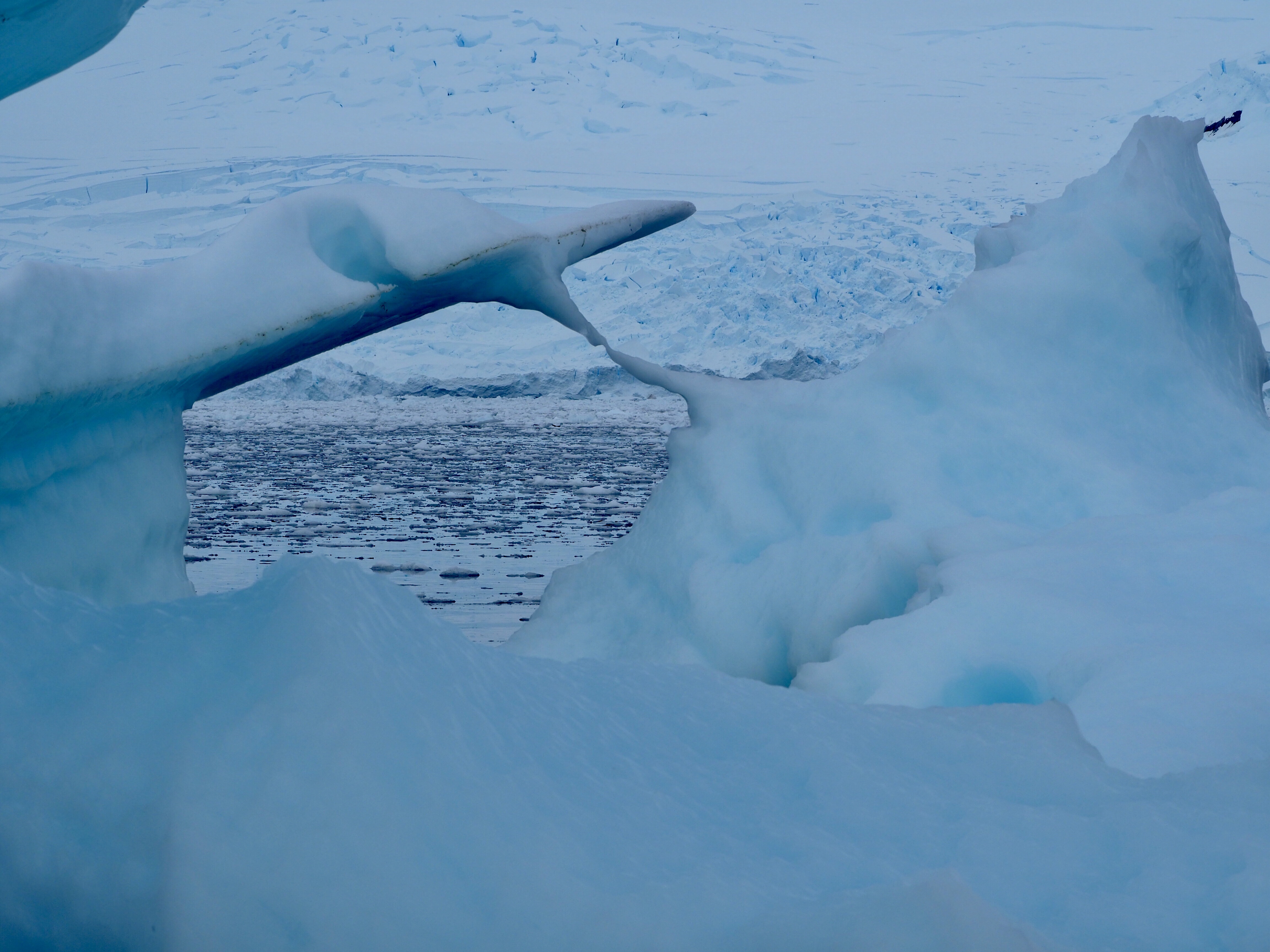
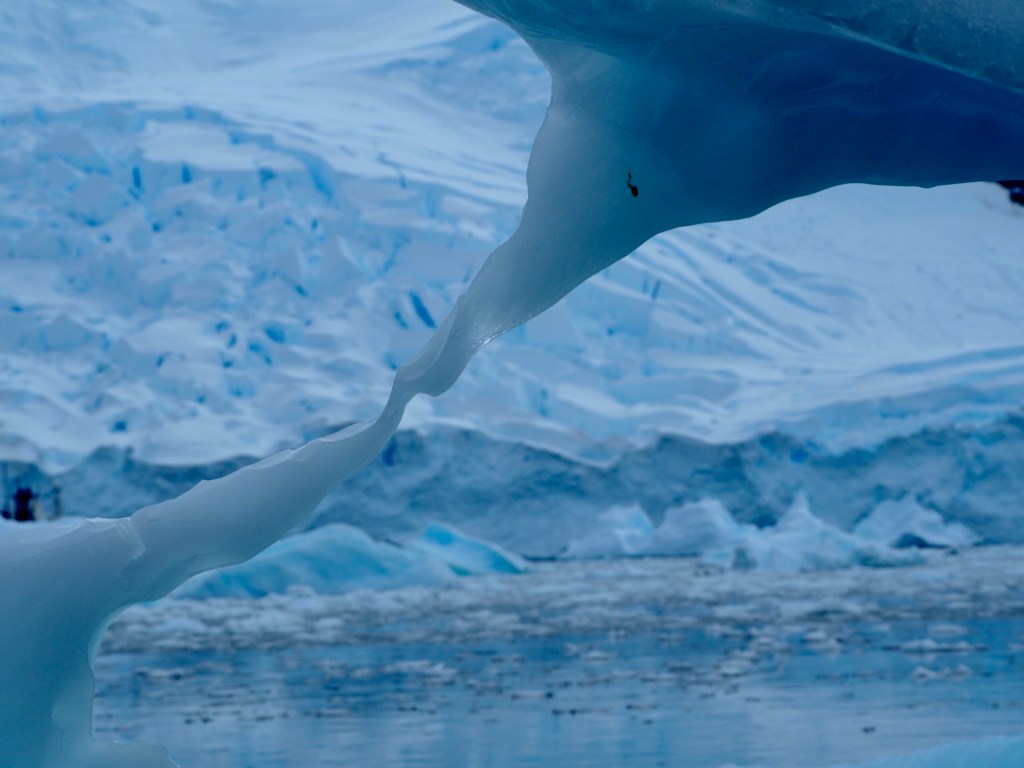
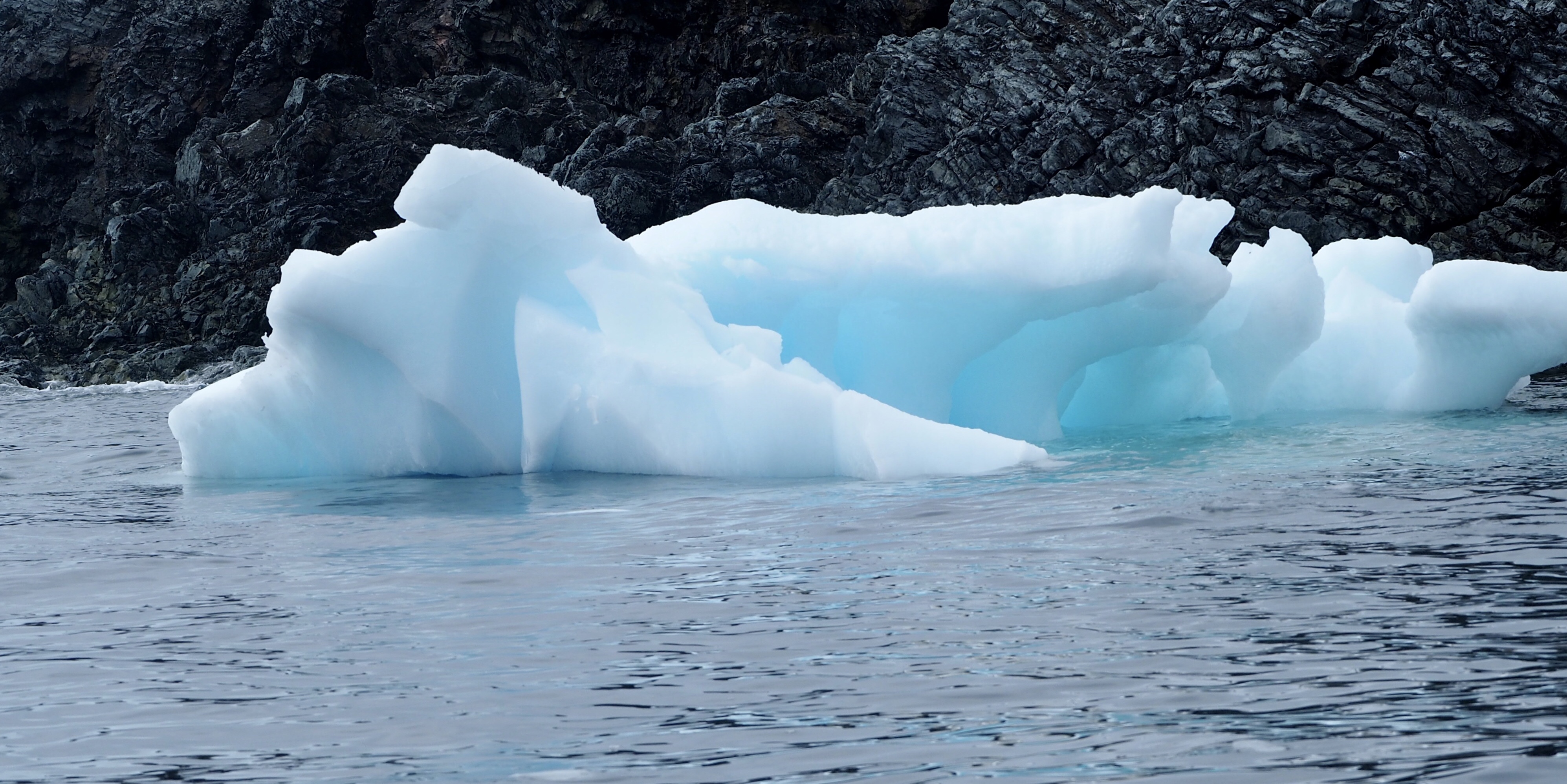
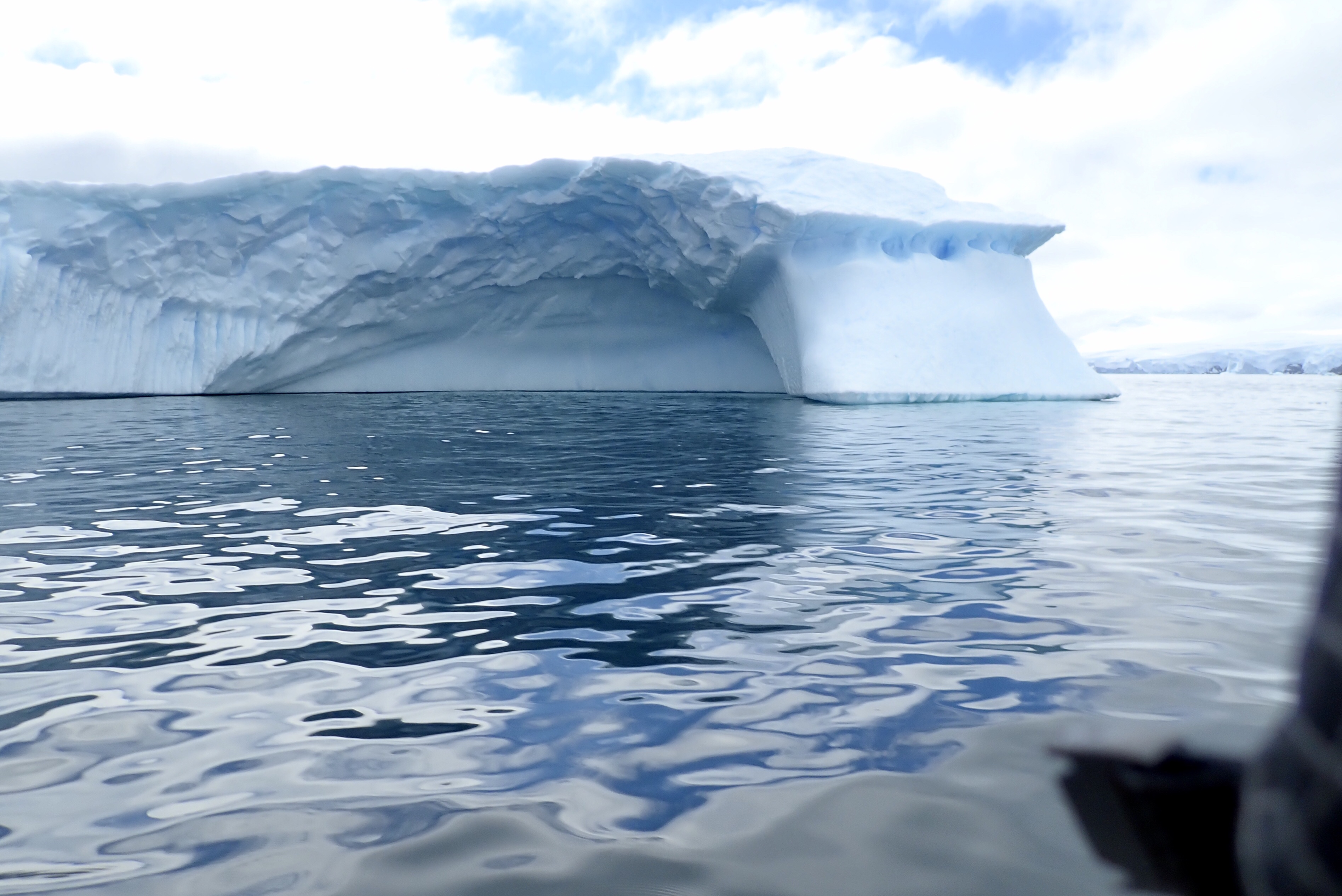
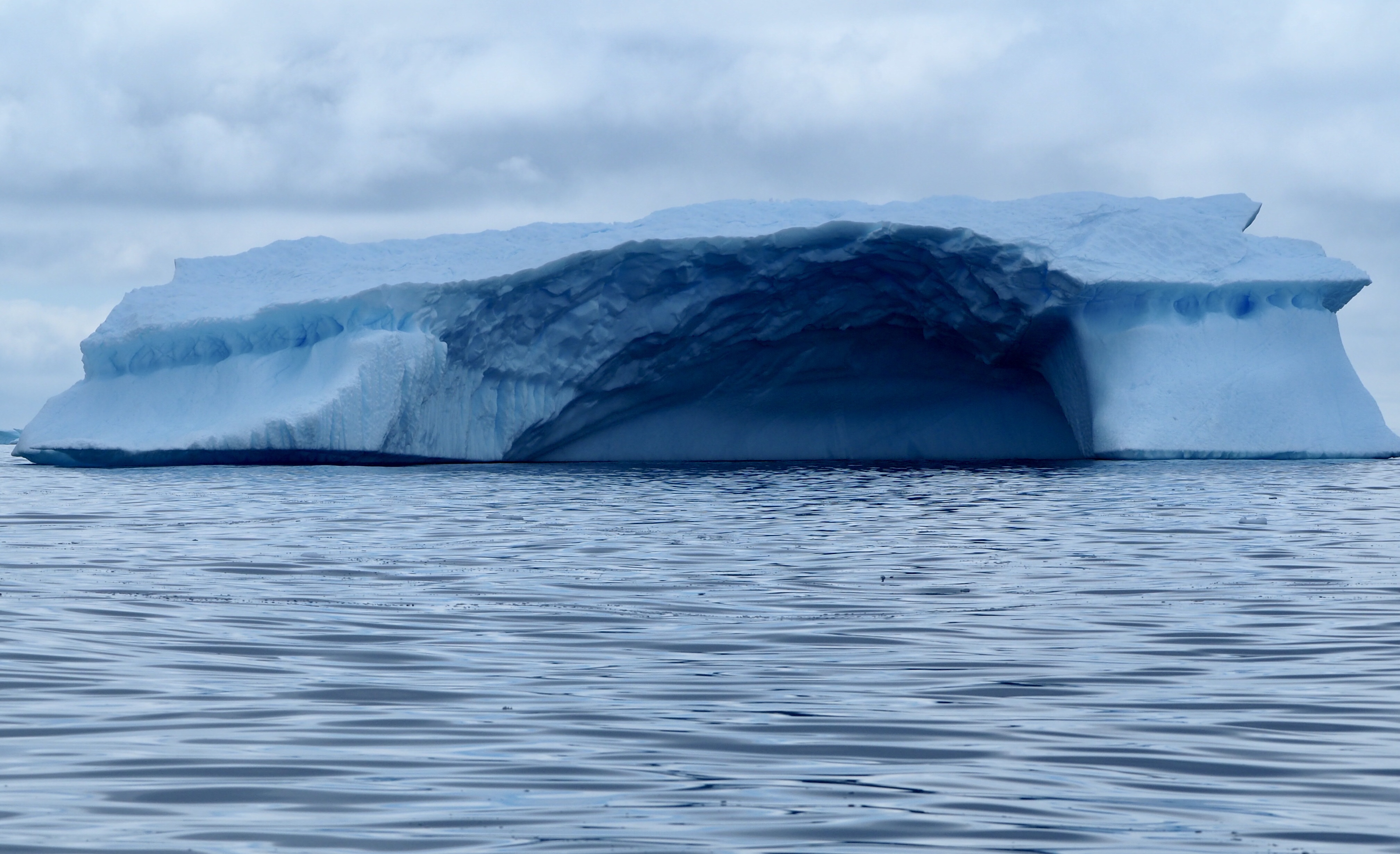
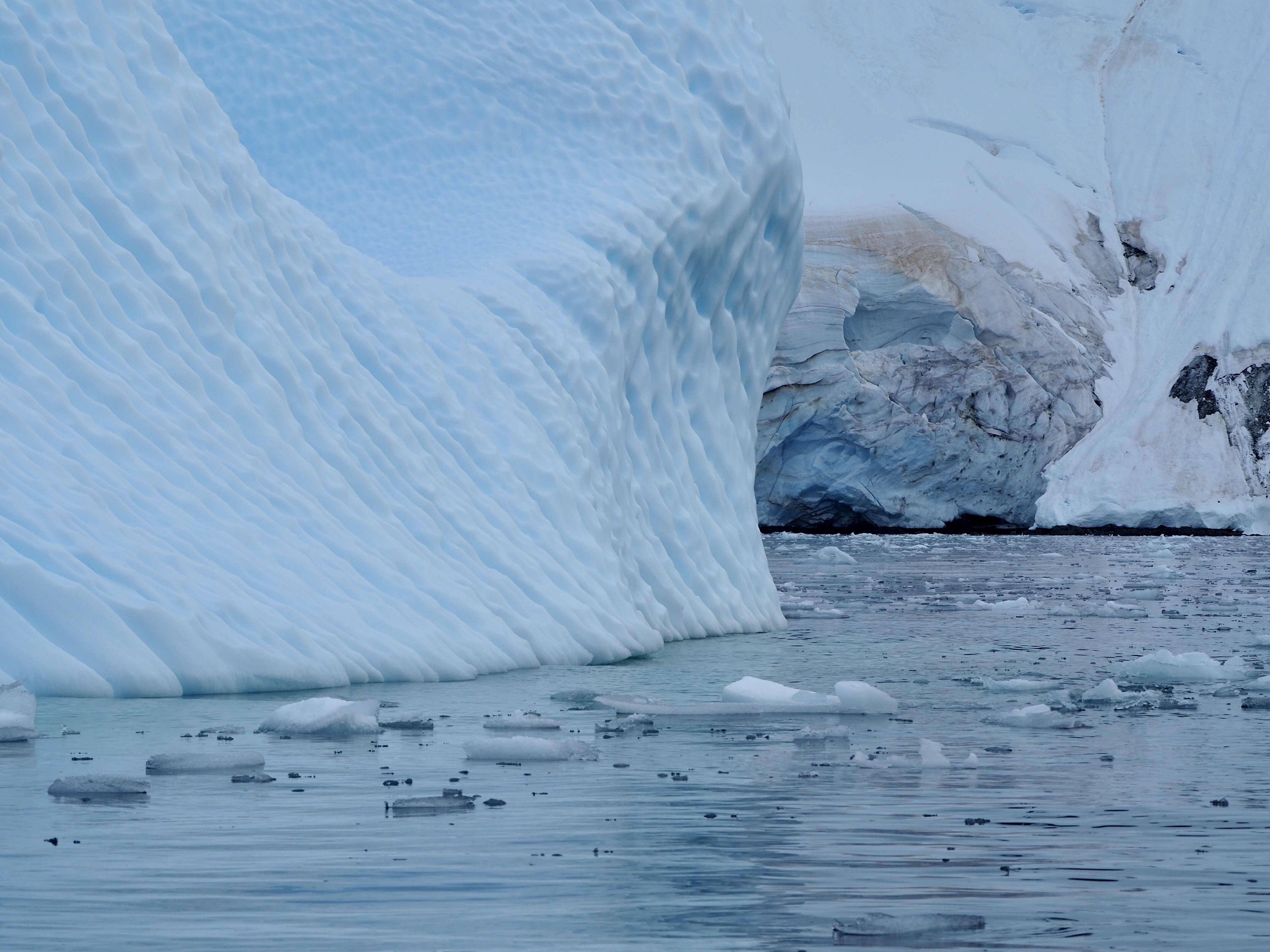
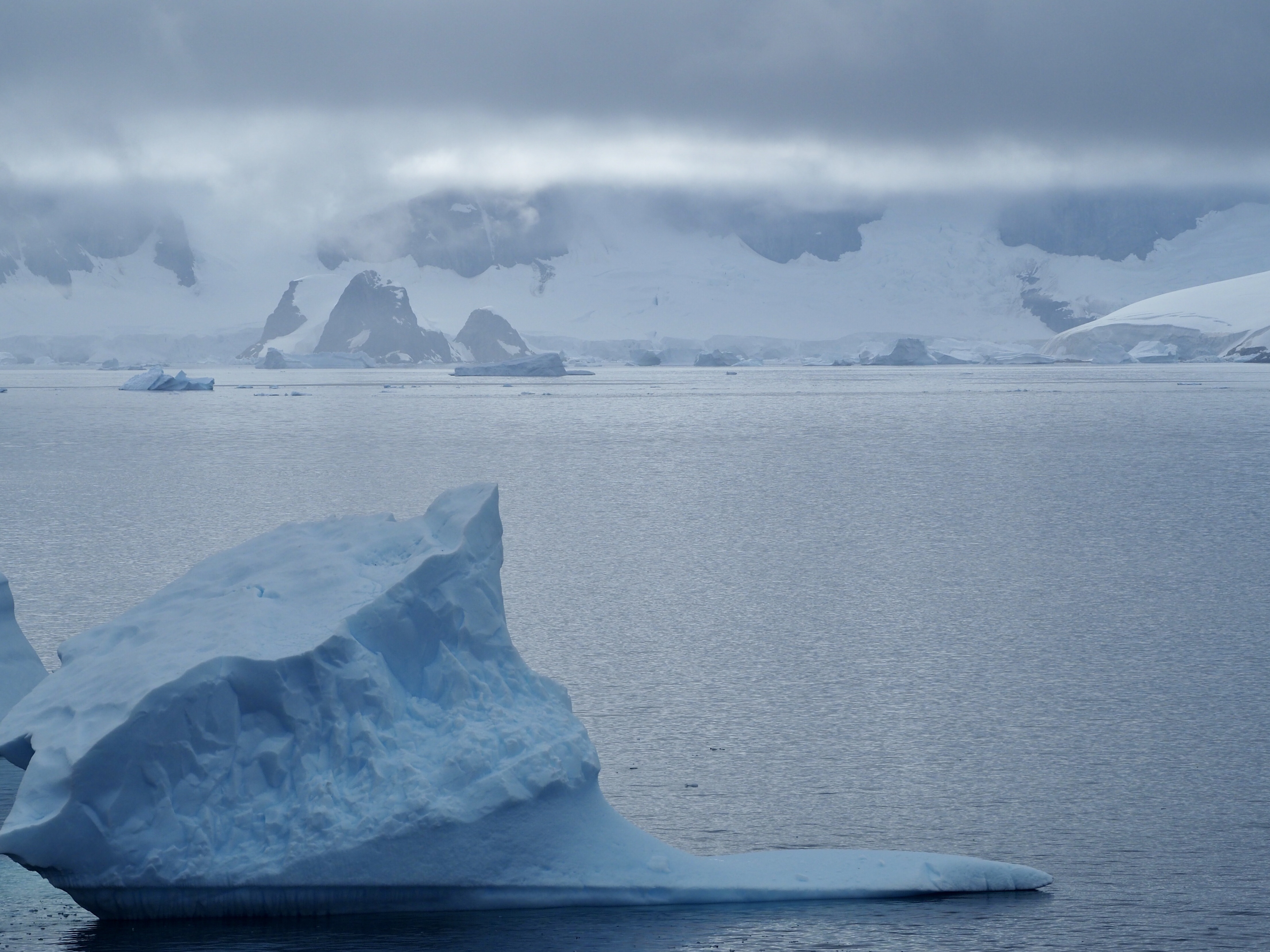
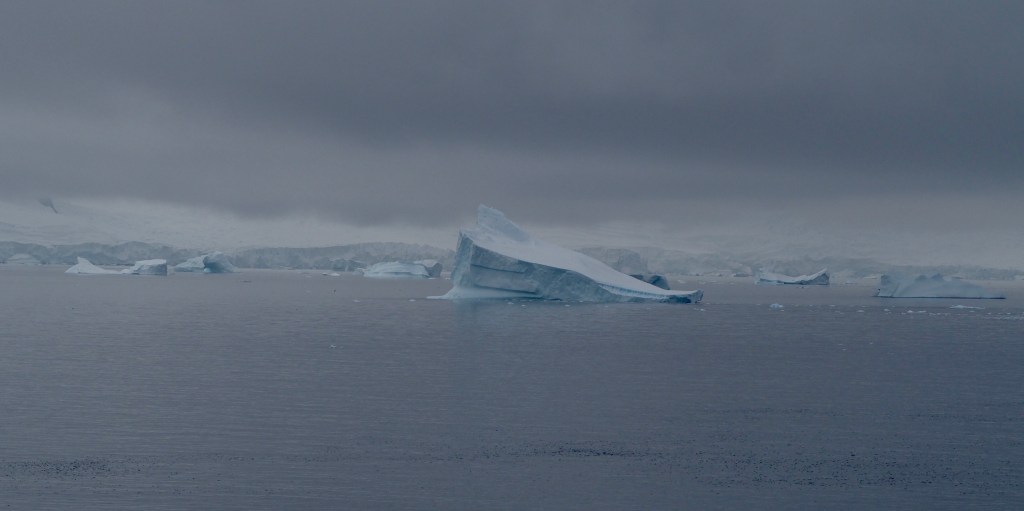
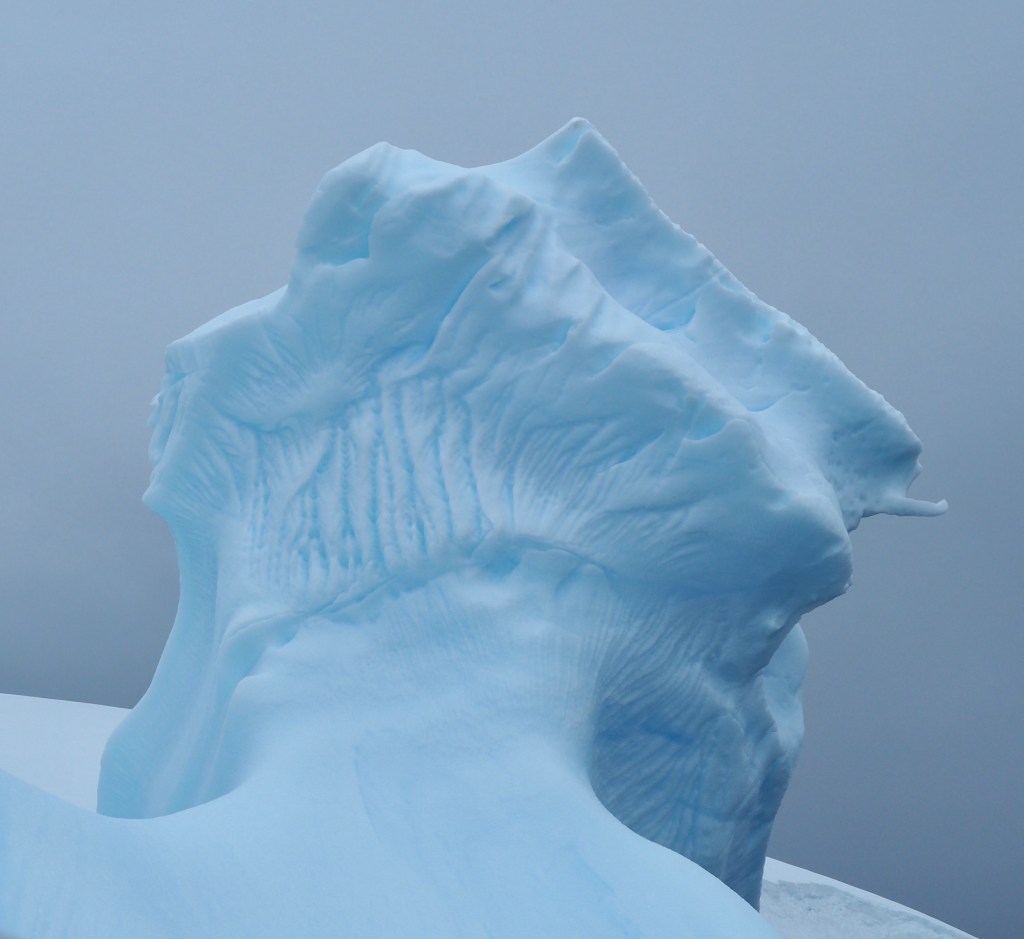
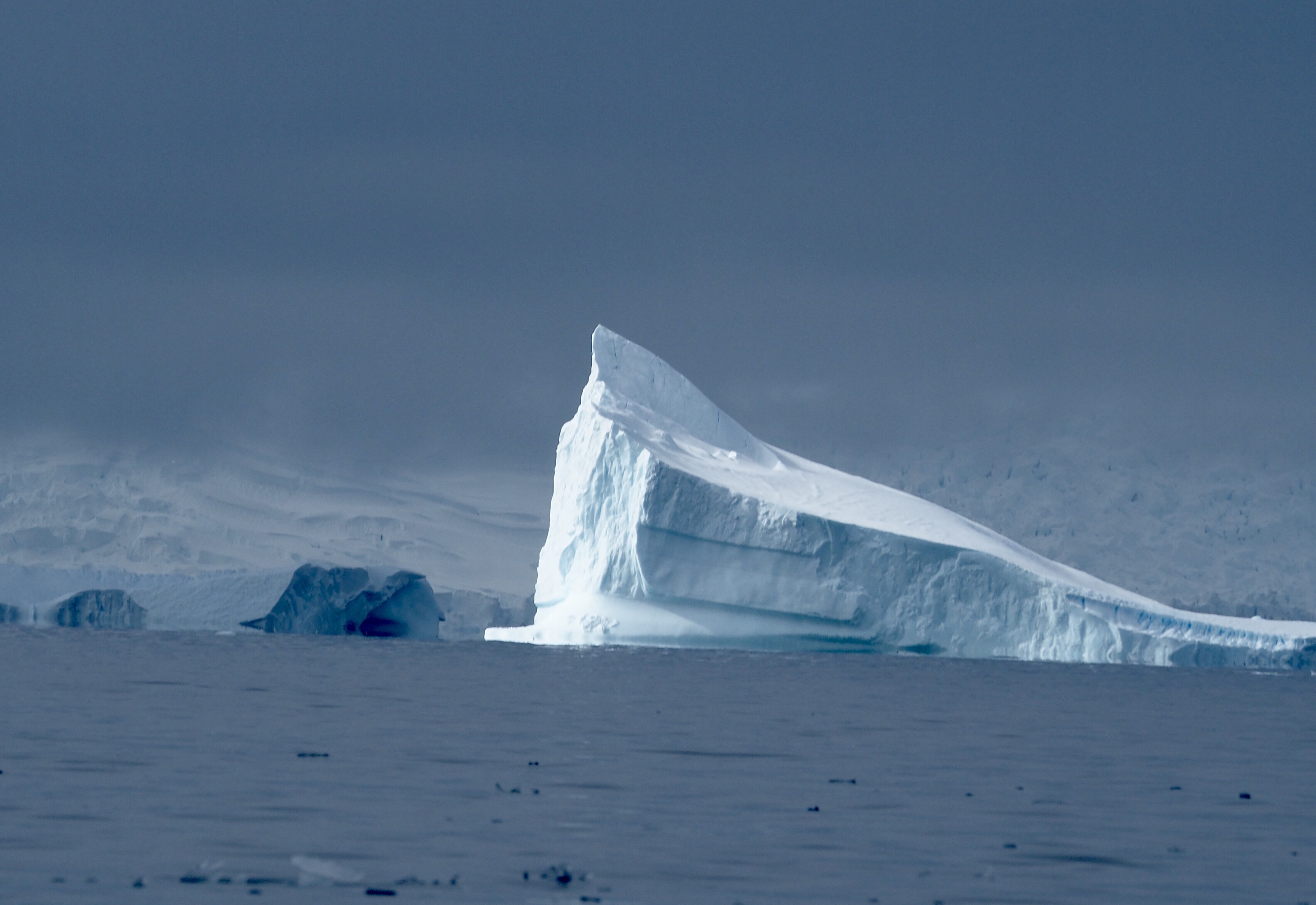
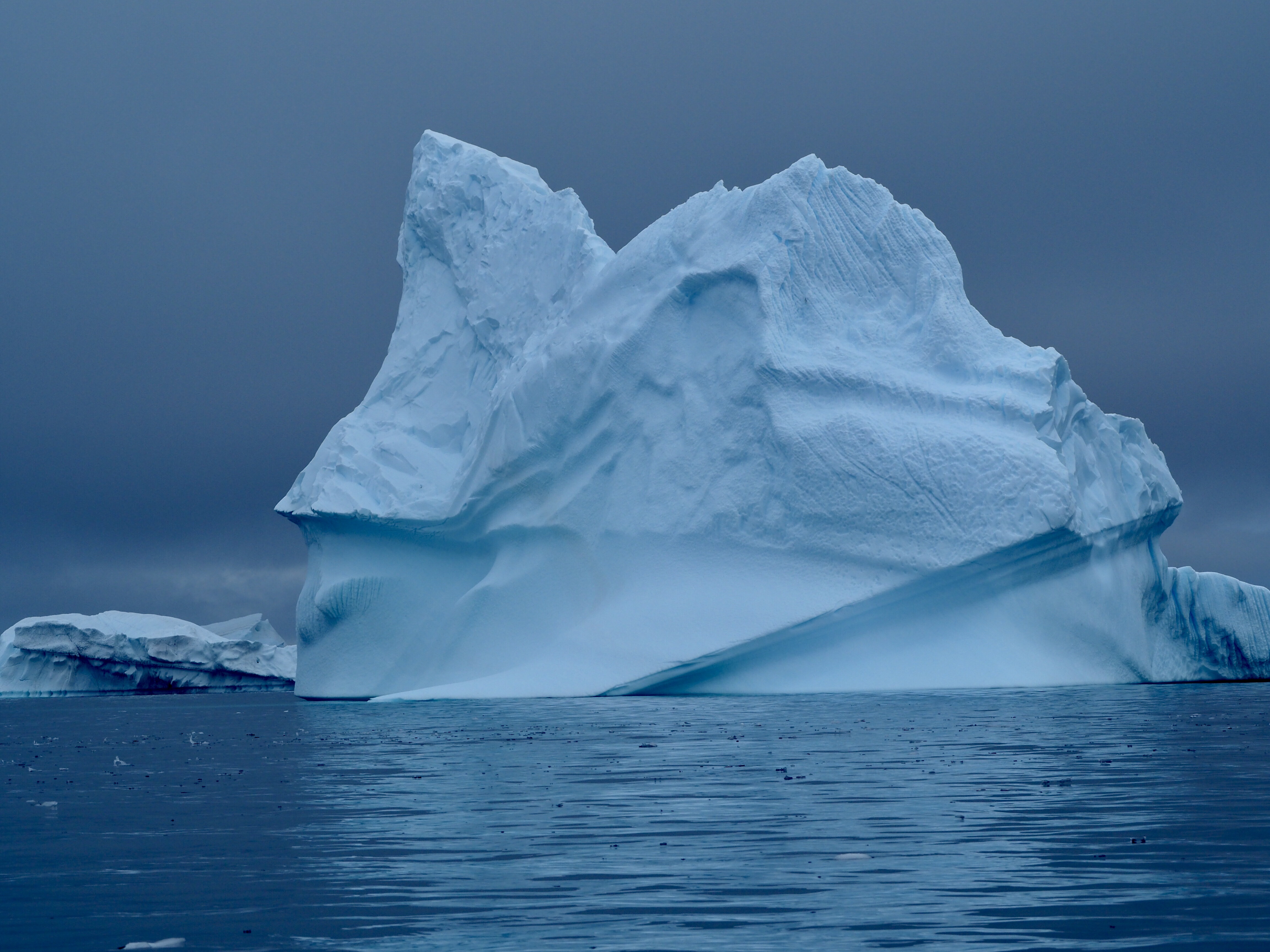
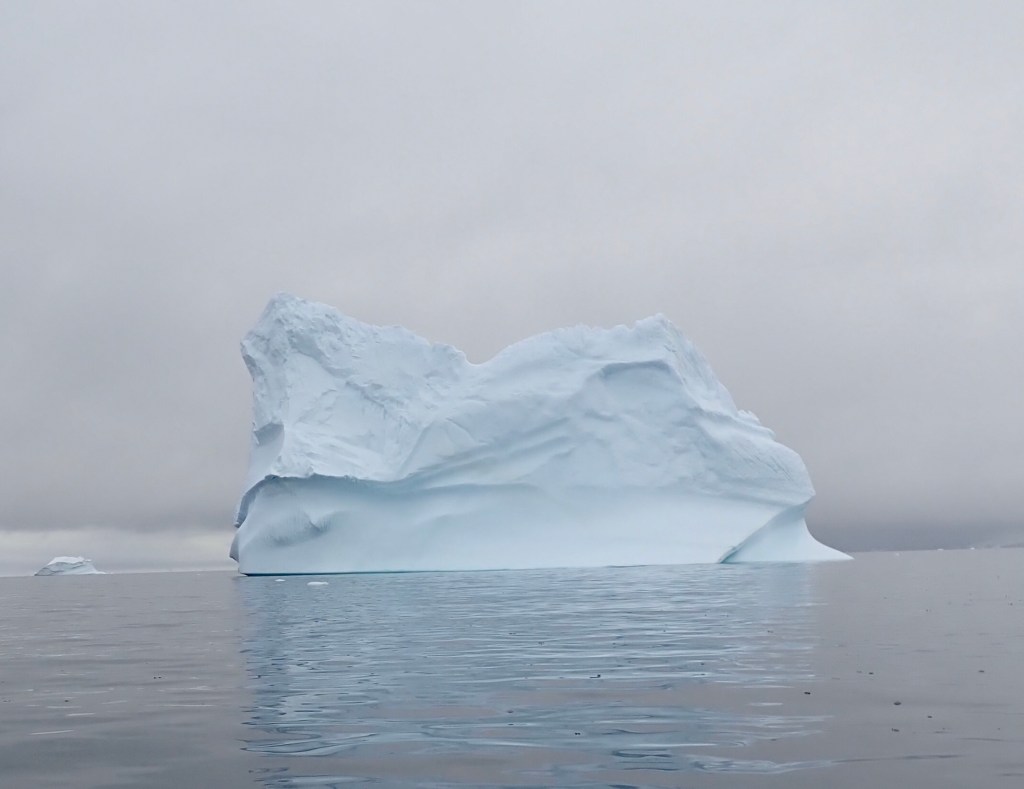
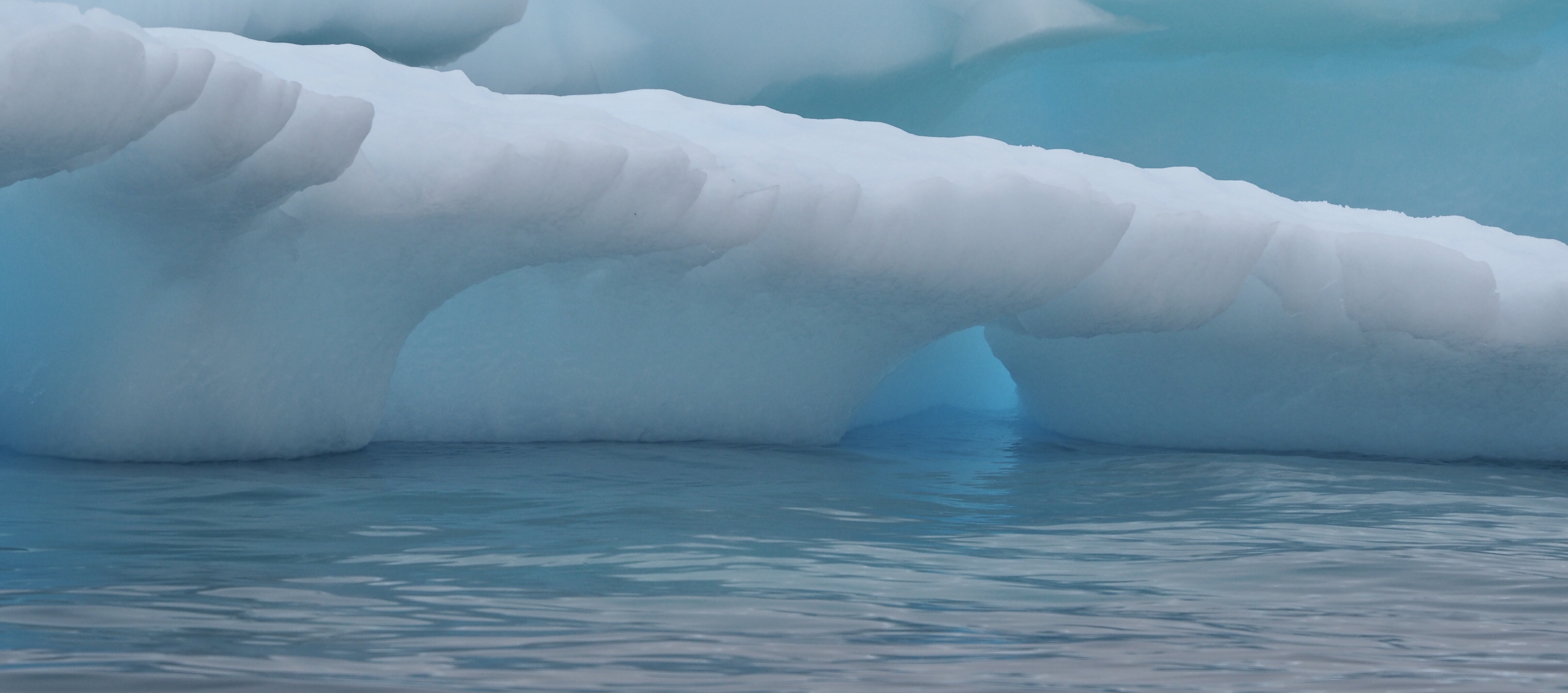
As much as I love the wildlife, the ice bergs are also fascinating.
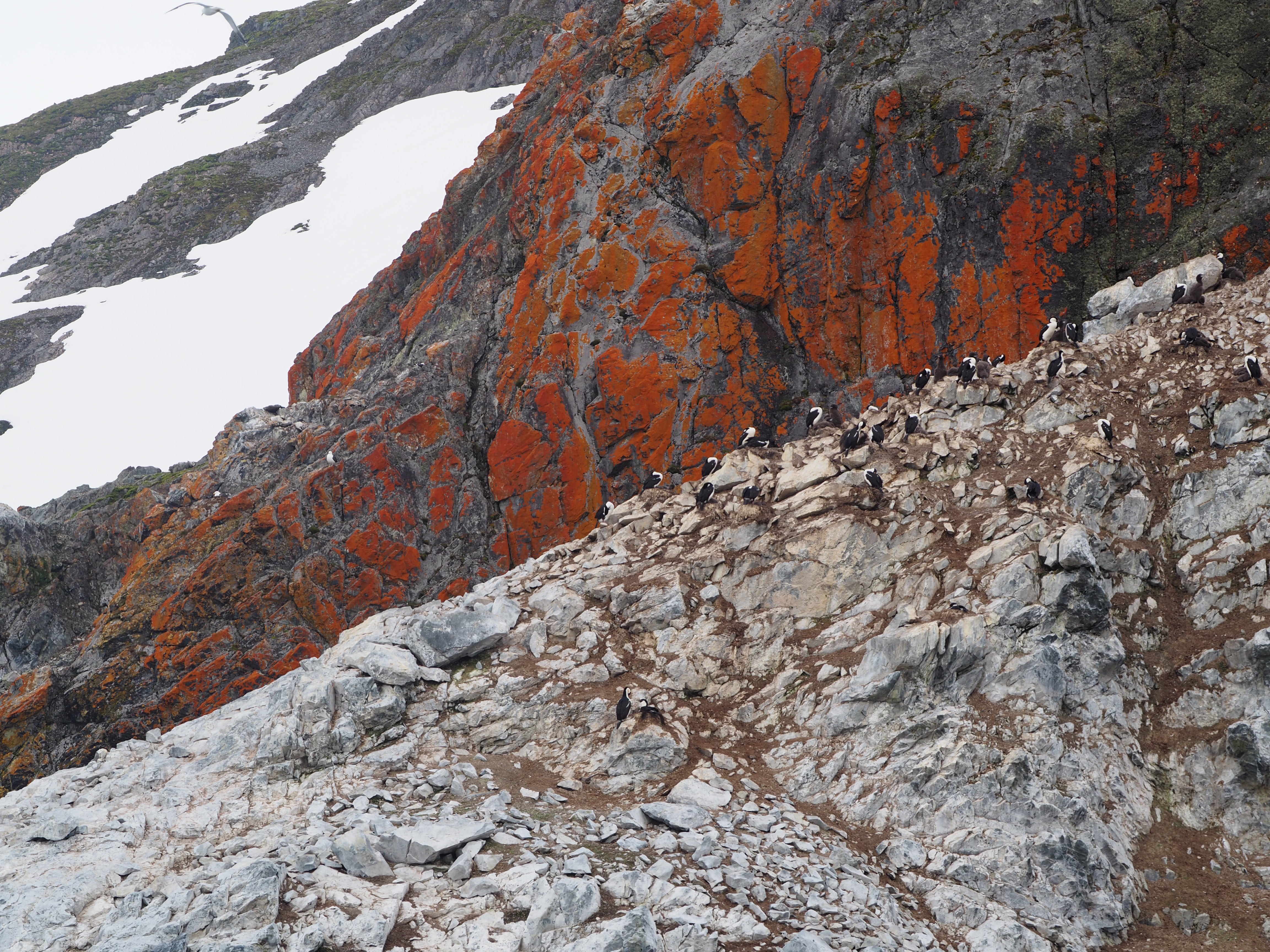
Antarctic shags.
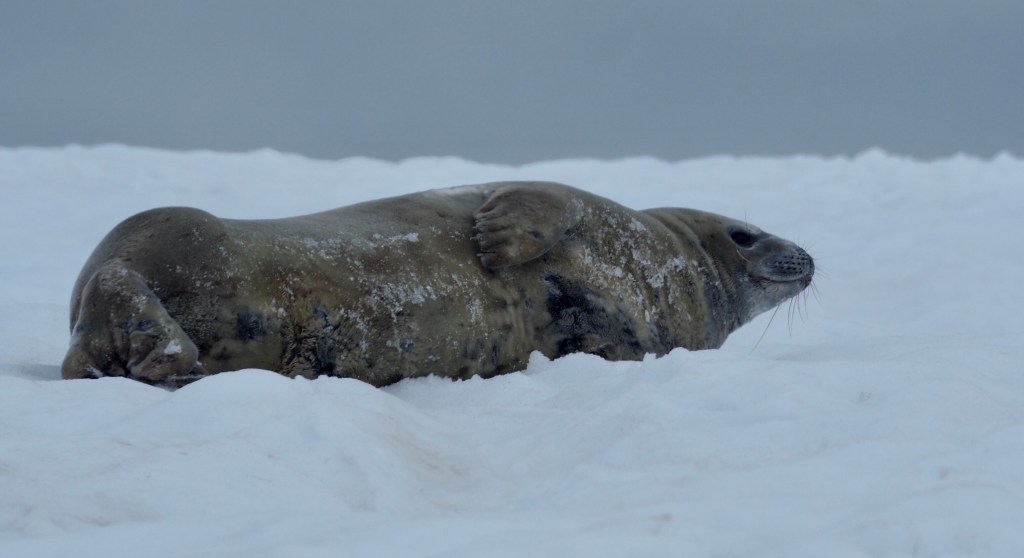
Definitely a Weddell seal this time.
Still lots of ice, whales and landscapes to enjoy on this zodiac cruise.
Very grey outside but clear and two degrees and loads of cape petrels around the boat. It is also snowing. Which is making Garrie very excited.
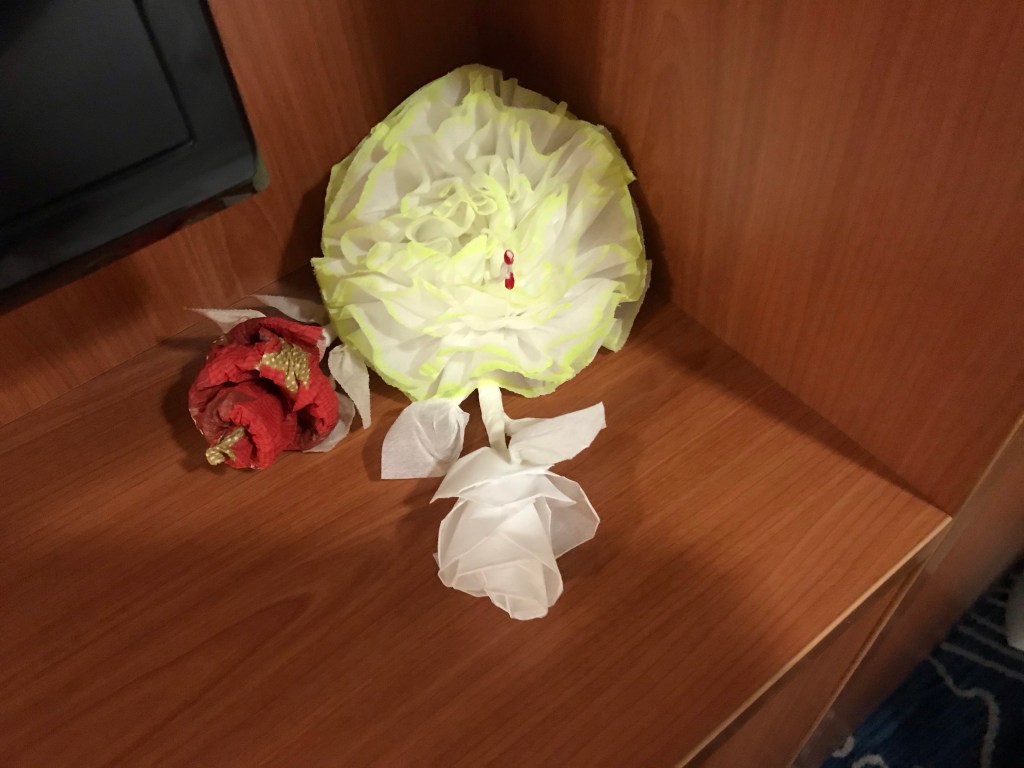
Meanwhile it appears I have developed the cold and cough that has been circulating in the boat since we left Ushuaia. I am dosing it with ginger, garlic and chilli tea and am not feeling too bad but will stay in the cabin for the morning so I am not spreading it too much further. Spoke to Dr Chip and he has it worse than I do and says nothing that can be done. He was in the gym trying to work it off. Meanwhile our lovely Richard gave me a flower to cheer me up. I’m getting a collection going.
These are all made from paper serviettes!
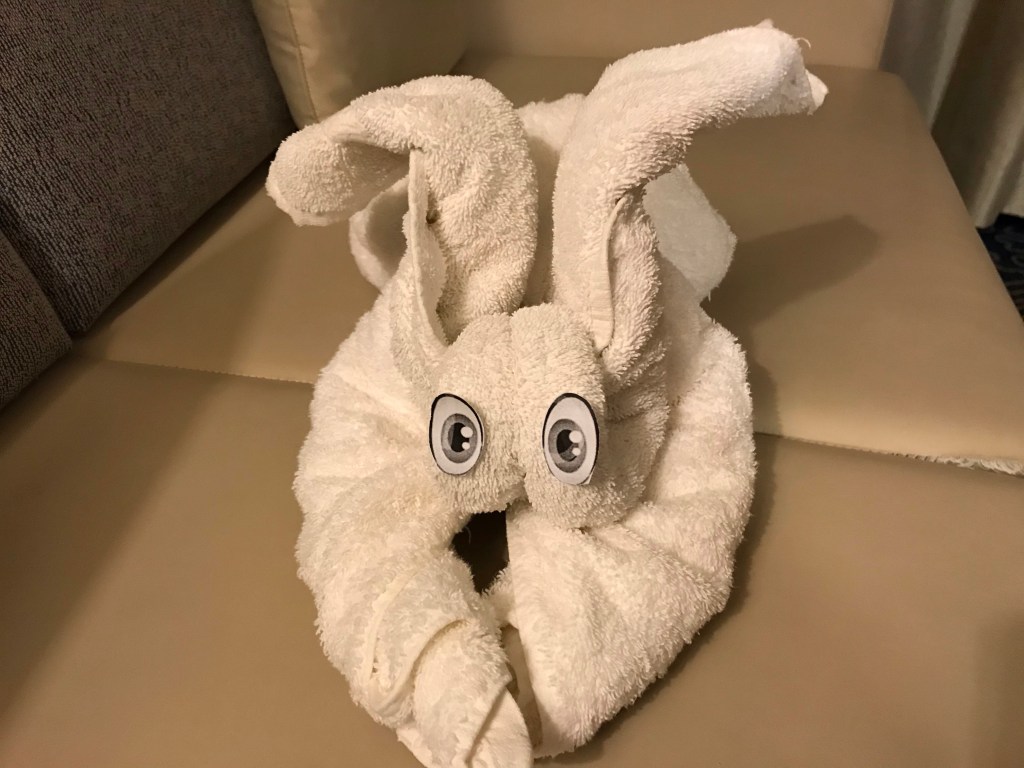
Not sure I showed you last night’s towel critter.
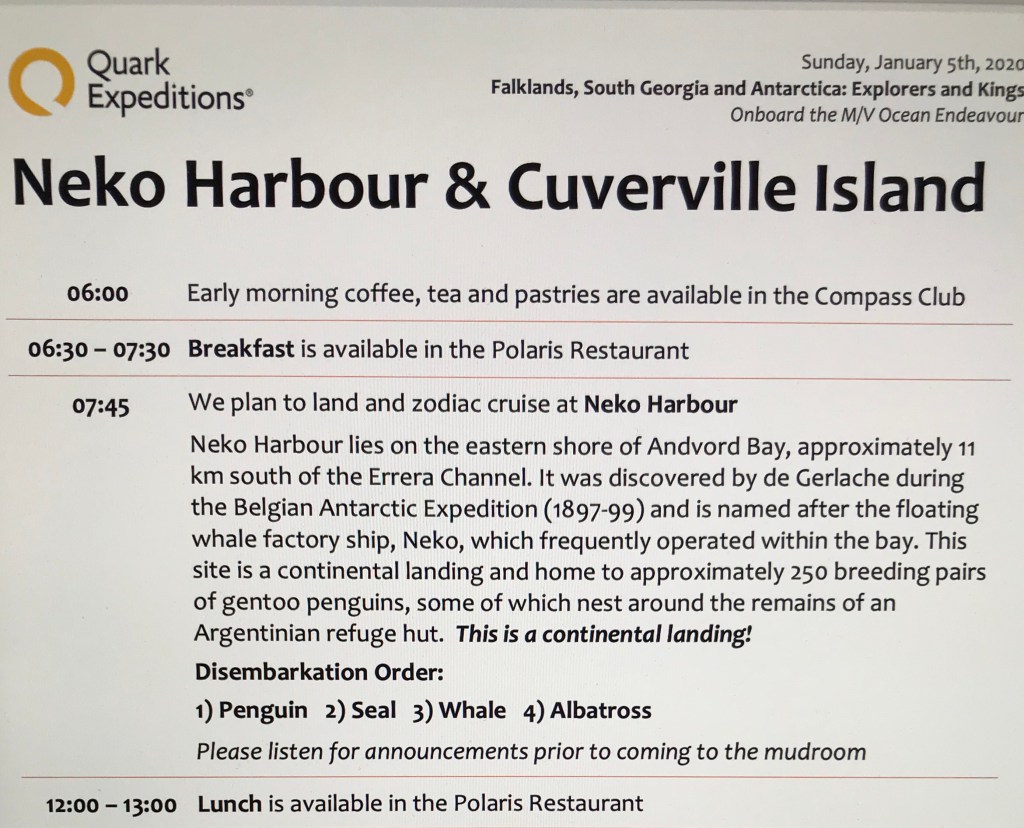
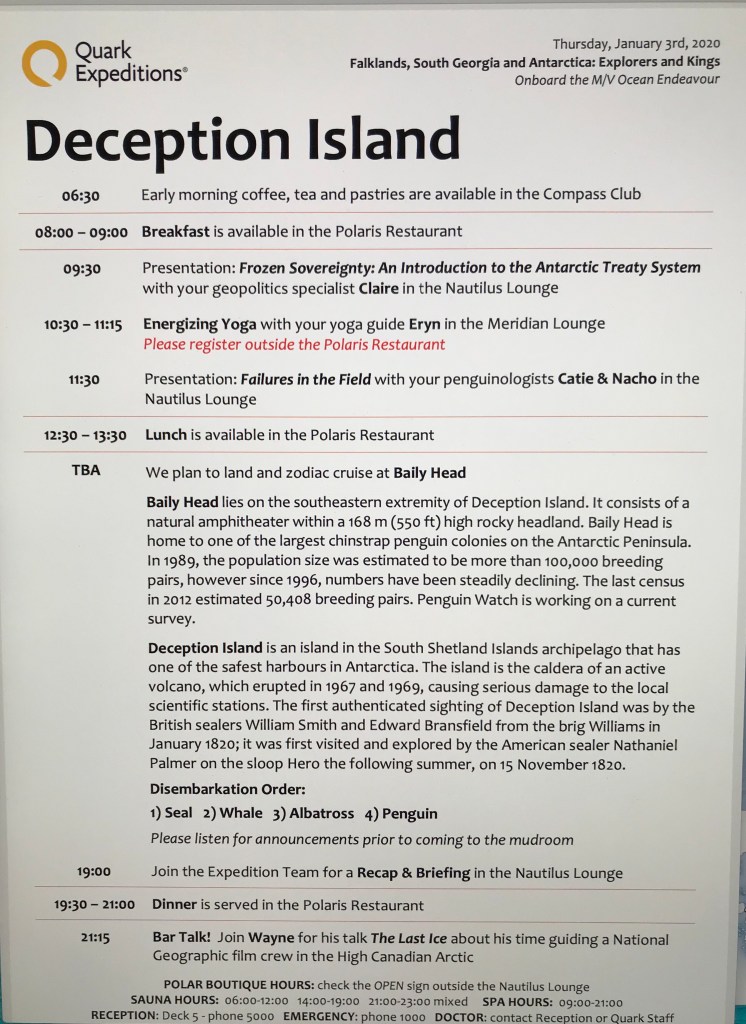
Today’s agenda.
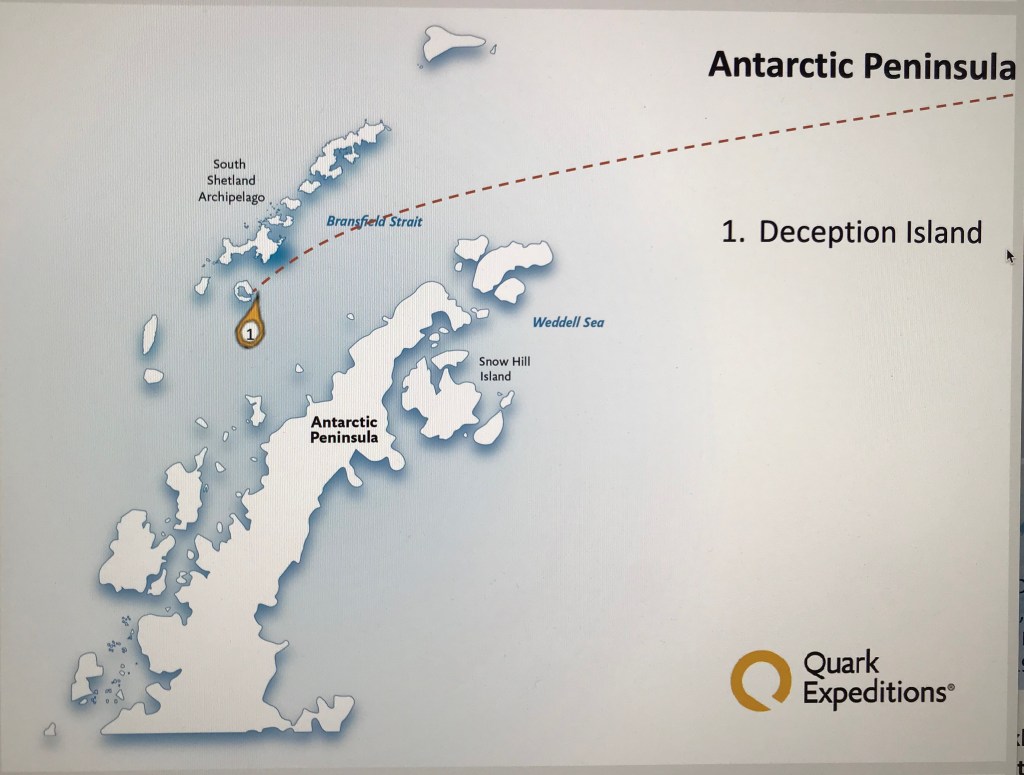
Map of where we are heading.
Presentation: Frozen Sovereignty: An Introduction to the Antarctic Treaty System with your geopolitics specialist Claire.
How the treaty came to be and why it is one of the most unique pieces of legislation on the planet.
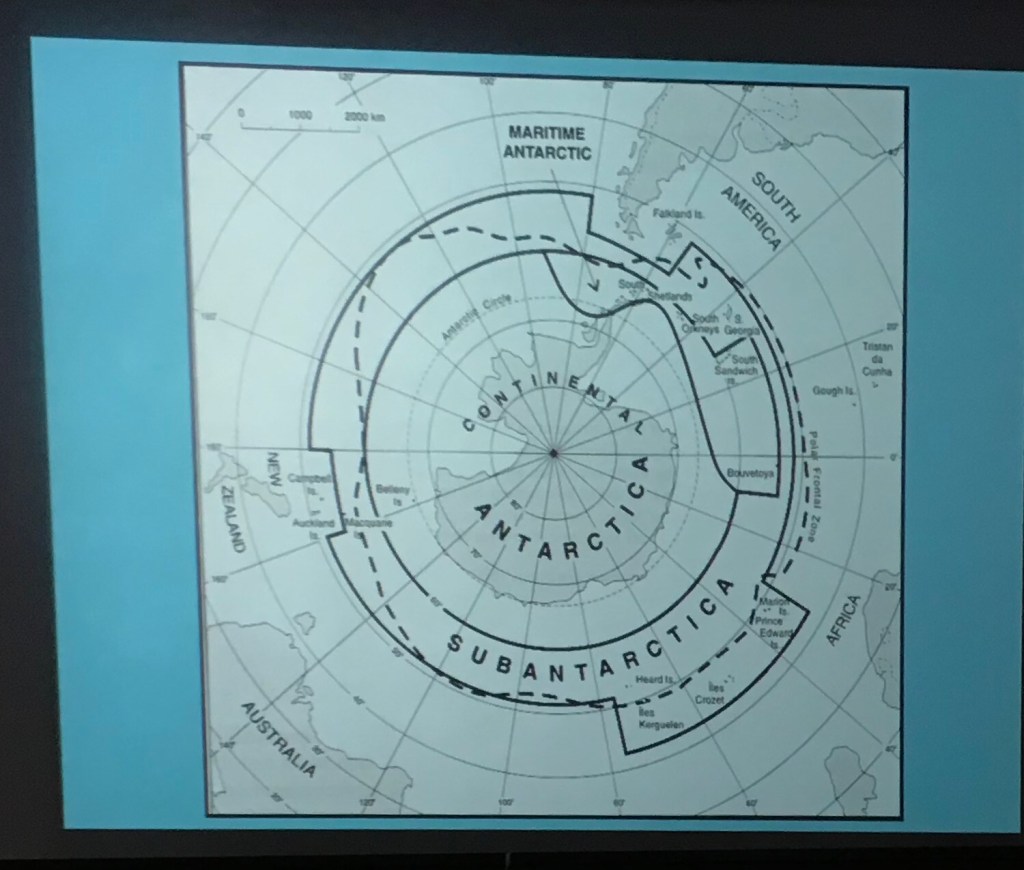
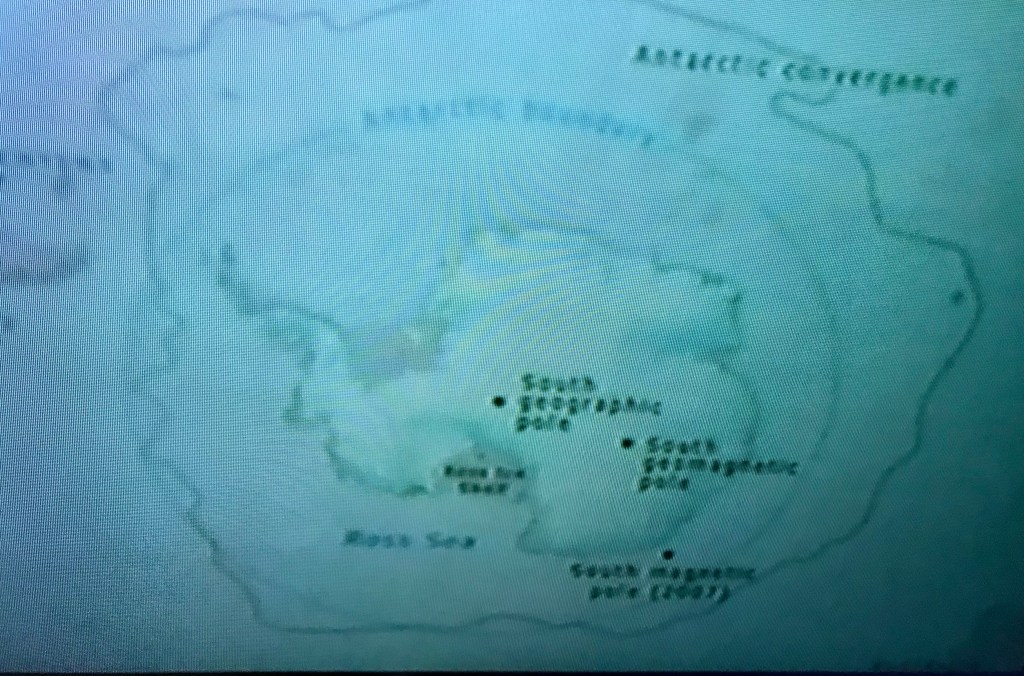
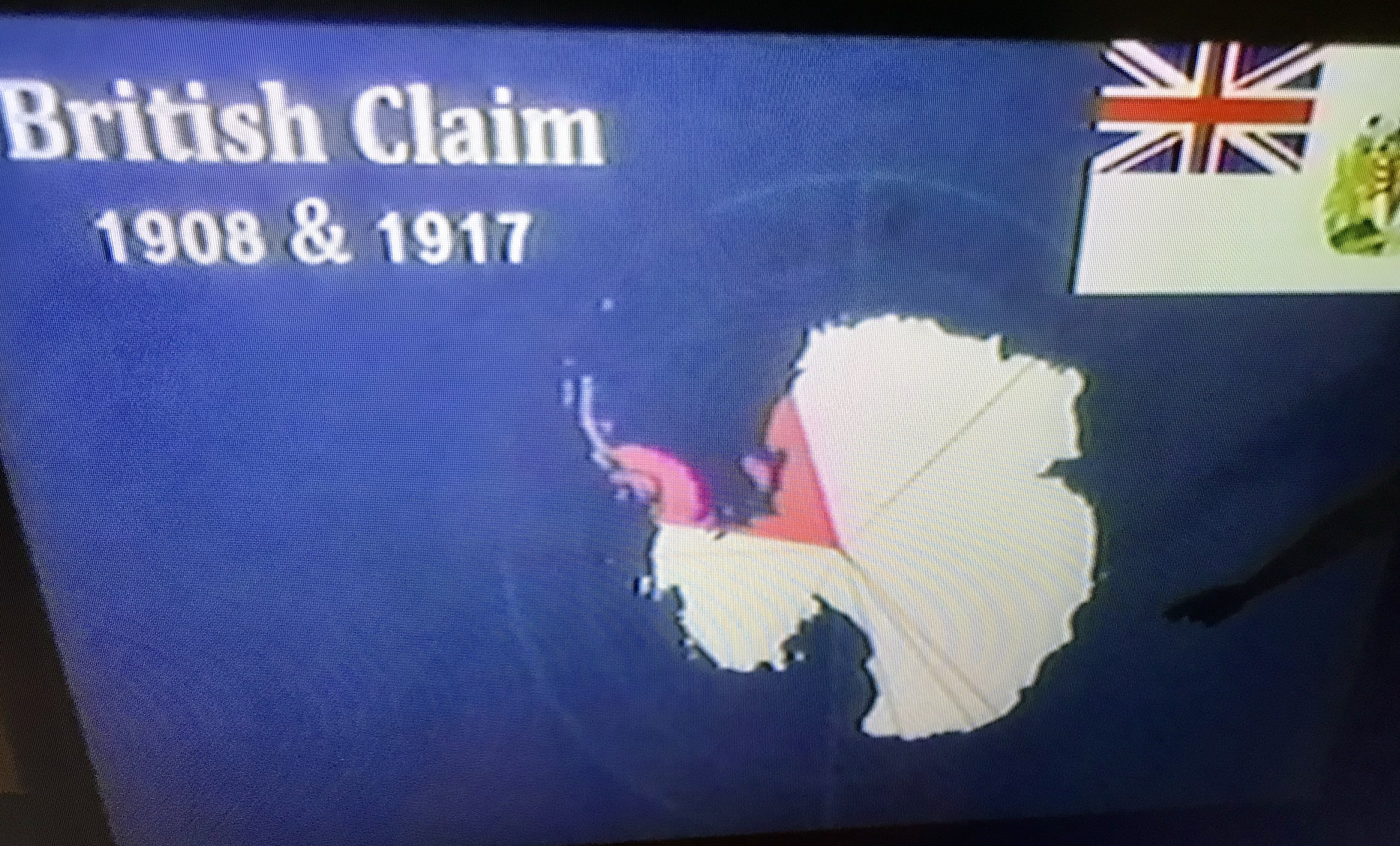
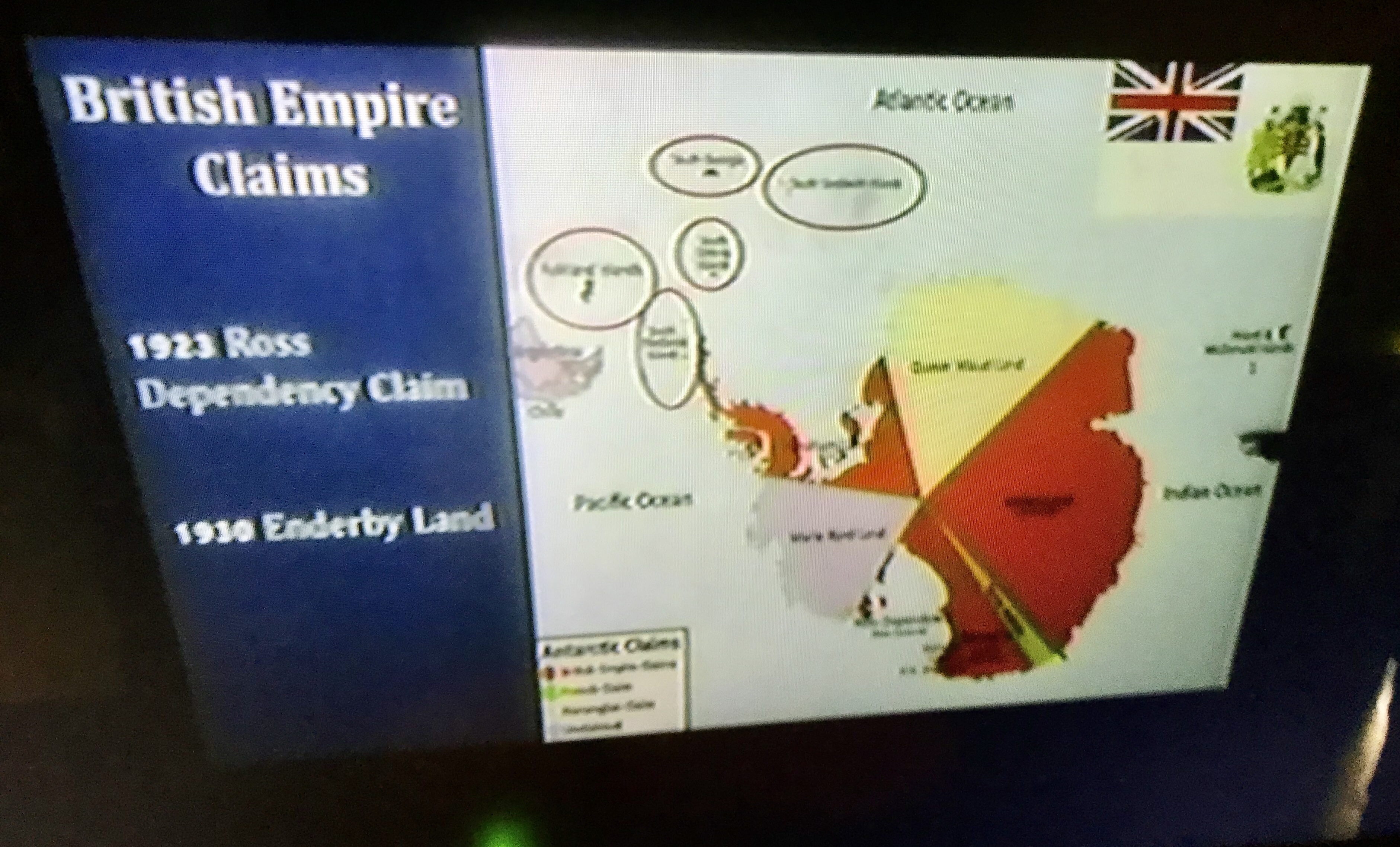
Pics not so great as taking them in our cabin from the TV screen but hopefully they help with understanding.
Very little known about it and considered a nobody’s land.
Until exploration and then things changed. Sealing 1824-1839 mostly in the South shetlands. They obliterated the seals here. Then age of exploration opened up the Antarctic peninsula and land.
Whaling era 1907-1966. Whaling was one of the precursors for the development of the Antarctic treaty. If you had a whaling station you were allowed to tax eg South Georgia claimed by Britain and created a great tax revenue stream.
Falklands Islands Dependencies 1933. Again Britain taxed the whaling industry there.
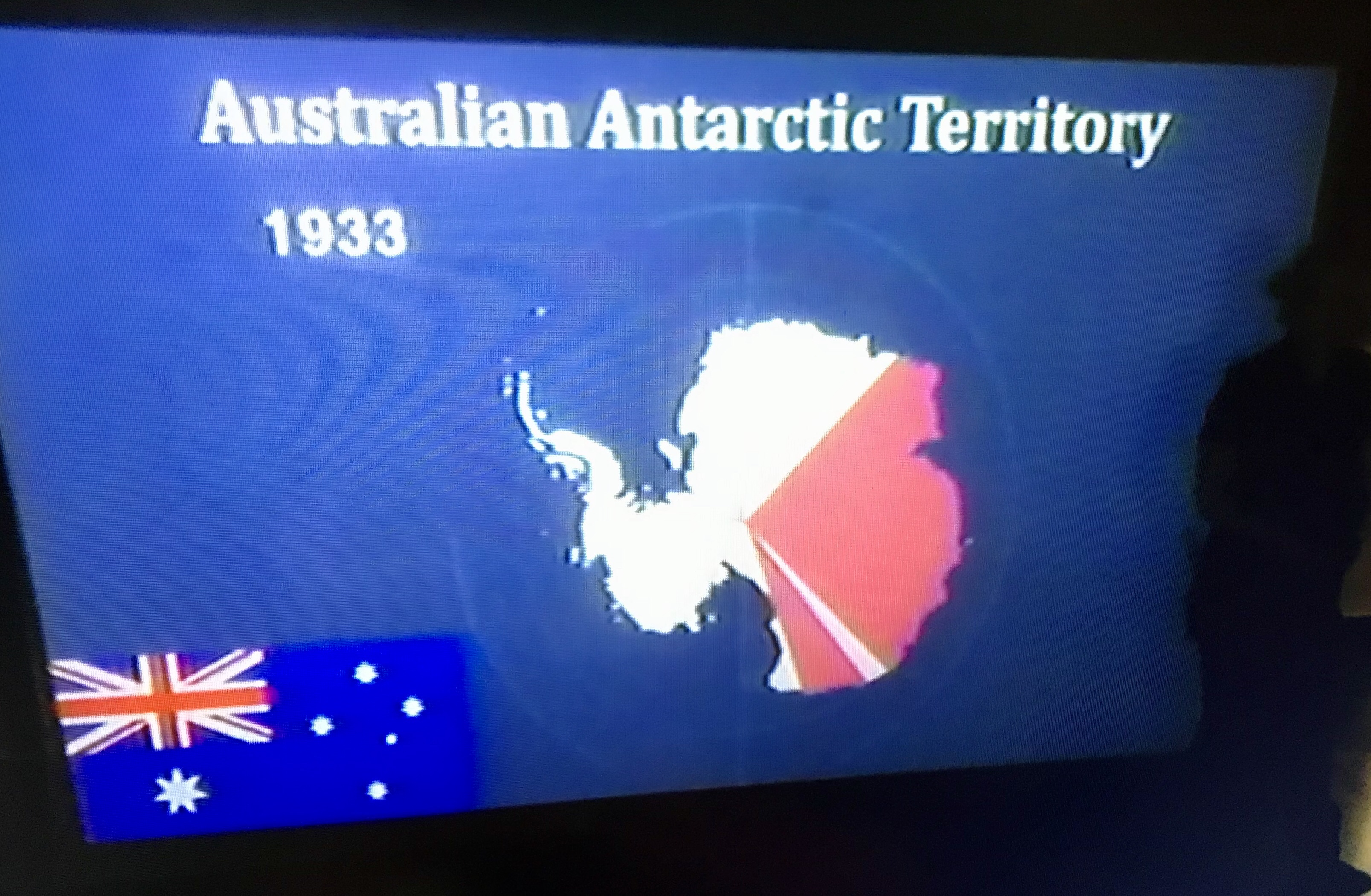
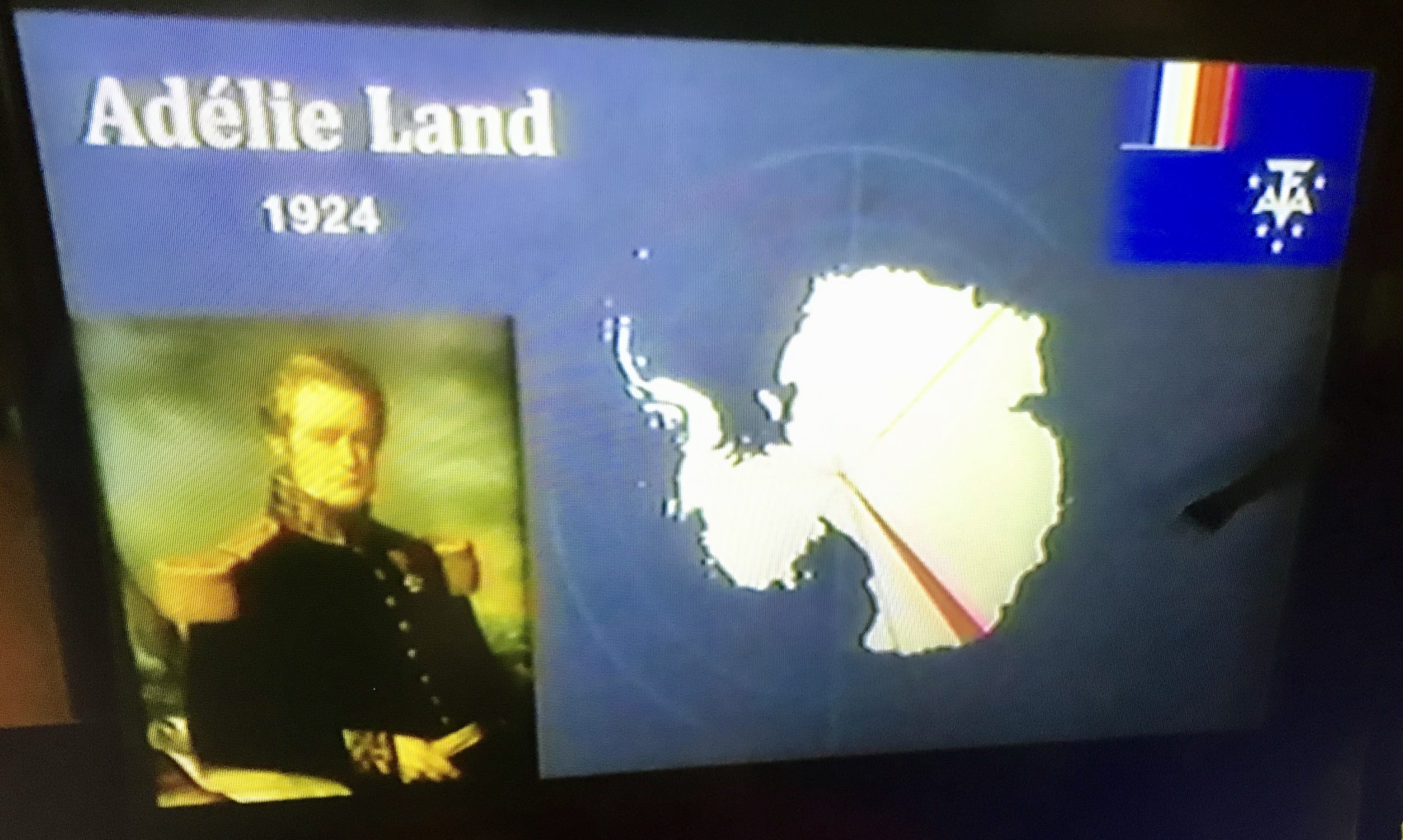
Whales depleted so moving further away so factory ships were invented. So then didn’t have to pay taxes which annoyed the Brits so they decided to make a claim to the seas and peninsula and also all the way to the South Pole in 1917. So then levied taxes on the factory ships. Leopoldo Amery he felt the Antarctic had good resources so he pushed for more claims – Ross dependency claim. (Had been explored by UK explorer Ross). In 1930 they claimed Enderby land. Needed a representative to look after the claim. NZ governor appointed trustee. Claim then went onto NZ once the colonies broke up. Same thing with Australian claim – in 1933 the enderby land became claimed by Australia. Adelie land wedge claimed by the French – he named the Adelie penguin after his wife. Transects the Australian claim.
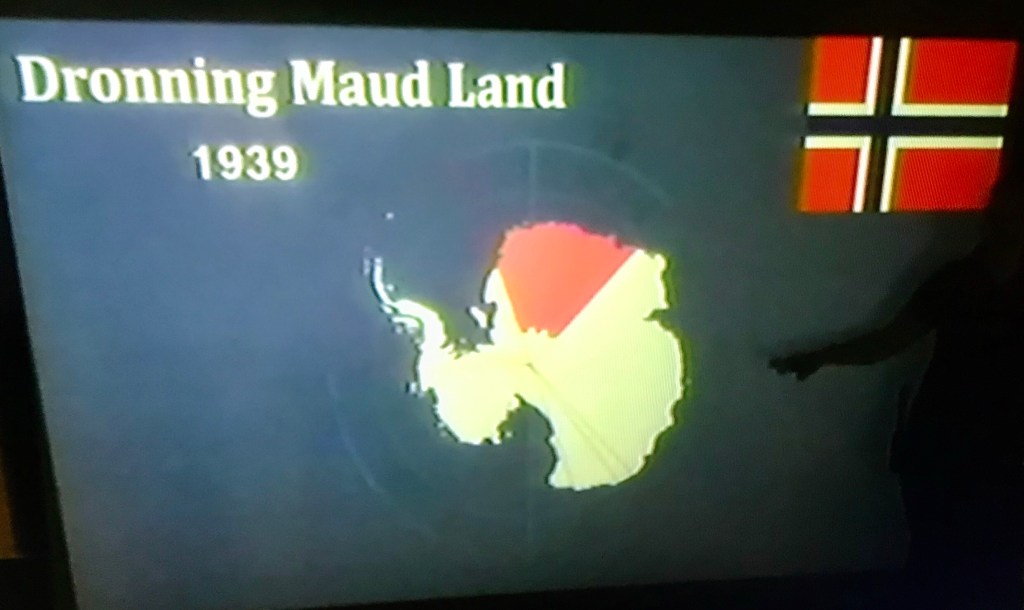
Dronning Maud land claimed by Norway in 1939. Lots of Norwegian whaling ships working here and they were concerned Brit would start a claim there and start charging taxes.
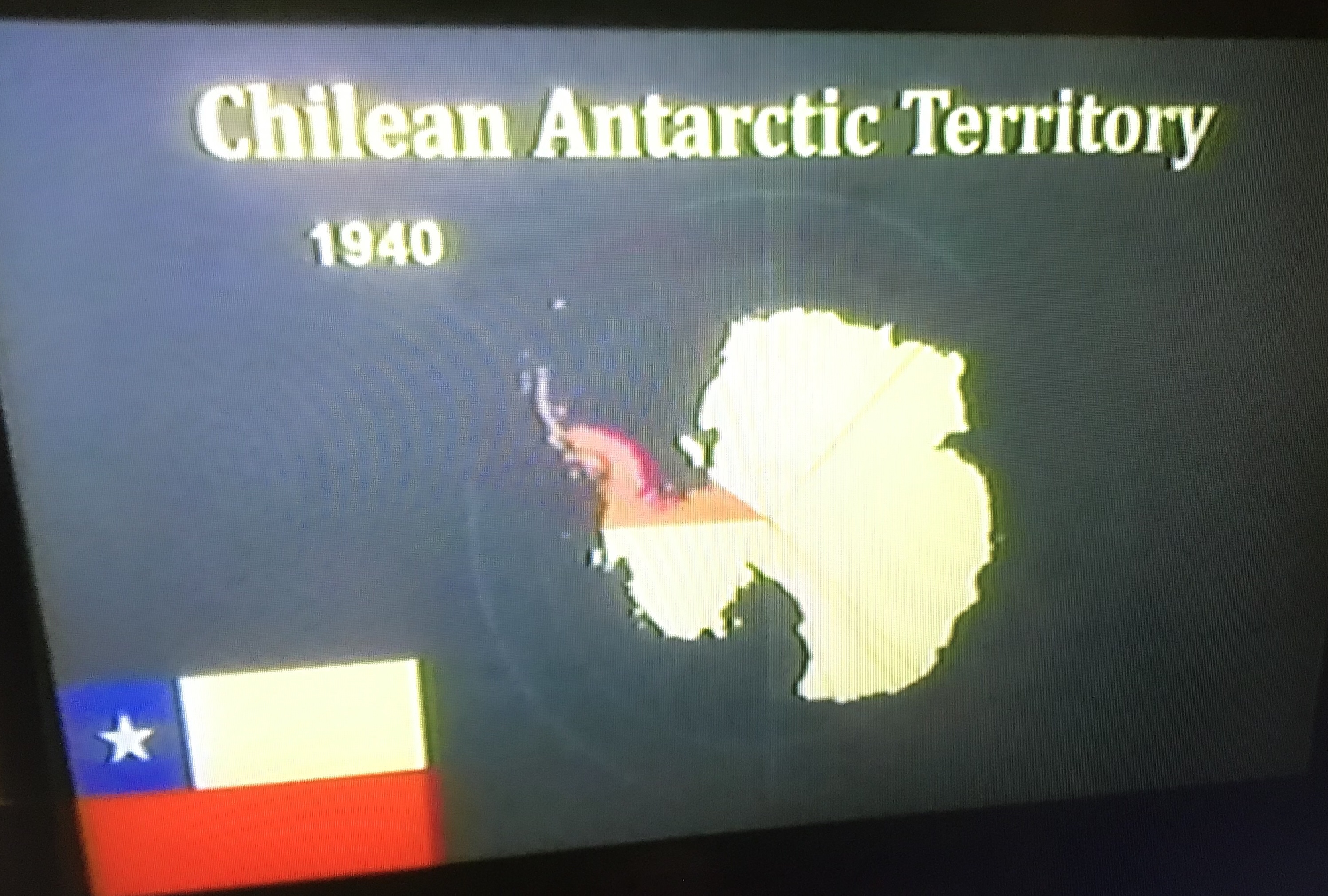
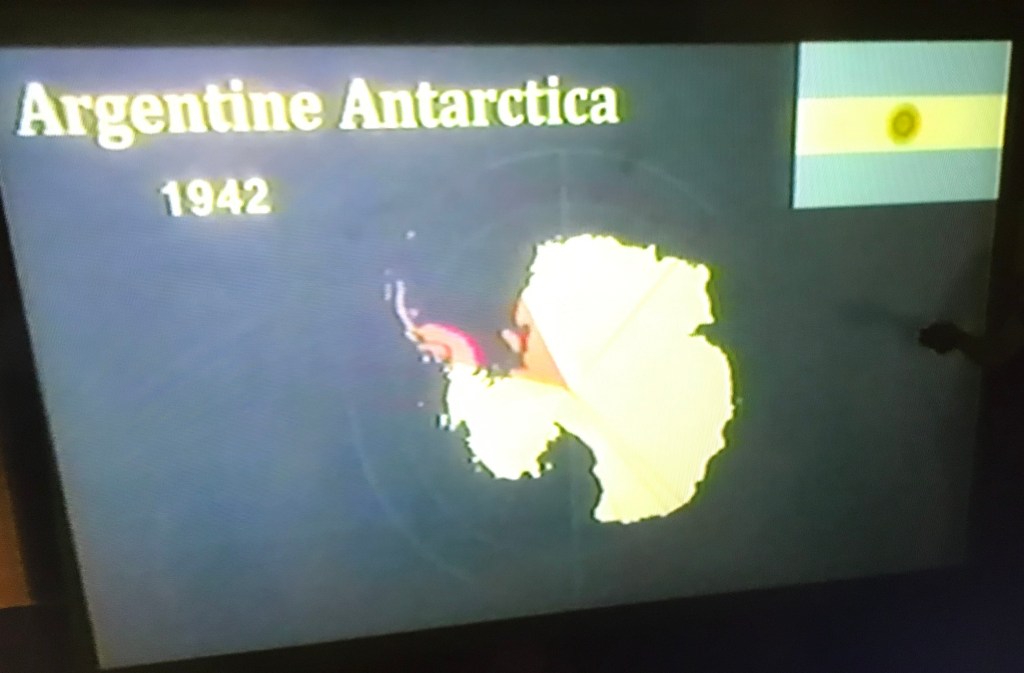
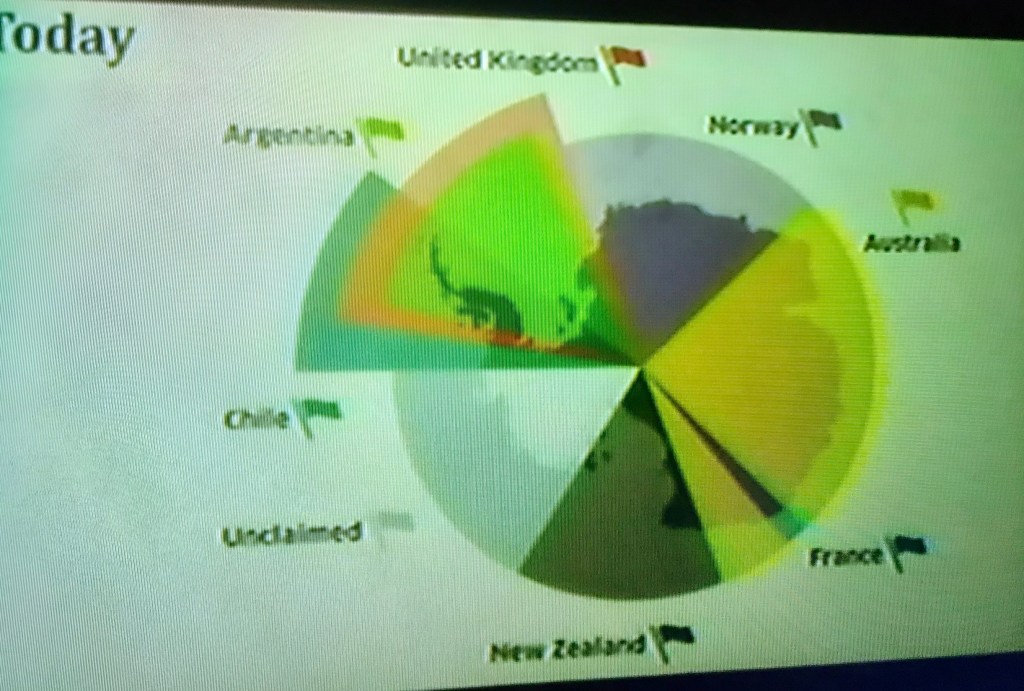
Chilean’s claimed the peninsula followed by Argentina in 1942. Previously claimed by UK. They said it was a right to claim due to proximity. So today over lapping claims.
One area not claimed as considered there was nothing there. USA and Russia missing from the original claims. They actually don’t recognise any of the current claims. They said they could claim at any time in perpetuity. If they hadn’t protested they would have considered to acquiesce to current claims.
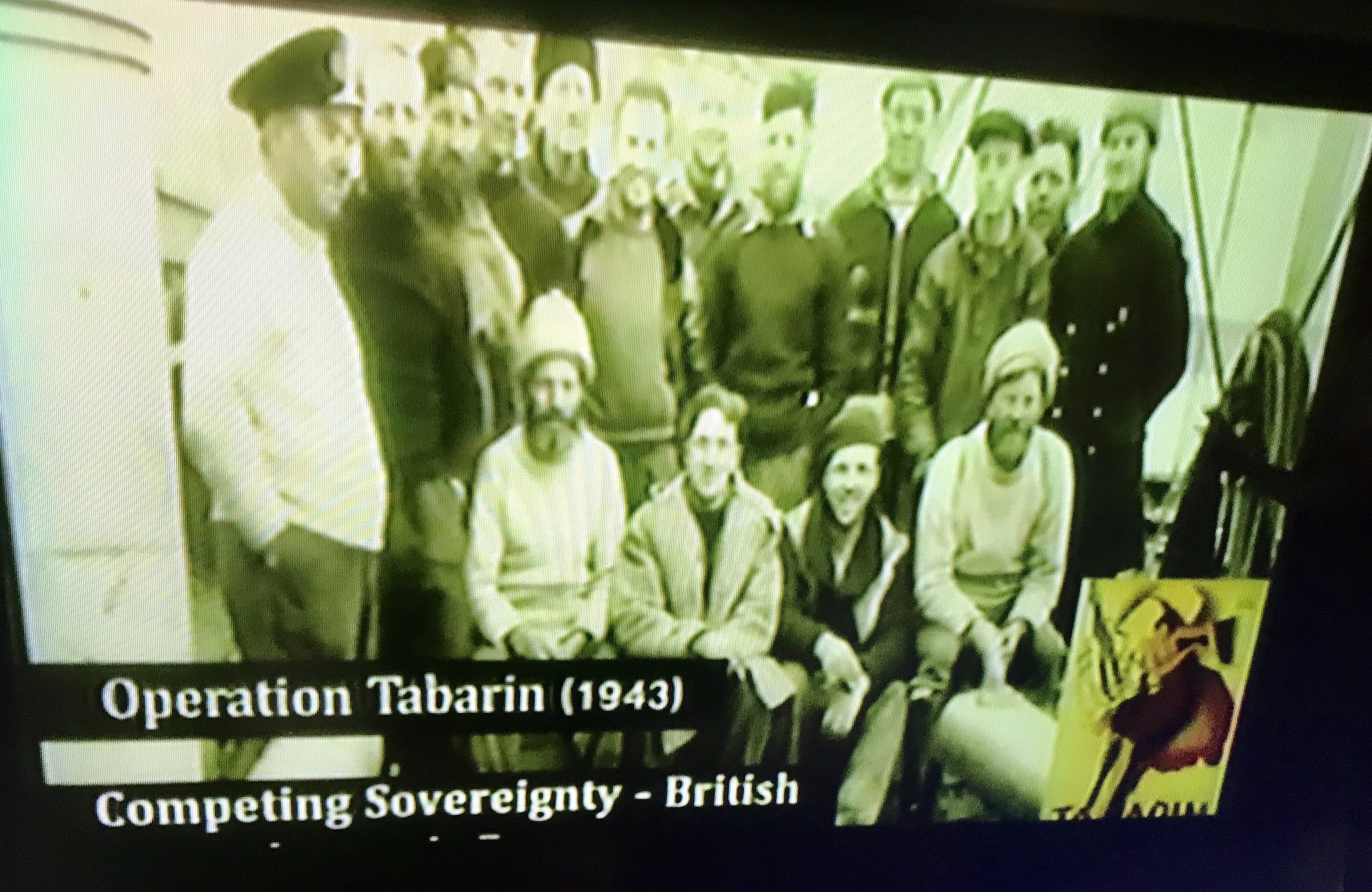
Charles Hughes created the Hughes doctrine and he was adamant that claims was not to discover but to have continuous occupation of that land so USA said no one had occupied so the claims weren’t real. So suddenly the previous claims not effective so those that claimed previously created a presence – though the station we visited was the first it was not created for that purpose Operation Tabarin a UK base is officially the first – doubled as both a sovereignty opportunity and a war strategic operation. Port lockroy one of the first. Competitive base building era – they built, we built etc. lots of tension in the 1950s.
1957 all world scientists came together and said they should have a year in the Antarctic. 12 nations participated. 5000 people 18 months of Antarctic science. Worked out they could play nicely together. Bases, telecommunications etc worked collaboratively. So US then brought all scientists together for Washington conference. Only 14 articles long. 1959 signed by 12 countries but since then many have signed, current total of 54. Over 90% of world’s population.
Agreed the Antarctic can only be used for peaceful purposes. Can’t bring weapons and military activities. First dearmament agreement of the Cold War period. Science focus.
Froze the legal status as at 1959. Can’t act on them or change them so de politicised the Antarctic. Now used as a model for other treaties ie space and undersea claims. Genius.
Not everyone has taken this seriously saying those born there could have greater claim so Argentina took heavily pregnant women to Antarctica to give birth. So still trying to solidify claims.
Still very successful though so collaboration continues but if ever the treaty opens up they hope to have good sovereignty claims.
1991 Madrid protocol. Environmentalism growing so added an environmental amendments. All treaty members have to clean things up. Dogs also had to go in 1992. Banned any kind of mineral exploration or exploitation.
Treaty counties which break the rules can be taken to the international court of justice, fines etc. if not a part of the treaty you don’t have to abide by the rules however very few countries not a part of the treaty have the resources to do something and also there would be huge backlash.
Quark also covered by the treaty. The treaty tells them what kind of ships and numbers. Science is also regulated. If you want to build a base lots of rules and others inspect. The Treaty has to adapt constantly.
Madrid protocol expires in 2048 which has caused some concern. However The media statements are misleading as the Madrid Protocol is in perpetuity but is open to renegotiate in 2048 and there has to be 3/4 majority that agree so hopefully more likely it will stay for tourism and science rather than mineral exploration.
What a great talk. I am learning so much on this trip.
Spending time in the room with my ginger, garlic chilli tea and feeling not too bad. Spending time editing the photos and being even more harsh in what I keep and don’t keep. Initially when you see a new breed or species any pic will do but then as you gain more pics some get thrown out.
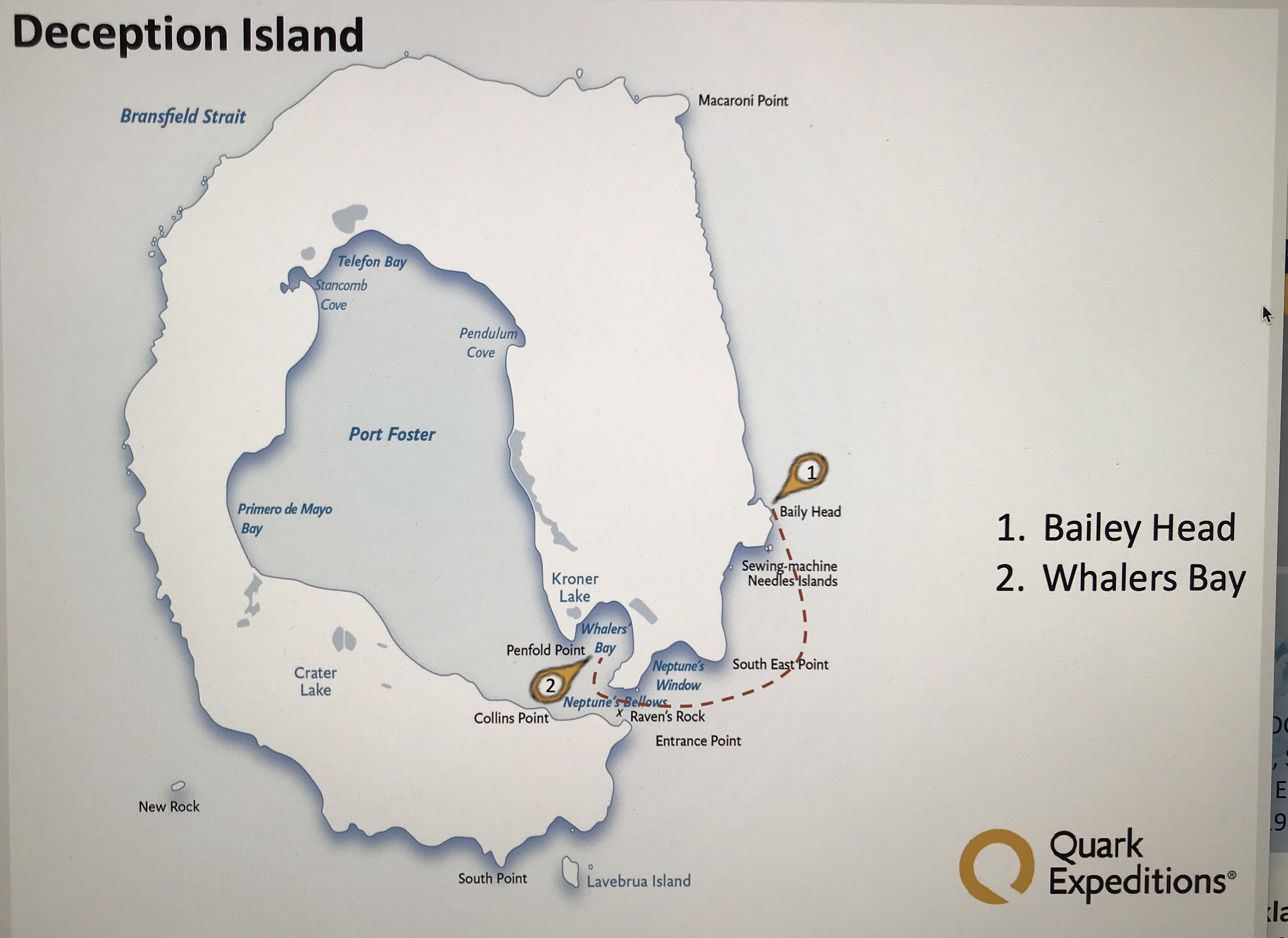
Message from Solan at 10am. We should be at our first destination in an hour but the reality of the weather is a bit different to the forecast. Will assess our first stop and maybe just proceed directly to Deception Island. Oh goodie, more time near the active volcano…
It’s really grey out there but we are fully expecting that the views will change. This is what seems to happen. Just when you think there is nothing to see – wow. There have been whale sightings today but on the starboard side (and we are port) and I am feeling better for not running around and also not changing temperatures all the time. I’m not too bad but the cough hurts my throat at times. Garrie is delivering tea regularly but I have to stop drinking now as there is no peeing ashore so that becomes an issue. We have made one friend who has adult diapers with her, a friend suggested them, hmm maybe I should borrow some today… Garrie has been waving to me on the Nautilus lounge camera but he must not stay there long as I am yet to see him.
Presentation: Failures in the Field with your penguinologists Catie & Nacho in the Nautilus Lounge.
I missed a bit due to a sound problem in the cabin – fixed by turning the tv on and off.
Juvenile fur seal sneaked up behind a researcher and bit his leg when he was having a pee. Wound is one problem but the real problem is infection. Scrubbing with toothbrush to get the muck out – painful. They don’t have rabies but they have everything else. Needed stitches. They wriggle as they bite and with no blubber protection he was in trouble. He did survive, though scarred.
Last year on Ocean Endeavour. Research camping trip. For a week for GPS tracking study of some penguins. Weather so bad they were stuck in their tents for 10 days.
Sophie talked about her work in Hawaii. Coral bleaching, sea turtle work. Their 18ft Boat moved suddenly, even though anchored. First move jerked them off their feet. 2 mins later they realise they are still moving up wind. Started doing donuts. They thought a Tiger shark had grabbed the anchor line so Decided no hands in the water. Another research boat close to them. They came over and said “you know you are going in a circle right?” One of them jumped on board so they decided to haul up the anchor. Very hard, a cm at a time. Not a tiger shark. It was a manta ray. Totally wrapped in the anchor line. One of the other boat people jumped in the water. Jan is 6’3” so using him as a guide they estimated the ray to be 10-12 feet across. No one has ever heard of this happening before.
Christmas Island. Nacho spent time there and it has frigatebirds which nest in the trees and robber crabs. No land predators. At least 15 species of crabs make it home. Every night they would crowd the floor – biggest land crabs in the world.
Not dangerous. They are curious. Play with shoe laces. If you are drying your boots outside – don’t leave shoe laces in as the crab takes them and drags the boot into the forest to examine it at leisure. No undergrowth due to the crabs. From the research station to the toilet was an interesting trip. Only researchers should handle them though as they can break open a coconut (also know as a coconut crab) they climb coconut palms. Very tiring working around the crabs as nothing can be put down.
Lunch. Lovely Richard made me a honey and lemon tea. Bless him. Orca spotted on the port side – we were eating on the starboard side. By the time Garrie retrieved my camera and jacket they had sailed away but at least we know they are around. This is the first sighting of the trip so far.
The Kayakers are finally getting to go out today. The skiers and mountain climbers went out at the station the other day. Standup paddle boarding yet to get a go. Sadly they have announced that a landing isn’t possible today due to the wave action at the beach, so just cruising. We went out again to look for Orca but still no luck. They don’t want to poke that dorsal fin up when we are looking.
Feeling a bit of a limp lettuce but I am not going to miss out. We finally arrived.
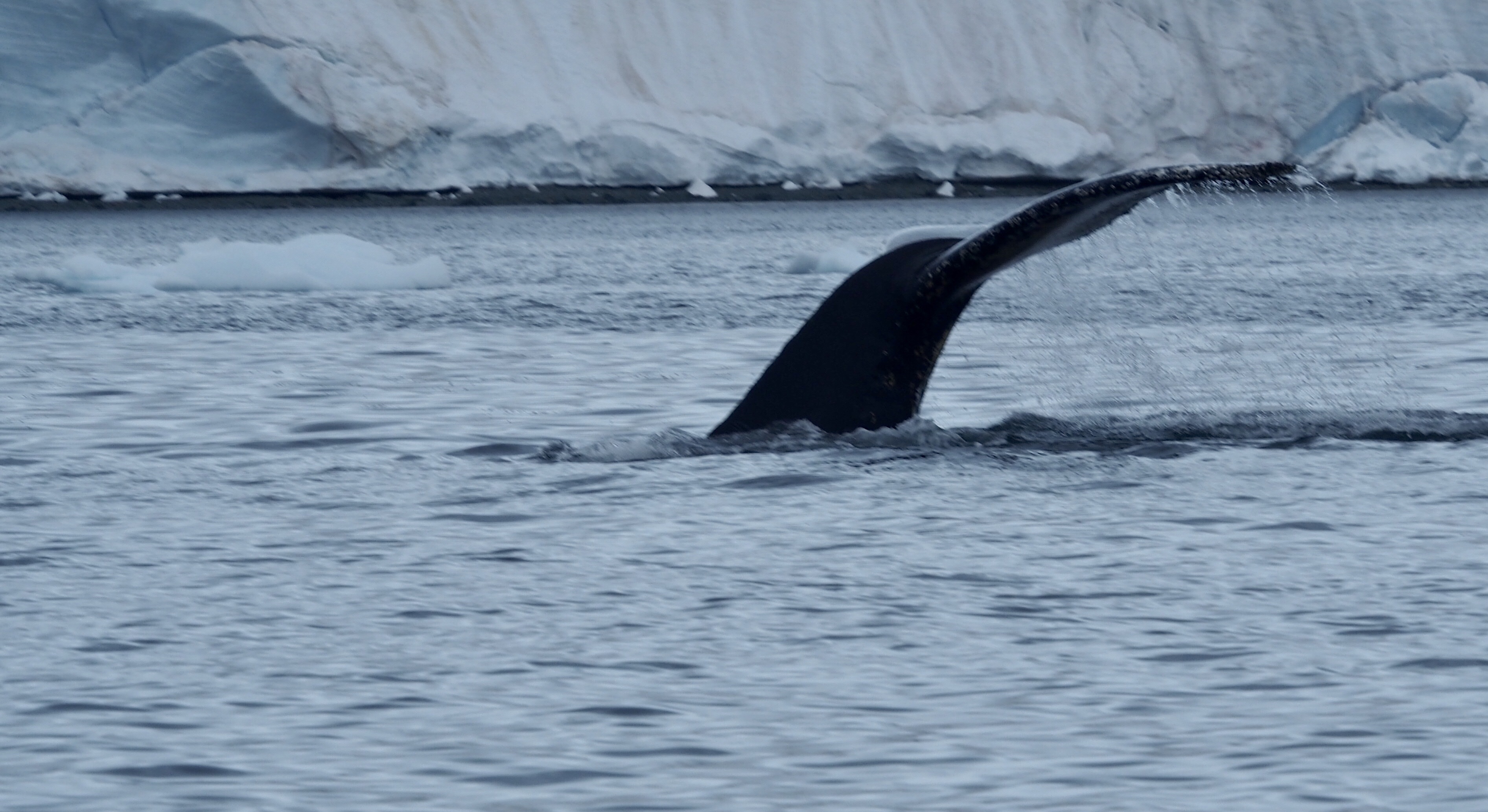
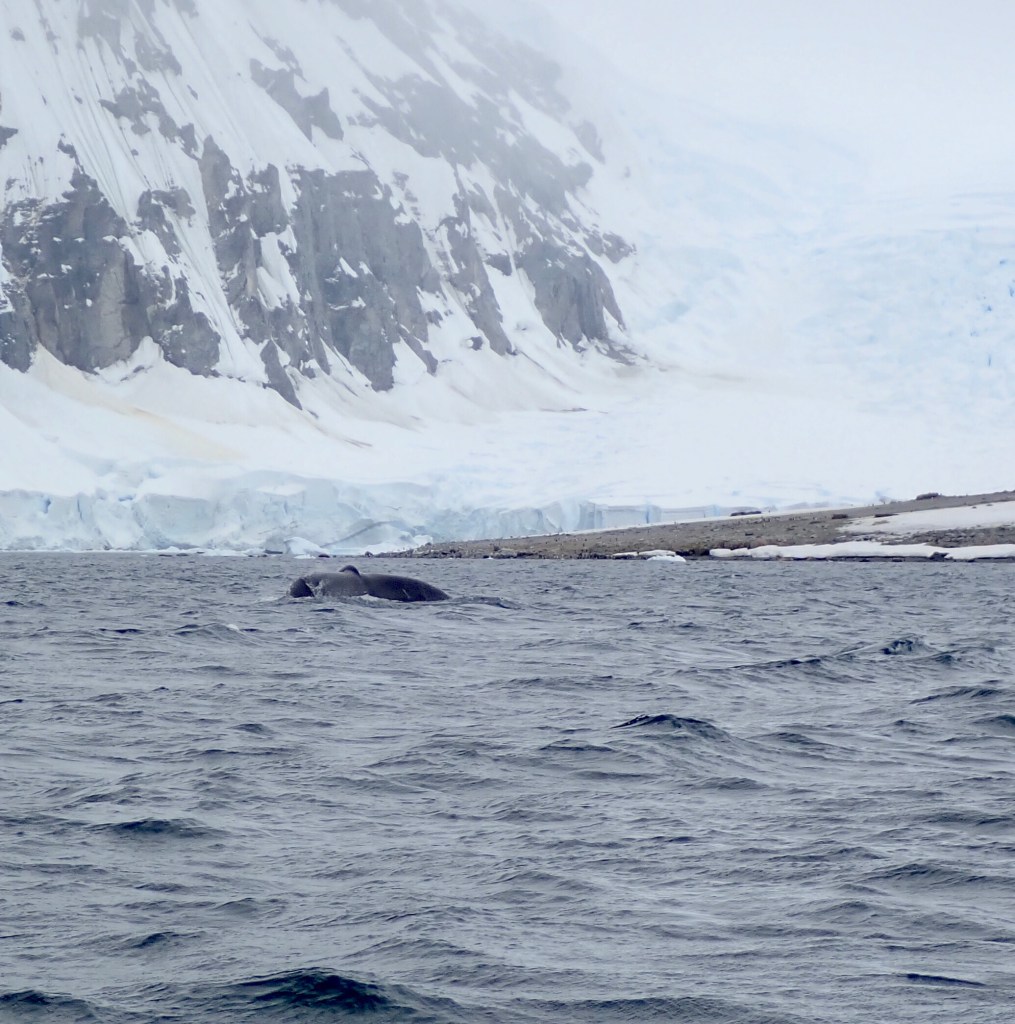
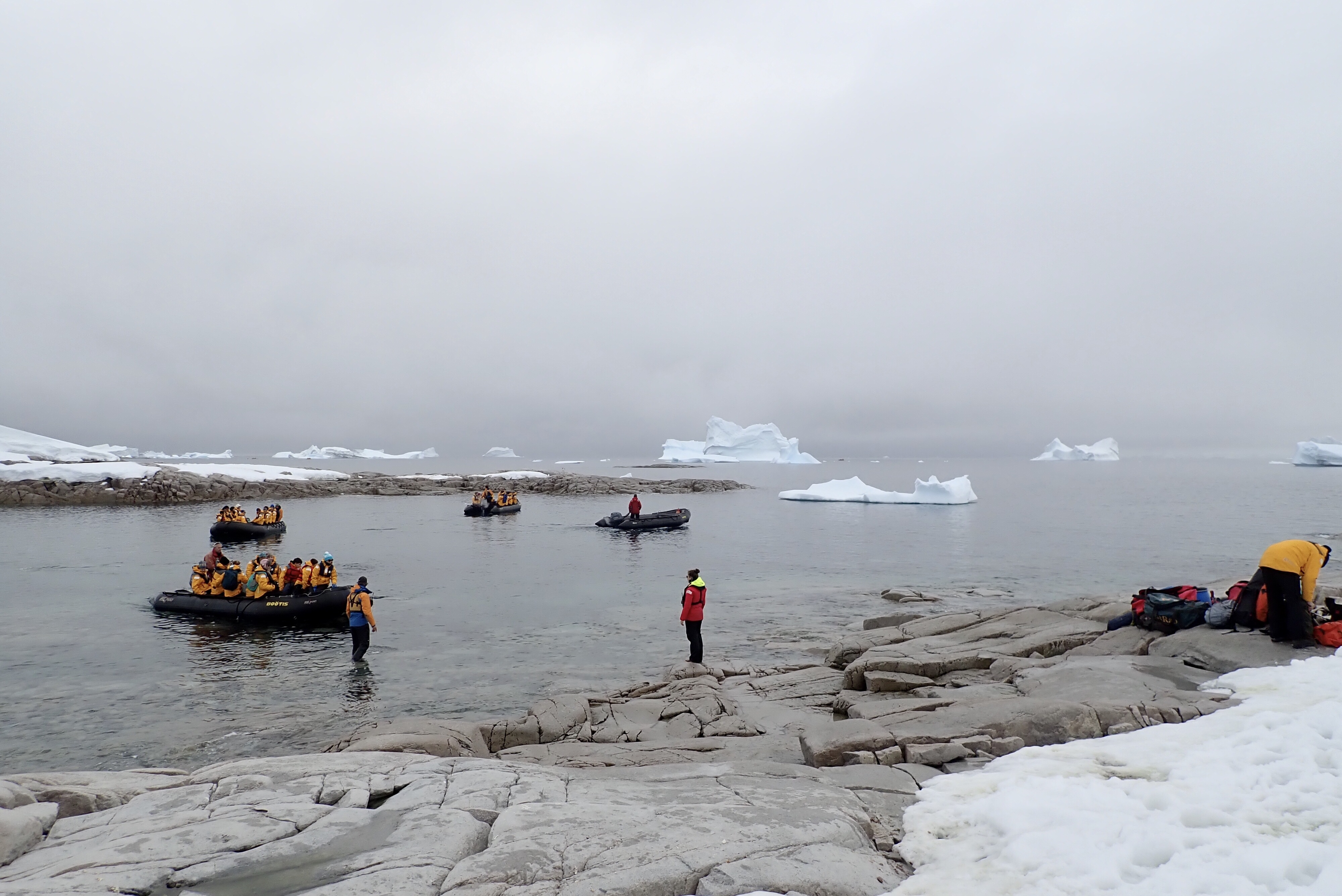
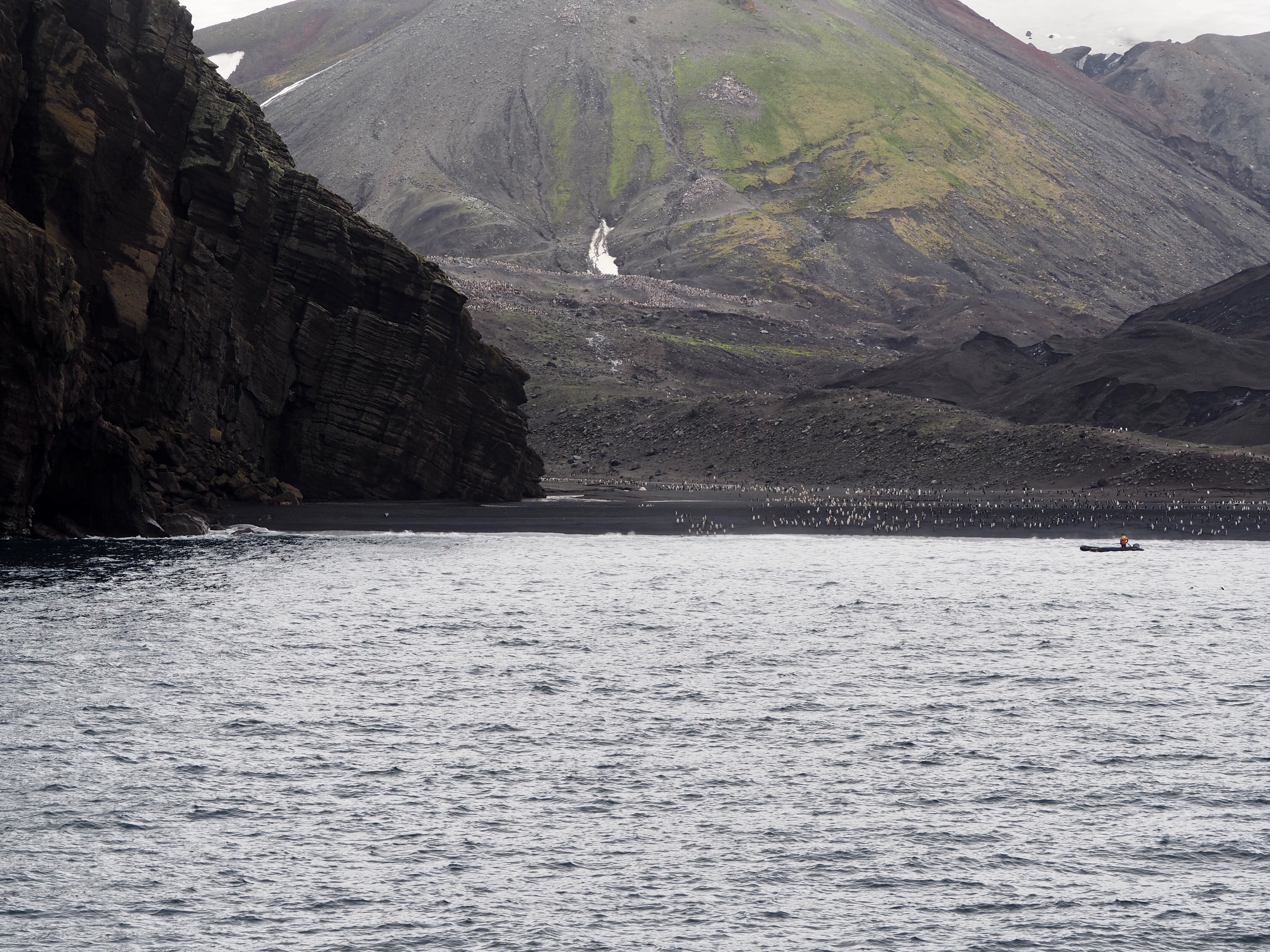
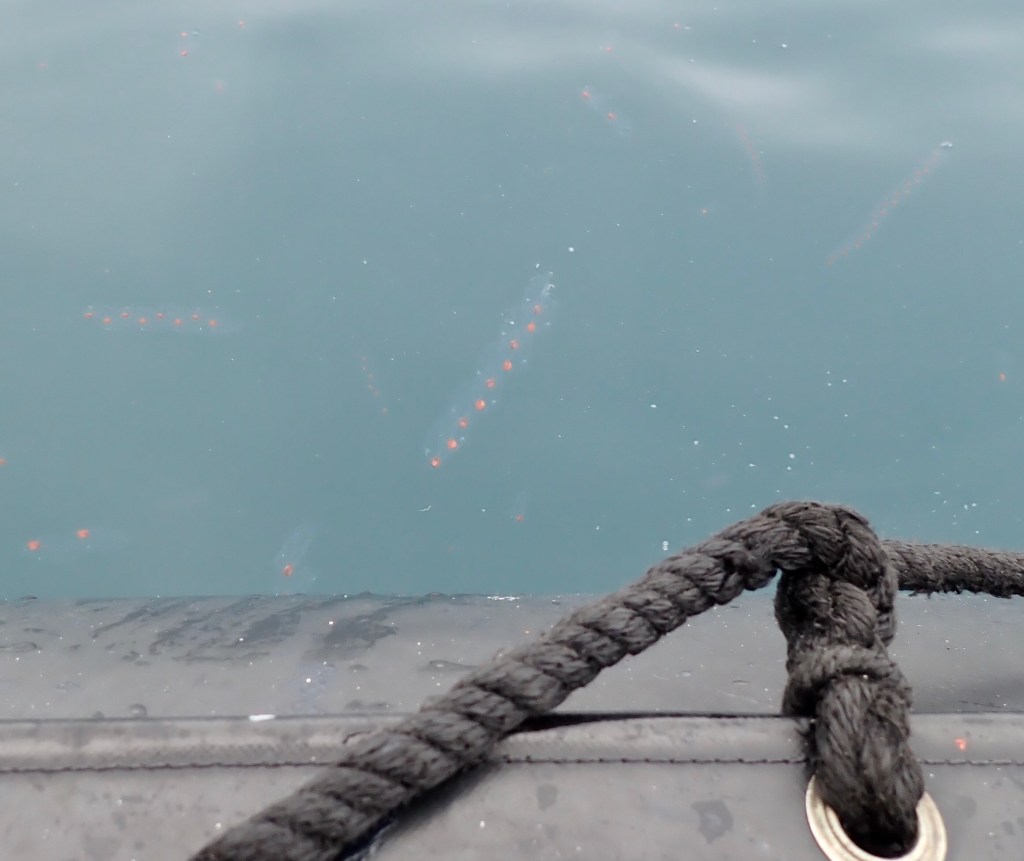
We did about a two and a half hour zodiac cruise and five minutes on shore to look at an abandoned whaling station. There were heaps of chinstrap penguins in the water and we chased some whale spouts and saw a couple of humpback flukes. We also saw some salps in the water.
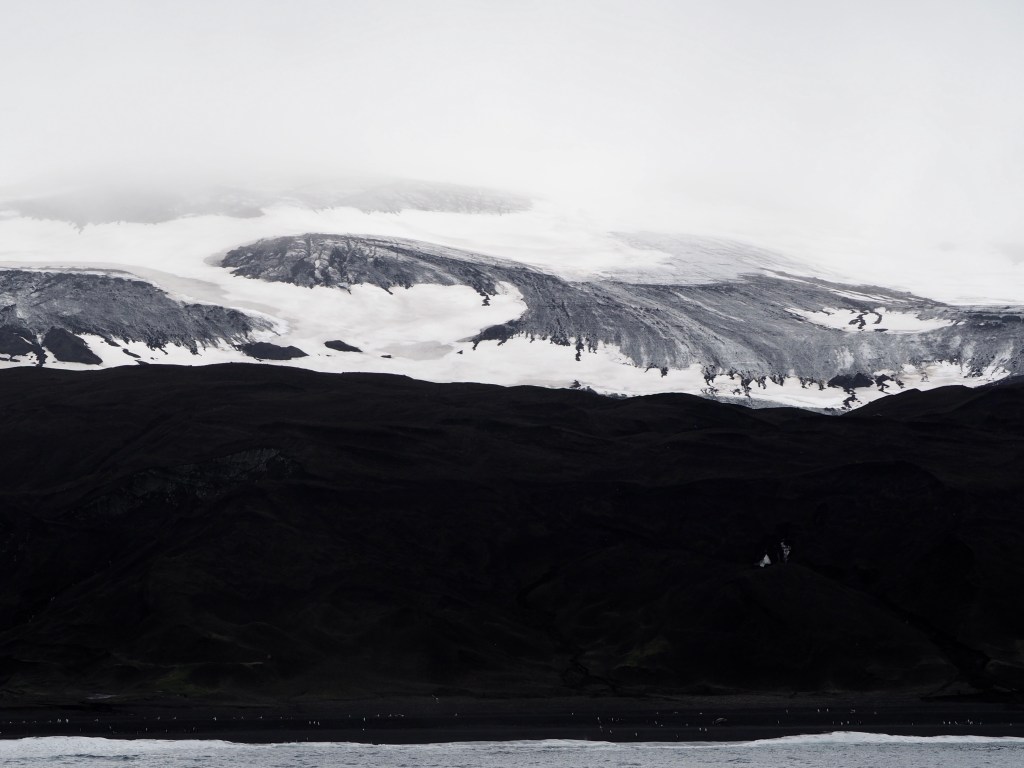
These are alive and compete with the krill for the phytoplankton which is one reason this chinstrap colony is struggling. All to do with warming waters. Seeing where the chinstraps breed is just amazing. They struggle to climb high into the hills and then trip their way down. They are tough little critters. We saw our first chinstrap babies. Then someone spotted a leopard seal on the beach. Very exciting to see the top predator. Many blow holes and such amazing rocks. Our ship moored right In The caldera. I have to say I had some nerves after the White Island eruption. You can see the heat rising and some dug into the ground and said the water was 40-50 degrees c. The sulphur smell was obvious.
Sadly when we returned to our cabin I was exhausted and then threw up (not seasick just something to do with this lurgy). I have stayed in the cabin in case I need the loo again but am feeling much better.
Recap and briefing.
DJ started. 14 km around. Peaks about 500m. One of the most visited sites in Antarctica. The Shetland Plate. Volcano created as plate slides under the continental plate. Here cone erupted so it imploded on itself. Conical structure at entrance. An old vent. Rod this is rock heaven for you. Is deception island still active. Yes. It is monitored. Dozen and a half satellite cones so could go again. Volcanic ash embedded in the walls.
Miko historian. 1819 shetlands discovered. Good place to shelter from the environment. Yachts are usually from Ushuaia and come just to the Antarctic. Johann tried it once and a storm created damage and they were all so ill he never bothered again. Neptune’s window. Whaling took place here – hundreds of whales floating here to be processed. Some bones can be seen on the beach and the remains of the stations. Clouds drifting down as we leave the island. All the stations abandoned from the eruptions in 1967 and 1969. Now a tourist haven. Different to anything else on this planet.
Ryan – pool man. Pool about to be filled when in protected waters of Antarctic peninsula. Shower first, bathing suit and robe. Slip safe shoes. Ask reception for a towel. Can or plastic glasses only. Pool rule sides. No diving. 1.5m (5 feet). Warms to 39-40 degrees Celsius.
Fabrice – chinstraps. Always seem to smile. Tough creatures. Most population in the south Atlantic here. Highest concentration of penguins. 8 million pairs. South sandwich biggest population. Lots of them there. Mount Curry erupted but we don’t know how that affected the chinstraps. Tough to get in and out of that colony in the rough seas. Not an easy life. Half the population of deception bay has gone in 30 years. Dirty penguins go out for three days at least to feed and can travel up to 50-60km to forage. None here in winter. They stay at sea for at least six month. Land just for breeding.
Solan. Be in position for a continental landing. 6.15am wake. 6.30am breakfast. Charlotte bay.
Another first today as they had never done the long zodiac ride before. Normally off at the first place, cruise, back to ship and the ship moves and then a second excursion.
Bar Talk! Join Wayne for his talk The Last Ice about his time guiding a National Geographic film crew in the High Canadian Arctic. Alas too tired…

 Antarctica 2019