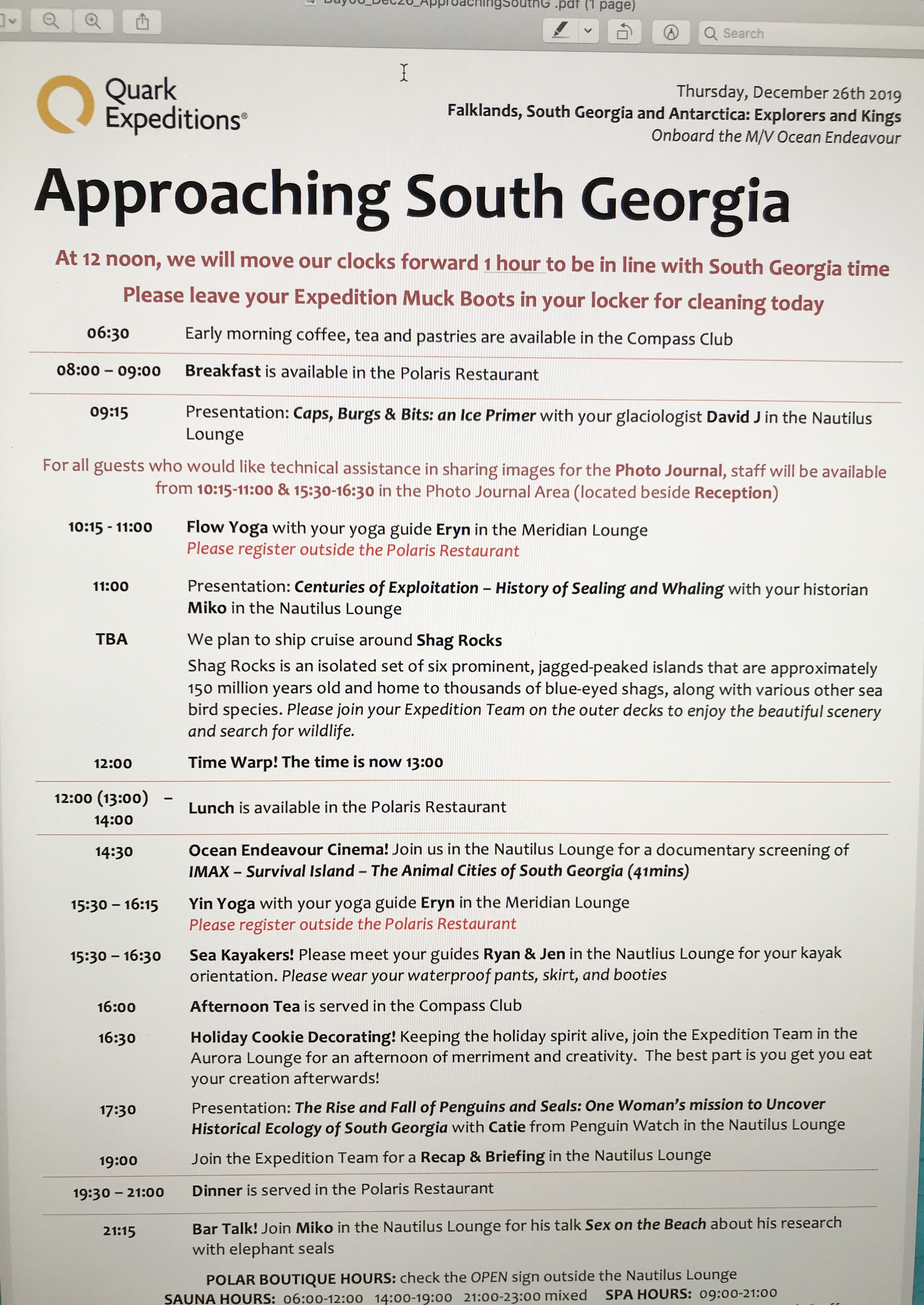
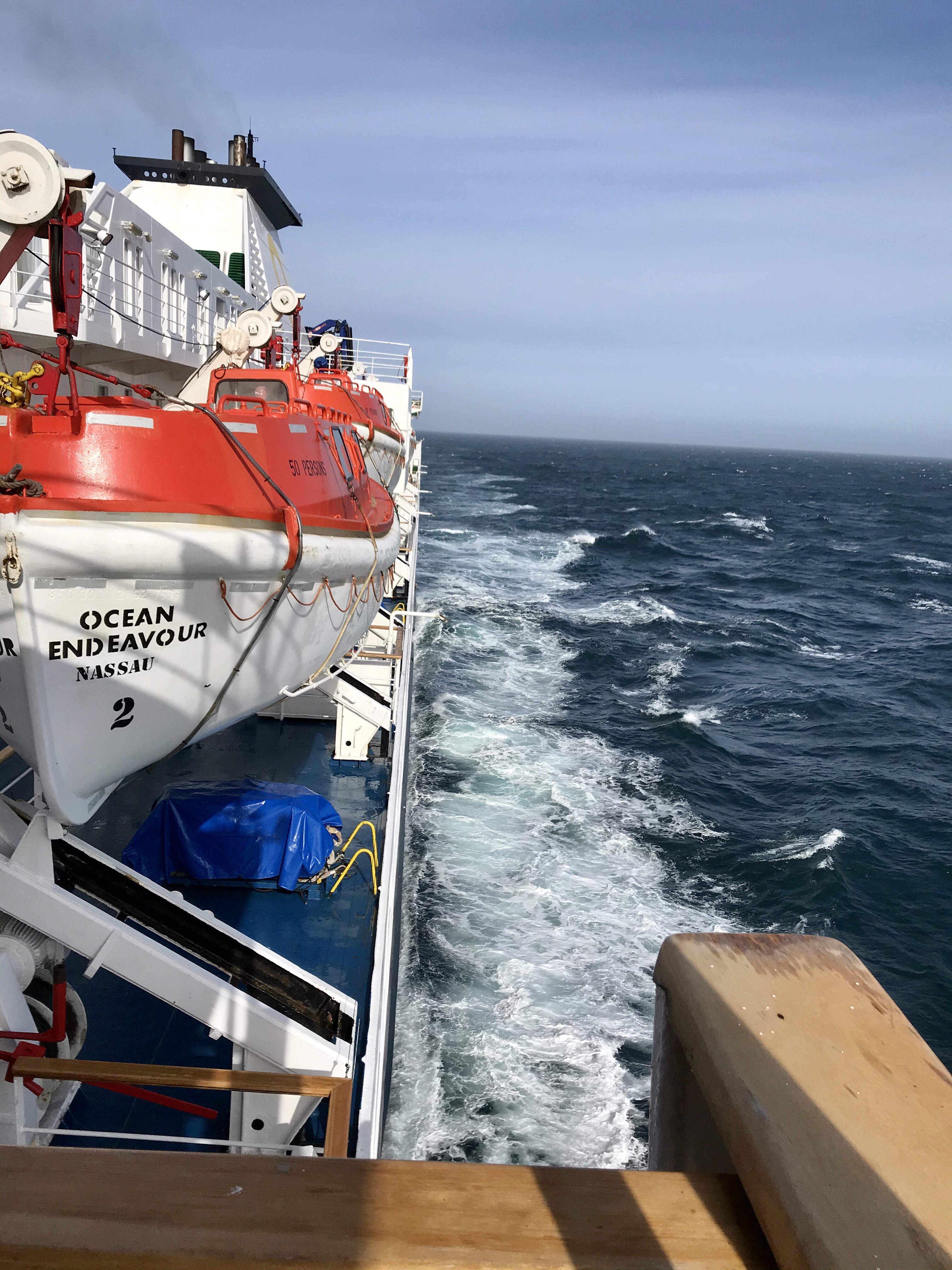
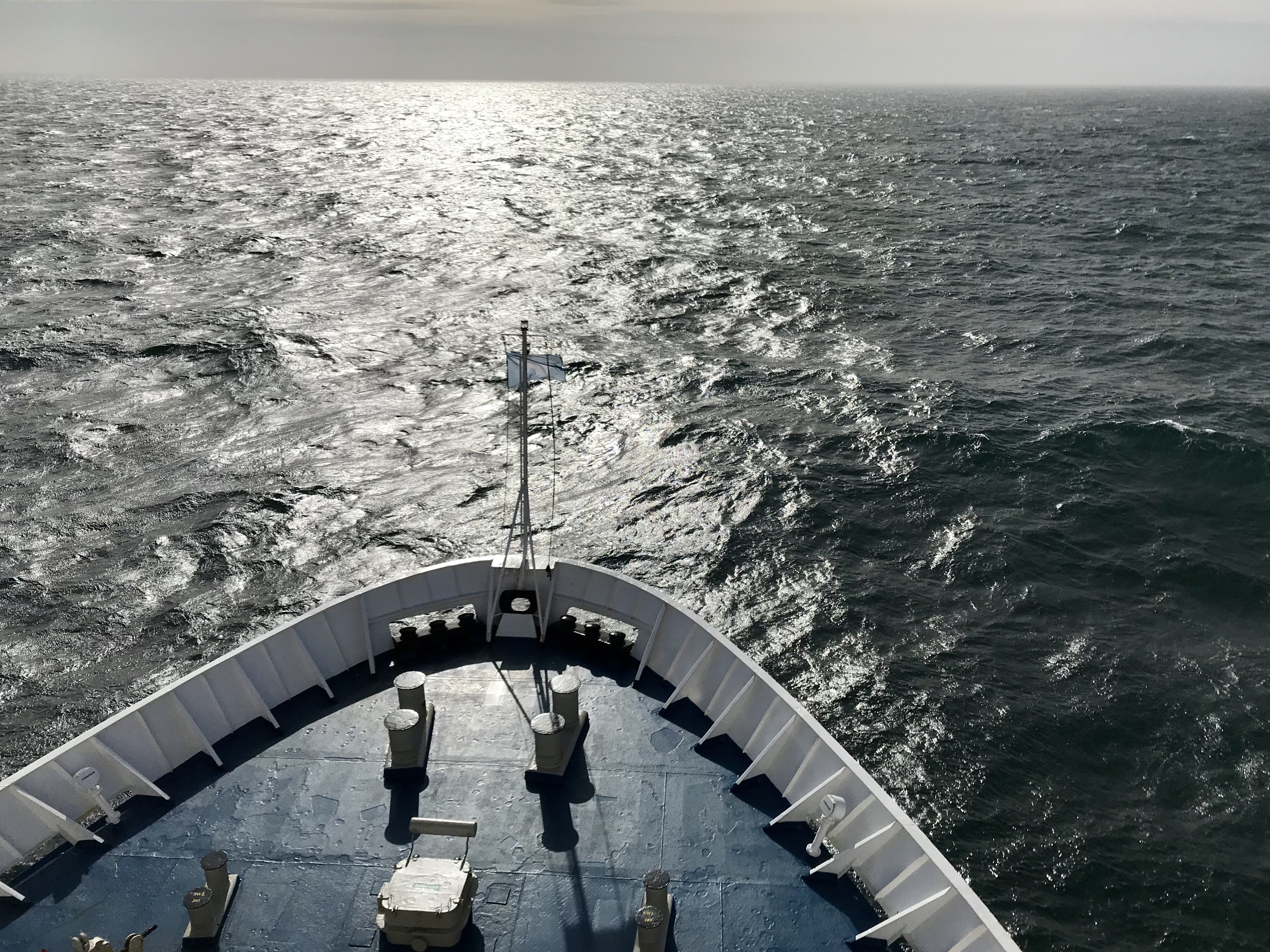
Up earlier today, showered and out on deck. Another beautiful day but now with a distinct chill in the air. 5 degrees. Garrie spotted a whale spout. Some new small birds off the stern.
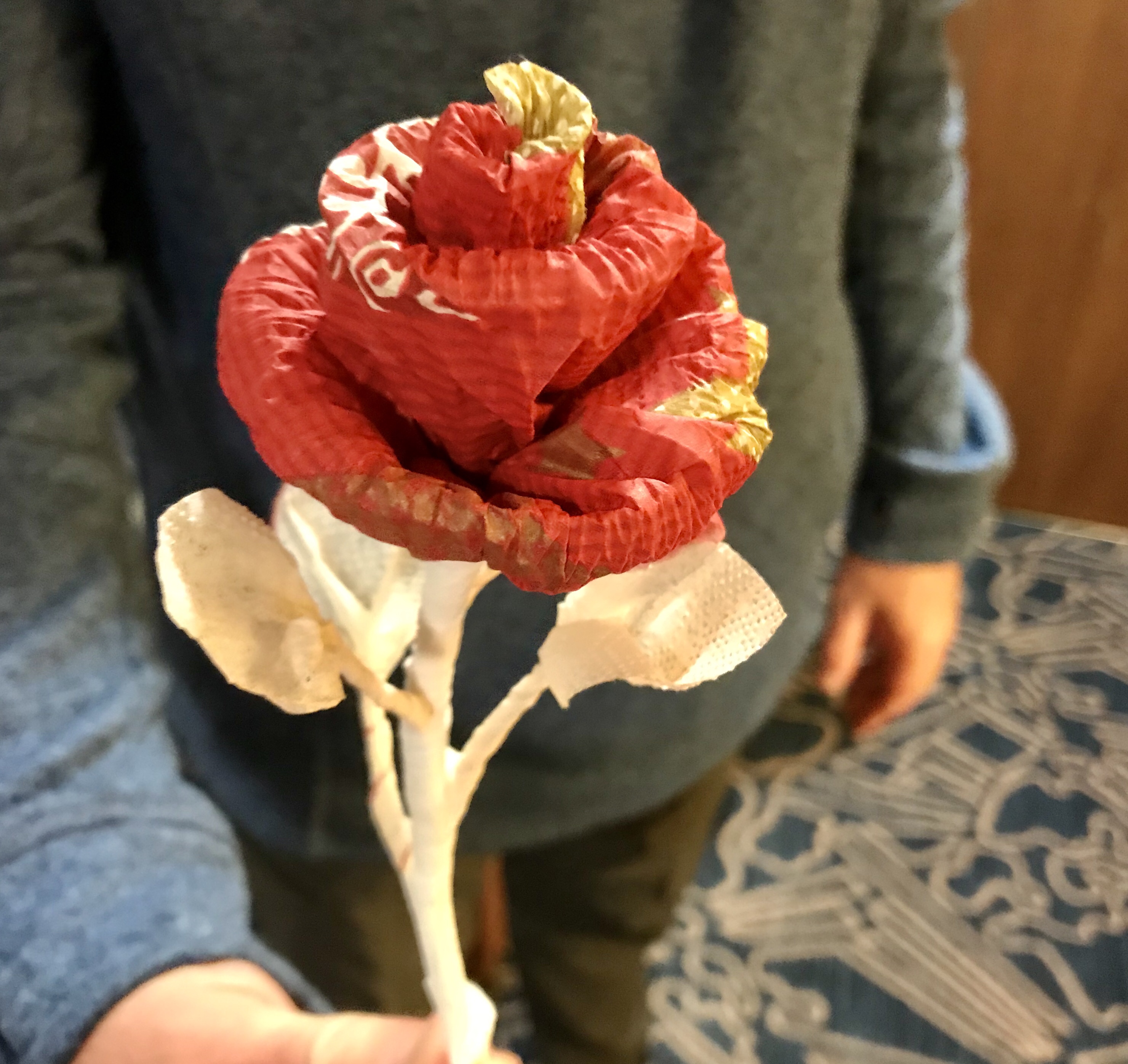
Down at breakfast Kevin, one of the supervisors, made a beautiful flower out of paper napkins.
We have slowed down due to the swell. This is the last year of this ship being with Quark as it is being sold to Intrepid an Aussie company who wants to get into Antarctic work.
So the first lecture of the day delivered by DJ.
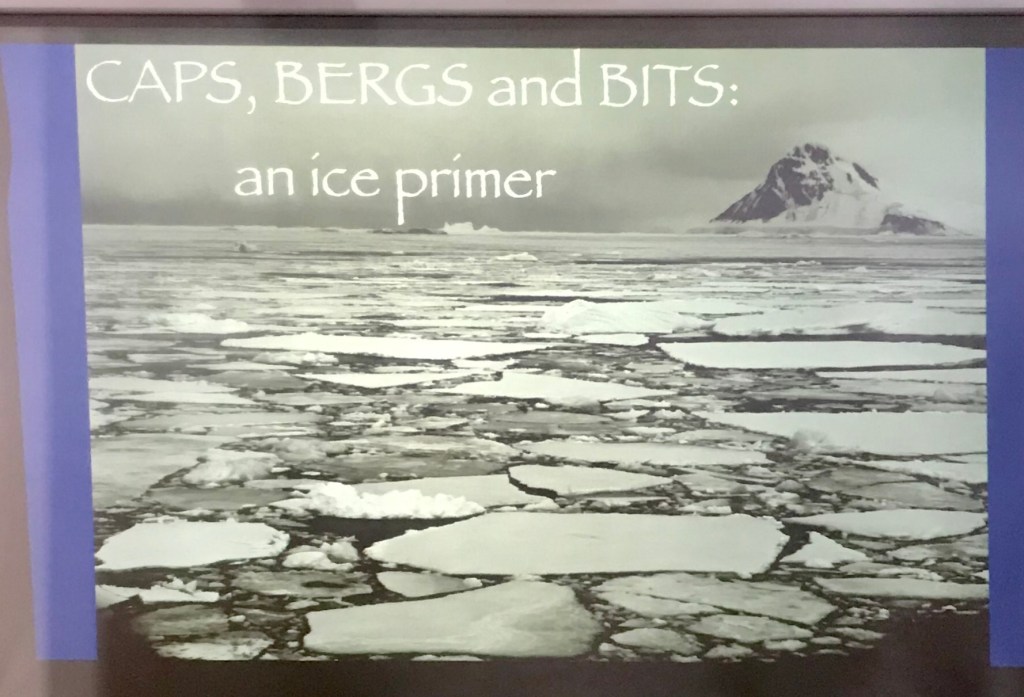
Ice cores are history books.
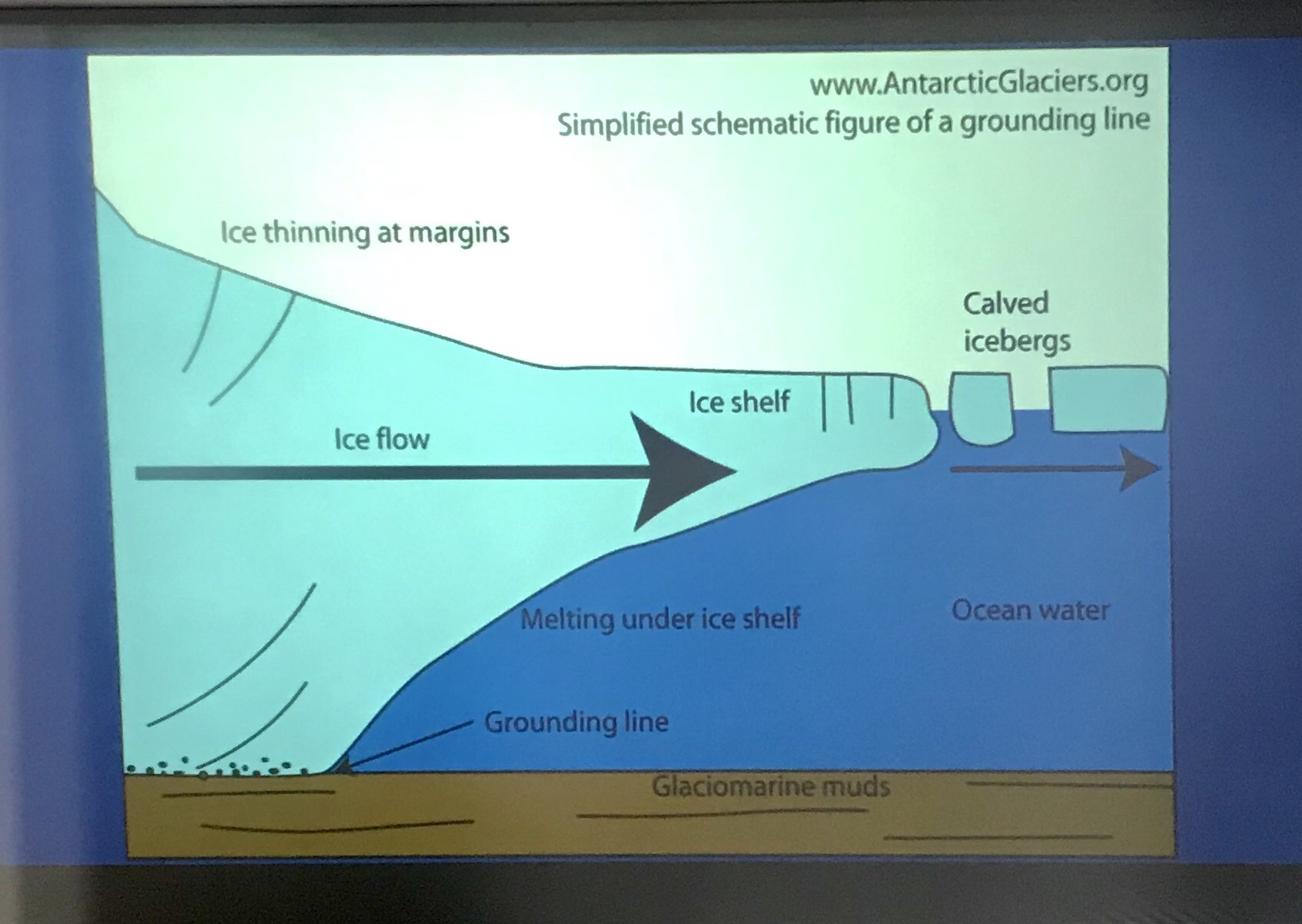
Types of glacier – valley glaciers. A river of ice. Cirque glacier – start in a basin – the one in Ushuaia. Ice sheet or continental glacier – only two currently greater than 25000 square kms Antarctica and Greenland. 90% of fresh water on earth stored here. Ice cap – lake on a dome feeding rivers. Ice shelves – flat top travels in sea. Can be thousands of square kms. When it moves under the force of its own weight it is then a glacier. Glacial ice is considered a rock. Some glaciers move gently some surge. 3-8x faster than normal. Ice fall. Steep areas. Tidewater glaciers. (Valley glacier meets the sea). Braided gravel bars. Next to teenagers glaciers are the most erosive force on the planet. Moraines are accumulation of glacial till.
Glacial recession. Popova glacier. Receded 1km between 1932 to 2002. Losing depth and length in Antarctica mainly in the west. 97%. – 99% consensus humans creating change. Almost all glaciers are shrinking. davidjeffphotos.com
Back outside for more viewing. With the speed we are travelling whales are a fleeting glimpse.
Have I mentioned the toilets are like plane toilets – much more about air pressure than water. Highly interesting.
Lecture – centuries of exploitation – history of sealing and whaling with Miko.
Some older illustrations that were very incorrect. Jonah could not have been swallowed by a whale. Selkie myth. Problem was they didn’t know what they looked like. The surface of the moon was filmed before a whale swimming underwater (only beached whales seen). In 20 years killed 70,000 sea otters and 1.25 million fur seals in 1740s Bering’s ship St. Peter in the north.
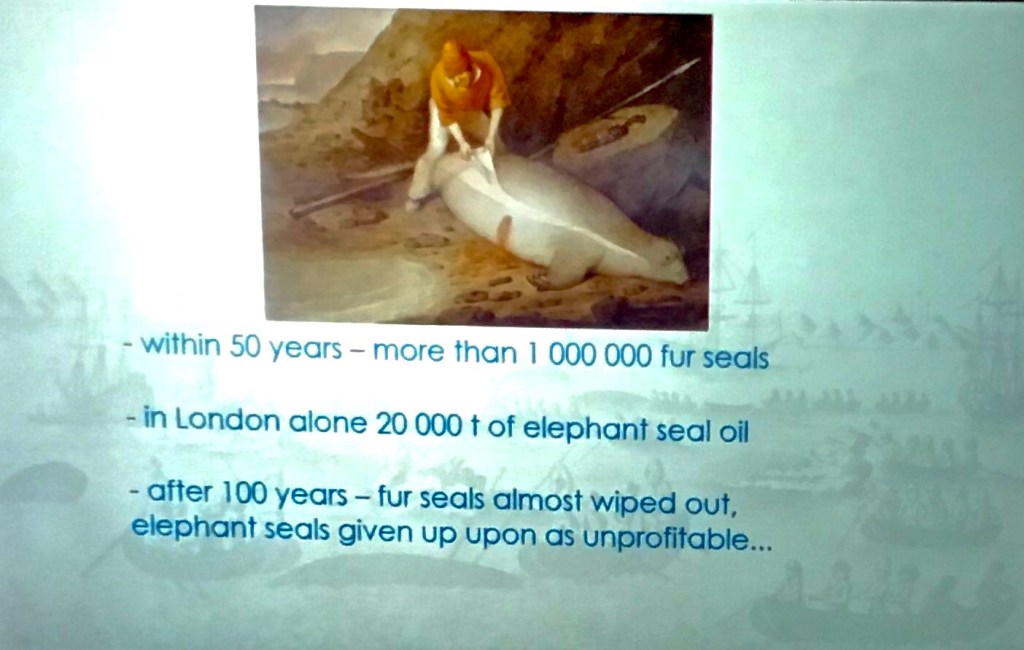
In the south elephant seals for blubber and fur seals for coats. 1819 south Shetland islands found. By 1825 they had killed all the seals. Within 50 years more than a million so a very few that managed to remain are the population so lacking genetic diversity and could be easily wiped out by a virus.
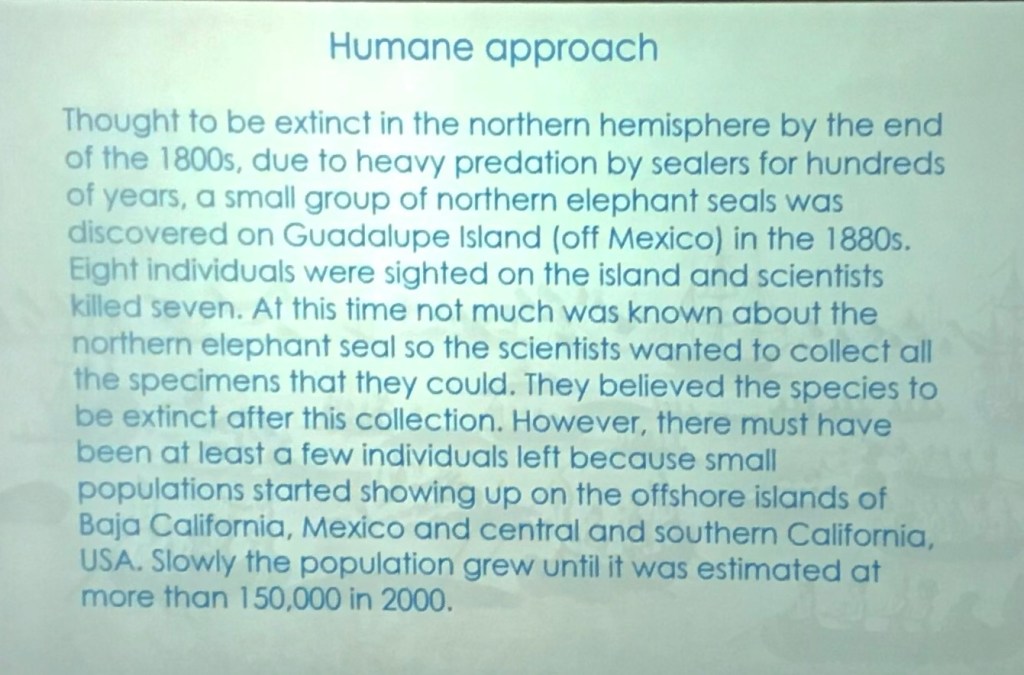
Whaling. Two first international industries were sealing and whaling. Right whale named as easy to kill as not fast and also big.
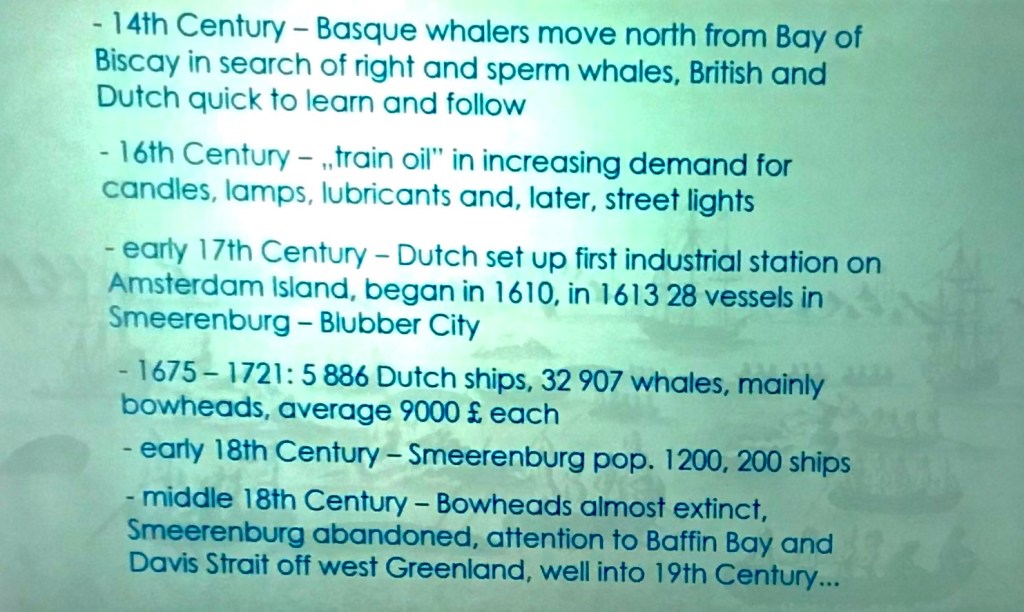
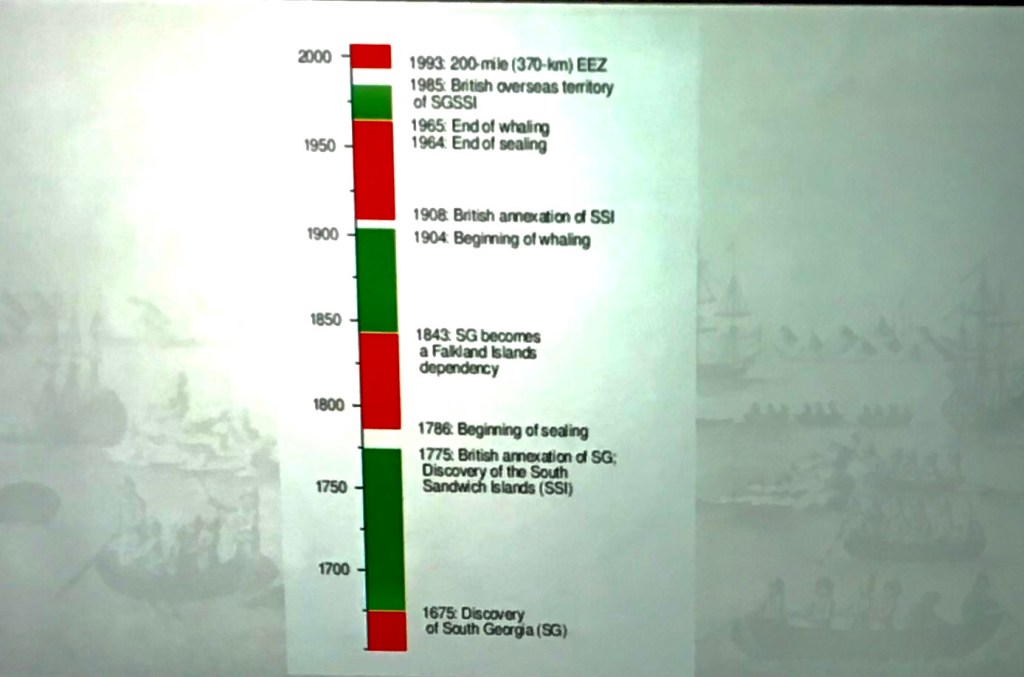
End of 19th century the explosive harpoon. Then mounted on steam boats so escalation and also other, faster whales targeted. Carl Larsen died in 1924 whale station Grytviken 1904 produced 70% of world’s oil. First two years caught everything in the bay directly in front of the station. Film of the old days with cruel practices. It’s uncomfortable to watch. 1930. On South Georgia. Not a film for vegans. Easy to judge now but thankfully times have changed (with a couple of exceptions). Next step was factory ships. 1936 one ship alone took over 900 whales. Almost 2 million whales killed in Antarctica in the 20th century. Many whales still rare.
Still problems with whaling and the Canadian seal hunt continues… Our over fishing the problem.
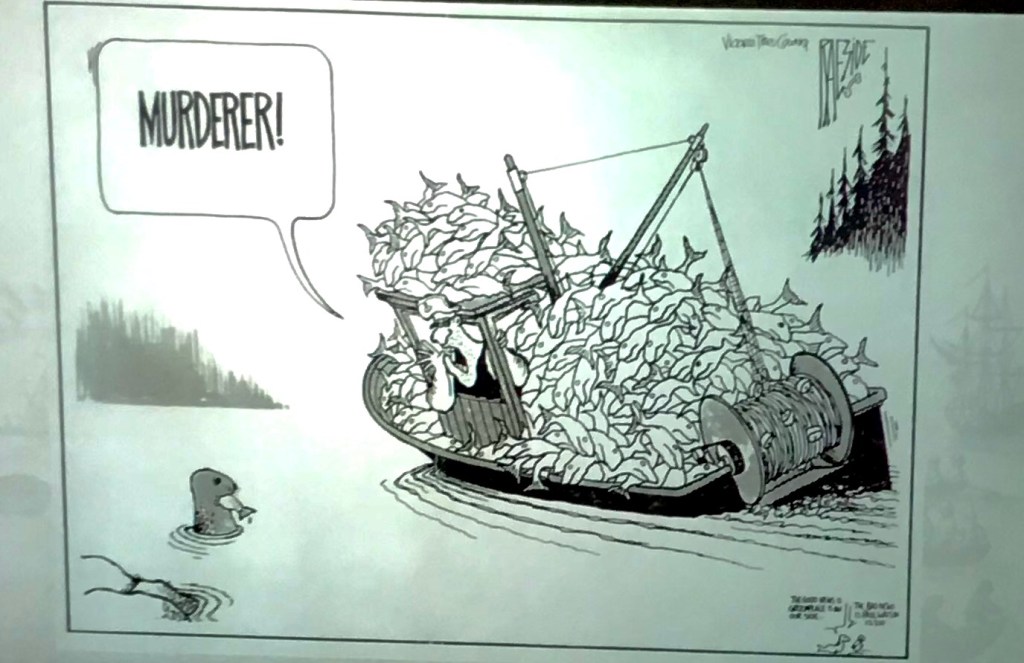
Commercial whaling Norway, Iceland and Japan. Faroe Islands claim tradition. Marine life also affected by plastic pollution. Also fishing net entanglement. If they live, we live. Sobering stuff.
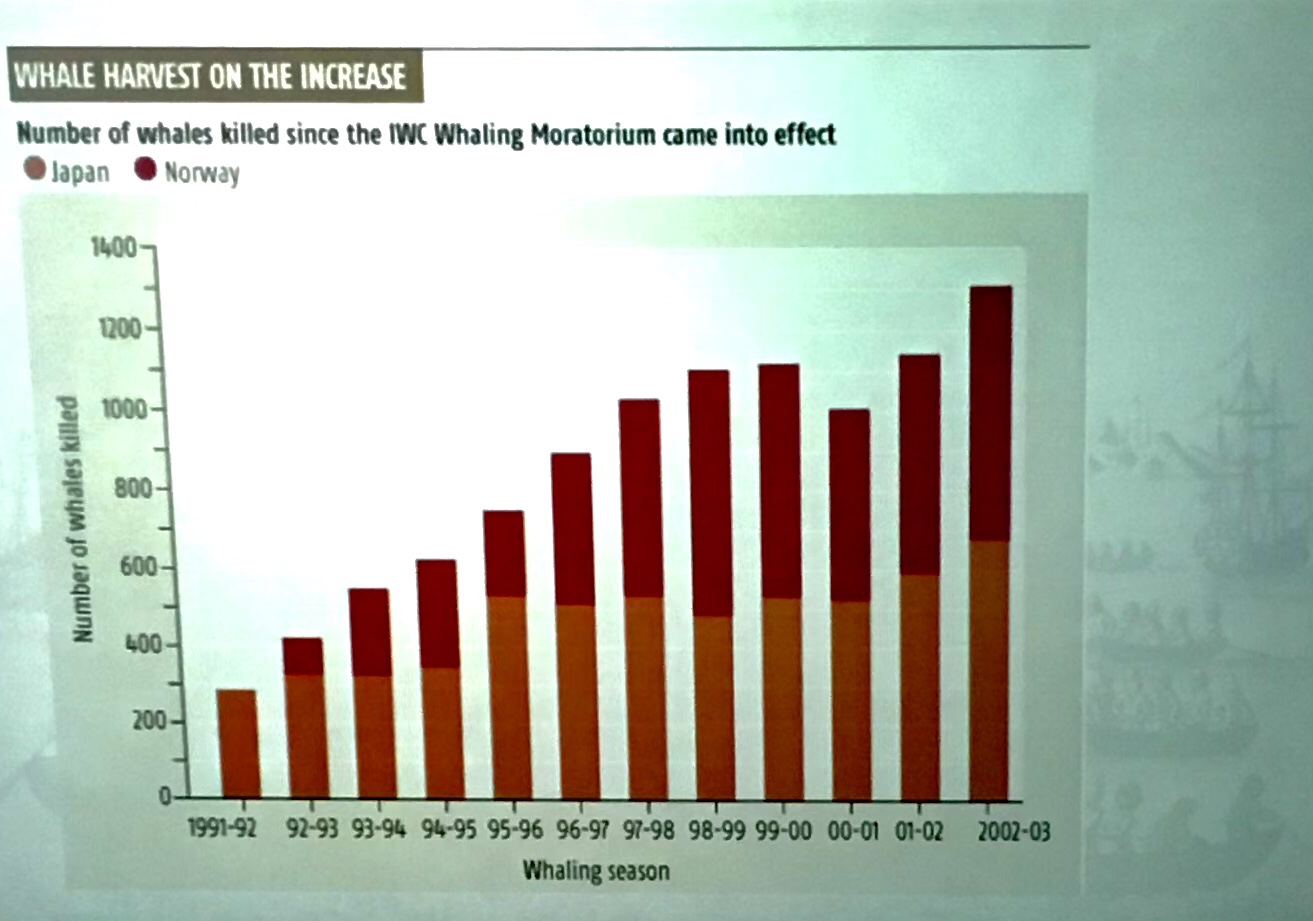
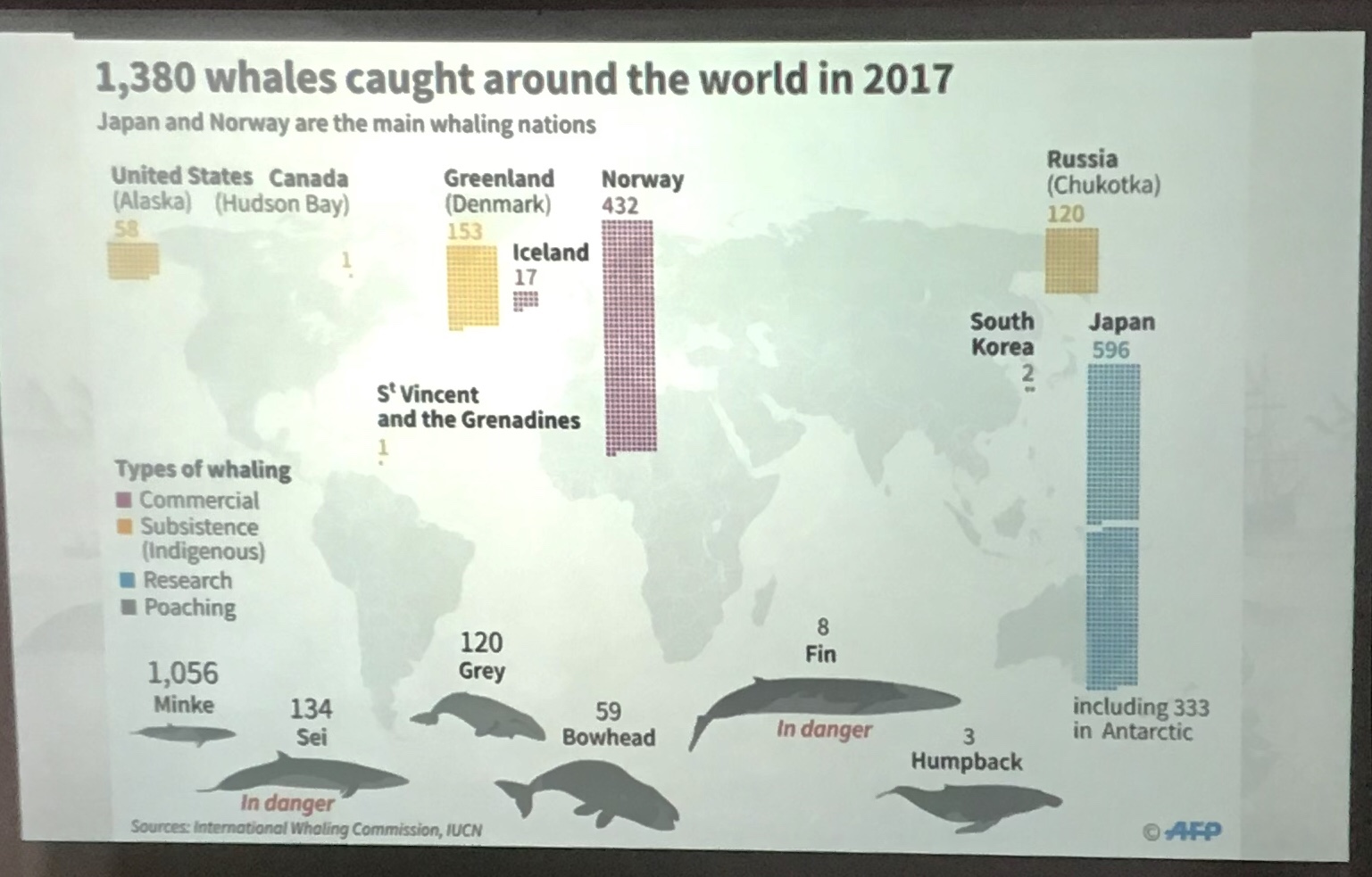
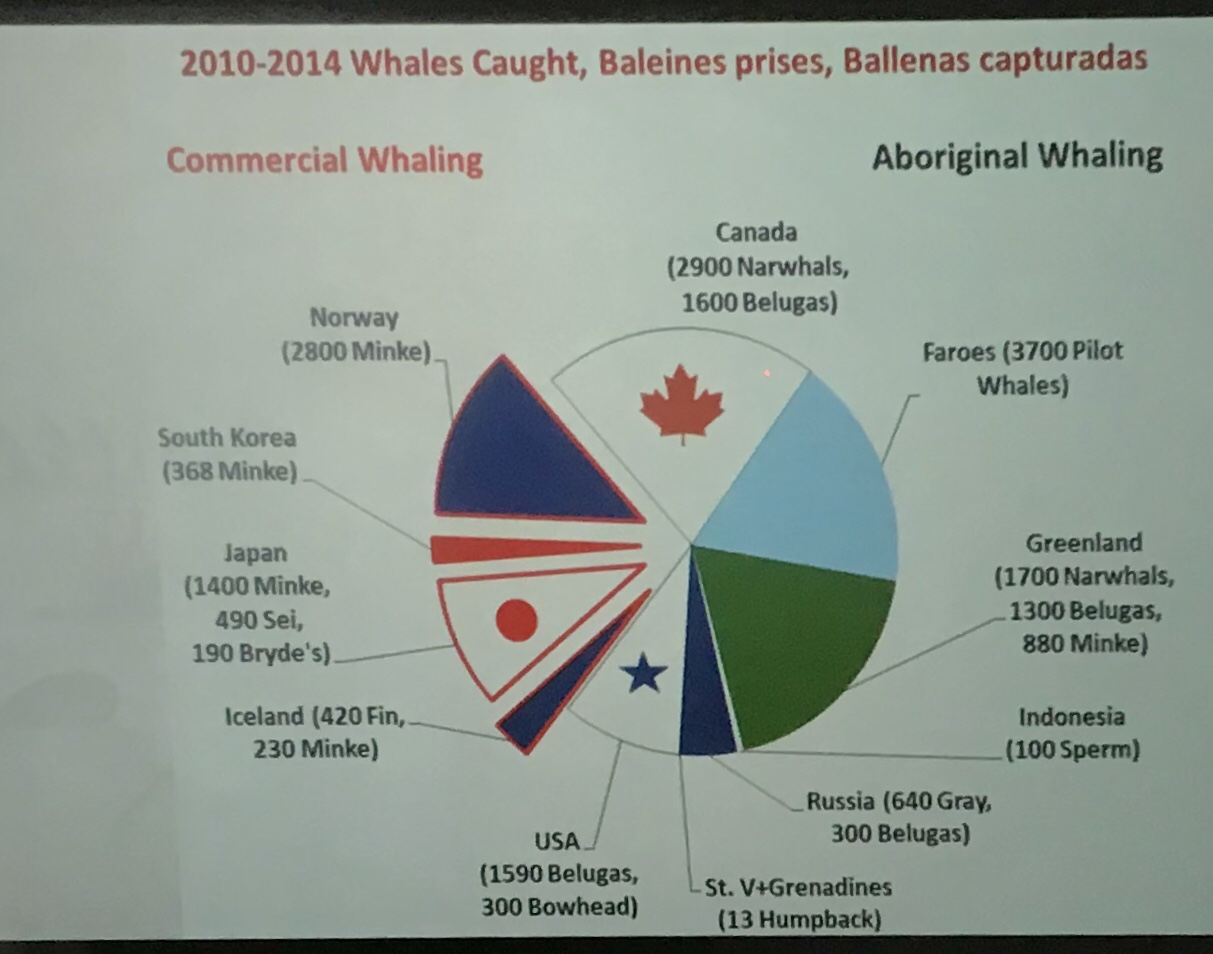
It’s been relatively calm on this crossing but now starting to roll quite a bit more.
Lunch and an hour time change forward and suddenly it was 1pm.
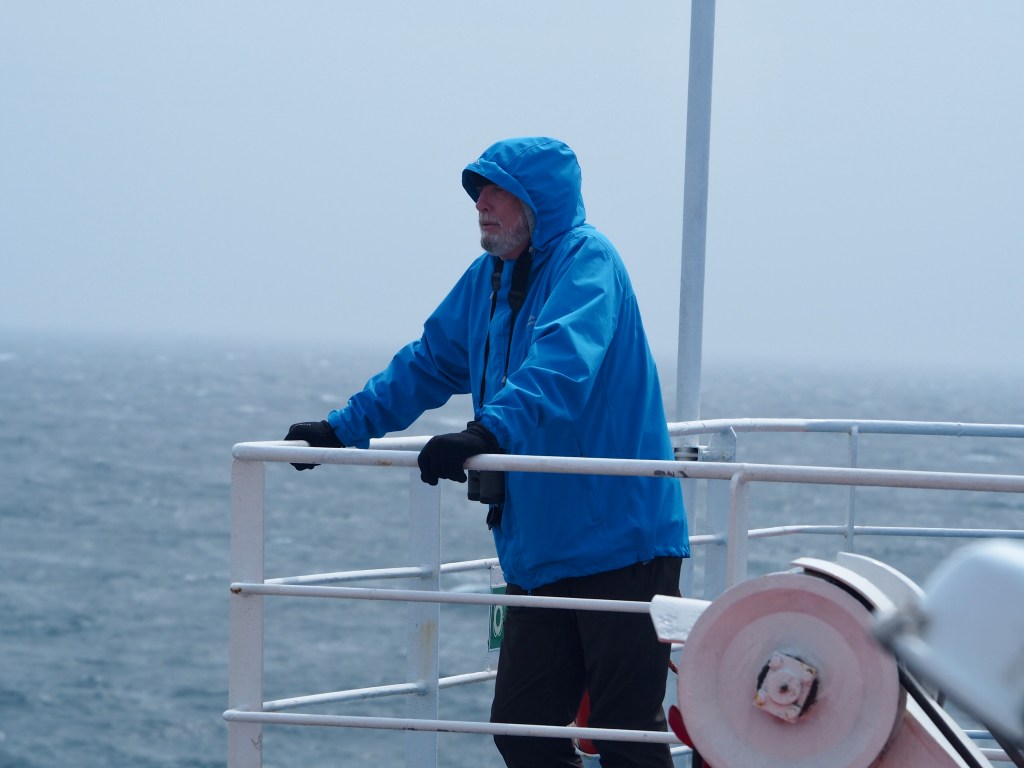
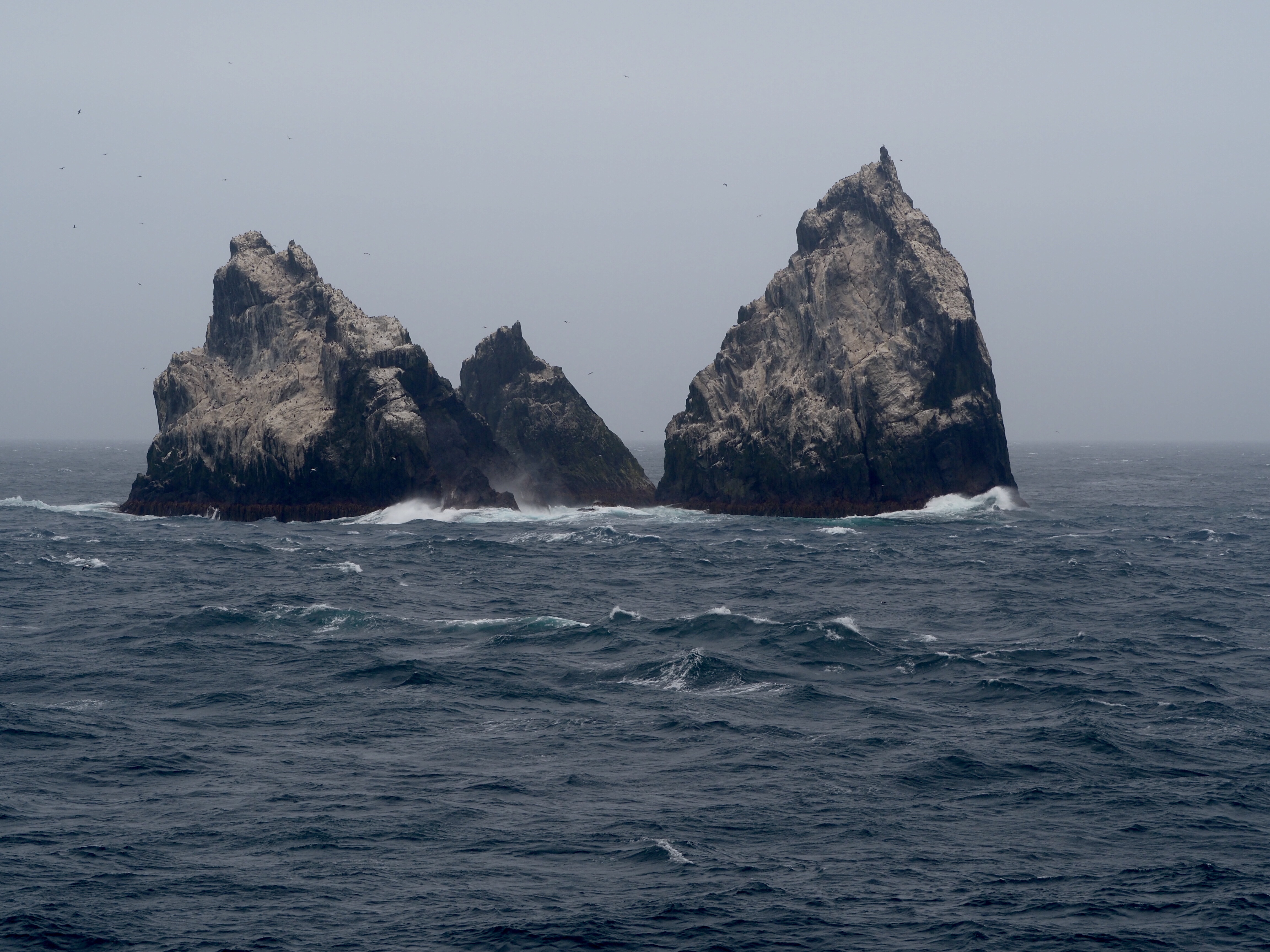
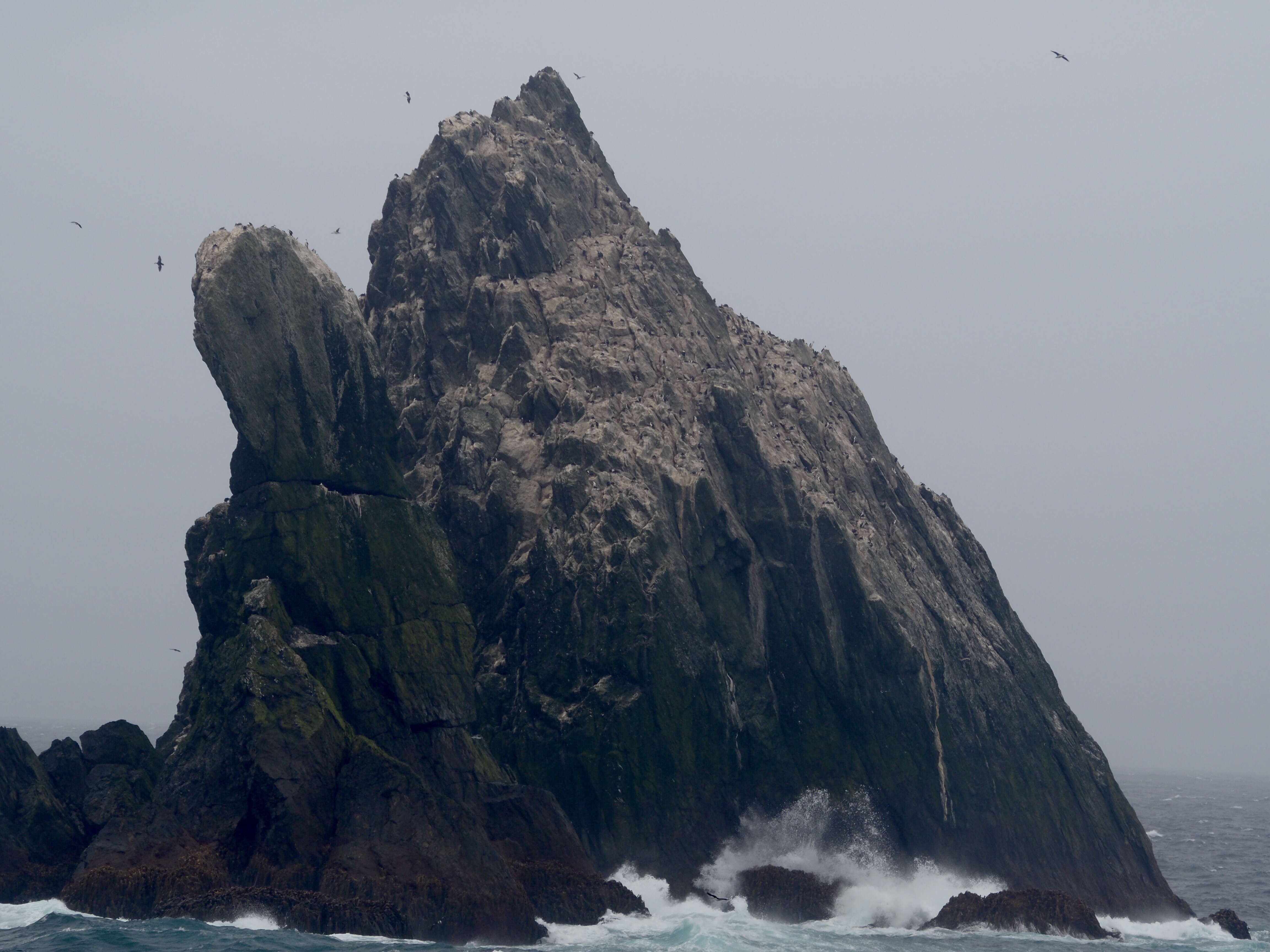
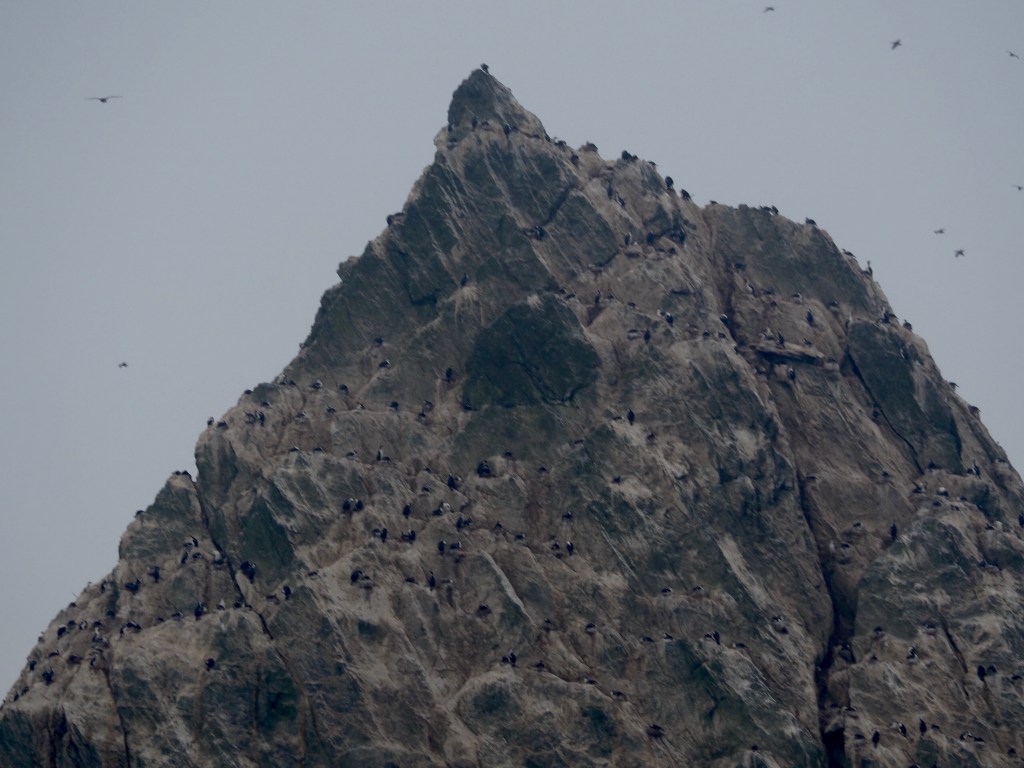
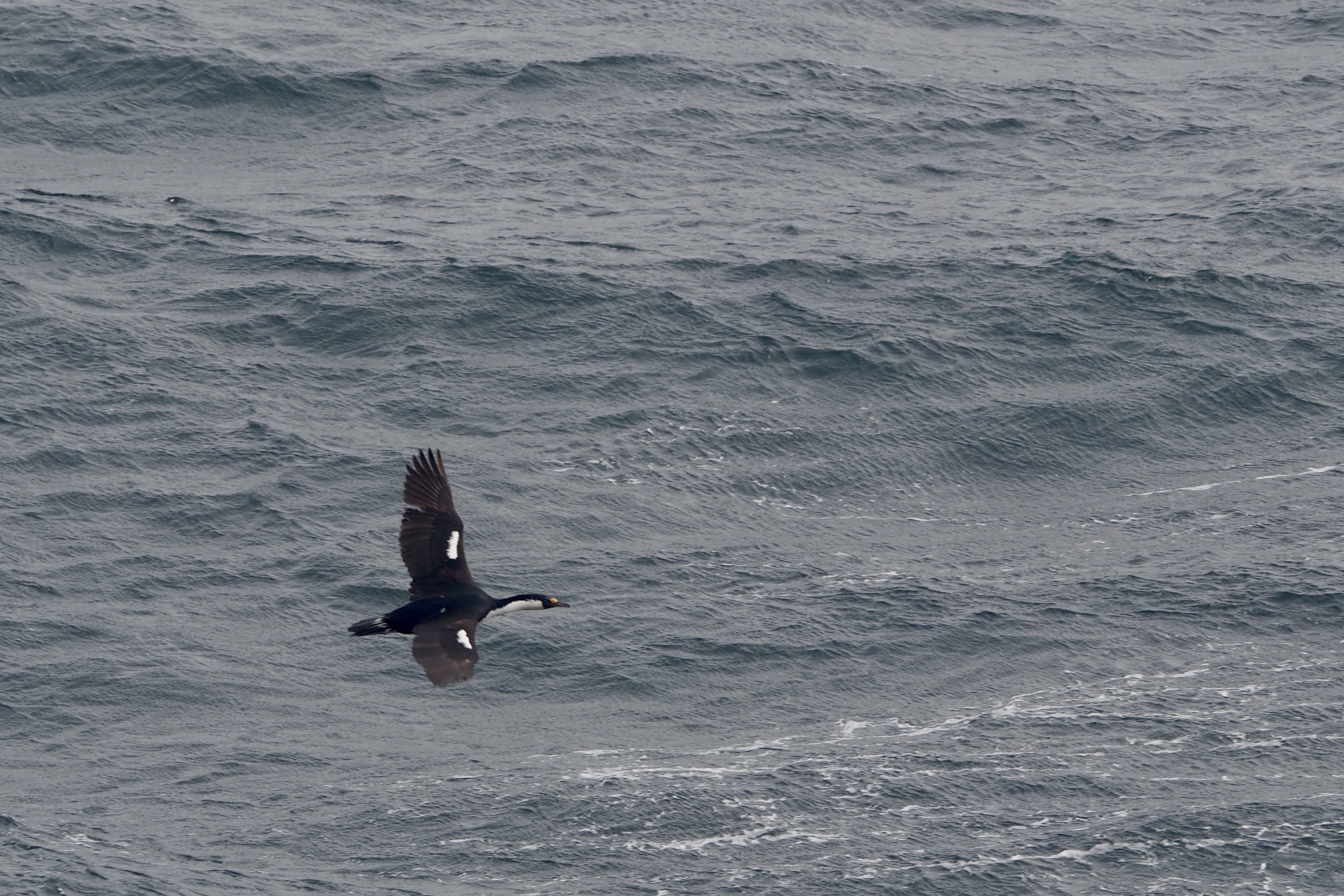
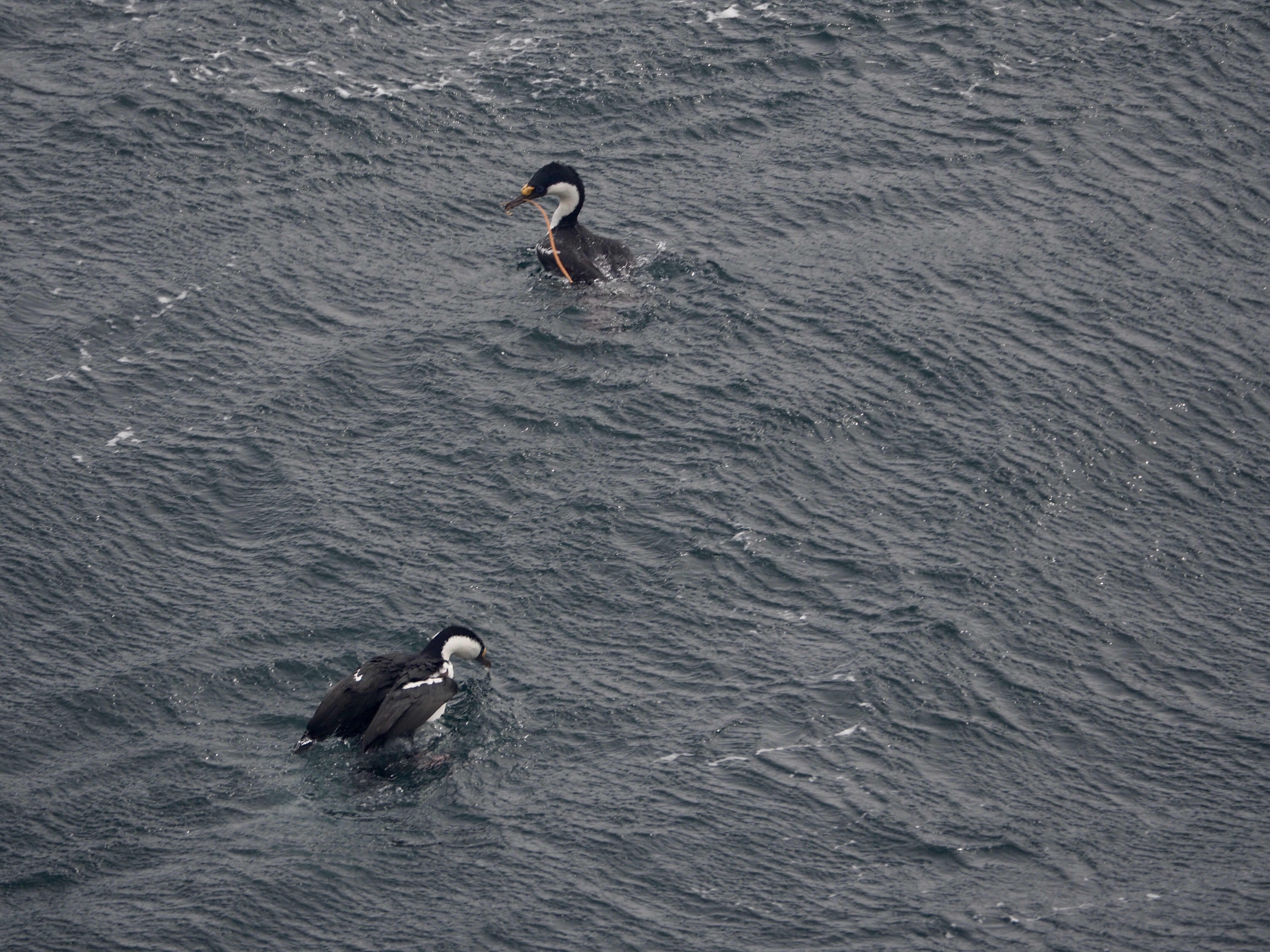
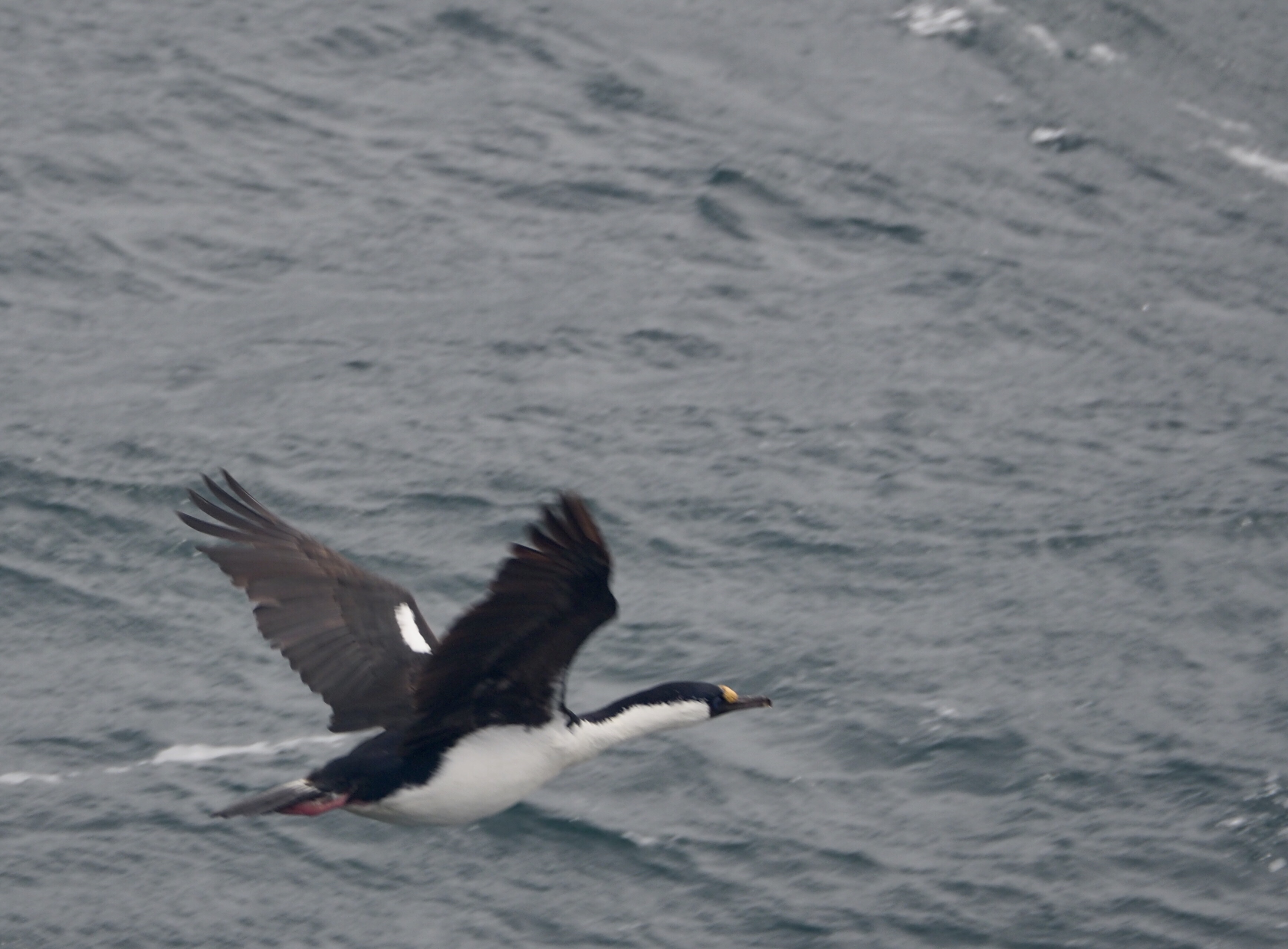
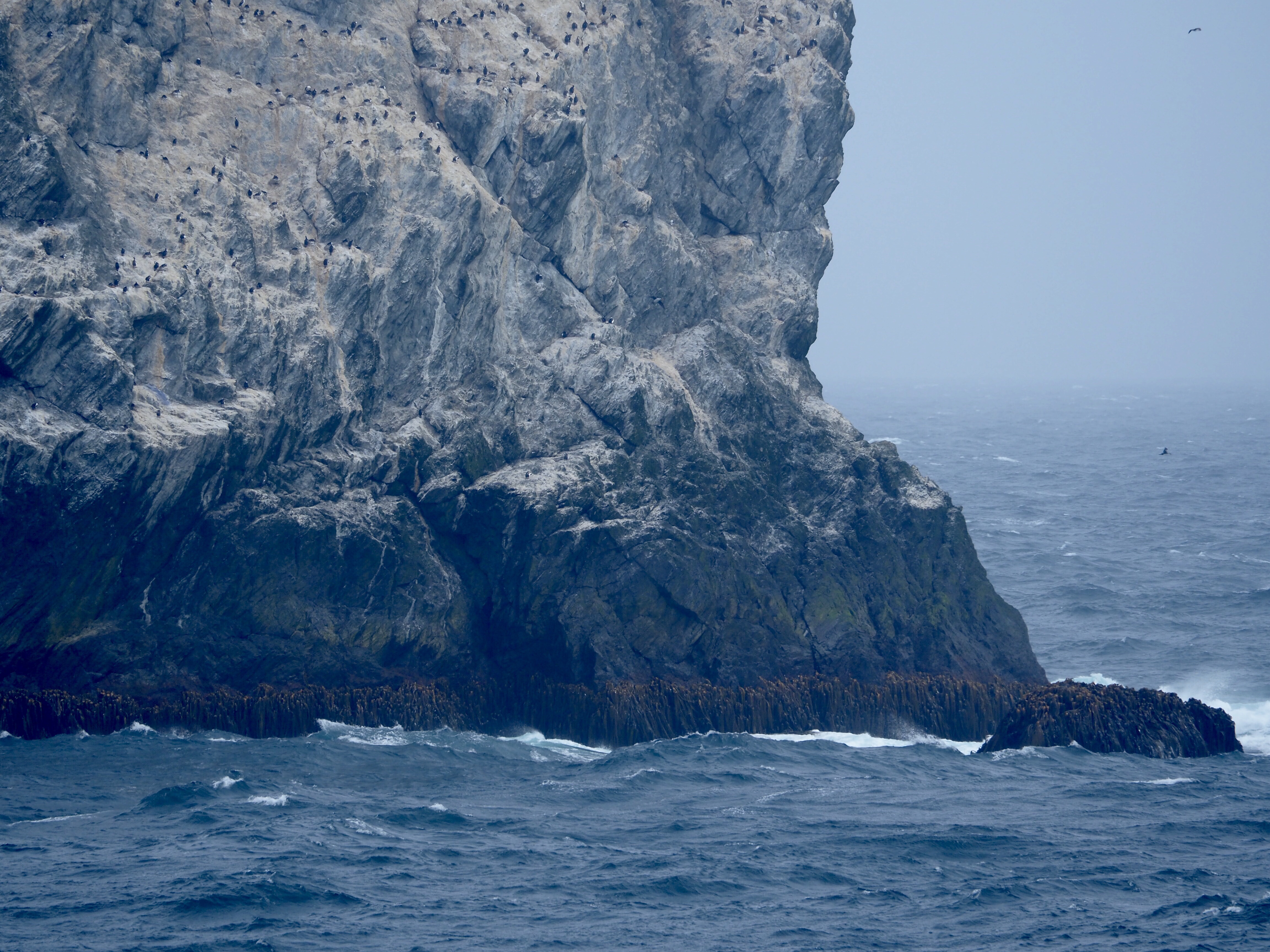
Shag Rock appeared about 2pm. These half a dozen rocks in the middle of no where are home to thousands of breeding cormorants. They take up every conceivable space on the rocks. Our Captain took a circuit around them which also meant we coped wild winds that almost took me off my feet and it was the coldest I can recall since the sleigh ride in Lake Louise. Eventually we were driven inside. Garrie saw a seal pop it’s head up too.
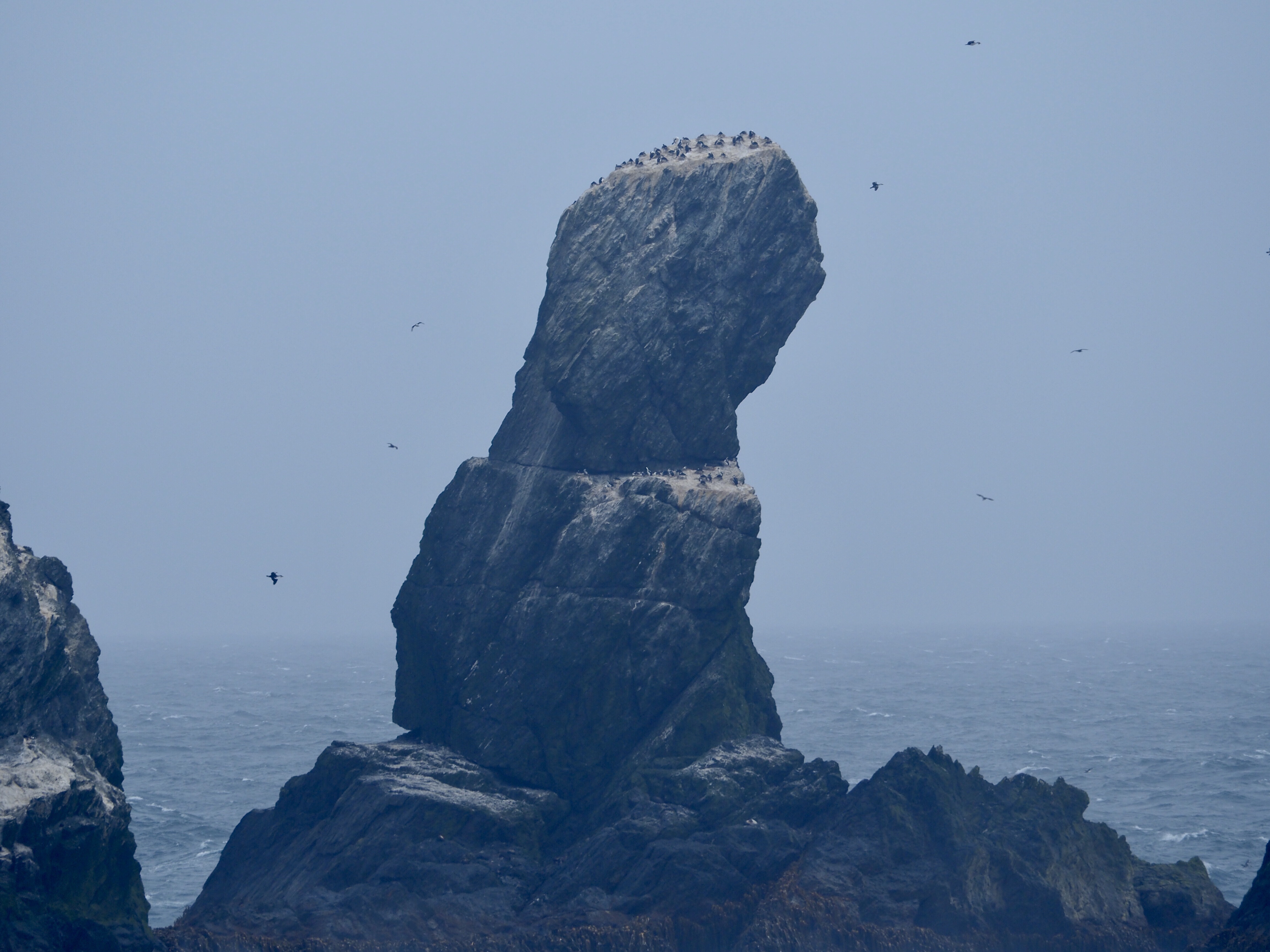
Beer of the day is a Stella Artois. Rating today is a 7. (Cheryl has been trying to tell him….Texan Cheryl that is) Square glass strange to drink from and Garrie does not like it. I ordered a Blue Whale which is supposed to be the equivalent to a blue moon. Not blue?!?
We decided to skip the Christmas cookie decoration event and just sat and chatted to Cheryl and Mike until the next event.
The Rise and Fall of Penguins and Seals: One Woman’s mission to Uncover Historical Ecology of South Georgia with Catie from Penguin Watch.
DR Catherine Foley. Shifting baselines syndrome. We think the environment is measured from the 10 year old perspective. This illustrates the reality.
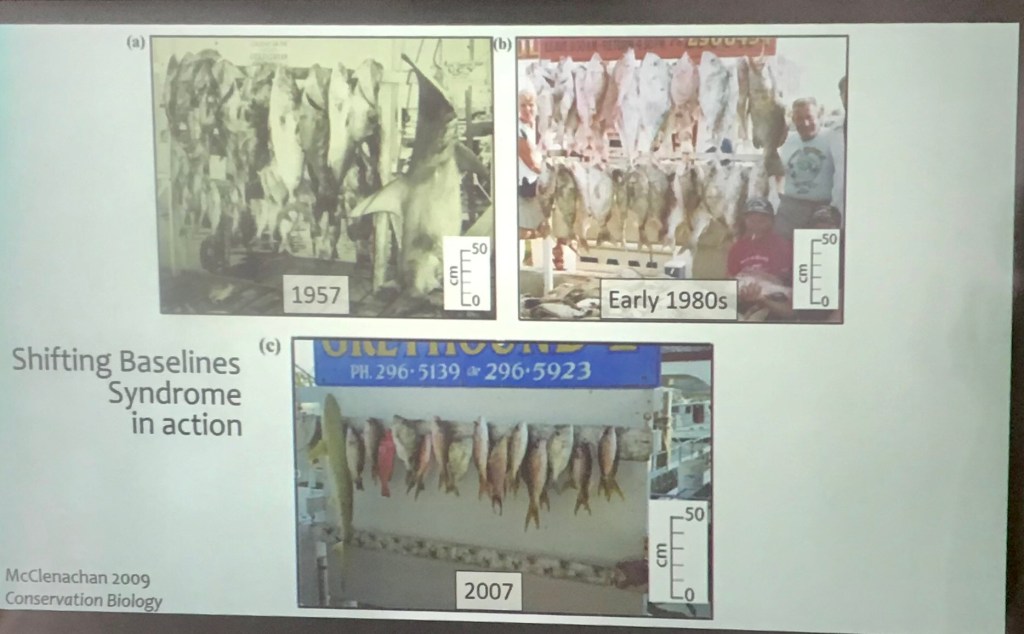
South Georgia first humans 1770s so only short human history. Capt Cook first. By 1910 killed off all seals. King penguins also exploited by humans. Used for fires as mentioned before. Used the yellow sections to decorate their shoes. The work Penguin Watch is doing uses time-lapse photography a pic taken every hour of every day. Ships of opportunity used to get where they need to be ie this ship and also use satellite imagery. How has historic sealing affected the population of seals. 1930s recovery began once humans stopped harvesting. They had been functionally extinct. Visitor numbers increasing.
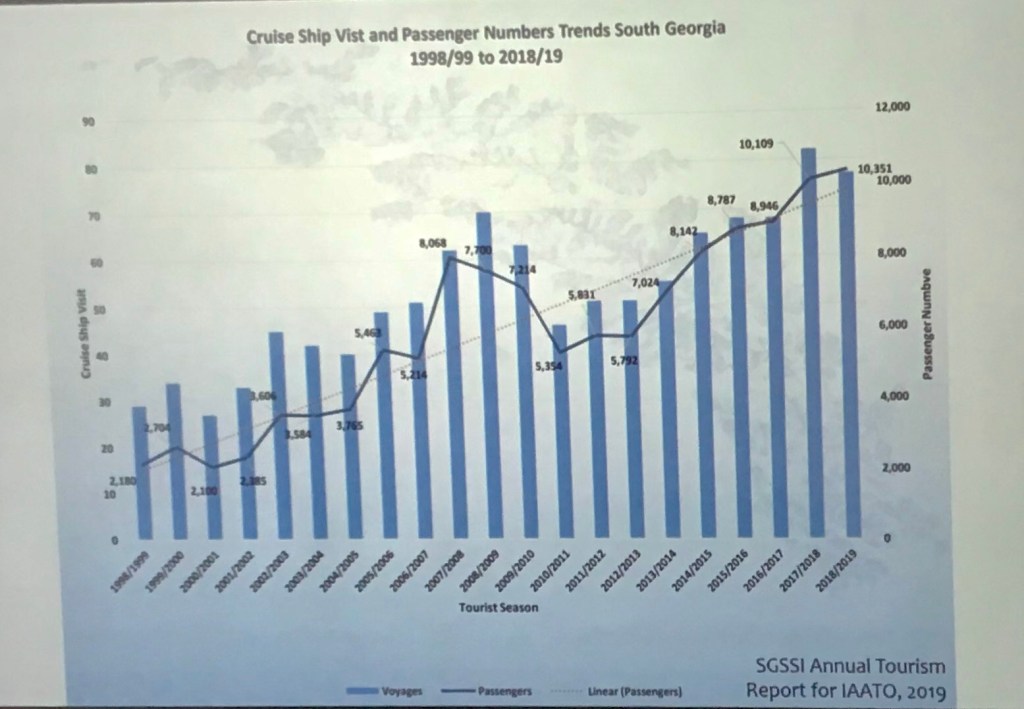
So seal – human interactions an issue. Fur seals damage Tussoch grass. That destroys breeding places for flying birds. However what was the baseline before humans arrived?
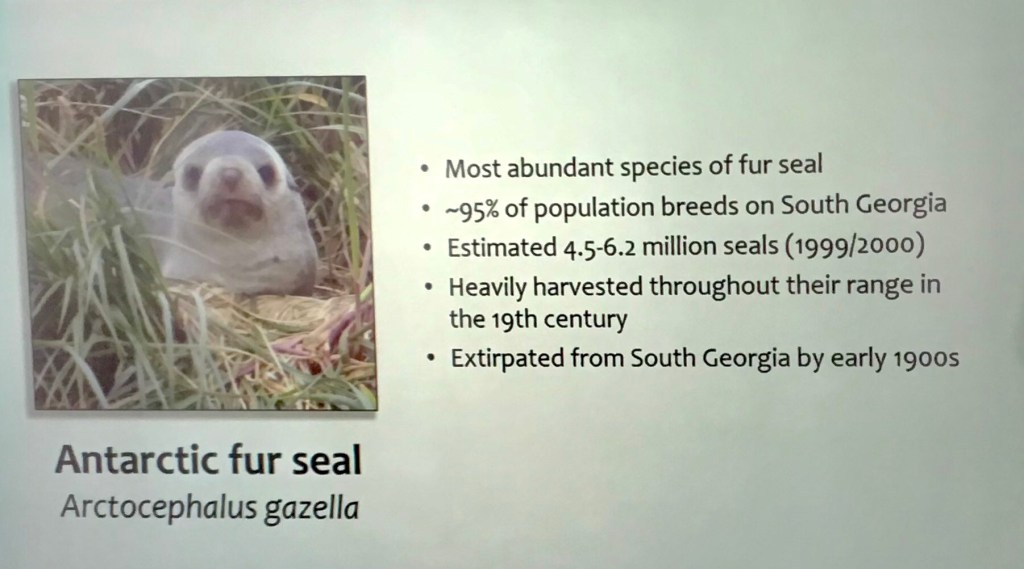
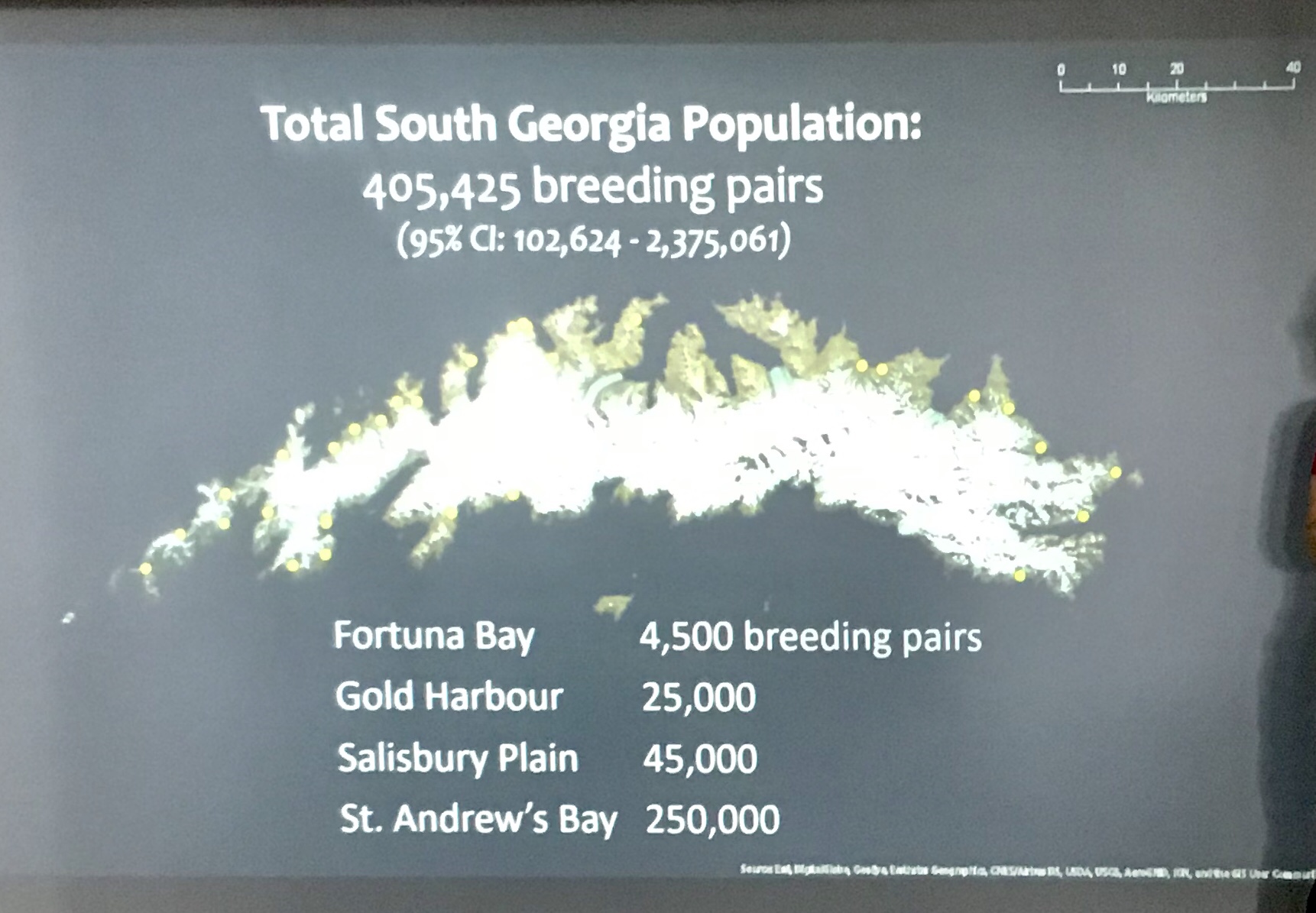
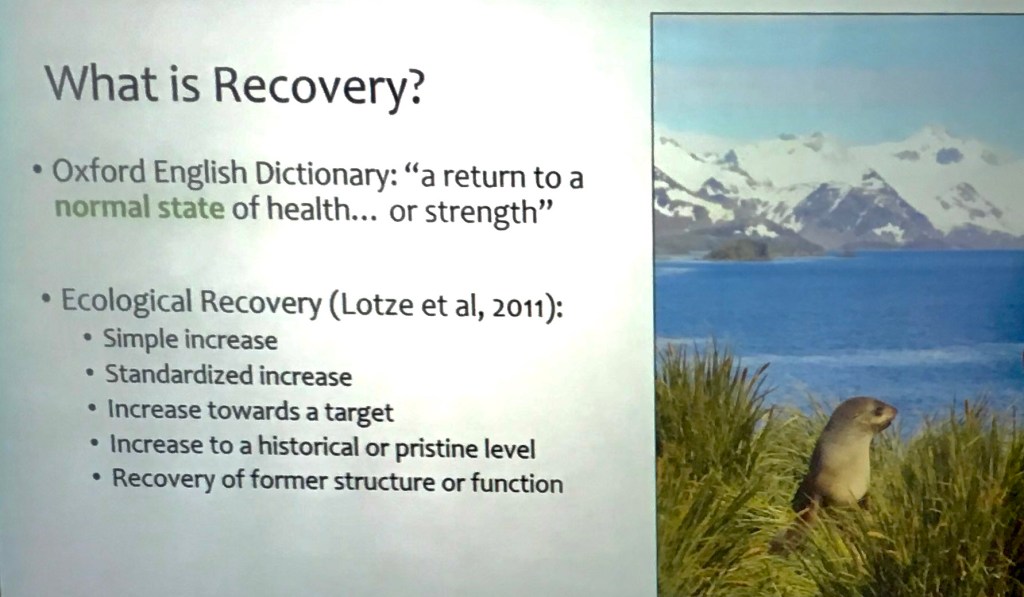
Using log books, diaries, records of sales to try to discover the number. Model took 2 months to calculate. Number before sealing probably 2.5 million female fur seals in South Georgia and currently 500k female fur seals. So recovering but not yet recovered by a long way.
King penguins. Climate change shifting foraging ground away from their breeding grounds, a couple have decreasing distances one of these is South Georgia and herd island are the only two where Climate change is assisting, hunched and pouched means an egg. All breeding colonies in South Georgia increasing. Maybe population growth could be due to retreat of glaciers but isn’t necessarily.
Then we had the daily recap and briefing. I really enjoy these with a number of speakers.
Canapés again today as per yesterday. Great the way they use photos they have taken today for the recap titles. Rock man talked about Shag Rock. About plate tectonics. Shag rock and South Georgia used to be part of South America. Shag rock tip of one of the underwater peaks. Metamorphic rock.
Fabrice. All cormorants on Shag Rock the South Georgia Cormorant. The crest, the yellow caruncle and blue skin around the eye are breeding plumage. They fade at the end of the season. Seaweed collected for the nests. You also know, if you see a cormorant, that land is nearby.
Continental shelf here really helps them. They are bottom feeders. They have four webbed toes. They use their feet as propulsion whereas penguins use flippers. Can dive to up to 145m depth for 7 minutes.
Operation fur seal. We are warned that fur seals can inflict a lot of damage. Always walk and take photos with a Buddy, with one of you keeping guard. Stand your ground. Clap say no. Don’t sit or lie down. (One guy who didn’t follow this instruction on a previous trip lost his bicep and caused them to have to return to Stanley.) Don’t run away.
Bio security vol 2 with Dagny (our Icelandic expedition team member). Dagny told us the self cleaning stations set up. Very funny video shown of the crew doing the initial cleaning and prep of the stations (which I have pictured before).
Solan – King Edward Point is where we go through customs clearance. 25-30 knots wind. Black out mode continues. Tomorrow we hope to zodiac cruise in bay of isles. Rosita Harbour. 4am South Georgia should be in view. Afternoon other side of Bay of Isles to Salisbury Plain king penguin colony.
Dinner. 4 courses offered always and extras if you want them. Unlimited 🍷.
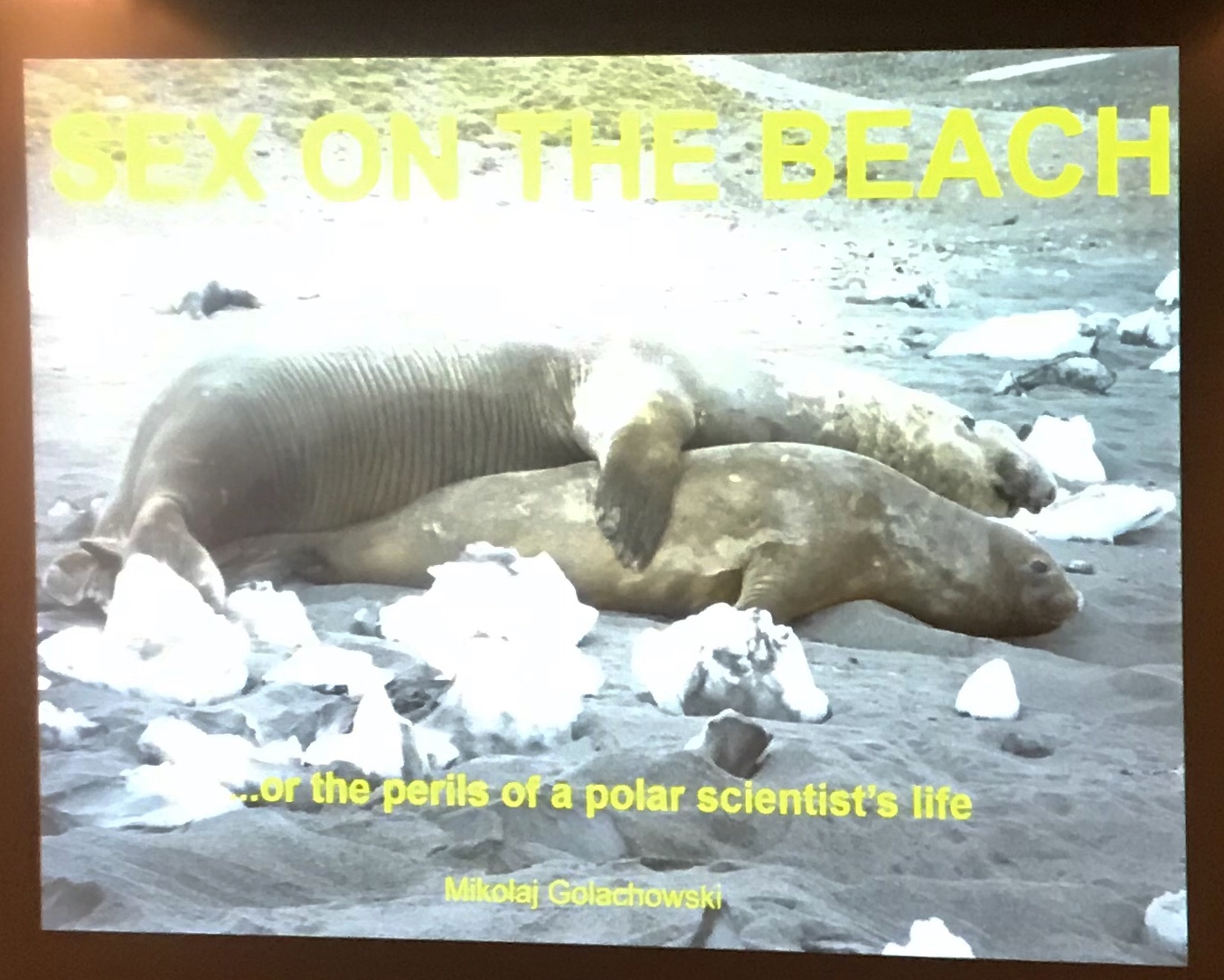
Bar Talk! Join Miko in the Nautilus Lounge for his talk Sex on the Beach about his research with elephant seals.
Great evolution of man and woman video. Will try and hook it in here.
Elephant seals are the largest seal and the largest of the carnivores. Up to 5 tonne males. Females 7-800kg. Many wives. Up to 100. Miko is Polish and gets sent to the aggressive males – he thinks because poles are dispensable. He also swears at them in polish and they move away. Read body language well. Often they die at the end of the season after all the fighting and sex. This is a picture of his partner.
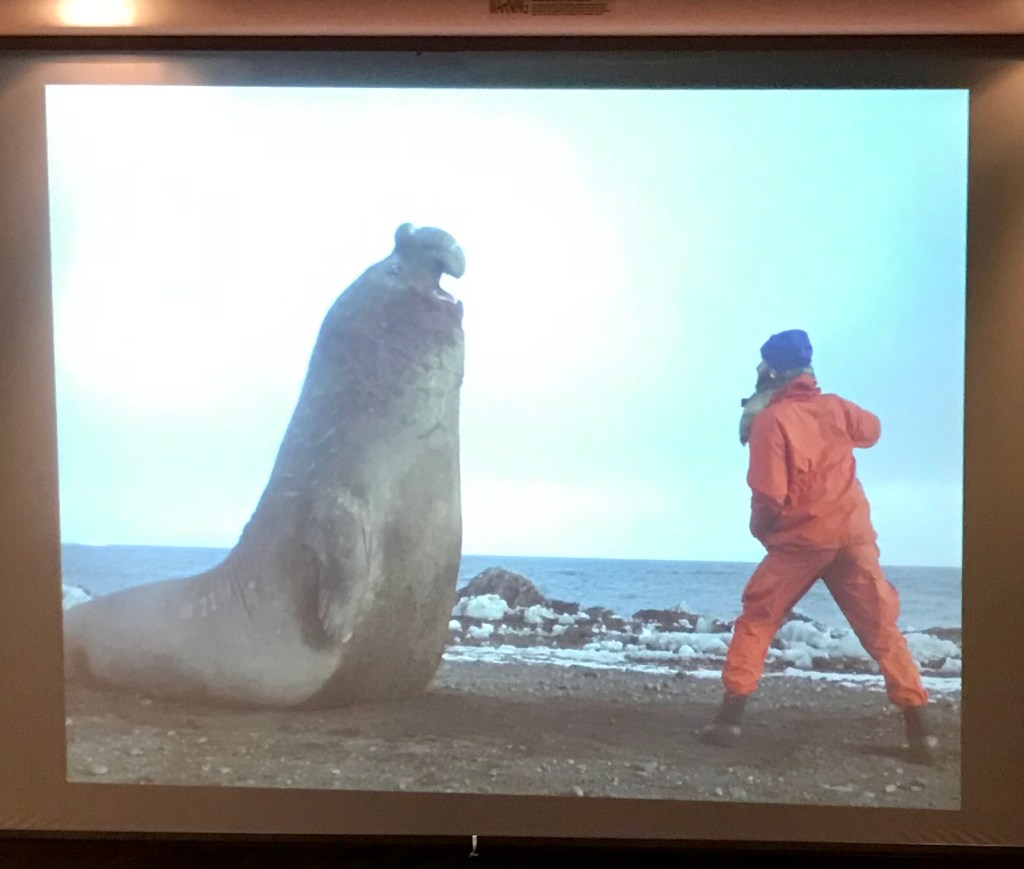
If they survive they take over twelve months to recover. Babies on the beach are not theirs so can be trampled. Females and males even numbers. Females mature at 2 and live to about 25. Males mature at 5 but keep growing until full size of 11 years and often die at the end of their main year. Younger males sneak in and try for a female when the beach master is not looking. Babies weigh 30-50kg at birth and in three weeks they are 150kg. Female losses up to 300kg in three weeks of suckling. They then leave the babies who are now moulting so they cannot go into water so not eating so we need to avoid disturbing them as they need what energy they have. Eyes designed for swimming. Not good eyesight on land. About 10% not related to the beach master. Same % for human babies!
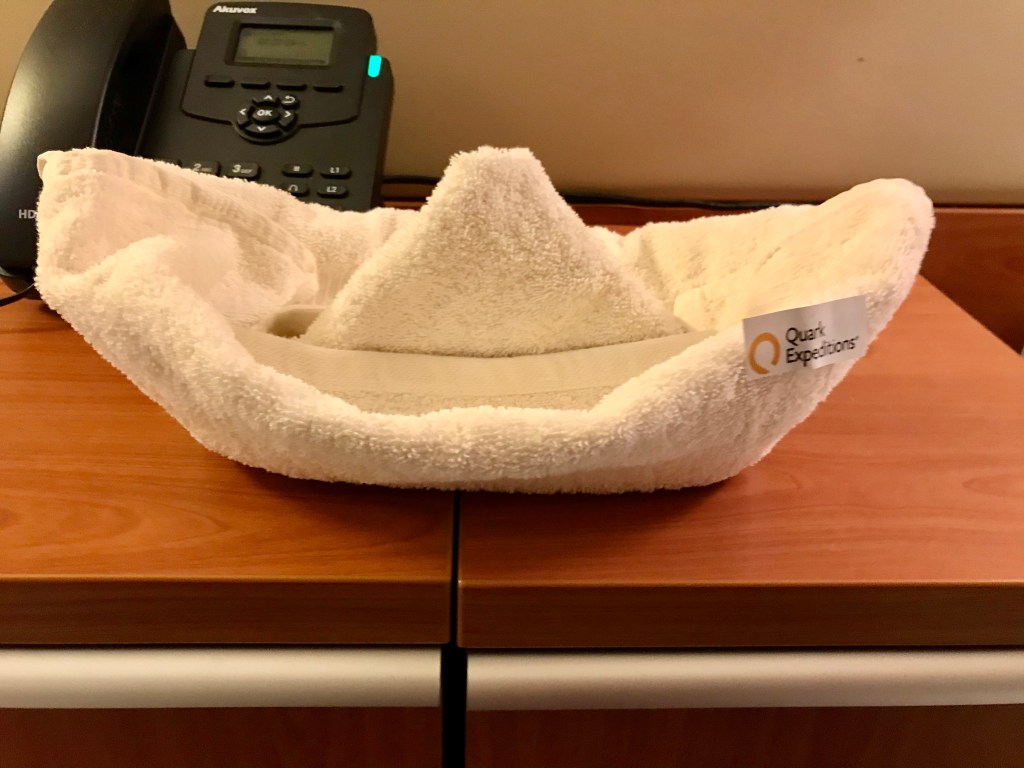
Our room person has started getting creative with the towels. Tonight was a boat. So tomorrow is South Georgia. Can’t wait.

 Antarctica 2019
Love the Evolution video. 🙂
LikeLike