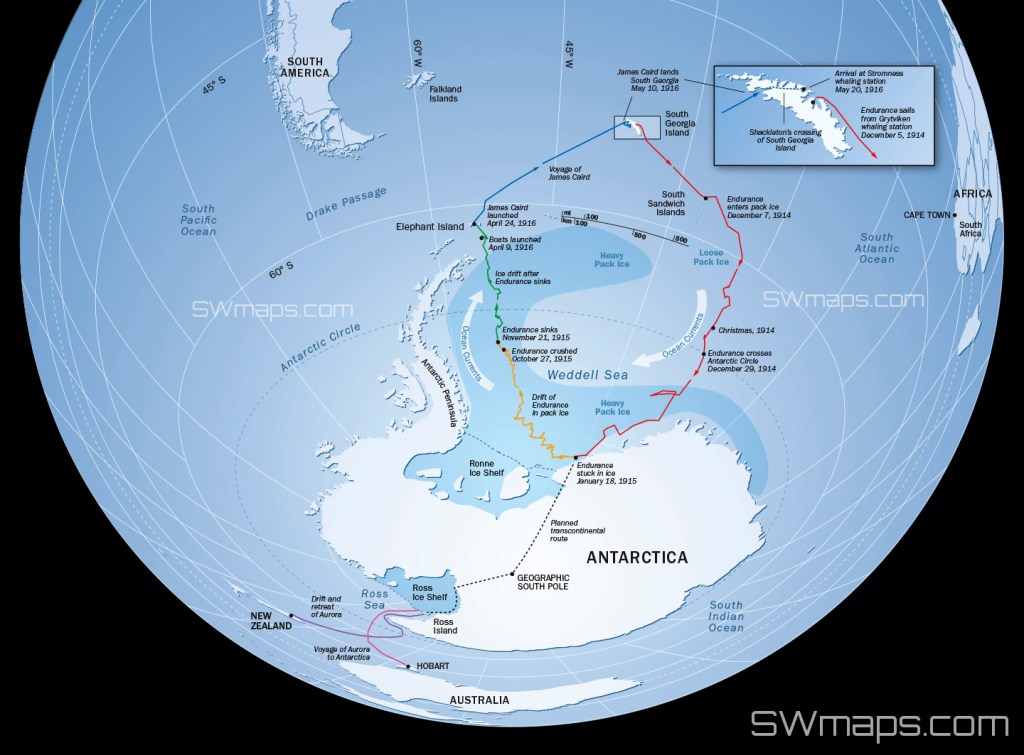
Can’t help thinking of Shackleton and his crew who set out from South Georgia back towards Antarctica in 1915. Totally amazing they survived at all. Here is a map of their journey. (With thanks to SWmaps.com)
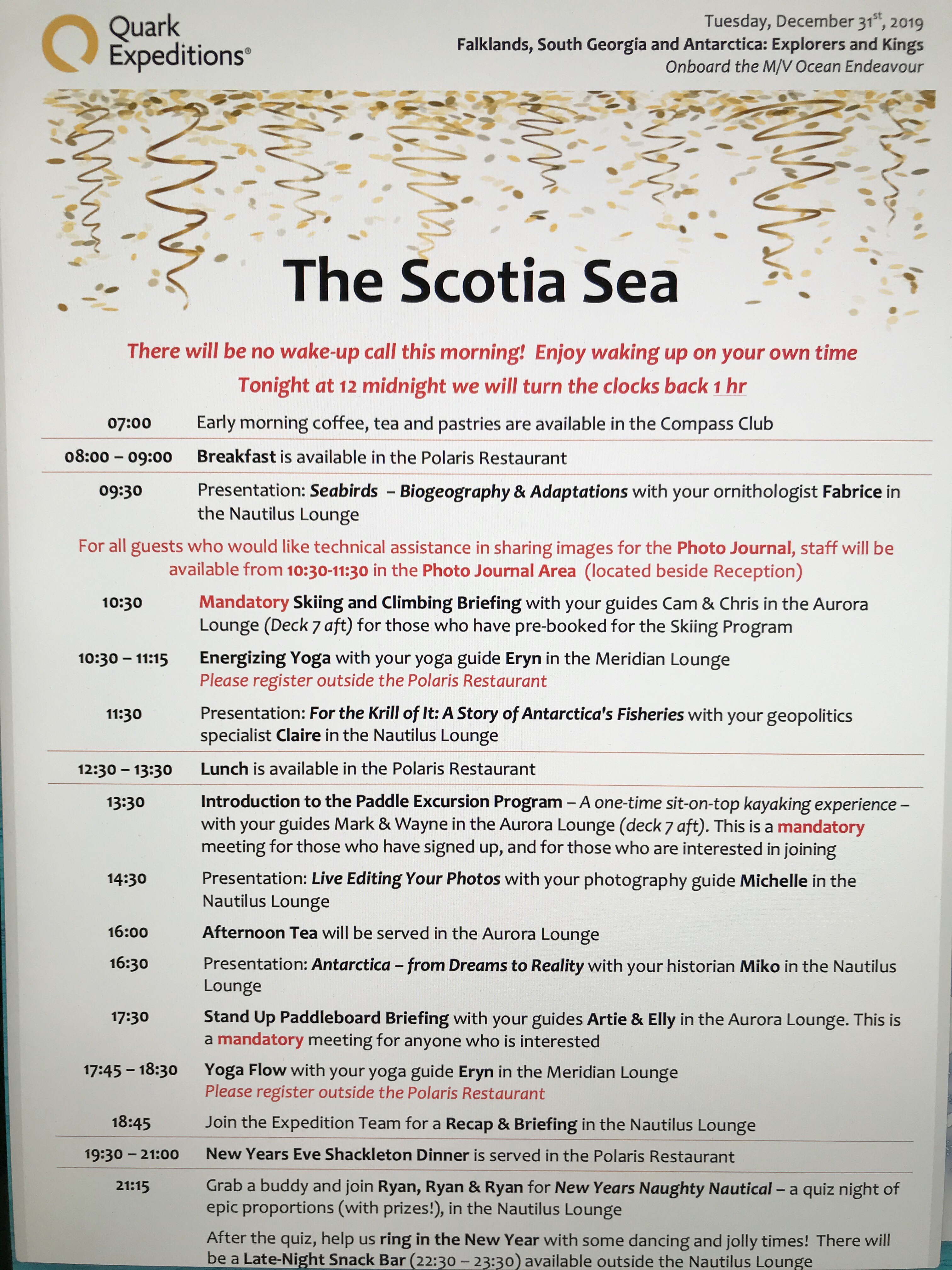
So here is our day plan.
We have watched nearly every episode of Seinfeld (lucky neither of us have ever watched it) and several movies in parts (no on demand here).
Spoke to the Captain. 3am sunrise tomorrow 😱. (Remember we usually do the first sunrise of the new year rather than staying up until midnight) Going to the bridge later to find out about the weather. 3.07am cloudy. Hmm.
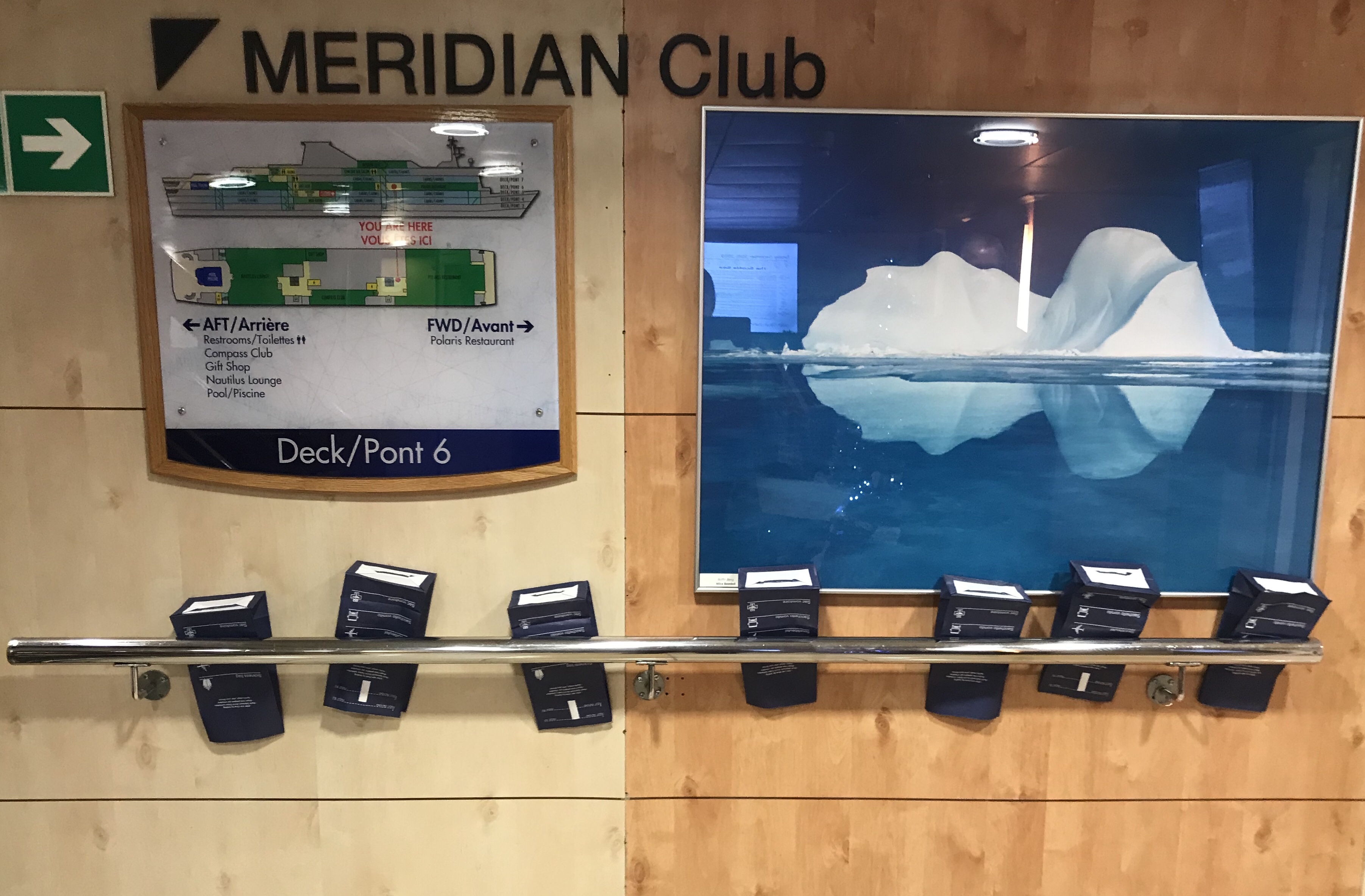
Barf bags replenished. I do like that. They will always be barf bags to me from now on.
Late start. Leisurely breakfast.
Presentation: Seabirds – Biogeography & Adaptations with your ornithologist Fabrice in the Nautilus Lounge.
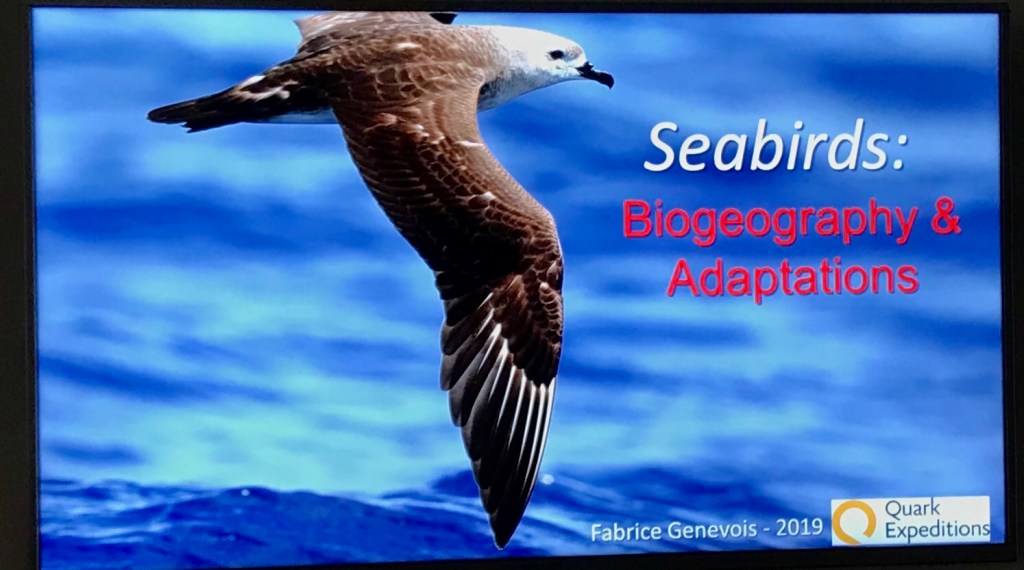
Birds everywhere on earth including over the ocean. They are the only flying creatures on the ocean. Biogeography is patterns of seabird distribution. Being a seabird just means you rely on the ocean for your food.
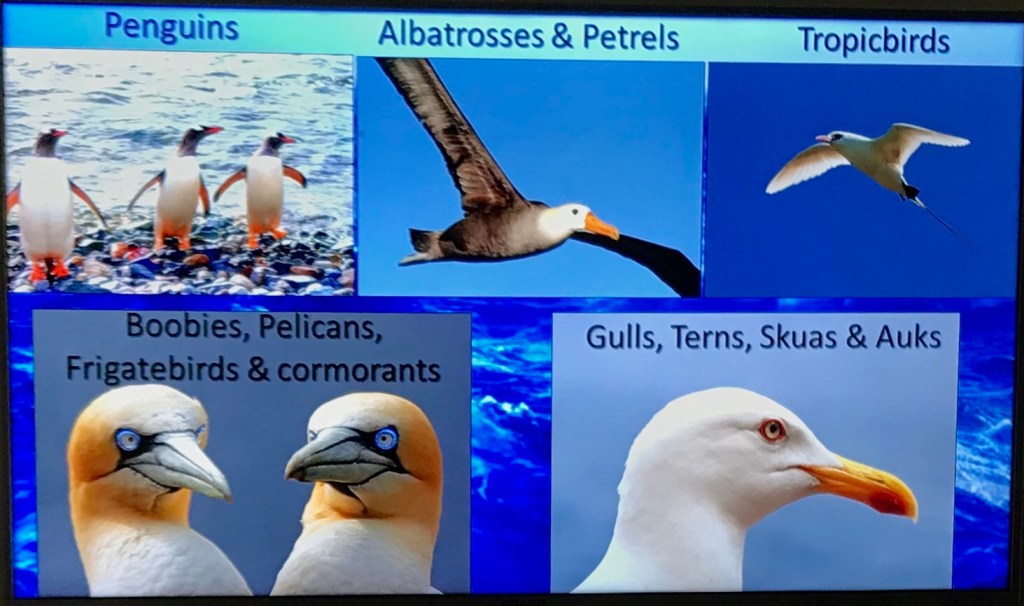
There are 5 orders of seabirds and 305 species. Oceans cover 2/3rds planet. Only 3% of the world’s 10000 species of birds are seabirds. Only two niches one is look for carrion and the second is to dive for live prey. Many more niches on land. Also ocean productivity, on average, is low versus land. Ie tropical forests cover only 5% of the earth but create 1/4 of the productivity. Shortage of breeding places – can’t lay an egg in the ocean. All oceans connect and seabirds travel across it all. Seabirds are often attached to sea temperatures.
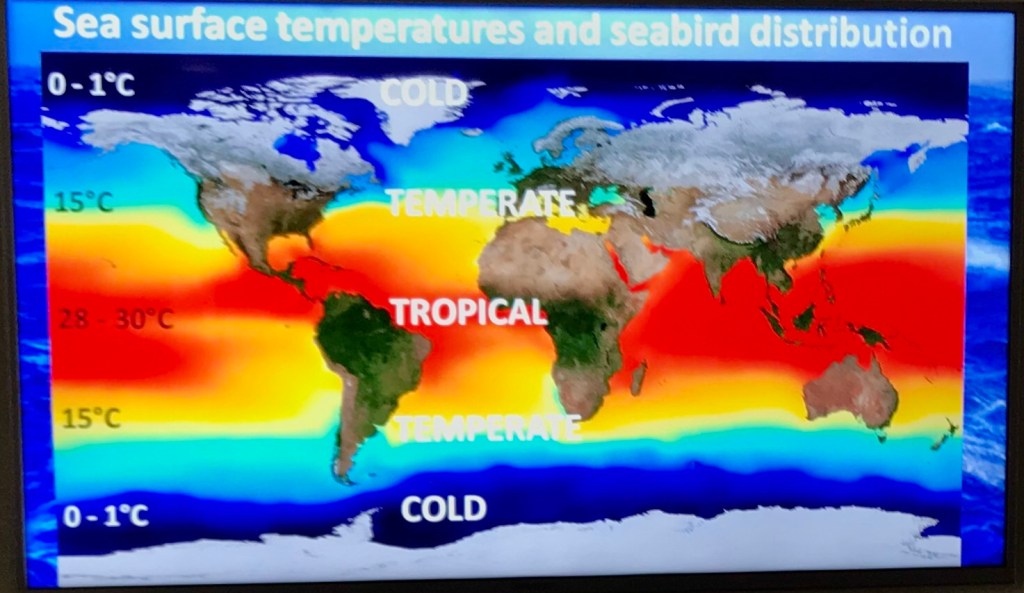
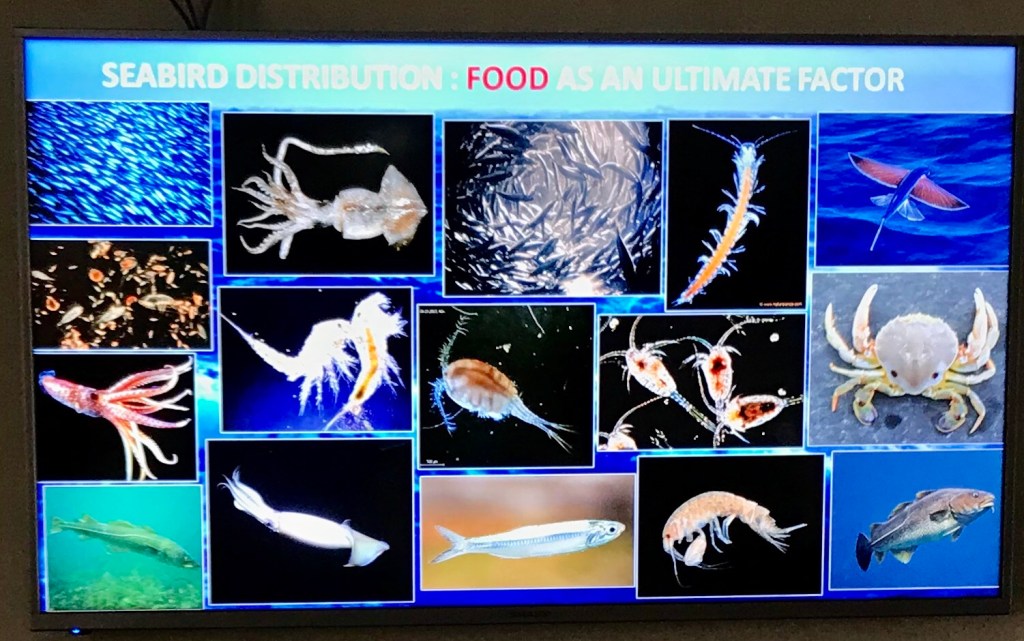
Distribution enigmas.
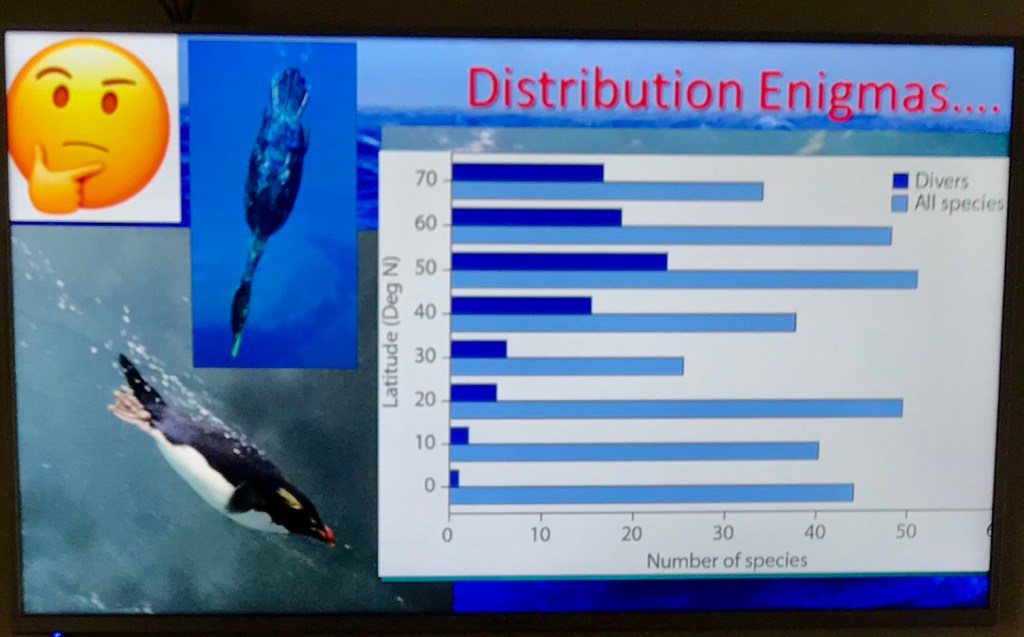
Why? Fish swim faster in warm water. Also more predators eg shark in warm water. So why no penguins in northern hemisphere? Auks hold their niche in the north and they fly too due to land animal predators. No land carnivores in the south.
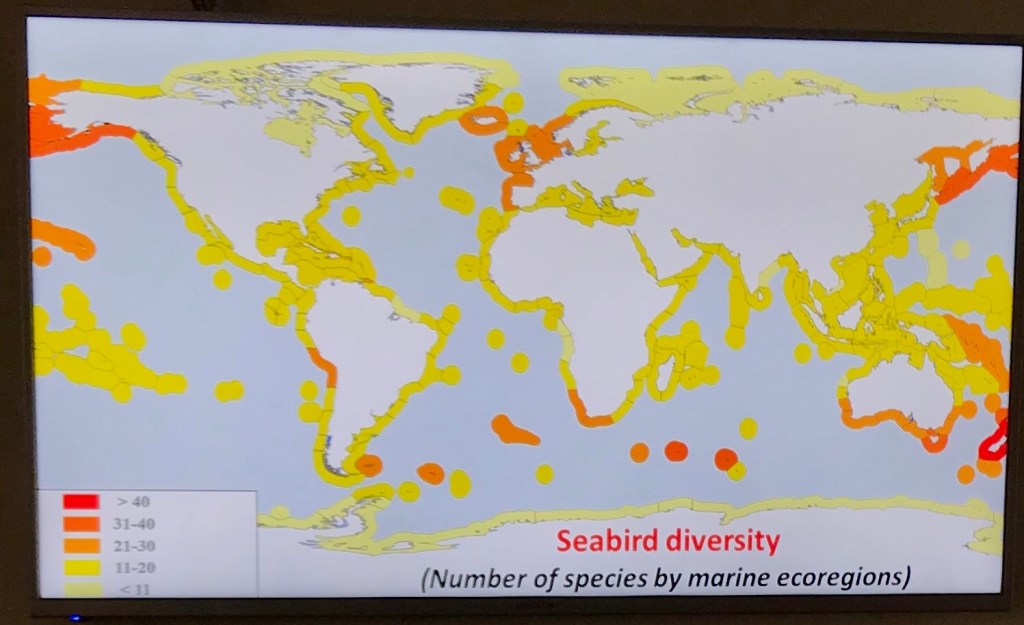
Seabird diversity. Colder more co2 and o2 best productivity. Polar regions low diversity as highly specialised to handle the conditions. High populations but low number of species. Adelie penguin and snow petrels. Ecological counterparts eg northern and southern fulmar. Great skua and brown skua.
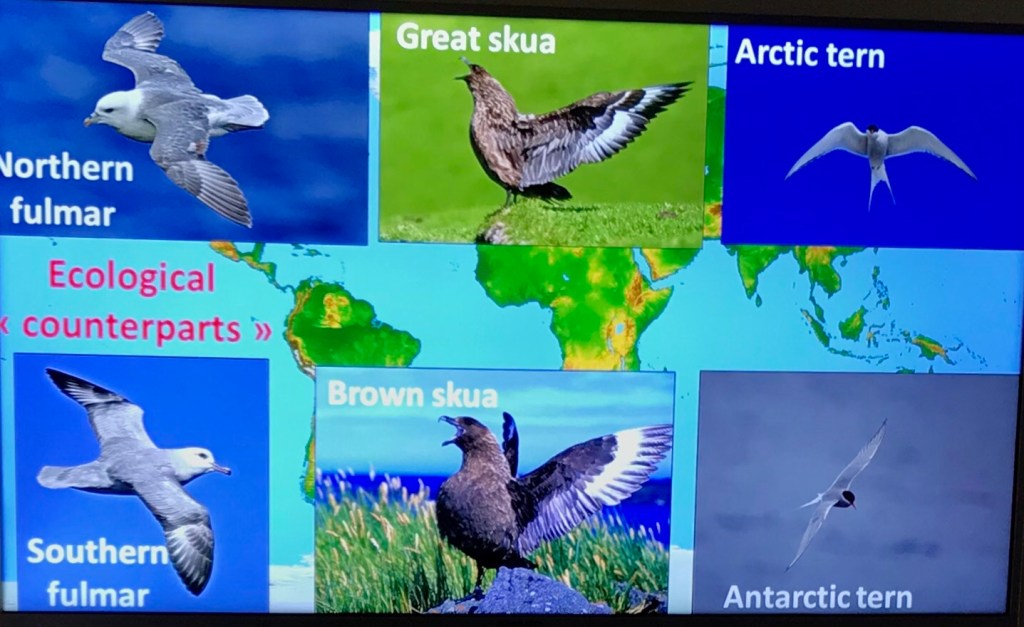
Arctic and Antarctic terns. Colonialist.
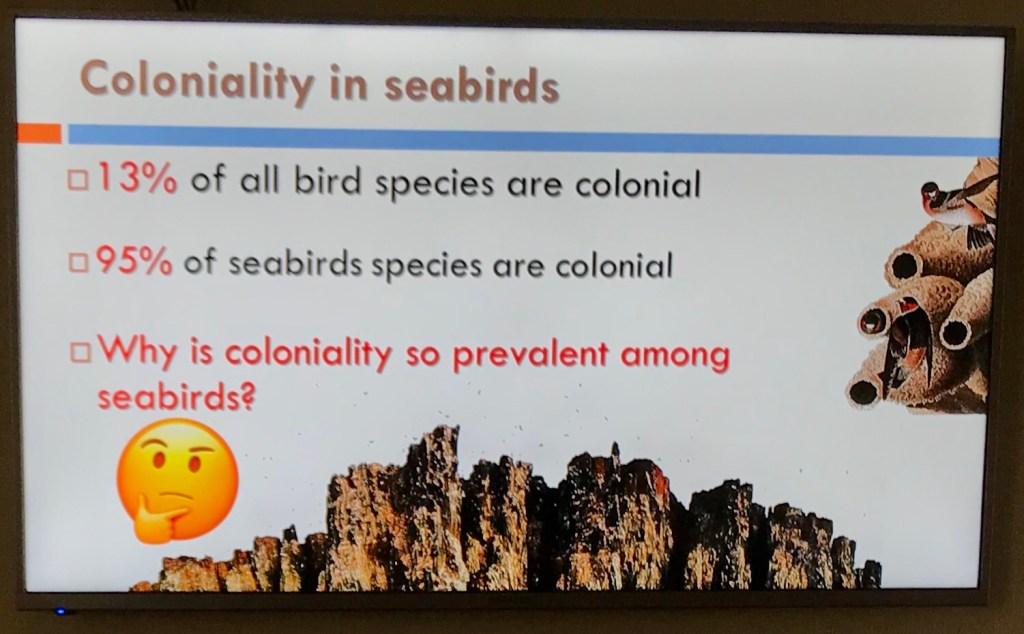
Most land birds are territorial. No territory in seabirds as oceans change. Could also be a shortage of places to nest eg shag rocks. Not true of places like Falklands so shortage of nesting place is not a good answer. Could be safety in numbers. Increased mating opportunities. Foraging efficiency – exchange of information on location of food. Costs of colonialist. Stress due to crowded environment. Lots of sexual cheating. Colonies attract predators. Spread of disease. Can be that nesting on the edge is often worse than being alone due to predators. Low births, slow maturity but long life expectancy.
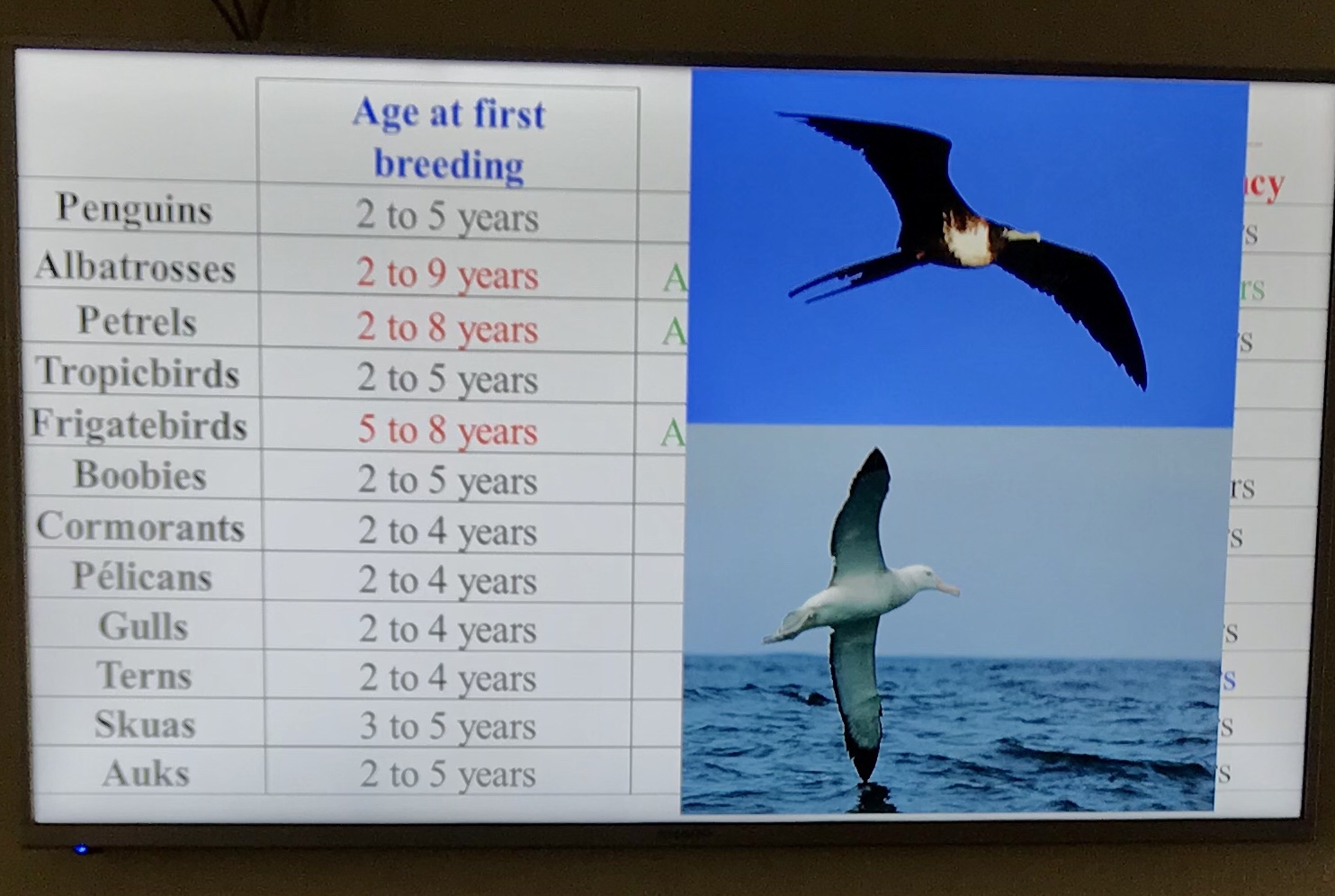
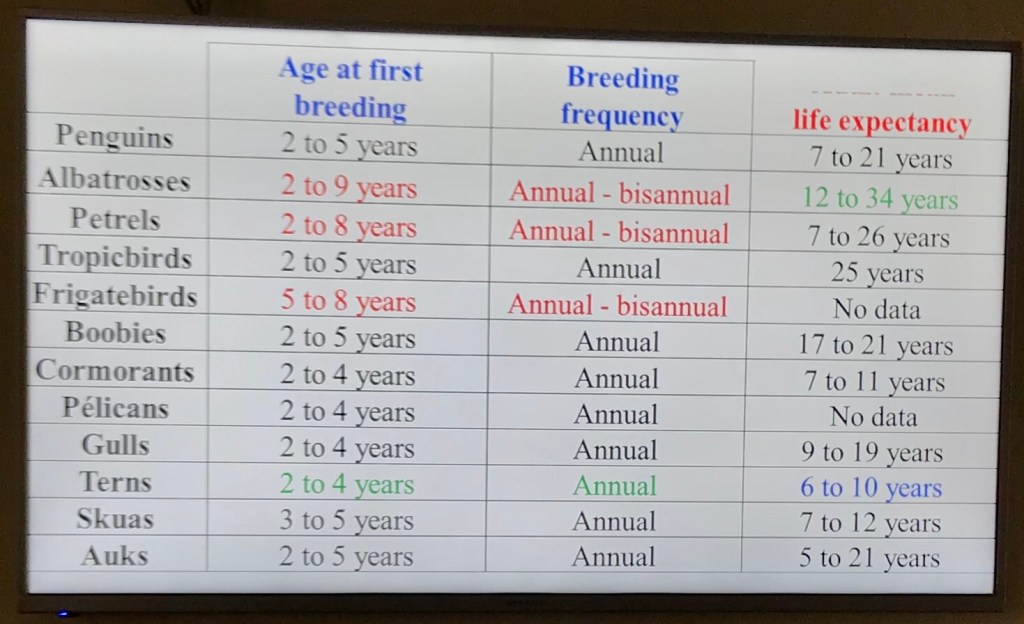
Some albatrosses can reach the age of 80. This is Wisdom, he is 68 years old.
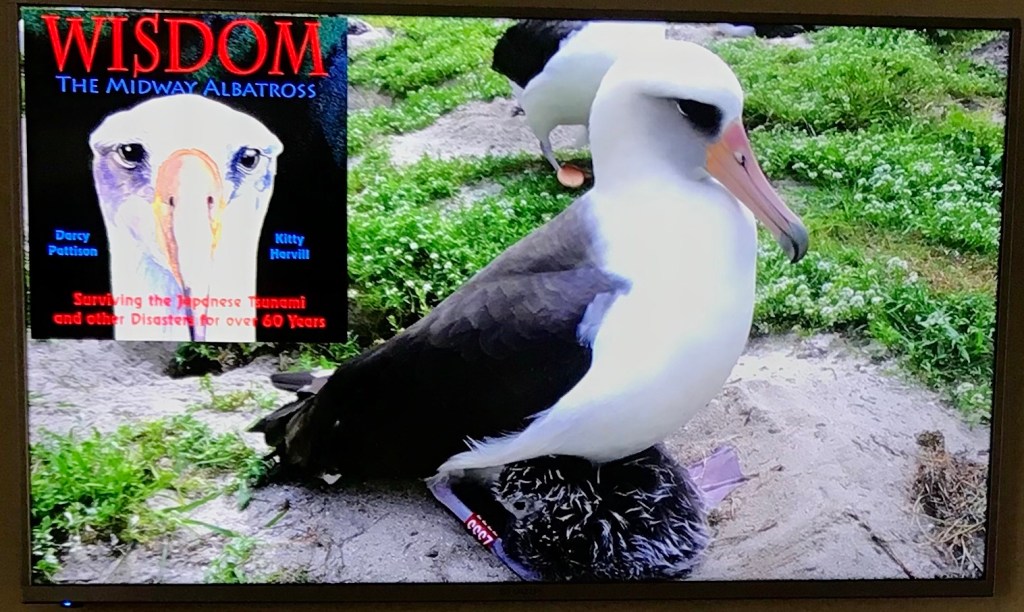
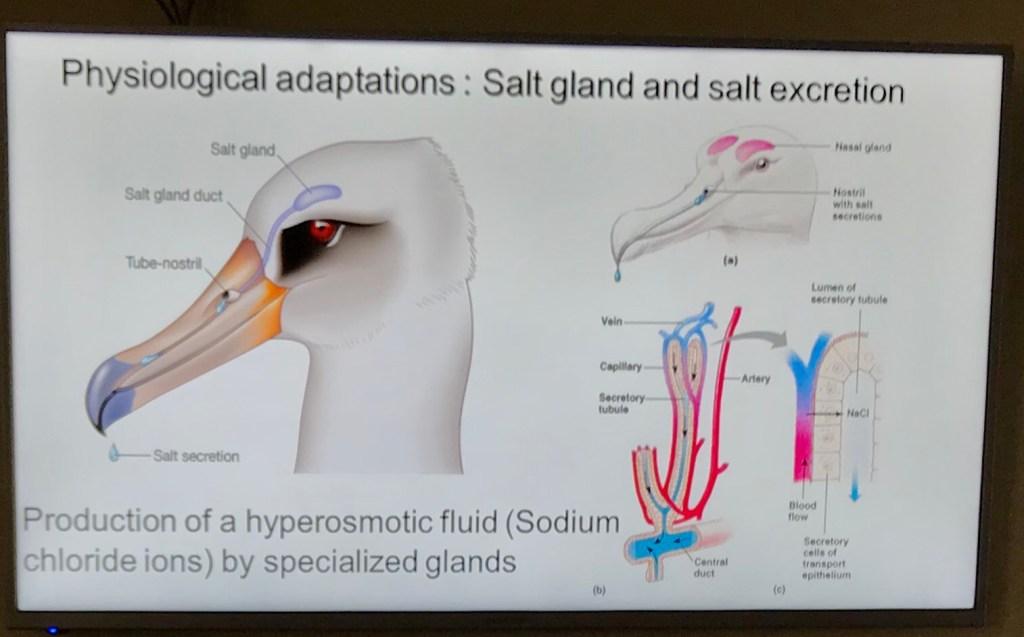
3 changes of partner in his life. Humans here 3 minutes survival in this ocean. Feathers are naturally waterproof. All seabirds have a preening gland oily spread to their plumage. Feathers last a year. They also have Sodium glands.
Feet set far back for swimming to reduce the friction. Seabird webbed feet. Smaller wings high wing loading need to work harder, albatross low can fly long distances. Beak is equivalent to our hands so beak shape shows what they eat eg macaroni eat krill kings eat squid.
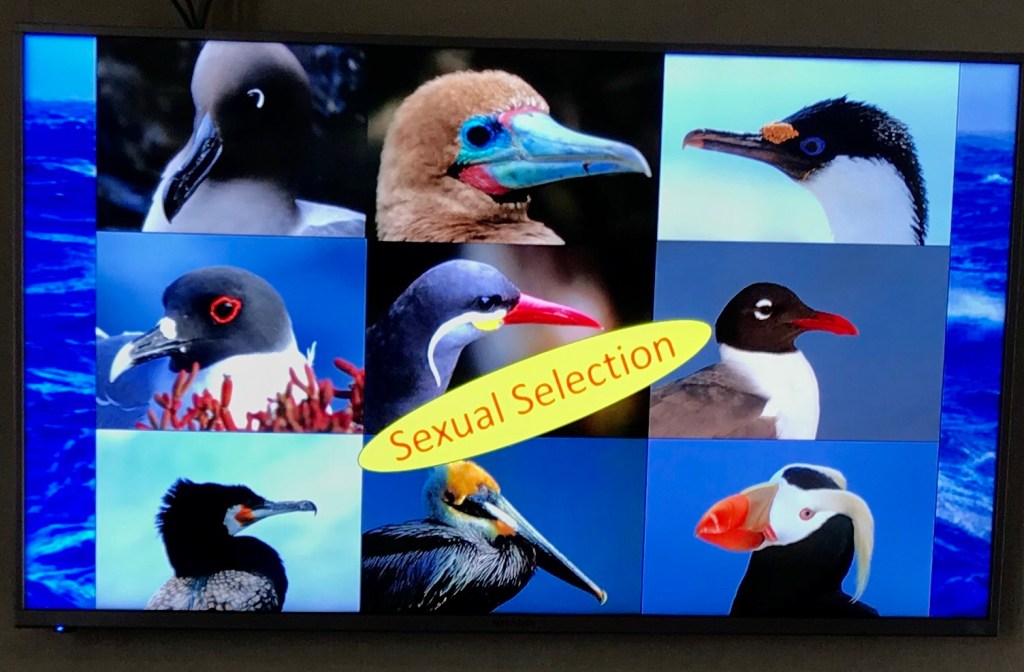
Convergent evolution penguin and guillemots. Black and white is camouflage – hide from prey and predators. Counter shading. Naval ships colour based on the prion as best camouflage. No colour difference in sexes except frigate birds. Males might be bigger. Colours help to ensure you mate with the same species. Adults full coloured. Sexy feet.
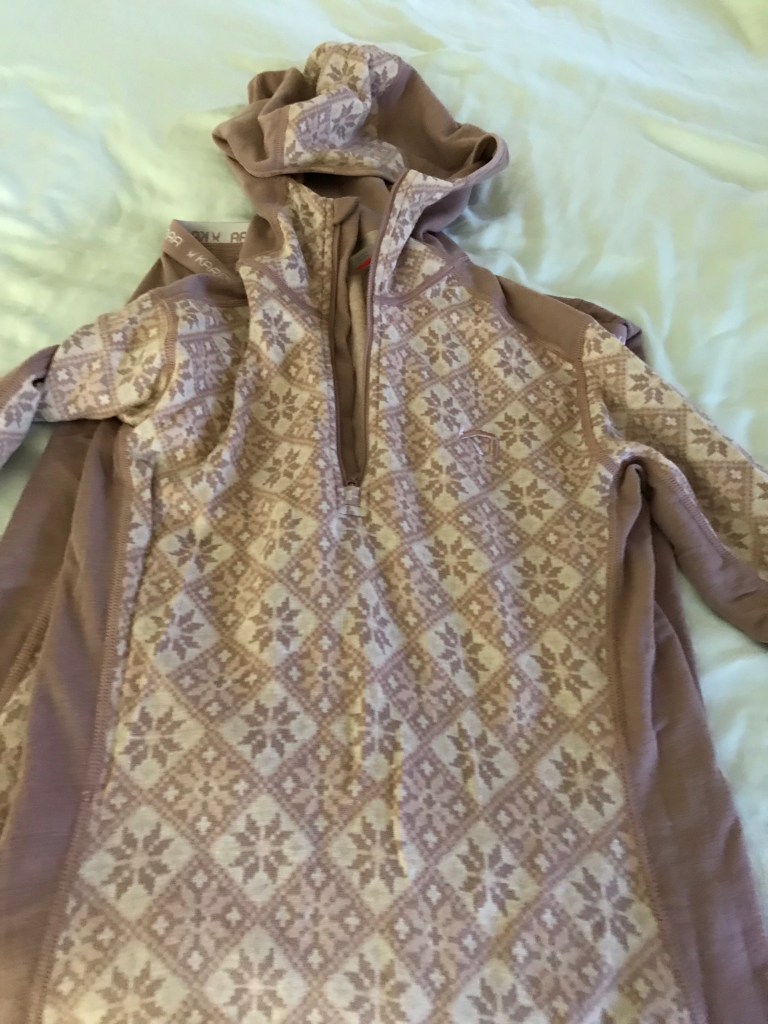
We love these lectures. They really make the sea days. I went Shopping again and bought a new merino thermal layer. Shop uses no bags and the bar uses no straws. I donated a pair of thermals that were not so comfortable to one of the smaller female expedition crew,
Presentation: For the Krill of It: A Story of Antarctica’s Fisheries with your geopolitics specialist Claire in the Nautilus Lounge
Krill are the Superstar of Antarctic fisheries. 3-4cm so smaller than a prawn.
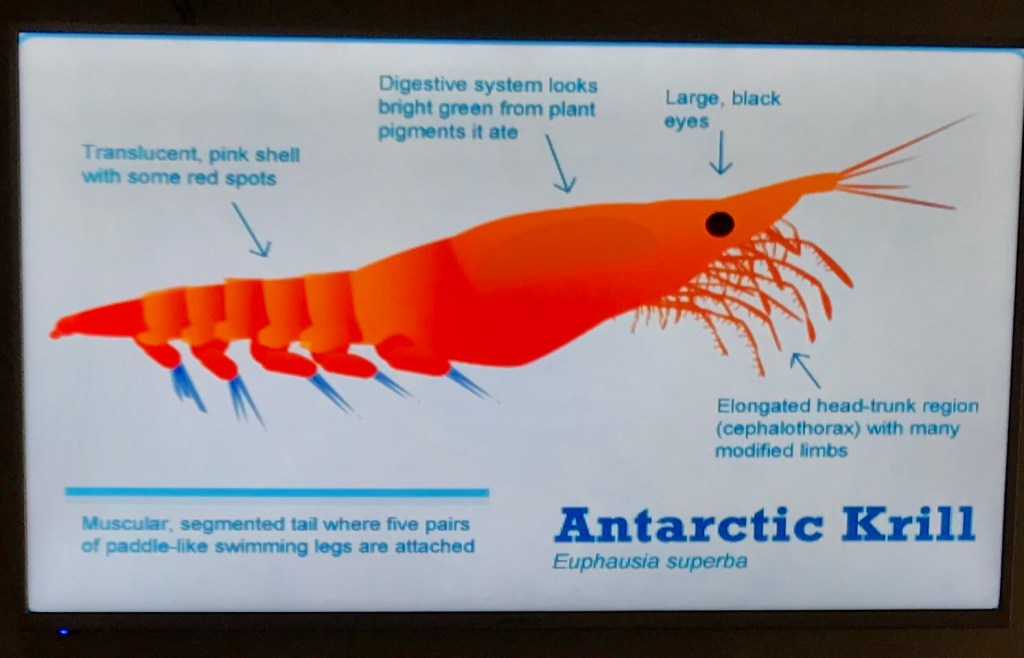
Live 4-6 years average. Can go for 200 days without food they shrink up to 40% less. Eat phytoplankton and algae. Use sea ice as a nursery and protection. Also algae anchors on the bottom of sea ice. Swarm into a ball when a predator comes along. Bubble netting by the humpback whales (see “7 worlds 1 planet” David Attenborough), they are nocturnal. Come up at night descend in the day. Biomass 120-500million tonnes ( bigger than biomass of humans).
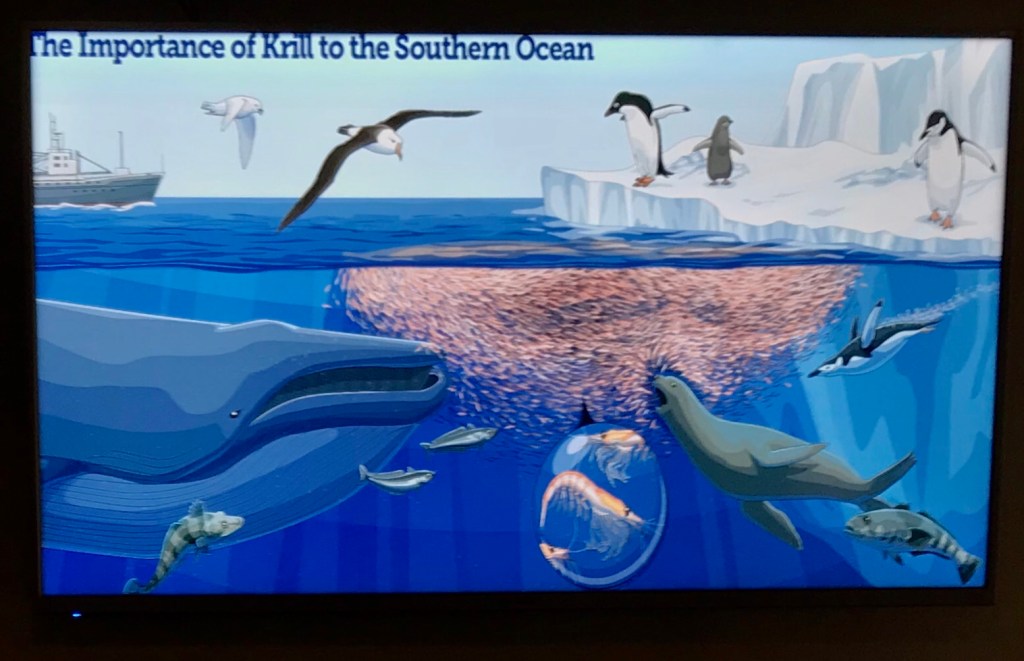
Fisheries see it as pink gold. Not regulated. Used for aquaculture, krill oil and pet food. Science doesn’t suggest krill is of any use to humans. 10-20% pharmaceuticals. 40% fish farming. 40% to pet food. Krill will self destruct within 3 hours of coming out of water so has to be processed immediately. CCAMLR established in 1961. So fisheries now regulated with permits and quotas.
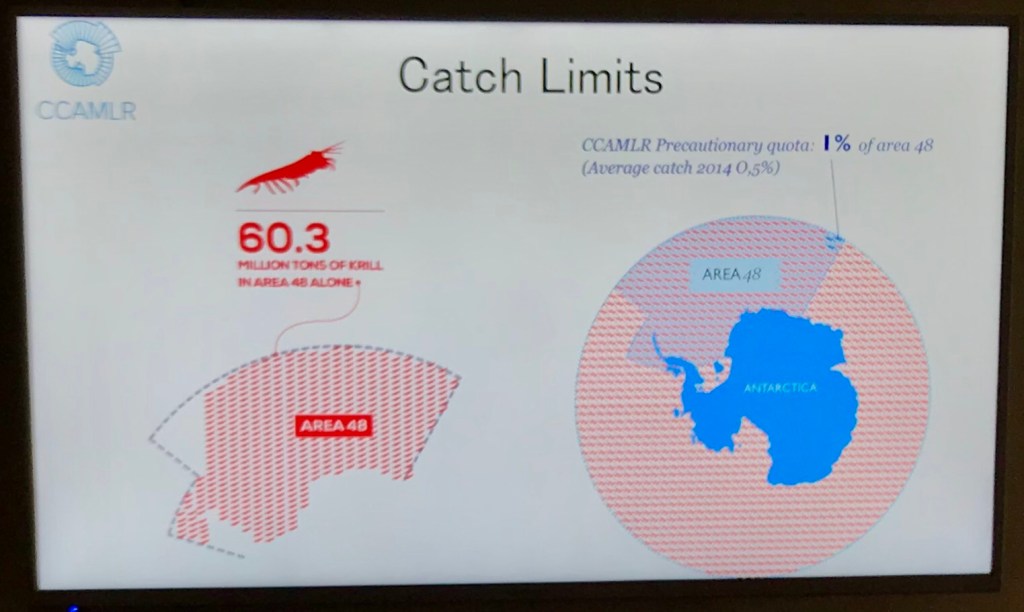
Only 1% precautionary. However it doesn’t take into affect other things that are happening eg climate change, bad ice year, ocean acidification. Other criticism area 48 is right on top of the Antarctic Peninsula and this is the main breeding ground for many penguin species. Fishing is concentrating over the Antarctic Peninsular so pushing penguins to forage much further.
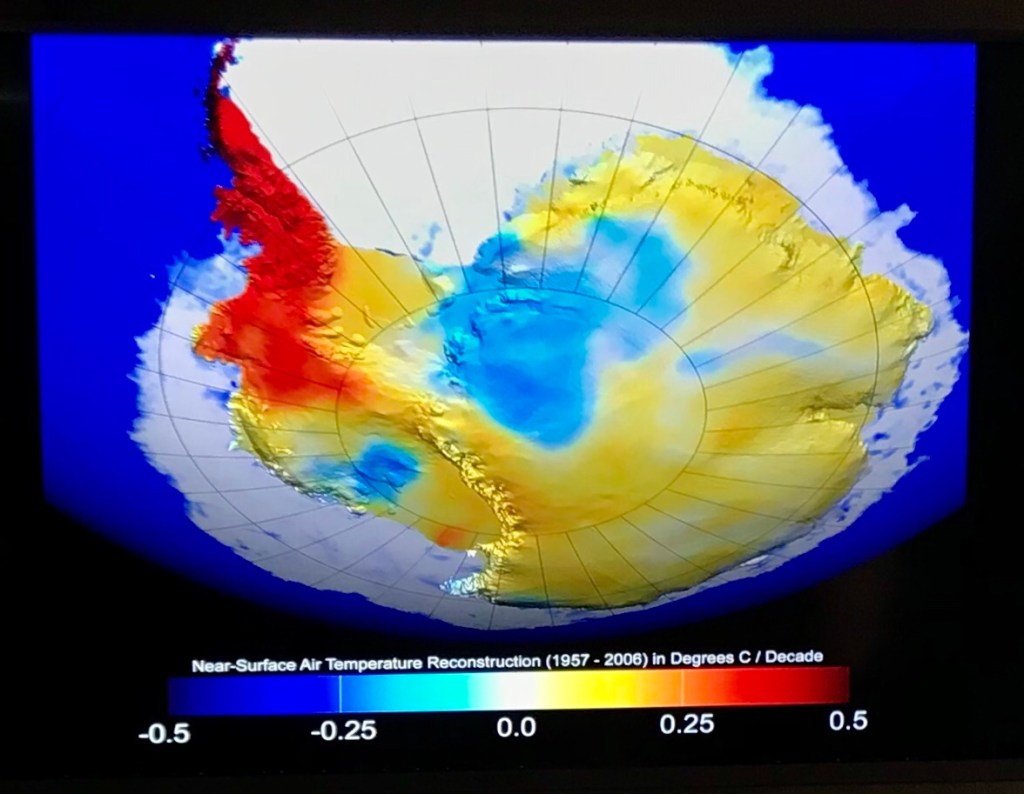
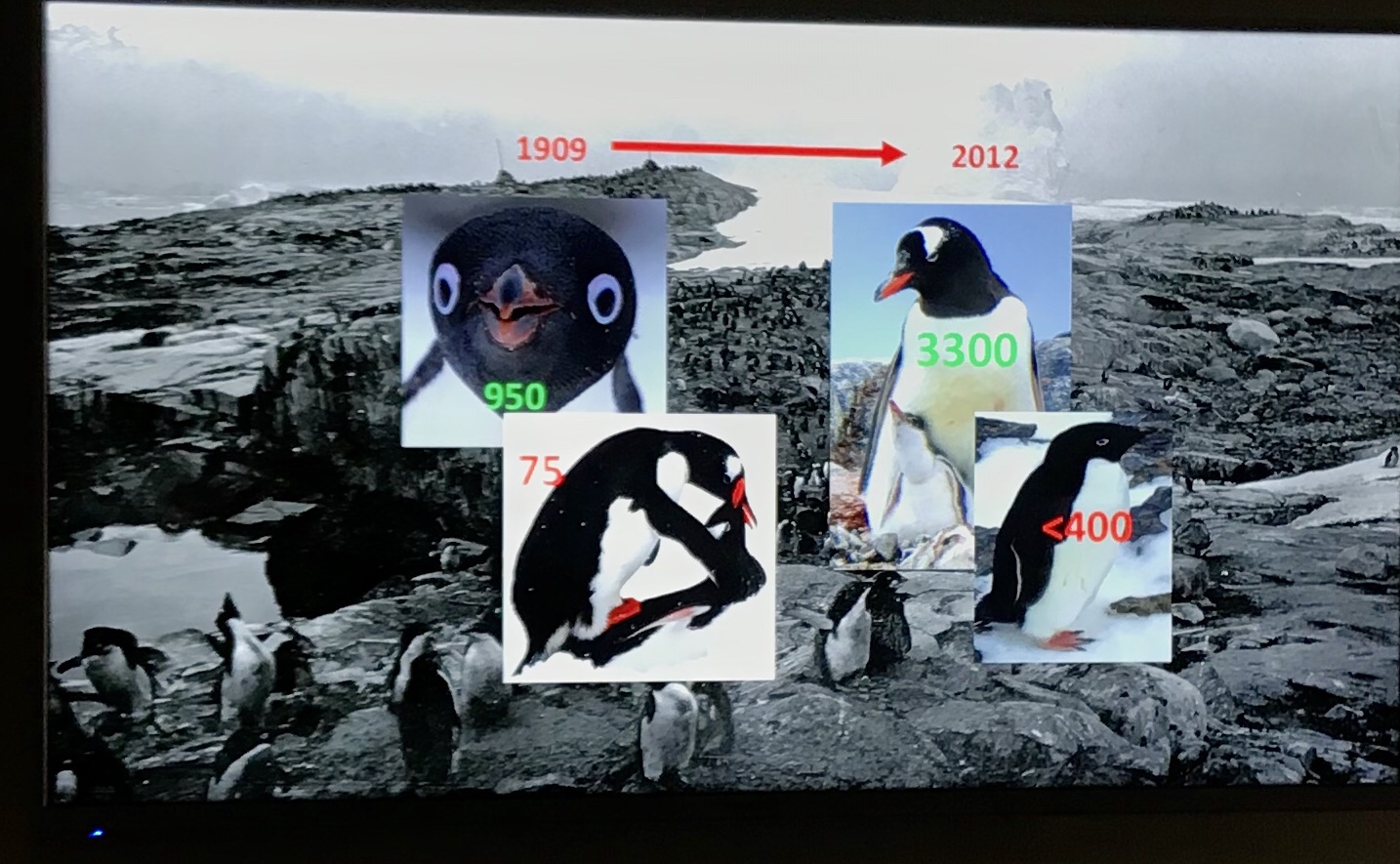
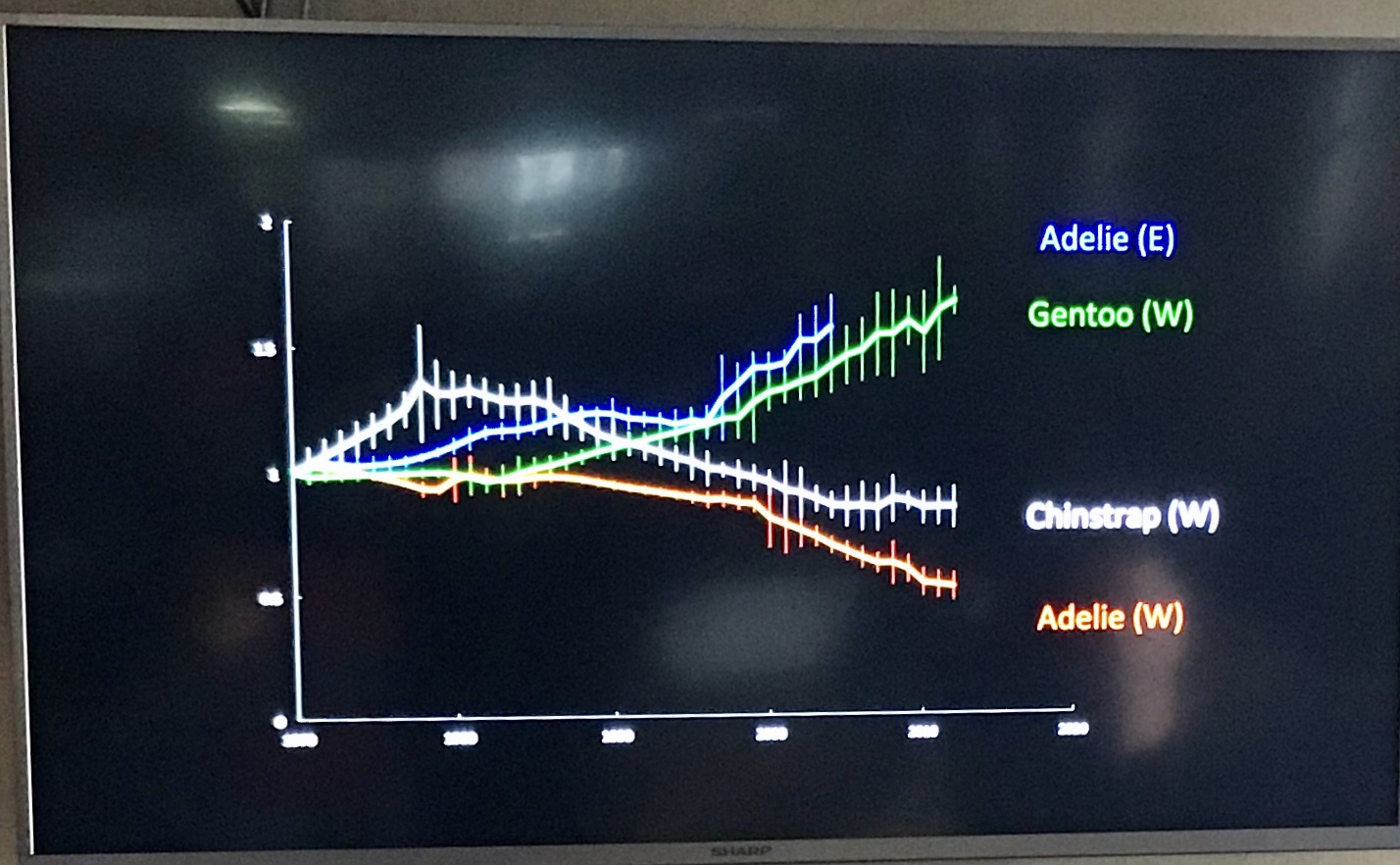
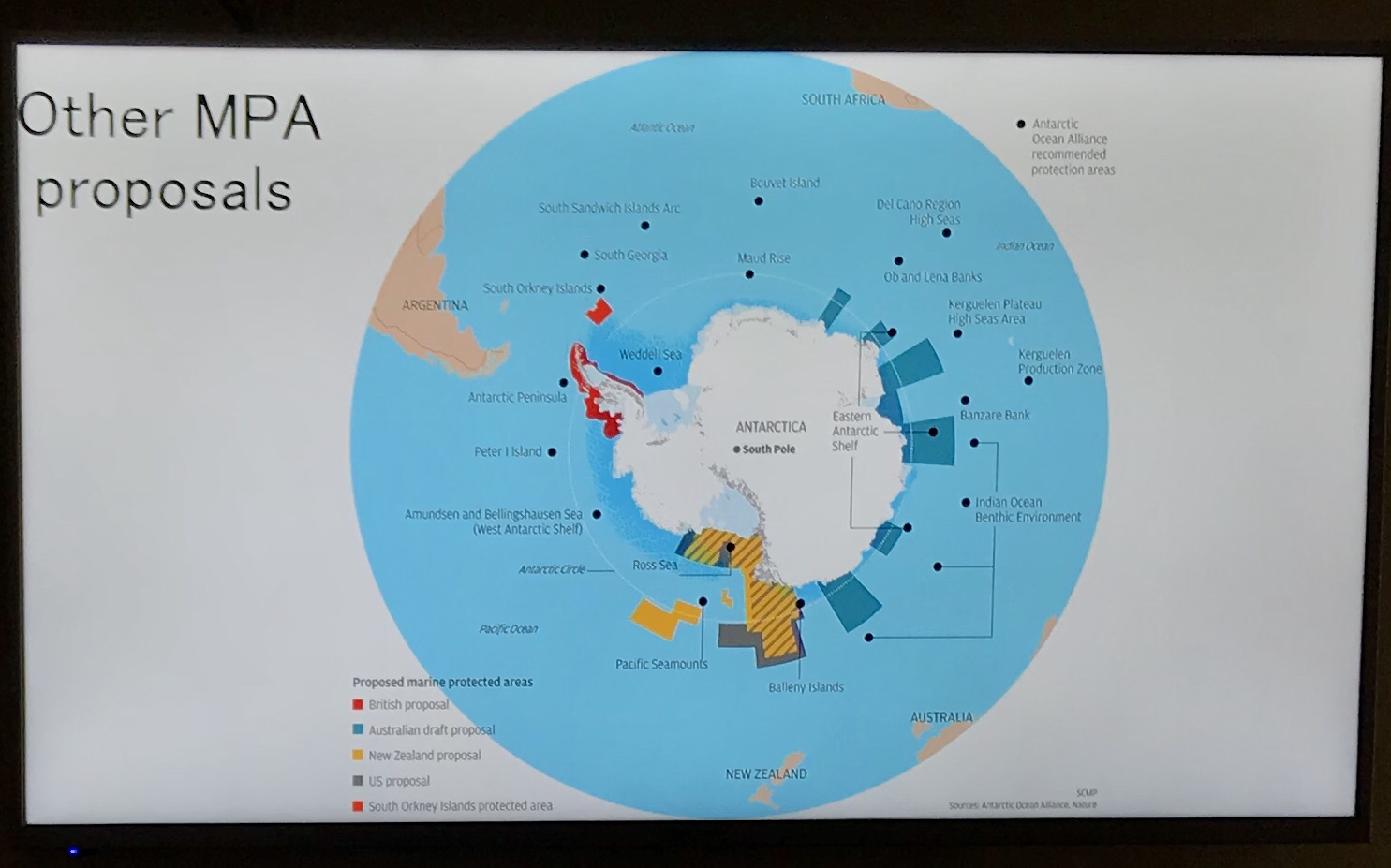
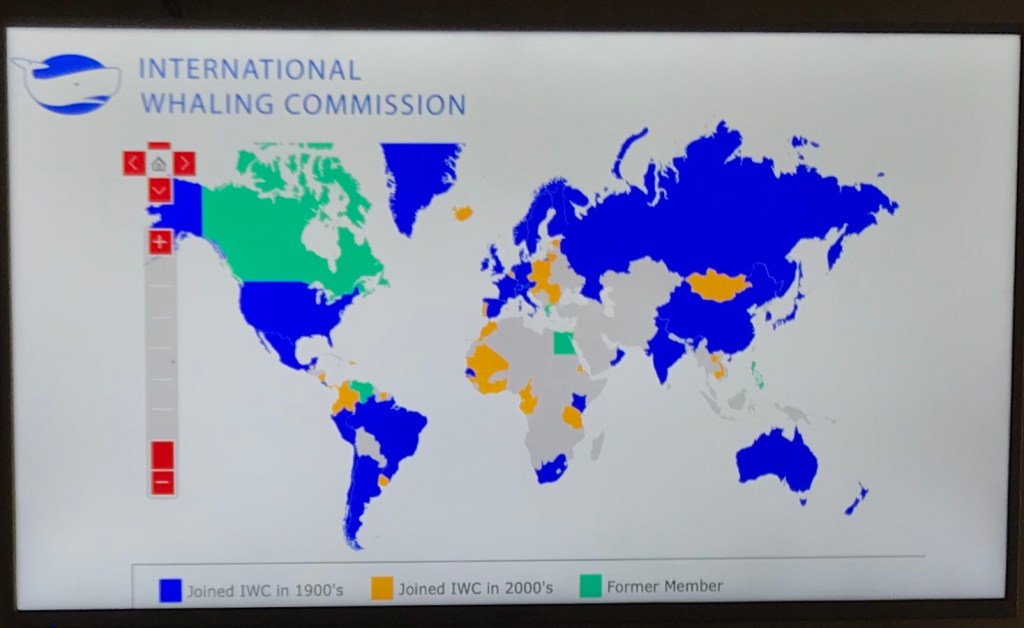
Warming also a problem. Just in 100 years changed from Adelie to gentoo penguins. Jellyfish like thing growing and taking the phytoplankton called salps. Greenpeace and Sea Shepard working against krill fishing. Patagonian tooth fish caught illegally. Now called Chilean sea bass. Mostly legally caught. South Georgia and South Sandwich Islands have even more strict rules. MV Thunder was an illegal ship chased over 10,000 miles in 2015 story. Longest maritime chase in history. The captain sank it to eliminate evidence. Sea Shepard picked them up and handed them over. Some marine protected areas and push to add more. So far not passing around the Antarctic peninsula. Some major companies adding support due to backlash. Only Ross Sea protected. Whaling has been happening in The southern ocean. Int whaling commission. (IWC). Canada left as their First Nations wanted to continue their practices. Moratorium on whaling in the southern ocean. www.icrwhale.org so now japan has withdrawn from the IWC and are starting commercial whaling again. 2019 – 227 commercial previous 333 under the scientific program.
Lunchtime and I am finding I am very sleepy today. (Little did I know, at this point, what was about to descend upon me…..). More biosecurity work on our gear. They could not be more thorough.
Presentation: Live Editing Your Photos with your photography guide Michelle in the Nautilus Lounge.
Michelle takes a pic to tell the story of what she has seen. Doesn’t over edit. Adobe bridge software to organise. Files by date and place. She uses raw. Gives a star rating 5 if likes 0 or not. Then moved to Lightroom editing software filtered to those with star rating. Works on them and then exports. Highlights changes background. Brush tool to bring up shadows on a face etc. crop. Horizon and brightness her key things. Darken top to take viewers eyes to the subject. Apple free editing software. Try my filters. Lightroom always keeps the original. JPEGs will save changes and you lose the original.never sharpen over one fifth. Play. Be careful with colour saturation. Try key wording photos so you can pull up by key word. Recuva software if deleted.
Presentation: Antarctica – discovering the land of our dreams with historian Miko.
BCE – before common era. Hmm. Terra Australis – the land in the south. Aristotle 350 BCE felt there was a South Pole. Equator became a barrier – belt of fire. As they moved south it was always warmer. Possible but not confirmed visit by Chinese around 1421. (Map more likely South America). 1473 first European to cross the equator. Magellan 1480-1521. Racist and murderer. He died but one of his ships did circumnavigate the world. He did discover the strait of Magellan (towards the bottom of South America). Francis Drake, known for his humanity. First to complete the circumnavigation of the globe the Golden Hind. Went through straits to Magellan and a storm blew him south oct 24, 1578 he found the Drake Passage. Some reports that might indicate Antarctica had been seen around 1700 but not confirmed. Maps had a massive land in the south. 1675 found South Georgia. Pack ice in 1700. 1730 Bouvet Island in 1730. Kerguelen island 1771. Capt Cook. 1772-1775 furthest south ever and very close to Antarctica. Saw ice bergs but due to bergs or fog he couldn’t see Antarctica. But he did cross the Antarctic circle 1773. He claimed South Georgia for England. Wooly penguins called by Cook as he thought the chicks were a different species to king penguins. Bellingshausen first to see the continent of Antarctica. Bransfield saw it Jan 30th 1820 – 3 days after B. So almost 200 years ago. South Shetlands found 1819. All fur seals wiped out very quickly. Antarctica is the first mythical place we have ever found.
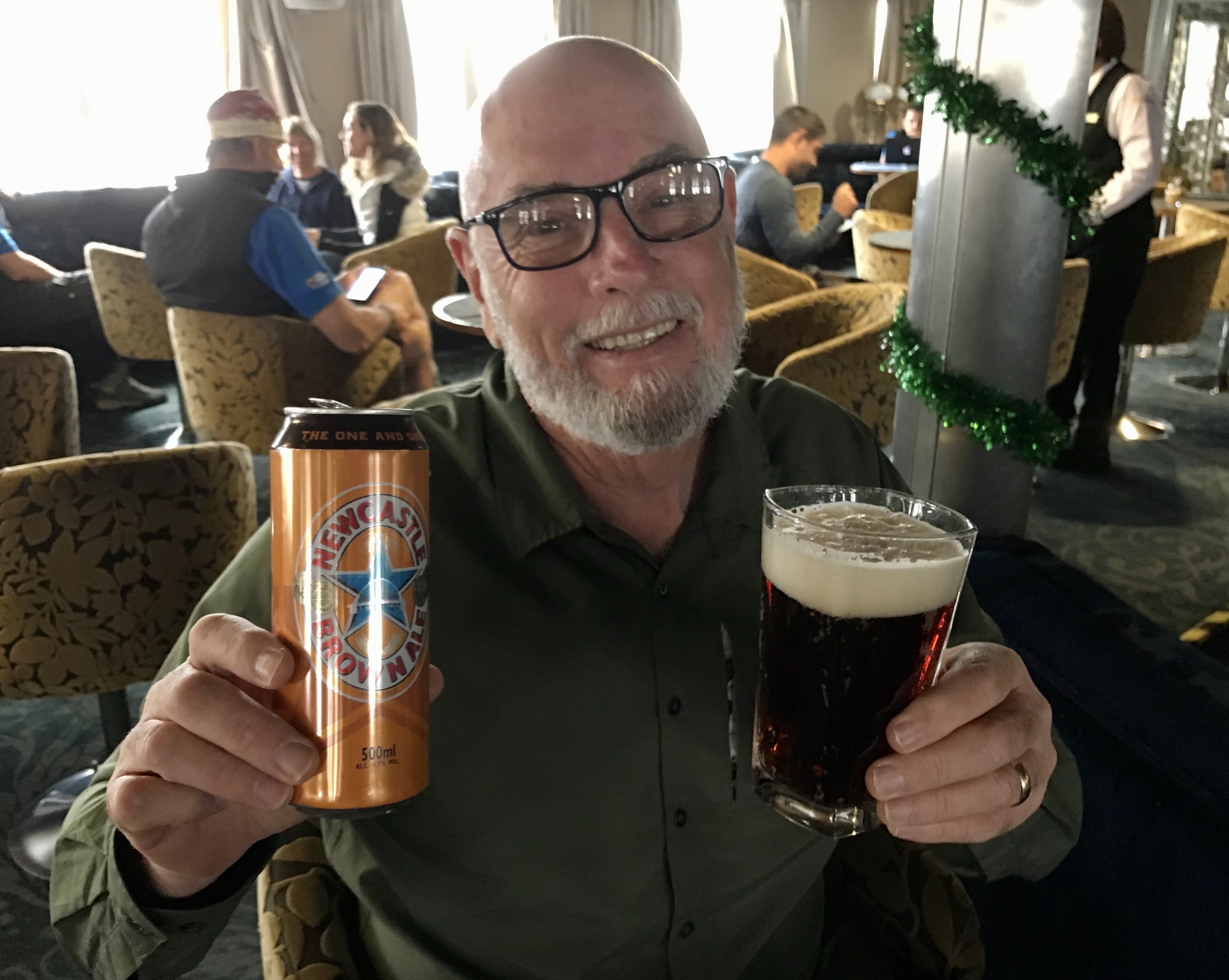
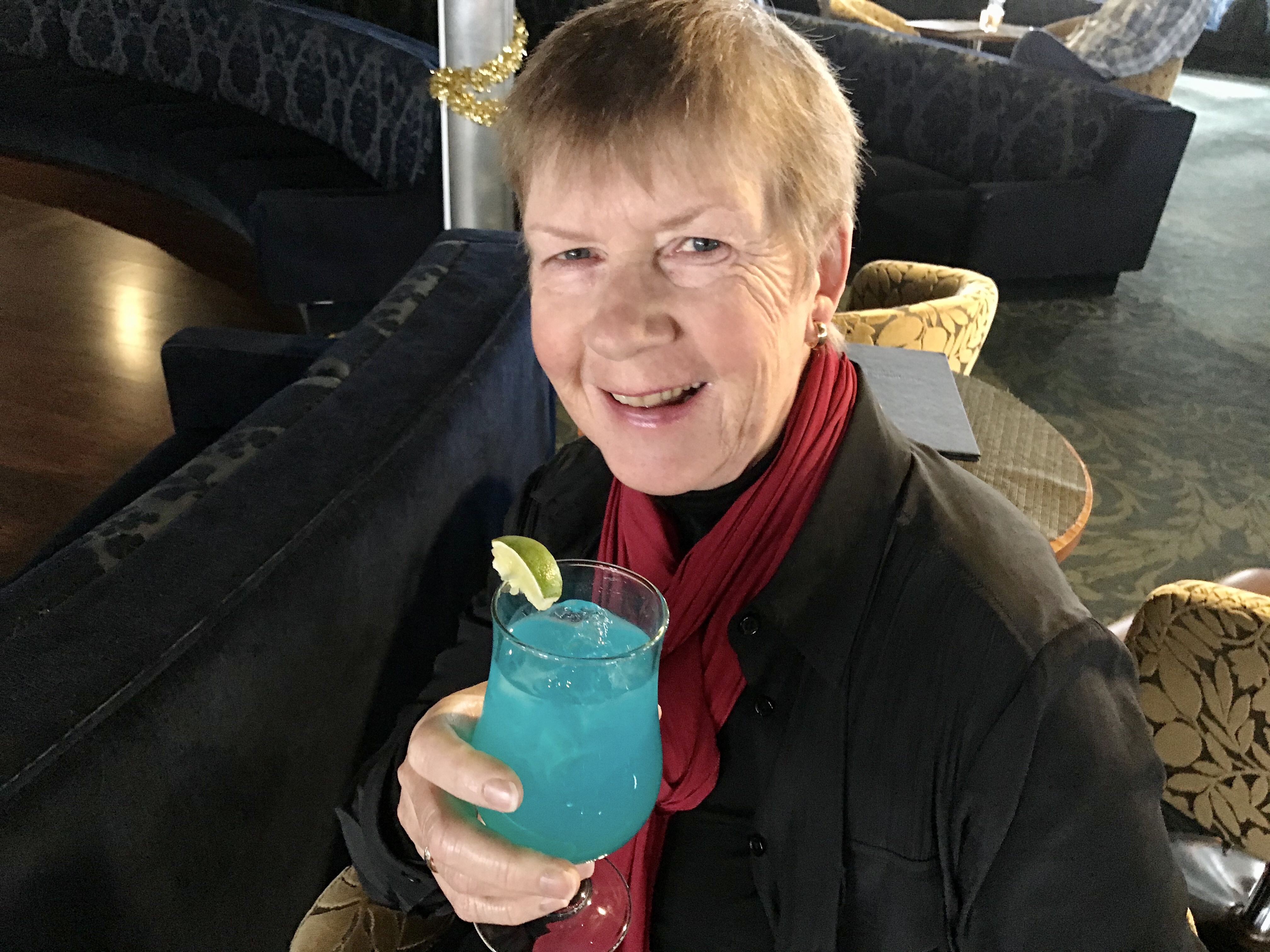
Beer of the day is a Newcastle brown ale. 4.5 rating. Very light.(even though a dark beer). I had another blue whale. (Blue lagoon)
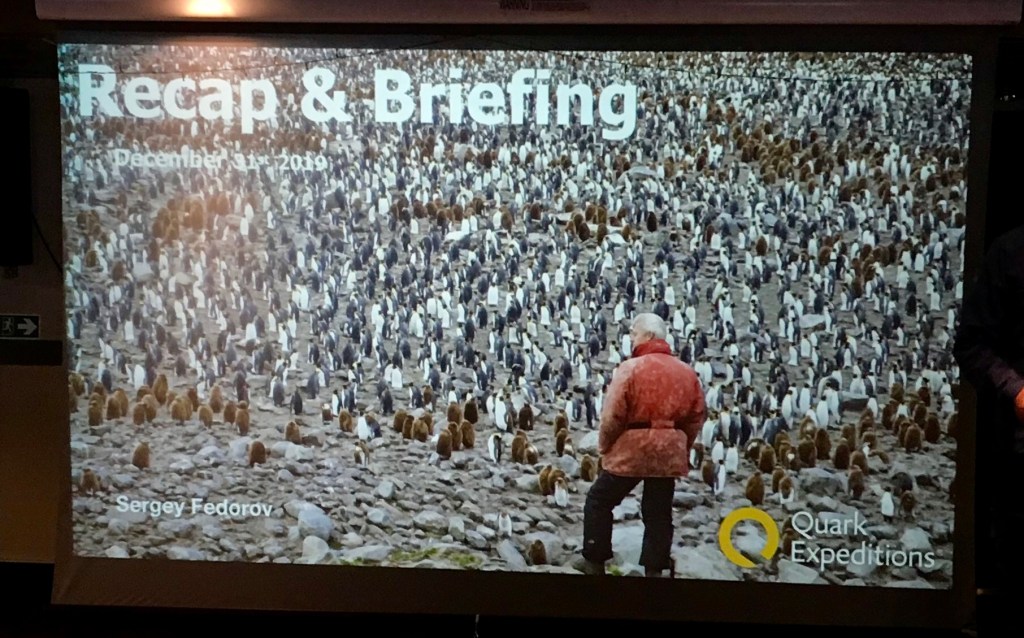
Solan started by congratulating us for choosing a holiday that is uncomfortable at times. Some are sea sick again. 60 degrees south is the geopolitical region of Antarctica. Early tomorrow we will cross into there and we are Deviating due to a storm and heading for the south Orkney islands. Remote and home to the quintessential Antarctic species. When we wake up we should see the mountains of the south Orkney islands. Spend afternoon and evening there. Then another full and part of following day to get to the peninsula proper. Might aim for the south shetlands as might be easier to start zodiac landing. Then south across the bransfield strait to the Gerlache Strait.
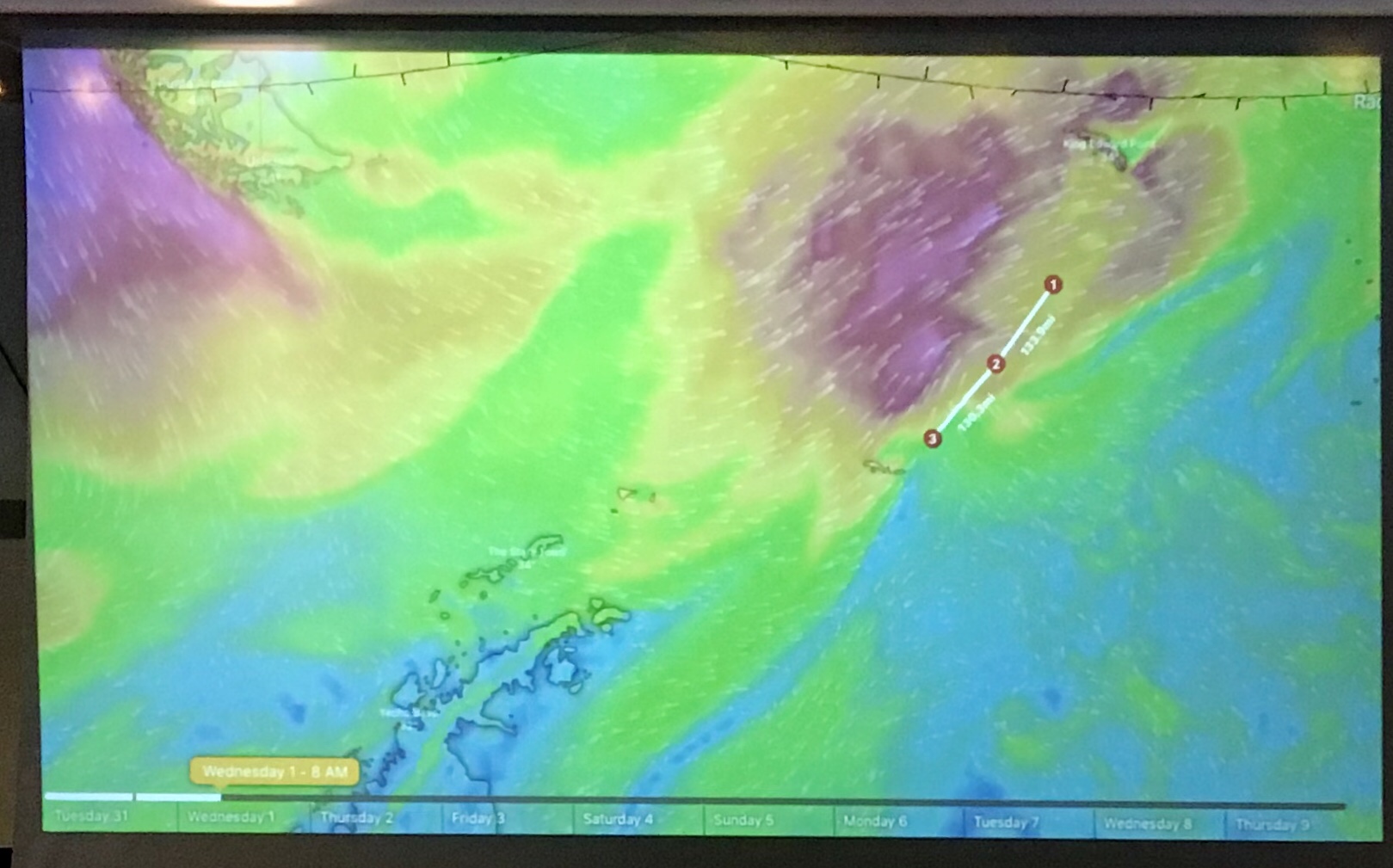
Here are a few of the weather/wind charts Solan shared with us. We are trying hard to miss the purple bits!
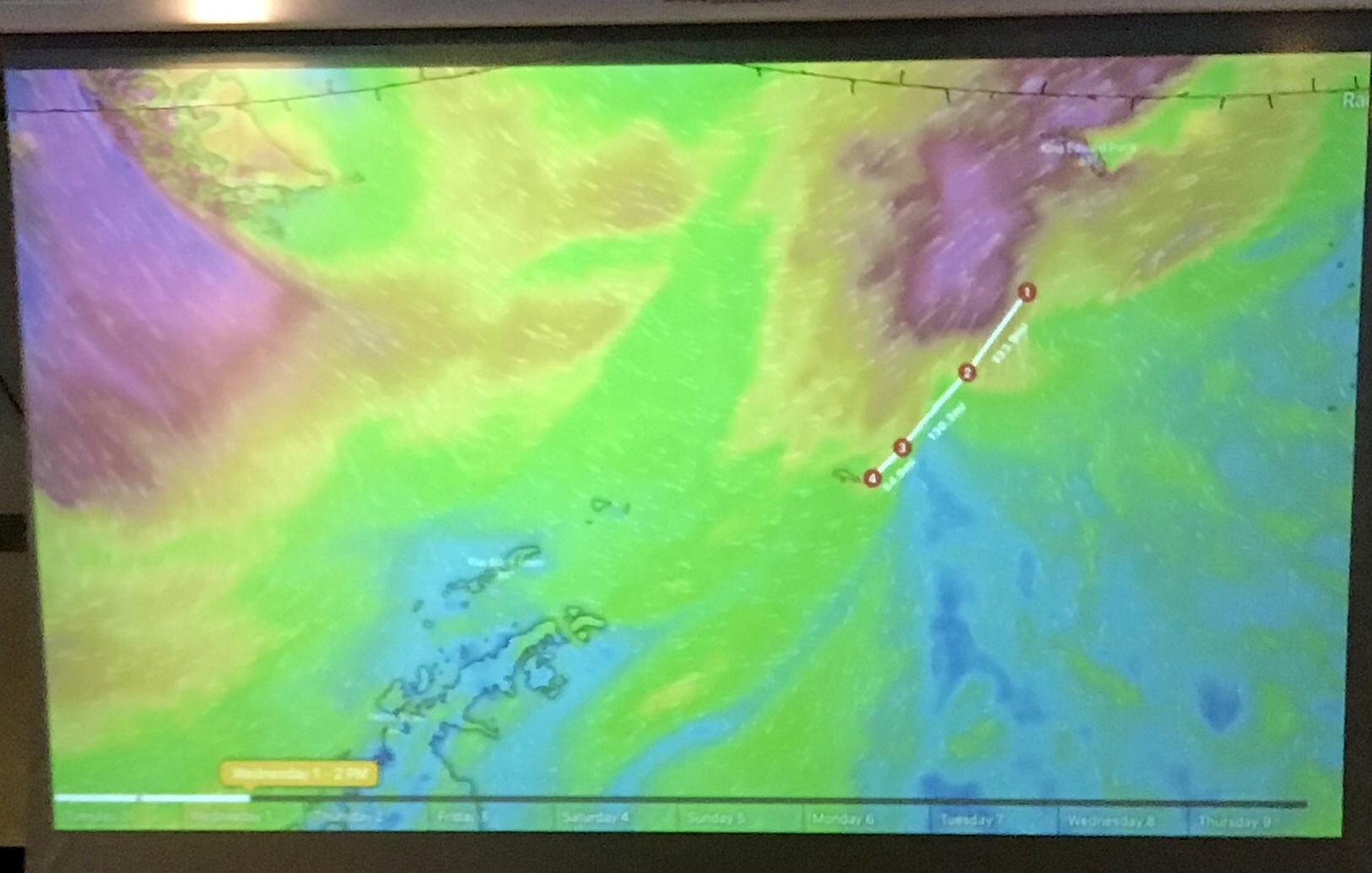
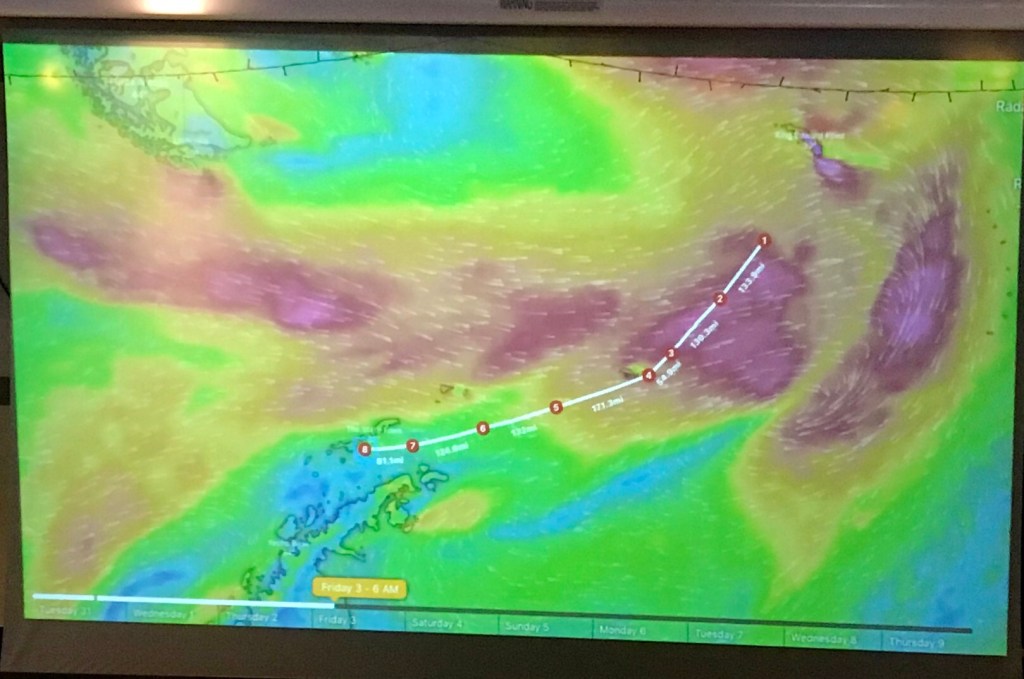
Tomorrow Scotia bay and an Antarctic base there. Longest running Antarctic station. Over 100 years. They have invited us there. Special opportunity. See a working base manned year round. Rarely gets visitors.stationed twelve months at a time. 5 or 6 years ago that Quark last visited. Zodiac cruising and landing. It is an Argentine station. Founder was a Scot. Small chance we may also go to another island after dinner (sun doesn’t set until midnight). Shingle Cove to see Adelie penguin. Also a British base there but no visitors allowed! How exciting.
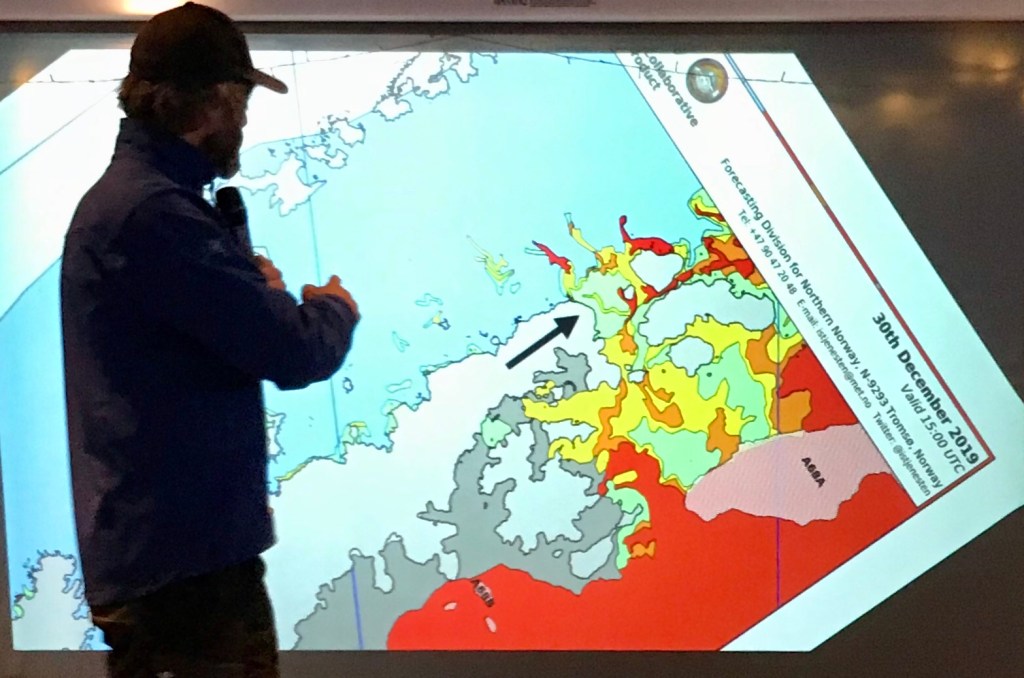
Pictures of ice forecasting lots of red. Big red areas is the weddell sea. Dark grey fast ice. Red frozen ocean. 3rd slide shows why we can’t go towards Antarctic sound due to ice, going to Gerlache. South shetlands just above the arrow. So tomorrow pm orkneys then 1.5 days at sea then Shetland’s then travel to other Antarctic places. Anything south of 60 is Antarctica. So south orkneys are Antarctica.
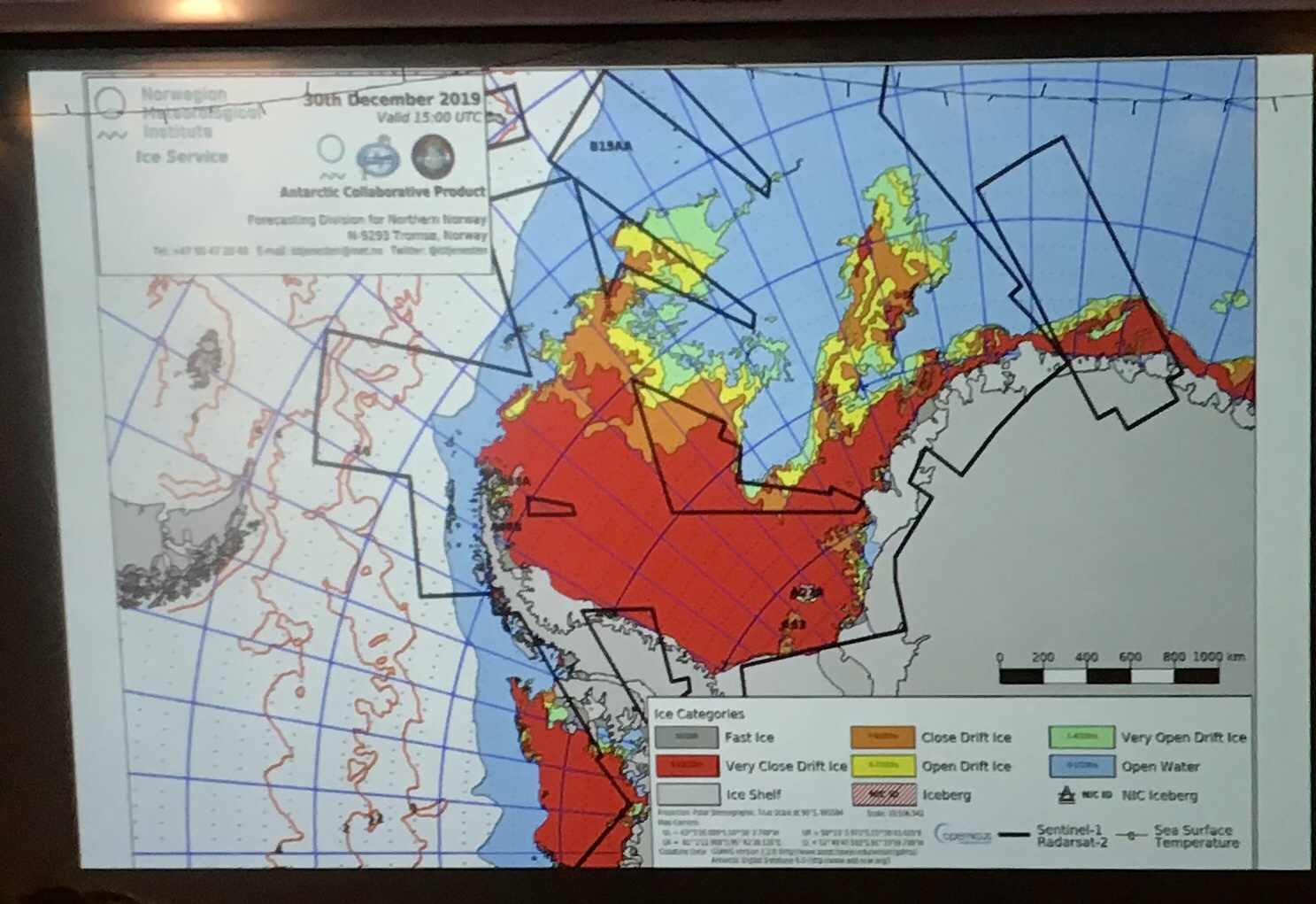
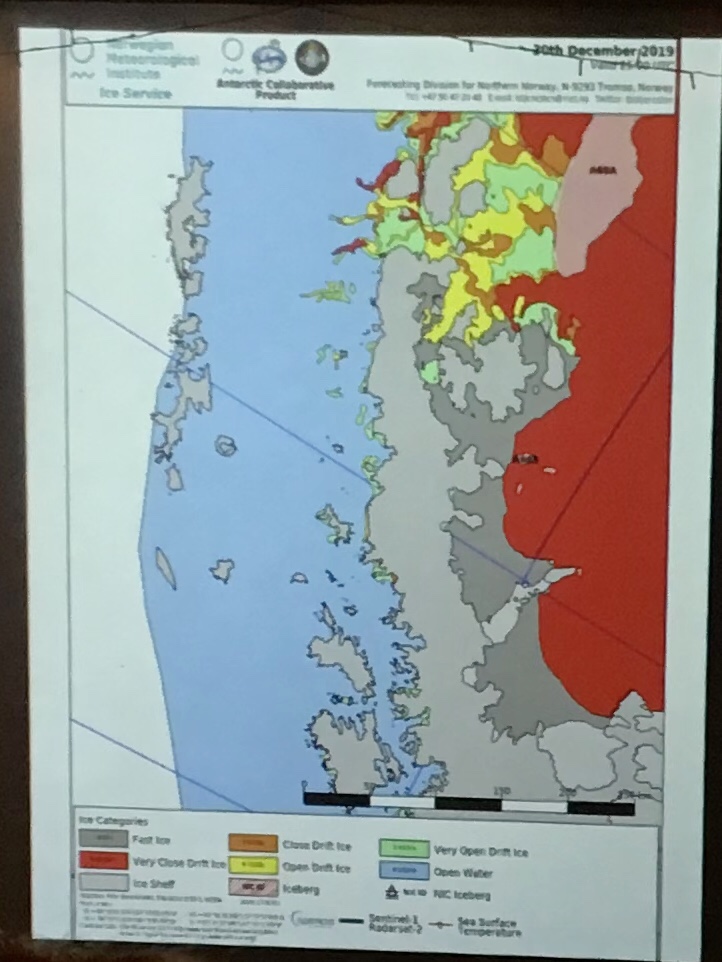
Land around 8am. Ice, snow and mountains. Expect around freezing temp plus windchill.
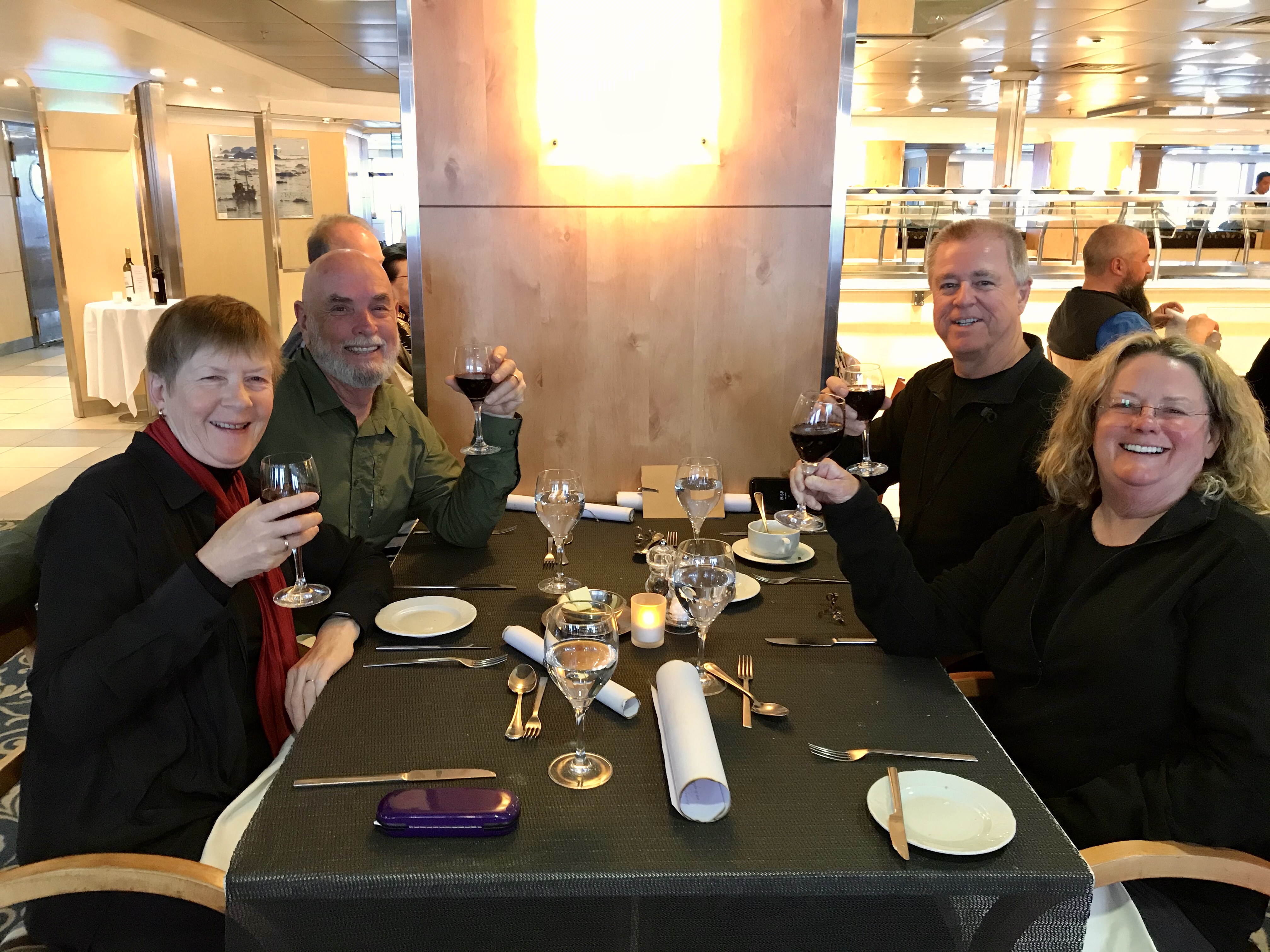
Dinner was a feast with a very special menu.
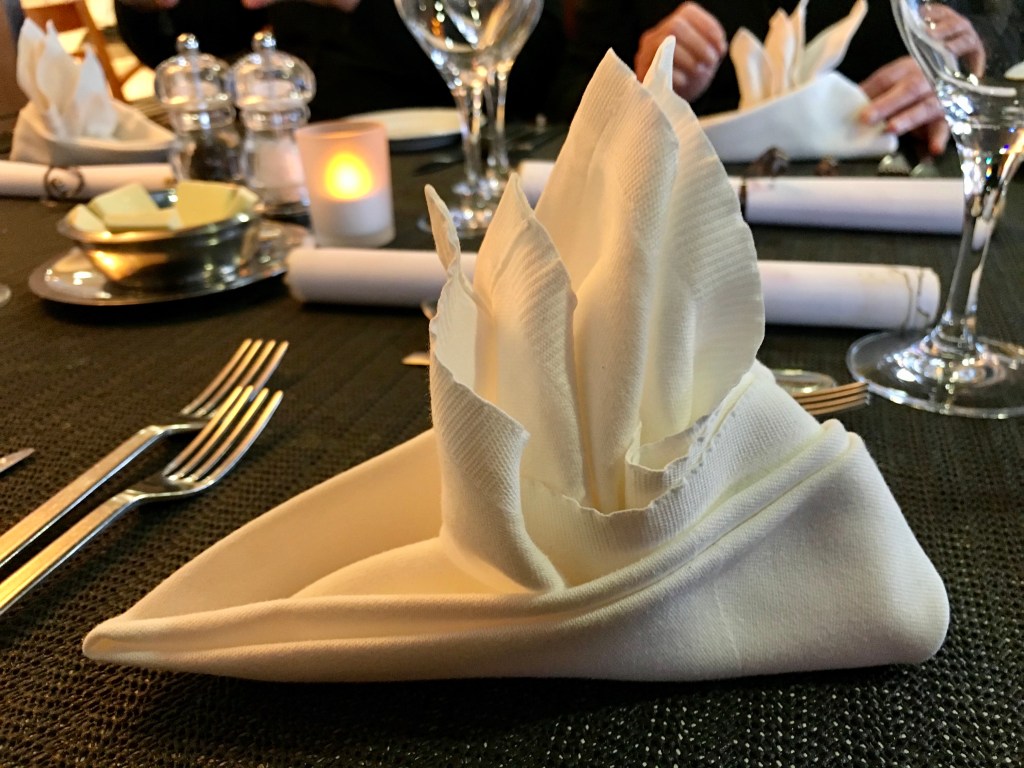
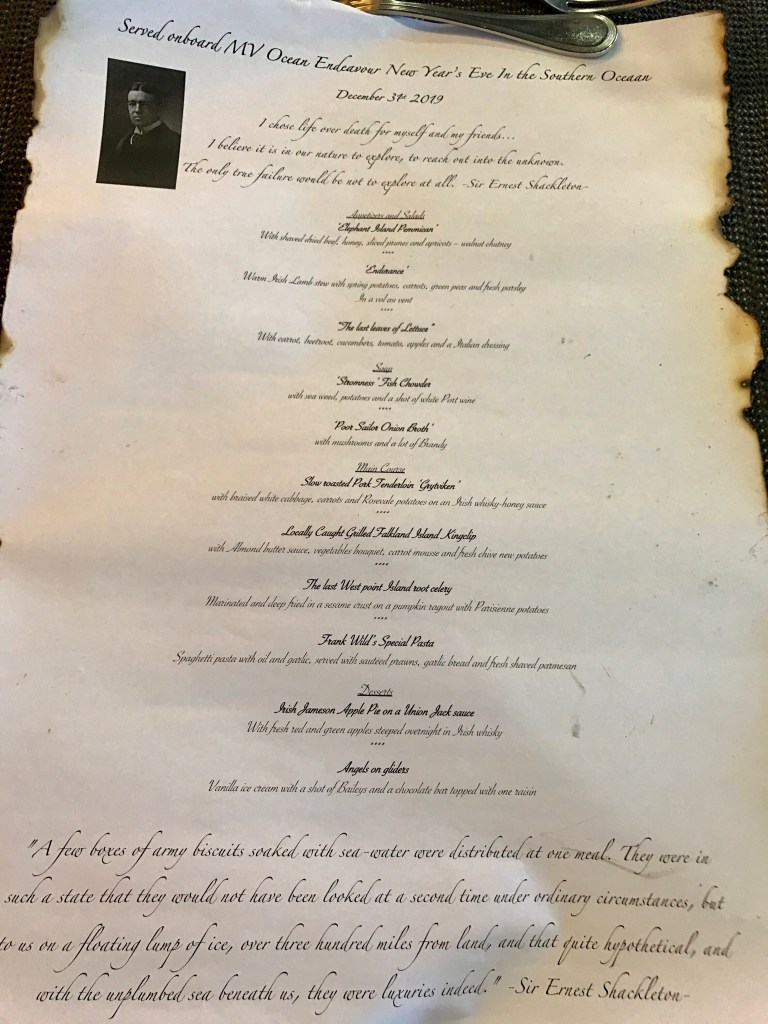
Ok if you read “Endurance”, you’ll read a lot about Pemmican. So I had to try it. Not too bad at all but no penguin involved.
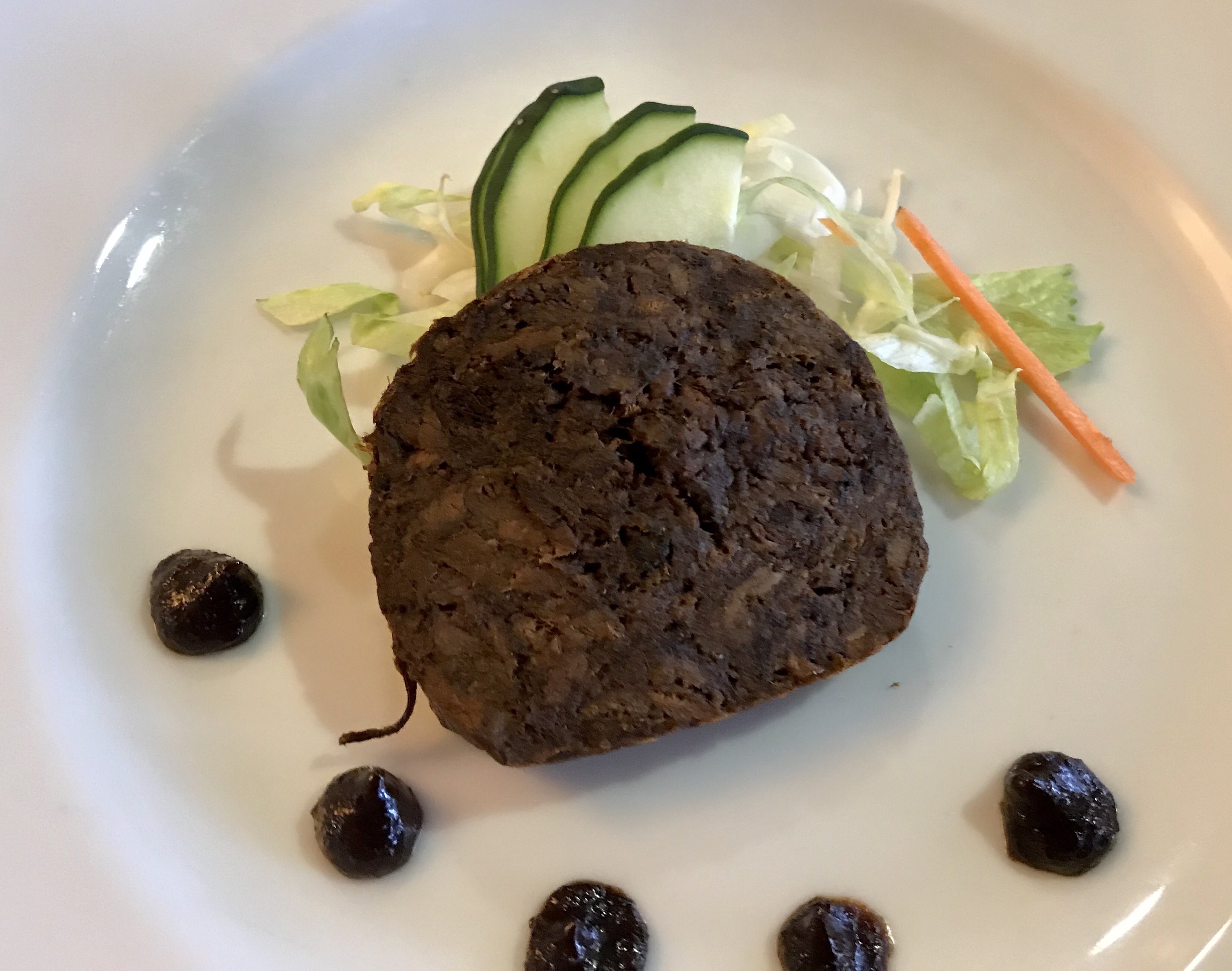
Thoroughly enjoyed by all!
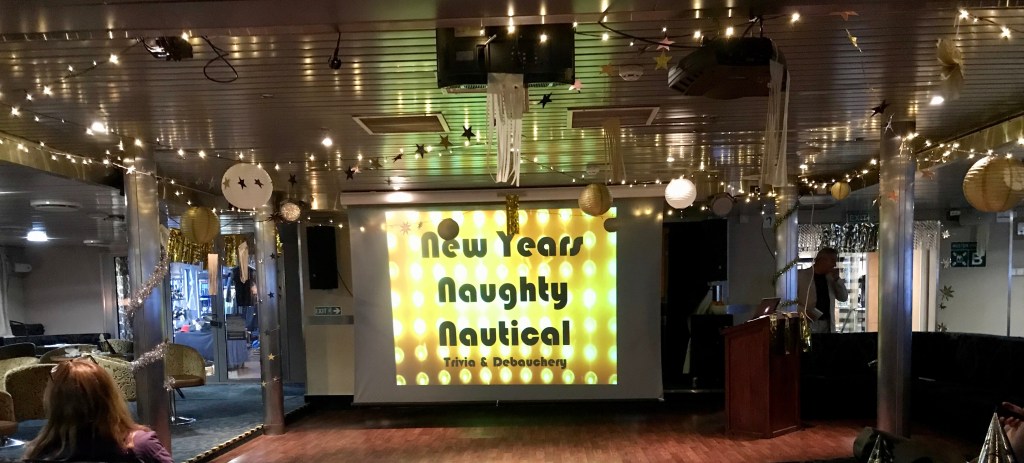
We were told to “Grab a buddy and join Ryan, Ryan & Ryan (yes there are three Ryan’s on the expedition team), for New Years Naughty Nautical – a quiz night of epic proportions (with prizes!), in the Nautilus Lounge.”
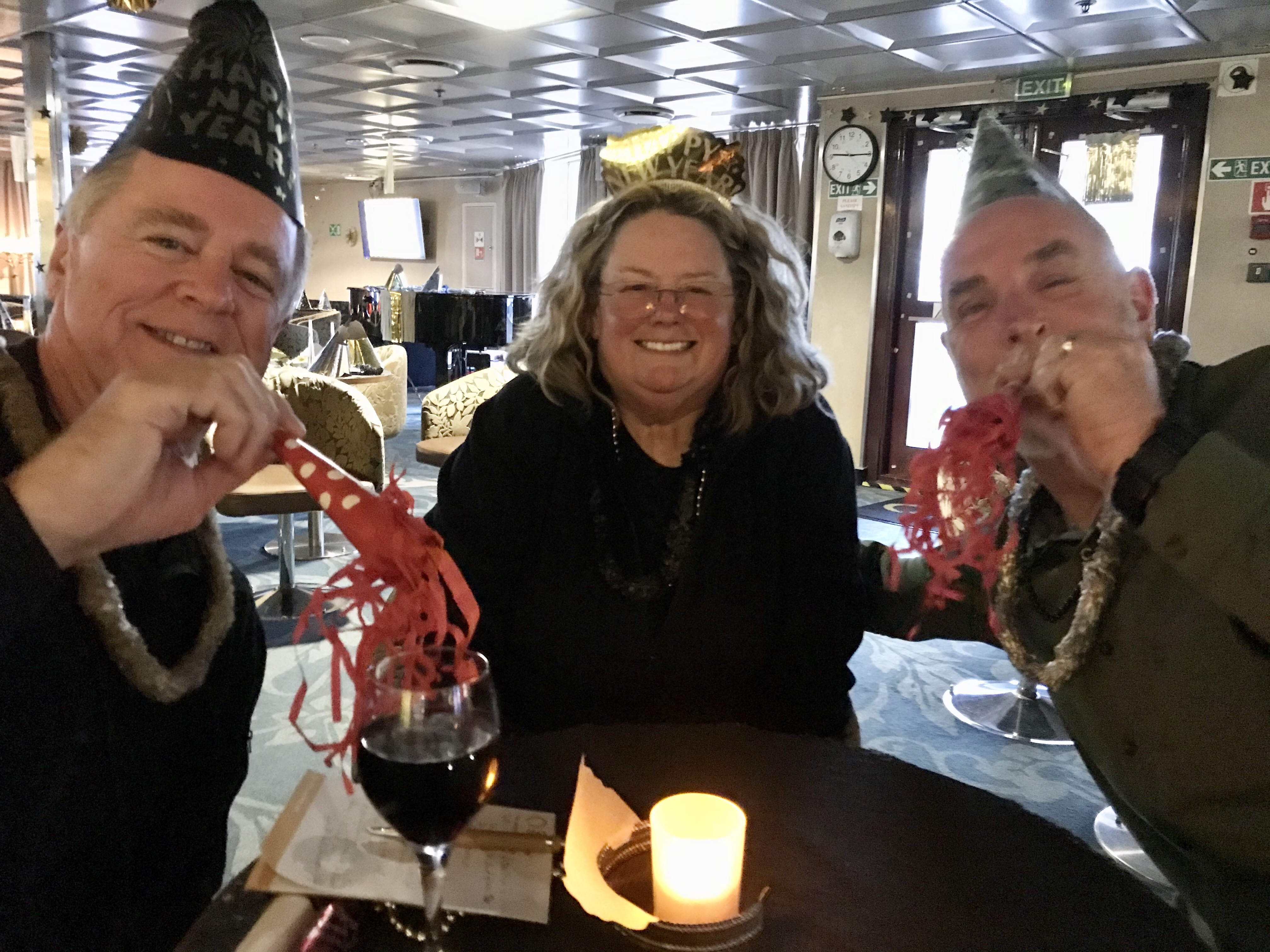
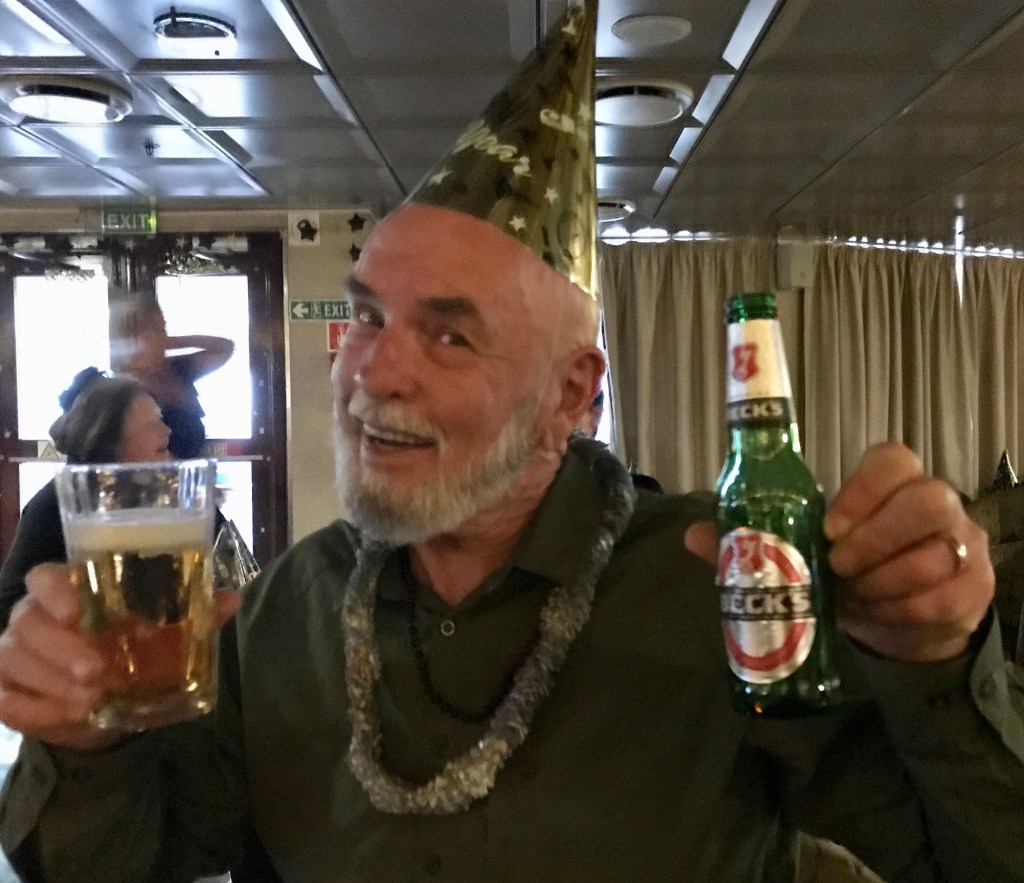
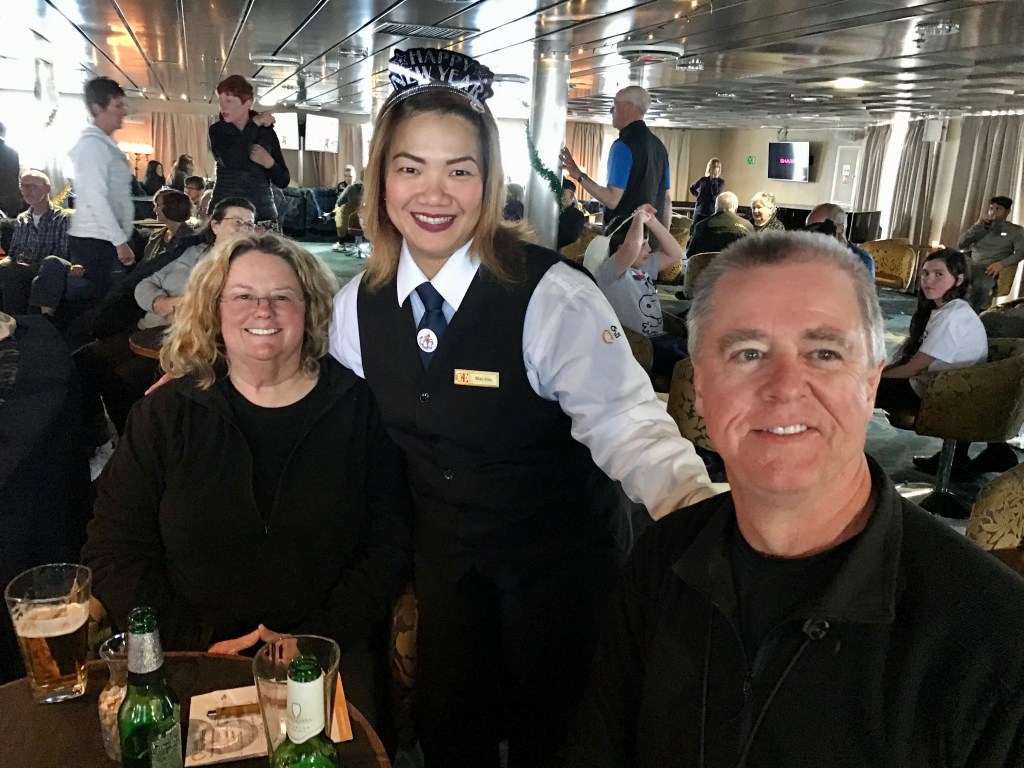
The second beer of the day was a Becks which only rated a 3 yikes! Squeakers sounded like king penguins!
At any rate there was a lot of laughter and games and both Garrie and Mike became involved with various challenges but came no where. Me?? Nope. There has to be some advantage to always being behind the camera lens!
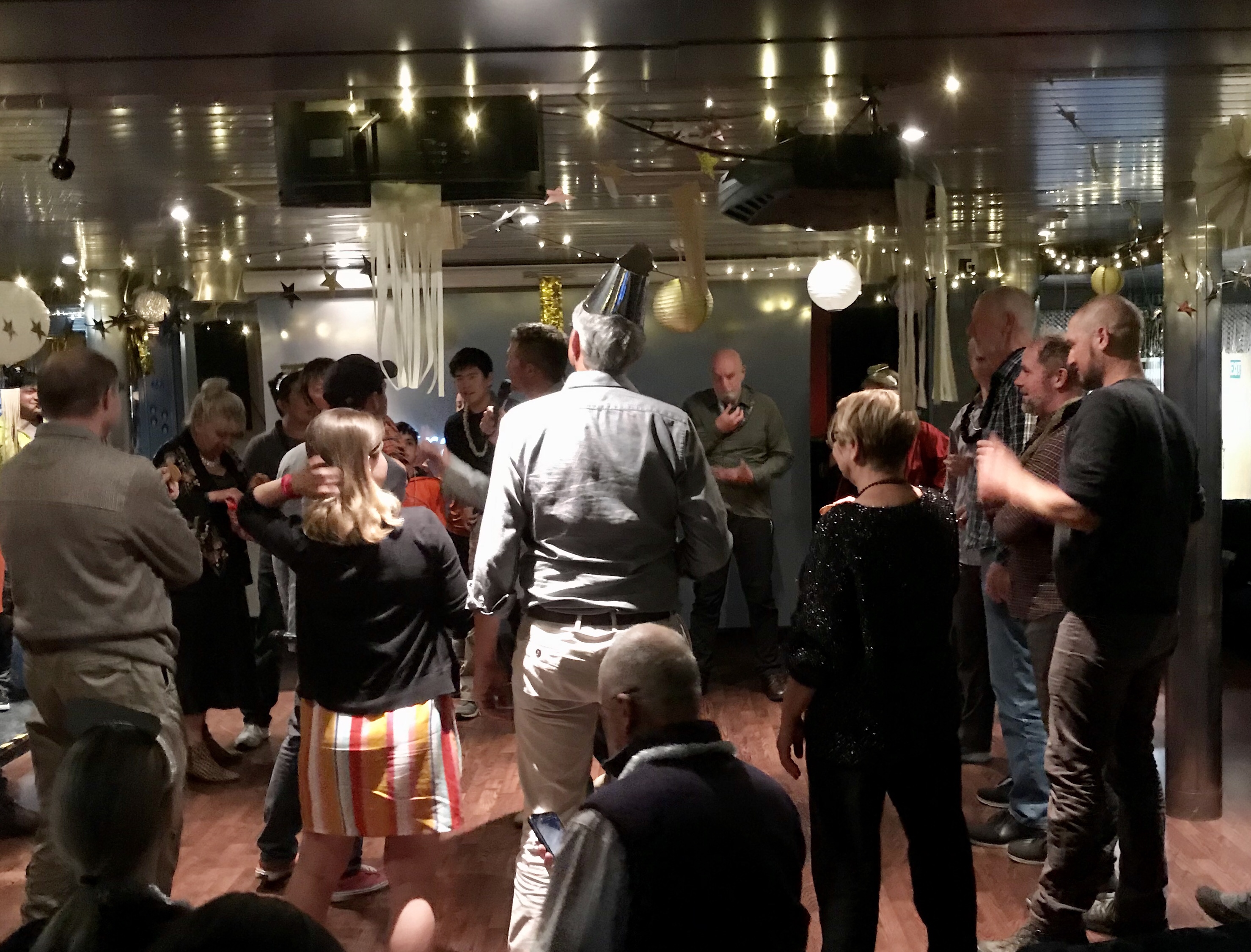
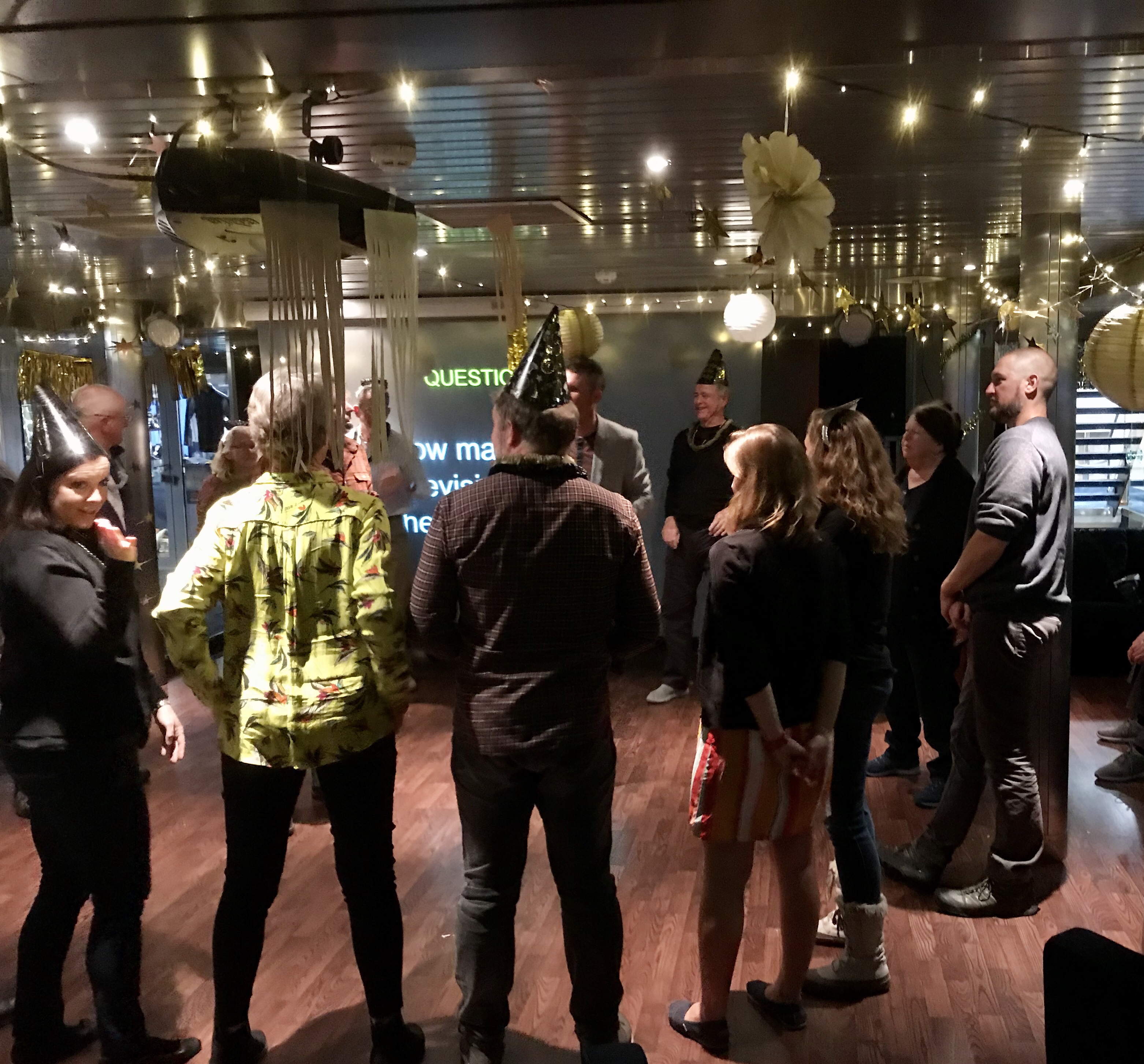
Some of it was fun, mostly the quiz part, but when they started the “necking” game ie passing an orange from neck to neck in the team we all decided it was time for bed. Cheryl and I had been looking at each other for about half an hour but this was the deciding factor.
After the quiz, they planned “dancing and jolly times! There will be a Late-Night Snack Bar (22:30 – 23:30) available outside the Nautilus Lounge” but we were all ready for the sack.
Clocks went back to Buenos Aires time at midnight so some may have had two celebrations!
A cute critter and happy new year card awaited us as we headed to bed.
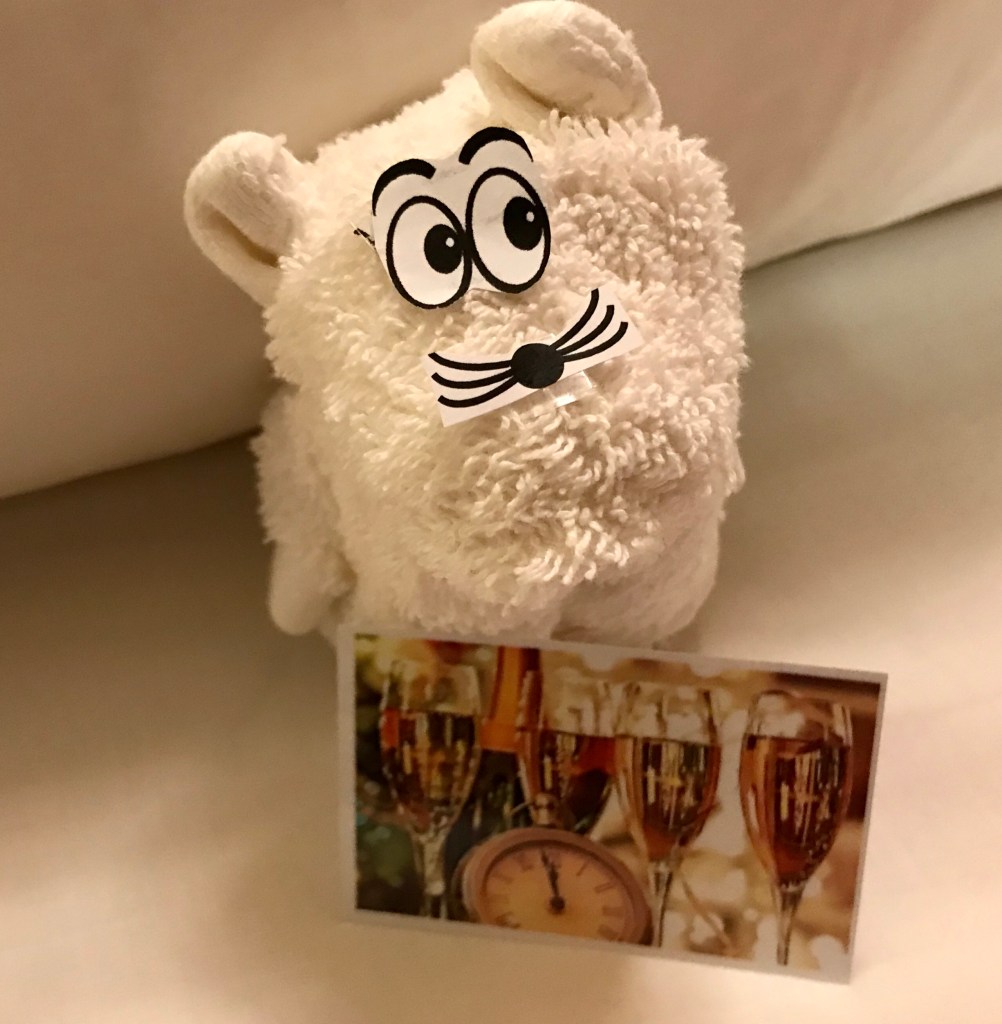
So here ends the year 2019. Tomorrow a new year and new – Antarctic- adventures!

 Antarctica 2019