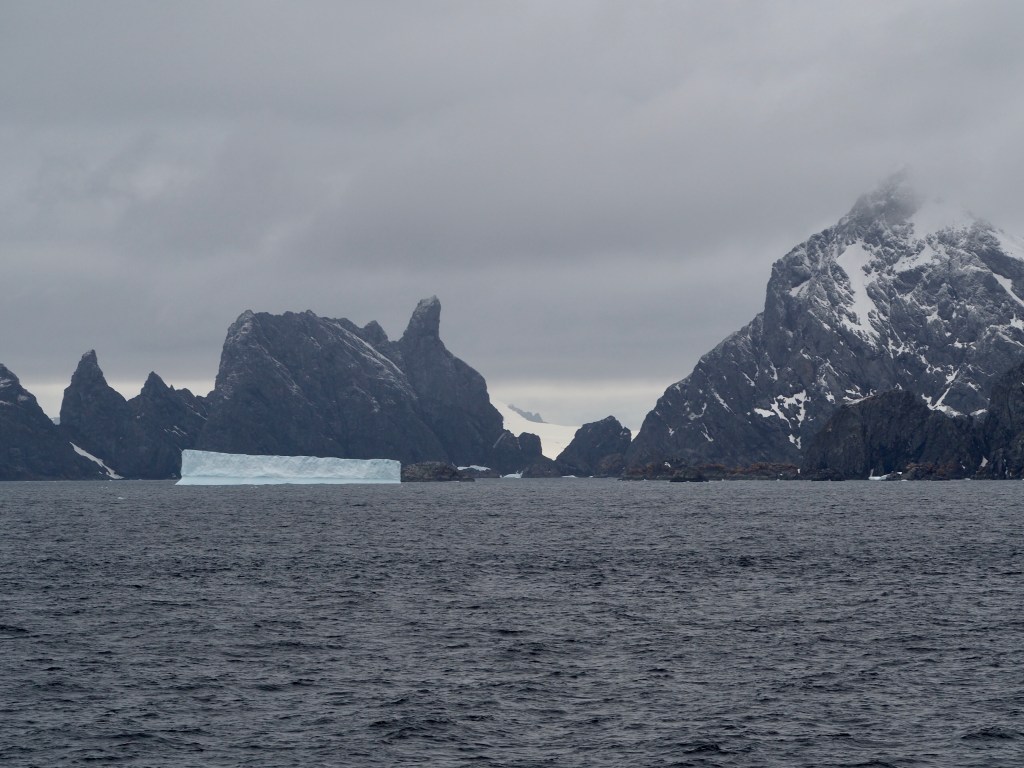
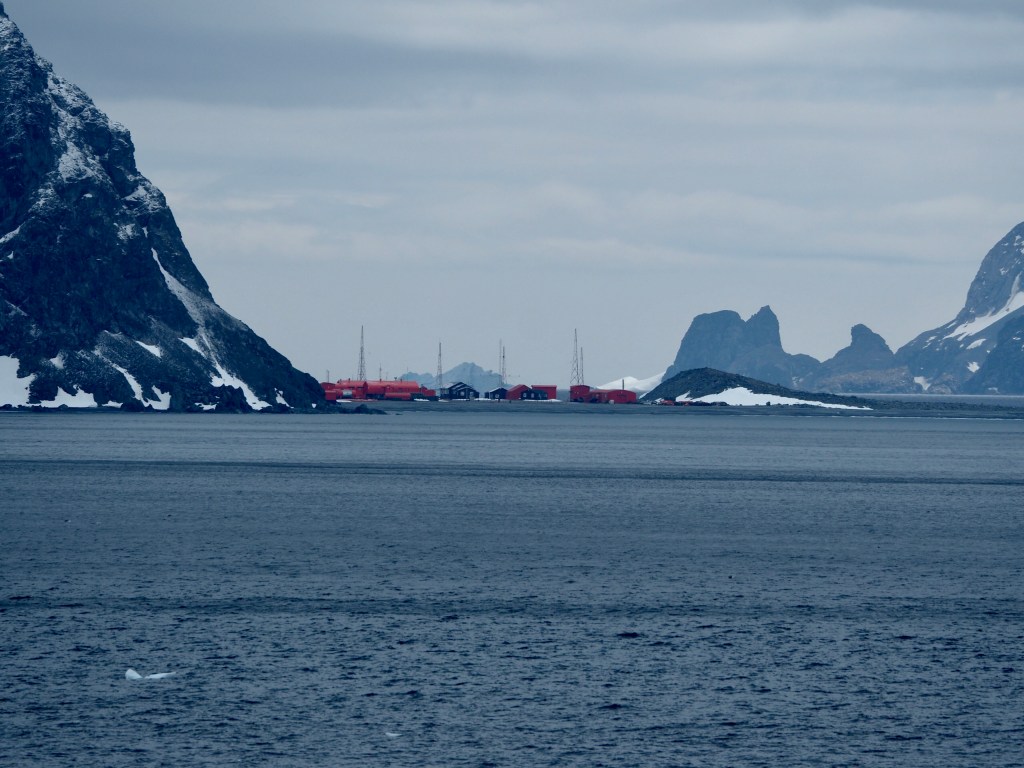
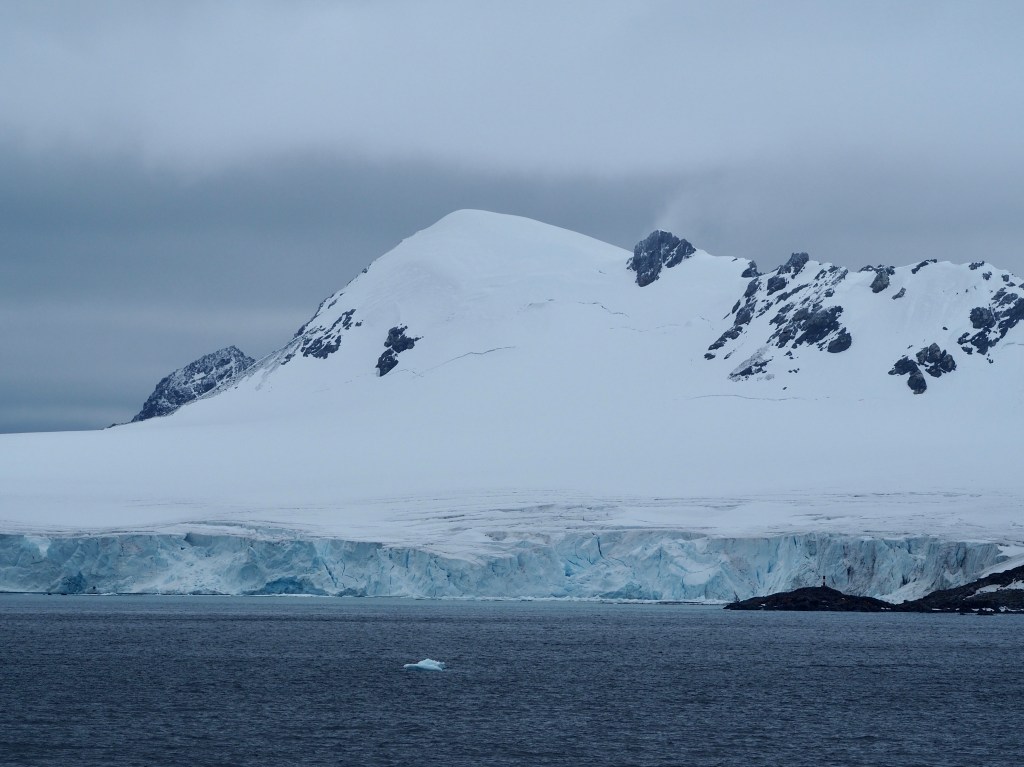
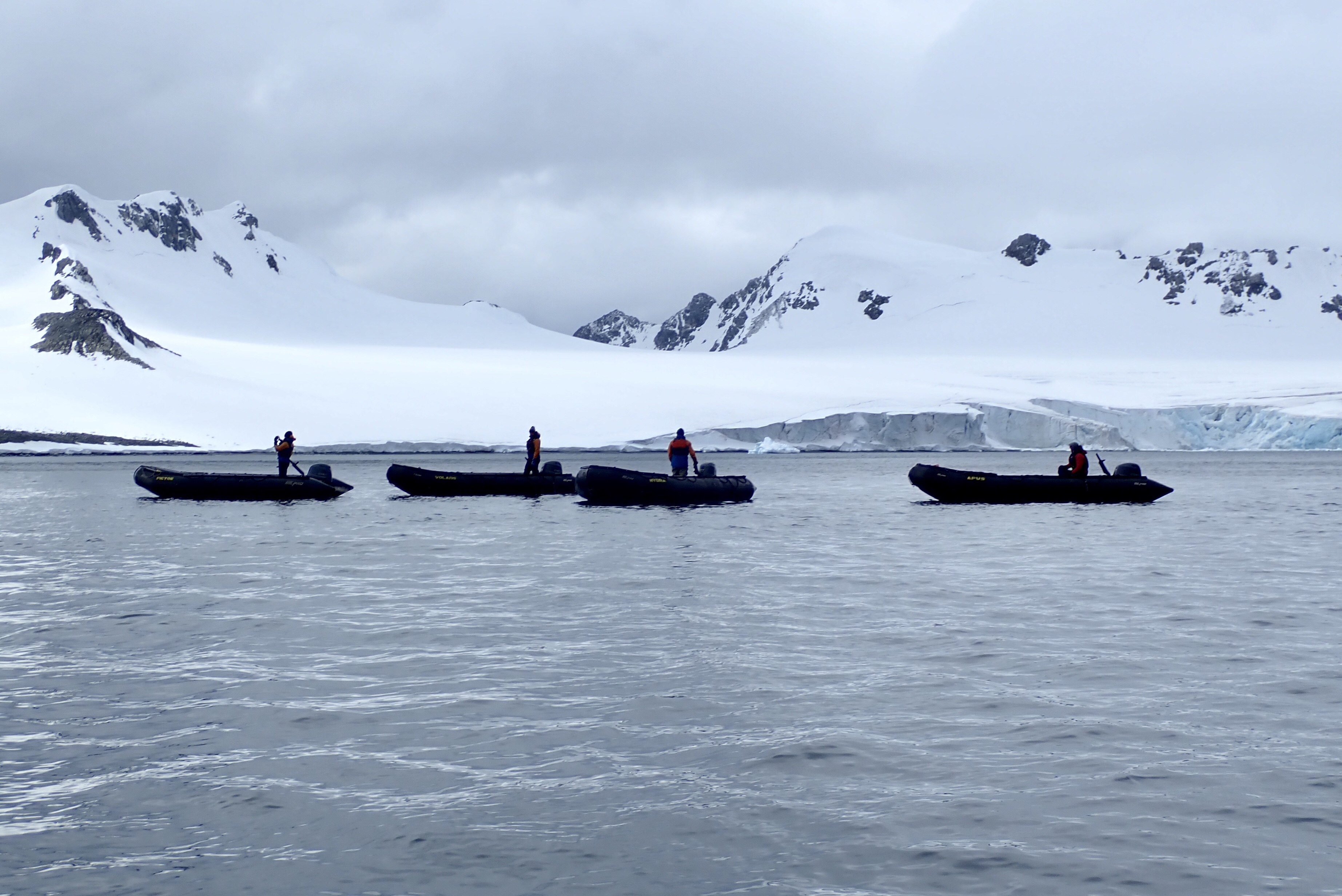
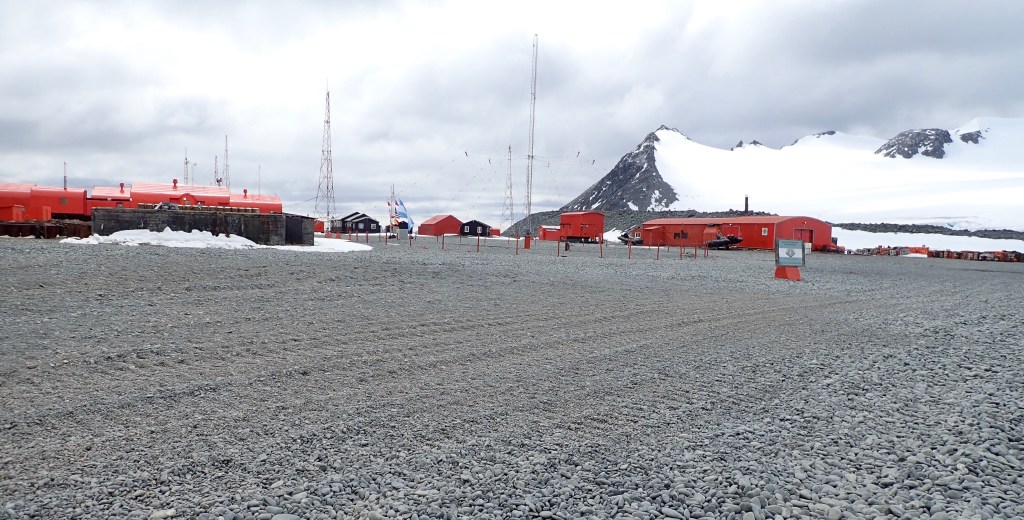
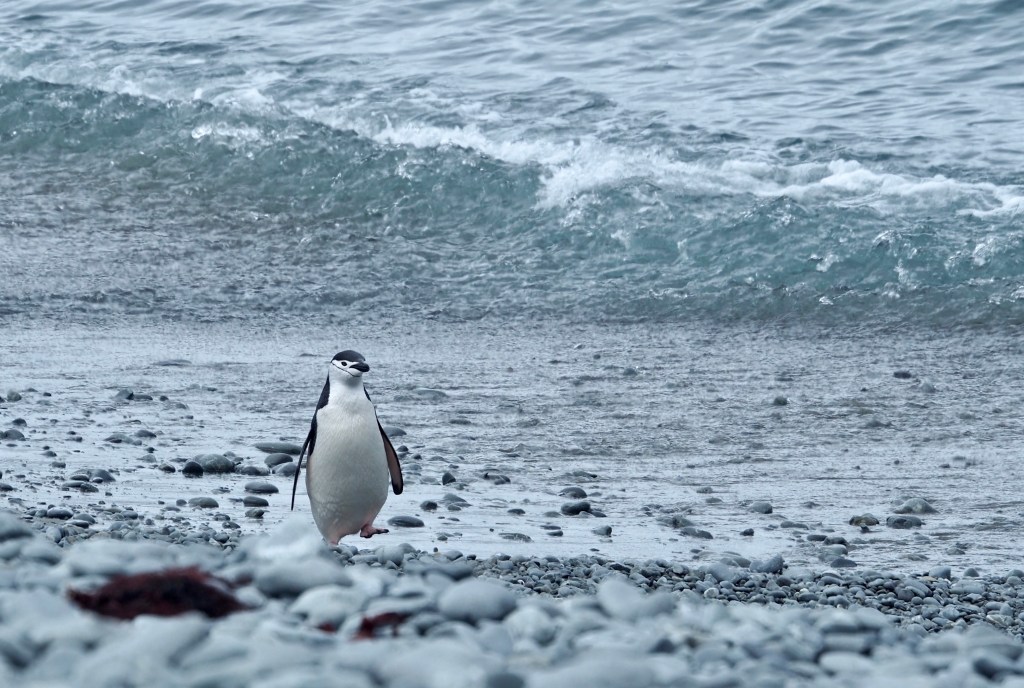
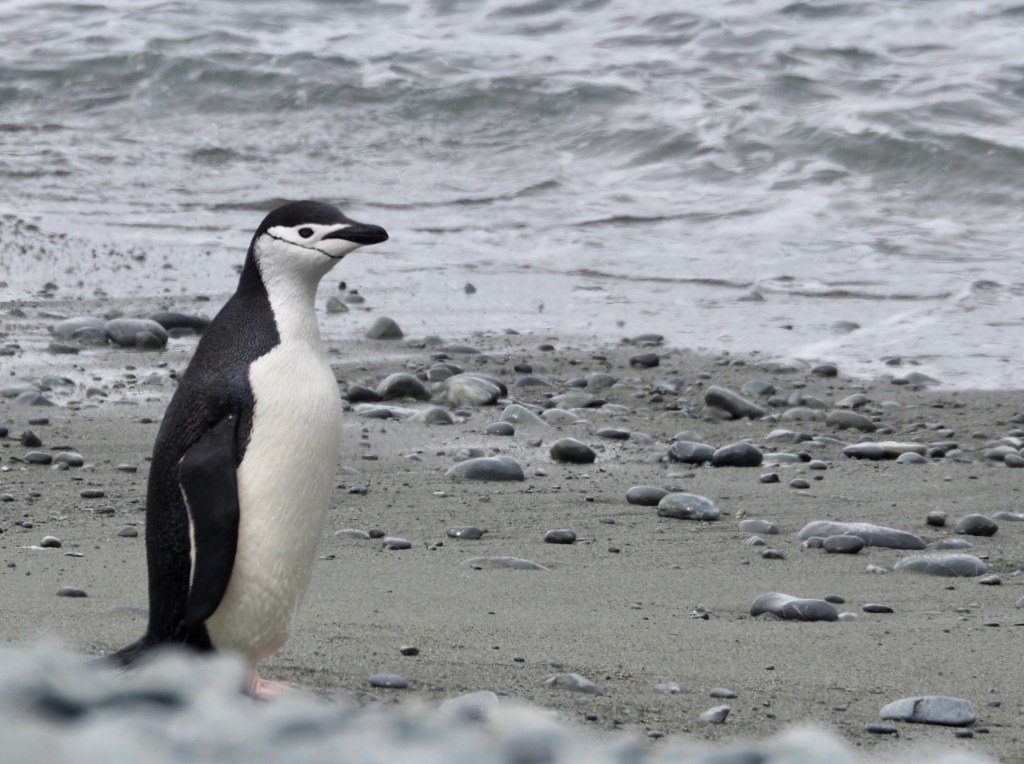
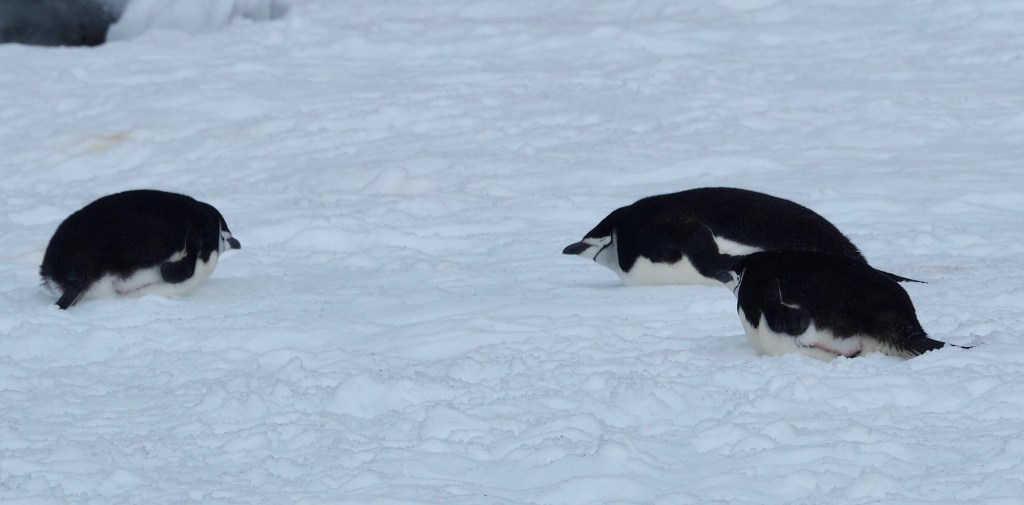
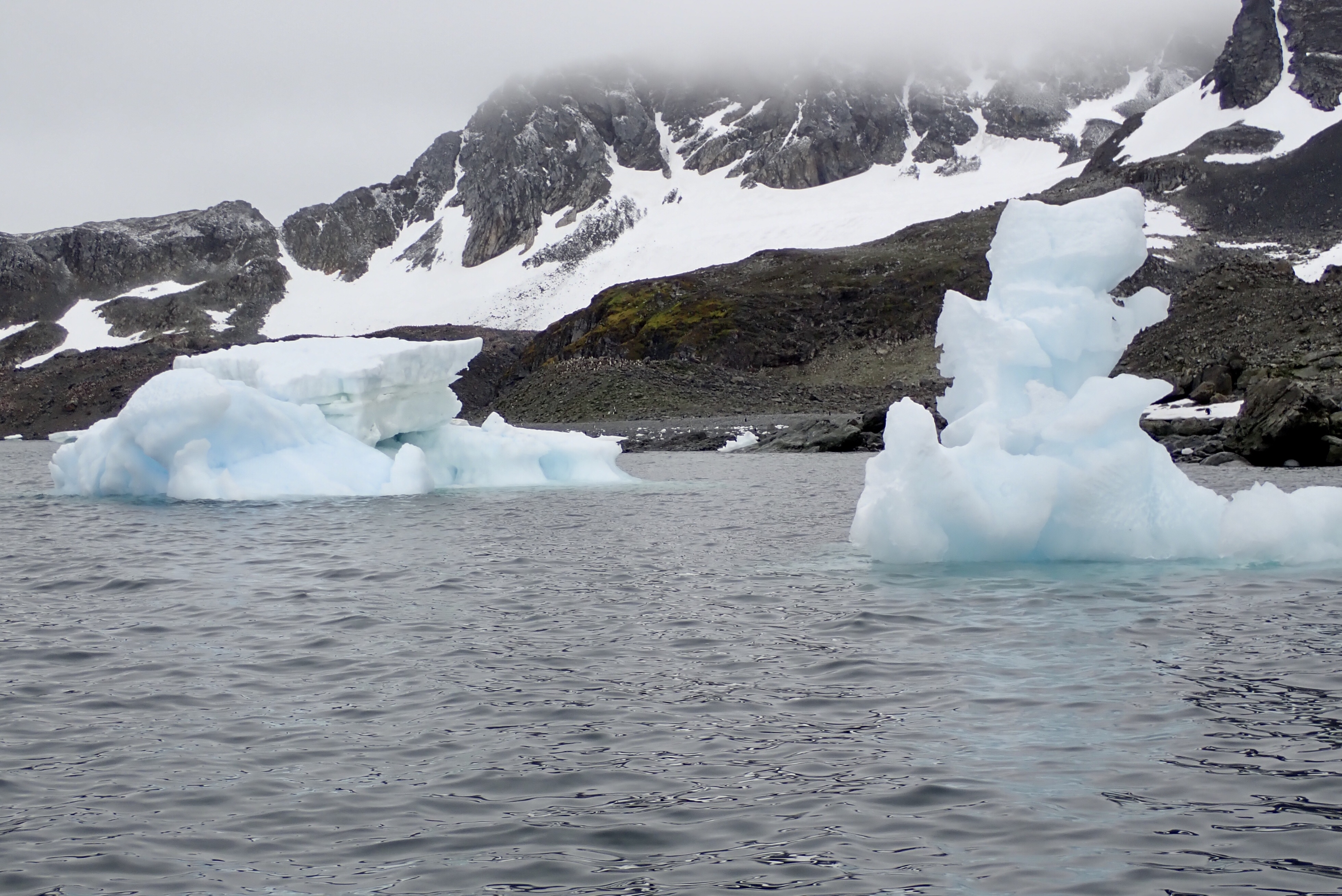
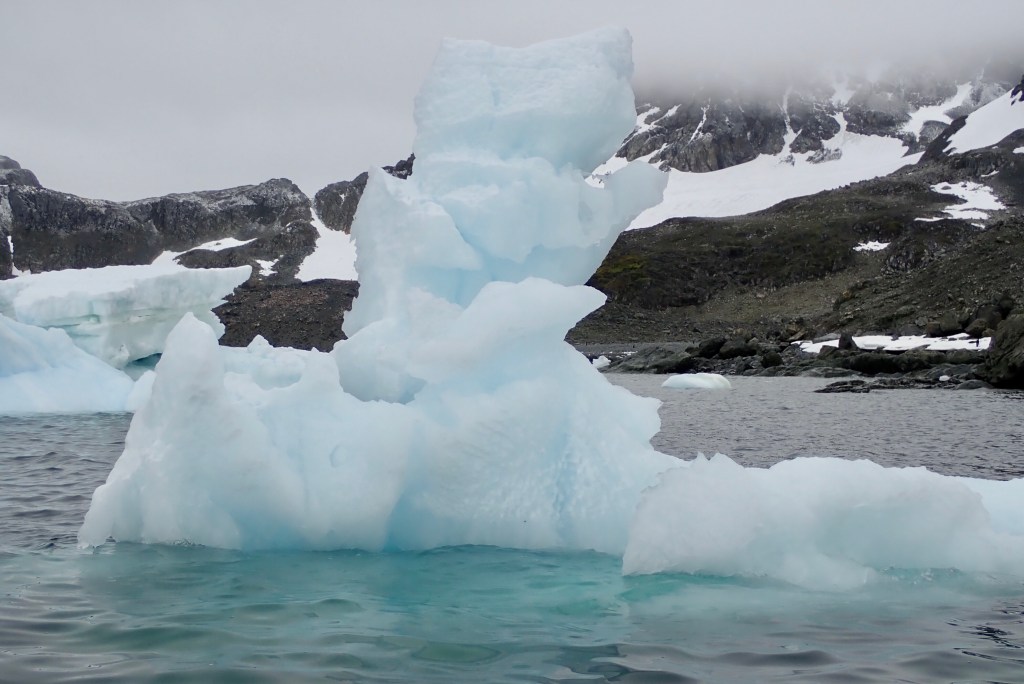
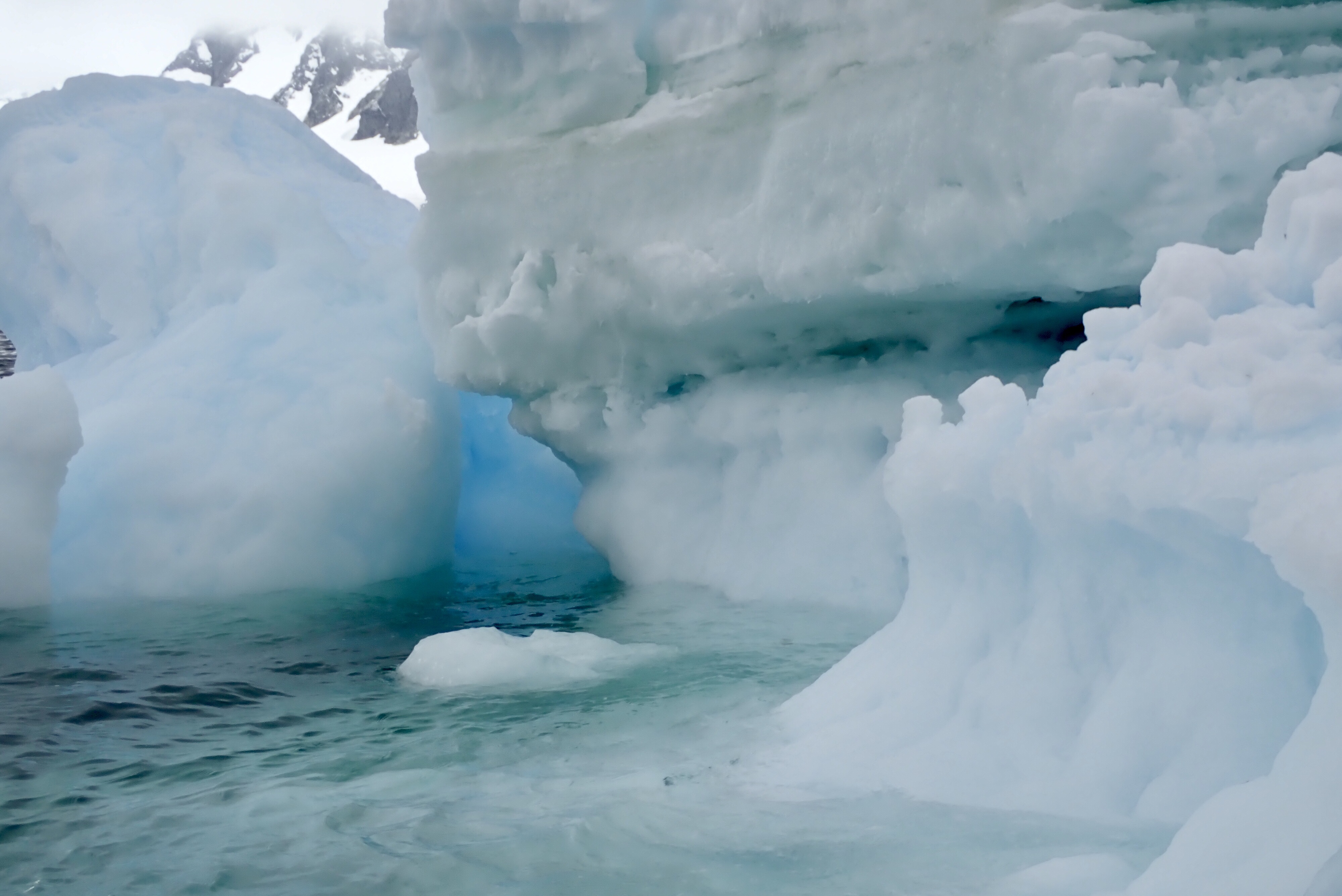
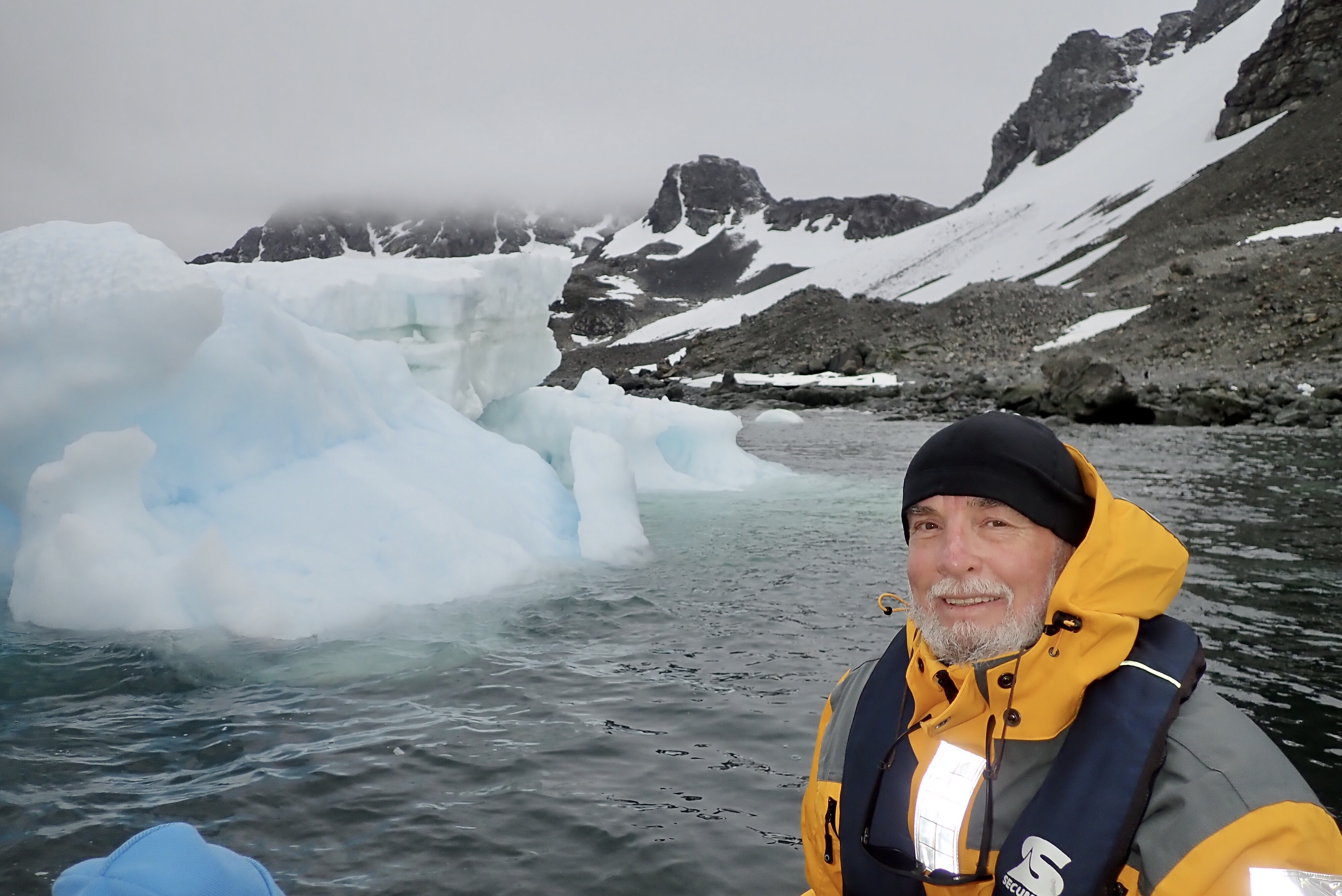
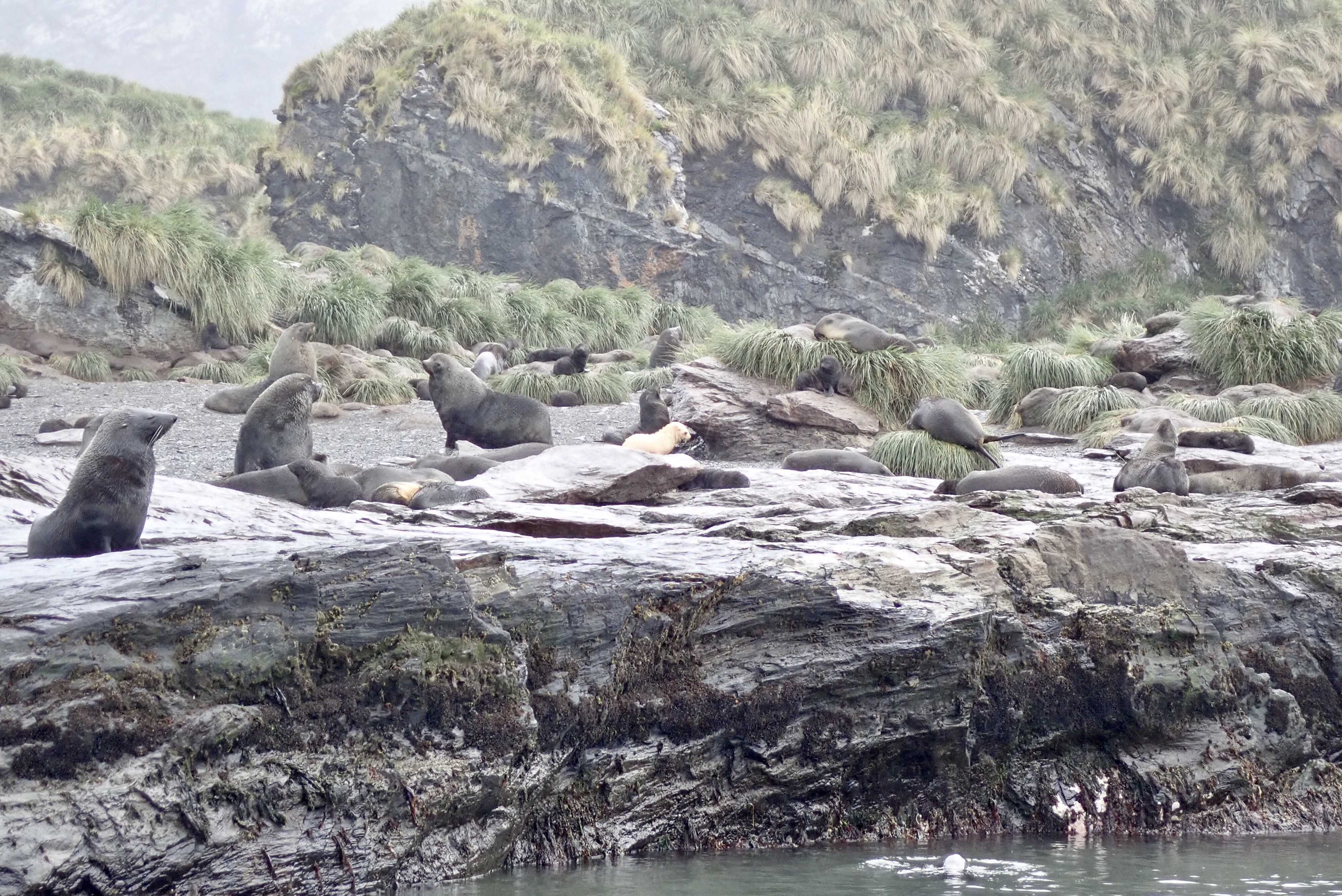
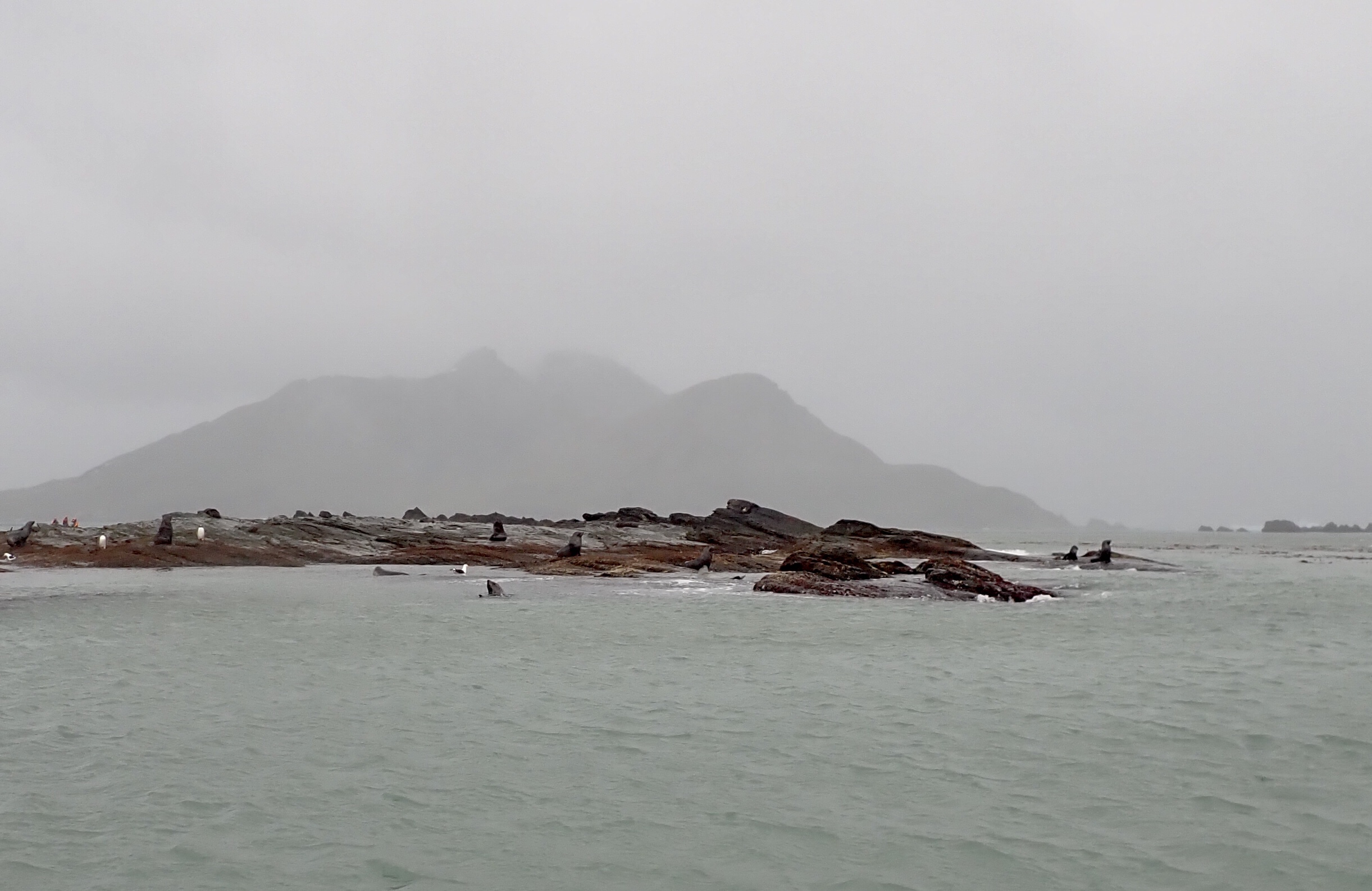
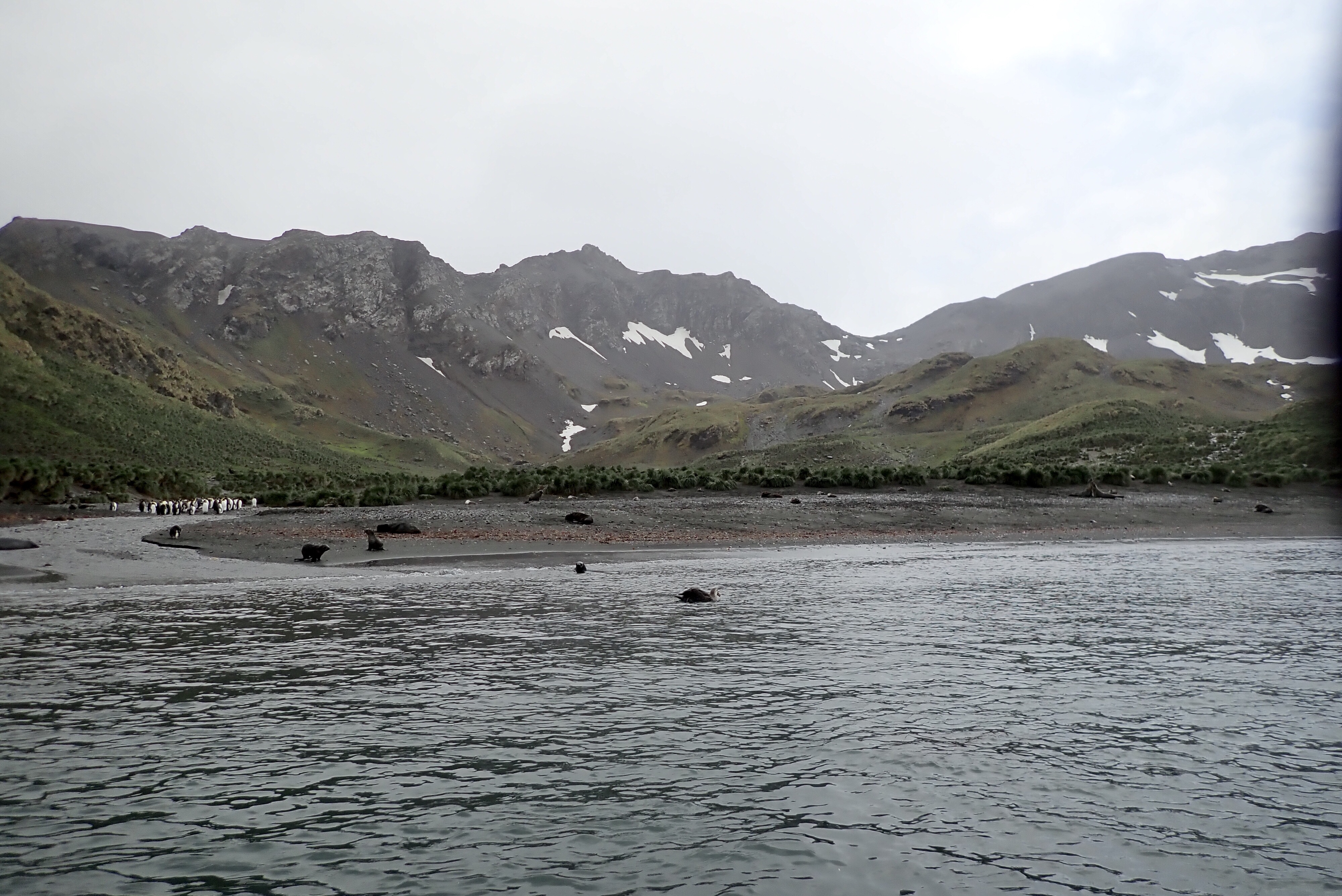
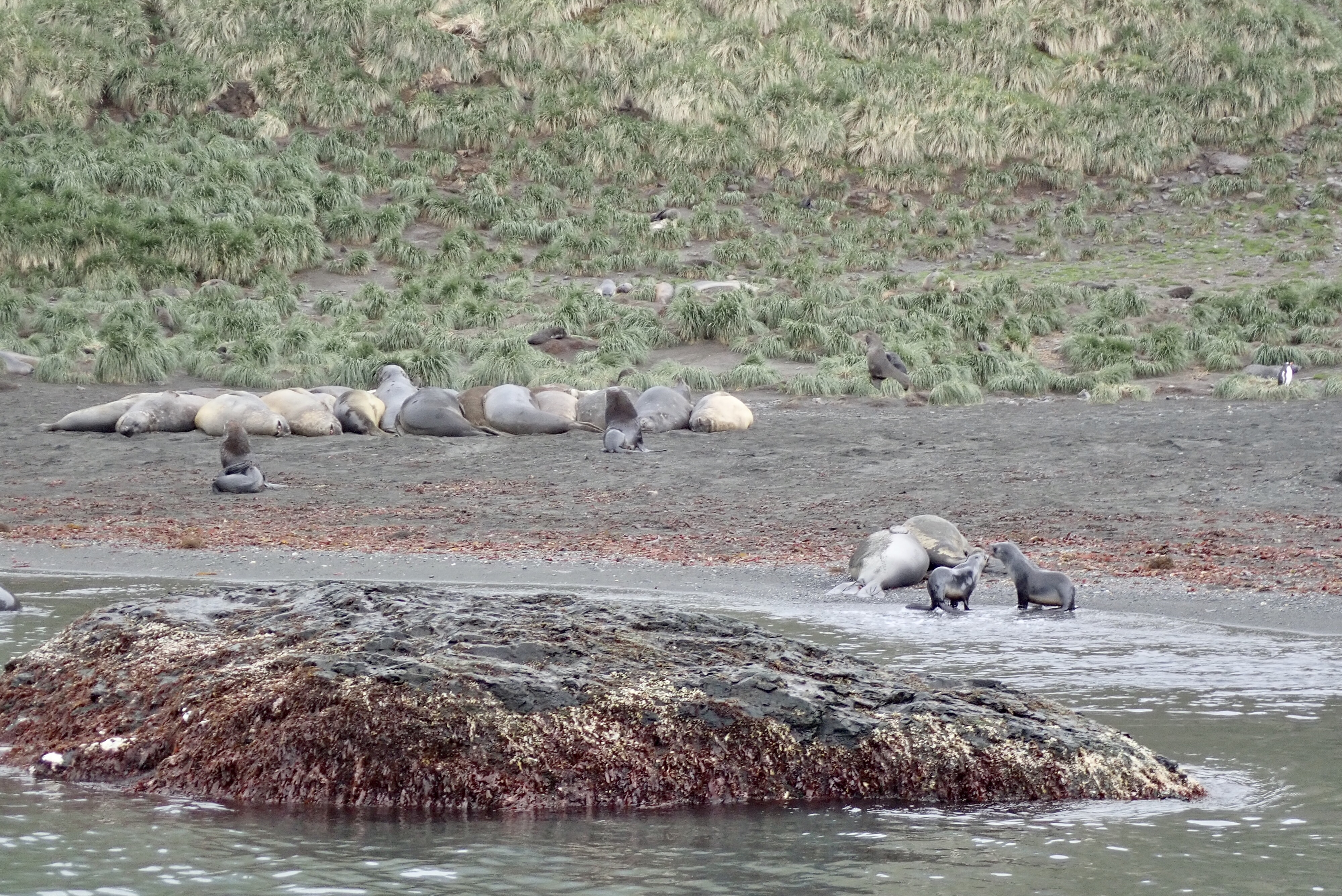
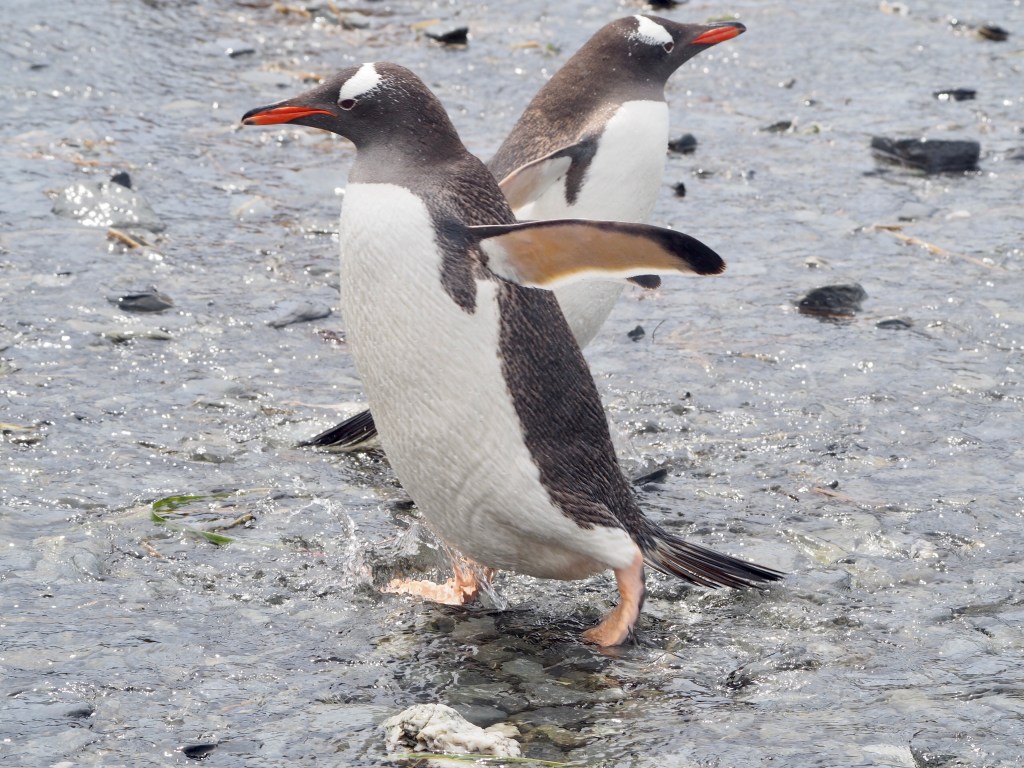
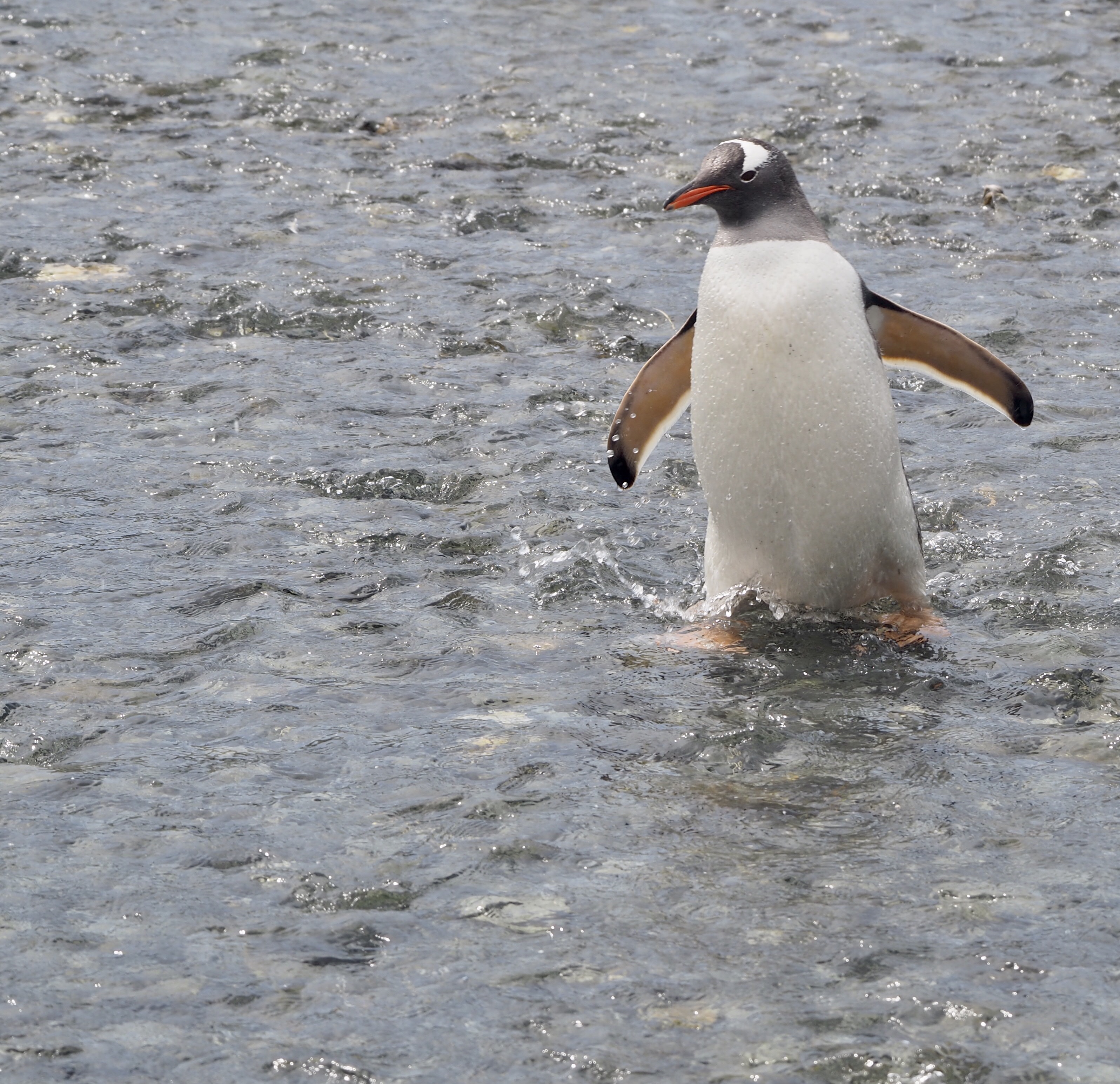
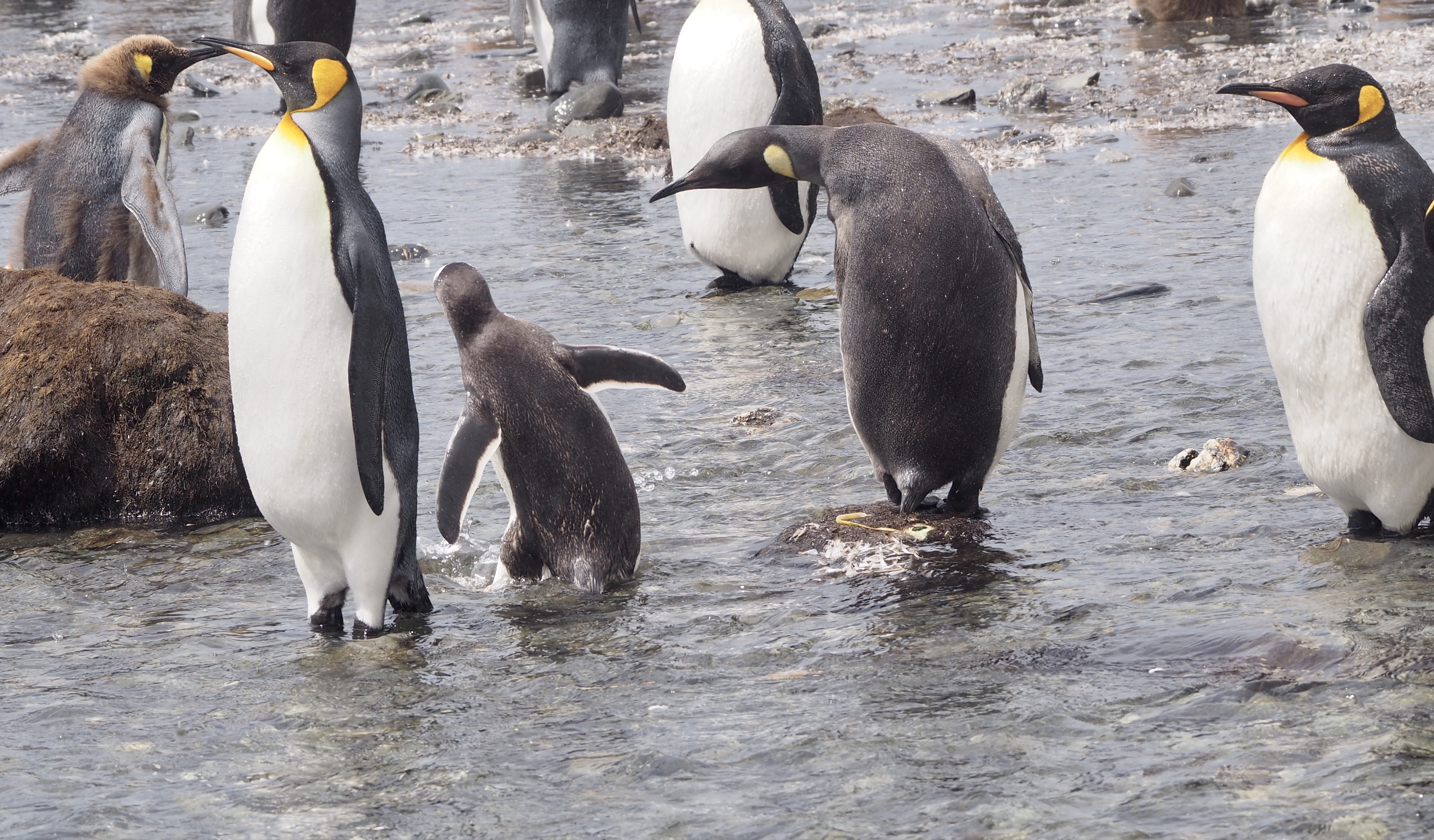
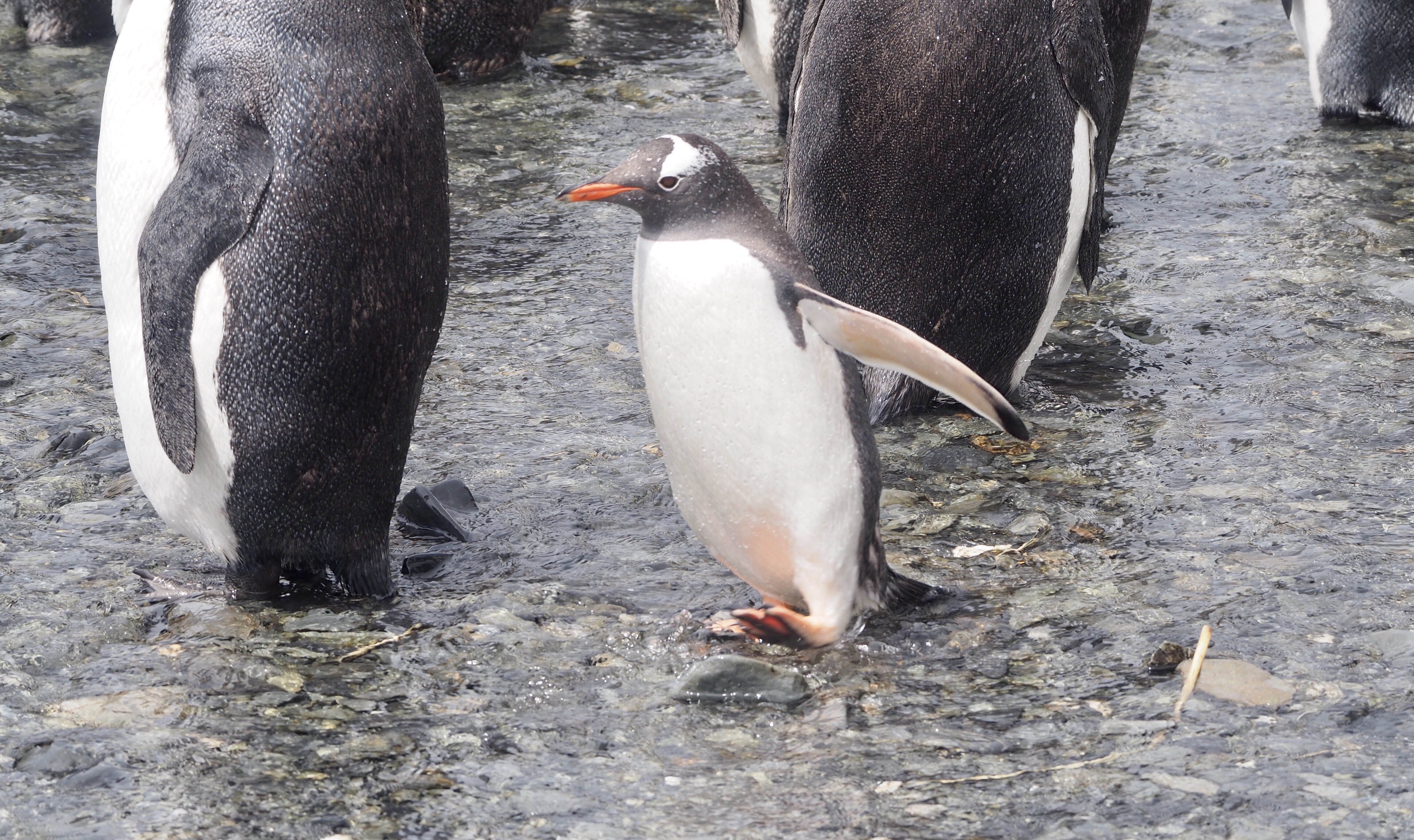
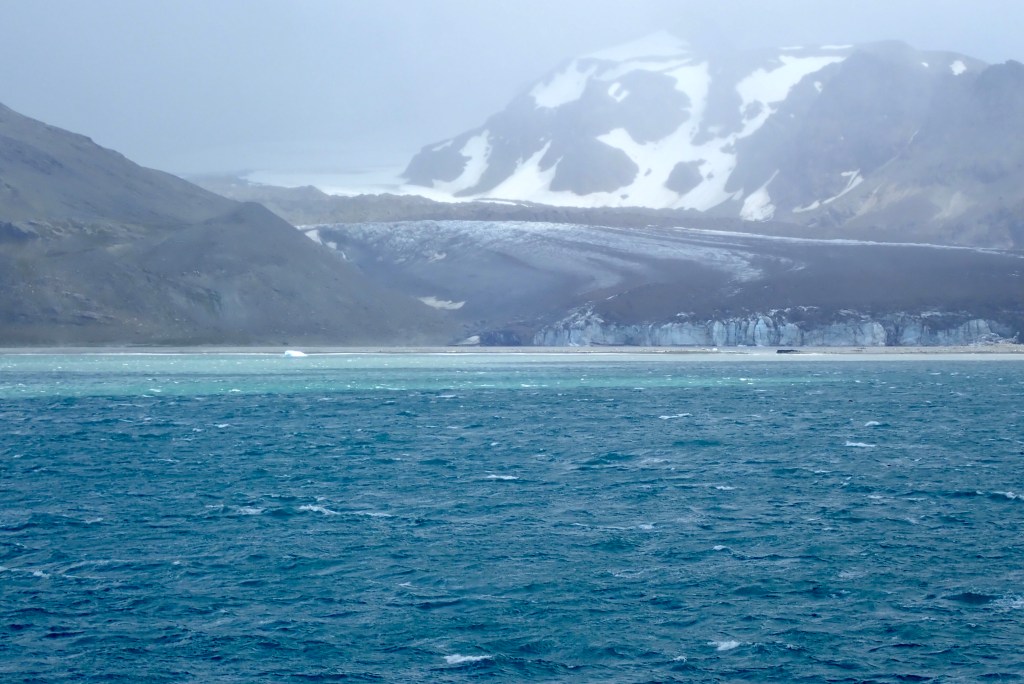
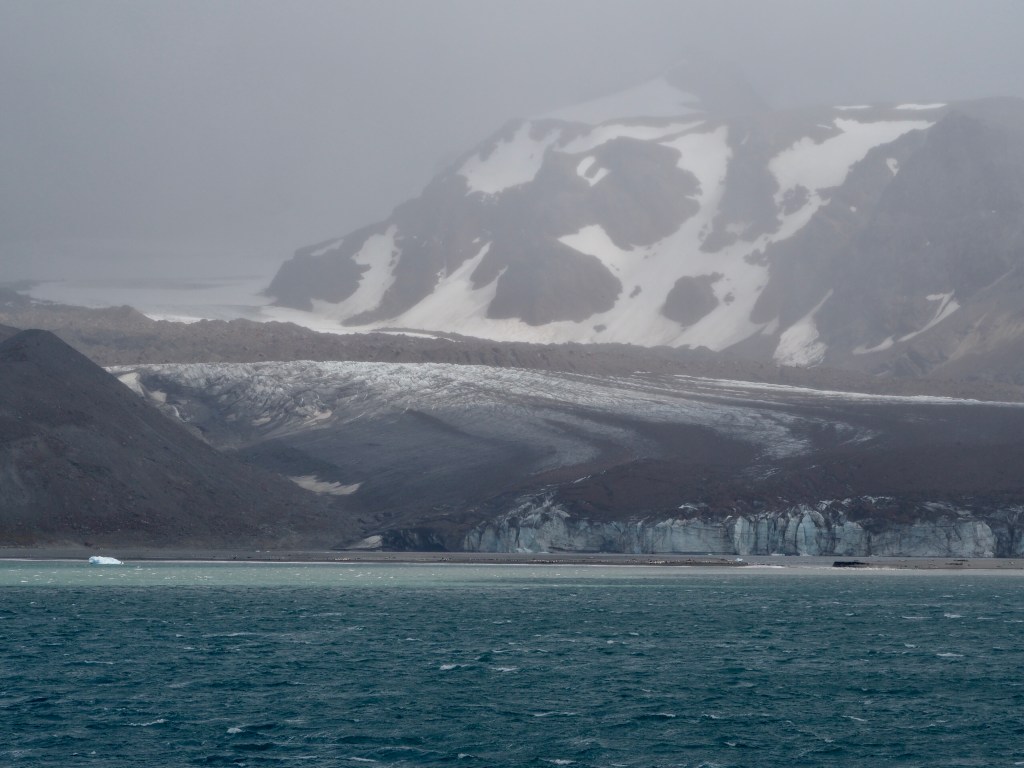
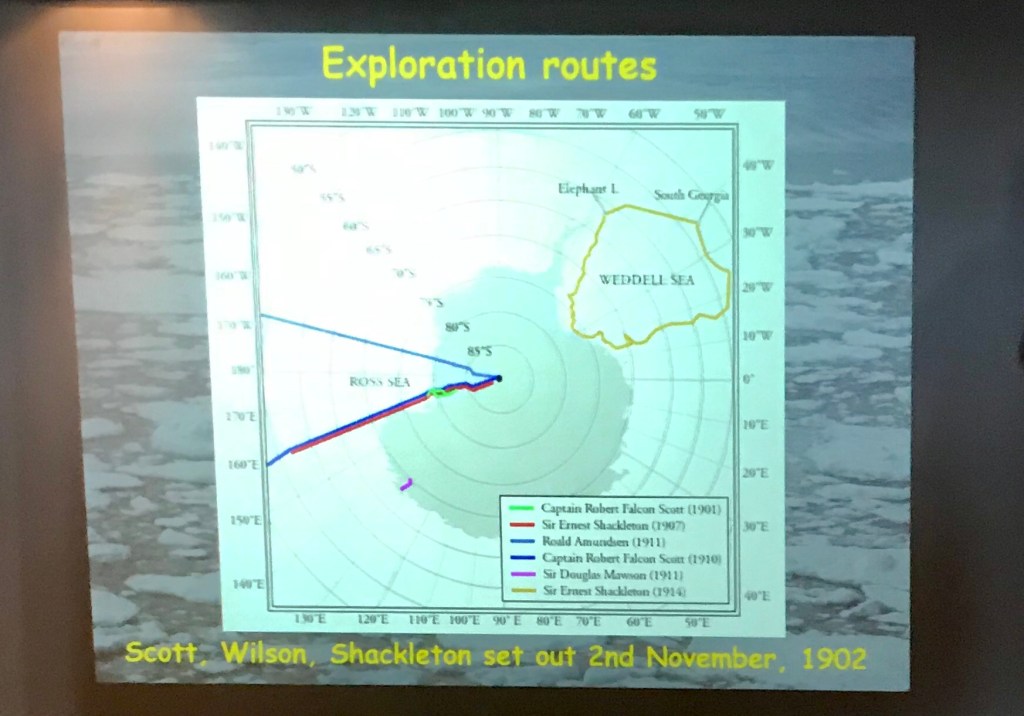
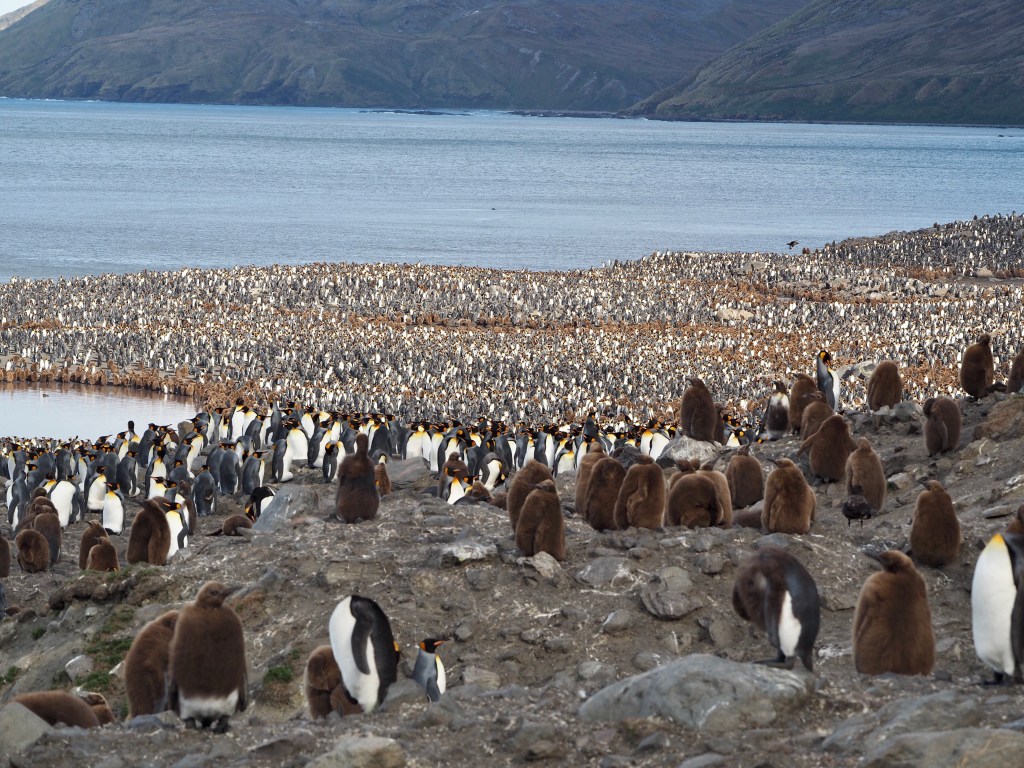
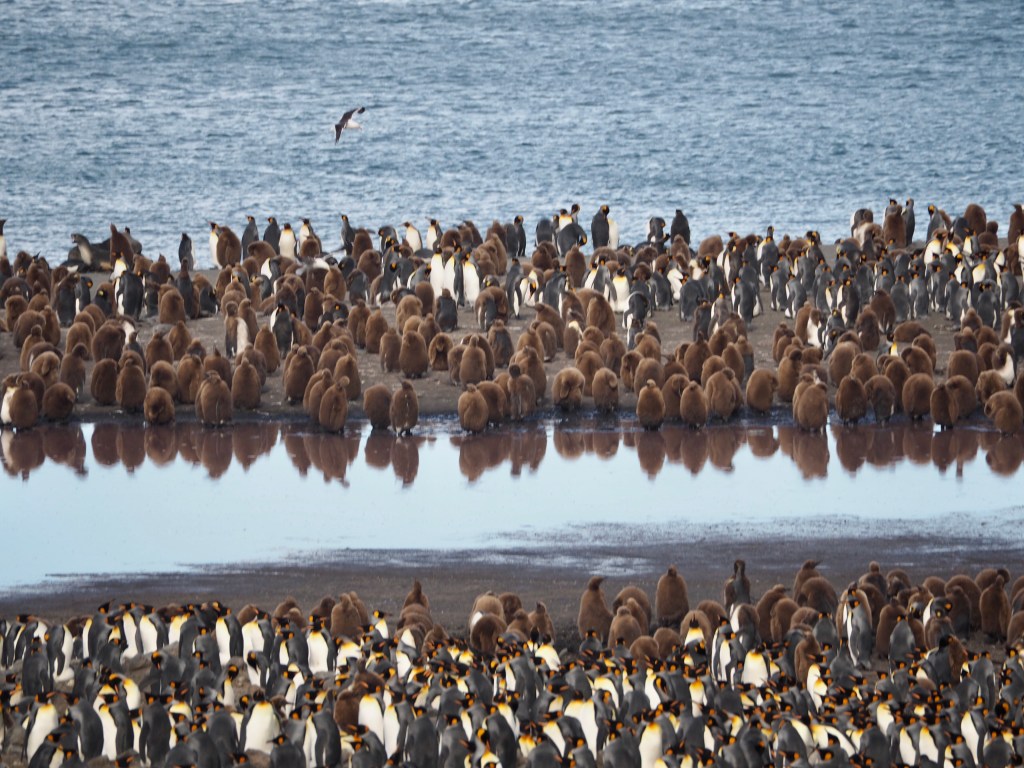
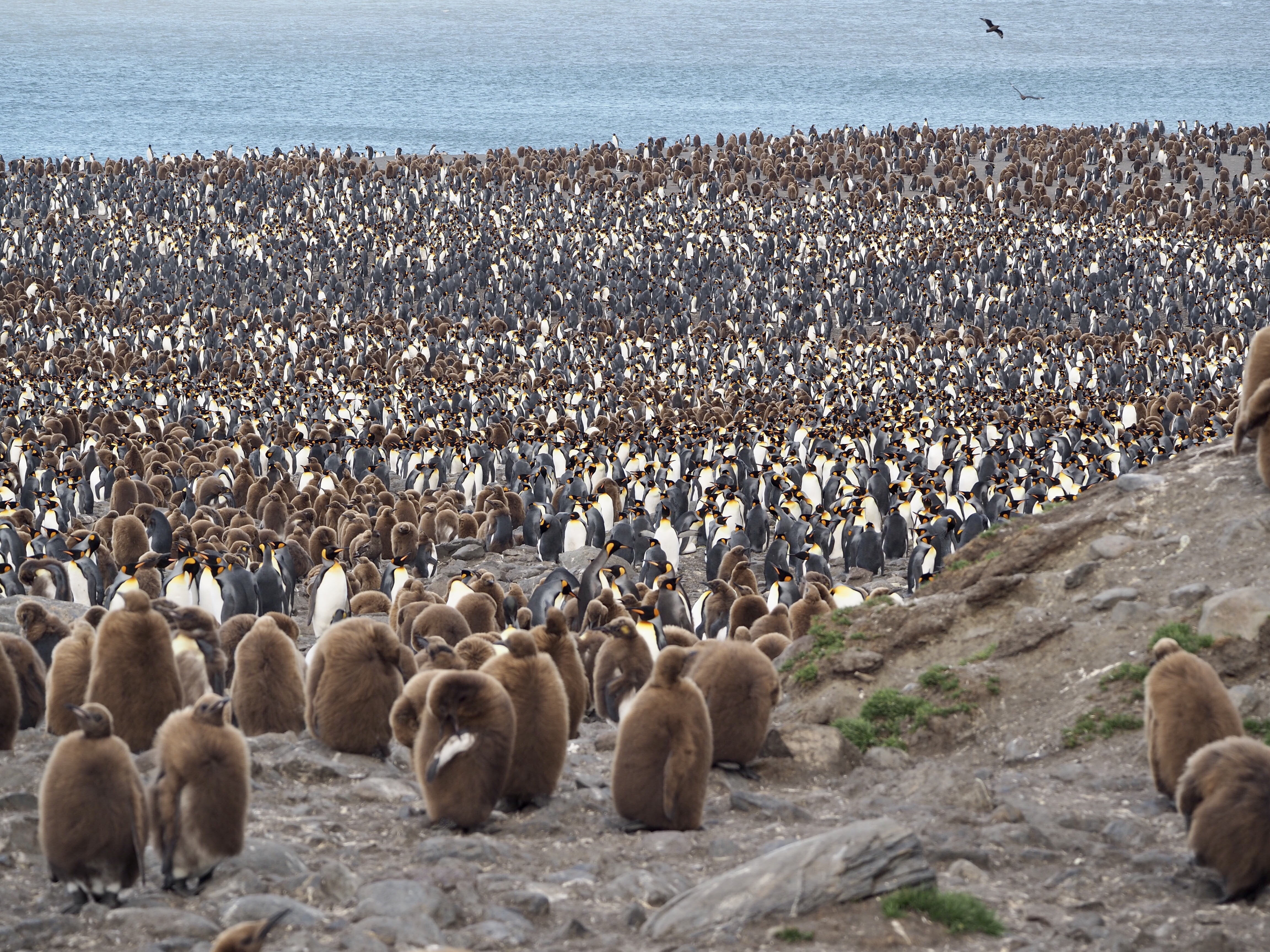
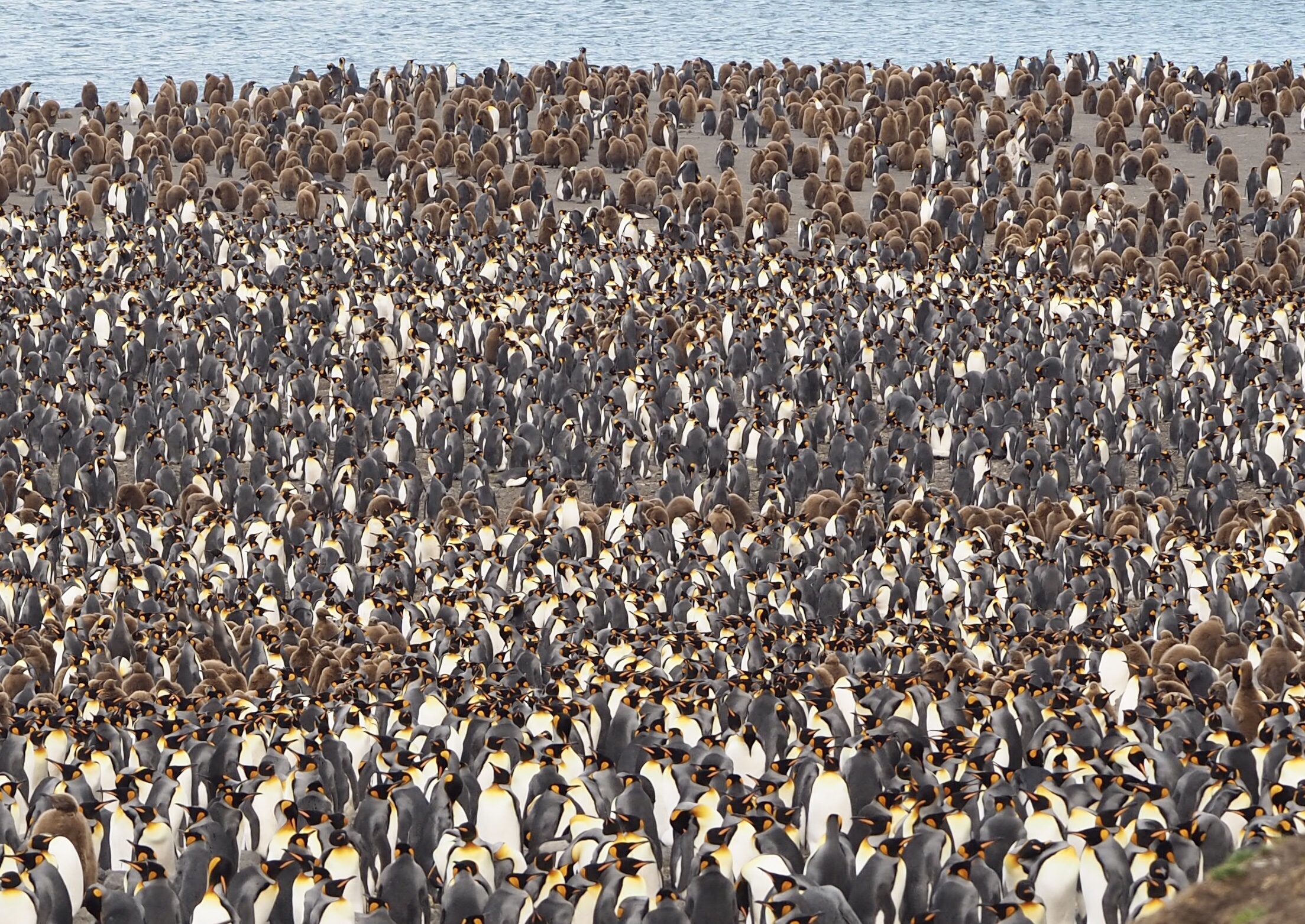
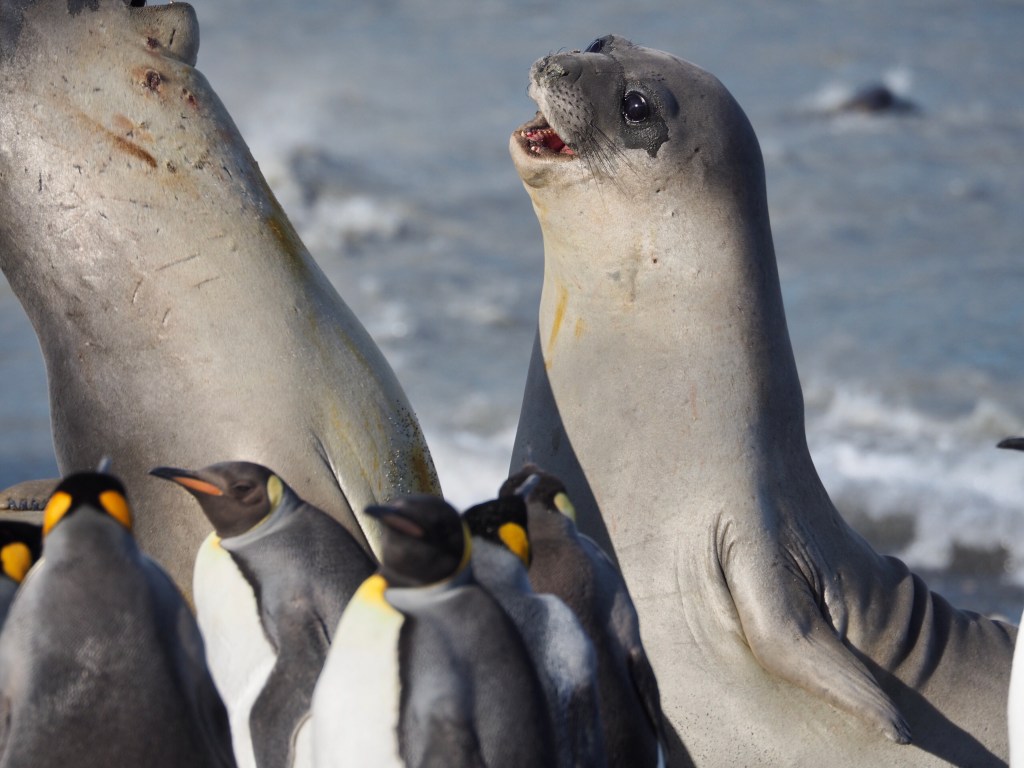
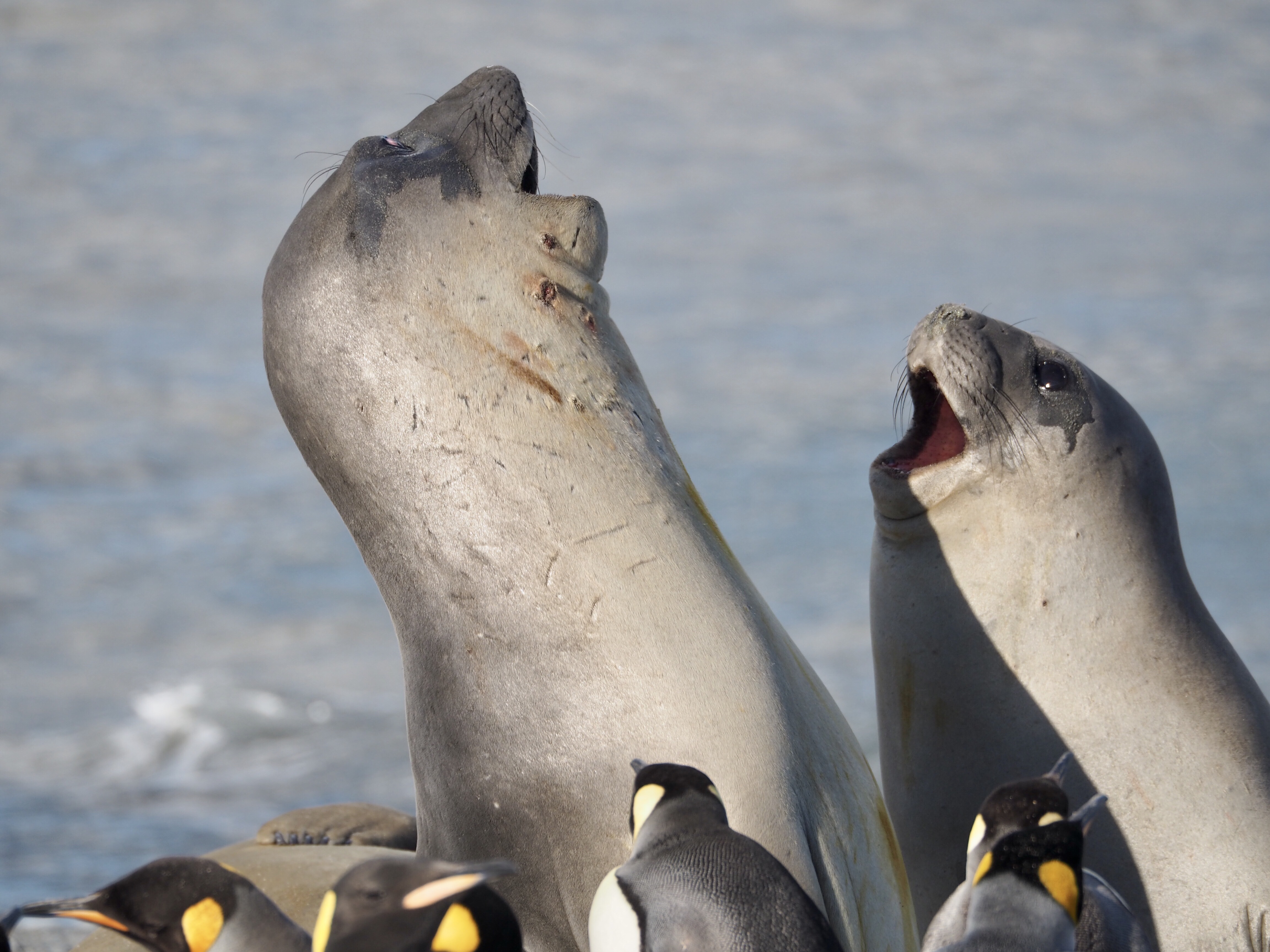
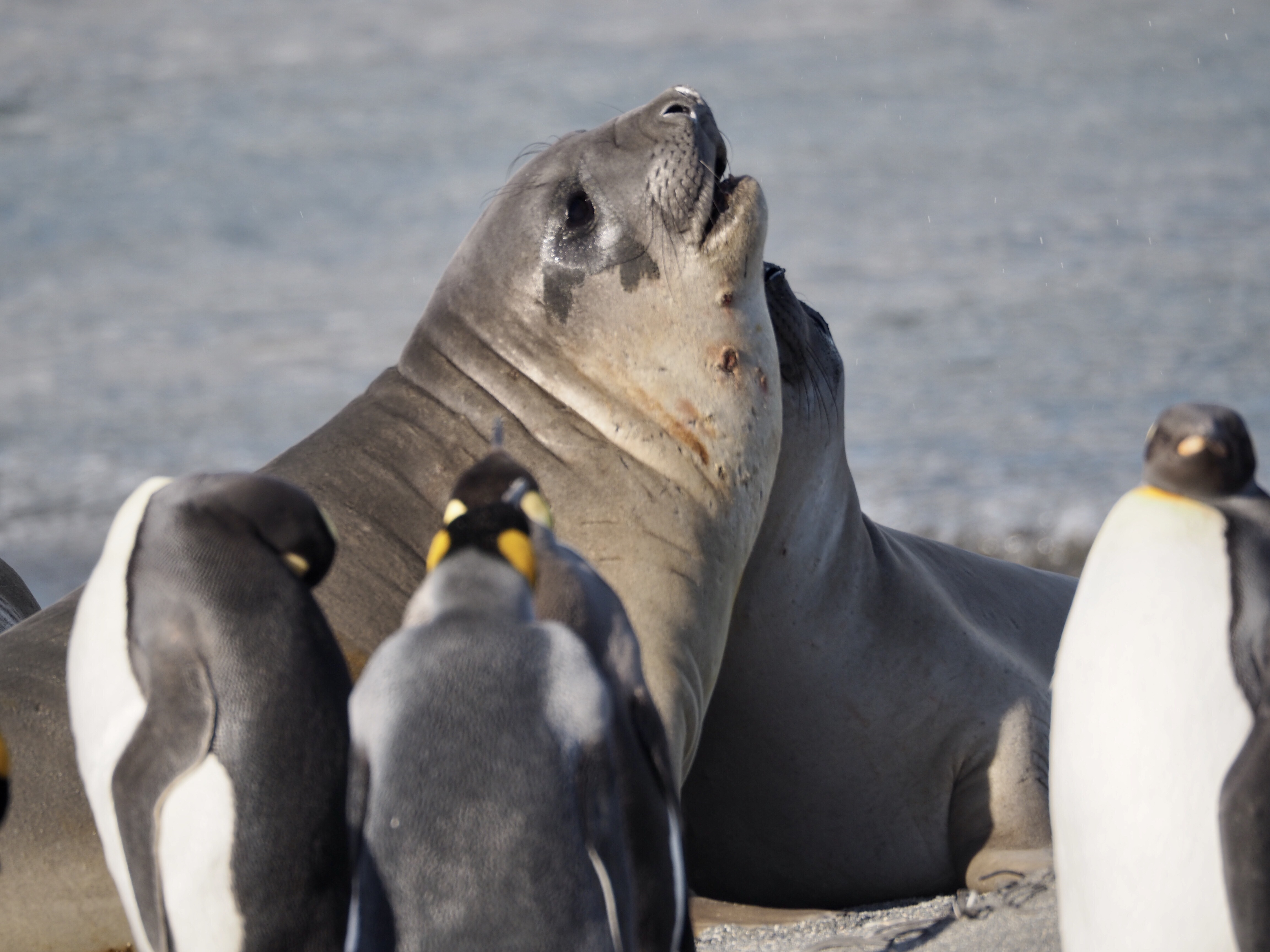
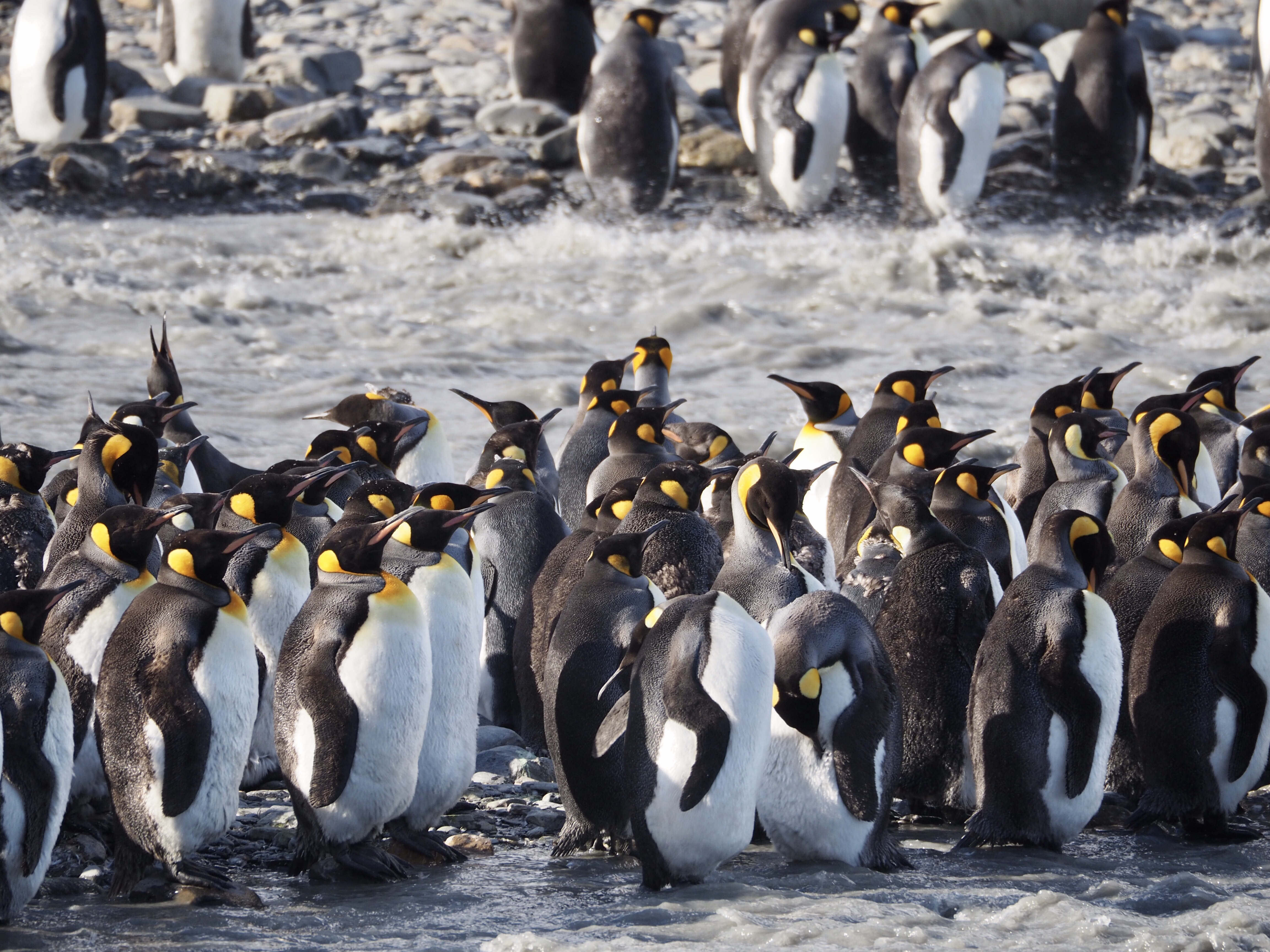
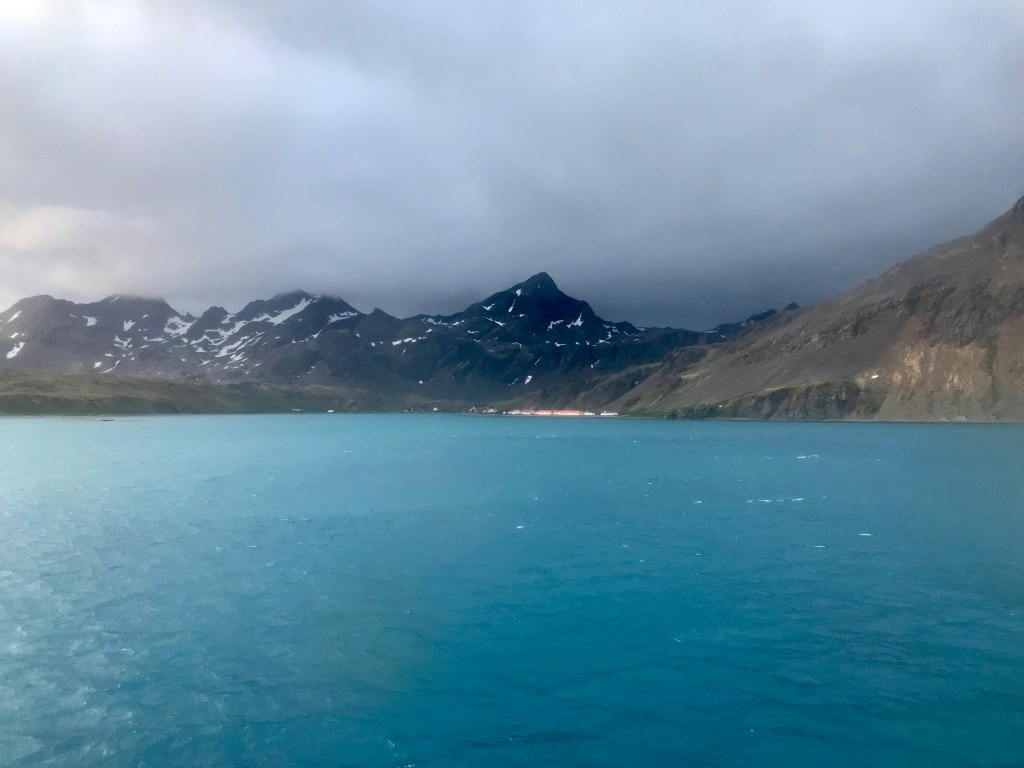
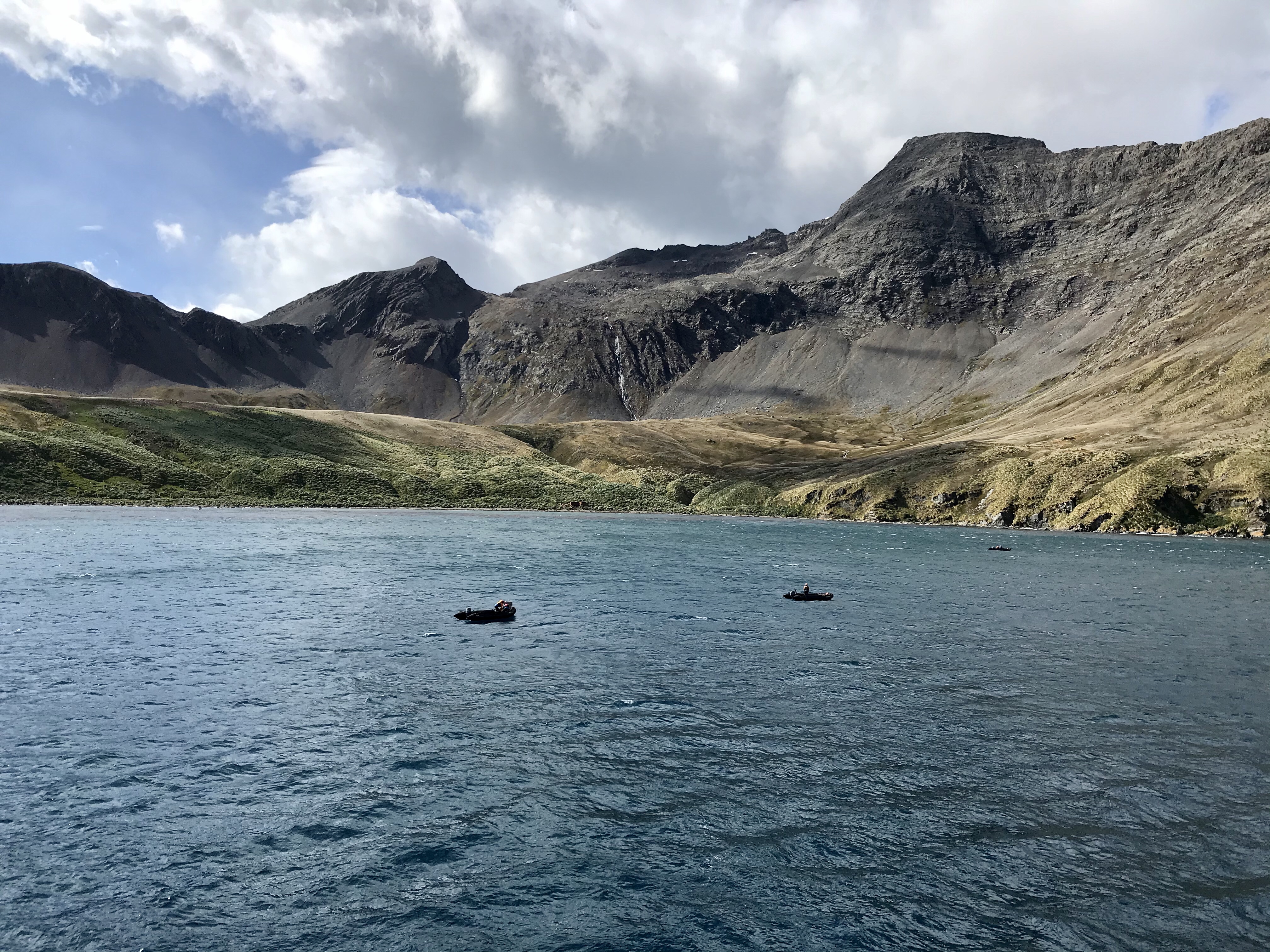
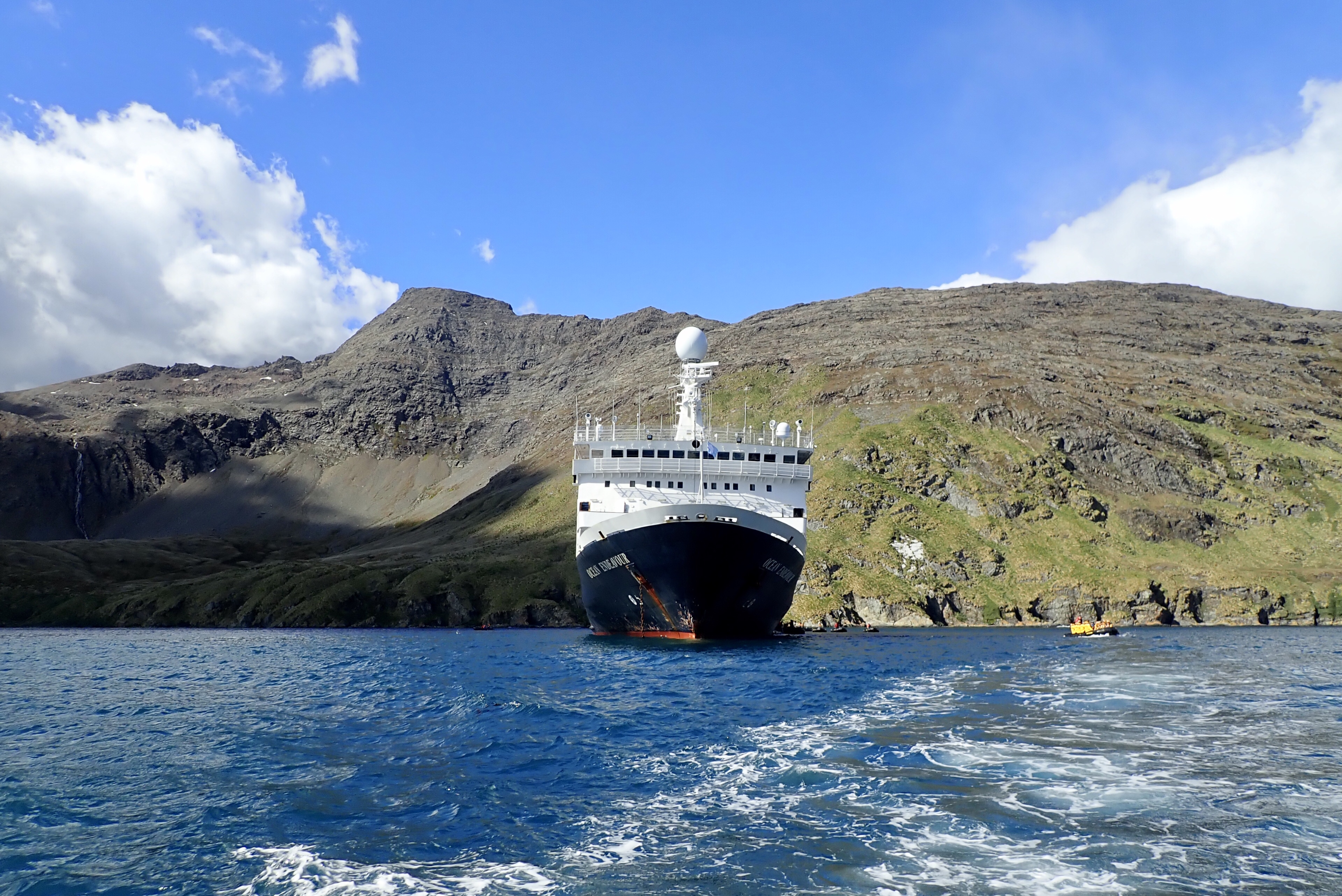
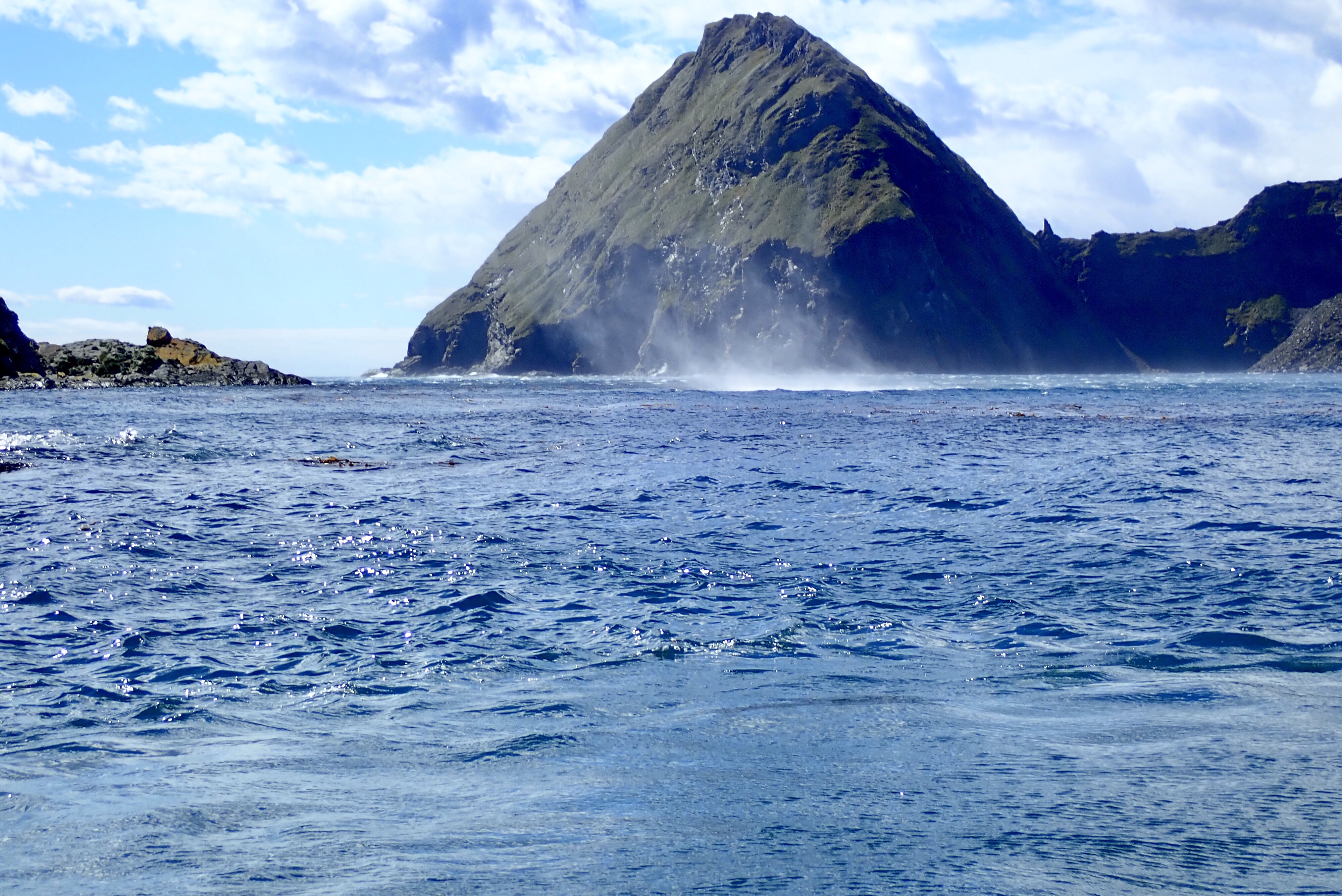
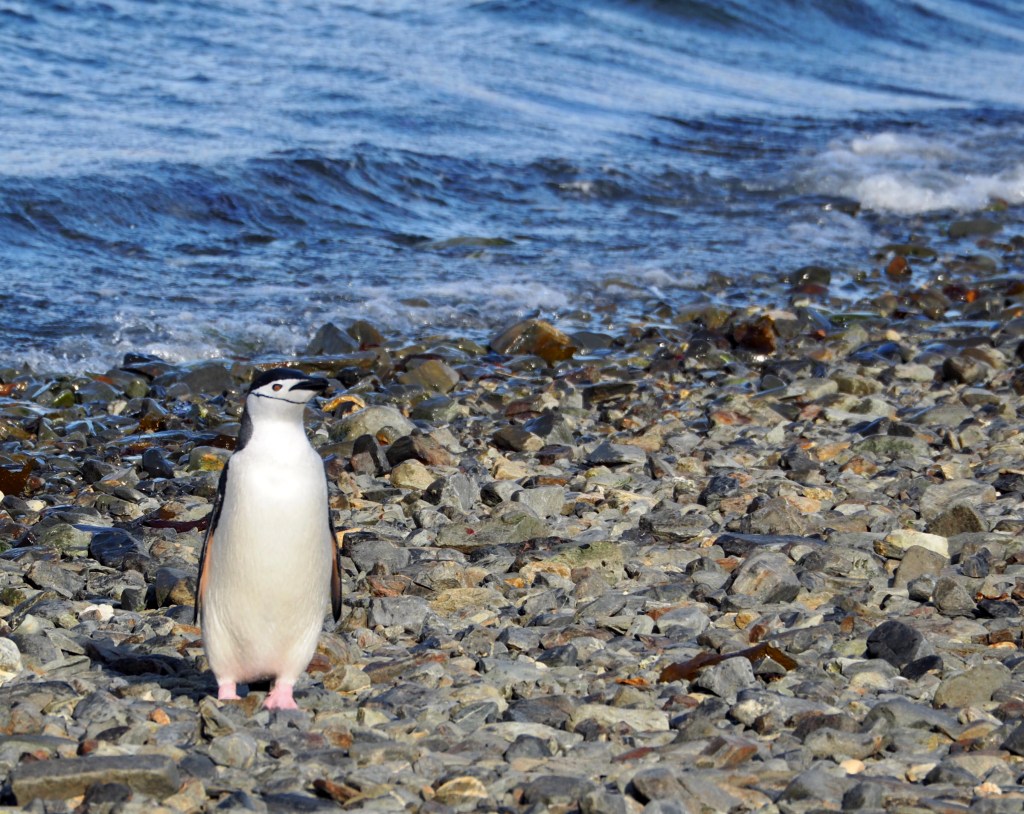
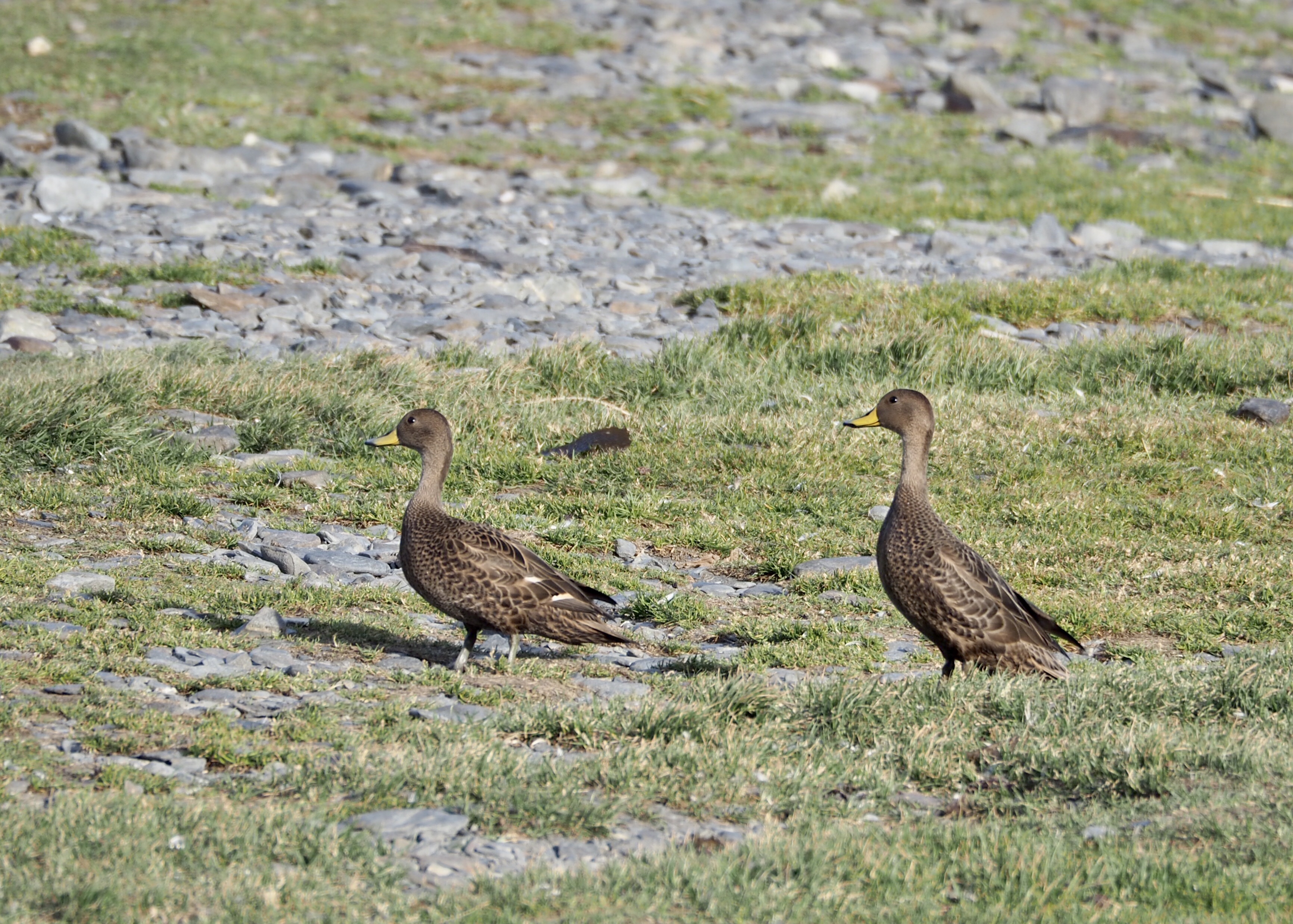
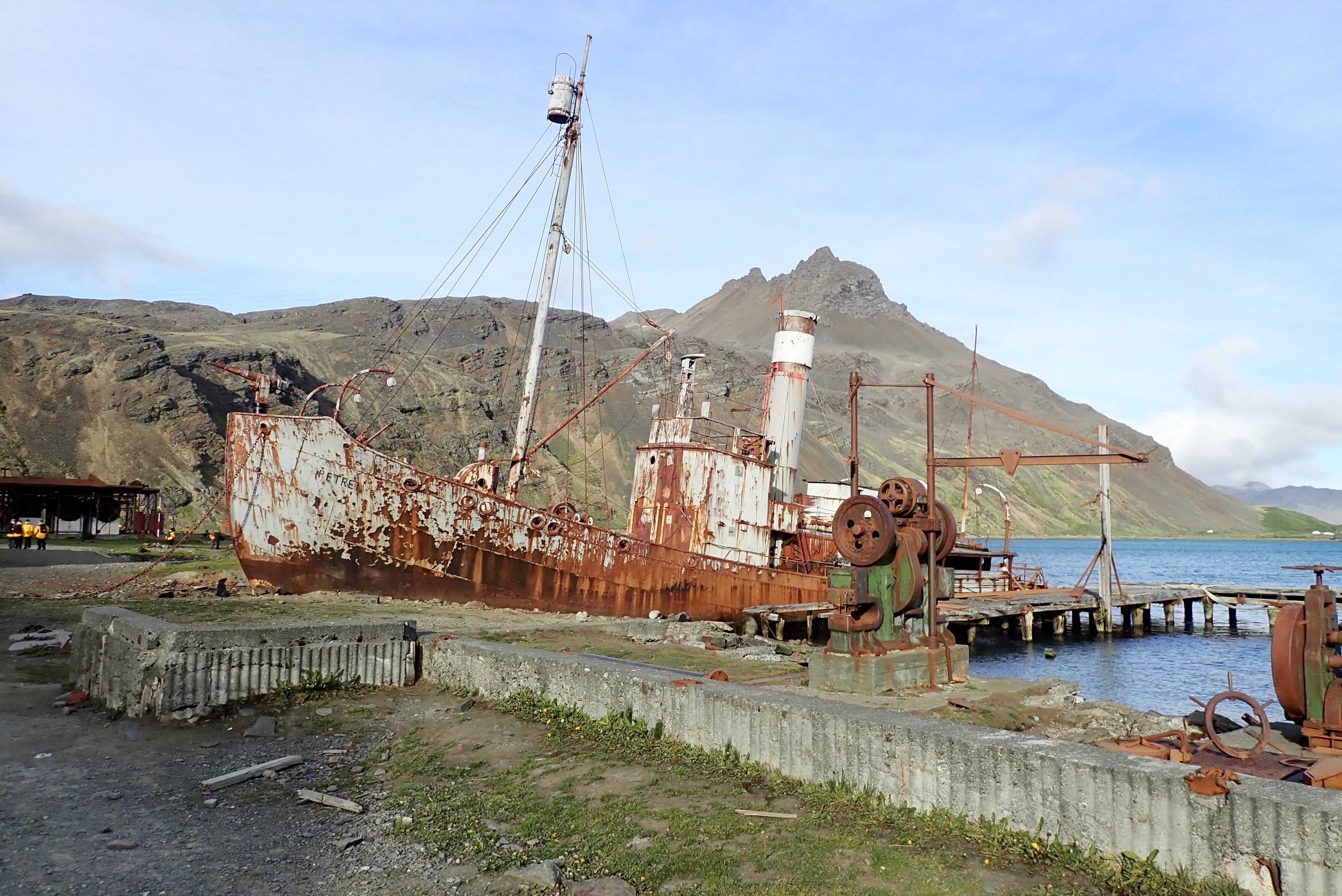
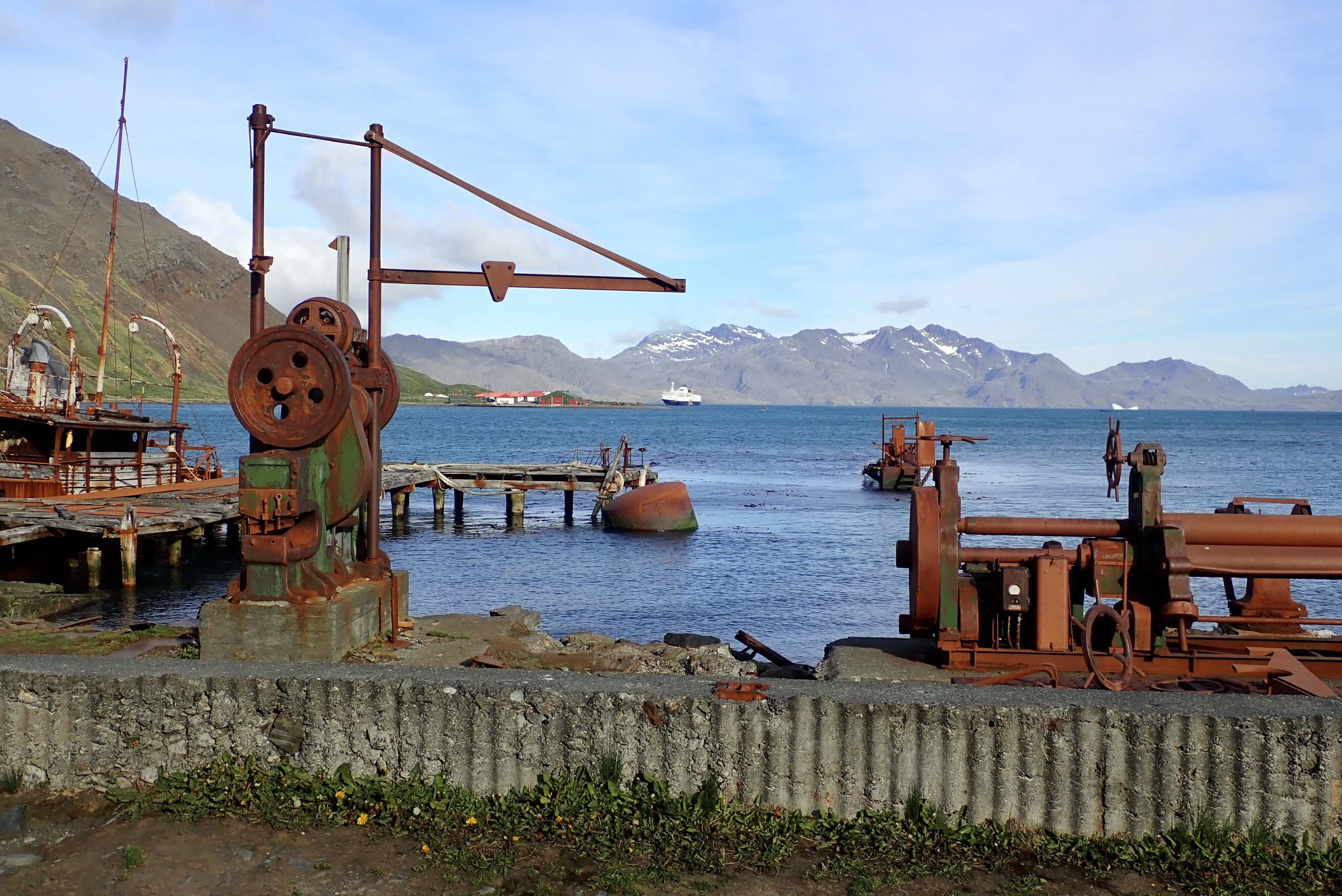
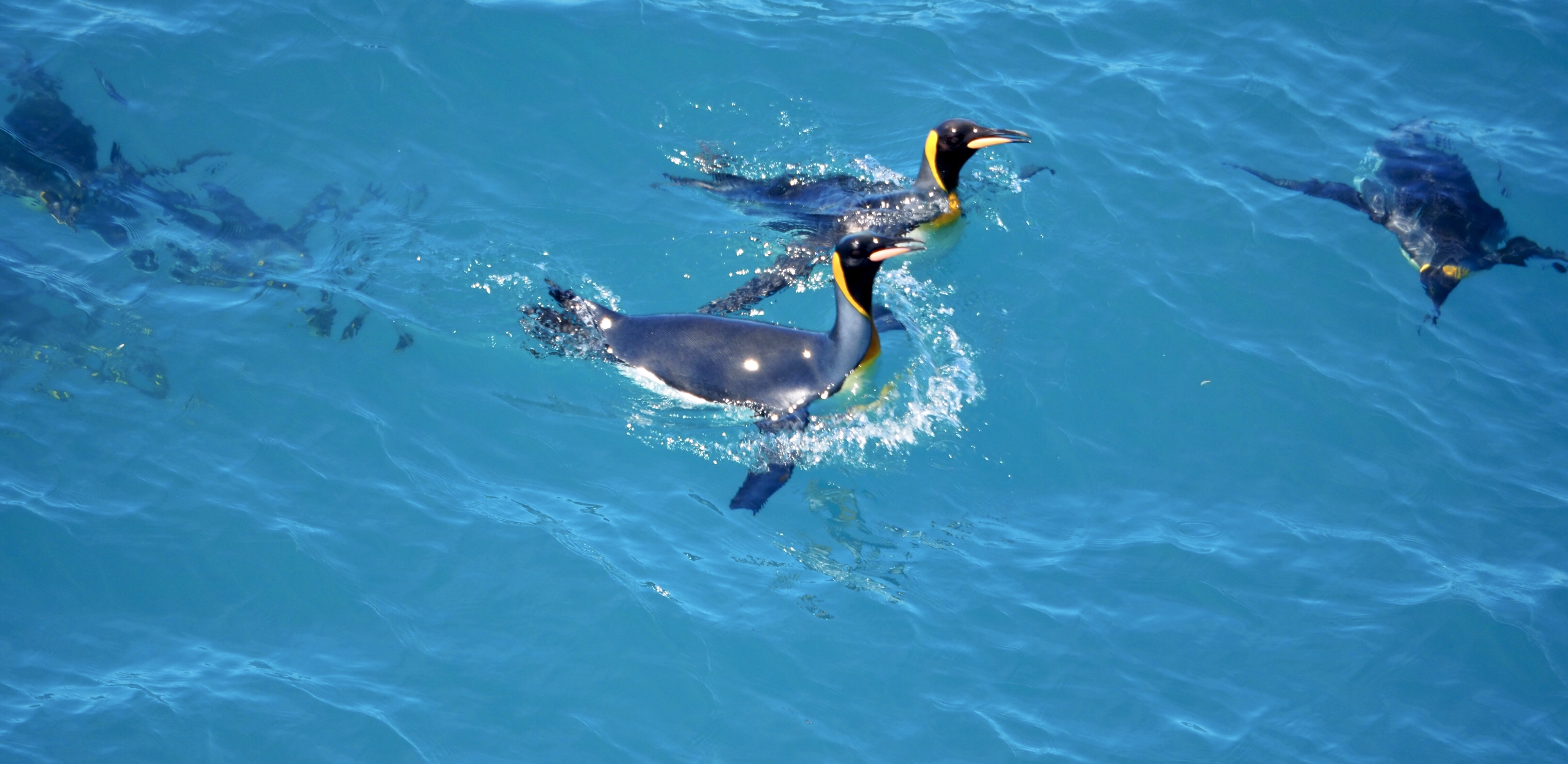
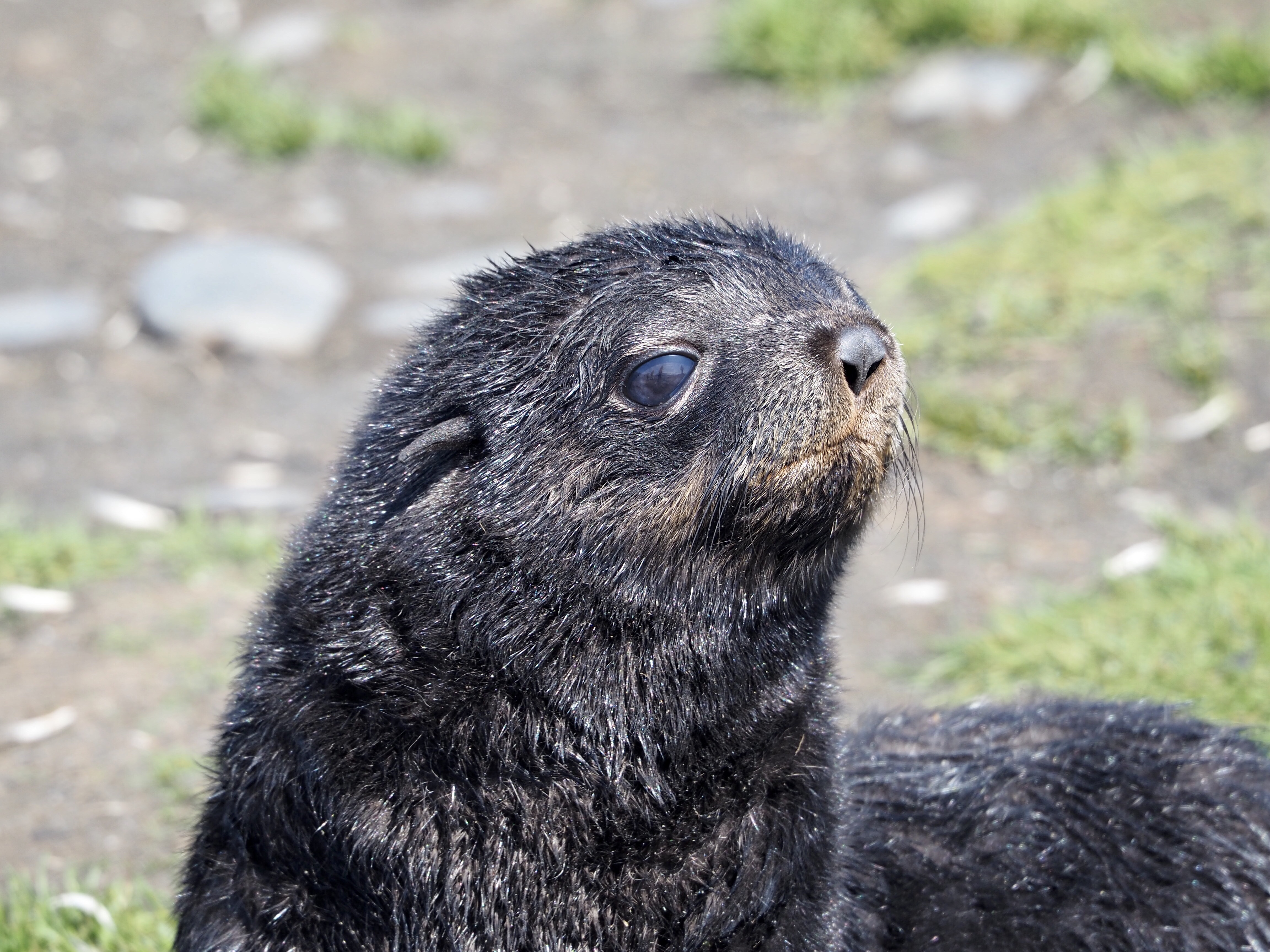
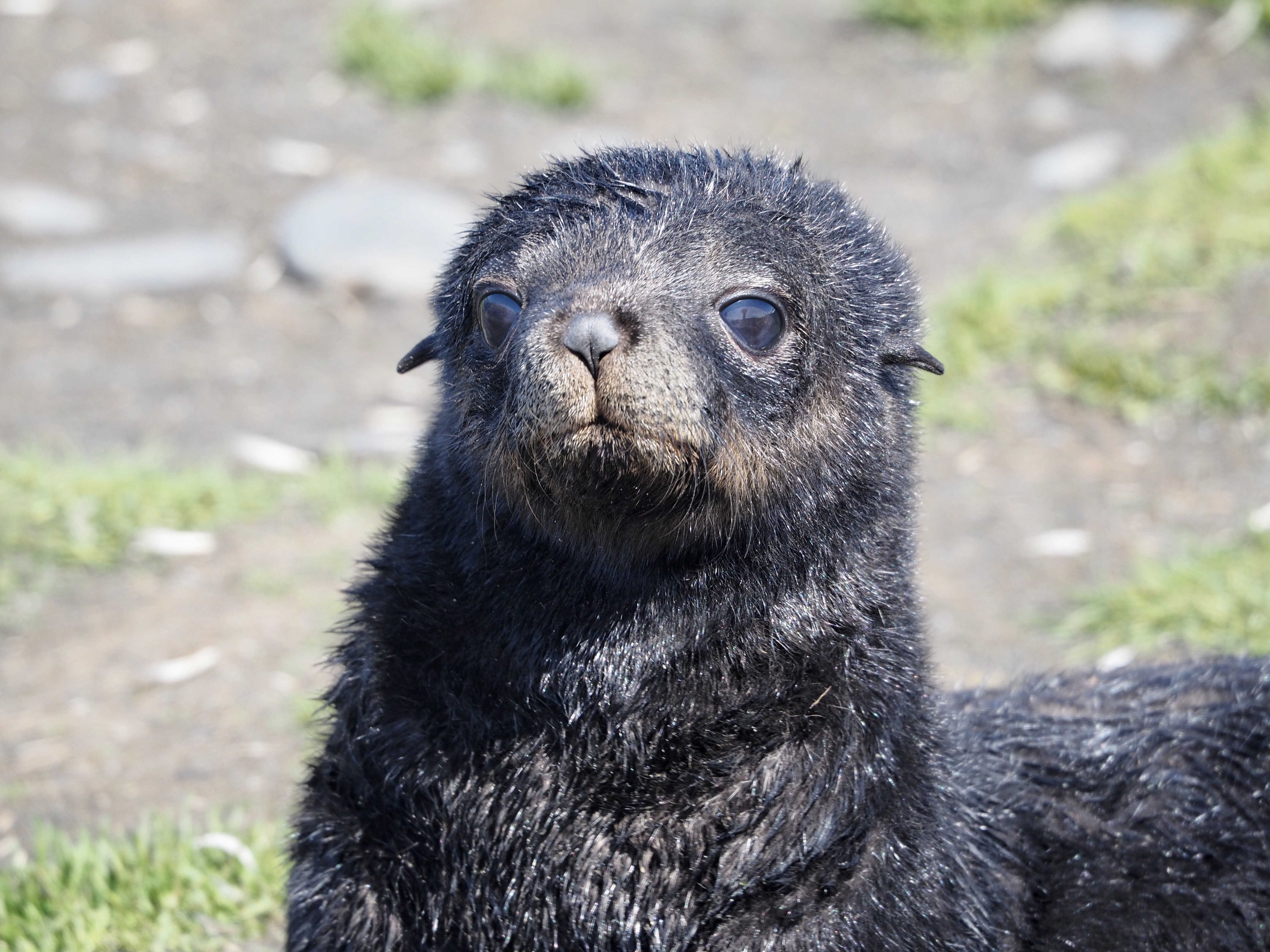
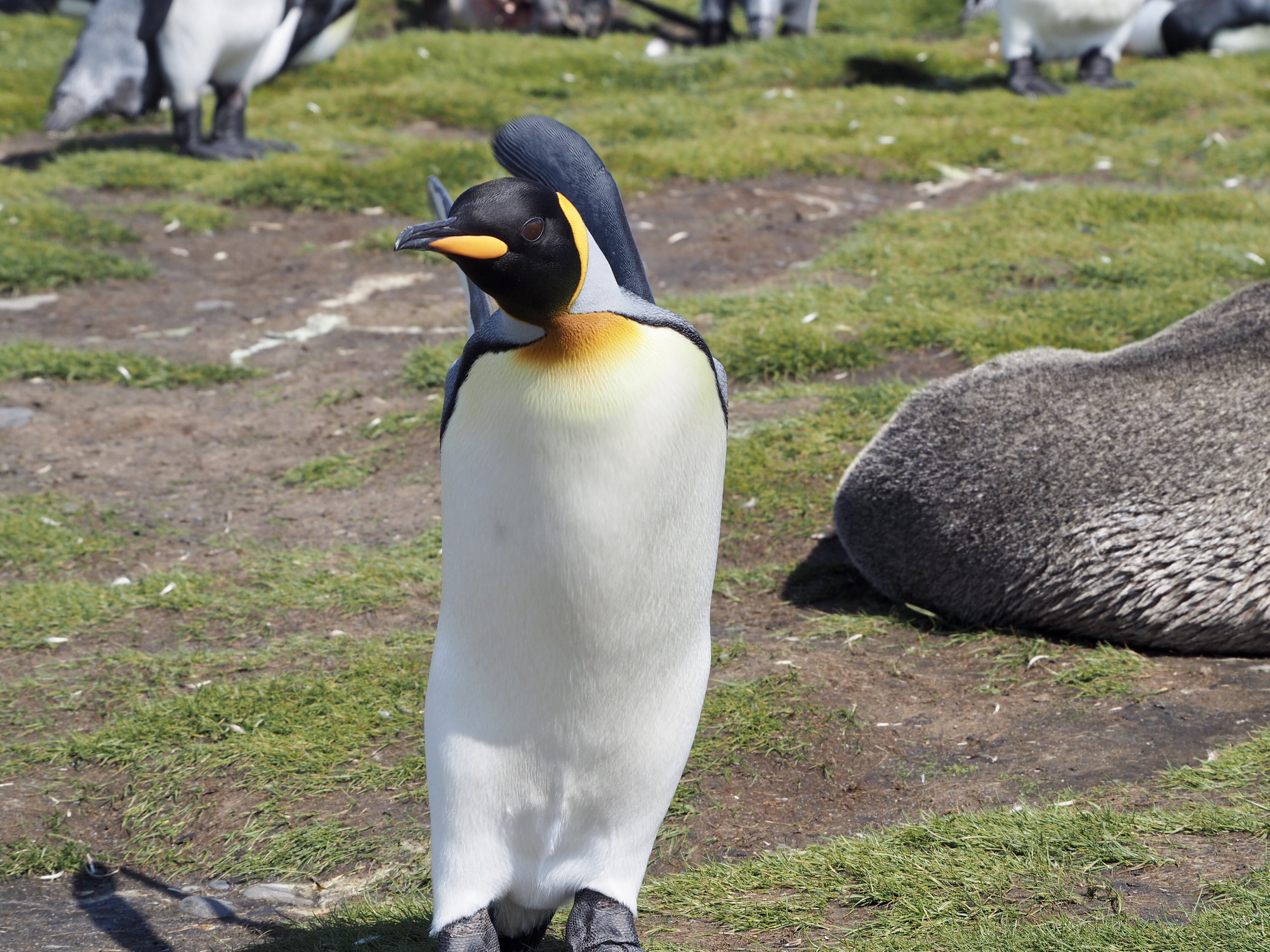
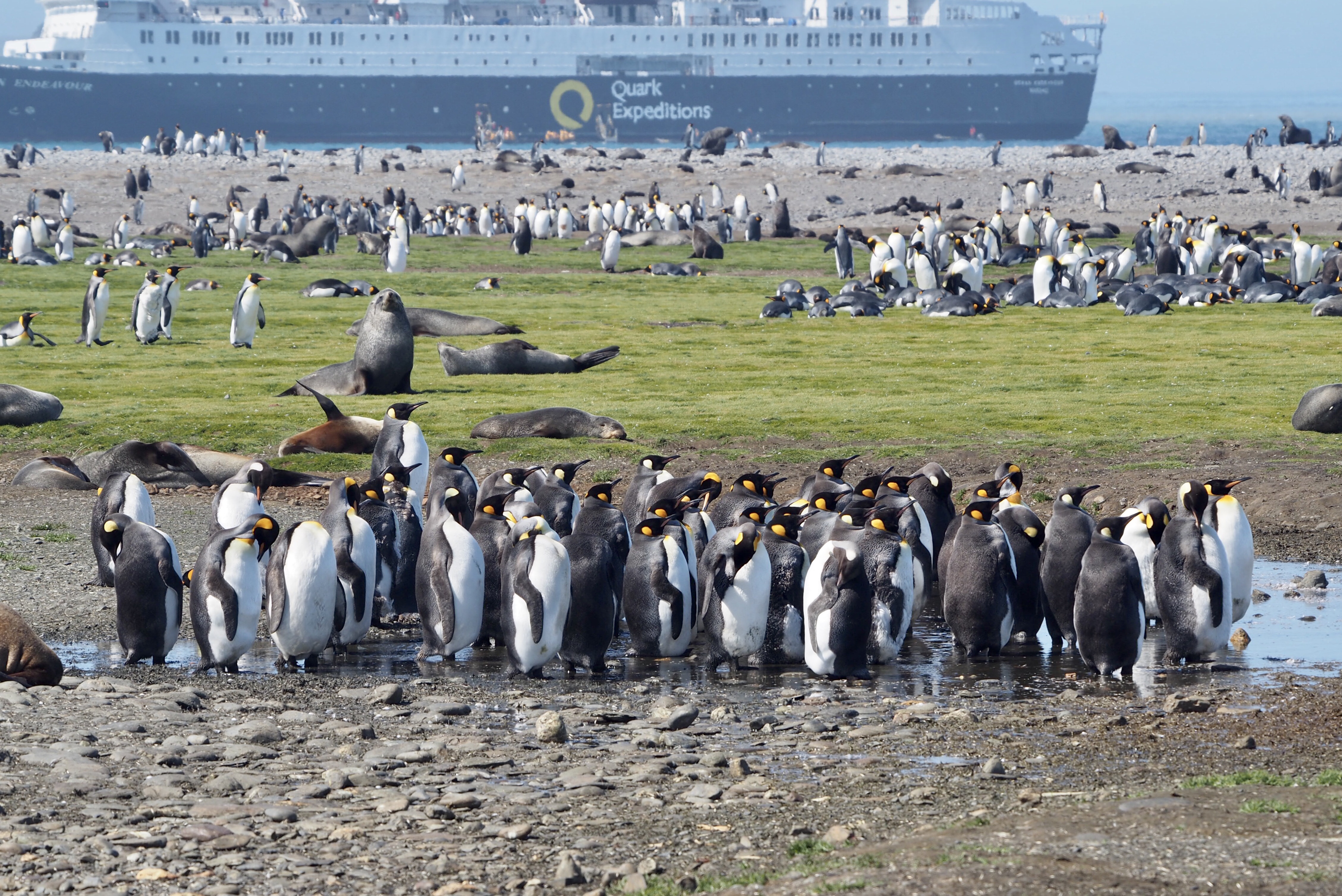
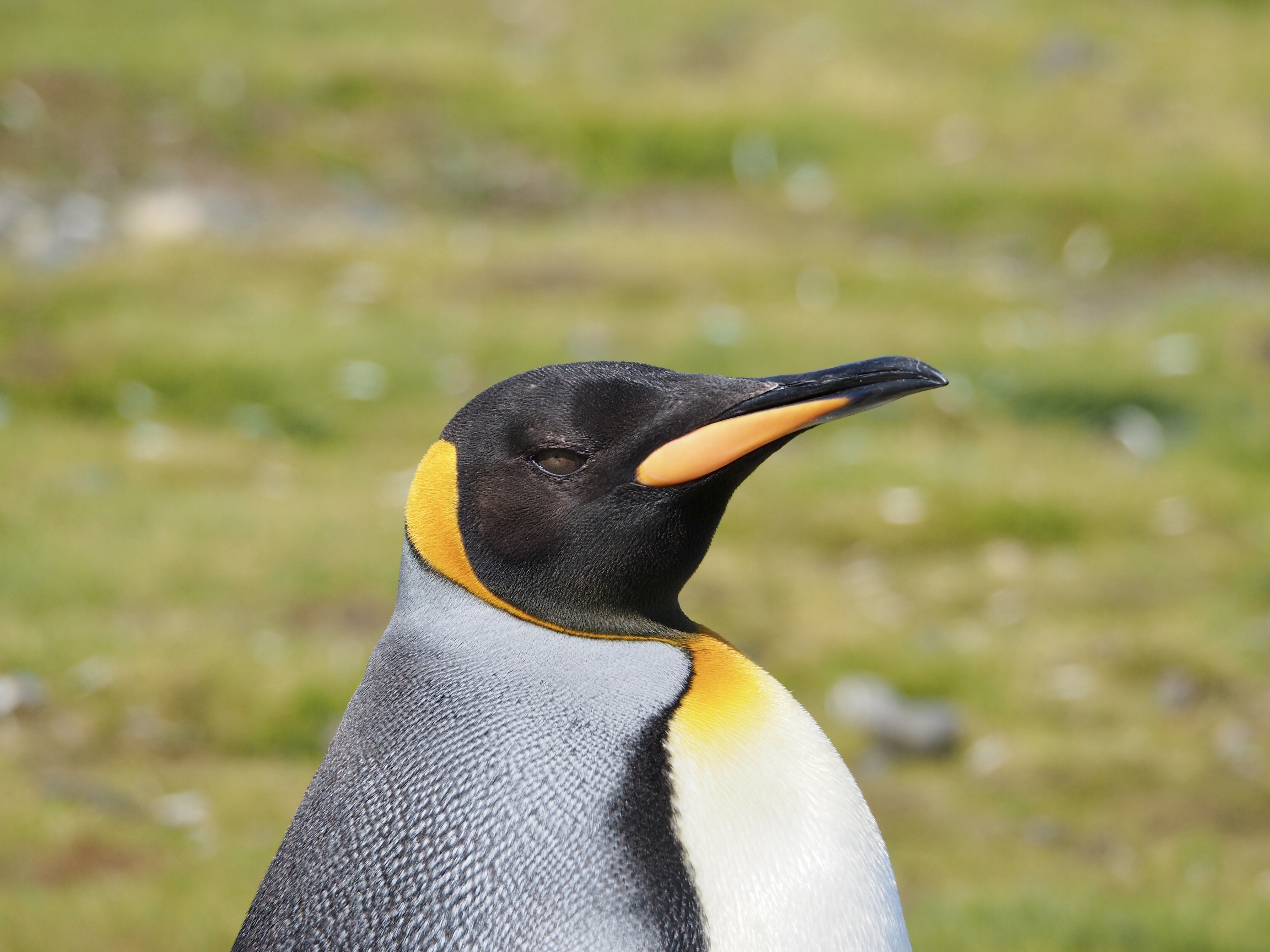
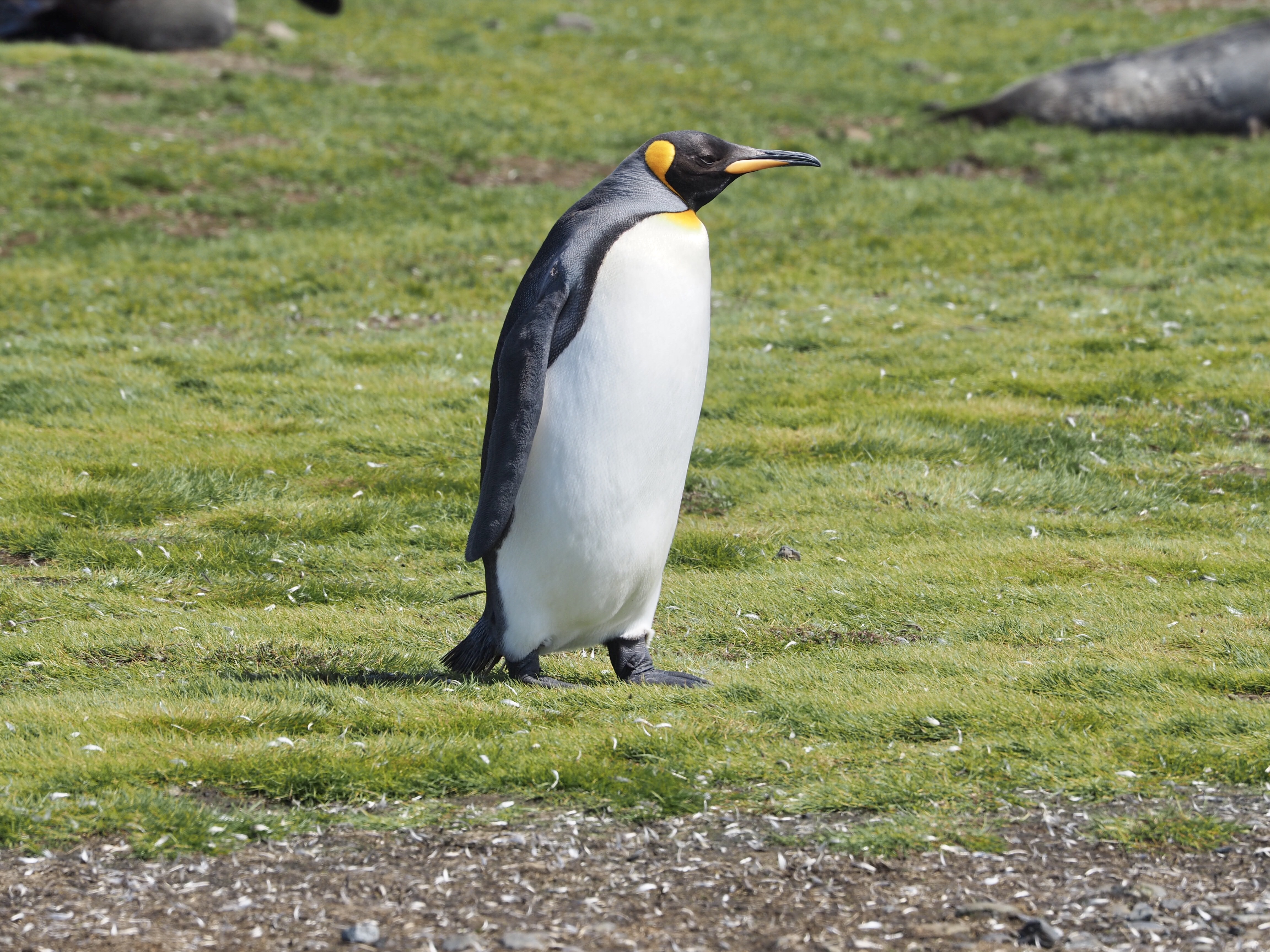
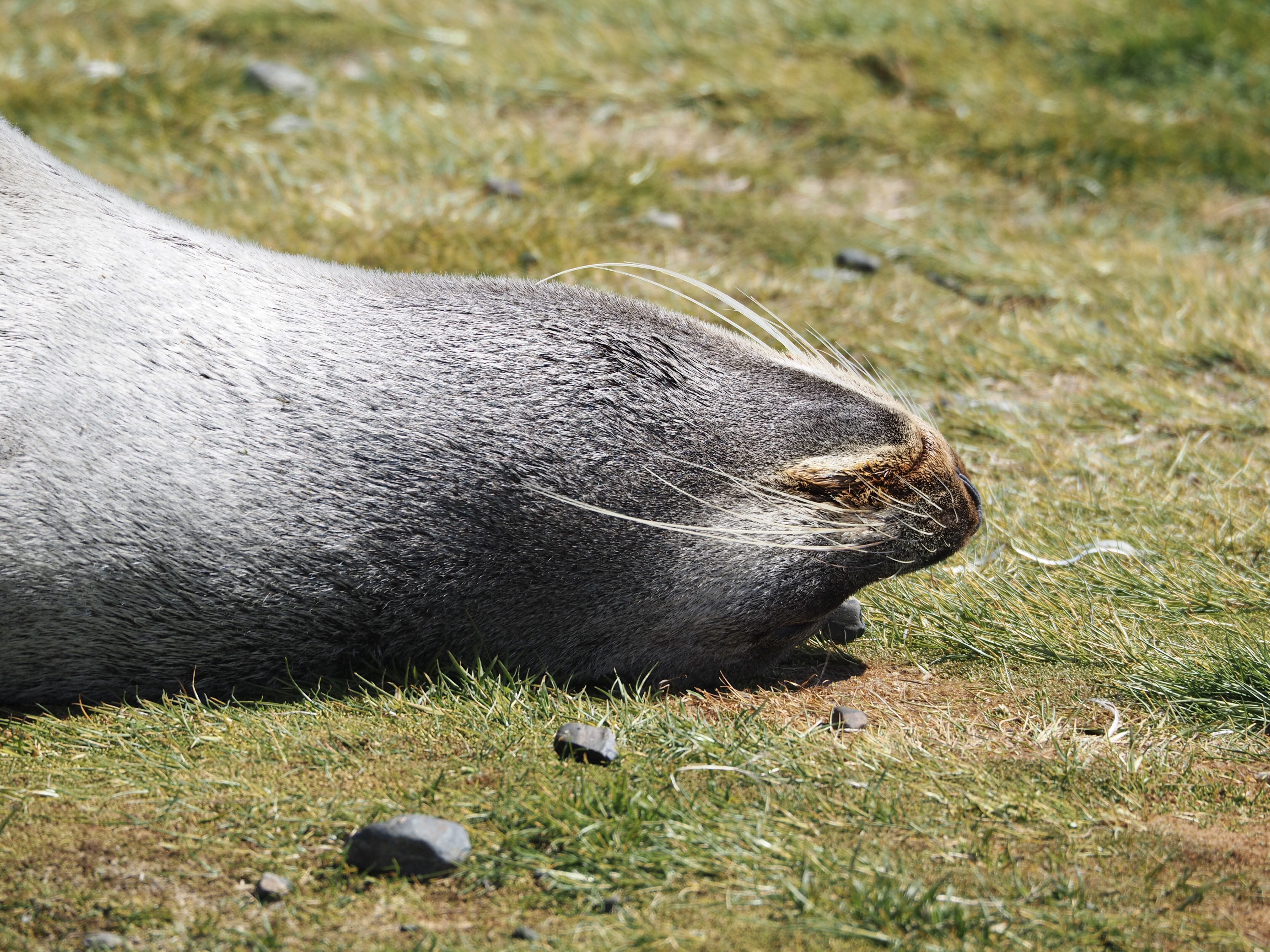
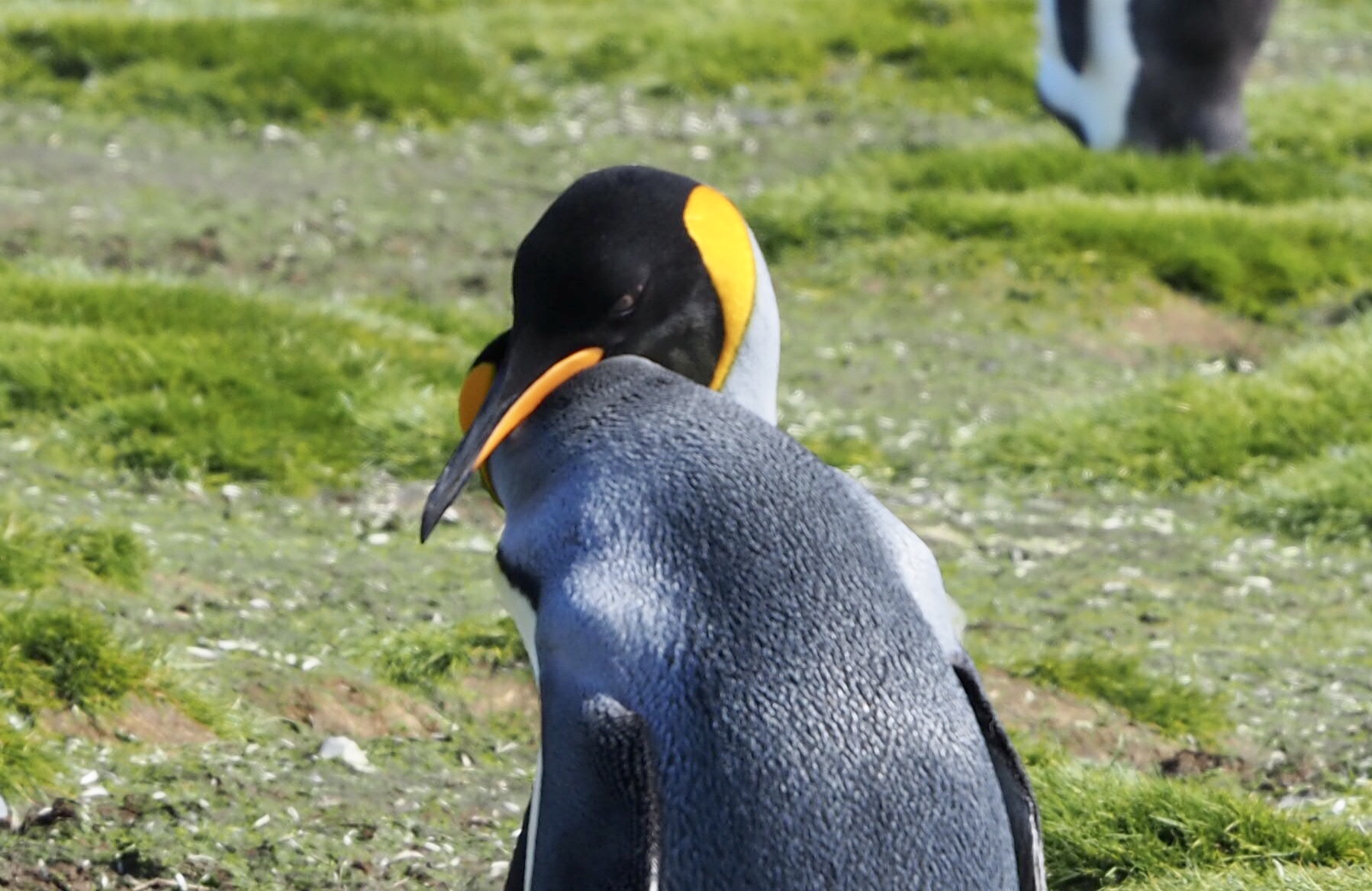
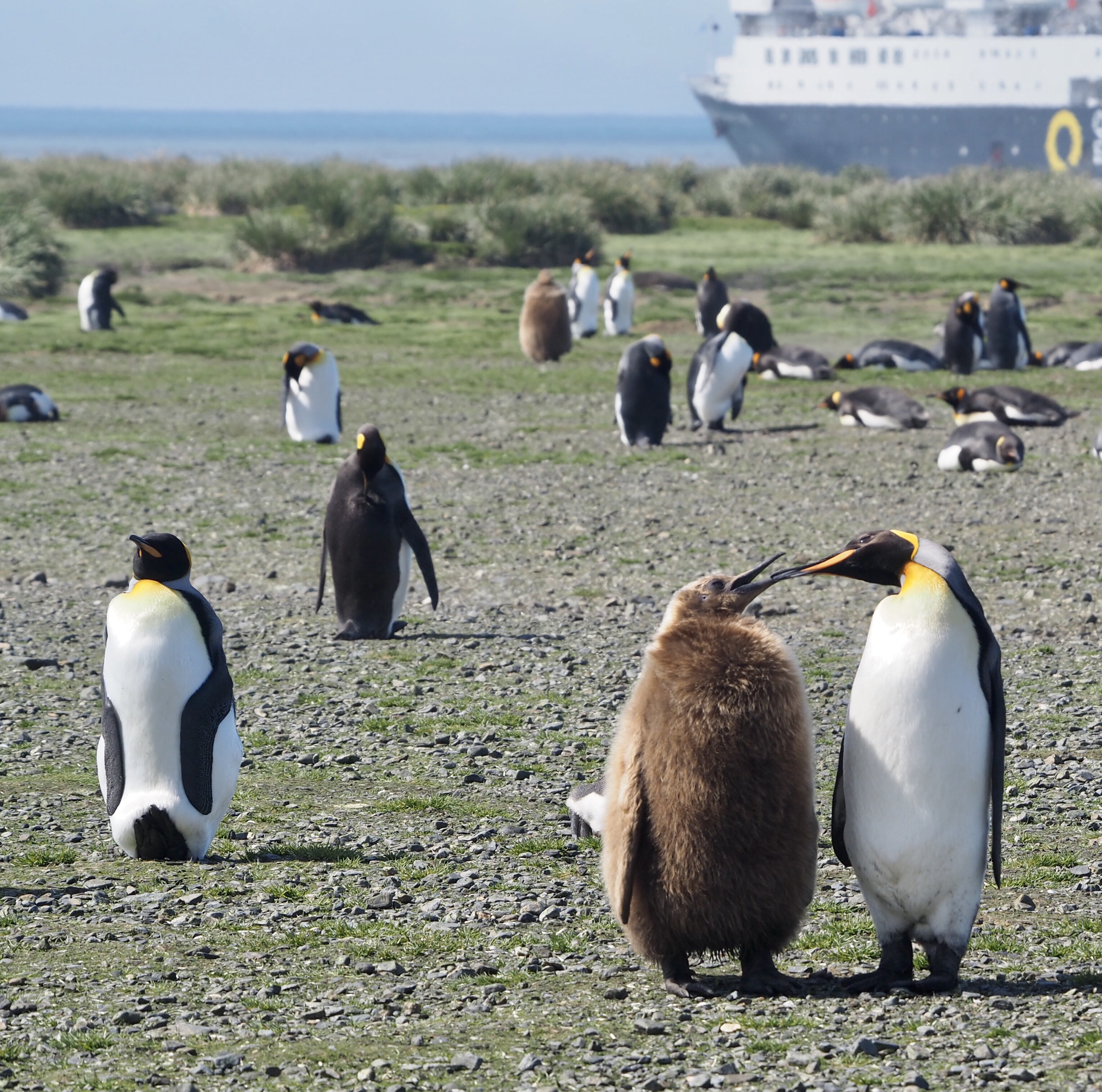
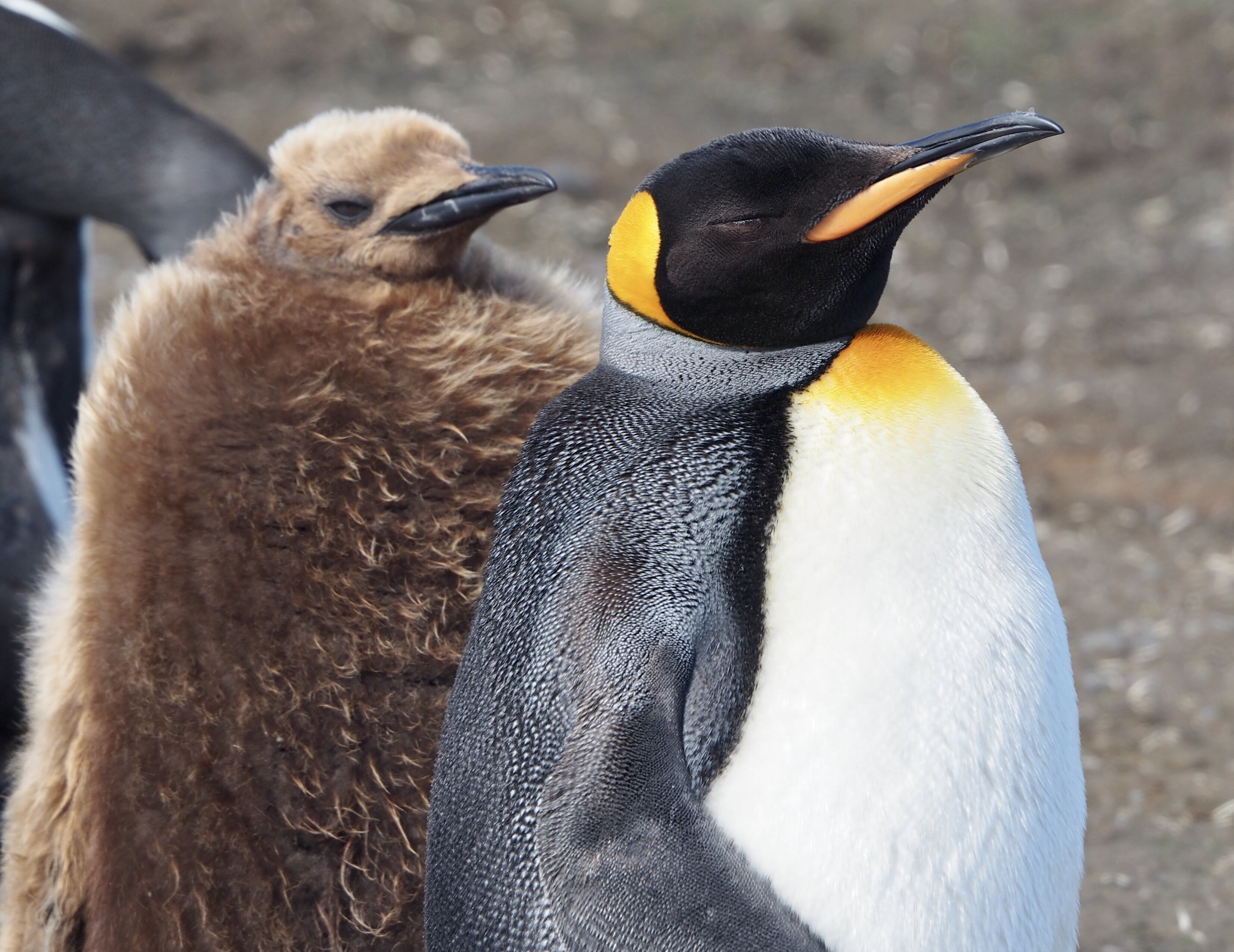
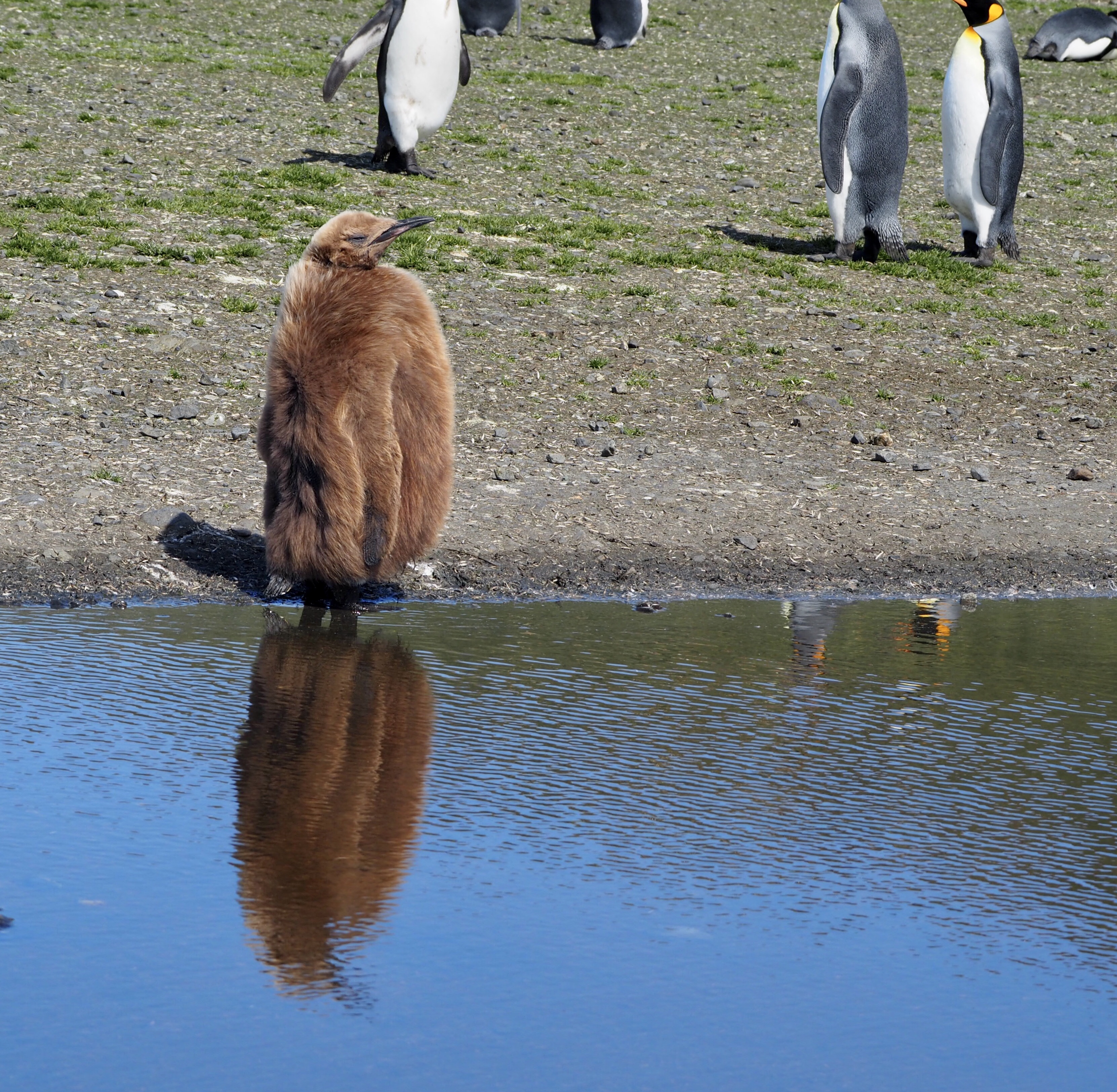
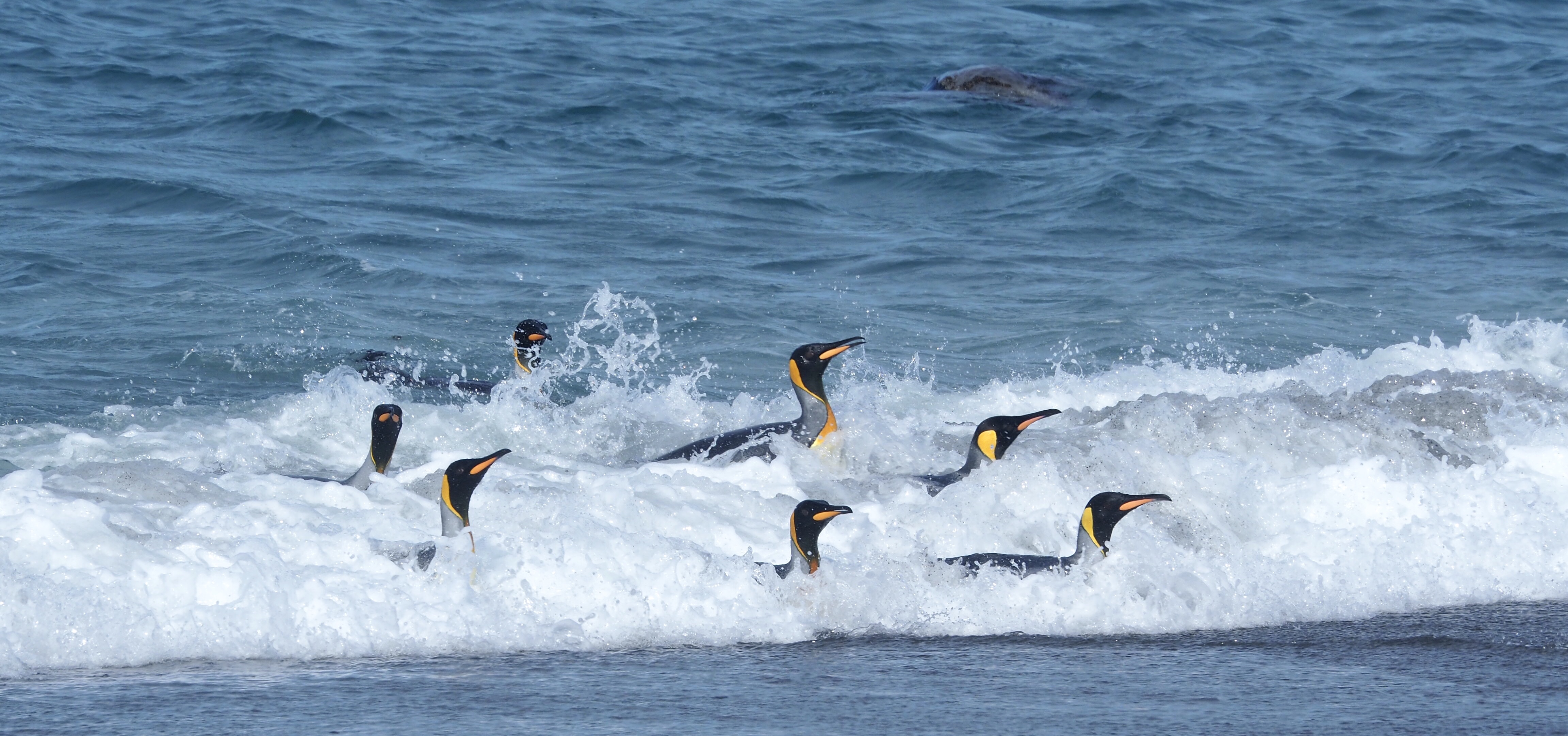
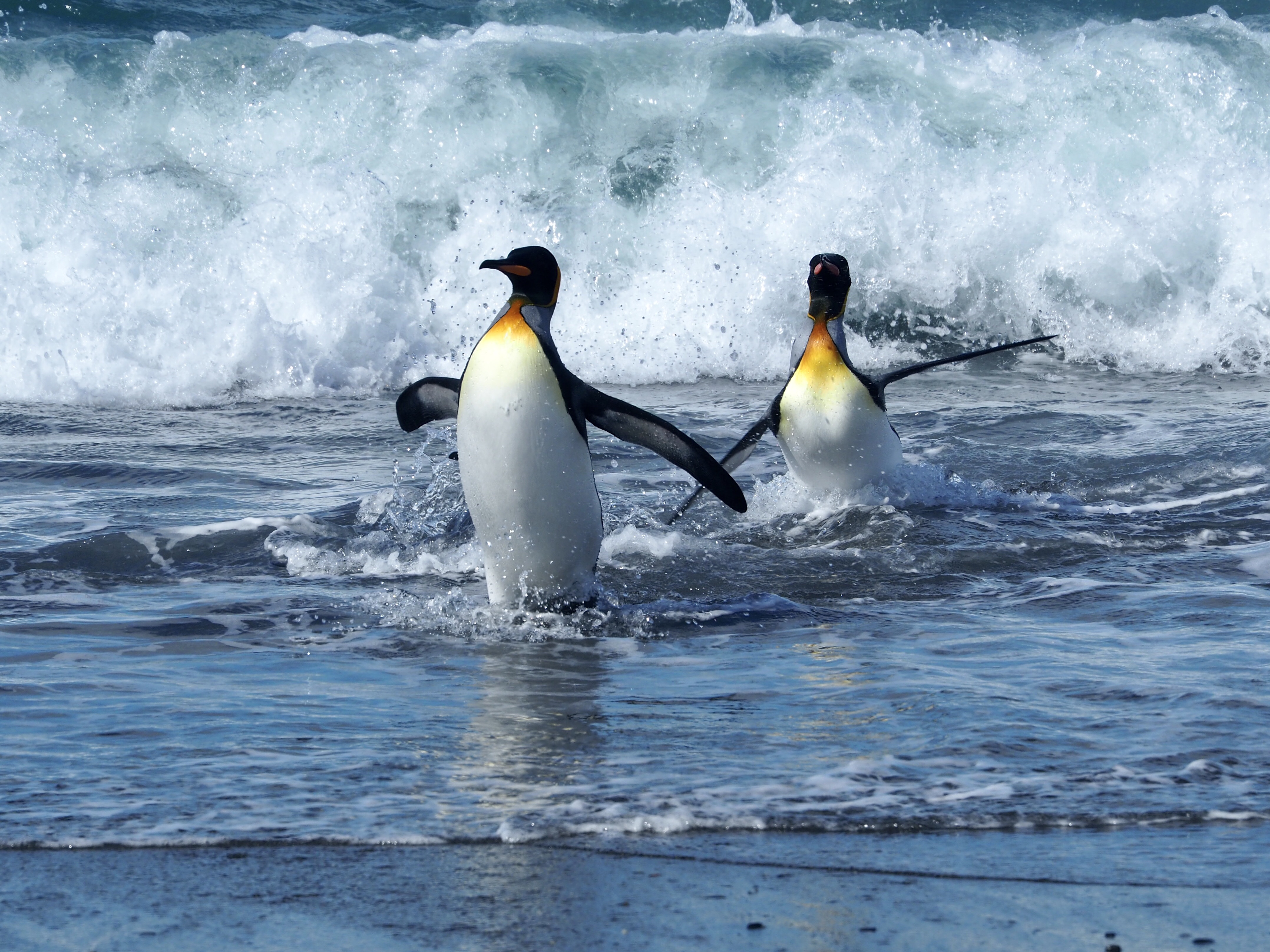
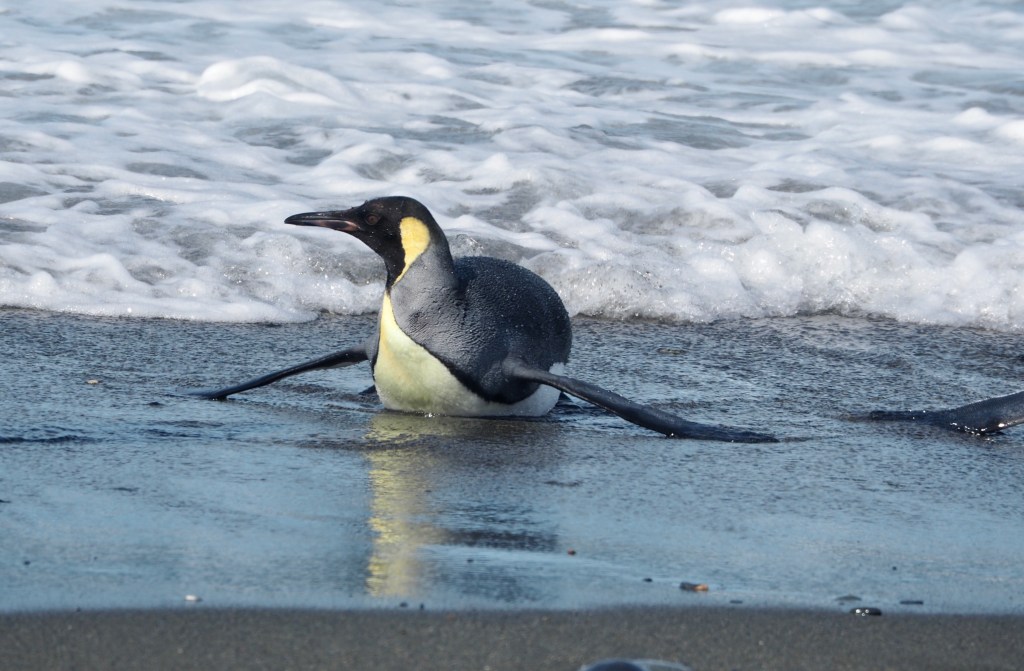
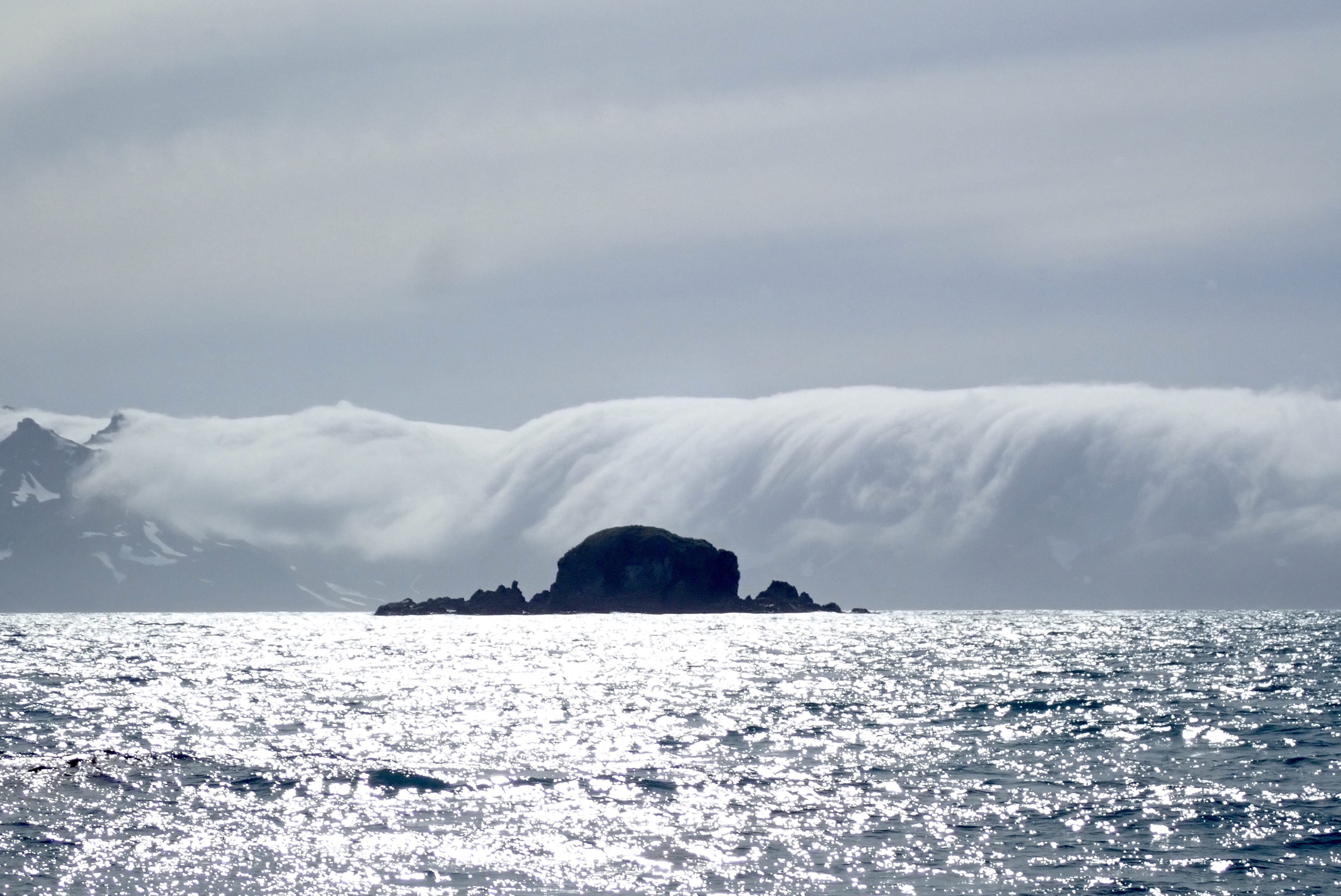
Thursday 2nd January. South to the Antarctic Peninsula.

Weather on waking, 2 degrees. Winds 10 knots. Not too bad at all.
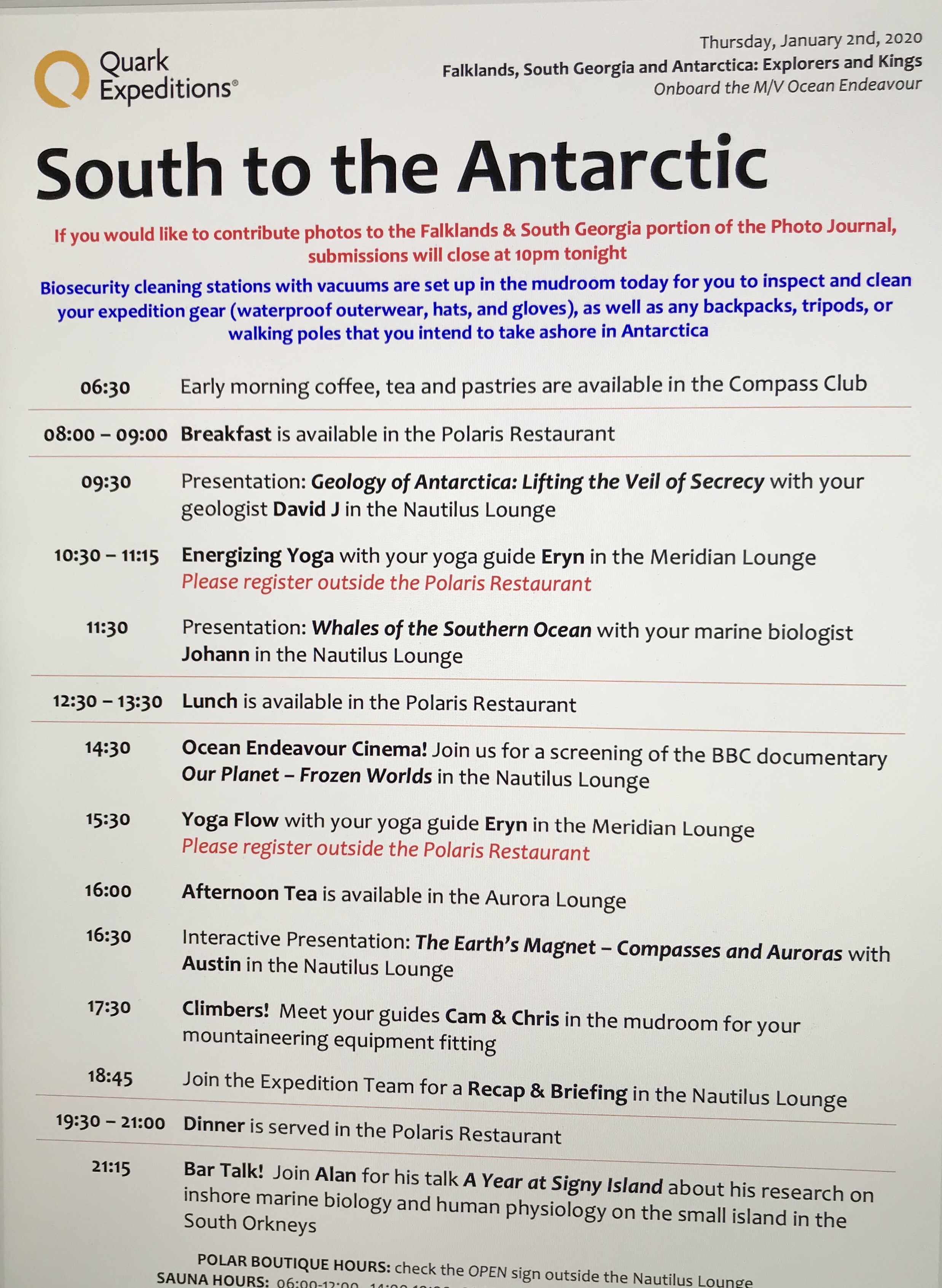
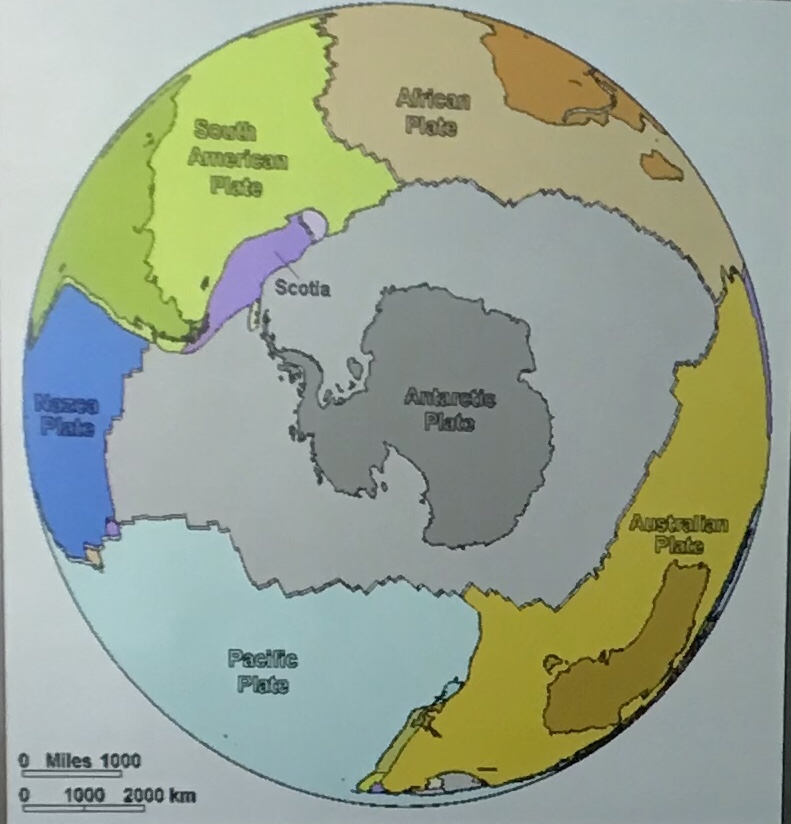
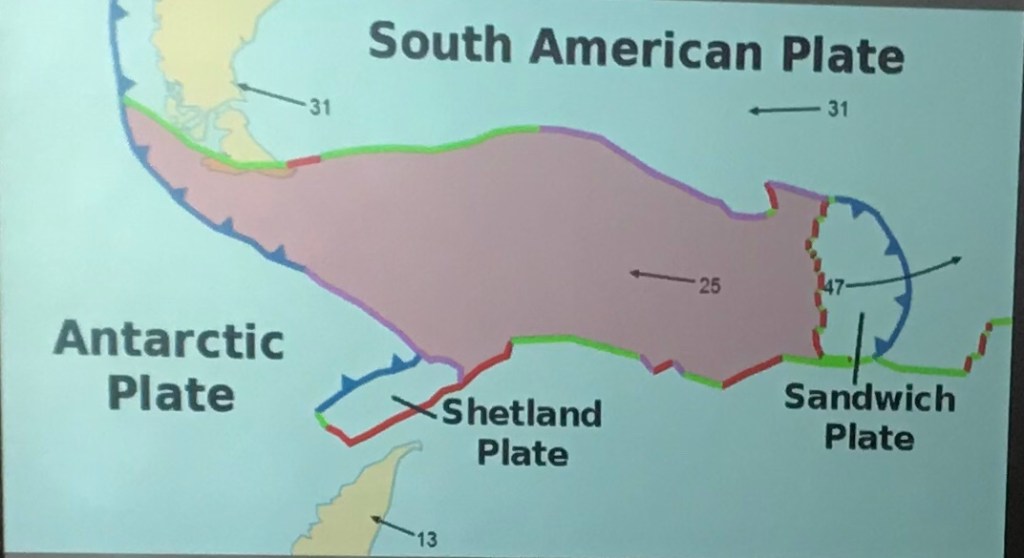
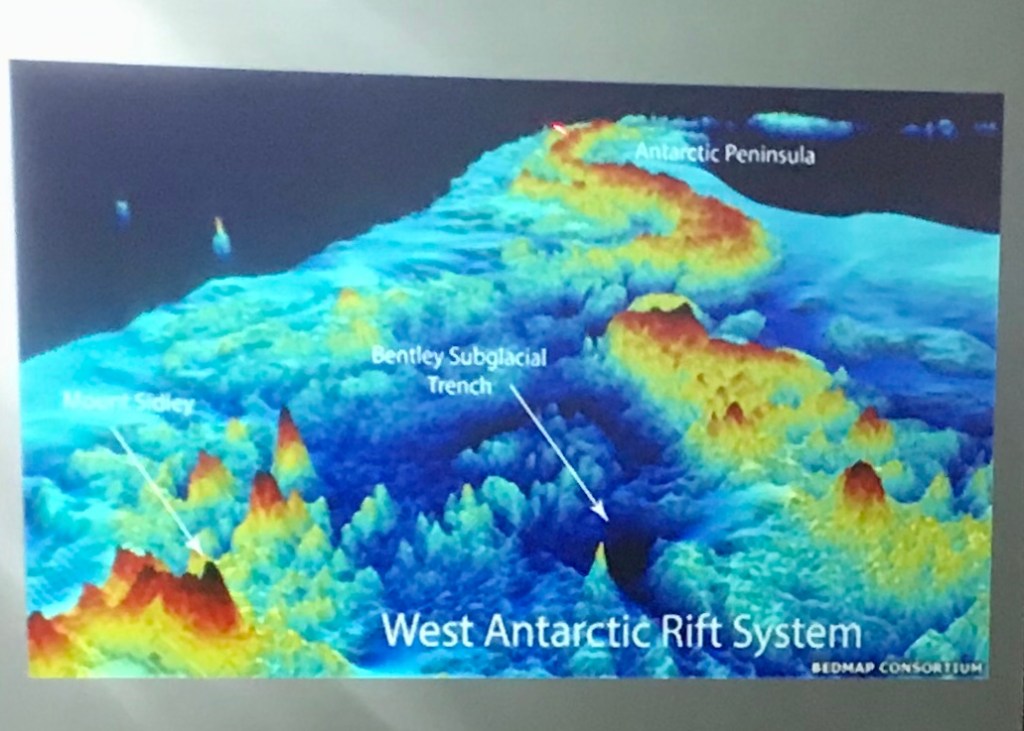
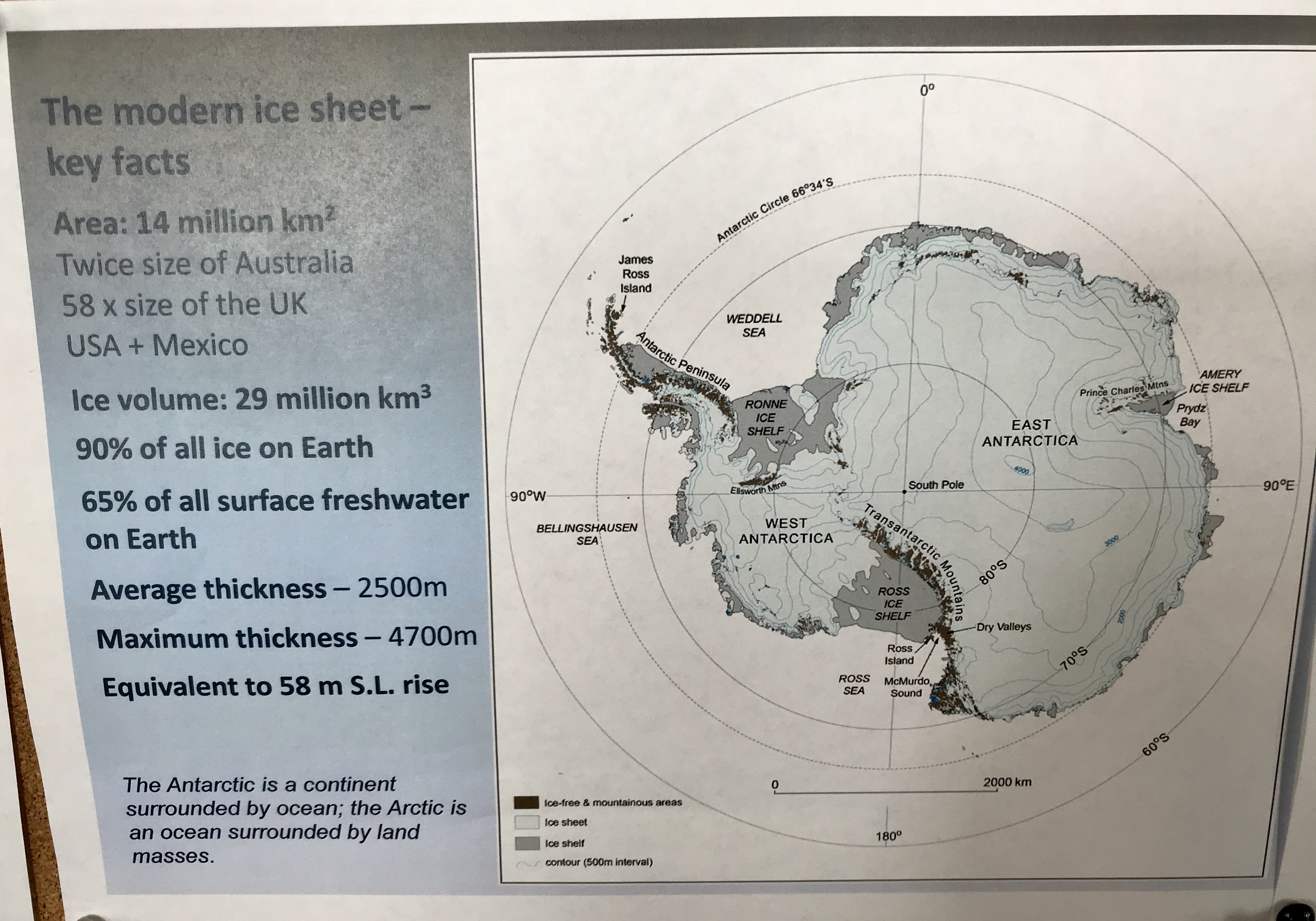
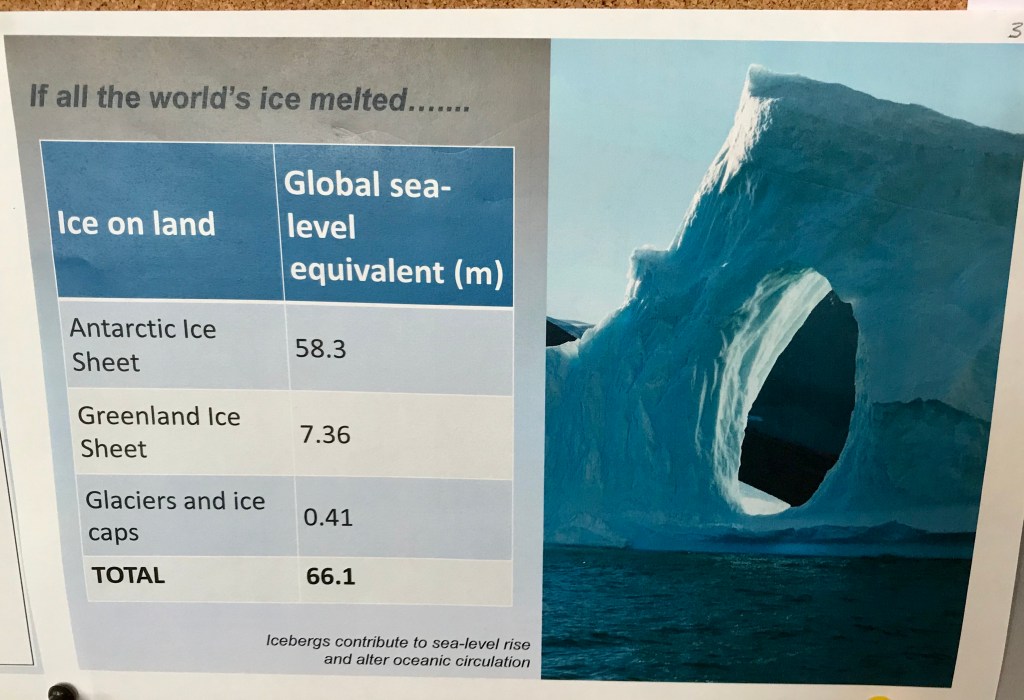
Presentation: Geology of Antarctica: Lifting the Veil of Secrecy with your geologist David J.
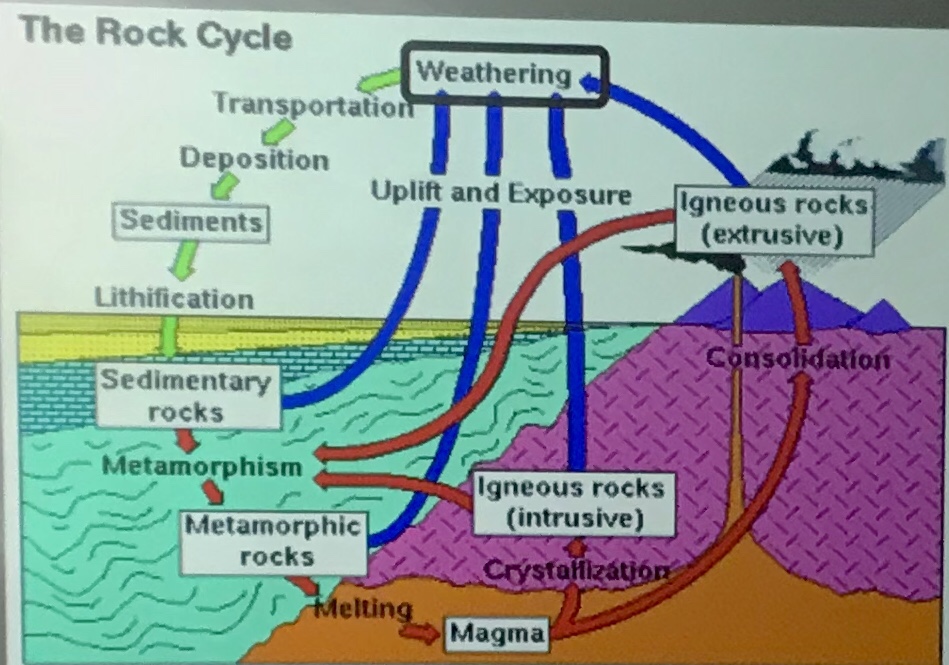
Oh Rod you would have loved it. Loads of info about moving plates, igneous rocks, volcanoes. Metamorphic rocks like baking a cake. Limestone to marble. Limestone Starts as seashells.
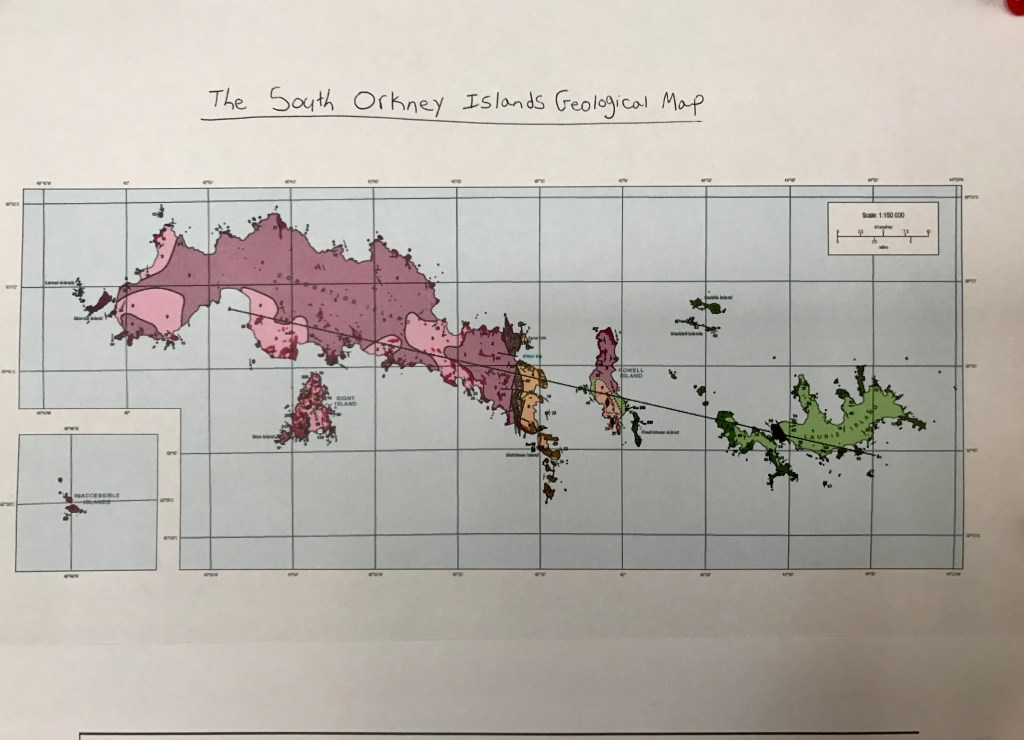
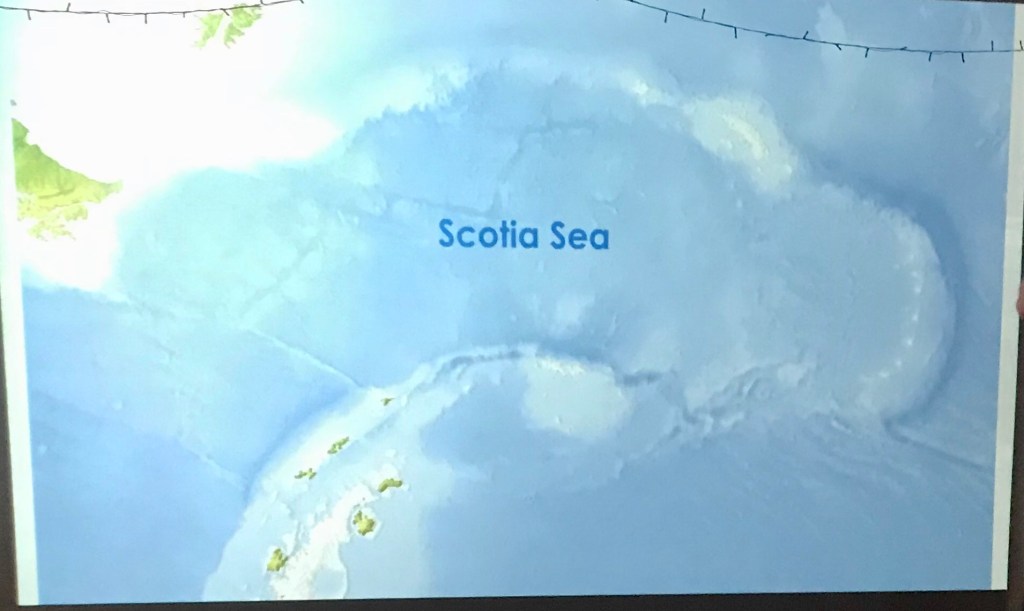
Scotia arc.
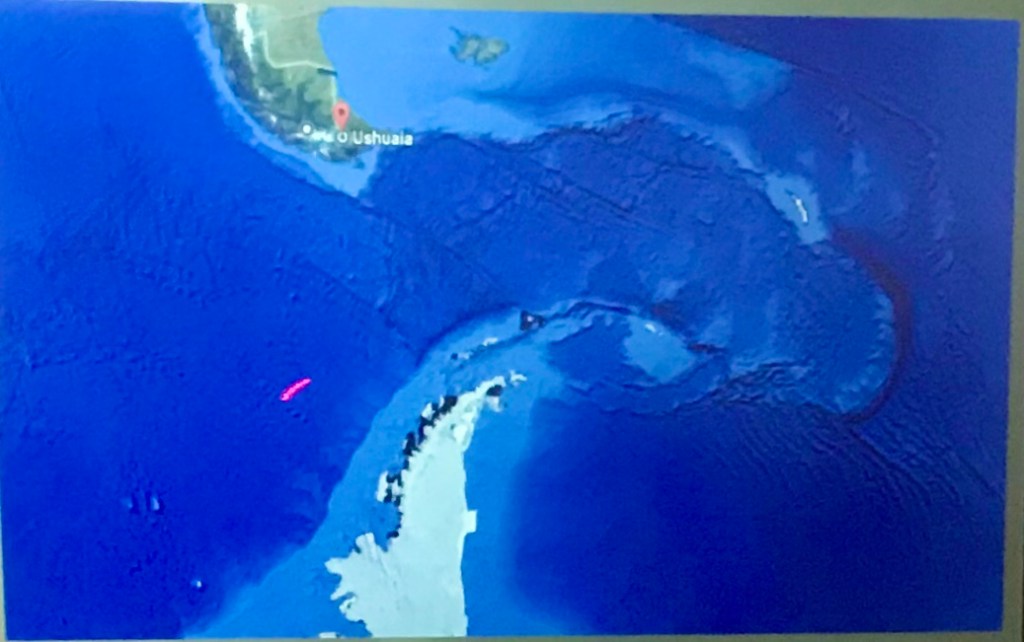
Topographical map of Antarctica.
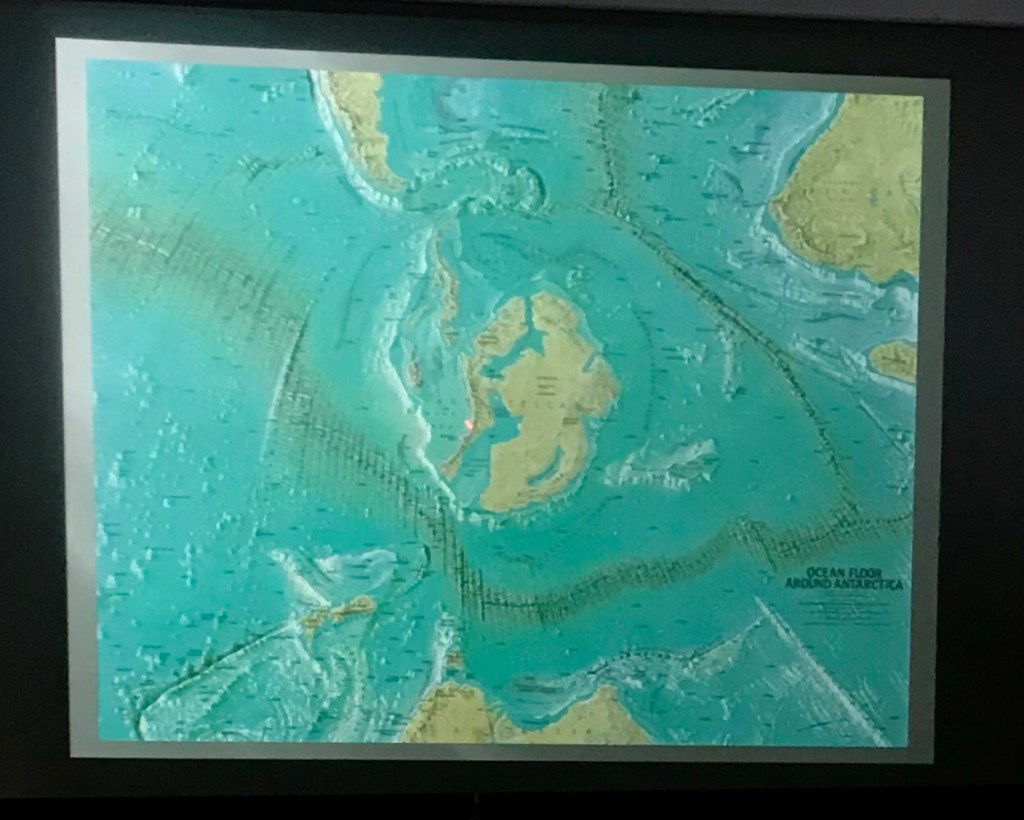
Take ice off Antarctica not a lot of land.
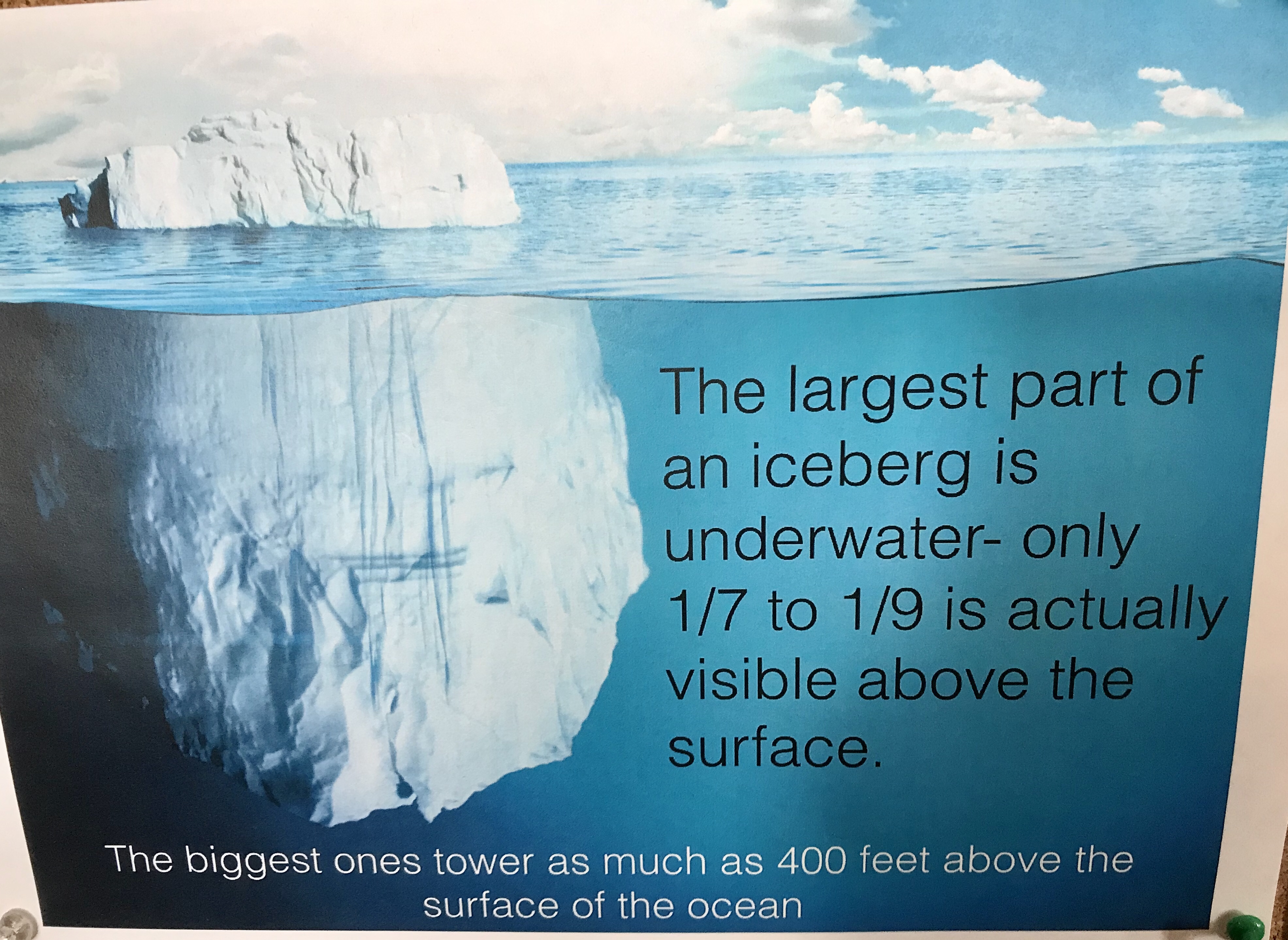
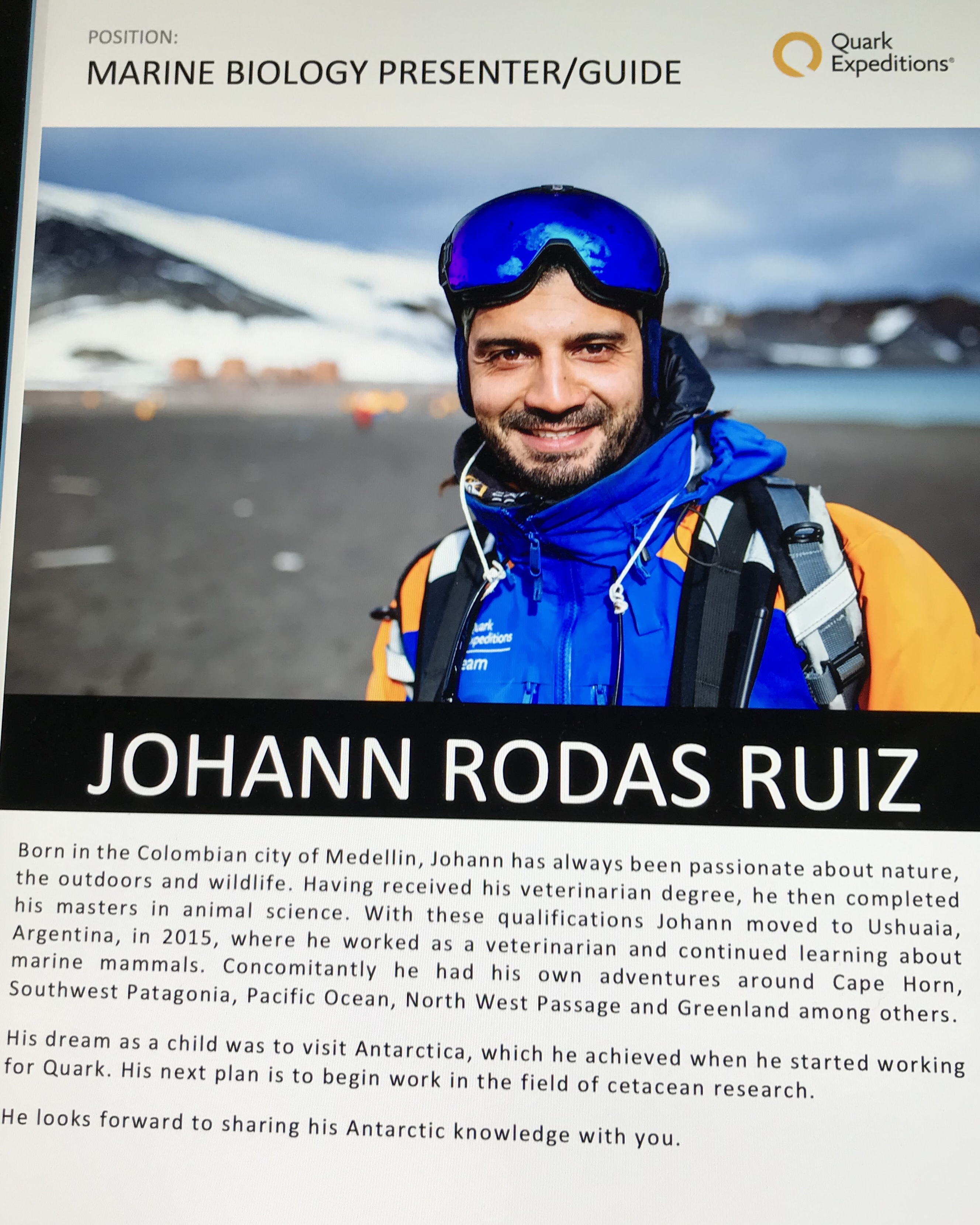
Presentation: Whales of the Southern Ocean with your marine biologist Johann in the Nautilus Lounge.
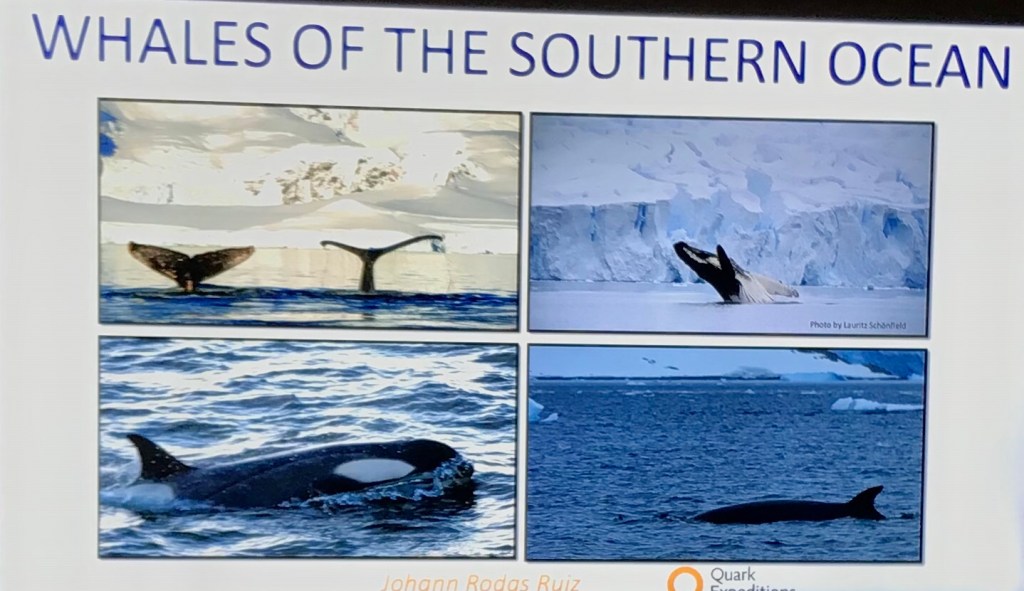
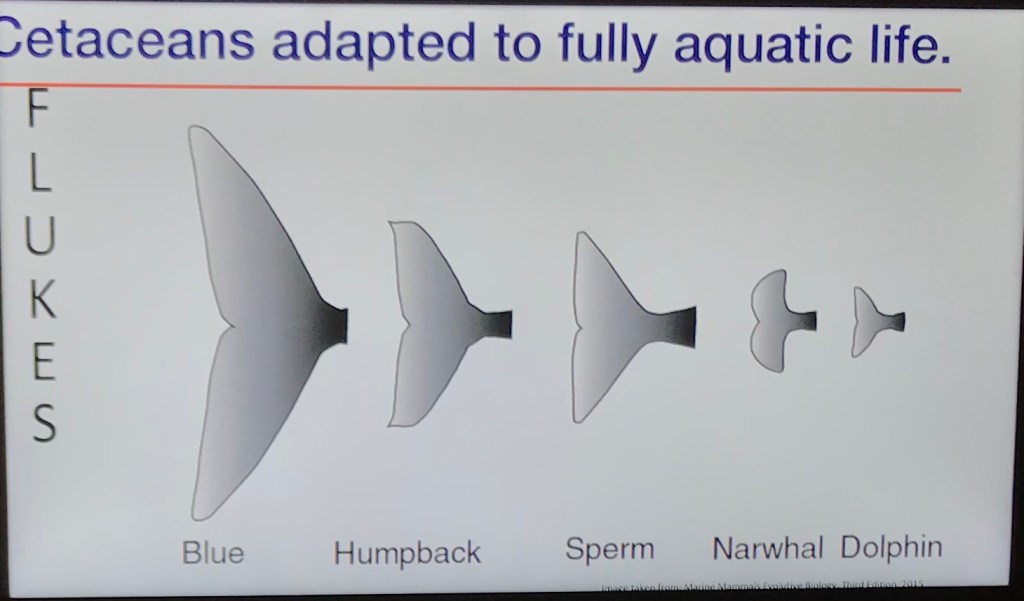
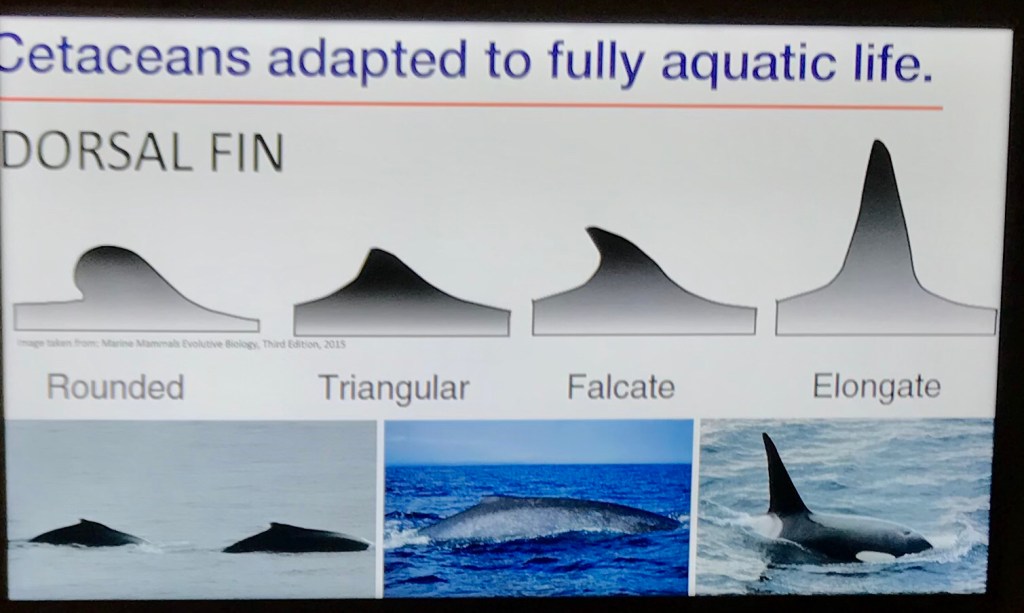
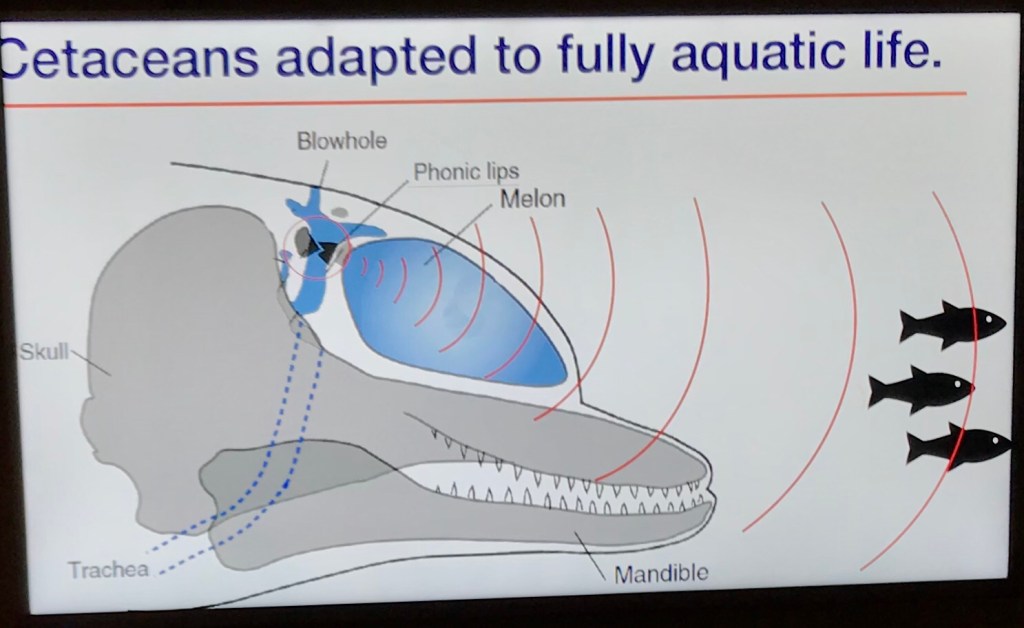
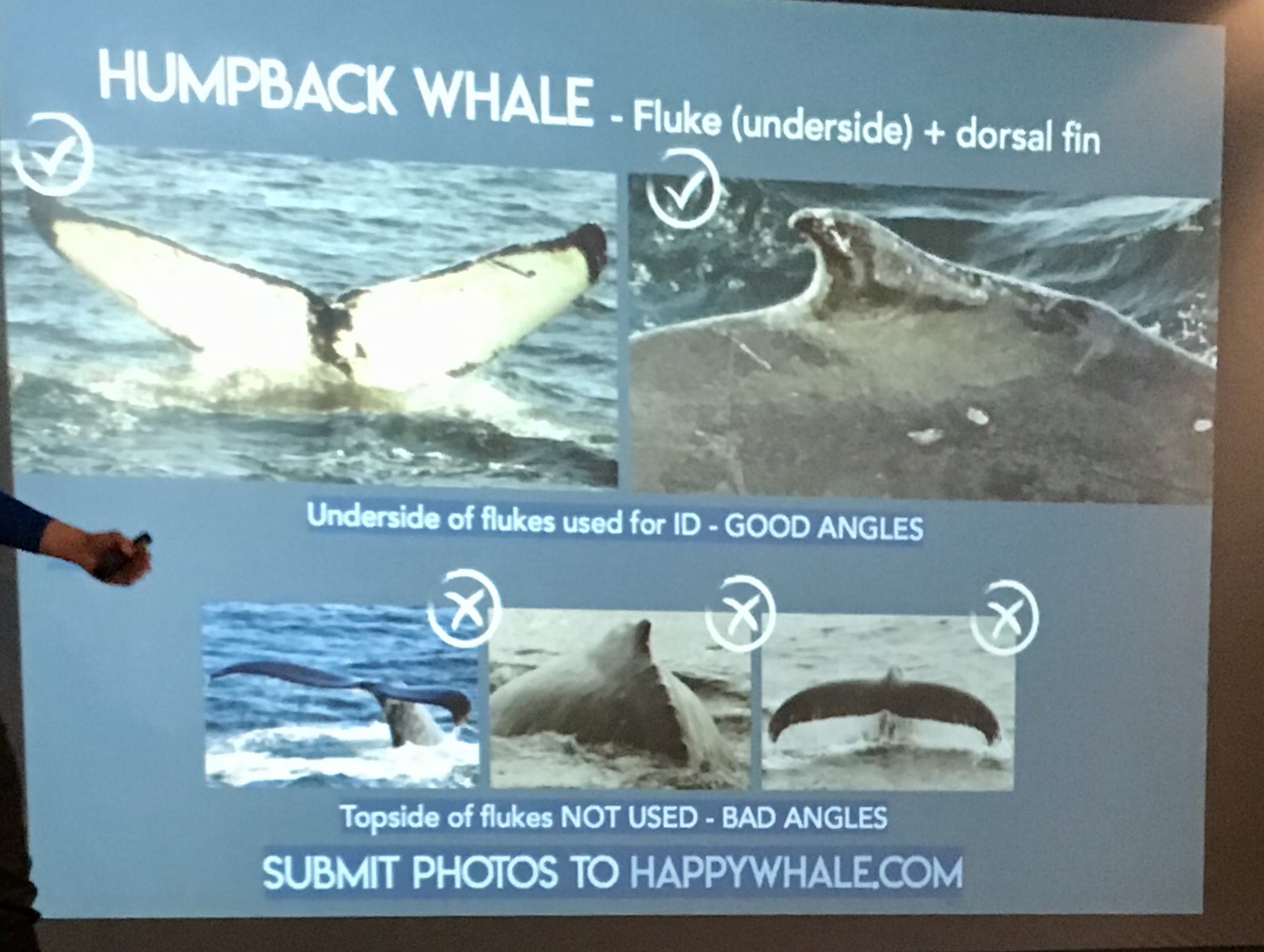
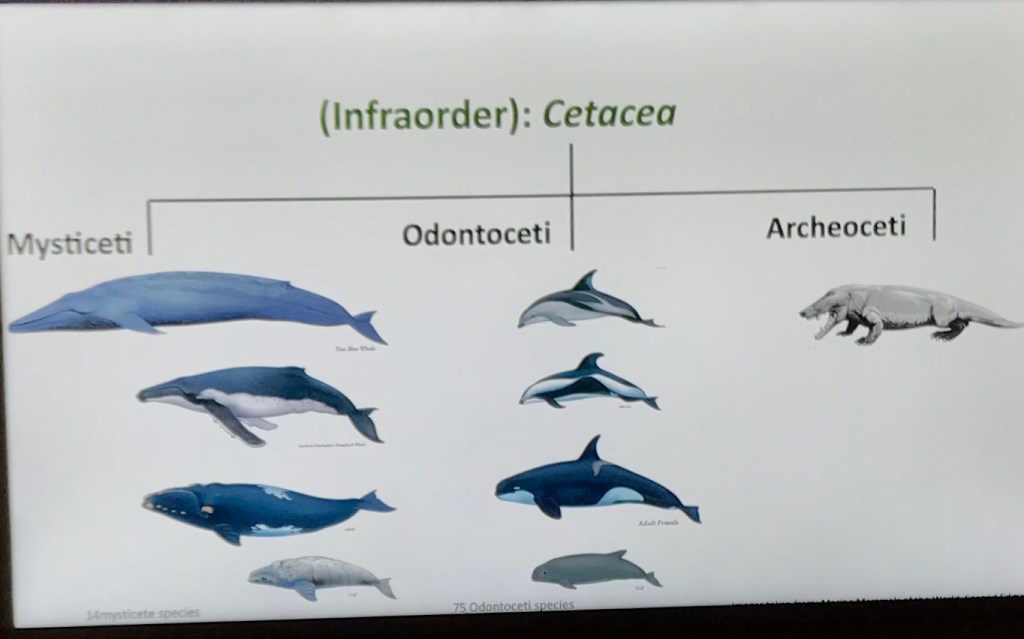
Closely related to hippos and deer further up the chain. Modern whales from 35m years ago. Not as closely related to seals. Not related to fish at all. Can move at 37km an hour. Most streamlined shape of all mammals. Bubble blowing herding of krill. Hind limbs disappeared. Tail is a different structure. Called flukes (left and right) no bones. Dorsal fin for stability and thermoregulation. Can also tell gender. They have air follicles.
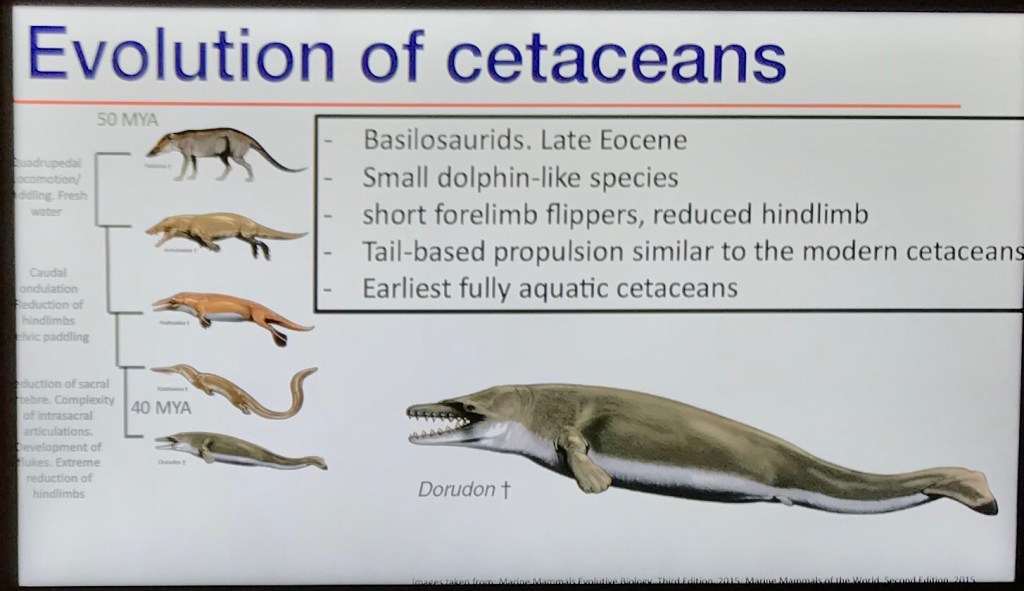
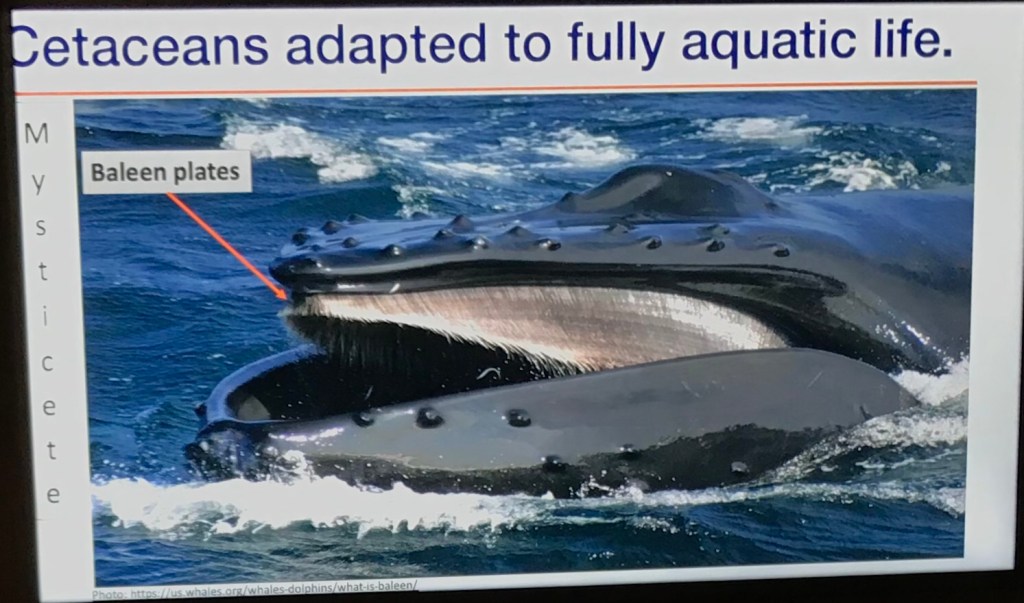
Humpbacks have some hairs around the mouth and blowhole. Sensitivity. Blow hole is on top of the head. Mysticete (baleen) have two blow holes. Splash guard in front of the blow holes. Baleen plates hang from the roof. Made from keratin like nails and hair. If they are 40 tonnes they can take up to 40 tonnes of water into their mouth. Creating noise with phonic lips. Used as a radar system to find prey.
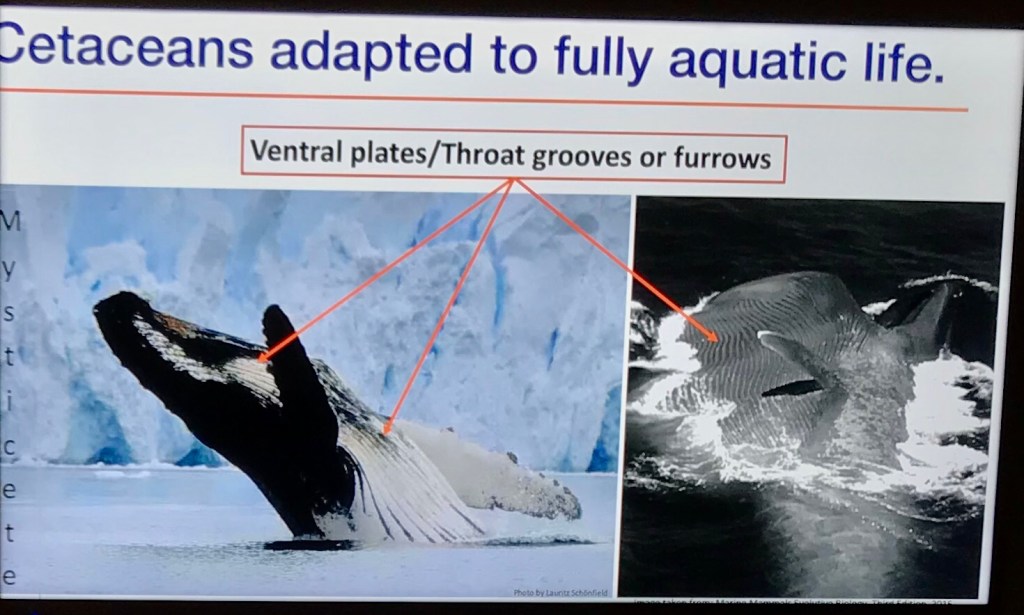
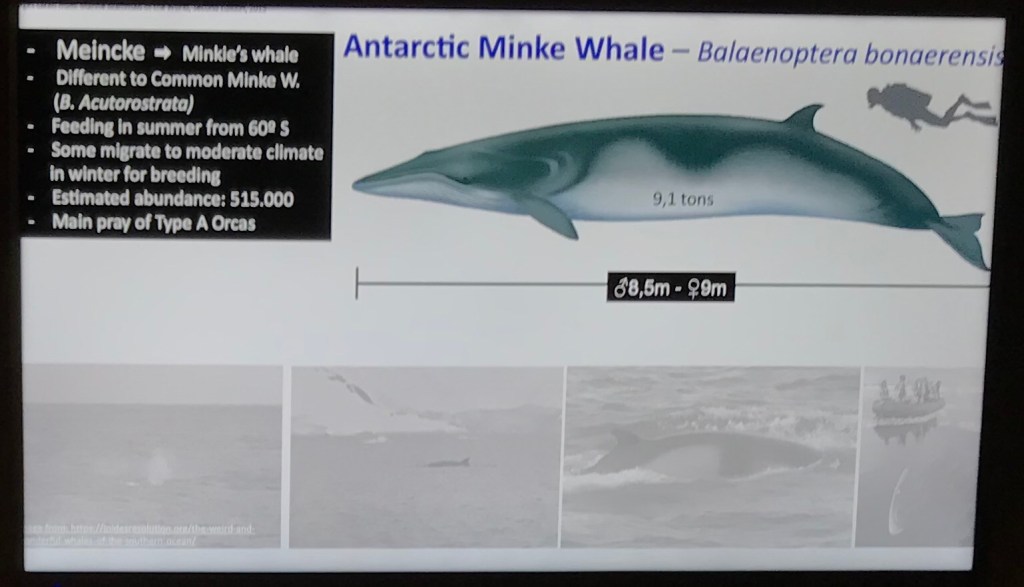
Antarctic Minke whales. Not related to main minke whale. Short blow. Tall dorsal fin to body length. Grey patches on the side. Two zodiacs in length.
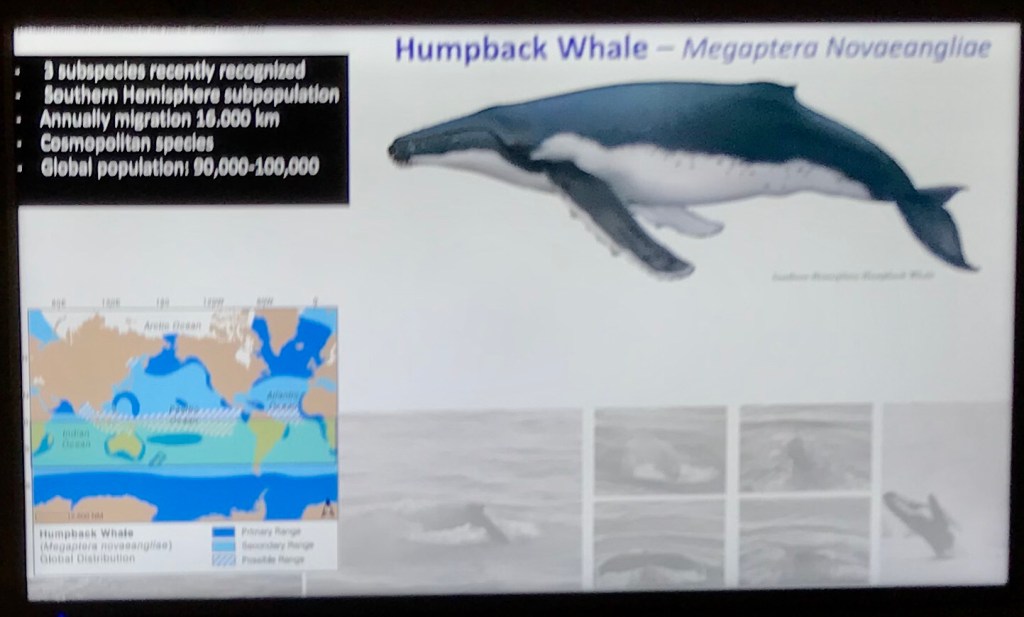
Humpback. About 100,000 individuals. 4 zodiac lengths. 11-17m tree shaped blow. Small dorsal fin set on the hump. Trailing serrated edge to tail. One of the most active whales.
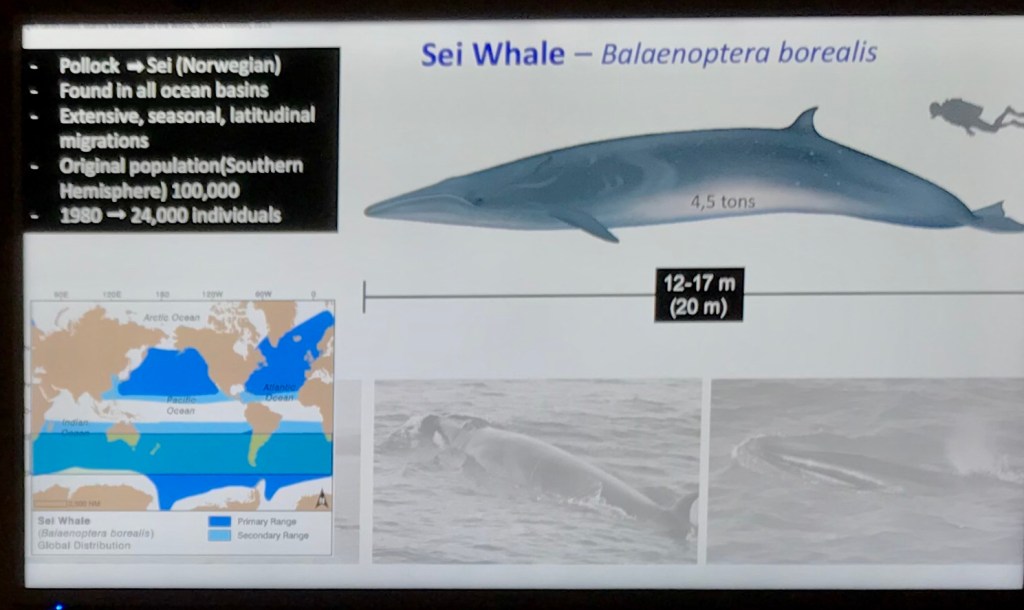
Sei whale, 4 zodiac lengths, can be mixed up with fin whale but fin is much larger. Sei blow and show dorsal fin at the same time. Wide and high blow. Angled dorsal fin. Greyish colour sides. Metallic coloured head.
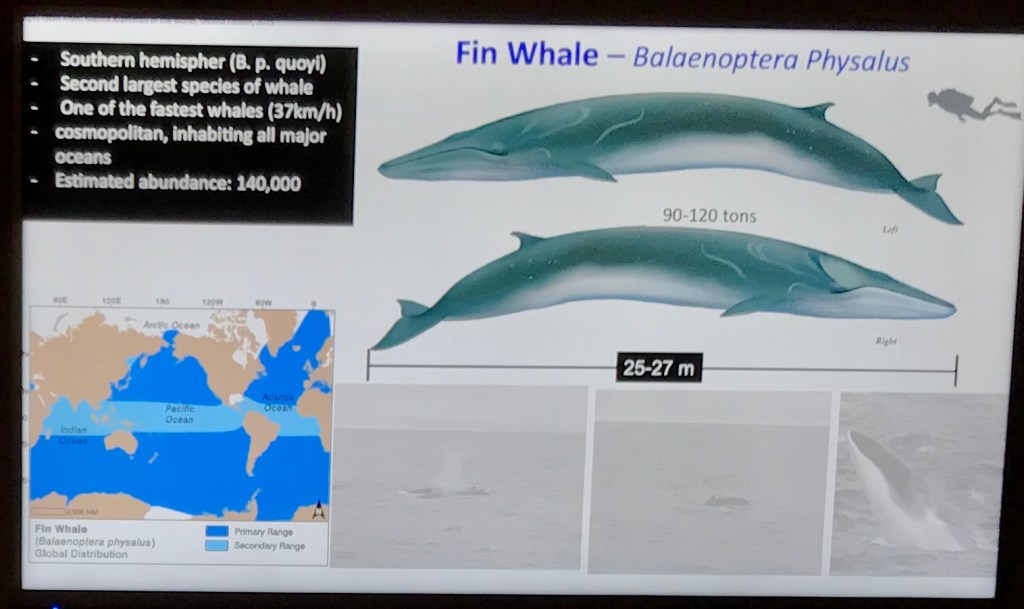
Fin whale. 7 zodiacs length. Very tall blow. No blow and fin at same time. They don’t fluke up often like the humpback. Left lower jaw black, right lower jaw is white.
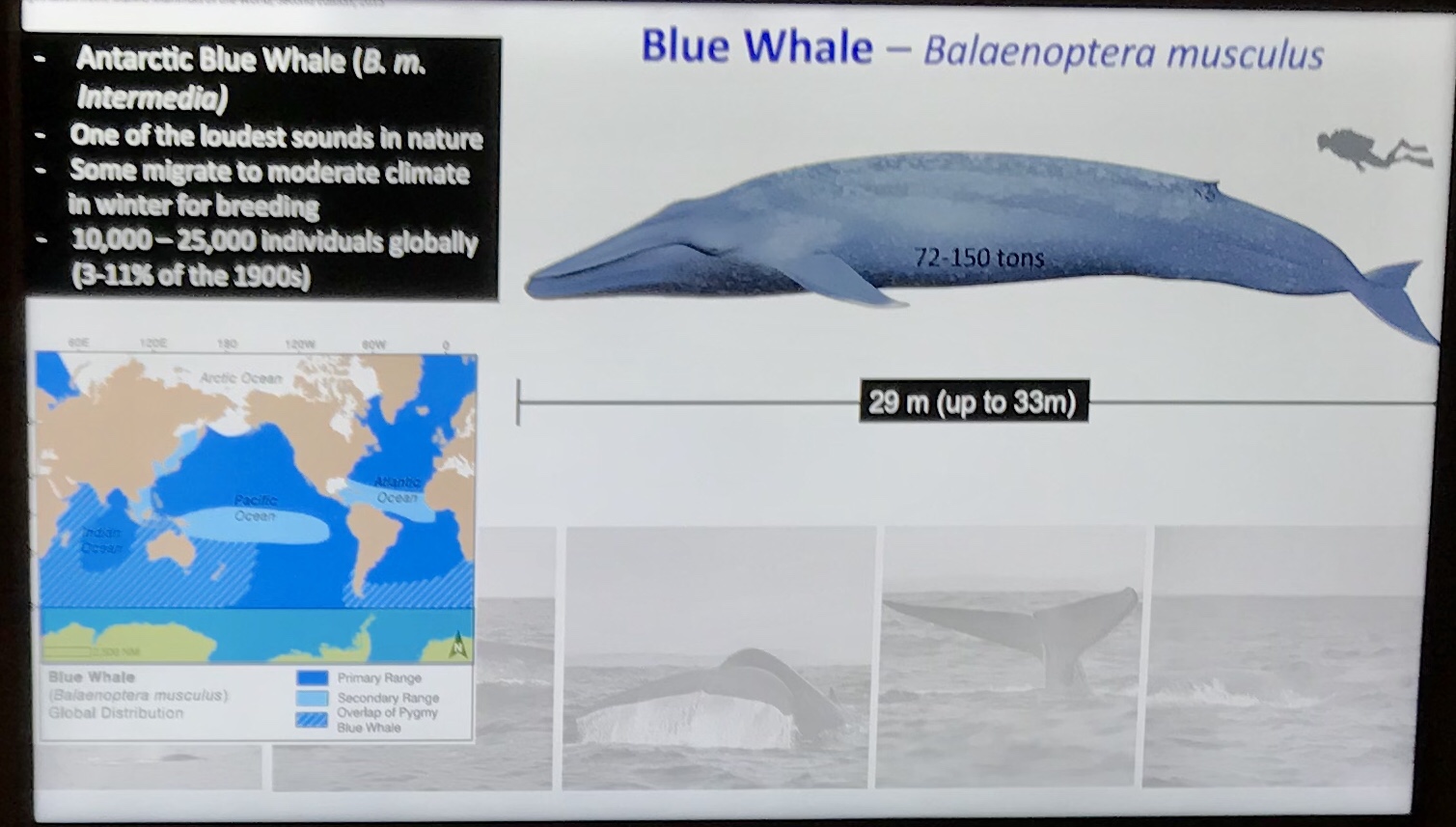
Blue whale. 8-9 zodiacs. Very high blow. Tiny dorsal fin. Grey mottled colouration. Look blue underwater. They fluke up too. Smooth trailing edge to the tail. Biggest splash guard.
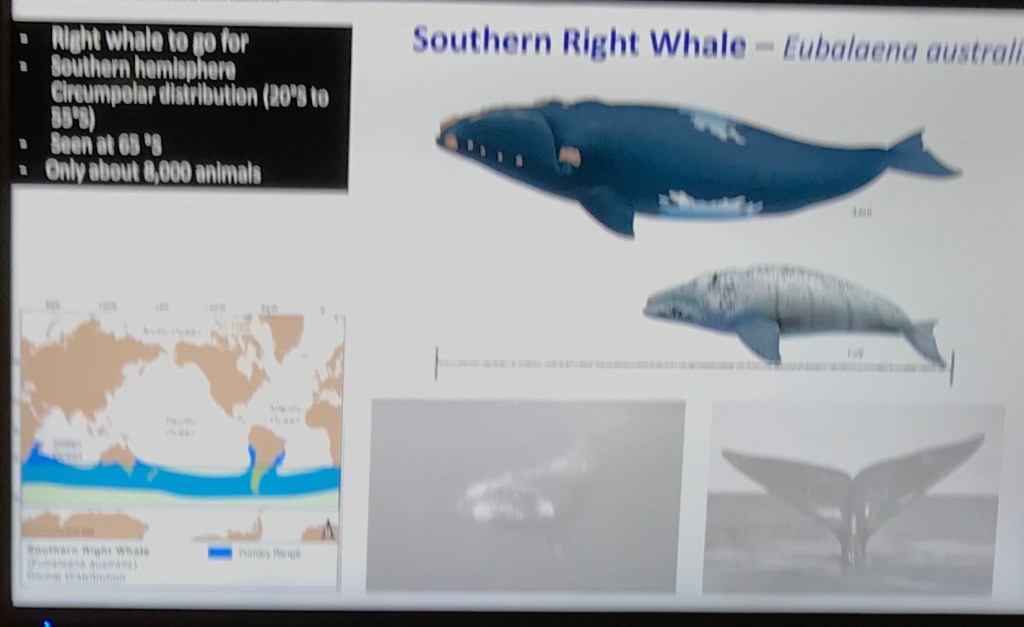
Southern right whale balaenidae same size as humpback. No dorsal fin. Lots of crustaceans attached. Patches on flukes.
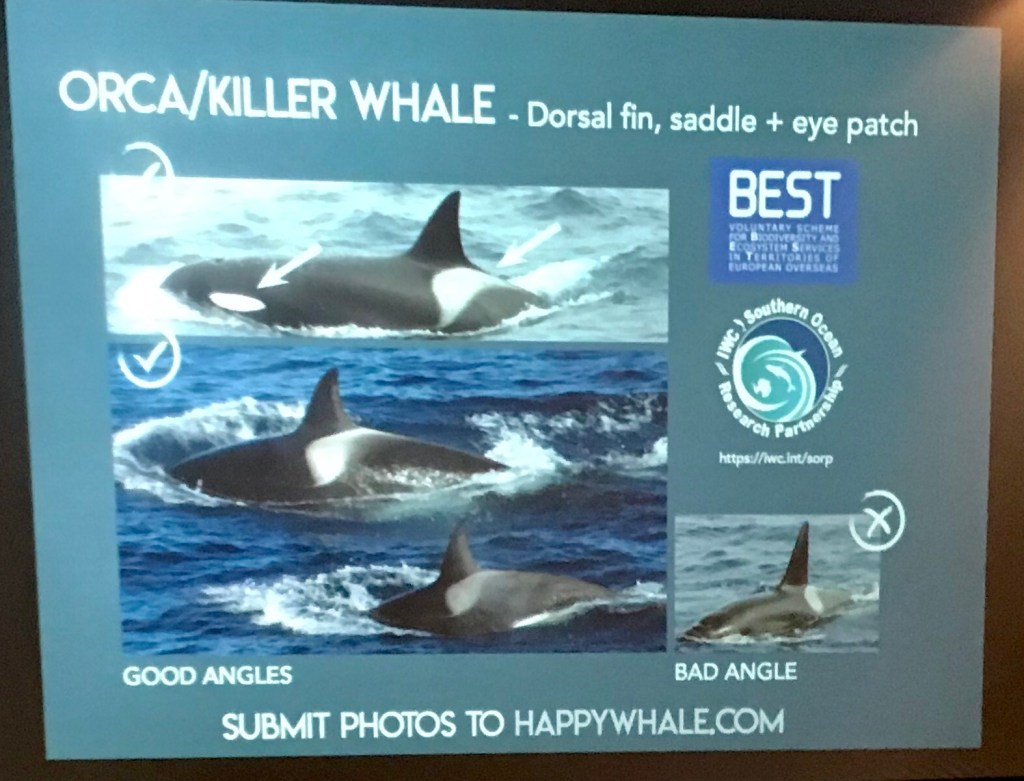
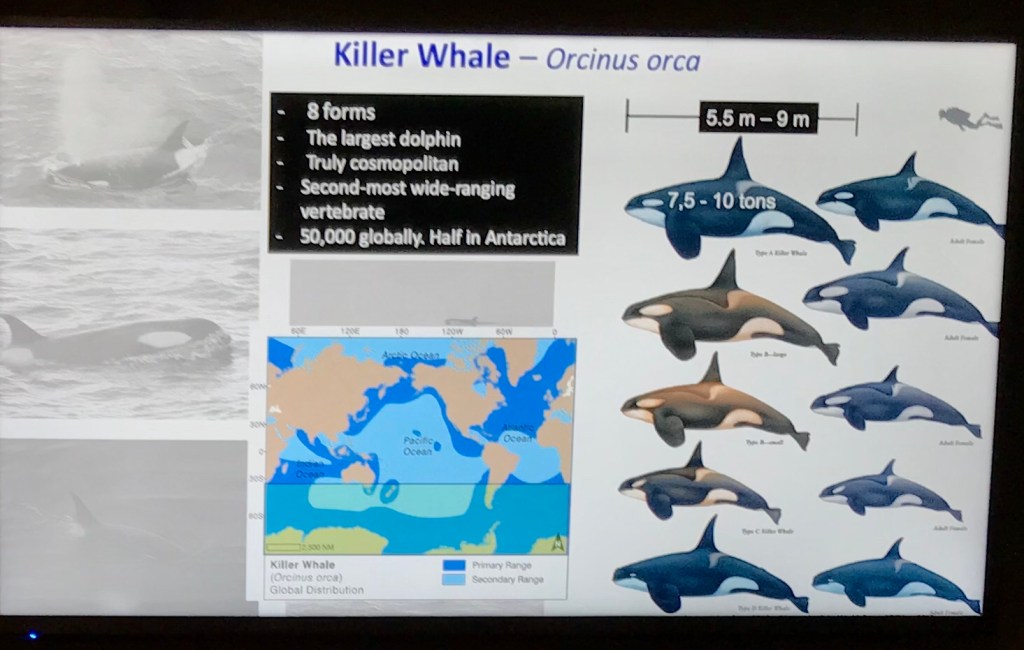
Orca. 2nd most travelled to humans. Forms based on travel and food. One blow hole. Short blow. Eye patch. Big dorsal fin. White eye patch colour changes depending on food? Can hunt big whales like a fin whale.
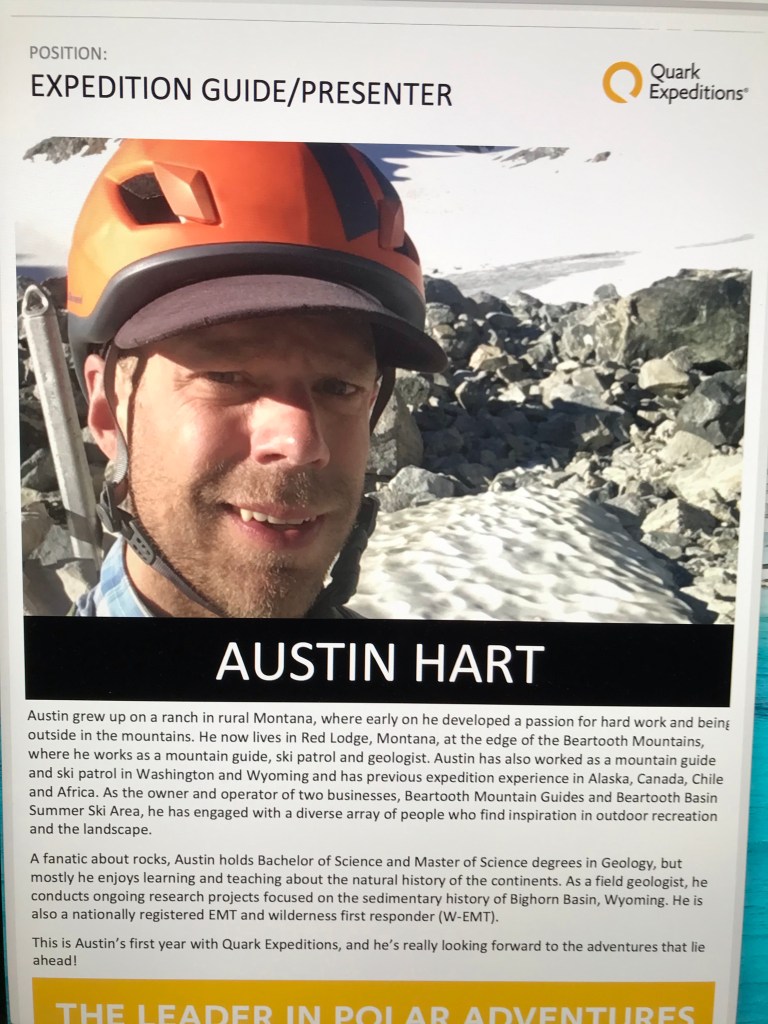
Interactive Presentation: The Earth’s Magnet – Compasses and Auroras with Austin in the Nautilus Lounge. A mix of detailed information and some fun interactive magnet creating.

My brain really couldn’t get a handle on this one. I am starting to cough more and am a bit concerned I might have the “lurgy”.

Mutiny about to happen as the ship has run out of Stella artois! (Cheryl II favourite tipple.)

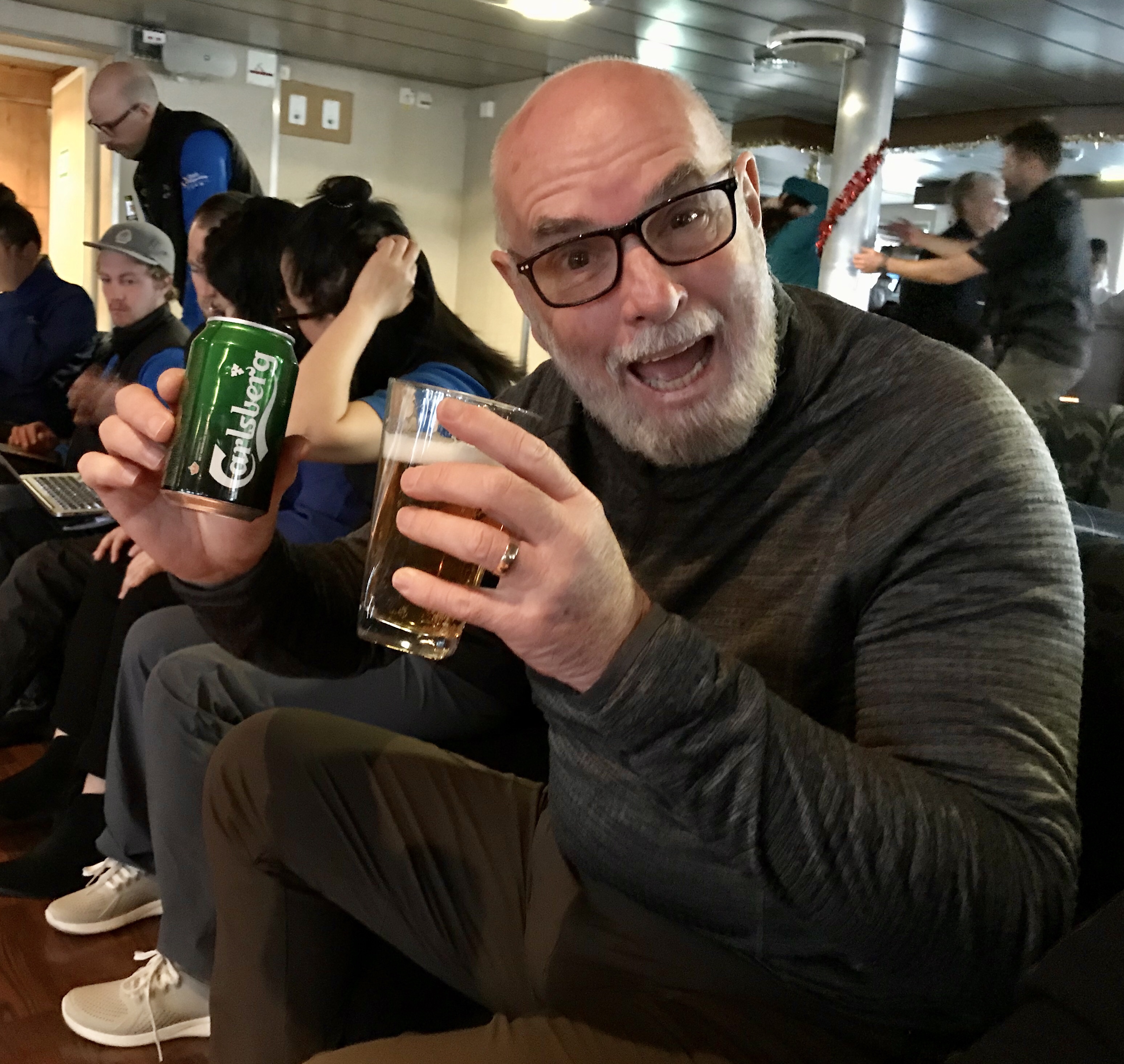
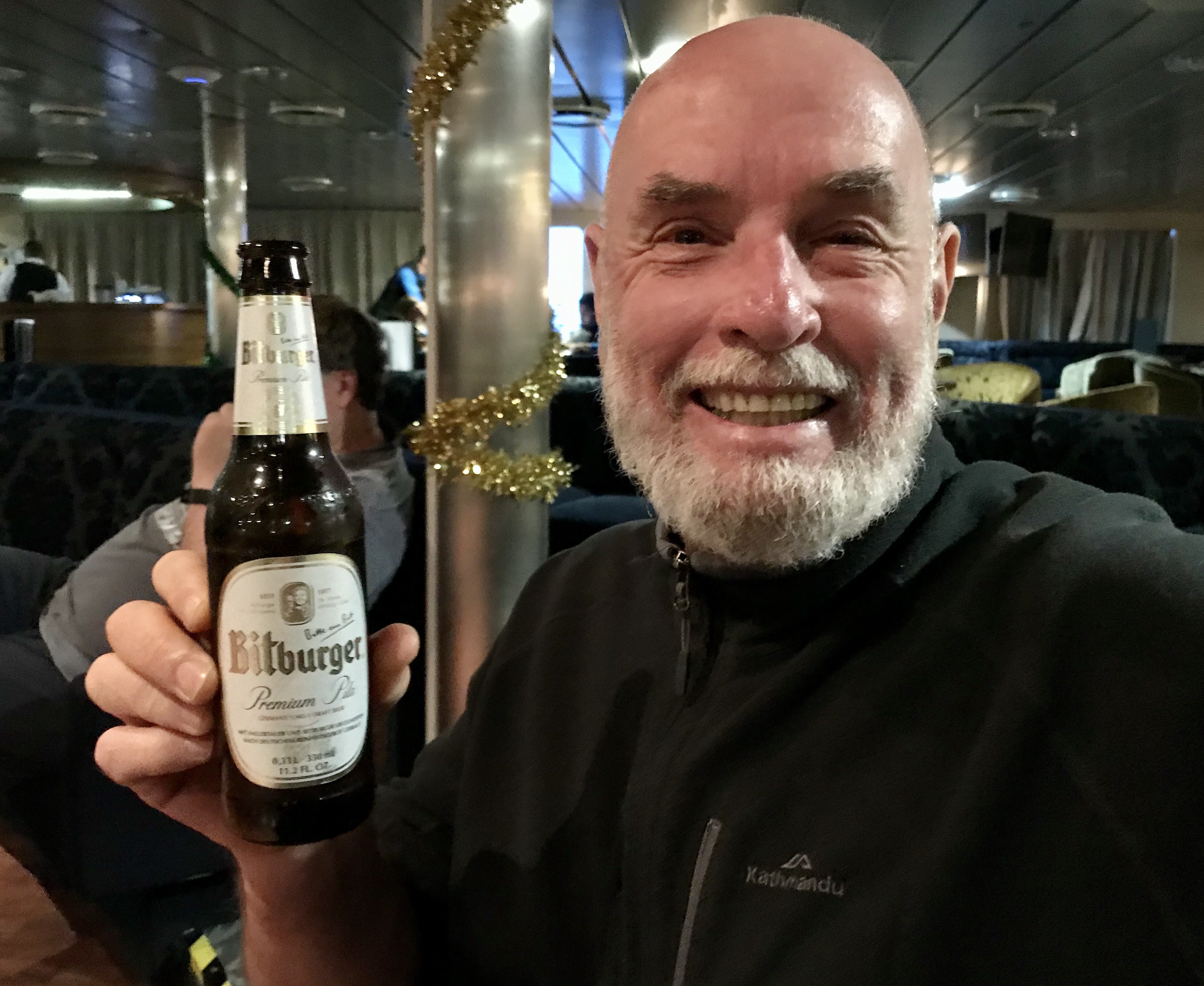
Beer of the day a Carlsberg again. We are running out of options. I don’t appear to have a photo.

Only a 7 this time due to the bitter after taste. I had a Chivas and soda to attack this throat.

Second beer was a Boddington’s (UK) light and doesn’t seem to have anything going for it.
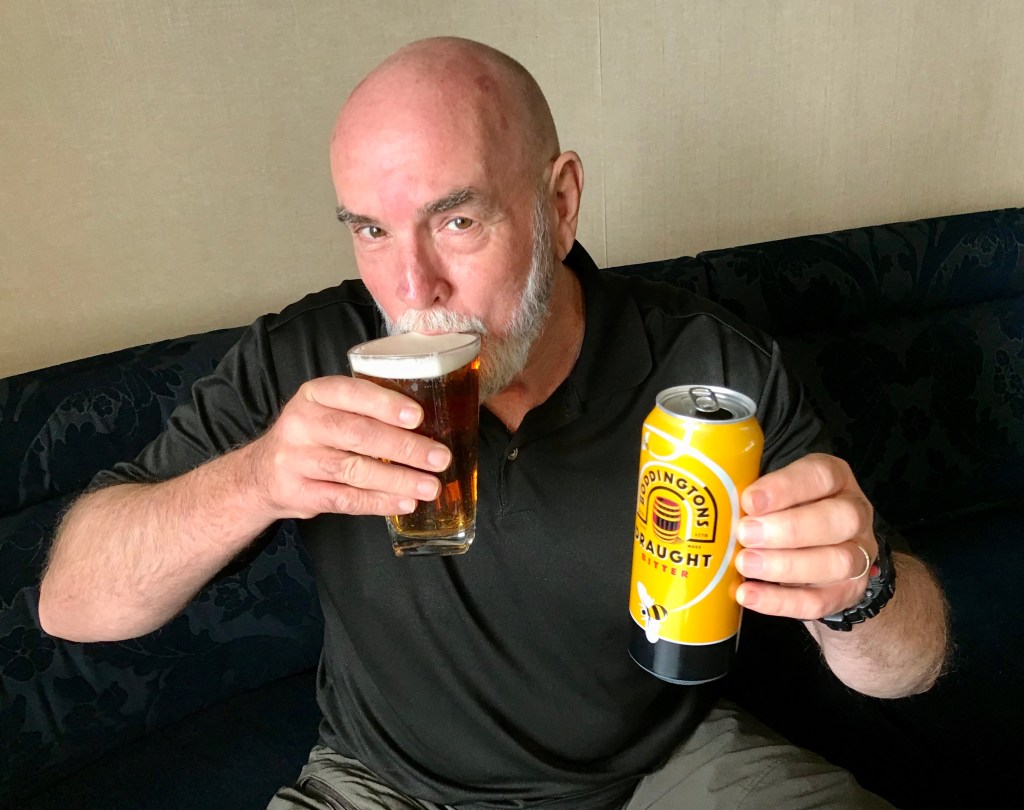
Garrie asked for a razor blade to cut his throat. Cheryl II tried and said “that’s really bad”. Cheryl also says light but a taste that is not good, weird, odd. Garrie says rating 3. At a pinch he’d have one on a very hot day (news flash – Antarctica in summer still has snow!). Mike says “the mistake was pouring it into the glass and not onto the floor”

Happy hour so a second double hic….at least if I stagger I can blame the swell. OMG when did I last have four whiskeys this quickly? Throat feeling fine. Head a bit fuzzy.

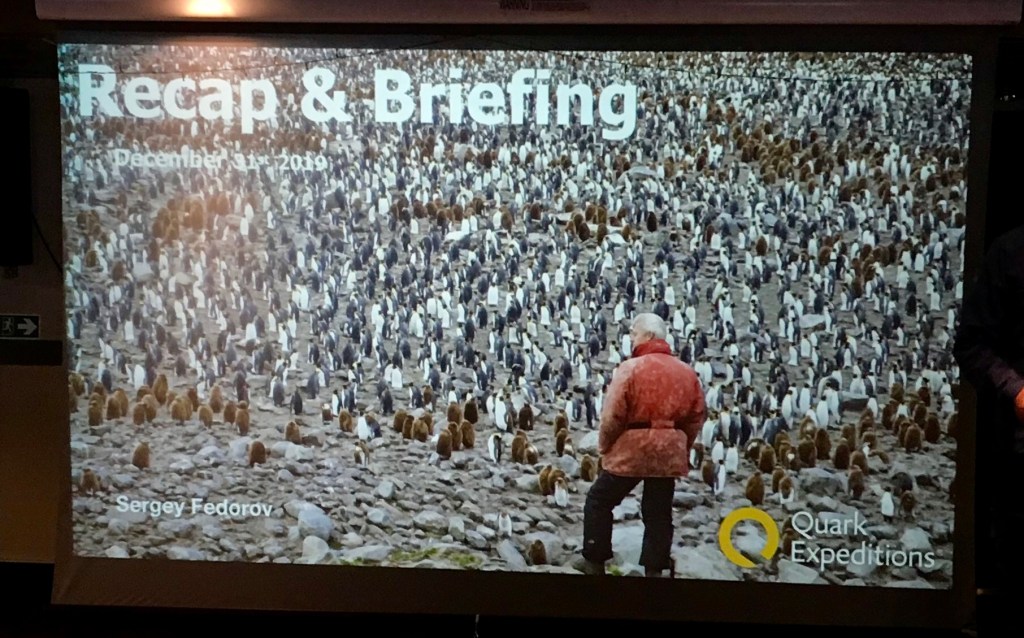
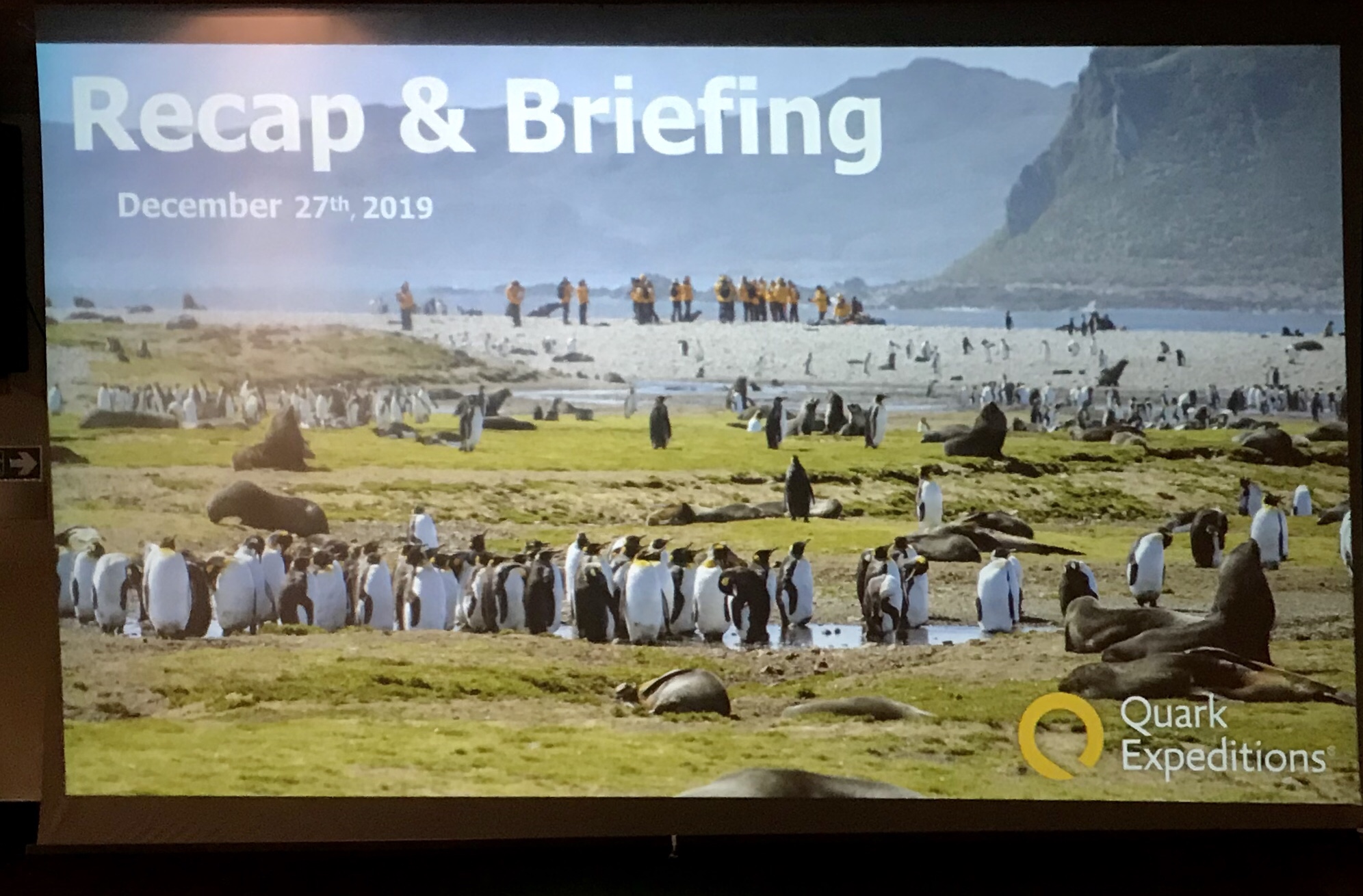
Recap and Briefing time.
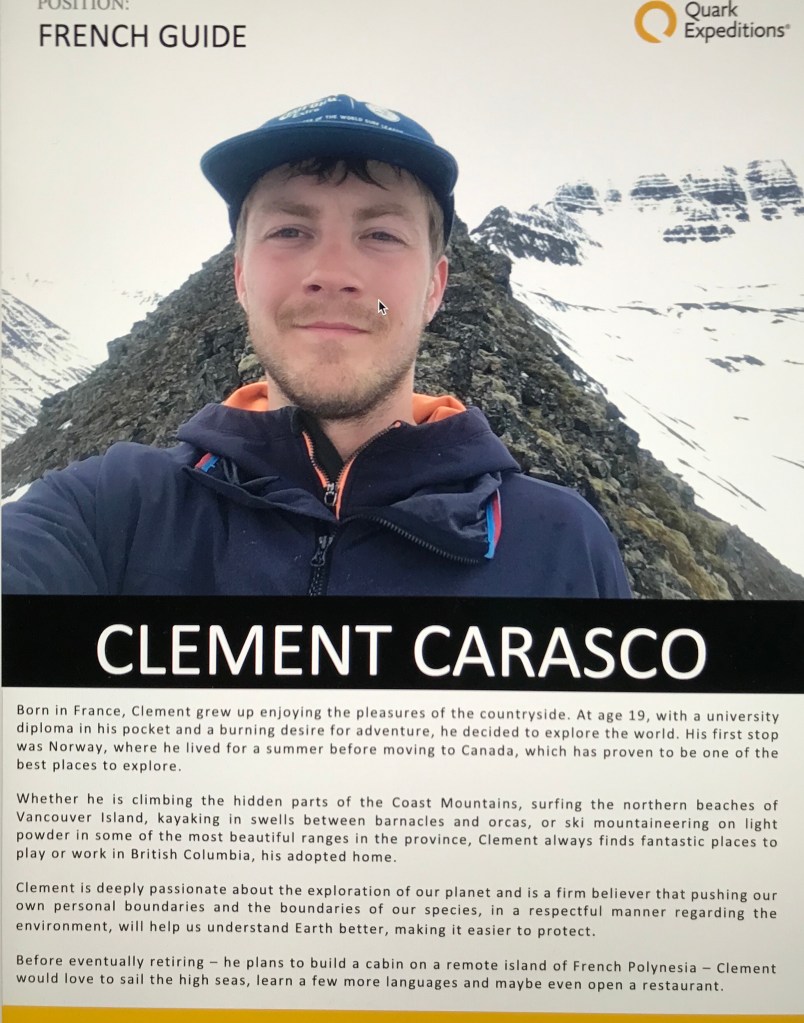
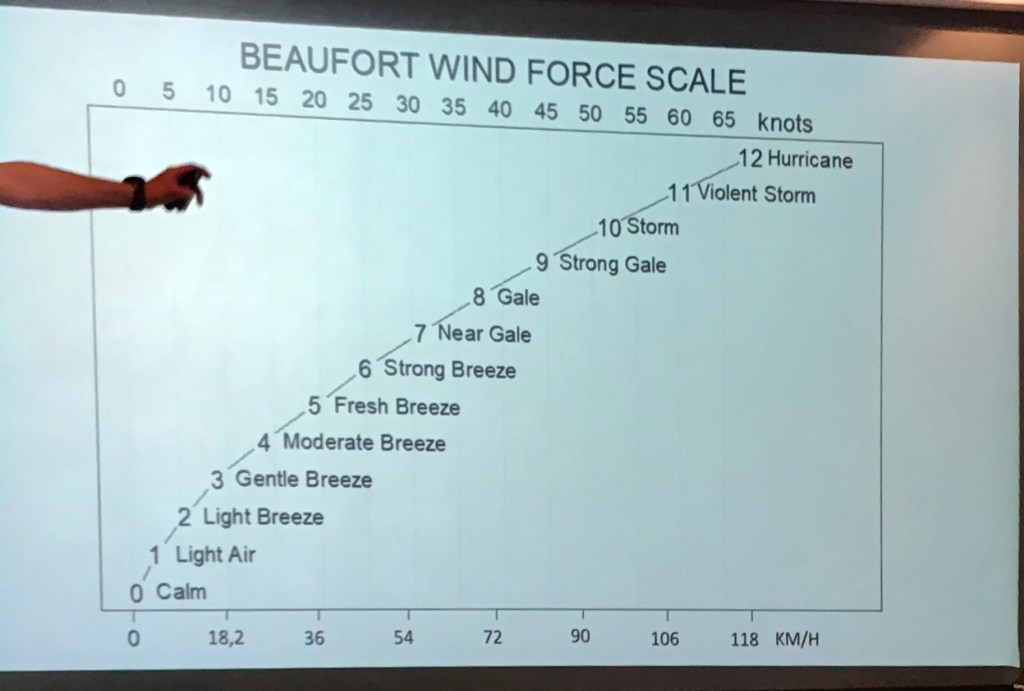
Clement – weather gambler.
The Beaufort scale created in the 1800s. Adjusted to steam boats from frigates. Spin drifts photographed. They want consistency for events.
Dr Chris – sea sickness.
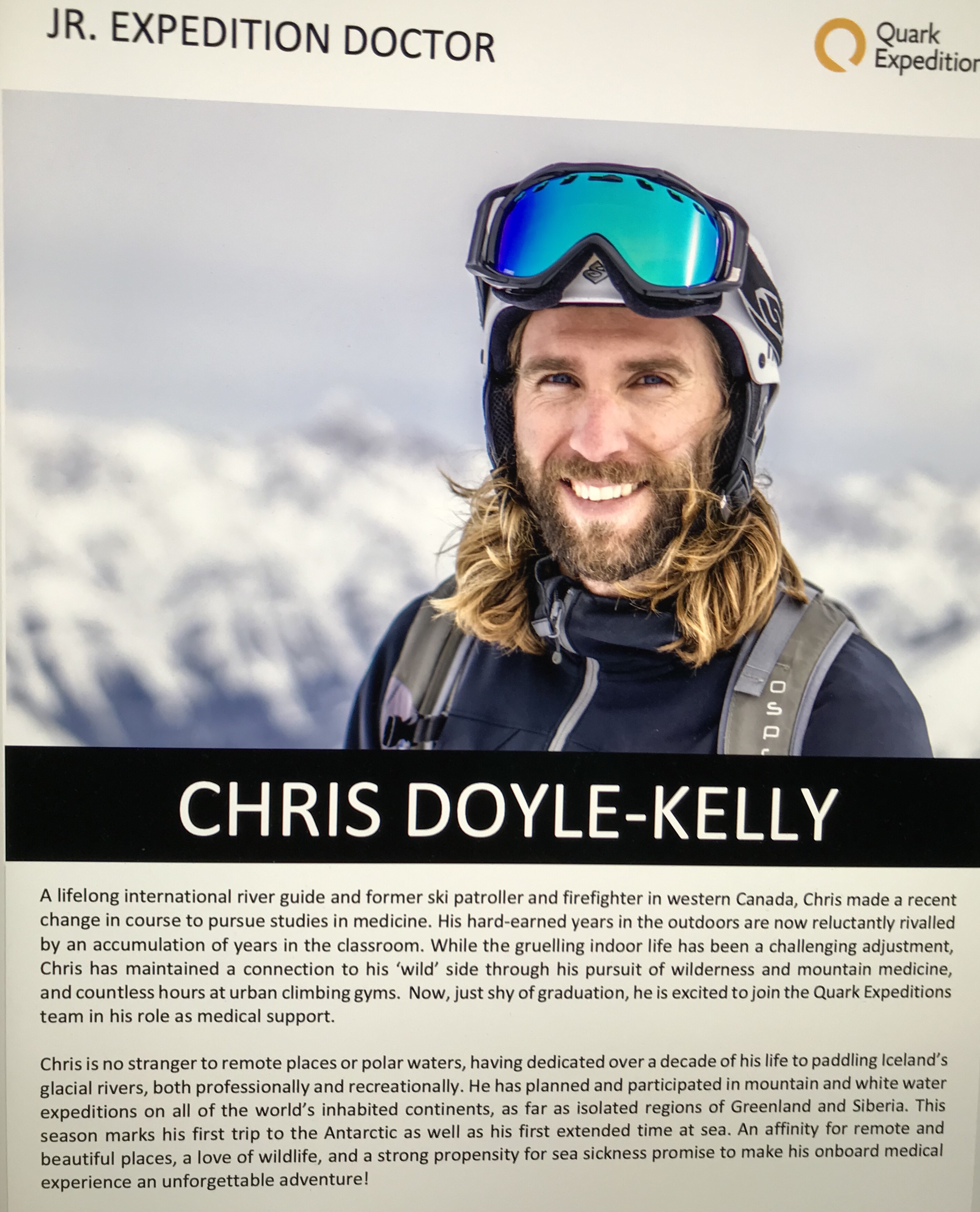
Real or perceived motion. Nausea from the greek naus meaning ship. Affects mostly those that expect to be seasick. Two groups in same seas – those expecting to be sea sick were more sea sick. Look at the horizon. Avoid reading and screen time. Reduce the amount of real movement. Lying down may help. Ginger and wrist bands may work. Medications (risk vs benefits). Symptoms subside 36-72 hours usually. Medications have side effects.

Miranda – citizen science.
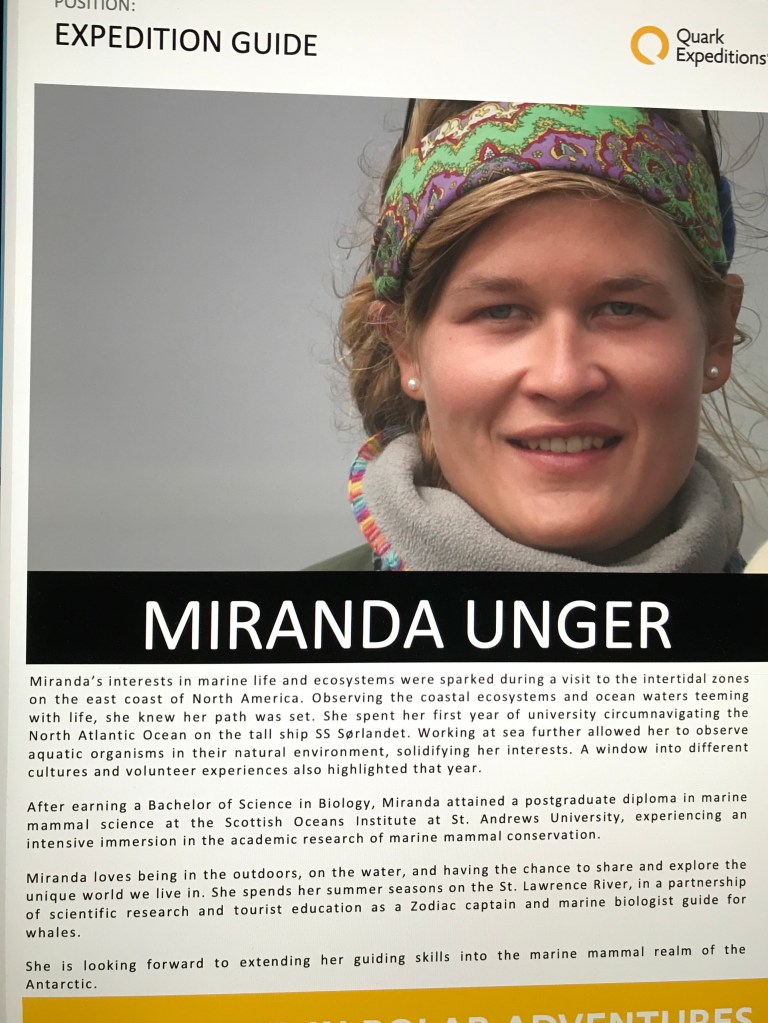
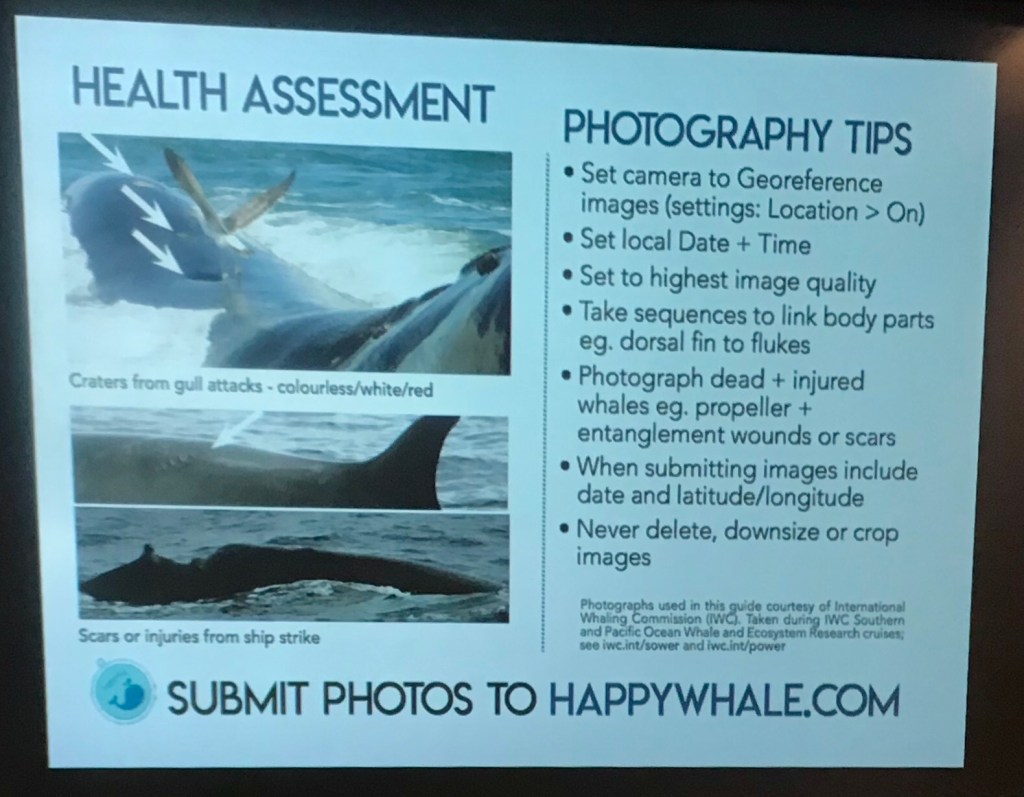
Please send photos to happywhale.com.
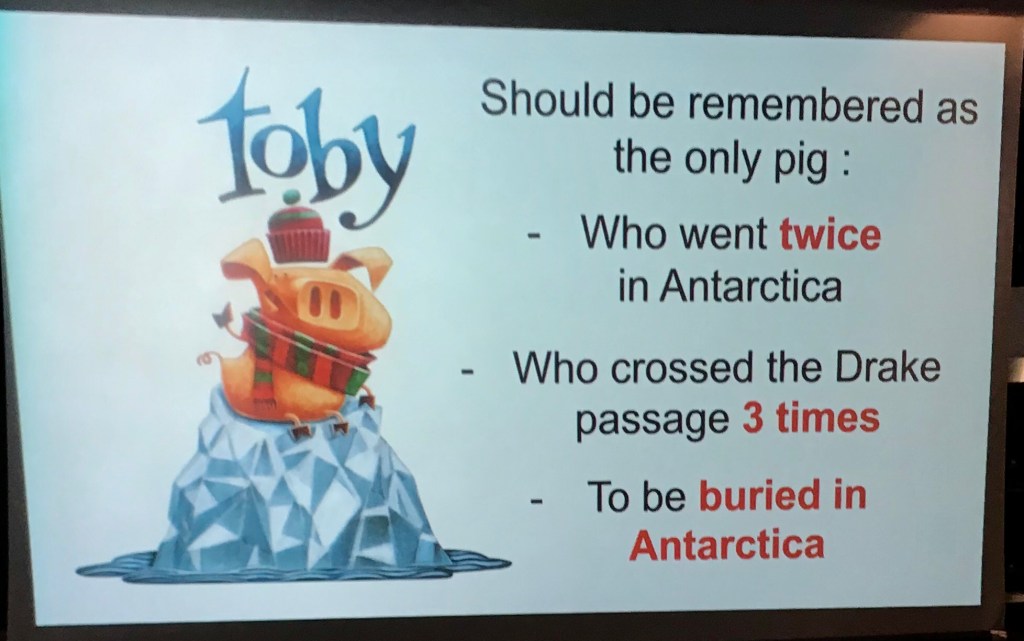
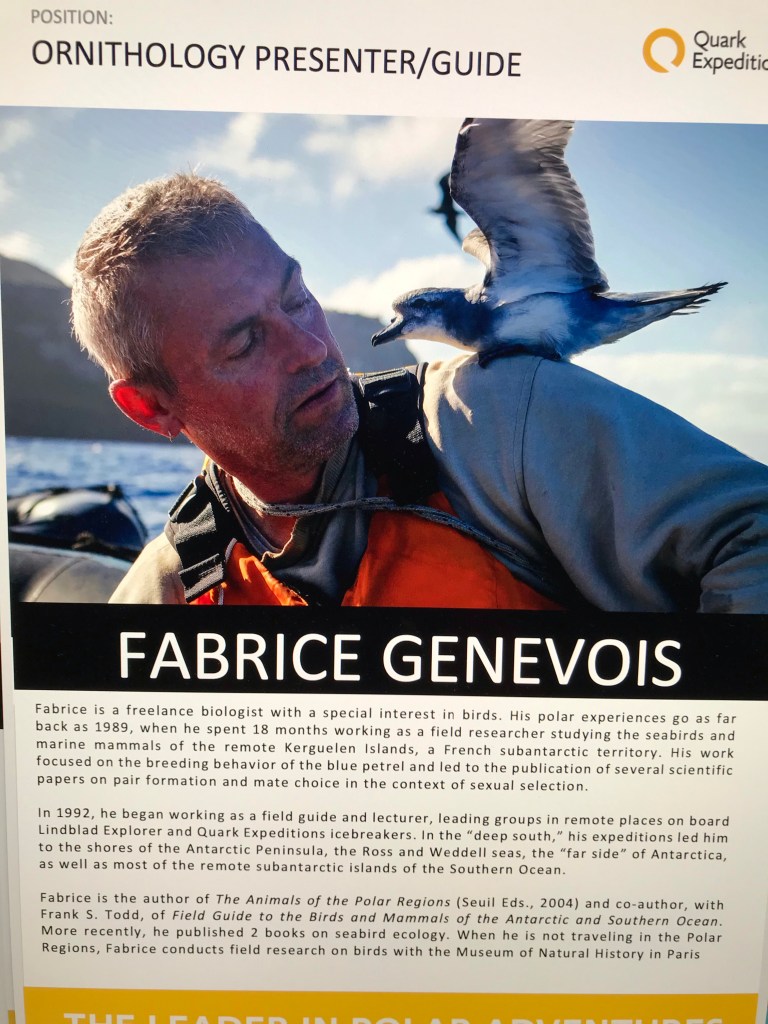
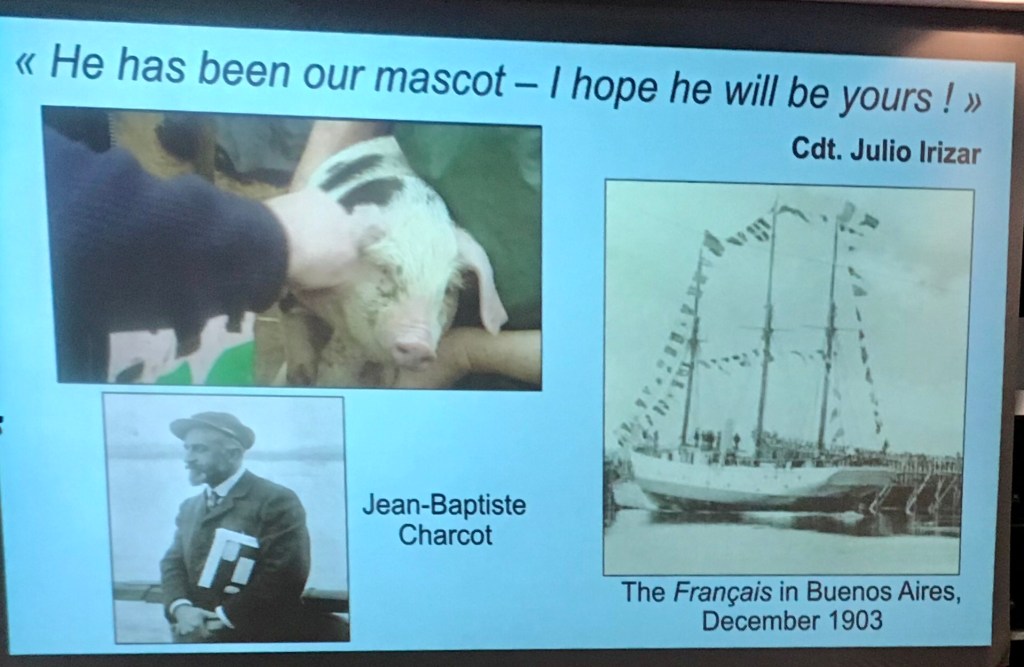
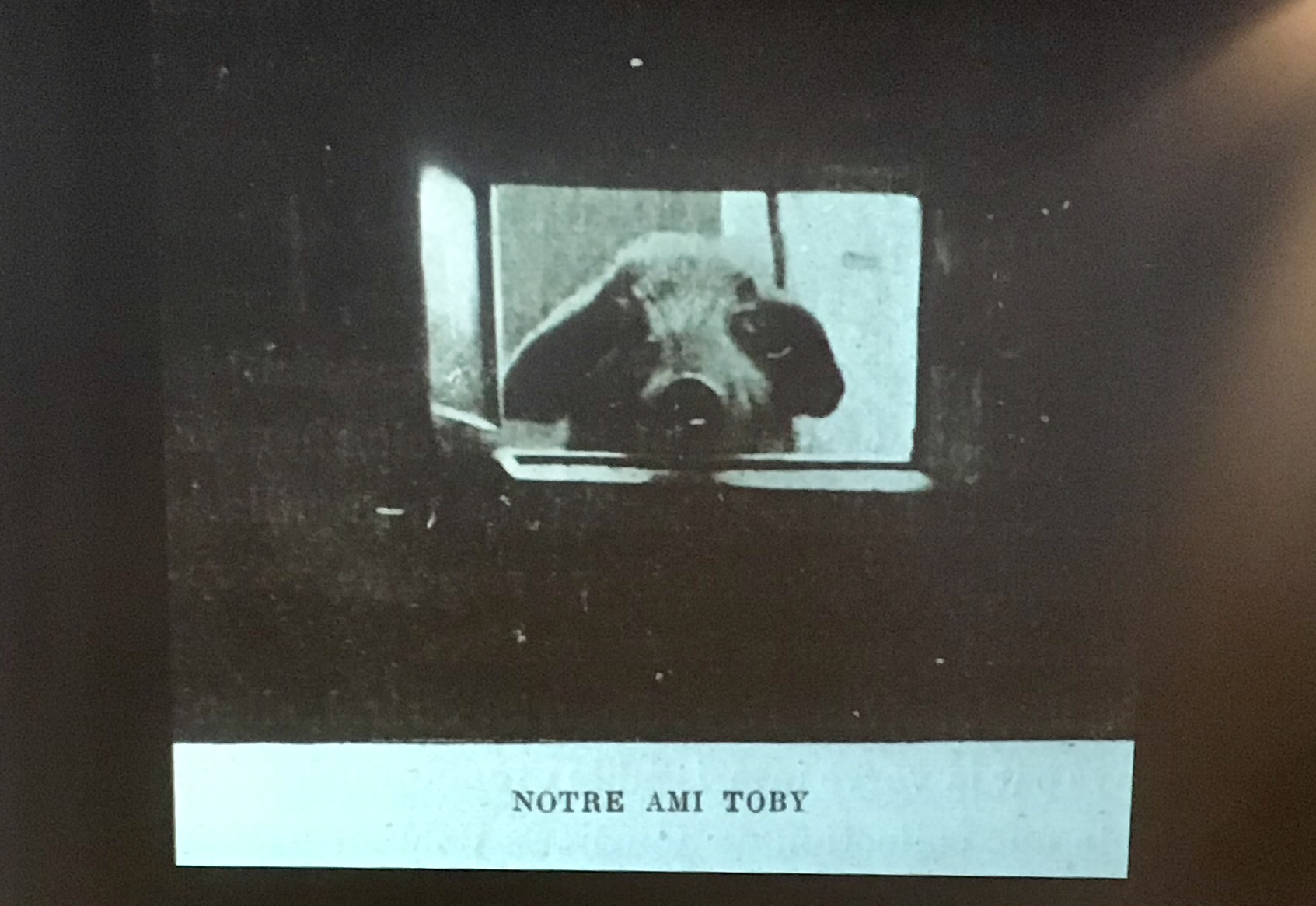
Fabrice – birds. Groups of penguins or cormorants called a raft. A raft seen yesterday, maybe feeding on krill?Today, however, he wanted to tell us about Toby the pig.
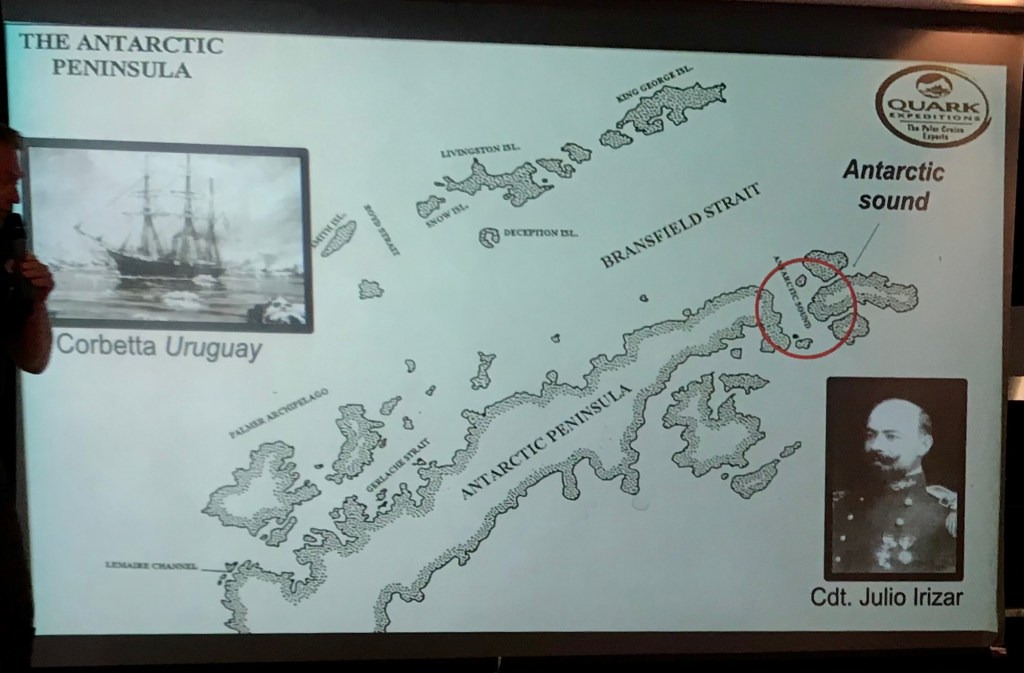
Same ship the “Uruguay” can be seen in Buenos Aires. Toby was on that ship. Toby the only pig who sailed to Antarctica twice. Fabrice helped write a children’s book which we purchased for Ethyn.
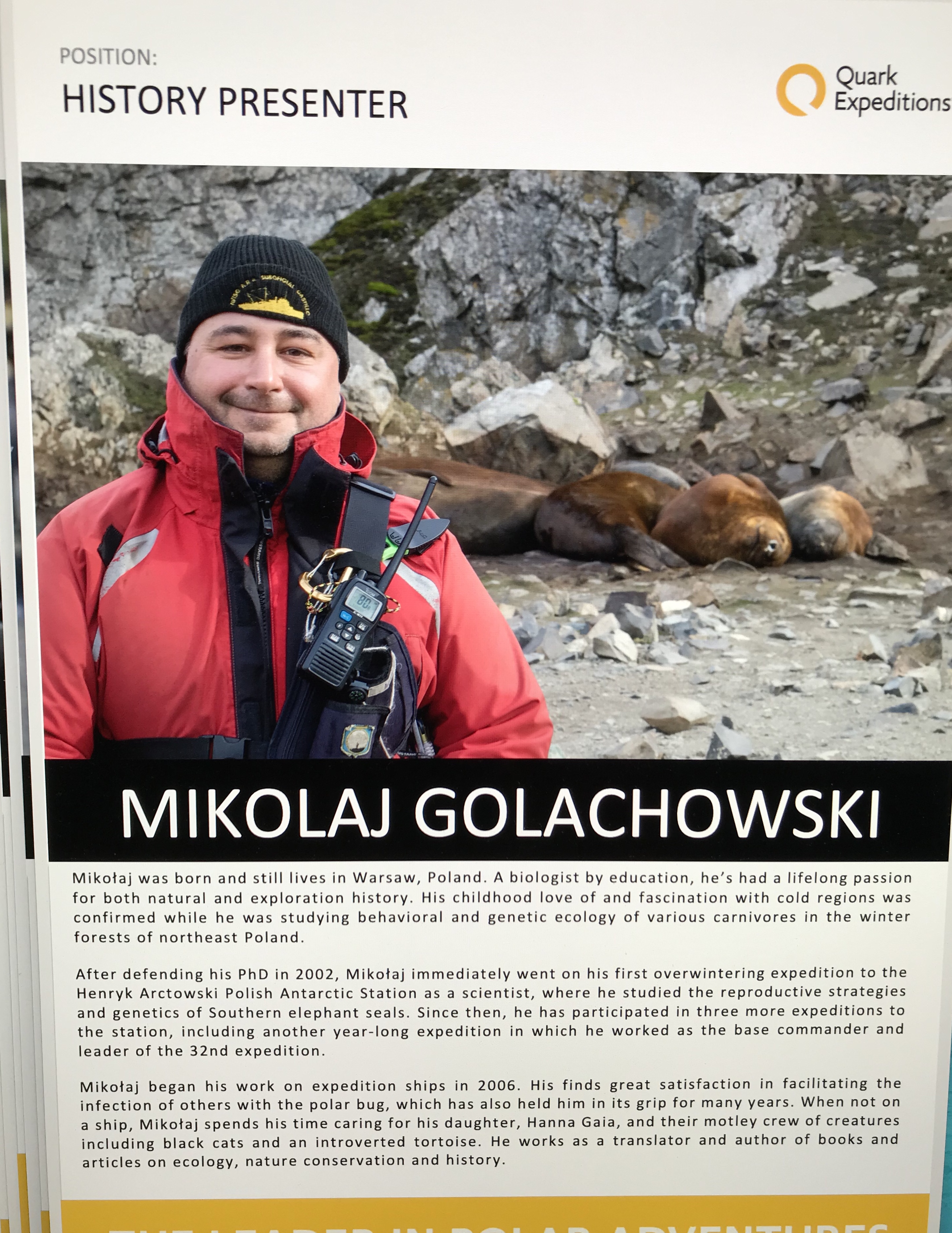
Miko. Historian. Sea slang. A goose with no gravy – someone who suffered an injury but no blood. The bitter end – anchor chain attached to a bit – if you run to the bitter end you may not be safe. To bite the bullet – sailor not behaving he would be flogged and would be given a musket bullet to bite on. To kick the bucket – hanging from the mast suspended on a bucket. Tidy- tides are predictable you can count on them. To have no clue – clew to attach ship to sails – so wander with no clue where you are. To show one’s true colours – war strategies fly the wrong flags and only close enough would they hoist their true colours. Posh – port out starboard home. (Best part of the ship to be on). Cold enough to freeze the balls off the brass monkey – all battle ships had cannons with balls and the stand was known as the brass monkey. Iron of the balls would shrink at a different rate to the brass monkey. Bird guano used as fertiliser- transport by ship and gets wet releases methane and becomes explosive stamped with instructions how to store – “store high in transit”. (Shit). There you go!

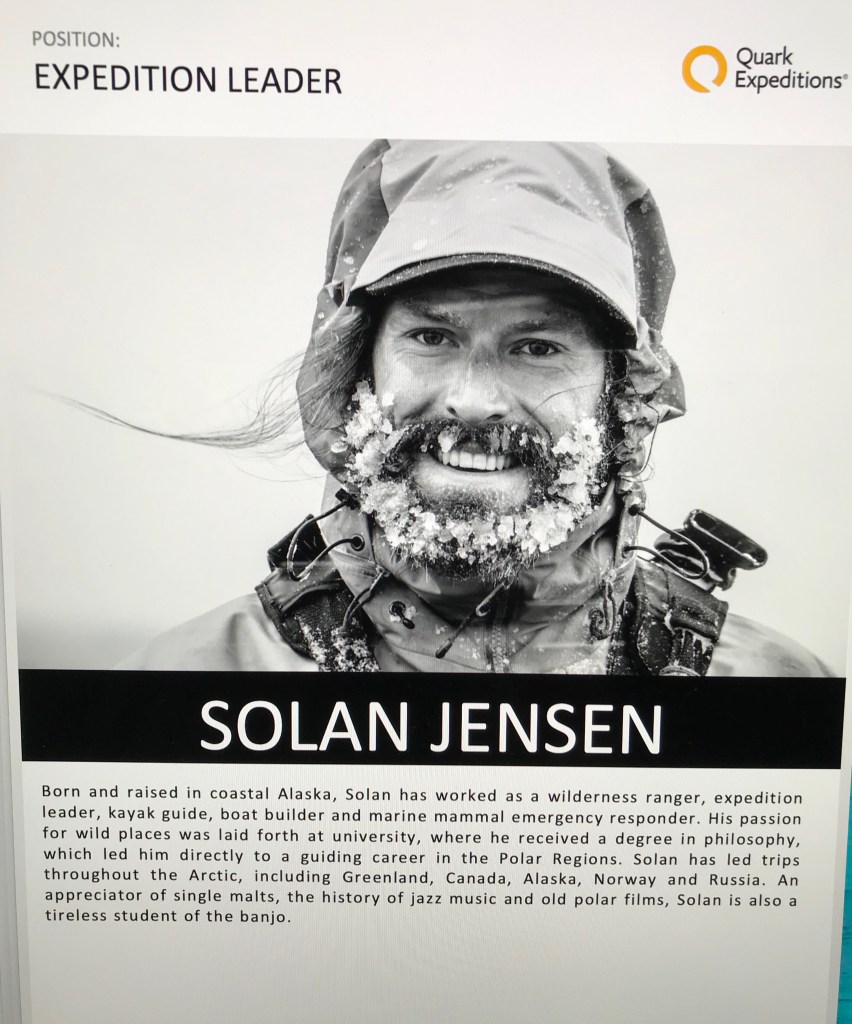
Solan – transit to Deception island pm. Unique as still an active volcano. Can sail into this volcano. (40 knots and metre high waves – so above average of what is normal). Balley head. Eastern side. Minimal swell. Watch the documentary “Life in the Freezer” with David Attenborough about a Chinstrap colony. Hope to have a few hours to explore on land and zodiac. Forecast looks good. Then we will head into the Bransfield strait and then into the Gerlache strait to the peninsula. Entering whale waters. So slowing ship to ensure safety of whales. Max 10 knots. Possibly ice everywhere.

Dinner. Great food again.
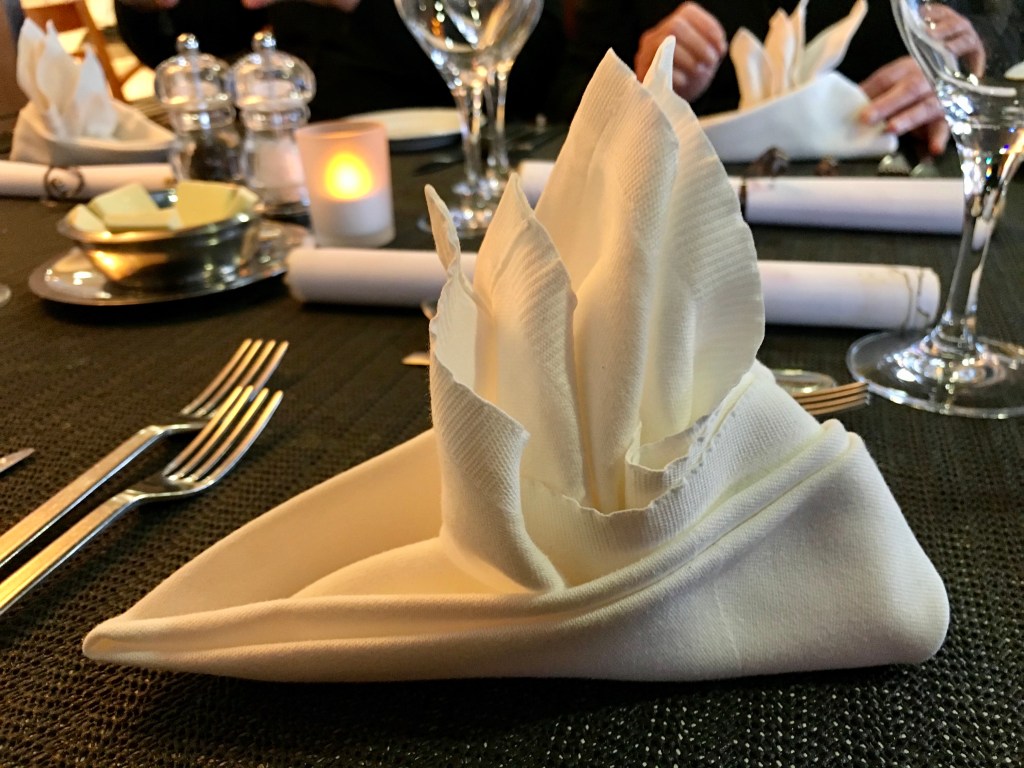
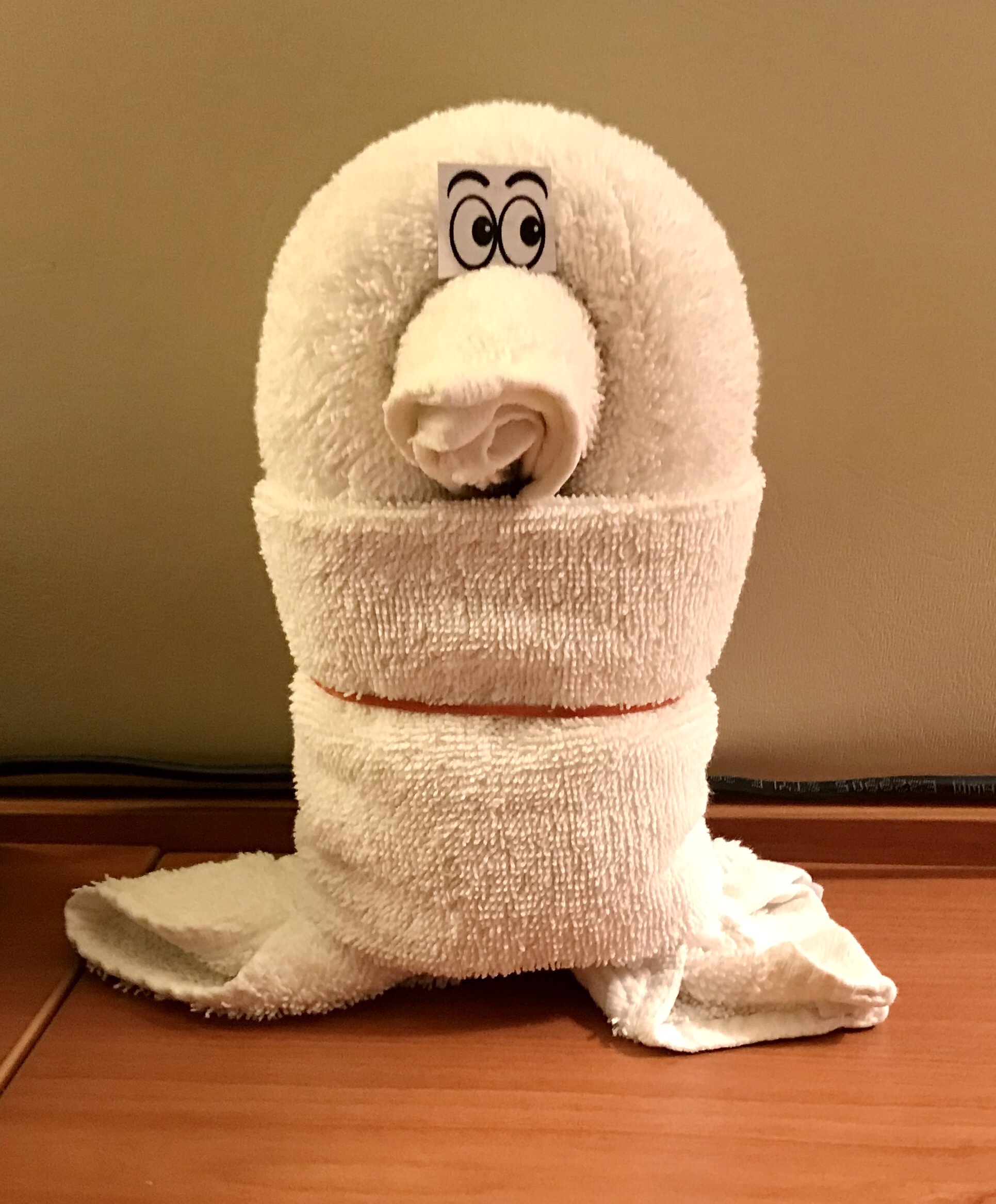
Marlon’s turn to entertain us with tricks. Here’s a video of his serviette friend.

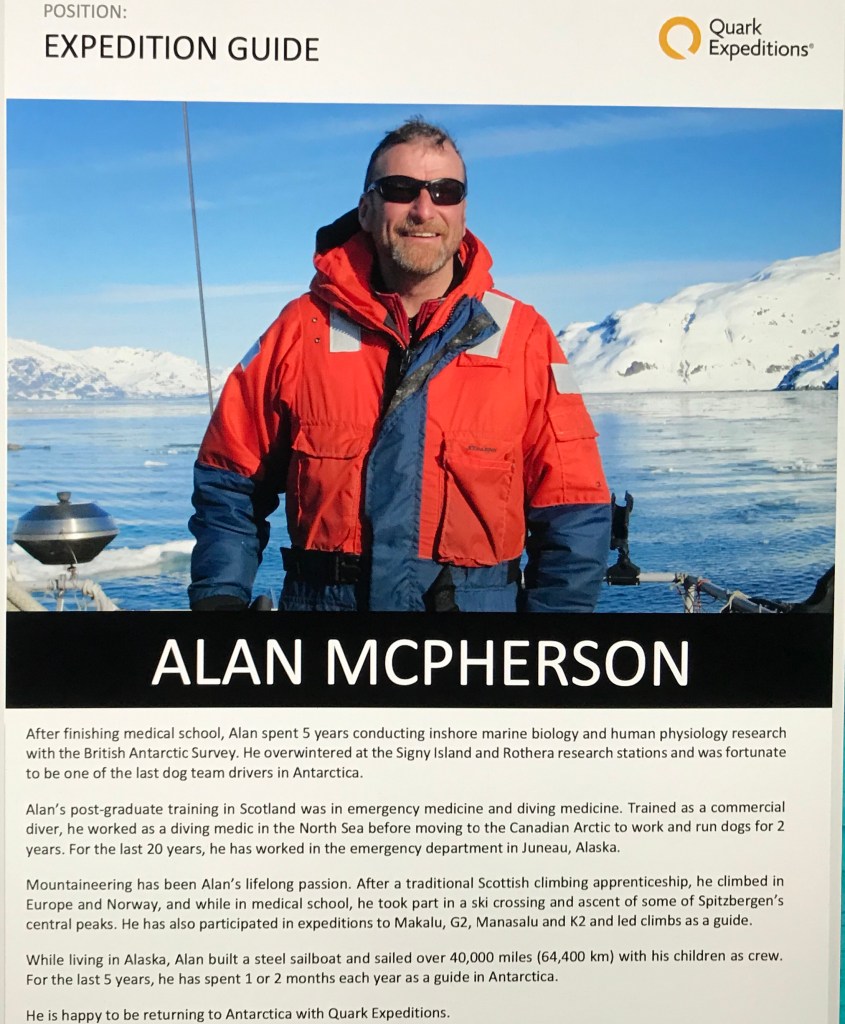
Bar Talk! Join Alan for his talk A Year at Signy Island about his research on inshore marine biology and human physiology on the small island in the South Orkneys. Not feeling great so didn’t go. Light until who knows when as I am not well so not staying up. Oh dear – what we’ve avoided for two weeks now seems to have me in its grip just as we head to continental Antarctica. 😢
New Years Day 2020

Awoke two minutes before the 2.30am alarm. Looked at the bow camera. Bleak and snowing. My New Years resolution is to be kinder – including to myself and Garrie, so I headed back to bed. Garrie was clearly excited by seeing falling snow so he dressed and headed out. I couldn’t go back to sleep until he returned and as time moved on I wondered if I was starting 2020 as a widow. Thankfully he returned saying “whatever you were thinking of wearing tomorrow, double it.” Garrie’s resolution is to be more positive. Working well so far…

So at this point I should admit that I had always heard of the Orkneys and shetlands on British weather forecasts as a kid so I thought they were close to the UK – which some of them are!

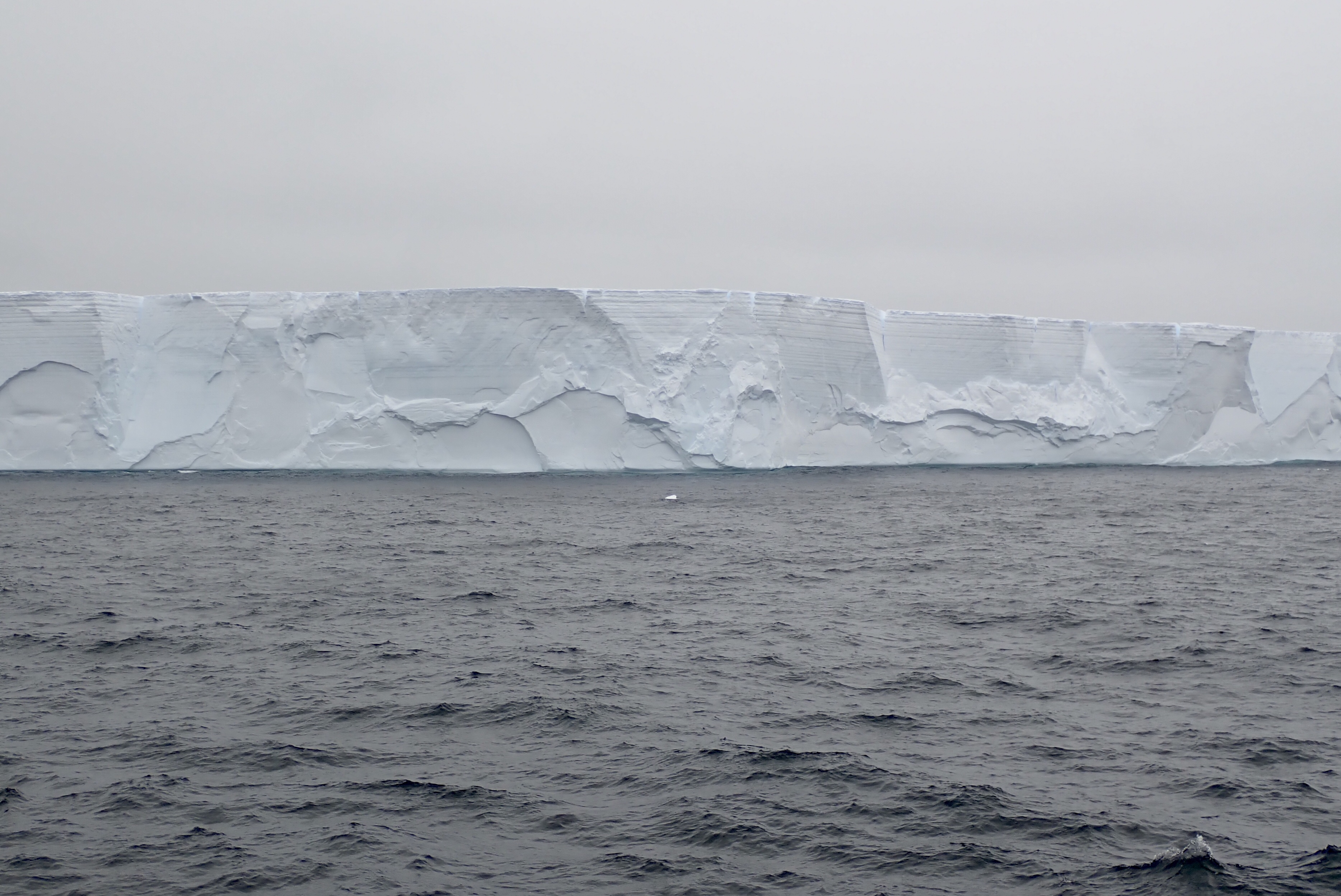
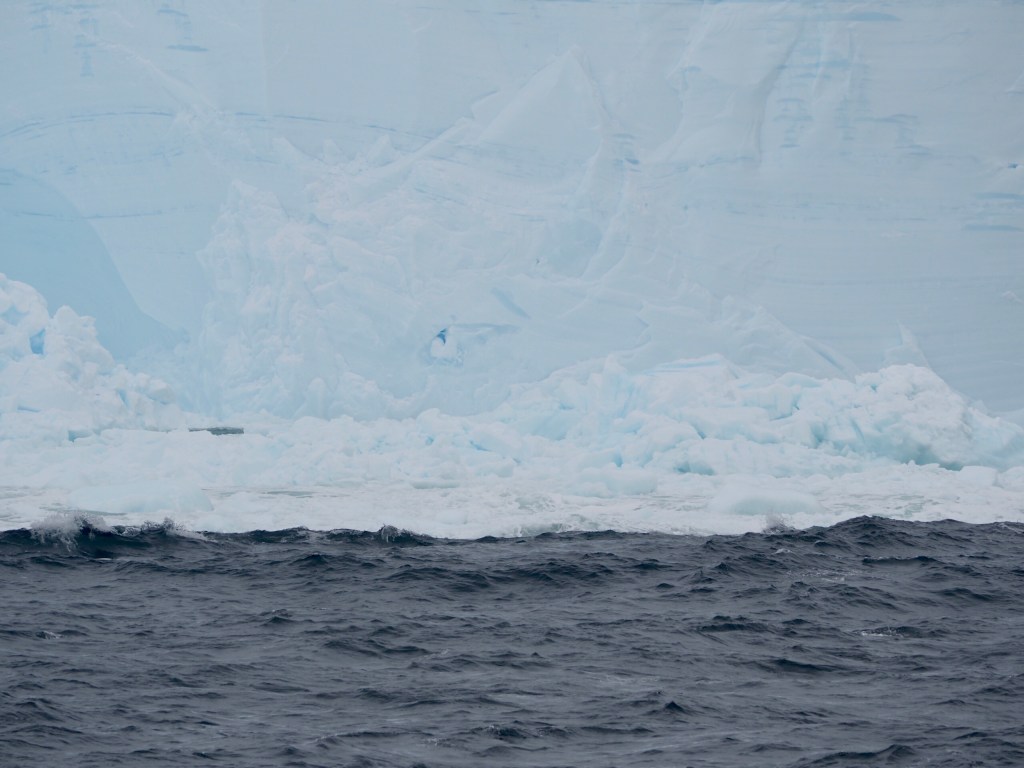
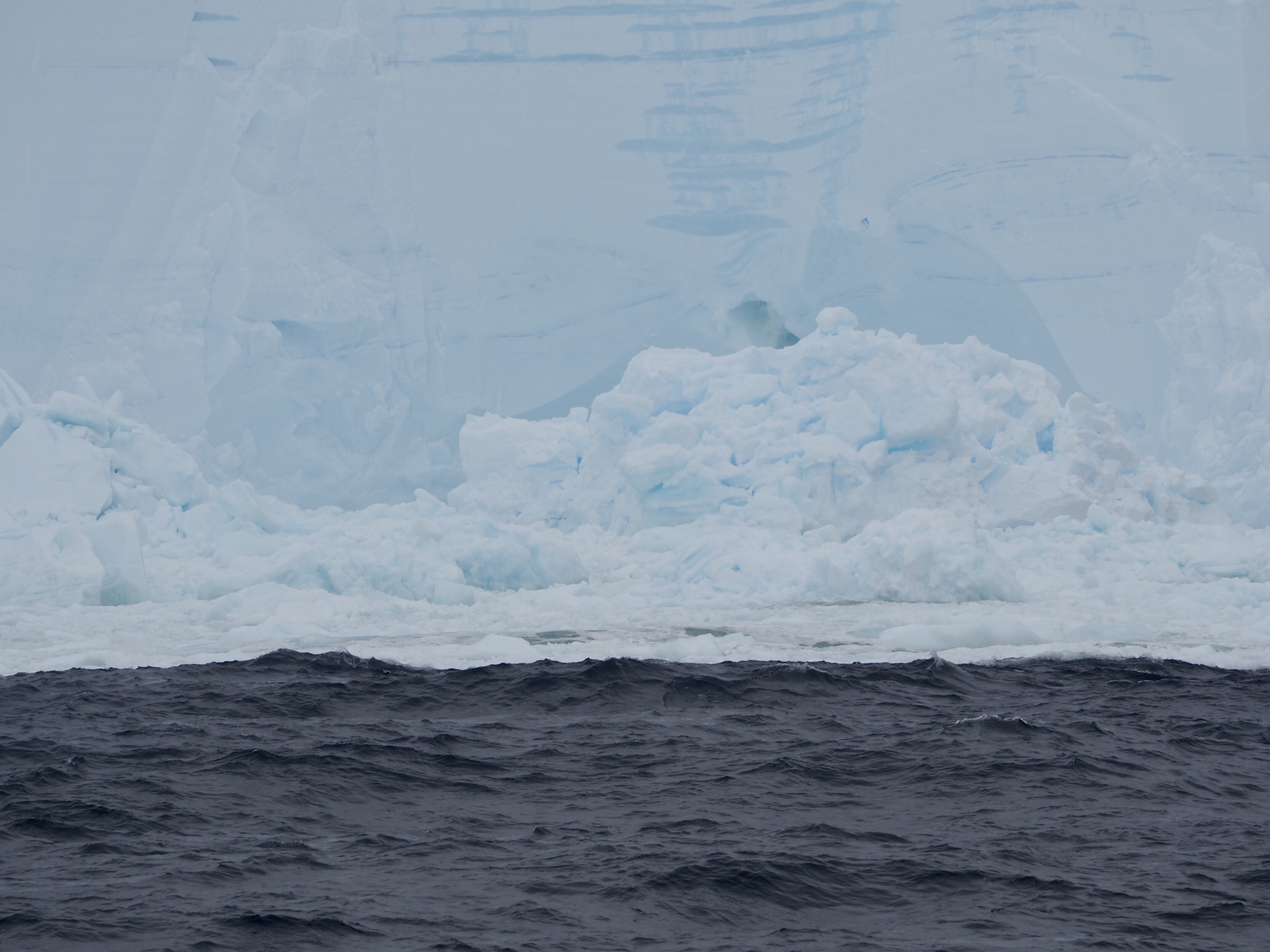
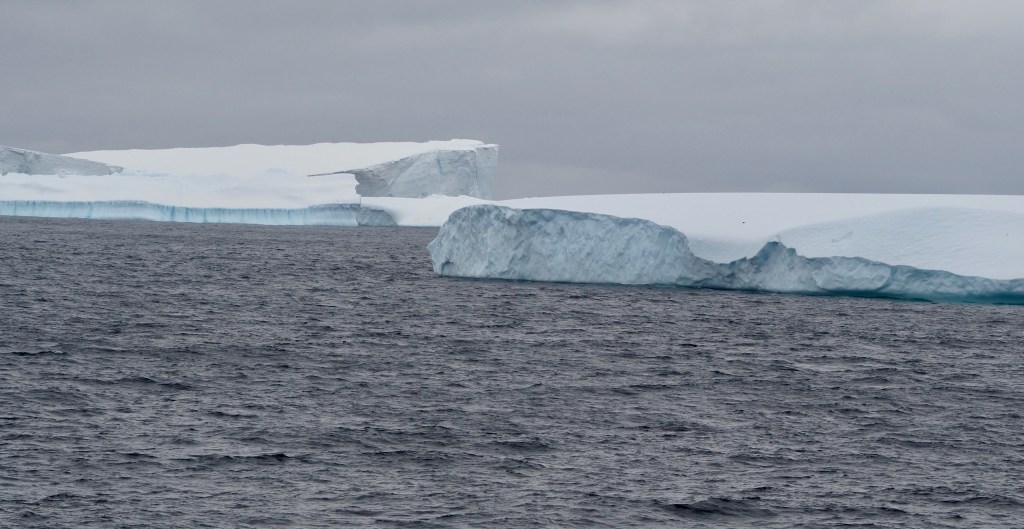
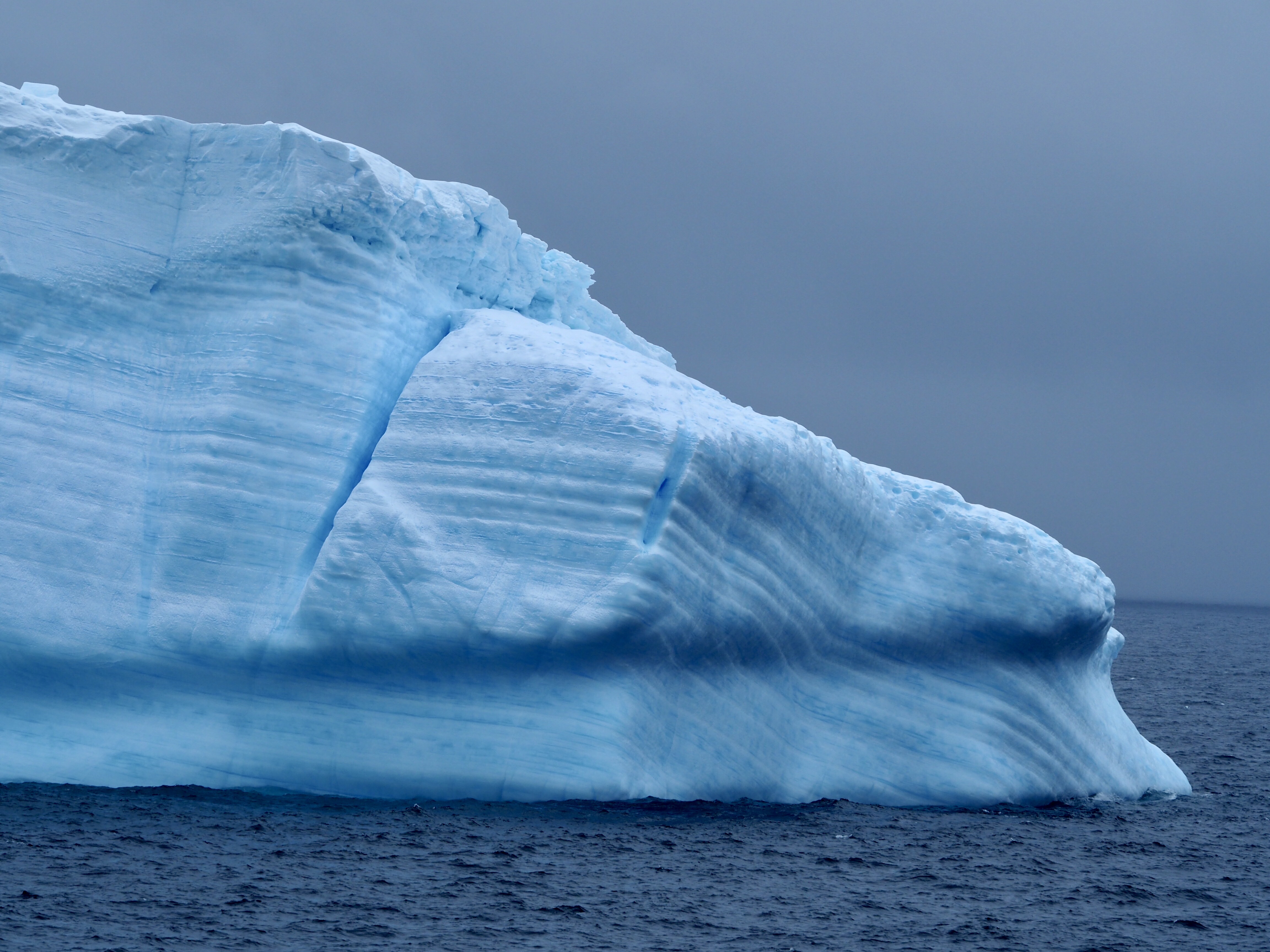
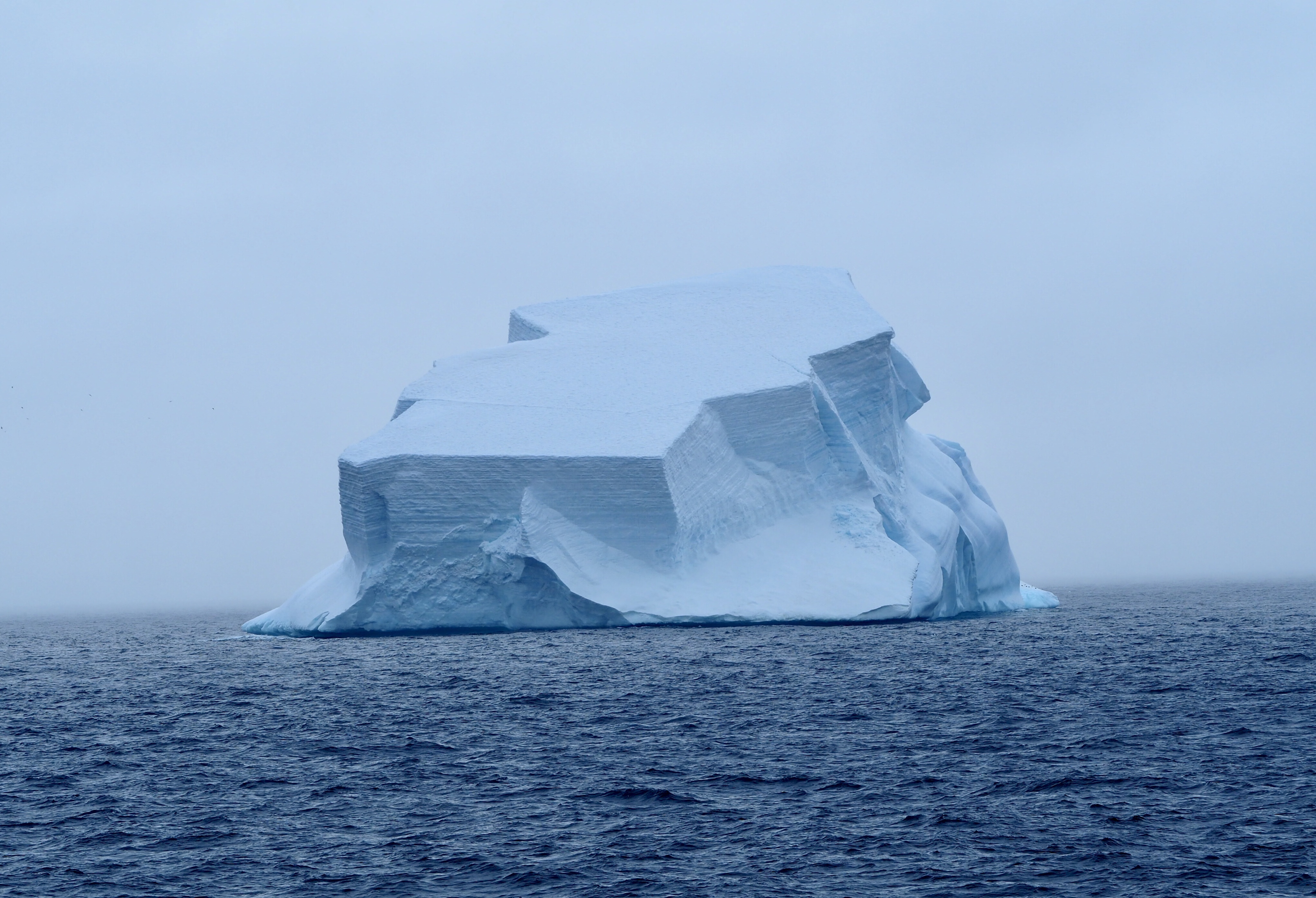
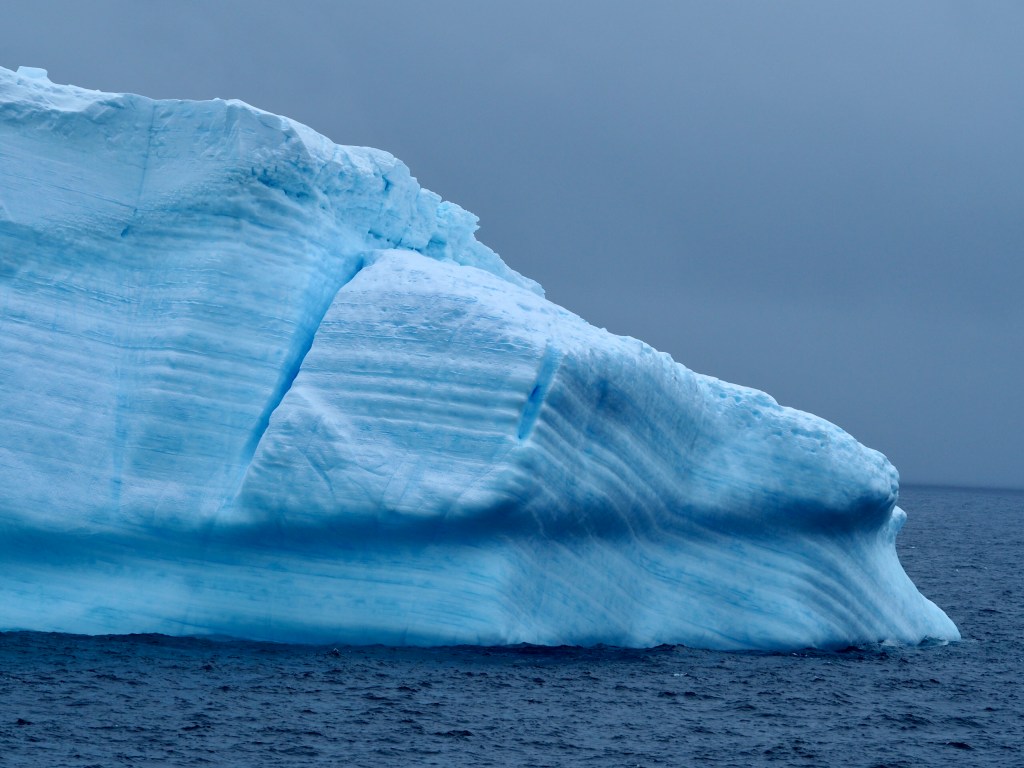
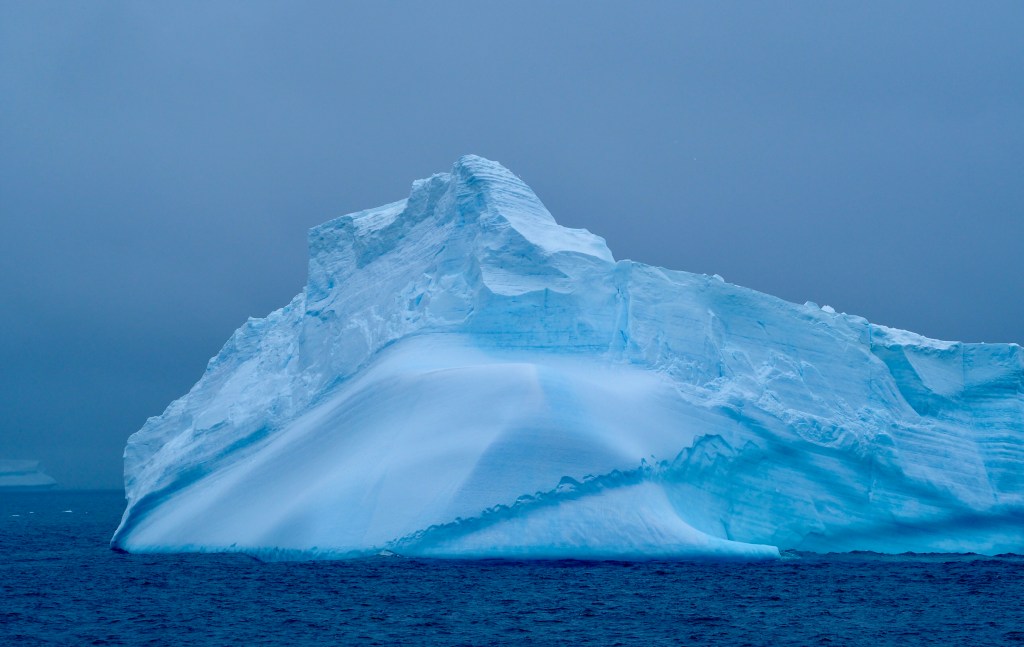
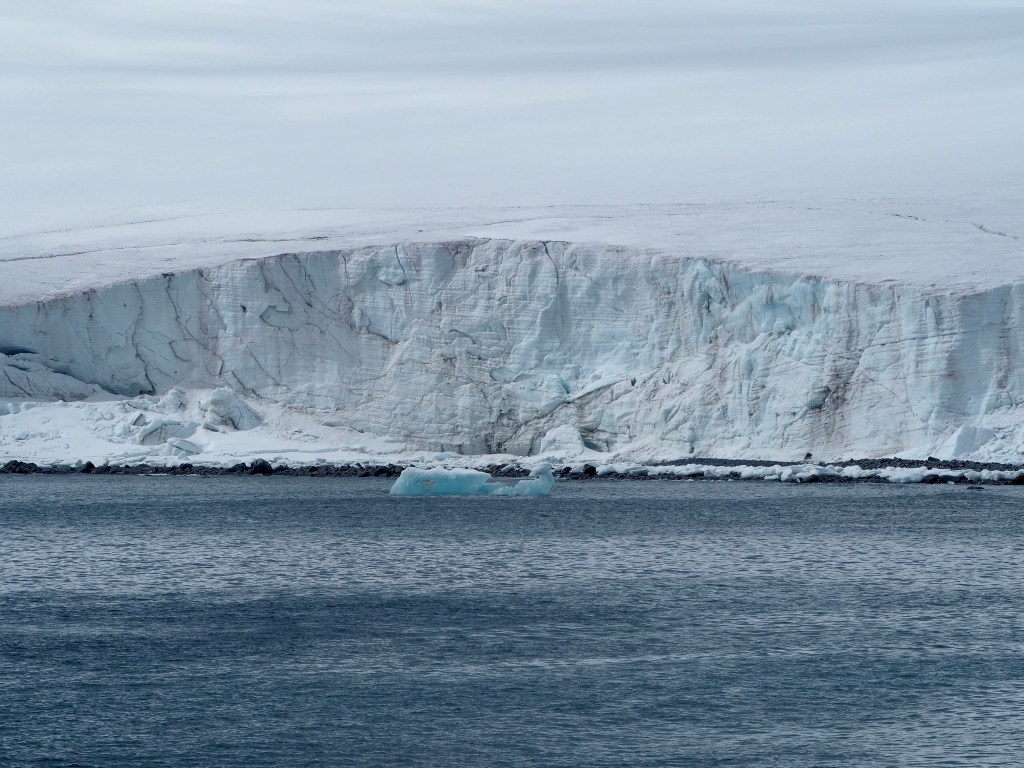
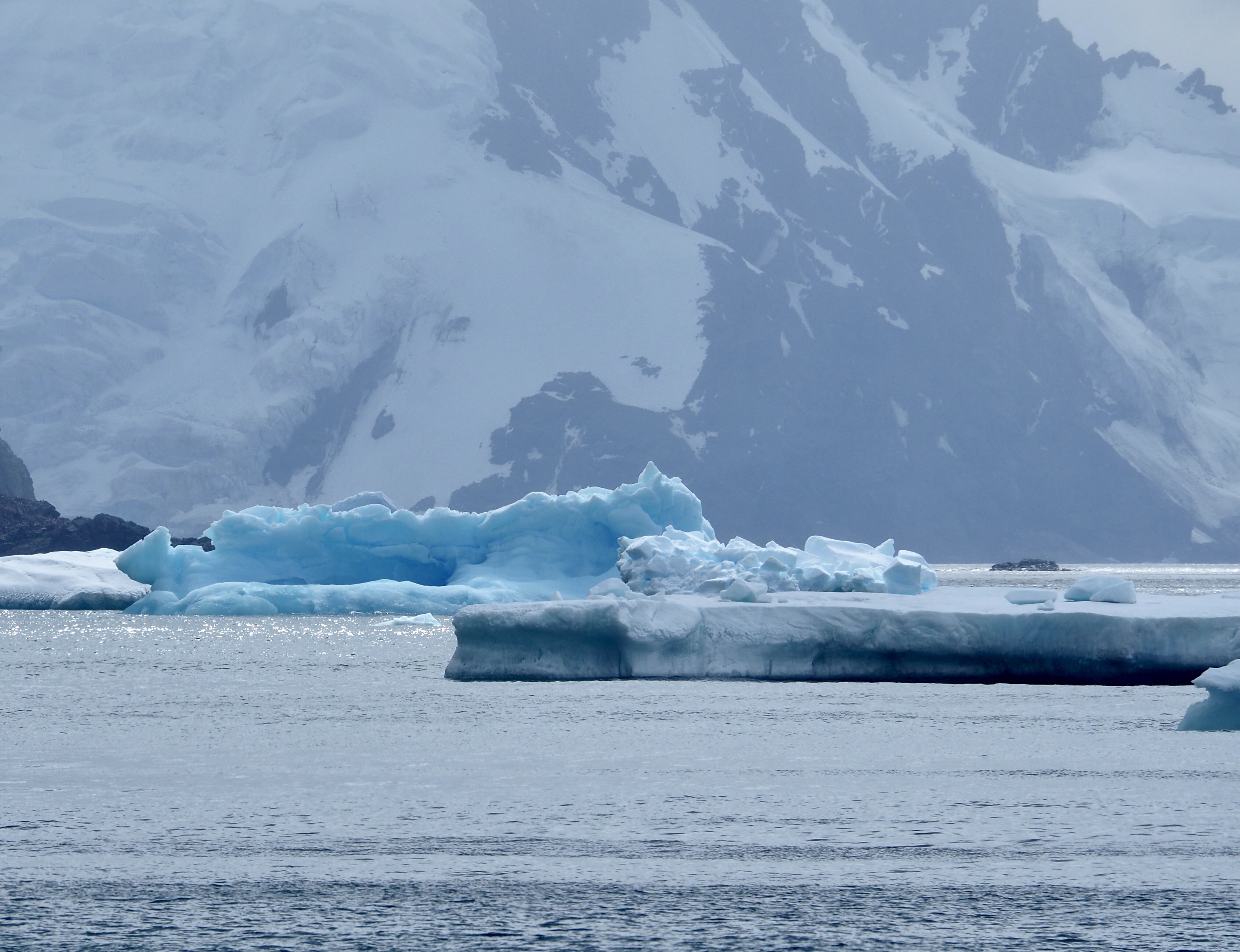
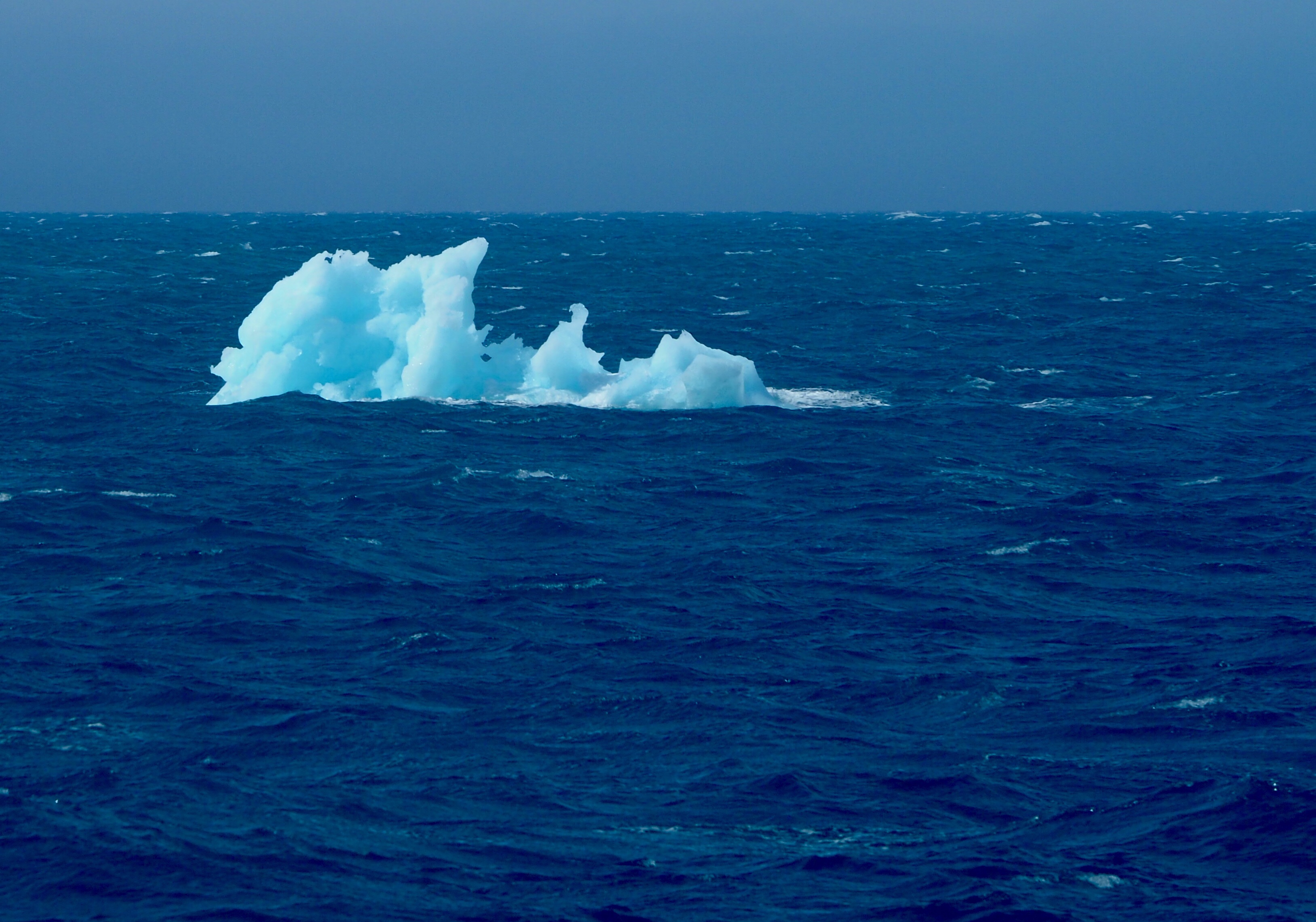
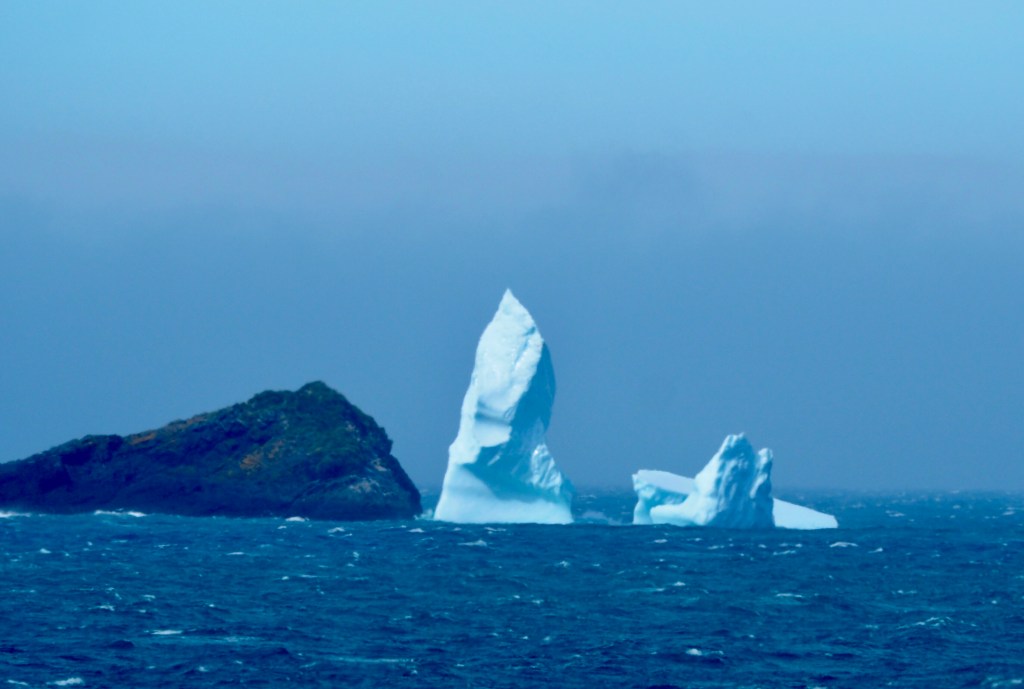
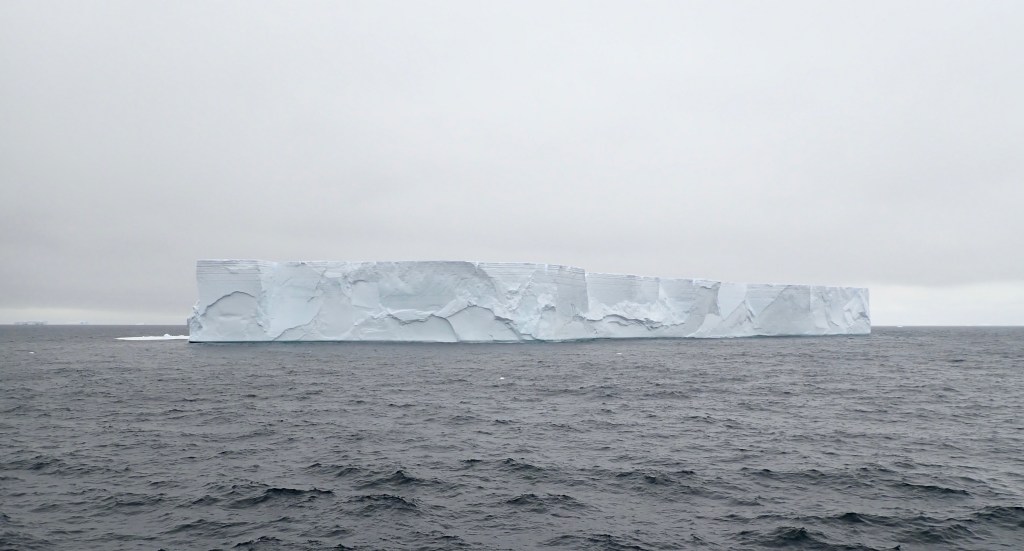
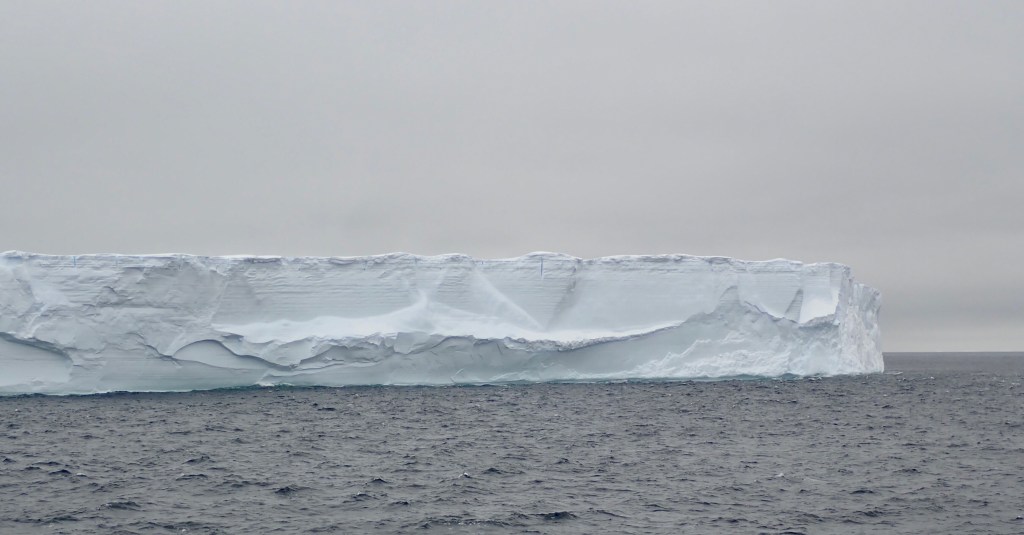
So this morning looked grey and miserable and then suddenly, just at the end of Breakfast, huge ice bergs (well huge from what we have seen so far) appeared.

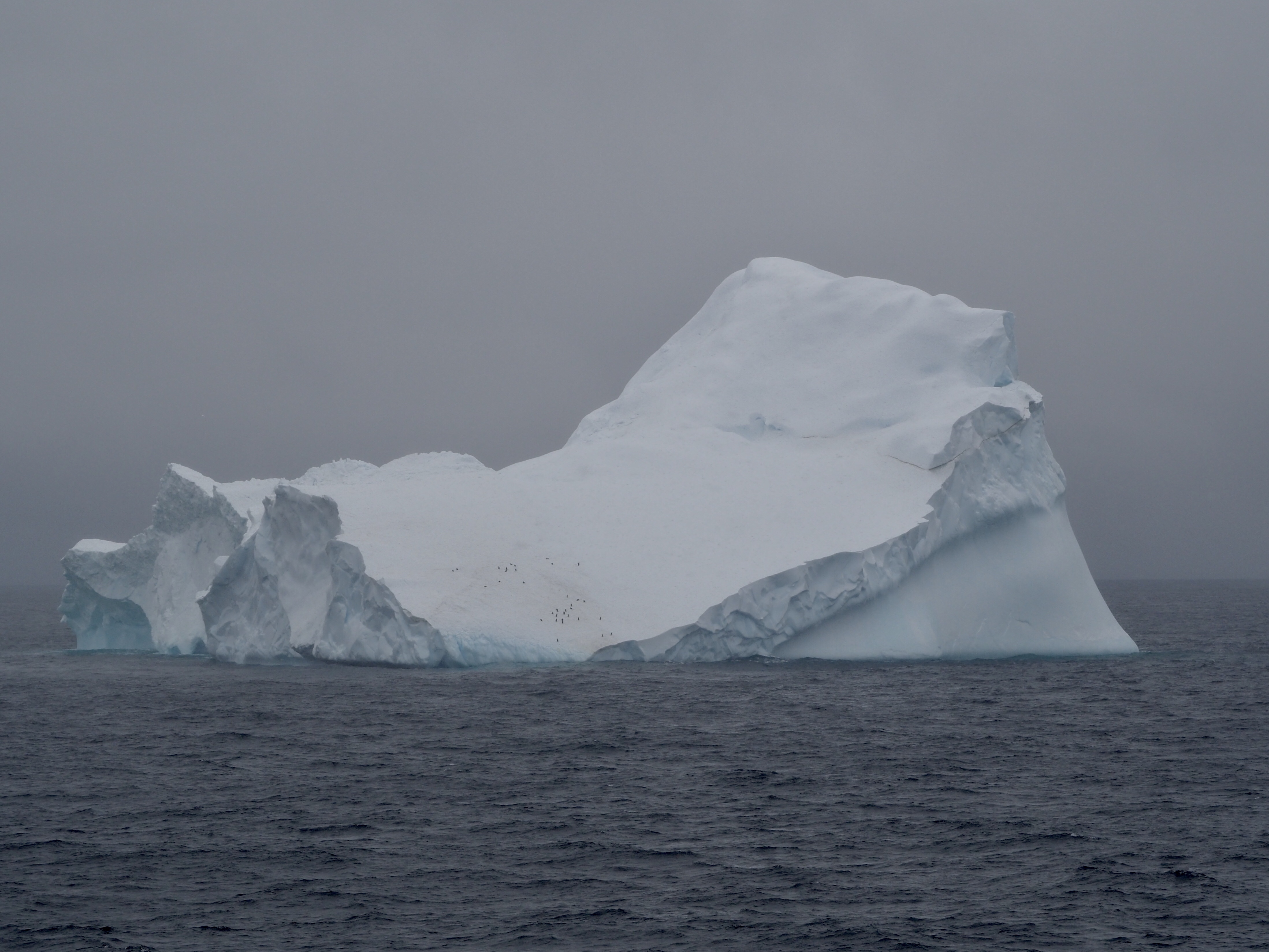
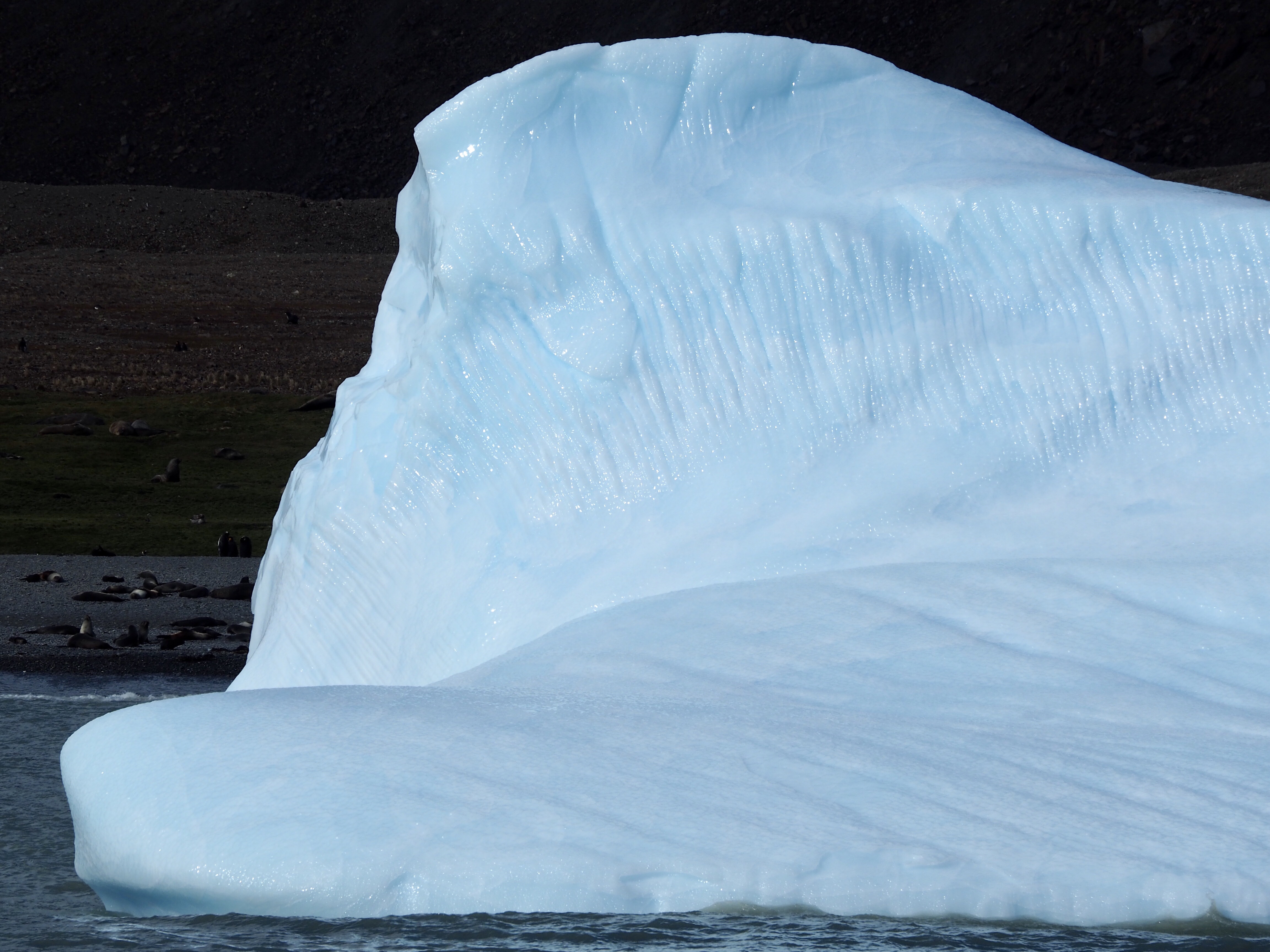
So this one had a major fall of ice on one side.

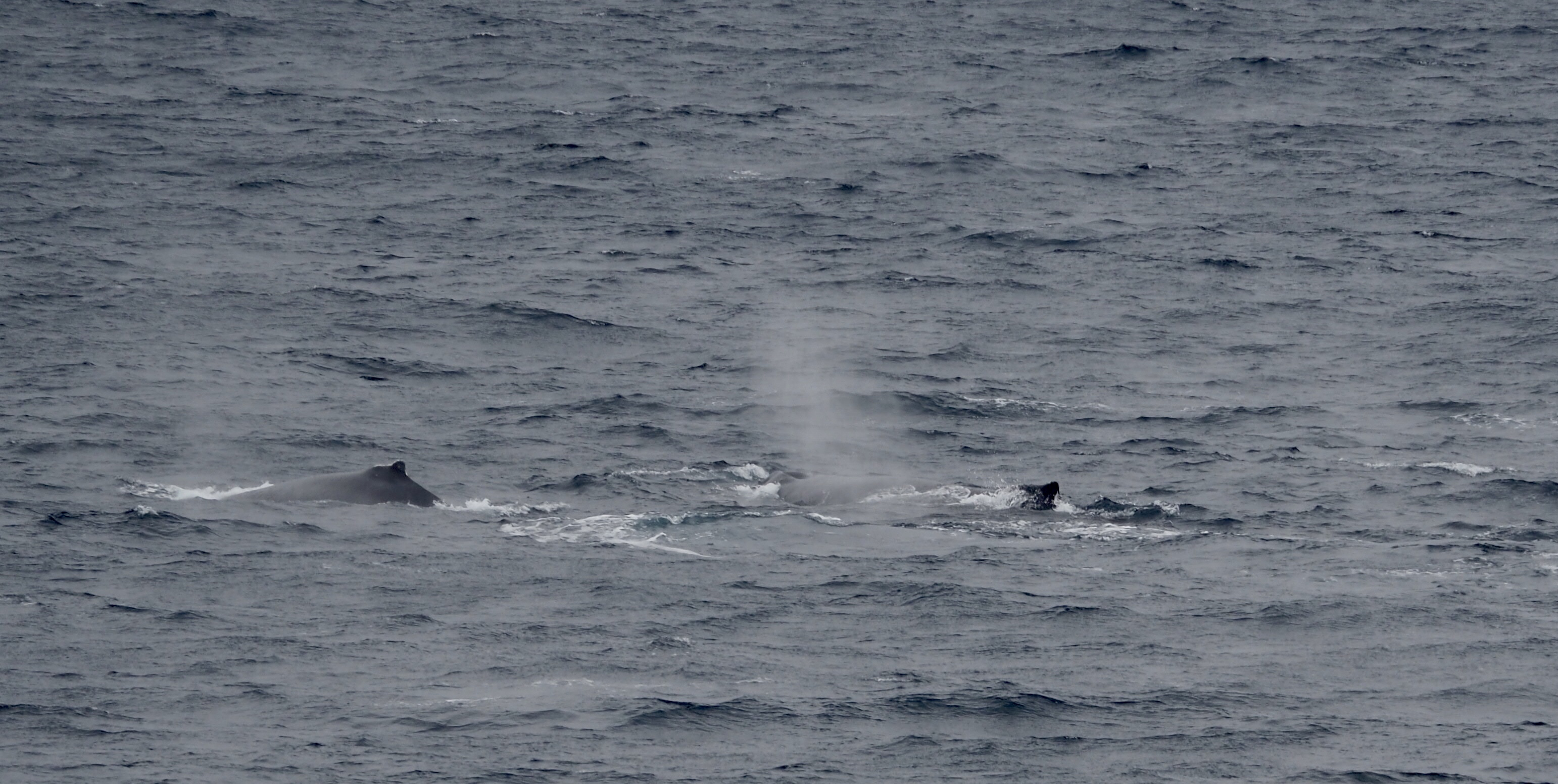
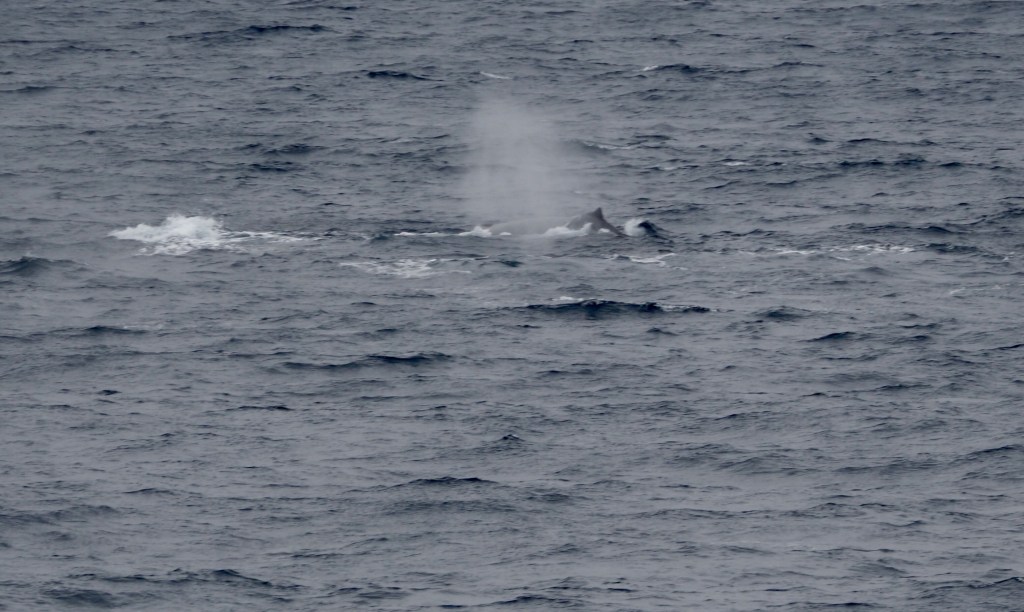
Then a pod of hump whales.

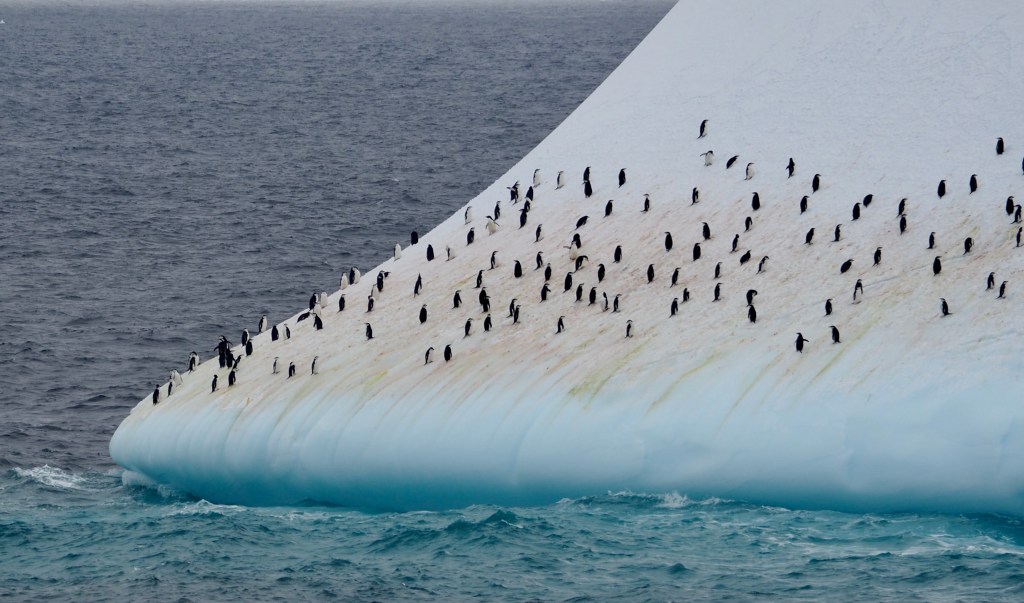
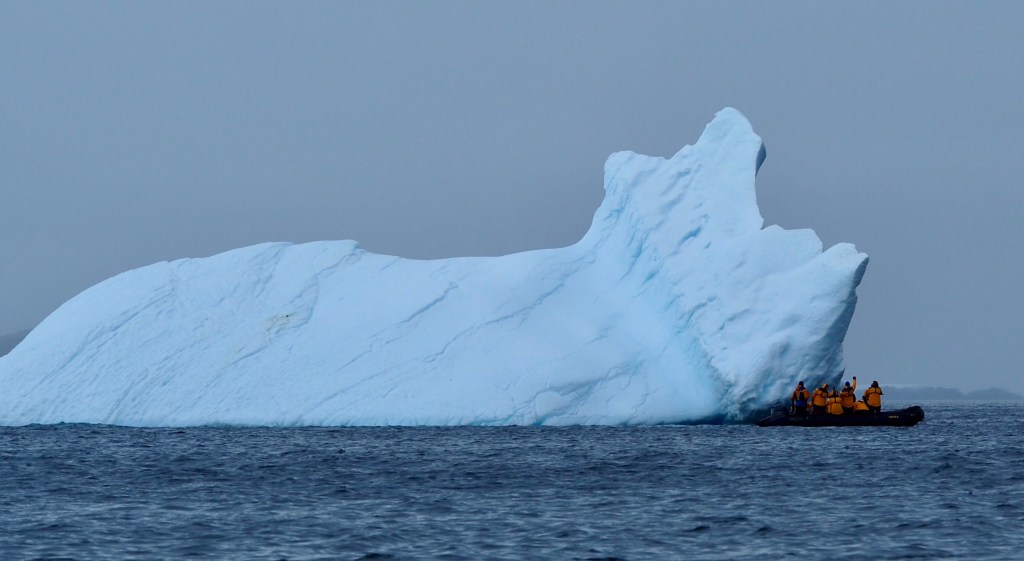
Then icebergs with passengers.

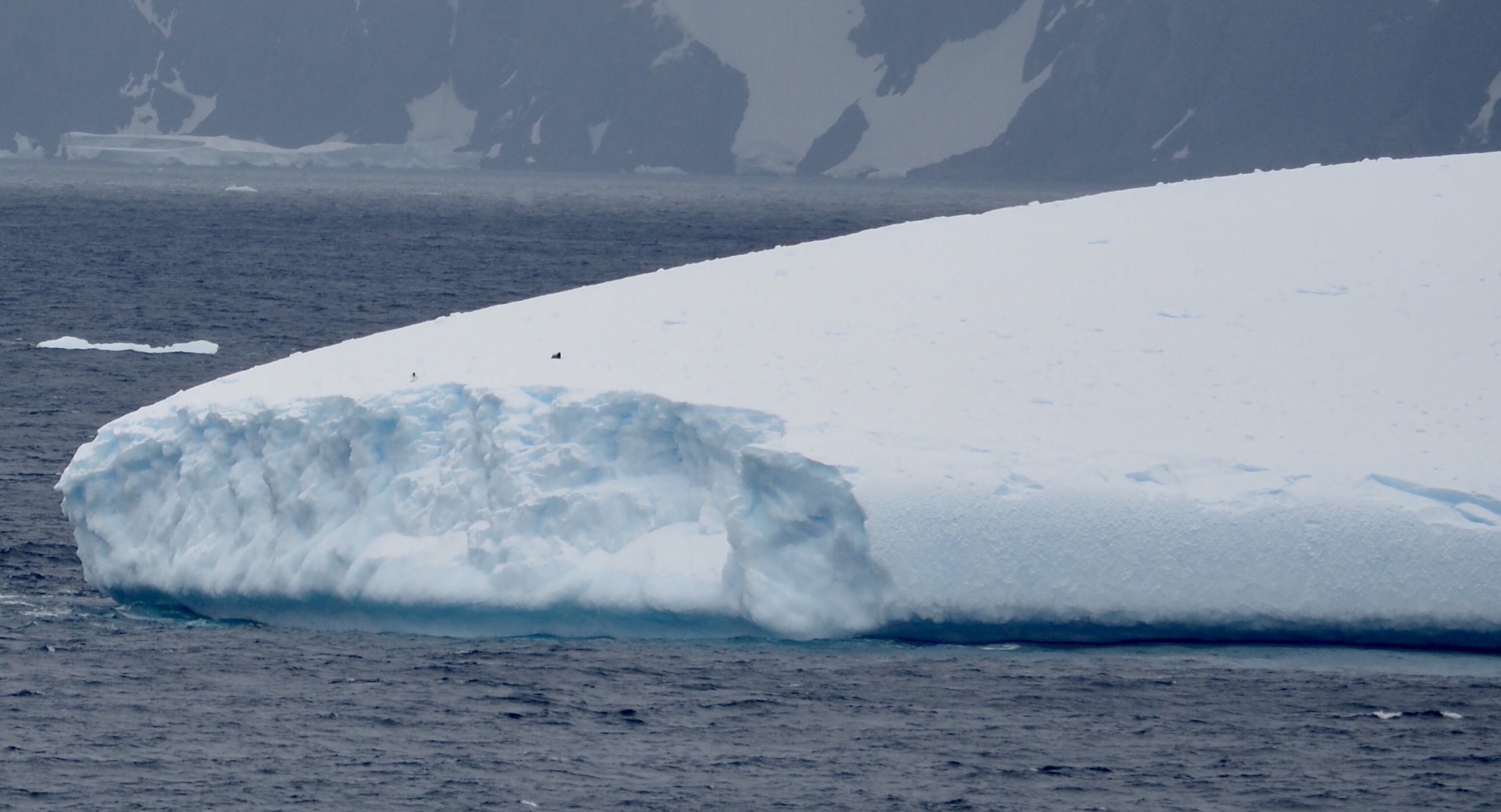
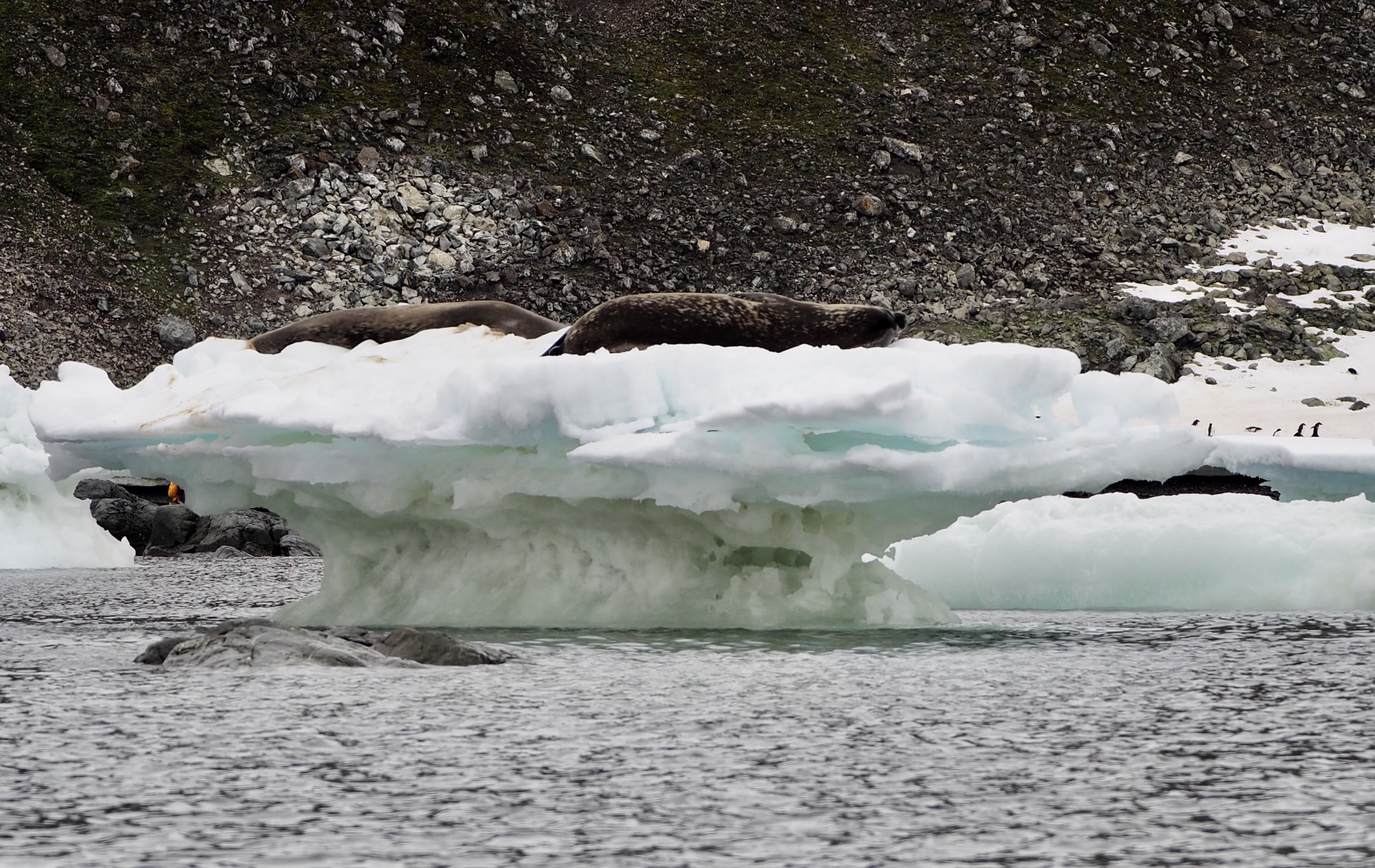
Can you see the seal and the penguin on this next berg?

There really is something new everyday on this trip and the fact this was meant to be a full sea day and we are stopping in at the rarely visited South Orkneys and an Antarctic research station is just such a bonus. Storms can be a pain but they can also bring bonuses.

Time for the first lecture of the day.

Johann our Marine Biologist again.

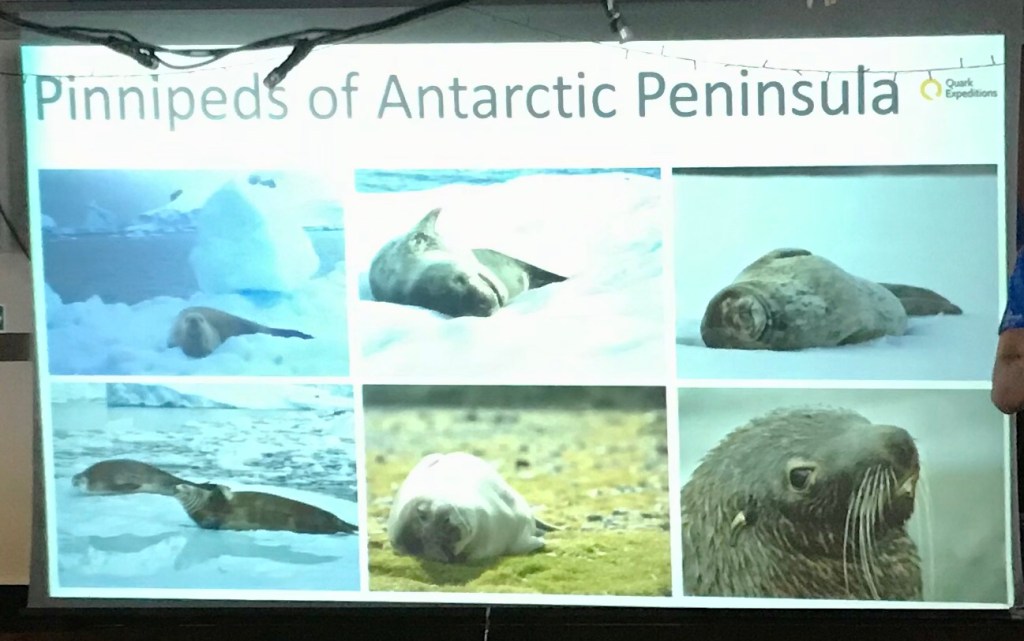
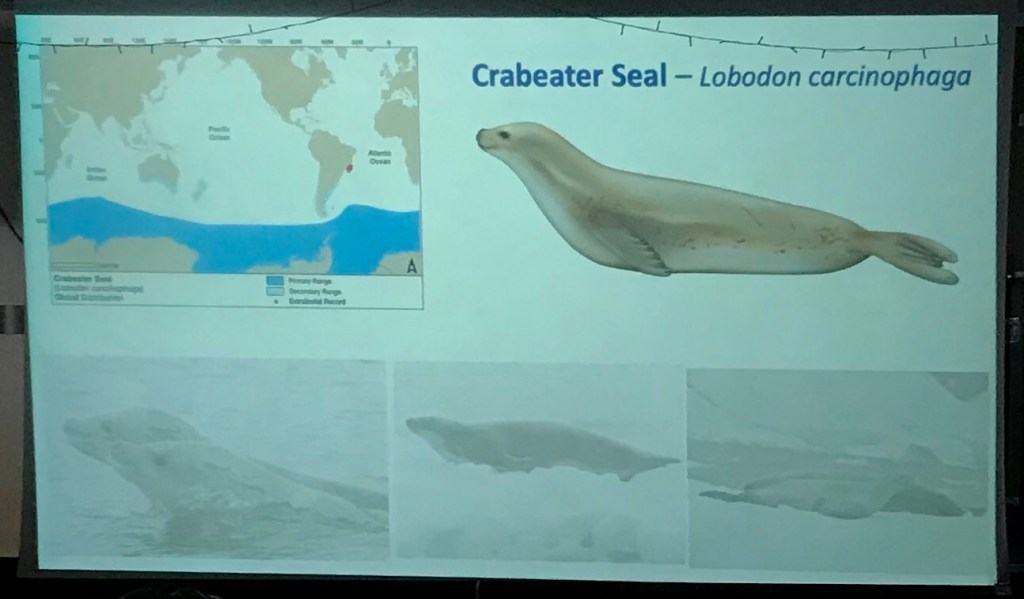
Crab eaters most populous seal in the world. (and yet we didn’t see one 😢). Pinnipeds – flipper. Closely related to bears.

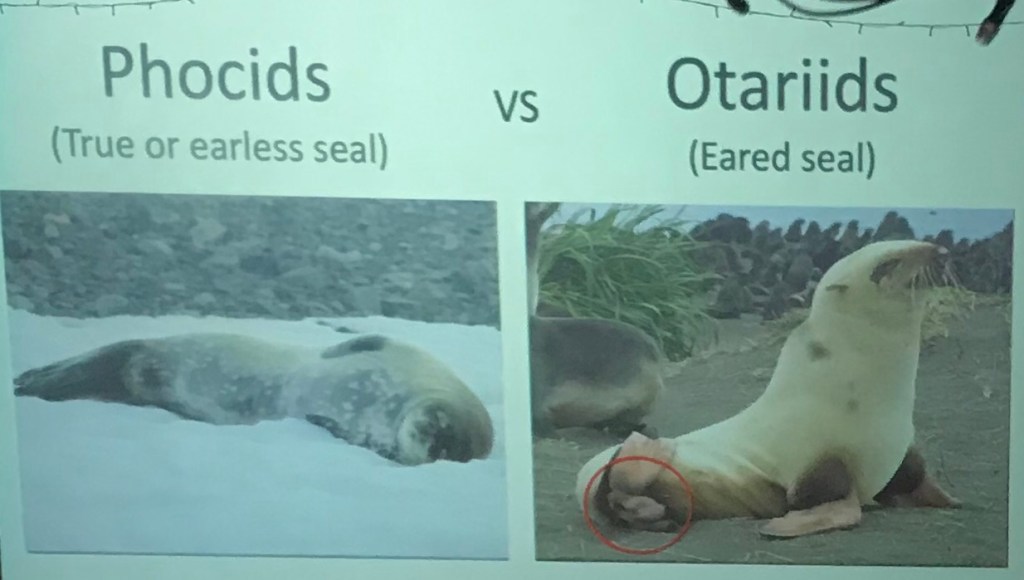
Eared seals are sea lion ie fur seal. Much more fur. Two layers at least. Can run.

External testicles (marked on the pic) as don’t dive as deeply and generally not in as cold a region. 4 nipples. Sometimes nurse other’s pups. Live in colonies.

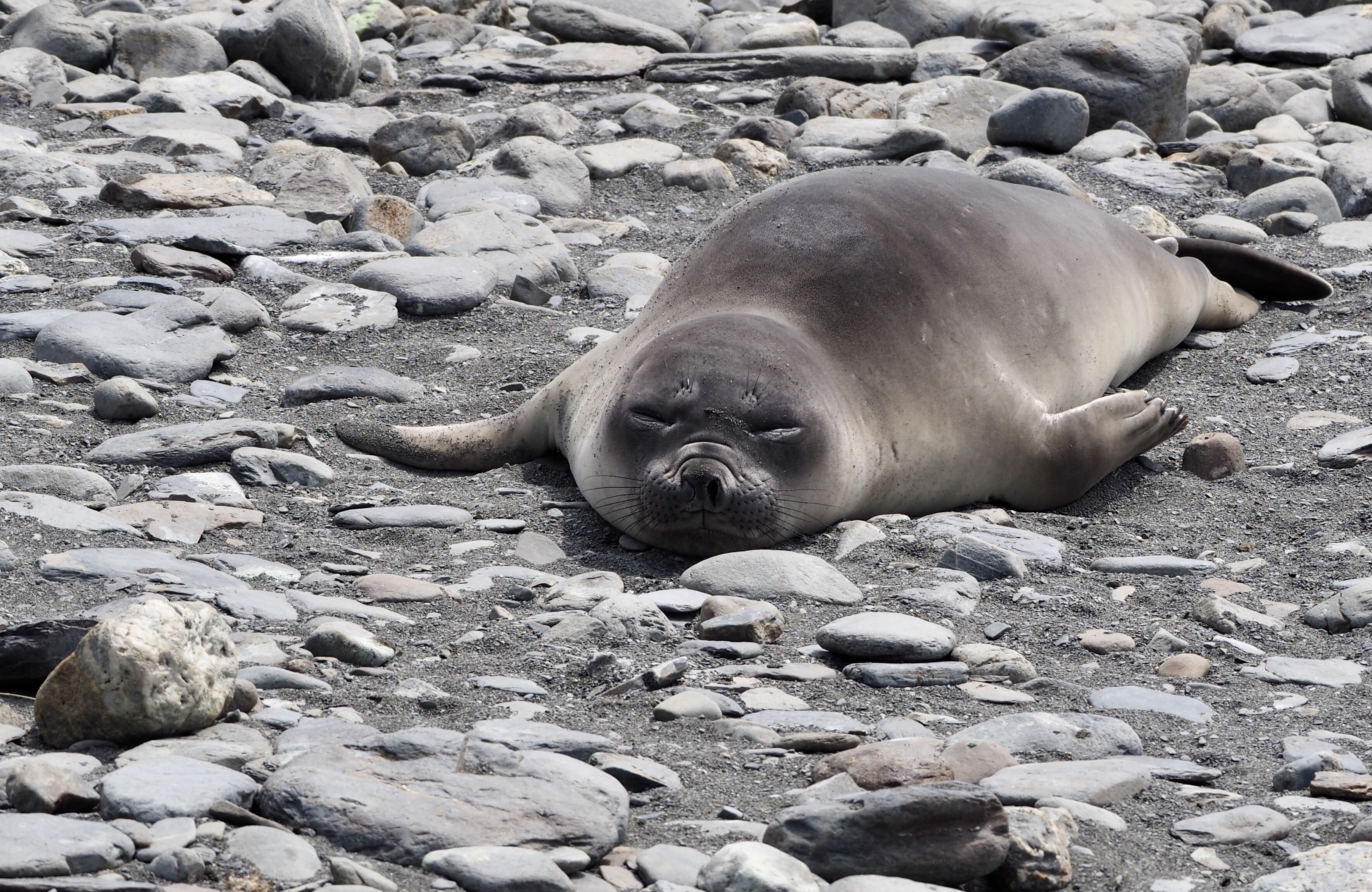
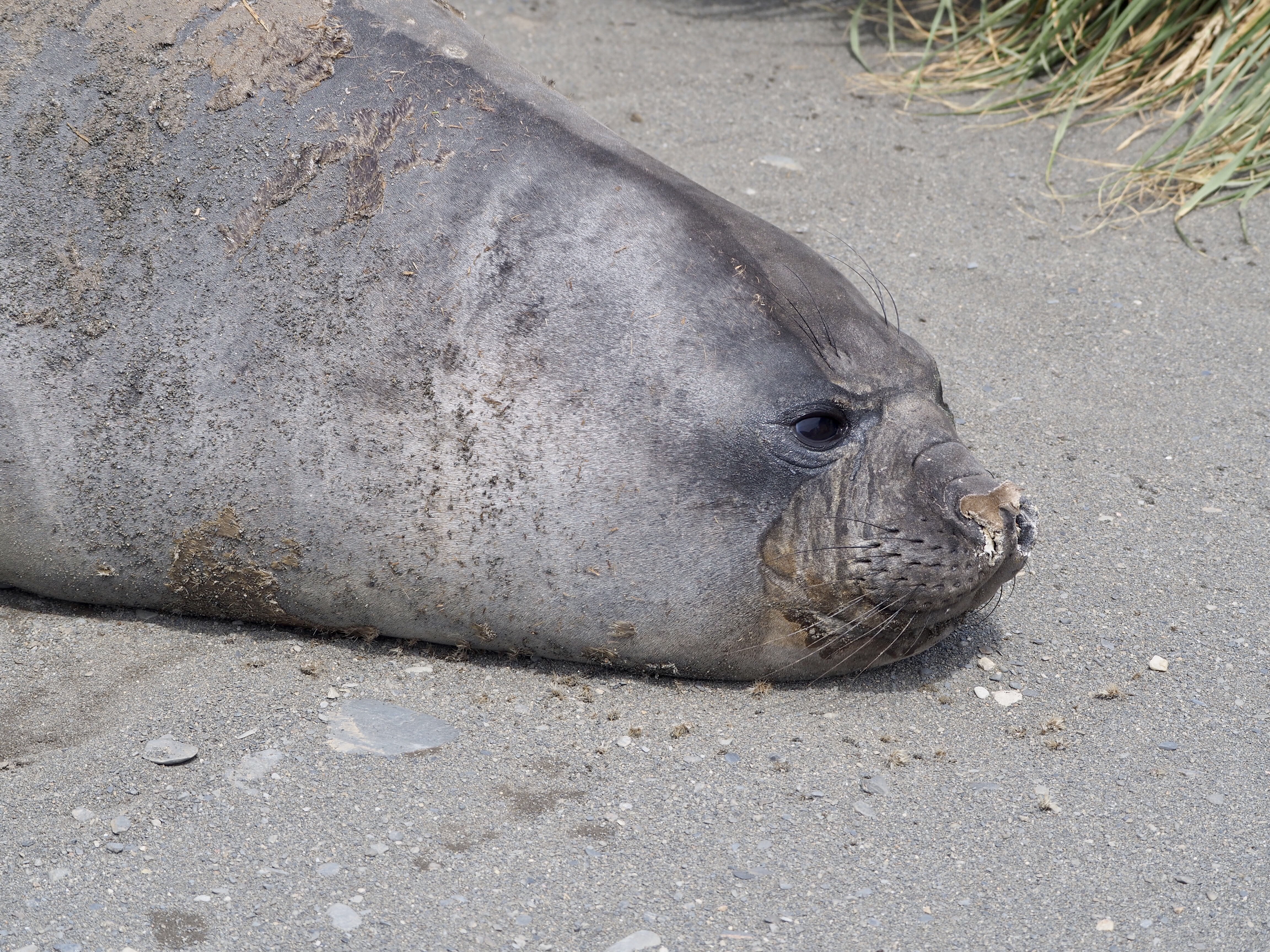
True or earless eg elephant seal. They do have an ear and good hearing. True guard hair and blubber. Move like an inch worm. Only 2 nipples. Don’t feed other than their own pup.

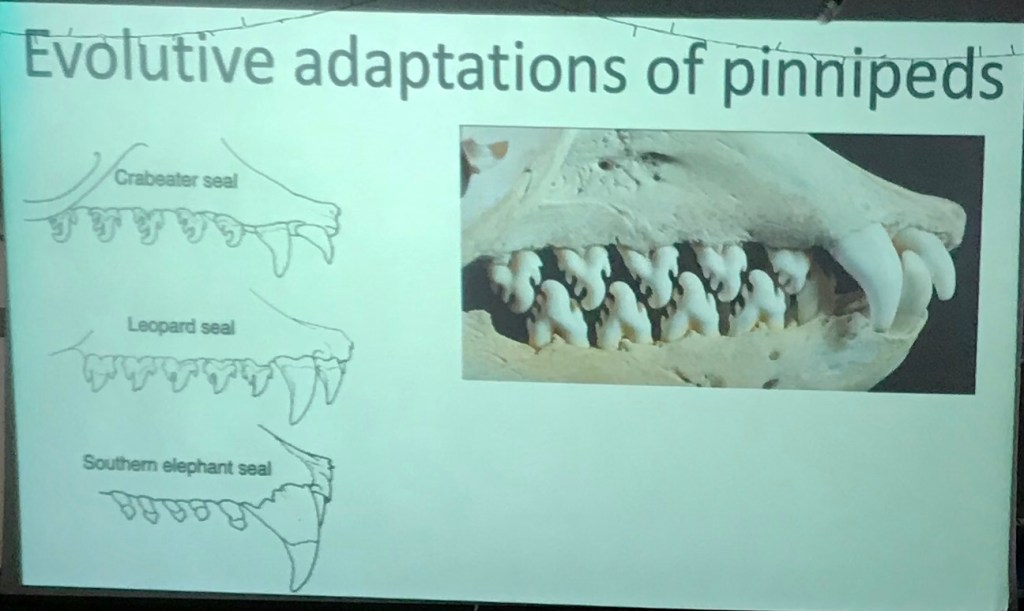
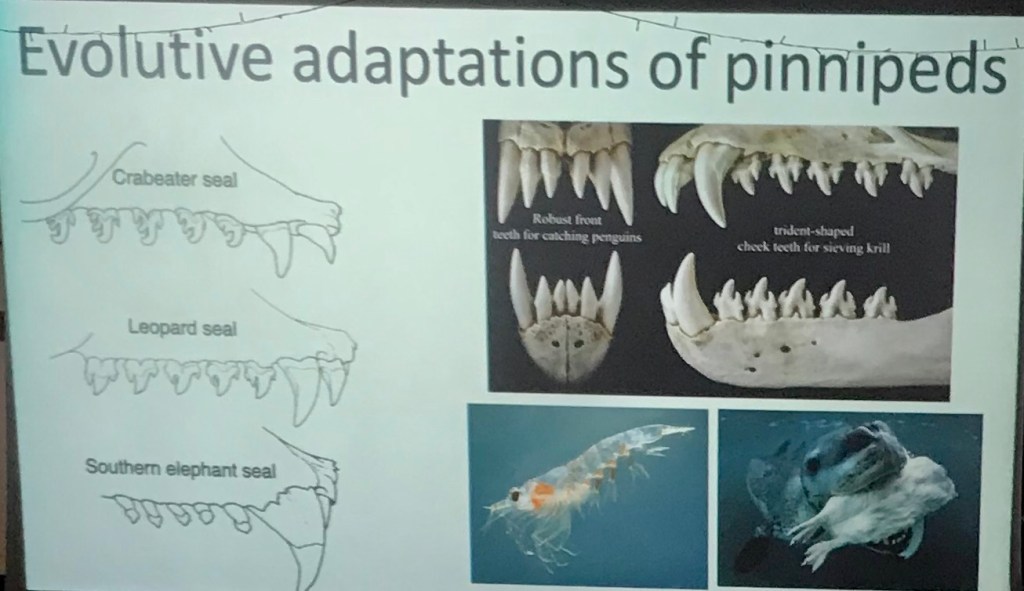
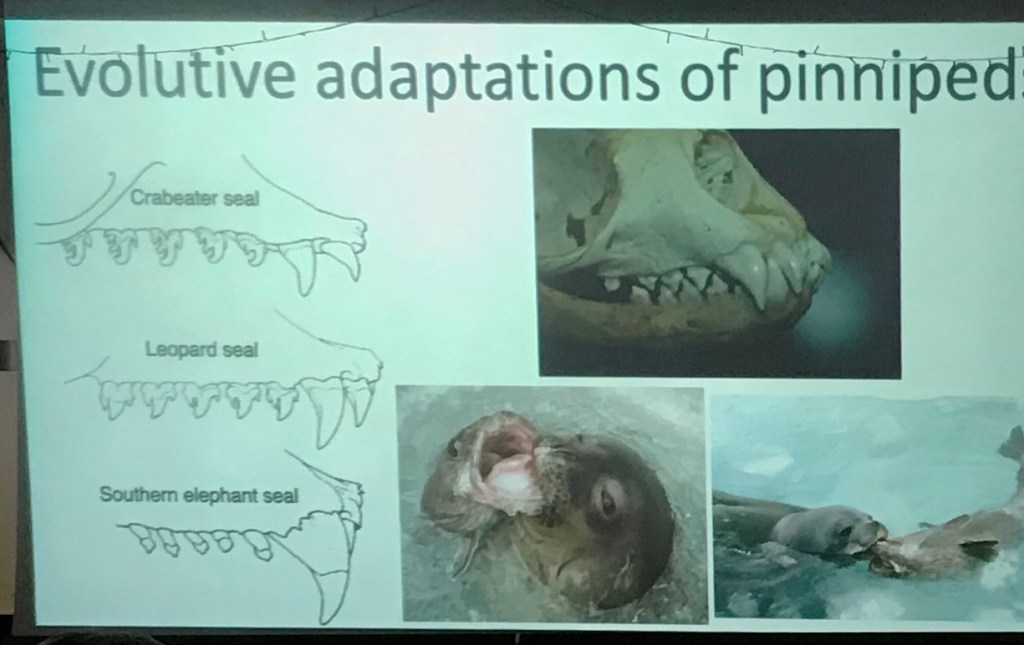
So many adaptations of hearing and sight to assist their lives. Fur and blubber assist with cold. Teeth are amazing. Crab eaters don’t eat crabs…they eat krill. Teeth filter water out without krill. Leopard seals kill and then shake off the skin of the penguins.

IDs crab eaters maybe 10 million animals but no certain stats. 200kg and 2.3m. Long muzzle. Length of the flipper – medium size flipper longer than weddell. Only 20% survive the first year as predated by Leopard seals. Look for scars. Move like a snake. More like a dog. Torpedo shape.

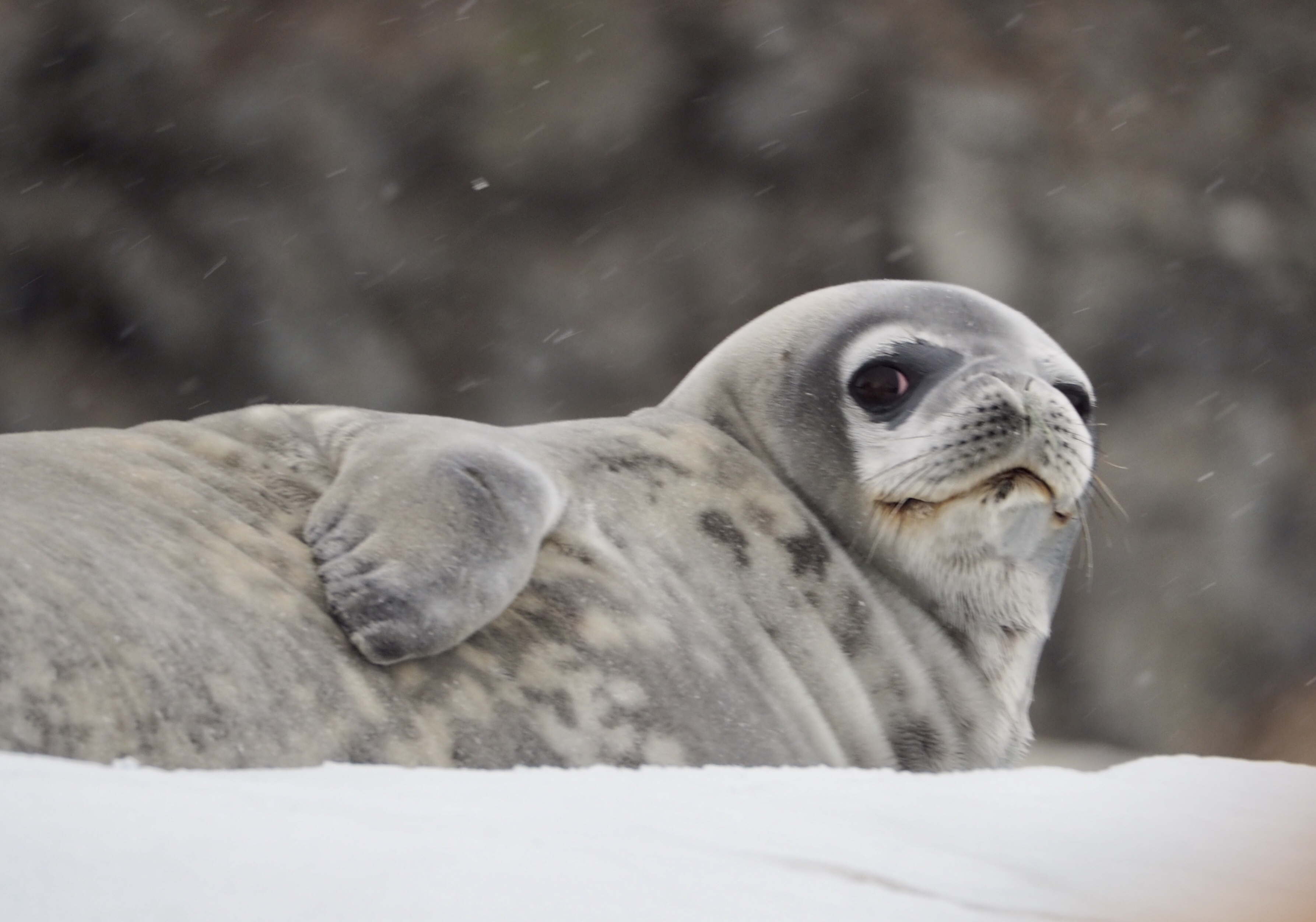
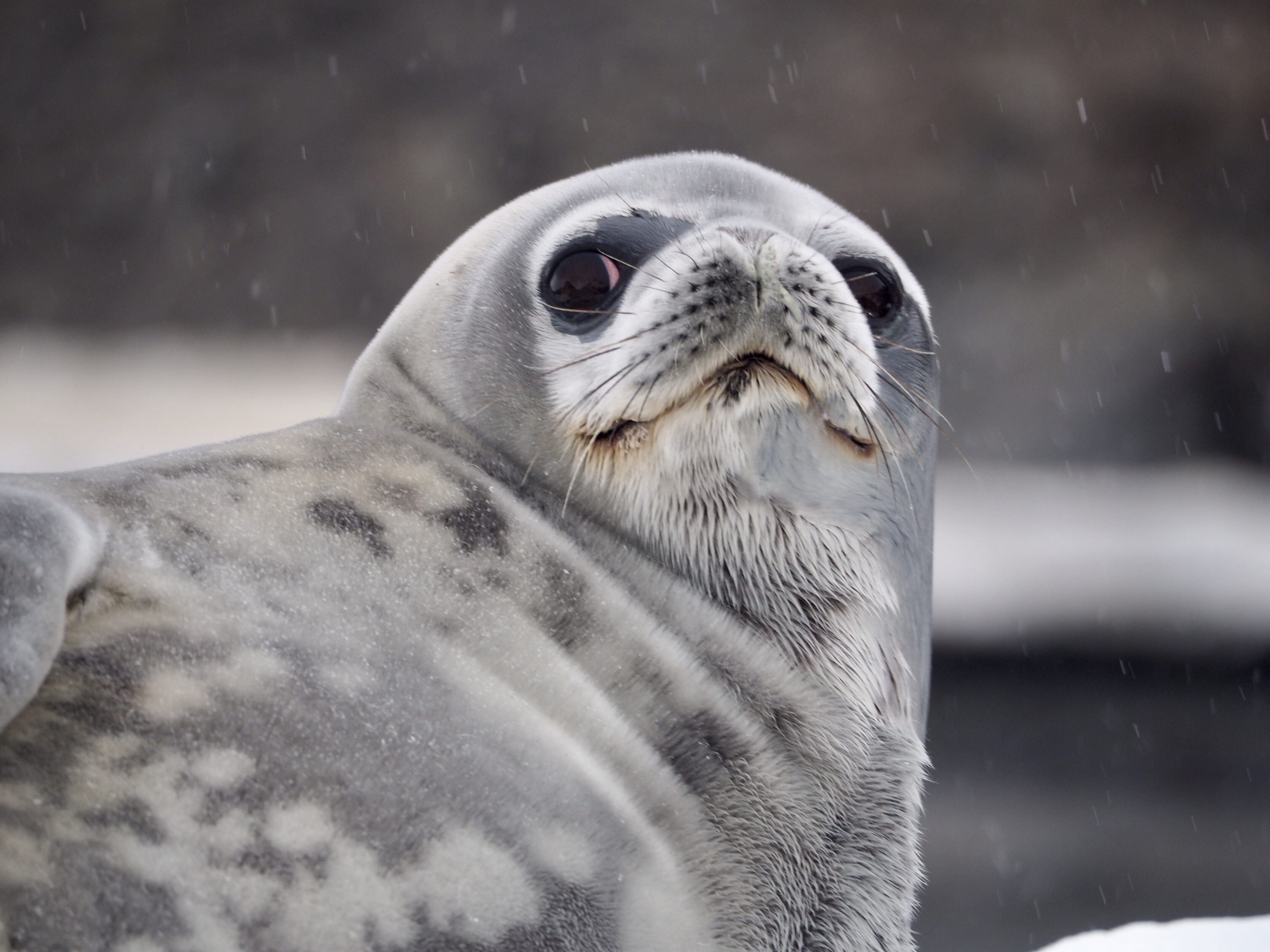
Weddell seals. One million. Southern most breeding mammal in the world. 500kg 2.9-3.3m. Short snout. Cute. Look like they are smiling. More like a cat. Flipper short. Barrel shape – fat. Inch worm movement. Main prey of orcas.

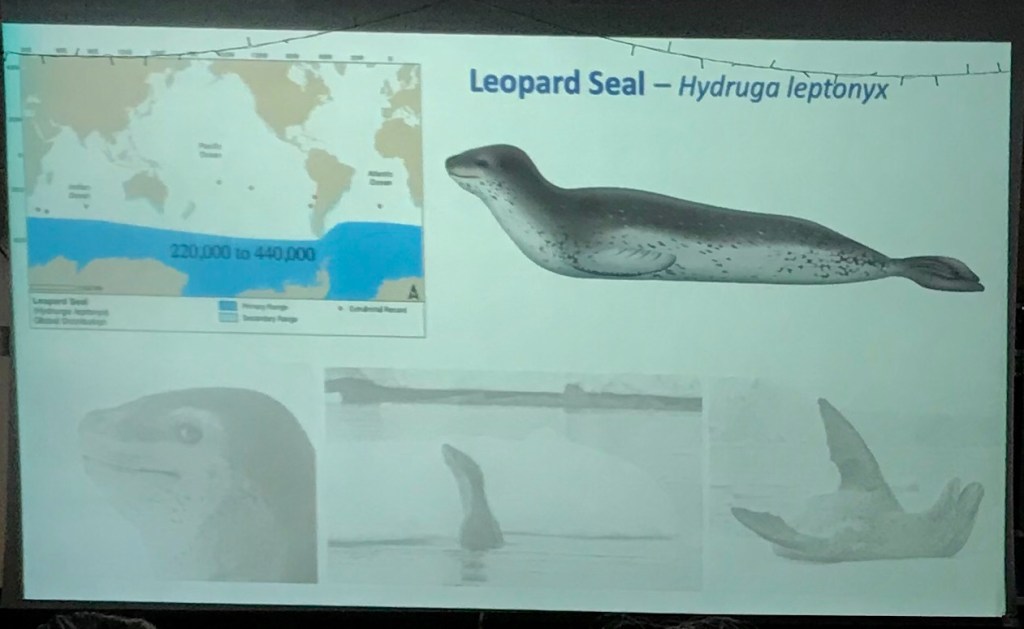
Leopard seal. Top predator like orca. No real predators. Orca could but generally don’t take them. 440,000 individuals. 500kg elegant face. Reptilian appearance due to length of neck. Wide shoulders. Long flippers.

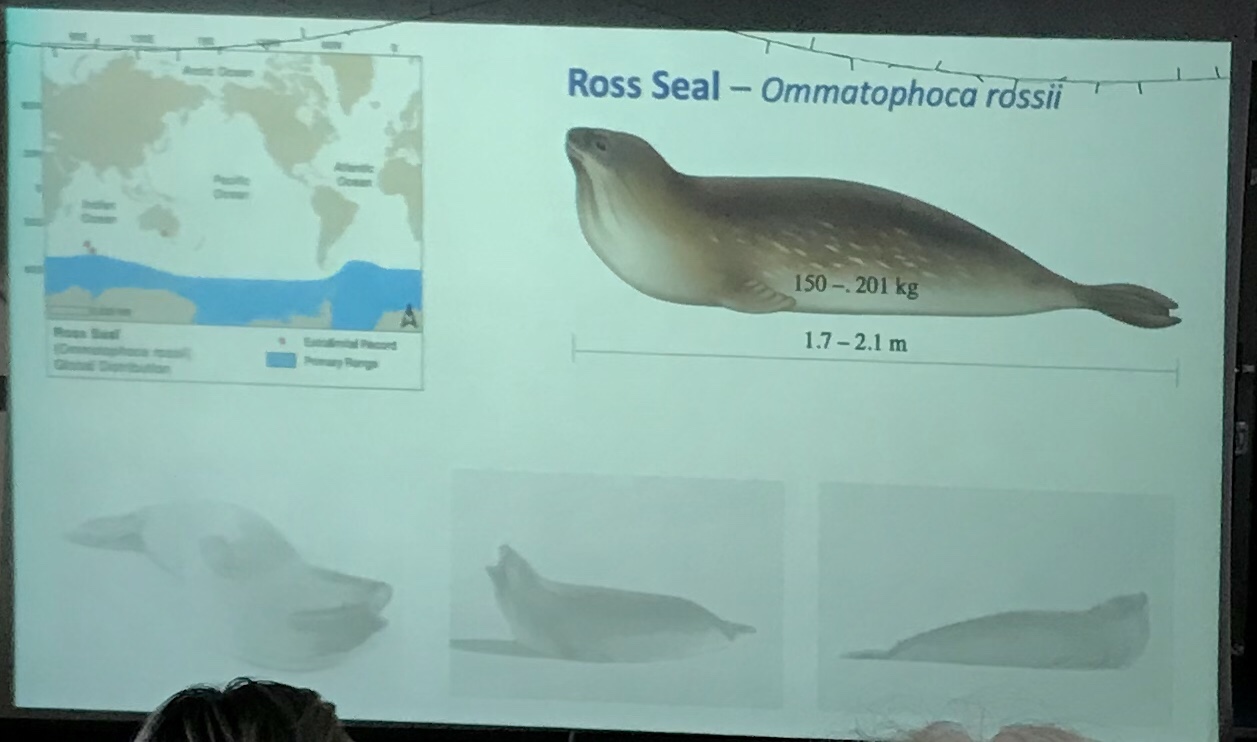
Ross seal. Shy and difficult to see. Have a stripe under the throat. Singing posture.

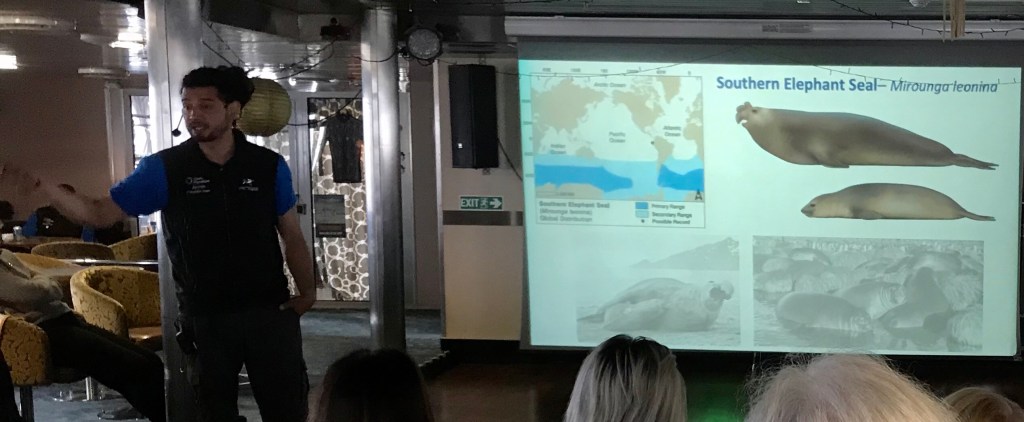
Elephant seal. Know a bit about already so I won’t repeat that here.

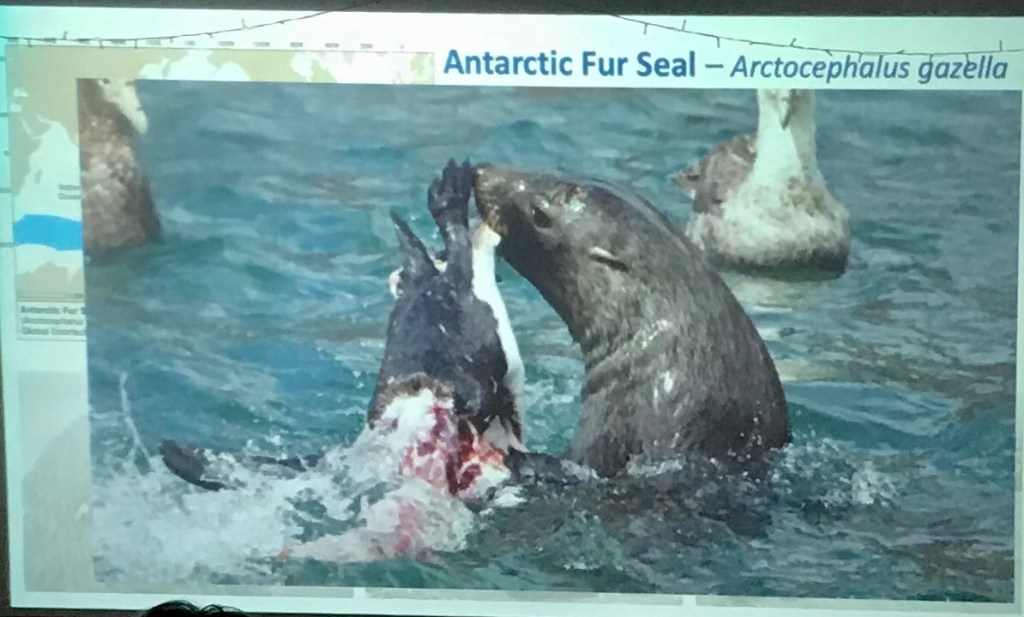
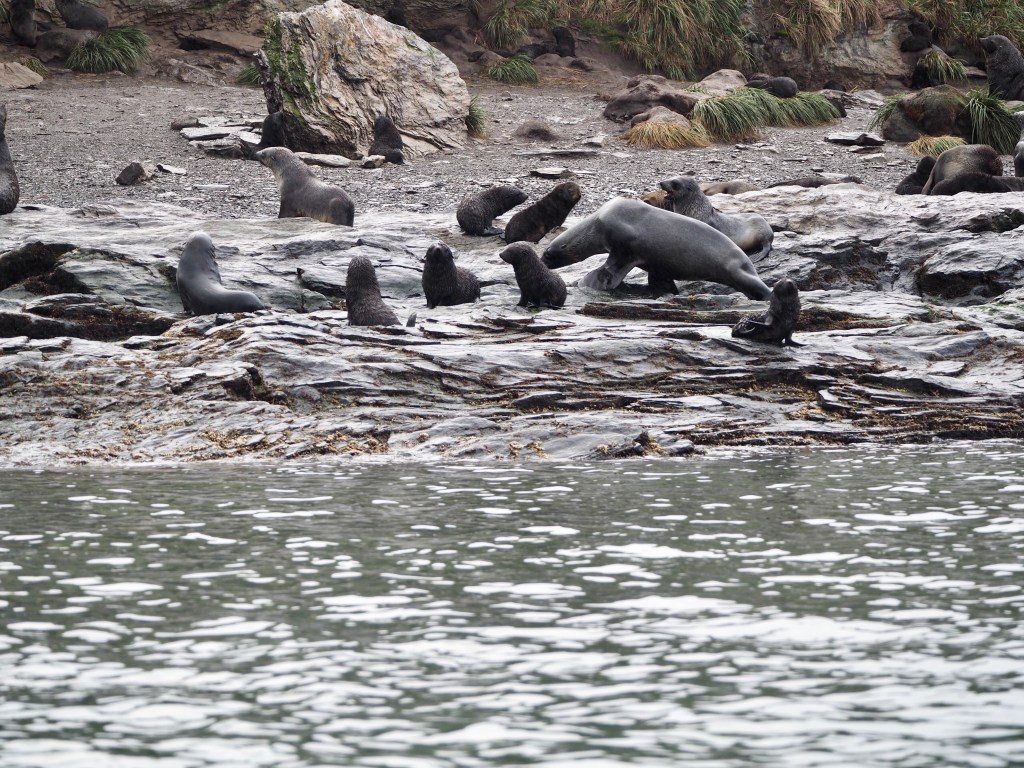
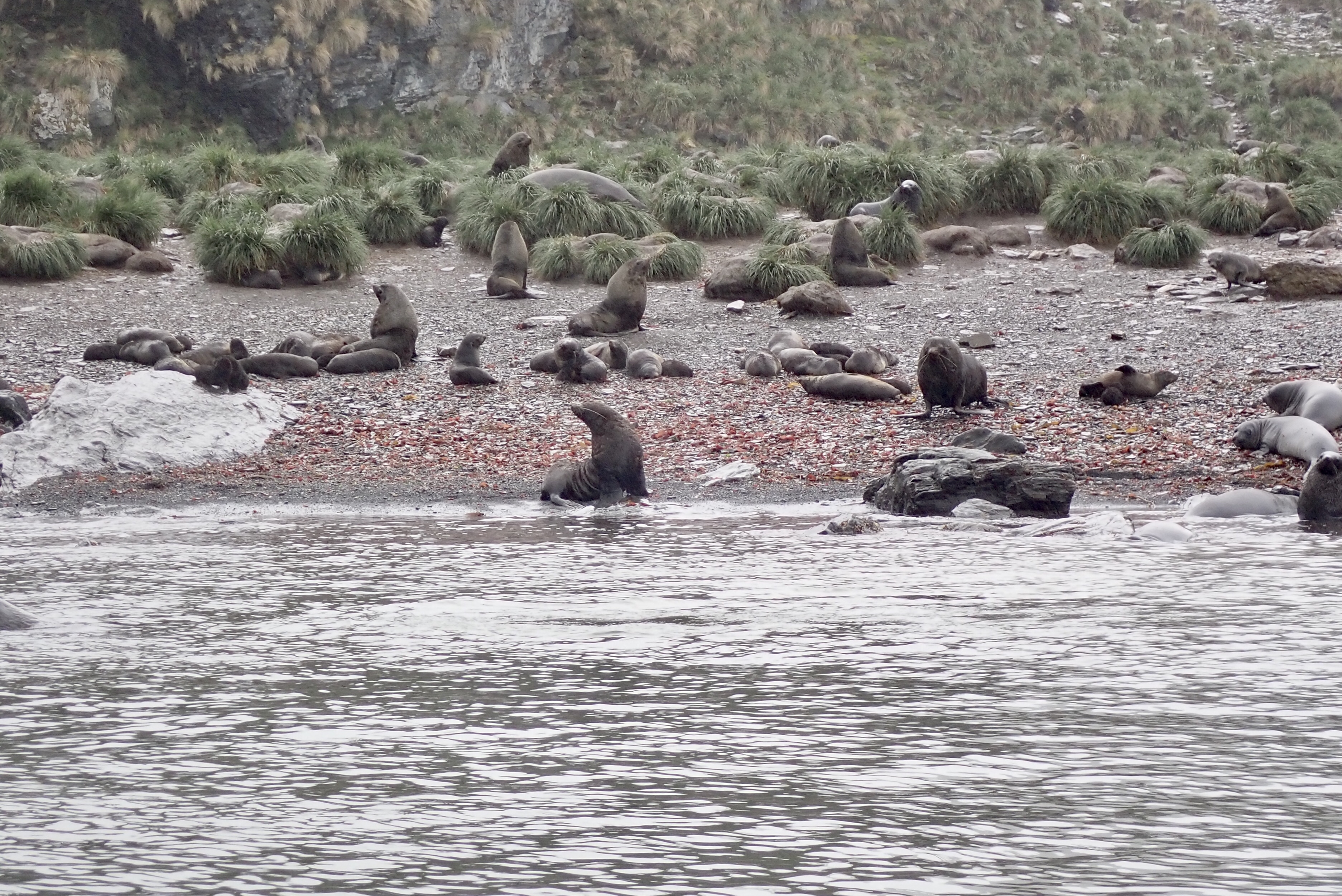
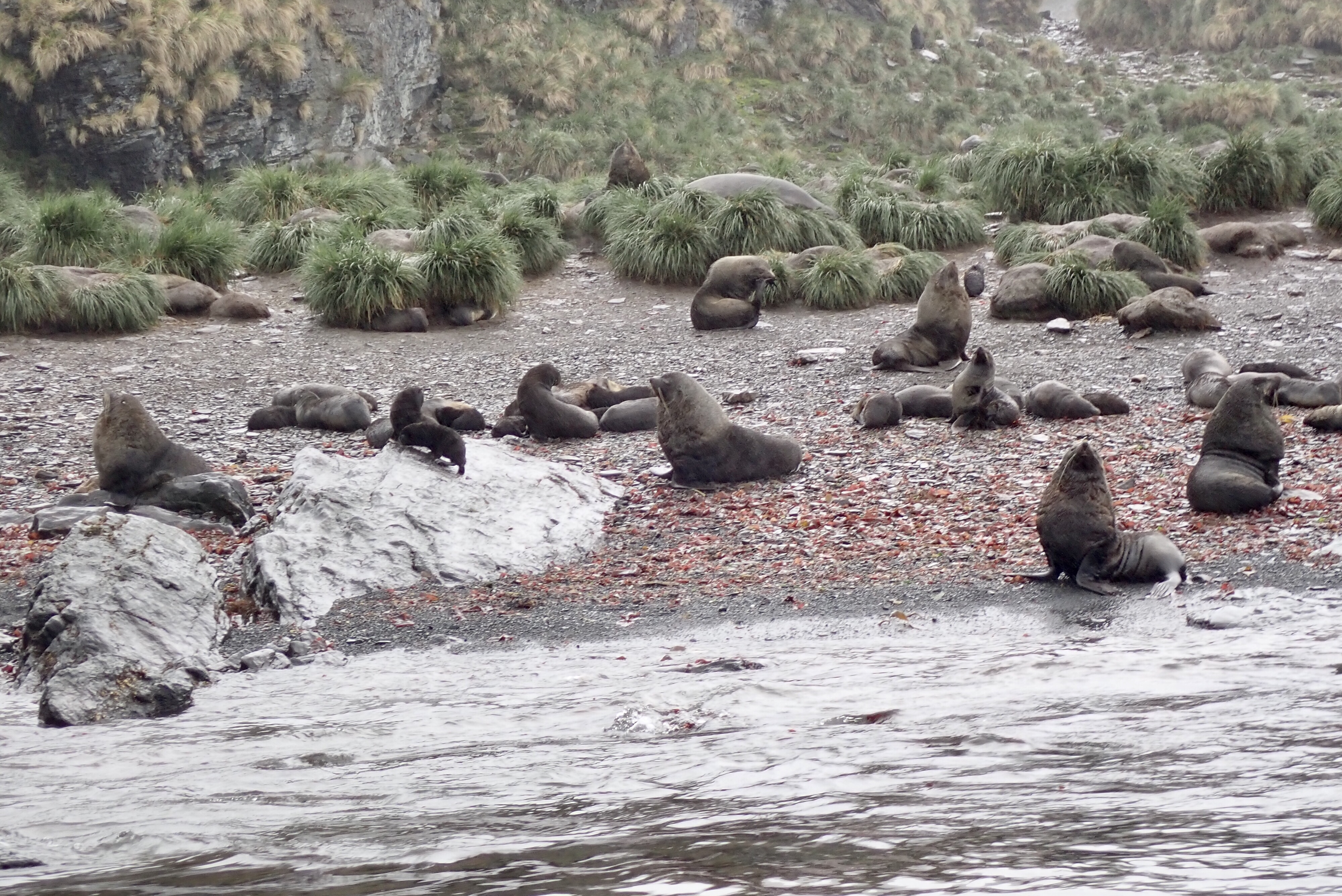
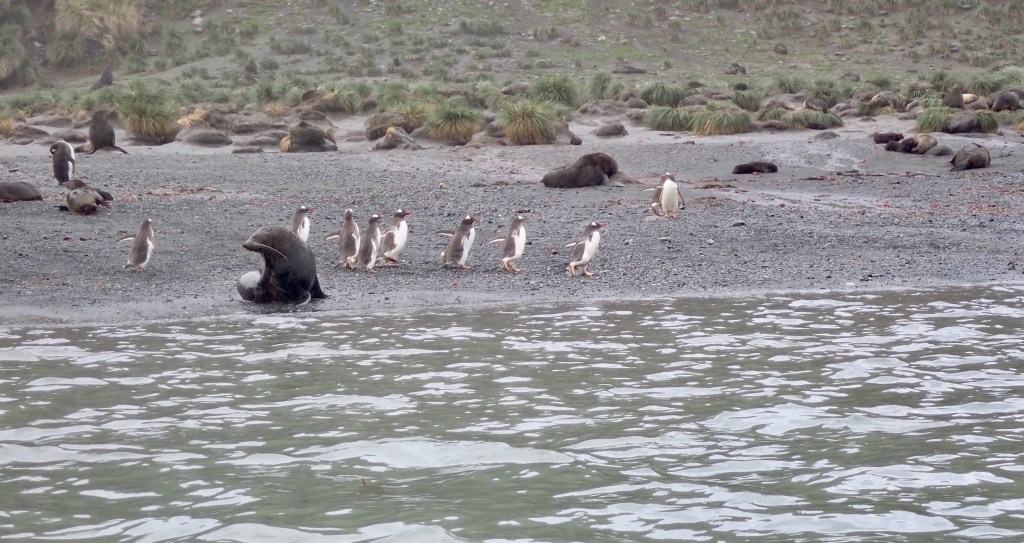
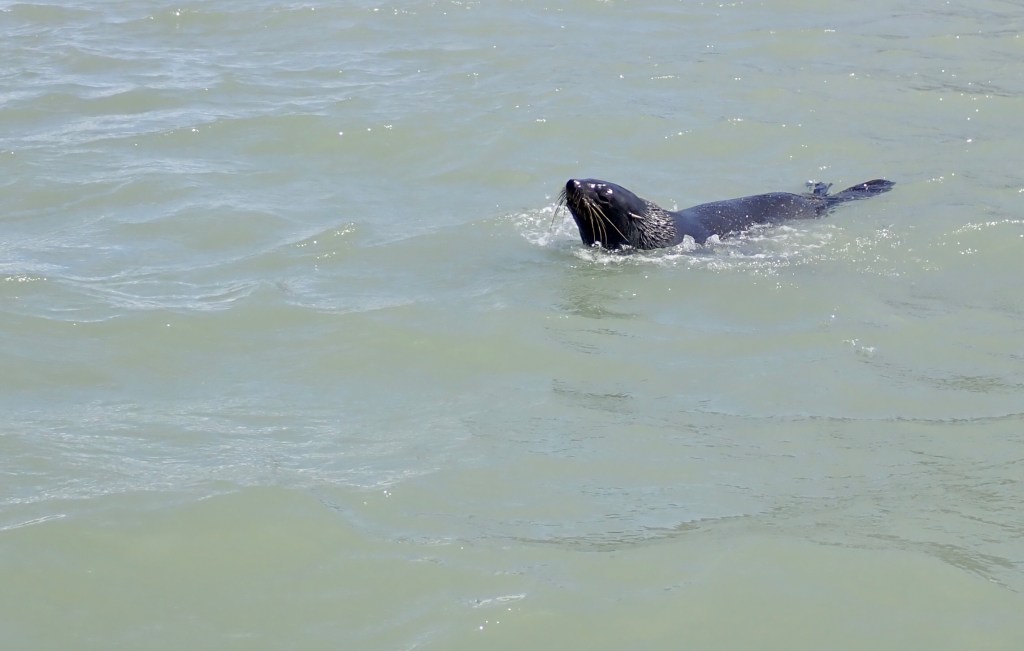
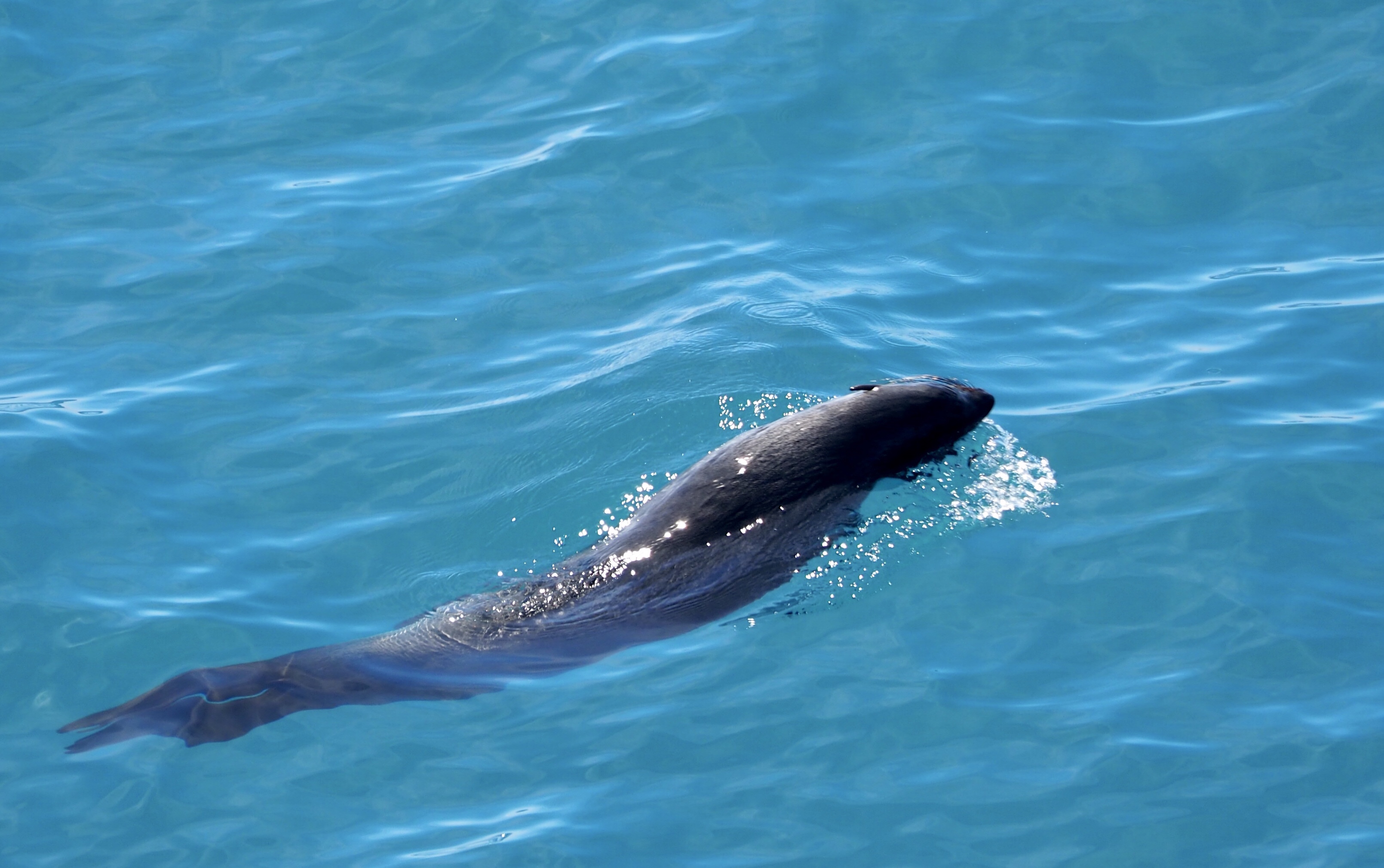
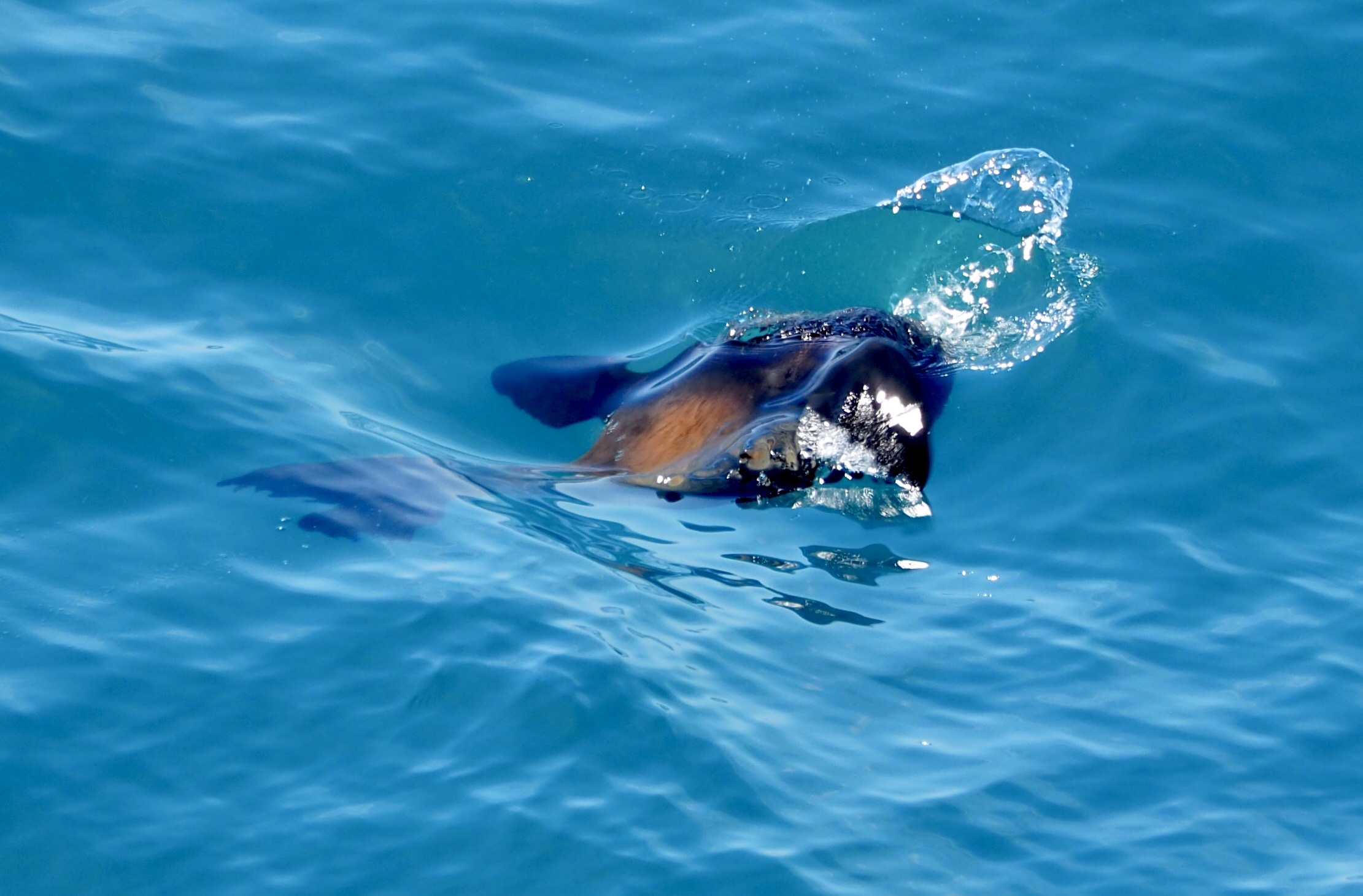
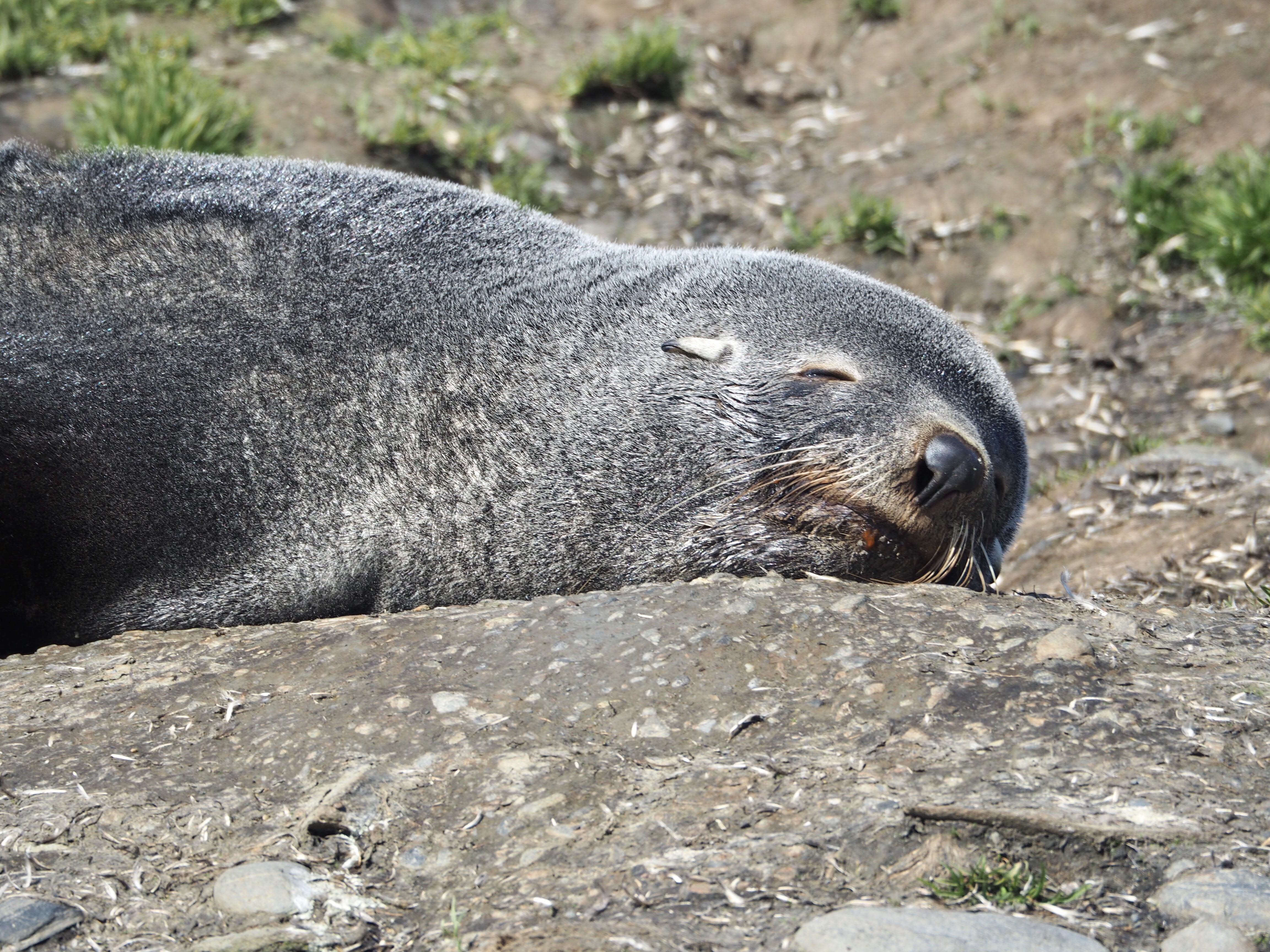
Antarctic fur seal – again we have done already but this next shot shows they can sometimes eat penguins.

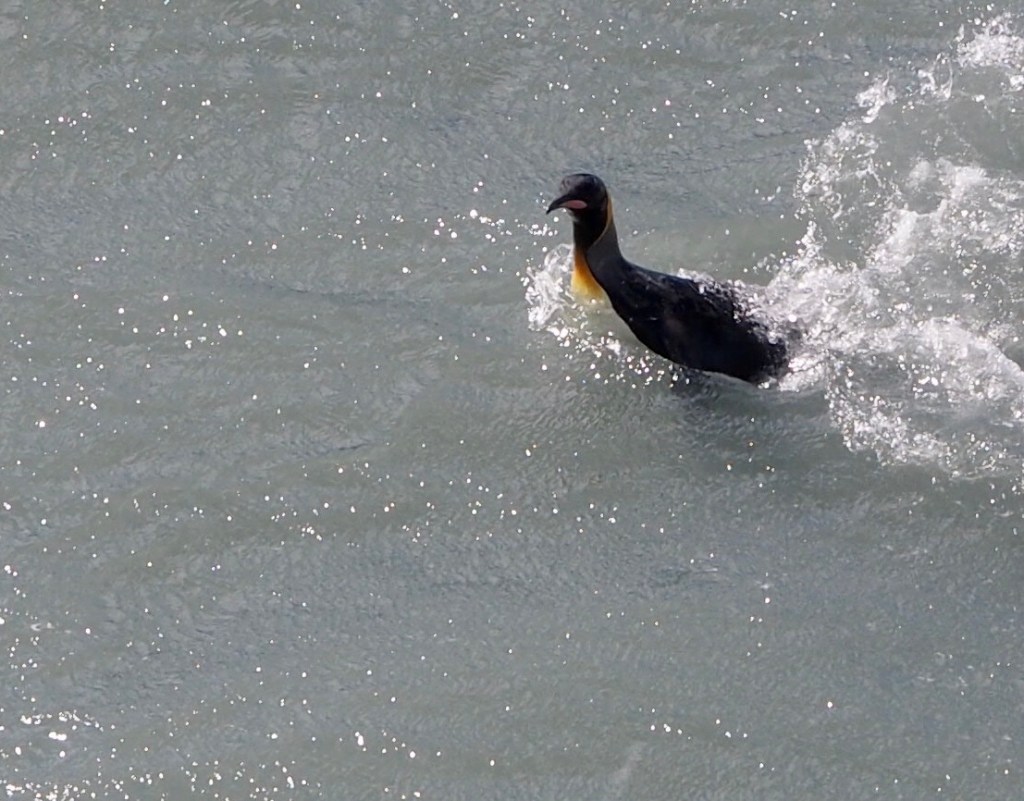
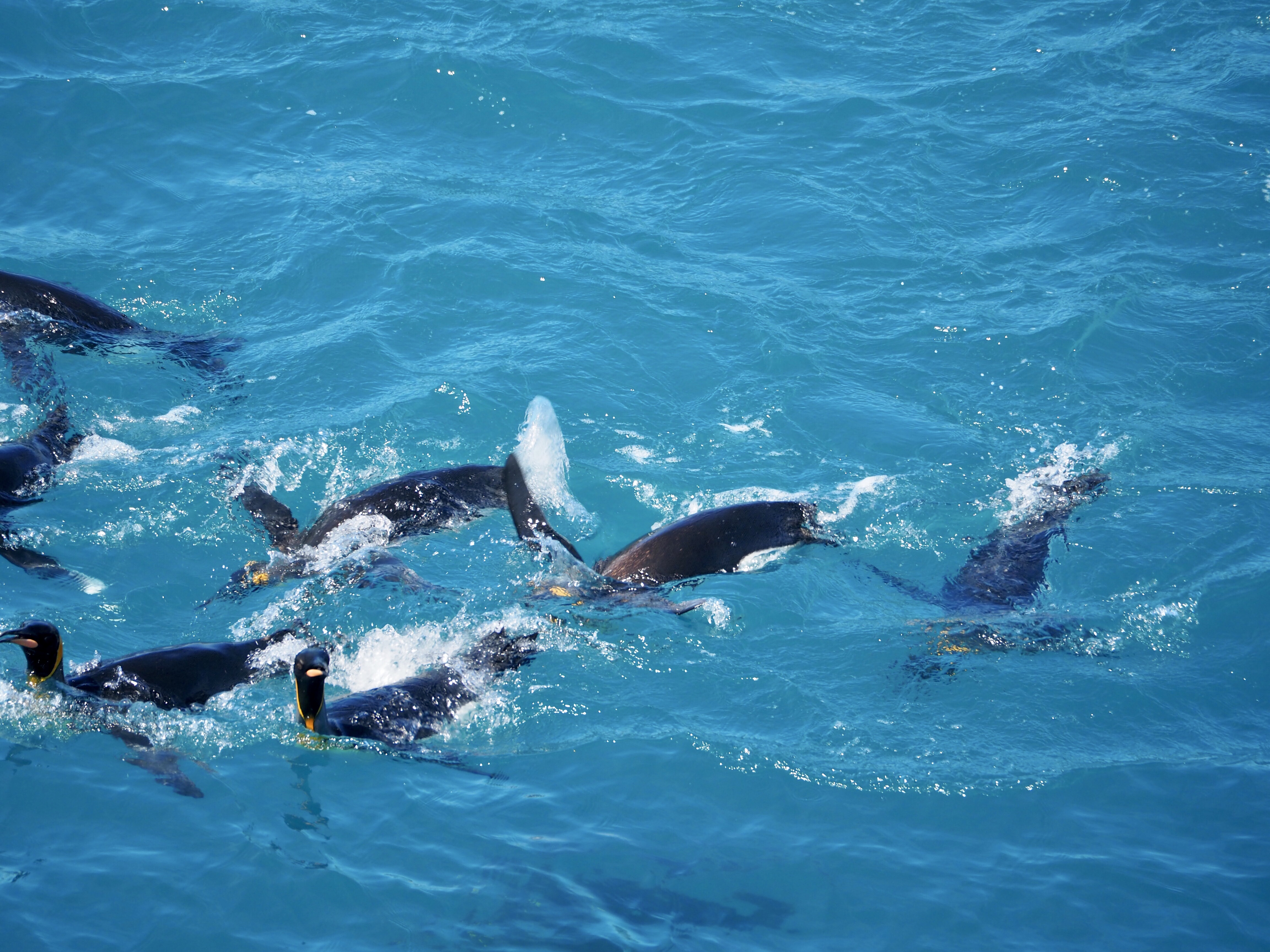
We were to have a presentation on the geology of Antarctica with David J in the Nautilus Lounge but this was postponed due to large ice bergs, more whales and the entrance into the station where penguins darted about the ship (in the water). Can you handle more ice bergs?

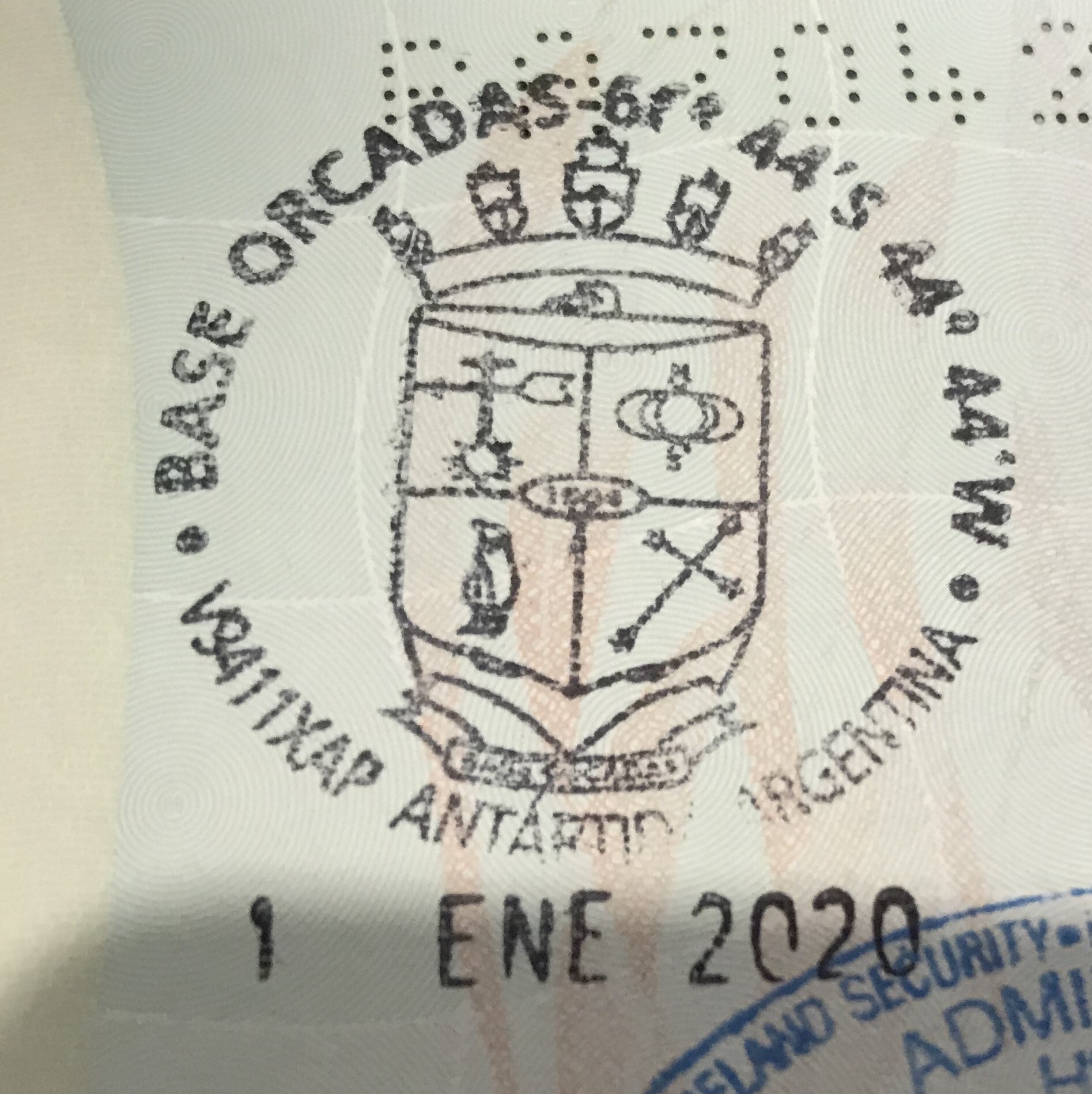
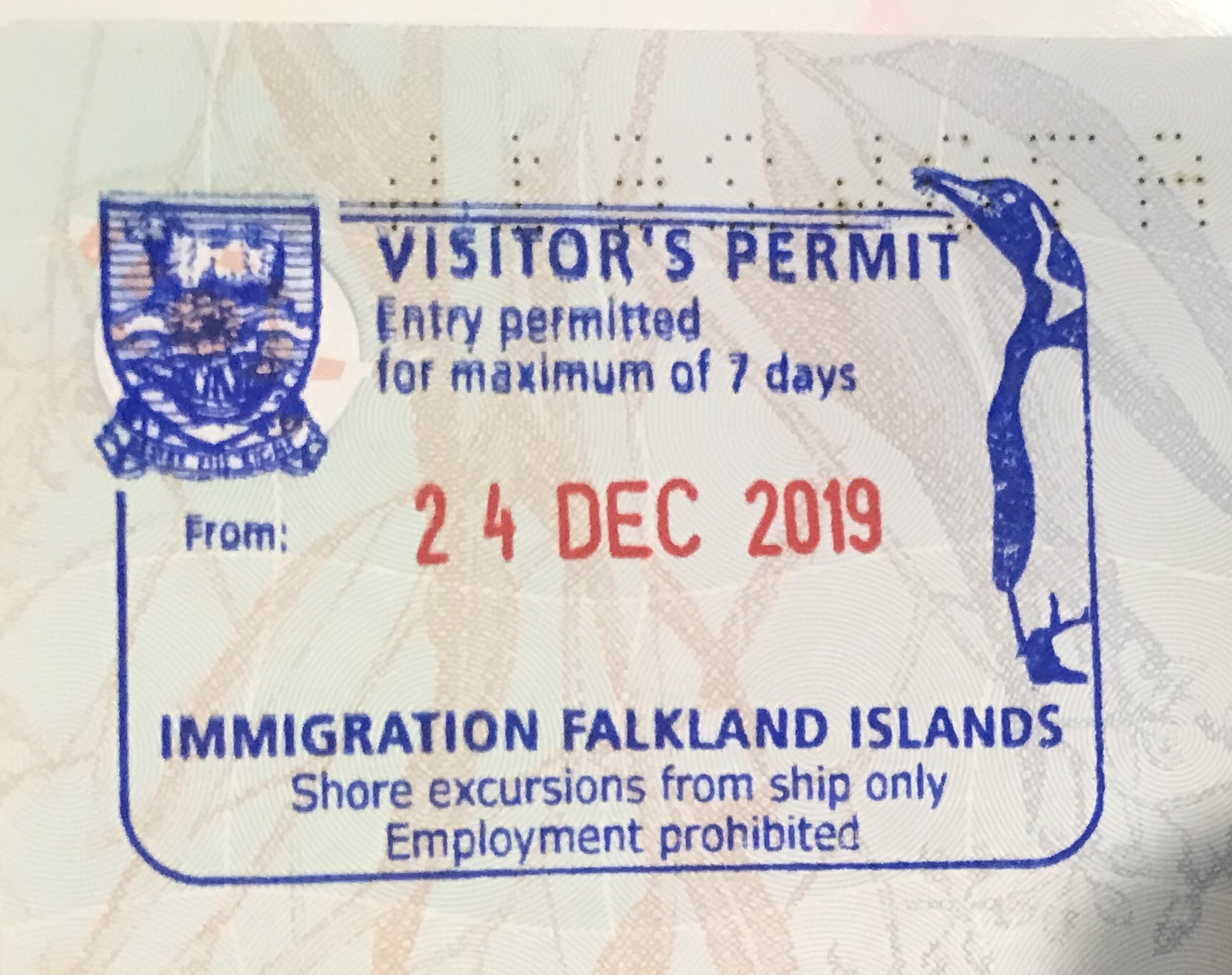
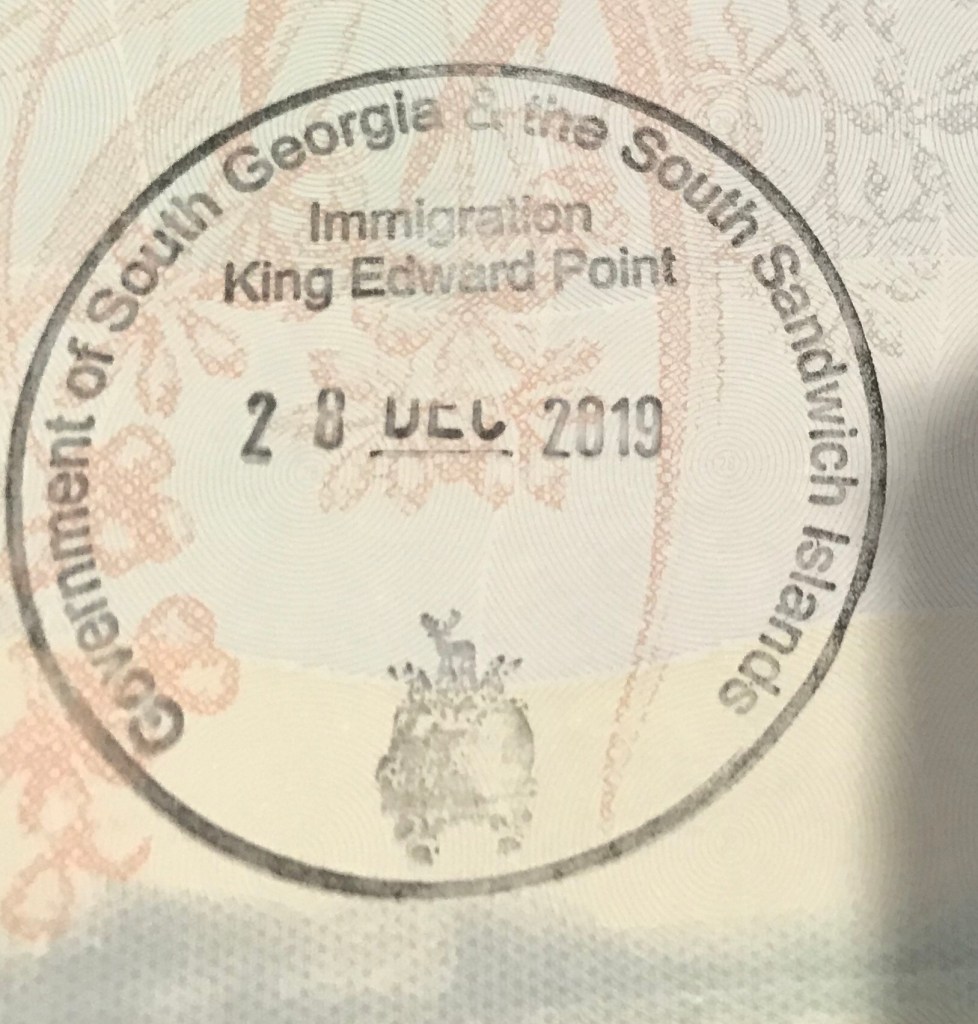
One thing I have omitted to mention is that the crew have been organising Passport stamps for us when available. Here is today’s plus a couple of others we had already obtained.

You might wonder about the adventure options. So far we are happy not to have been able to book any. The poor Kayakers have been cancelled for the fourth or fifth time (they are yet to get on the water due to wind) and also they miss some of what we do.

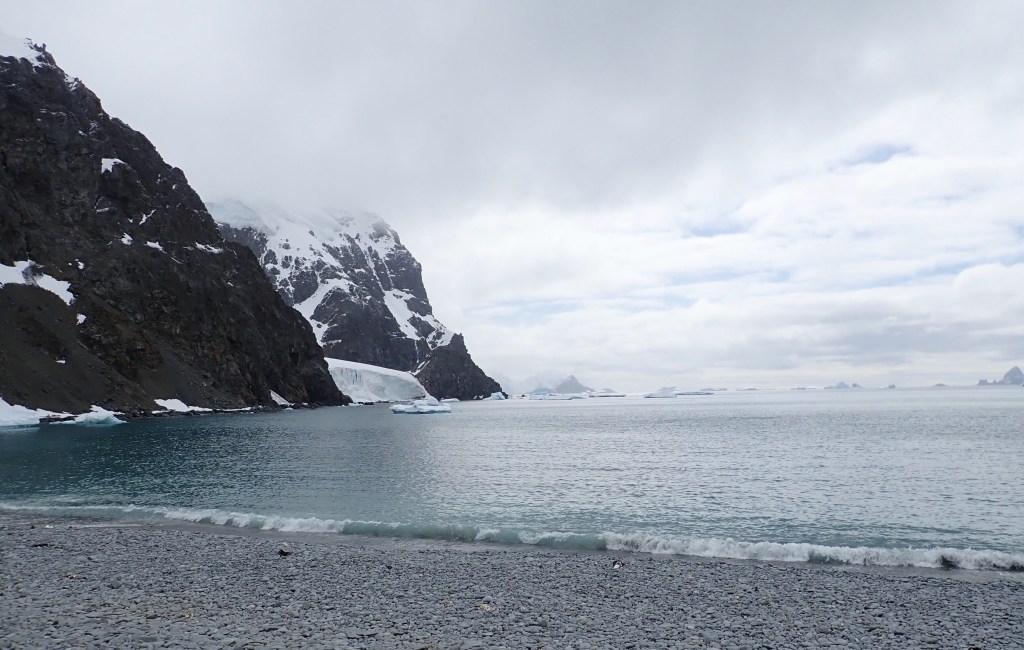
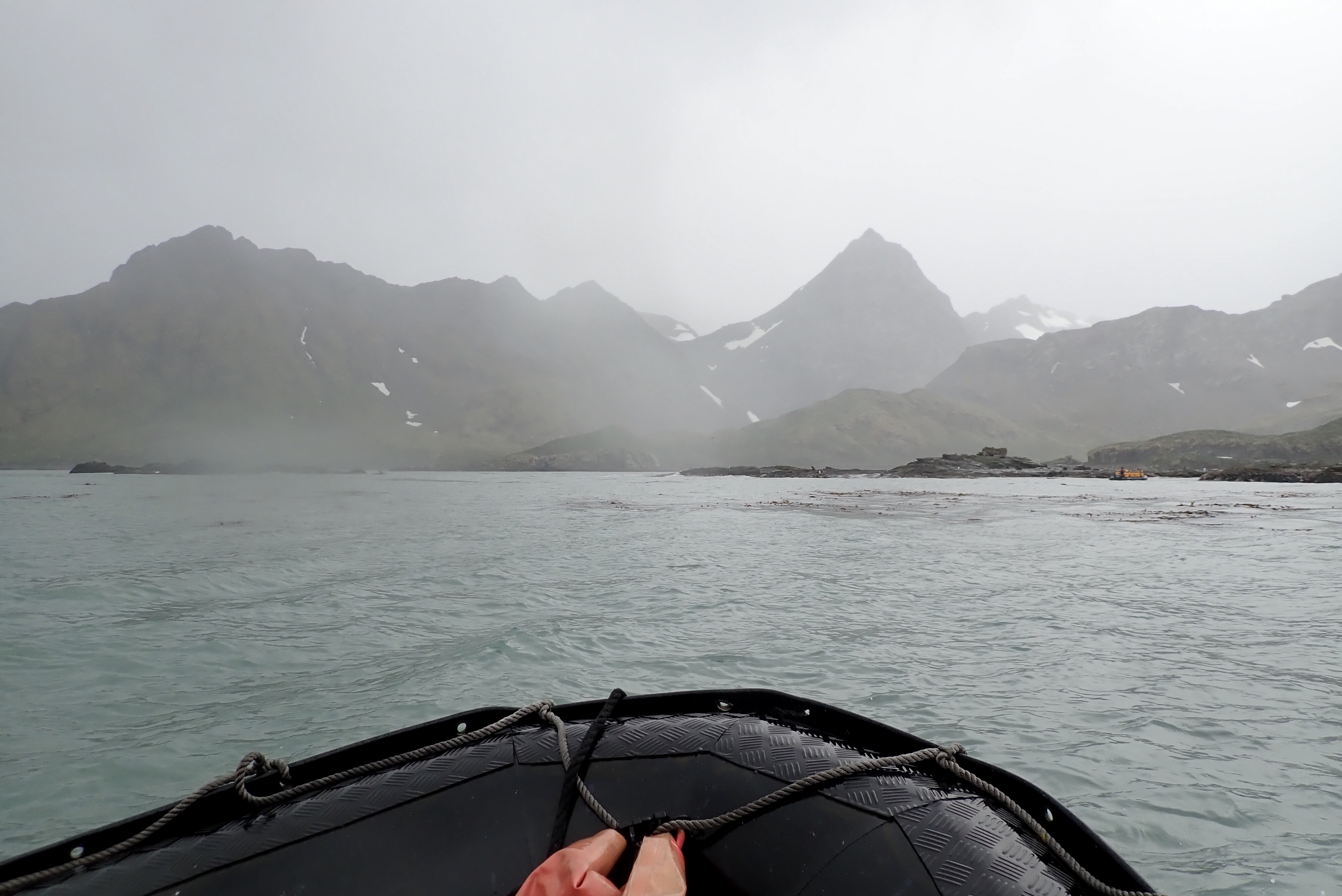
On approach to Laurie Island.

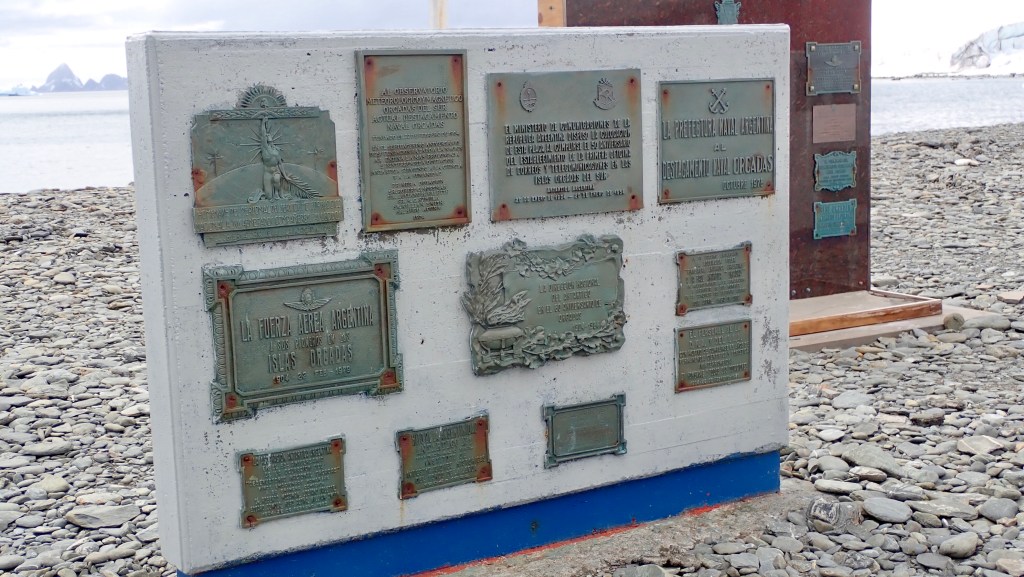
Laurie Island is the second largest of the Orkney Islands and is both claimed by Argentina and the United Kingdom, however, under the Antarctic Treaty System, all sovereignty claims are frozen as the island lies south of 60 degrees. You can find both chinstrap and Adelie penguins on the island. Buchanan Point at the northeastern end of the island, with Cape Whitson on its south coast, are both designated Important Bird Areas.

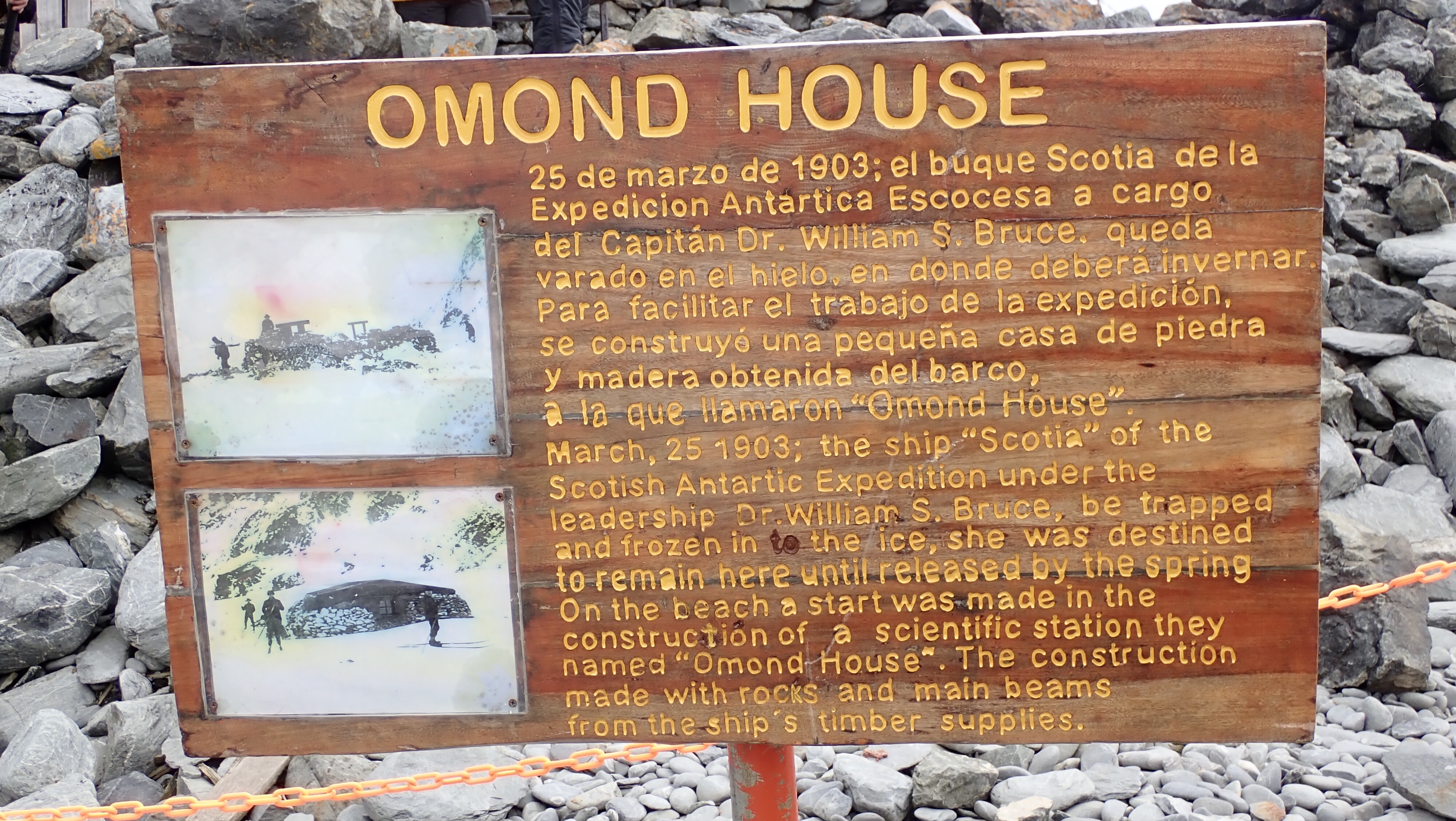
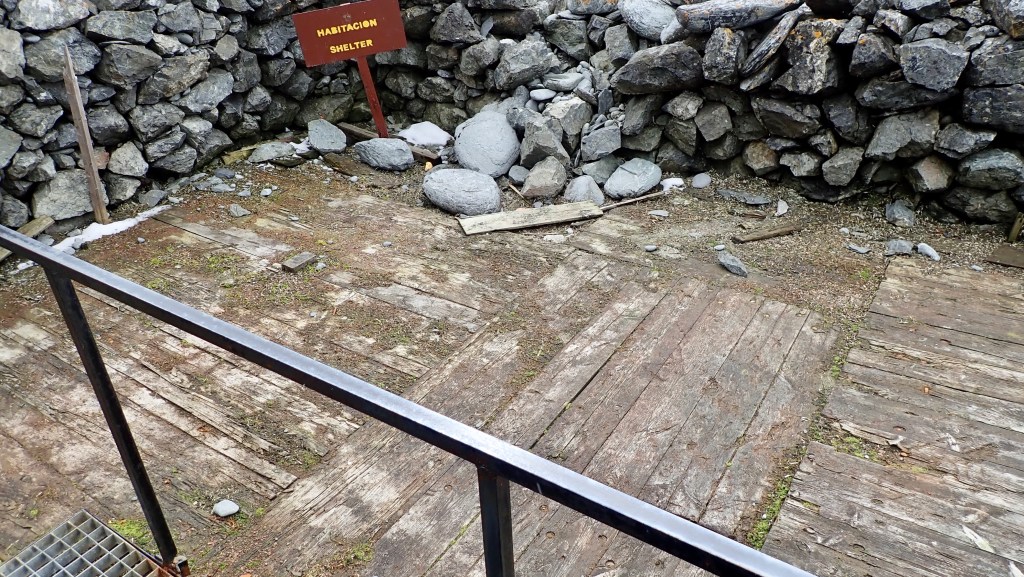
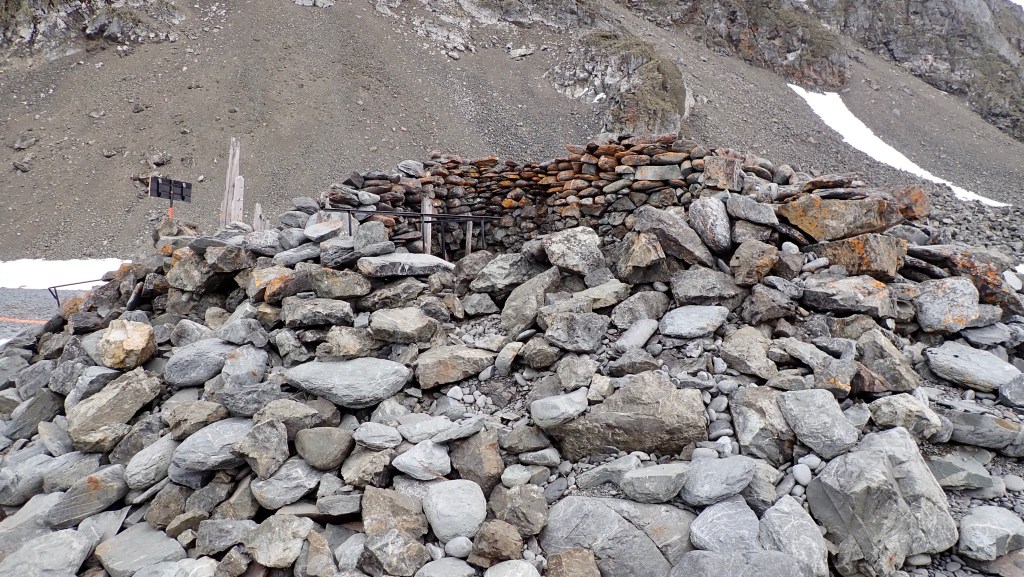
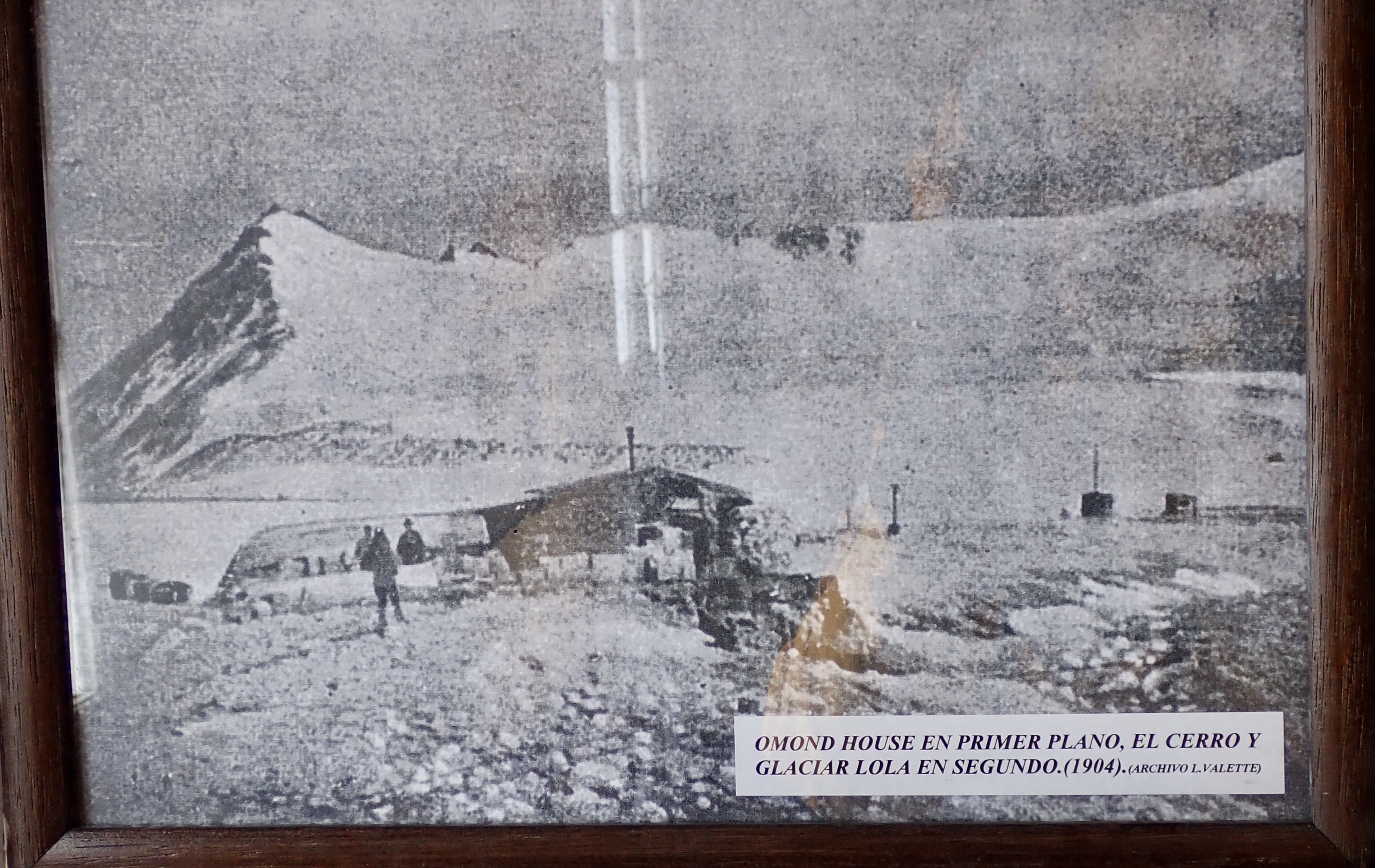
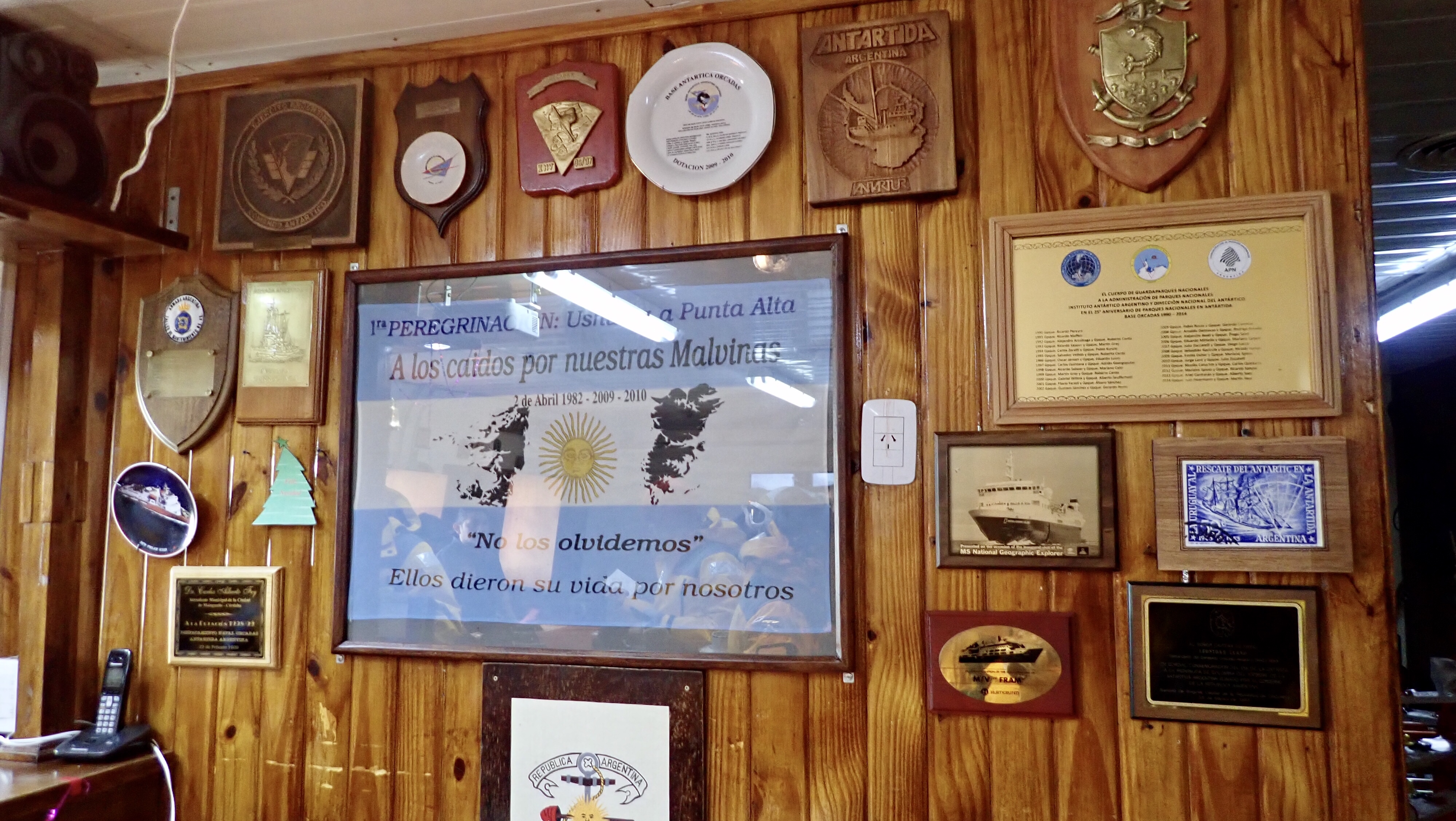
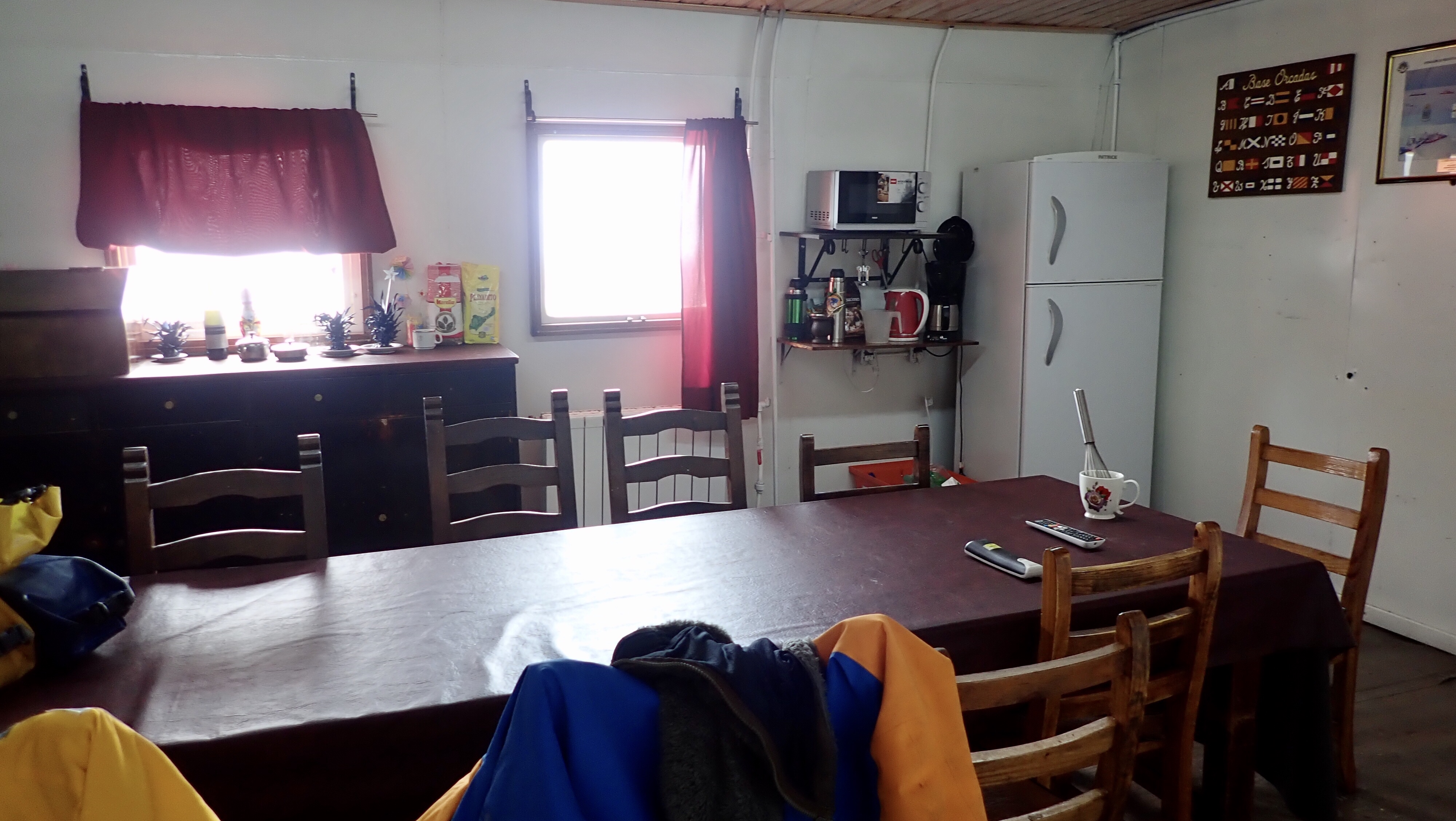
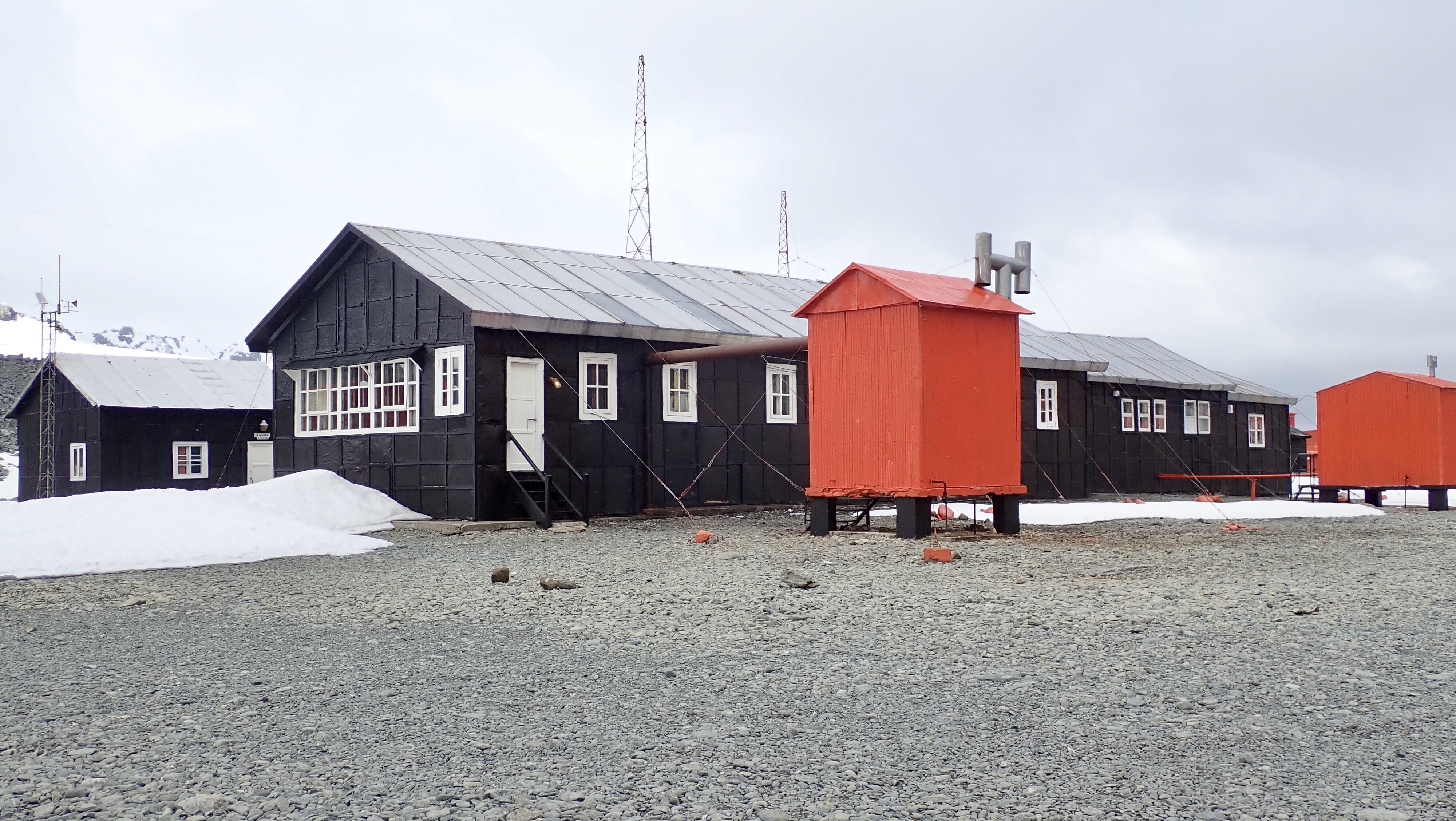
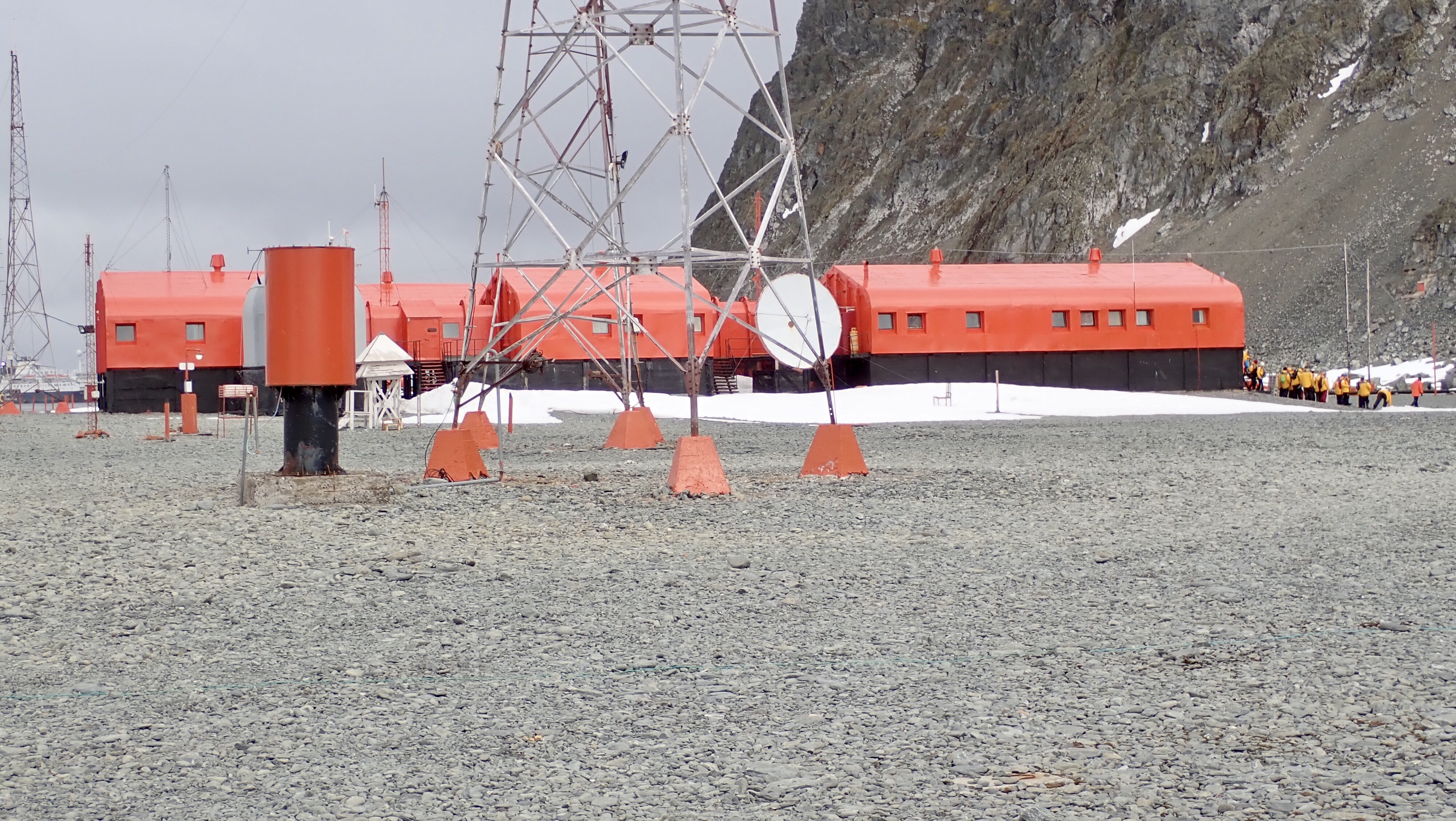
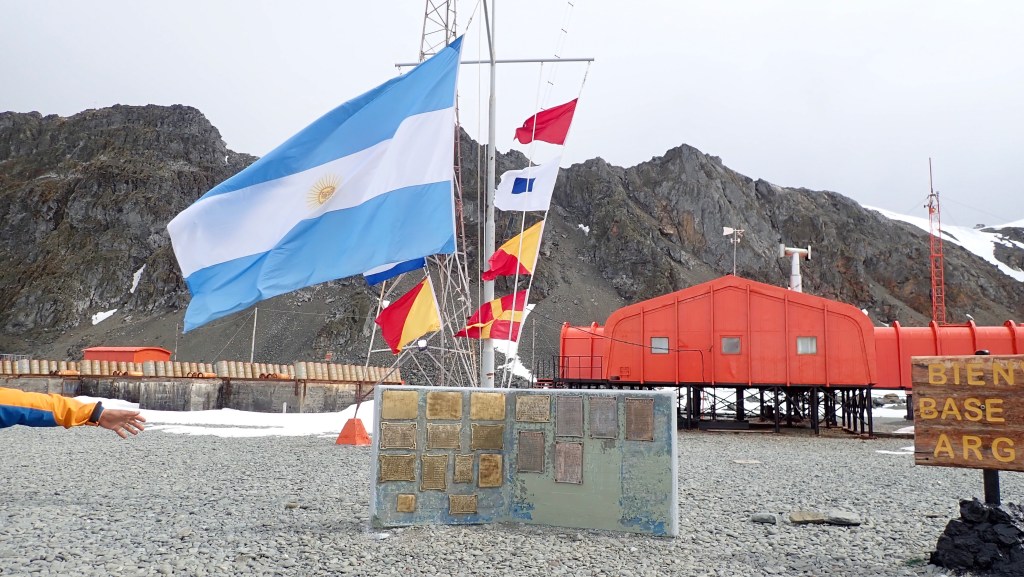
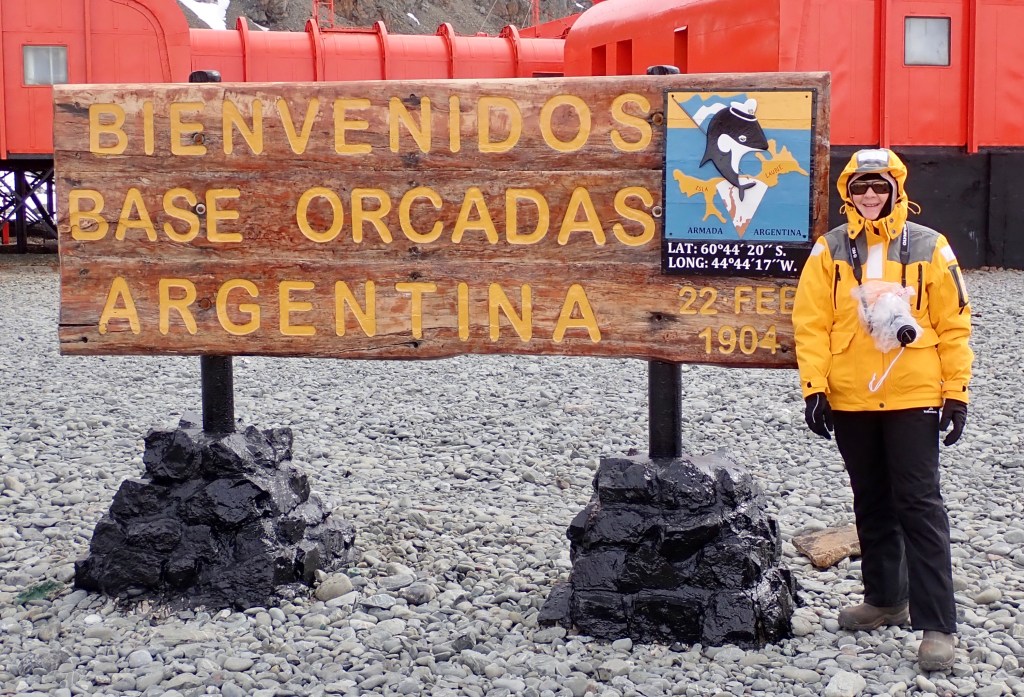
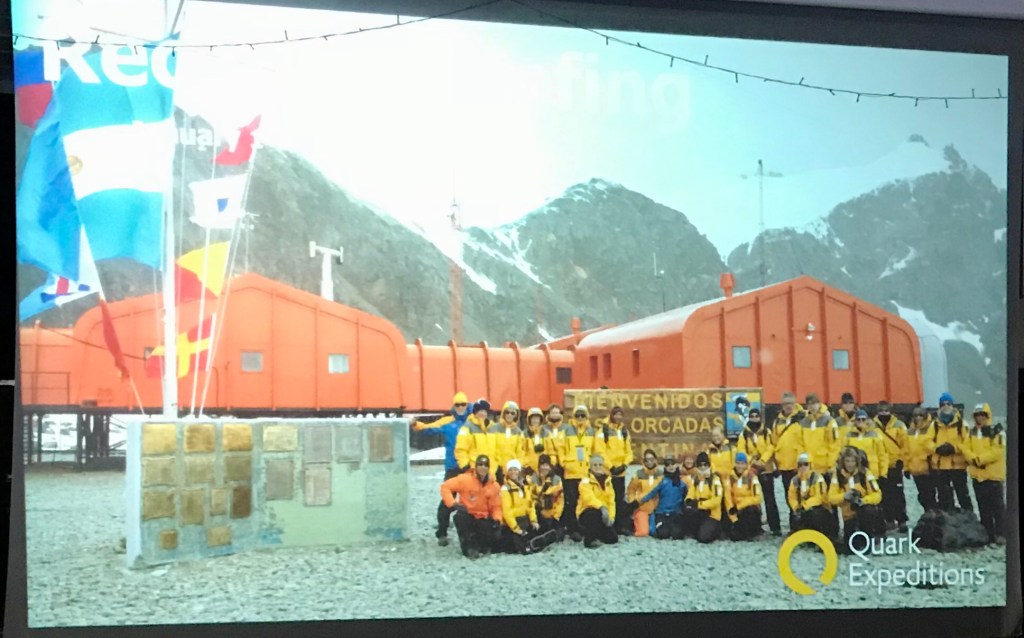
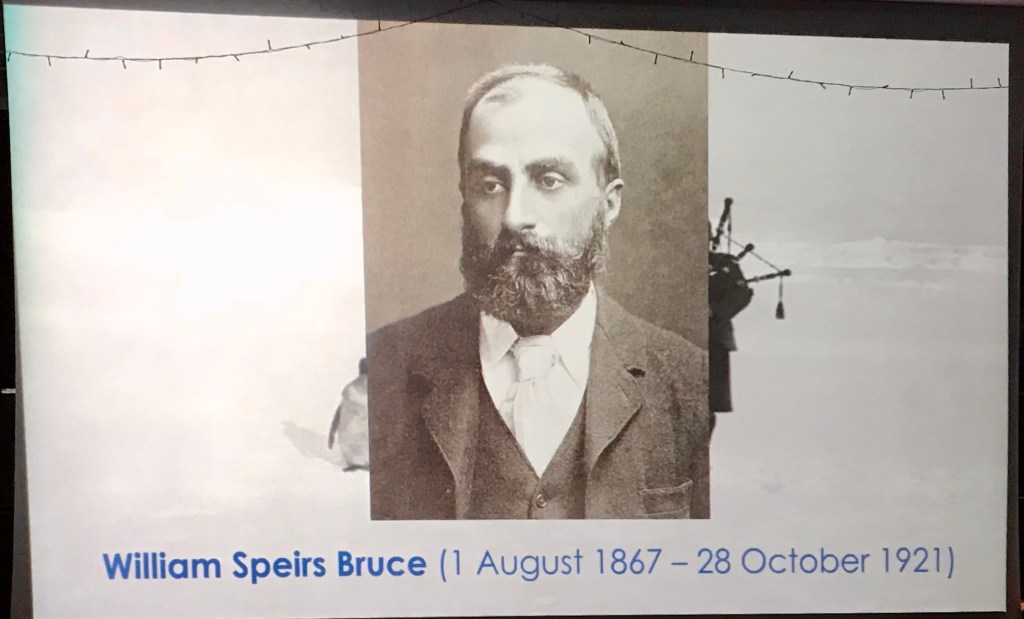
Orcadas Station is situated on Laurie Island and was initially established in 1902 by the Scottish National Antarctic Expedition, led by William Bruce. In 1904, however, the base was handed over to the Argentines, who have remained there ever since. The base is occupied throughout the year by Argentine personnel and is used primarily as a bird hide and field refuge.

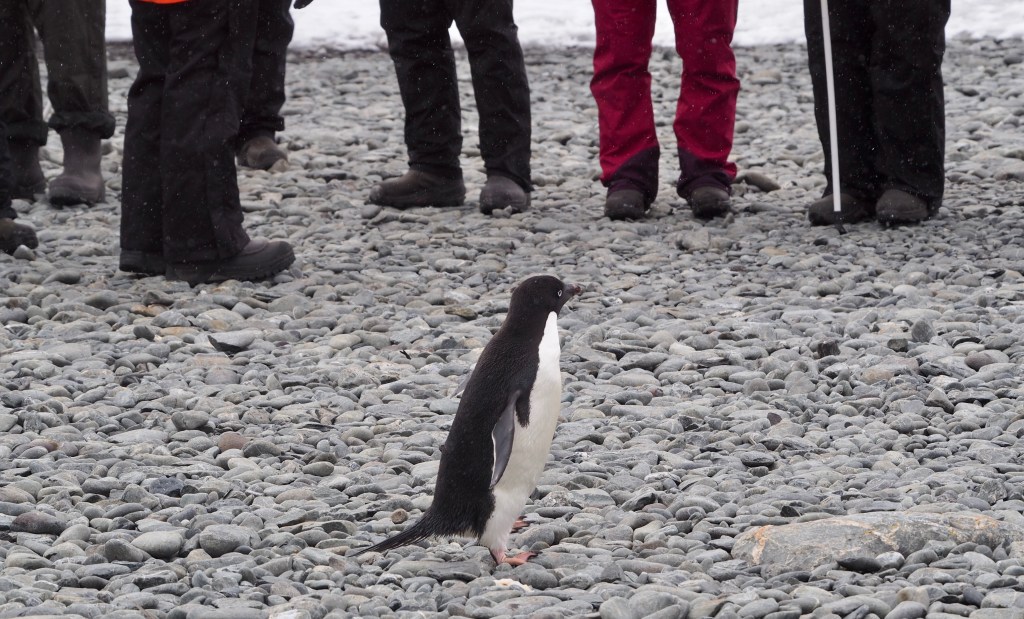
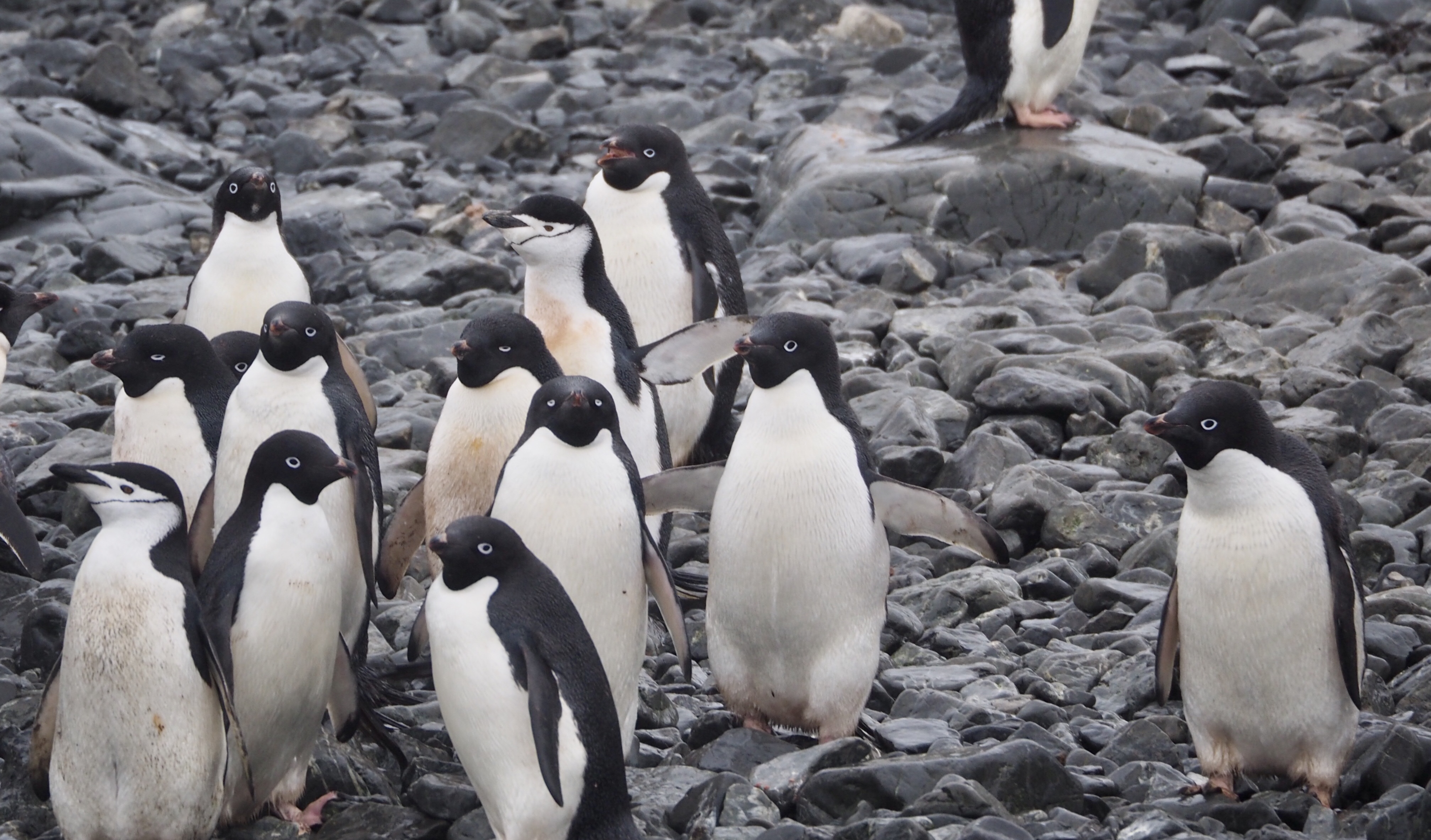
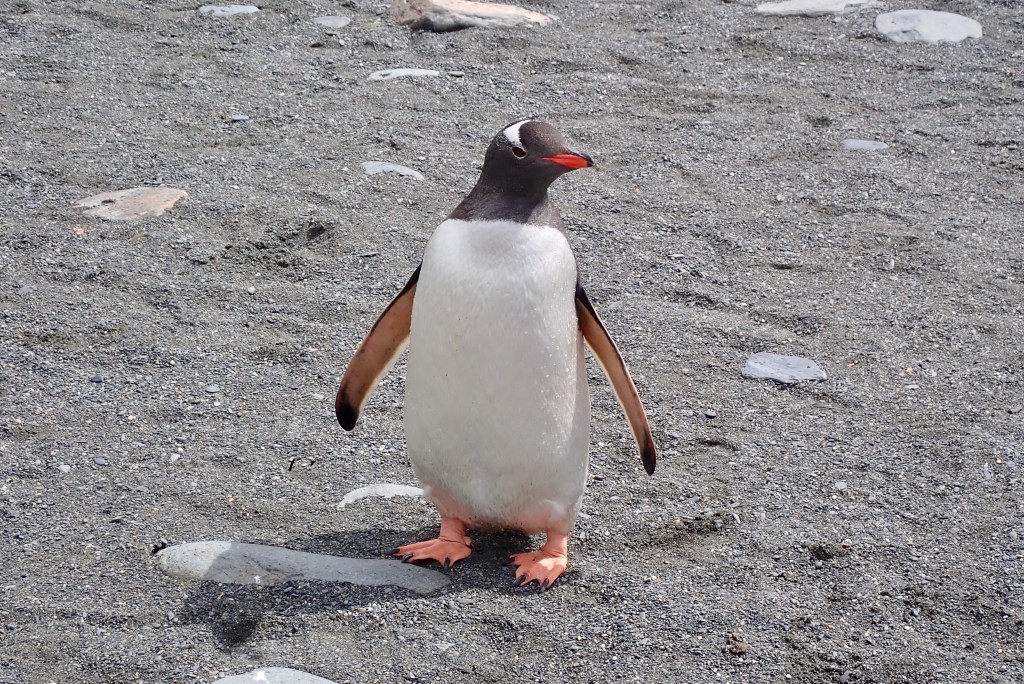
A wonderful treat. Saw Adelie penguins – the last of the seven penguins we had hoped to see. Also saw a new and gorgeous seal – the Weddell seal.

There was a chinstrap on the beach where we landed and a few higher up, snuggled down in the snow.

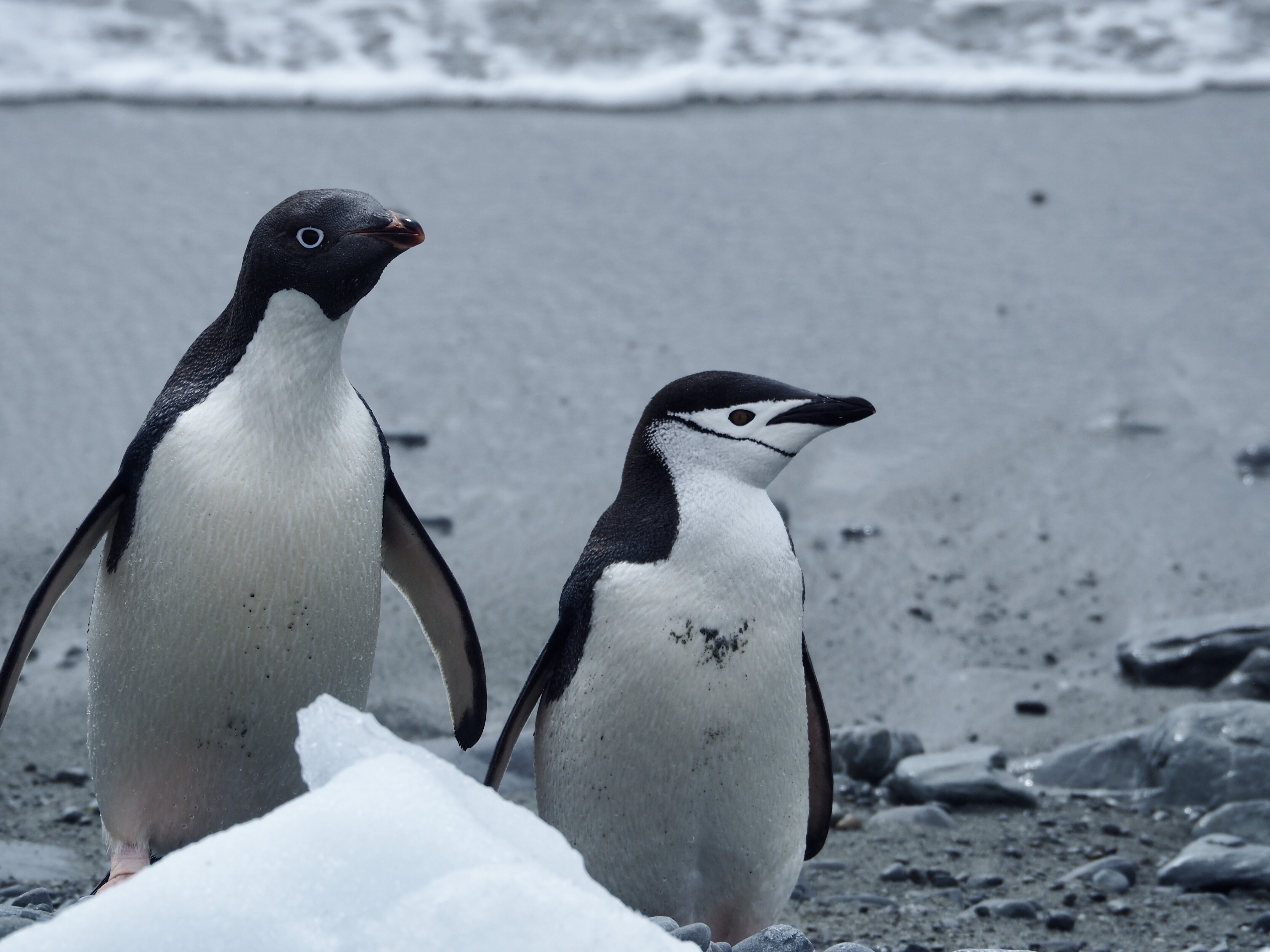
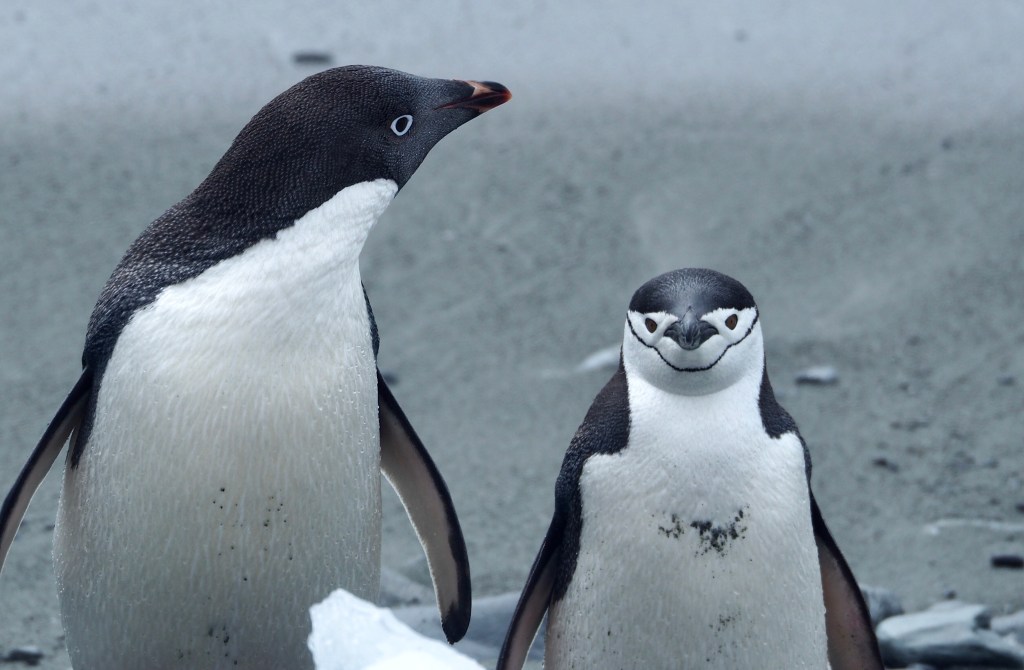
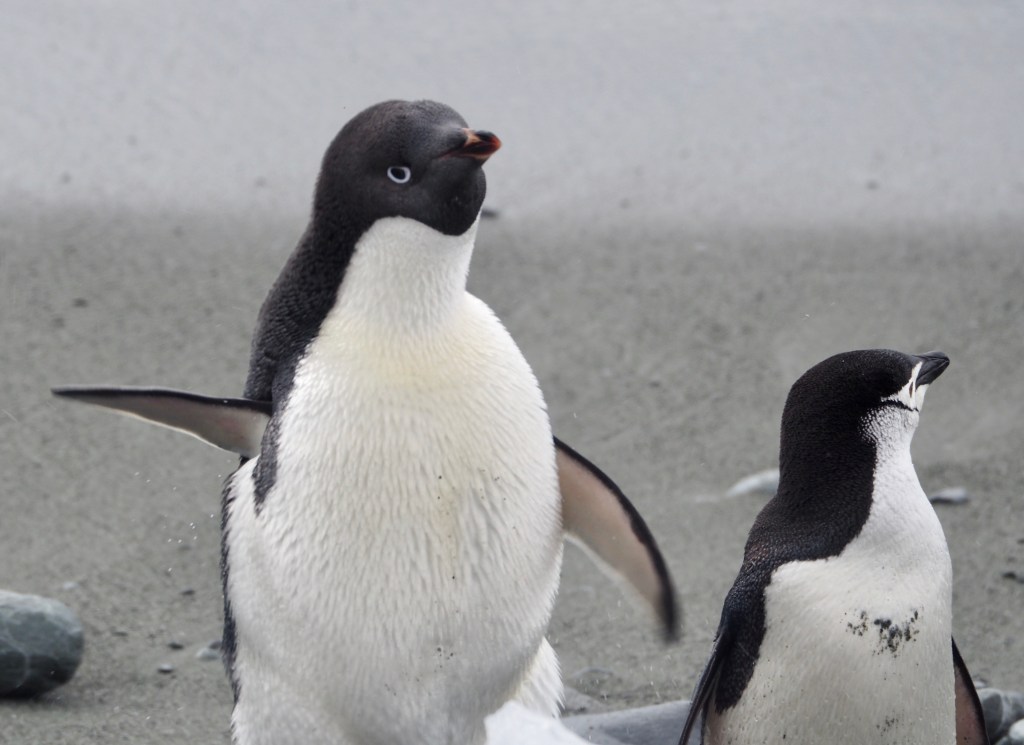
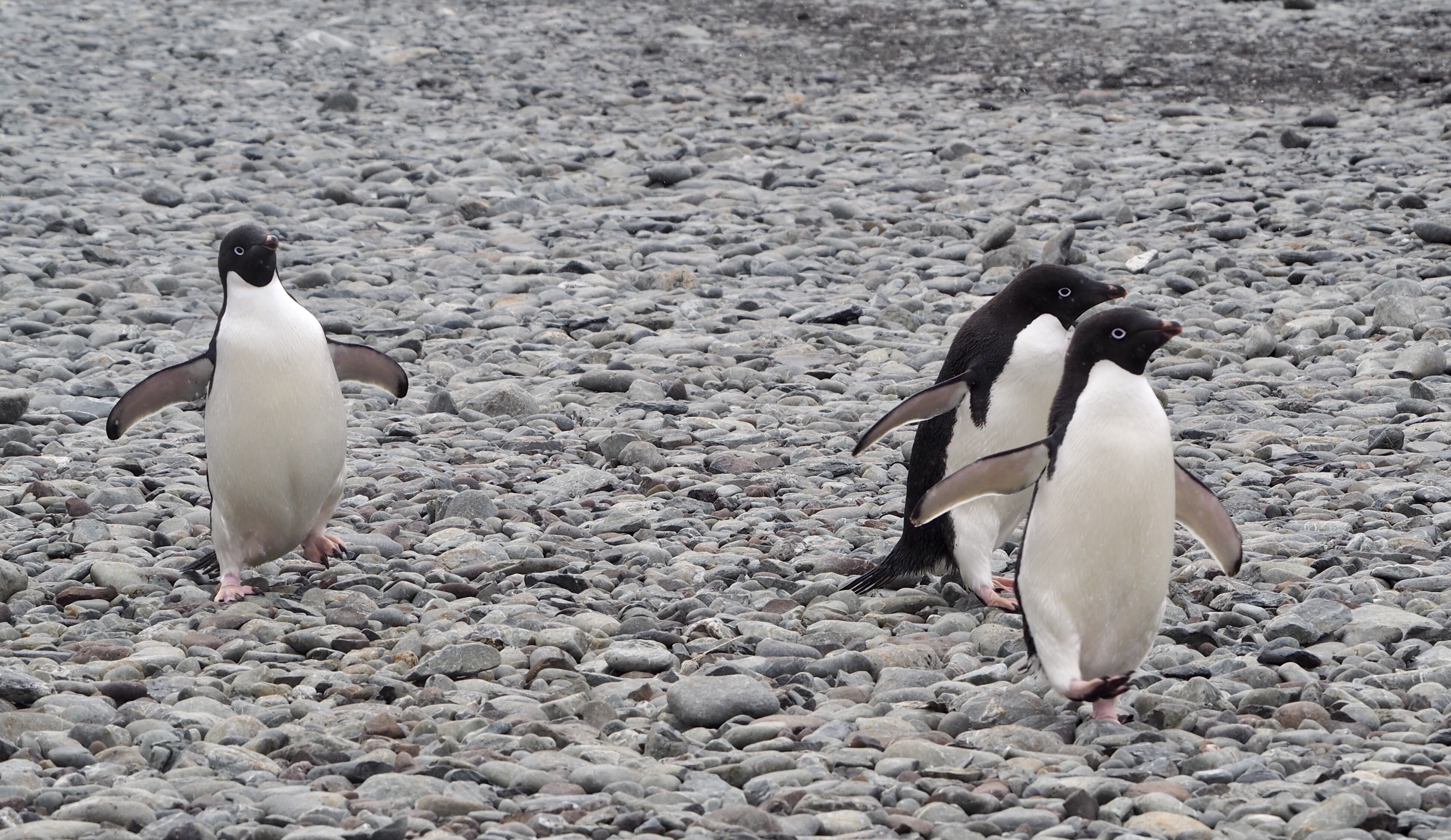
Then Adelies too. Gorgeous eyes.

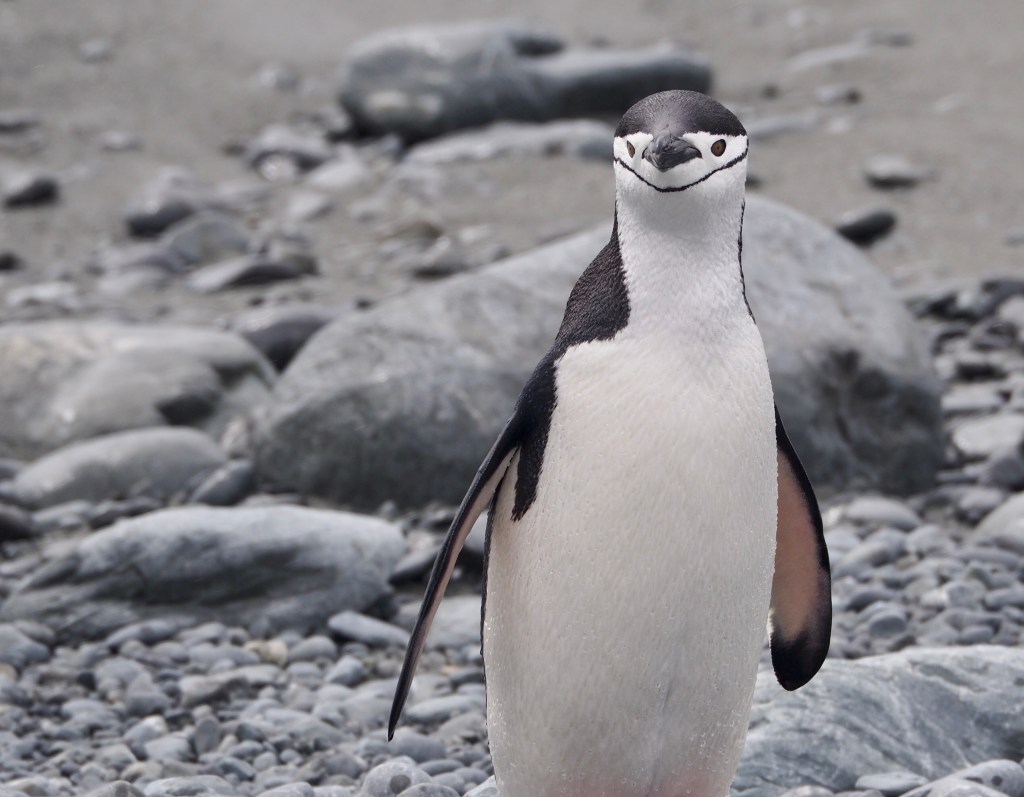
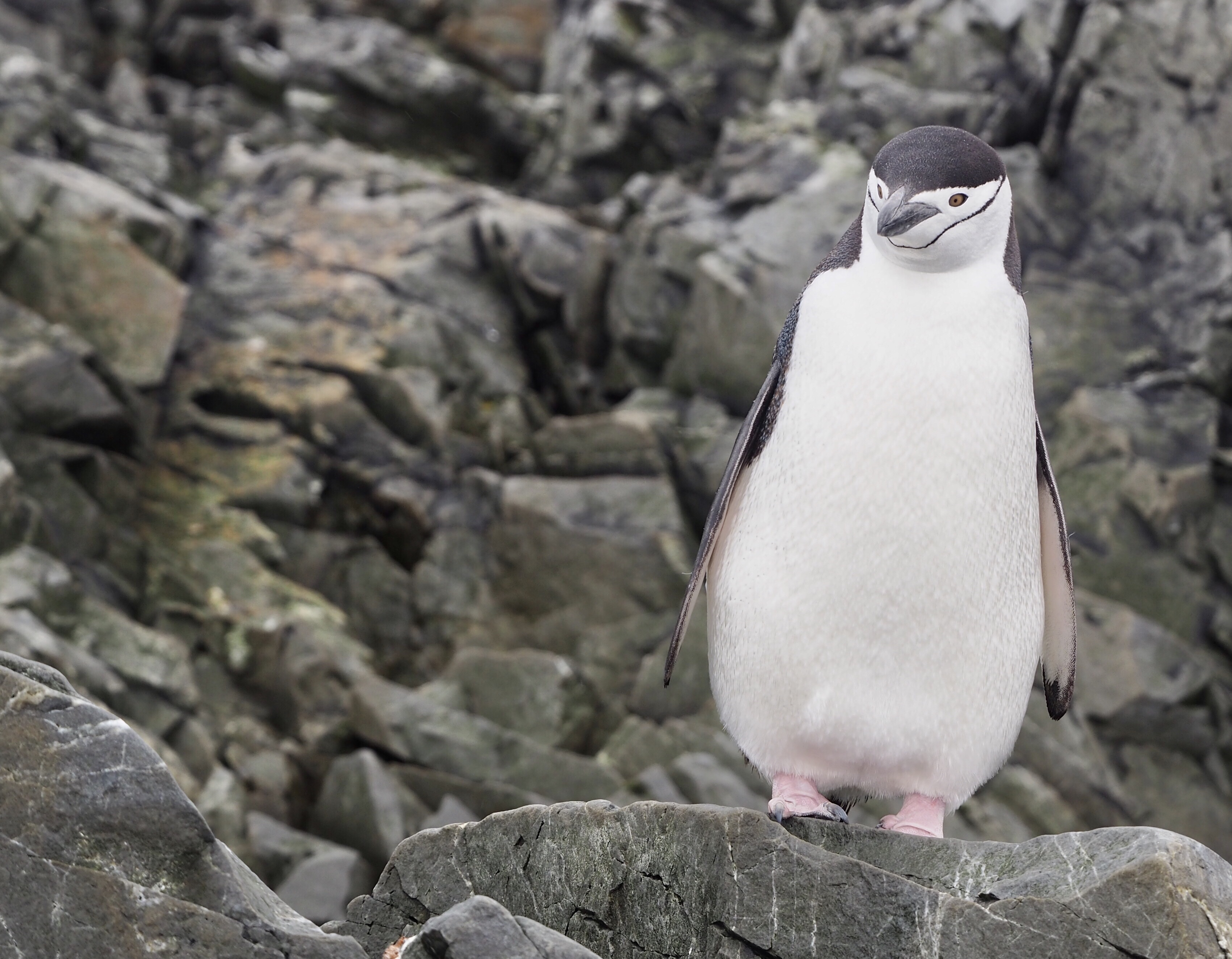
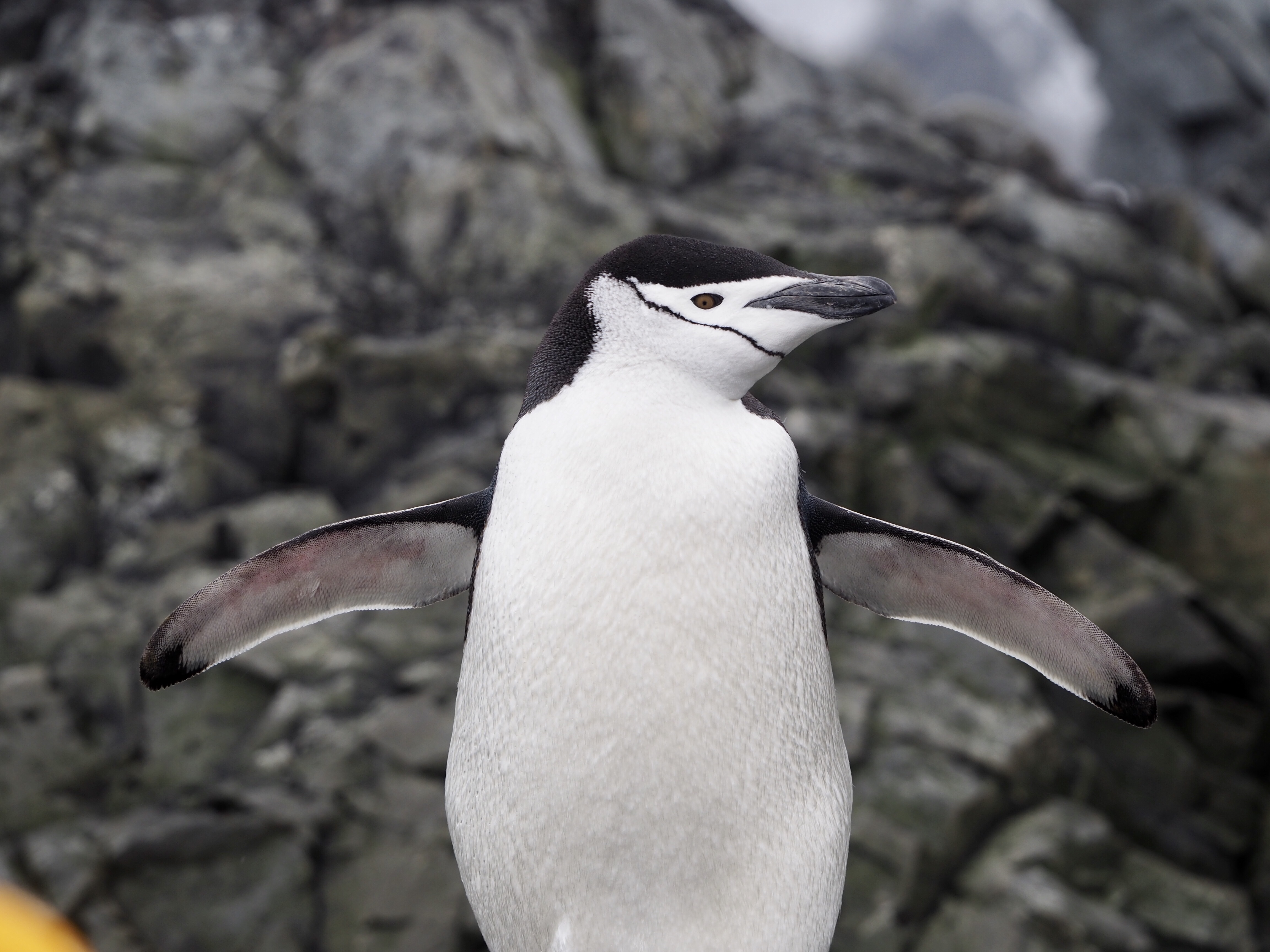
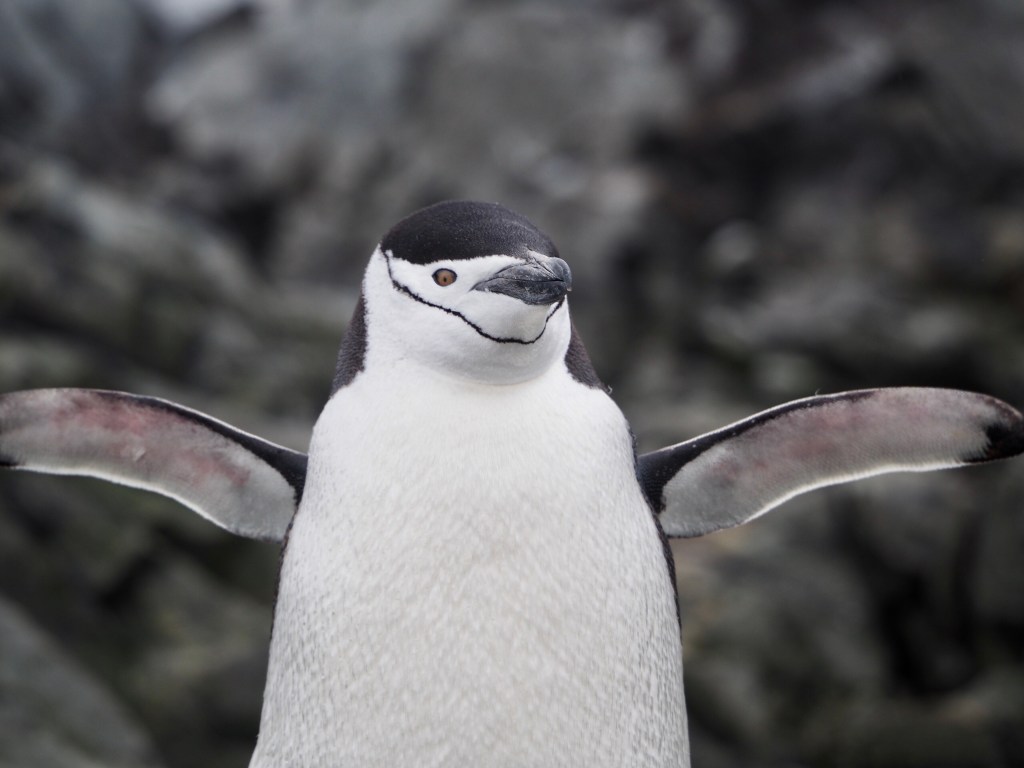
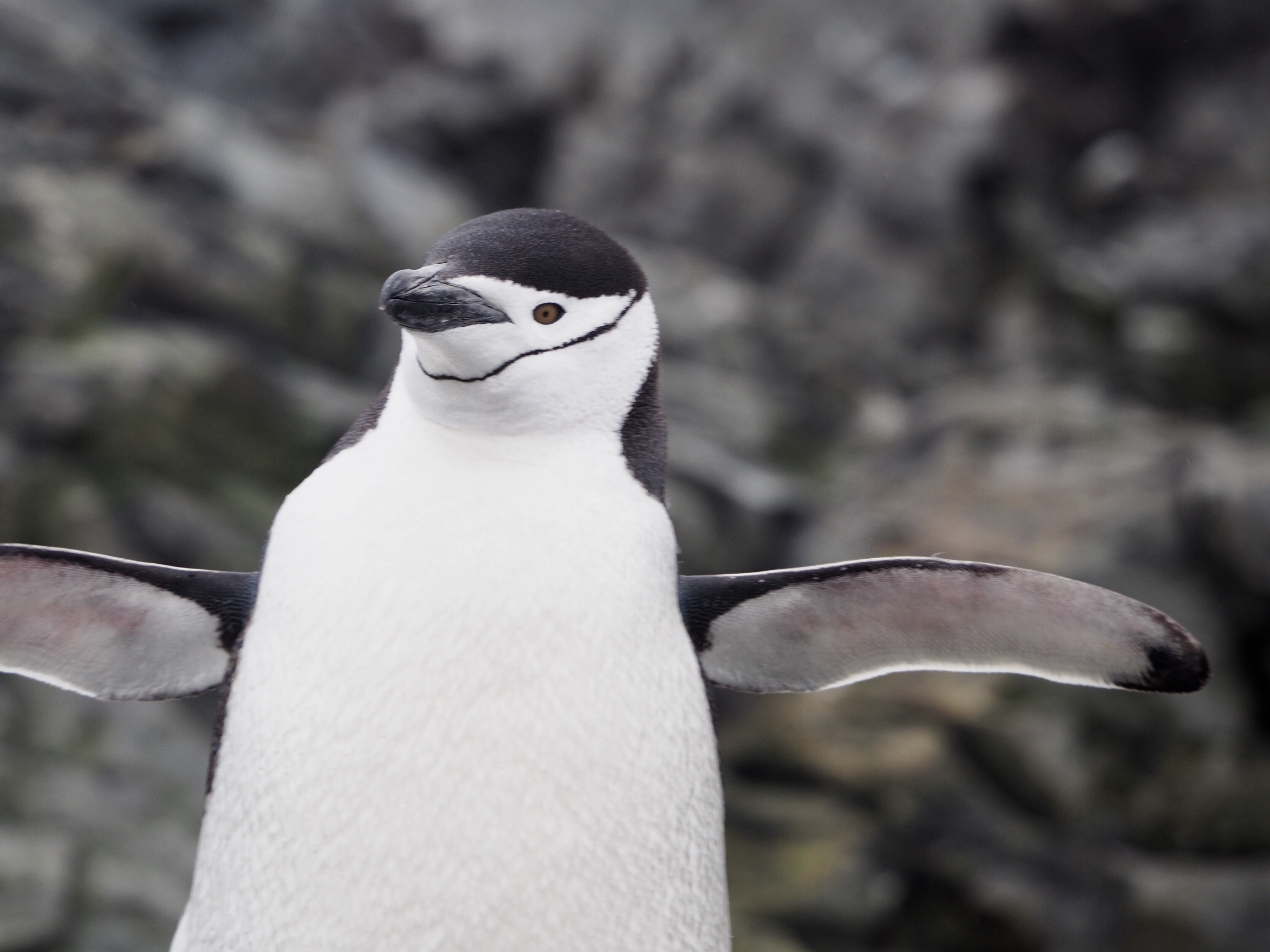
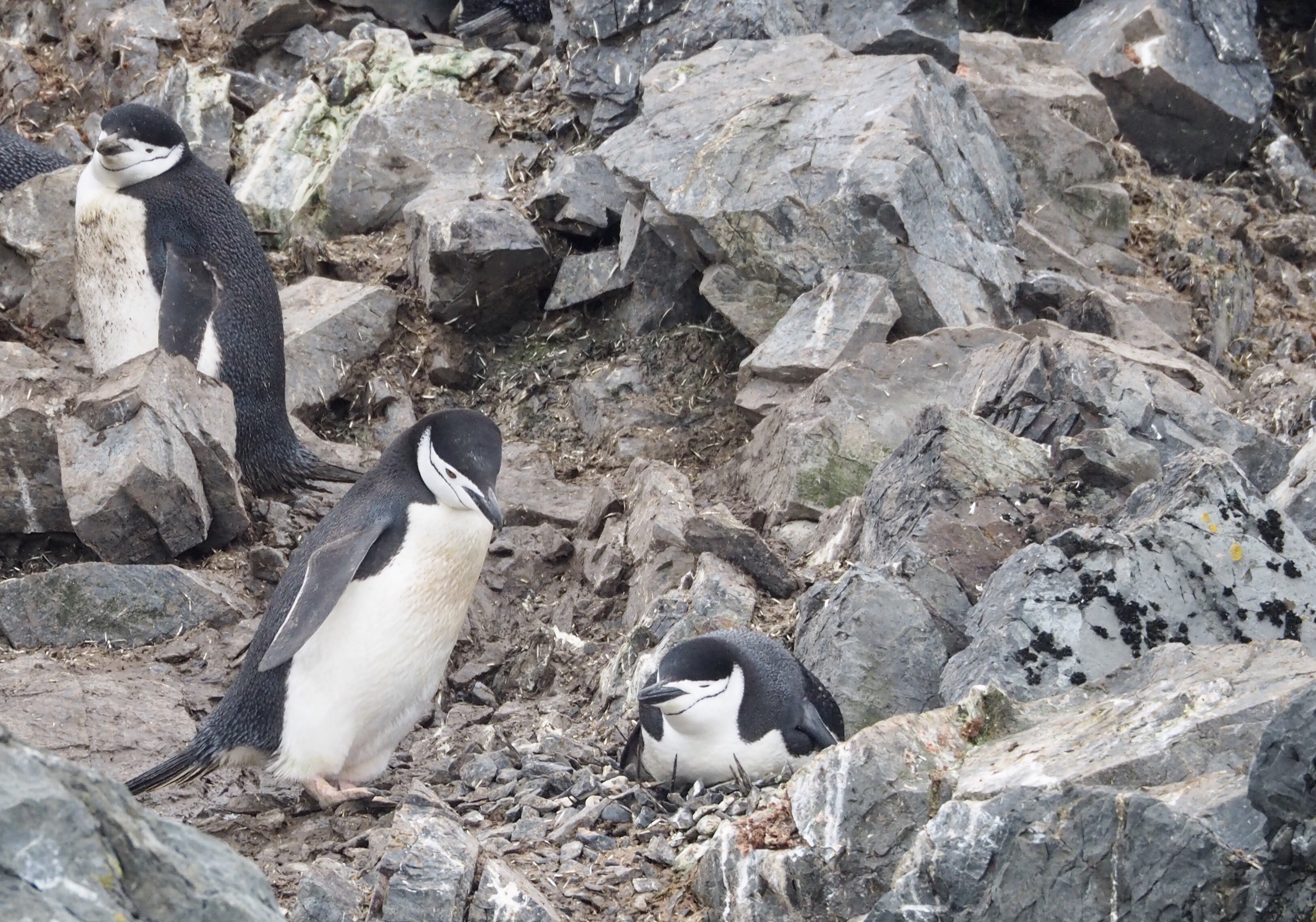
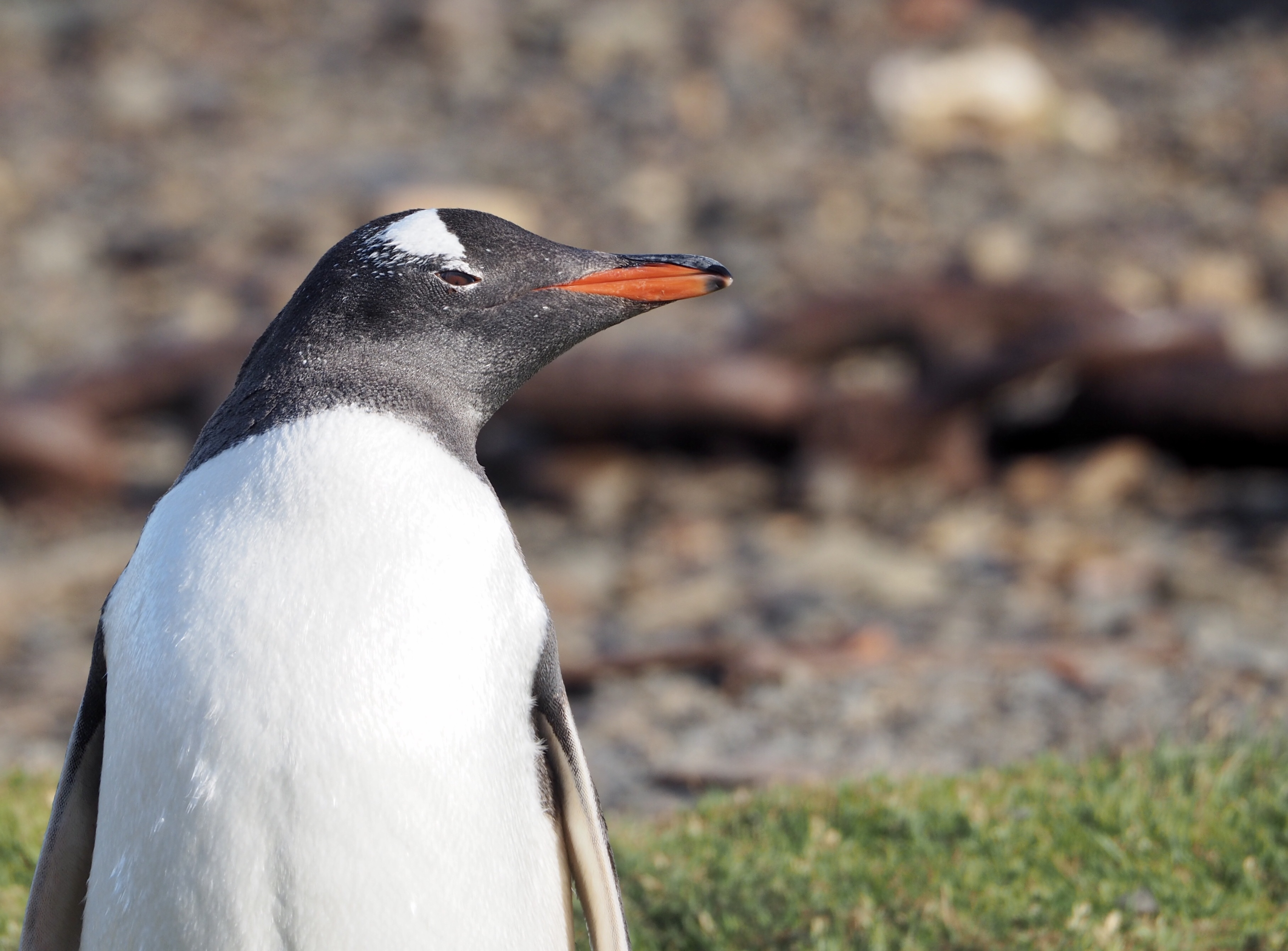
Love that chinstrap smile!

Yes I could have stayed on the beach all day! Still we felt very privileged to be able to visit this Argentinian research station. Our guide had no English so Johann went with us and did all the translation.

We saw the original building from the first settlement here.

First time I have used two pairs of bottom thermals and two pairs of socks, zero degrees. Worked well. I am using one waterproof glove and one lighter glove (that I can work the cameras with). Loads of chinstraps too. We visited the station first and Garrie purchased a hat.

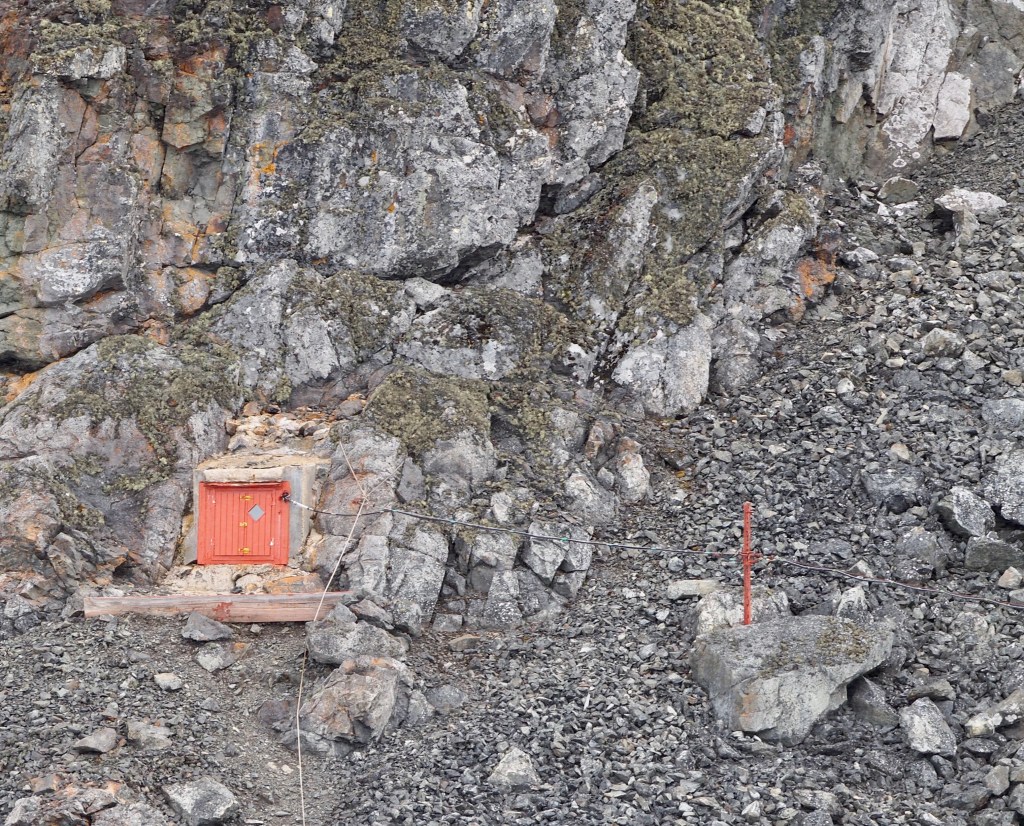
Seismic monitoring station.
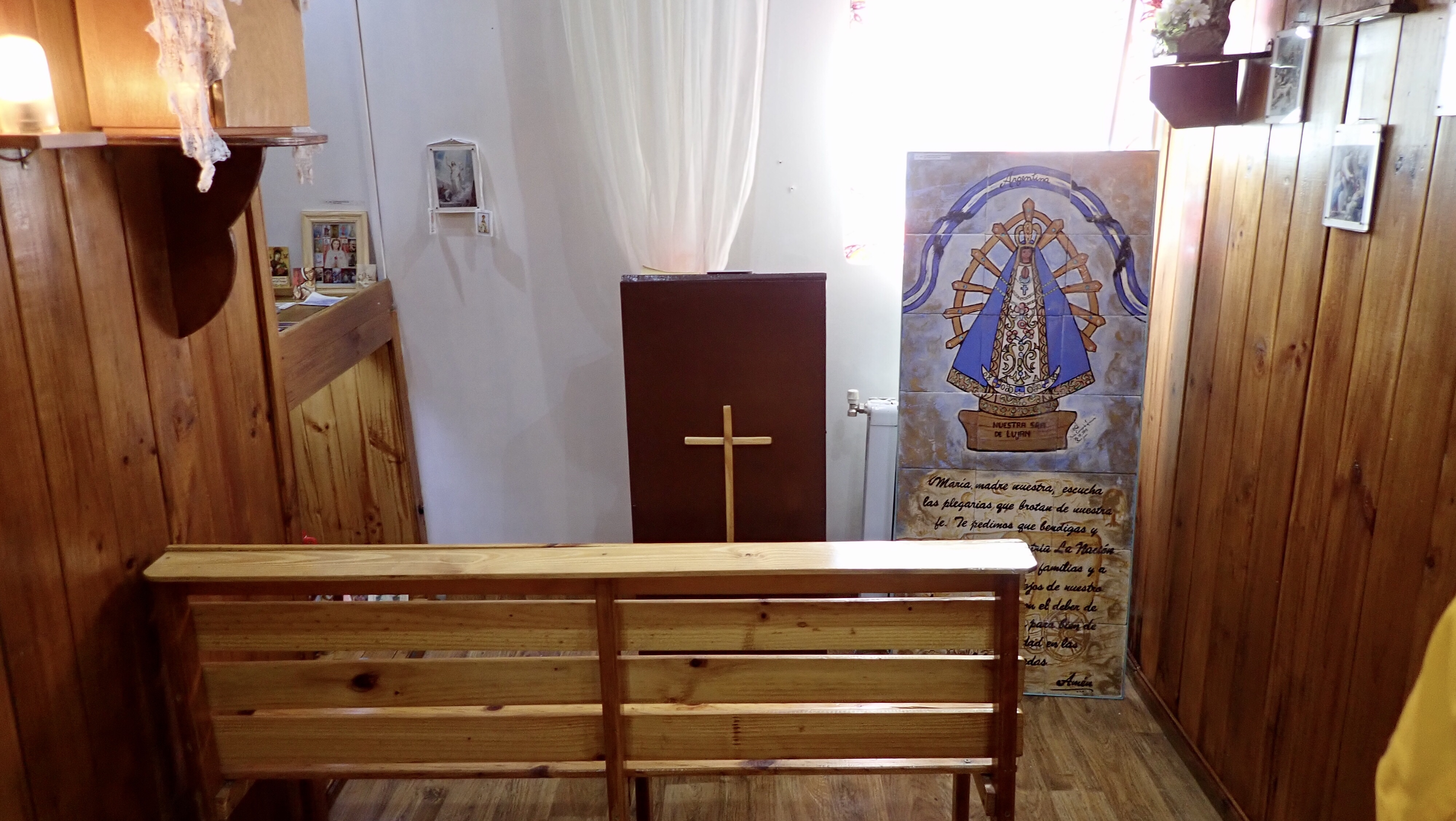
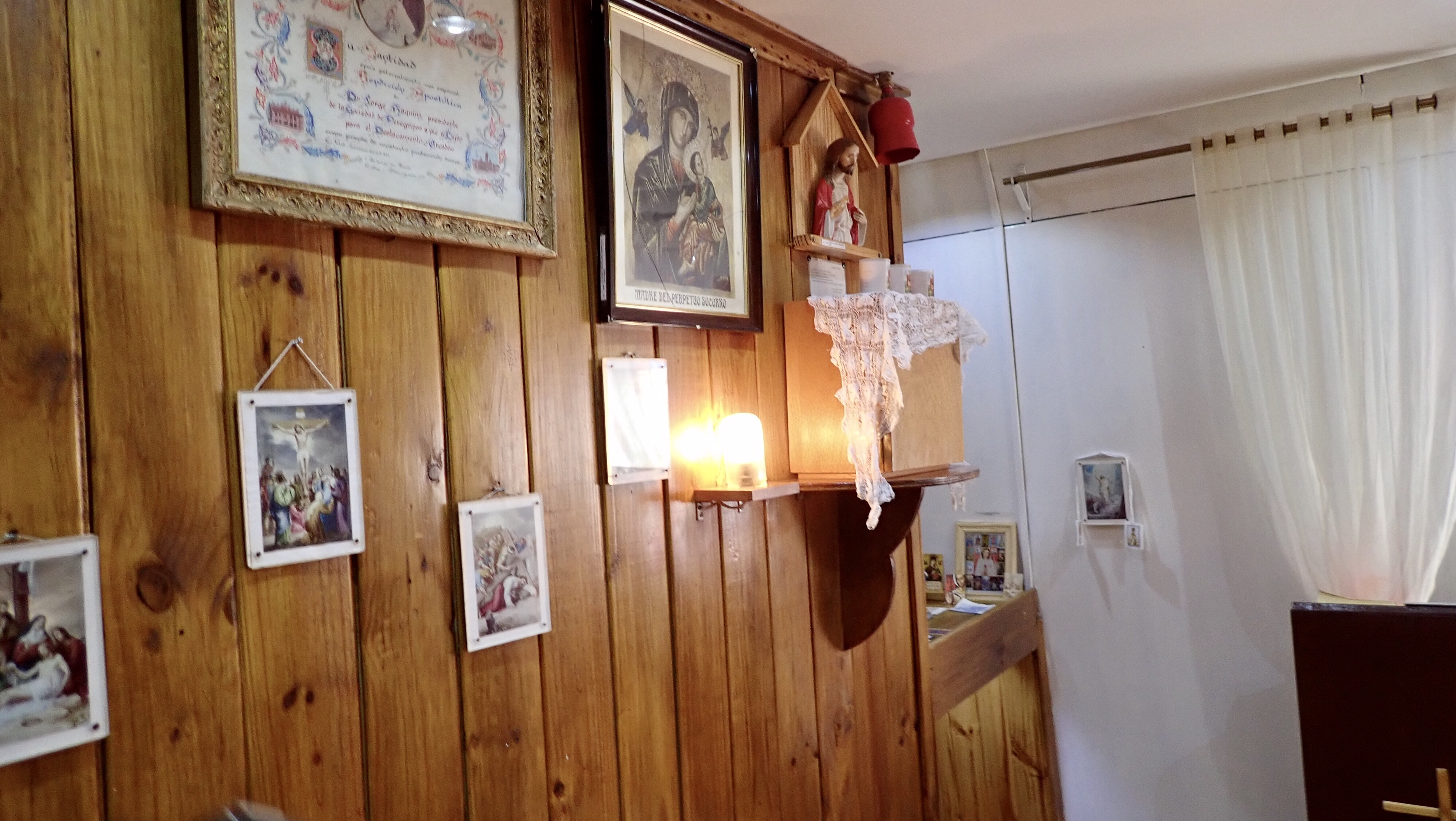
The chapel.

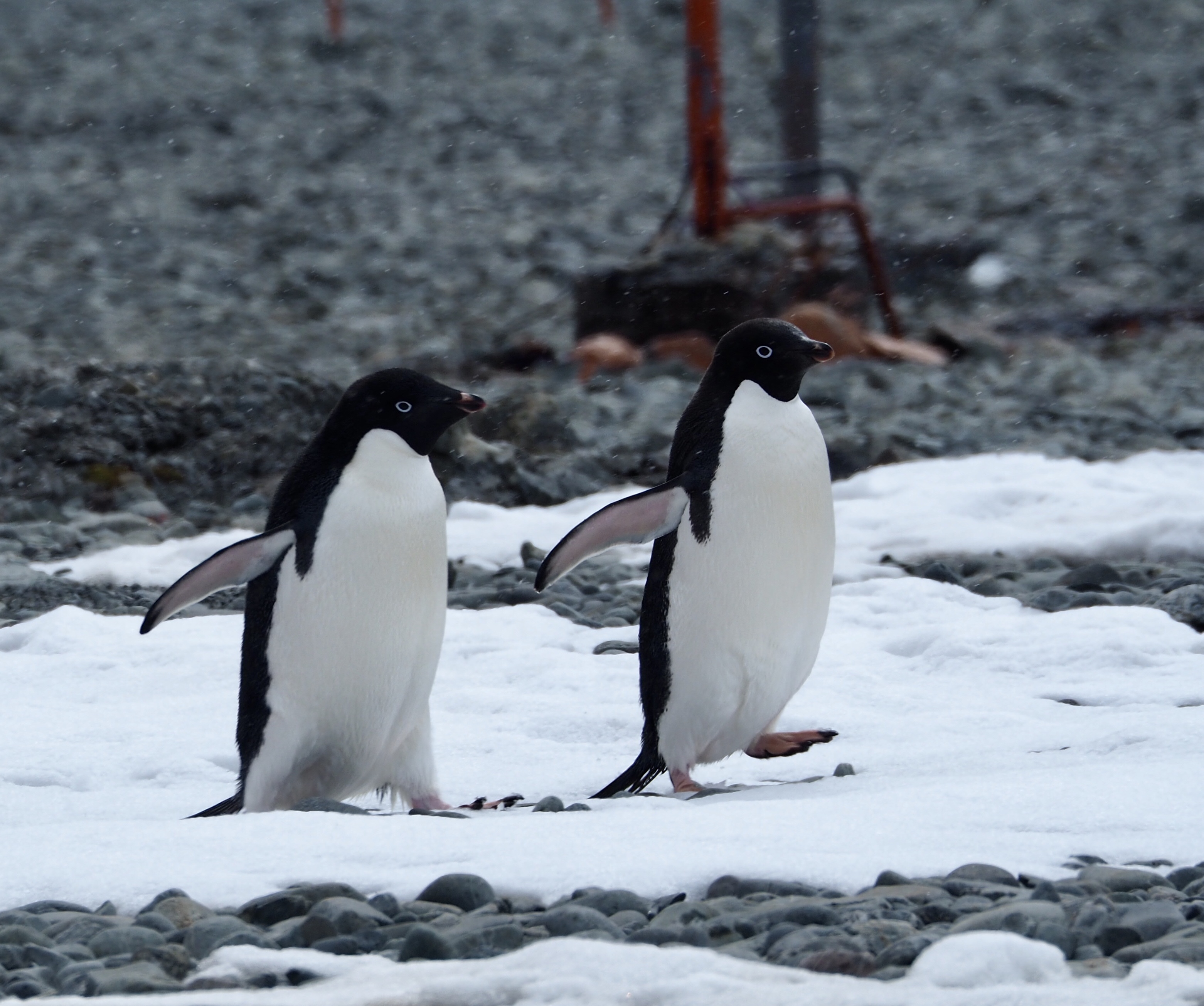
Adelie penguins wandering through the station.

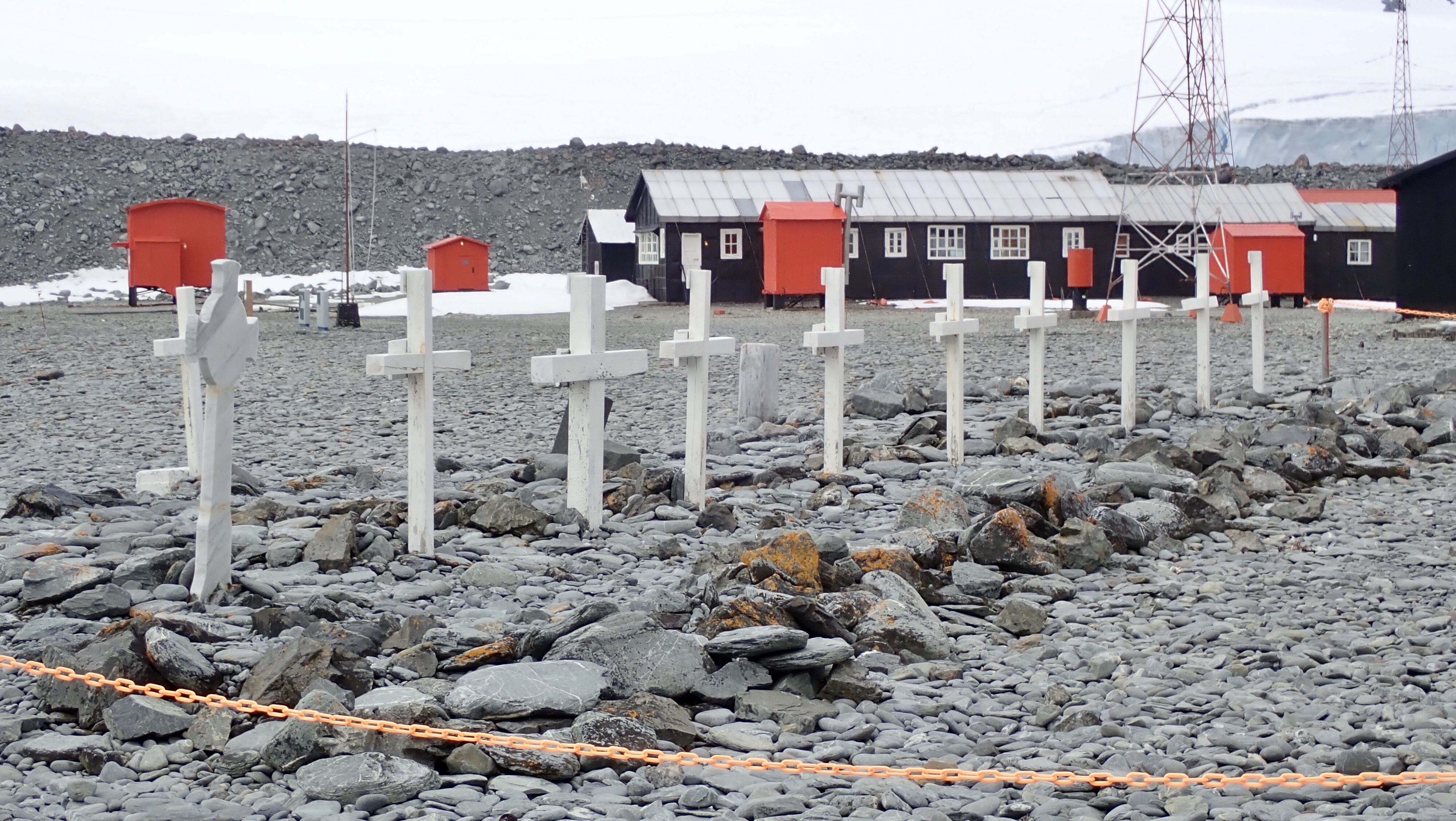
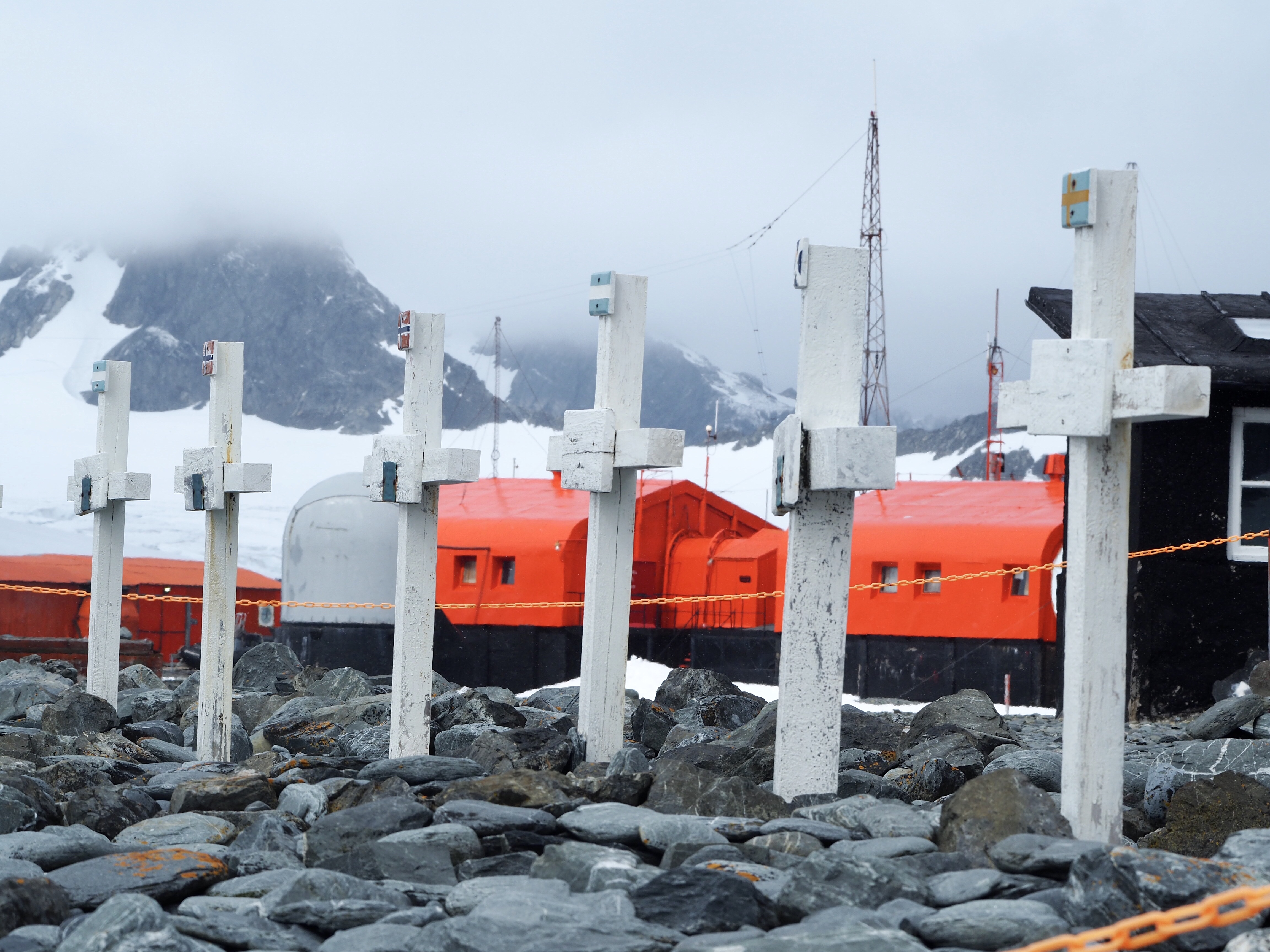
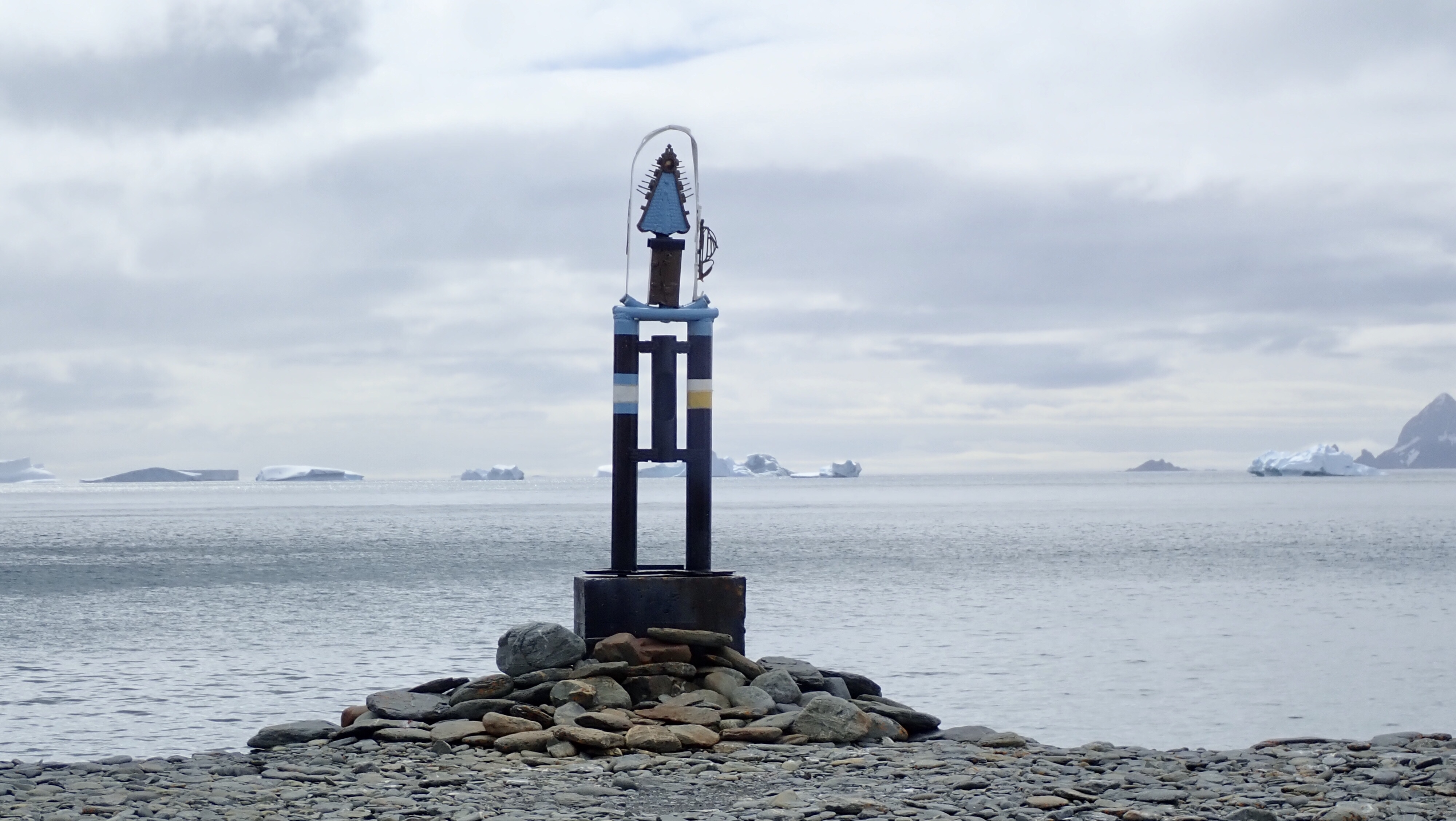
Sadly the station has lost a few people and has it’s own cemetary.

Each group is commemorated.

It is certainly a beautiful place to live. There are currently 17 people stationed here and our guide was going home in Feb after twelve months. I asked what he missed. His answer was family and green things.

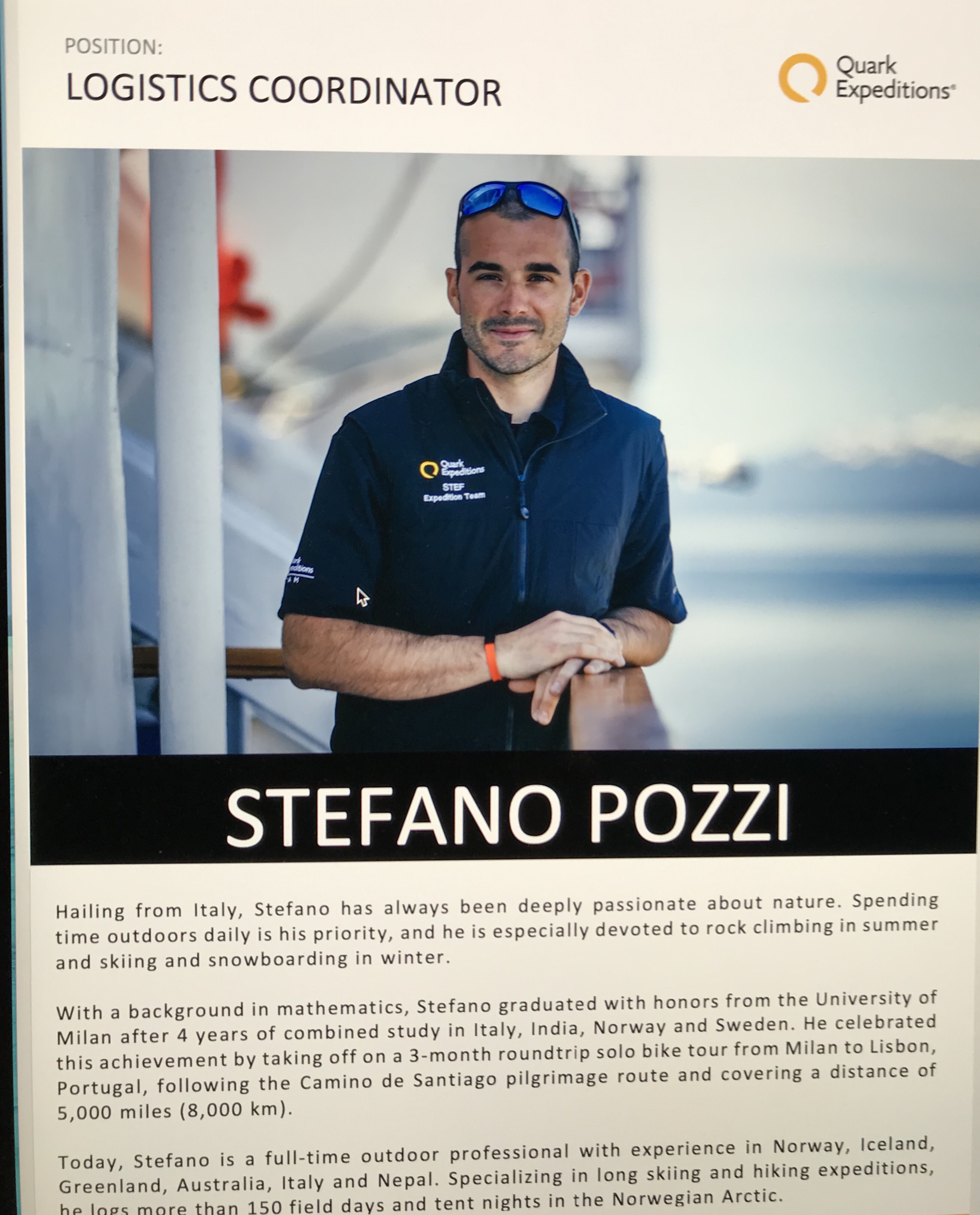
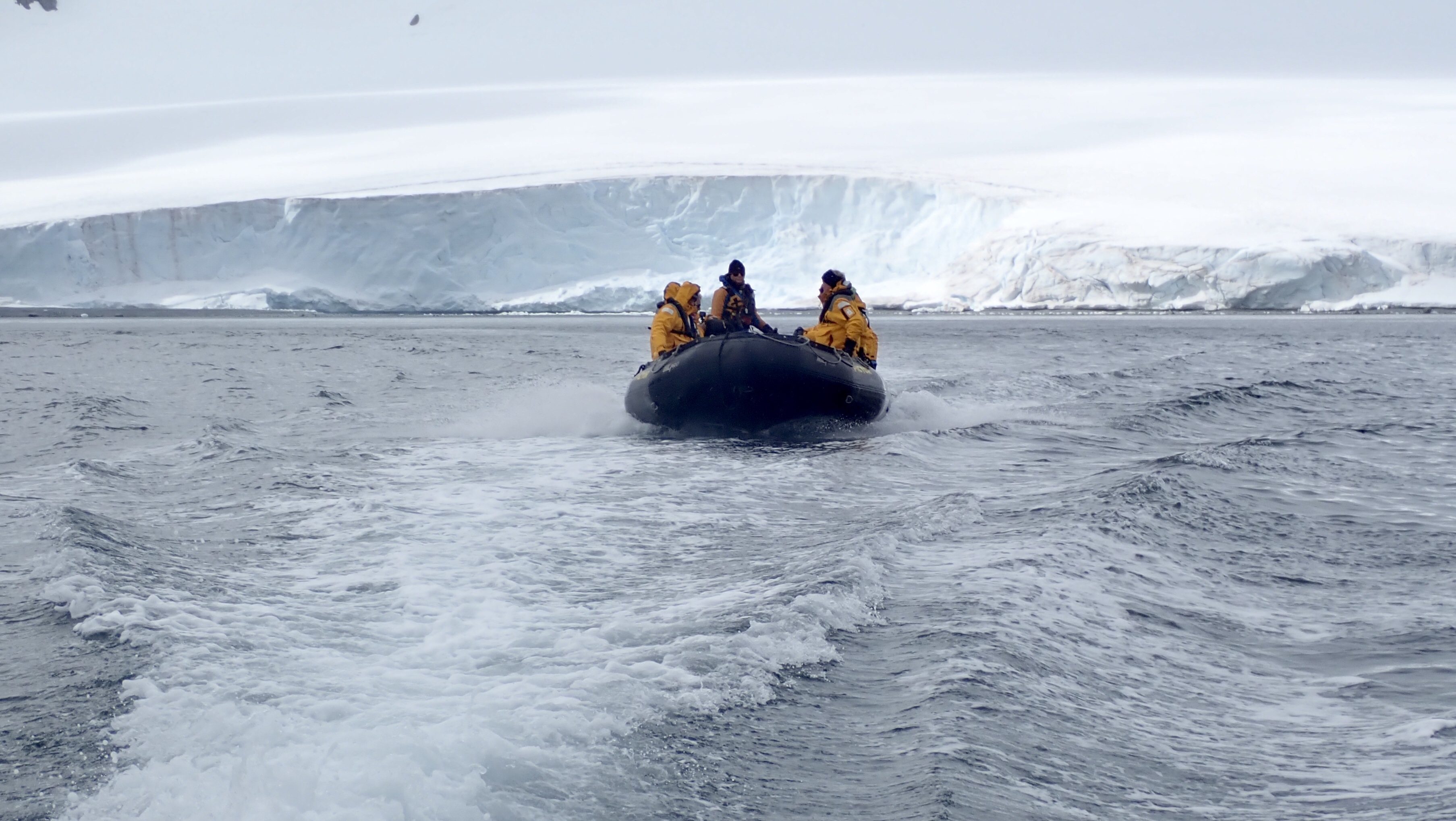
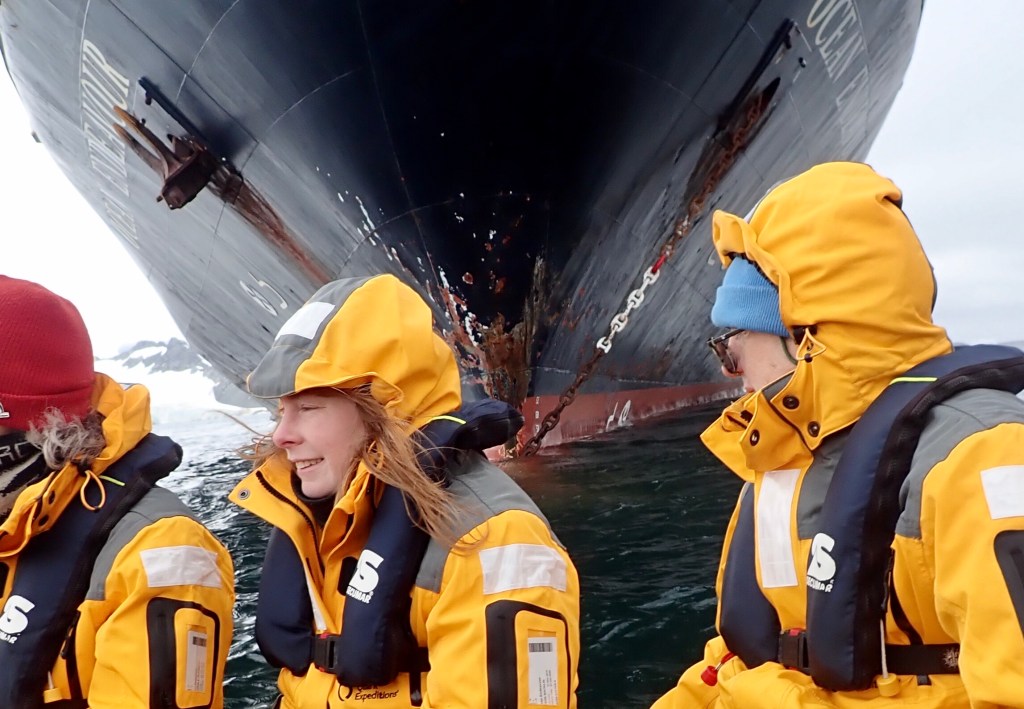
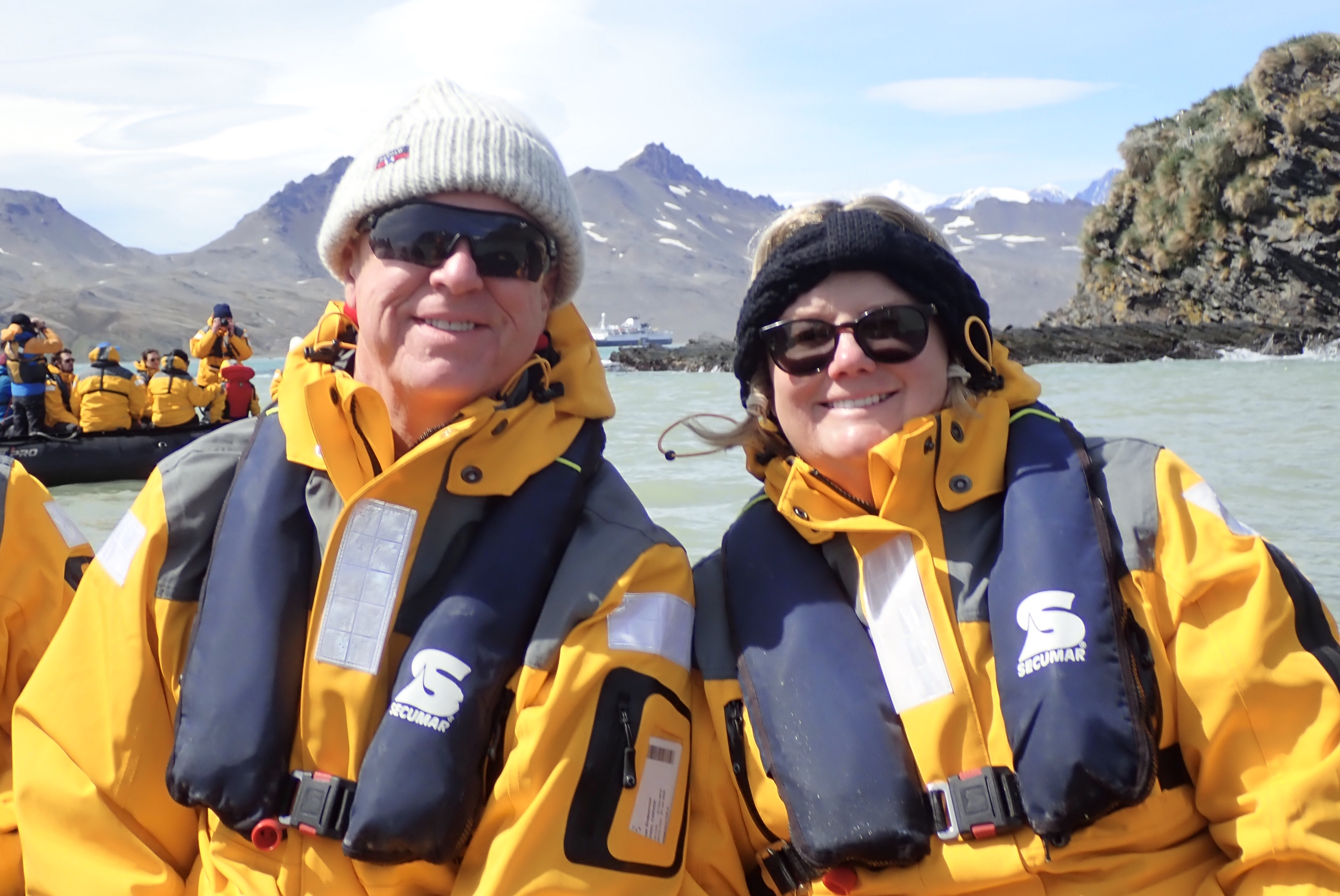
Then we had a zodiac cruise with Stefano from Milano. He is a card, (funny), and at one point drove the zodiac onto an iceberg to show how people from Milano, (Italy), can park anywhere. It came as no surprise when a propellor from one of the zodiacs was auctioned off – Stefano being the one who had wrecked it!

We always travel in pairs.

A bit of size perspective.

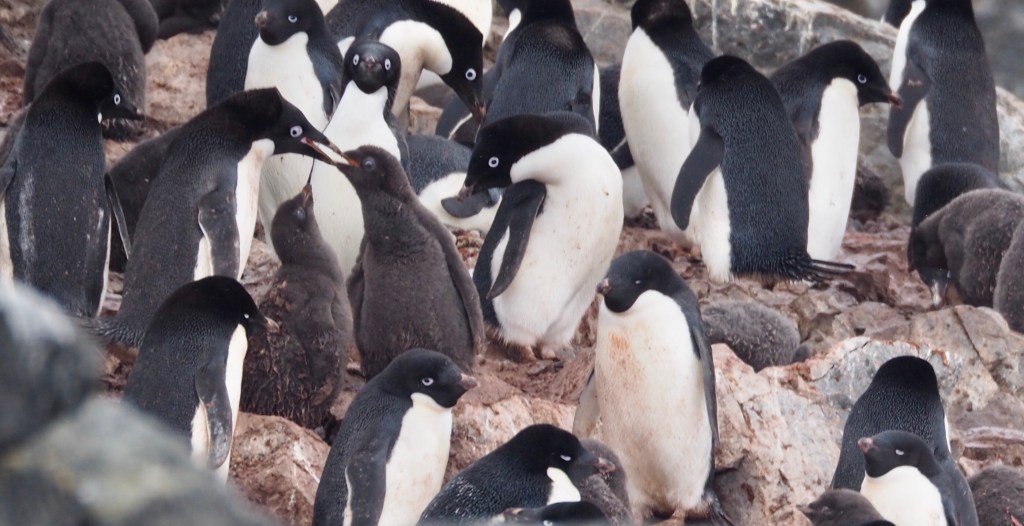
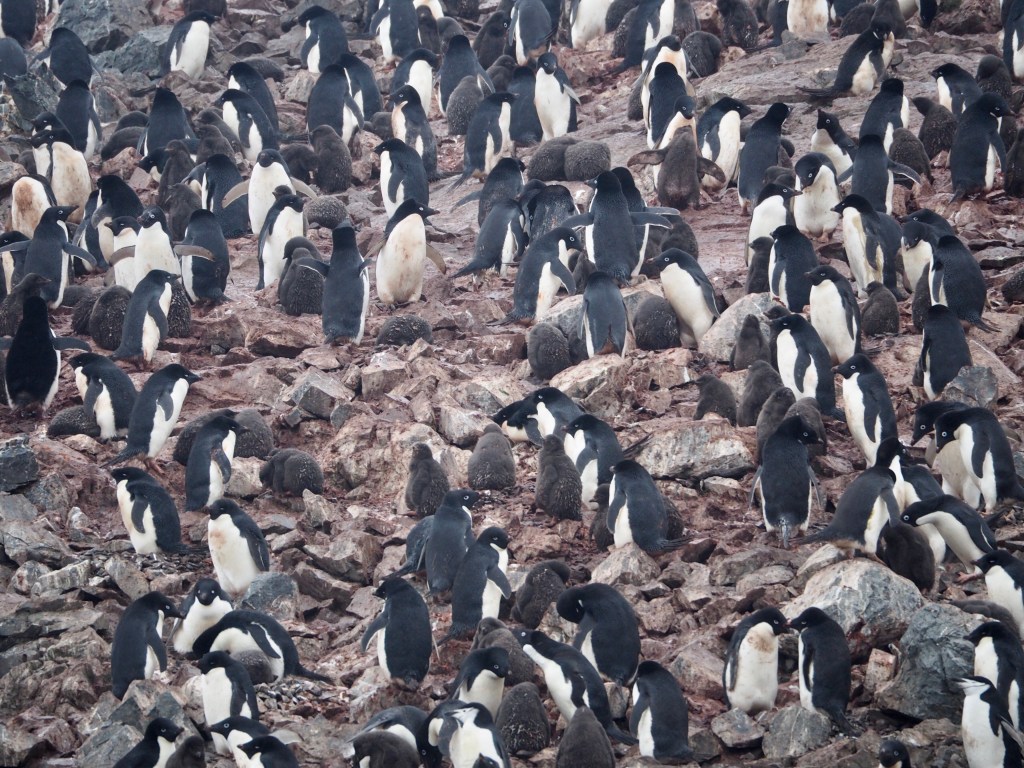
I took 230 pics on this excursion all up as first we visited an Adelie penguin breeding site.

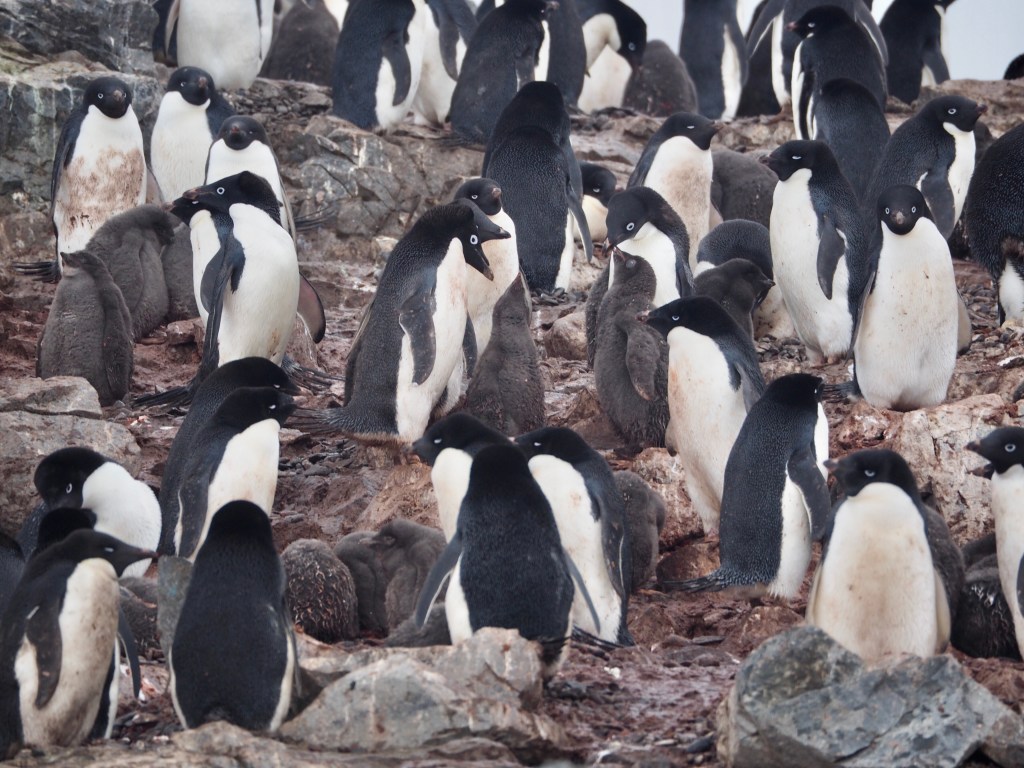
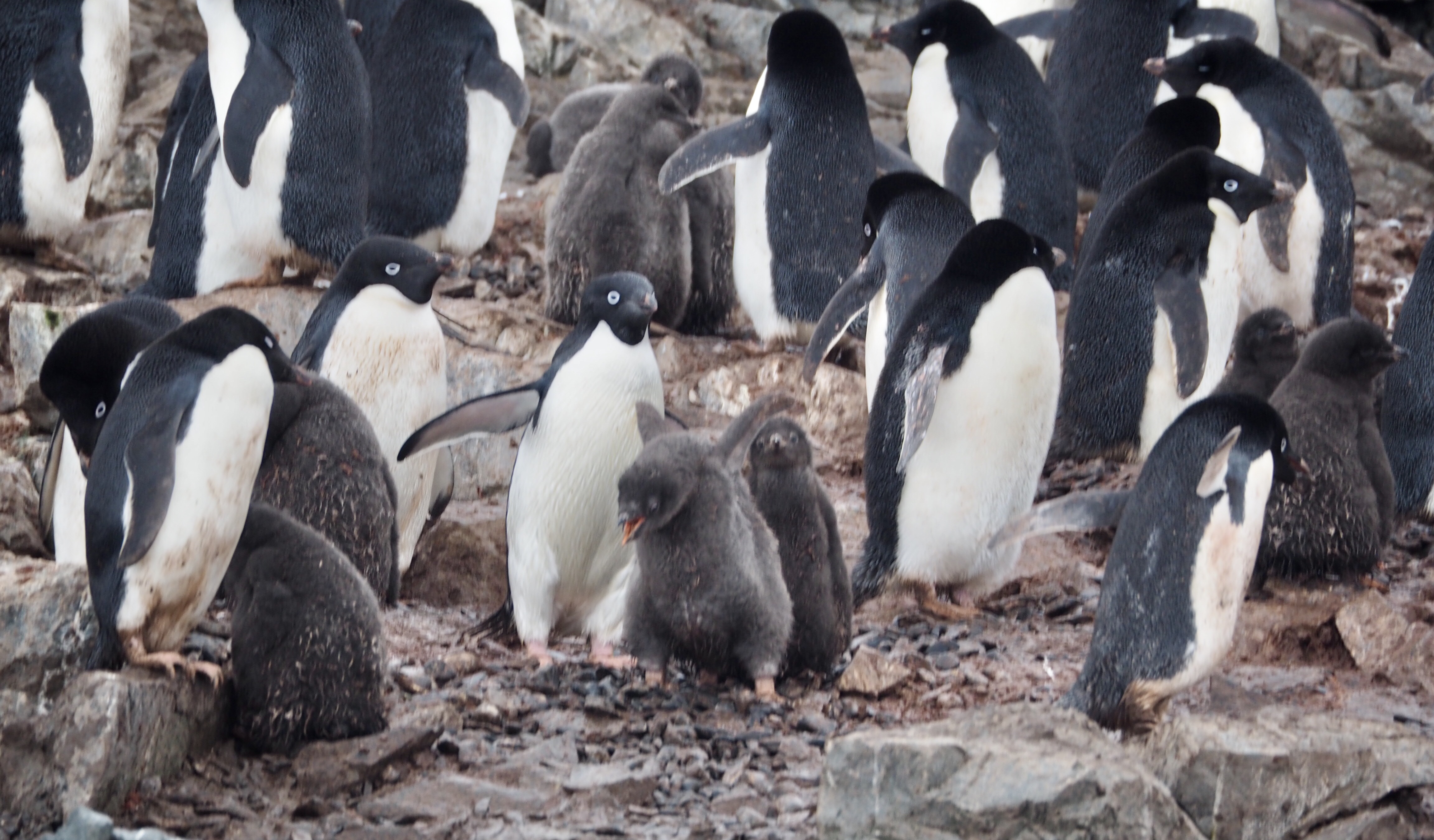
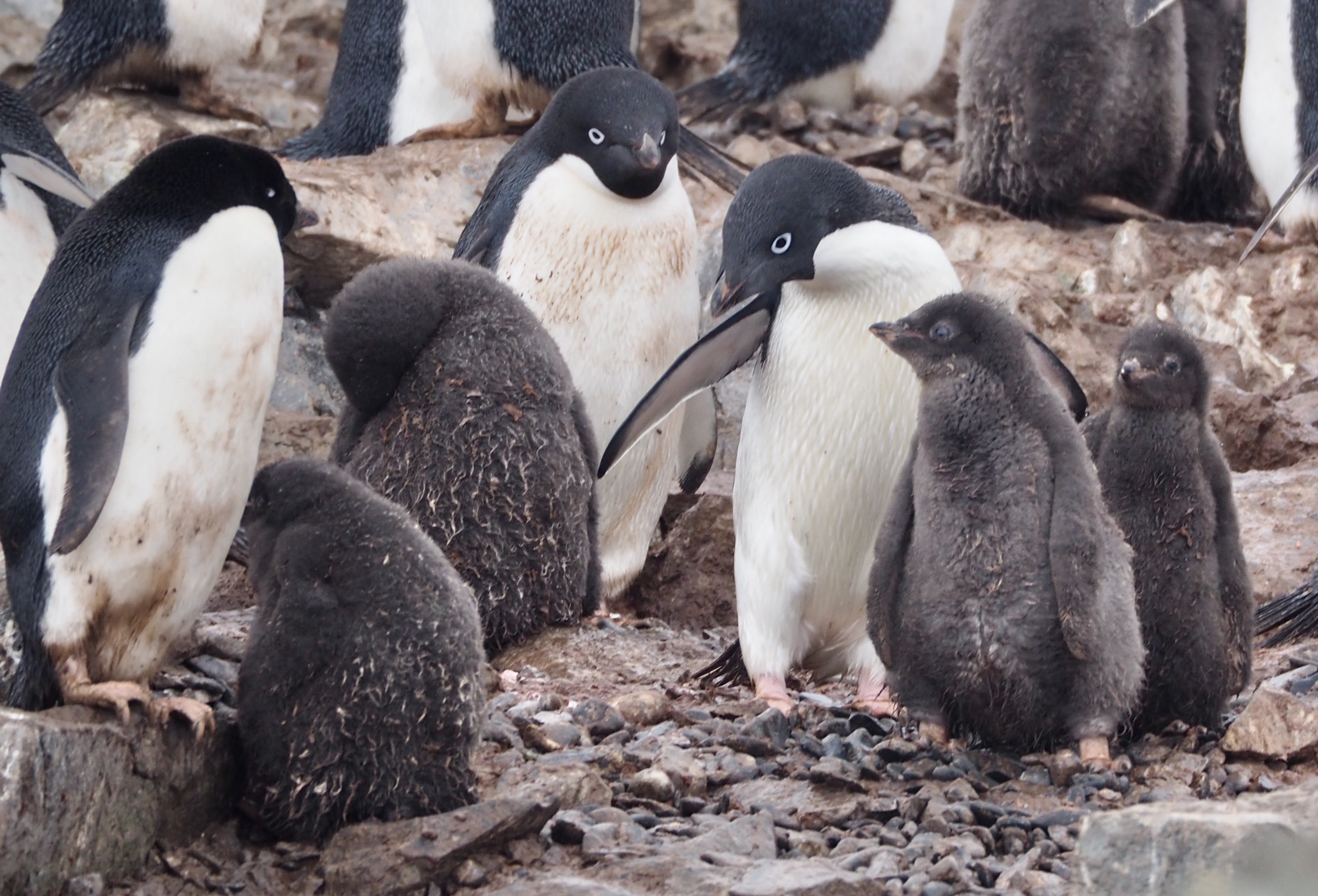
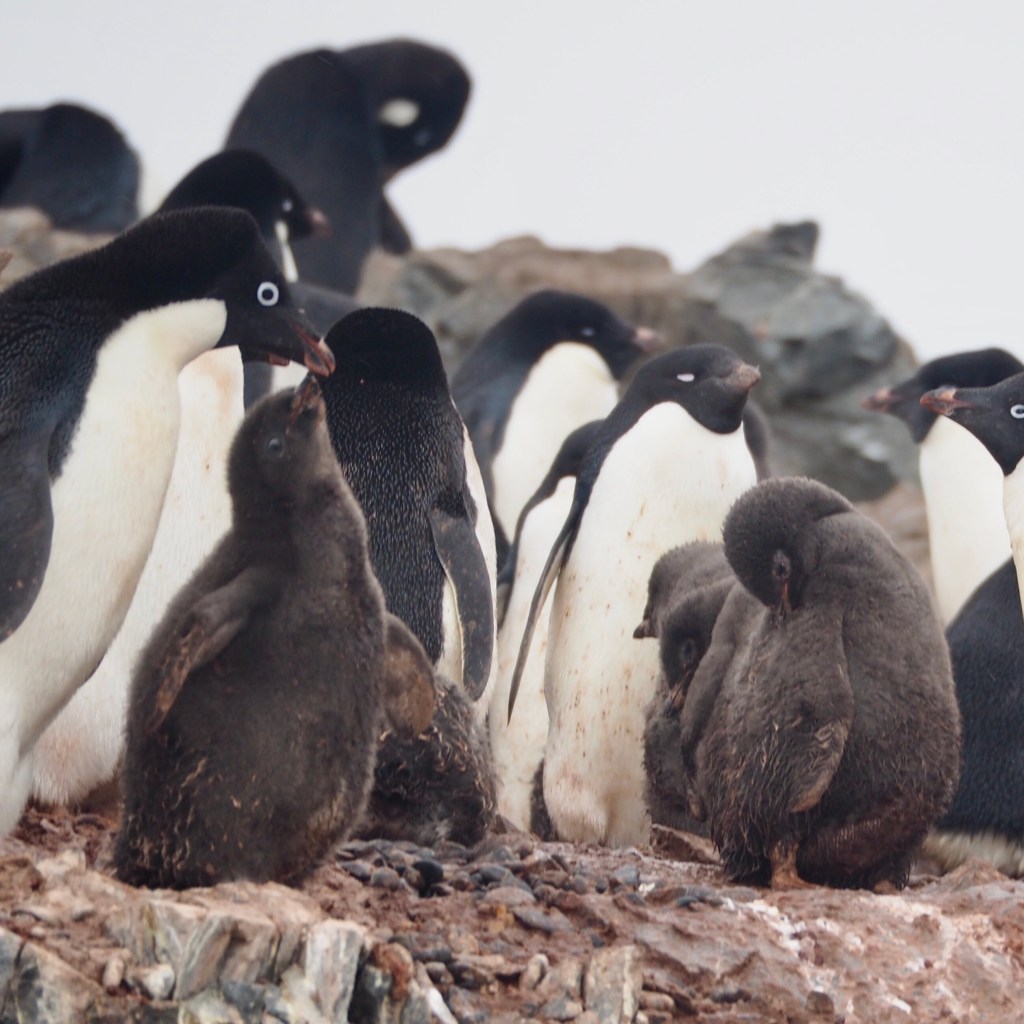
Yes lots of chicks.

Then we found a chinstrap who simply wanted to pose for photos.

Then there were more fascinating ice bergs or bits or whatever’s…

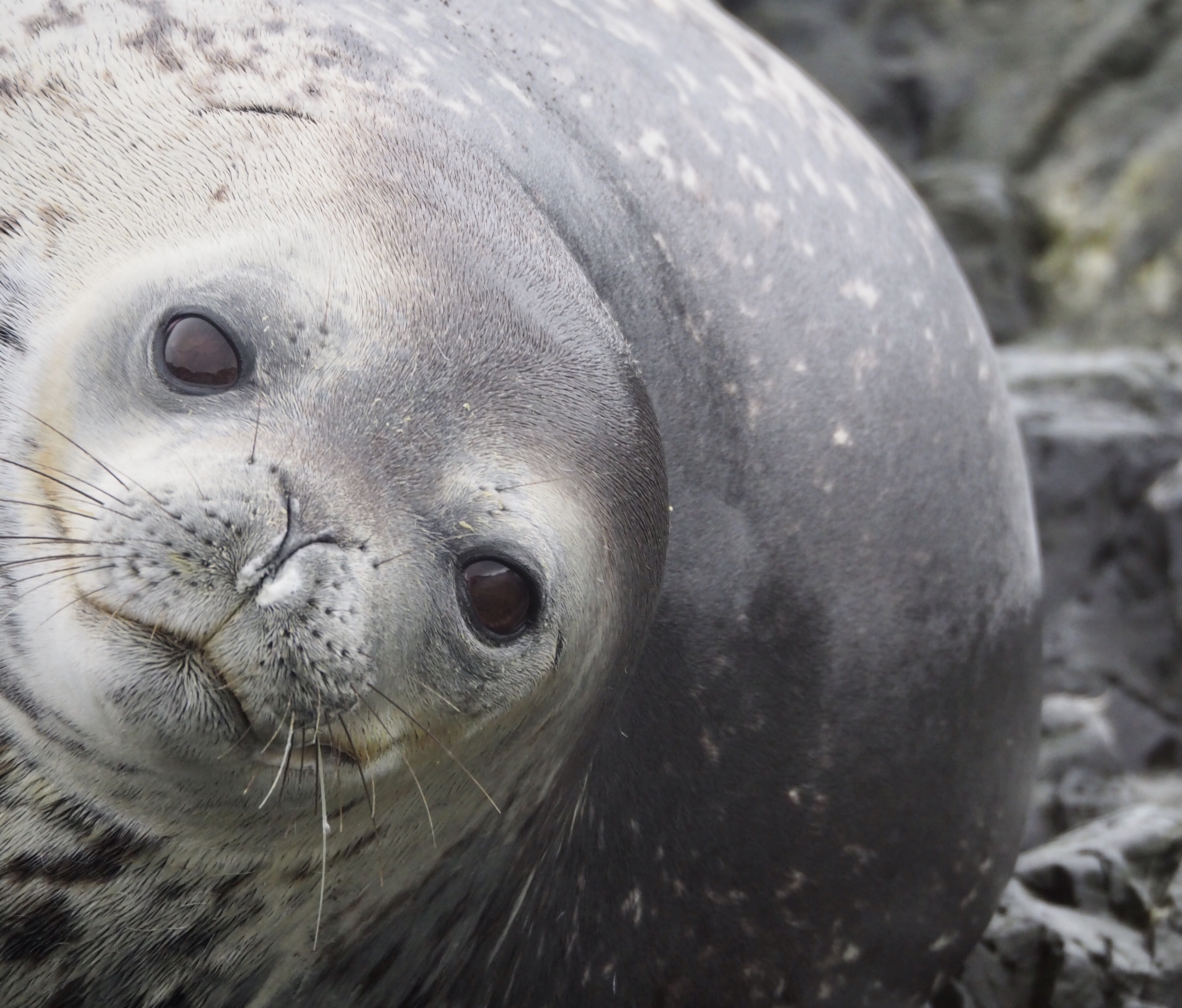
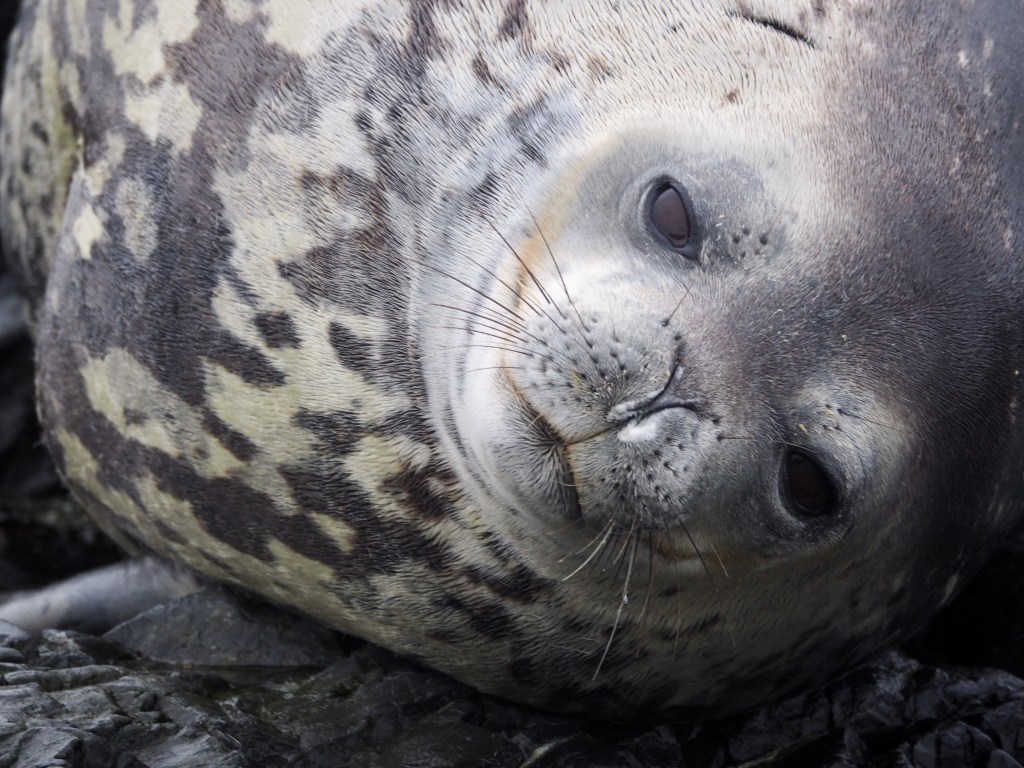
Then we spotted our first Weddell seal. Love at first sight!

More adelies.

A couple more chinstraps.

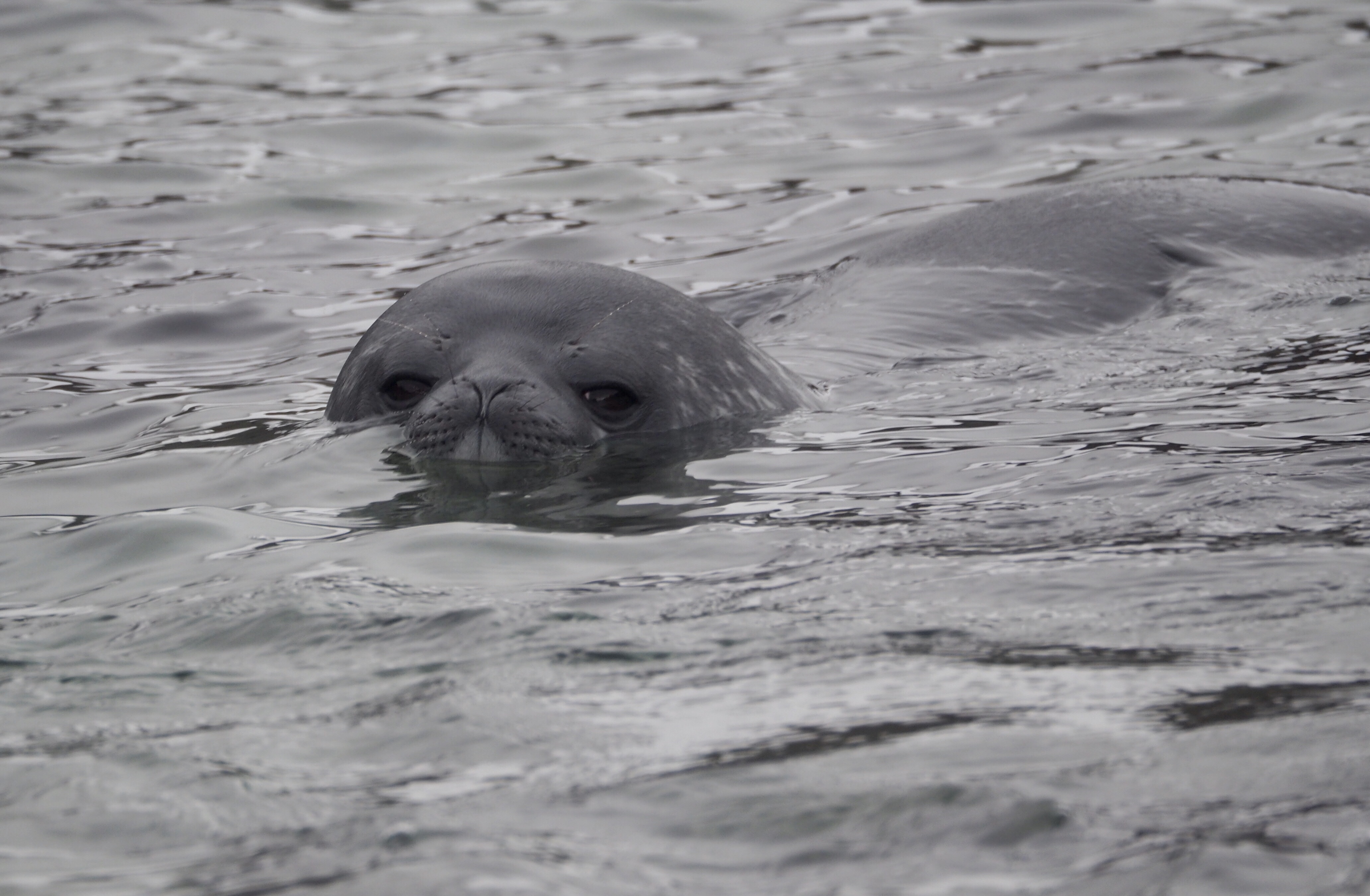
And a couple more Weddell seals, one in the water.

How could you not love me?

Back to the ship and note how twisted the anchor chain is.

I have a note that says “Thick fog.”. Think we went into that as we left this anchorage.

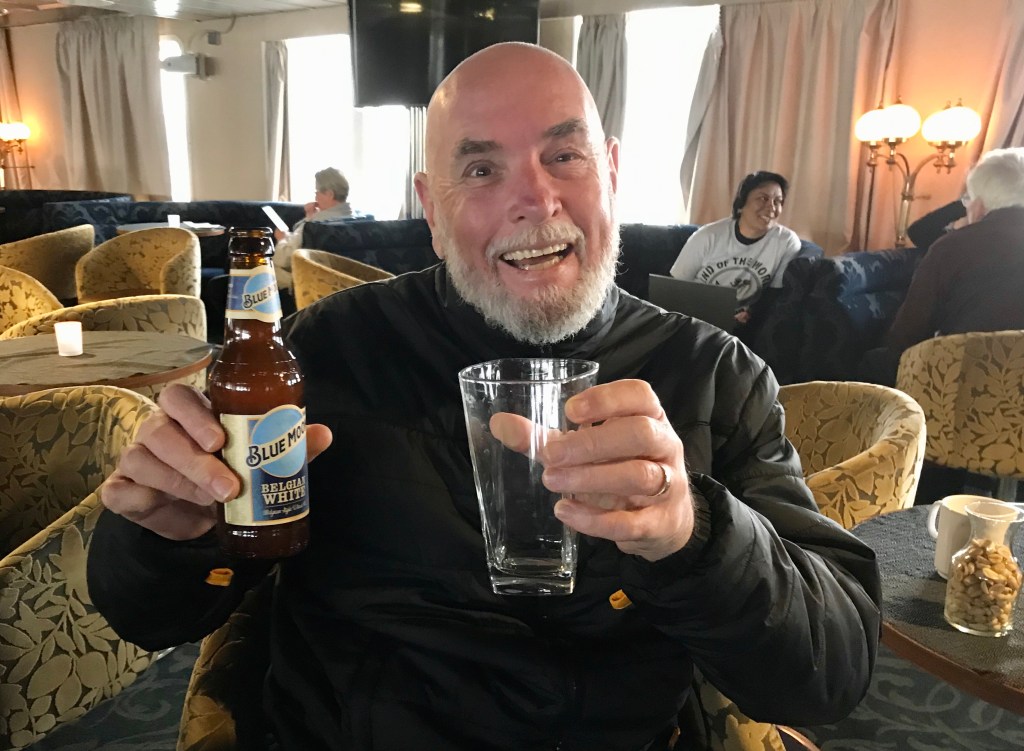
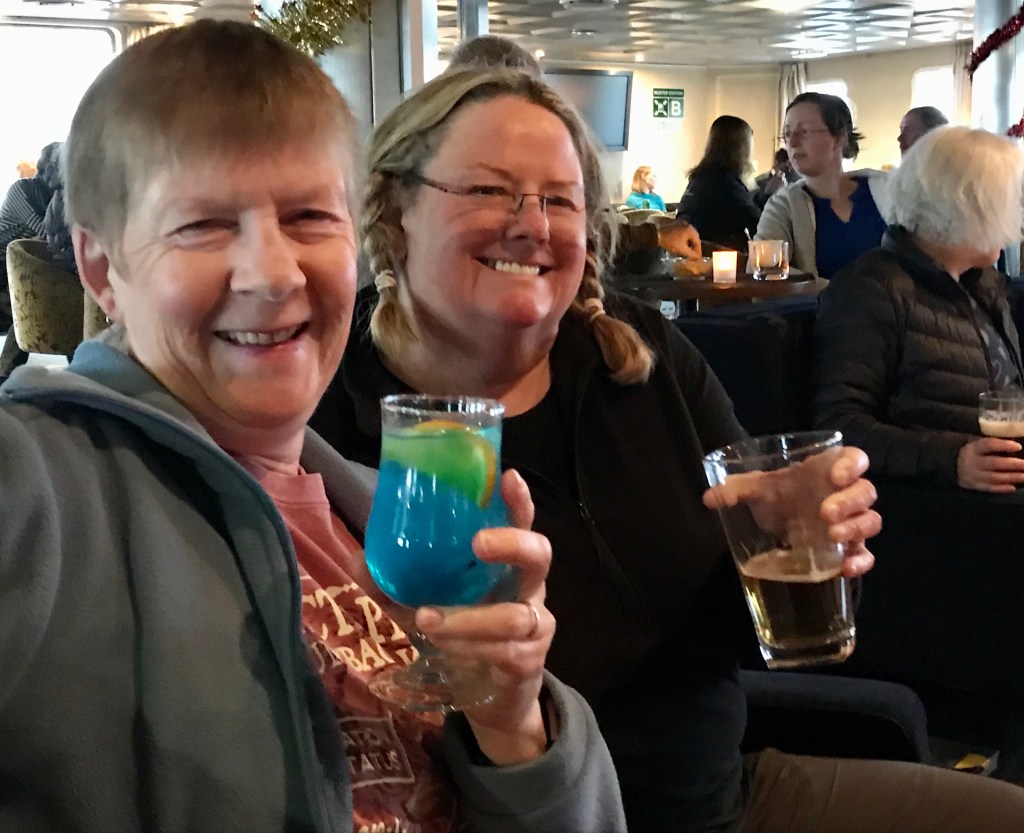
Garrie beer of the day – another blue moon. He was laughing at Cheryl two making faces behind me.

Recap and briefing time with our daily Canapés. Cheryl & Mike made the recap pic.

Miko, our historian started.

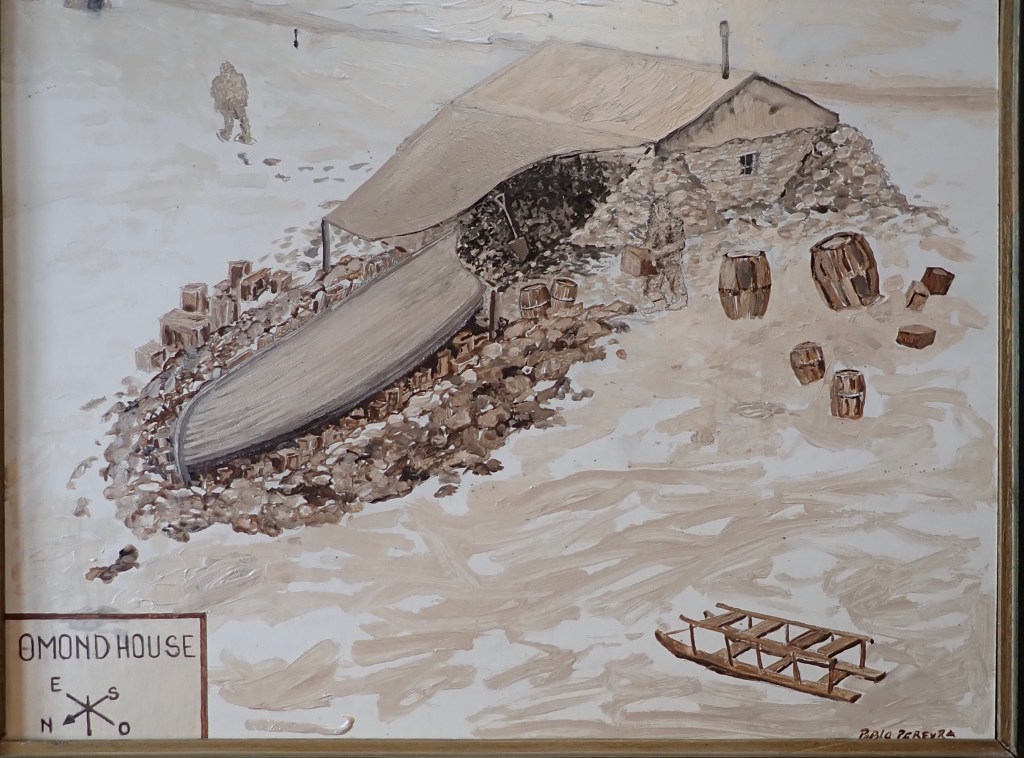
William Bruce experienced explorer. He set up where we went today with the Scottish National Antarctic Expedition, 1902-04. Ship called the Scotia. Set up Ormond House. 6 people lived in Ormond House. Handed over to Argentina. Discovered Coats Land, Scotia sea South Georgia and the Orkneys.

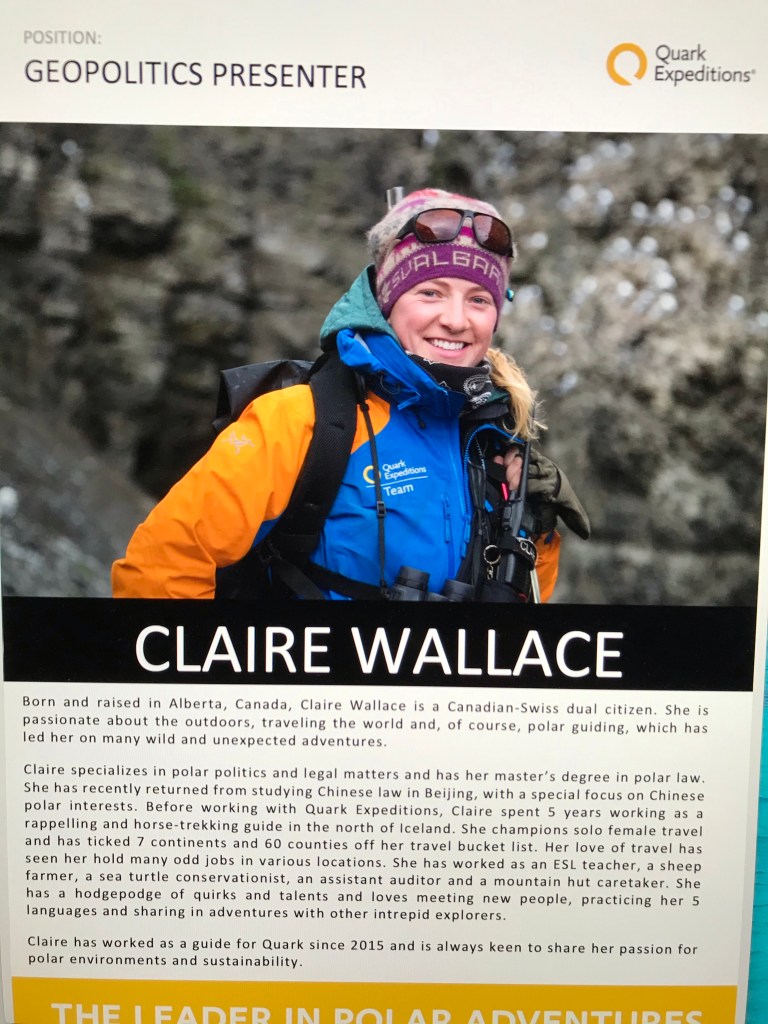
Claire geopolitics – orcadas station. Also a fan of William Bruce. Didn’t receive the press that people like Scott and Shackleton did. British backed Scott. He ran out of money. Brits not interested in the south Orkneys. So he offered it to the Argentinians. Sold for 5000 pesos (US$80).

Lots of coughing going on around us. Flo keeping us safe so far. (Ha that proved to be famous last words!!!)

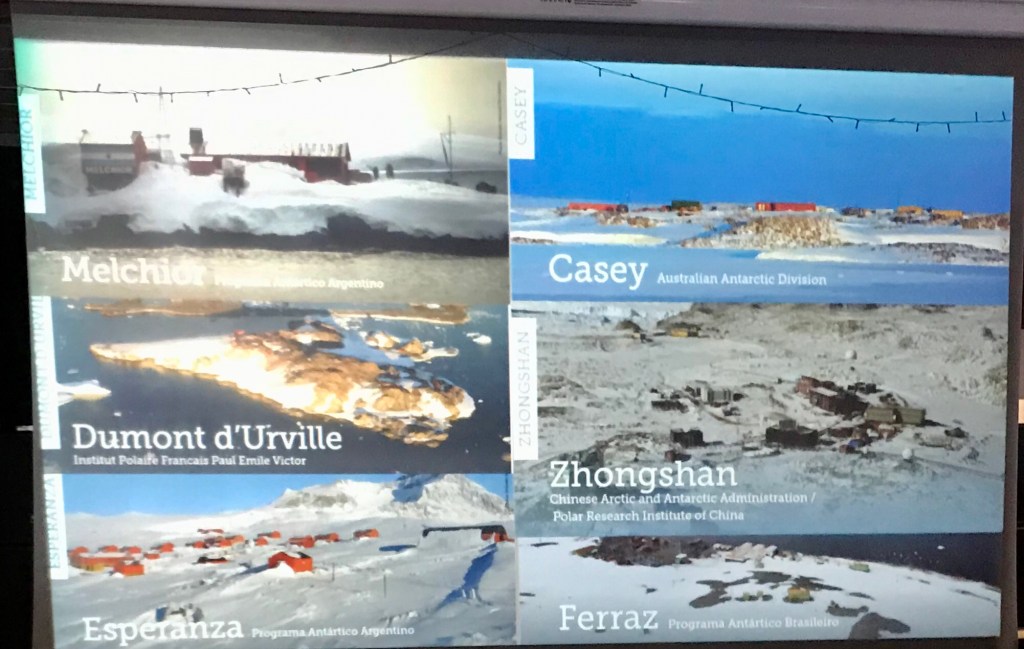
76 research bases from 31 countries. Not all are manned year around. Today’s is. Argentina has 13 and 5 of those are year round. Mcmurdo houses 1500 people. COMNAP. Council of Managers of National Antarctic programs.

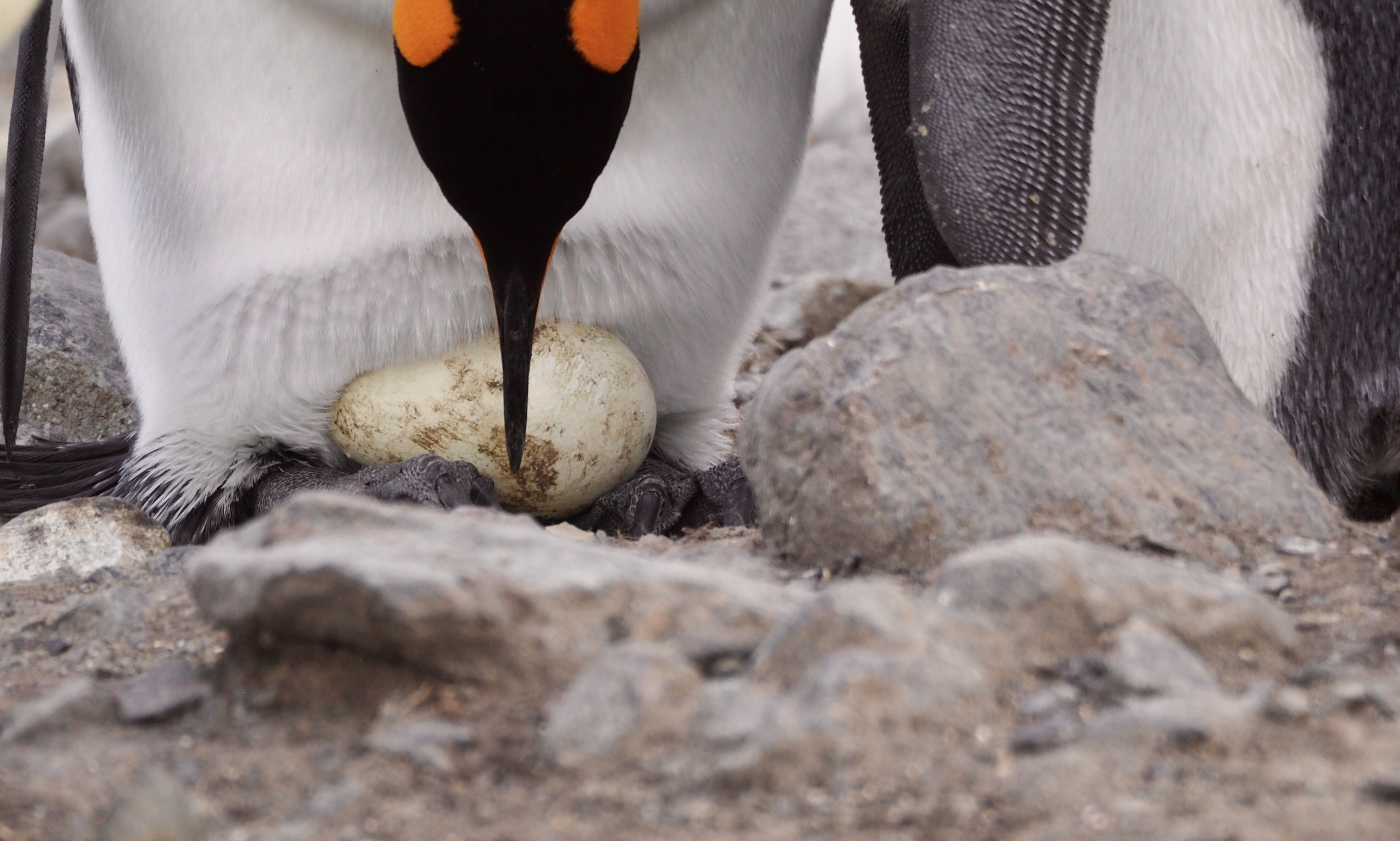
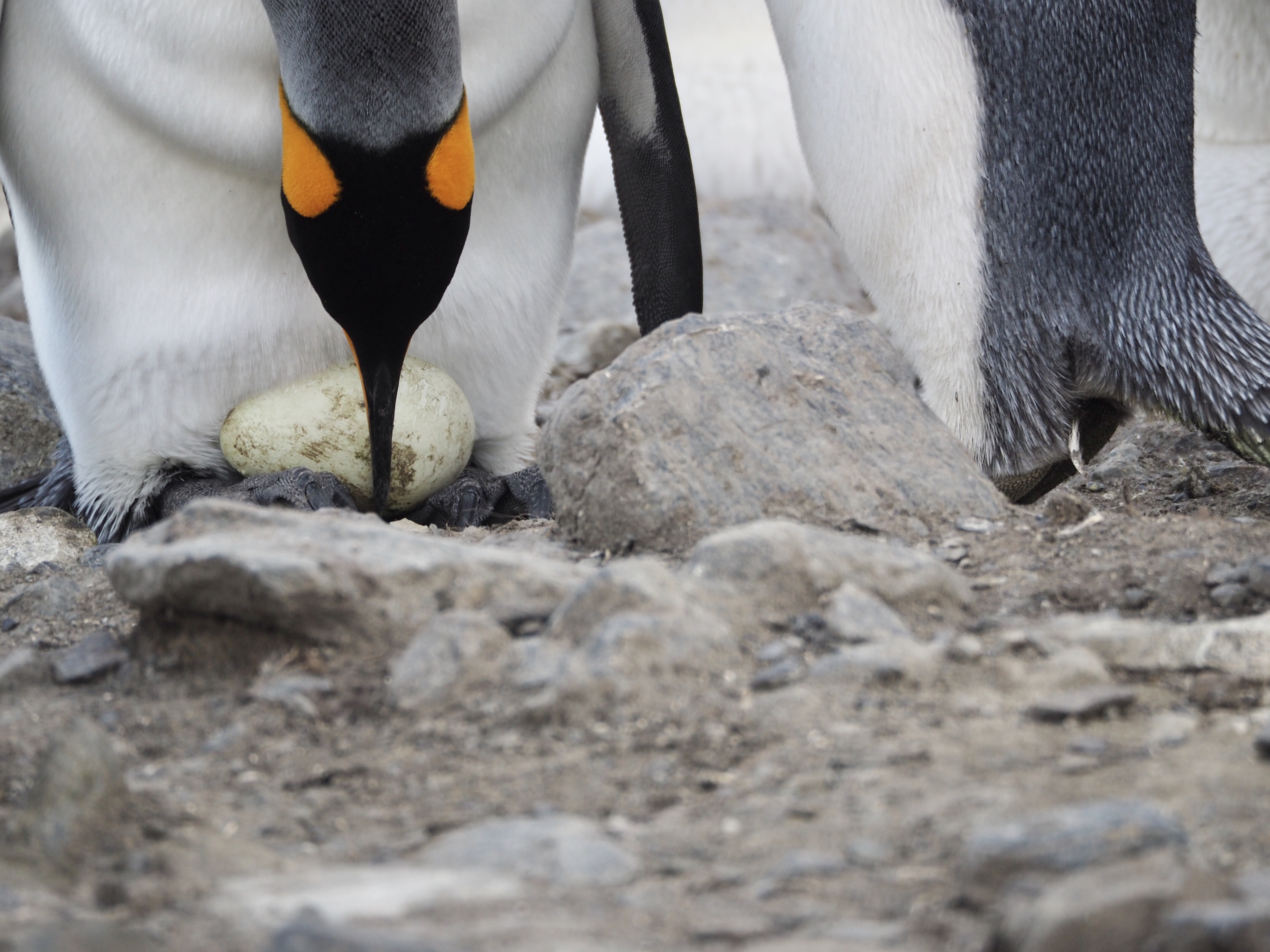
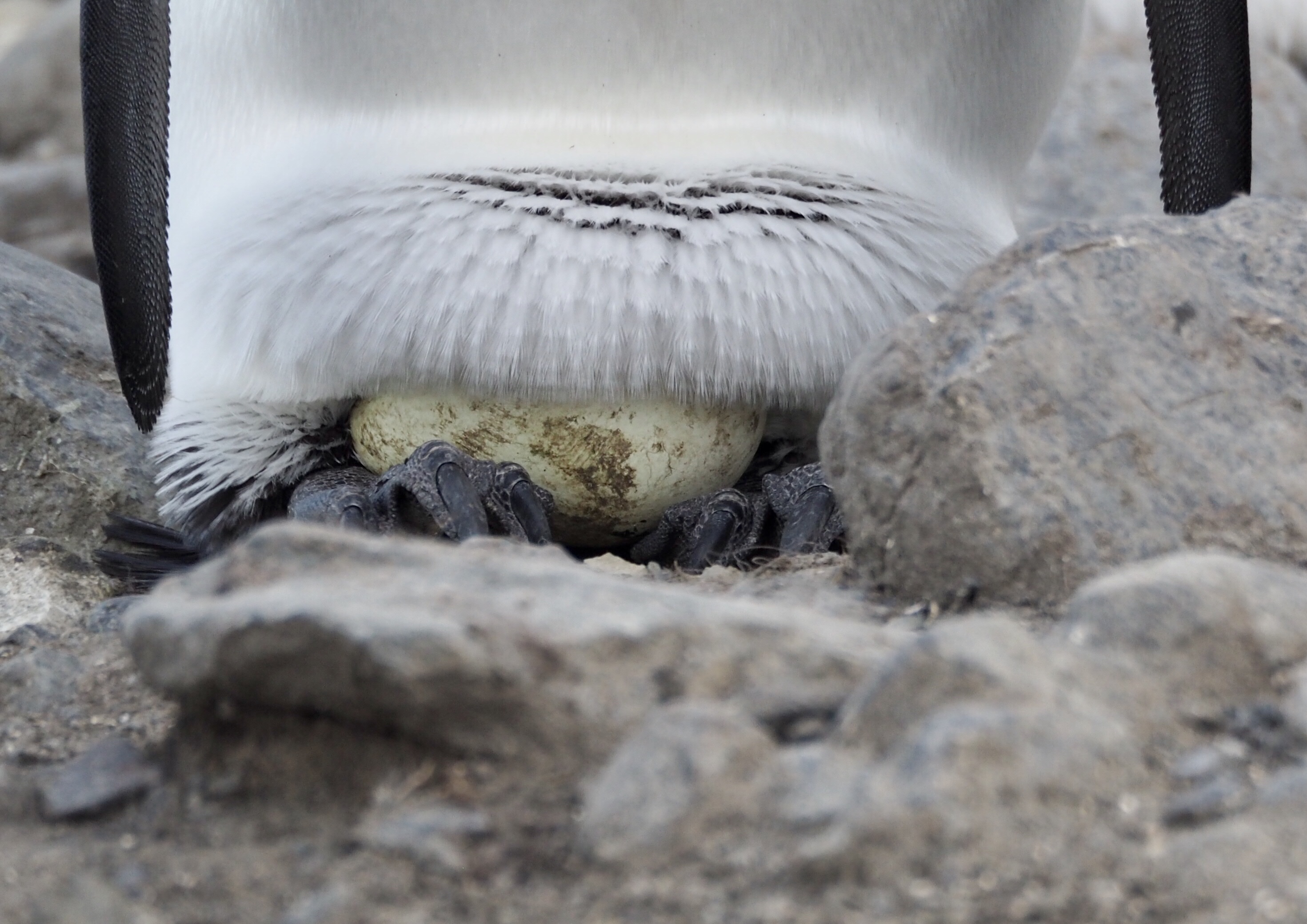
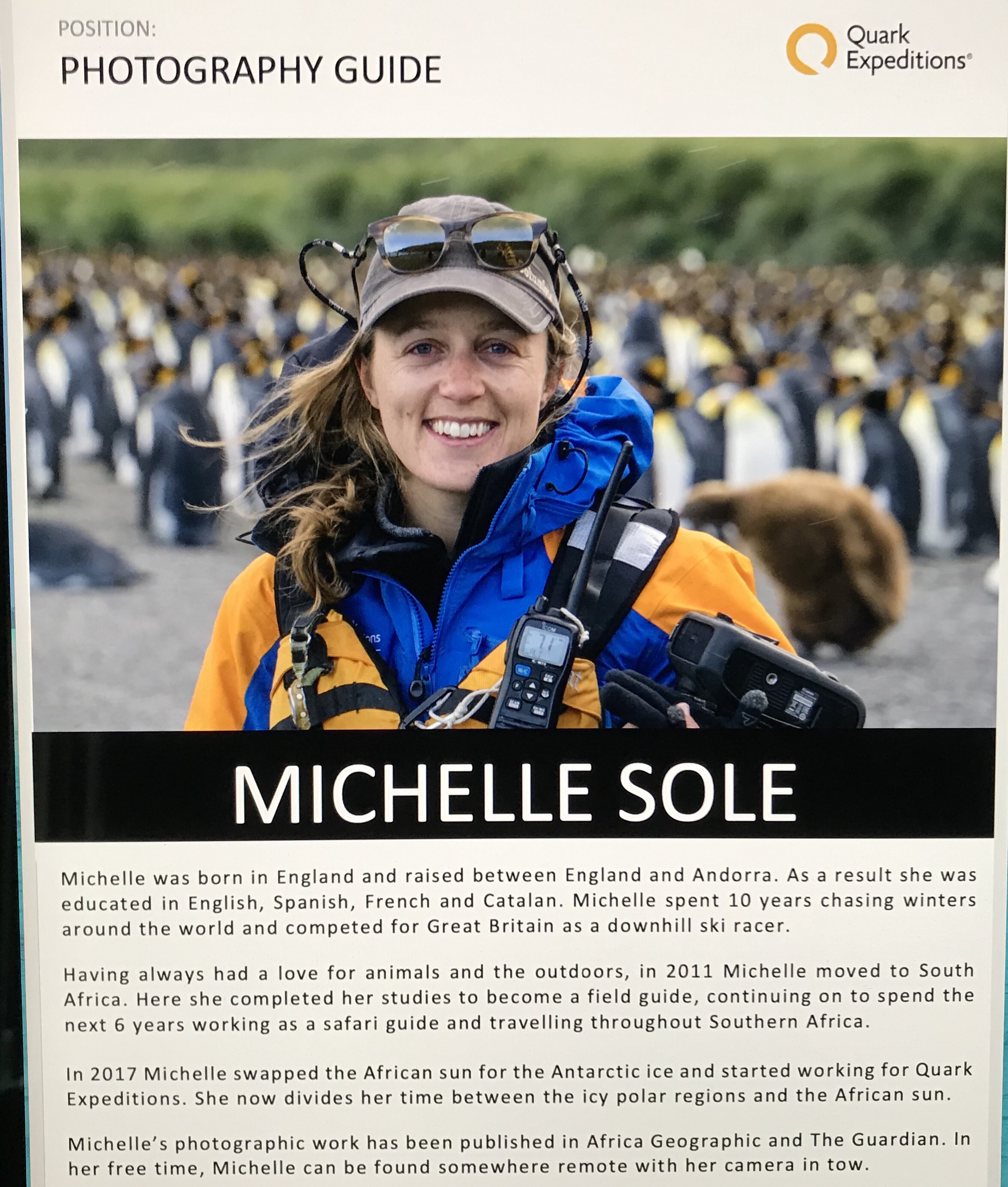
Michelle photographer. Showed us some pics. My egg shot one of two still pics.

Johann, marine biologist. Discussed the Weddell seal. Some weddell seals in south Australia. Breed in November. Up to 49 different sounds they make. Sound travels 30km underwater.

Solan. Going to Coronation Island. Still don’t know the depth of many places. May do a late excursion tonight. Will depend on ice conditions whether just cruise or land. Didn’t happen – hmm maybe because of the thick fog? Notice my notes are getting sketchier along with my memory….

Tomorrow at sea day. Weather looks good. Aiming towards Bransfield strait. Aiming for the South shetlands. Then to Antarctica peninsula for two full days.

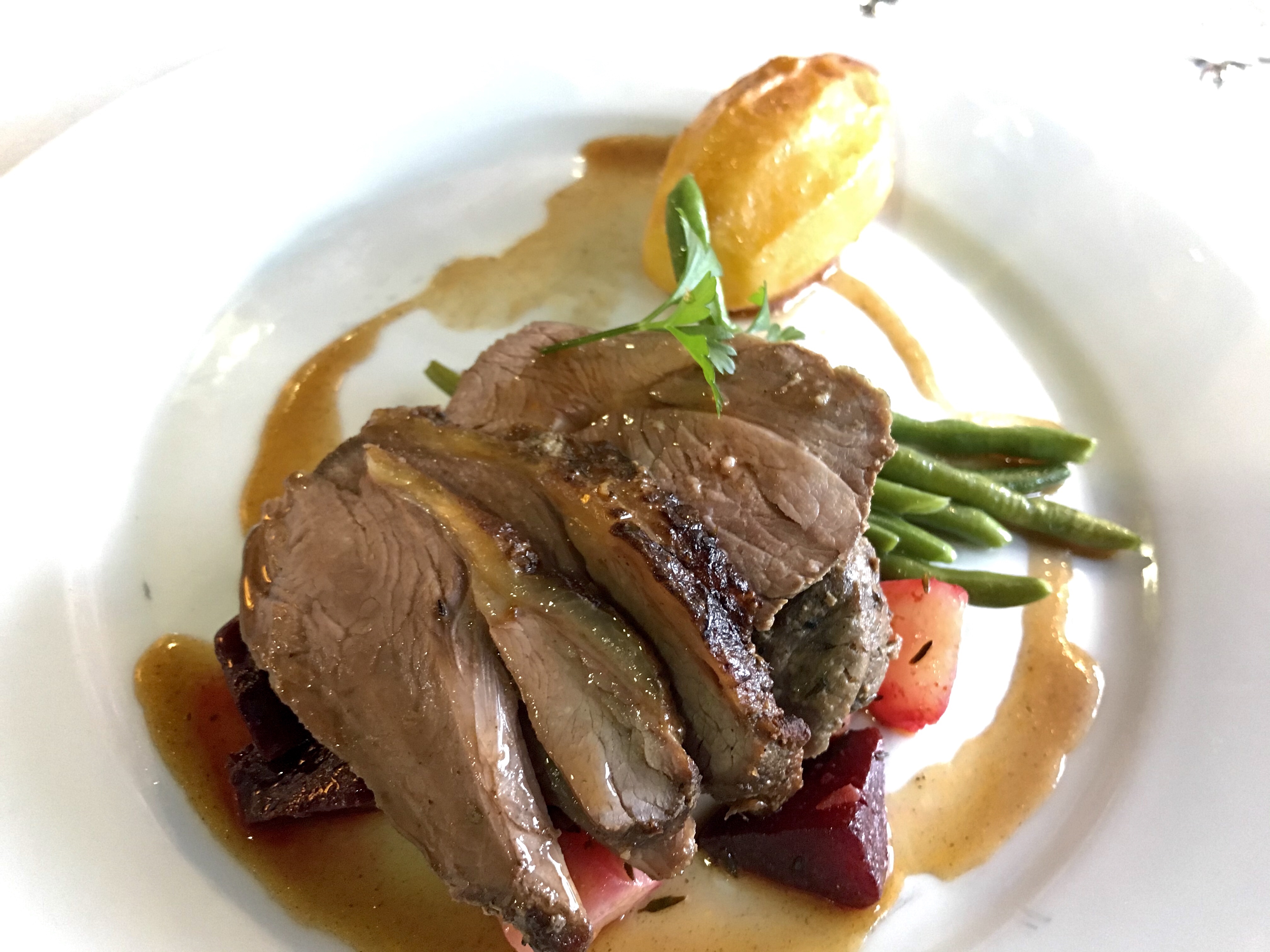
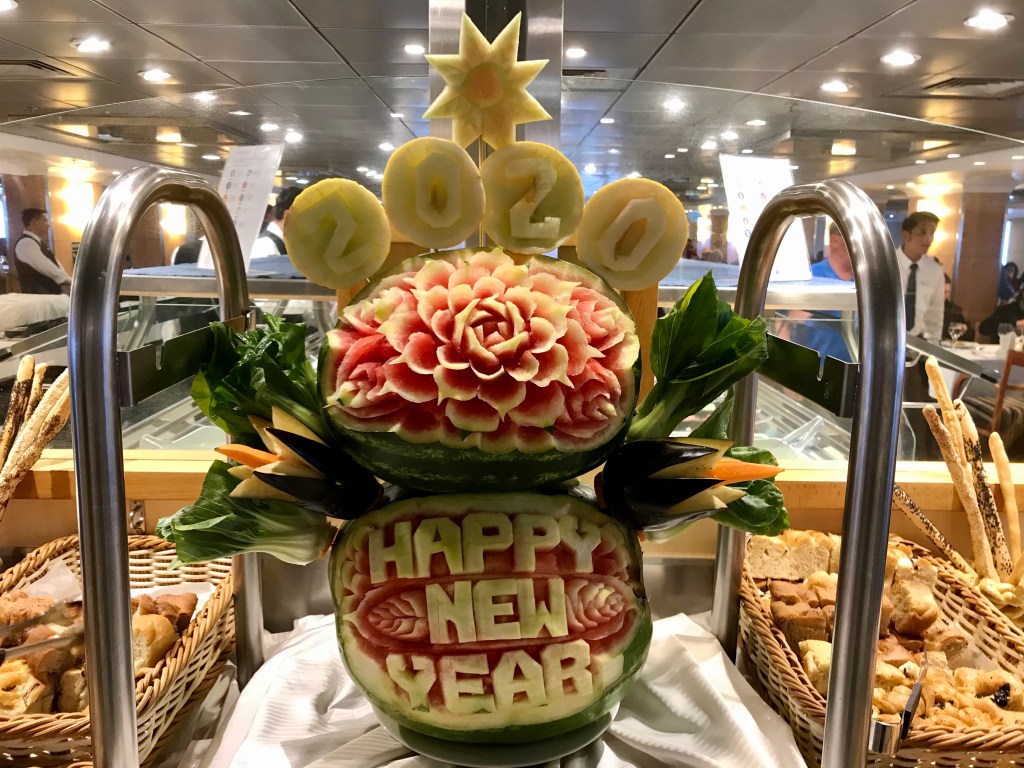
Dinner was amazing and included guinea fowl and we were greeted with another carved water melon.

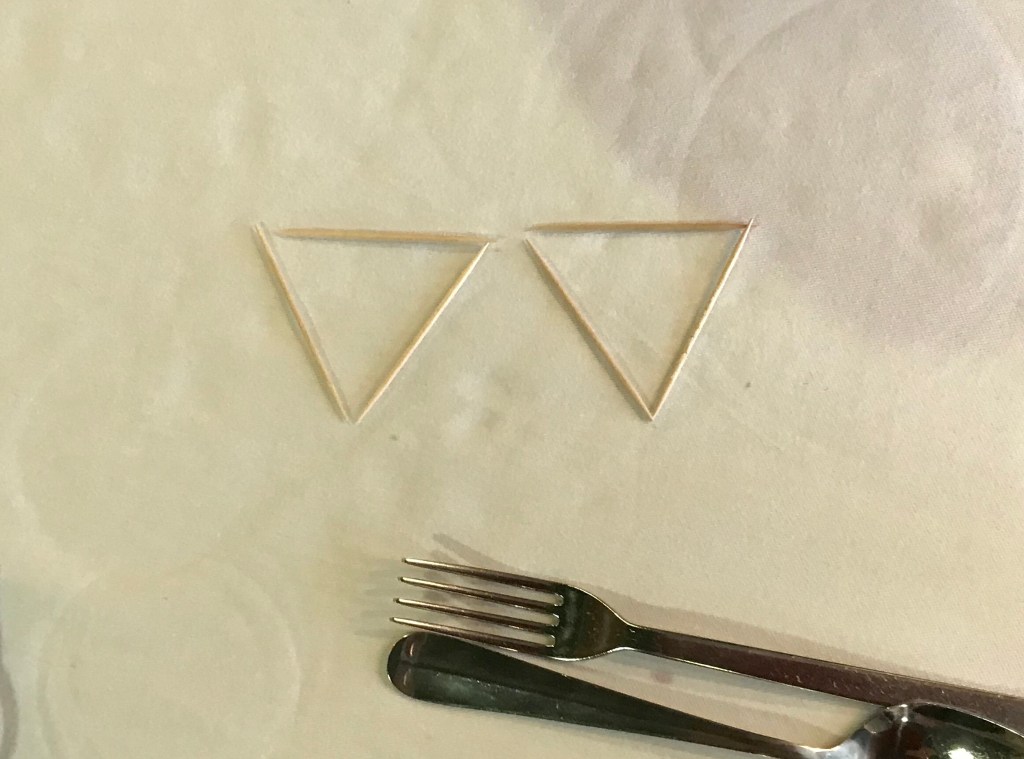
Richard continues to entertain us with tricks. I’ll include a video here of a trick where he turns 2 triangles into four triangles by moving just one piece. Still shot first. Give it some thought then the solution is in the video. Ciao for now.

New Year’s Eve and the Scotia Sea

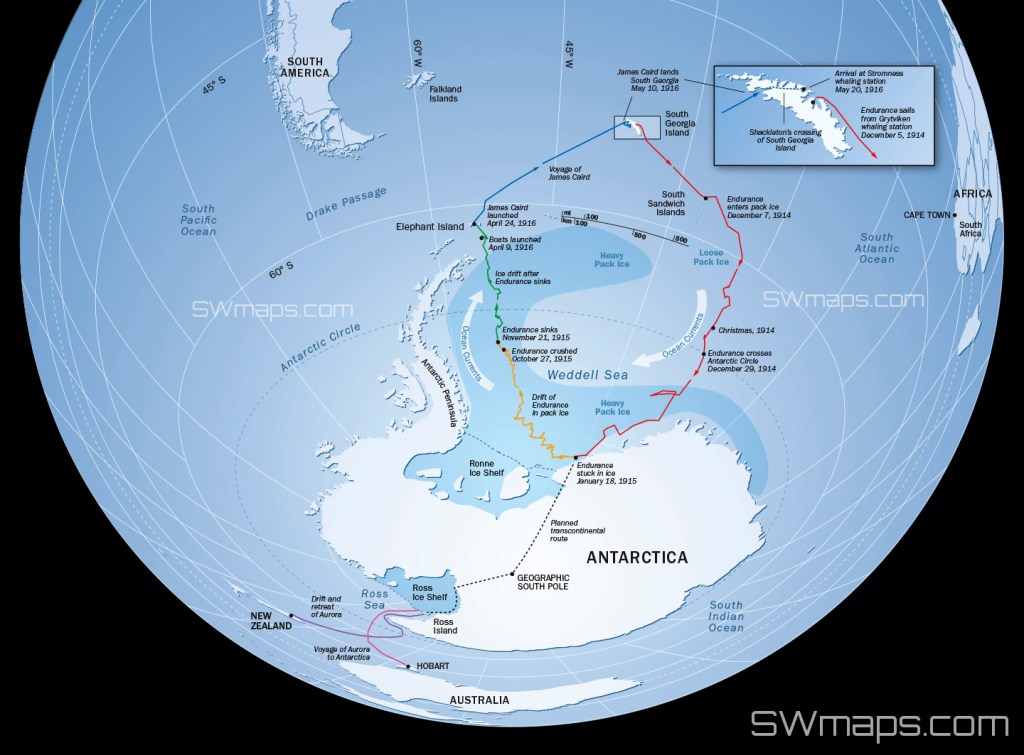
Can’t help thinking of Shackleton and his crew who set out from South Georgia back towards Antarctica in 1915. Totally amazing they survived at all. Here is a map of their journey. (With thanks to SWmaps.com)

Map showing the route of Ernest Shackleton and his ship Endurance during his attempted expedition to cross Antarctica in 1915. The Endurance became trapped in pack ice and the ship and crew had to endure over one year living on the pack ice before being able to launch lifeboats to Elephant Island then on to South Georgia Island. Produced for the book THE PURSUIT OF ENDURANCE – On The Shoulders of Shackleton, released November 2015

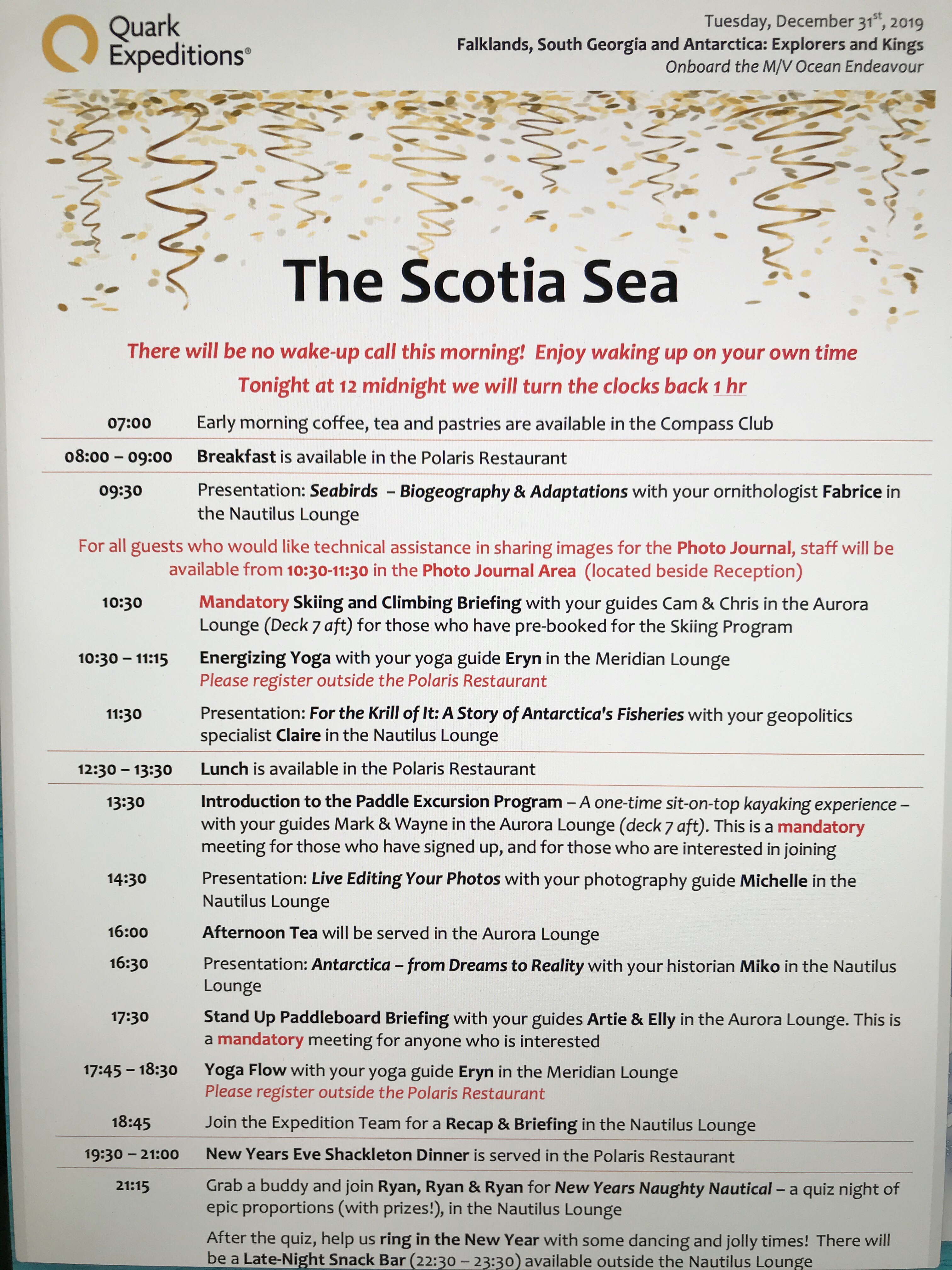
So here is our day plan.

We have watched nearly every episode of Seinfeld (lucky neither of us have ever watched it) and several movies in parts (no on demand here).

Spoke to the Captain. 3am sunrise tomorrow 😱. (Remember we usually do the first sunrise of the new year rather than staying up until midnight) Going to the bridge later to find out about the weather. 3.07am cloudy. Hmm.

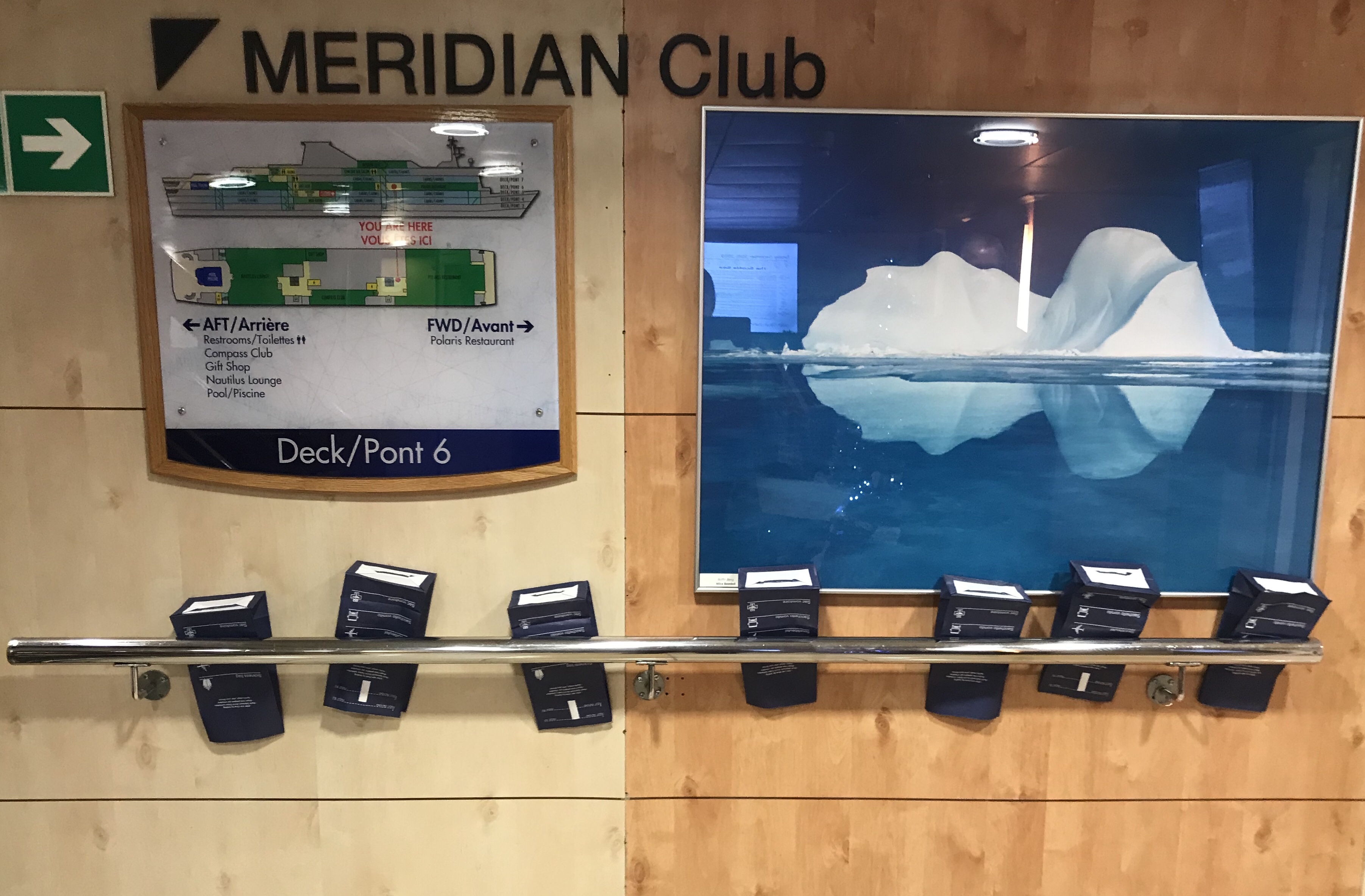
Barf bags replenished. I do like that. They will always be barf bags to me from now on.

Late start. Leisurely breakfast.

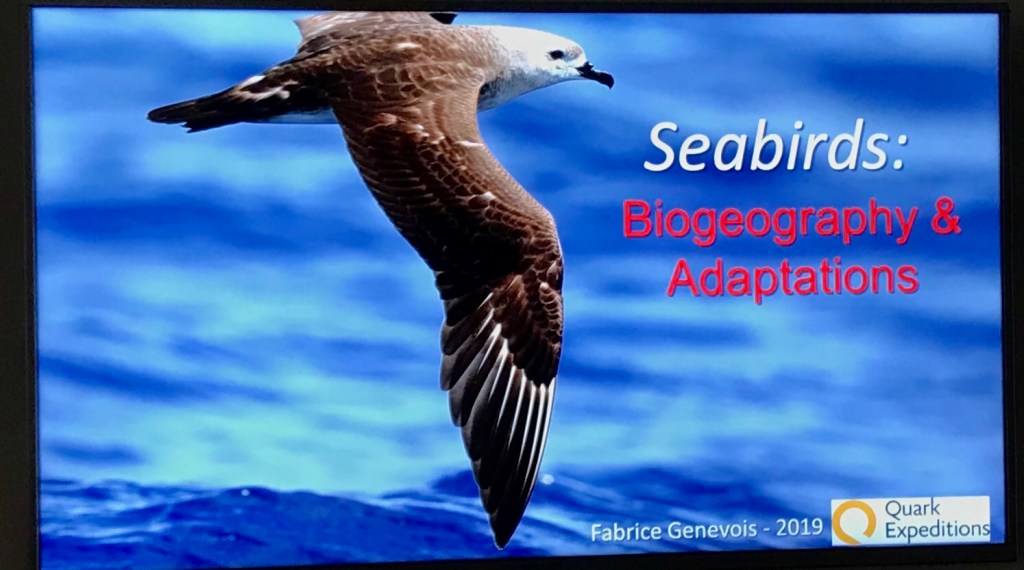
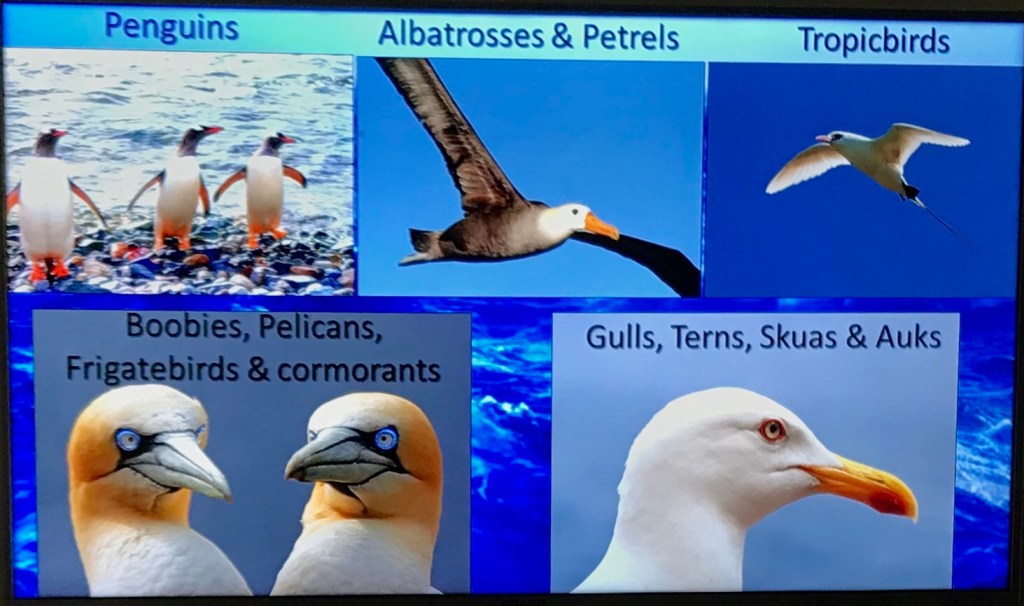
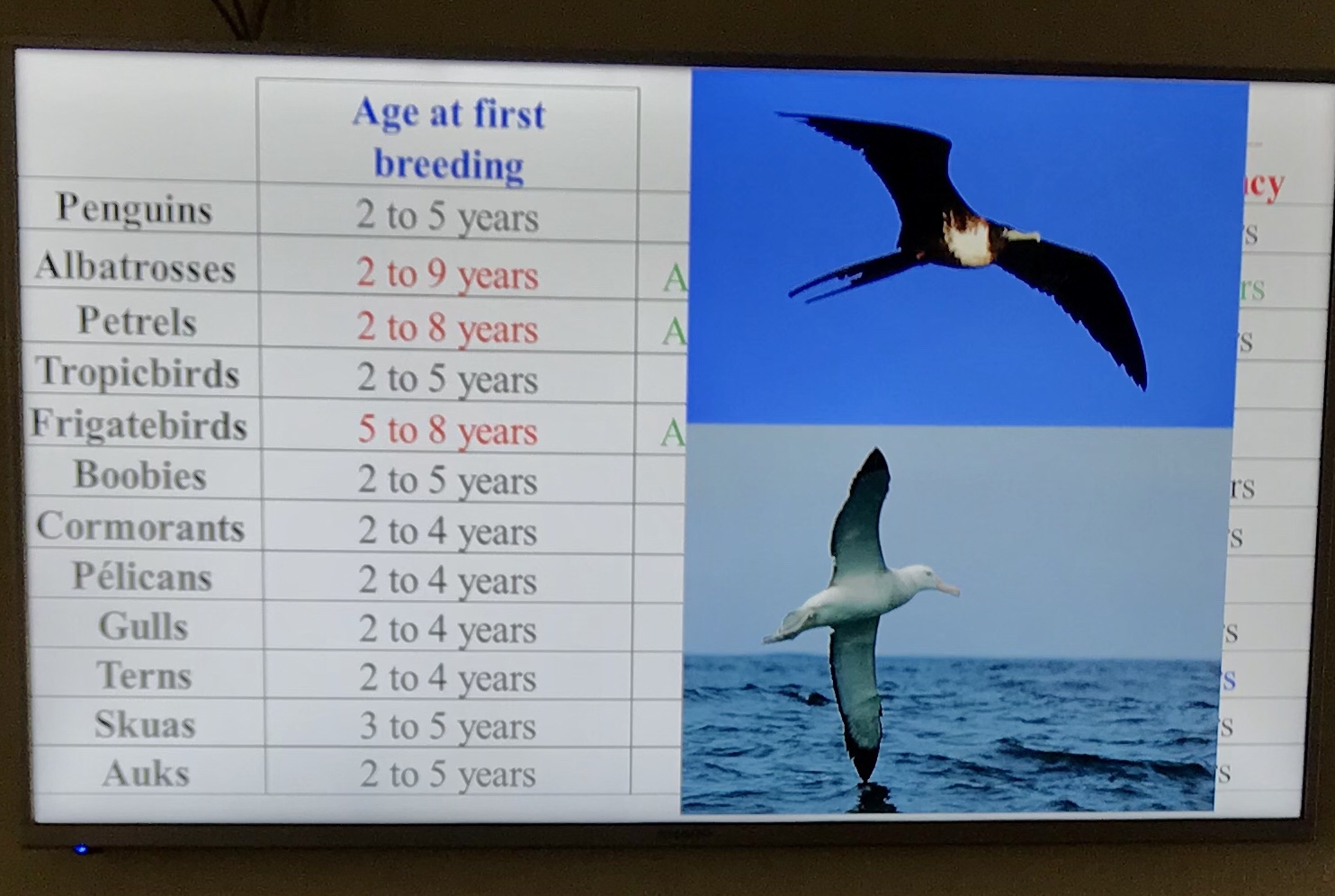
Presentation: Seabirds – Biogeography & Adaptations with your ornithologist Fabrice in the Nautilus Lounge.

Birds everywhere on earth including over the ocean. They are the only flying creatures on the ocean. Biogeography is patterns of seabird distribution. Being a seabird just means you rely on the ocean for your food.

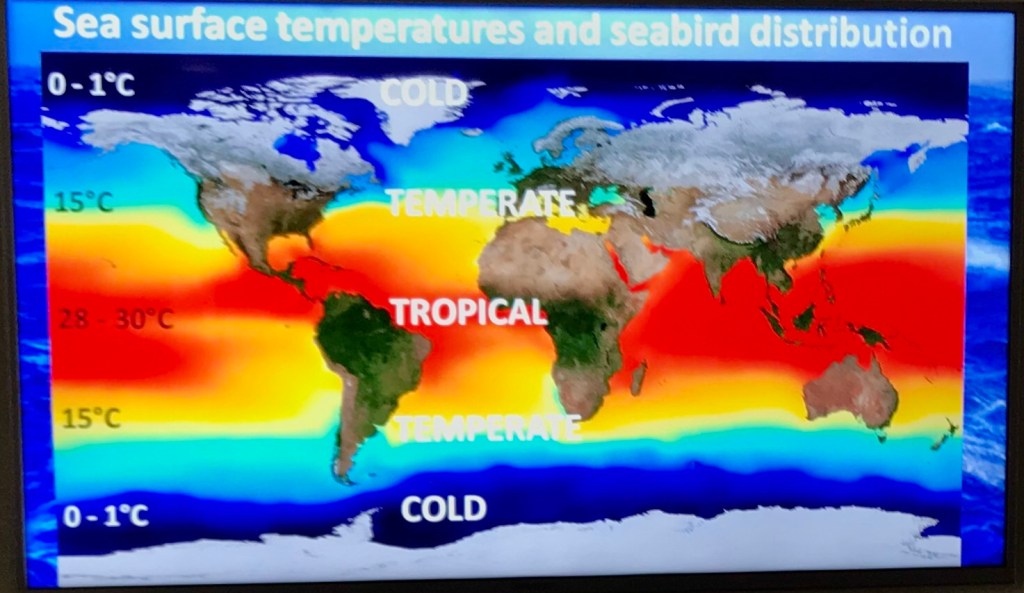
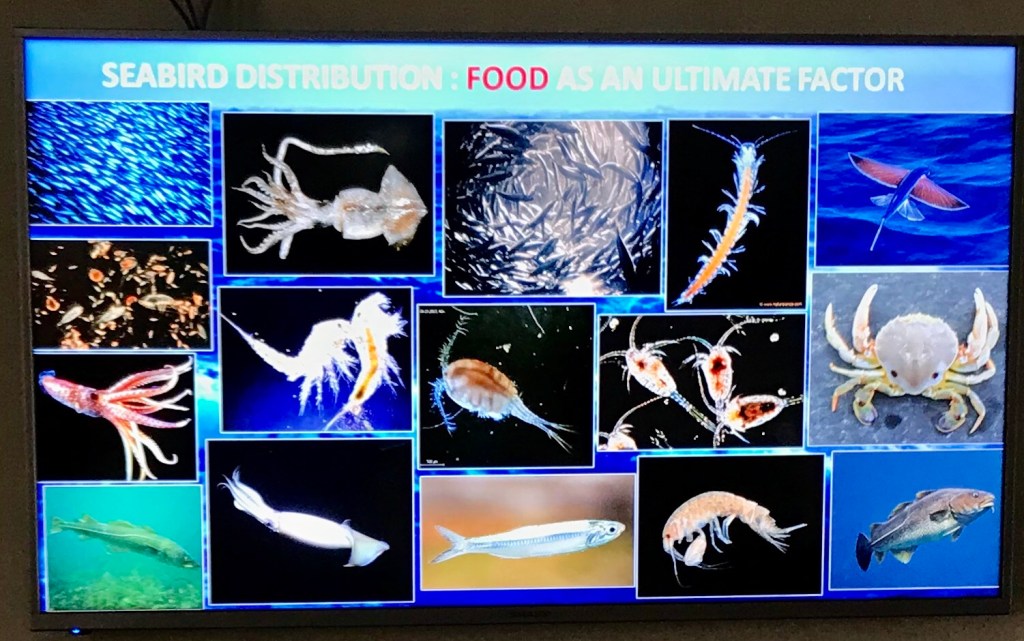
There are 5 orders of seabirds and 305 species. Oceans cover 2/3rds planet. Only 3% of the world’s 10000 species of birds are seabirds. Only two niches one is look for carrion and the second is to dive for live prey. Many more niches on land. Also ocean productivity, on average, is low versus land. Ie tropical forests cover only 5% of the earth but create 1/4 of the productivity. Shortage of breeding places – can’t lay an egg in the ocean. All oceans connect and seabirds travel across it all. Seabirds are often attached to sea temperatures.

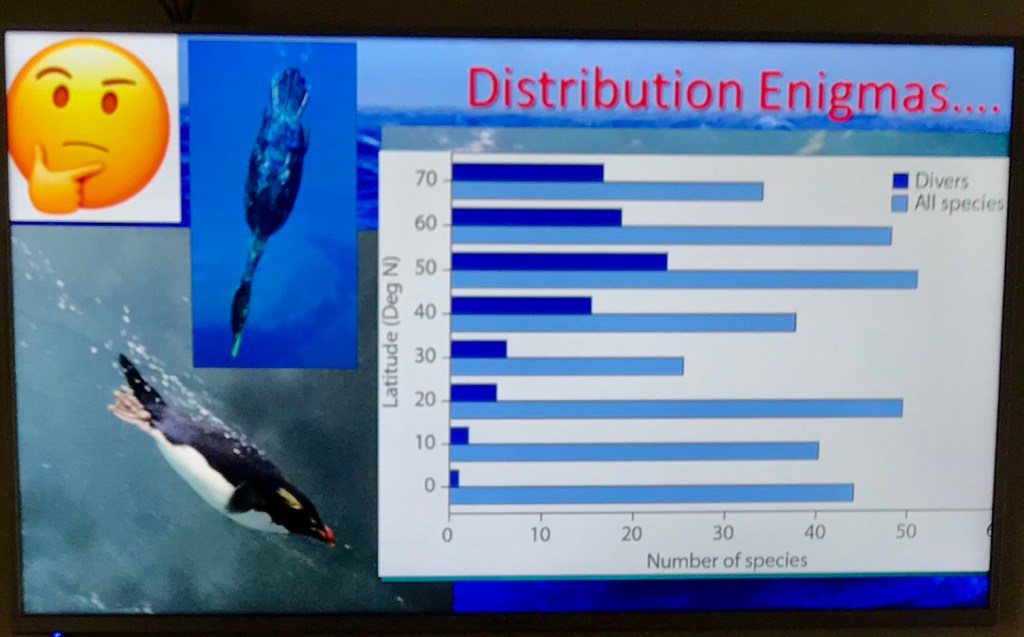
Distribution enigmas.

Why? Fish swim faster in warm water. Also more predators eg shark in warm water. So why no penguins in northern hemisphere? Auks hold their niche in the north and they fly too due to land animal predators. No land carnivores in the south.

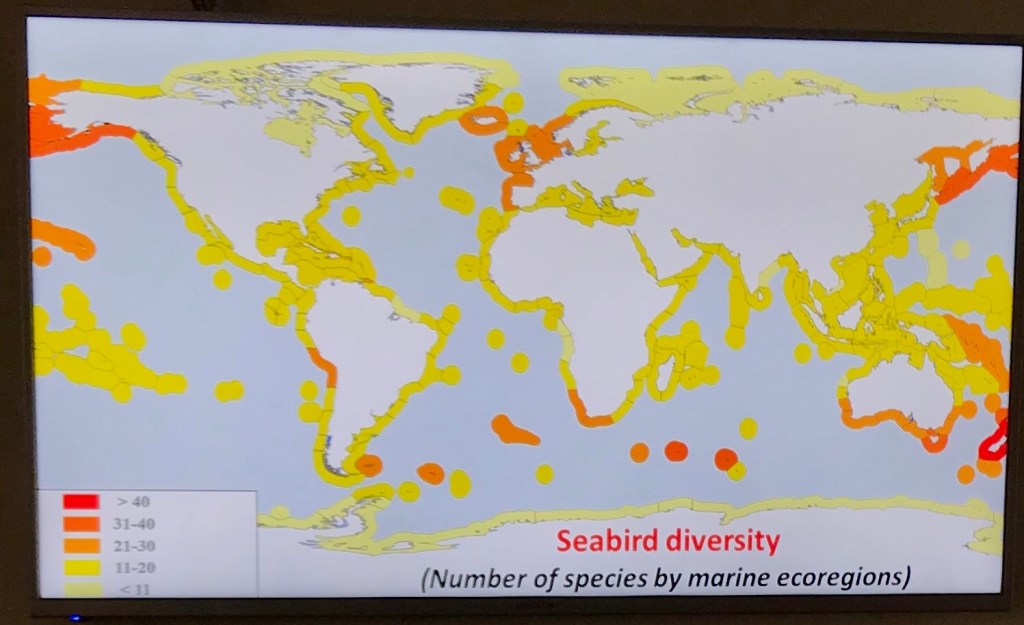
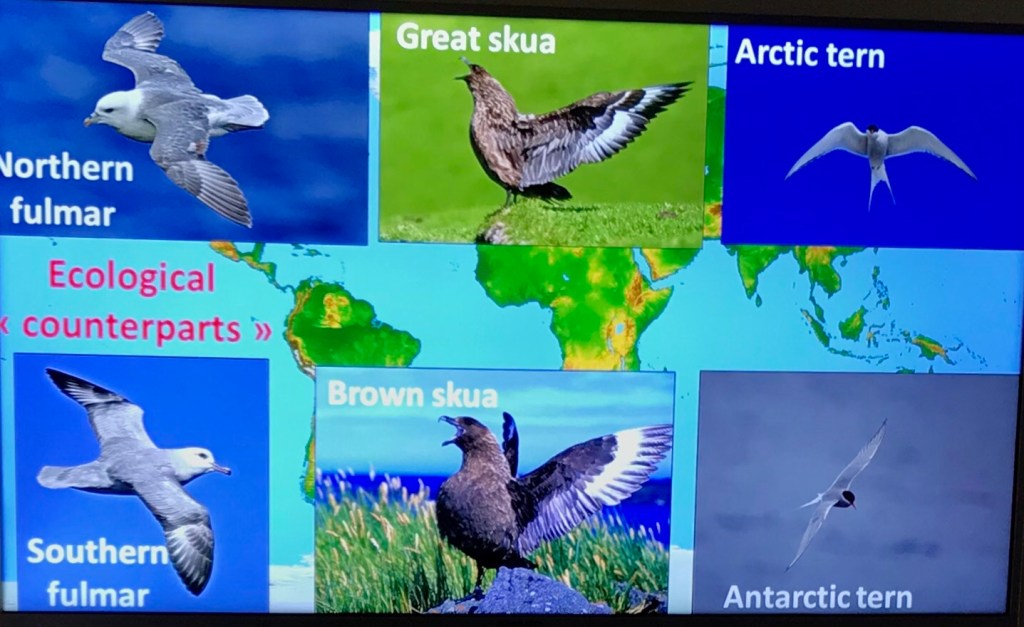
Seabird diversity. Colder more co2 and o2 best productivity. Polar regions low diversity as highly specialised to handle the conditions. High populations but low number of species. Adelie penguin and snow petrels. Ecological counterparts eg northern and southern fulmar. Great skua and brown skua.

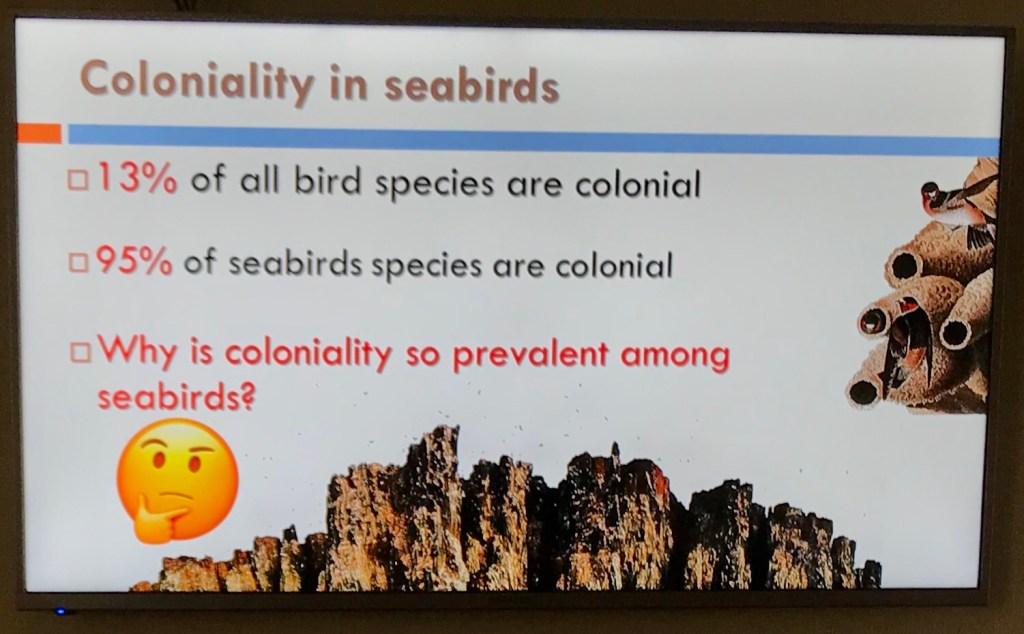
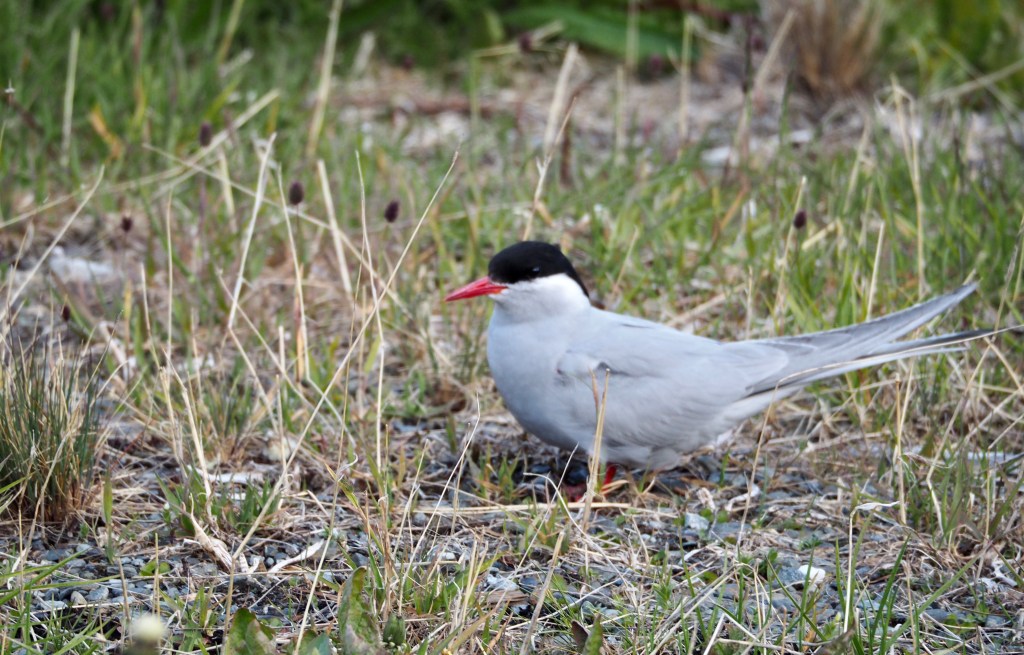
Arctic and Antarctic terns. Colonialist.

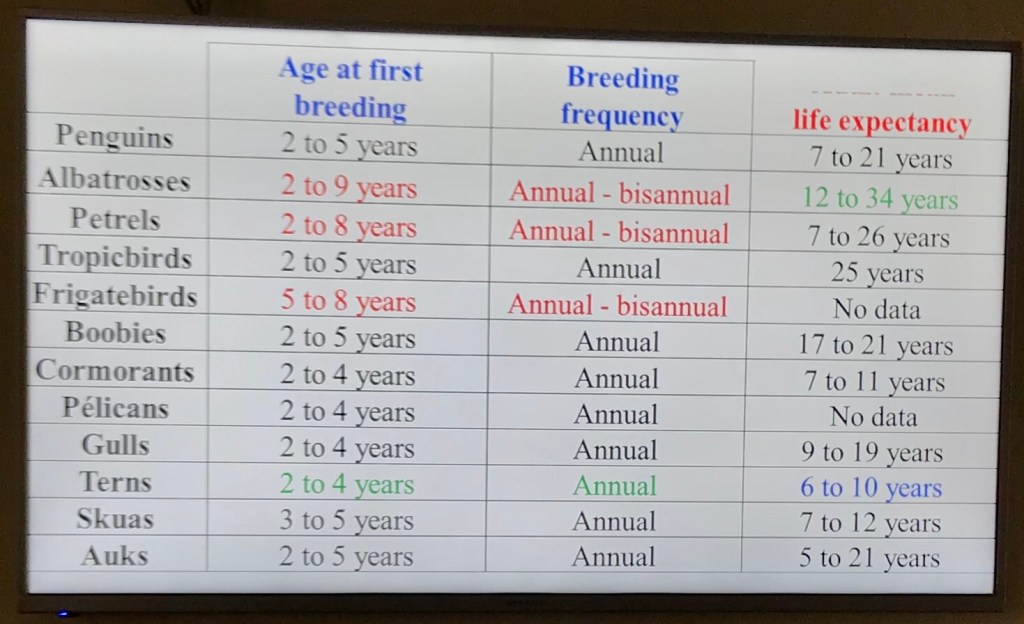
Most land birds are territorial. No territory in seabirds as oceans change. Could also be a shortage of places to nest eg shag rocks. Not true of places like Falklands so shortage of nesting place is not a good answer. Could be safety in numbers. Increased mating opportunities. Foraging efficiency – exchange of information on location of food. Costs of colonialist. Stress due to crowded environment. Lots of sexual cheating. Colonies attract predators. Spread of disease. Can be that nesting on the edge is often worse than being alone due to predators. Low births, slow maturity but long life expectancy.

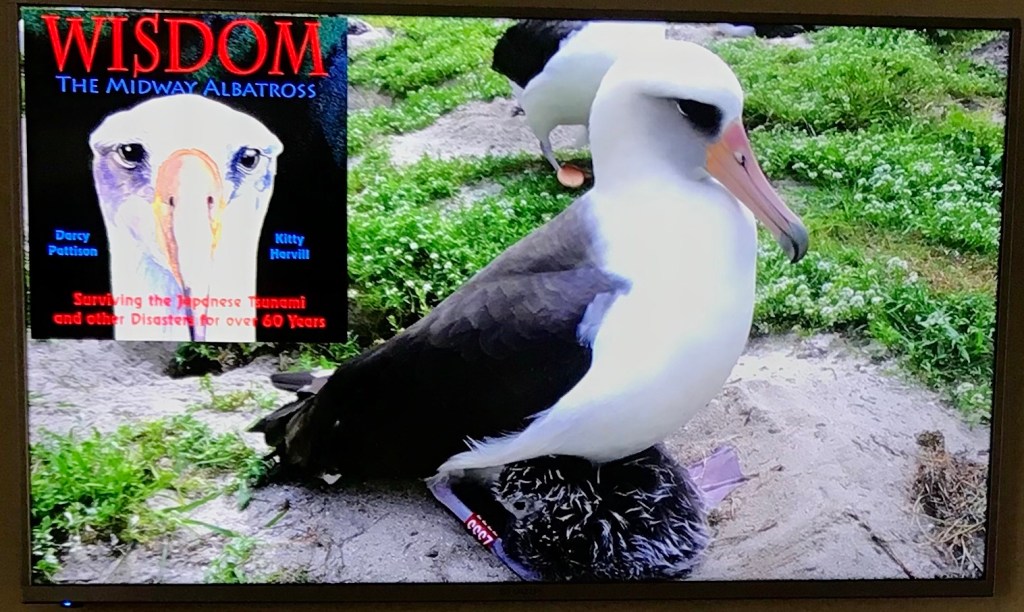
Some albatrosses can reach the age of 80. This is Wisdom, he is 68 years old.

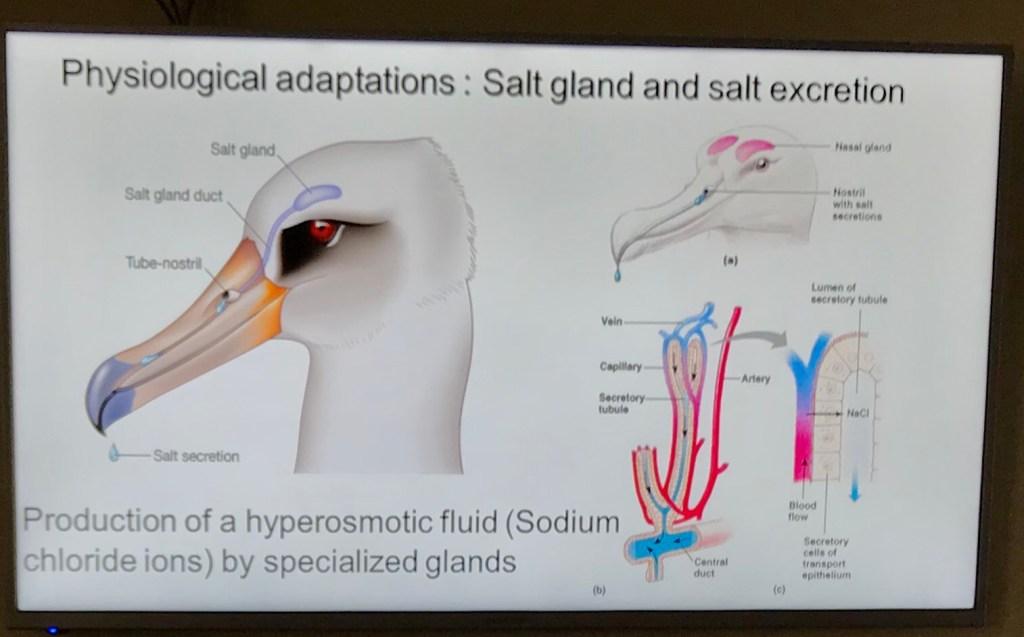
3 changes of partner in his life. Humans here 3 minutes survival in this ocean. Feathers are naturally waterproof. All seabirds have a preening gland oily spread to their plumage. Feathers last a year. They also have Sodium glands.

Feet set far back for swimming to reduce the friction. Seabird webbed feet. Smaller wings high wing loading need to work harder, albatross low can fly long distances. Beak is equivalent to our hands so beak shape shows what they eat eg macaroni eat krill kings eat squid.

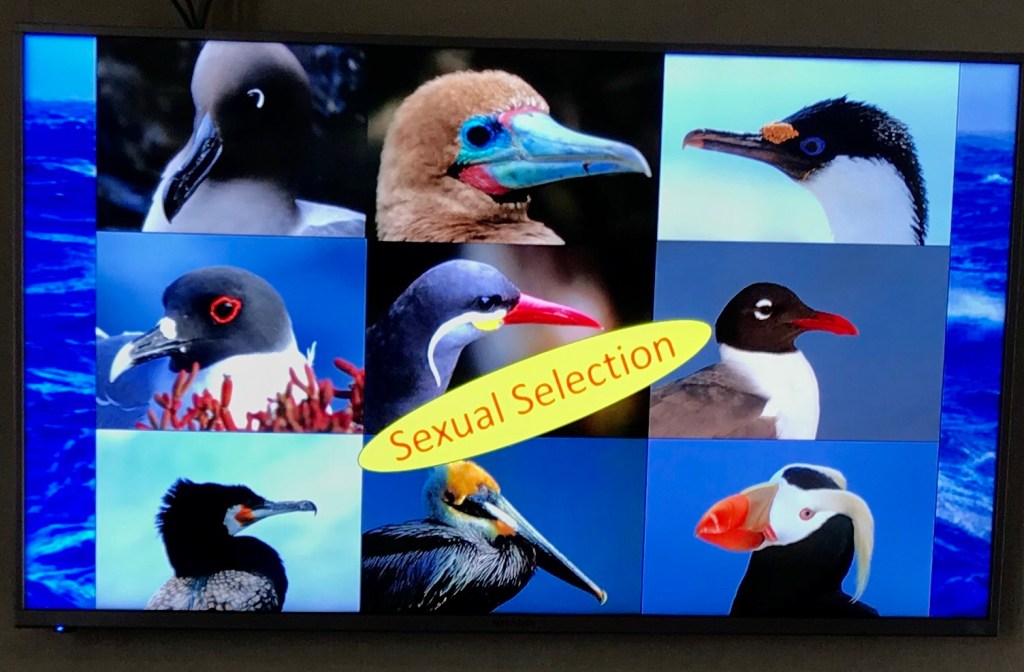
Convergent evolution penguin and guillemots. Black and white is camouflage – hide from prey and predators. Counter shading. Naval ships colour based on the prion as best camouflage. No colour difference in sexes except frigate birds. Males might be bigger. Colours help to ensure you mate with the same species. Adults full coloured. Sexy feet.

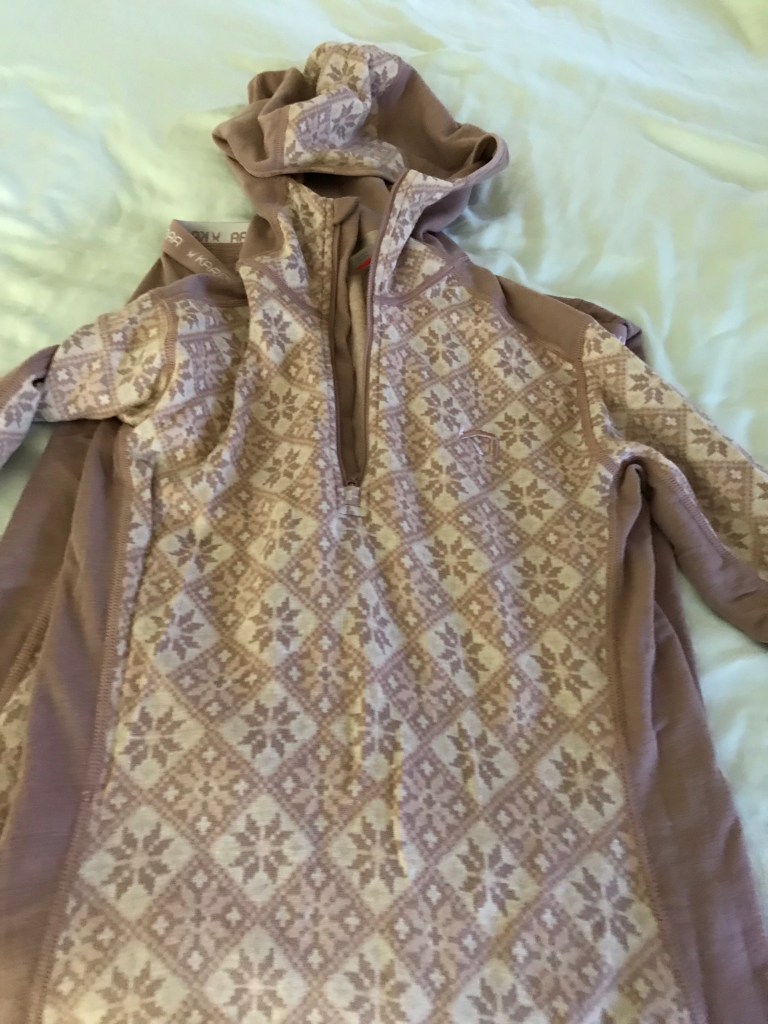
We love these lectures. They really make the sea days. I went Shopping again and bought a new merino thermal layer. Shop uses no bags and the bar uses no straws. I donated a pair of thermals that were not so comfortable to one of the smaller female expedition crew,

Presentation: For the Krill of It: A Story of Antarctica’s Fisheries with your geopolitics specialist Claire in the Nautilus Lounge

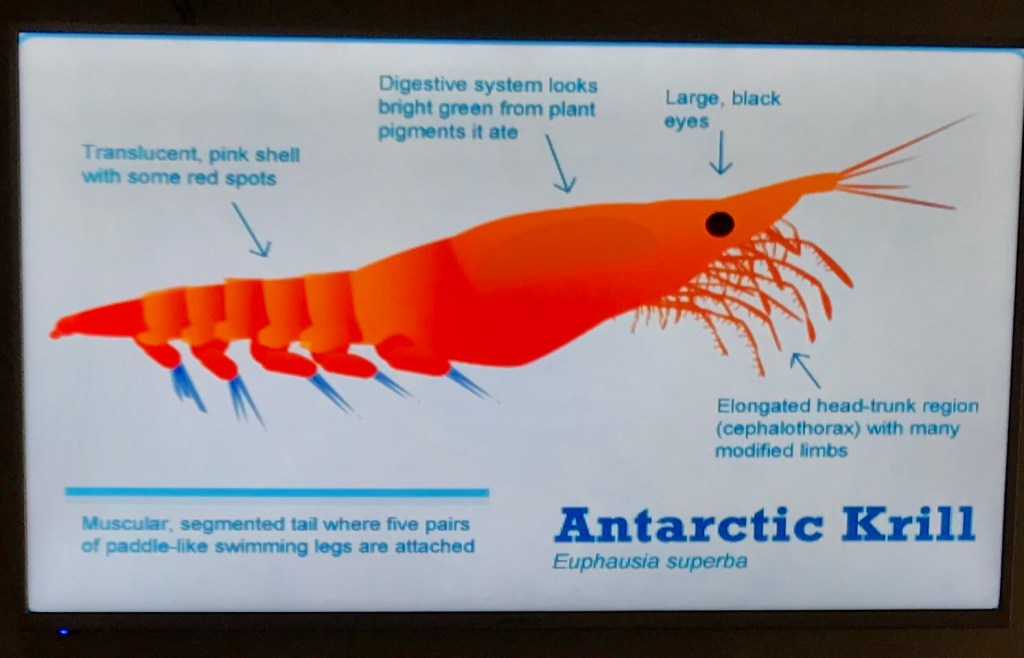
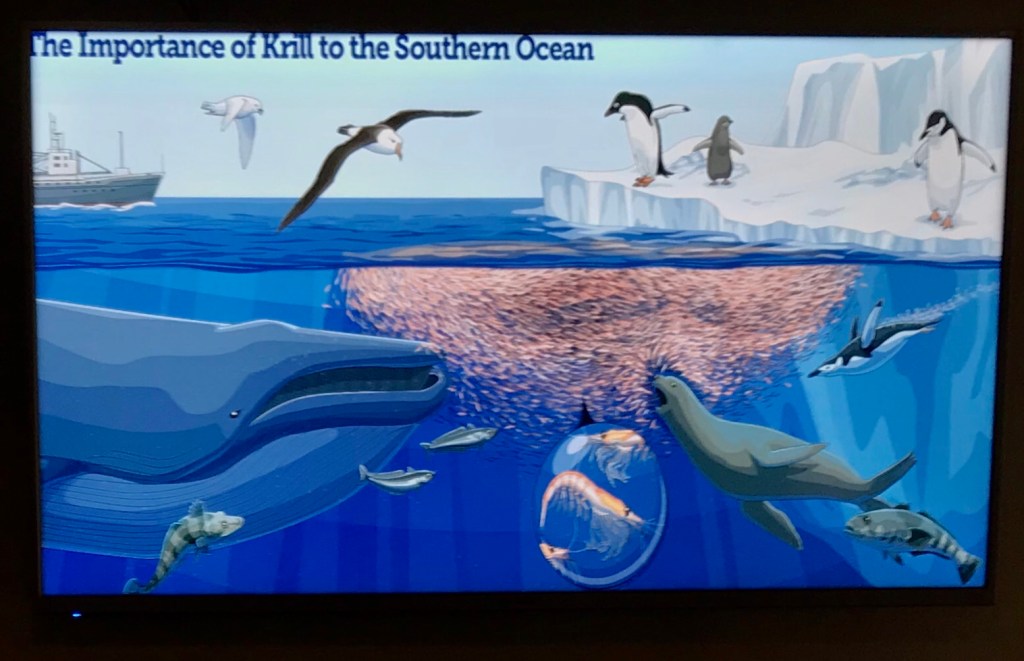
Krill are the Superstar of Antarctic fisheries. 3-4cm so smaller than a prawn.

Live 4-6 years average. Can go for 200 days without food they shrink up to 40% less. Eat phytoplankton and algae. Use sea ice as a nursery and protection. Also algae anchors on the bottom of sea ice. Swarm into a ball when a predator comes along. Bubble netting by the humpback whales (see “7 worlds 1 planet” David Attenborough), they are nocturnal. Come up at night descend in the day. Biomass 120-500million tonnes ( bigger than biomass of humans).

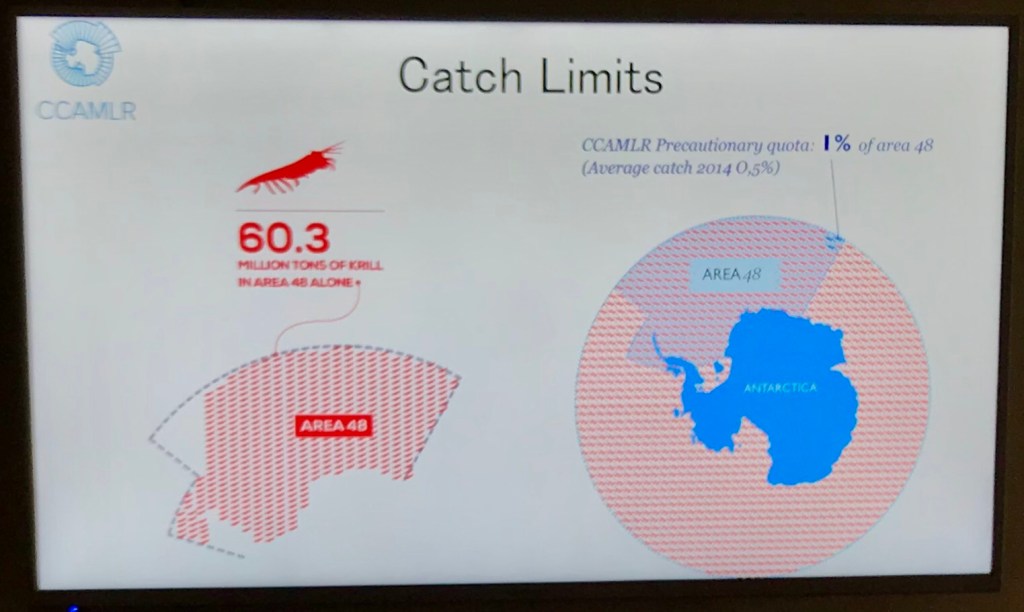
Fisheries see it as pink gold. Not regulated. Used for aquaculture, krill oil and pet food. Science doesn’t suggest krill is of any use to humans. 10-20% pharmaceuticals. 40% fish farming. 40% to pet food. Krill will self destruct within 3 hours of coming out of water so has to be processed immediately. CCAMLR established in 1961. So fisheries now regulated with permits and quotas.

Only 1% precautionary. However it doesn’t take into affect other things that are happening eg climate change, bad ice year, ocean acidification. Other criticism area 48 is right on top of the Antarctic Peninsula and this is the main breeding ground for many penguin species. Fishing is concentrating over the Antarctic Peninsular so pushing penguins to forage much further.

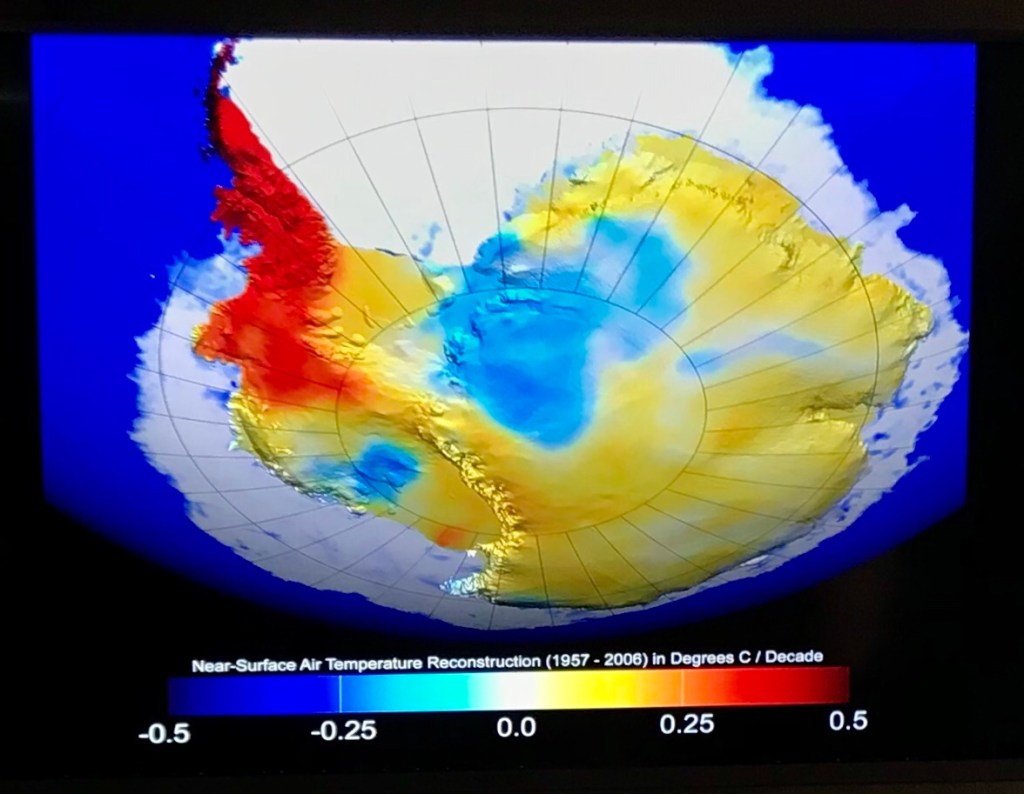
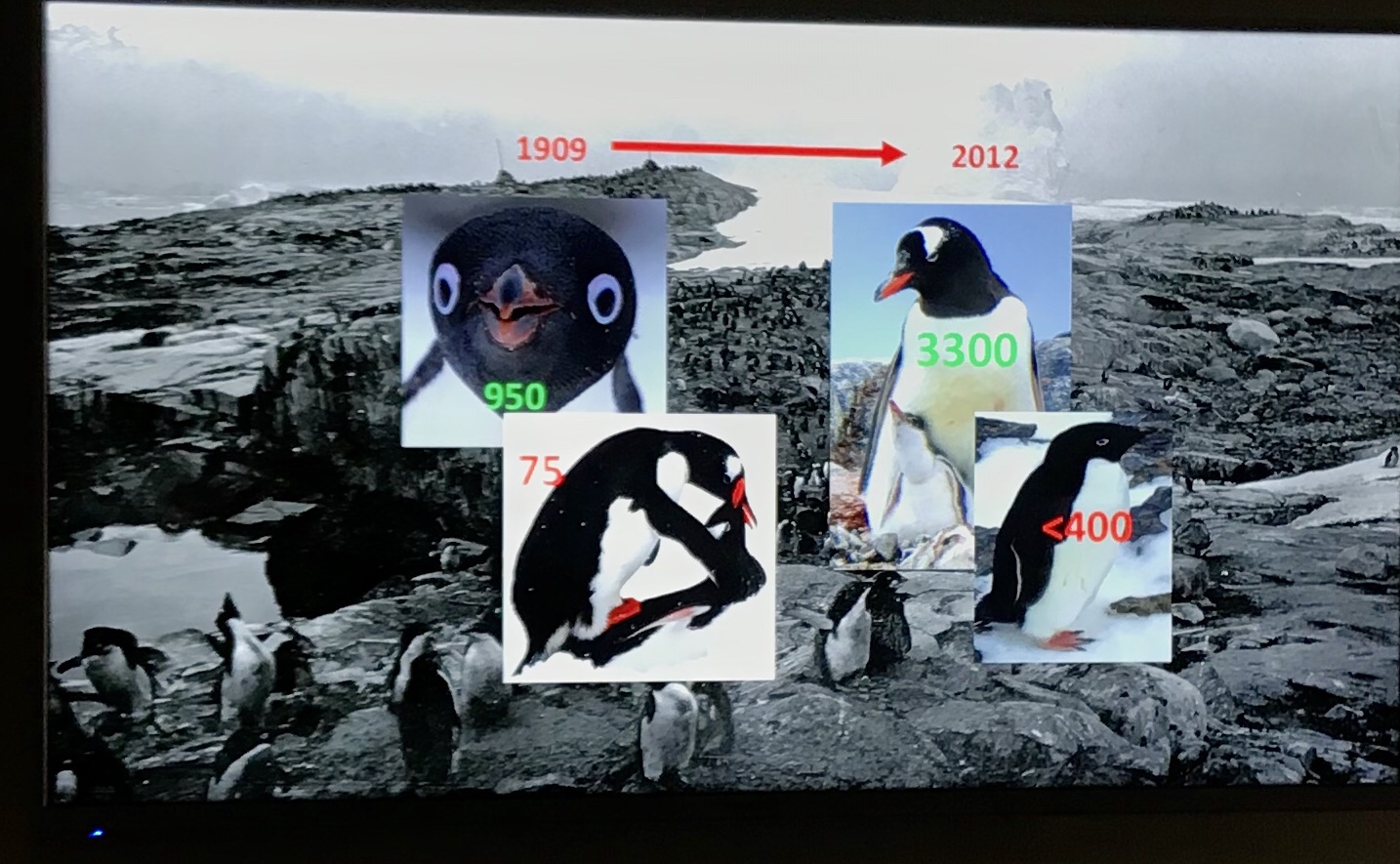
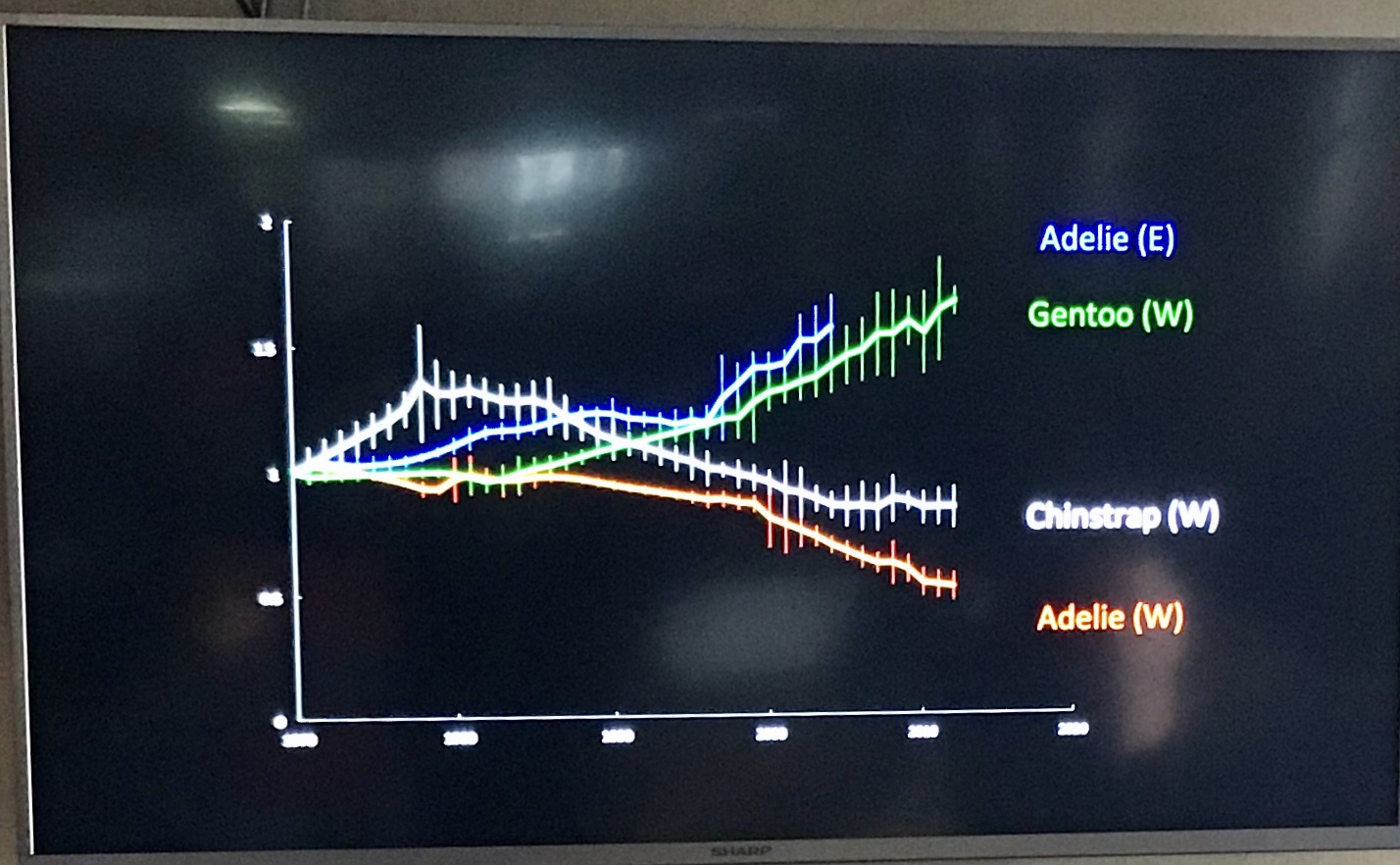
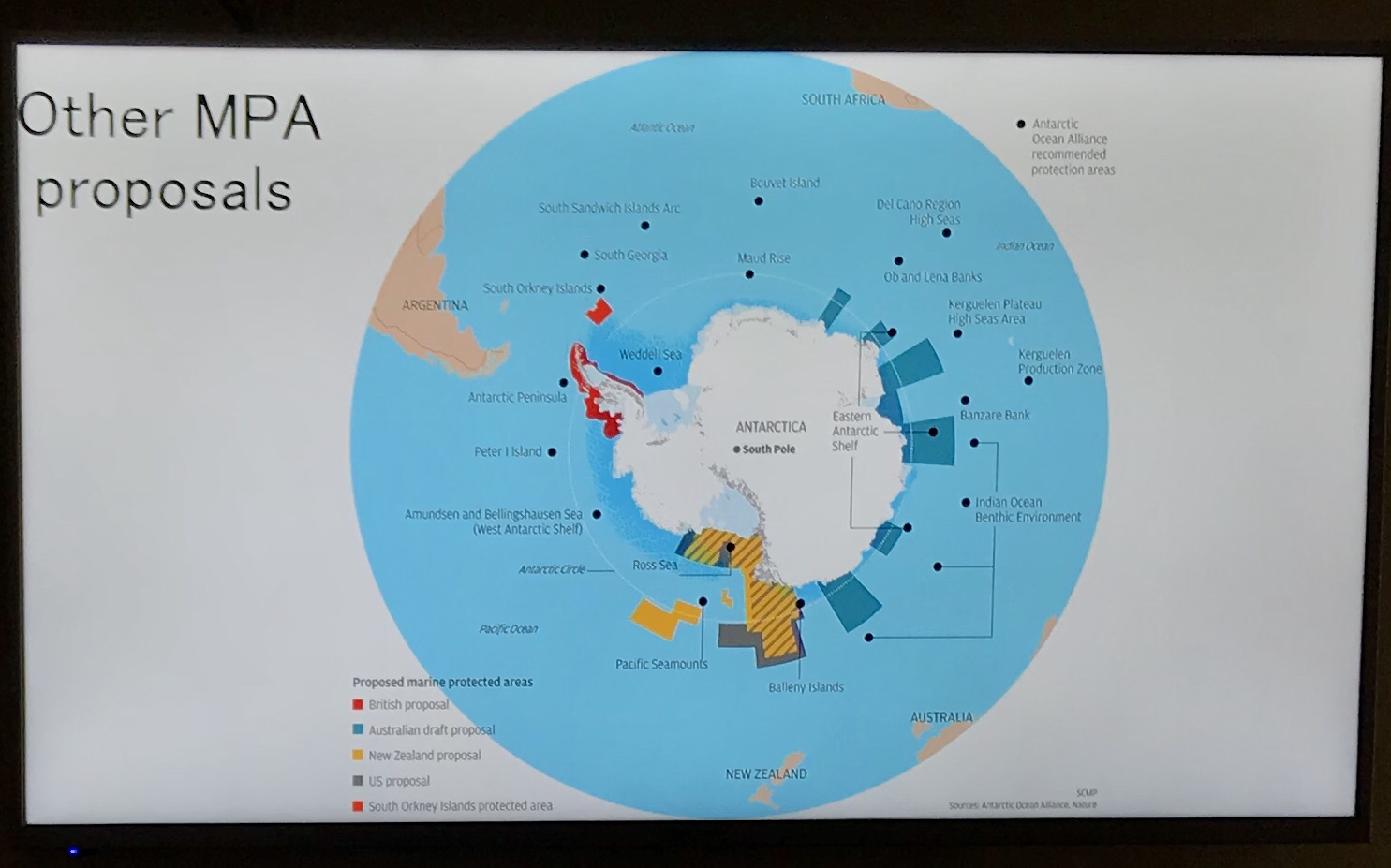
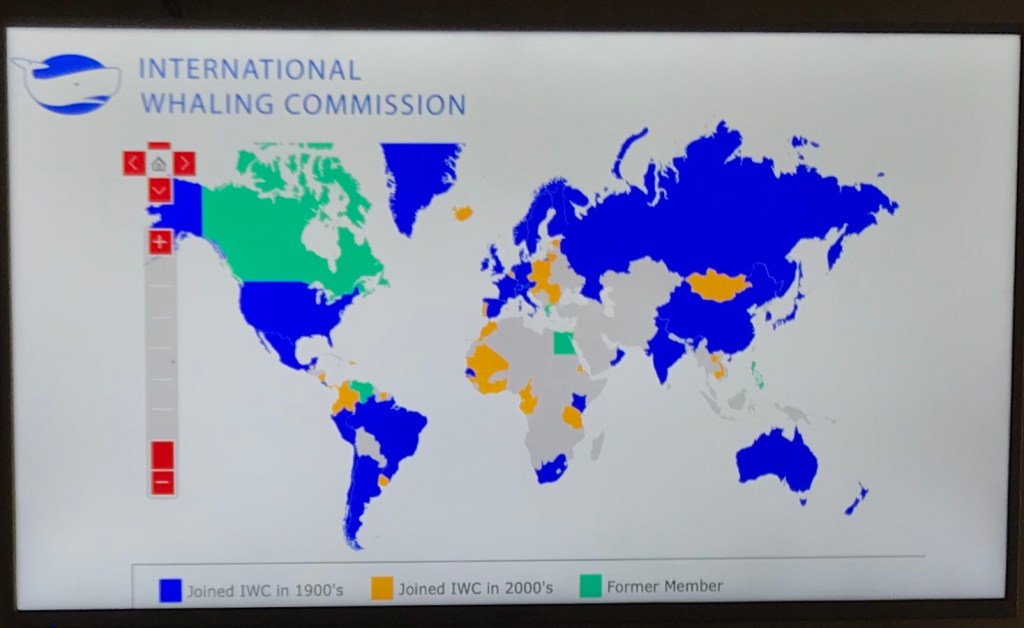
Warming also a problem. Just in 100 years changed from Adelie to gentoo penguins. Jellyfish like thing growing and taking the phytoplankton called salps. Greenpeace and Sea Shepard working against krill fishing. Patagonian tooth fish caught illegally. Now called Chilean sea bass. Mostly legally caught. South Georgia and South Sandwich Islands have even more strict rules. MV Thunder was an illegal ship chased over 10,000 miles in 2015 story. Longest maritime chase in history. The captain sank it to eliminate evidence. Sea Shepard picked them up and handed them over. Some marine protected areas and push to add more. So far not passing around the Antarctic peninsula. Some major companies adding support due to backlash. Only Ross Sea protected. Whaling has been happening in The southern ocean. Int whaling commission. (IWC). Canada left as their First Nations wanted to continue their practices. Moratorium on whaling in the southern ocean. www.icrwhale.org so now japan has withdrawn from the IWC and are starting commercial whaling again. 2019 – 227 commercial previous 333 under the scientific program.

Lunchtime and I am finding I am very sleepy today. (Little did I know, at this point, what was about to descend upon me…..). More biosecurity work on our gear. They could not be more thorough.

Presentation: Live Editing Your Photos with your photography guide Michelle in the Nautilus Lounge.

Michelle takes a pic to tell the story of what she has seen. Doesn’t over edit. Adobe bridge software to organise. Files by date and place. She uses raw. Gives a star rating 5 if likes 0 or not. Then moved to Lightroom editing software filtered to those with star rating. Works on them and then exports. Highlights changes background. Brush tool to bring up shadows on a face etc. crop. Horizon and brightness her key things. Darken top to take viewers eyes to the subject. Apple free editing software. Try my filters. Lightroom always keeps the original. JPEGs will save changes and you lose the original.never sharpen over one fifth. Play. Be careful with colour saturation. Try key wording photos so you can pull up by key word. Recuva software if deleted.

Presentation: Antarctica – discovering the land of our dreams with historian Miko.

BCE – before common era. Hmm. Terra Australis – the land in the south. Aristotle 350 BCE felt there was a South Pole. Equator became a barrier – belt of fire. As they moved south it was always warmer. Possible but not confirmed visit by Chinese around 1421. (Map more likely South America). 1473 first European to cross the equator. Magellan 1480-1521. Racist and murderer. He died but one of his ships did circumnavigate the world. He did discover the strait of Magellan (towards the bottom of South America). Francis Drake, known for his humanity. First to complete the circumnavigation of the globe the Golden Hind. Went through straits to Magellan and a storm blew him south oct 24, 1578 he found the Drake Passage. Some reports that might indicate Antarctica had been seen around 1700 but not confirmed. Maps had a massive land in the south. 1675 found South Georgia. Pack ice in 1700. 1730 Bouvet Island in 1730. Kerguelen island 1771. Capt Cook. 1772-1775 furthest south ever and very close to Antarctica. Saw ice bergs but due to bergs or fog he couldn’t see Antarctica. But he did cross the Antarctic circle 1773. He claimed South Georgia for England. Wooly penguins called by Cook as he thought the chicks were a different species to king penguins. Bellingshausen first to see the continent of Antarctica. Bransfield saw it Jan 30th 1820 – 3 days after B. So almost 200 years ago. South Shetlands found 1819. All fur seals wiped out very quickly. Antarctica is the first mythical place we have ever found.

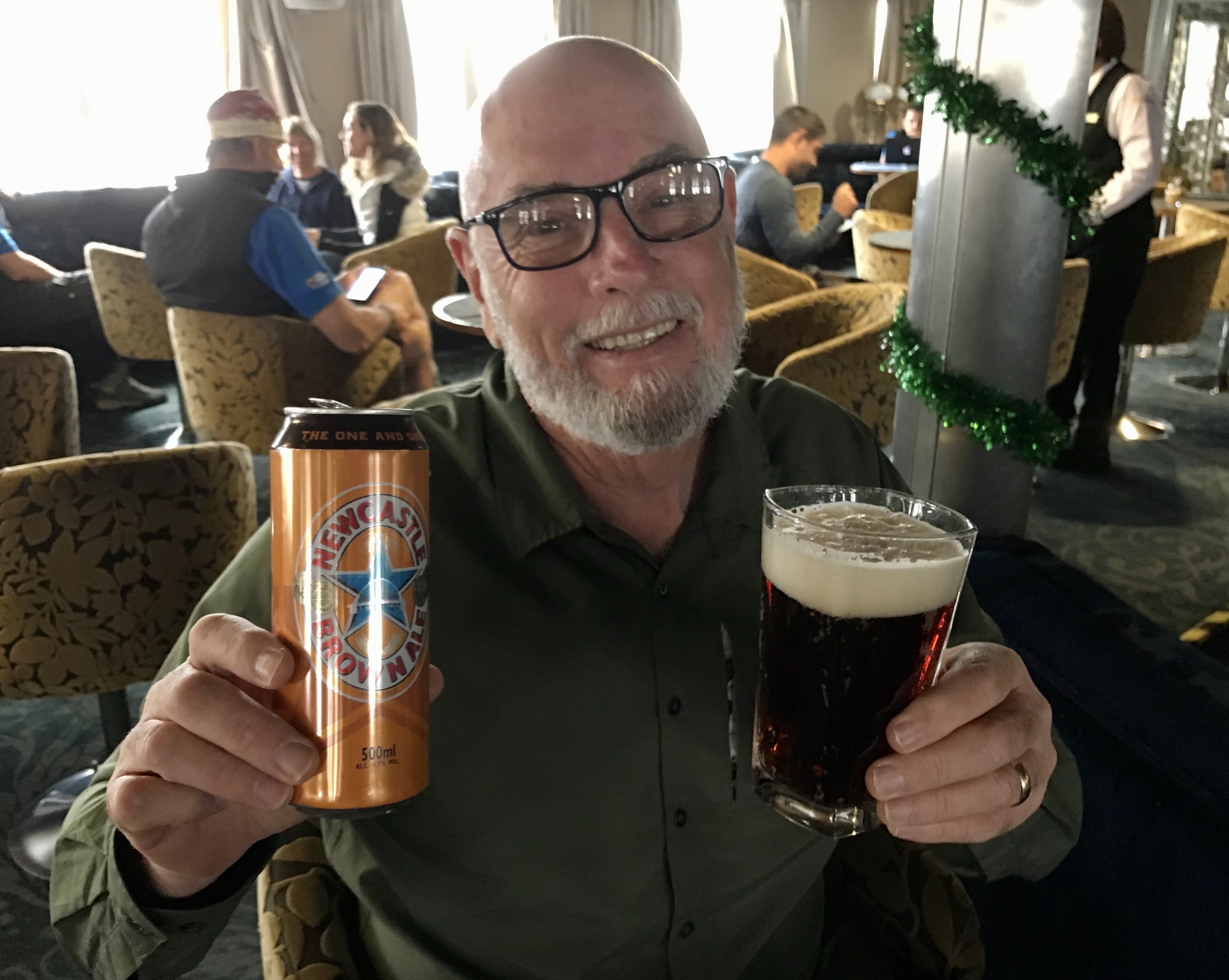
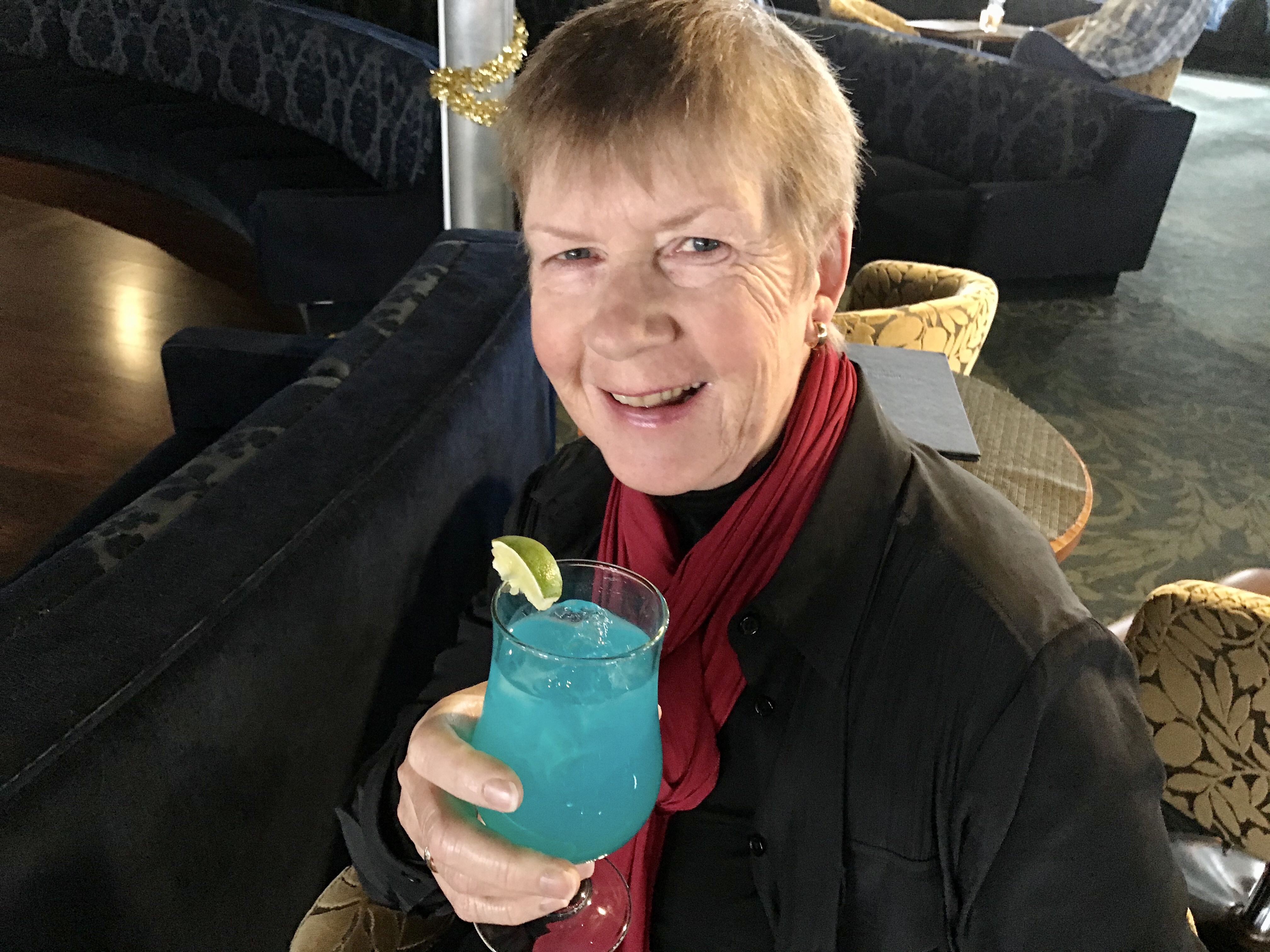
Beer of the day is a Newcastle brown ale. 4.5 rating. Very light.(even though a dark beer). I had another blue whale. (Blue lagoon)

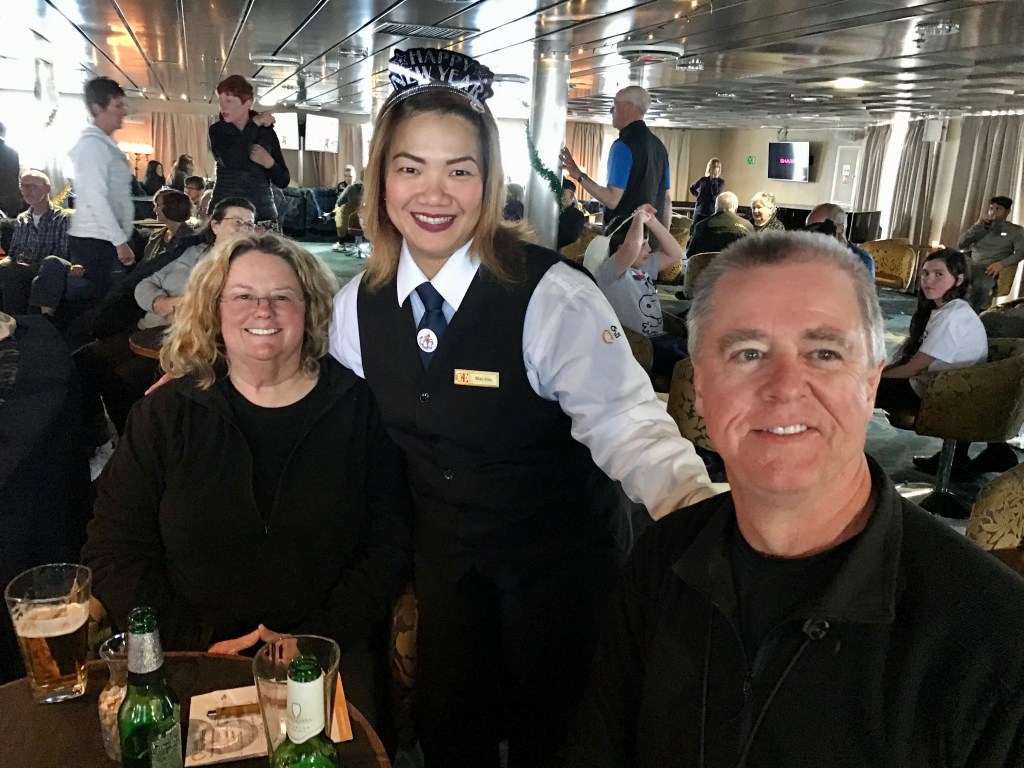
Cheryl & Mike with one of our favourites, Mary Lou.

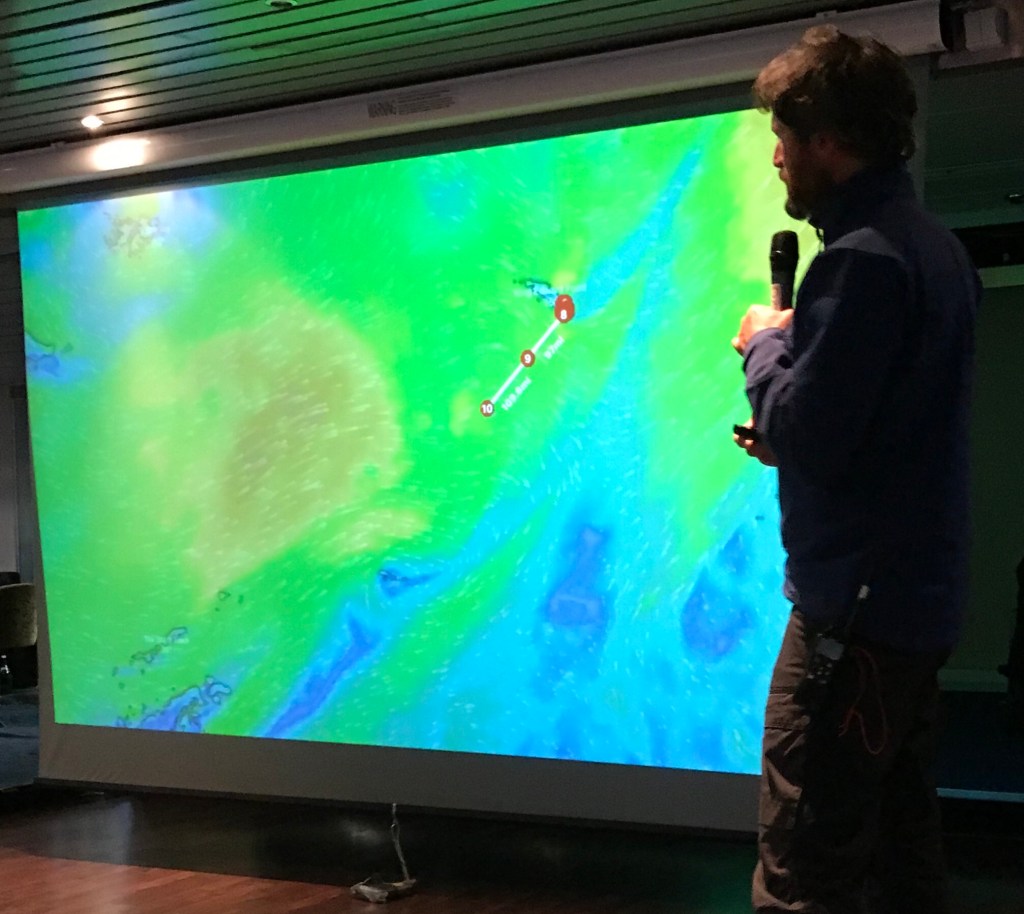
Solan started by congratulating us for choosing a holiday that is uncomfortable at times. Some are sea sick again. 60 degrees south is the geopolitical region of Antarctica. Early tomorrow we will cross into there and we are Deviating due to a storm and heading for the south Orkney islands. Remote and home to the quintessential Antarctic species. When we wake up we should see the mountains of the south Orkney islands. Spend afternoon and evening there. Then another full and part of following day to get to the peninsula proper. Might aim for the south shetlands as might be easier to start zodiac landing. Then south across the bransfield strait to the Gerlache Strait.

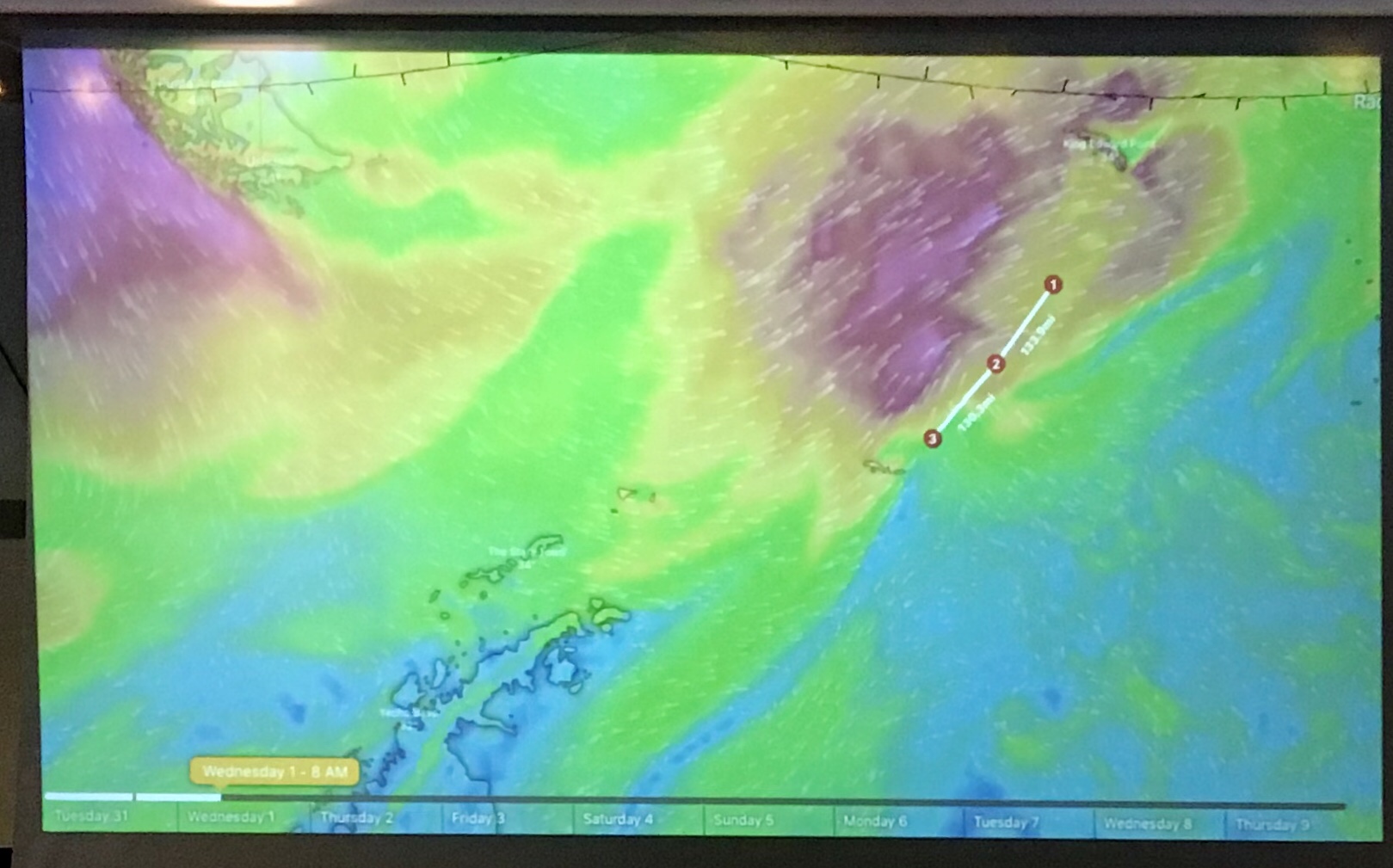
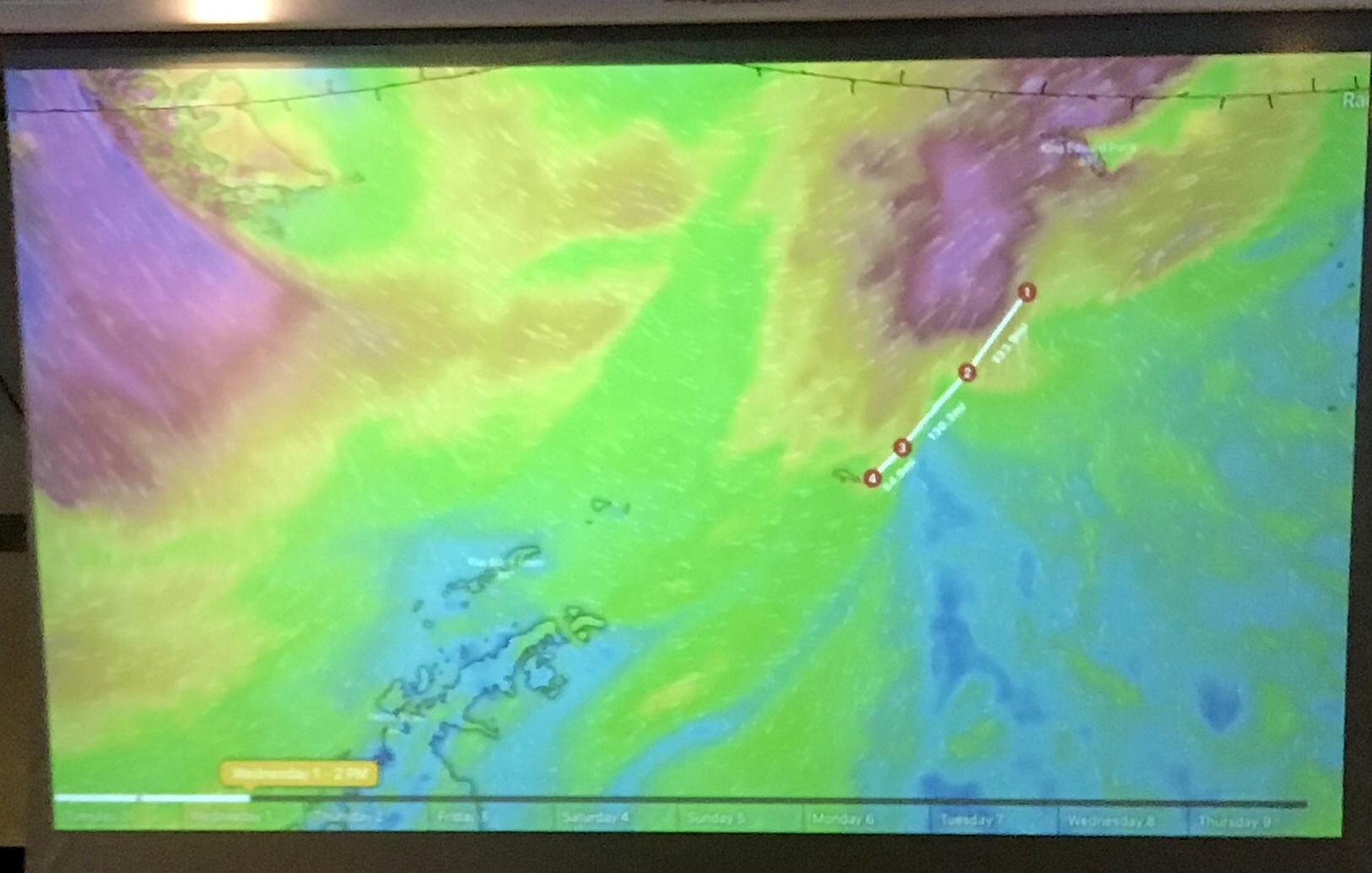
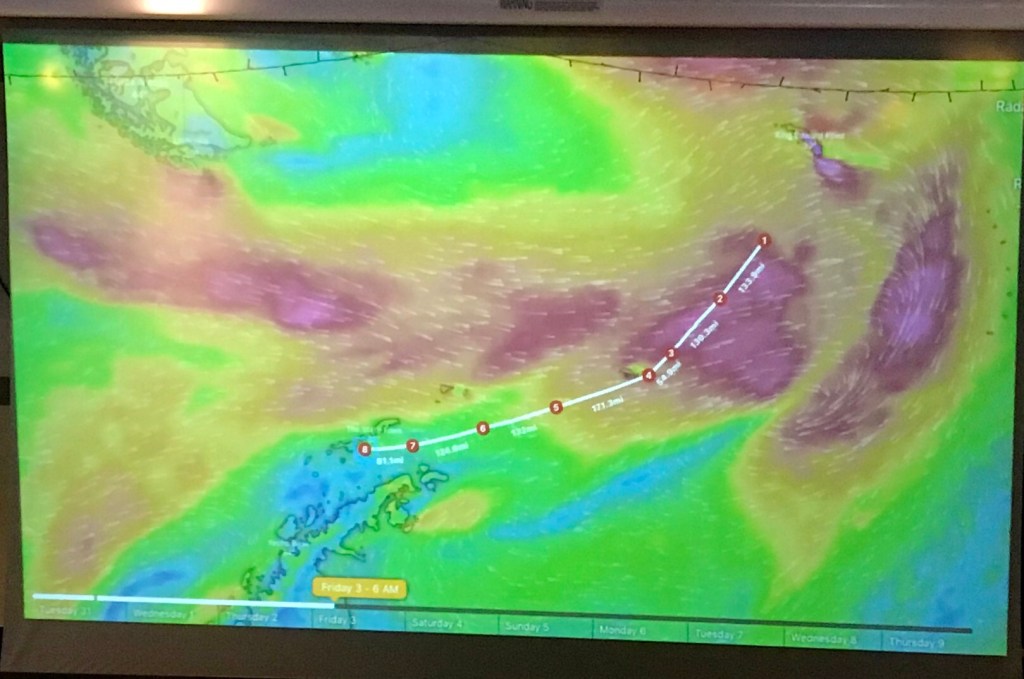
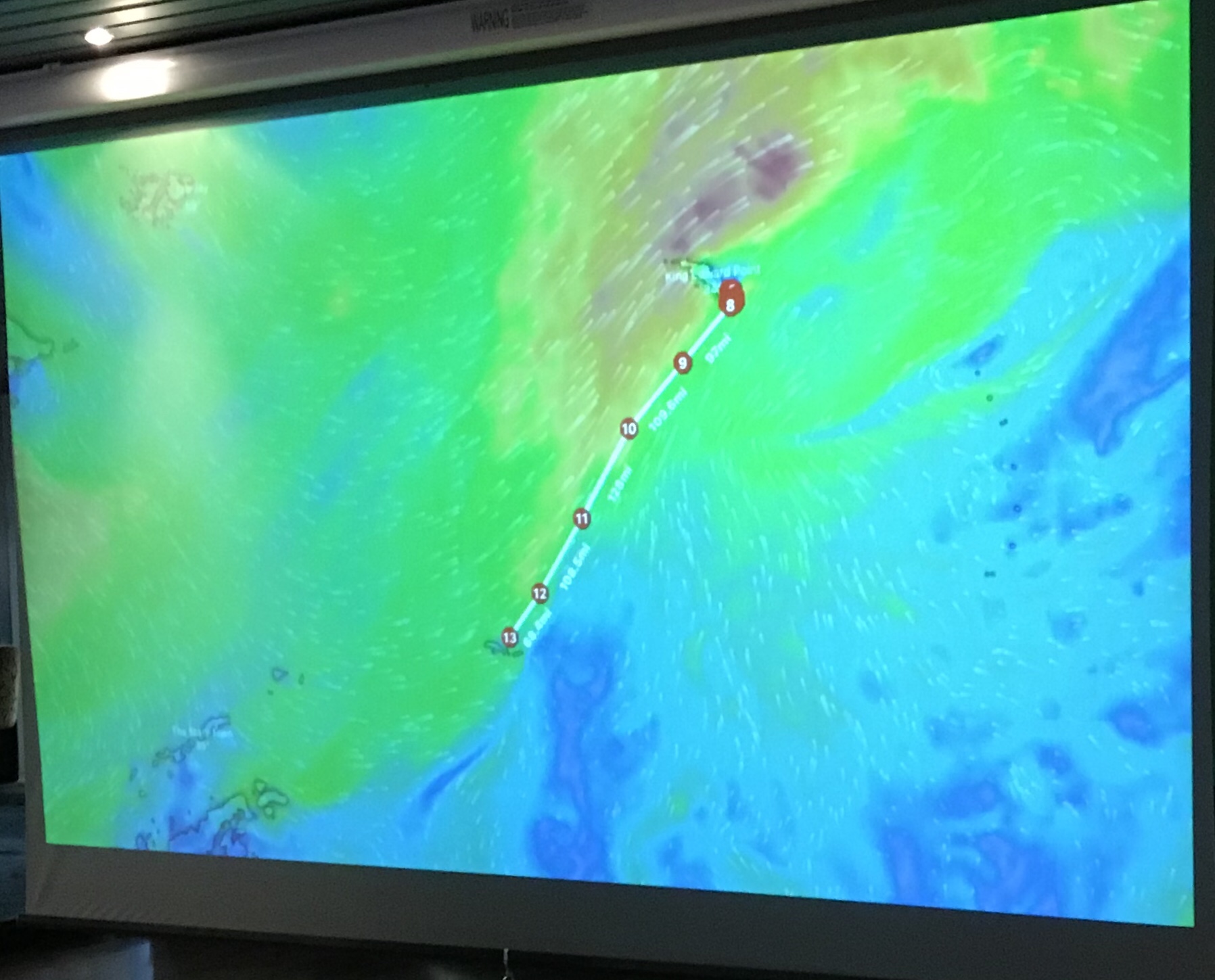
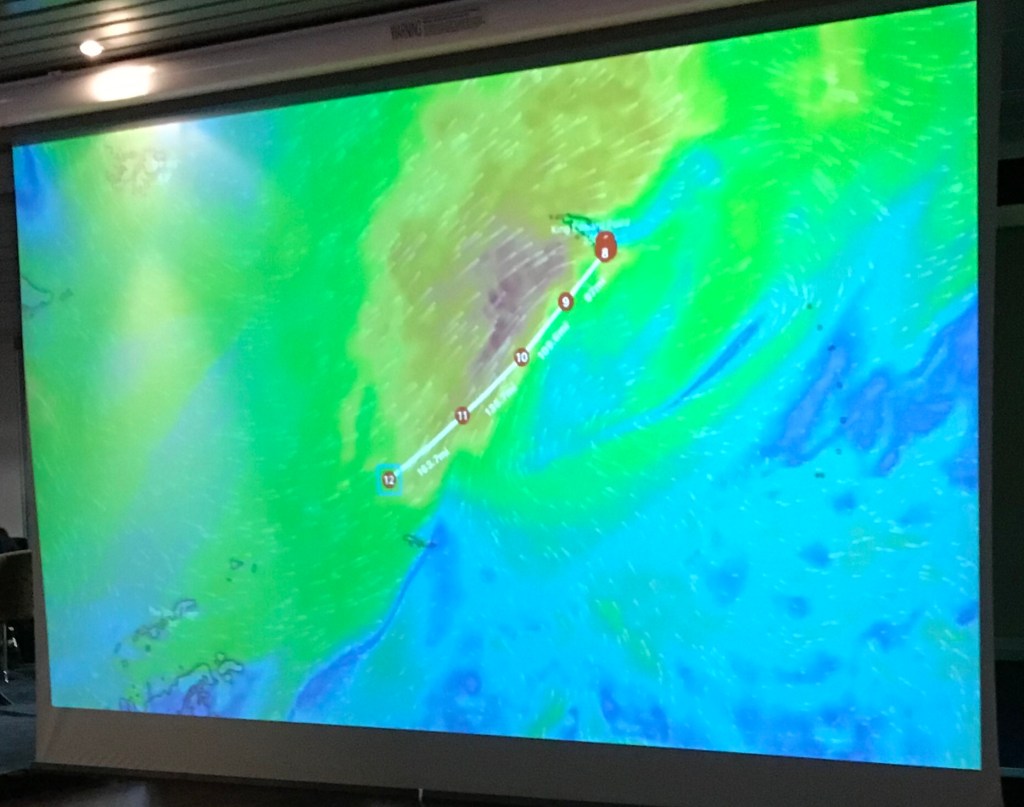
Here are a few of the weather/wind charts Solan shared with us. We are trying hard to miss the purple bits!

Tomorrow Scotia bay and an Antarctic base there. Longest running Antarctic station. Over 100 years. They have invited us there. Special opportunity. See a working base manned year round. Rarely gets visitors.stationed twelve months at a time. 5 or 6 years ago that Quark last visited. Zodiac cruising and landing. It is an Argentine station. Founder was a Scot. Small chance we may also go to another island after dinner (sun doesn’t set until midnight). Shingle Cove to see Adelie penguin. Also a British base there but no visitors allowed! How exciting.

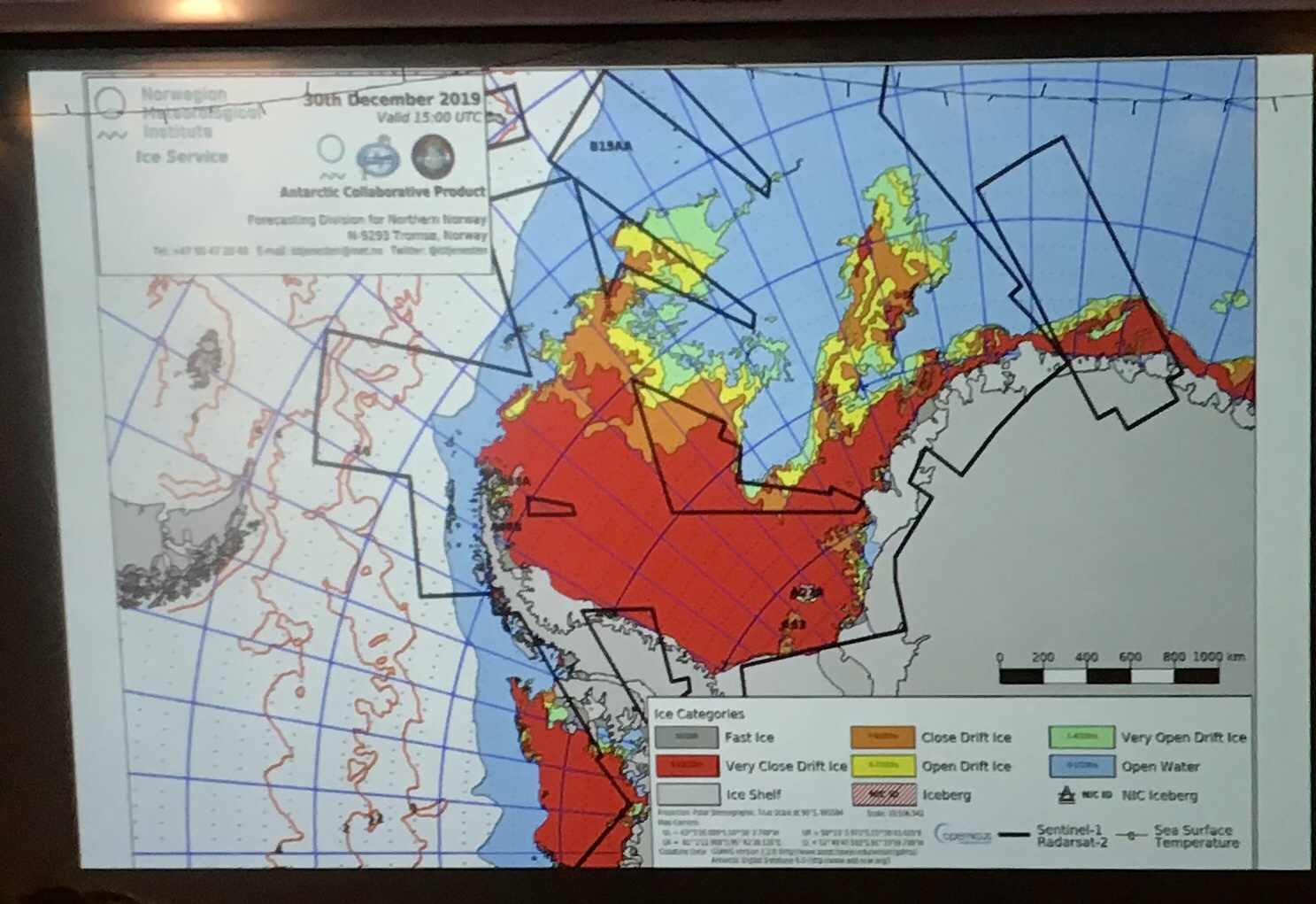
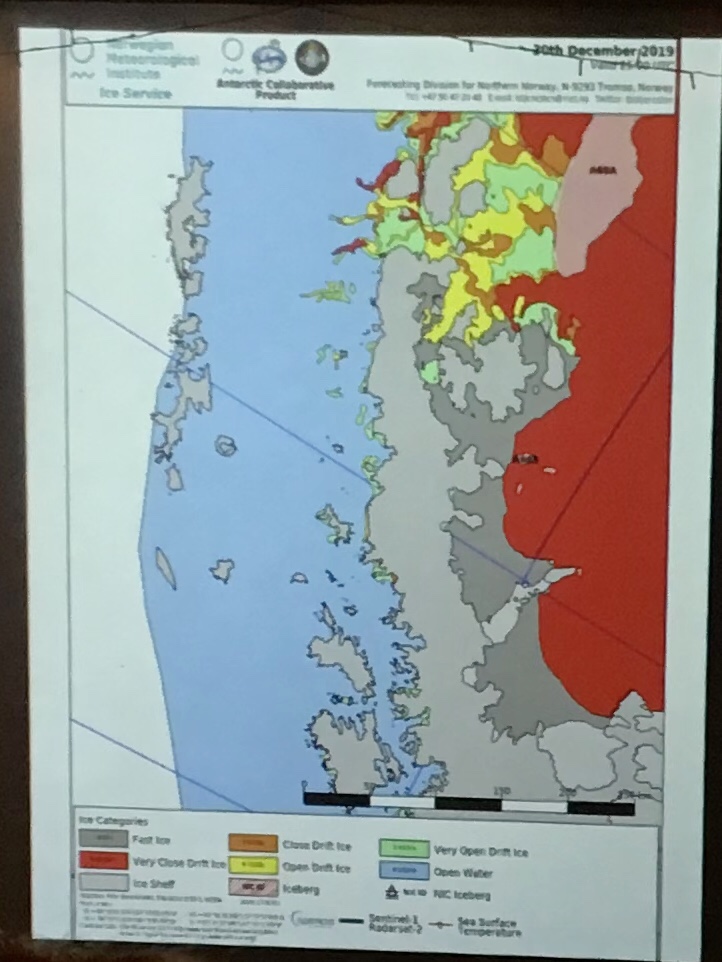
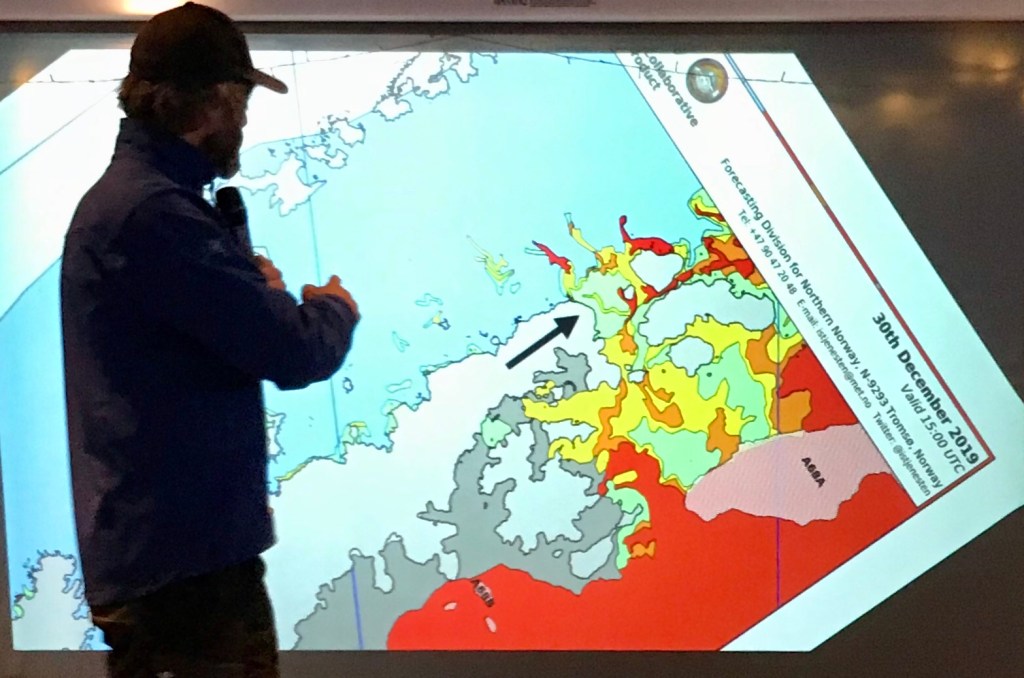
Pictures of ice forecasting lots of red. Big red areas is the weddell sea. Dark grey fast ice. Red frozen ocean. 3rd slide shows why we can’t go towards Antarctic sound due to ice, going to Gerlache. South shetlands just above the arrow. So tomorrow pm orkneys then 1.5 days at sea then Shetland’s then travel to other Antarctic places. Anything south of 60 is Antarctica. So south orkneys are Antarctica.

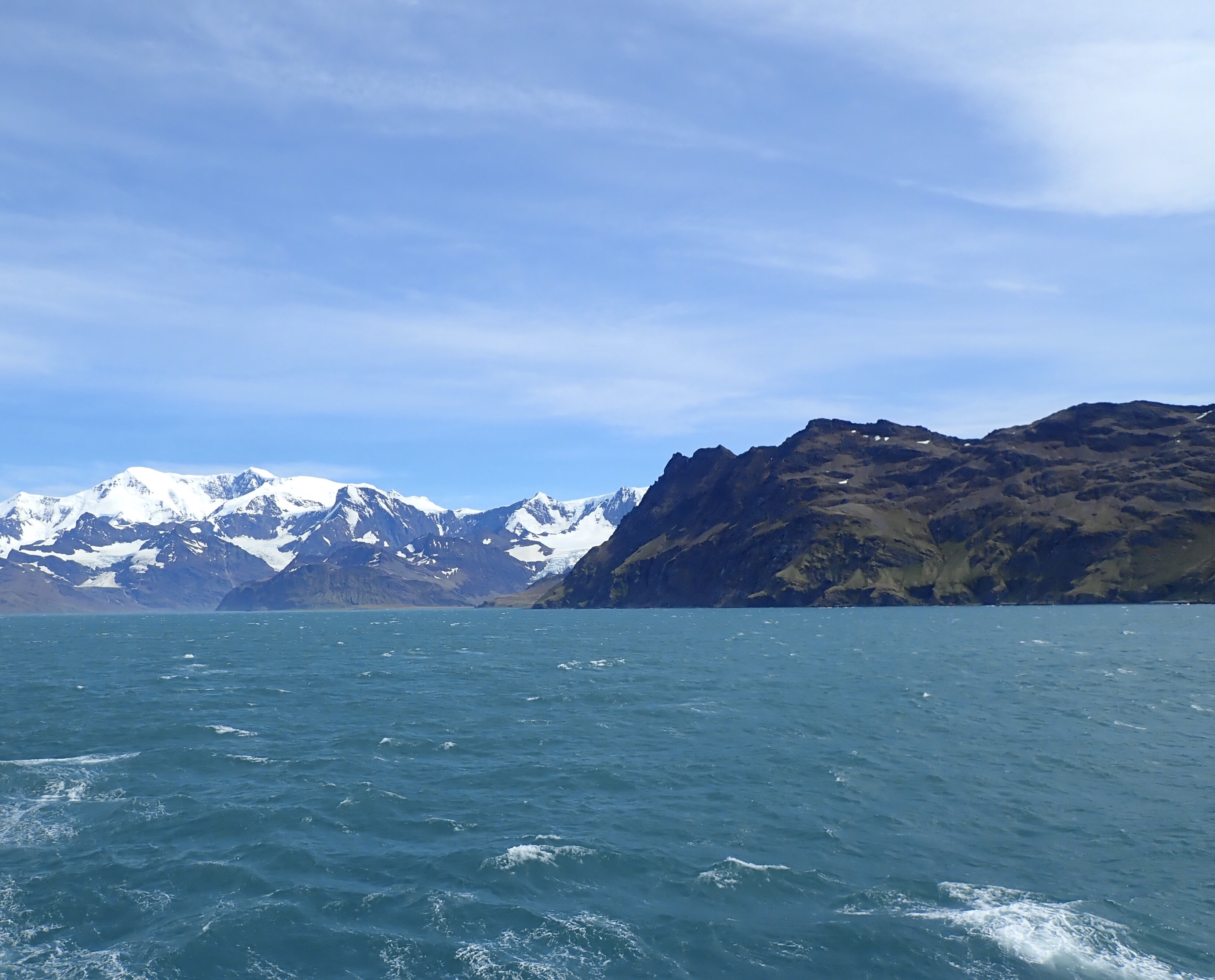
Land around 8am. Ice, snow and mountains. Expect around freezing temp plus windchill.

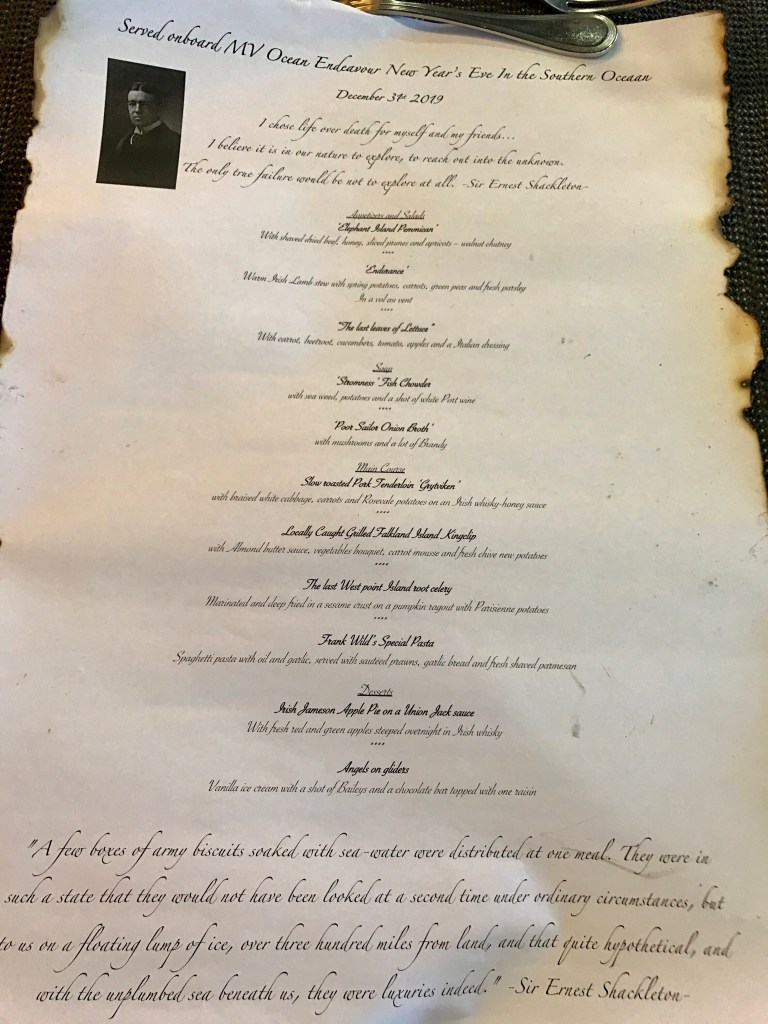
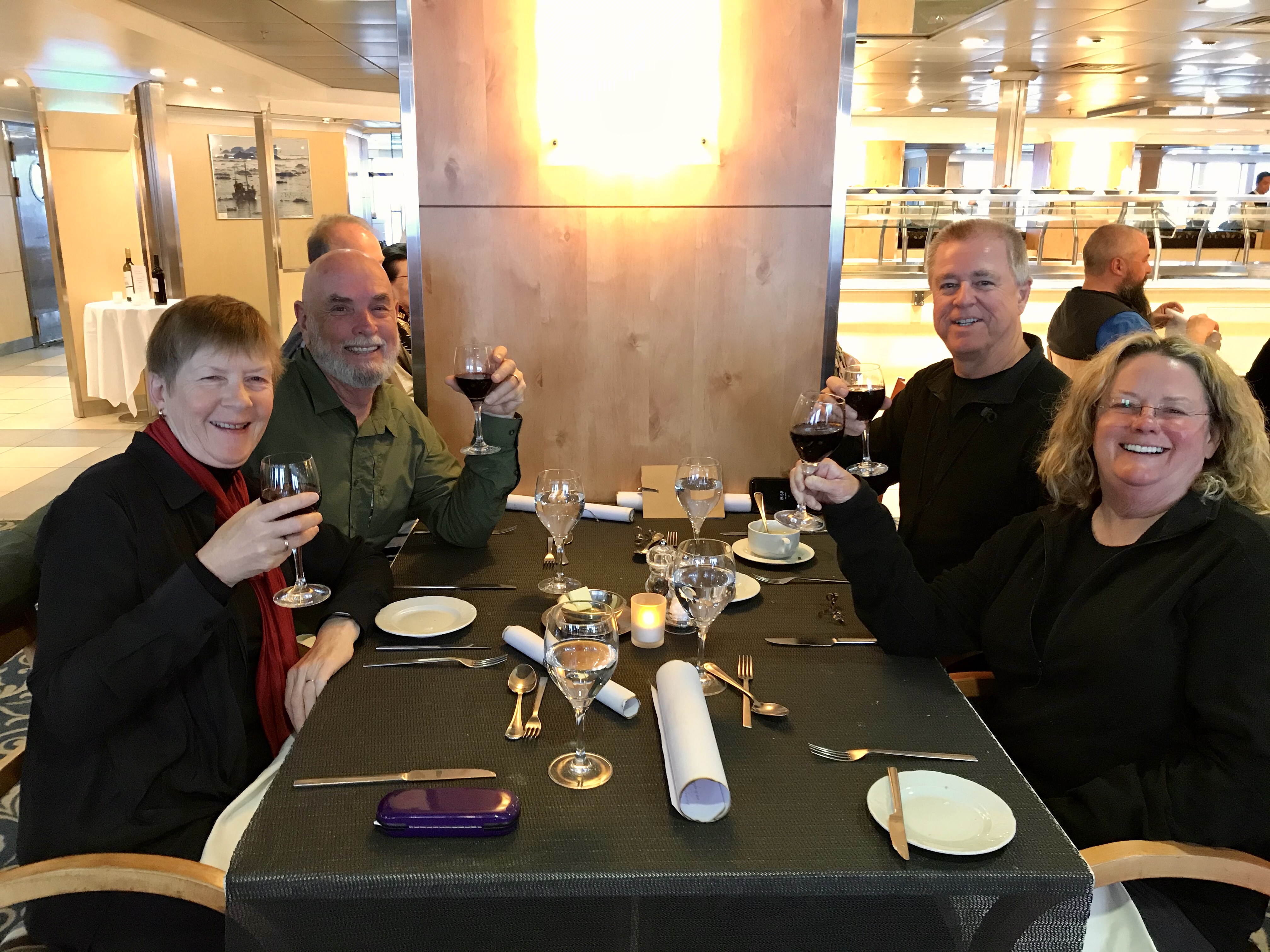
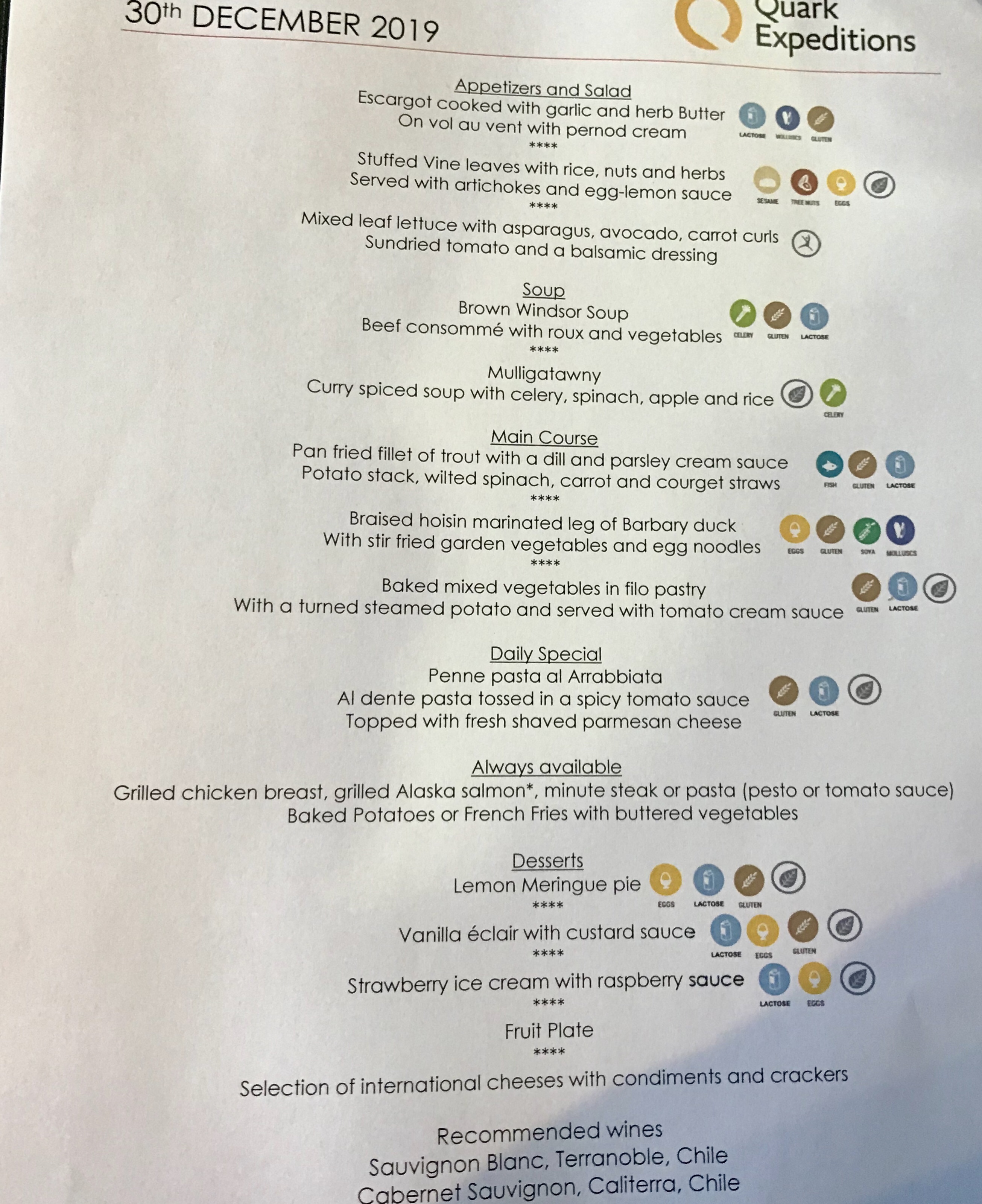
Dinner was a feast with a very special menu.

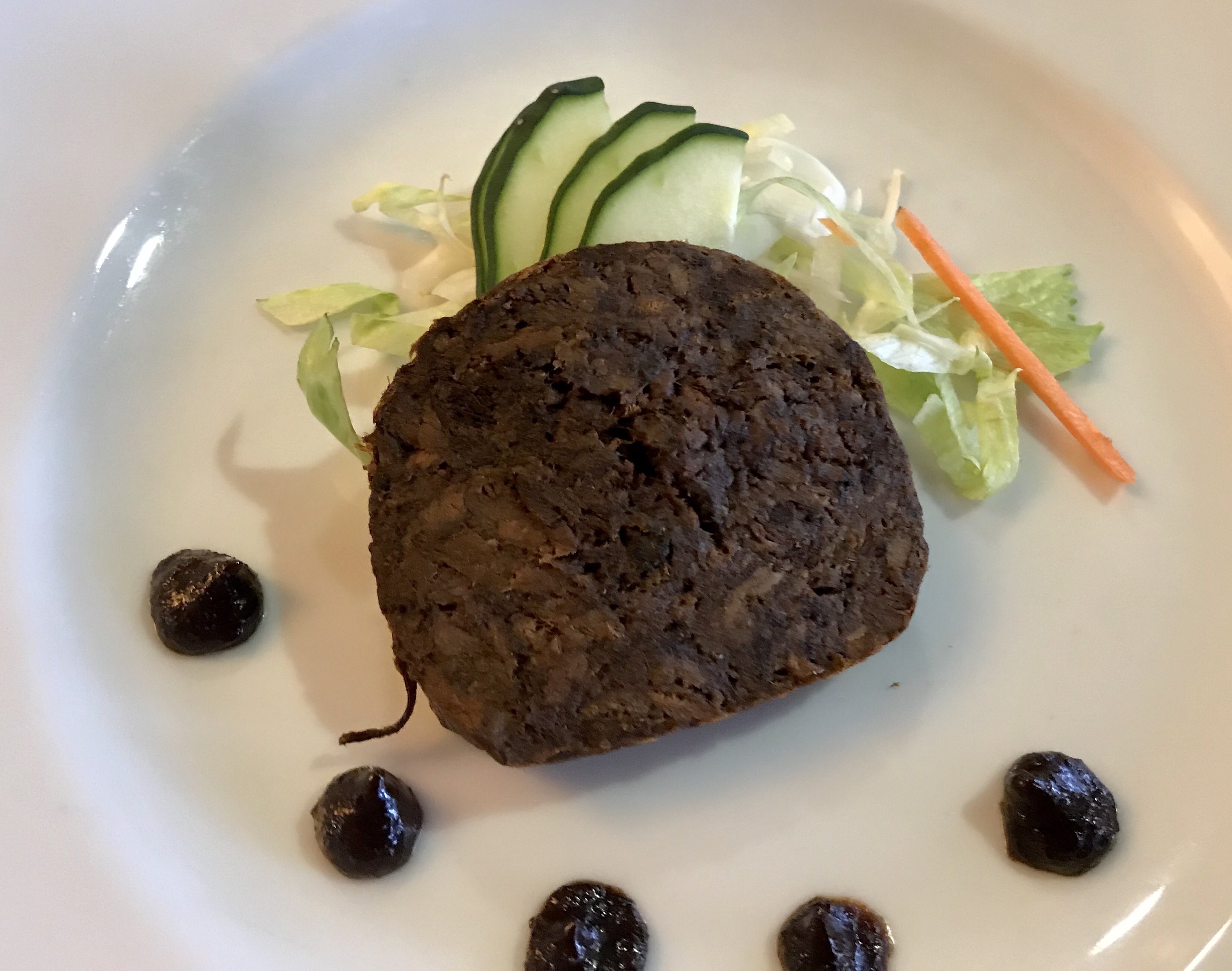
Ok if you read “Endurance”, you’ll read a lot about Pemmican. So I had to try it. Not too bad at all but no penguin involved.

Thoroughly enjoyed by all!

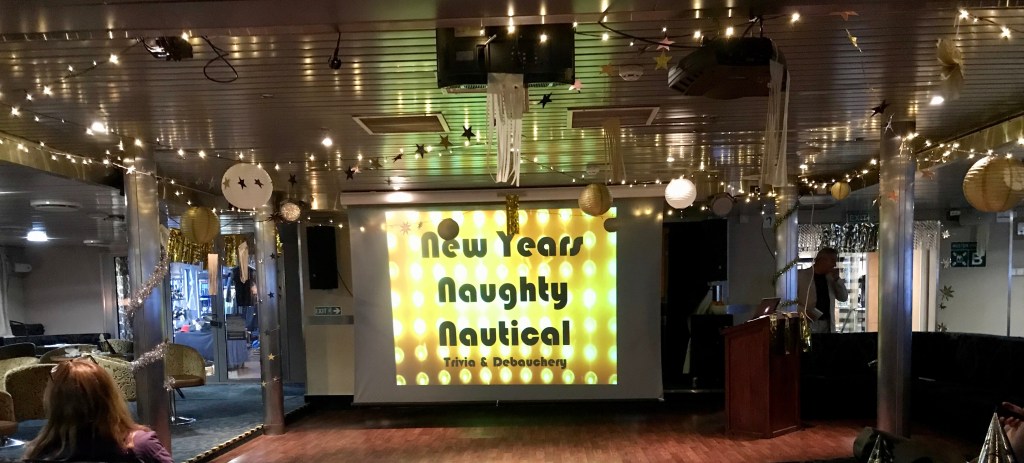
We were told to “Grab a buddy and join Ryan, Ryan & Ryan (yes there are three Ryan’s on the expedition team), for New Years Naughty Nautical – a quiz night of epic proportions (with prizes!), in the Nautilus Lounge.”

The second beer of the day was a Becks which only rated a 3 yikes! Squeakers sounded like king penguins!

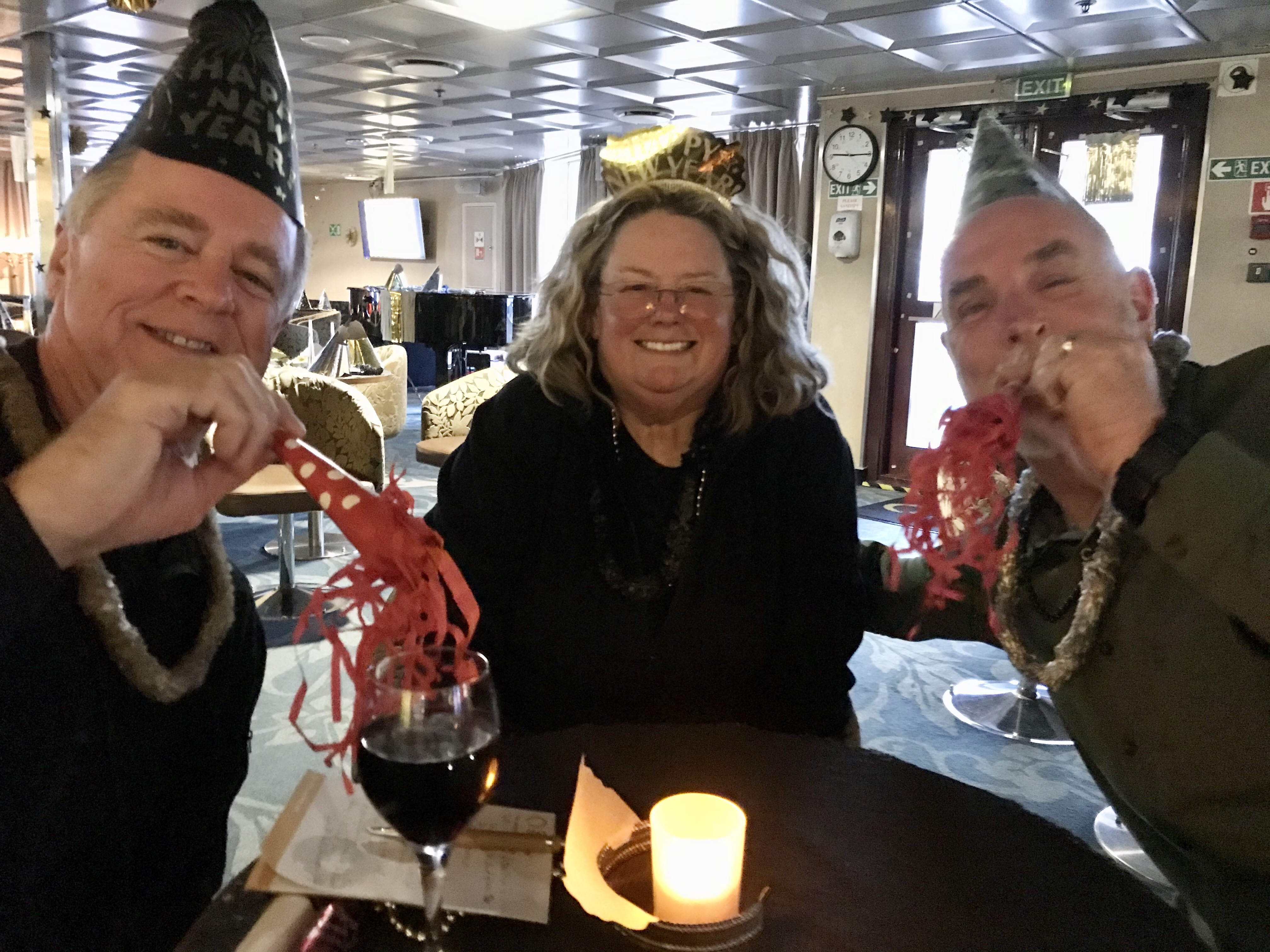
At any rate there was a lot of laughter and games and both Garrie and Mike became involved with various challenges but came no where. Me?? Nope. There has to be some advantage to always being behind the camera lens!

Some of it was fun, mostly the quiz part, but when they started the “necking” game ie passing an orange from neck to neck in the team we all decided it was time for bed. Cheryl and I had been looking at each other for about half an hour but this was the deciding factor.

After the quiz, they planned “dancing and jolly times! There will be a Late-Night Snack Bar (22:30 – 23:30) available outside the Nautilus Lounge” but we were all ready for the sack.

Clocks went back to Buenos Aires time at midnight so some may have had two celebrations!

A cute critter and happy new year card awaited us as we headed to bed.

So here ends the year 2019. Tomorrow a new year and new – Antarctic- adventures!

South Georgia – Cooper Bay

Seems appropriately named for our last “port of call” for South Georgia.

So we have now entered Cooper Bay but with the forecast the first trick is whether they can anchor the ship in these winds.

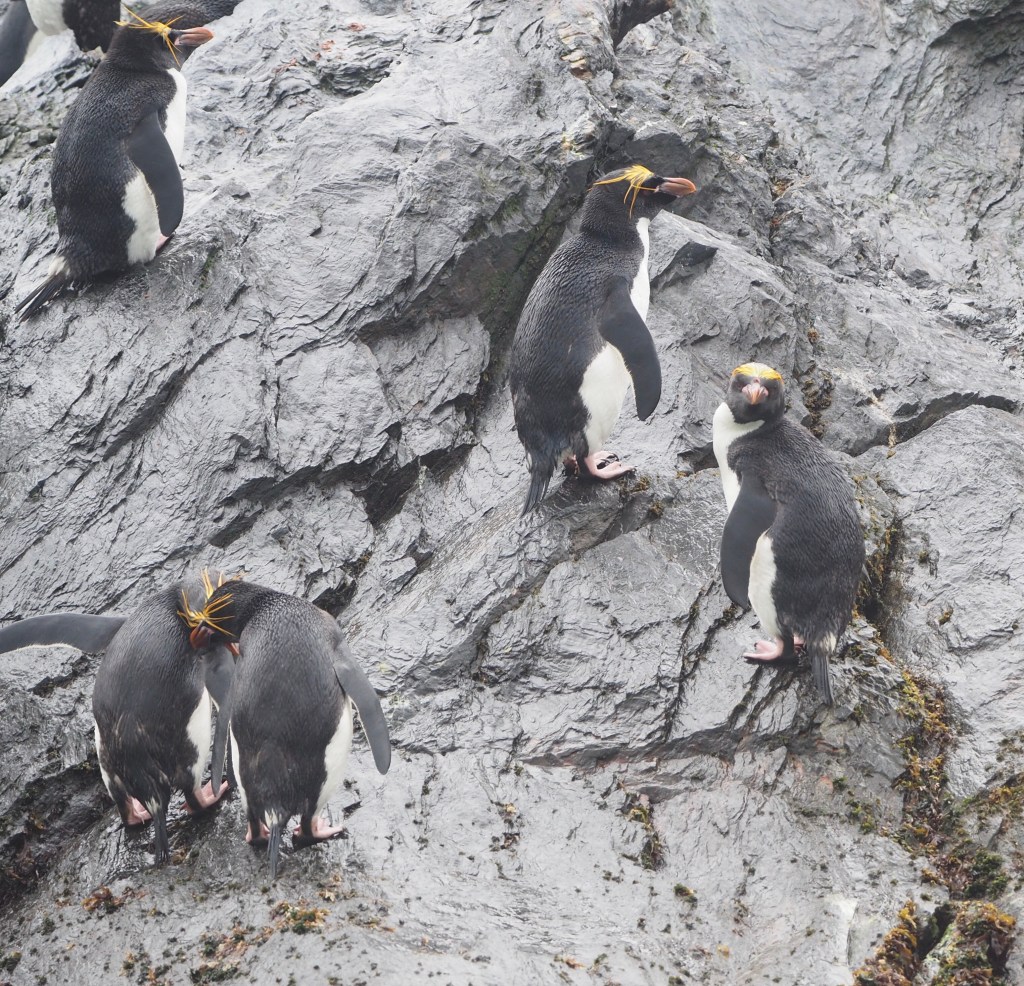
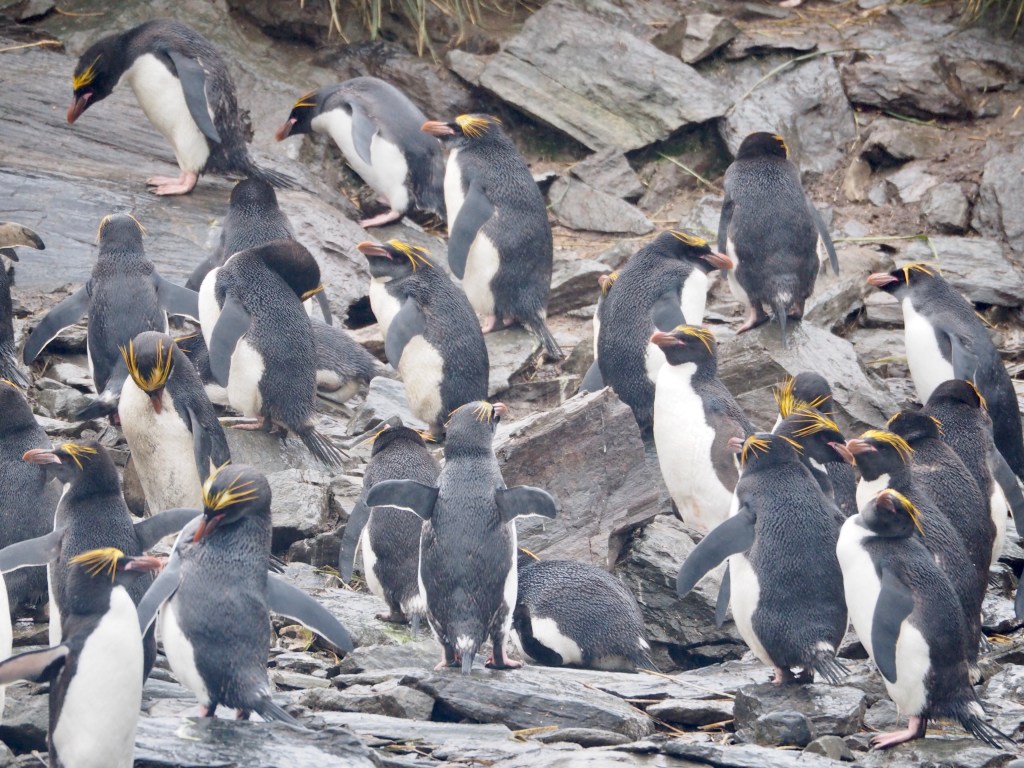
If they can anchor they will recheck the weather situation here and decide whether to put down a couple of zodiacs for the crew to check things out and then they’ll decide if we all go. I’m thinking it’s going to be tough to get good pictures even if we go but would love to see a Macaroni Penguin. Thankfully we saw a chinstrap at Grytviken, but only one. They, to me, are the cutest so far, though the gentoo are also funny little things. Who knew penguins came in so many varieties.

3pm another announcement. We are here and anchor dropped. Will now wait and see what happens and re-assess whether the crane can operate and the anchor holds. Next update in 15 minutes. So the 2.30pm suggested time will be at least 4pm I would say. (If we go).

Still it is all about safety and ok we missed the 4.30am opportunity to see macaroni penguins and this is probably our last chance, but I also want to live to see the Antarctic peninsula! Again we are so so glad we chose a cruise that included the Falklands and South Georgia as the wildlife has been spectacular. (The turtles, rays and pelicans back home may not be of any great interest for a while). The photos also cannot describe the experience of being so close to any of these fantastic creatures. The smells are also an intricate part of the experience which is not worrying me, but then I also enjoy the aroma of our flying foxes.

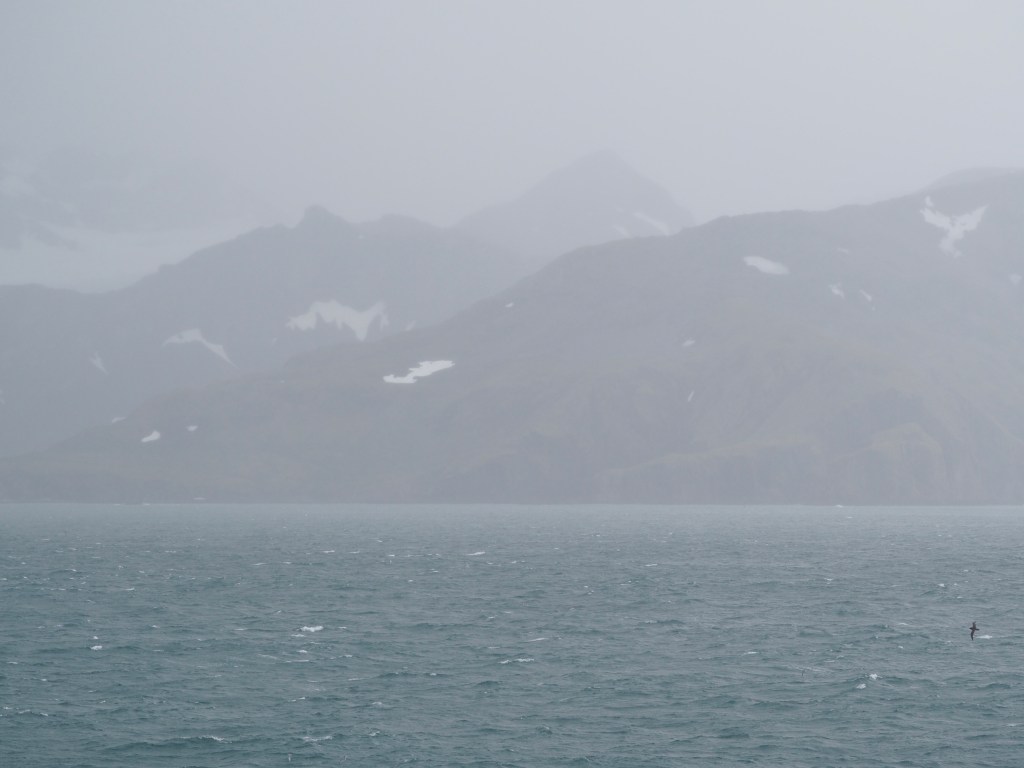
From our porthole we can see Cooper Island and several ice bergs but we need some major rain to wash all the salt spray off.

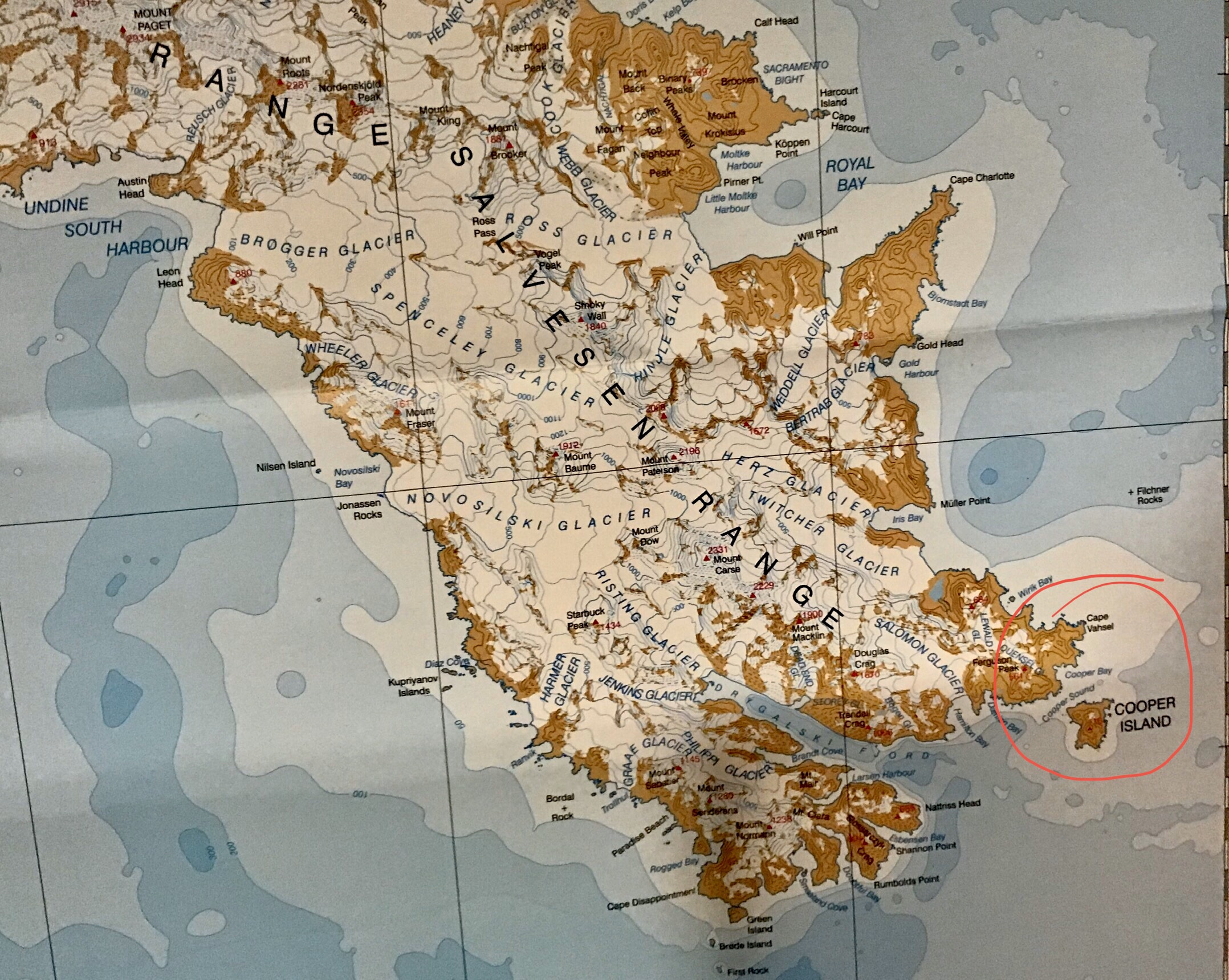
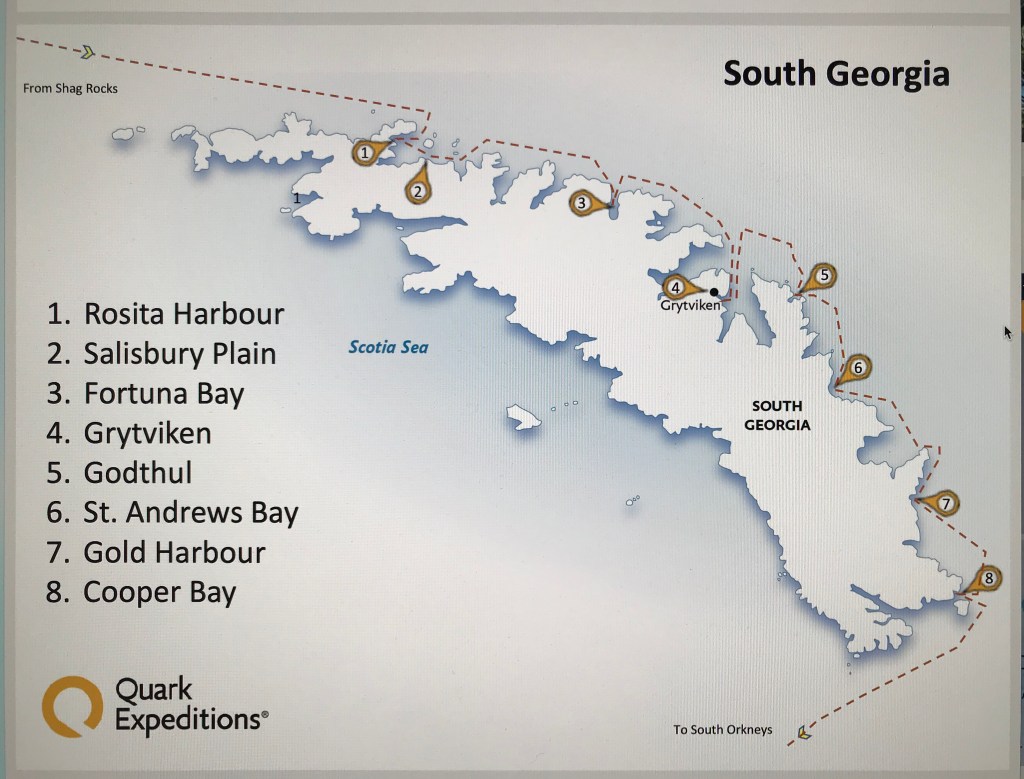
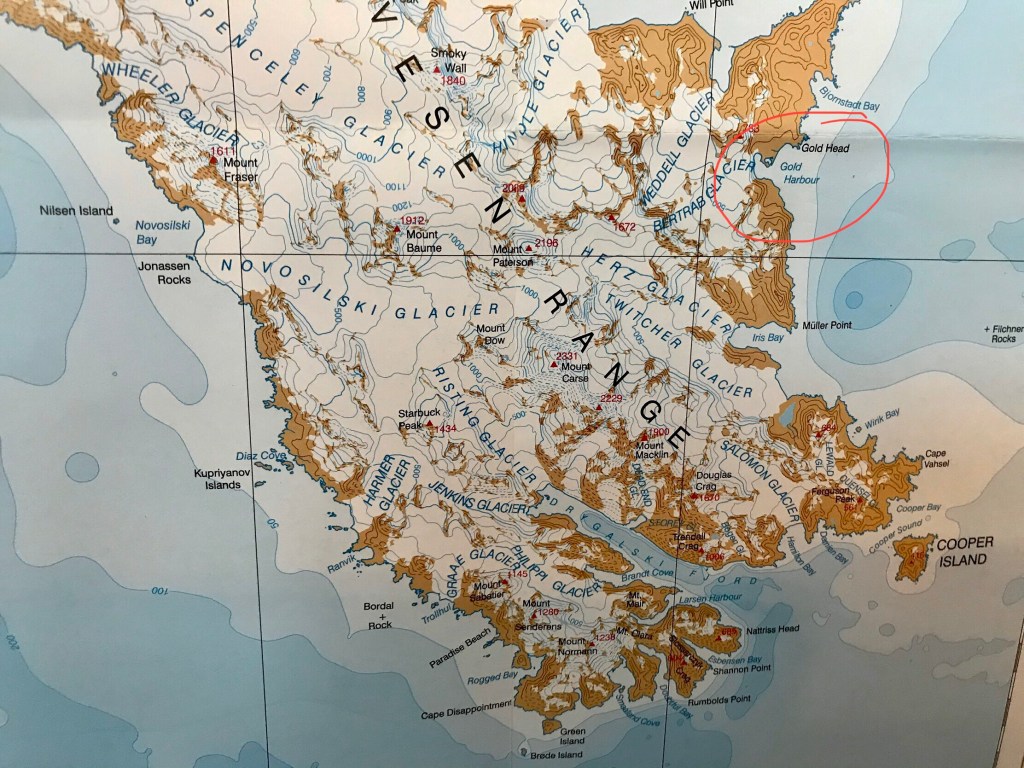
Note via the map it took us about 2 hours to sail from Gold Harbour to Cooper Bay.

3.15pm still raining and strong winds. Just a one hour cruise but will go and try to see the macaroni colony so dress up warm and waterproof. 3.45pm disembarkation they hope. Woo hoo.

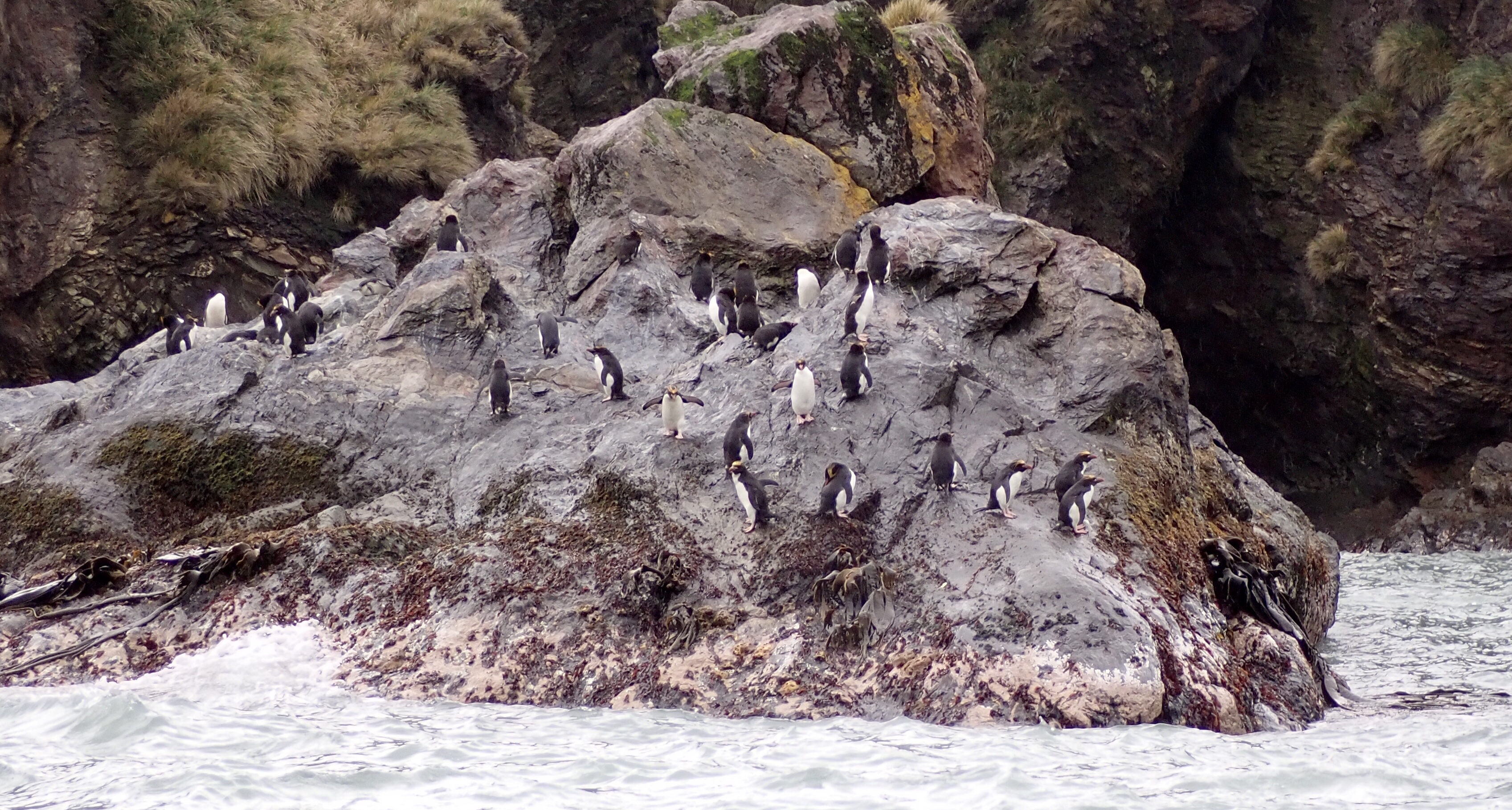
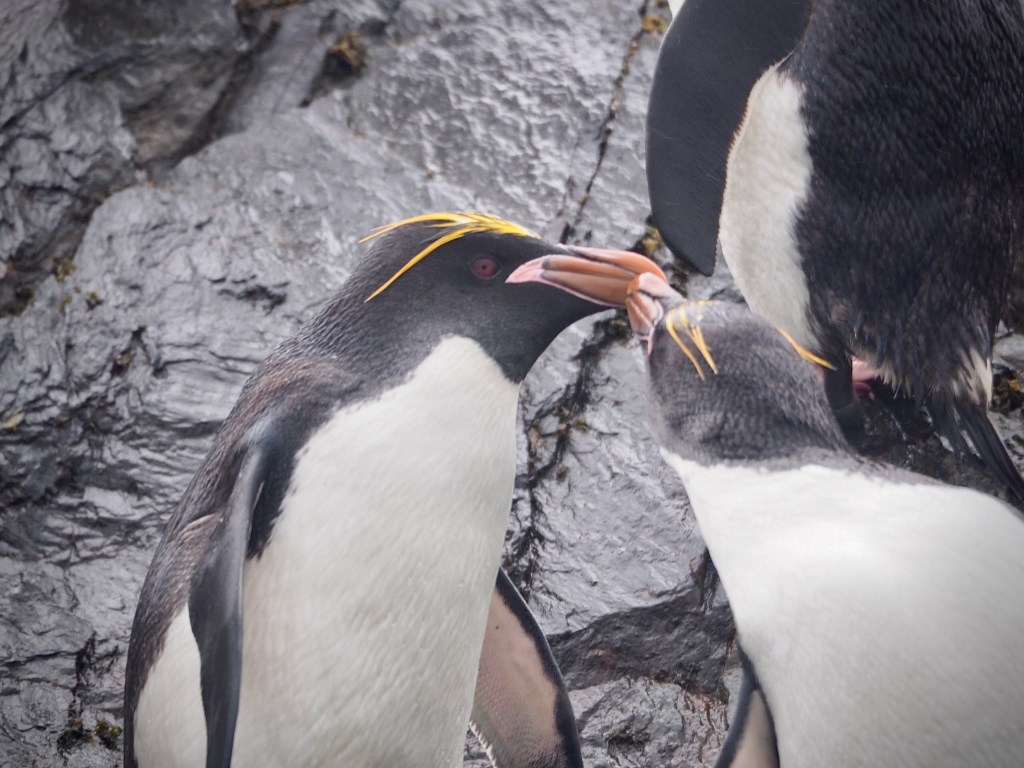
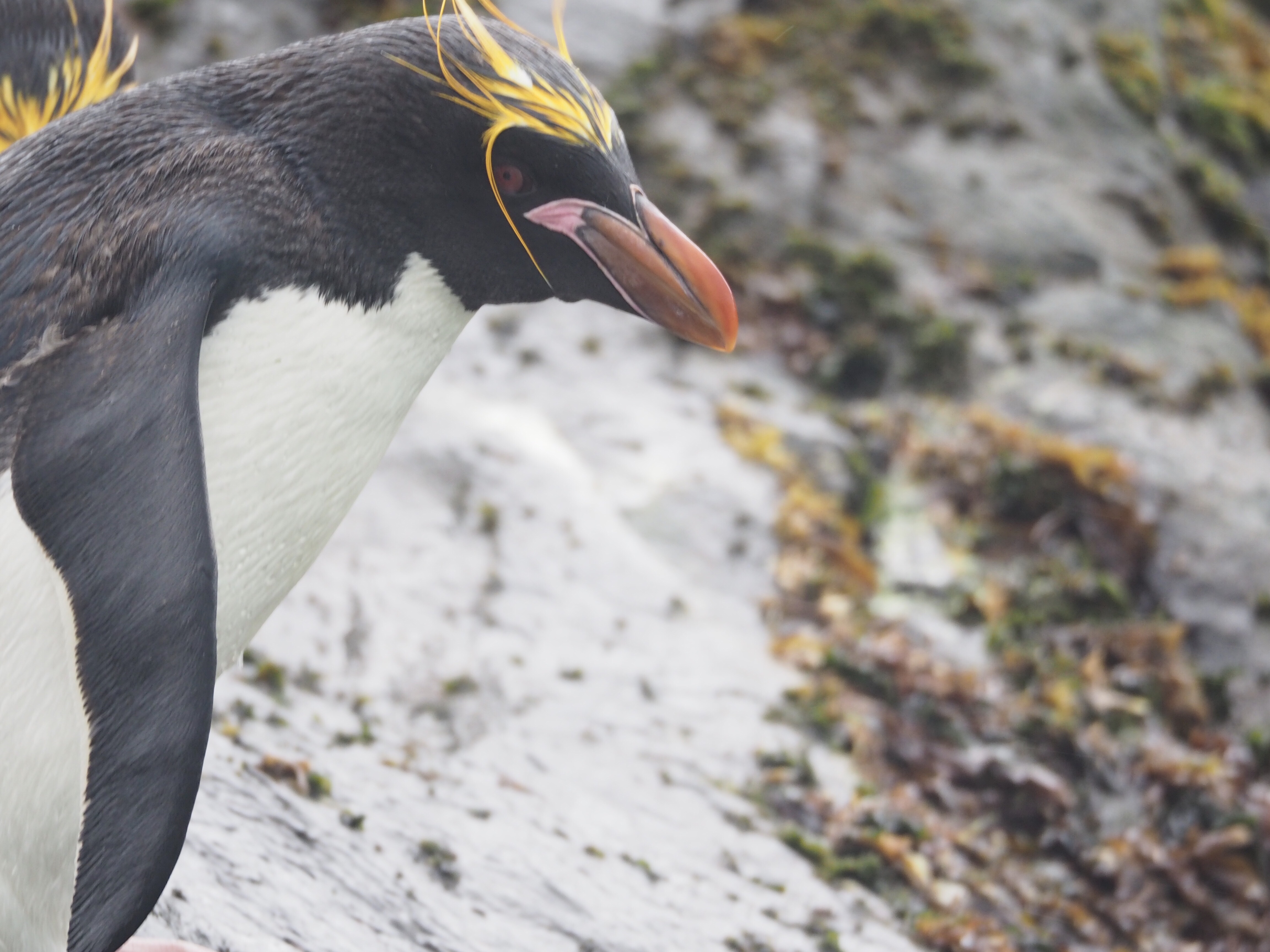
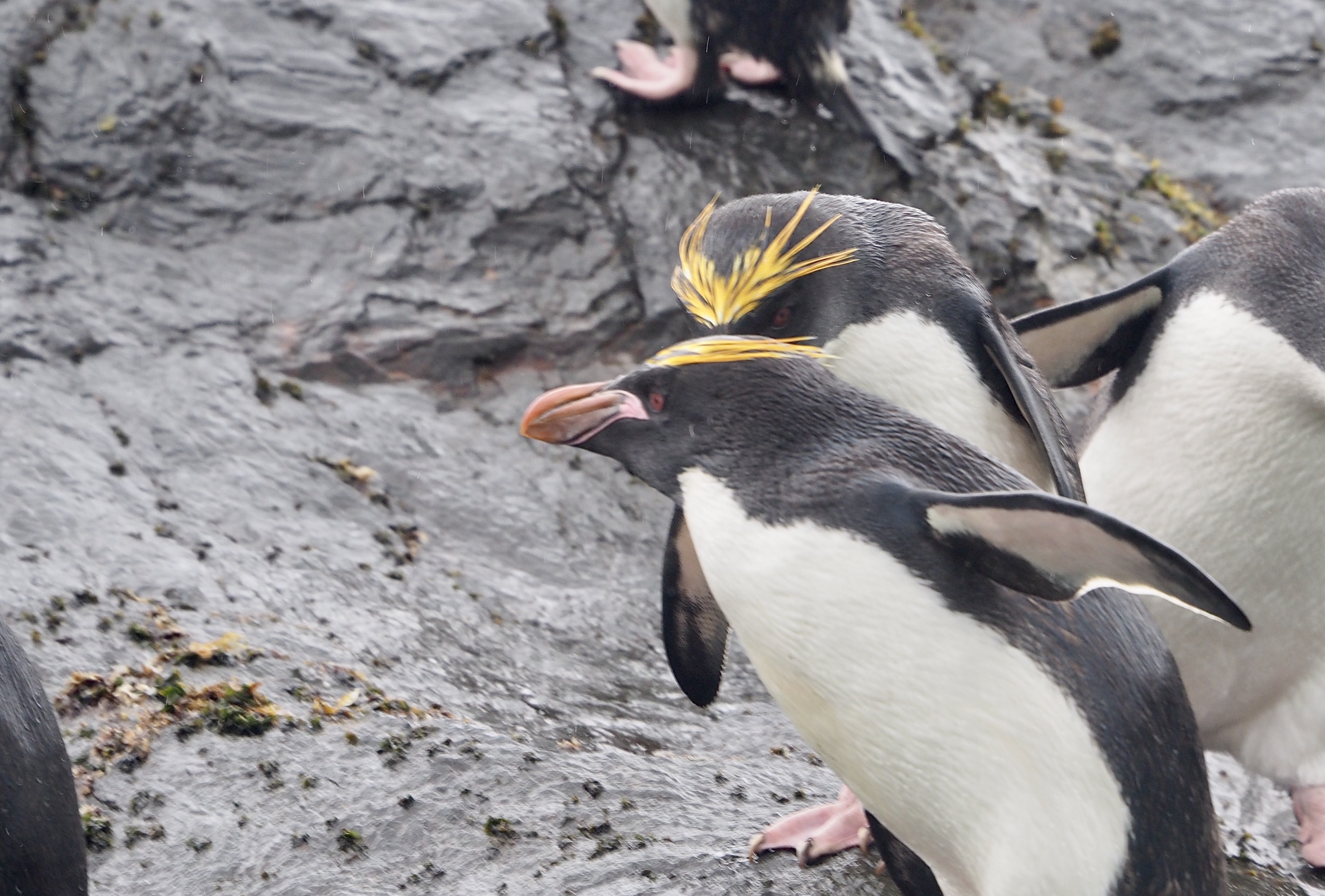
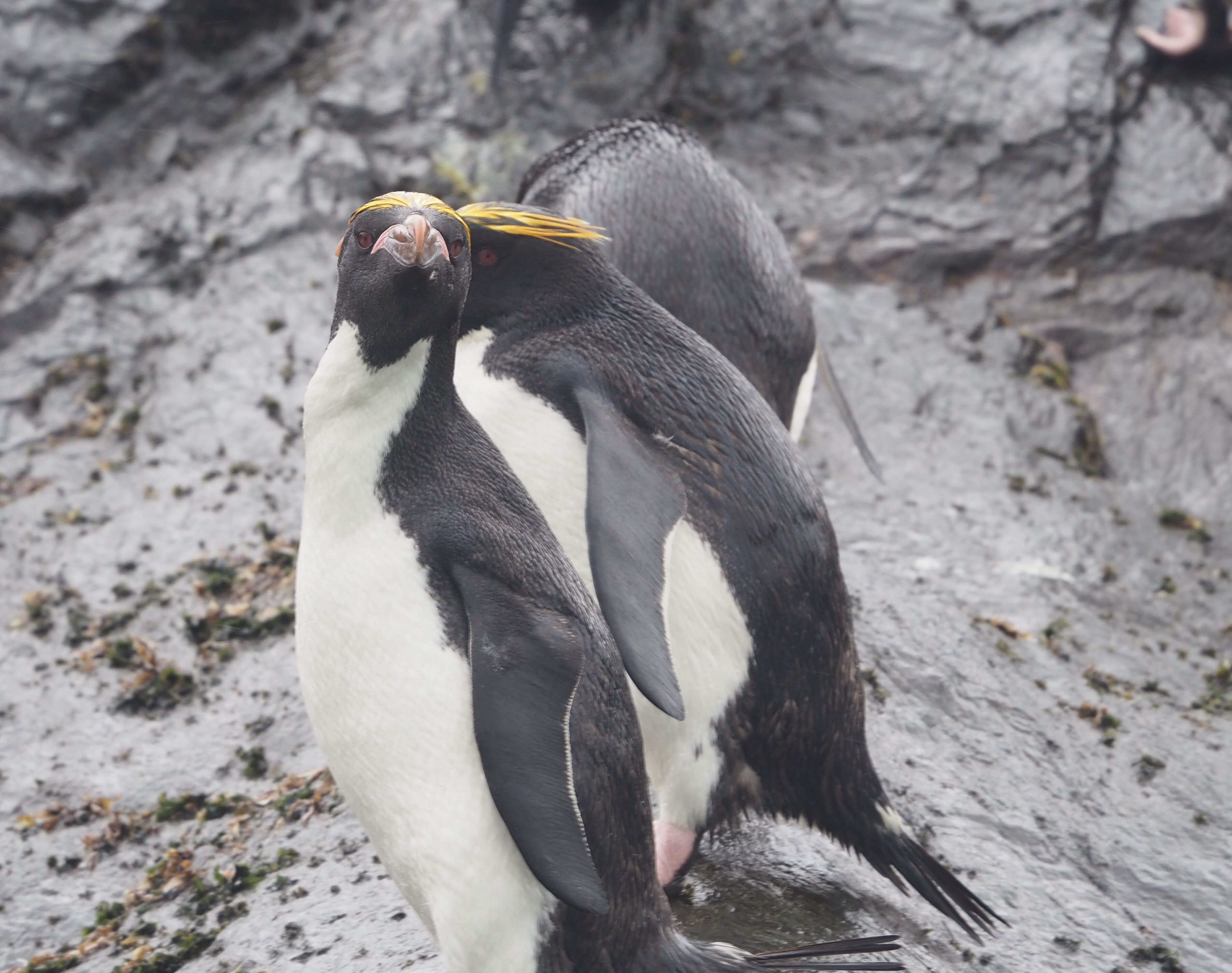
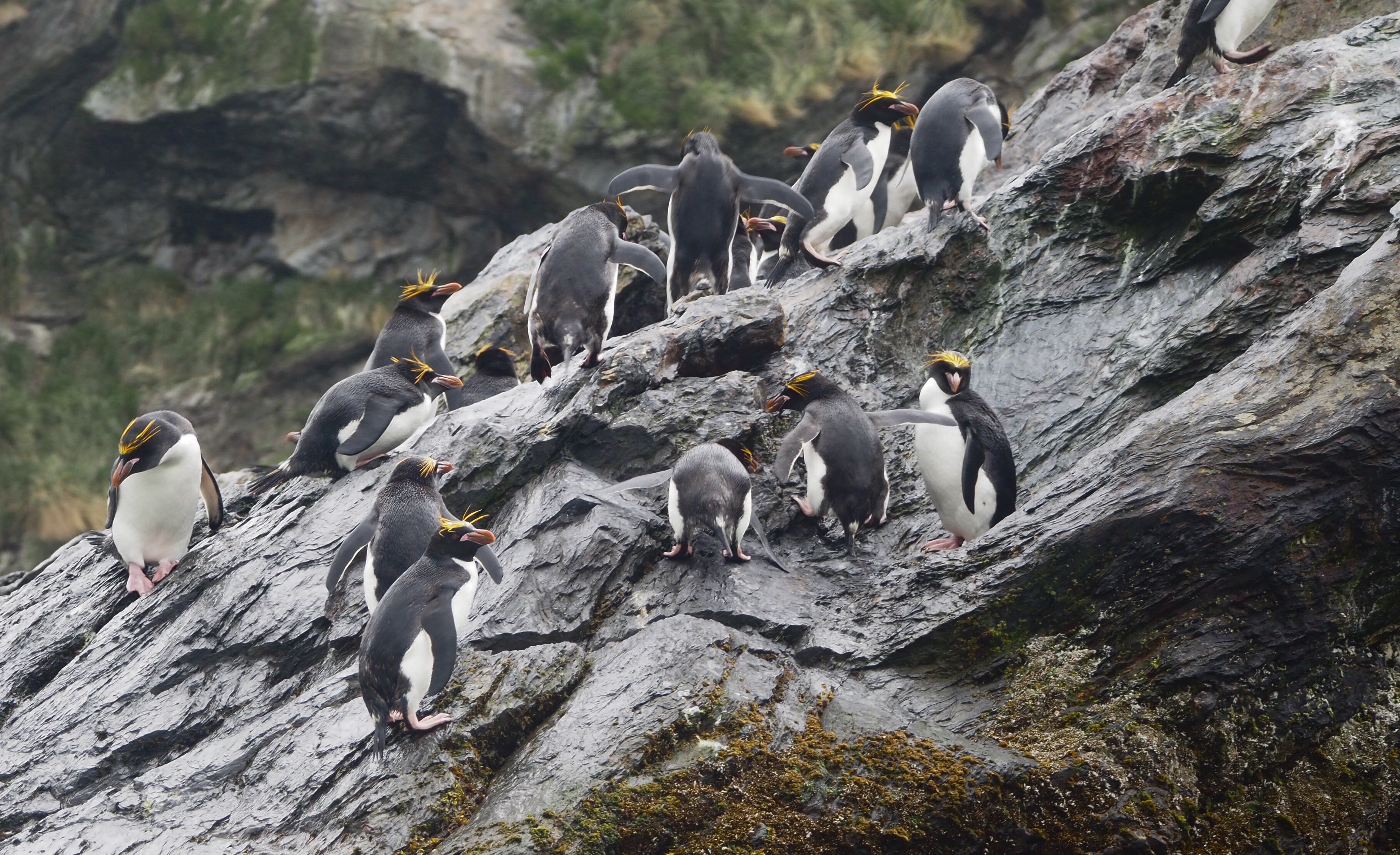
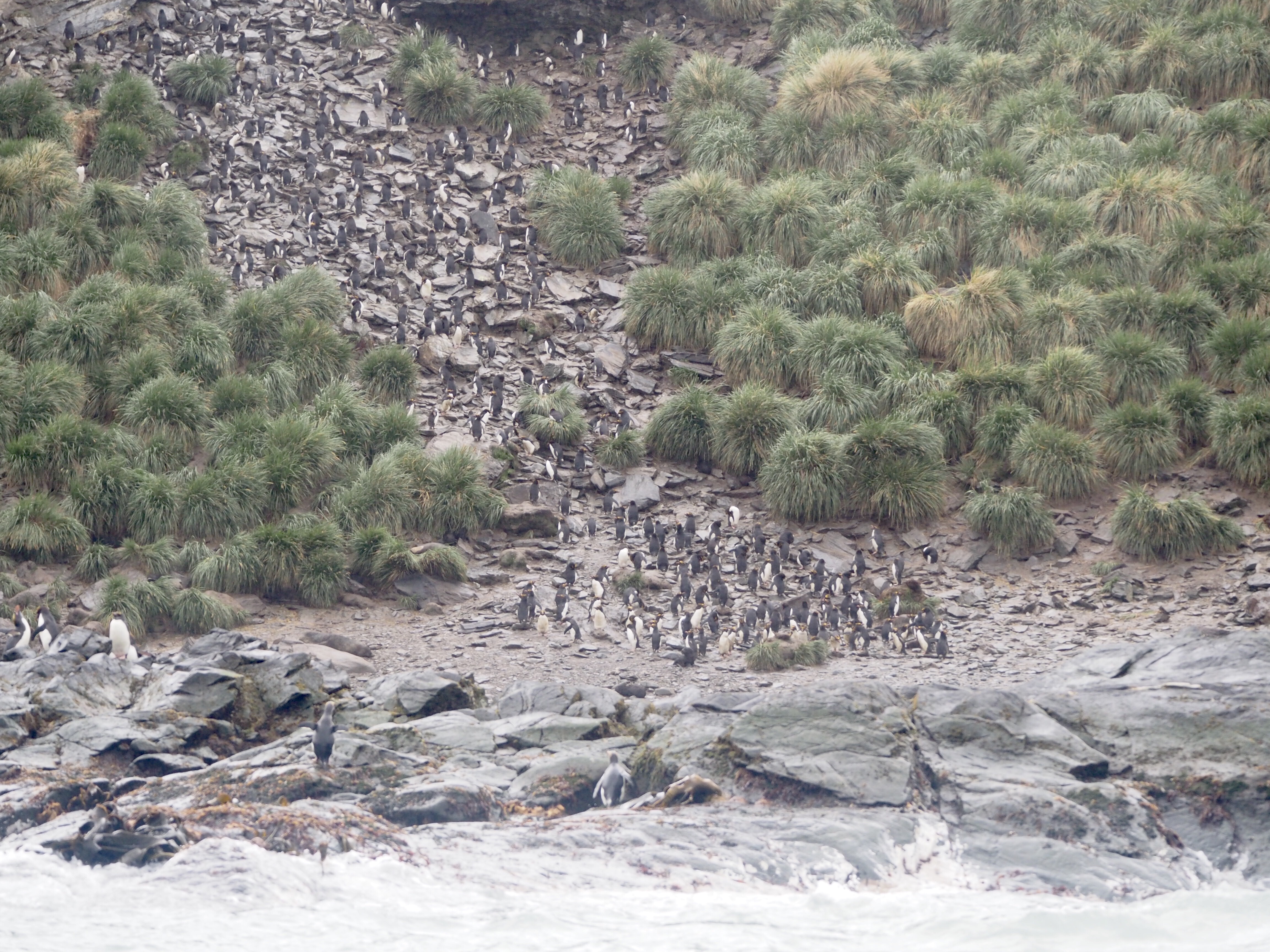
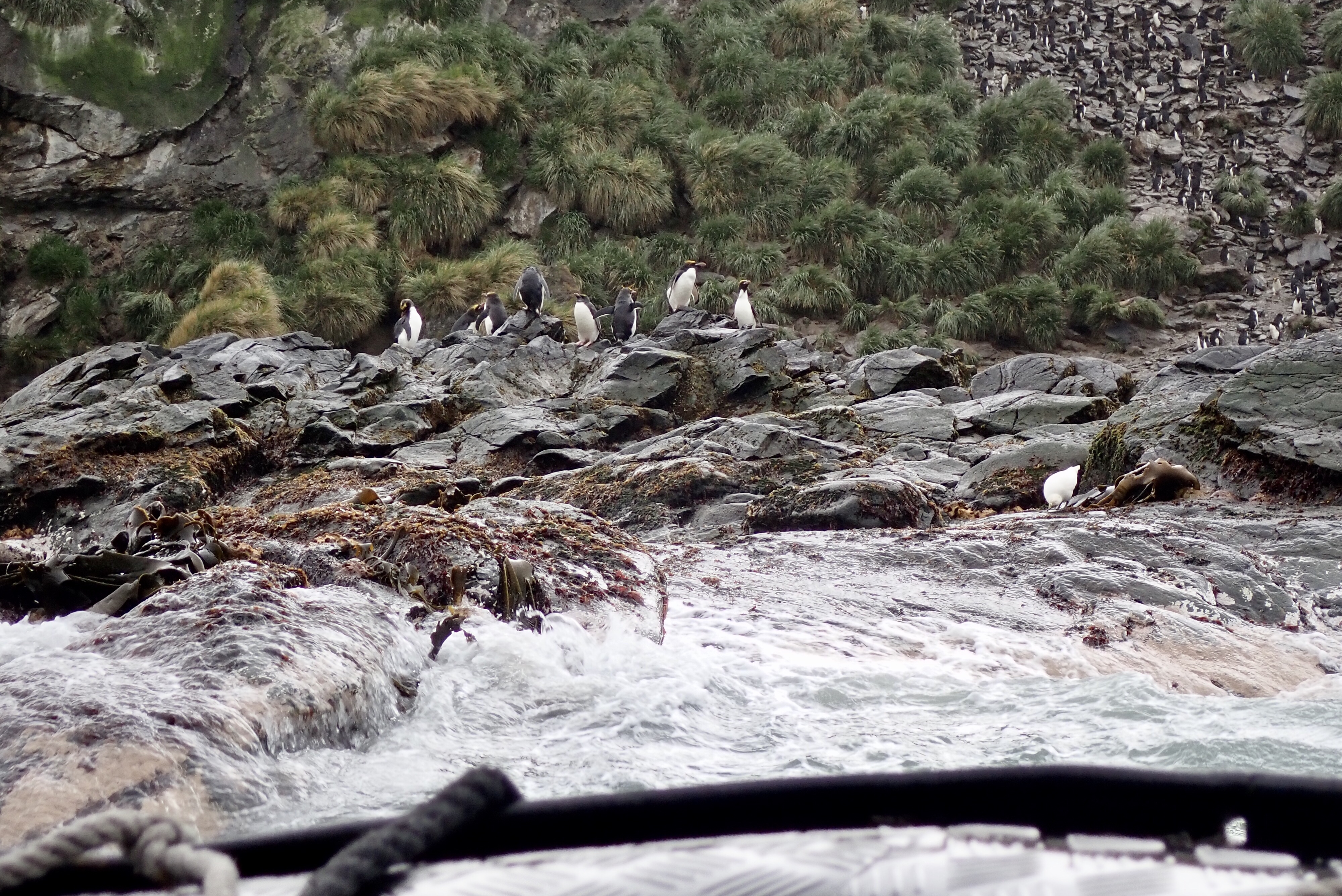
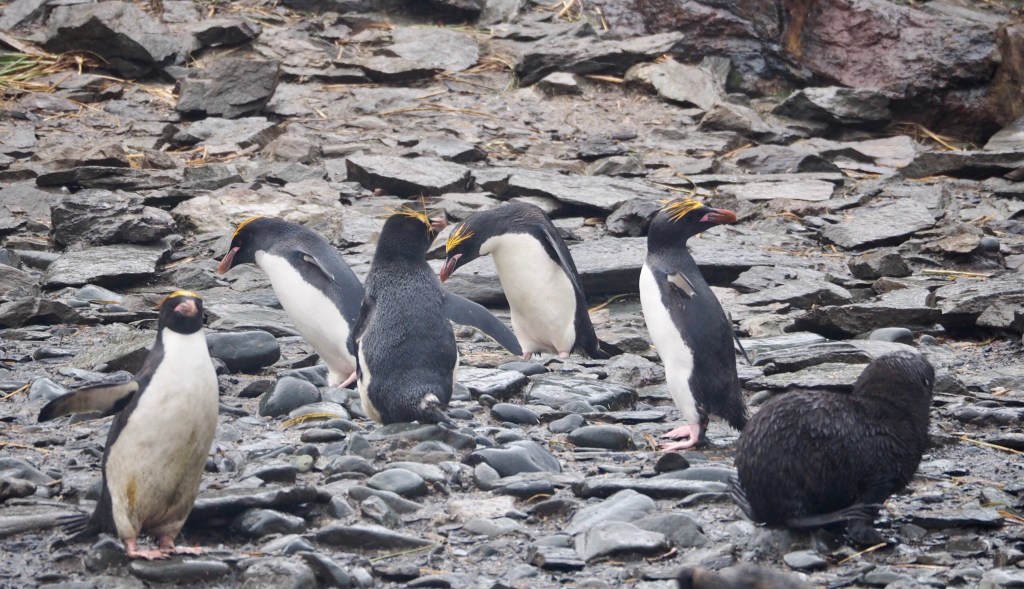
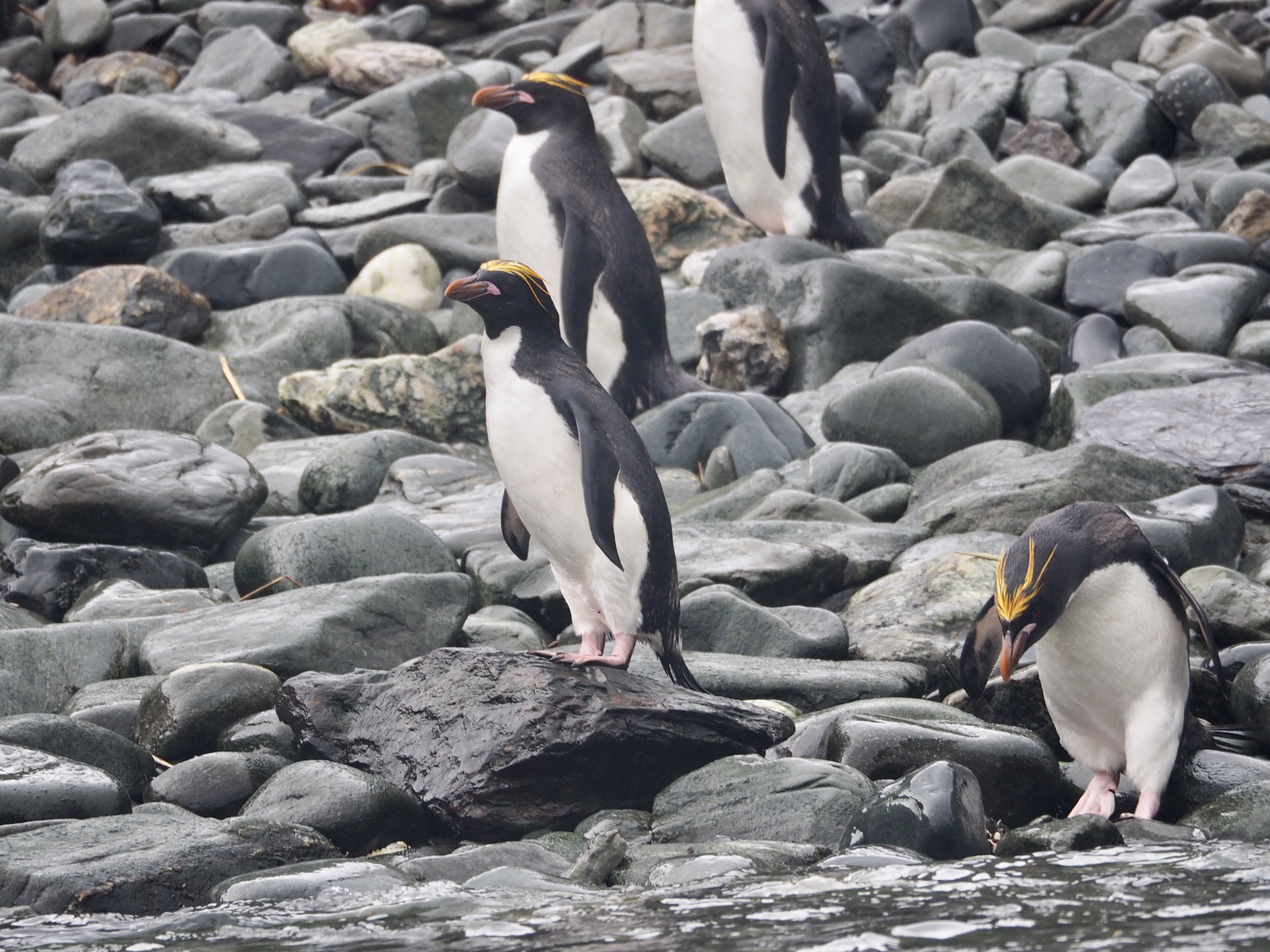
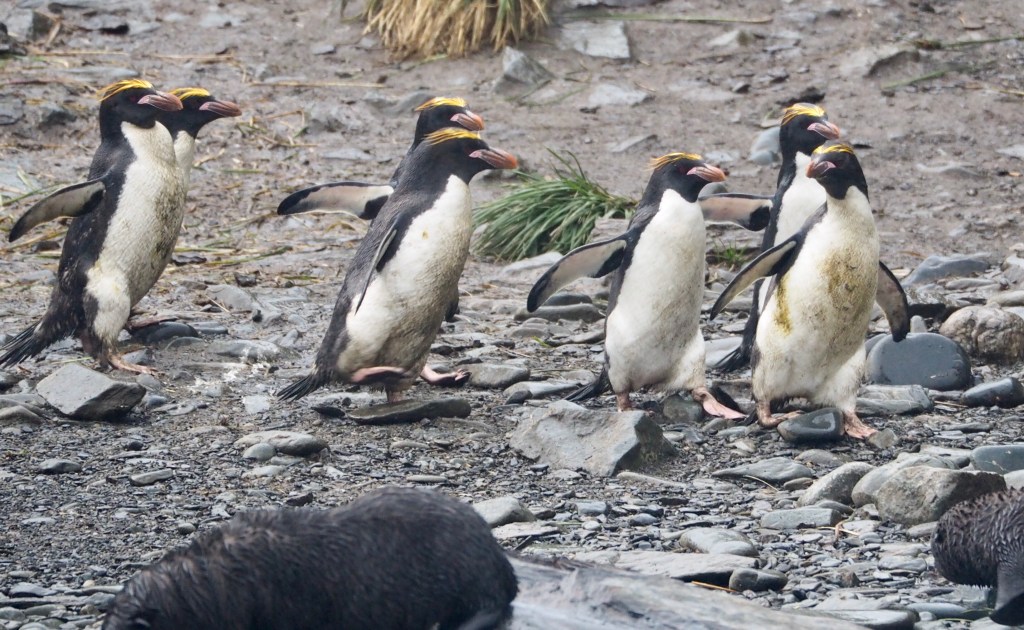
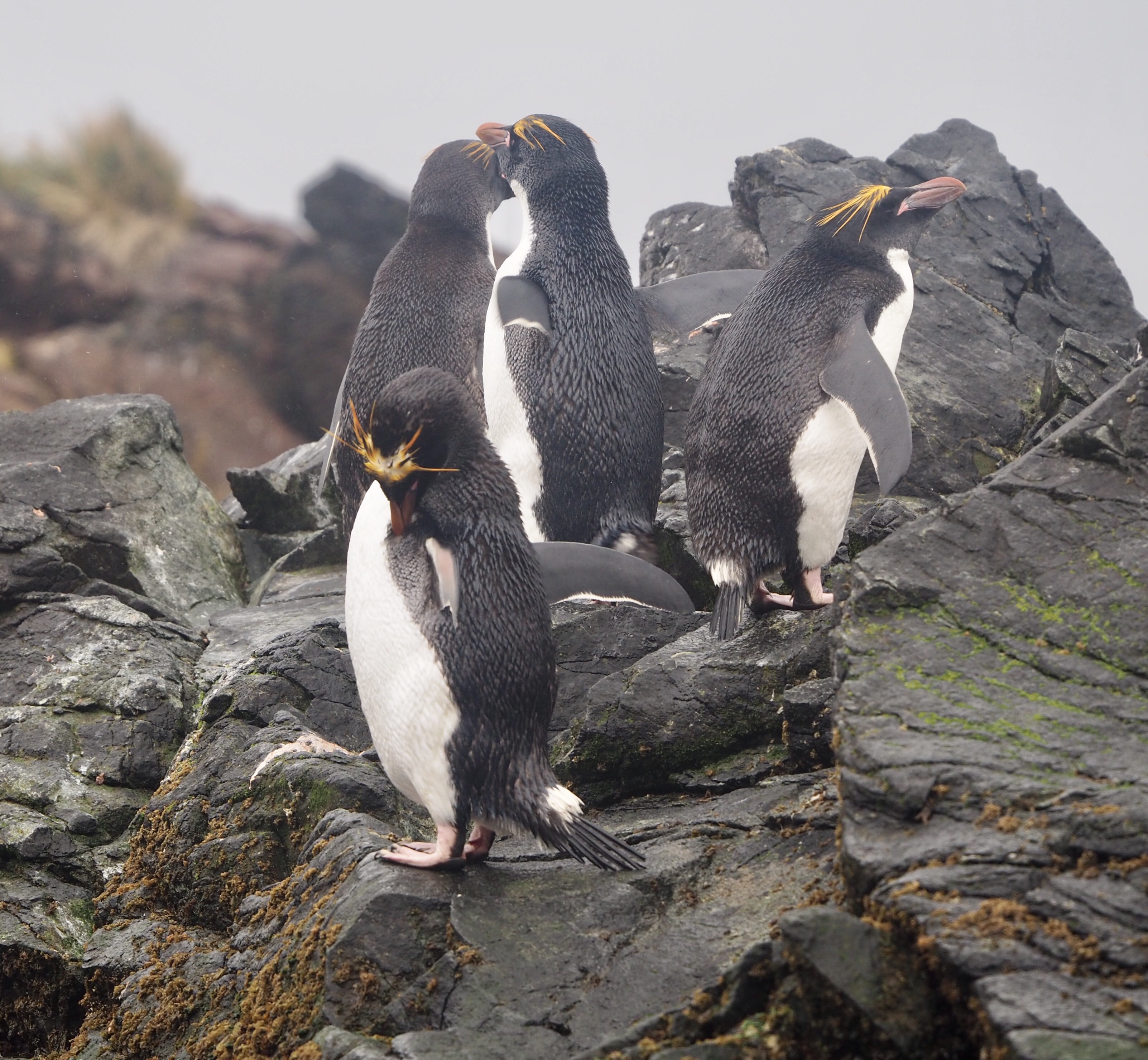
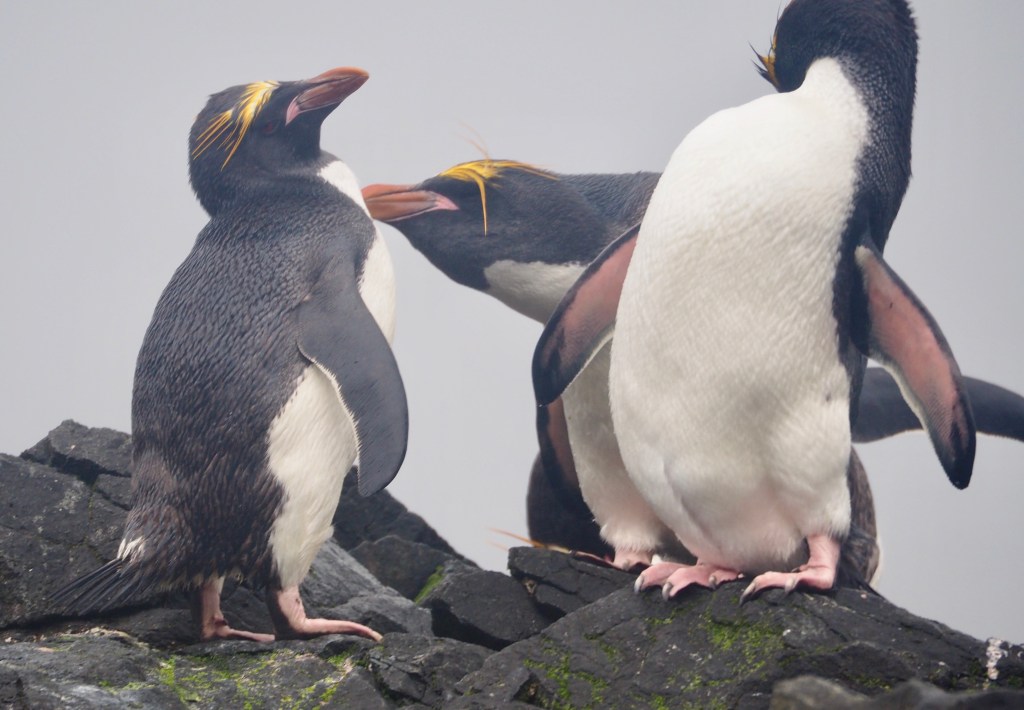
So we saw the macaroni (which means dapper – remember that song – put a feather in his hat and called it macaroni?!). The winds and seas were not friendly so all photos taken from a bobbing (to say the least) zodiac and I managed to have entirely the wrong setting going – I am blaming the new gloves and plastic condom. Then the camera froze – cold perhaps.

So it was with great trepidation that we downloaded something like 110 pics to the iPad. Thankfully, despite camera issues and sitting on a zodiac that was bobbing around like a cork, a few turned out. Not bad when using a lens that really needs a tripod and total stillness. We did bring the tripod with us but it wouldn’t have helped in the zodiac and on land there is so much to see that, again, it would be more of a hindrance so I have just gone handheld with a 75-300mm for the closeups and the Olympus TG5 underwater for the landscapes. This was our only opportunity to see a macaroni penguin. It was worth it. Enjoy.

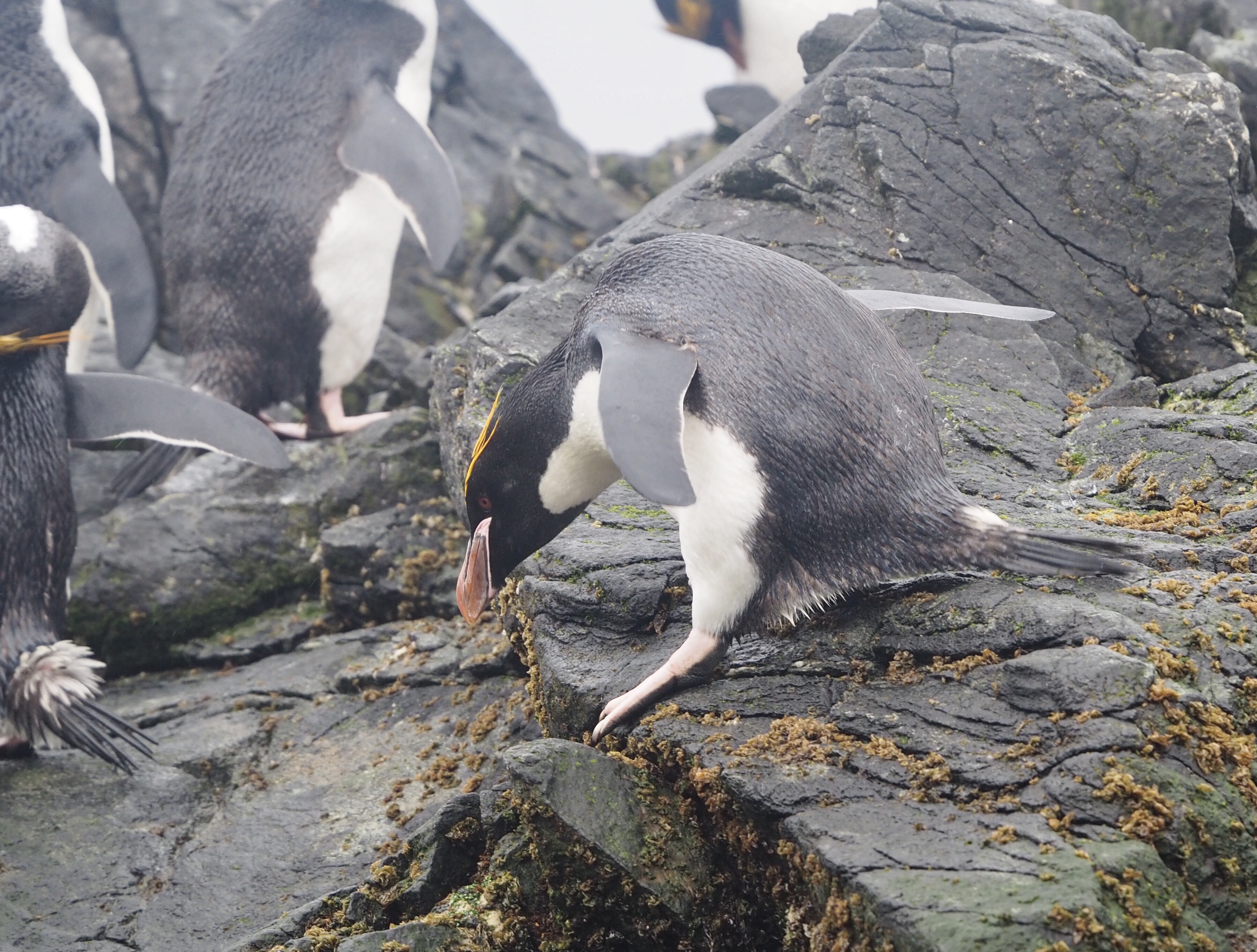
Simply amazing how these guys climb.

The dirty ones have been minding chicks for quite a while and have now swapped with their partner and are heading out to sea for food and a cleanup.

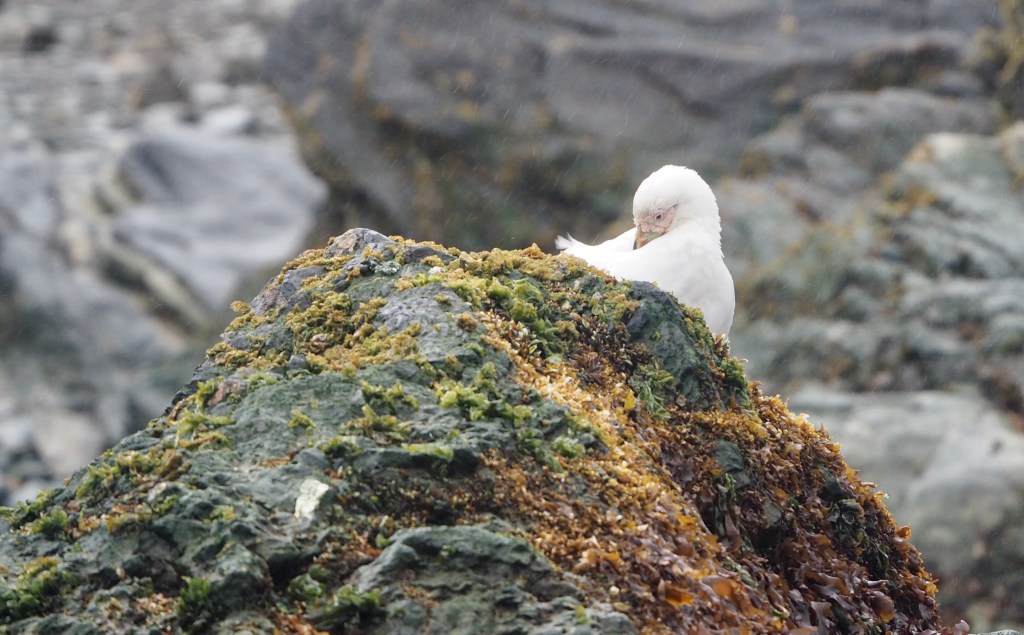
Of course the crispest pic of the day was another snowy sheathbill.

Last couple of macaroni pics.

Weather not being pleasant today.

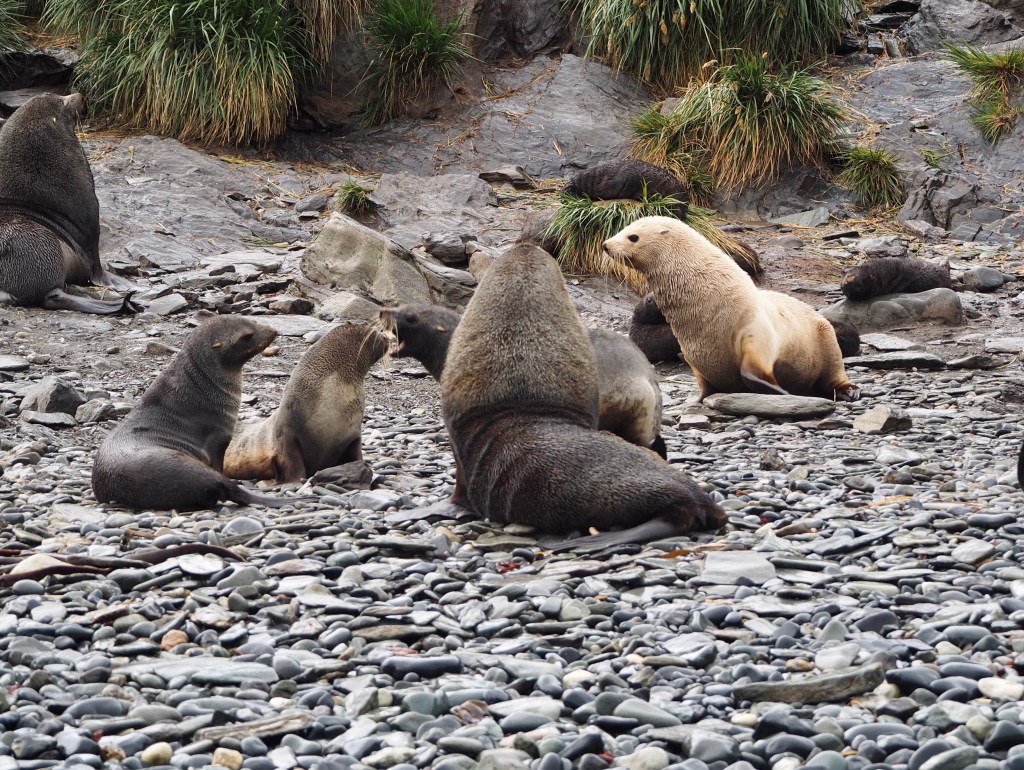
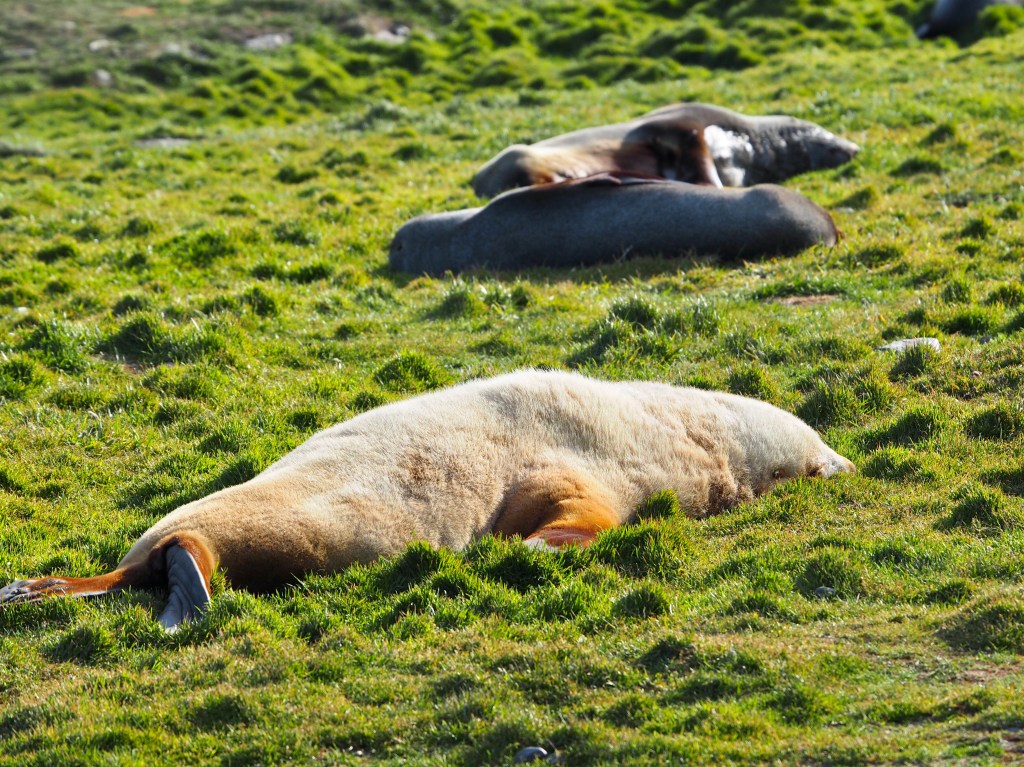
Onto the seal area and yet more with that recessive gene that causes them to be blonde.

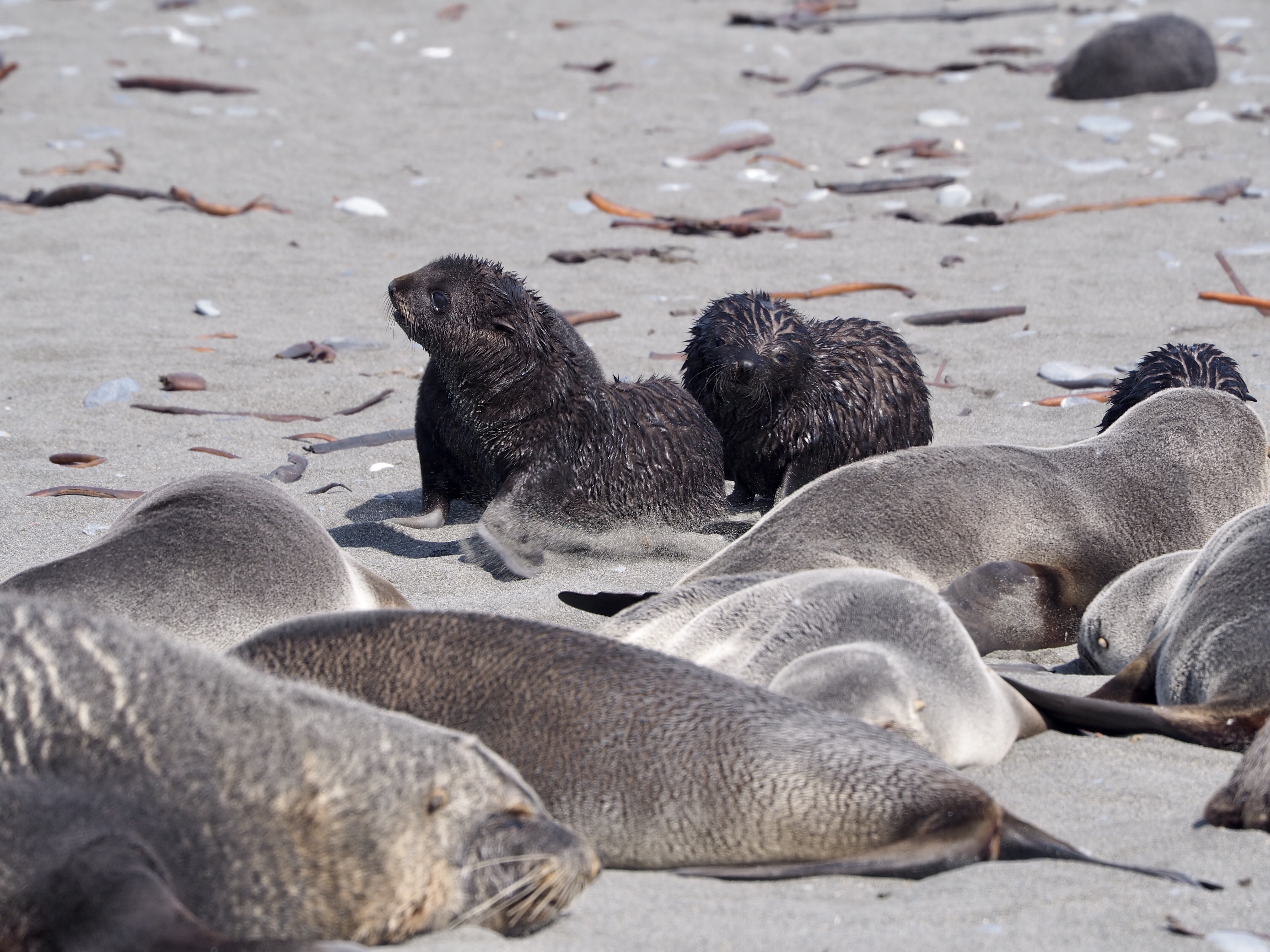
Loads of fur seal pups.

Gentoo penguins on the march.

Also, apologies, but I have realised that I shared a video from here the other day. Easy to be confused about where is where here… I’ll include it again as this is where it should be.

A rugged day.

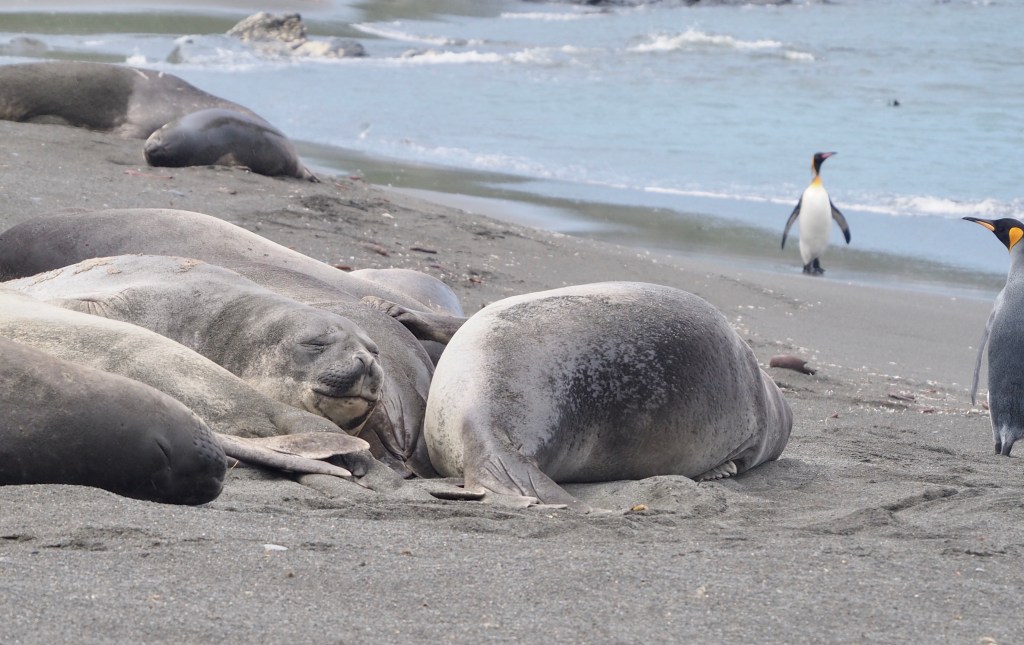
Gotta love the groups of elephant seals keeping warm together and those Gentoos still running about.

This trip was very cold and we needed a shower and a hot drink when we returned. Took a bit to warm back up.

Just warned that we are underway again and that once we pass the last of South Georgia we will be in open ocean and therefore with much more movement than the last 4 days so to secure anything that can move, like cameras, in drawers and with clothing as opposed to leaving them on the desk. Thought a map of South Georgia and where we went might be good here to put this last four remarkable days into context.

Beer of day. Nice light beer. Carlsberg. Sparky. 7.5 rating. I had a blue lagoon that was actually blue.

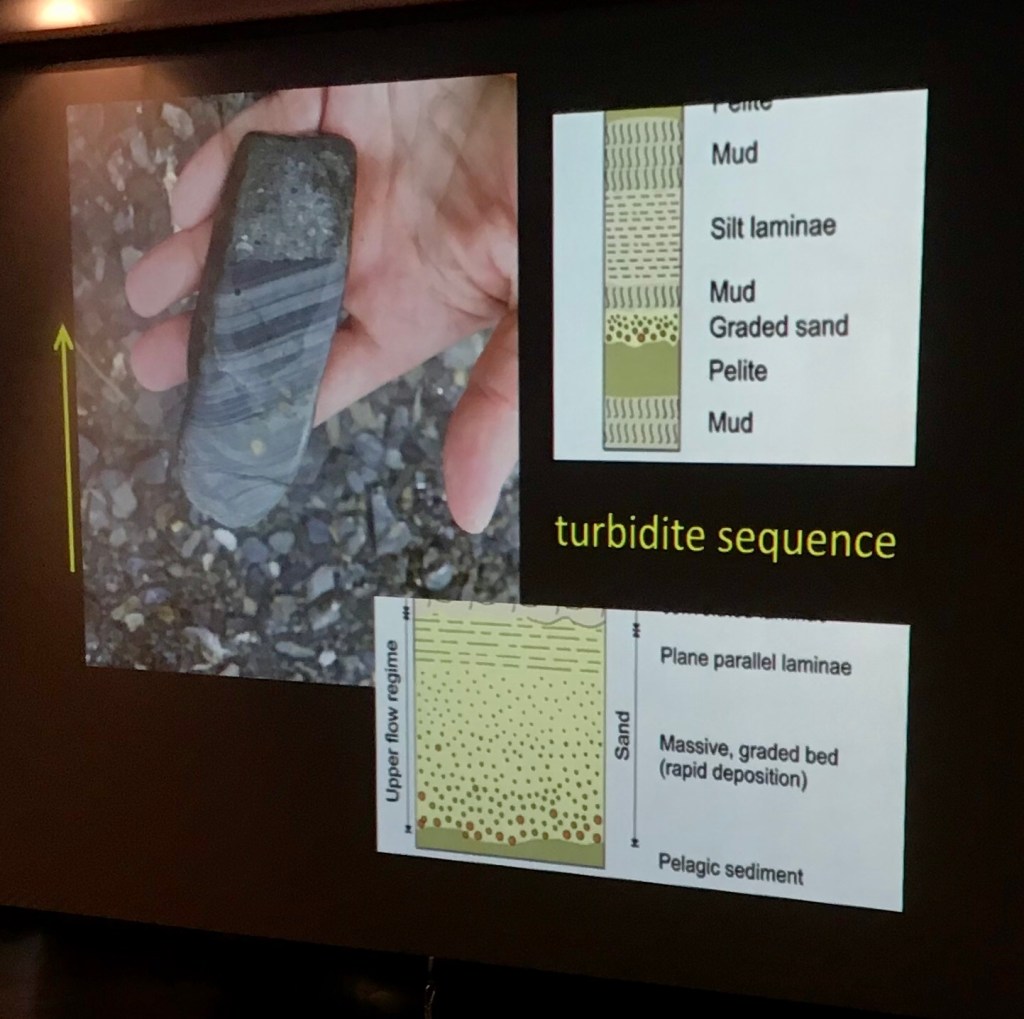
Recap and briefing time started with Austin the Rock nerd.

Geologic map. Rocks created as the continents moved apart. Sandstone and turbidity deposition. Definitely needed Rod for translation. A lot of metamorphosis happened. Phyllite cobbles and schist outcrops.

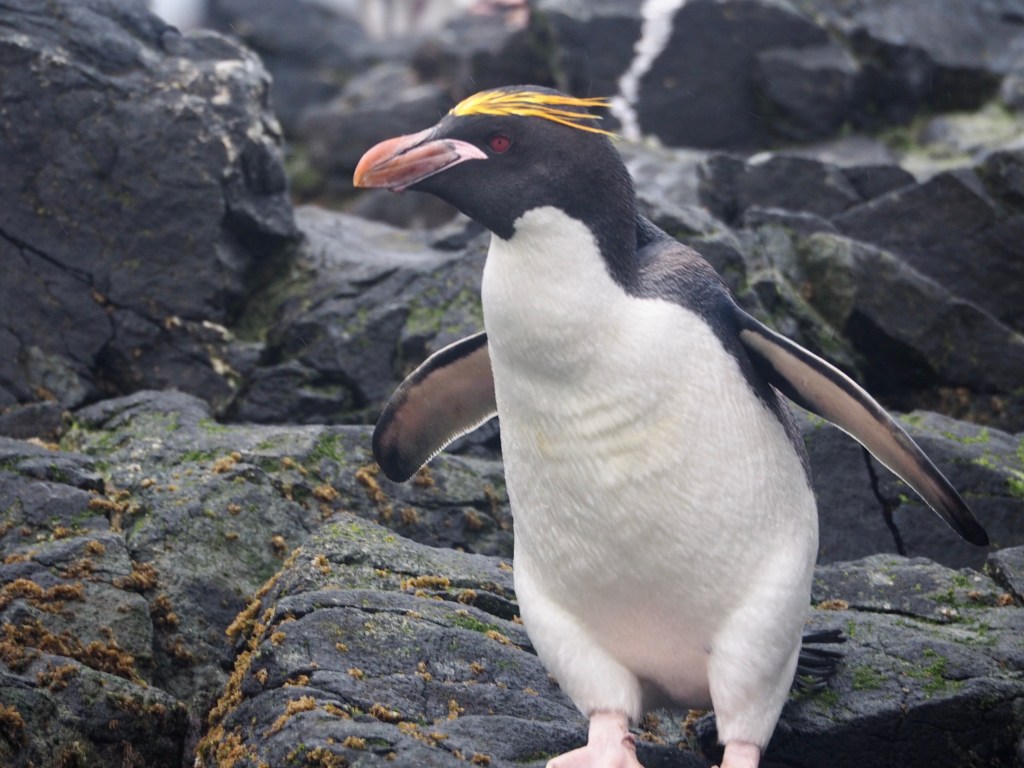
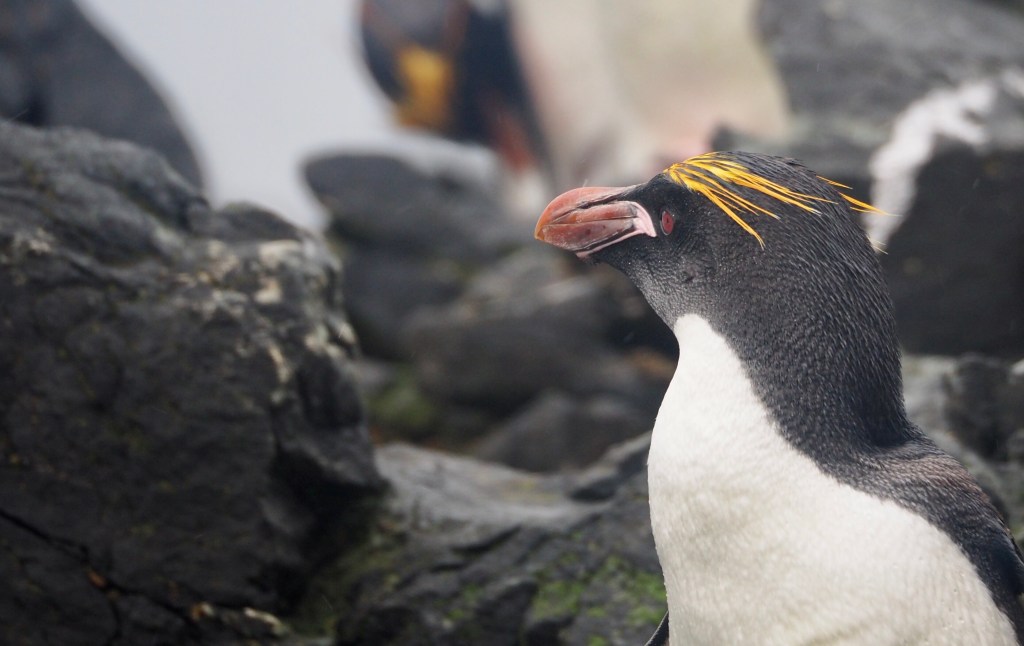
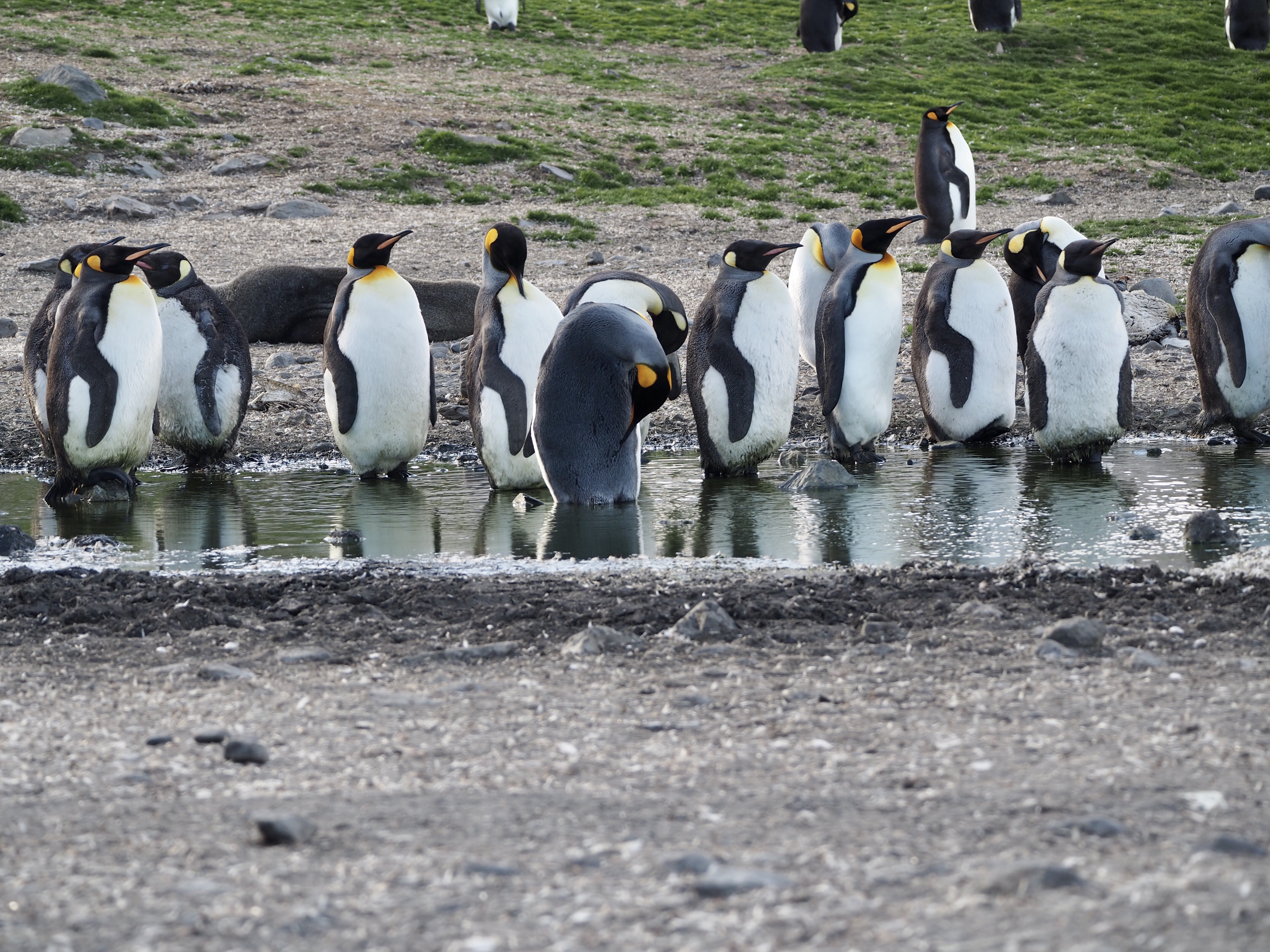
Then Fabrice our ornithologist. The penguins stand in water to stay cool. If they have eggs they will not be in the water. Mostly moulting birds in the water. King and emperor lay only one egg, all others lay two. The first egg smallest and second largest and most often the survivor. King Male sounds different to female. Syntax different. Macaroni penguins. At end of 18th century dandies wore tight waistcoats, heeled shoes, bright wigs and face powder – they went to Italy and when they returned to UK the English called them macaroni. These and the rockhopper are crested penguins. This colour is unique to these two in the whole of nature. Wow! Macaronis are always grumpy and fight all the time. Bad boys of the penguin species.

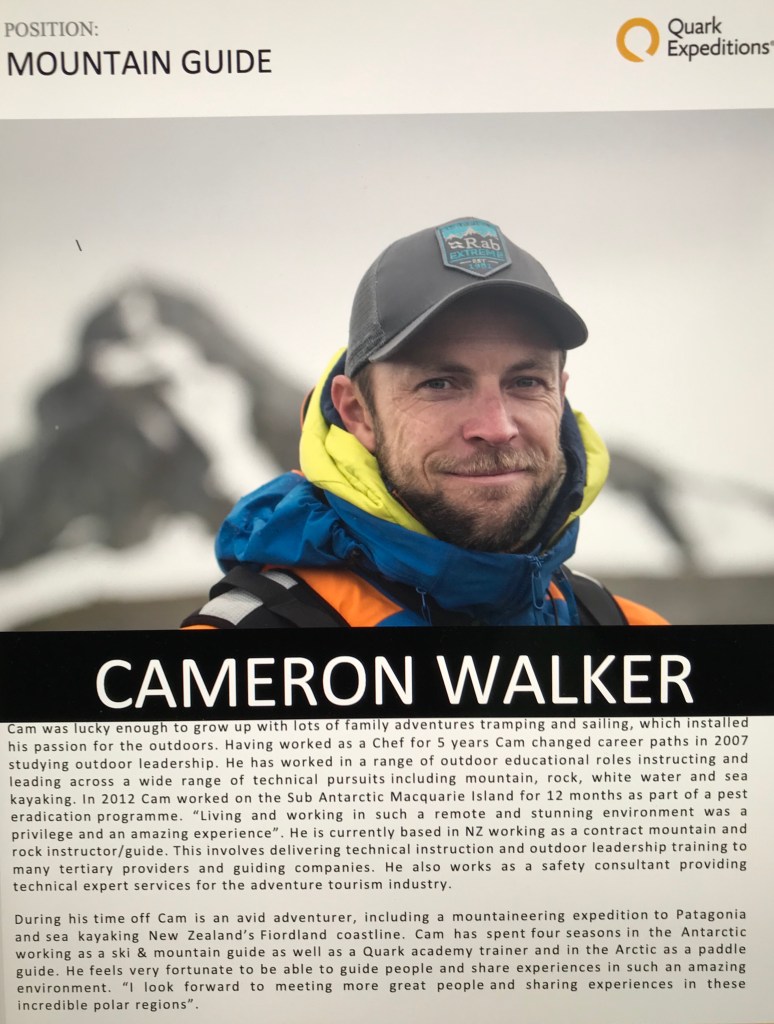
Cam – pest man on this occasion.

NZ started island pest eradication programs. Off shore island sanctuaries. Rats, rabbits and mice. Special rodent dogs trained to find and also check they have gone. South Georgia 350,000 hectares declared free of rats, mice and reindeer in 2018. Island Eradication advisory Group develop the methodology. Timing of baiting, natural fences, distribution of pests, minimising non- target species, monitoring phase, public perception. Macquarie island 26 million dollars. South Georgia Heritage Trust raised money to do theirs – raised $11m. Glaciers helped as natural fences so could be done by sections. Loving this trip from all the positive information of the action to save these amazing places. Jane Tensel chief dog handler from NZ and South Georgia. Pippets now back and pintail ducks. Many projects underway including Lord Howe and the whole of NZ by 2050. Hundreds of islands going on – check out website of island eradication’s.

Solan – told us that we fought for every moment and with nothing handed to us in South Georgia. 100m chain on the anchor in 12 meters of water so we could anchor in Gold Bay. Bad forecast for the afternoon but we wedged our way in between nastier storms. Does seem an eternity since the Falklands.

Now going to new sea birds and colder. 1500km to the very northern tip of the Antarctic peninsula. 2.5 days sail in good weather. Considering a pass by the south Orkney islands. Rarely visited but might pass due to weather issues. Another option is go for it as weather forecasts have been less optimistic than the reality we have experienced so might be ok. Have to wait and see until later tomorrow. No wake up call tomorrow.

These maps show travel options. Remembering that green is good, purple horrible…

Not sure if I mentioned that those beautiful Pintail ducks I photographed in two places on South Georgia are meat eaters – scavengers!

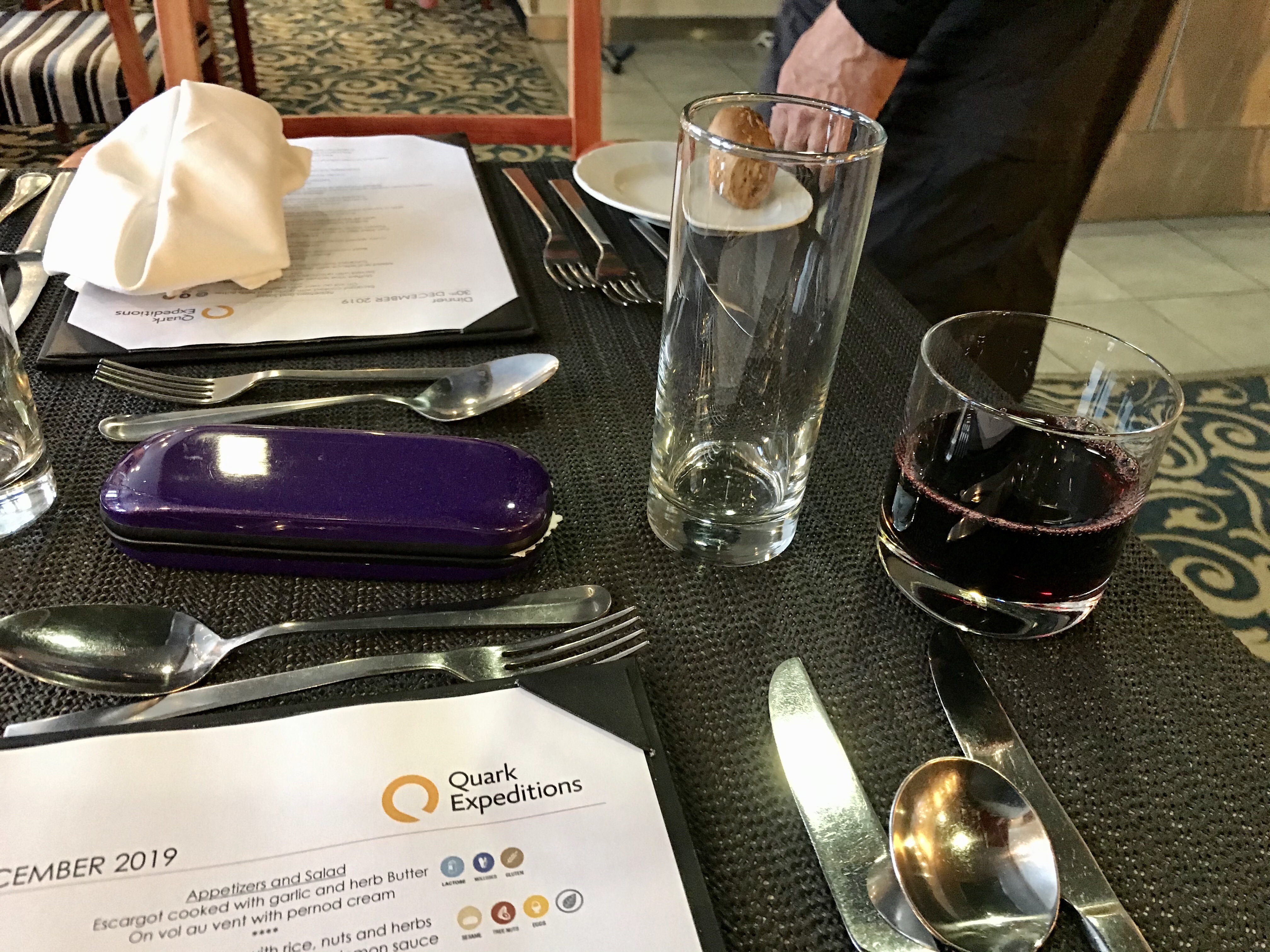
Dinner menu as I haven’t put one up in a while. Our wine glasses have been replaced with flat bottomed glasses due to swell.

All outer decks are now closed. What Mike calls “strategically placed barf bags” around the place.

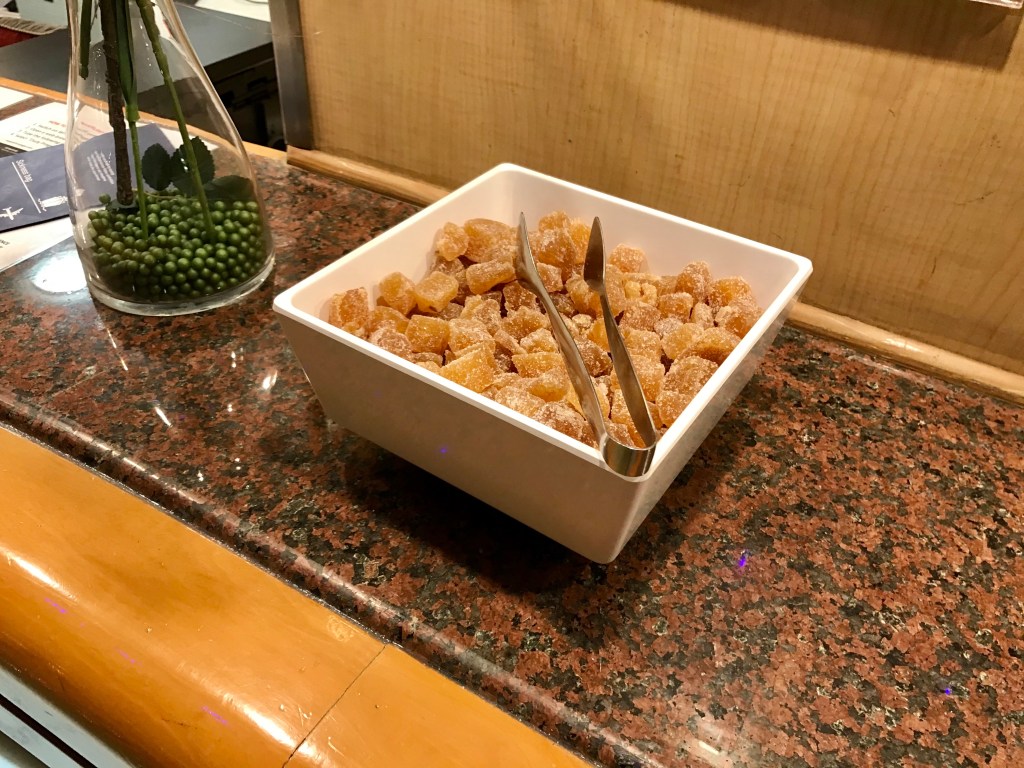
Also bowls of ginger. (Which Garrie attacks as he loves it not because he is feeling ill).

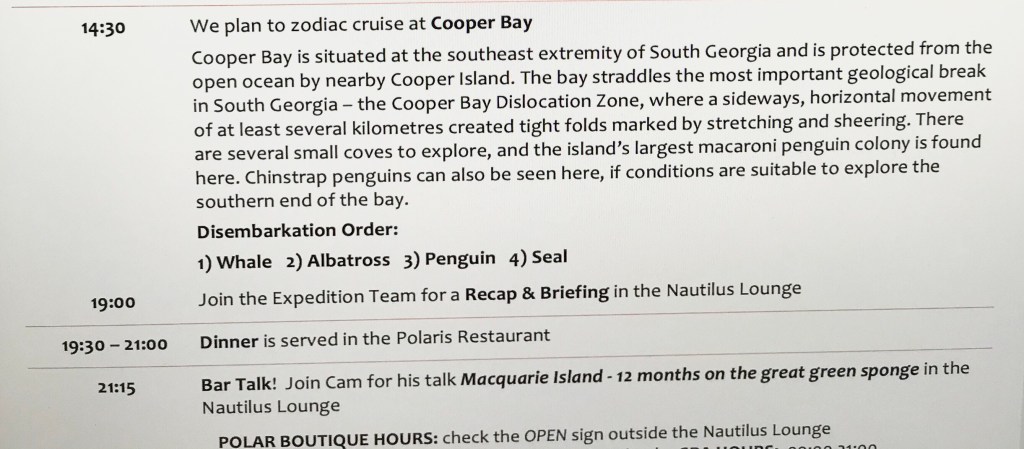
We staggered home – literally. I sneezed on one side of the cabin and ended up at the other. Bar Talk was Cam for his work on Macquarie Island – 12 months on the great green sponge in the Nautilus Lounge. Didn’t go. Went to bed. Zzzzzz

South Georgia – Royal Bay and Gold Harbour

Our last day in South Georgia and so far six excursions. Can we make it eight? It’s unusual, we are told, due to wind and weather.

But wait…Solan is our leader and we are therefore going for nine!

The idea of this pre breakfast zodiac ride was to see macaroni penguins before the conditions deteriorate. Sadly when we arrived at 4.30am winds at 50-60 knots so it was impossible. Bummer.

So hard to show rough conditions. Not that they have been too bad from all accounts.

So we moved to Gold Harbour. Temp 10 degrees. Wind speed 40 knots.

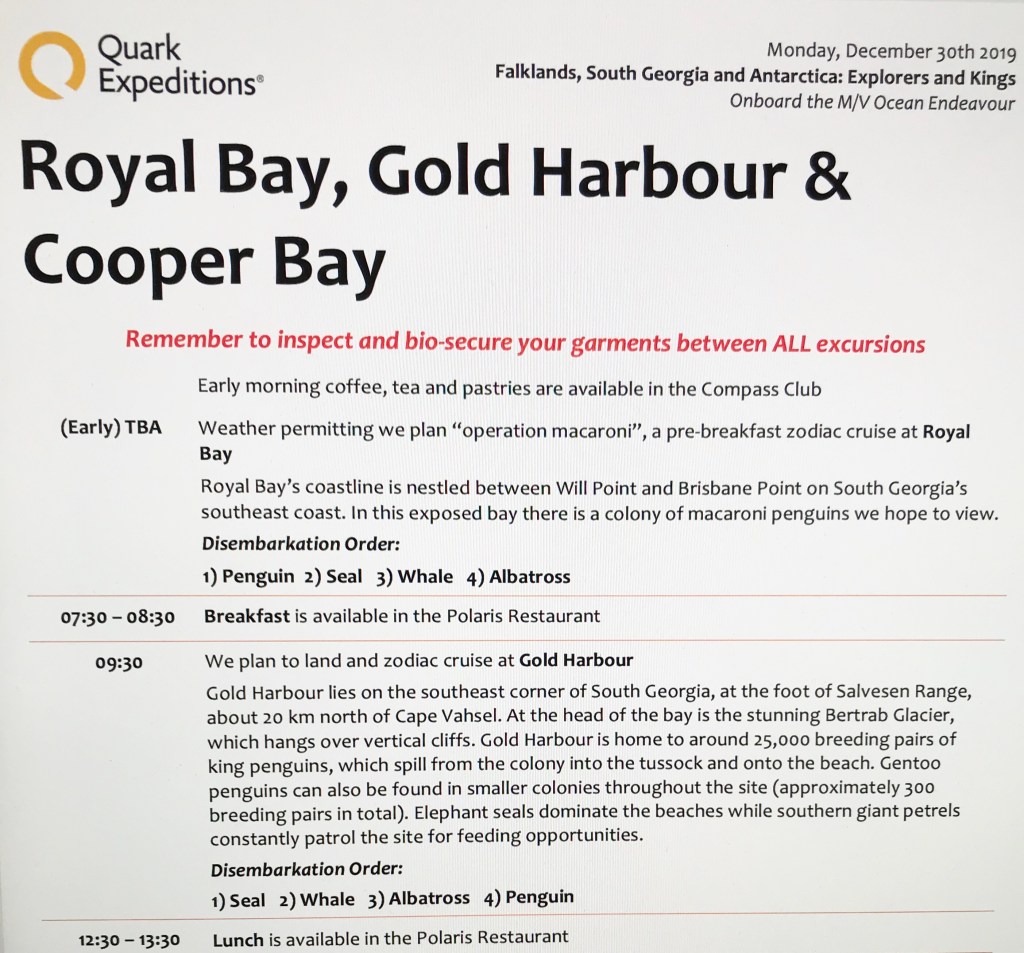
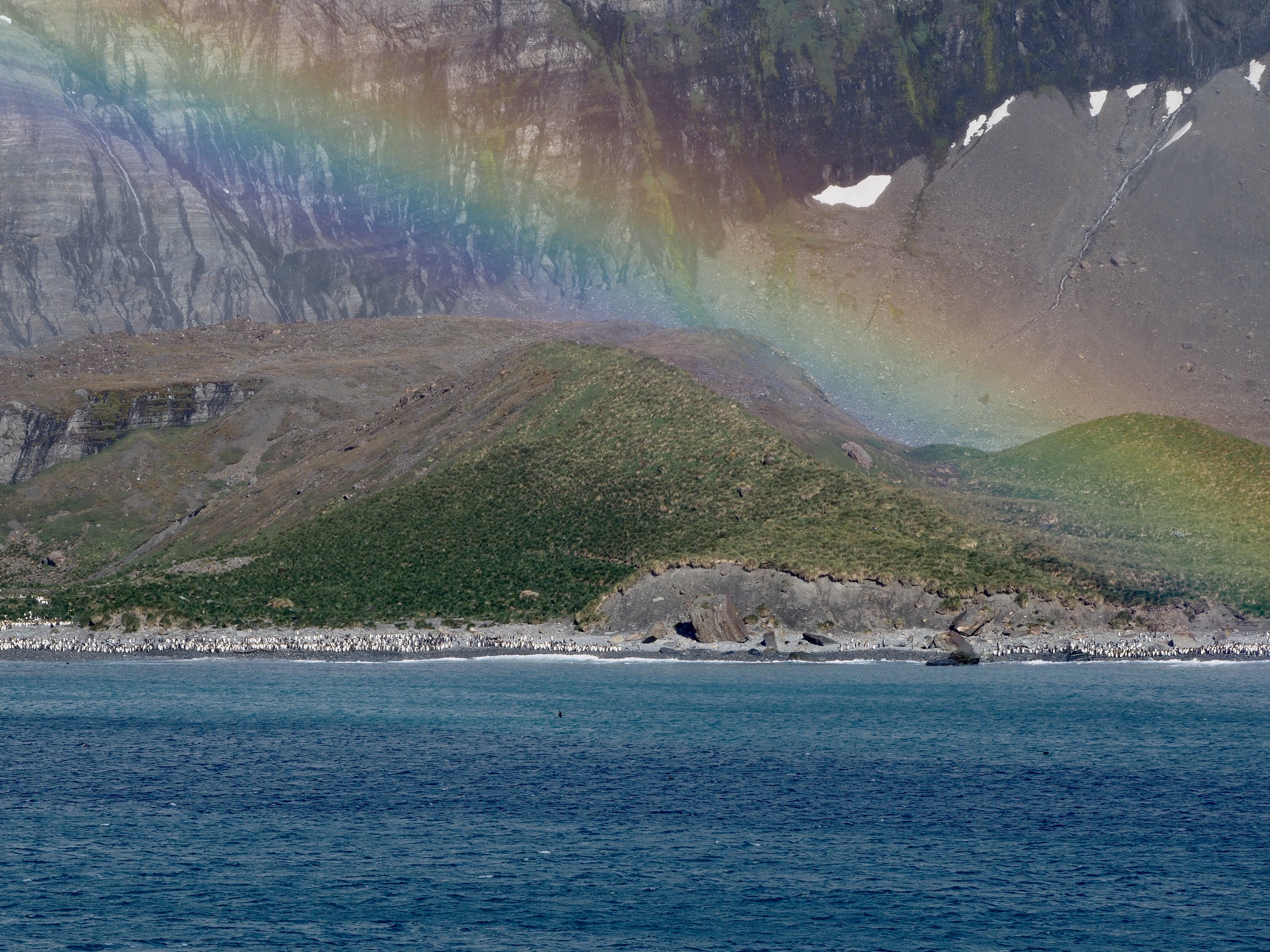
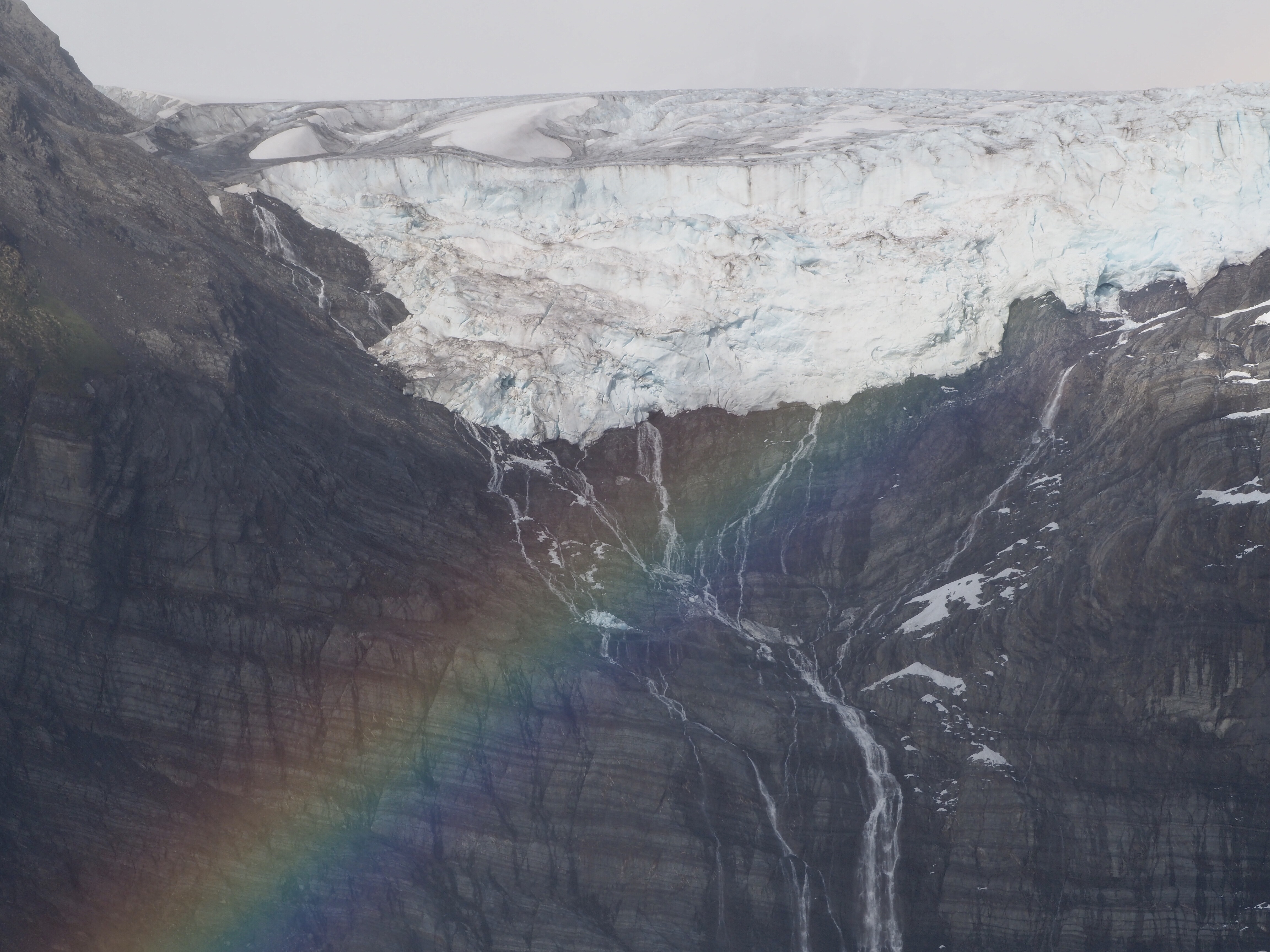
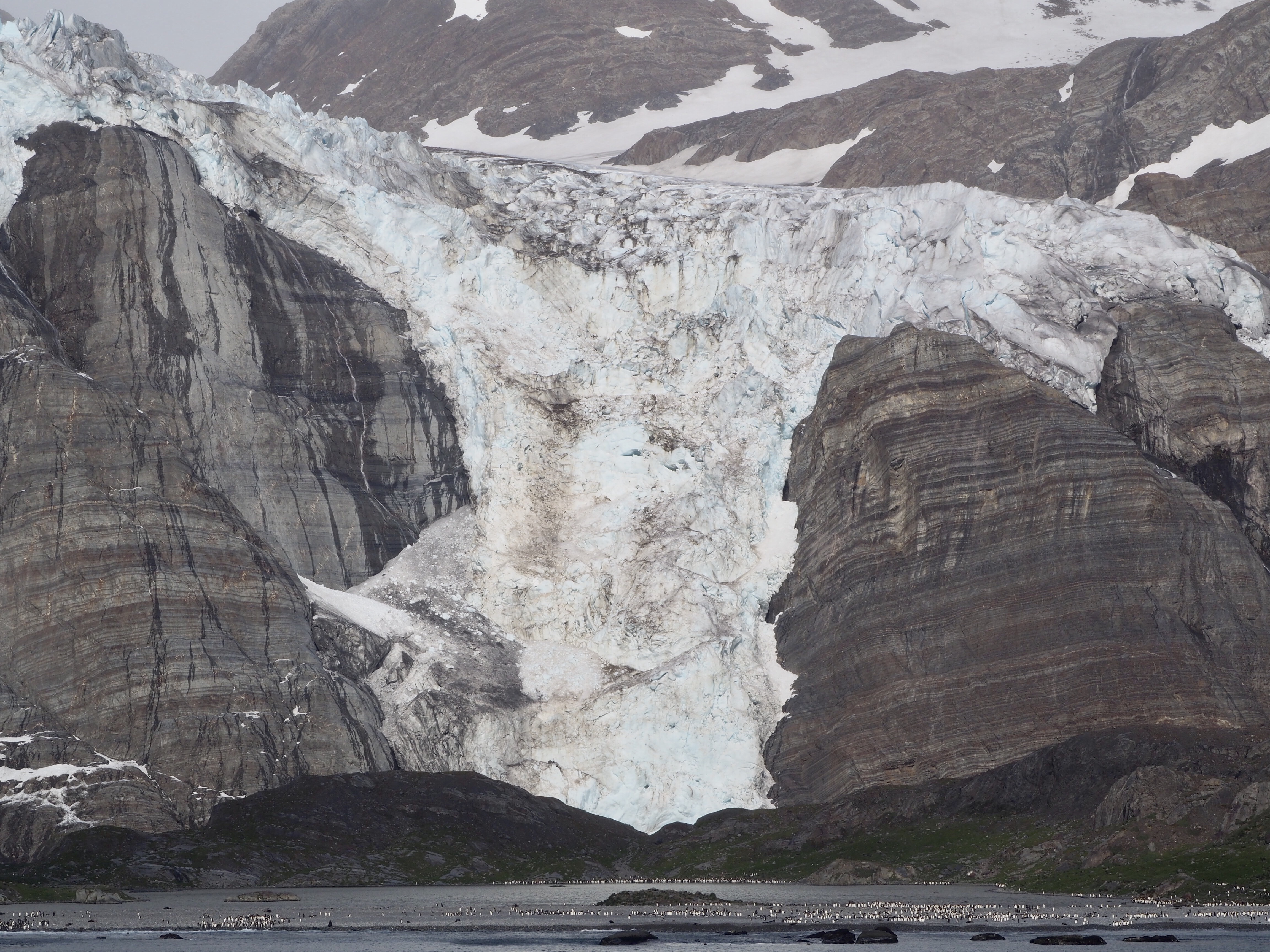
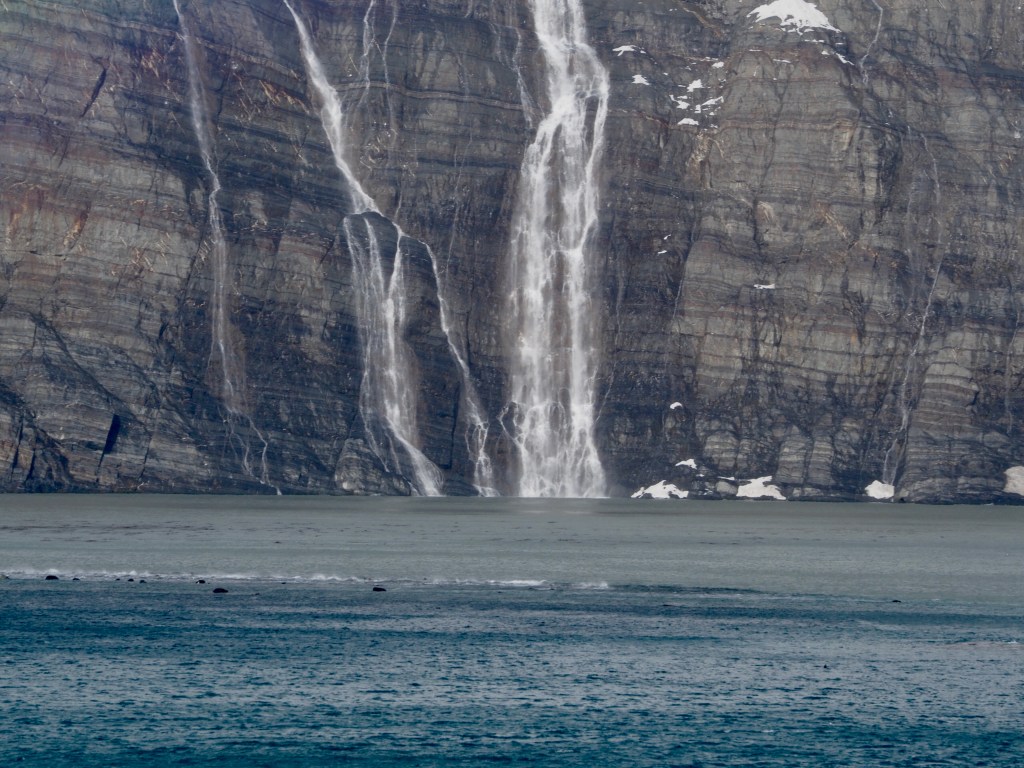
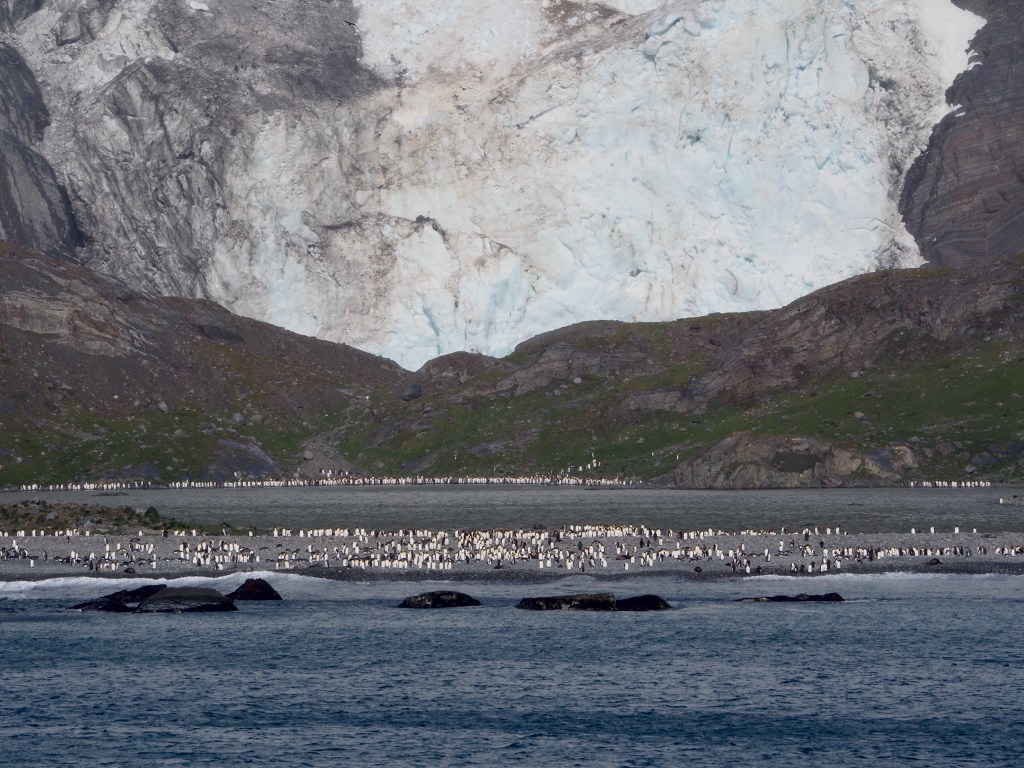
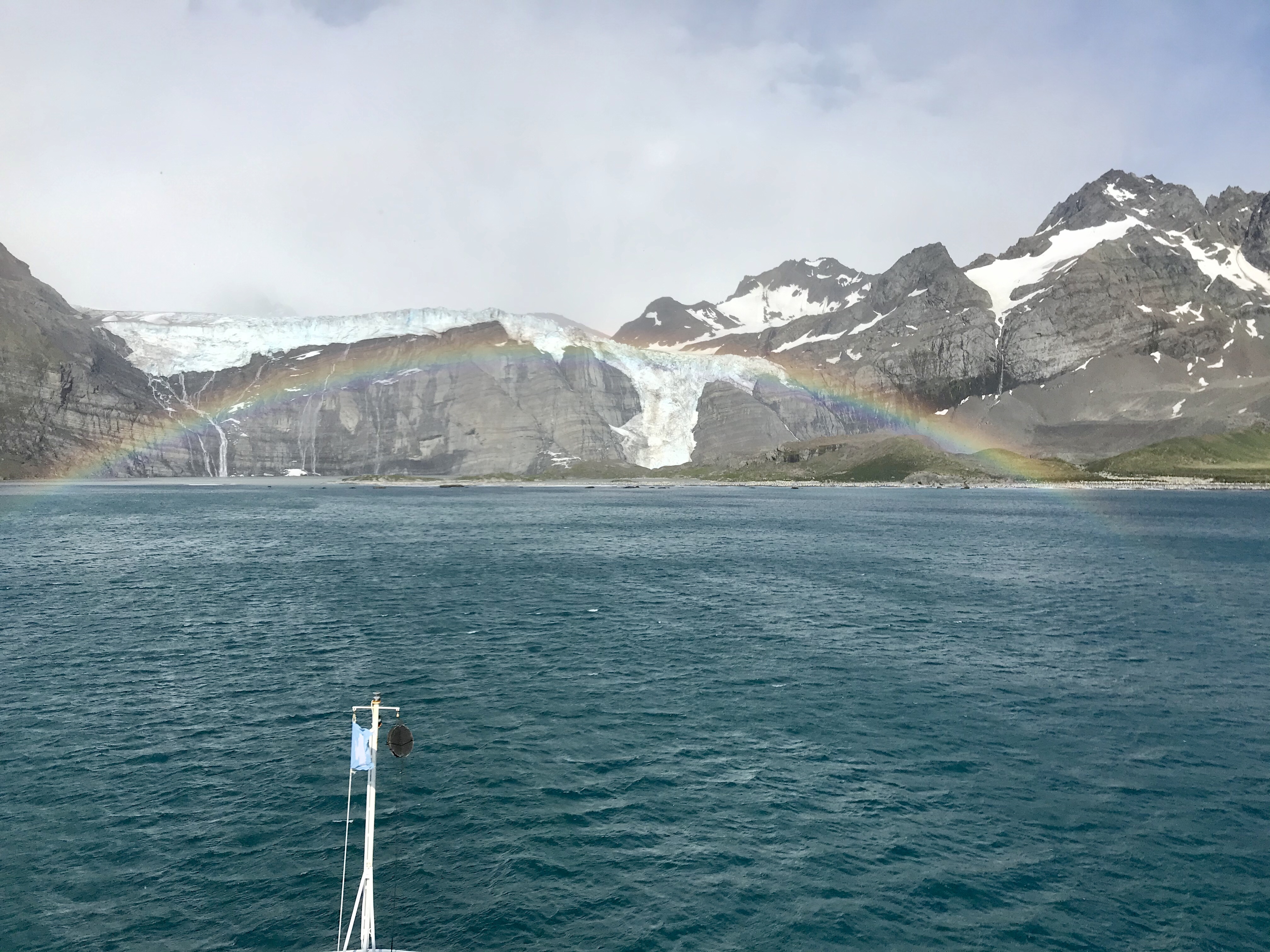
Gold Harbour lies on the southeast corner of South Georgia, at the foot of Salvesen Range, about 20 km north of Cape Vahsel. At the head of the bay is the stunning Bertrab Glacier, which hangs over vertical cliffs. Gold Harbour is home to around 25,000 breeding pairs of king penguins, which spill from the colony into the tussock and onto the beach. Gentoo penguins can also be found in smaller colonies throughout the site (approximately 300 breeding pairs in total). Elephant seals dominate the beaches while southern giant petrels constantly patrol the site for feeding opportunities. Name from fools gold found there.

We were greeted with a rainbow, the fabulous glacier and amazing scenery.

Lots of penguins giving this photo perspective.

Our zodiac driver said that in three seasons this is the first time they have made it to Salisbury Plains, St Andrews and Gold Harbour in the same trip. They are considered the big trifecta. I think we have been really lucky having Solan and this crew.

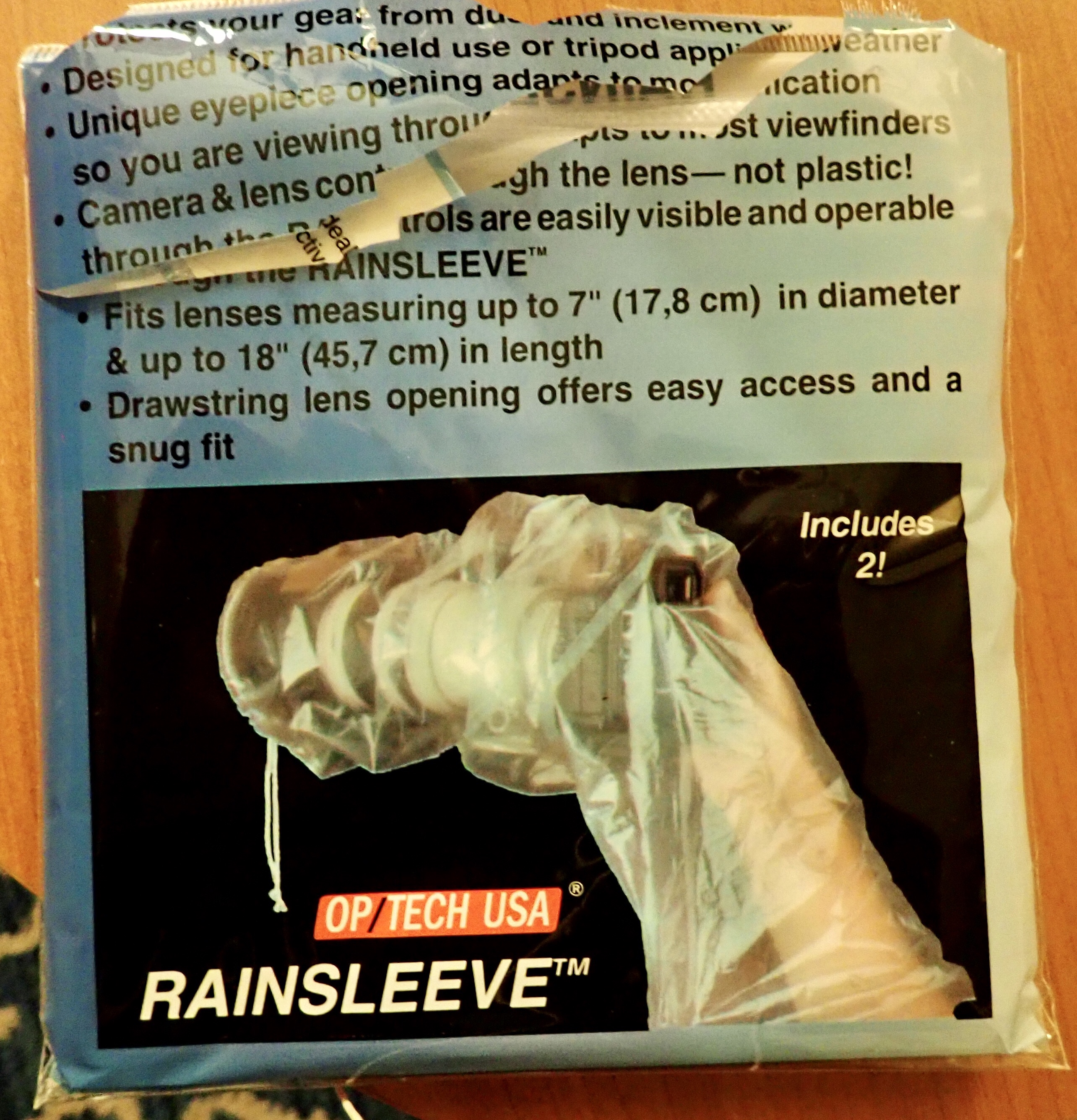
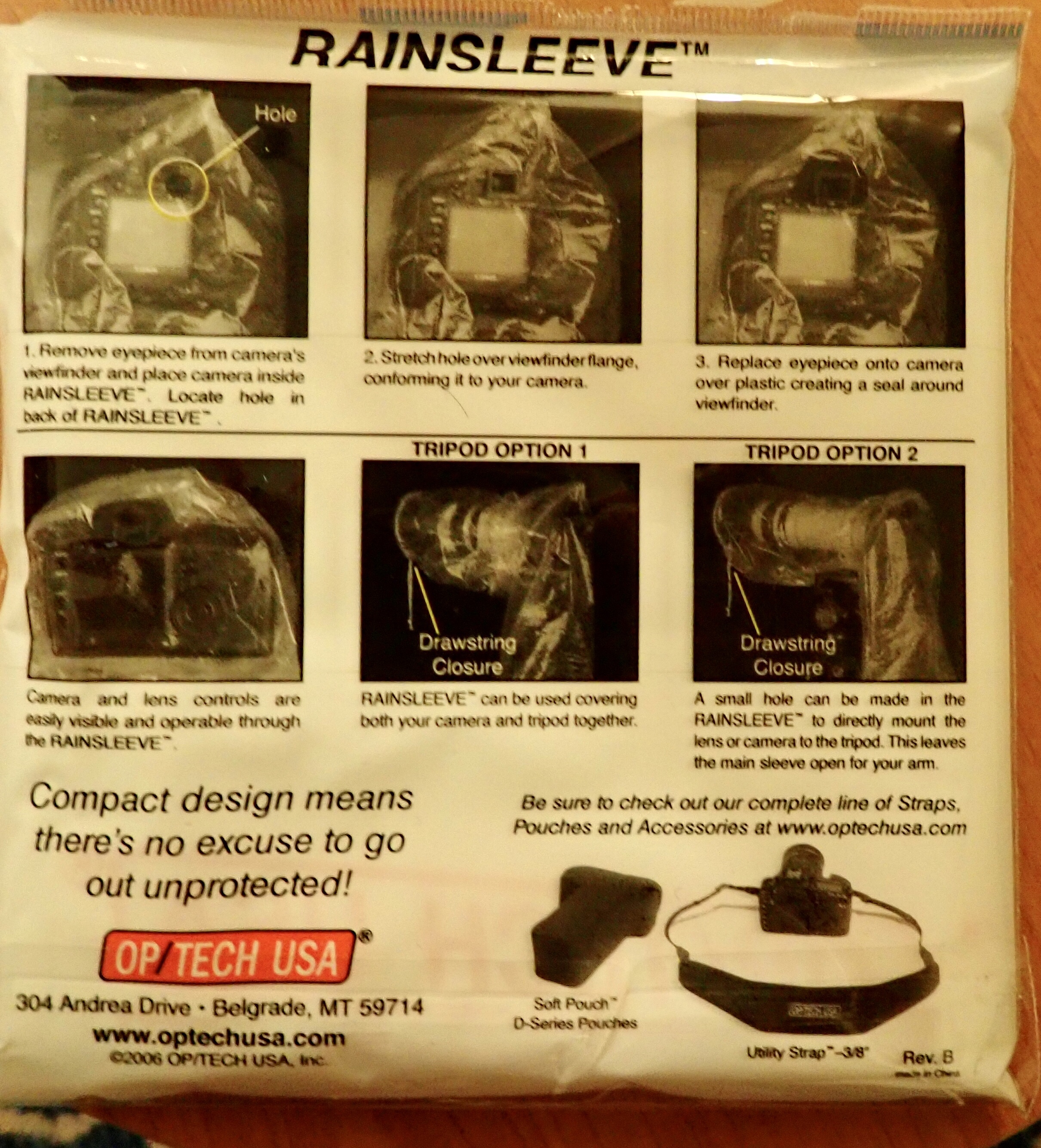
Garrie spotted a plastic cover for the big Olympus in the ship shop. Only US$10 for two. It is irritating but works well as we had showers of big pellets today. We call it the condom.

Our “chaos” brand dry pack pack is also a great tool for this adventure and is very comfortable to wear (so Garrie tells me).

South Georgia windier than the Antarctic we are told.

Told 9 of 10 leaders wouldn’t have managed this. Not sure how the penguins stand in the wind we are struggling at times.

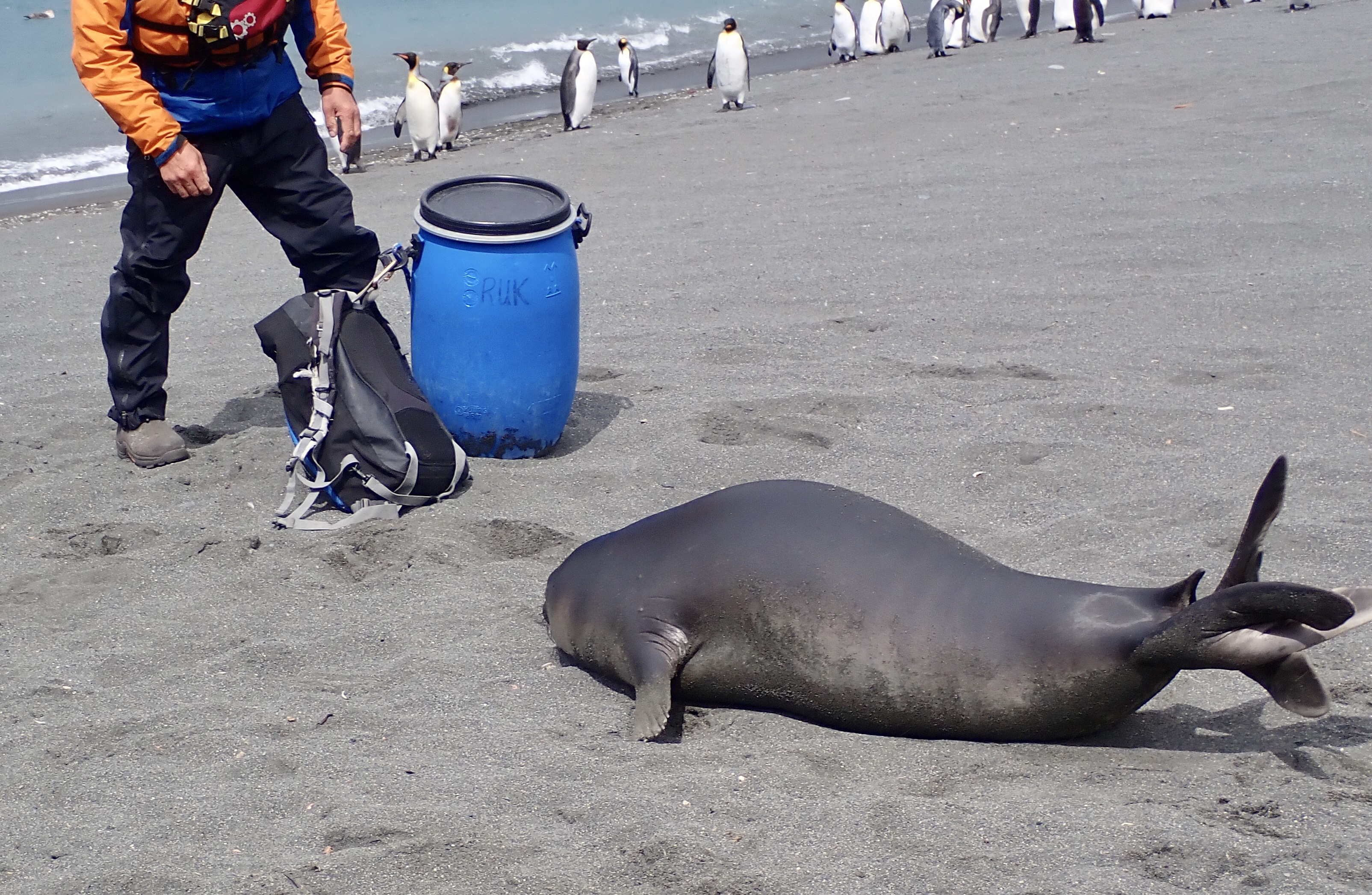
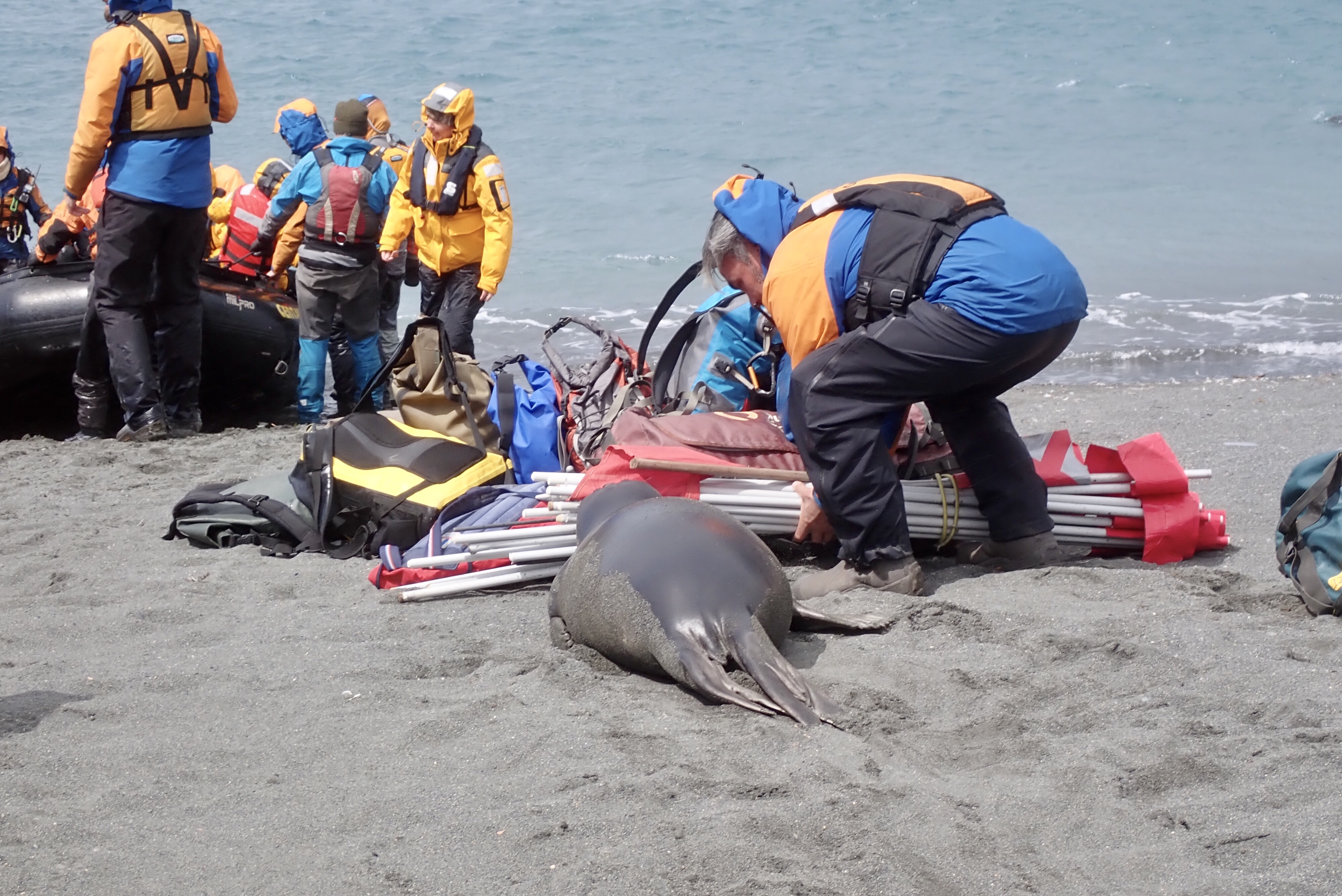
Greeted by young elephant seals when we arrive. As mentioned before they are weaned early and they crave company and this guy just kept trying to lie on the gear. Funny to watch the crew having to keep move things.

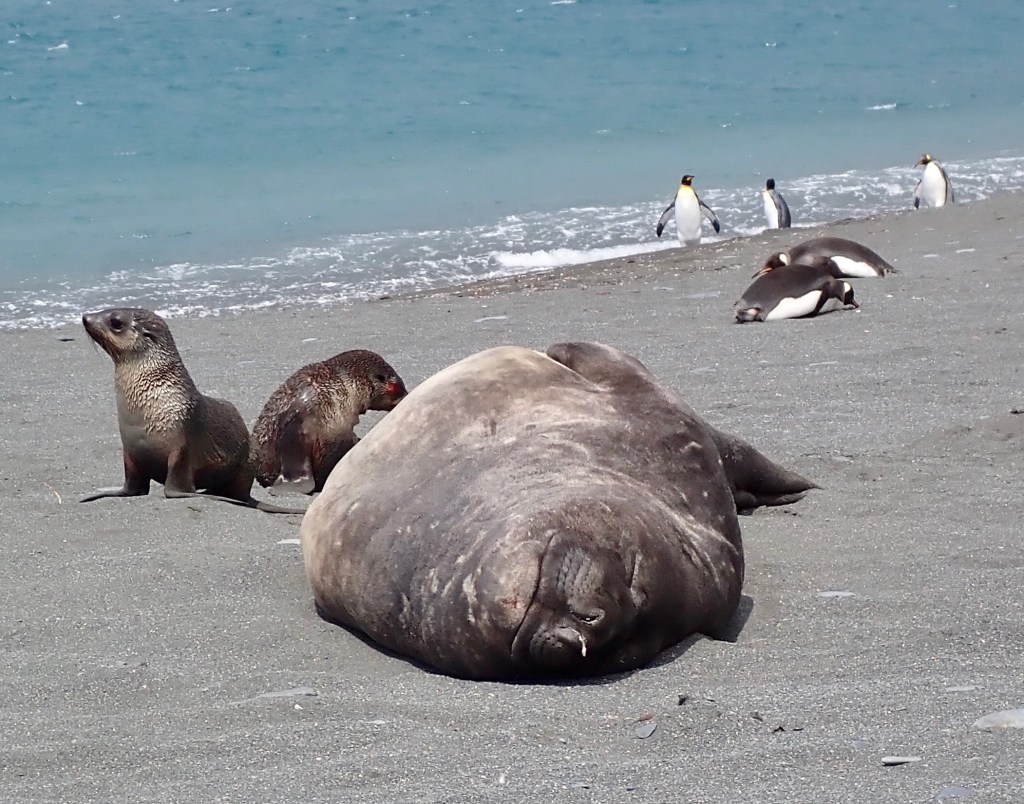
Quite wet out today but the gentoo penguins are so much fun. They are always on the move whilst the kings stand still most of the time. The gentoo are also not afraid of the fur seals so they punch well above their weight on land which is probably as well. Here there were many more elephant seals than fur seals, and though they are much much bigger they are gentle giants and it was nice not to be on watch all the time. Garrie even took a walking pole yesterday as an extra assistance to fend off the fur seals as you wouldn’t want their teeth in you.

Yes this is a gentoo.

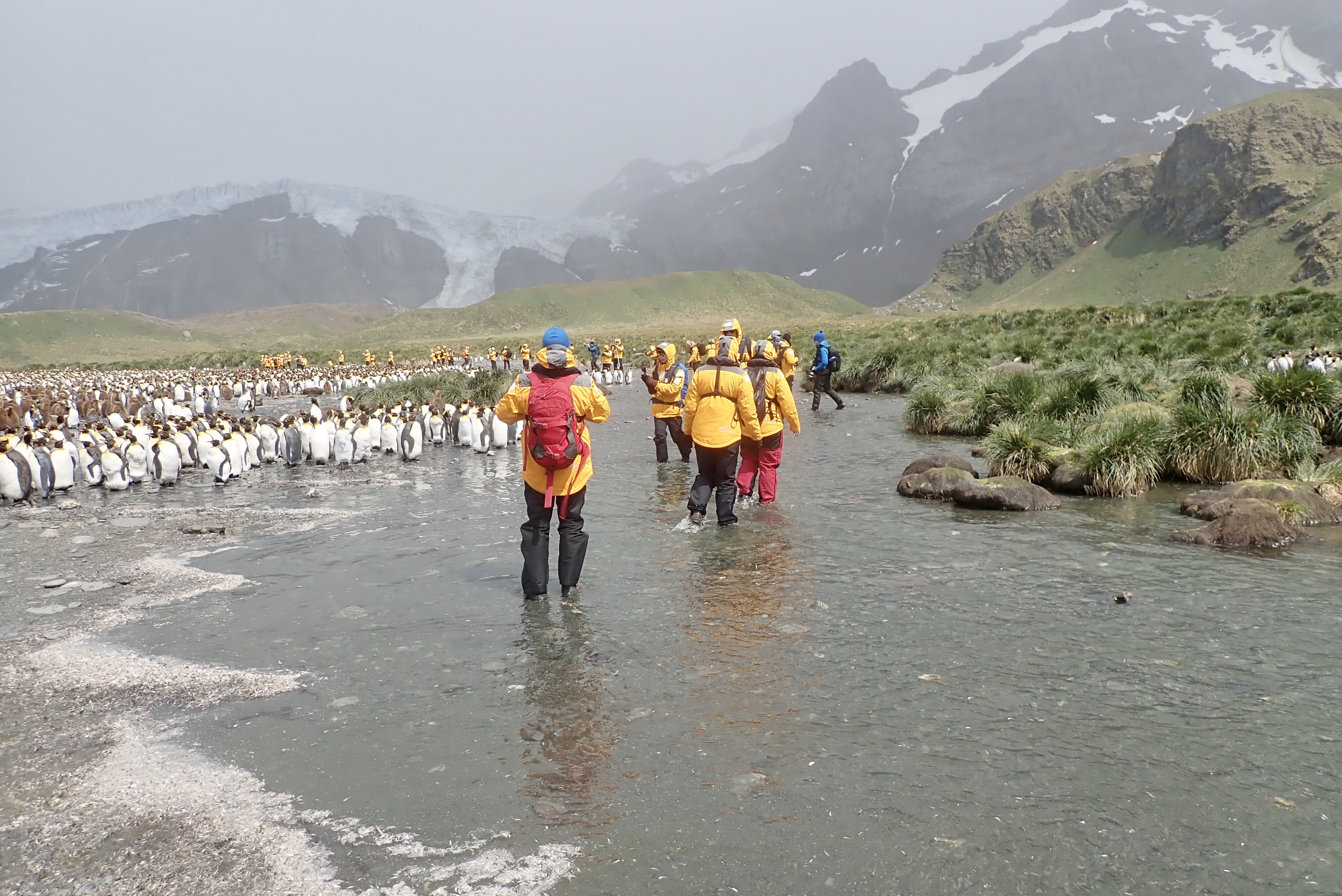
We track from red flag to red flag and today we walked up a river of glacial melt but our feet were toasty warm in the special boots, only one pair of socks so far. The jacket is also very warm. Biggest cold areas are fingers, especially if gloves get wet on the zodiac, and bottoms when the waves wash over. I swear if feels as if you are wet through but the waterproof pants ensure it is only cold, not wet, inside.

The king penguins are in the water as usual.

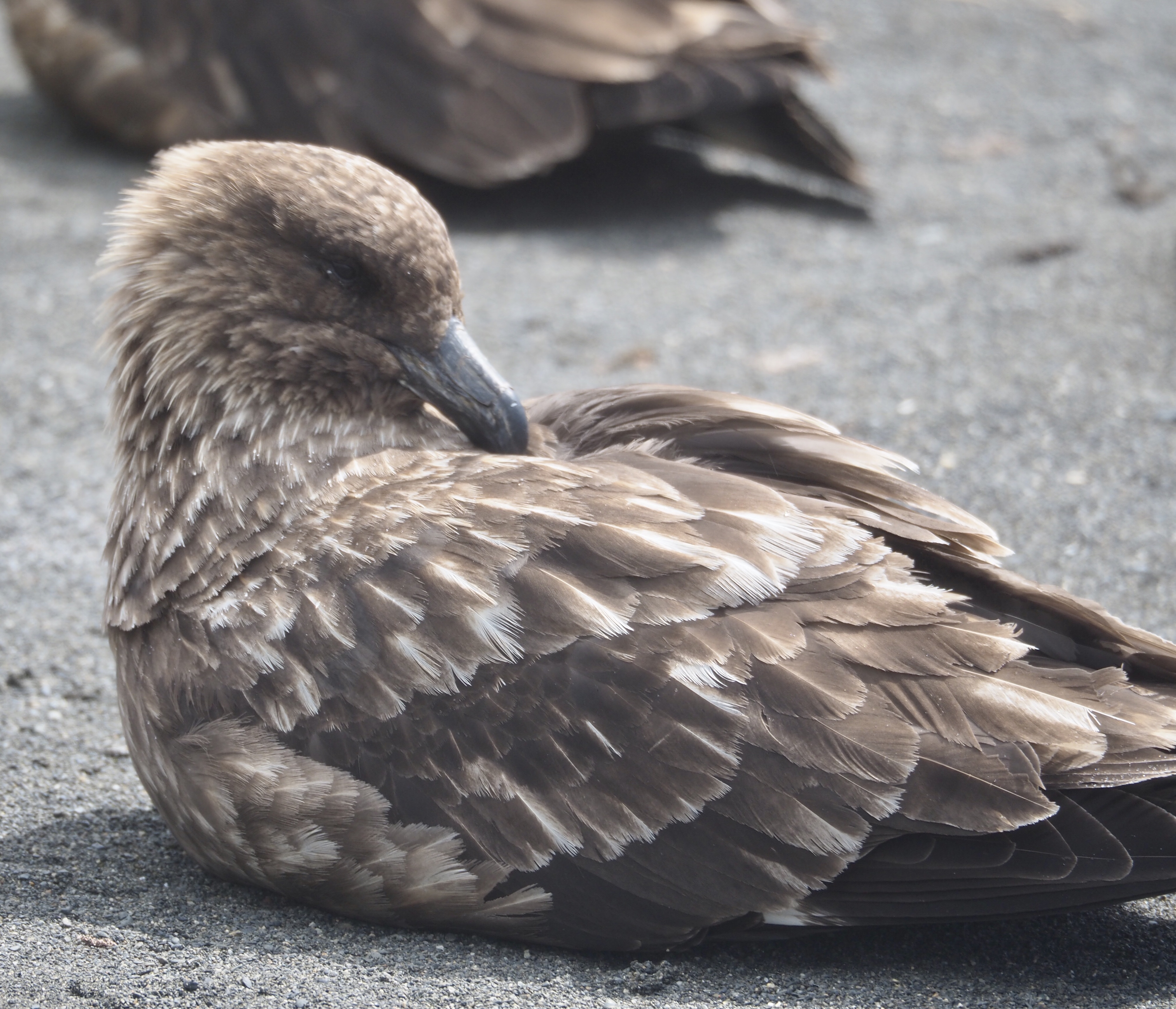
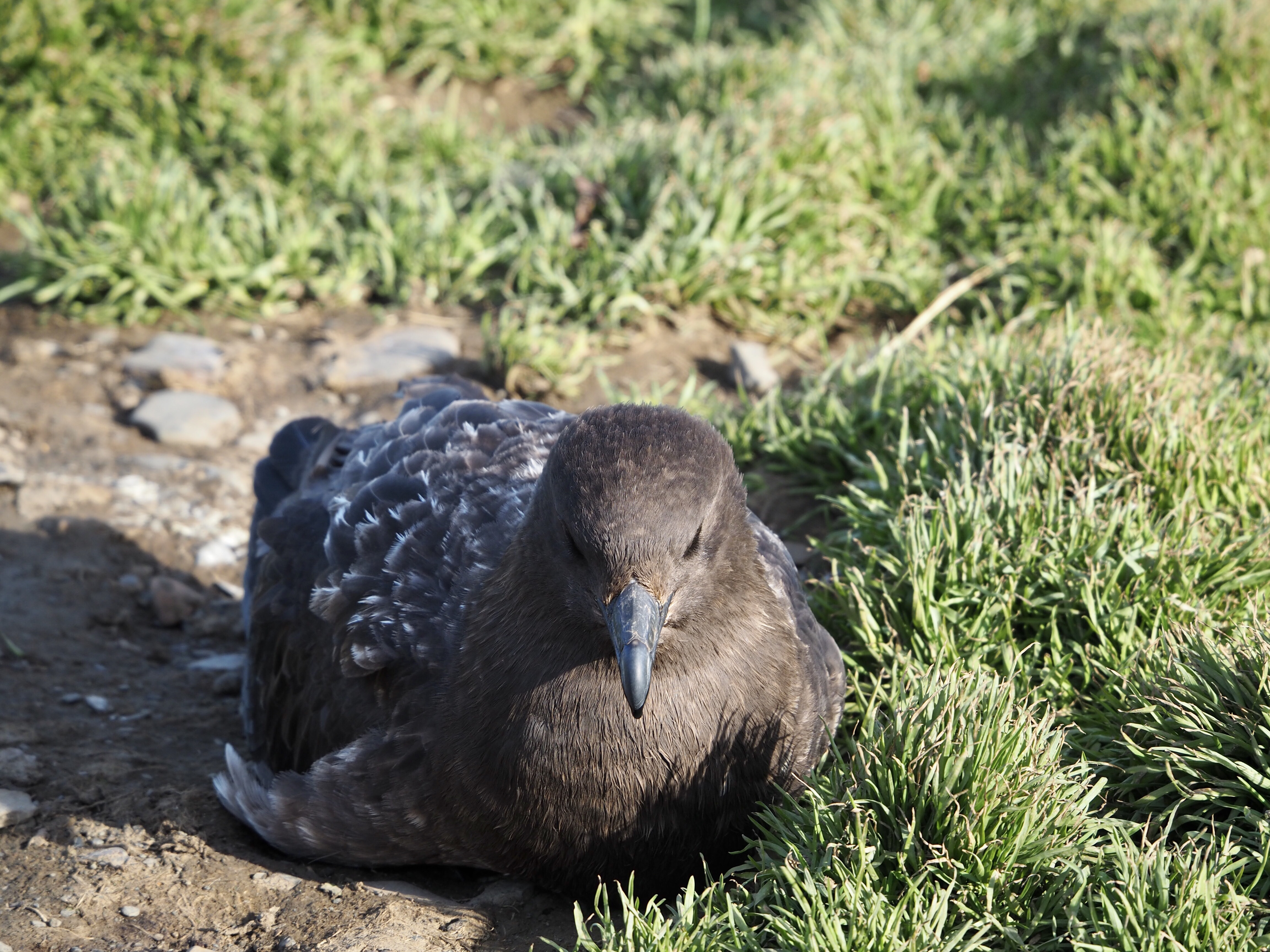
Skuas also around in numbers, as always.

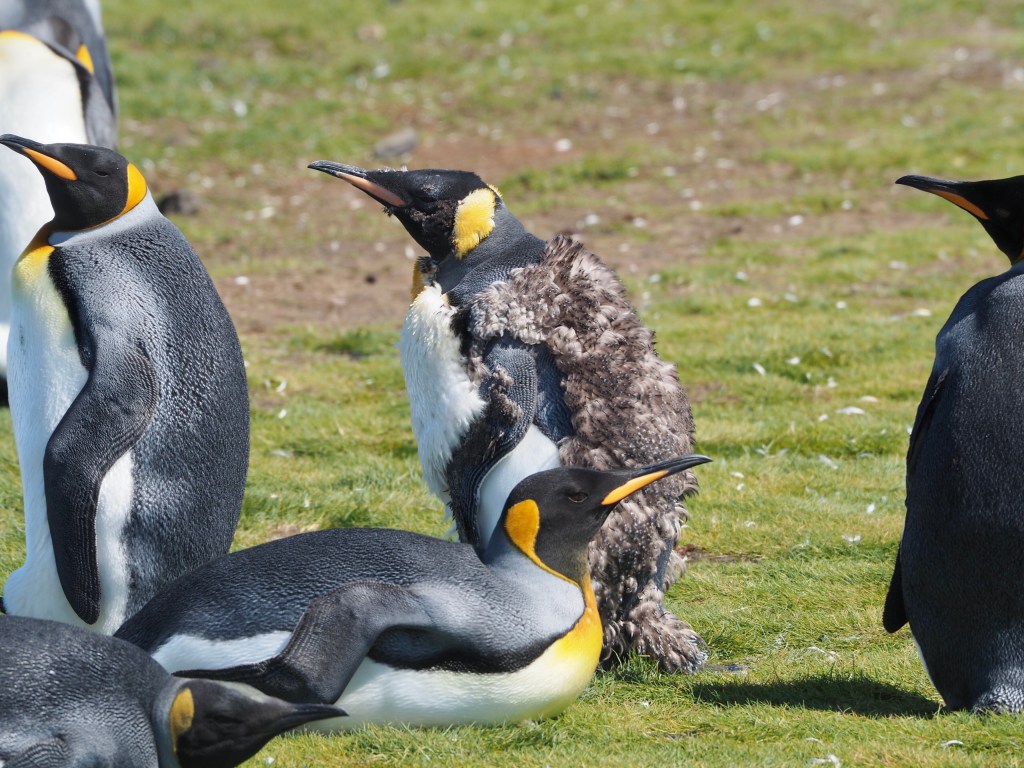
Chick moulting into his adult plumage.

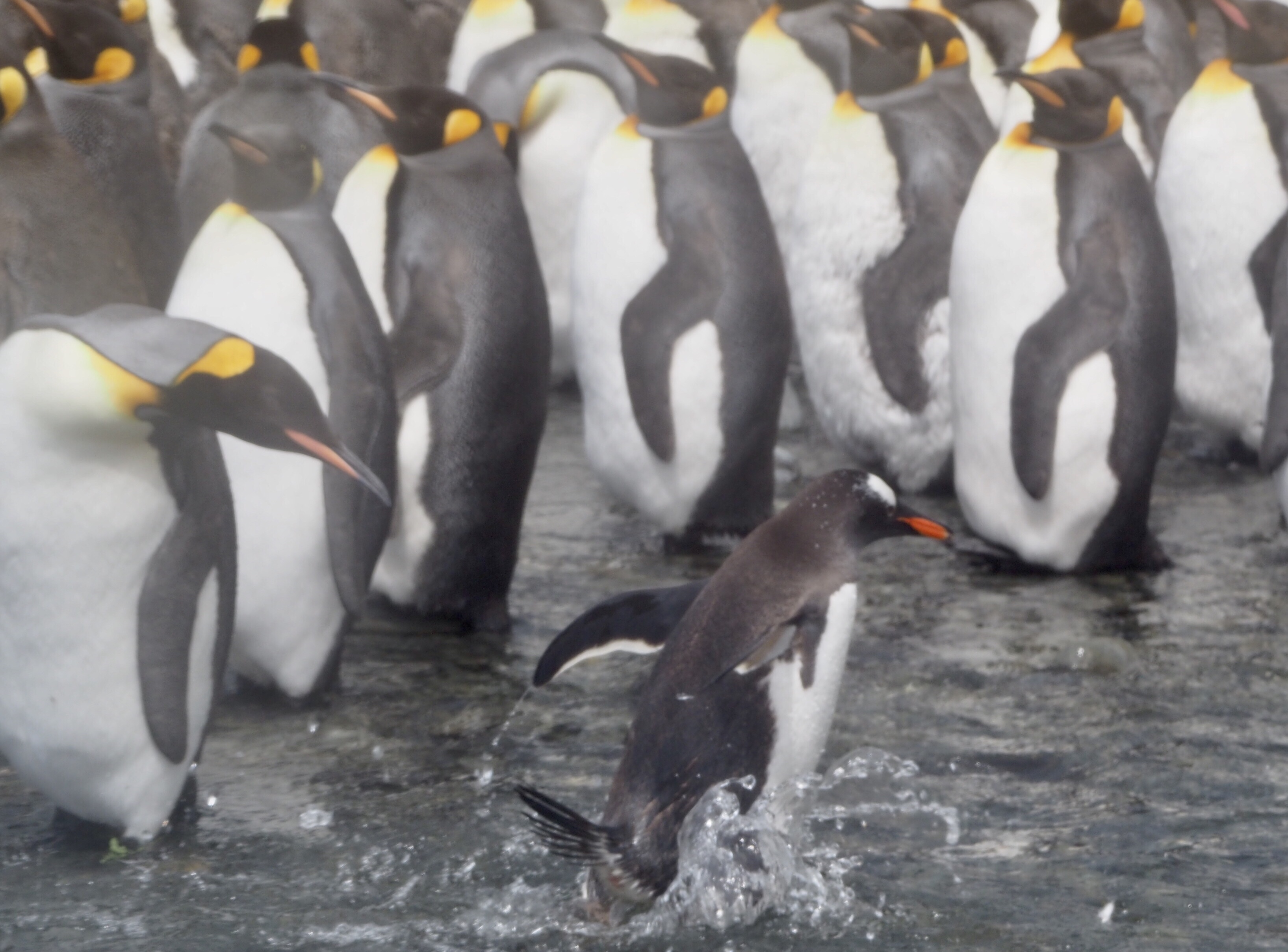
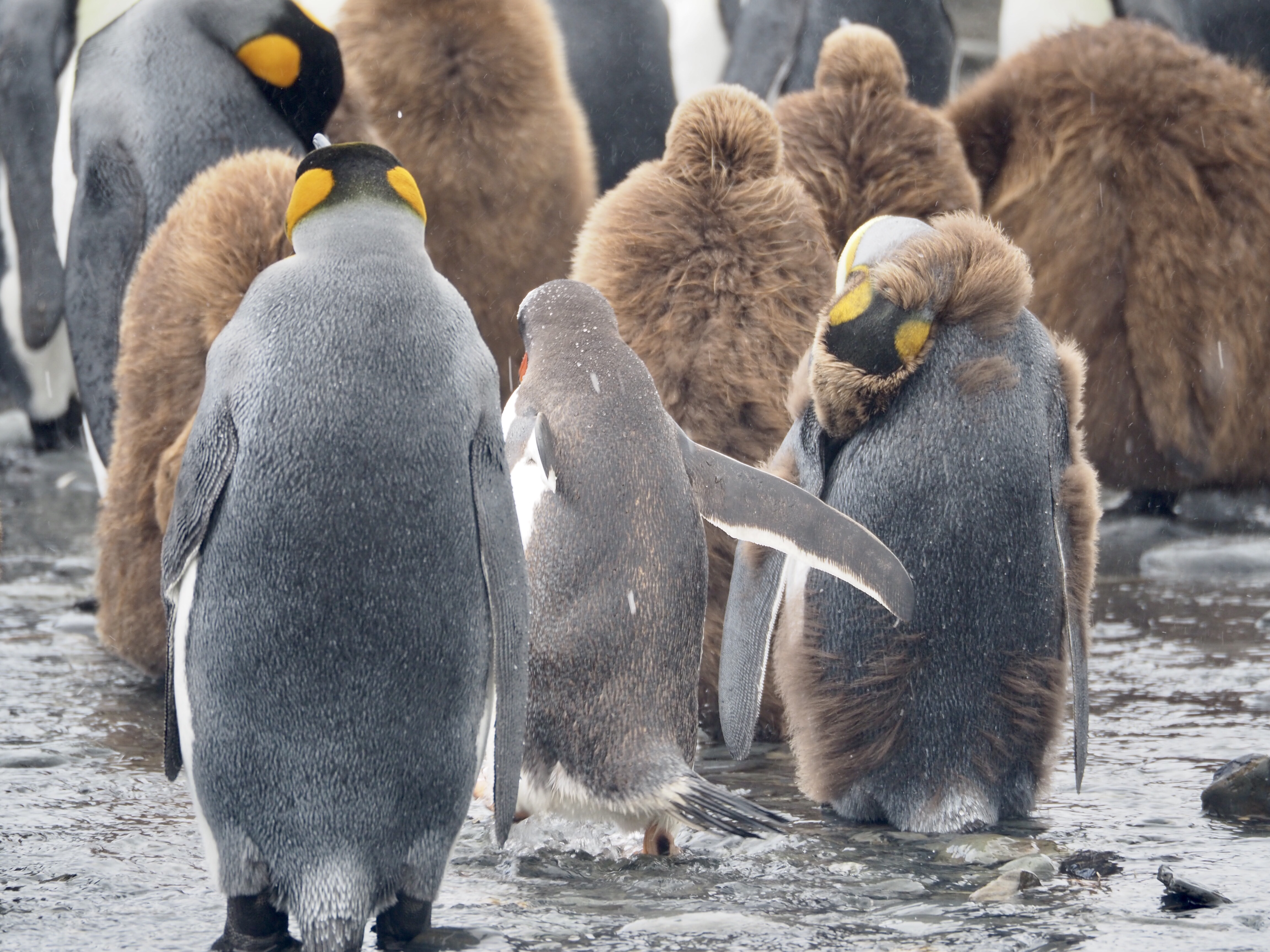
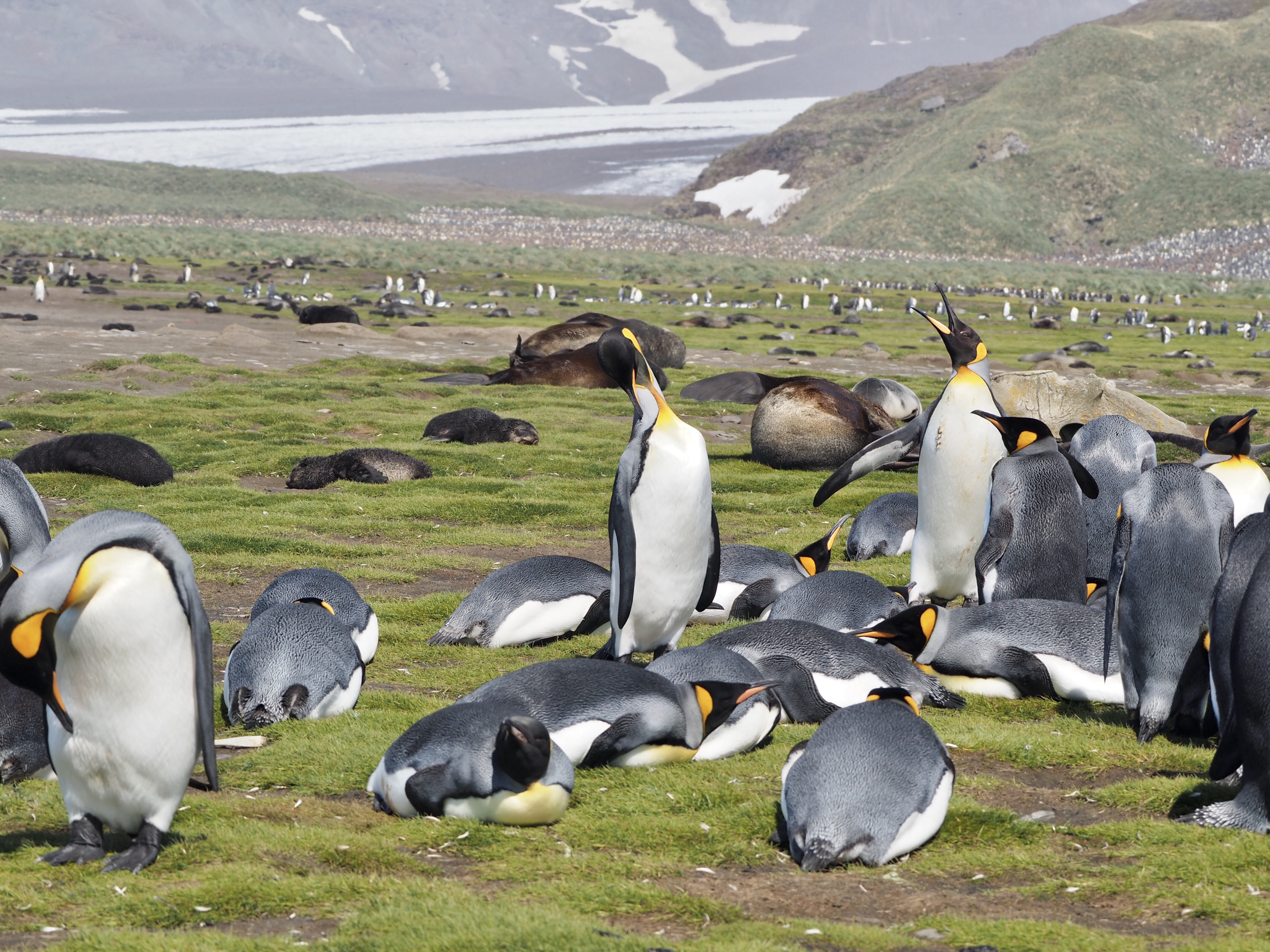
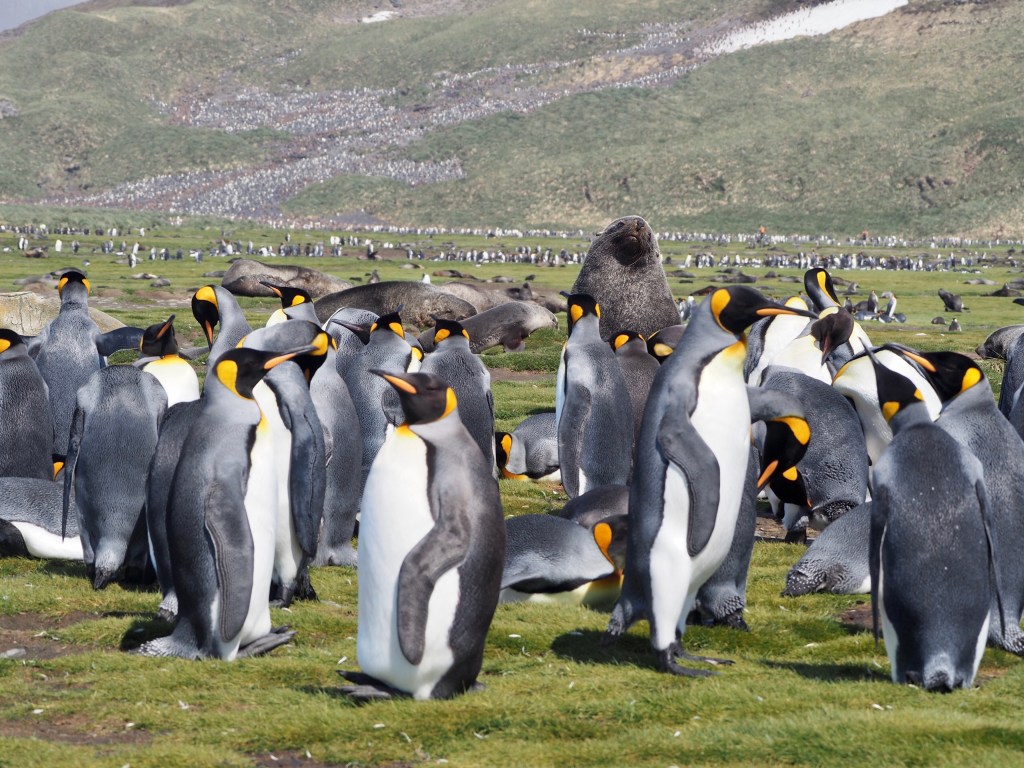
Loads of king penguins but this time with gentoo penguins dashing through them.

Nothing stops the gentoo. They just waltz through the crowd.

At one point there was a clear gentoo Highway with penguins dashing back and forth and humans standing waiting for a break in the traffic to move through.

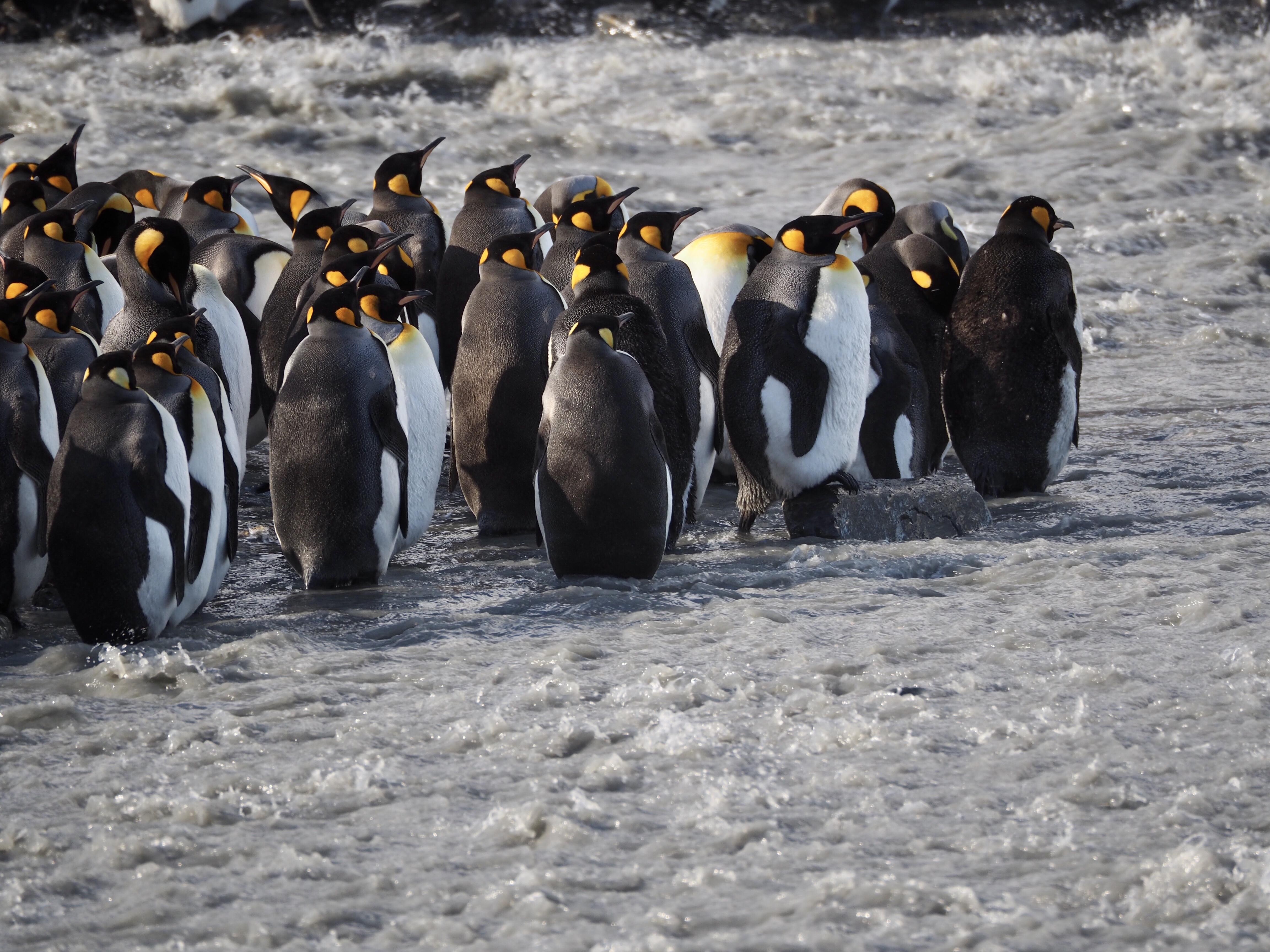
Even the fast flowing water doesn’t stop them. Gorgeous to watch but more difficult to photograph than the kings.

You can see there us quite a size difference too.

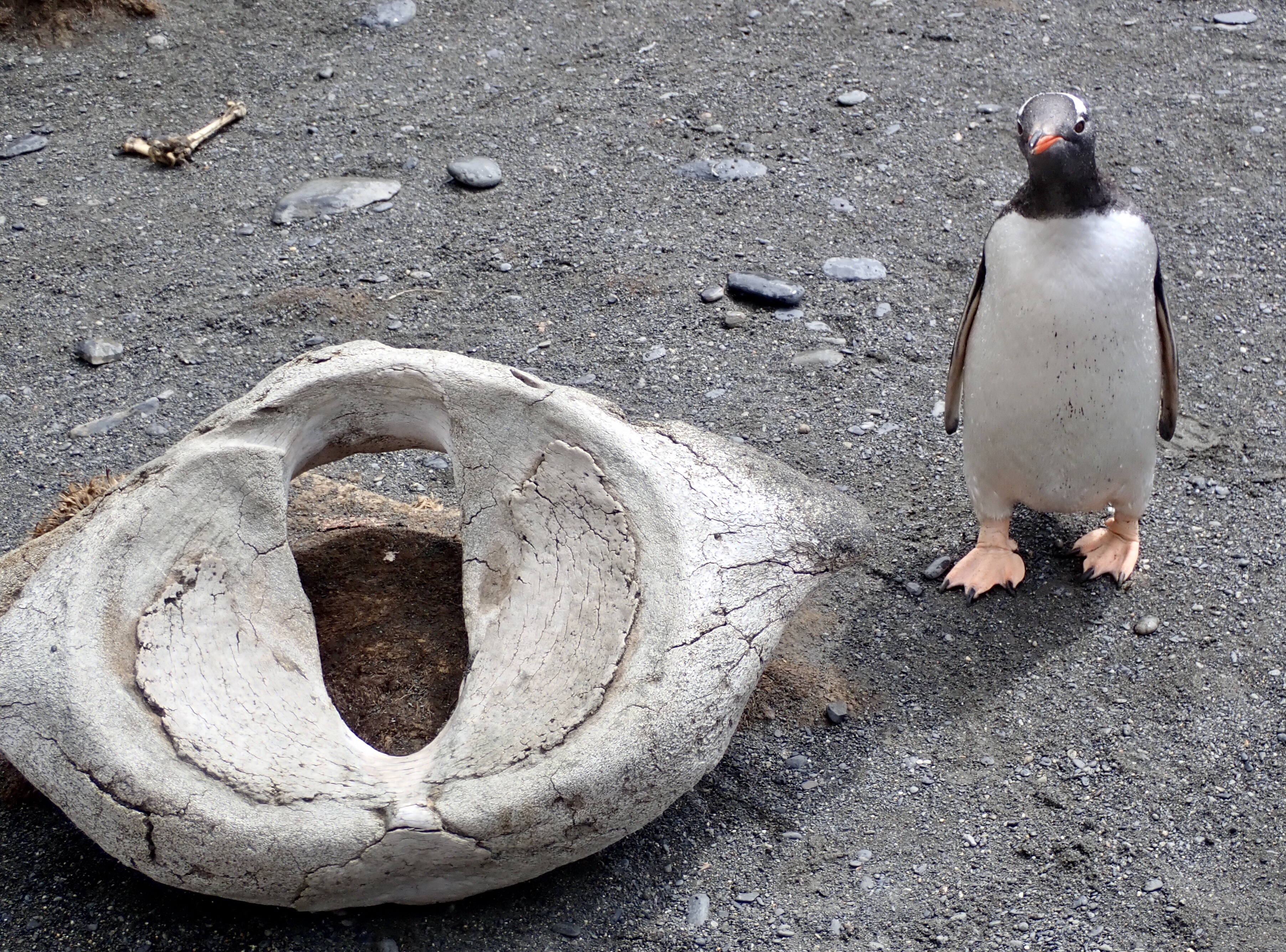
We came across this whale vertebra and I was lining it up to take a pic when this little guy came over to see what I was up to.

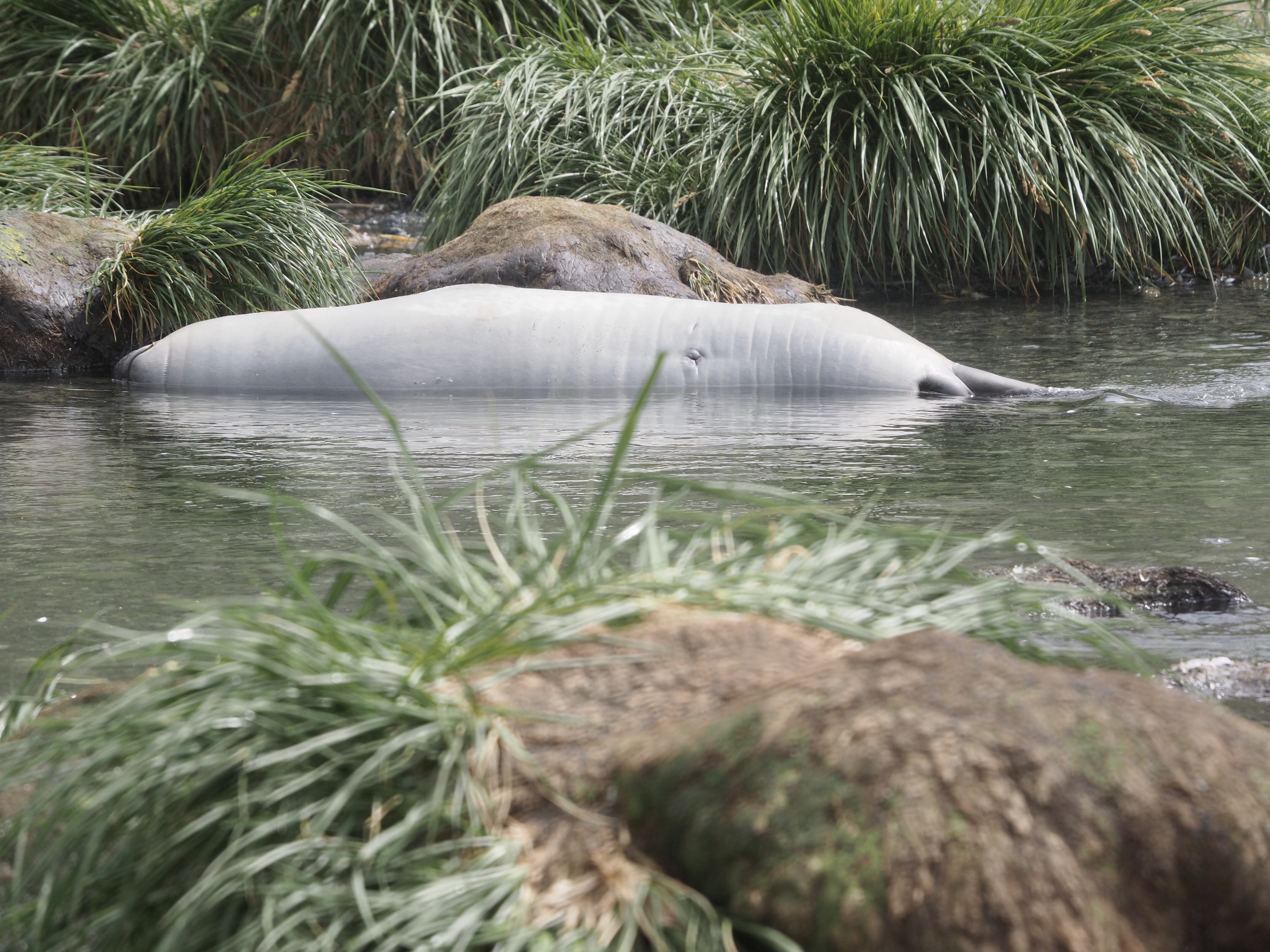
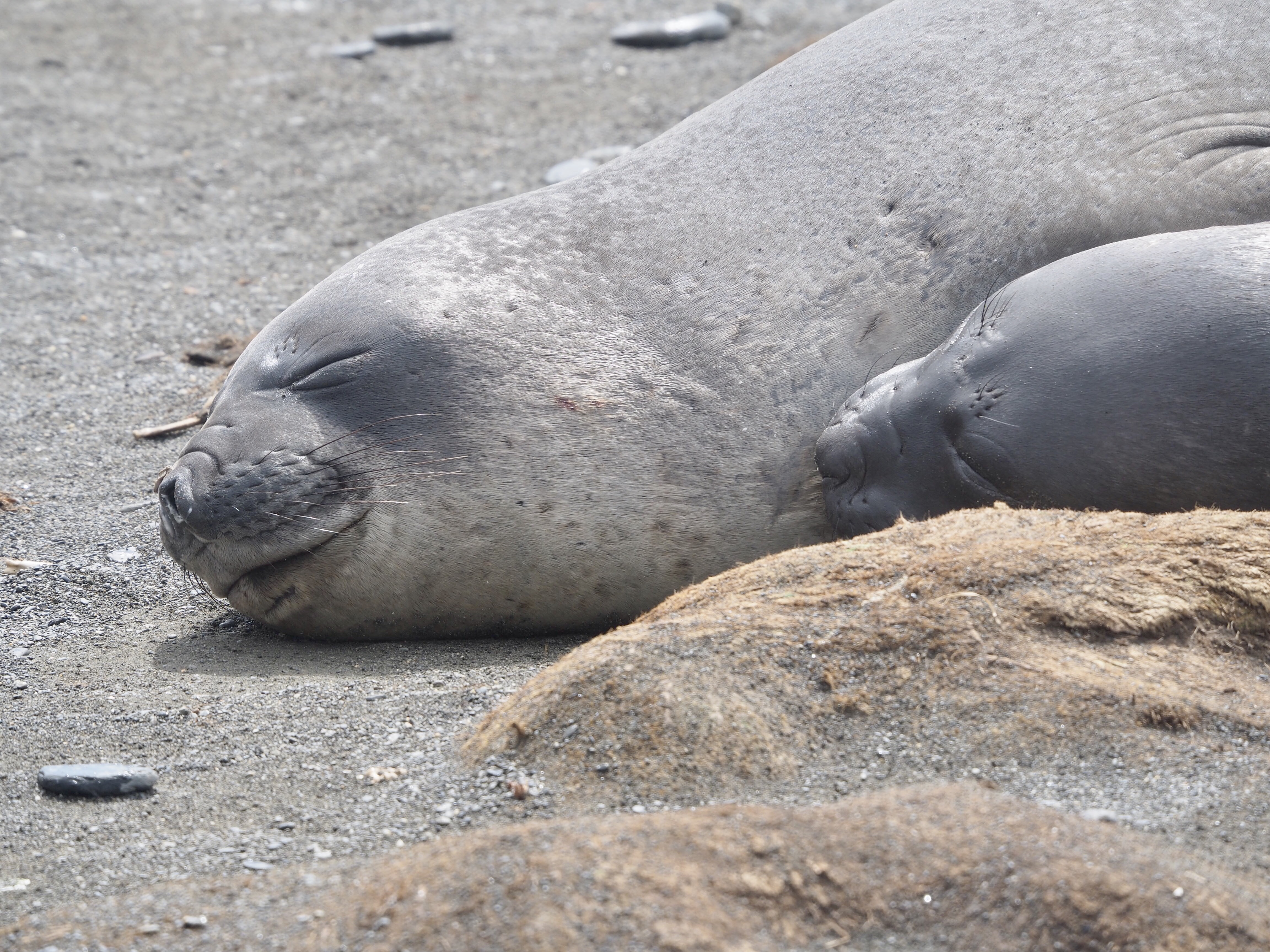
Love the elephant seals too. Sometimes they look dead but we were assured by an expedition guide that this one was very much alive.

A good spray down with the pressure hose on getting back on board as I certainly had plenty of beach sand attached. You also have to beware of the odd dead thing you might walk in. Trying to decide if some of the brown lumps are left from tussocks or are the older king penguin chicks that didn’t make it through winter can be a challenge. Seemed a few more here than in other places.

We love our cabin size as that enables us to bring most of our gear back to the cabin (some are way too small) and we like that it is on the same level as the mud room as that also makes bringing everything (other than the boots and life vest) easy to bring back. Frankly I’m not keen on prancing around in my thermals, though many do.

We are also seeing many more ice bergs now as we are almost right at the bottom of South Georgia, though still on the quieter side. We so hope to see Macaroni penguins this afternoon and hopefully more chinstraps as we may not see too many of them on the Antarctic peninsula.

We seem to be hanging with Cheryl & Mike from Texas more and more as our senses of humour, irritations with things and photography thinking are very much aligned. We are doing a lot of laughing.

Richard is our waiter and also Keith (Senior) and Mary Lou (wine) are all lovely. The food and wines (complimentary with dinner) come from across the world and have all been excellent.

Camera or the iPad is affecting my door card. Have had to have it rejigged twice. We are scanned in and out as per other cruises to ensure no one is left behind when we go on excursions. Thankfully the affect from the camera only upsets the door locks not the scanning barcode.

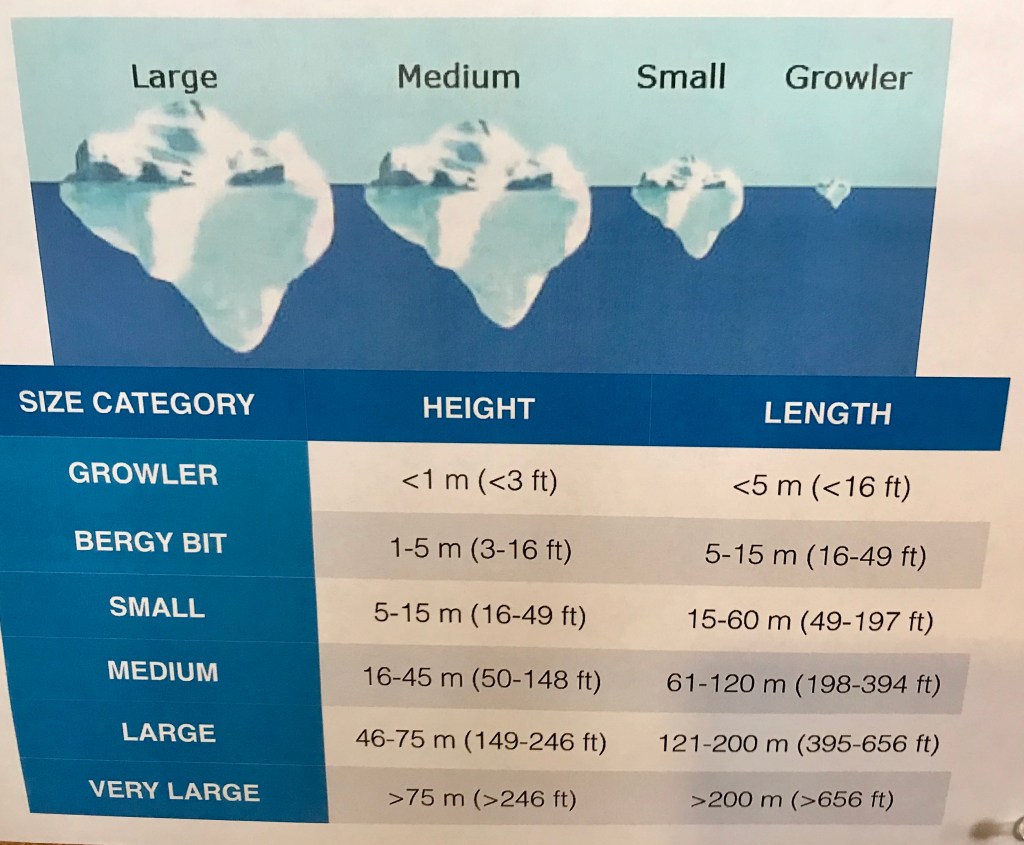
Apparently to be a berg it must be twice the size of a double decker bus so we are also seeing bits of ice float by. Spending time in the lounge this afternoon watching the bits and bergs go by. In some ways looking forward to a couple of sea days after four days in a row of expeditions. Loads of smaller white birds over the water.

Very overcast and drizzly now. Rain and snow being blown around in 40 knot winds. Open ocean swell here. Giant petrels, prions and many South Georgia petrels and diving petrels.

Bought some waterproof gloves as both of us are having difficulty in anything but our mittens which seem waterproof but which are impossible to work the camera with. The inners that worked for me in Canada just soak through here and then you end up very cold. Garrie also fancied some ginger chews which are probably kept for those feeling ill – they would work as they just about burn a hole in your tongue so would be very distracting. So far all our sickness remedies are coming home with us unopened. (Let’s hope that isn’t famous last words).

So one final excursion to go in South Georgia. Weather definitely deteriorating but fingers crossed.

South Georgia – St Andrew’s Bay

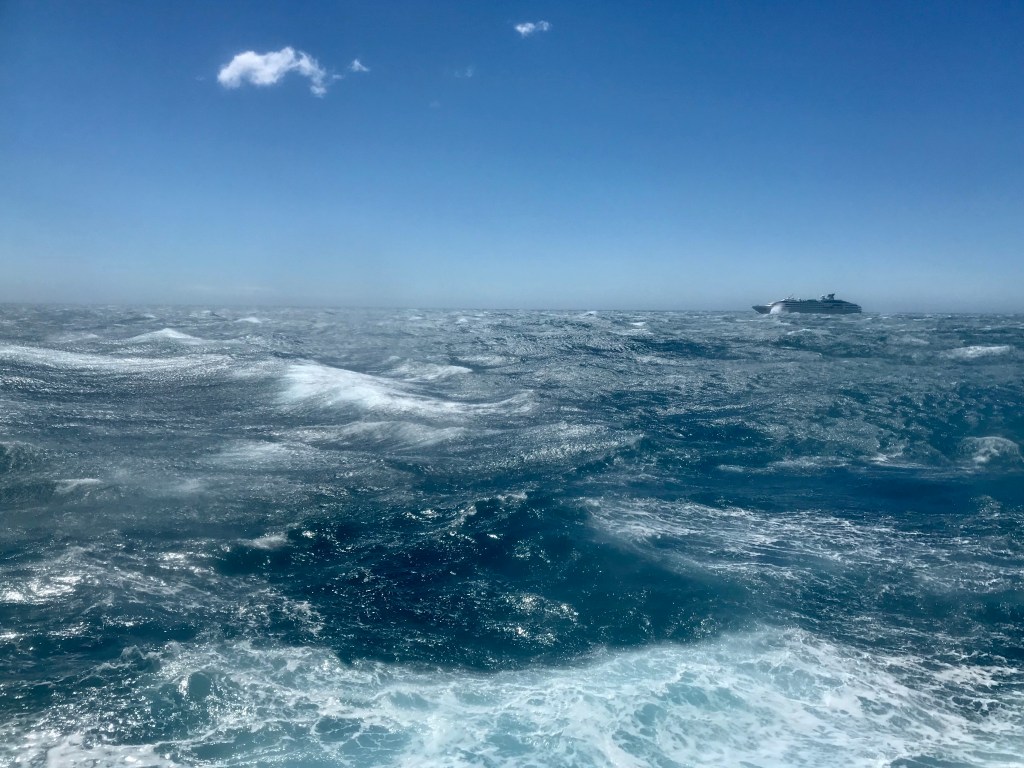
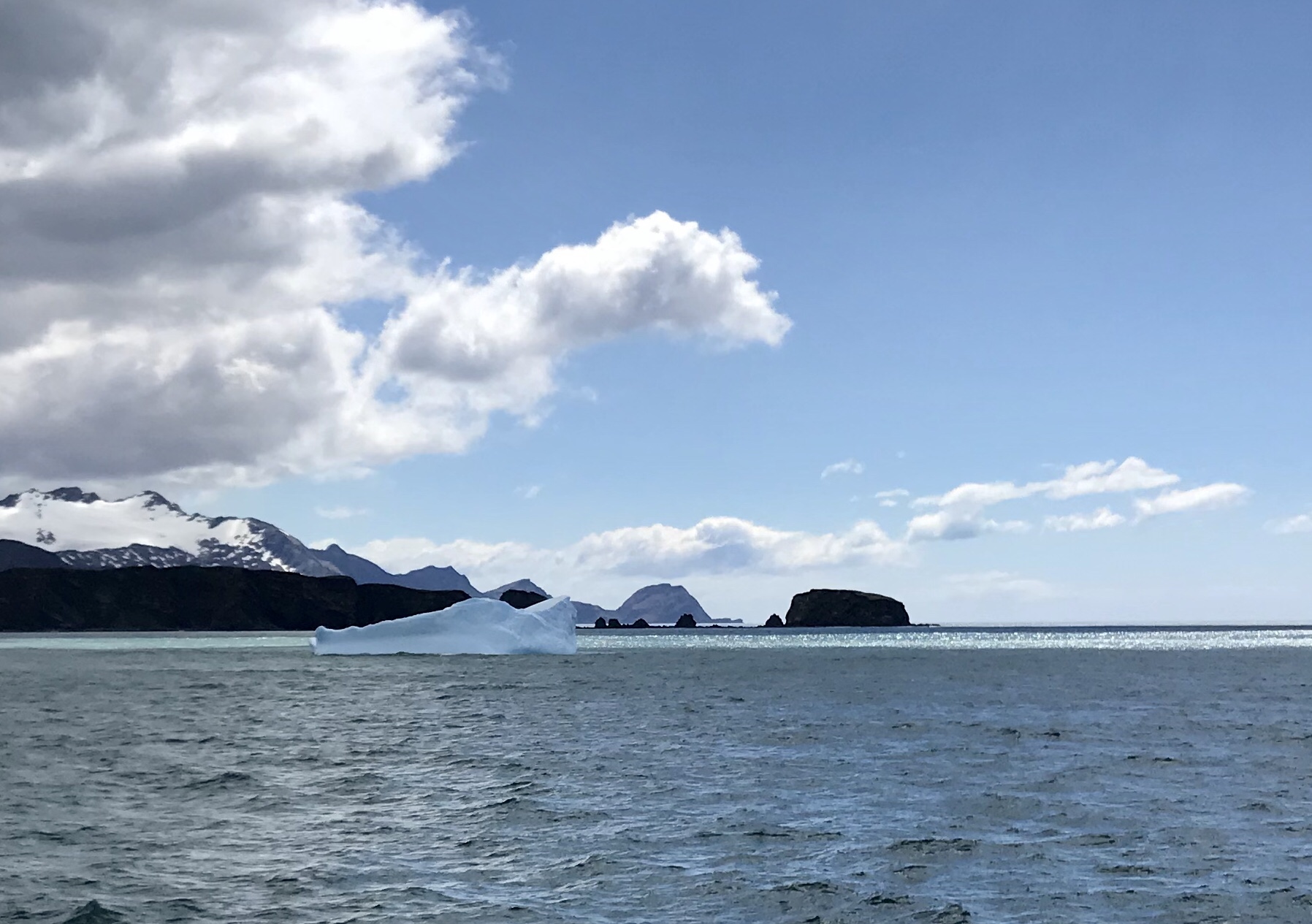
So a few ice bergs and some rough seas on the way here and a ship going the other way.

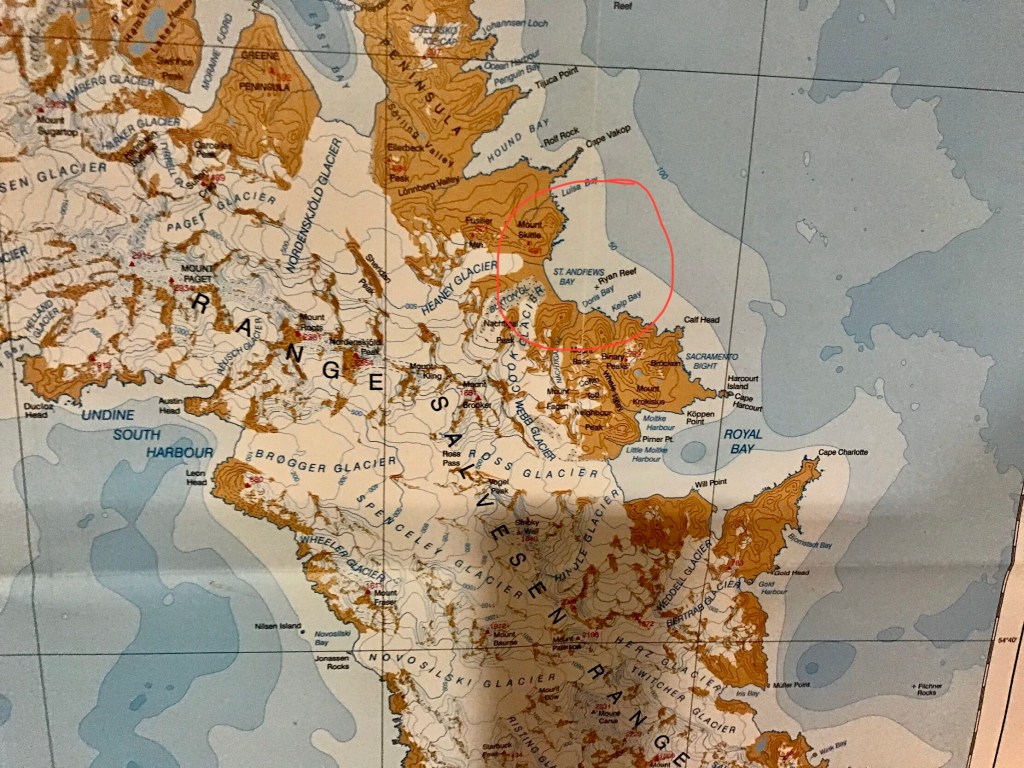
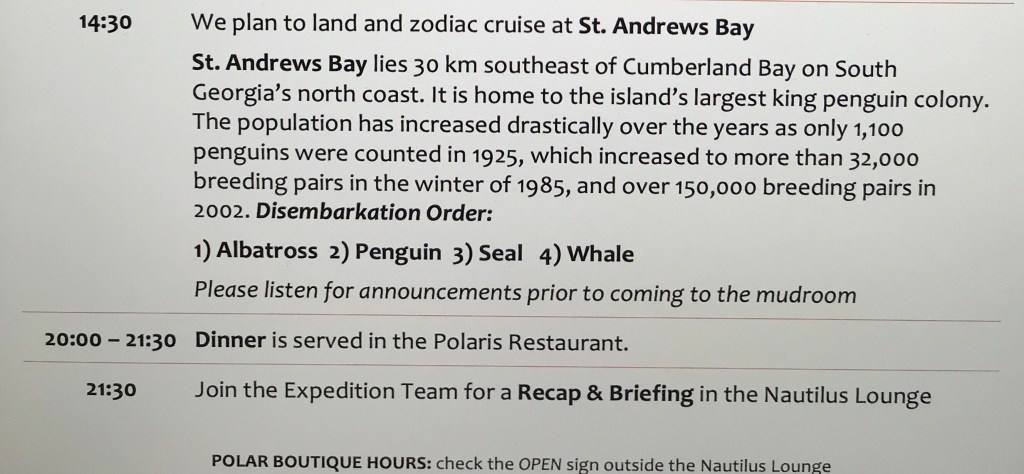
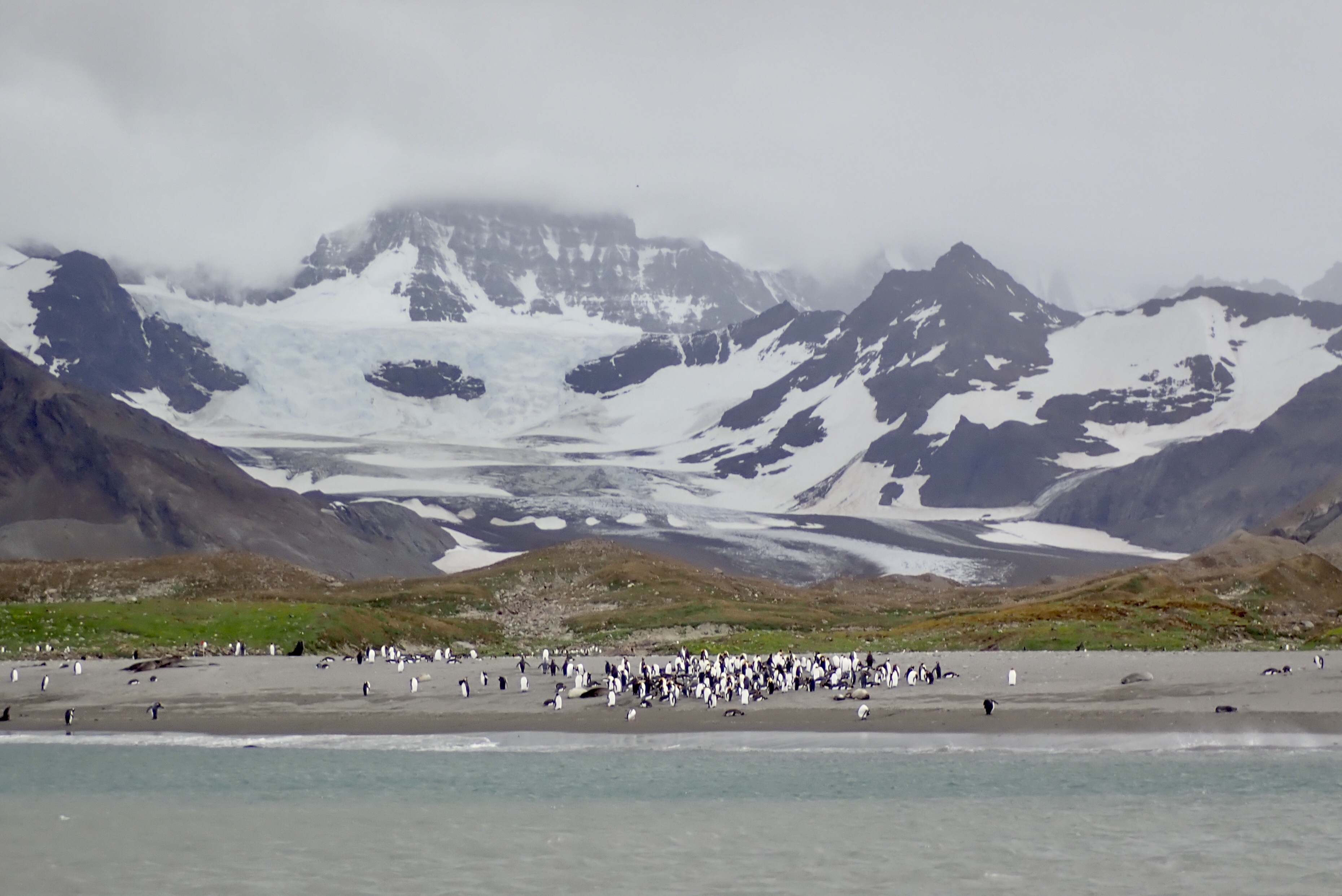
A couple of blurbs on this amazing place: Thousands of breeding pairs of king penguins nest at St. Andrew’s Bay—the largest king penguin rookery on South Georgia, and a wildlife spectacle to behold. Also the Quark appraisal.

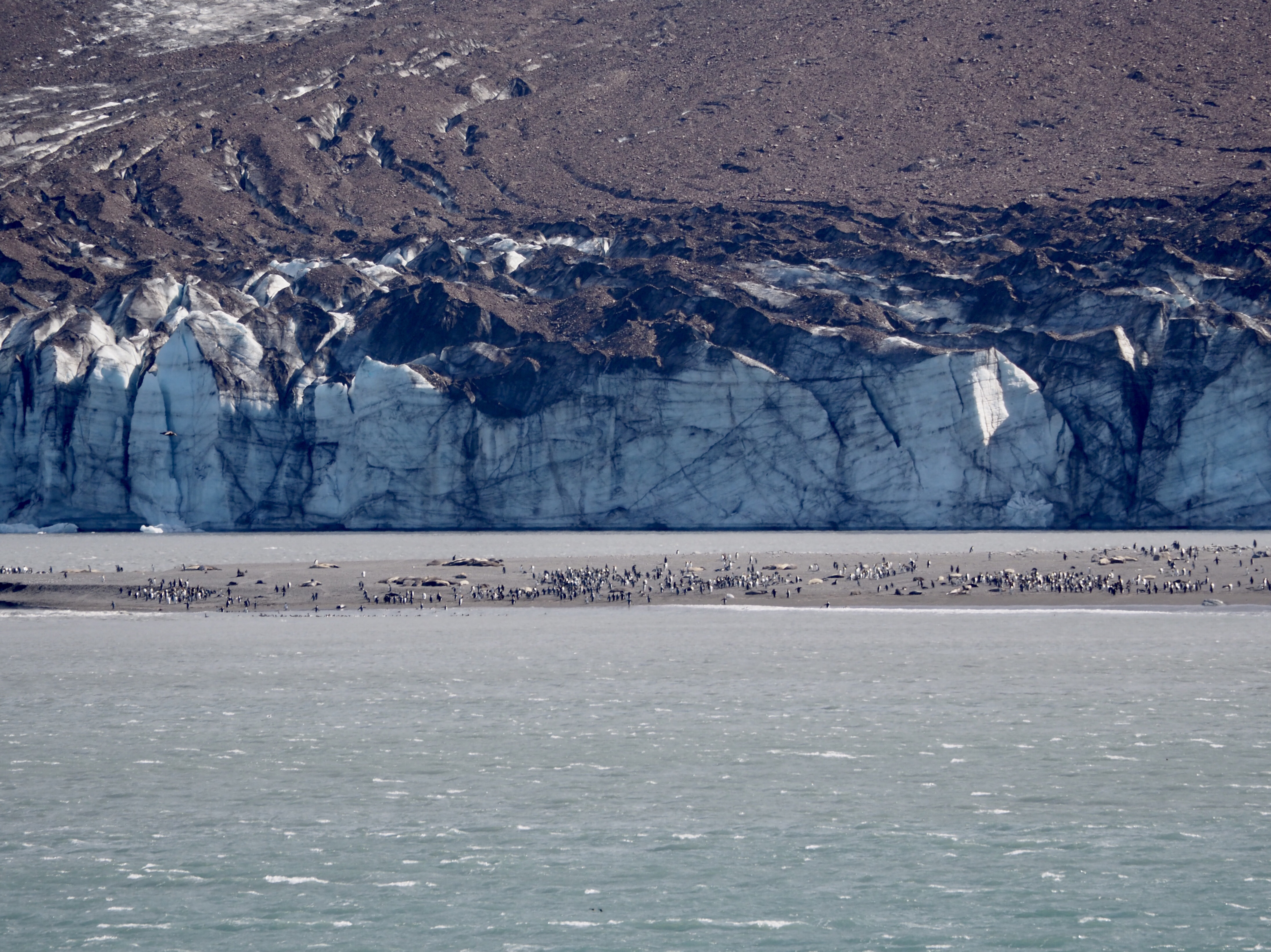
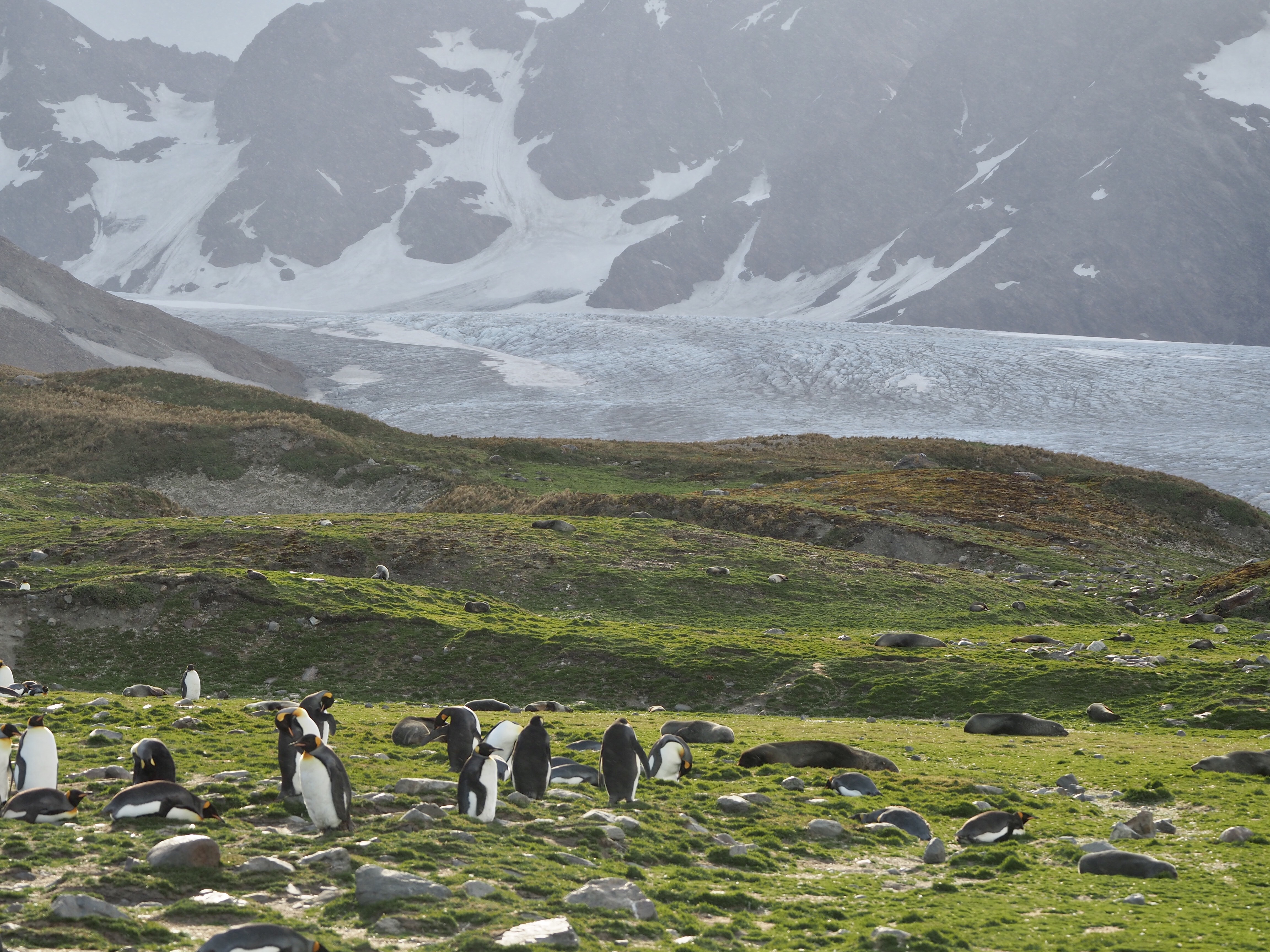
An amazing glacier comes right down to the sea. I believe the dark layers are from volcanic explosions.

Ok so we arrived and managed to anchor but winds of 40 knots with gusts up to 50 so we could not launch. The people trying to get into Gritviken today could not get on shore so we feel very blessed to have visited yesterday. This is South Georgia. Took some pics of the wonderful glacier onshore. We now await further news.

Looking for scale? The little dots along the front are penguins and seals.

To entertain us Miko presents on Earnest Shackleton. The boss in the Antarctic is really nature and showing us who is boss today.

1874-1922 Shackleton was only 48 when he died. Born in Ireland. Joined merchant navy at 16. Loved books. Scott was about hierarchy and worried about the competition of Shackleton. A bit unstable as a leader. Asked Shackleton not to explore McMurdo sound. Rivalry. Miko not keen on Scott but does like Mawson.

Nimrod. Turned back on mission to the pole got to 180km and then turned back as he knew they were not going to make it. That’s when he and Wild became great friends. Wild, Shackleton Marshall and Adams. Miko admired that Shackleton’s care for his men trumped his ego.

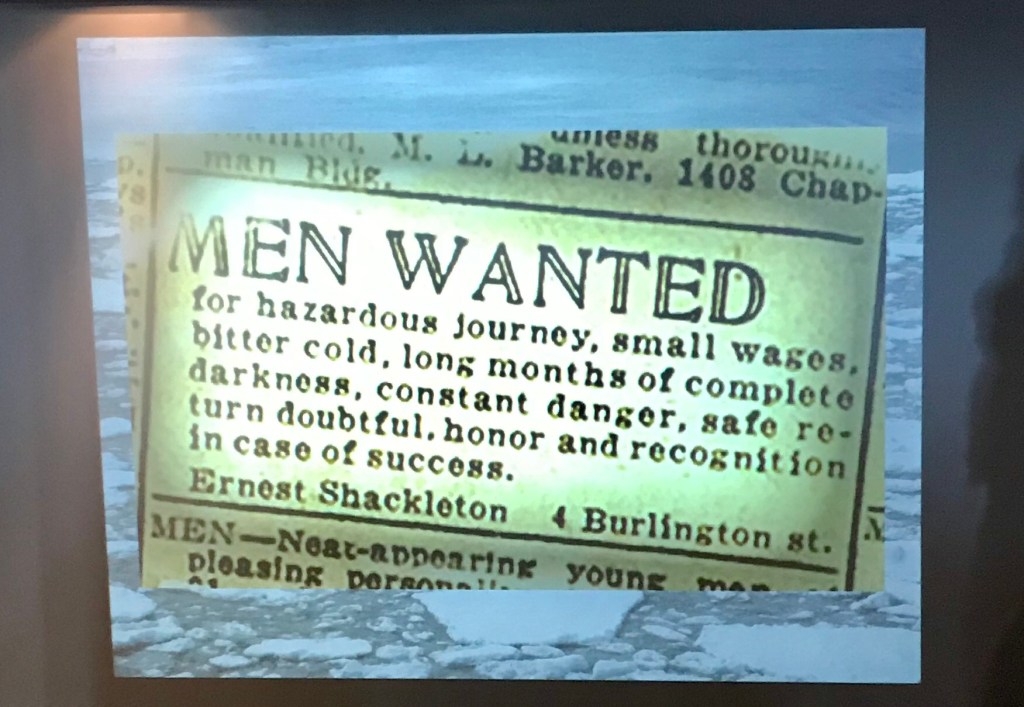
Next the Endurance trip. This advertisement has become a bit of a legend for this trip But has never been proven as a true thing.

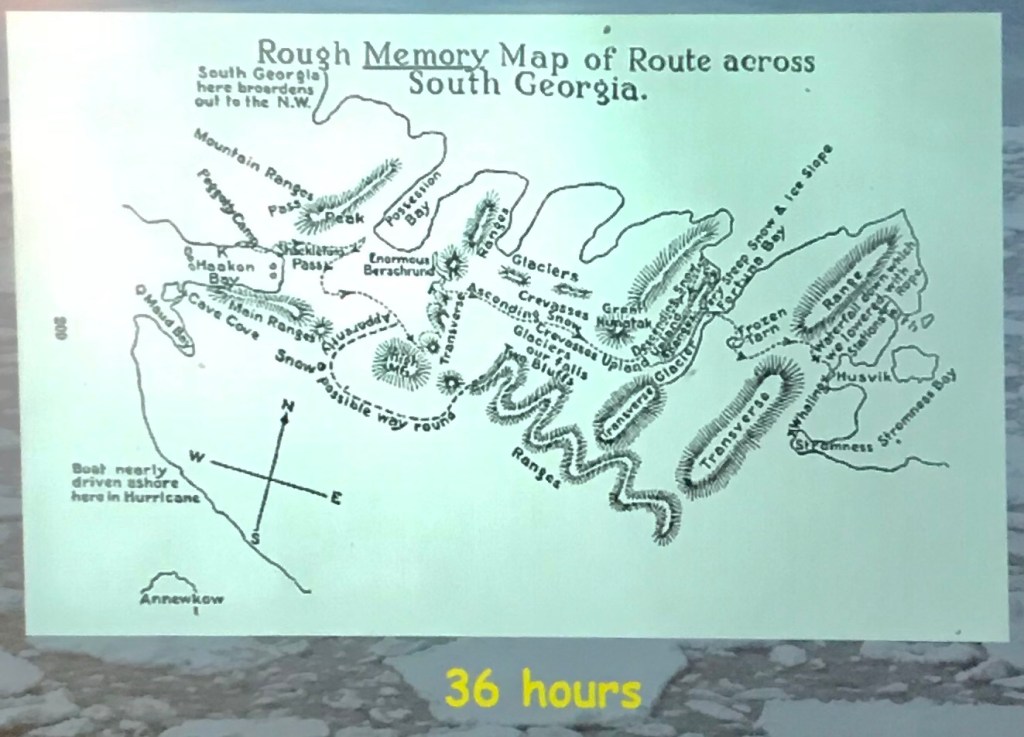
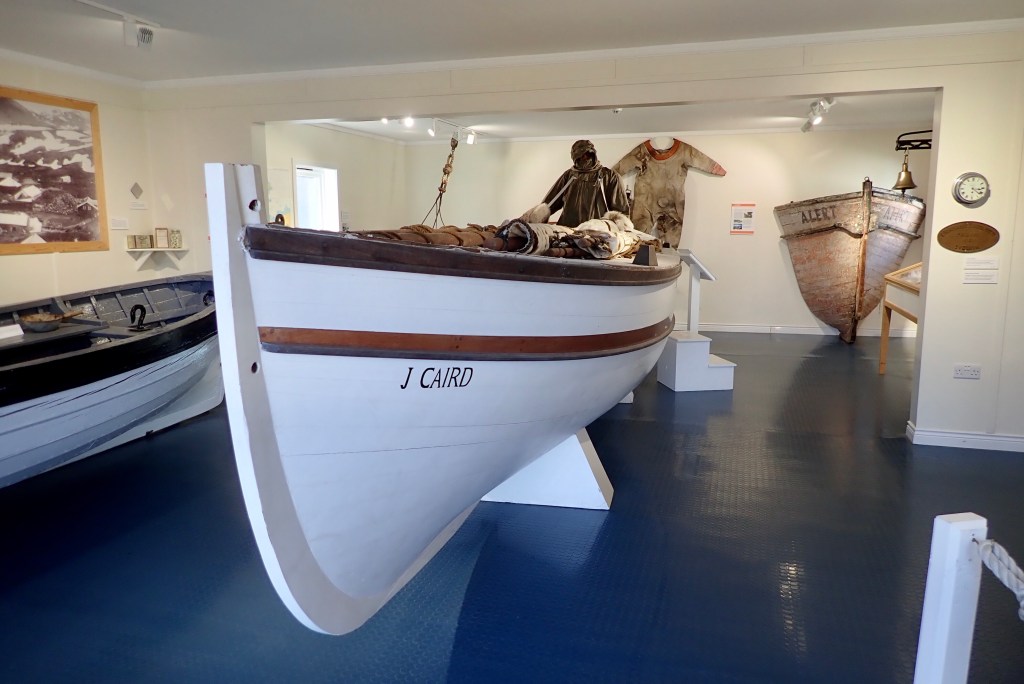
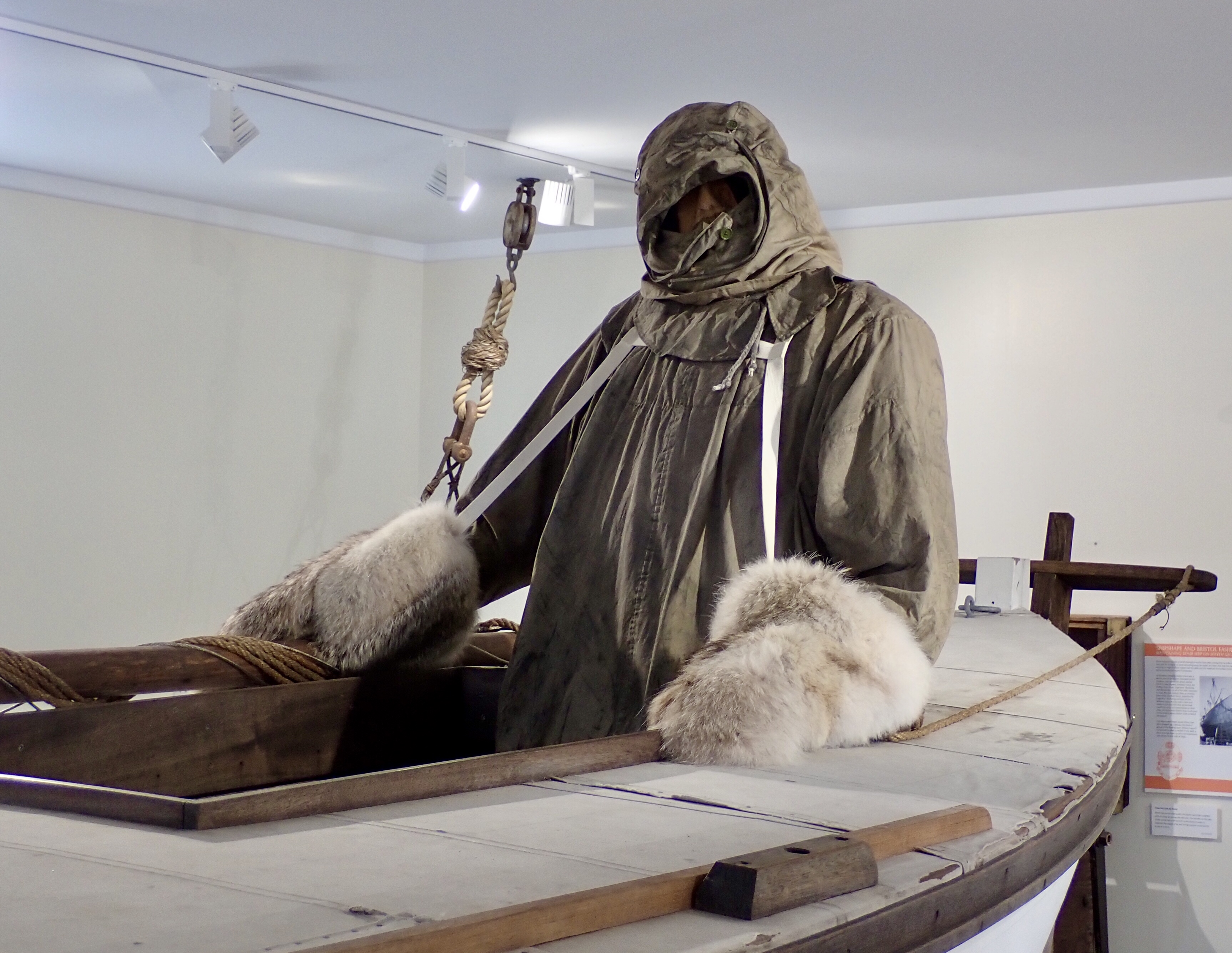
War broke out just months before they left and he offered the ship and men for the war effort but Churchill said to go on the expedition. Much more snow than expected and stuck January 18th – mid summer. Stuck in the Weddell sea. Finally crushed 25th nov. Men moved onto ice floes that were moving north. Finally made elephant island 12th April 1916. Tough place to land. Just a very small piece of land. They strengthened the James Cairns (one of three life boats they had kept – remember the reproduction from the museum yesterday? 6 people set out for South Georgia. April 24th – May 9th 1916. 720 miles. Fantastic navigation to reach South Georgia. Wild stayed at elephant island to look after the rest of the men, 16 Days 1300km. Three were not in a good situation and stayed at first landing place. 36 hours to cross South Georgia. An Epic journey. Shackleton walked to stromness. Arrived 20th May.

Boat sent to rescue the three left in a cave. Three attempts to save the guys at Elephant Island, Yelcho managed finally to get though aug 30th 1916.

Next was the Expedition Quest. 1921-22. As they reached South Georgia Shackleton died of a heart attack. Wild took over and completed the mission.

He never achieved any of his specific targets but he did show devotion to his men, values of a leader he didn’t do well in the real world. Now over 100 years – still known as “the boss”.

Next announcement 4pm. They are lowering a couple of zodiacs and going to check things out. We are on the cusp of it going either way now. We’ll know in another 30-40 minutes whether we can go. If it’s possible they will certainly try it.

I went up and took some more photos from deck 9 and the winds seemed to be gale force to me. 30-40 knots currently apparently.

4.40pm yes we are going to go. Leaving in about half an hour. Told it will be wet and windy on the zodiac and it is a surf landing and a shortened stay (obviously).

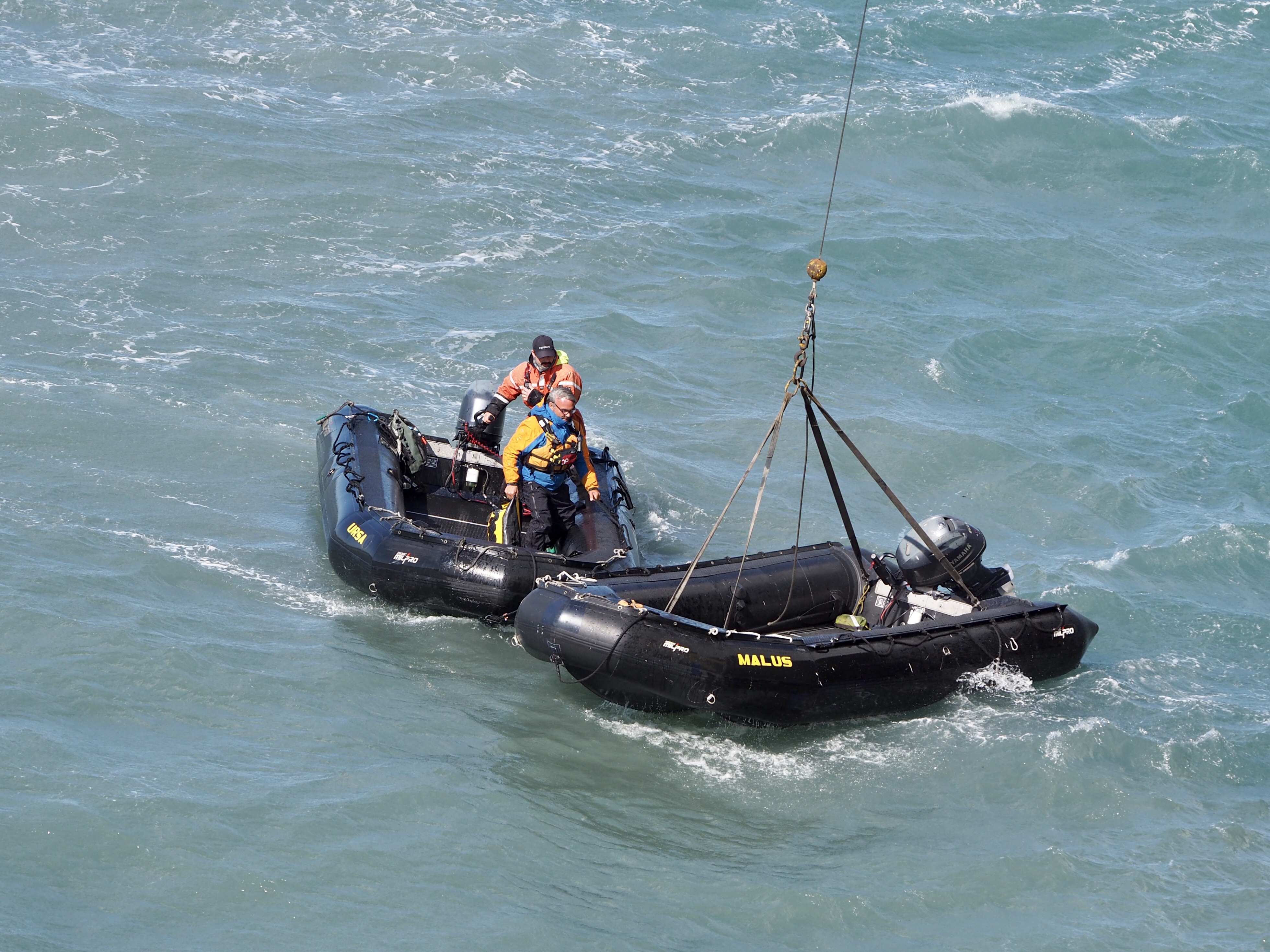
The sea being fairly rough so the crew had fun sorting out the zodiacs.

Penguins pop up to see what is going on.

A close up will help you to see the penguins on shore.

The conditions are borderline but we are giving it a go and it certainly looks worth a visit despite the winds and rough seas.

Once on shore, despite two layers (thermals and waterproof pants), the grit stings the legs and I wonder how the penguins remain upright as it is trying to take me off my feet.

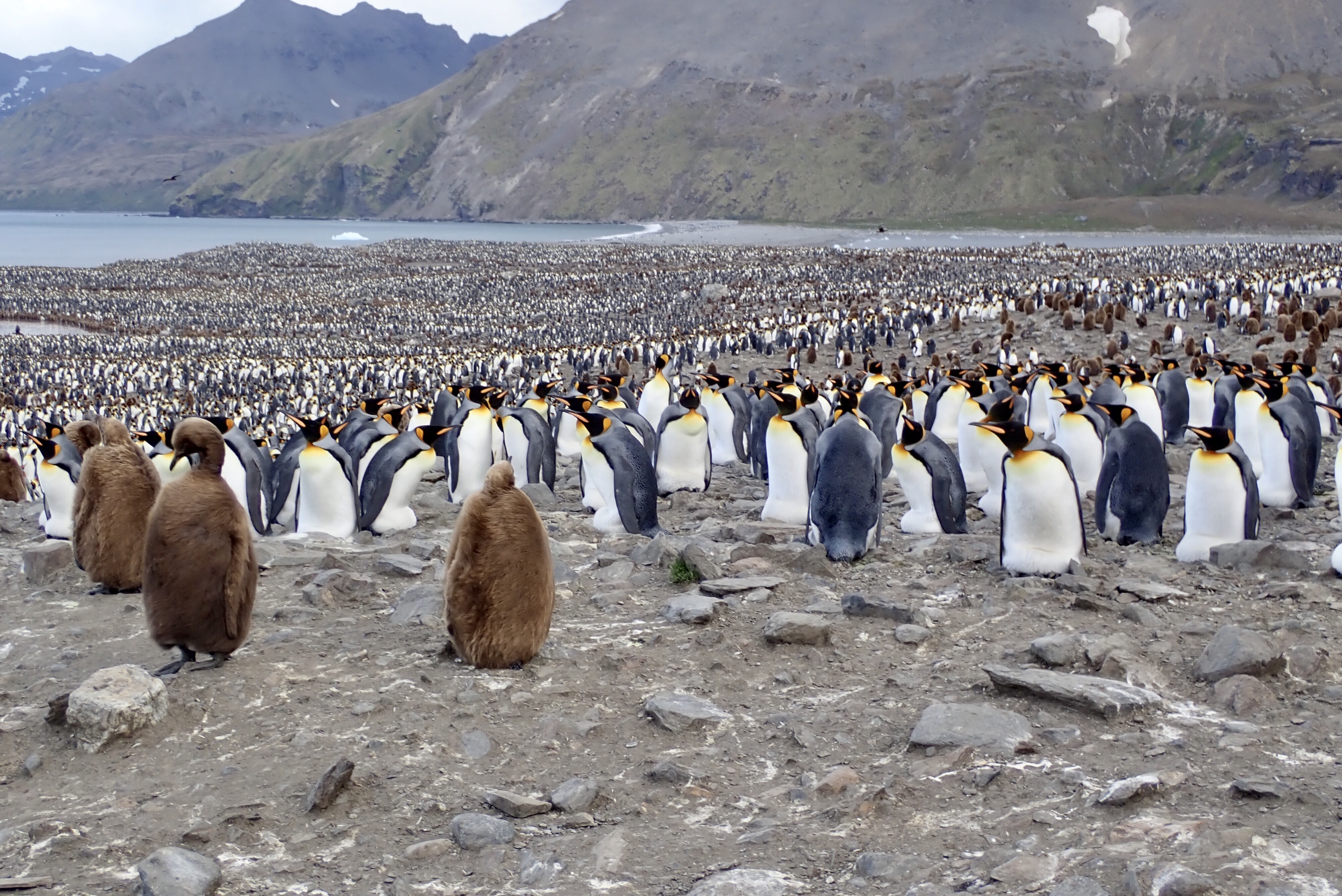
Lots of elephant seals and lots and lots of king penguins.

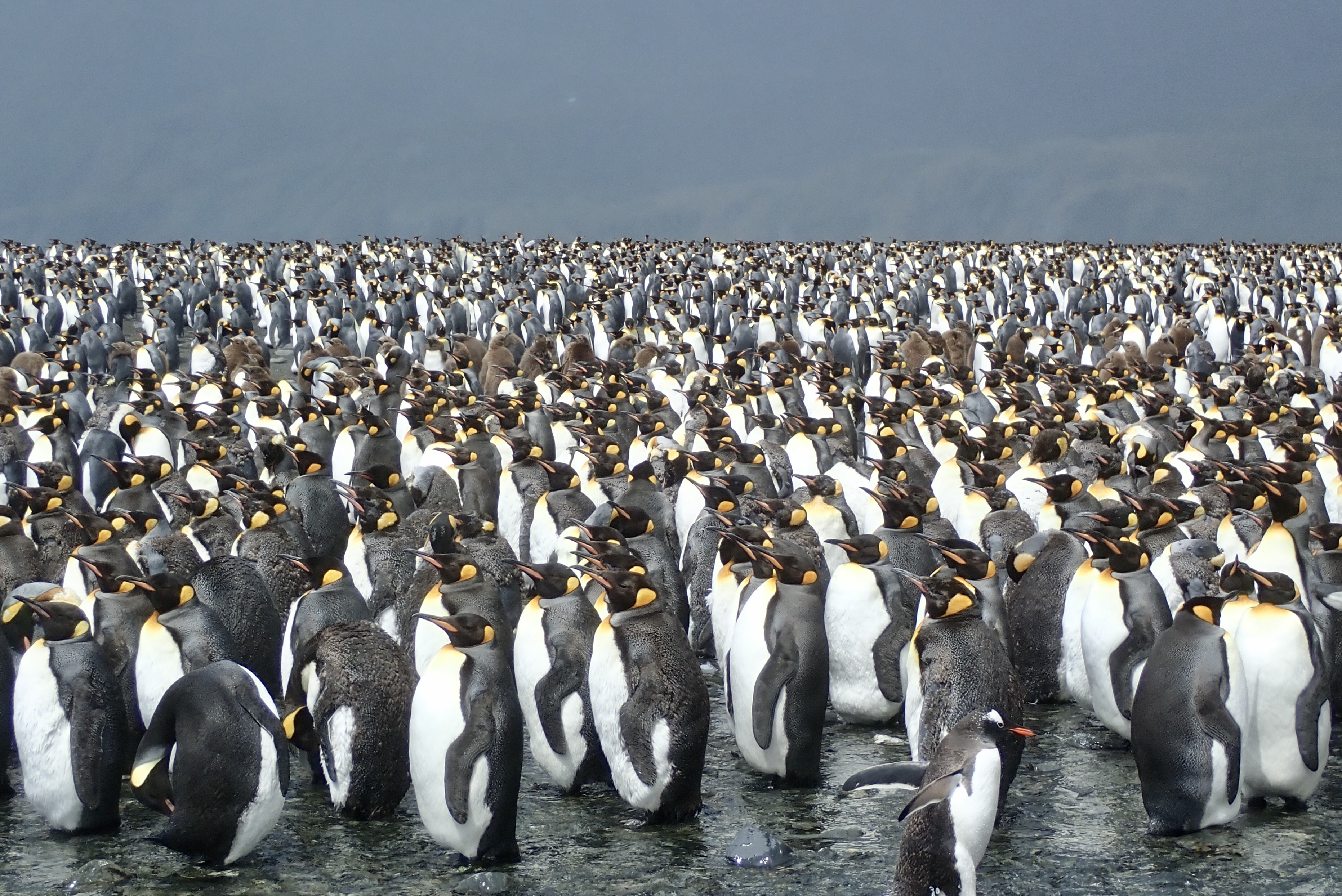
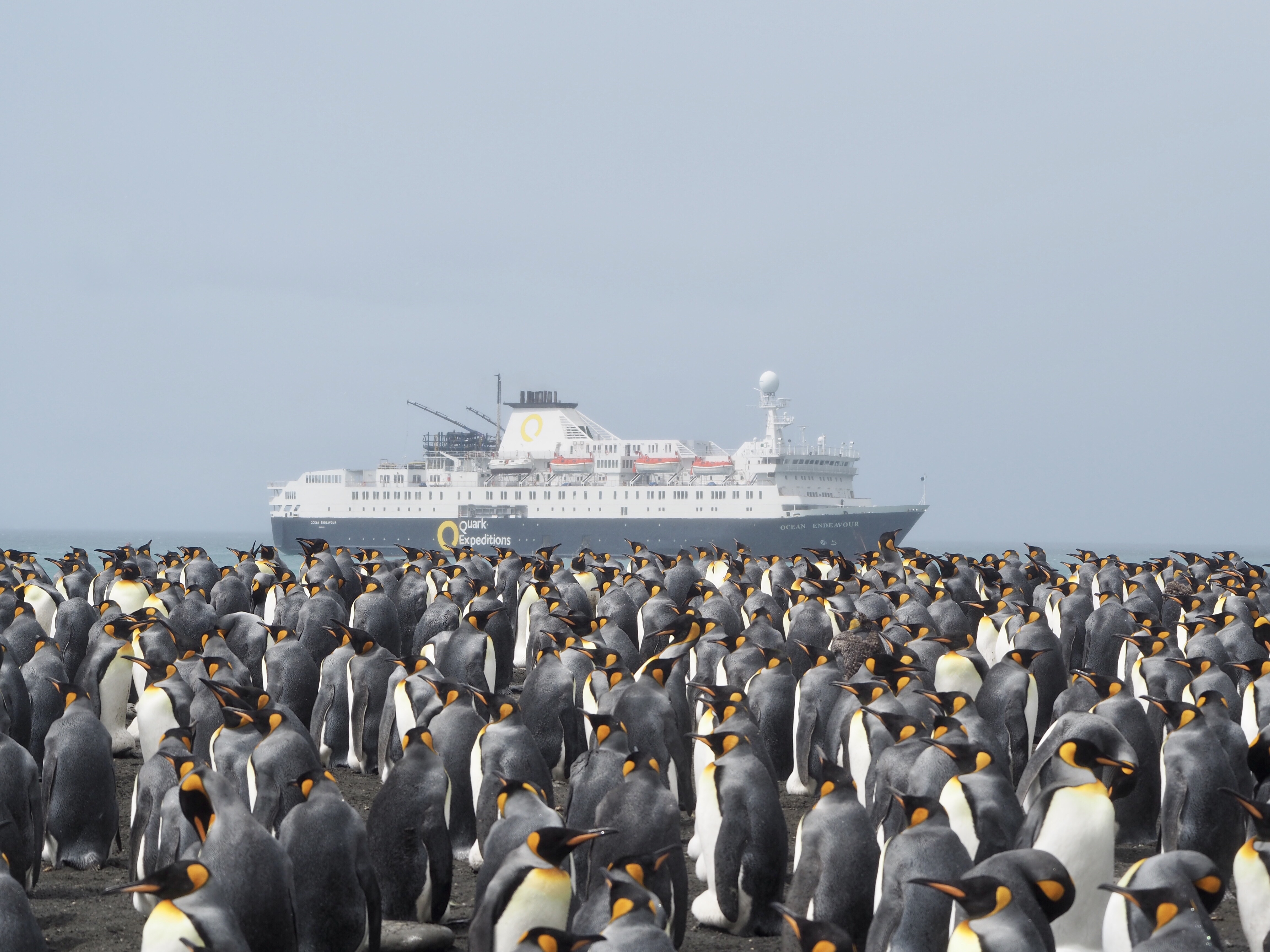
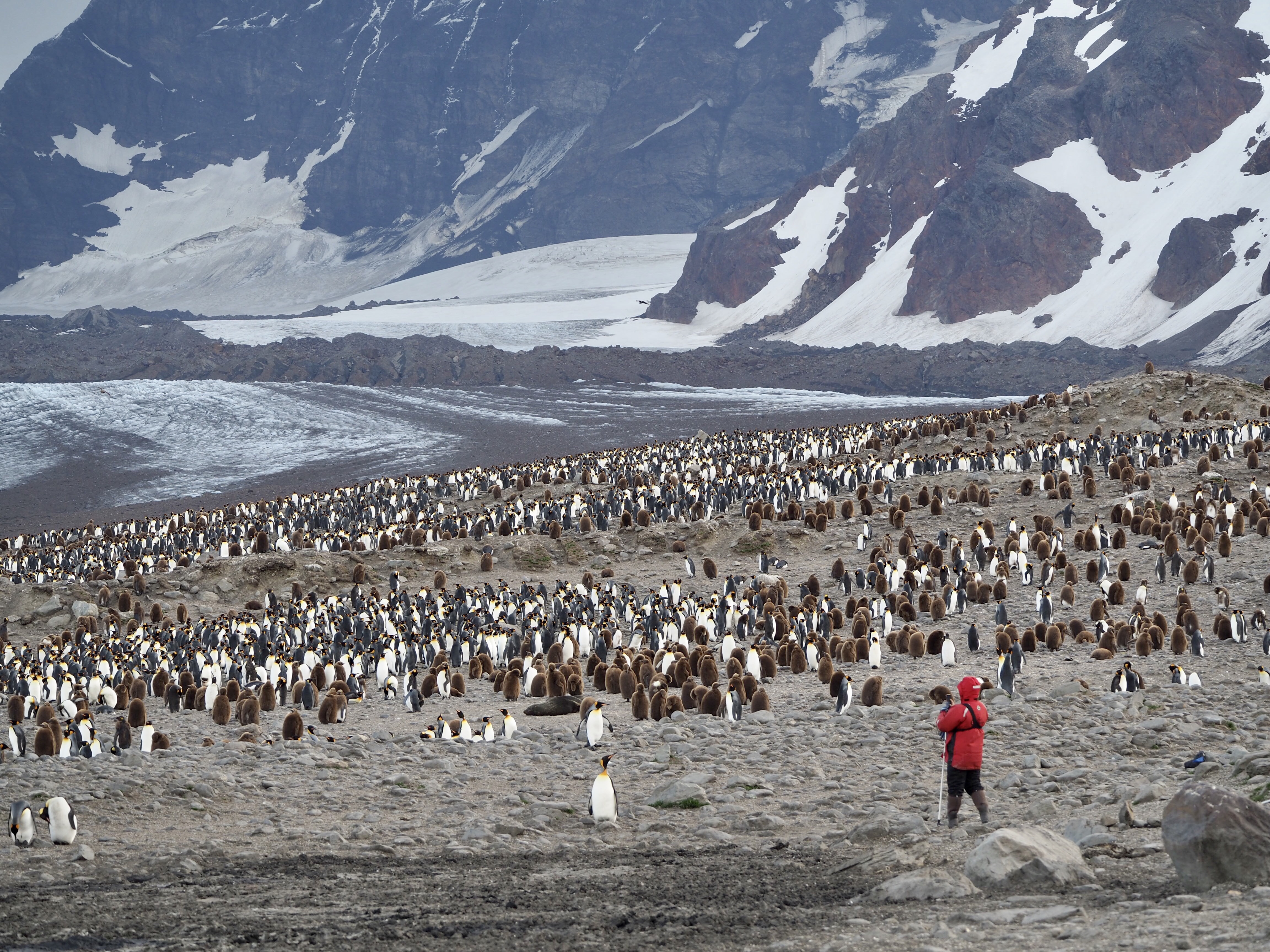
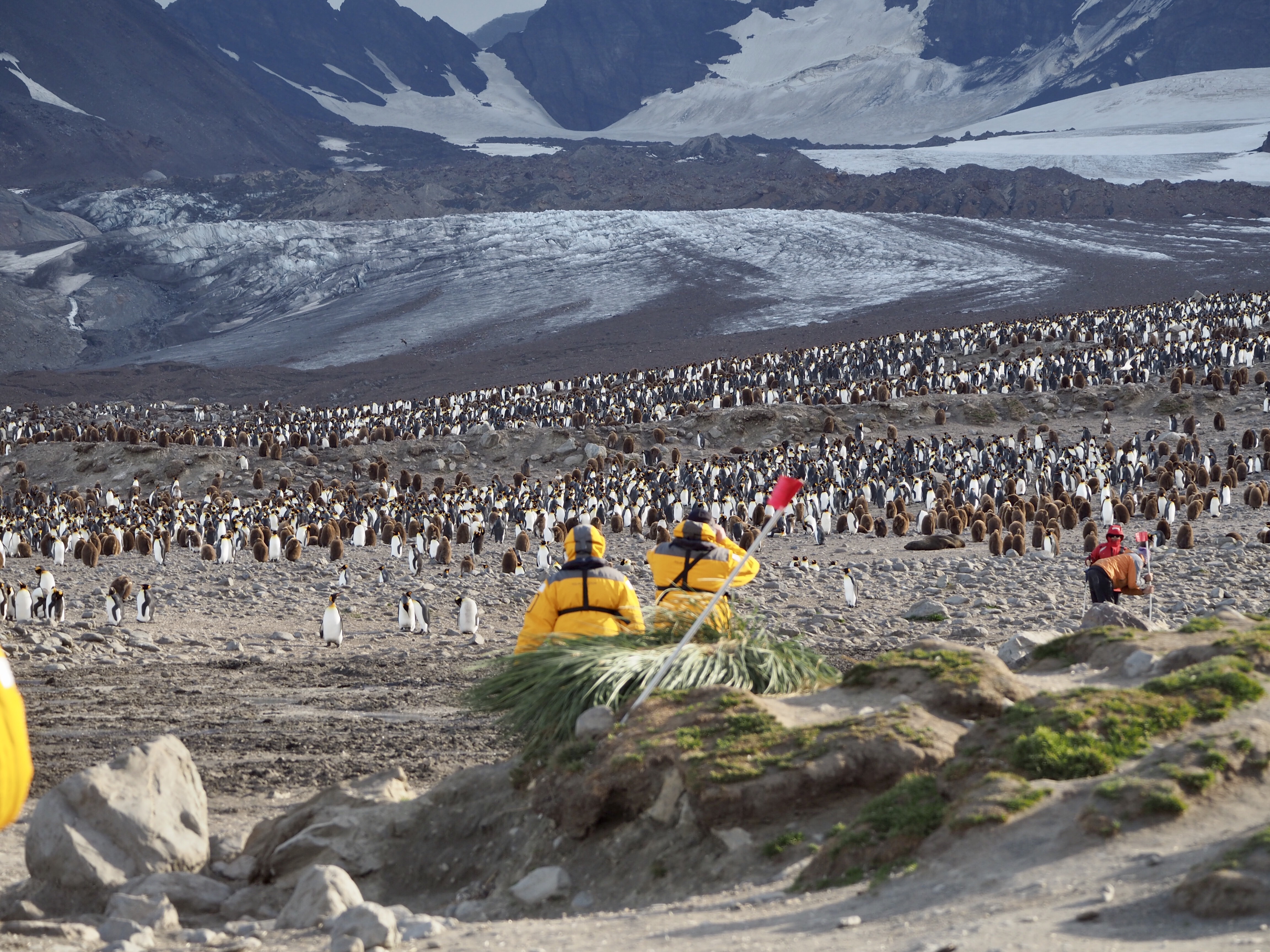
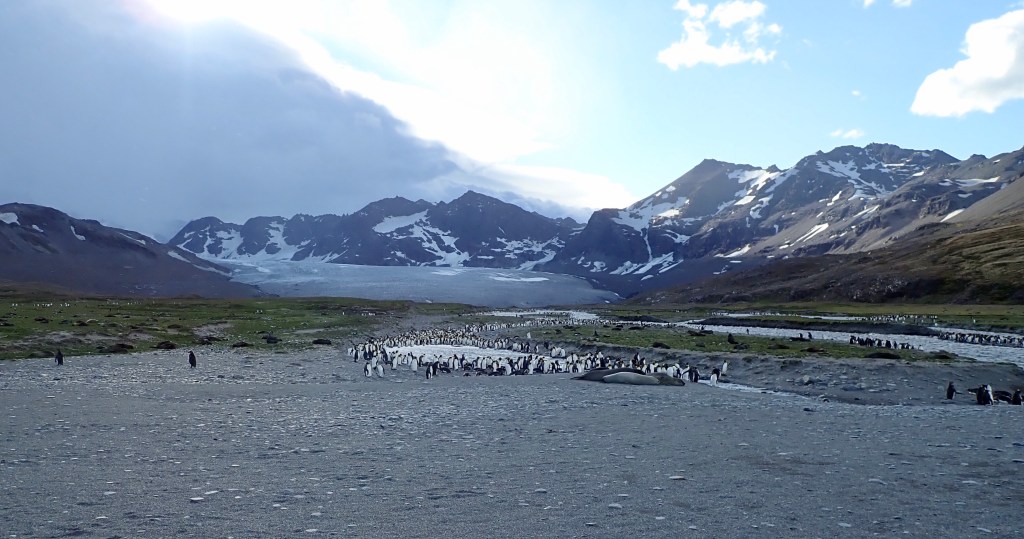
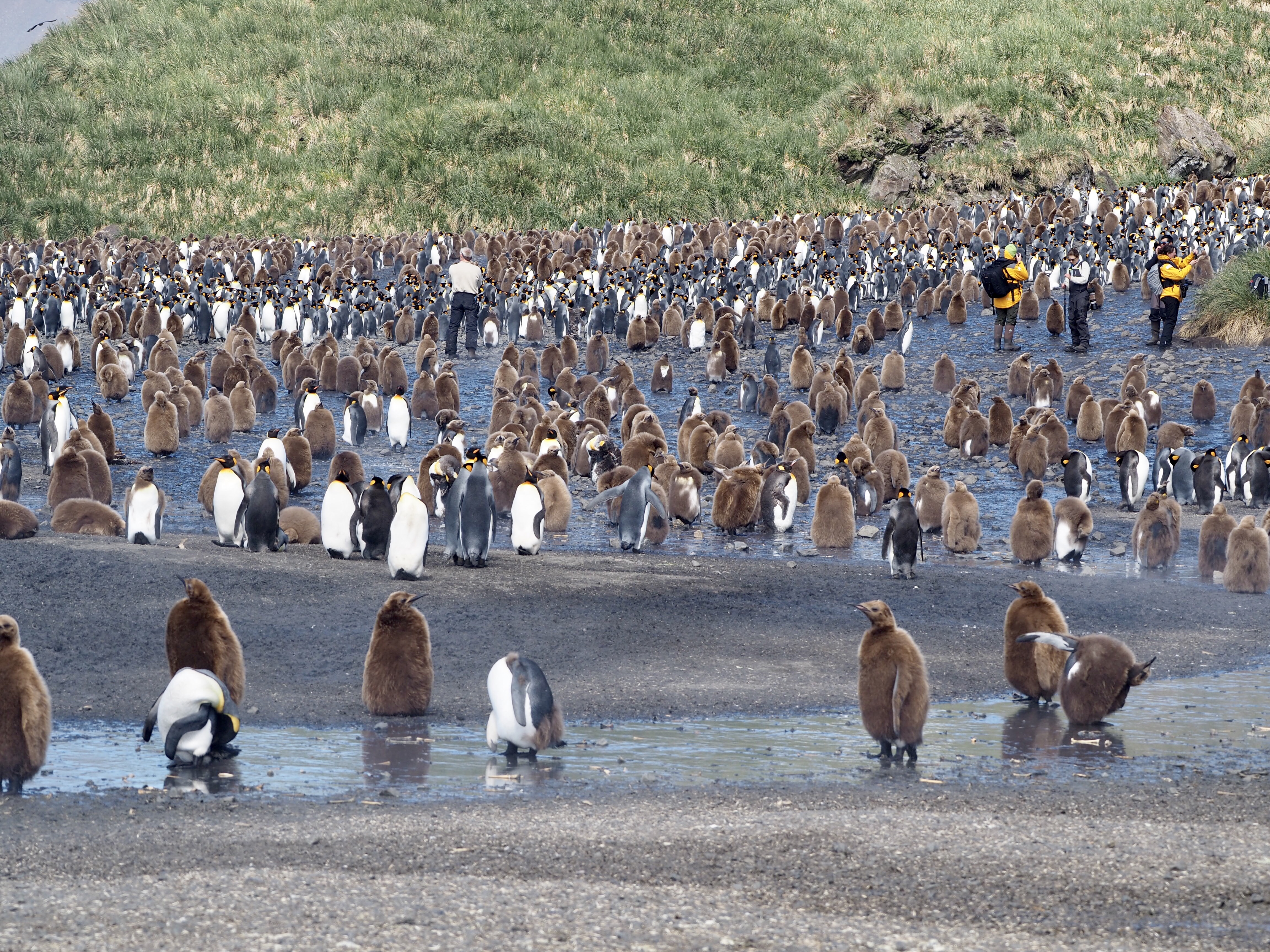
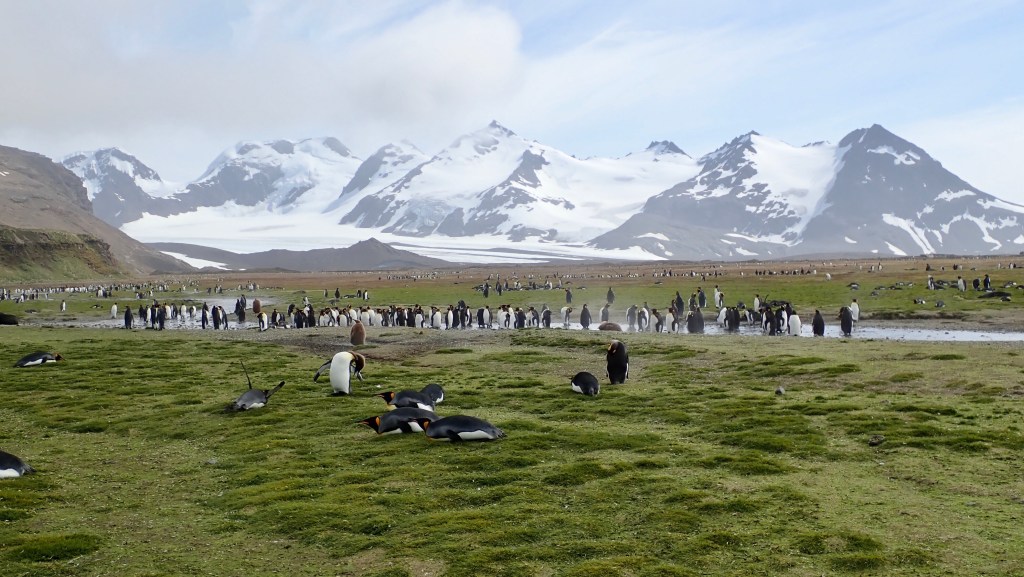
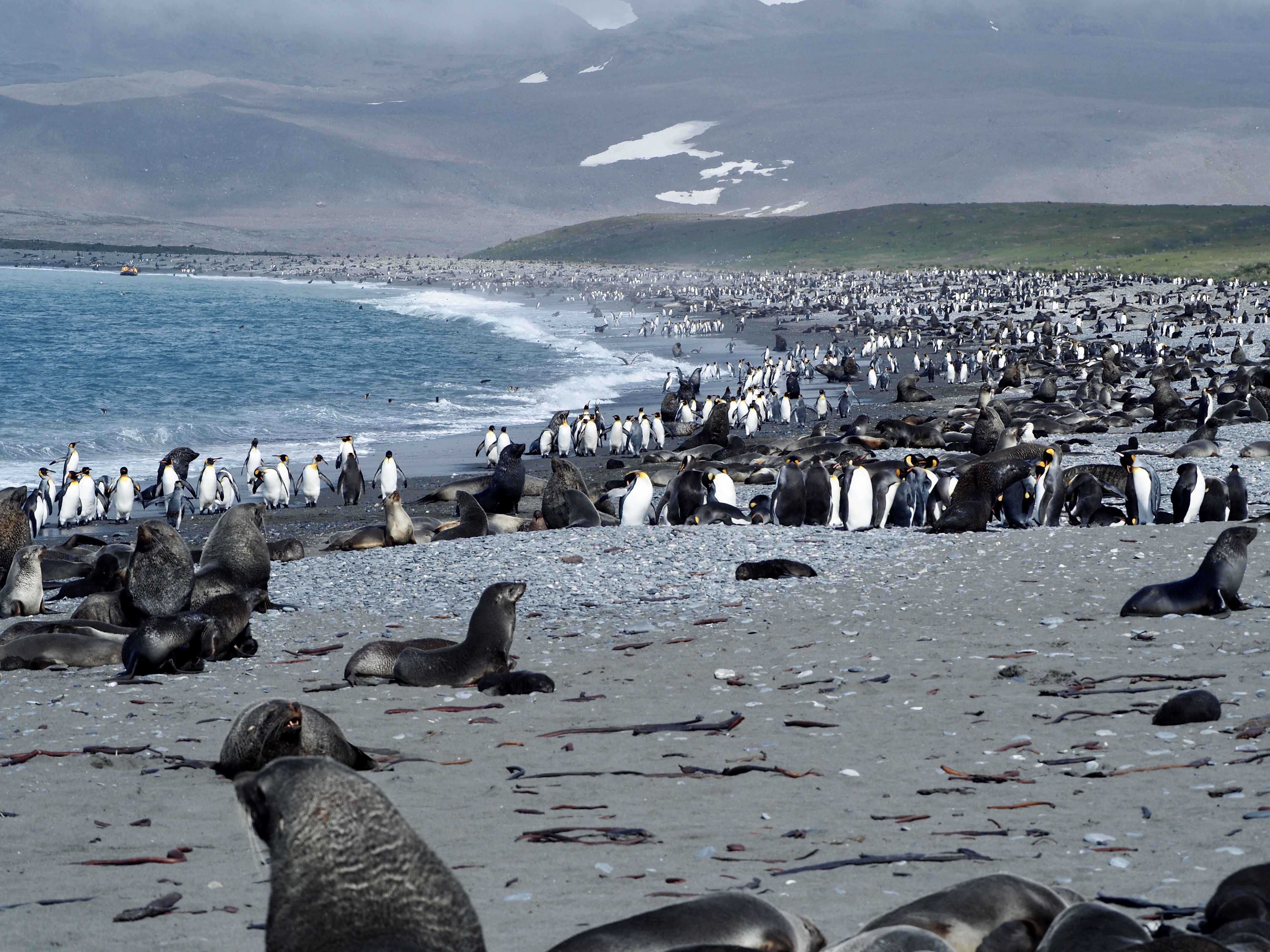
In fact penguins as far as the eye can see.

Worth hearing the noises from the chicks and adults.

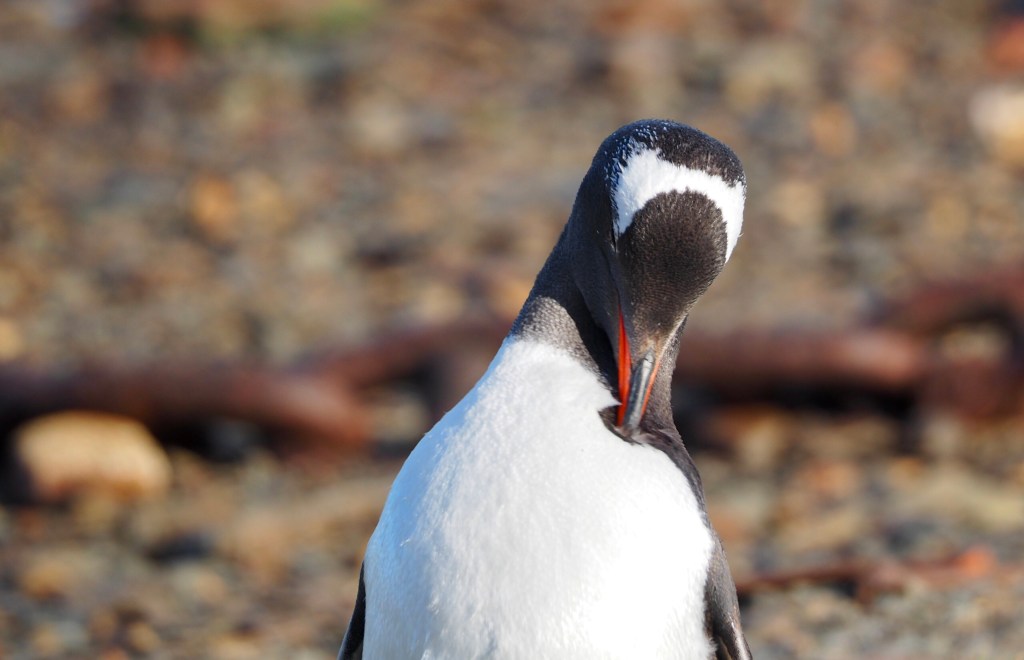
The numbers are just gobsmacking and no that penguin is cleaning not headless.

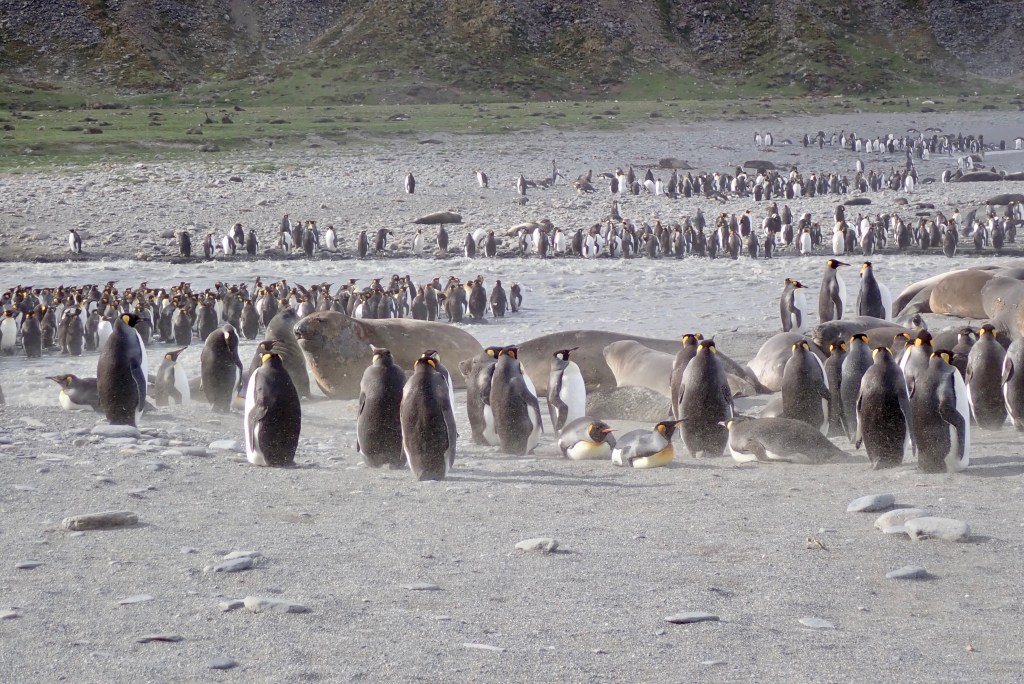
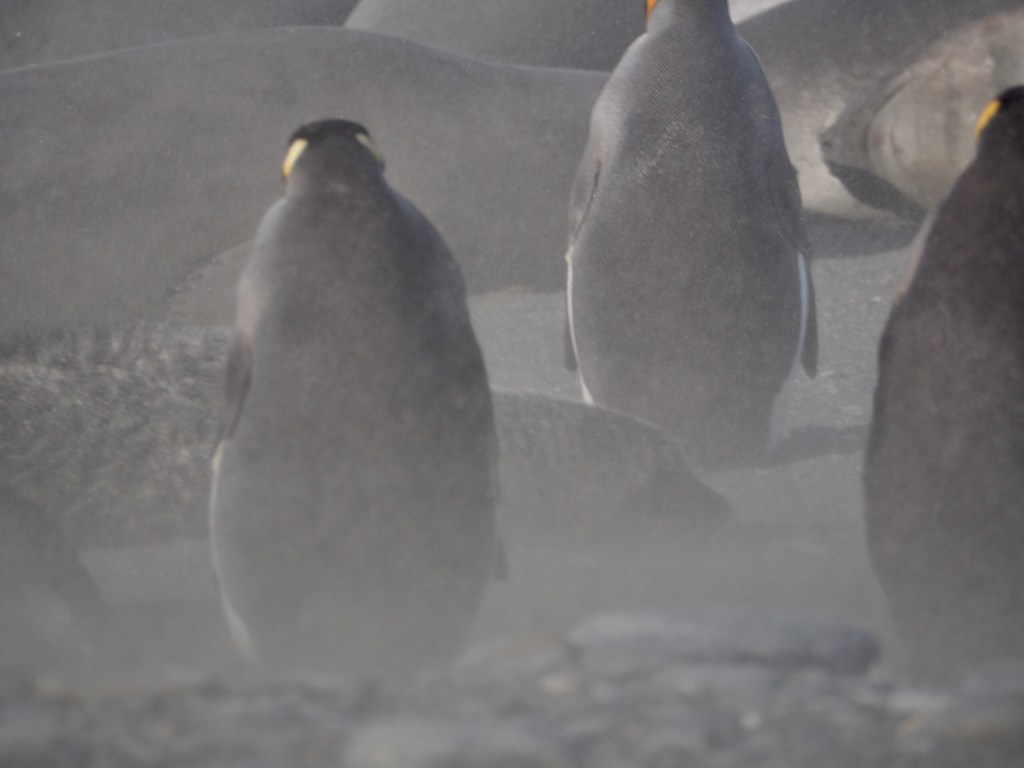
I seriously have no words for this experience. 150,000 penguins, elephant and fur seals crossed with up to 60 knot gusts of winds that whipped up the sand.

I do get a bit cross with people who just ignore instructions, going very close to birds on eggs even though that can mean the end of the egg if they get very disturbed and then leaving backpacks unattended and rain covers blowing off through the colony. I could not be as patient as these fabulous expedition people. It always seems to be the people with the biggest lenses who go the closest. They must be trying to make up for something….

Yes we really were there.

Many adults incubating eggs.

And then I had some tremendous luck.

I think they had just swapped over and it disappeared very quickly. So thrilled to see it. Took a bit of a panorama and more video.

Lots of standing in water again.

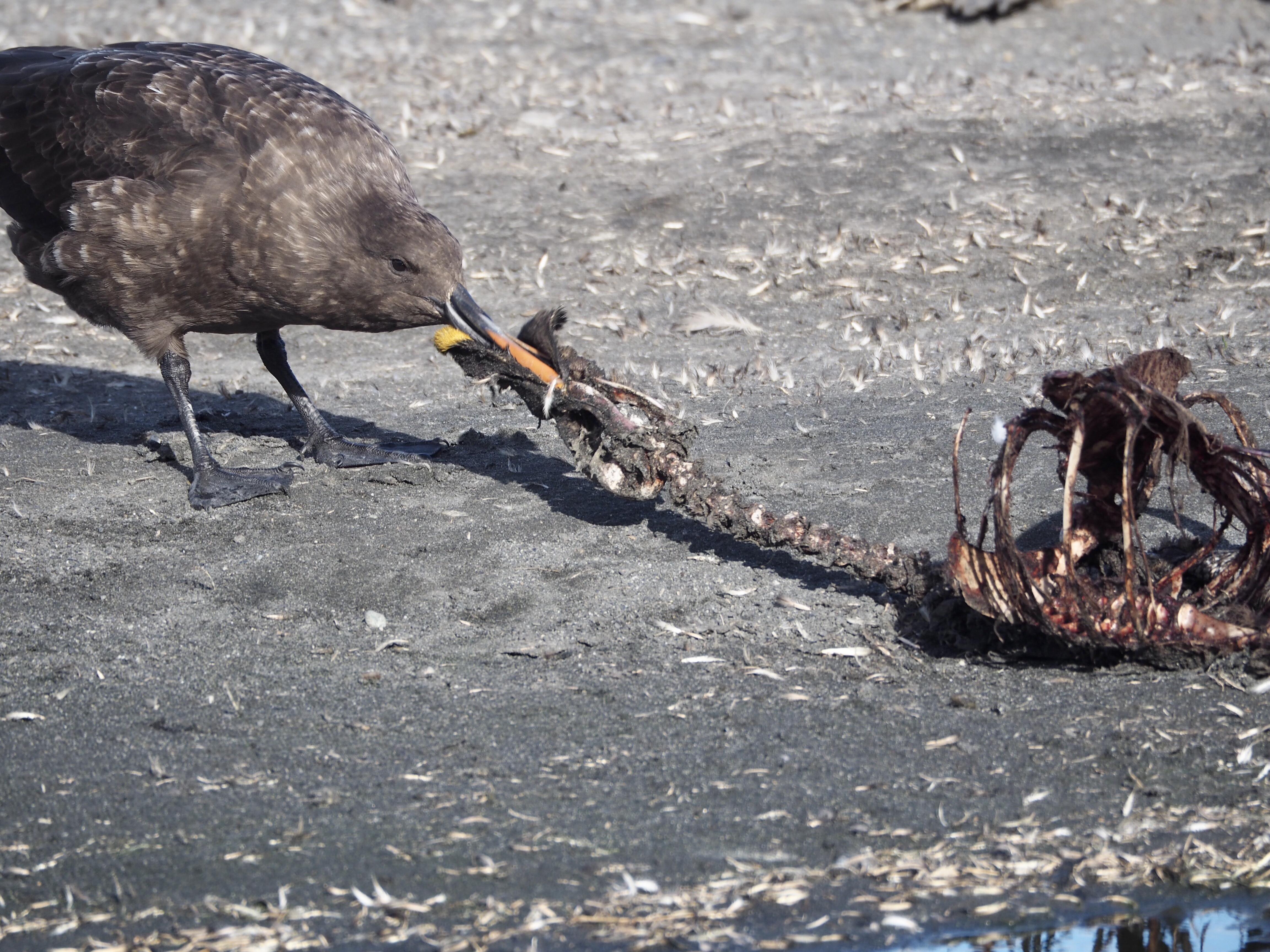
The skuas clean up those that don’t make it.

Just an amazing place.

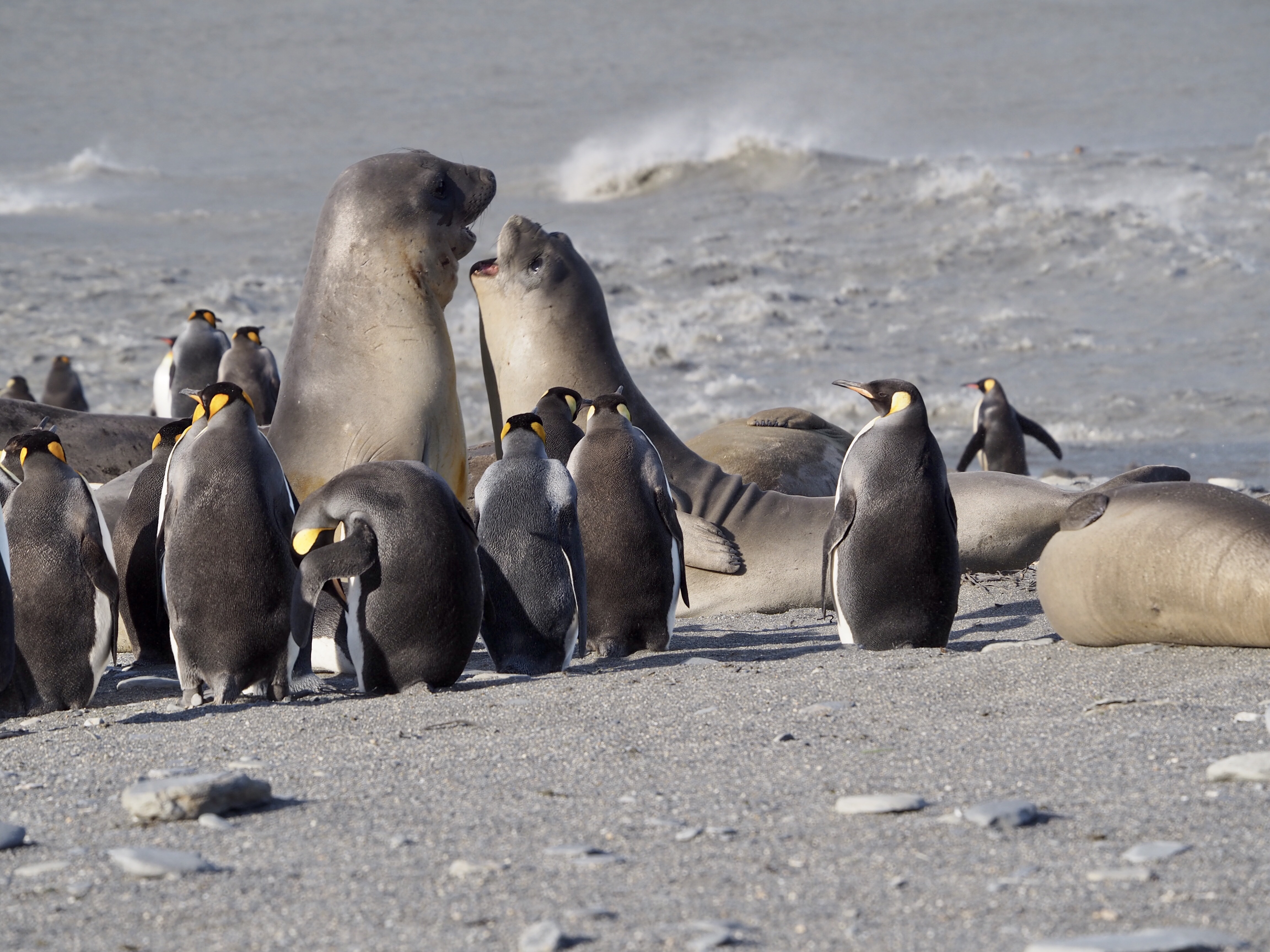
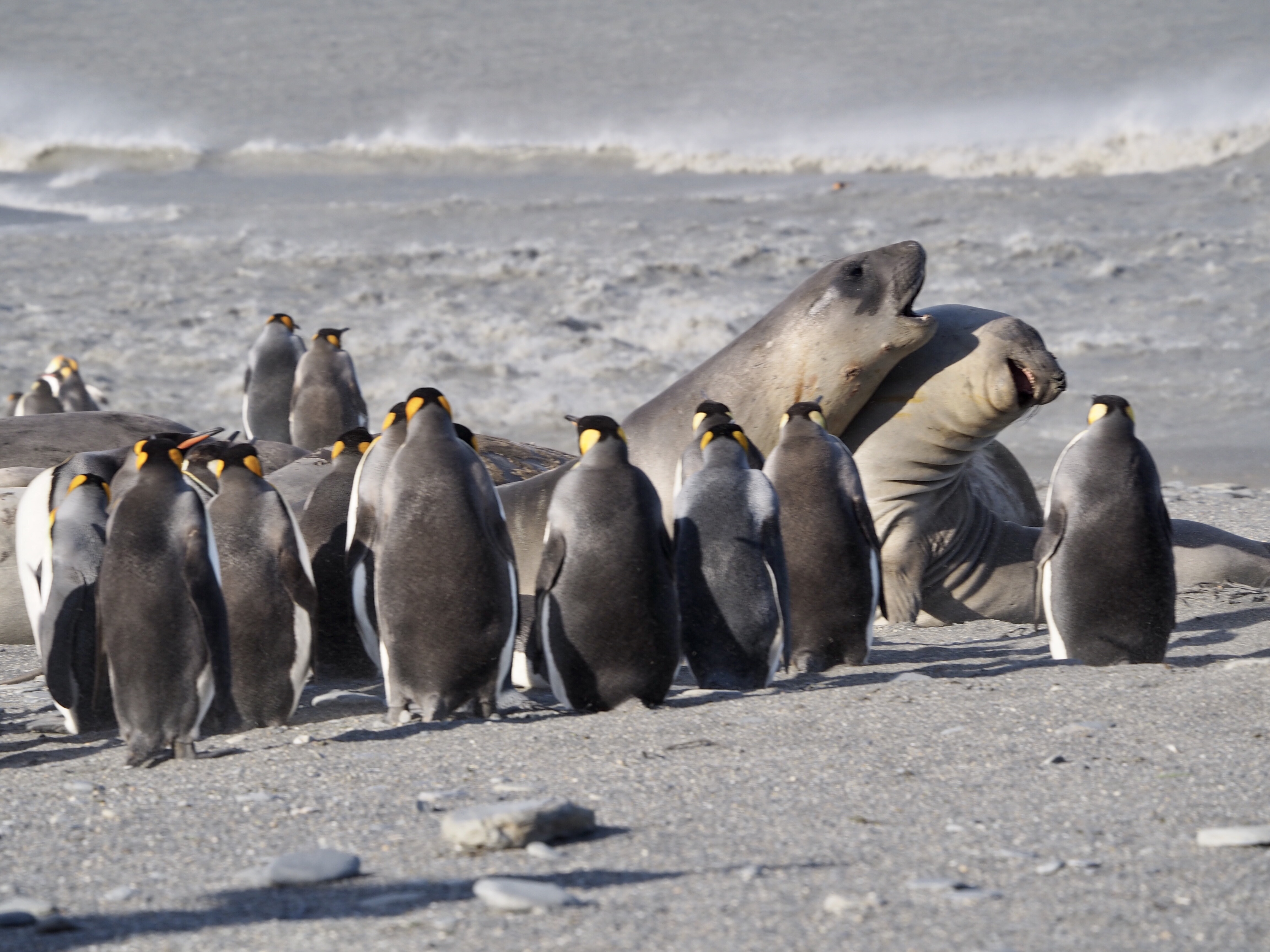
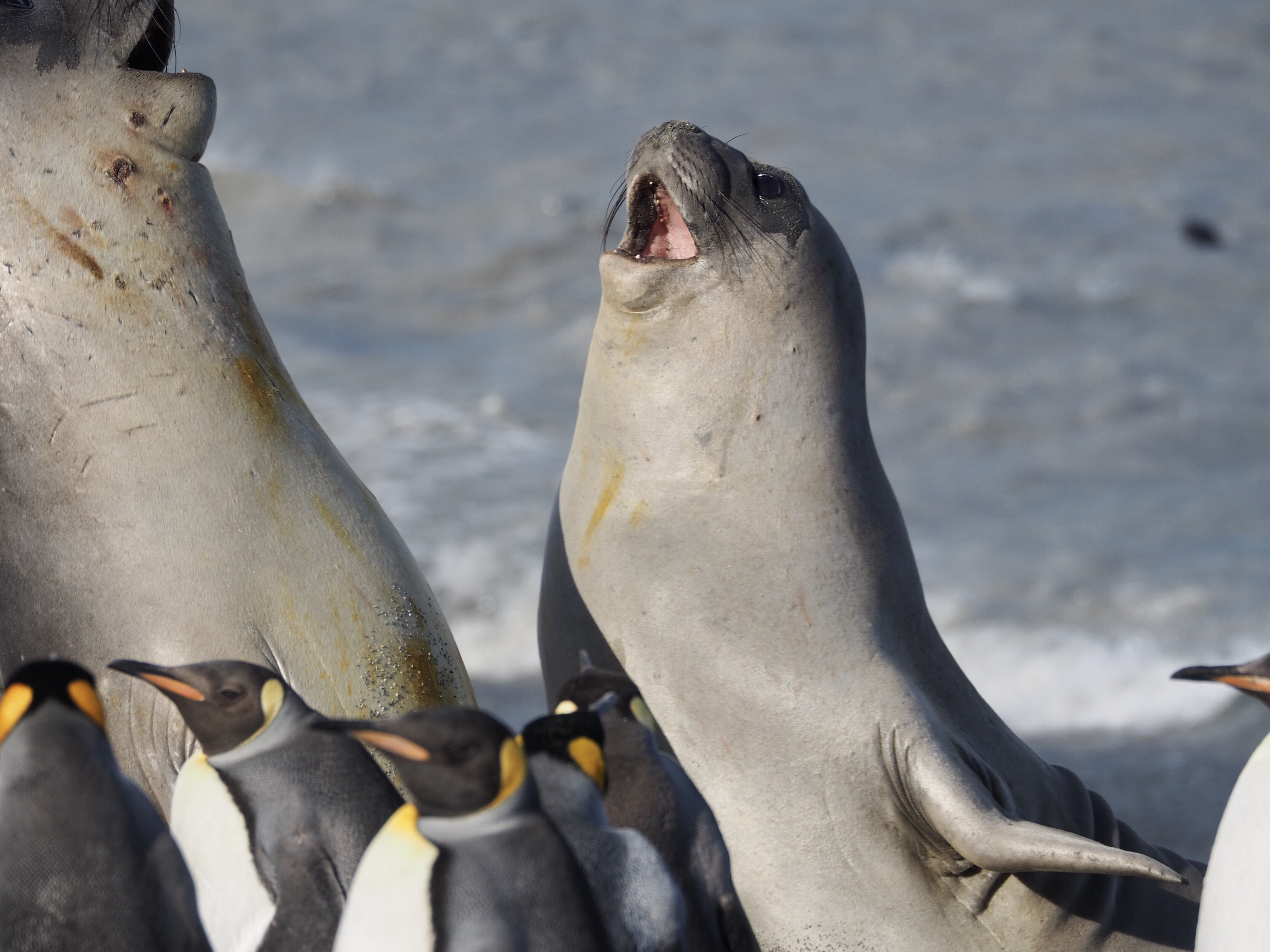
Back down on the beach found these two “teenage” male elephant seals learning how to fight. (Also check the waves in the background. Getting on and off shore was fun.)

Someone needs to caption this next pic.

Gotta love that face!

Fast flowing water coming from the mountains and, again, many penguins enjoying it.

How do these penguins stand in this horrible wind – just amazing. You can see the grit flying.

One final view.

Back to the ship and you can see how rough it was.

Told over dinner that 9 out of 10 leaders would not have attempted this afternoon. Thank you Solan!

Time for a well earned sleep before our final day in South Georgia.

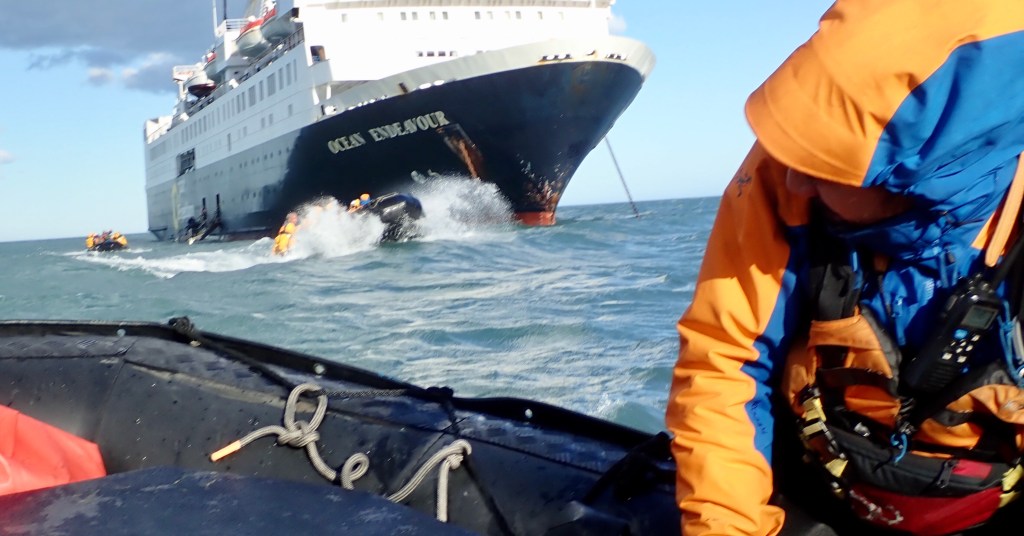
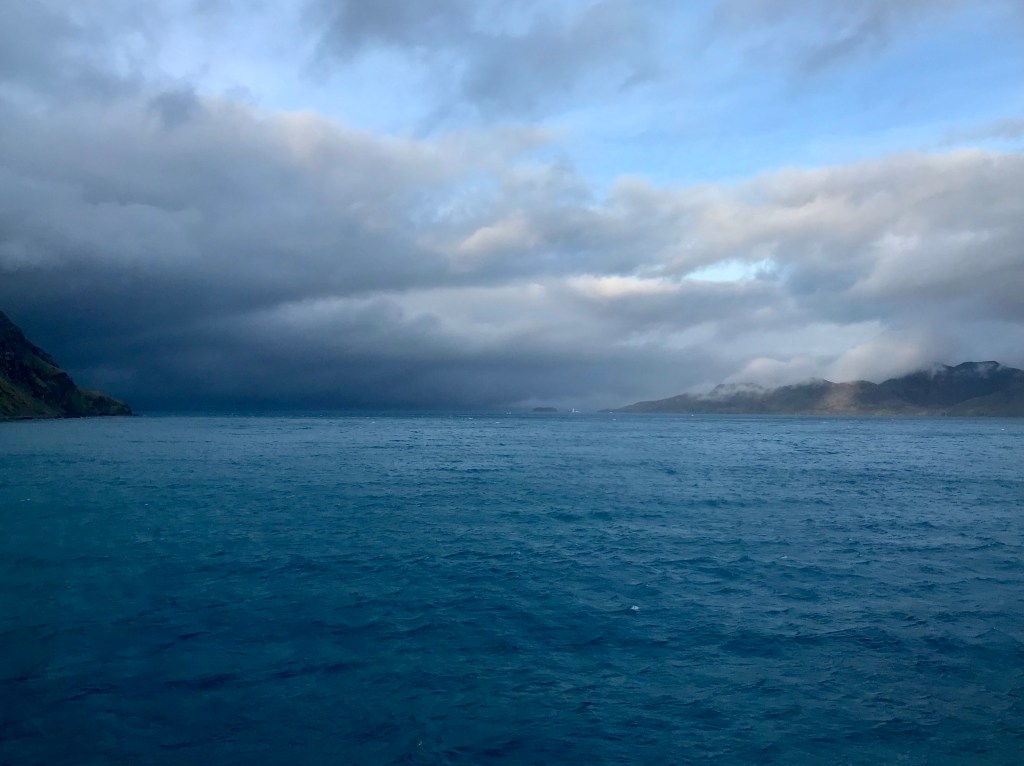
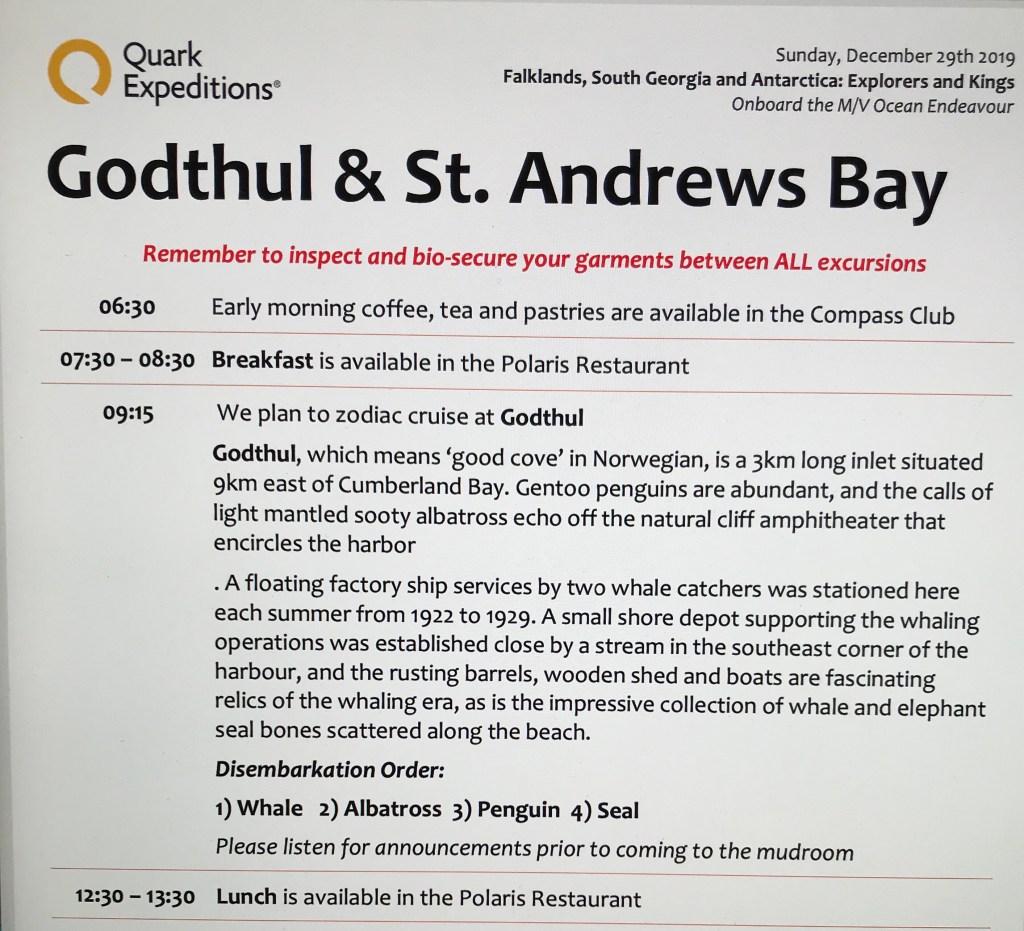
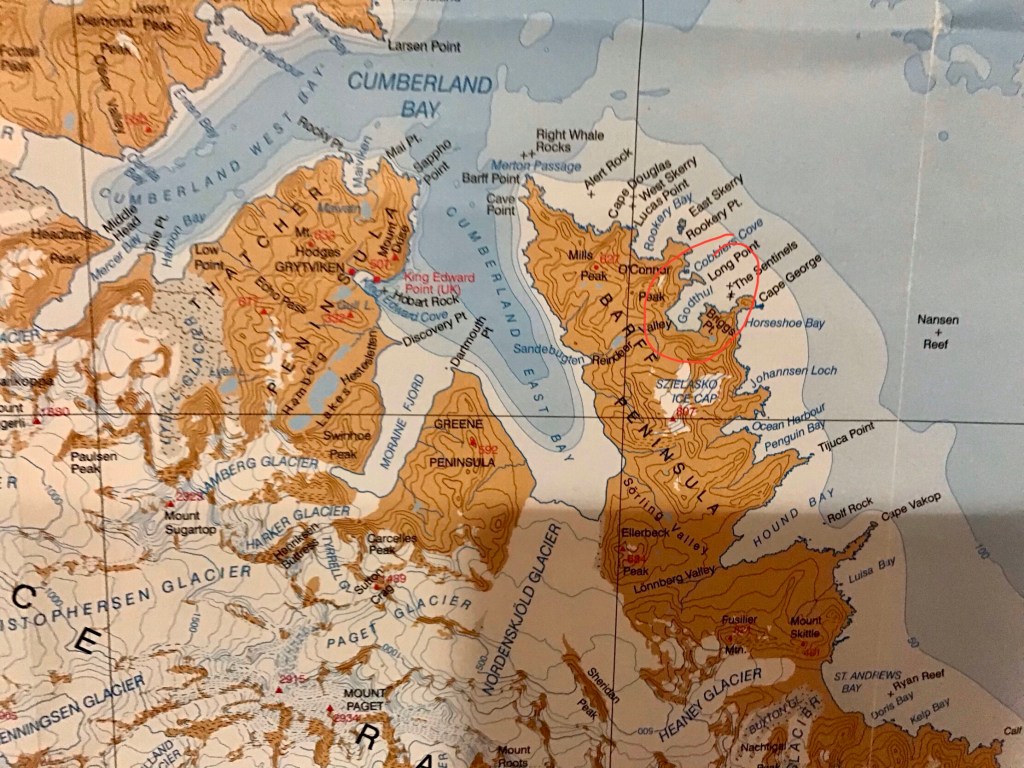
South Georgia – Godthul

The temperature is 5 degrees, wind 10 knots and it is sunny. 10 knot winds was a bit of a furphy as we found out on our cruise.

It was one exciting zodiac ride. Gusts of wind of 45 knots even sent willy willies across the water. When they came our way they really hit hard but then passed by. Very typical of South Georgia we are told. I am so glad I have the waterproof camera with me as with the amount of water that sprays into the zodiacs all the usual cameras have to be secured in the dry bags but I am able to take some whilst we are moving.

The smells and the noises are something we can’t capture well, though I have taken a video clip. Note the white pup in there too.

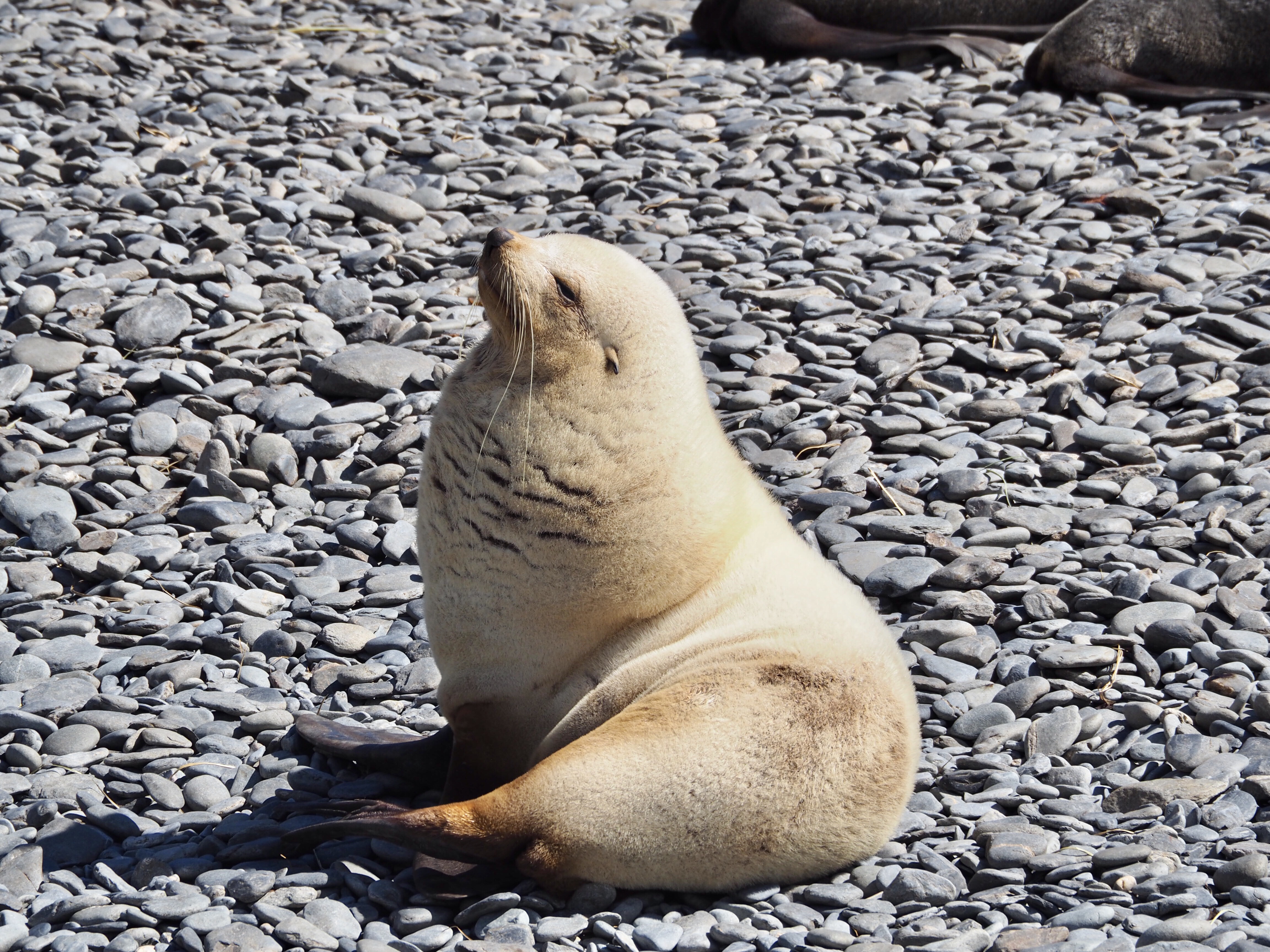
Also saw a lovely white male. So despite the colour disadvantage some do make it through.

We sat next to a rocky outcrop watching pups for a while.

Lots happening under the water too.

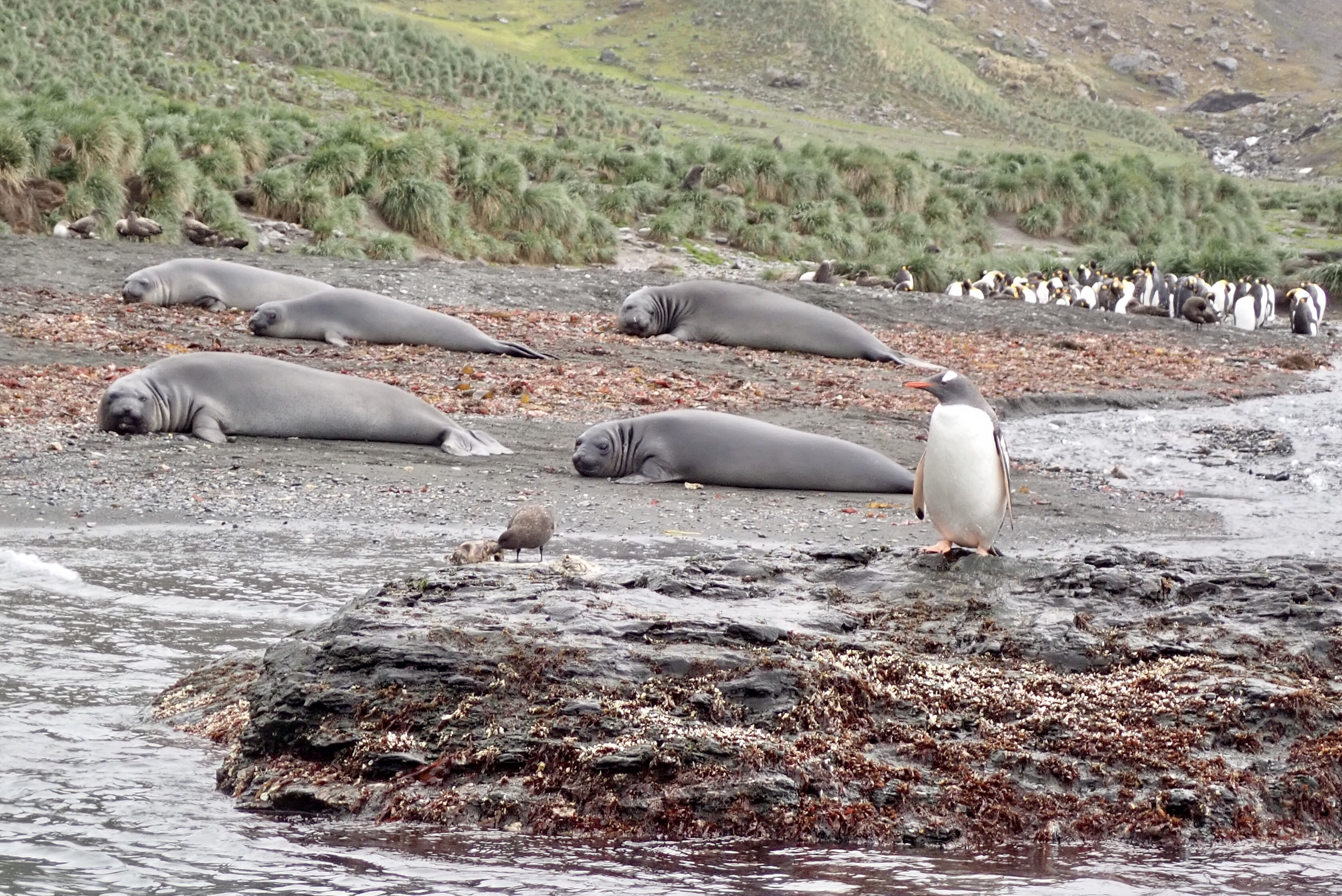
Saw a few Gentoo penguins but the seals, (and the wind gusts) were certainly the main events here.

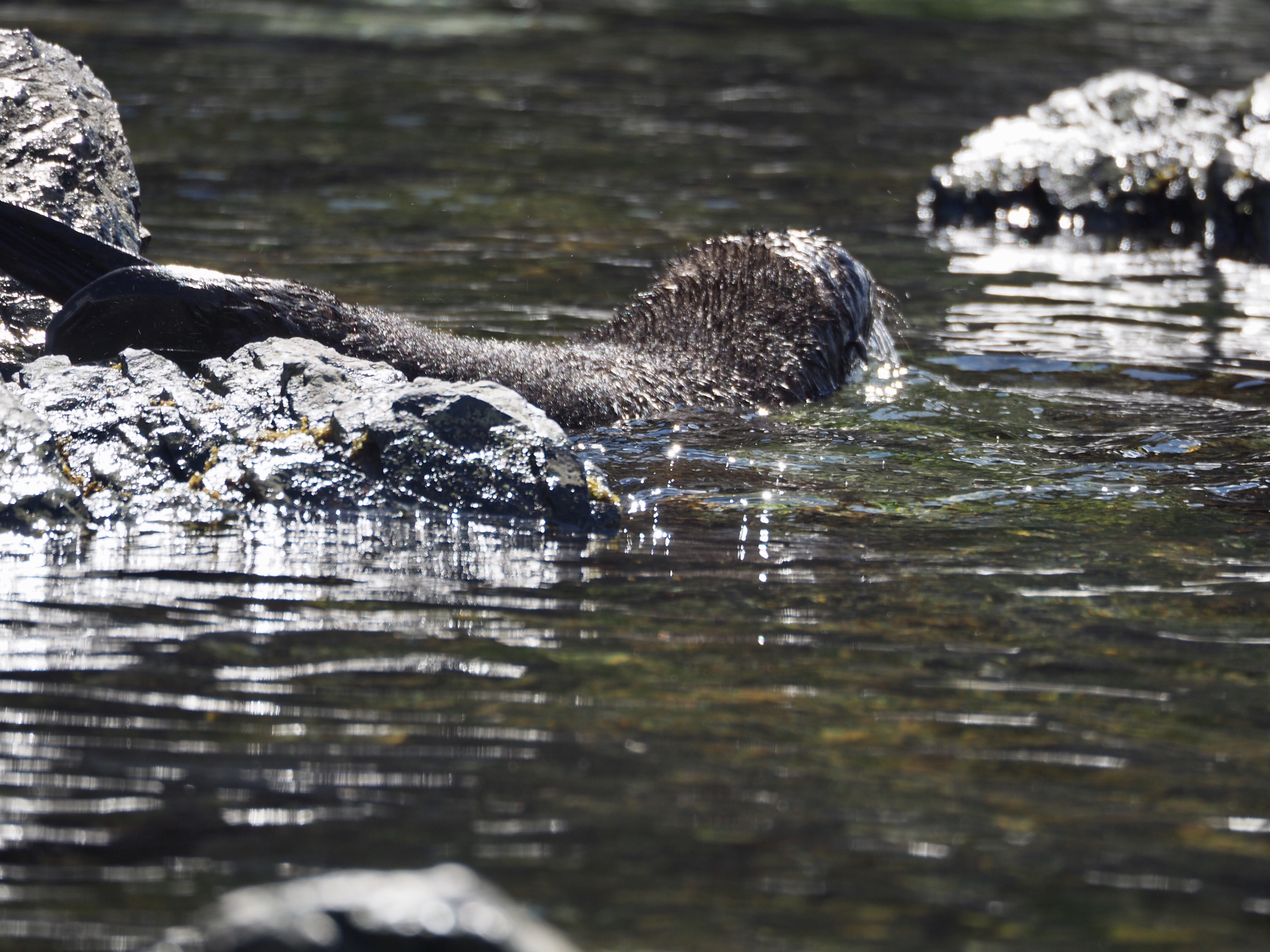
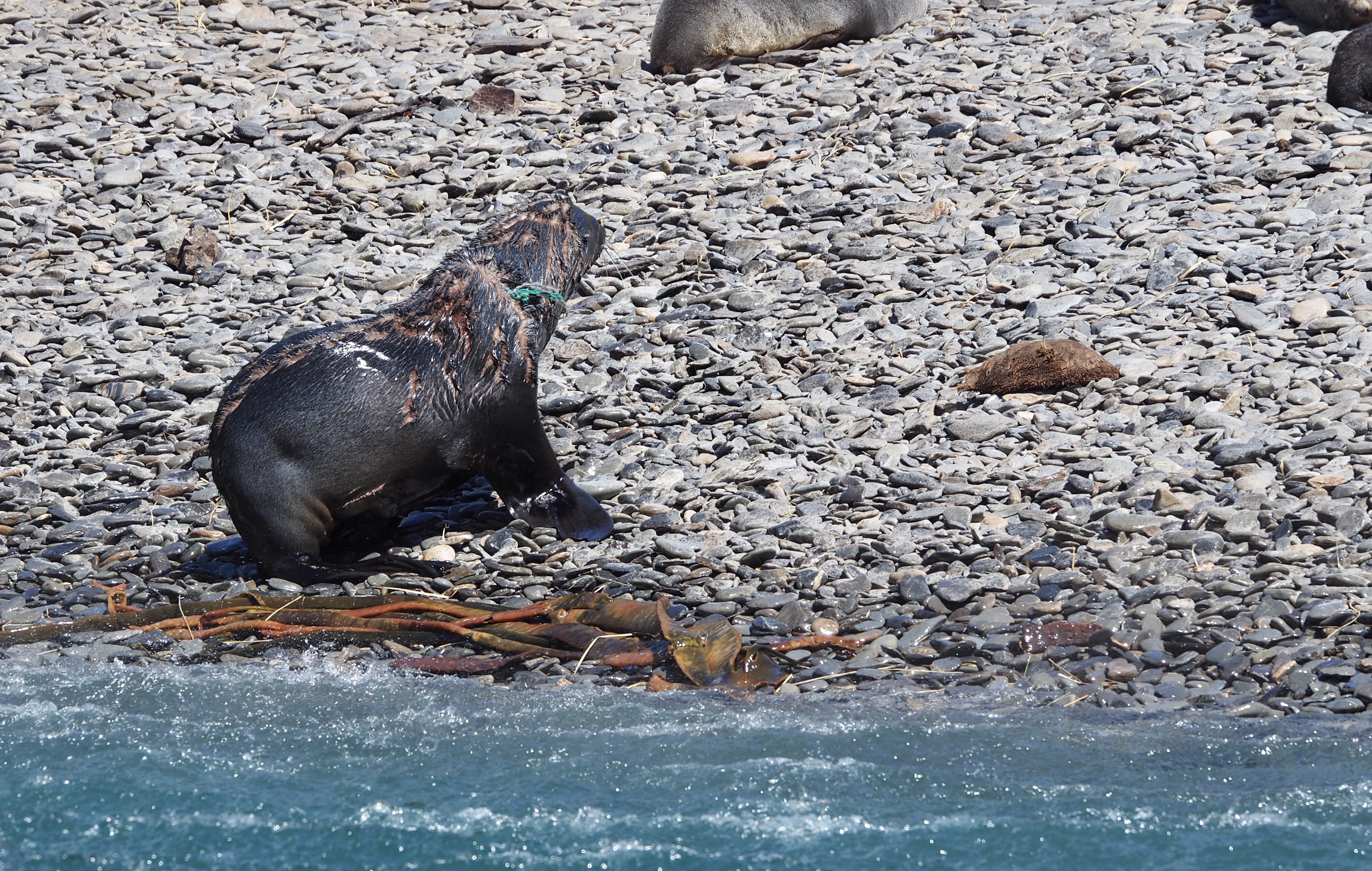
We did see one sad sight and I thought about whether I even included here but it is the reality of the world we are choosing to live in. This poor boy is wrapped in fishing net. You can see the damage he is doing trying to remove it. It was reported and hopefully the South Georgia rescue team found him and were able to help. Plastic and rubbish even affecting Antarctica. Aarrgghh!

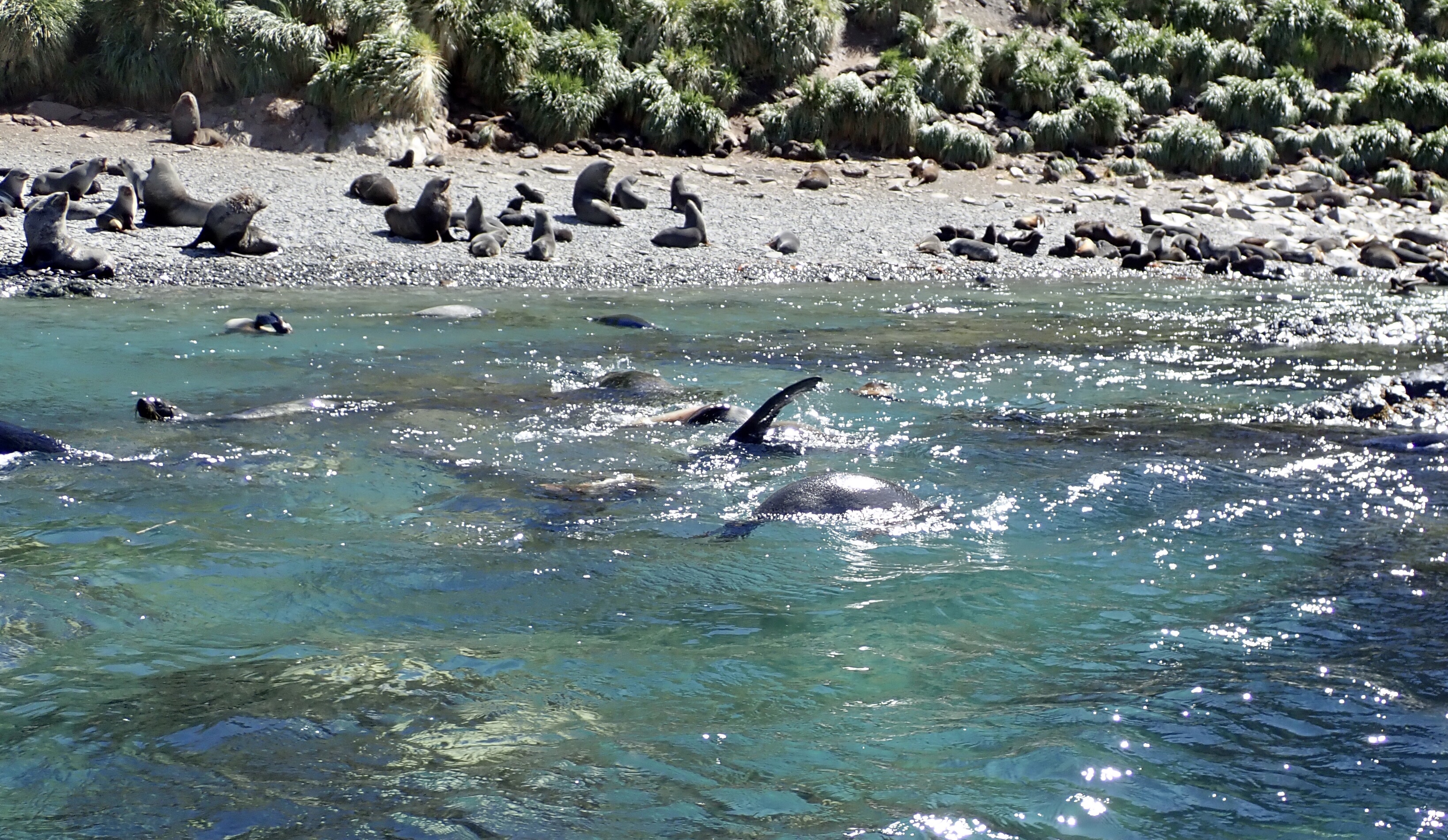
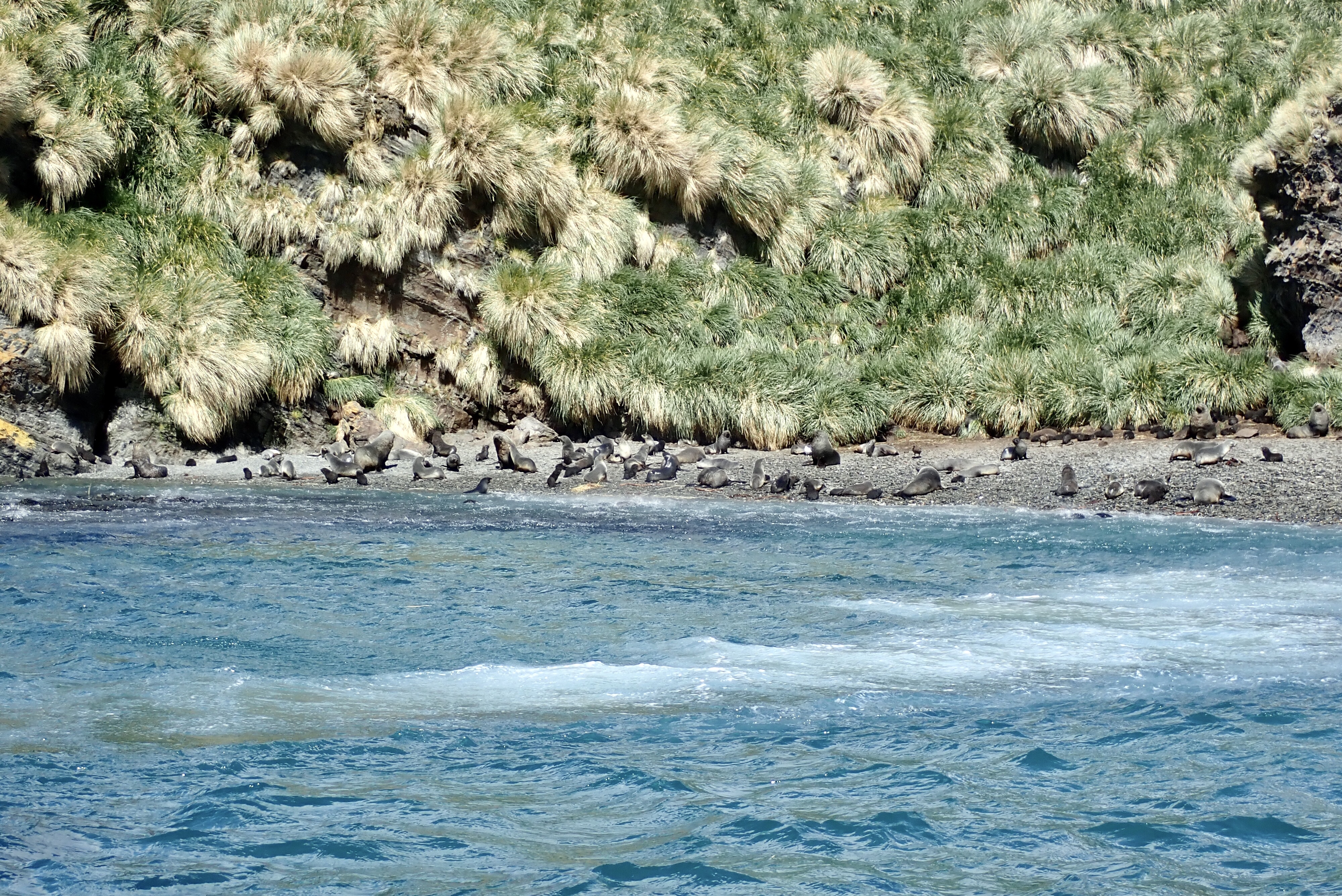
Loving the landscape here and the seals make use of every bit of it as you’ll see from the second photo.

Gotta love the water colour too.

A couple of shots of the spray we were covered in on the way back to the ship, then it’s onwards to St Andrew’s Bay – wind allowing this afternoon. Day three South Georgia off to a good start.

South Georgia – Gritviken – resting place of Shackleton

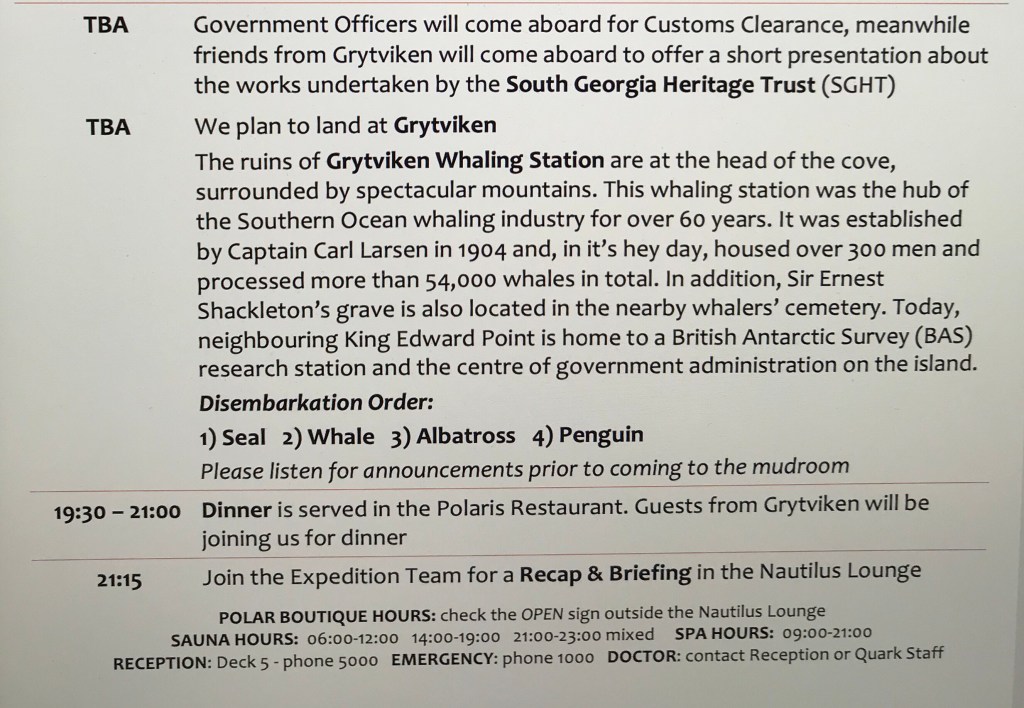
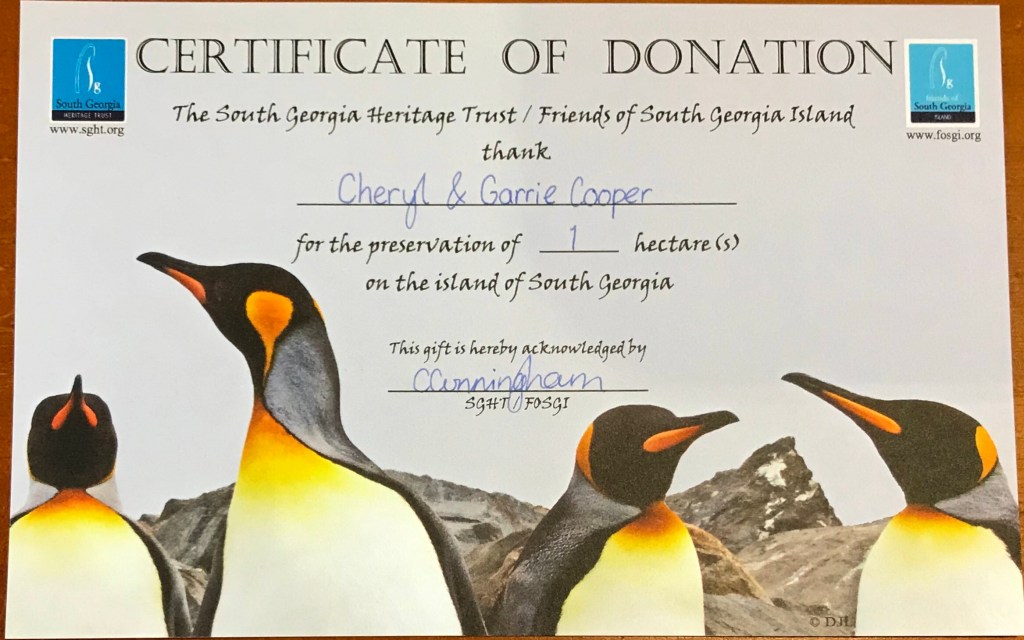
So after lunch we were treated to a great presentation from the friends of South Georgia. They are doing some amazing work here and we signed up to help save an hectare. How can you not want to save this amazing place?

So here are my notes from the talk. Find out more at www.fosgi.org. And www.sght.org. Told we are having amazing weather. This is the centre of government for South Georgia. We are part of a privileged few to visit here. Gift shop worth visiting when we go ashore. World leading project in removing invasive species. Over 8 years baited to remove all rodents. Now rodent free. South Georgia pippet and the pintail duck (took that this morning) Pippet is the only song bird in Antarctica. Back within three months after being missing for two centuries. New program includes a rodent detection dog in Stanley that came aboard this ship when we were there. Working with Dogs 4 Conservation. Our bio security measures very important. 41 invasive plant species. So trying to stop things coming is easier than eradicating. 1775 Captain Cook found South Georgia. (He thought it was Antarctica). Now also recording archeology of the sealing industry as the returning seals are actually destroying it. After the sealers came the whaling industry. Killed out the southern right whale first. Whaling ceased here 60 years ago. Southern rights breeding off South Australia but calves beaching there and adults coming here are in poor condition so www.happywhale.com being used to keep an eye on whales – please send in pictures. Grey-headed albatross are in trouble in 11 years numbers declined by 40%. Could be bird by-catch elsewhere as local fishers have techniques that stop them catching birds. Long liners are an issue. One albatross every five minutes currently being killed on long lines. Overall a Very positive story. Facebook/southgeorgiaheritagetrust. 100 million more birds due to the rodent eradication.

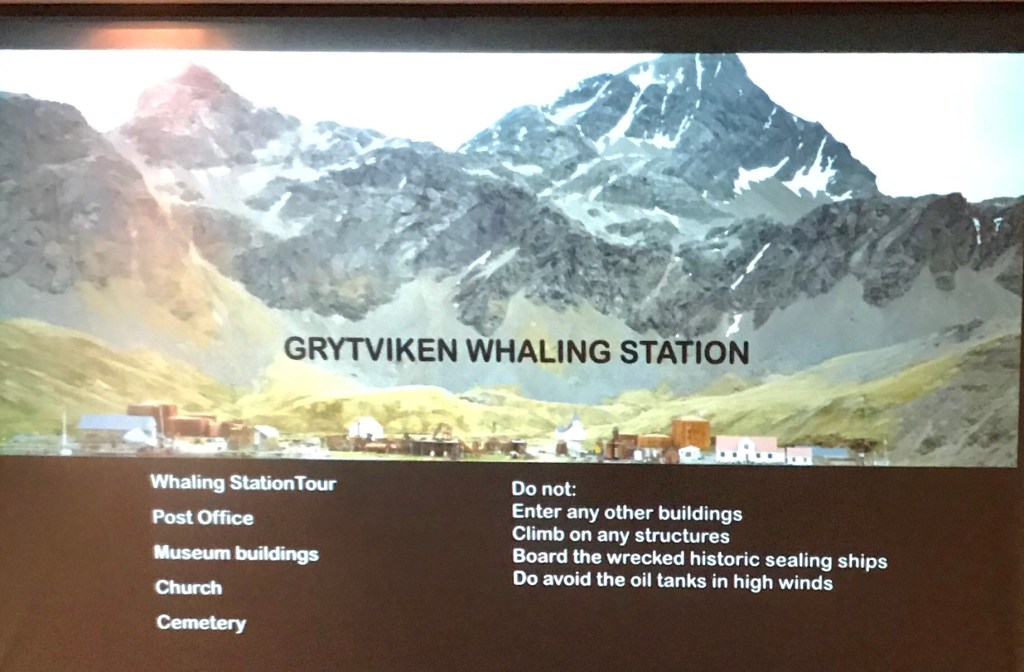
We were also given a good briefing on what to expect and where not to go.

Starting to see more ice bergs now.

More stunning landscapes.

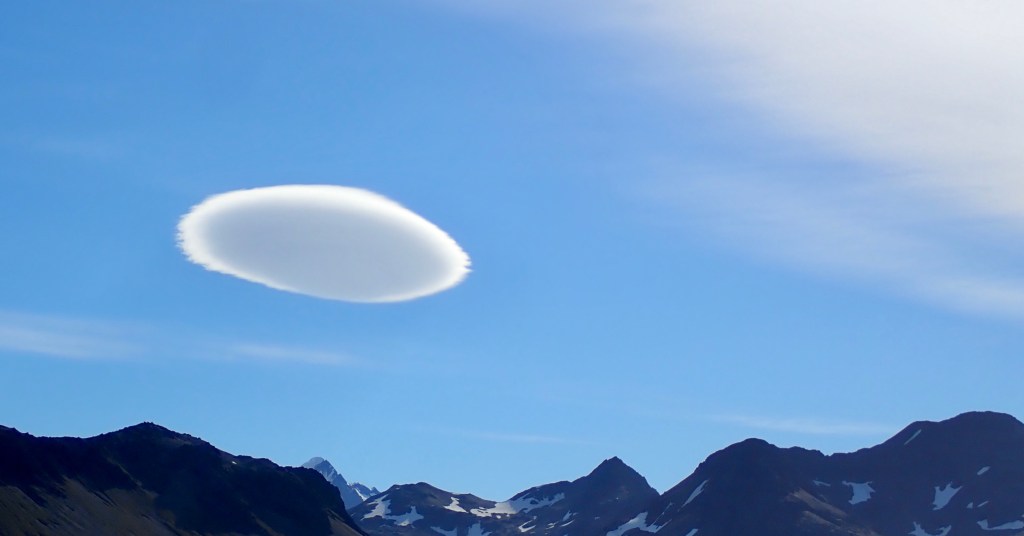
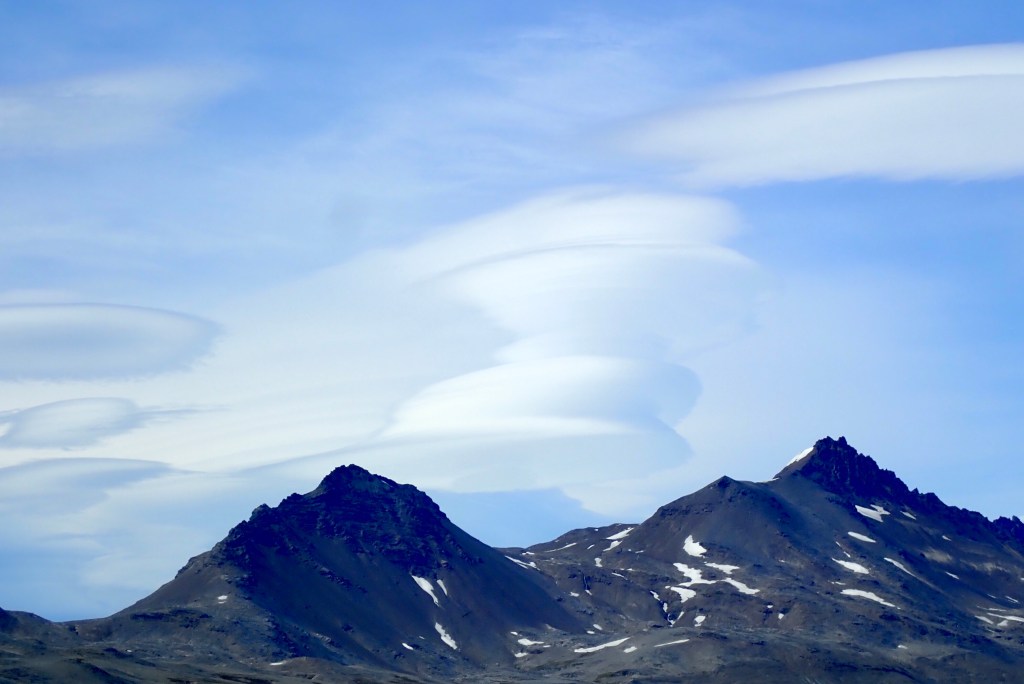
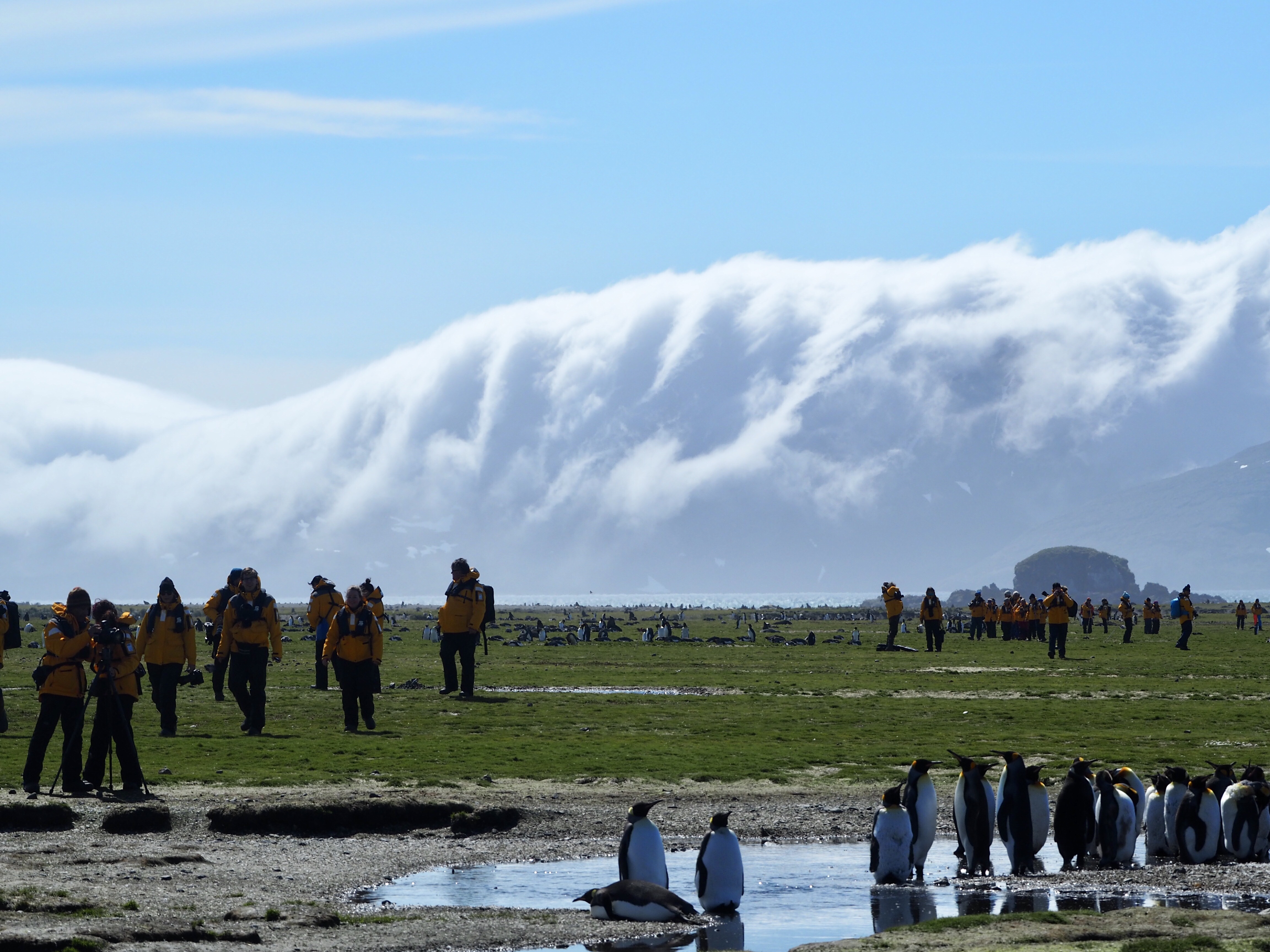
More lenticular clouds.

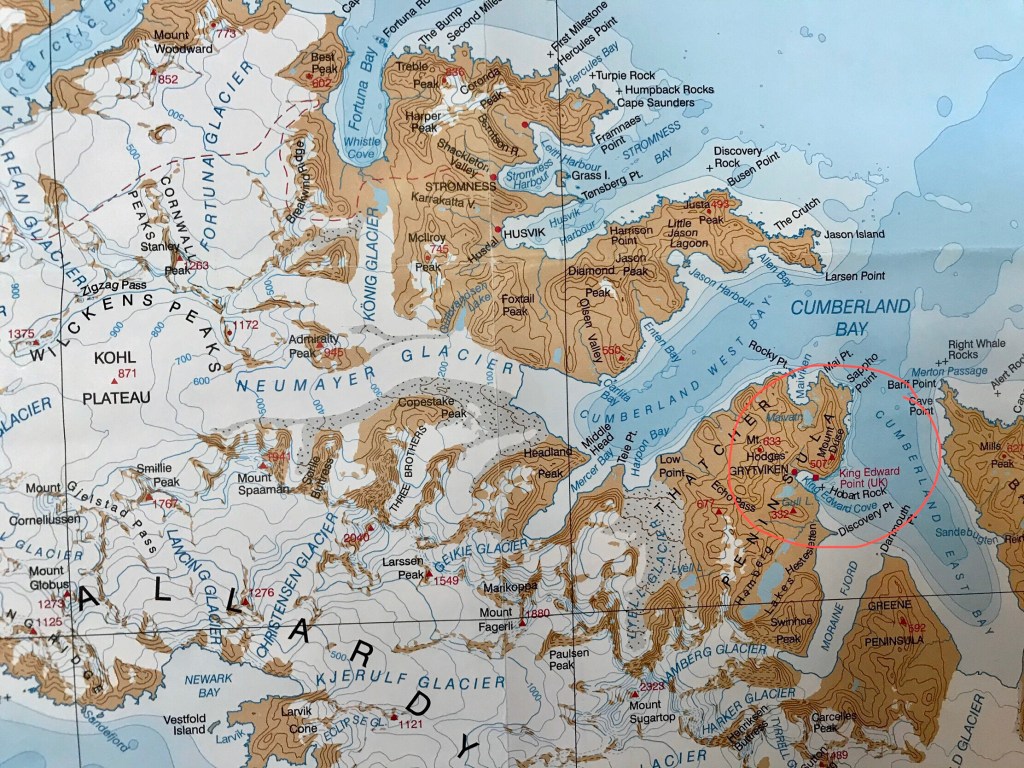
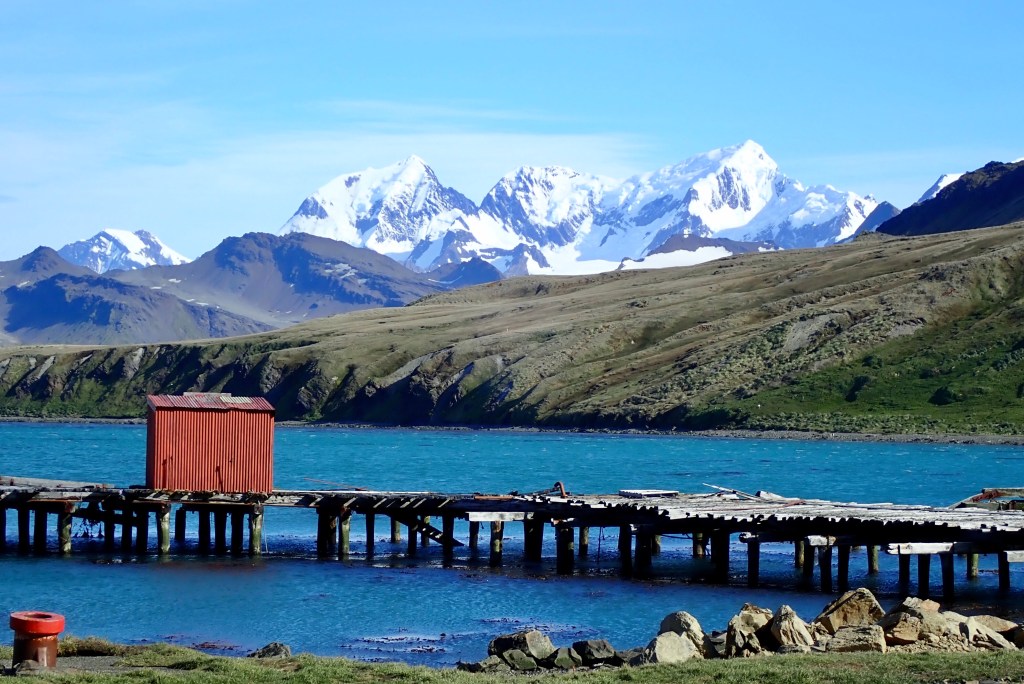
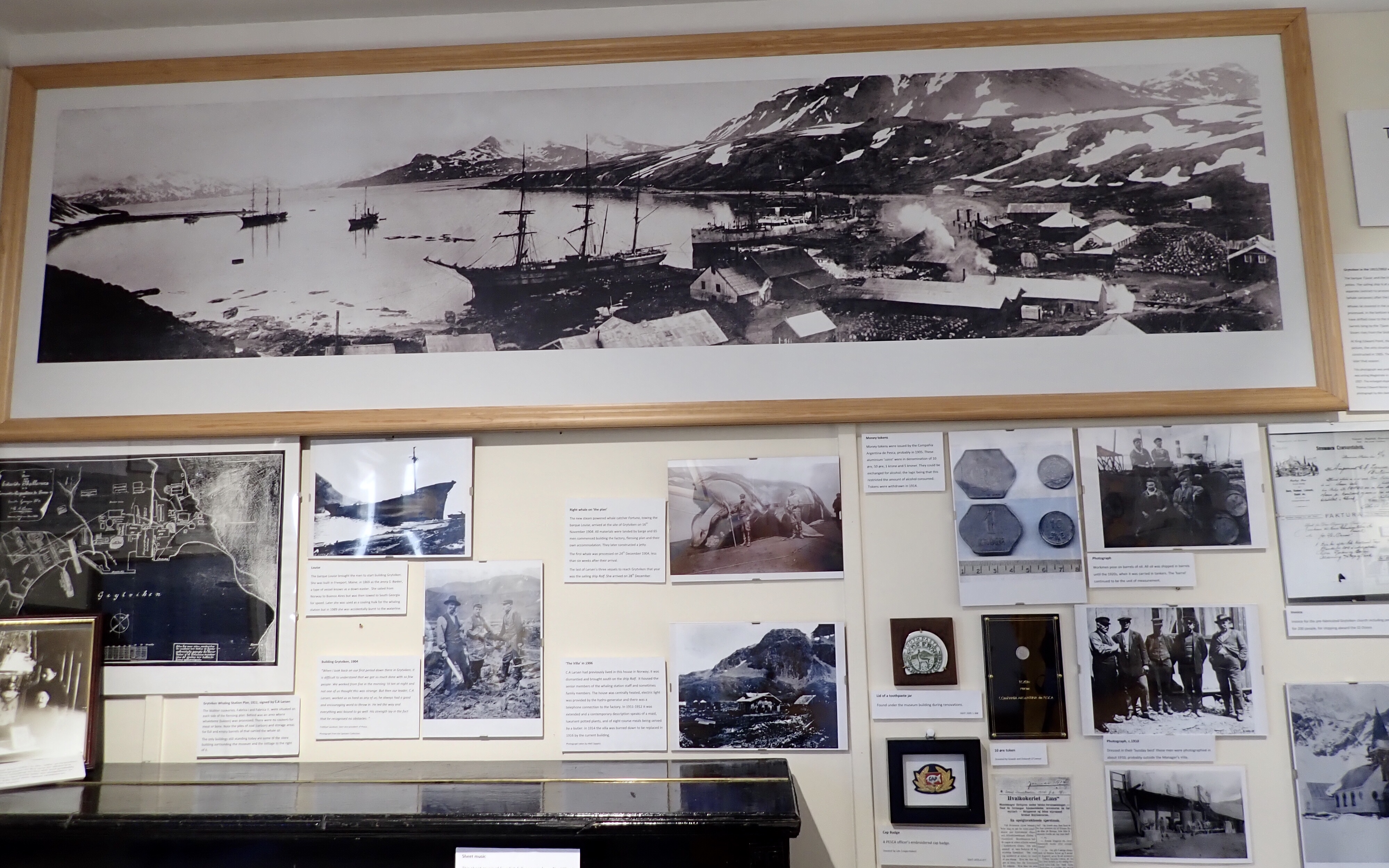
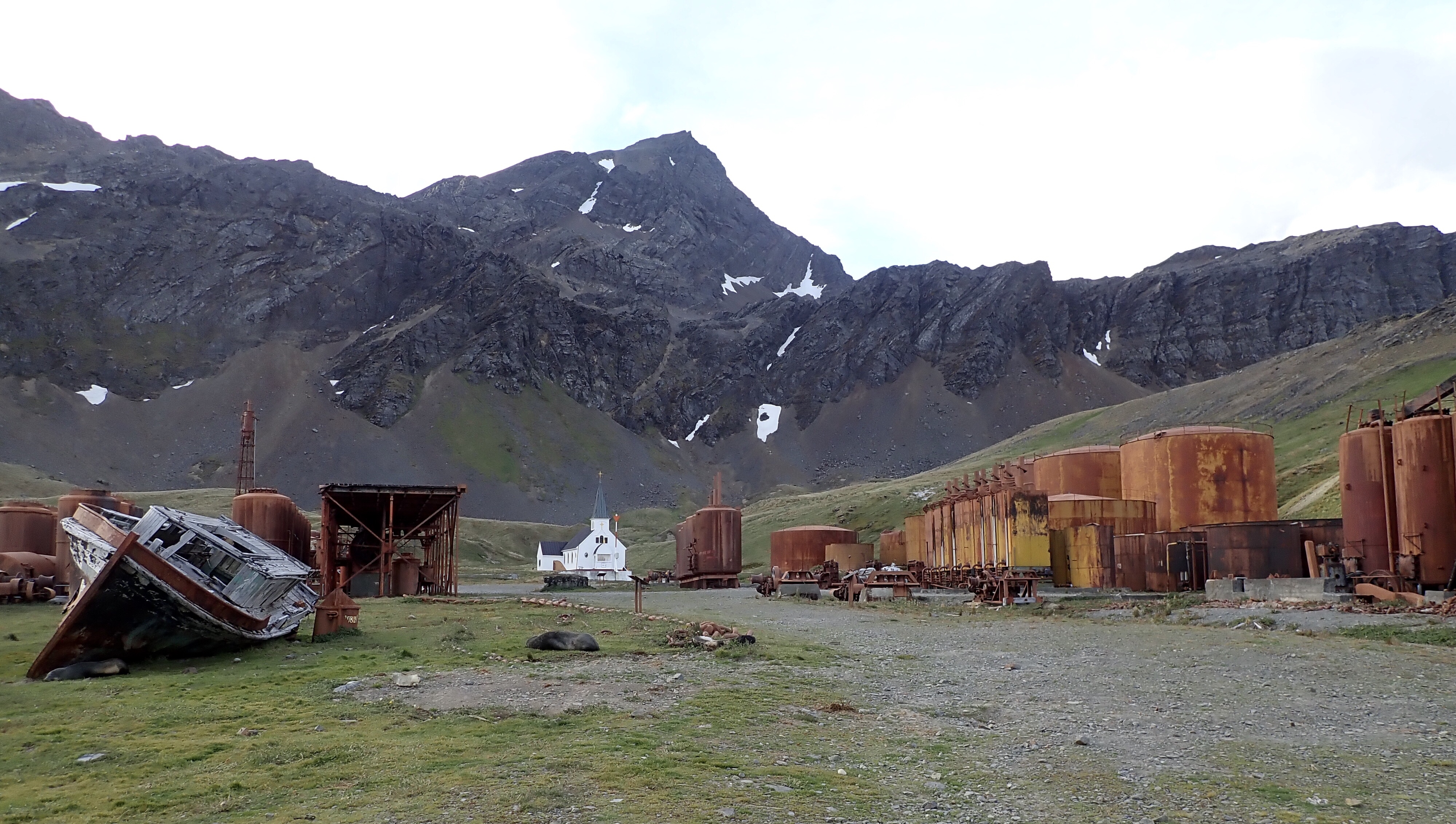
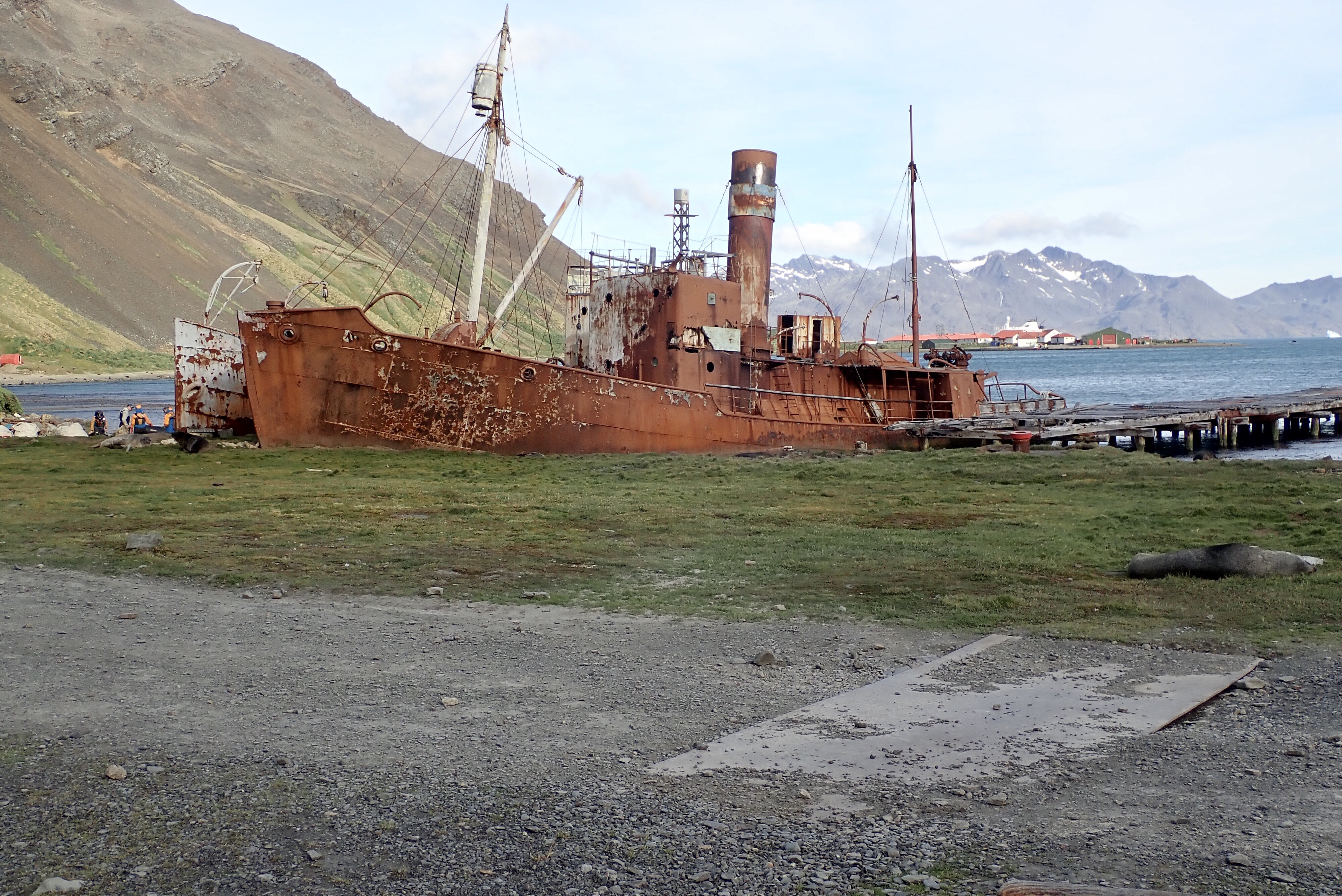
The ruins of Grytviken Whaling Station are at the head of the cove, surrounded by spectacular mountains. This whaling station was the hub of the Southern Ocean whaling industry for over 60 years. It was established by Captain Carl Larsen in 1904 and, in its hey day, housed over 300 men and processed more than 54,000 whales in total. In addition, Sir Ernest Shackleton’s grave is also located in the nearby whalers’ cemetery. Today, neighbouring King Edward Point is home to a British Antarctic Survey (BAS) research station and the centre of government administration on the island.

Current 30 knot winds with gusts of 40 and above (50) so warned that one blast of ship’s horn means get back to the zodiacs asap.

The music played with the announcements has been “Georgia” (Willy Nelson), for the past couple of days. Very funny.

This afternoon I took 108 photos total. Kept 50. Many doubles due to wind trying to ensure one would be in focus.

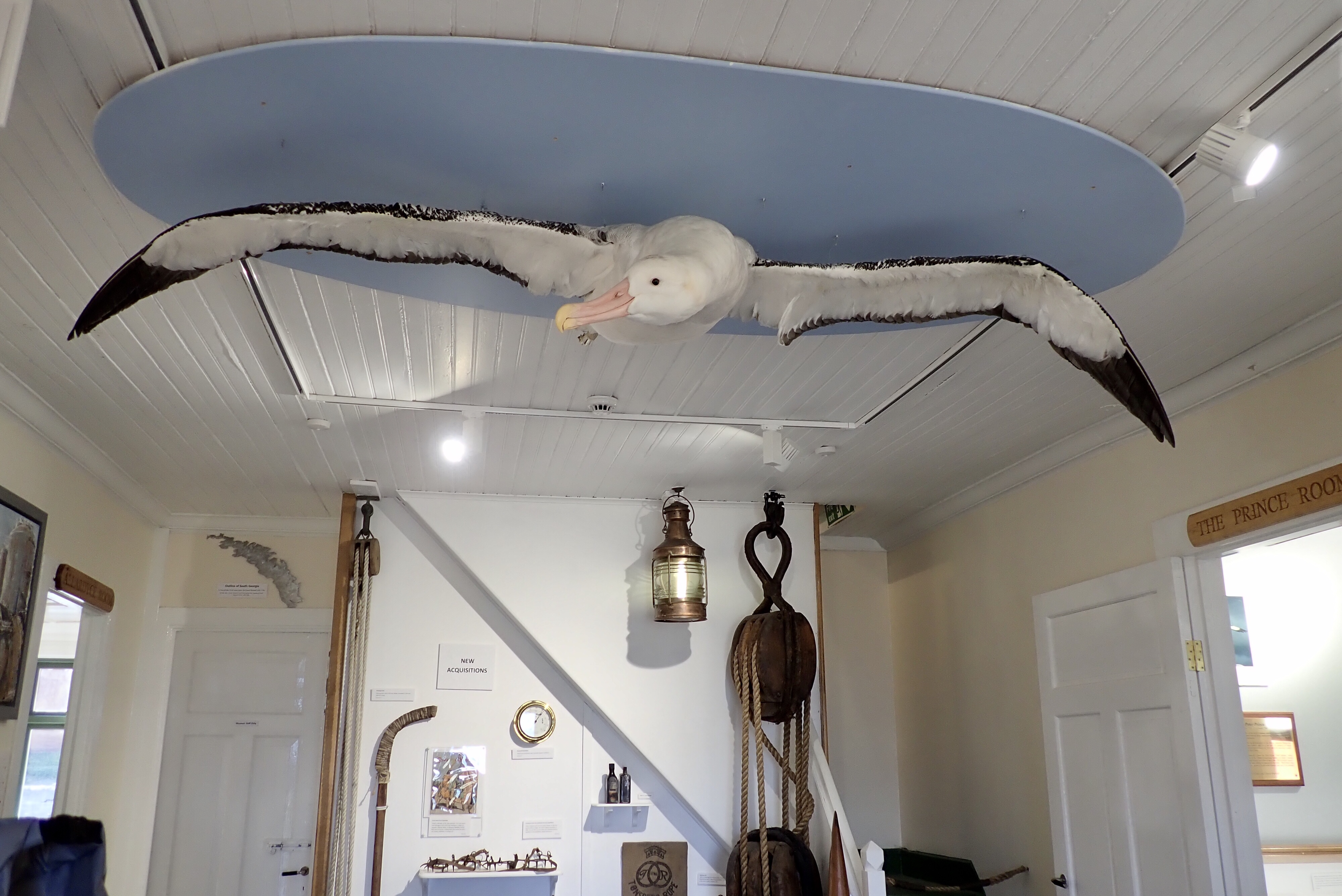
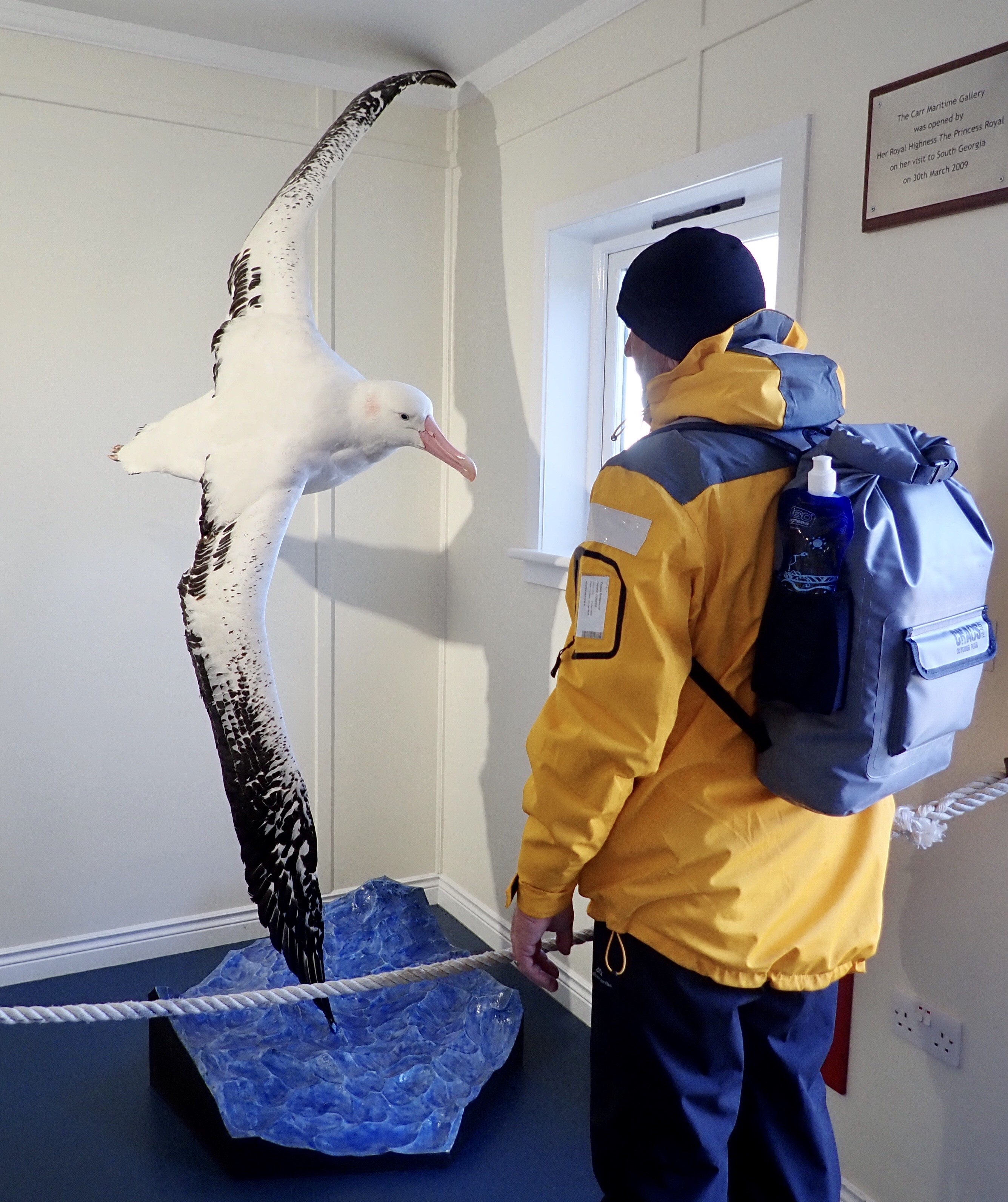
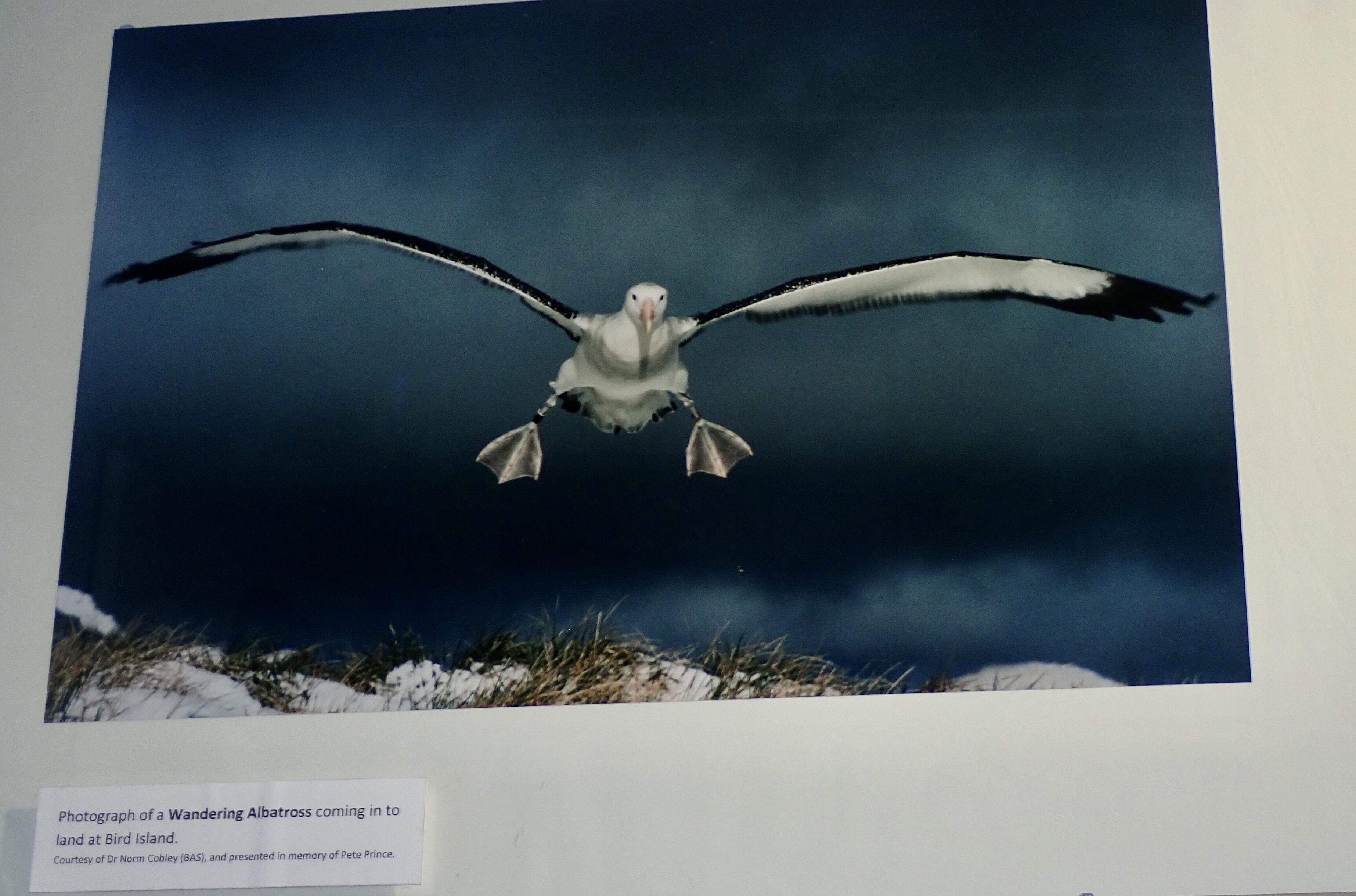
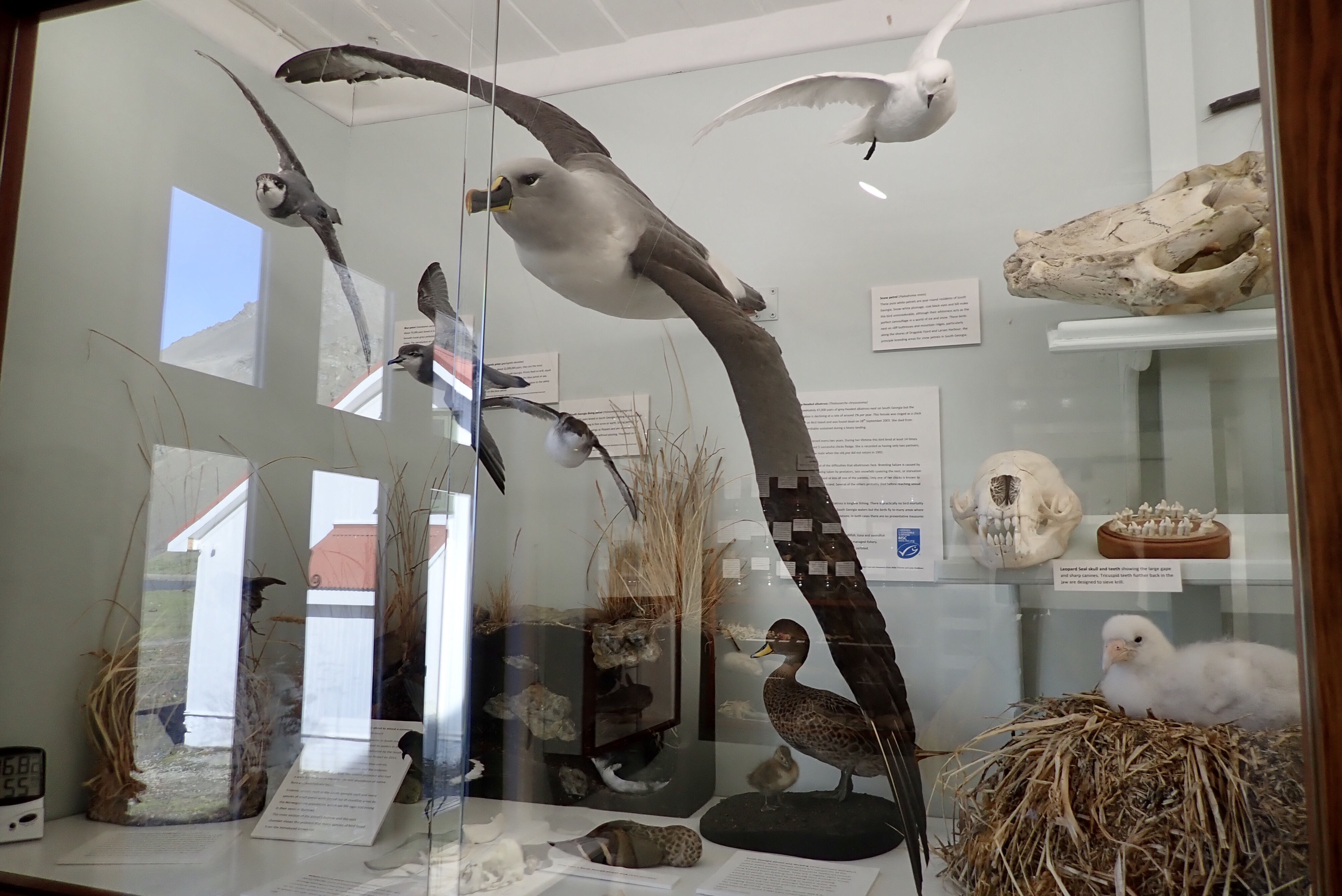
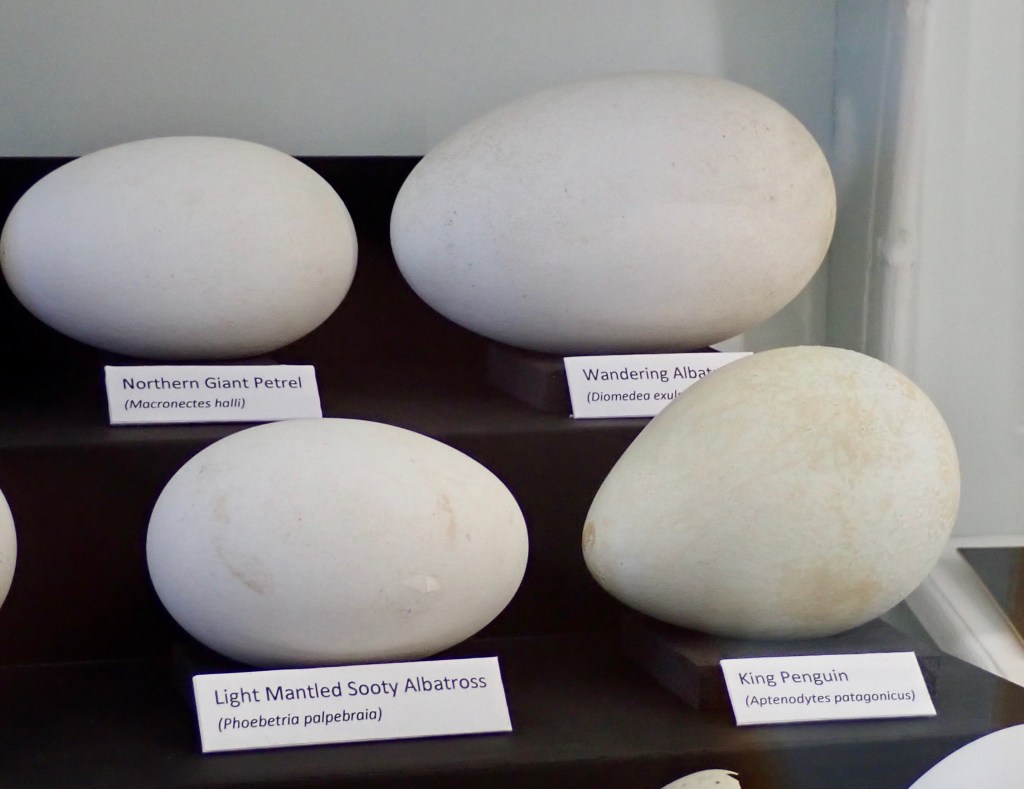
Really enjoyed the museum where we were also able to touch a penguin skin and a fur seal skin and you can understand why they wanted the fur seal pelts. So beautiful to touch. How big are the wandering albatross?

Lots of info and photos from the Endeavour trip.

Imagine that they sailed from Elephant Island to South Georgia in this very small boat. (This is a replica).

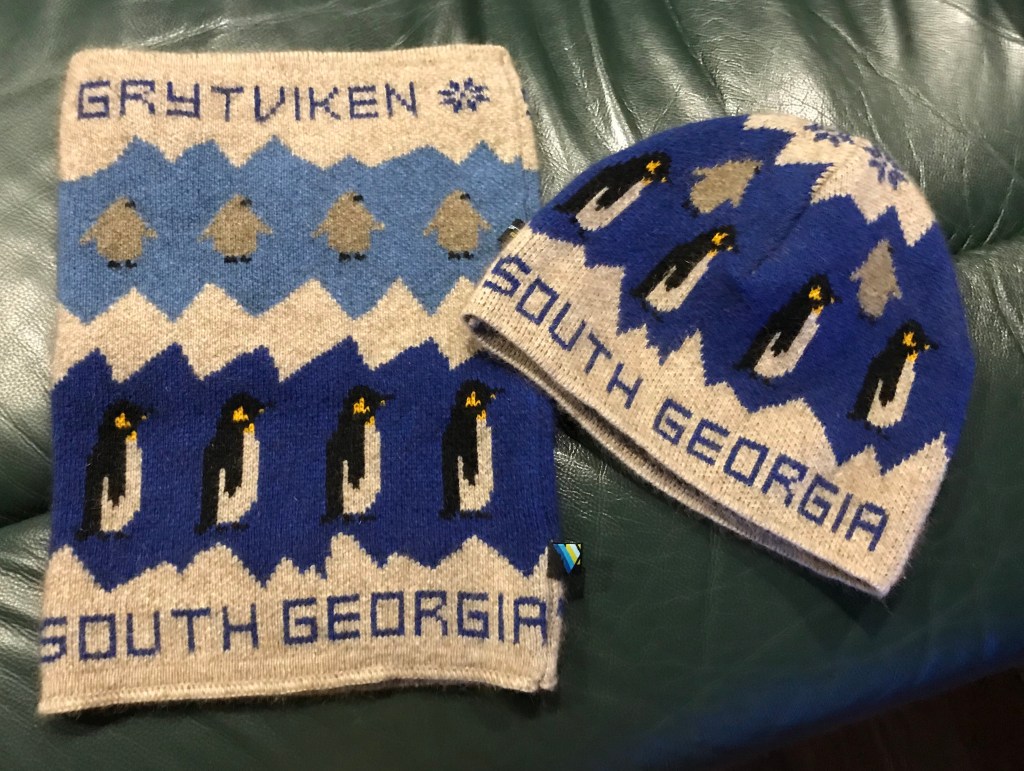
We bought our selves some warm gear (hat Garrie, neck warmer for me) made from wool, silk and, wait for it, possum! 60% pure merino wool, 30% possum and 10% silk. Designed in Svalbard and made in New Zealand. (Arctic edge).

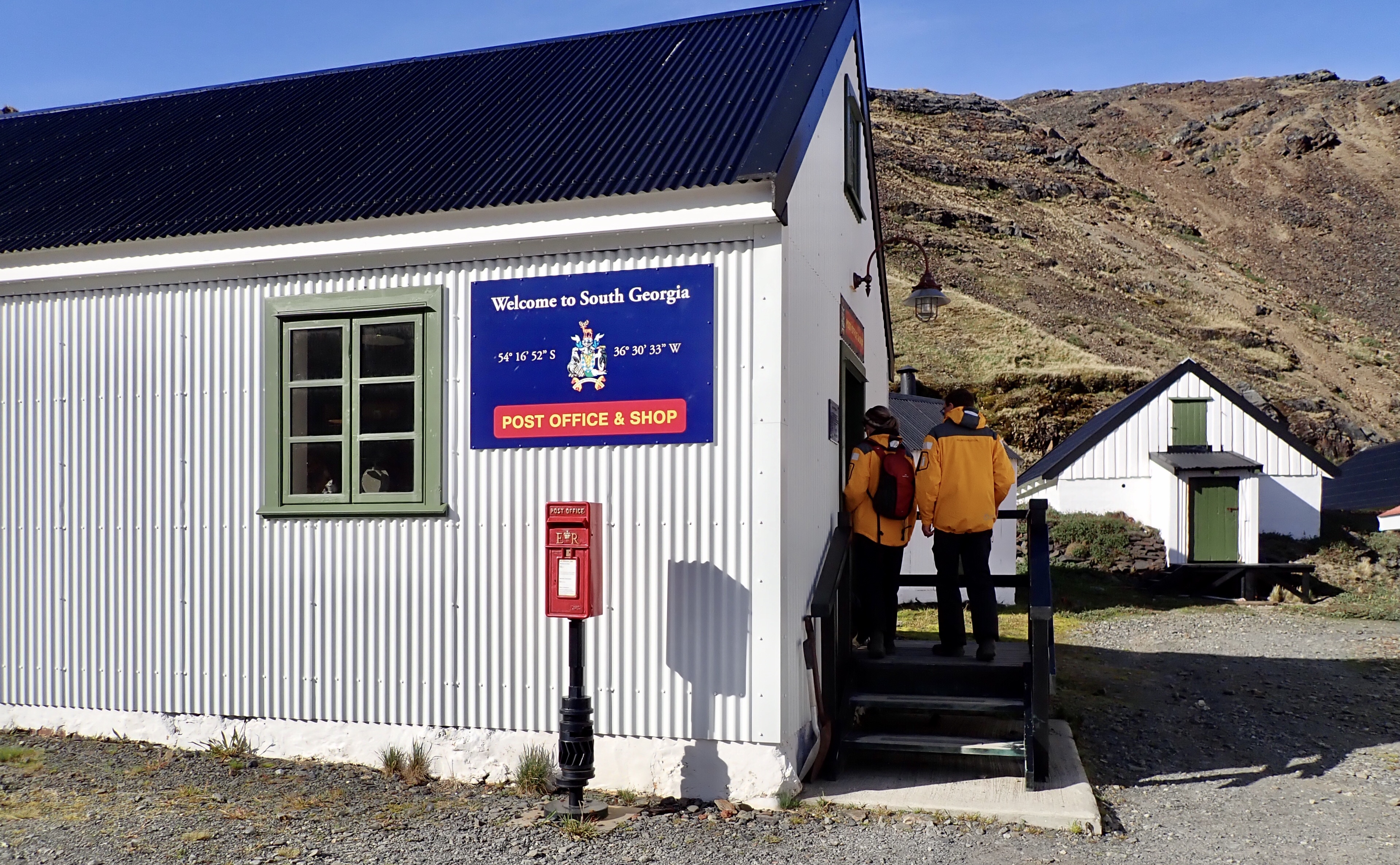
We also checked out the post office.

Then started to walk around towards the cemetery.

Found a lone king penguin hanging around.

More bird life. A young and an adult Antarctic tern.

Yes more seals, including our light variety.

Gentoo penguins.

A Shearwater I think.

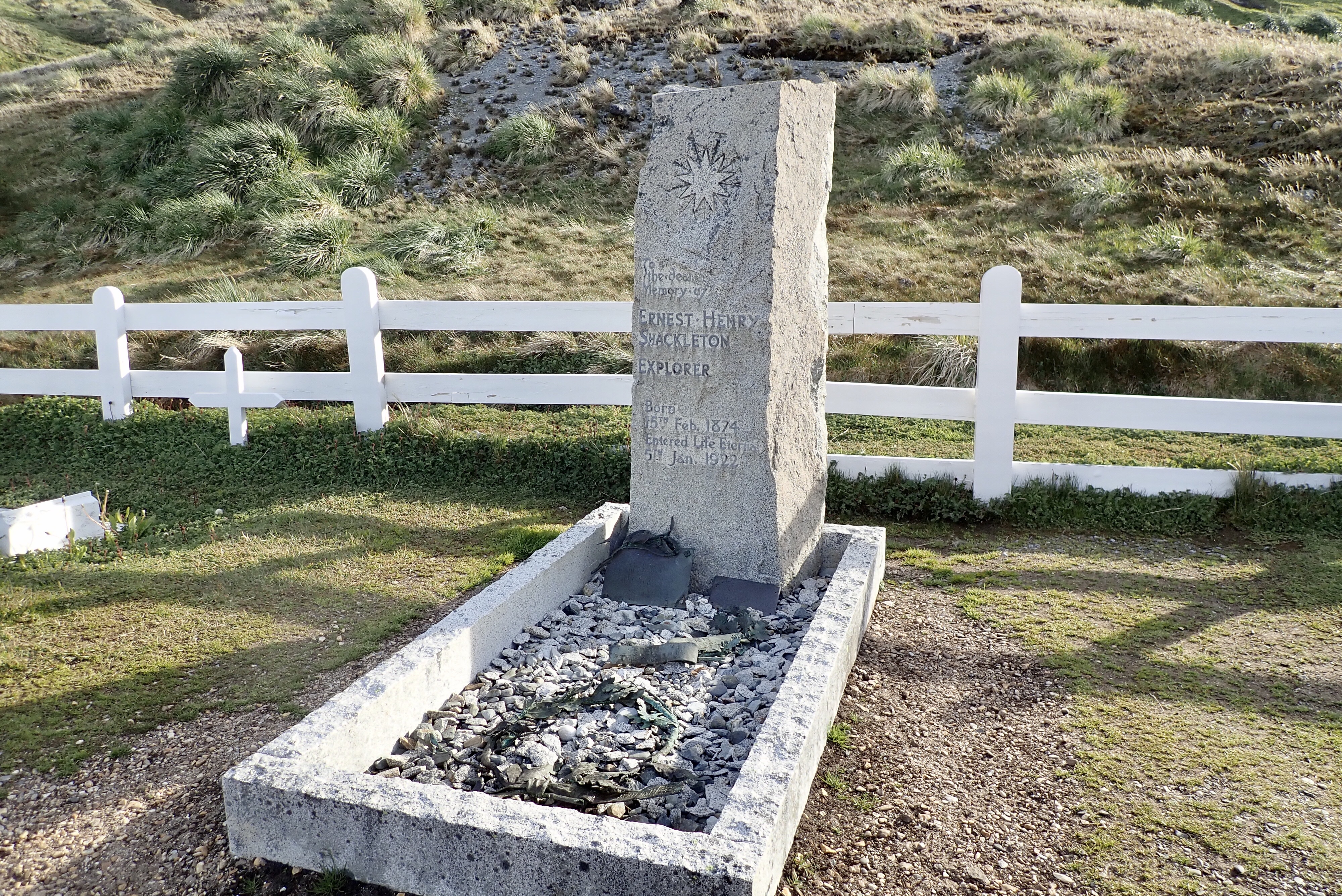
Finally to the cemetery and the grave of Earnest Shackleton.

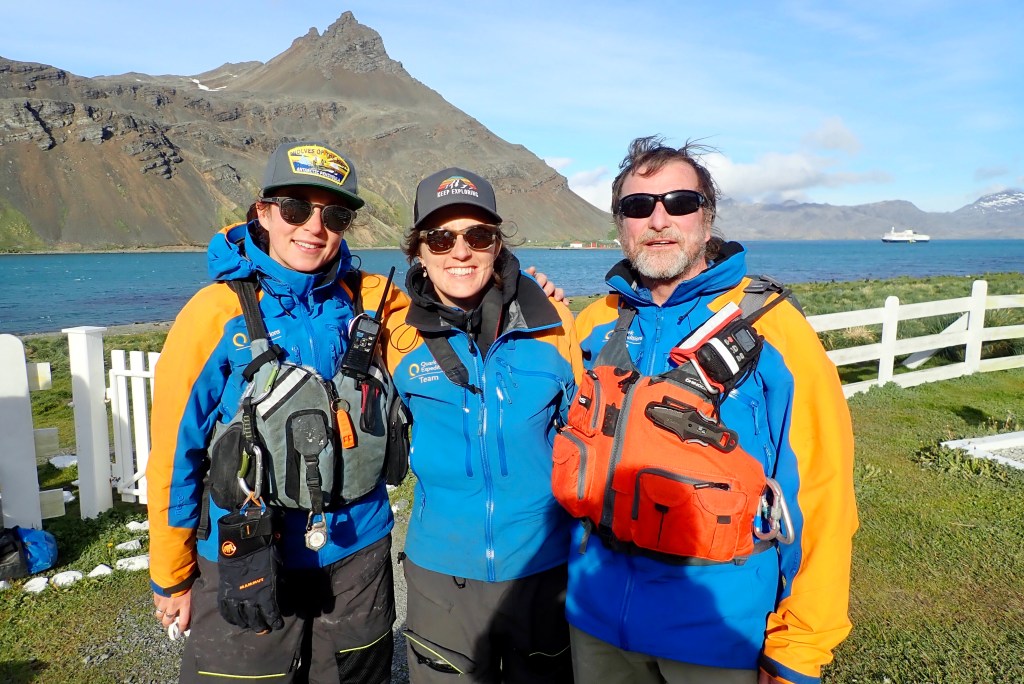
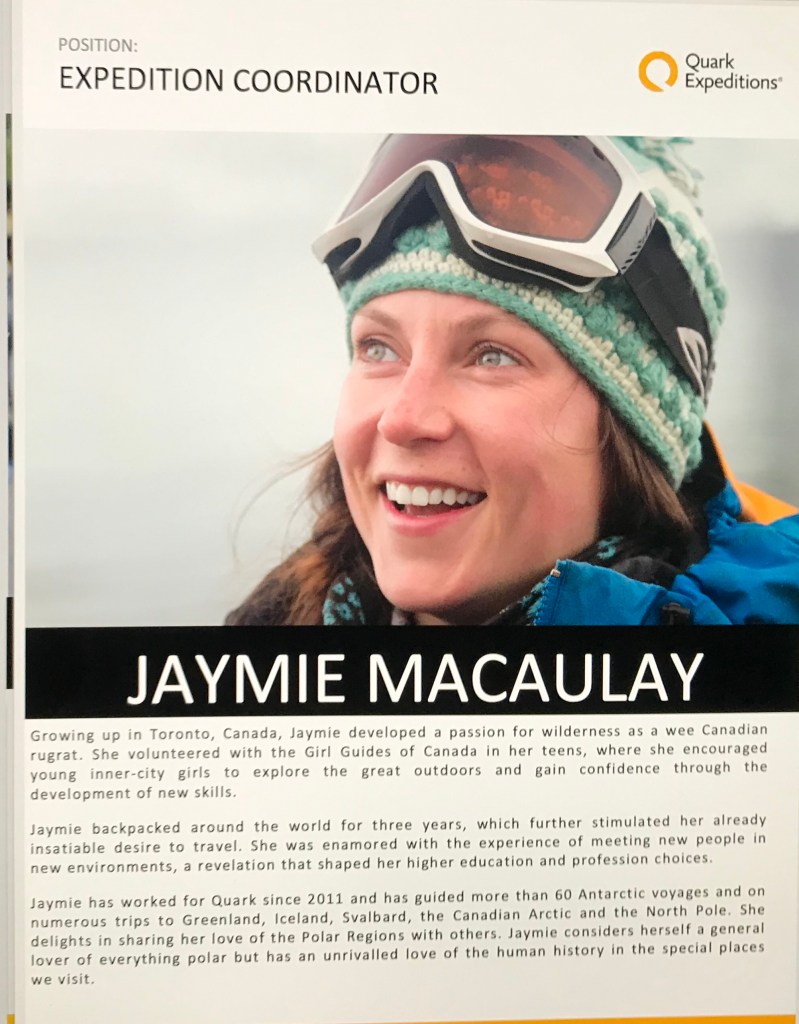
With the help of some of our Expedition Crew, Jaymie, Michelle and Alan, we toasted him with some whiskey and added a little to his grave in tribute. It was well soaked by day’s end.

Spent a fair bit of time with these three on the trip. Jaymie and I have have identical camera gear. Michelle is the photography whizz and we had Alan as our zodiac guide a few times, great people.

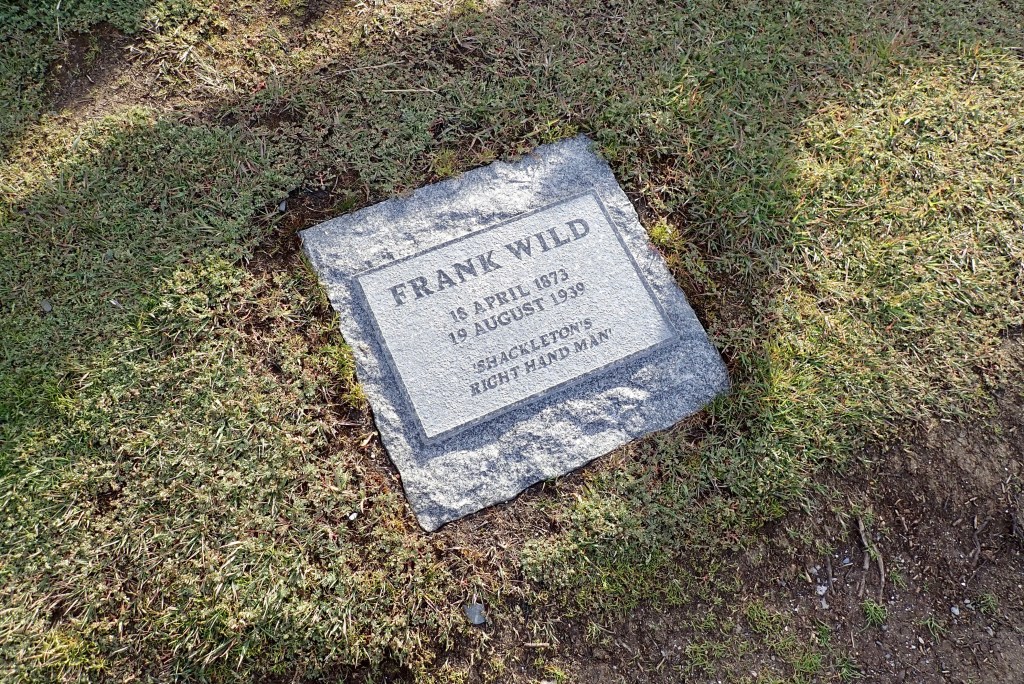
Shackleton’s best mate Wild is by his side.

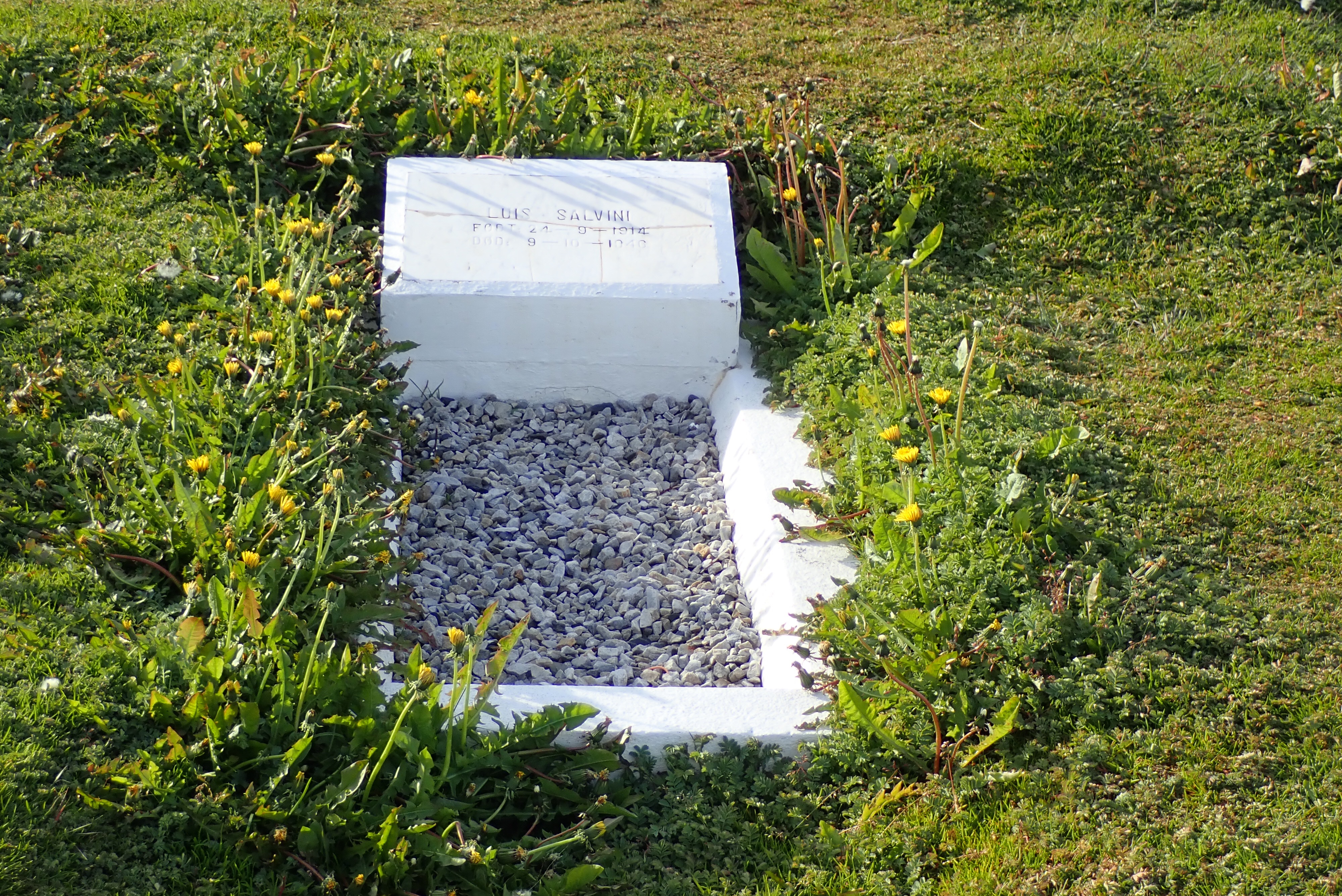
Dandelions around the gravestones are from Norway as buried a handful of dirt from Norway with each body. The things we do that have unthought of long term consequences.

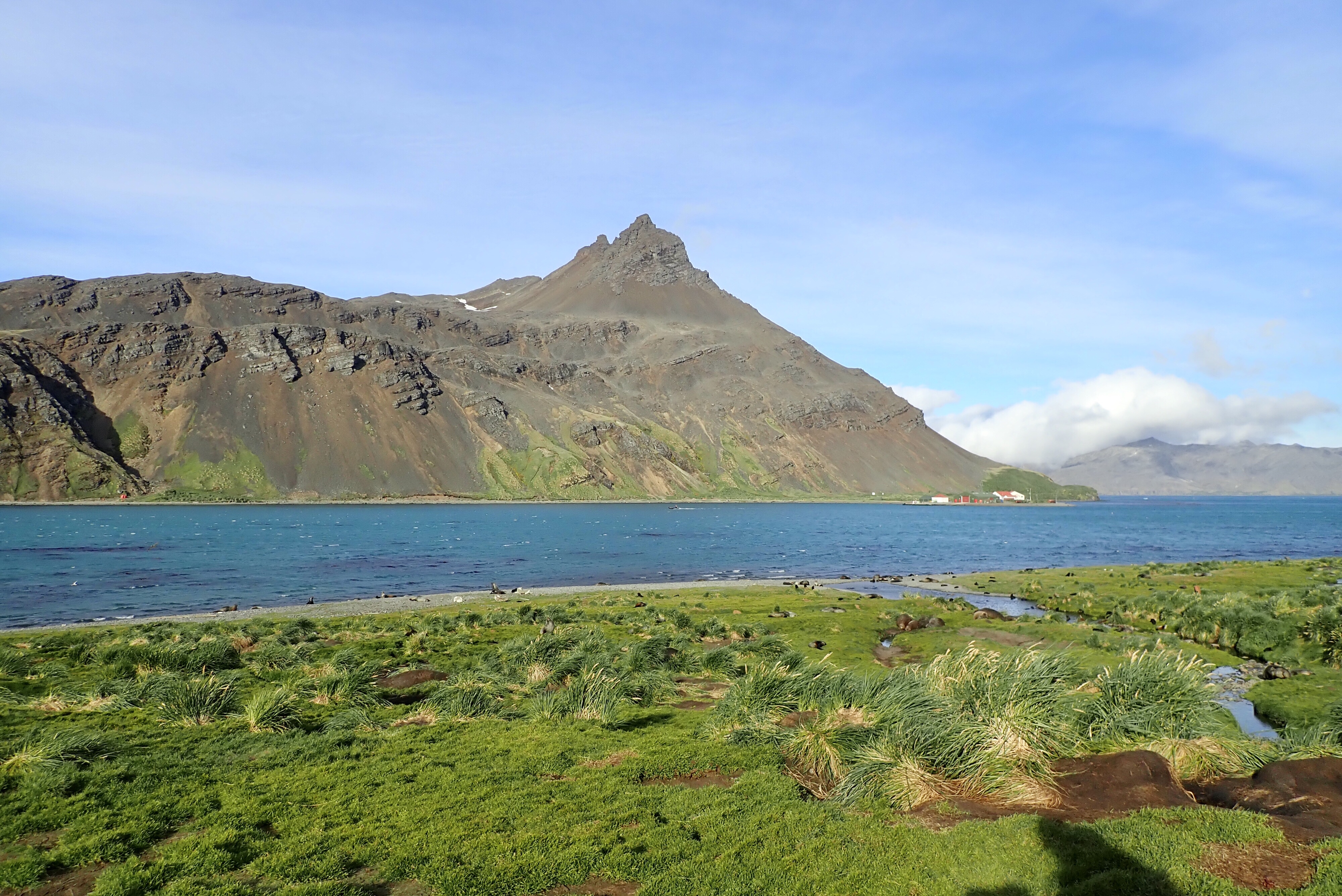
Not a bad view from a cemetery.

Just nearby we spotted our first chinstrap penguin.

More of the pintail ducks.

Back to the whaling station wreckage, side stepping the odd cranky fur seal.

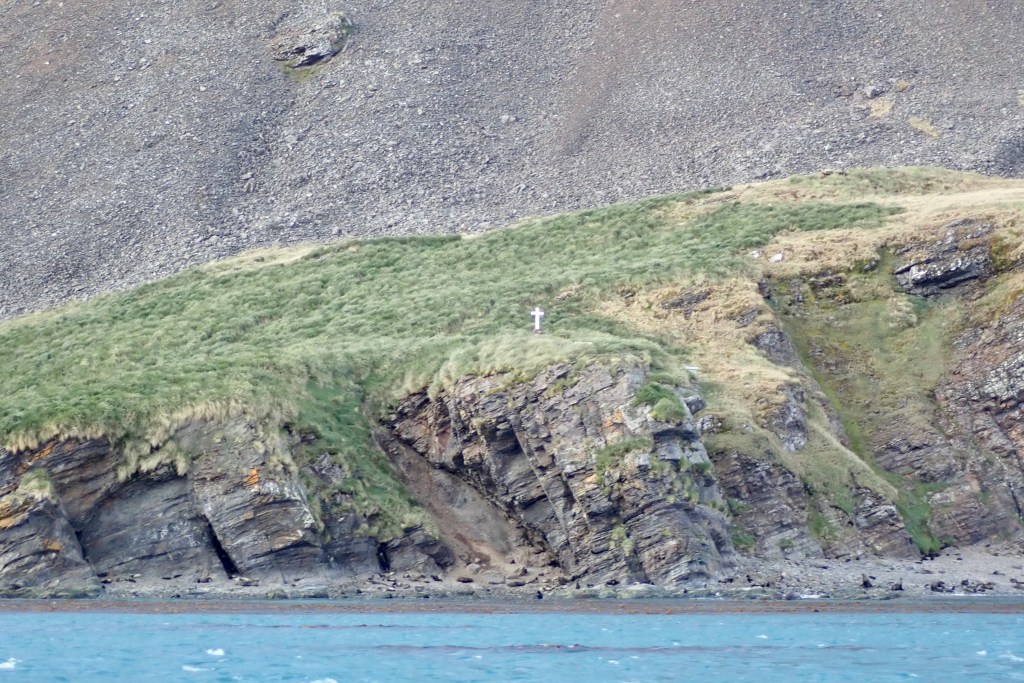
Back to the ship past the Shackleton cross .

Such a beautiful place.

When we arrive back on board we are always greeted with a hot drink, often fantastic hot chocolate but today we Returned to lemon and ginger tea. Yum.

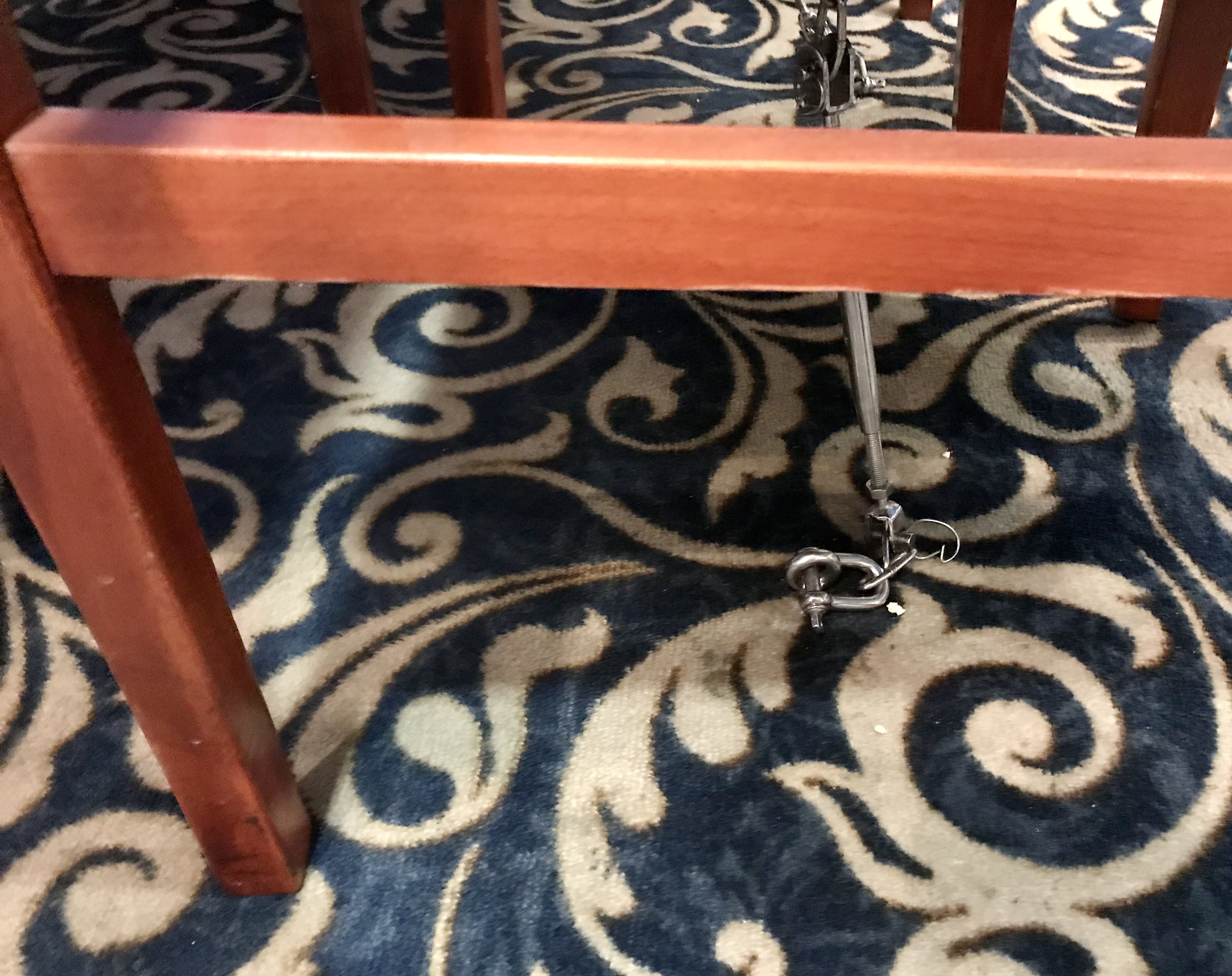
Incoming dark clouds when we were eating dinner. First time I had noticed that the chairs are chained to the floor in the dining room.

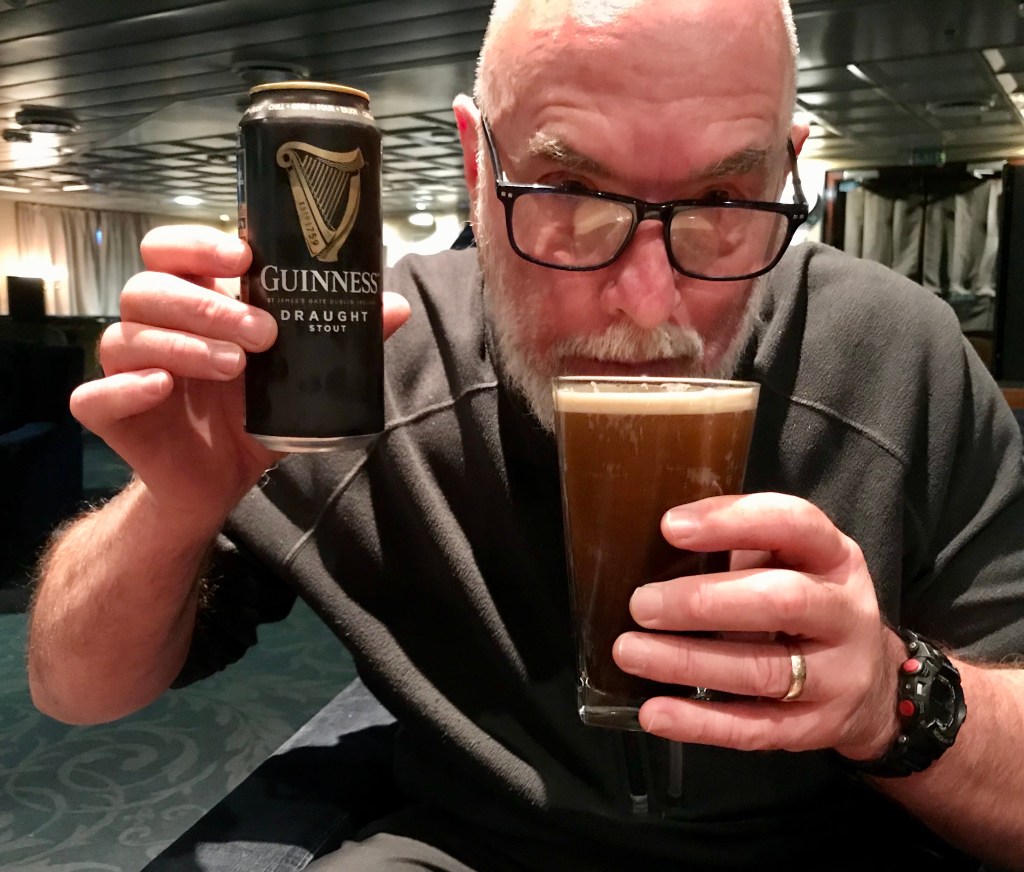
Beer of the day. Guinness. Rating a 7. Smooth. Very nice. Tastes like caramelised toffee.

Mike also had a Guinness and had a go at the description – creamy, very smooth. Not a dark beer that slaps your tongue around. Love it!

“Good evening ladies and gentlemen” pause “good evening.” Morning or evening there is always the repeat when Solan speaks over the PA in his delicious creamy voice.

Time for our Recap and briefing.

Claire -geopolitics.

We are all wind burned. South Georgia govt eradicated reindeer from the island. Larsen brought in the reindeer in 1911.

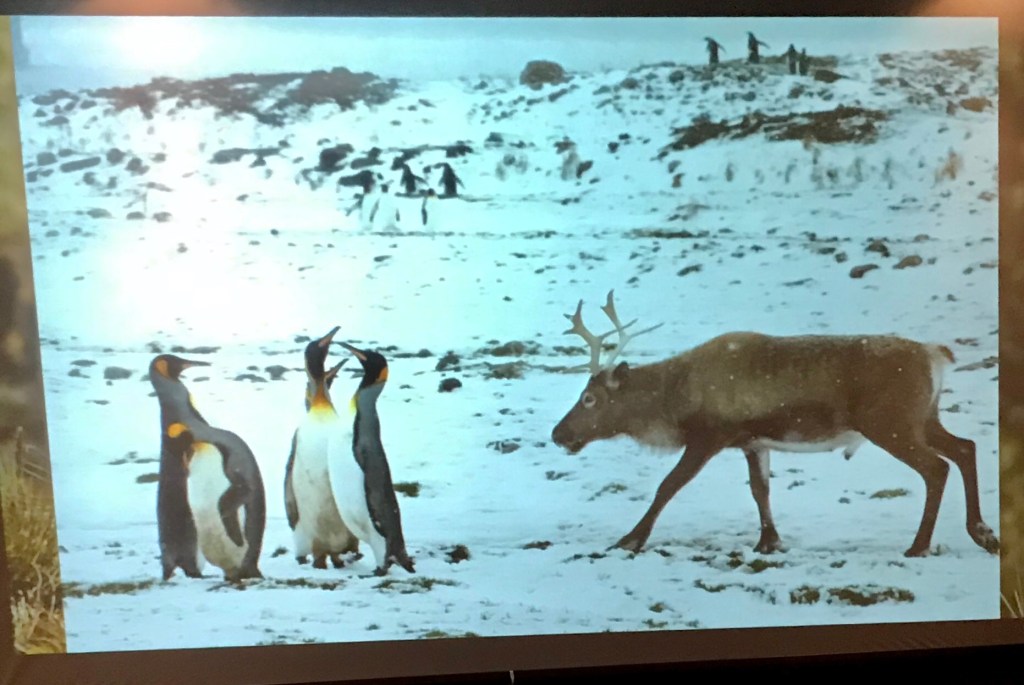
Reindeer used for both sport and a change in diet. Three herds developed. Two by introduction and a third by migration. They did very well. Population grew to 3000 in 1950s and up to 4500. They destroyed a lot of the tussock grass. 2013 push to eradicate. Norway was given the bill and the problem to solve as Larsen started the problem. Used indigenous reindeer specialists from Norway to sort things out with traditional methods.

Michelle. Photography (bio above). Shared a few photos. One of mine. Always does my ego good.

Miko – historian. (And Santa).

Frank Wild. Best friend and right hand to earnest Shackleton. One of the most experienced explorers in the world at that time. 5 Antarctic expeditions – more than anyone in his time. 1st 1901-1904 Discovery, then 1907-1909 Nimrod. Then 1911-1913 Australasian. Scott and Shackleton were enemies (especially from Scott’s perspective), that was the Mawson expedition- the most successful of all Antarctic expeditions. Trans Antarctic (The Endurance) 1914-1915. Last 1921 – 1922 Quest. When Shackleton died and Frank Wild took over and kept going. Wild’s remains brought here in 2011.

Solan. Out to sea tonight. Holding our position. First light. Narrow channel into a new harbour. Tomorrow afternoon hoping to go to St Andrews Bay. Very high standard place but Exposed to open ocean. Nothing between there and Africa so very exposed. May not happen. So ends day two on South Georgia. What will tomorrow bring?

South Georgia – Fortuna Bay 28th December

So I forgot that we went home to a penguin in our room last night!

Another glorious day, excited to see our first iceberg and who knew 15 degrees could seem like a heatwave? Everyday brings new OMG moments and we continue to pinch ourselves.

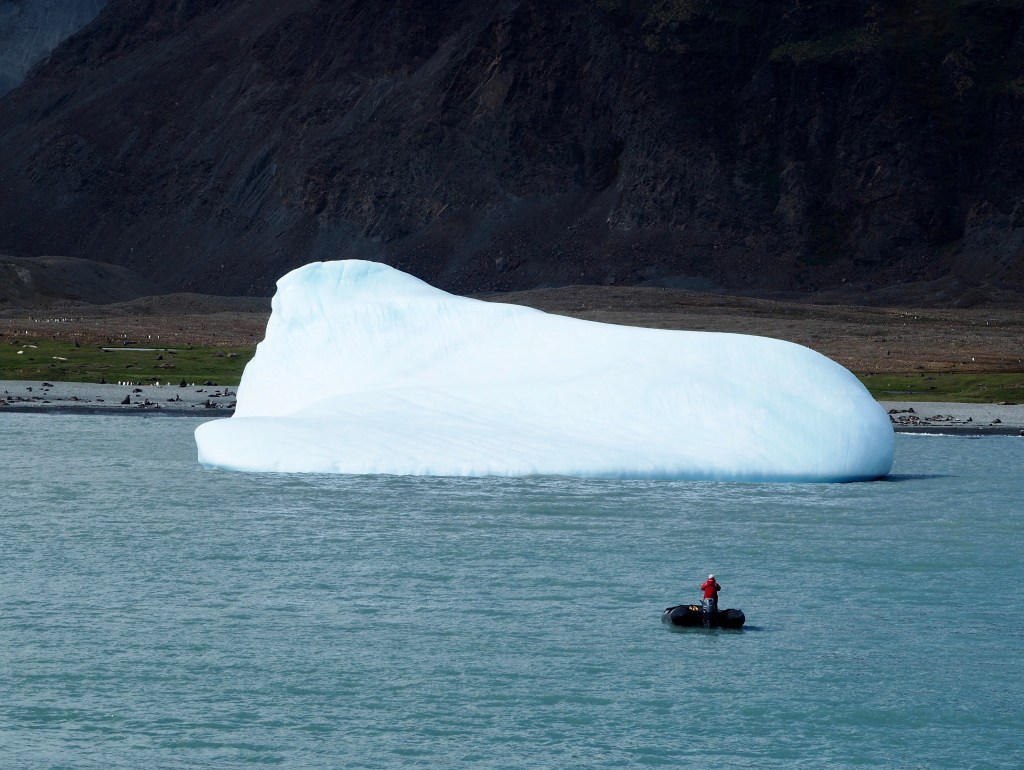
How big? Added a zodiac which helps.

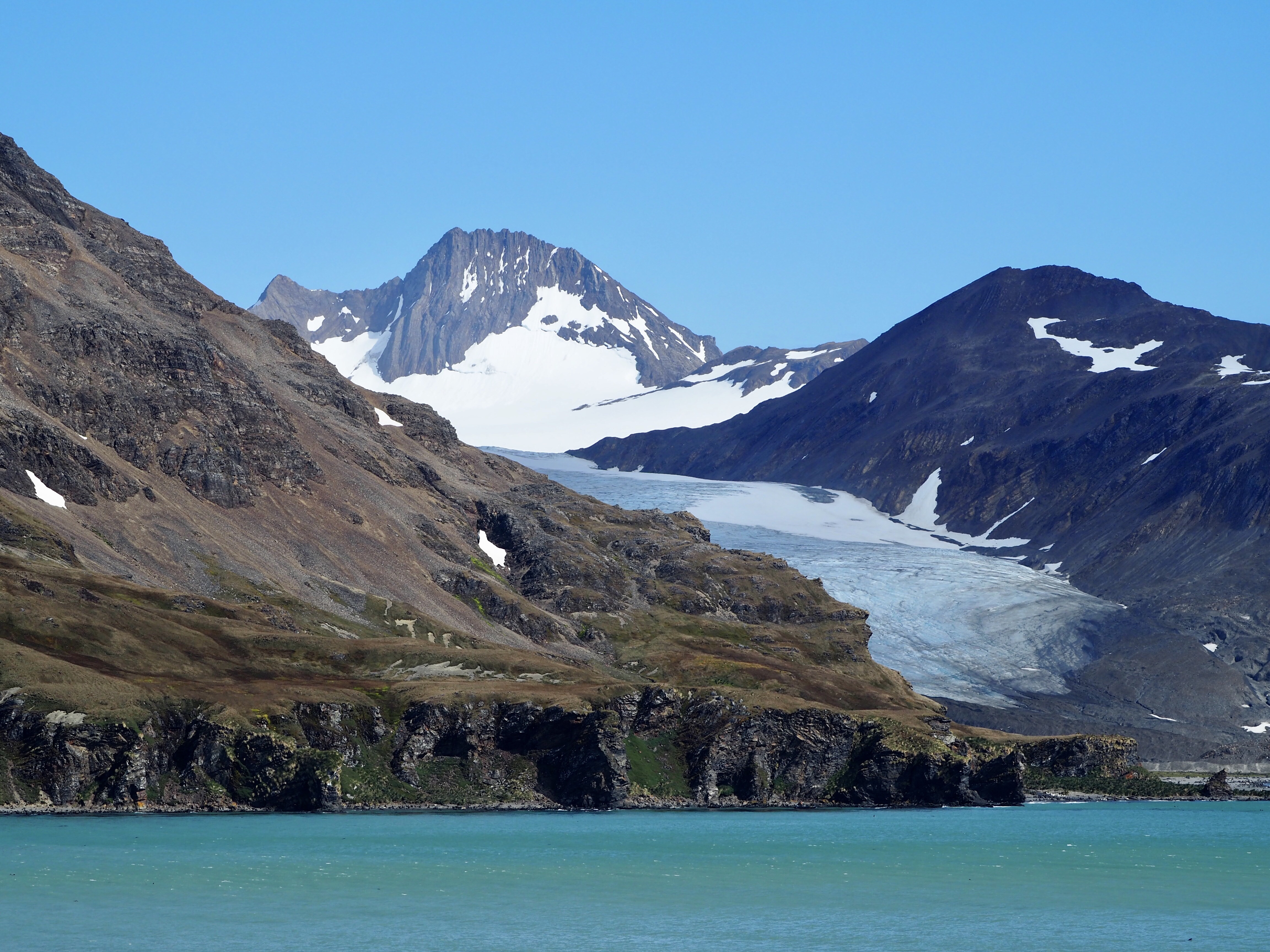
Another gorgeous bay.

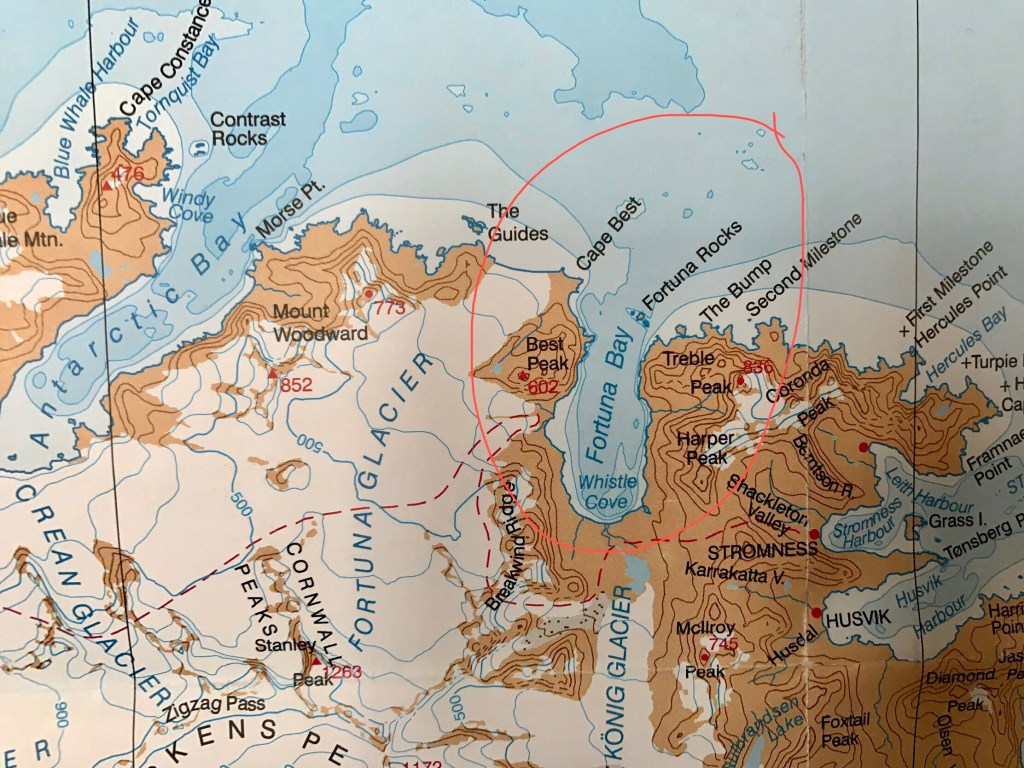
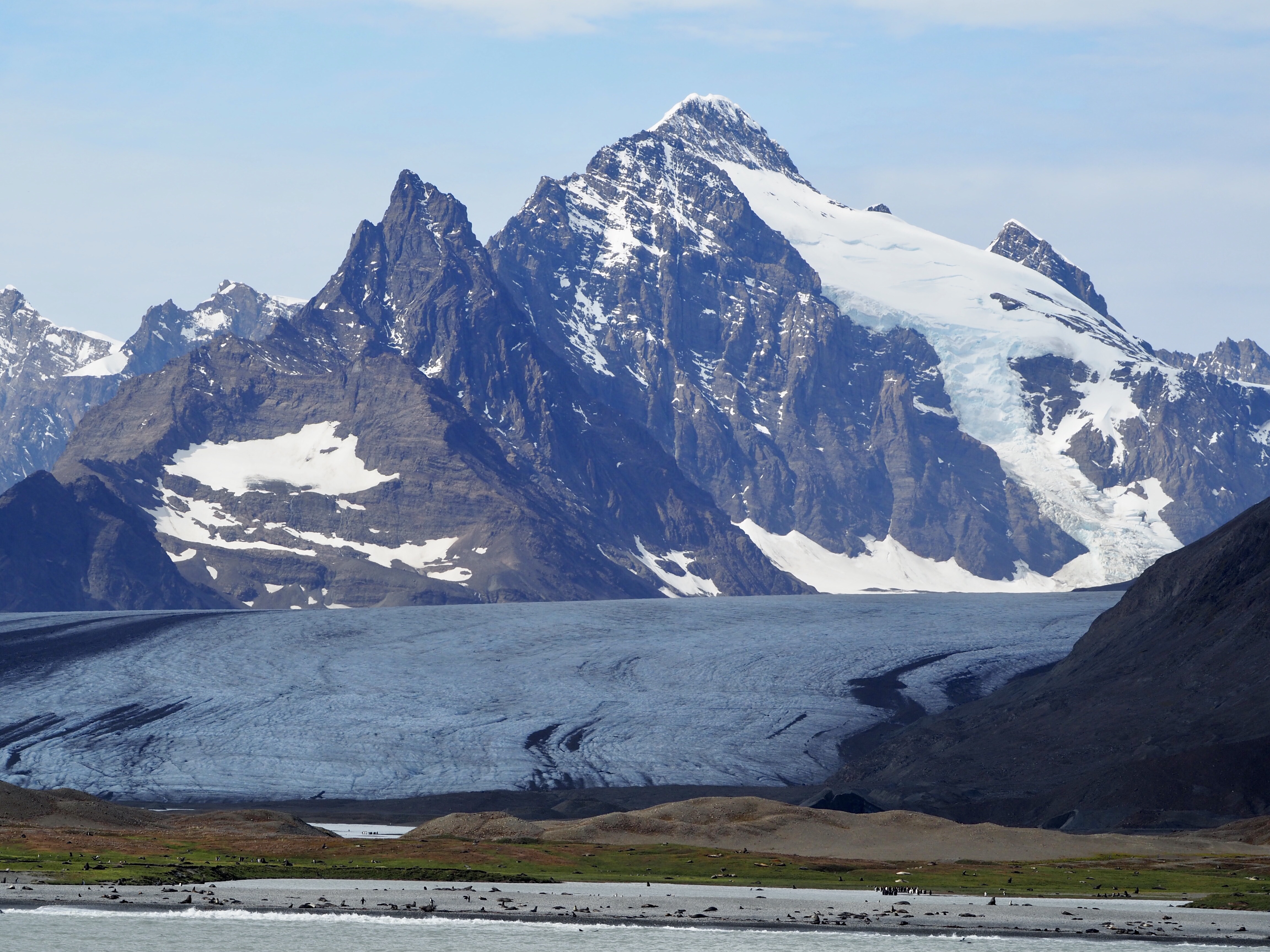
Shackleton and his two men descended Breakwind Ridge to the west of Fortuna Bay, crossed the beach at Whistle Cove and continued east towards the whaling station on the final leg of their island crossing. Today, Fortuna Bay is both scenic and abundant in wildlife. It is home to a colony of king penguins, located 1 km inland from Whistle Cove in the outwash plain below König Glacier.

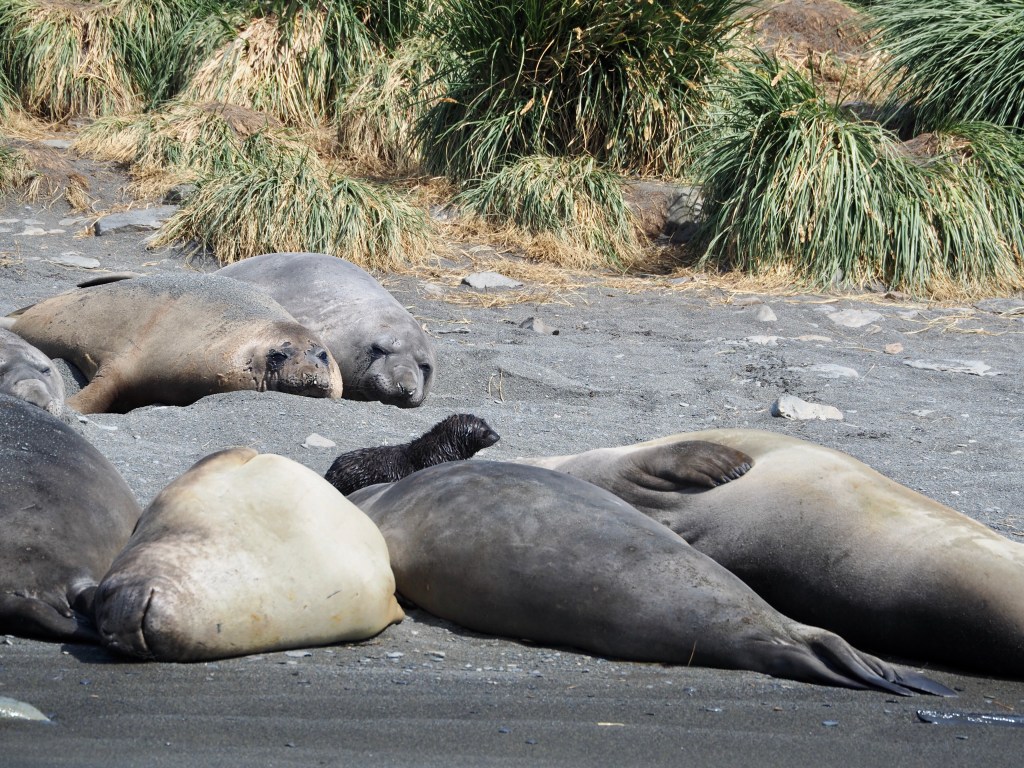
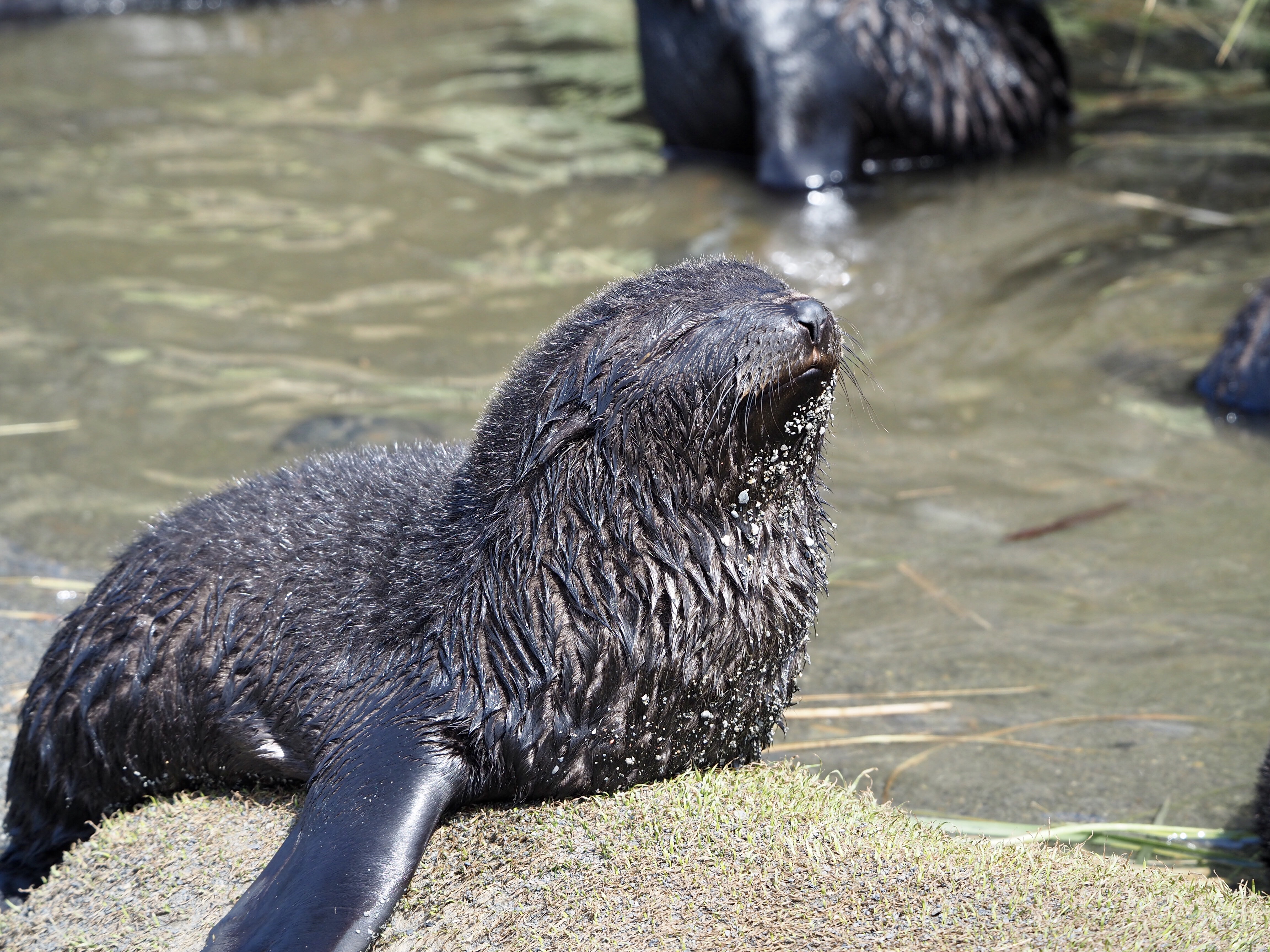
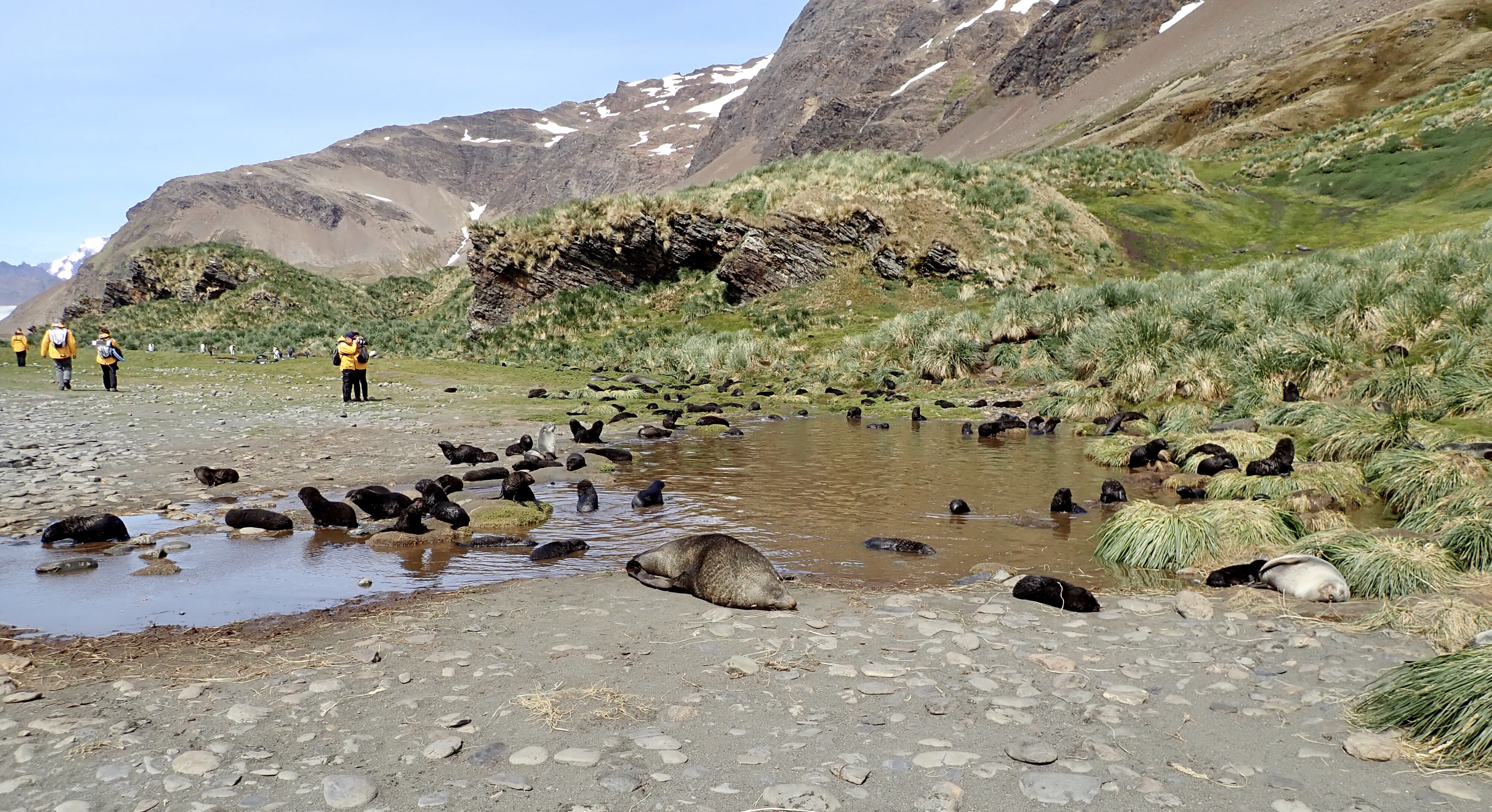
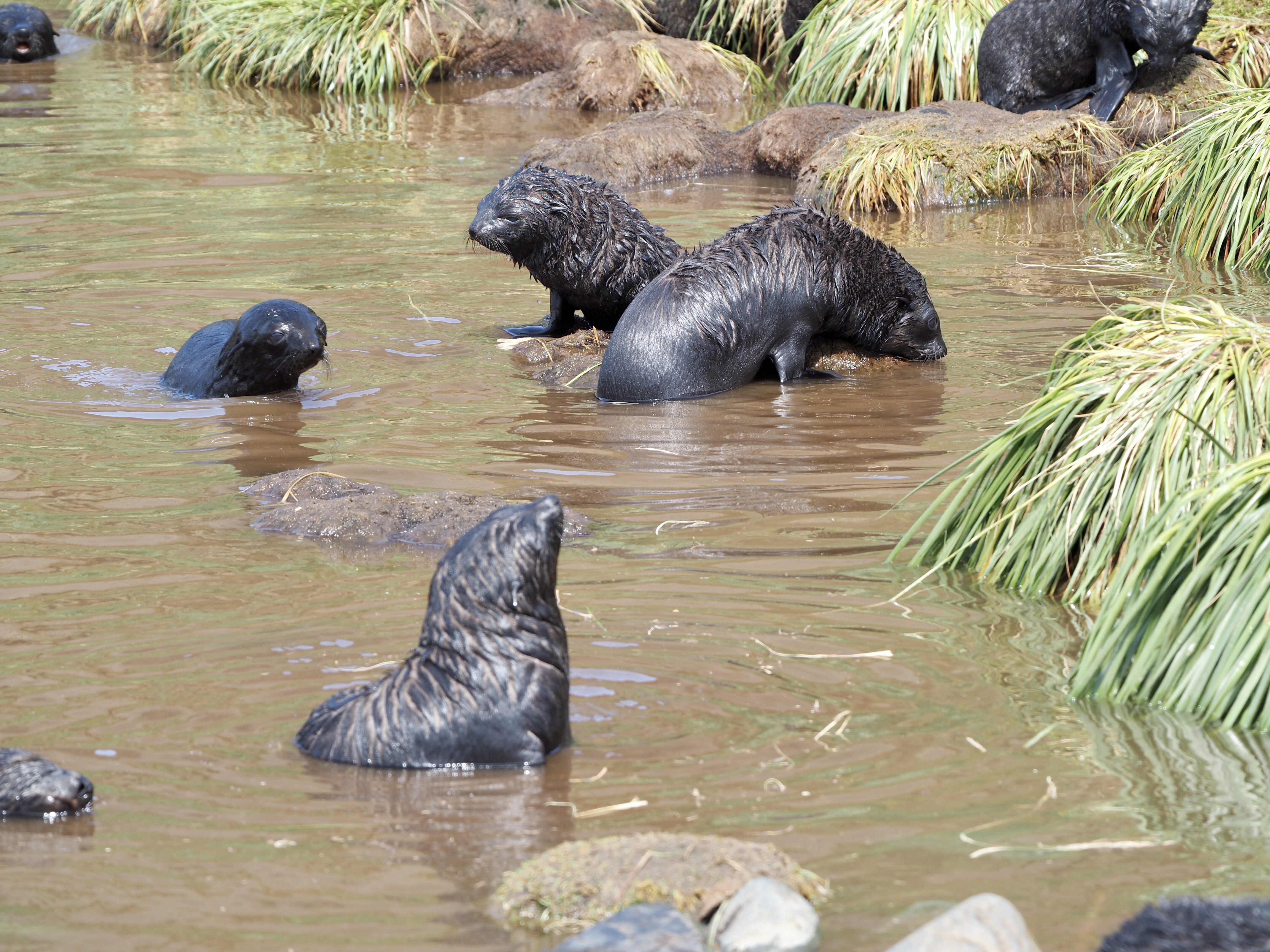
So can you believe that some people were a bit ho hum about the fact today’s morning excursion was to see more fur seals and king penguins as if they had ticked that box and didn’t need to see more. 🤭 However this was a different thing as there were many more elephant seals and also many fur seal pups learning how to swim in some onshore pools.

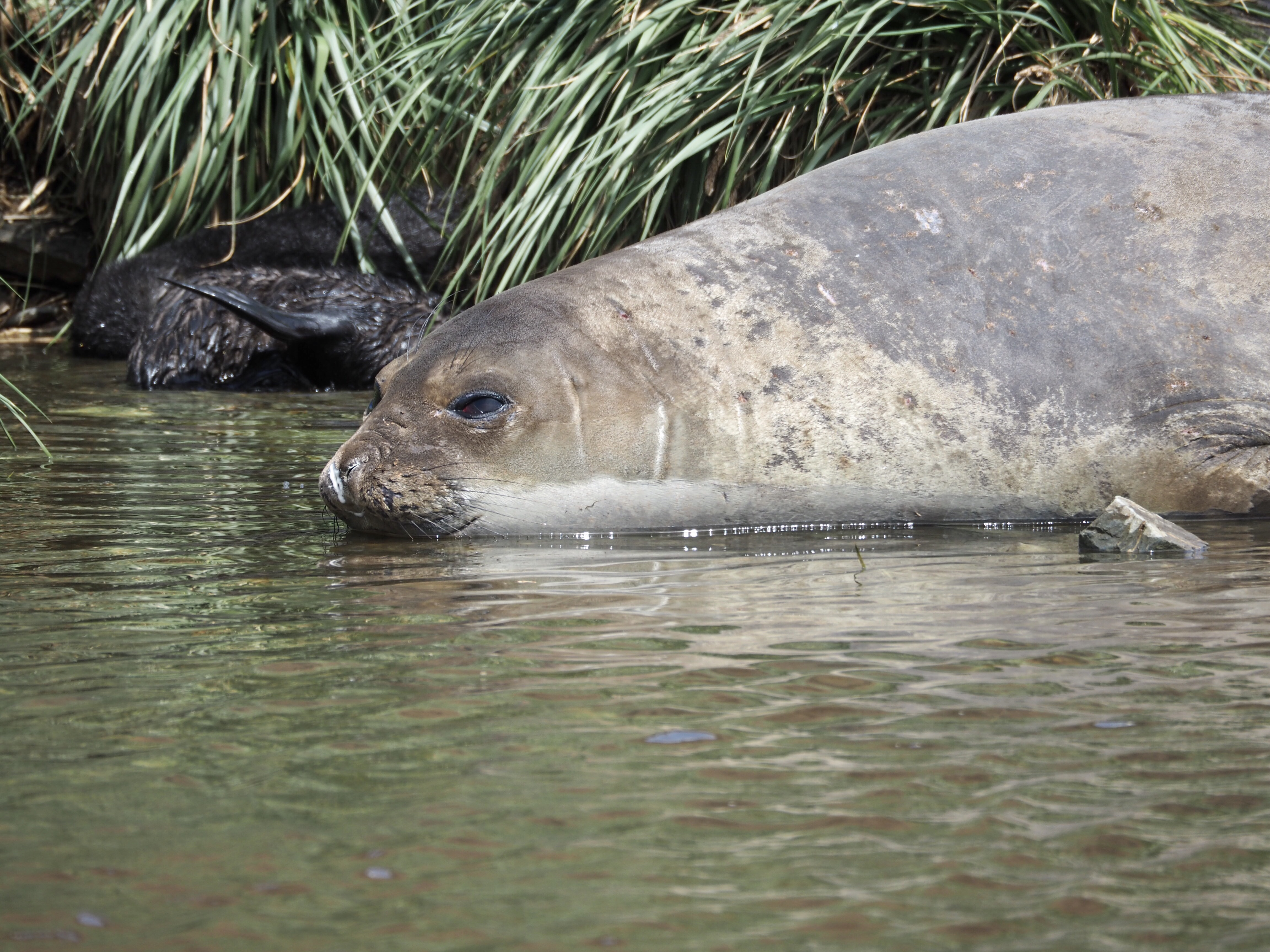
Gotta love the elephant seal pups. Yes these are the pups.

I did restraint myself a bit in the photo department only 74 taken and 36 kept. The wind was actually warm and some of the gusts were so strong I thought I was going to lose my footing.

Giant kelp in the water.
Enjoying the sun.

Found a feeding pup. He ran out of milk and wanted more so tried to get his Mum to turn over.

Swimming school is in.

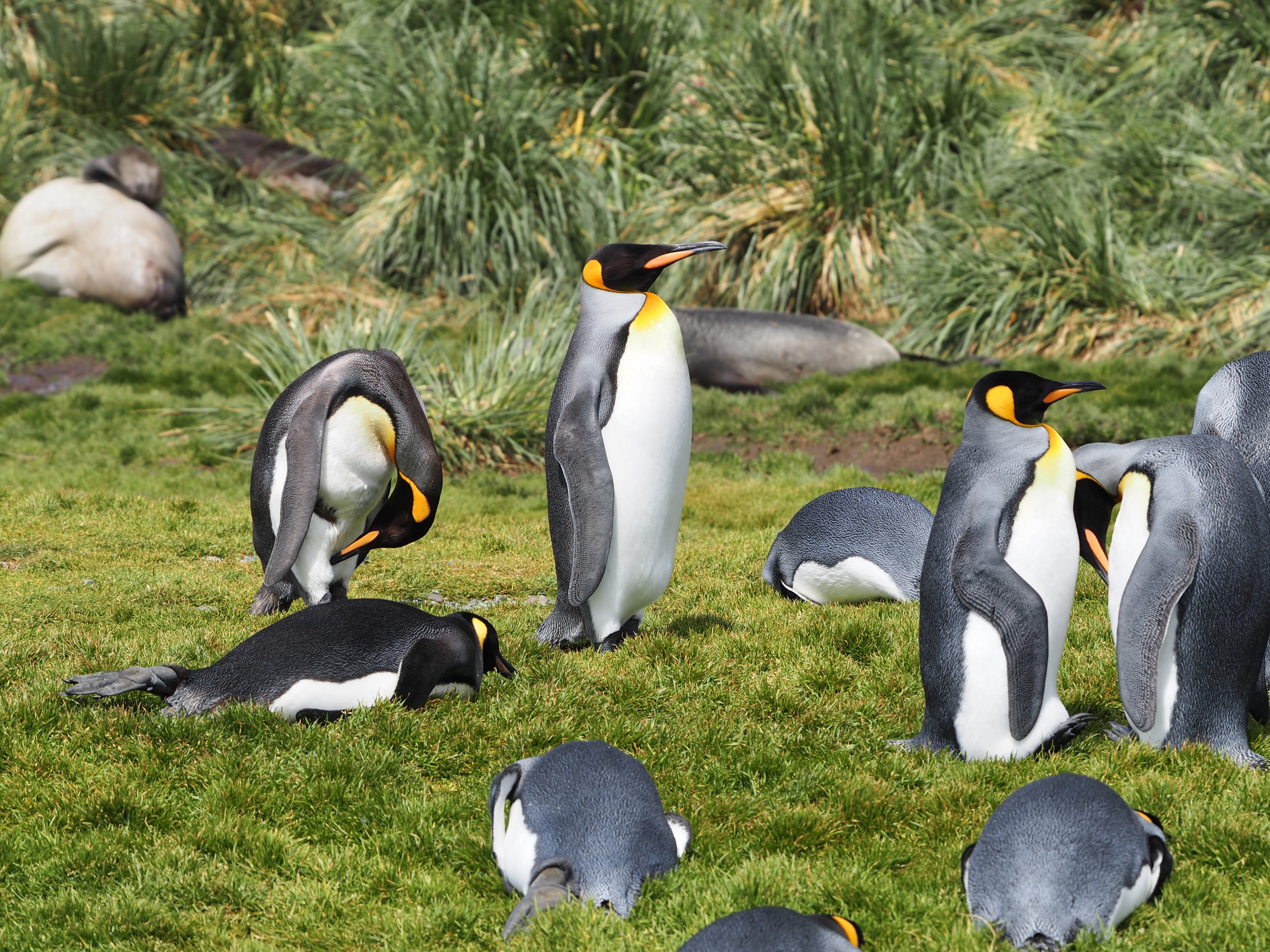
Yes there are penguins here too.

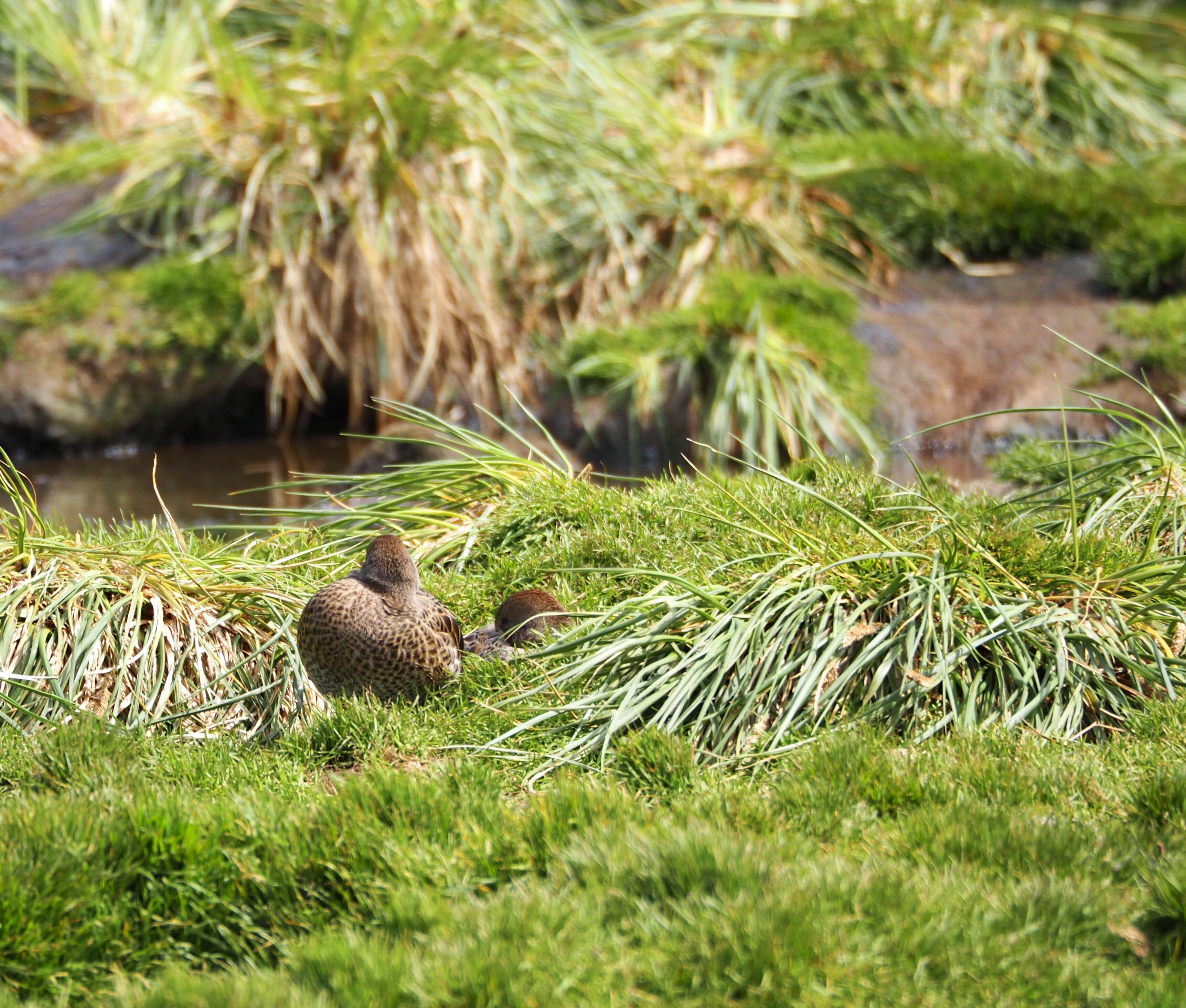
And pintail ducks.

Guides pointed out some lenticular clouds which were an indication of incredibly high winds.

The fact Shackleton was here was a thrill for us. If I haven’t told you before we recommend “Endurance” by Alfred Lansing a definite must read if you are coming here and you MUST come down here.

You do see the odd dead pup or penguin but not as many as I had thought we might see. The green colours here were fascinating. No this one is not dead.

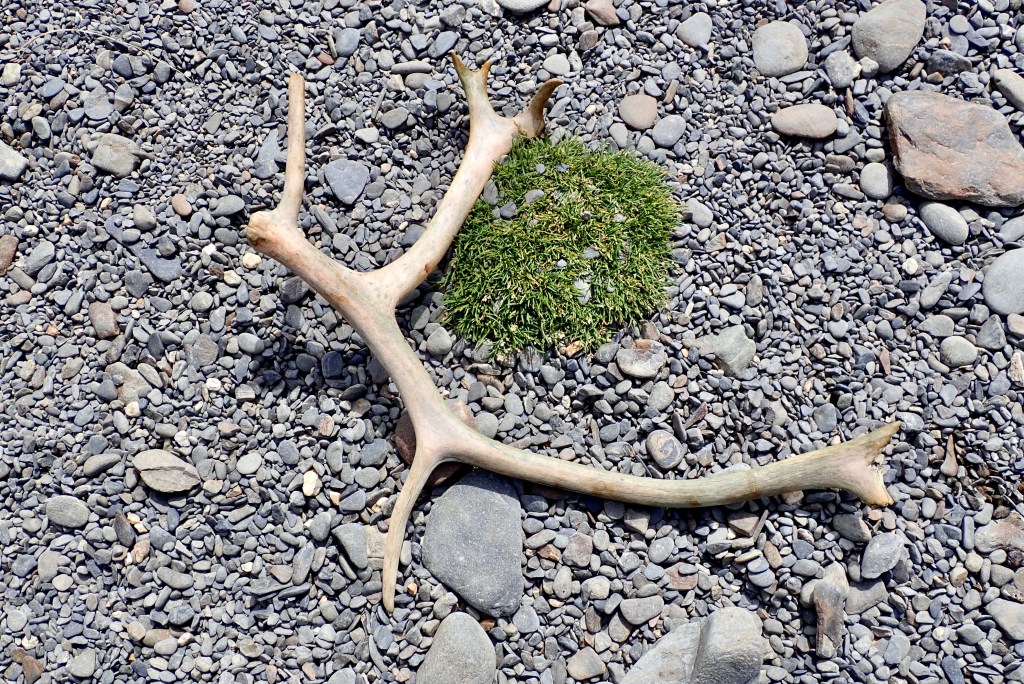
Spotted these antlers. One of the guides thought they looked recent though deer are supposed to be eradicated now.

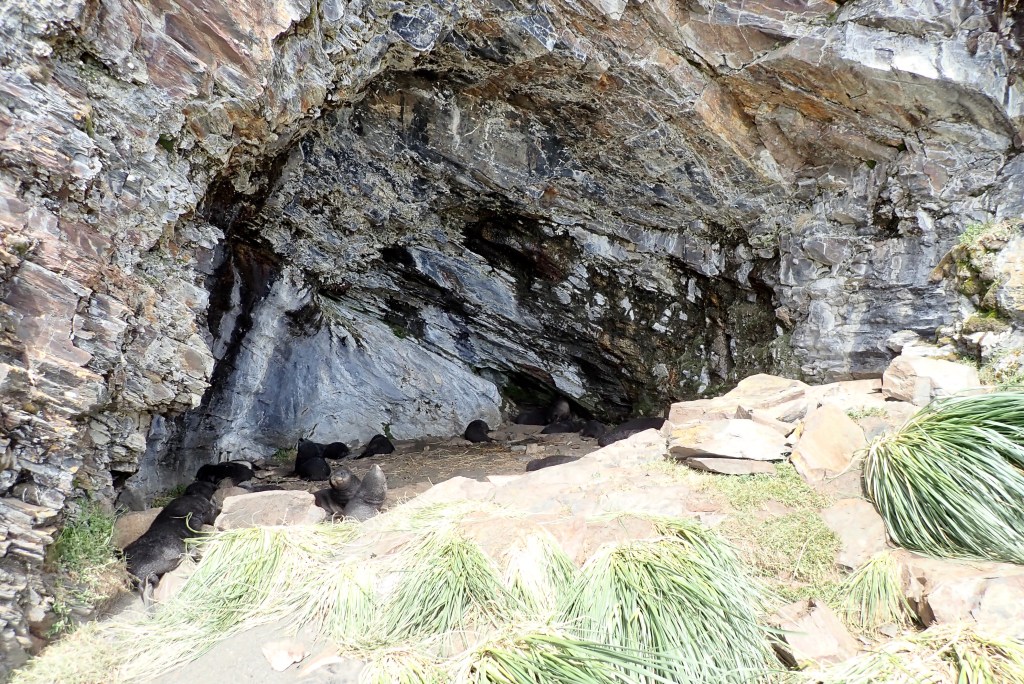
Our guides on the zodiacs are all so well trained and talk to us all the time, the education has been fabulous. Also saw a sealers cave, now, ironically, filled with seal pups.

Spoke to Fabrice (ornithologist), on return about this unusual mark, (dark mark on the side), on a king penguin. He thought it would be a fur seal attack but the penguin looks healthy and feathers are growing back so a lucky miss, probably at least twelve months ago.

The elephant seals are young ones and fasting. They were fed by their mothers for four weeks and then they are left until they lose enough weight and their moult is finished and then they start hunting for themselves.

Cheryl and mike were part of our cruising party today.

Always seals around and I finally managed to catch one with their head up – at last!

When we return to the ship they start by spraying our boots with a high pressure hose, then we walk through a solution (Virkon) before heading back to the mud room. We need to use the stations to ensure every speck of mud, seeds, sand and pebbles are removed before the next excursion. Garrie has taken on this task for both of us whilst I sort out the hundreds of photos and recharge the camera gear for the next amazing trip. This afternoon is Grytviken which we can’t wait for. Ciao for now.

South Georgia – Salisbury Plains

Two blurbs on this amazing place:

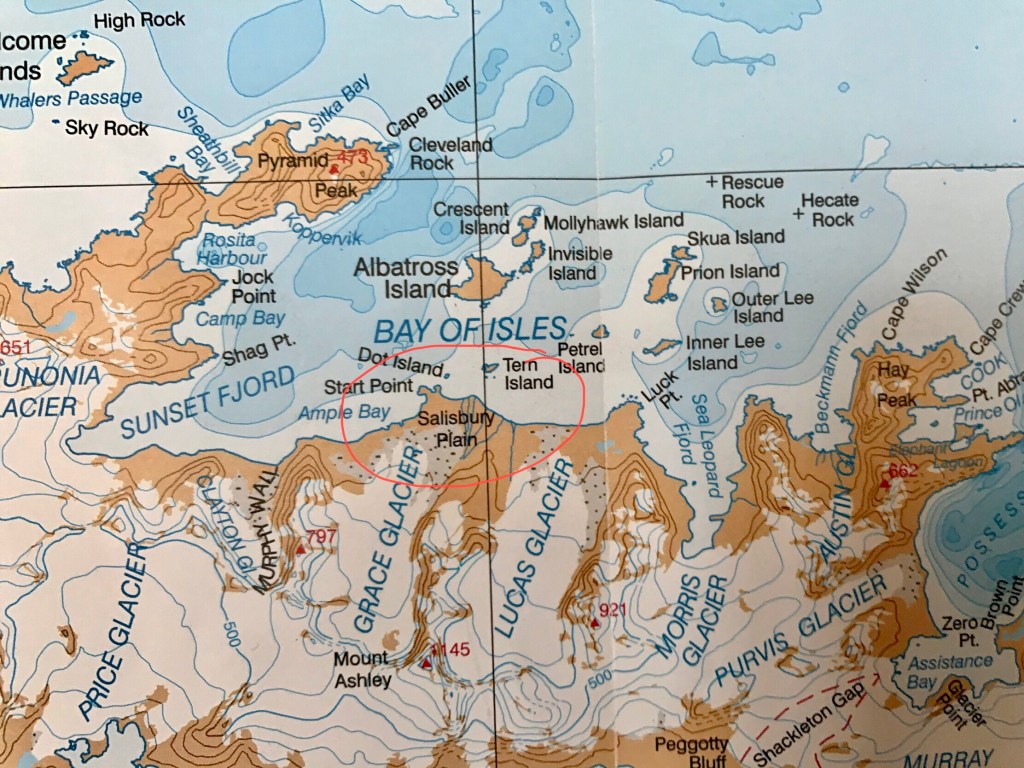
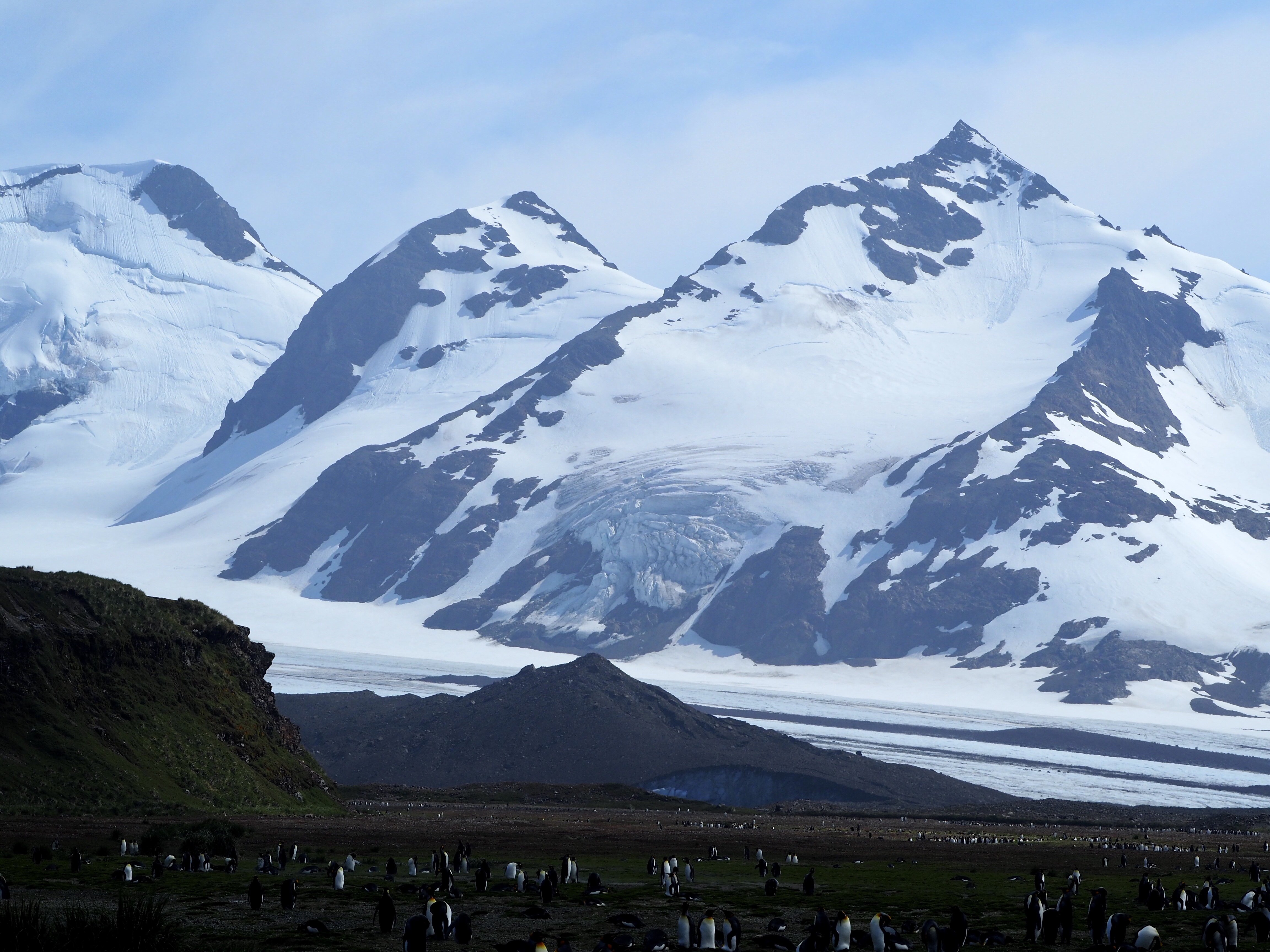
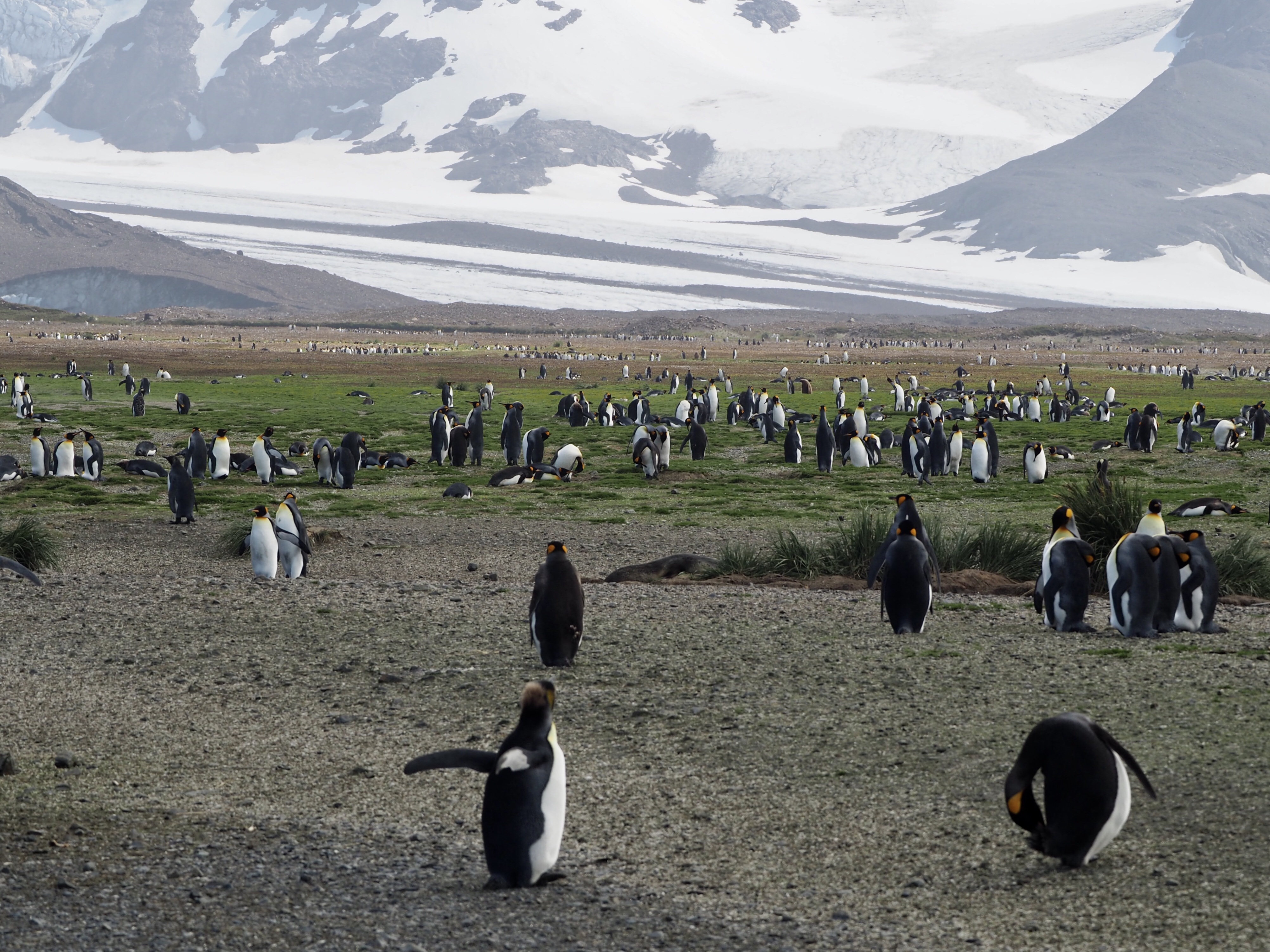
One of the largest king penguin rookeries on South Georgia is located on Salisbury Plain. The Murphy and Lucas Glaciers flank the plain, creating a perfect backdrop for photos.

Salisbury Plain lies on the southern most shore of the Bay of Isles, 50km from the western tip of South Georgia. It has the second largest king penguin colony on the island with an estimated 60,000 breeding pairs. This indicates an extraordinary population increase as only 350 breeding pairs were counted at this site in 1912. Historically, Salisbury Plain was a favoured hunting ground for sealers during the 19th century where both fur and elephant seals were taken in large numbers.

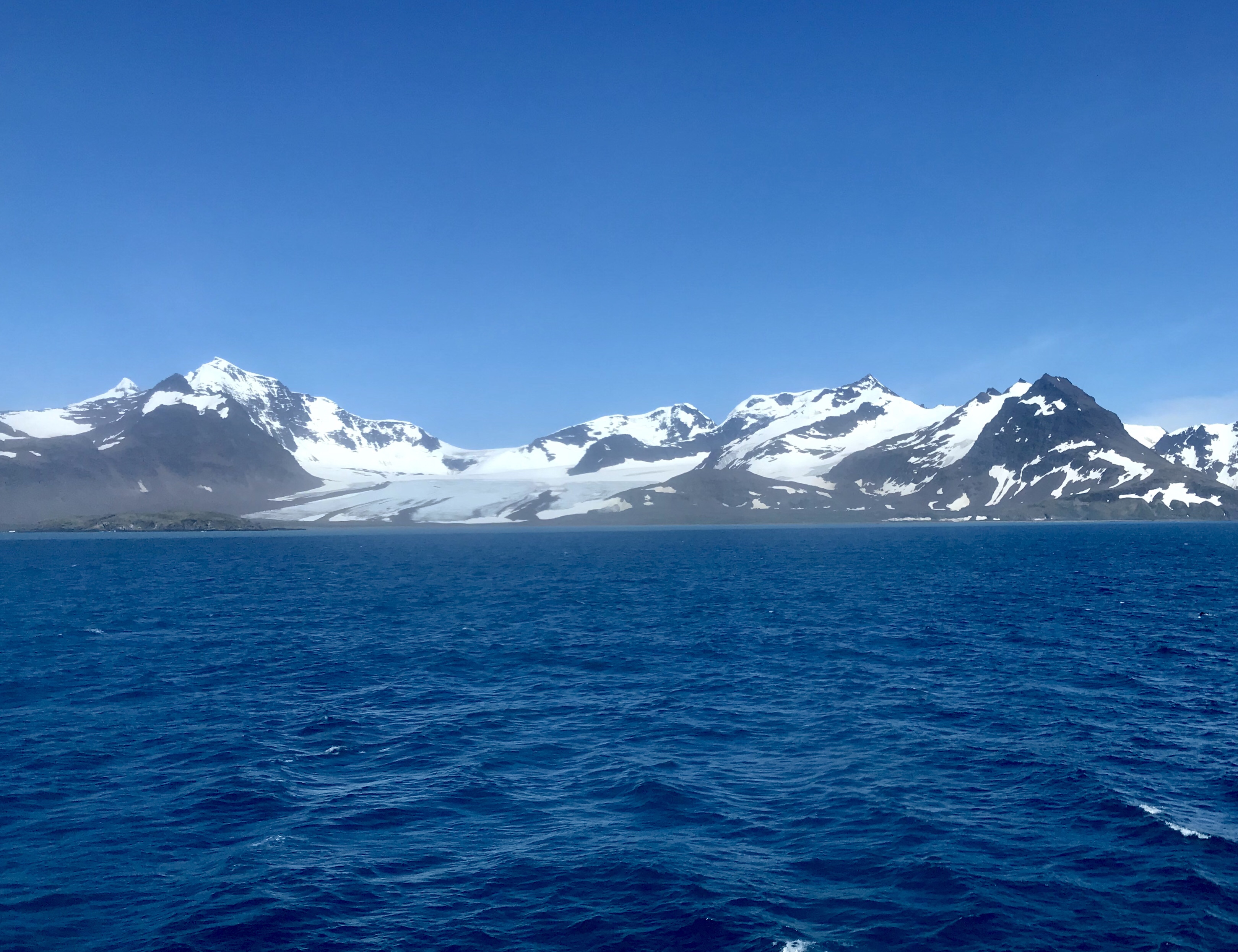
It was magical as we sailed in.

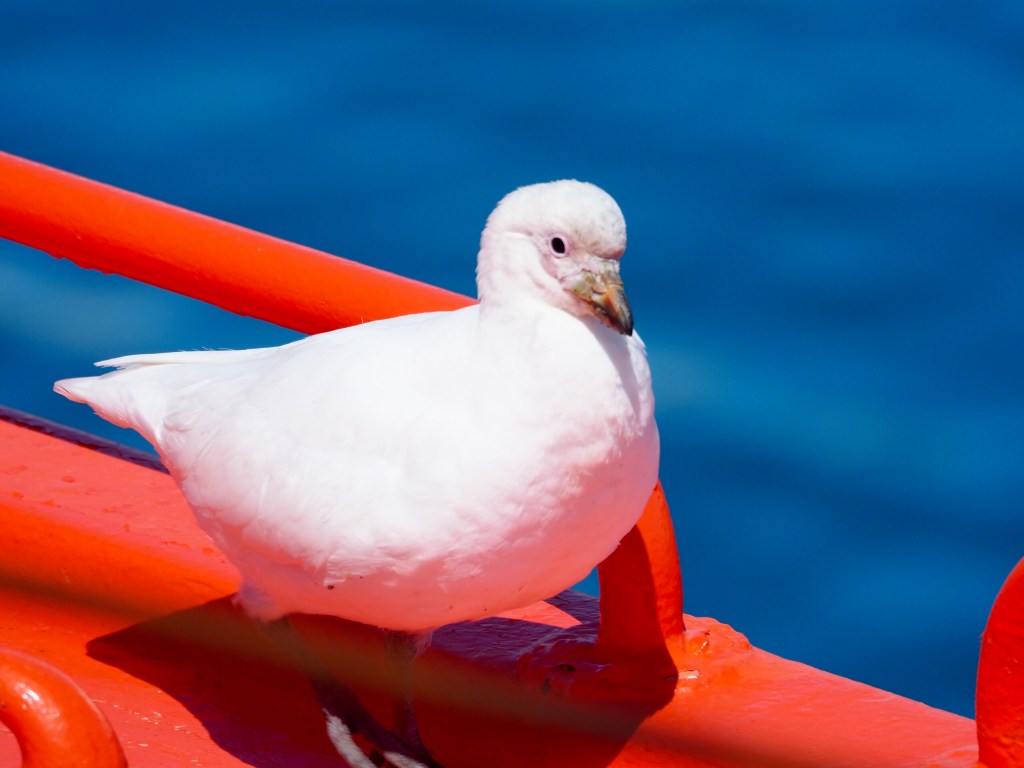
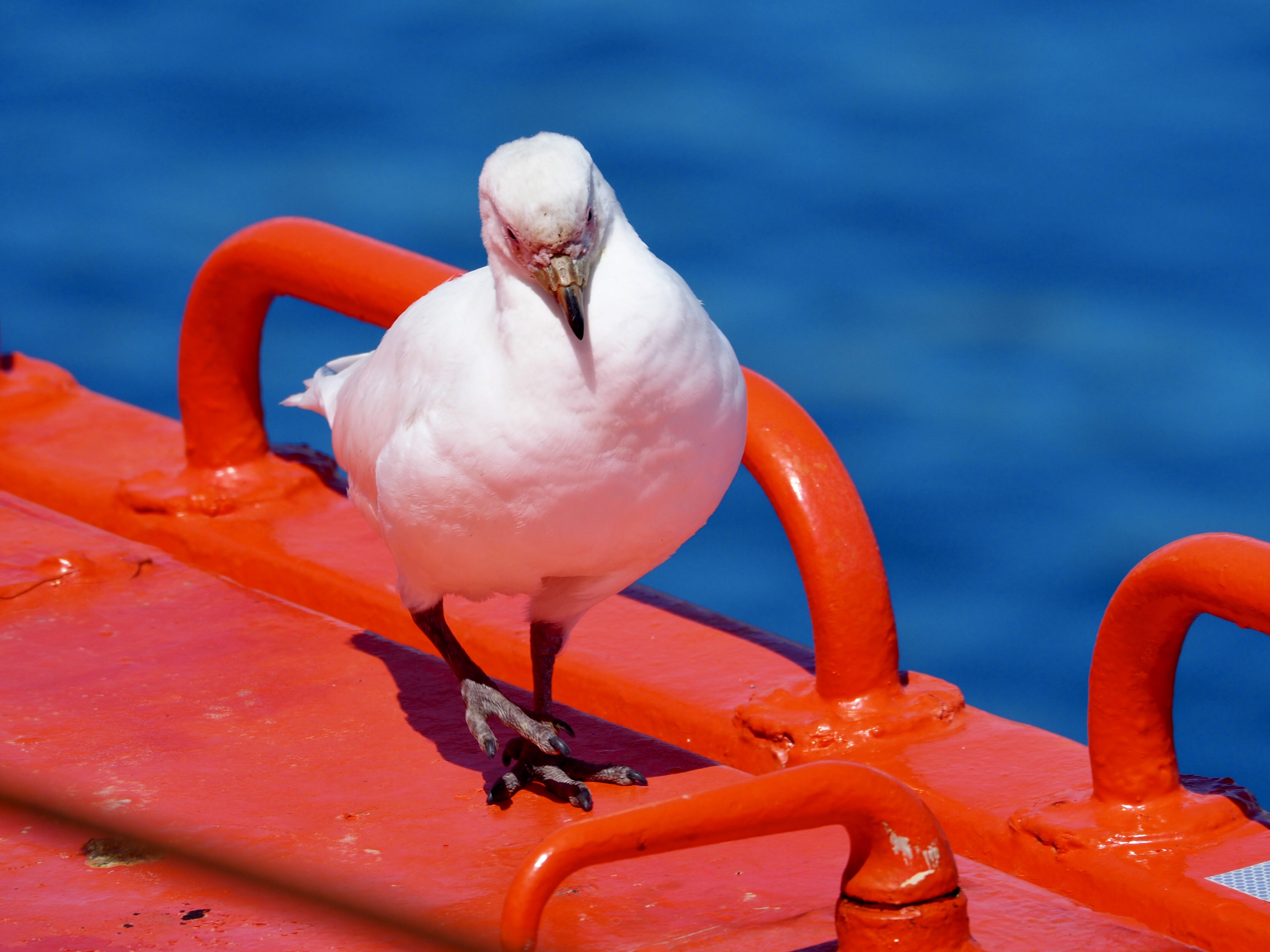
A snowy sheath bill joined the ship.

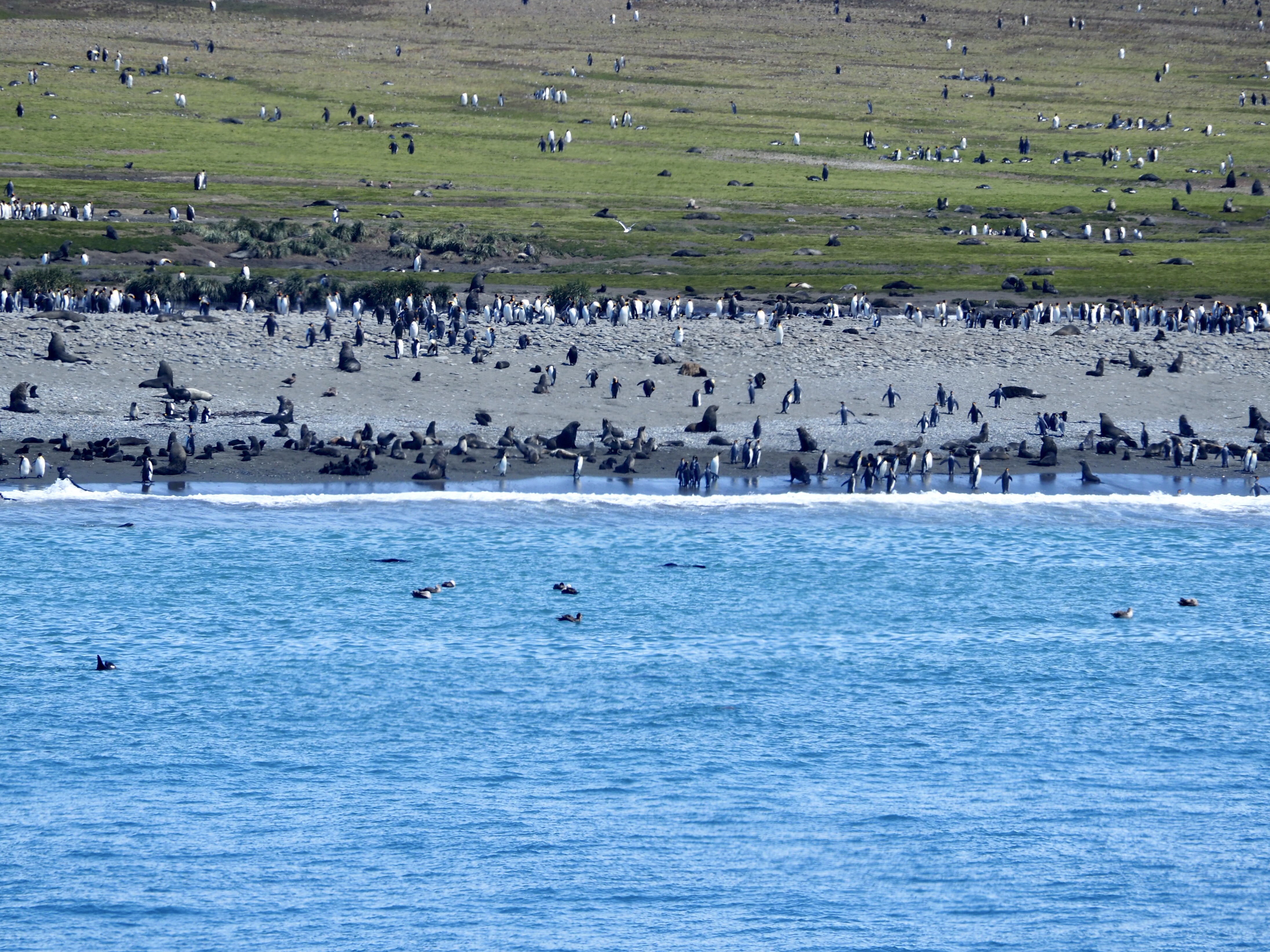
Plenty happening onshore and in the water around us. Seals and penguins.

We were first off the ship and so excited to get on shore. This little guy was the first to catch my eye when we arrived.

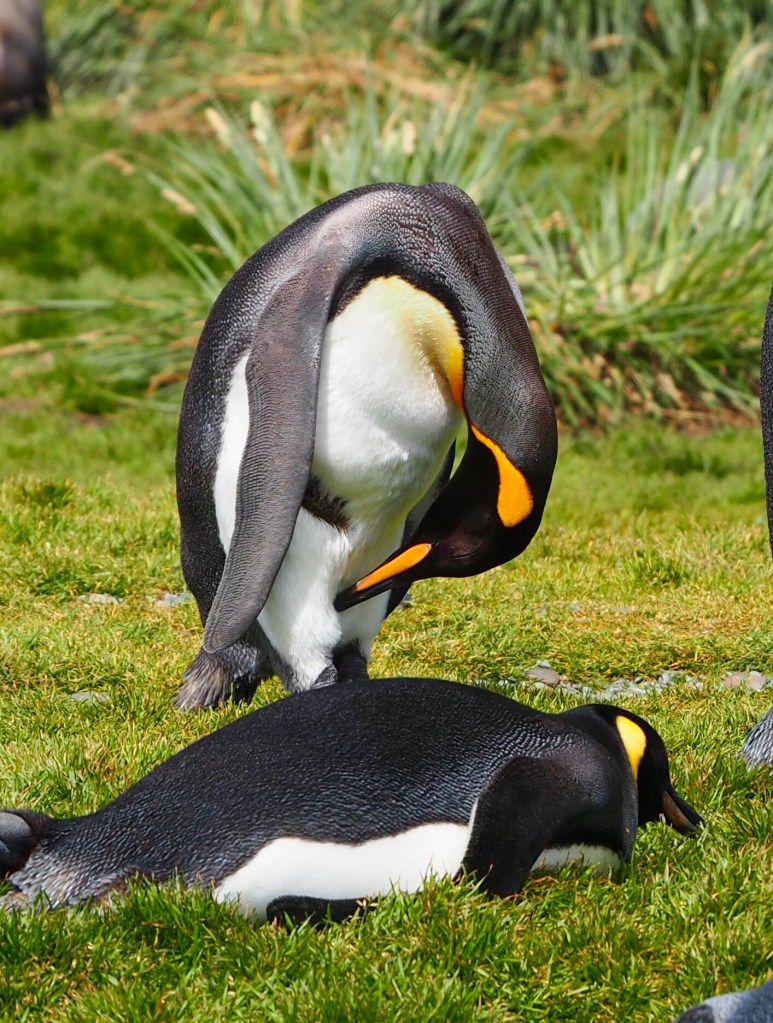
Then a king penguin doing his morning exercises.

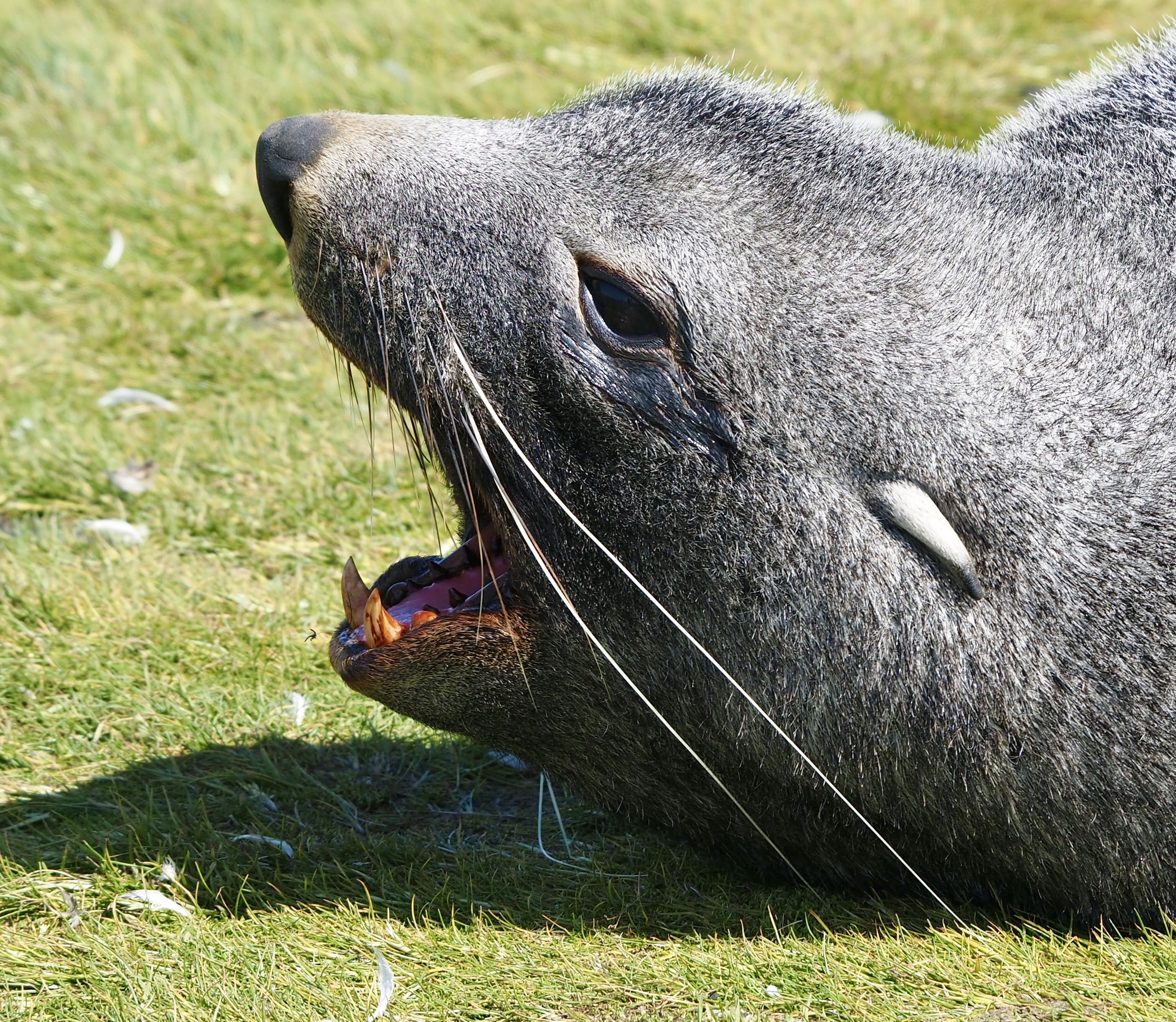
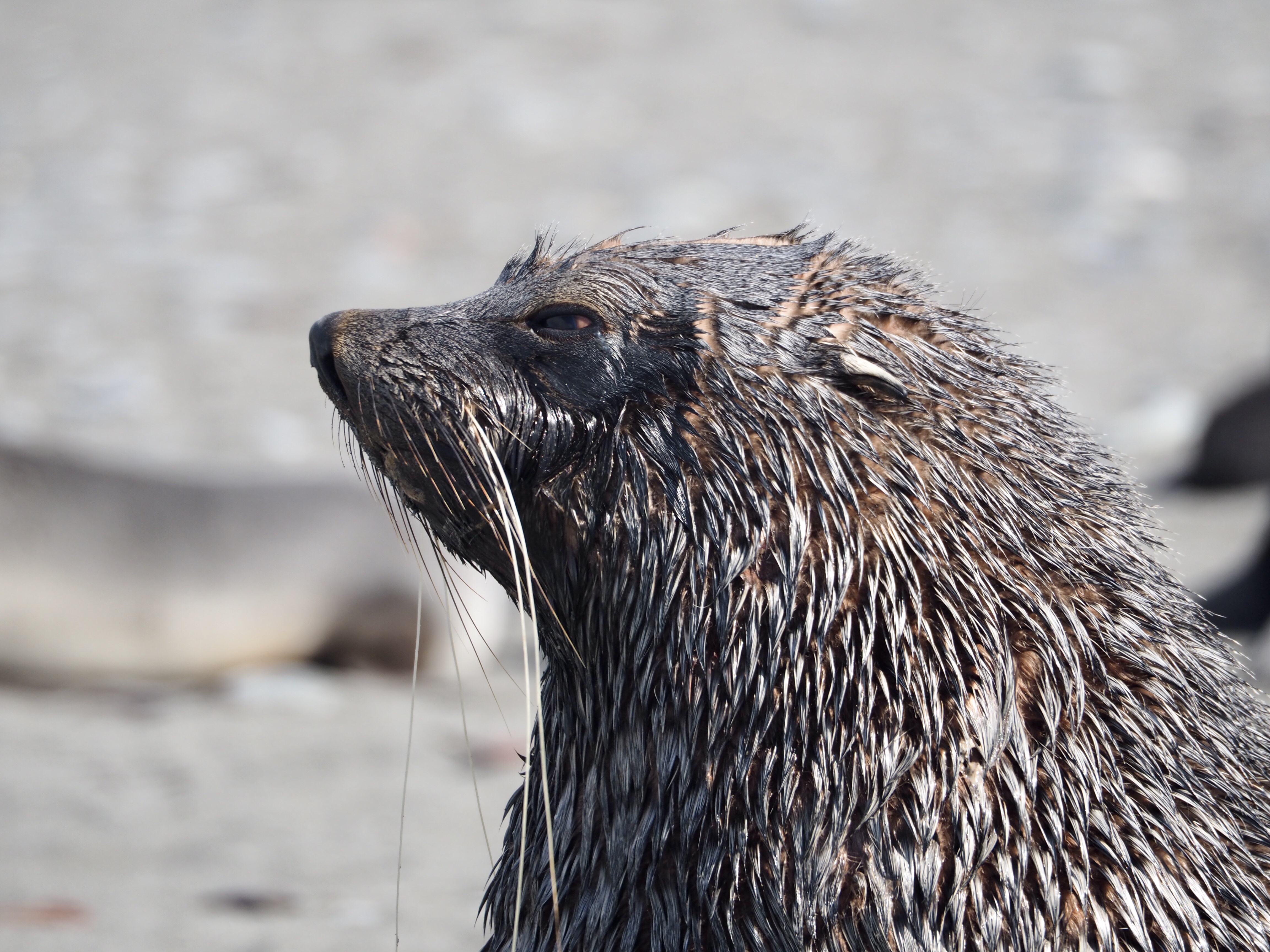
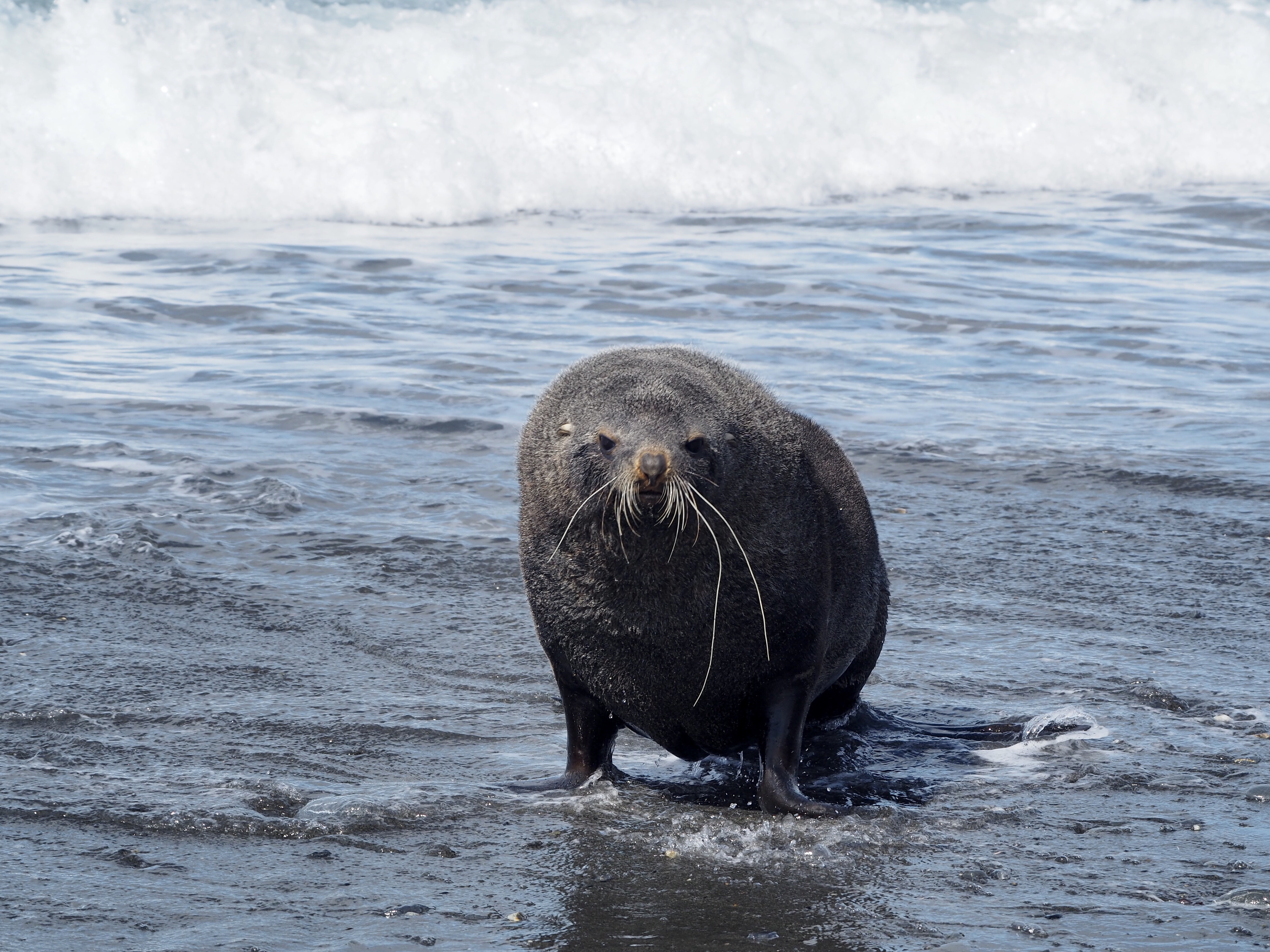
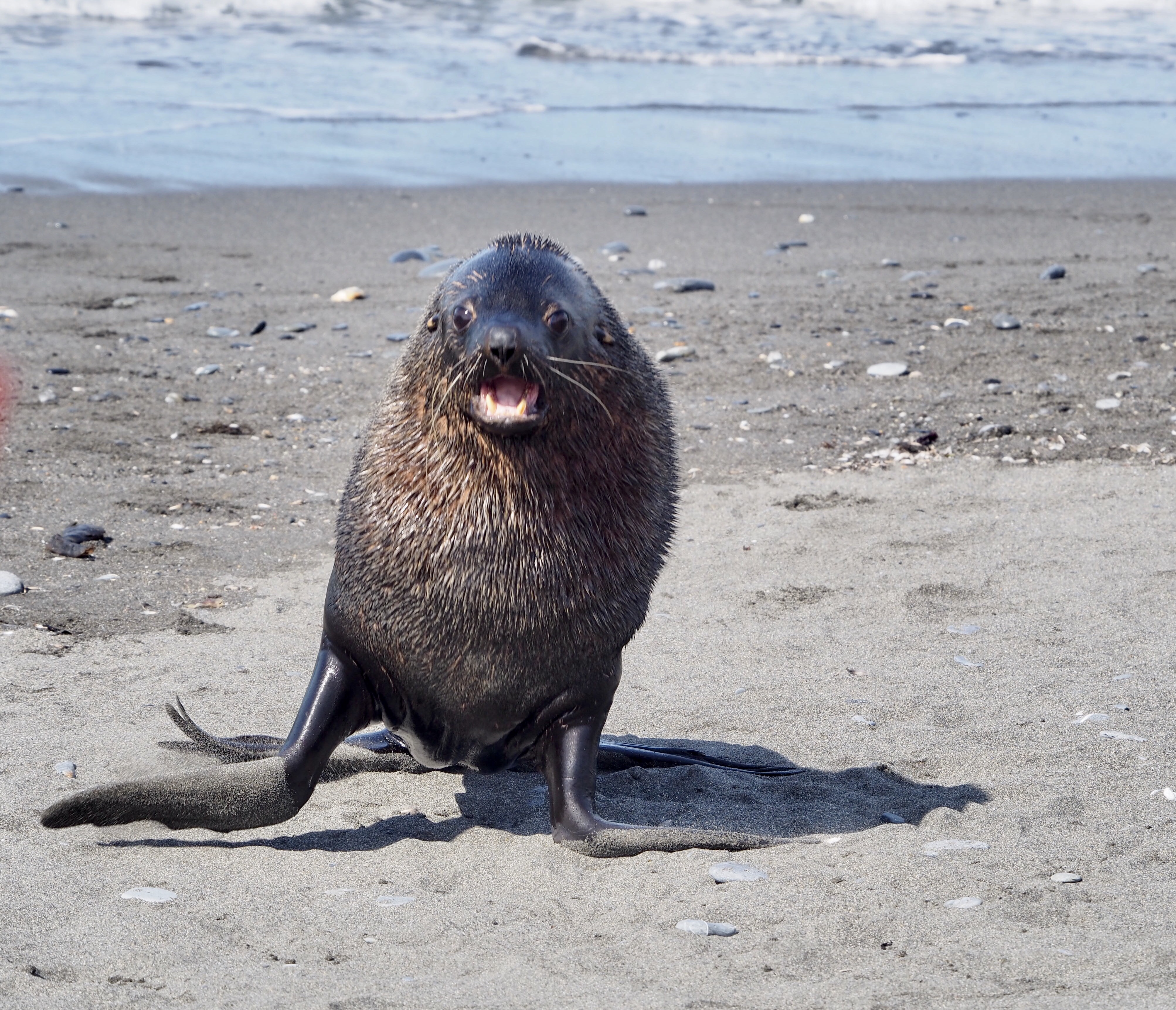
Garrie kept a watchful eye on the cranky fur seals whilst I kept taking photos. Check out the teeth on this one!

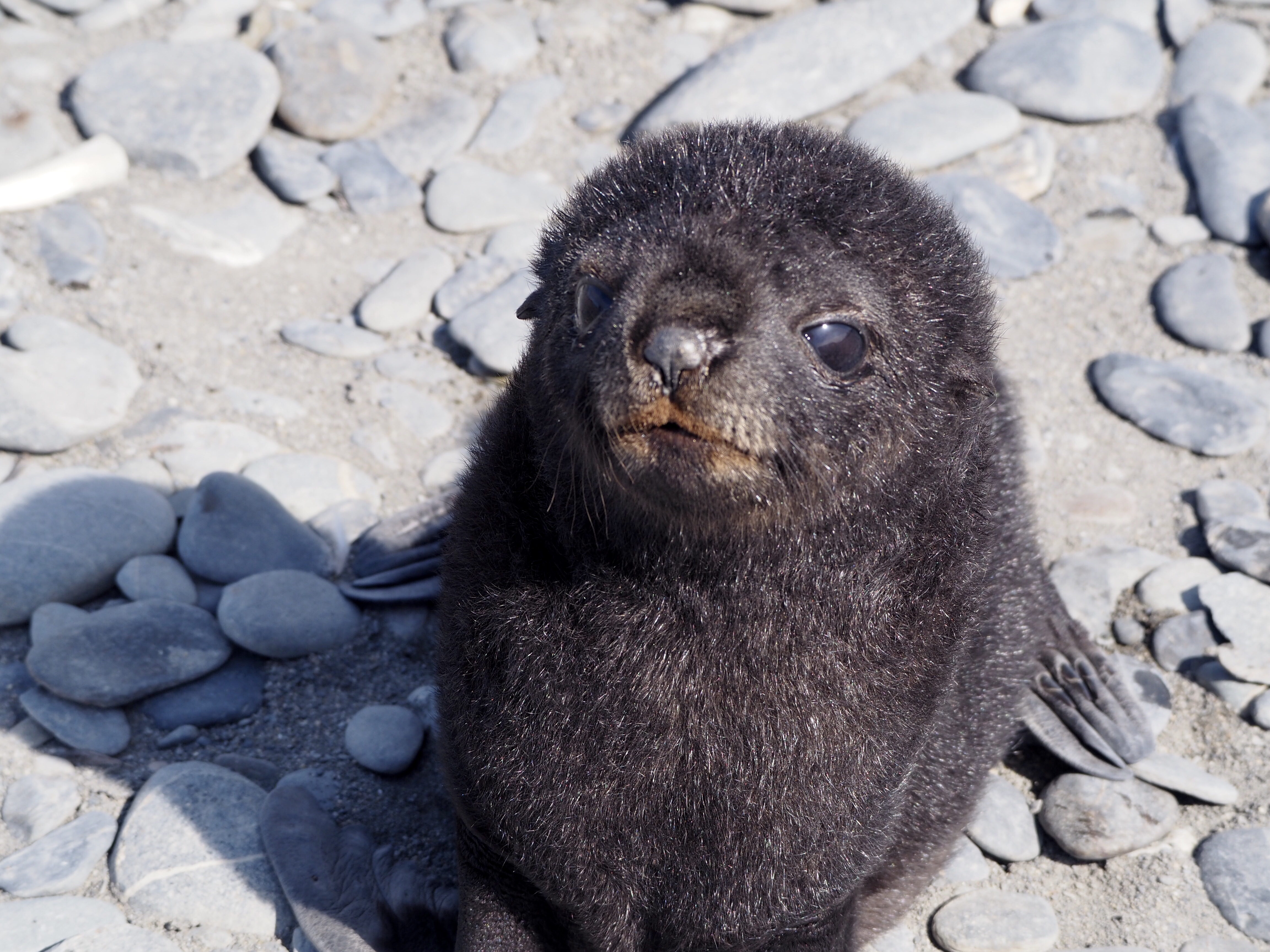
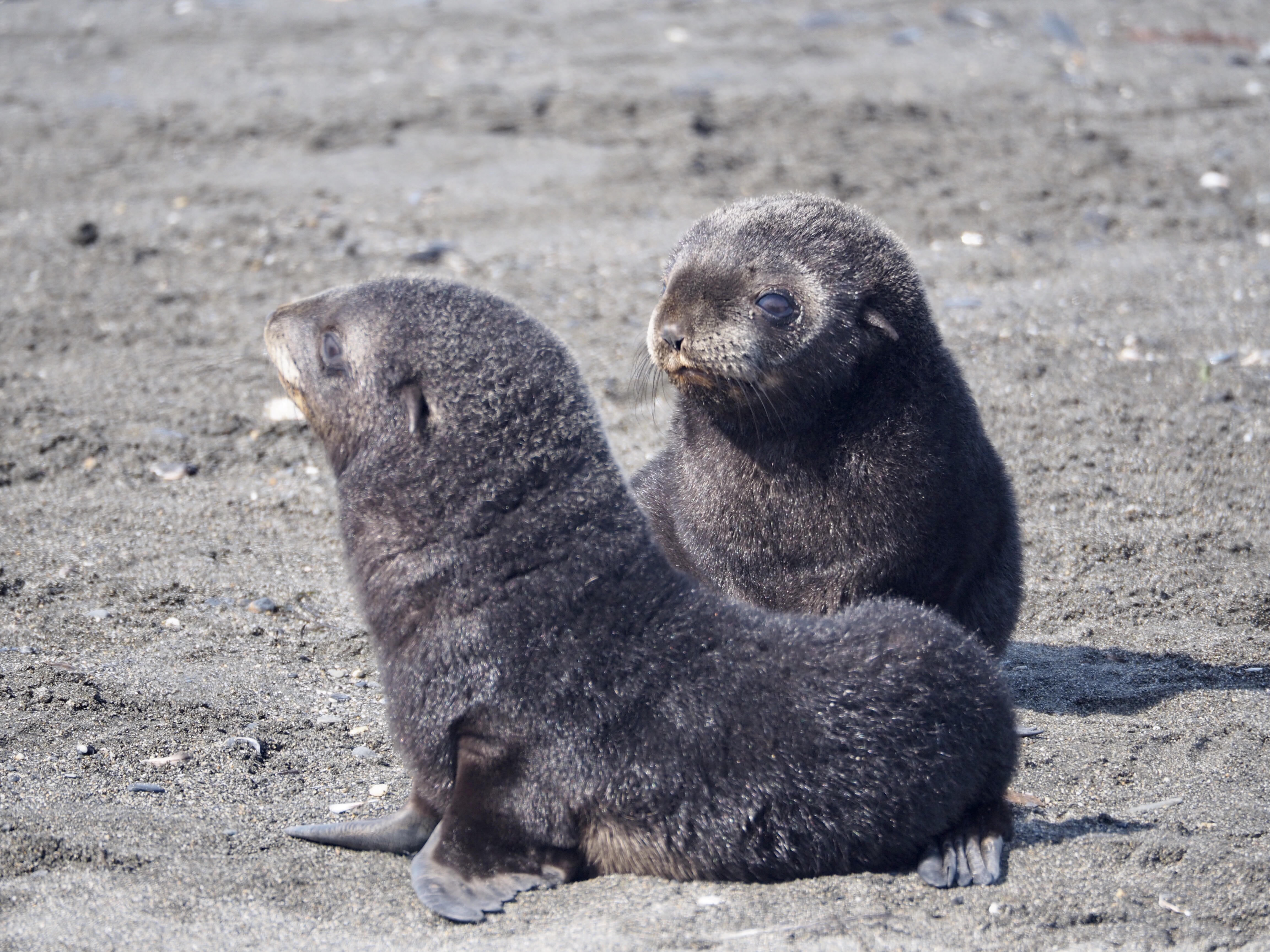
Though the big guys are cranky the pups are just gorgeous.

Just like being in a David Attenborough documentary – again!

The elegance of the king penguins meant I took loads of photos again.

You are just so close to everything, though I fear I had Garrie’s heart under pressure when I stopped near fur seals, most of which didn’t seem much bothered.

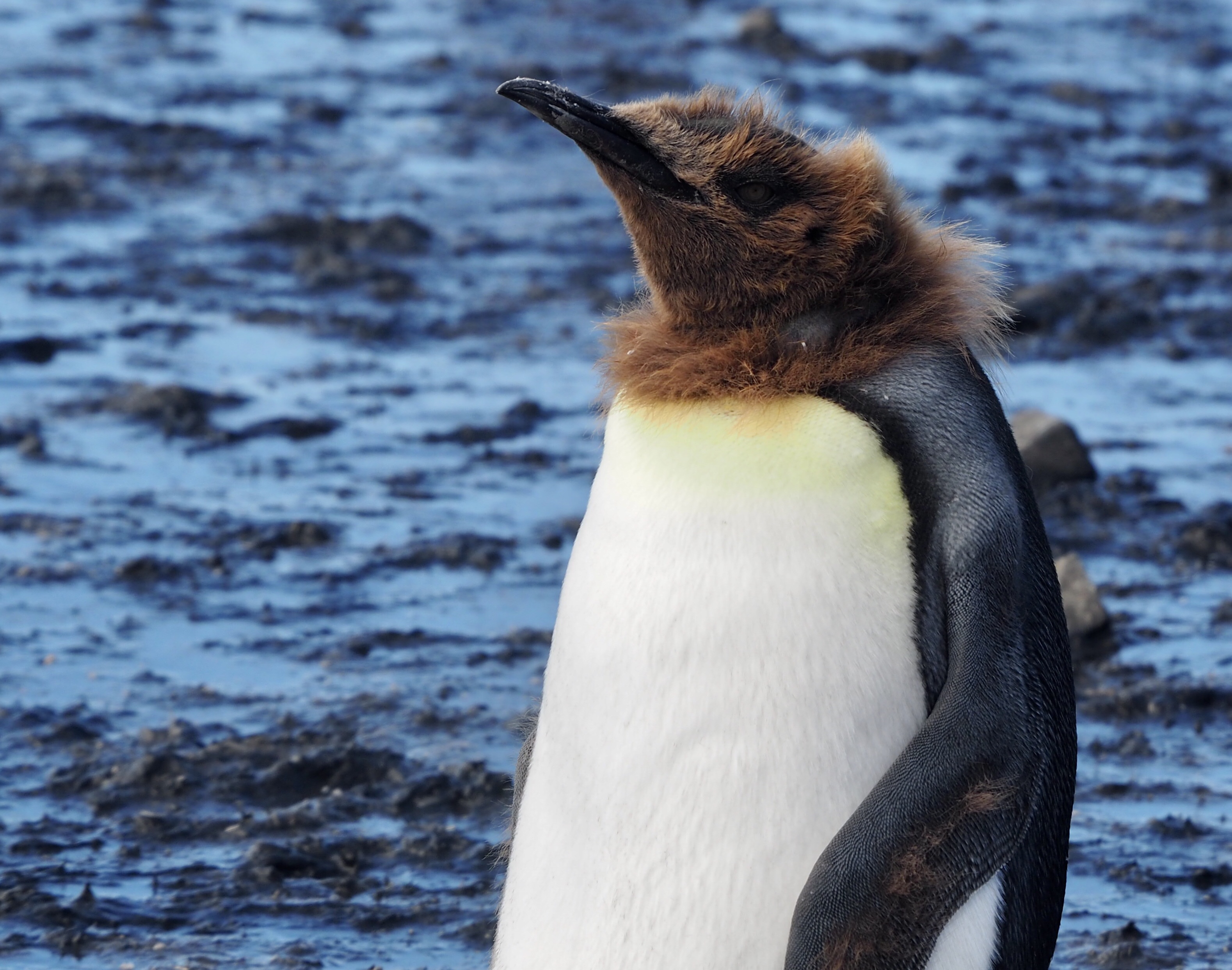
This is an adult penguin in moult.

They are just so photogenic.

Whatever they are doing…

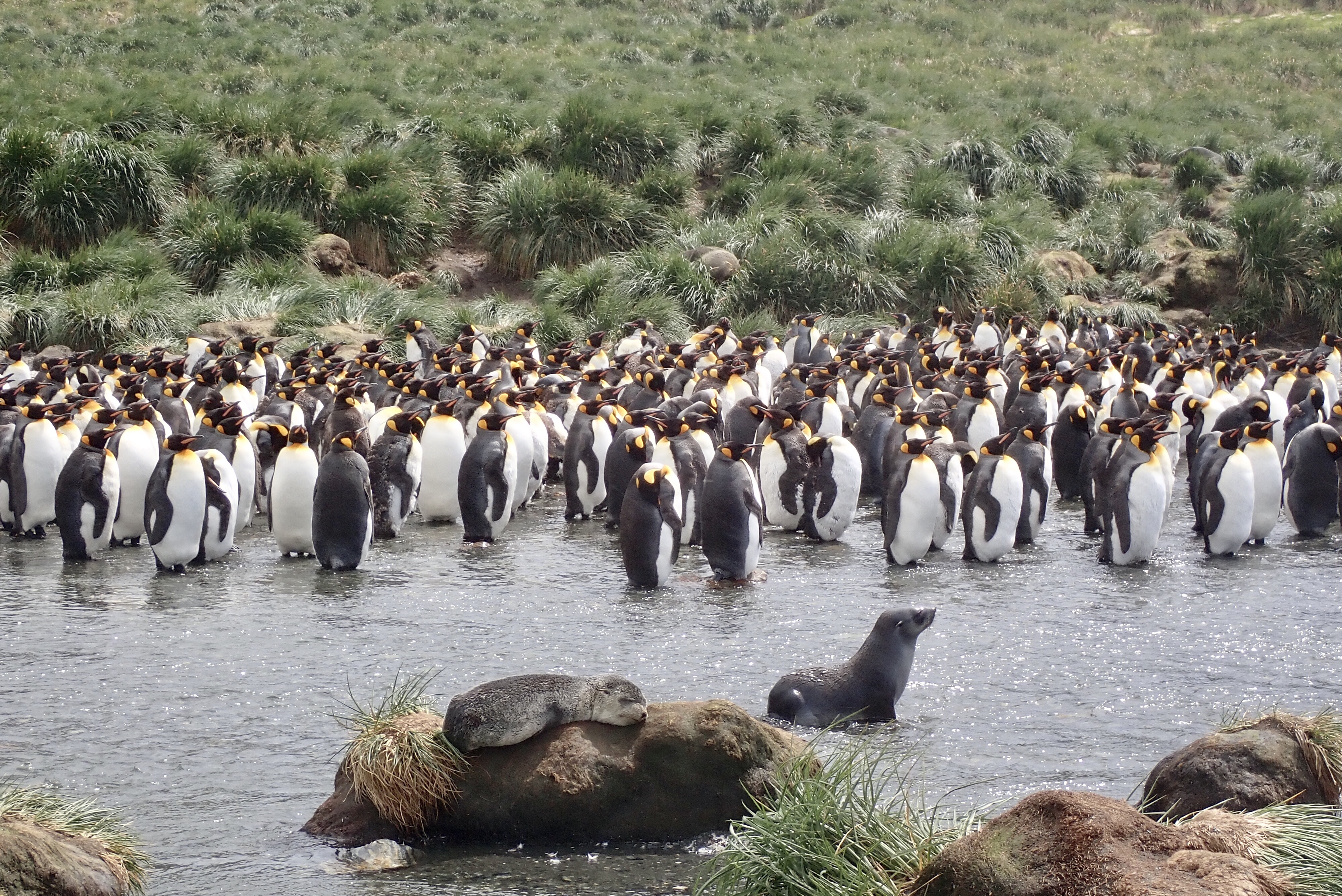
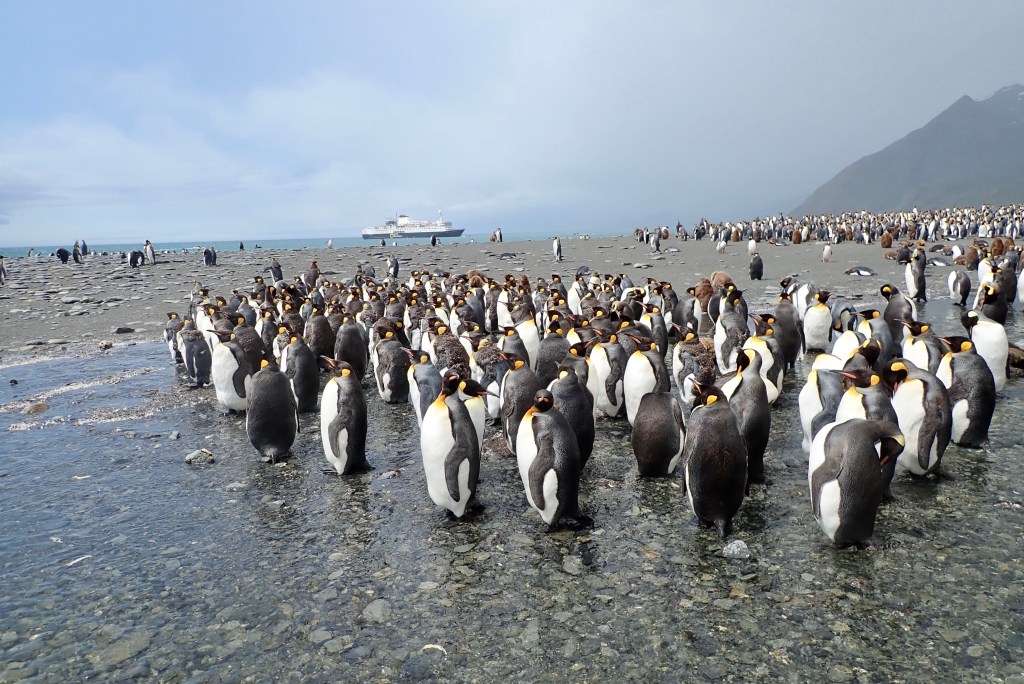
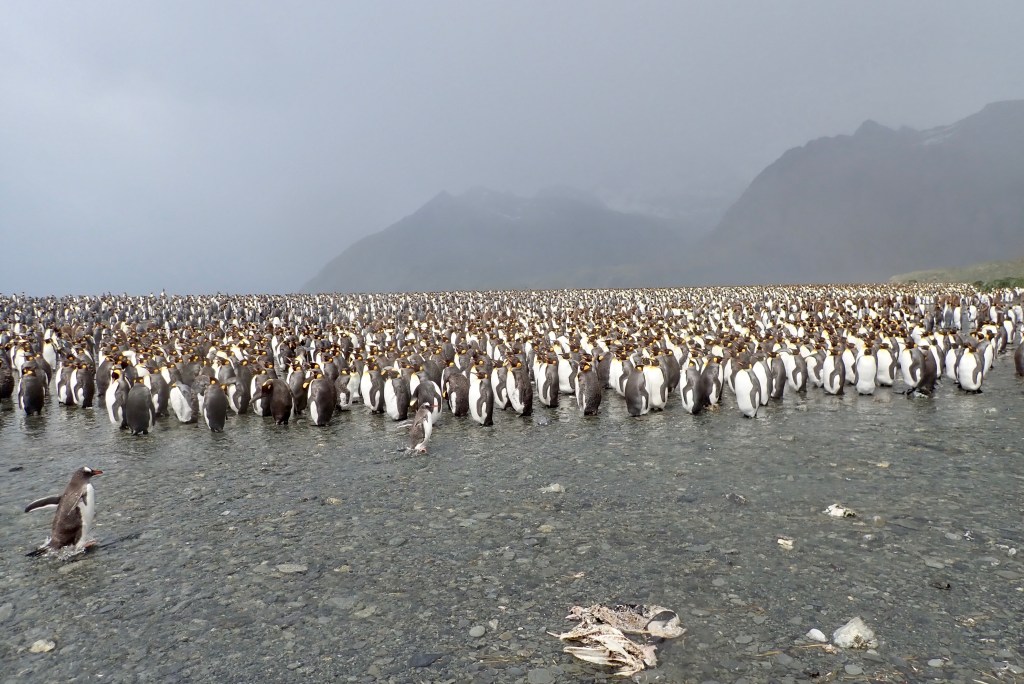
As we walked further the numbers grew, with many standing in water to keep cool.

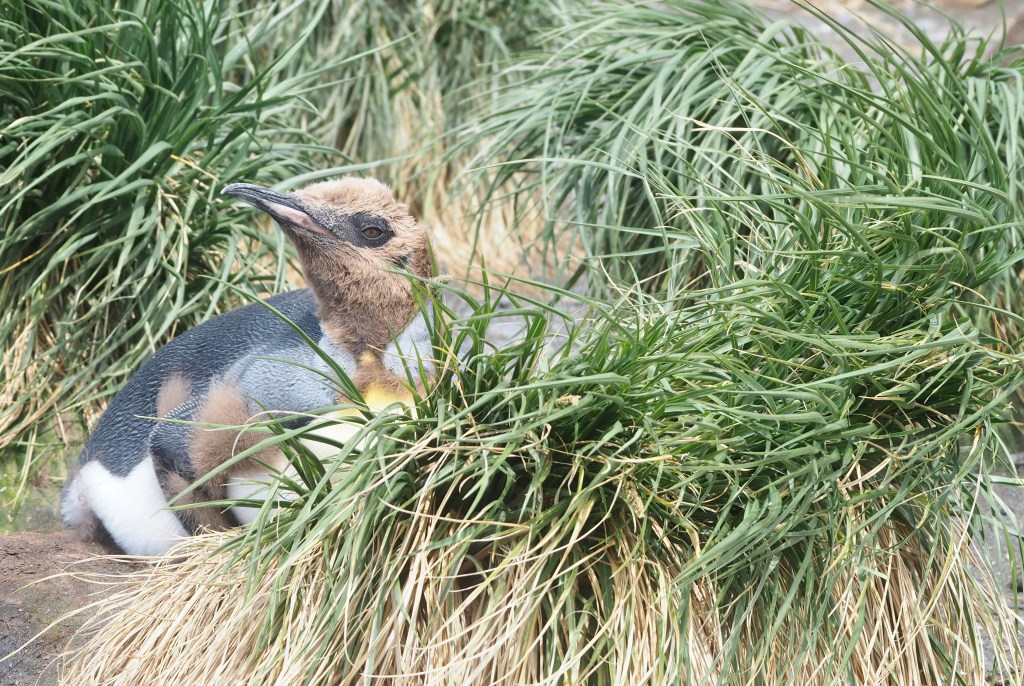
When first discovered it was thought there were two types of penguins here: king and wooly.

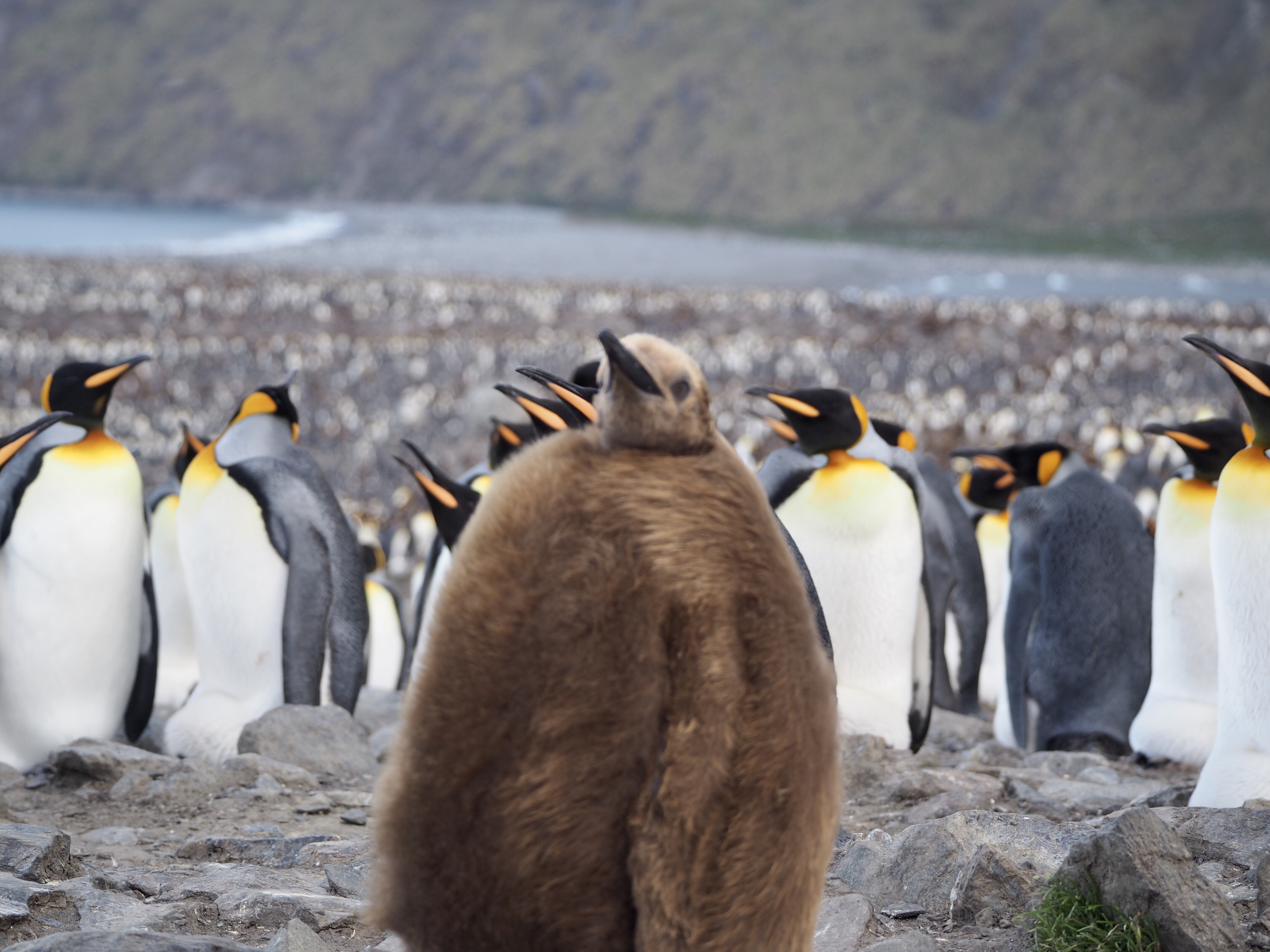
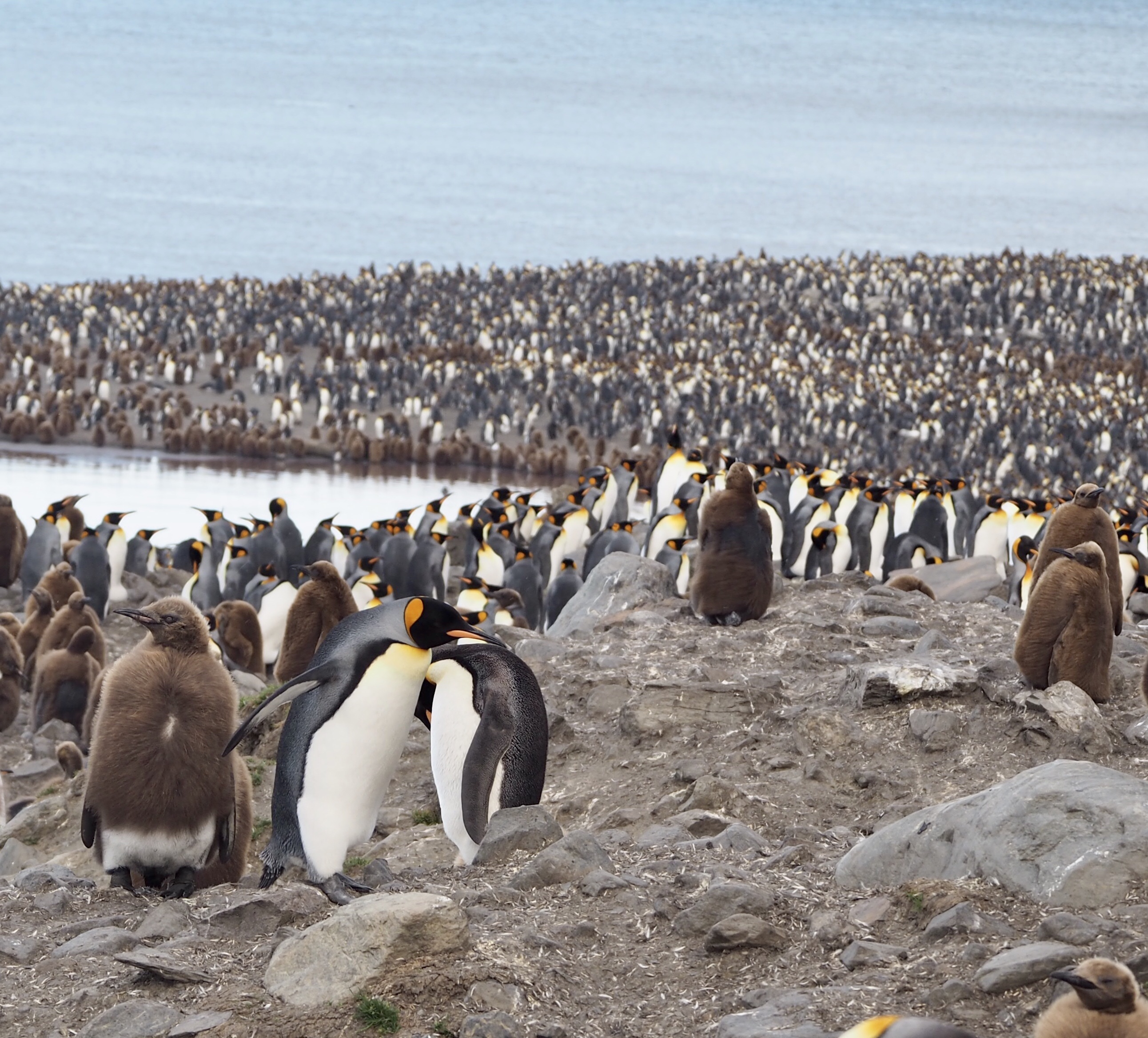
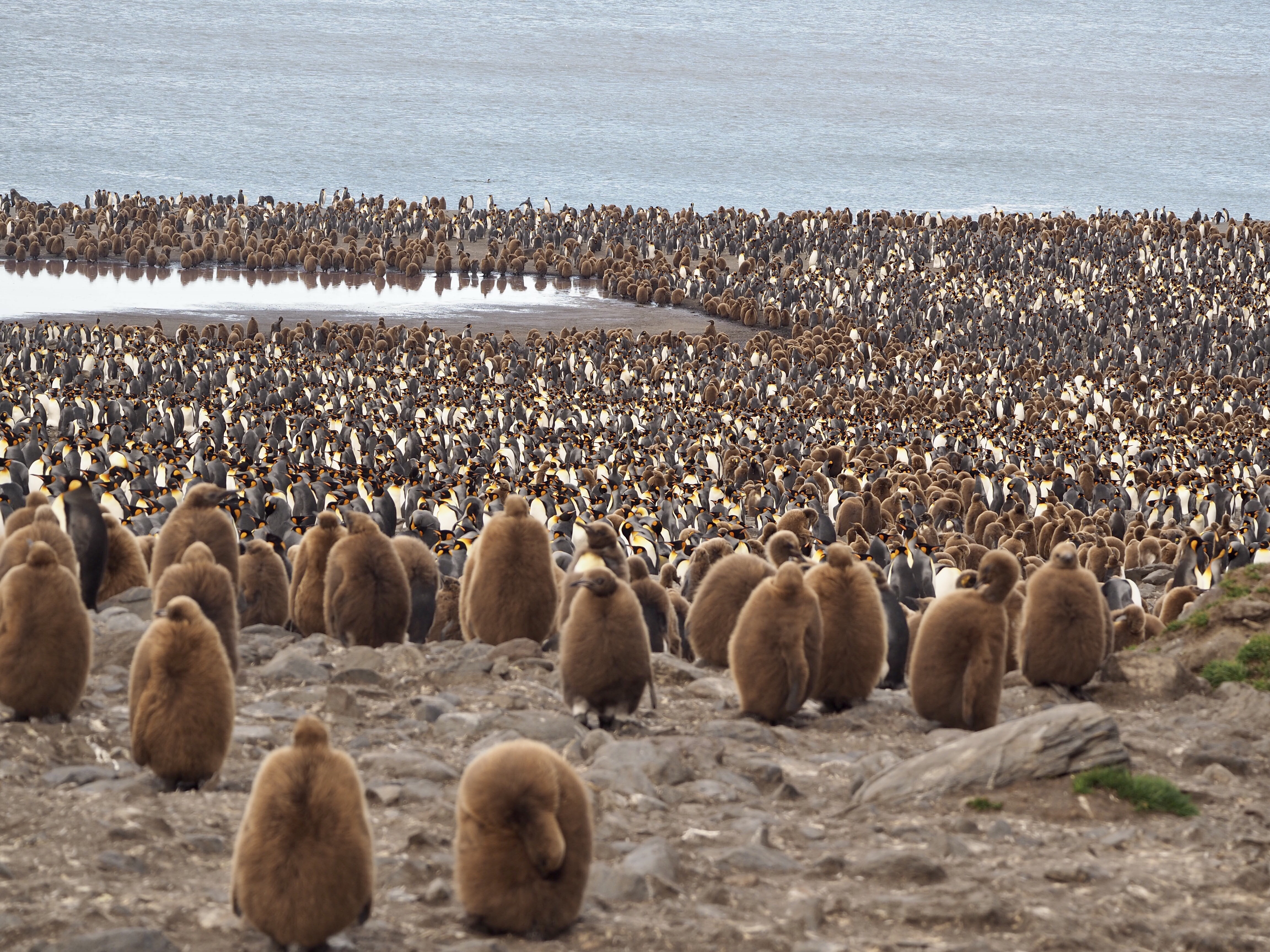
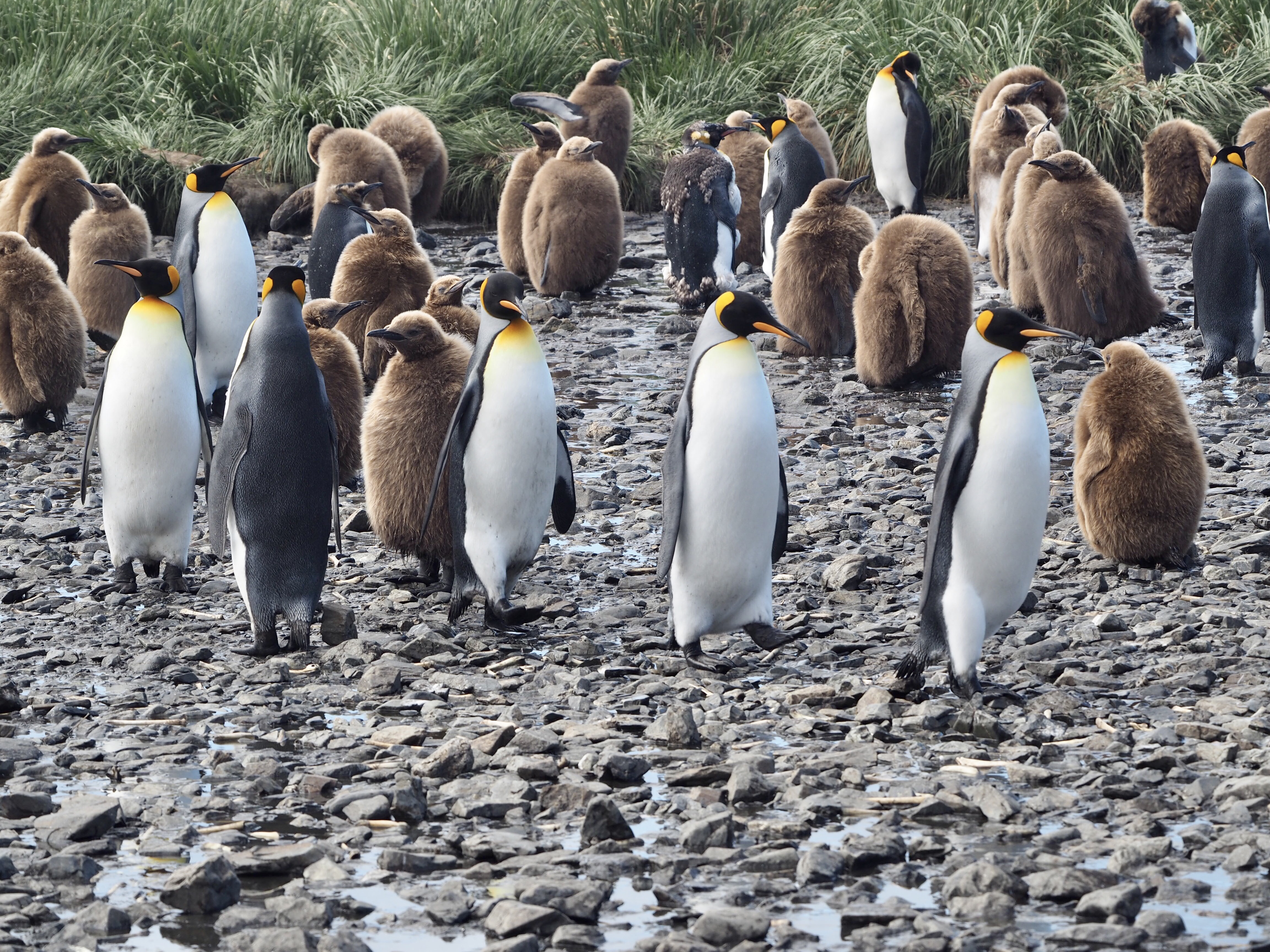
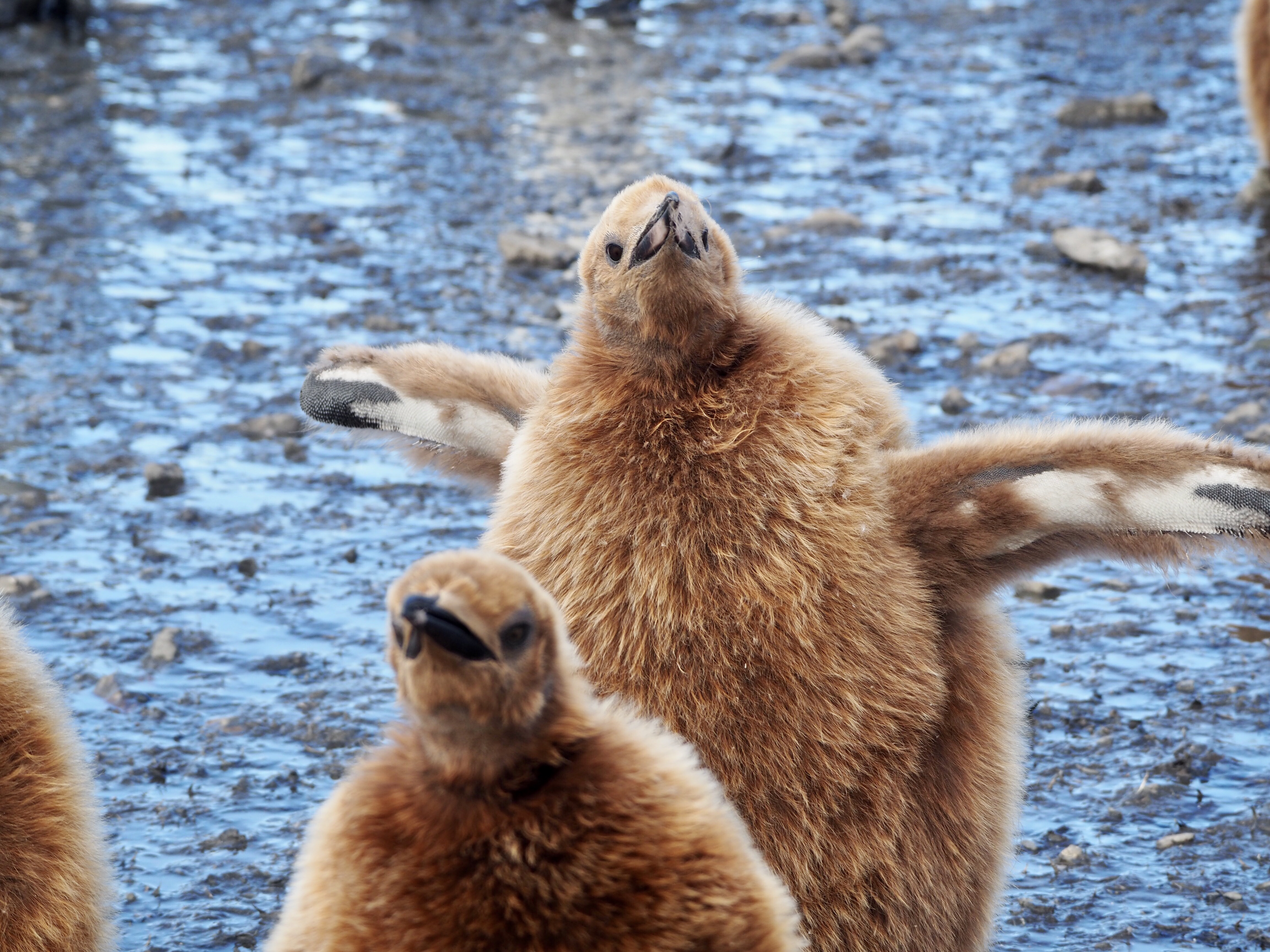
Turns out the “wooly” is simply a 12 month old king penguin chick.

Just to prove we were here.

Afternoon clouds rolling down.

A pair reunited.

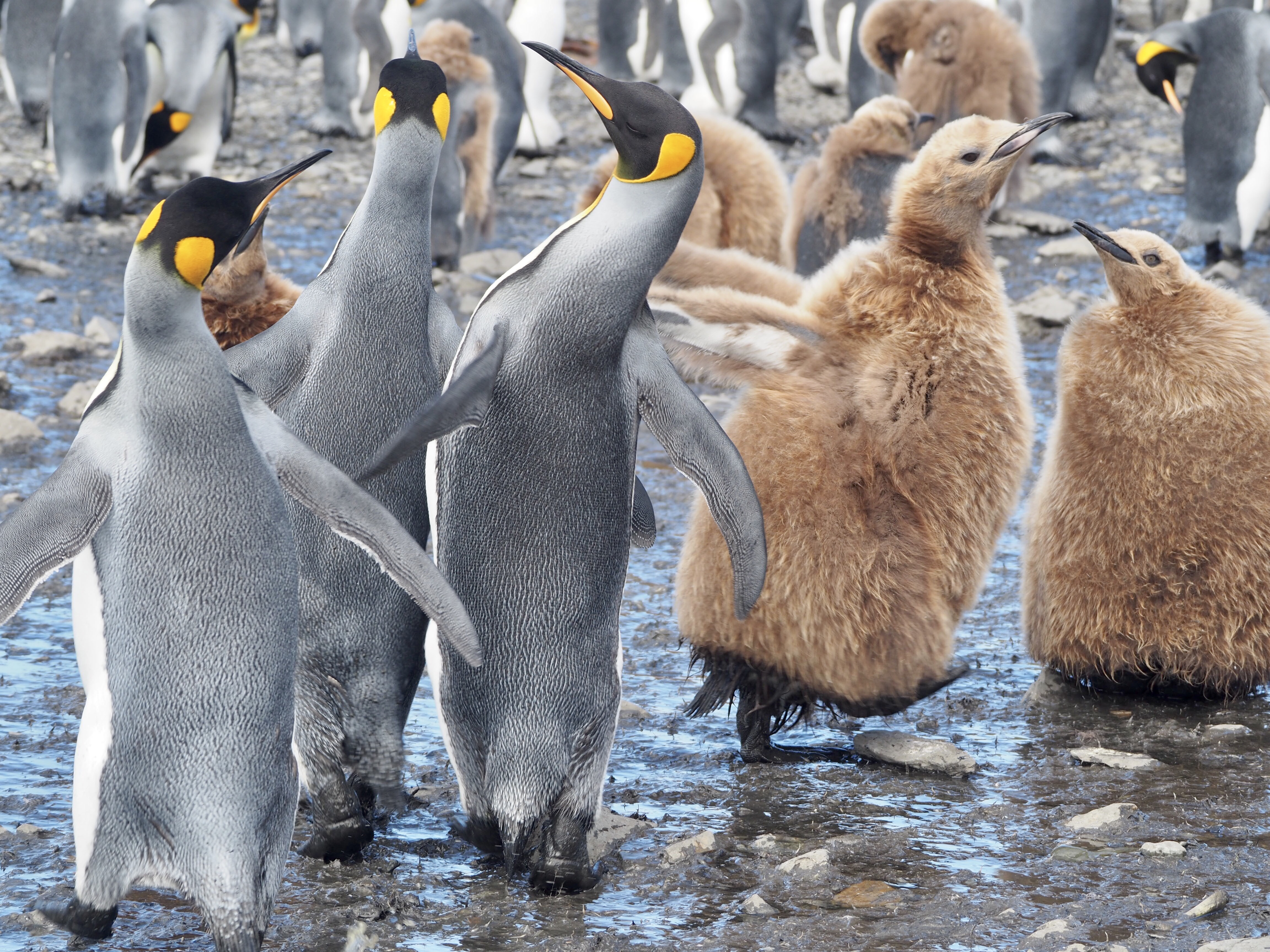
Chick’s as big as parents.

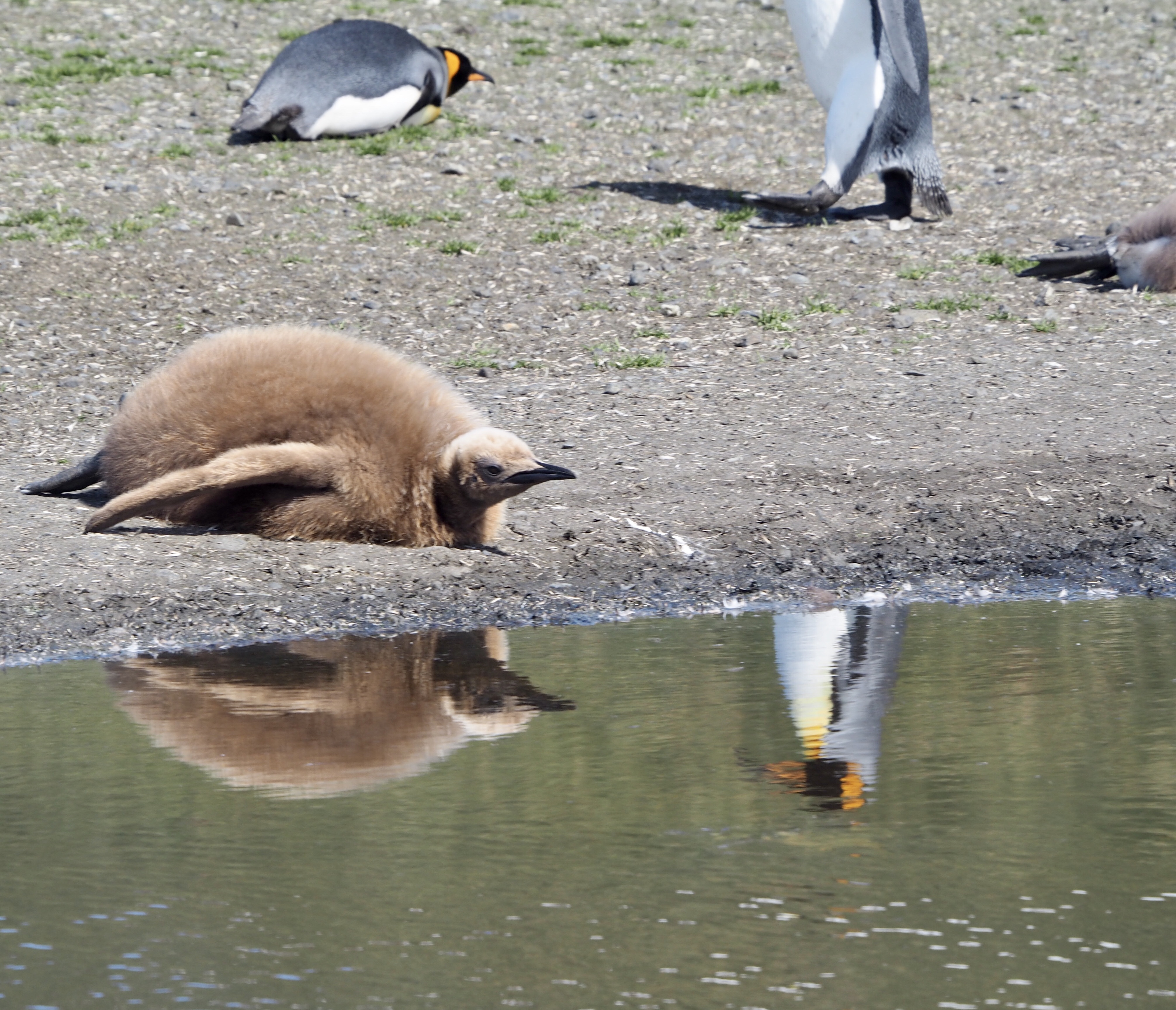
Had some fun with reflections.

It really was so surreal. Just enjoy a heap more pictures.

This is a chick moulting.

It is easy to just keep taking penguins but the surrounds need to be shared too.

And the seals are around too. Some of them being less than friendly.

Stood for ages watching penguins coming ashore.

The afternoon clouds are also fascinating.

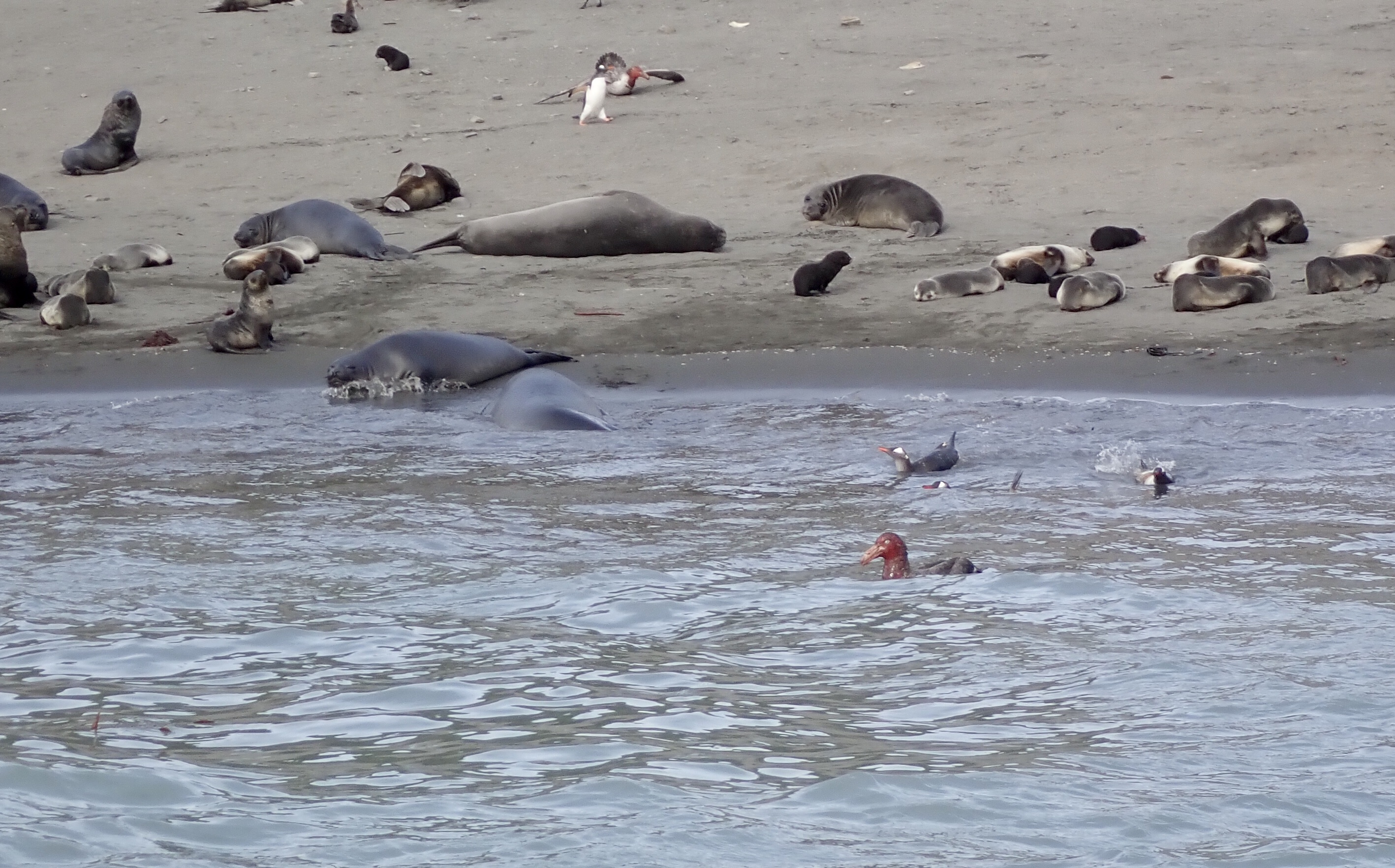
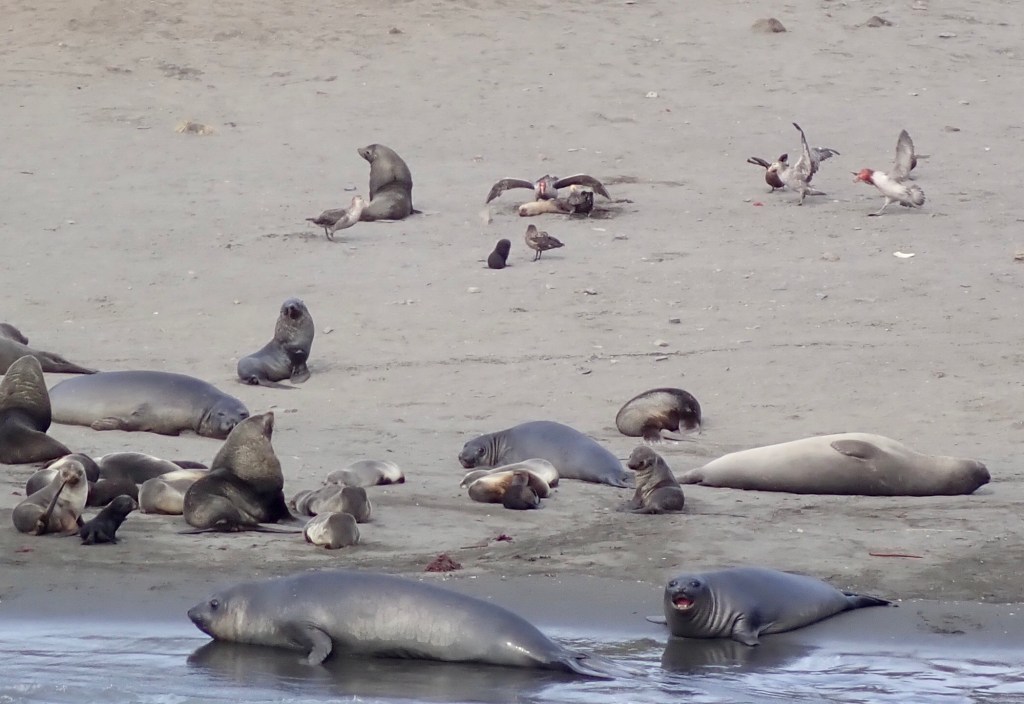
We cruised for a while after our land walk and noticed red headed birds.

Nope, not red-headed at all. Covered in blood from where they had been feasting on a dead seal and they were coming into the water to clean. You can see a gentoo penguin here too. Our third penguin type.

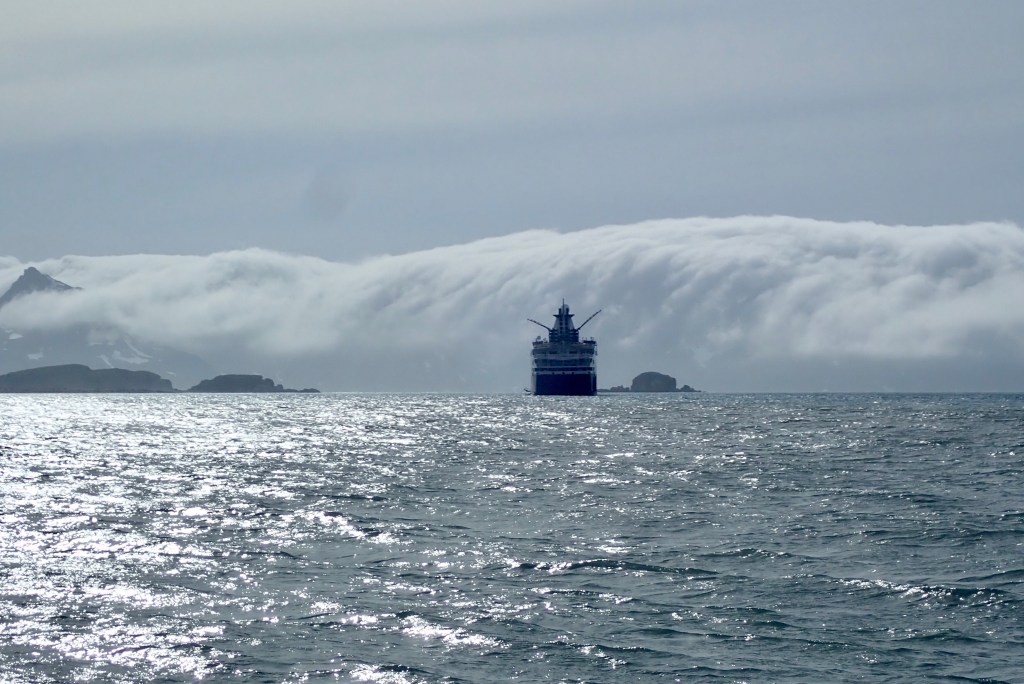
All too soon we are heading back to the ship, which appeared to be about to swamped by the cloud.

It will come as no surprise that I took over 300 photos on this excursion. The big surprise is that I have managed to narrow it down to these few! Last time Quark came here the swell was too big and so they were unable to land so we are feeling very blessed.

Yes there was a beer of the day, Bitburger from Germany. Cocktail of the day a vostock breeze. Rating for bitburger a 5. Description: horehoundish old root beer type stuff.

Another superb dinner. Mushroom soup, pike perch and key lime pie for me and then off to our Recap and Briefing. Love the way they use a picture from the day for the slide show.

Fabrice started the recap with a talk about king penguins. Meet Fabrice

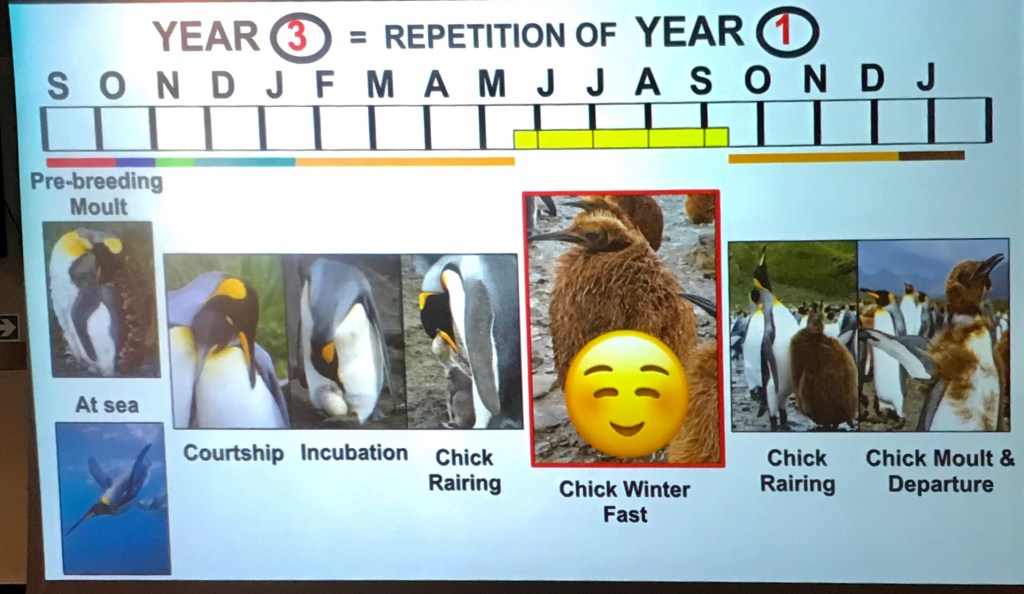
Today we saw many moulting adults. Also adults courting. Some with eggs. Brown fluffy large chicks are 11 months old. Some young ones moulting so 5 types in one colony. Cycle is 14 months.

So the 2nd year is a no go. So 2 chicks every three years. Many small chicks die in winter. So what we saw today are the winter survivors. They are in the water to stay cool as lose heat through their feet. No tail and light grey just Moulted. Three penguins fighting usually 2 males and 1 female. High rate of divorce. No nest so no place to meet again. Not as many females. The males don’t waste time time waiting for the old mate just take the first. Charming.

Johann – marine biologist.

Steady ladies. Johann talked to us about Fur seals. Season is from late oct to beginning of April. Males arrive first. First on the beach the masters. Females arrive nov/dec and a couple of days later they have pups. 90% of pupping in 10 days and most on the beach 6th dec. Mum feeds the pups for 7 days and then mates again. Then female goes foraging for a several days and then feeds pups for a couple of days and then again back to sea. Nursed first 3.5-4 months then female leaves forever. The embryo stays at a point for several months under they are ready to deliver.

Finally Solan.

Hang on. I’m not telling you what he said as that will spoil tomorrow’s blog. Suffice to say he warned us of high winds with gusts 40-50 knots. Here endeth our first day of four on South Georgia. OMG what an amazing, unforgettable day.