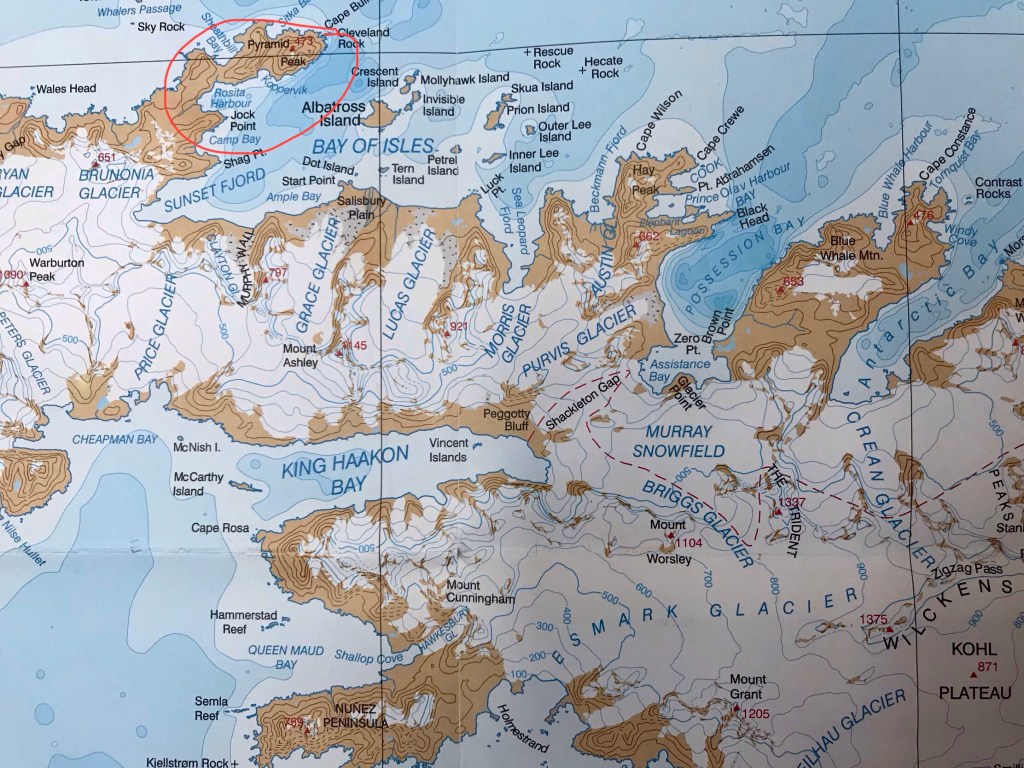
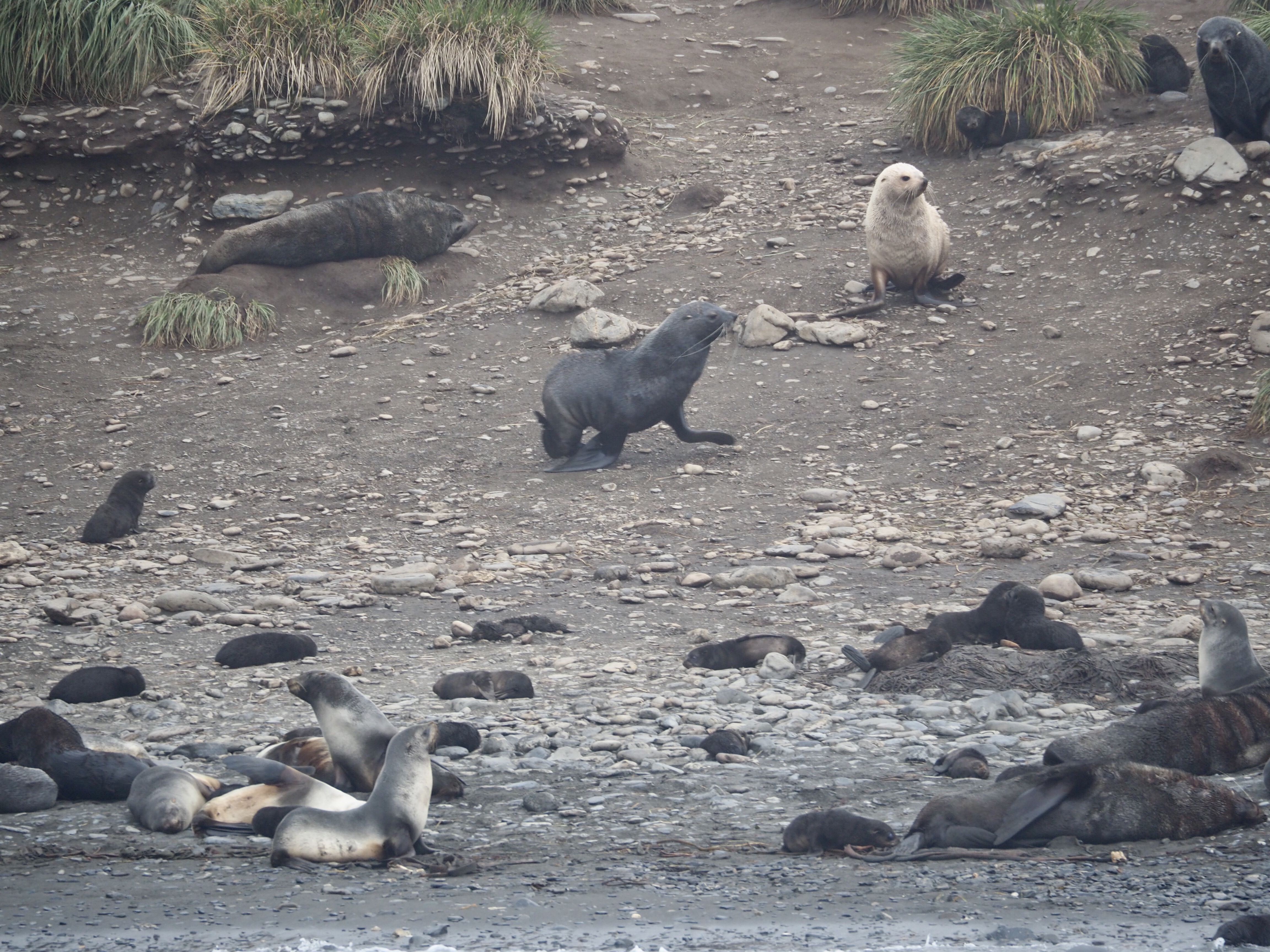
The blurb says: we plan to Zodiac cruise at Rosita Harbour, Bay of Isles. Rosita Harbour is known as a protective refuge for ships, and one of few places to see South Georgia pipits, as well as fur and elephant seals. In the early 1900s a whaling lease was granted for this site but was never used, however sealing took place in areas and remains of trypots may be seen on shore.
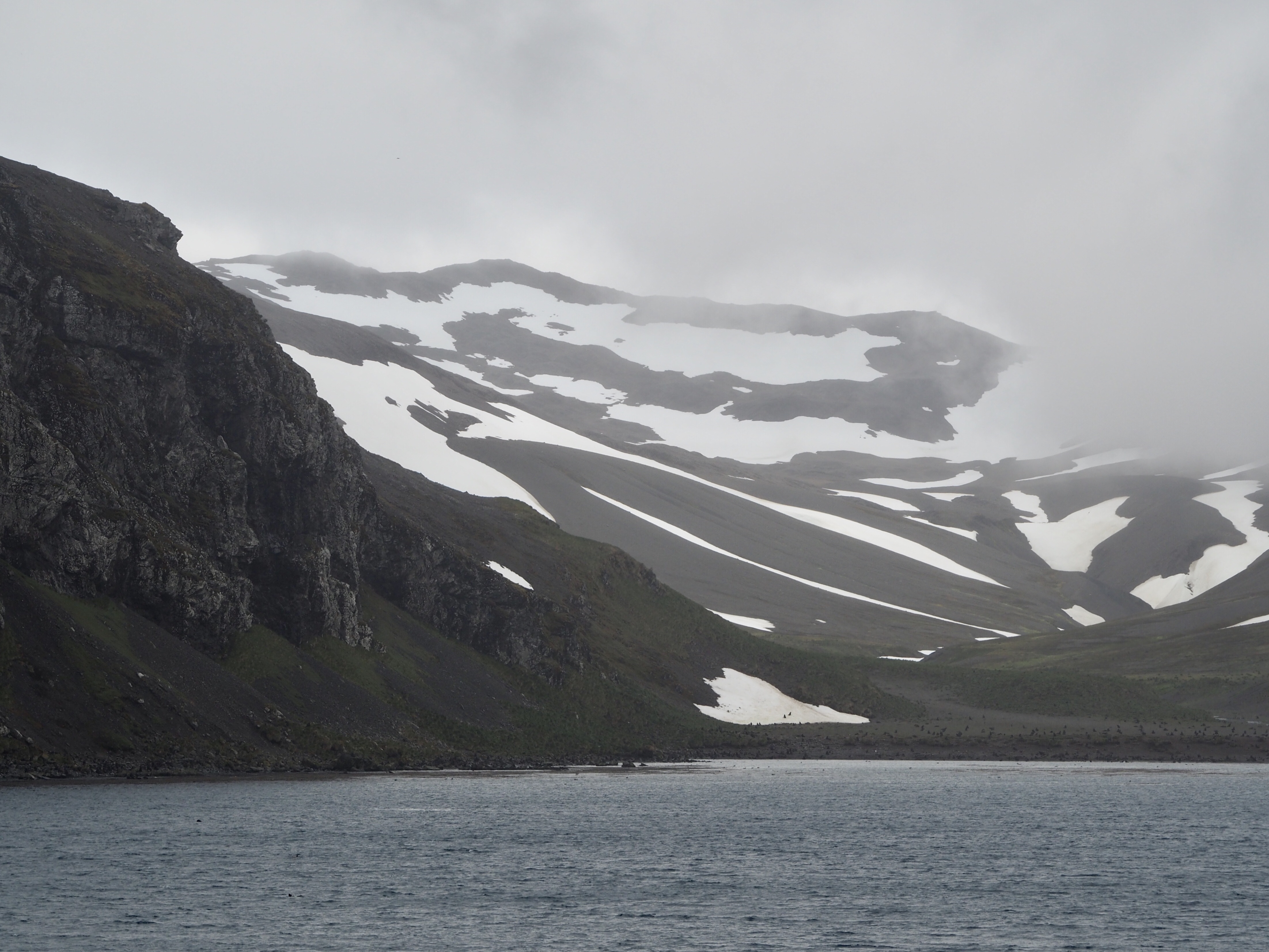
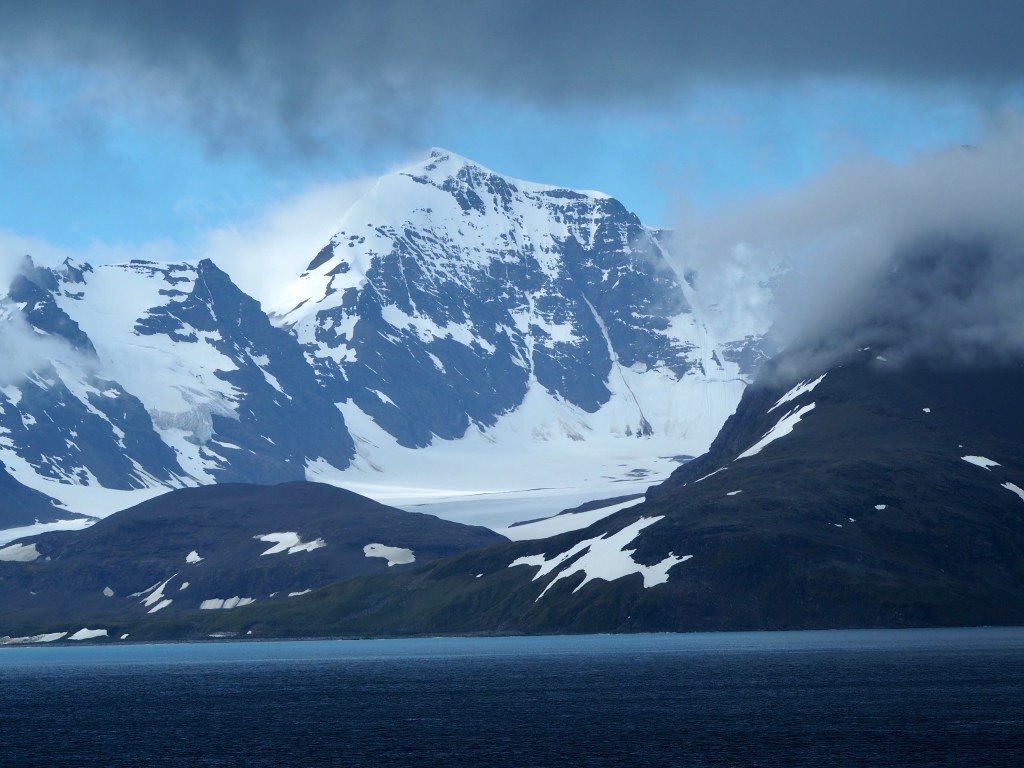
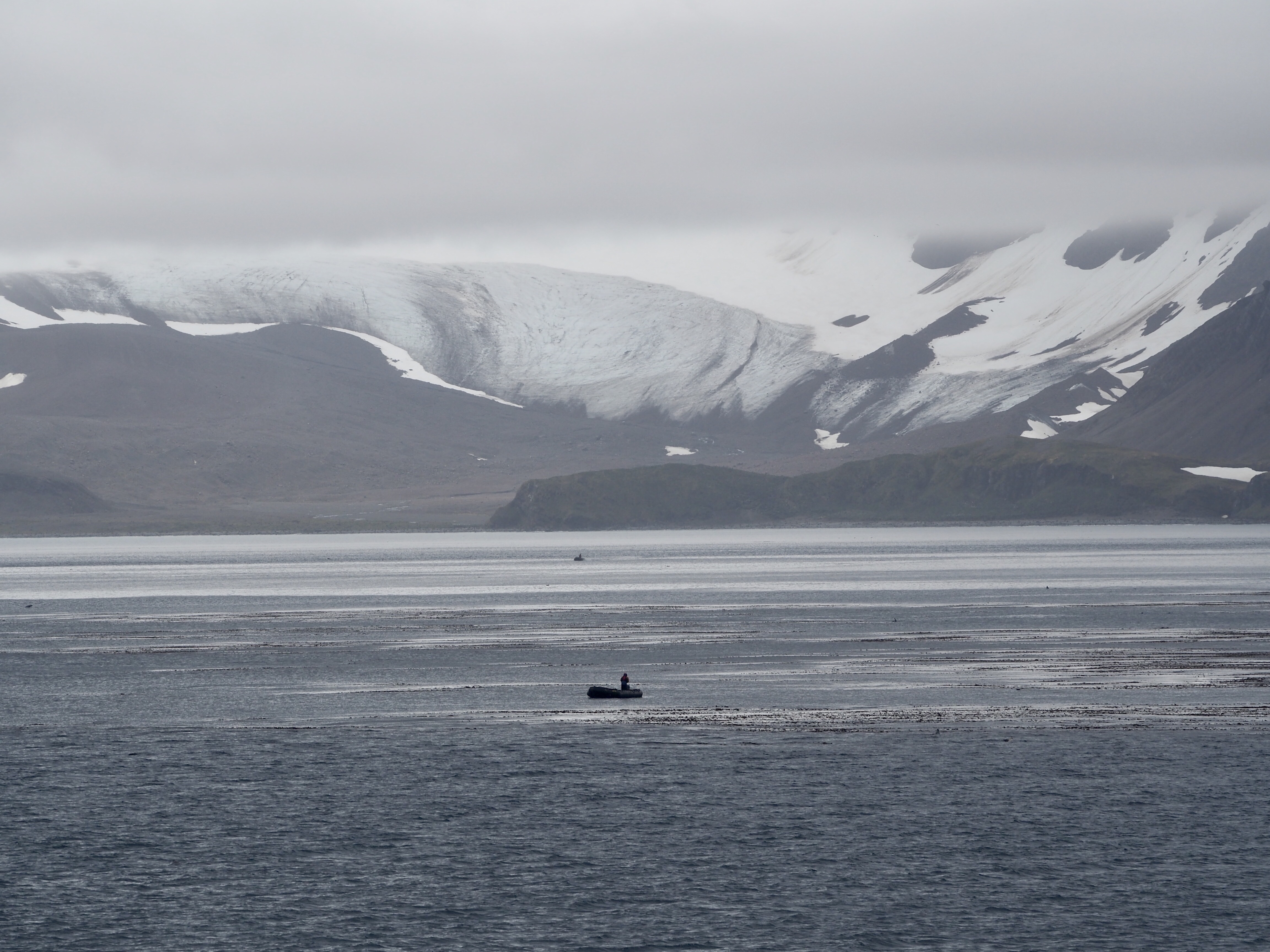
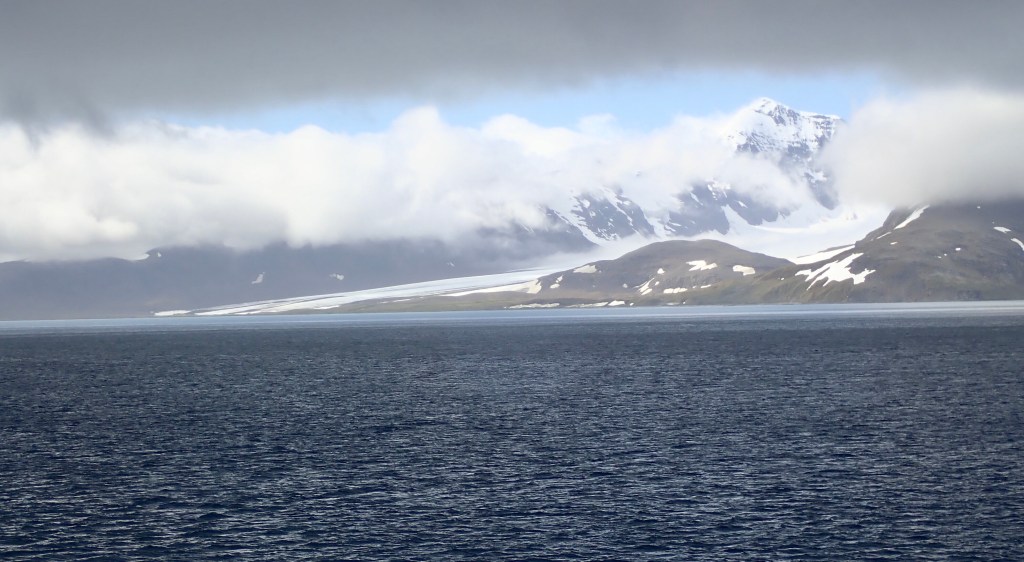
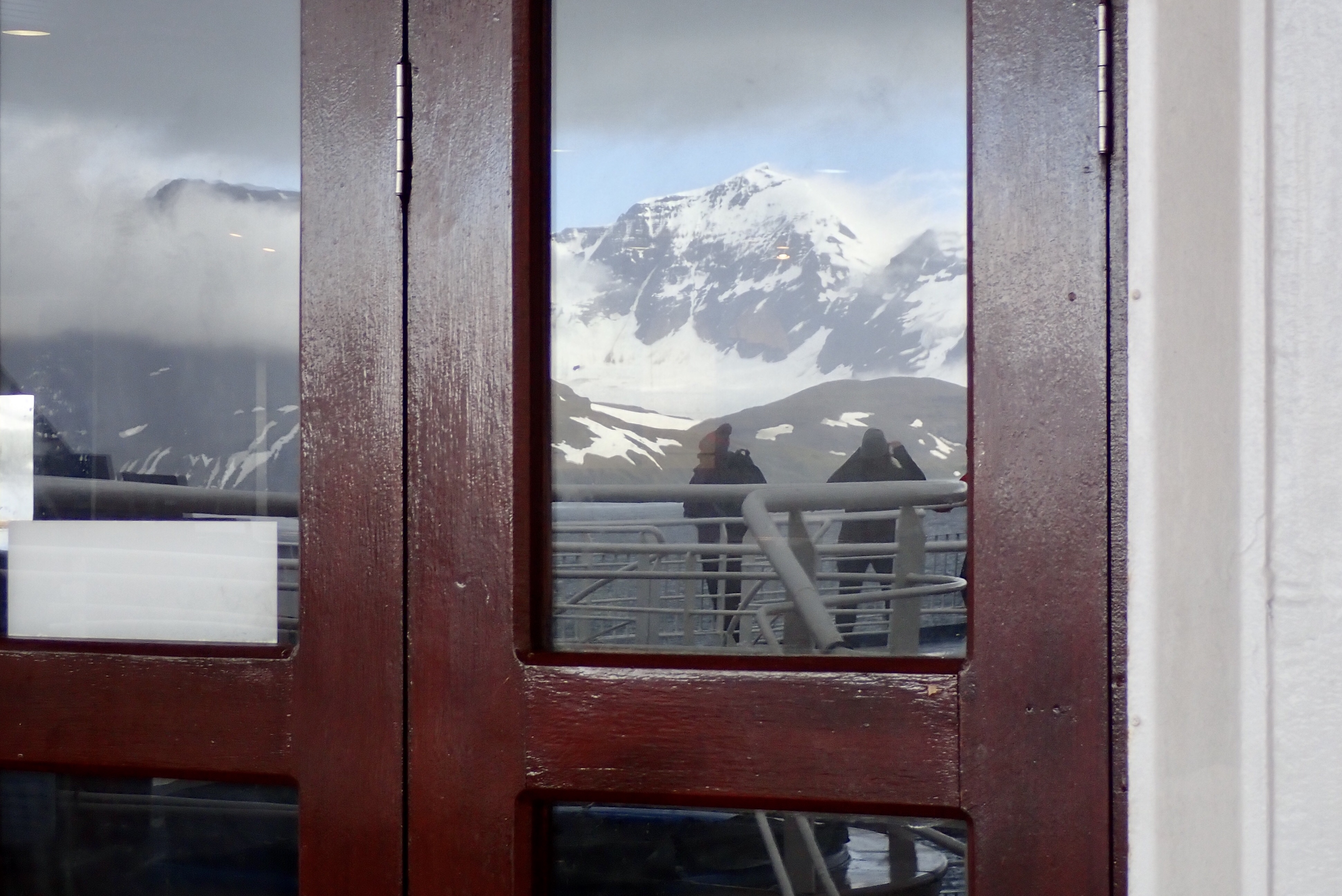
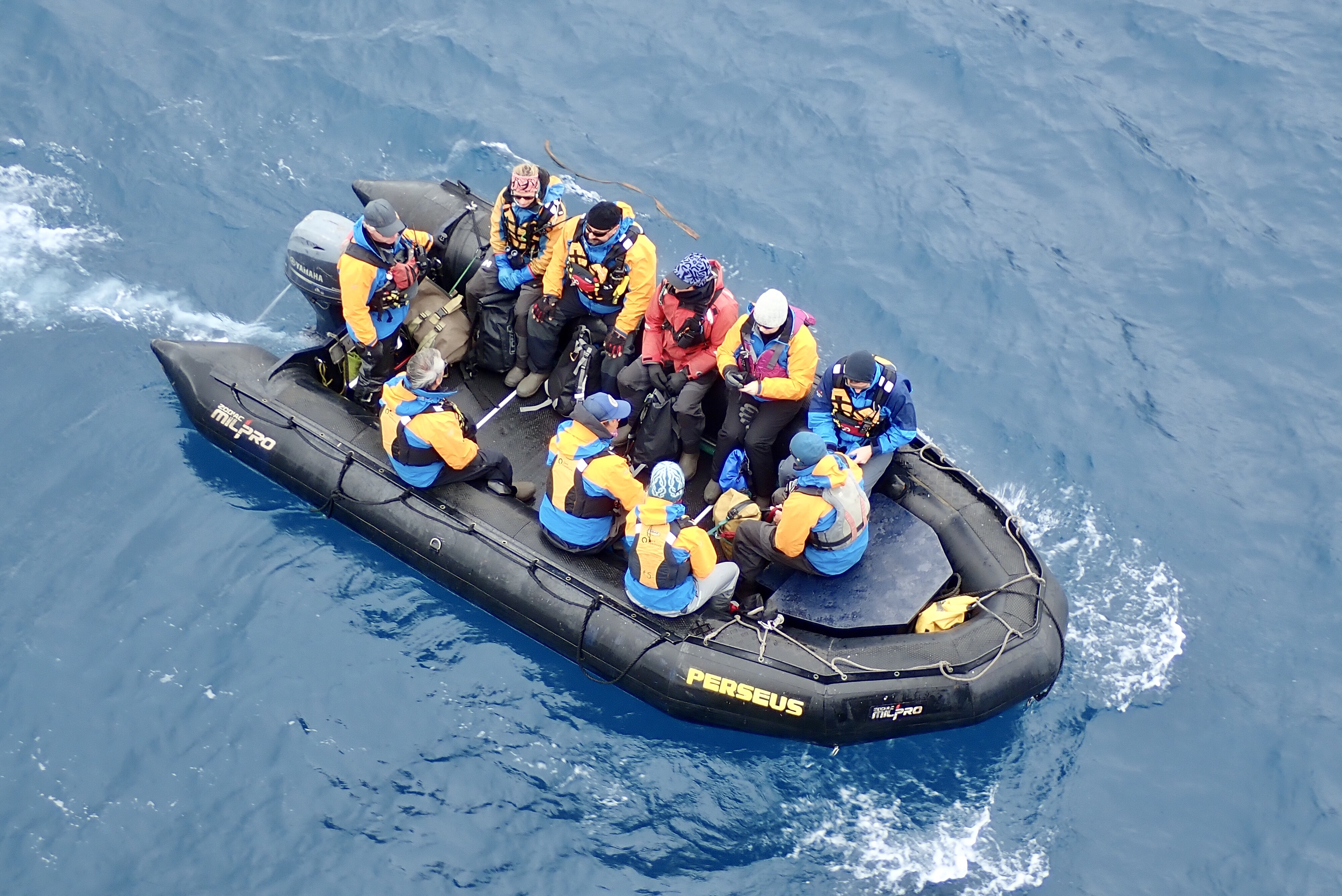
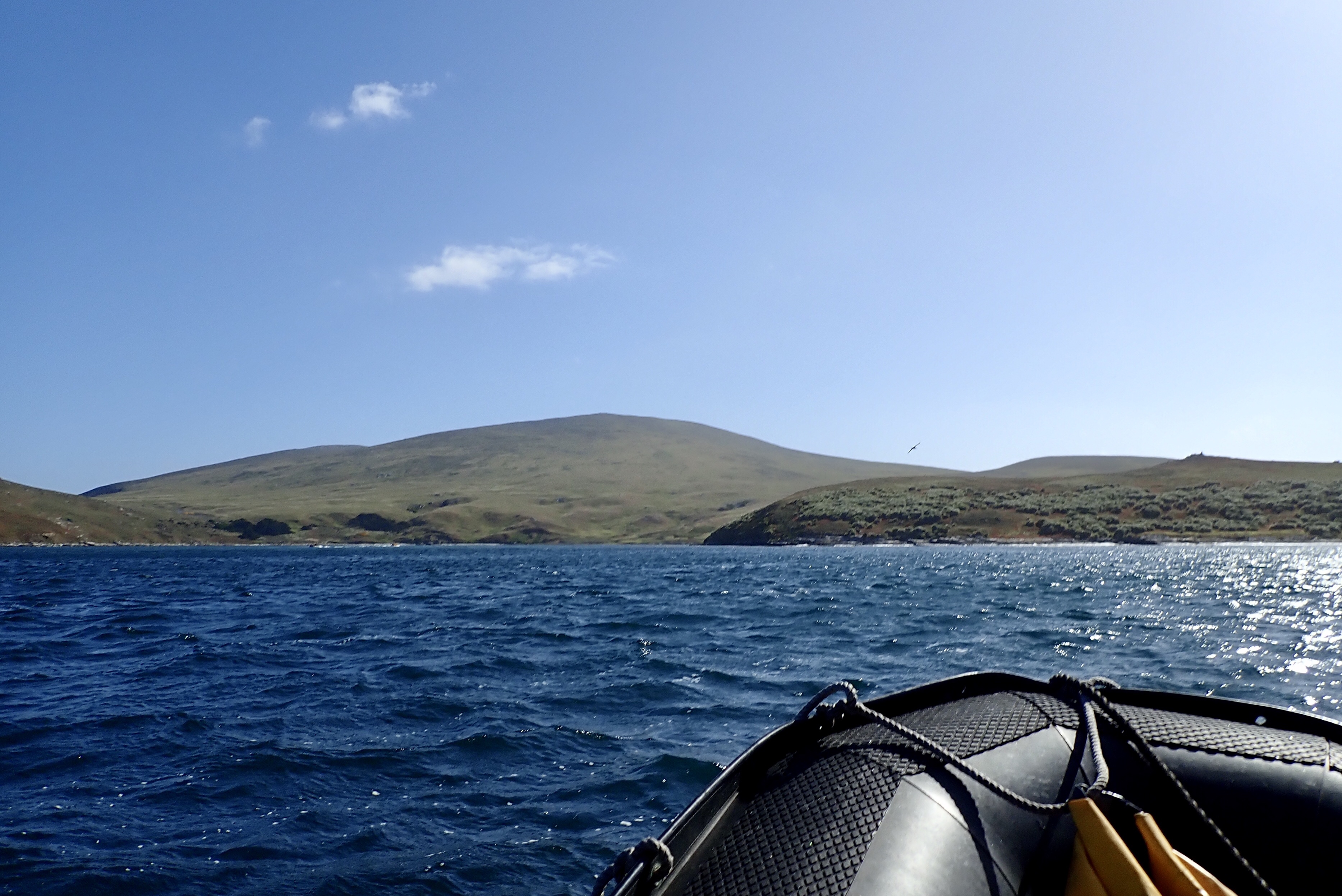
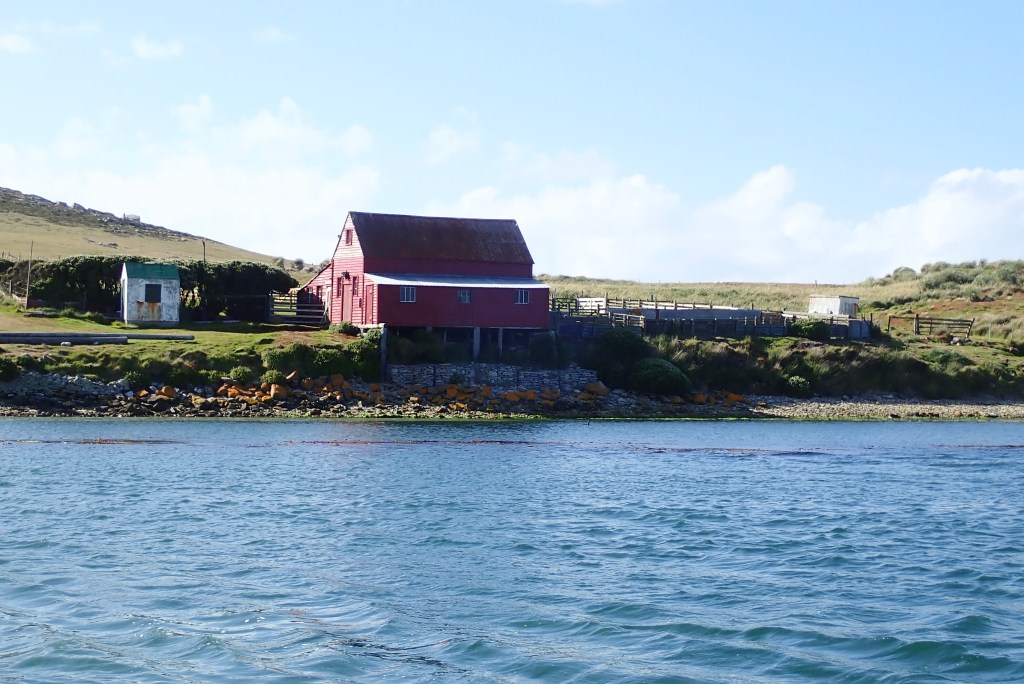
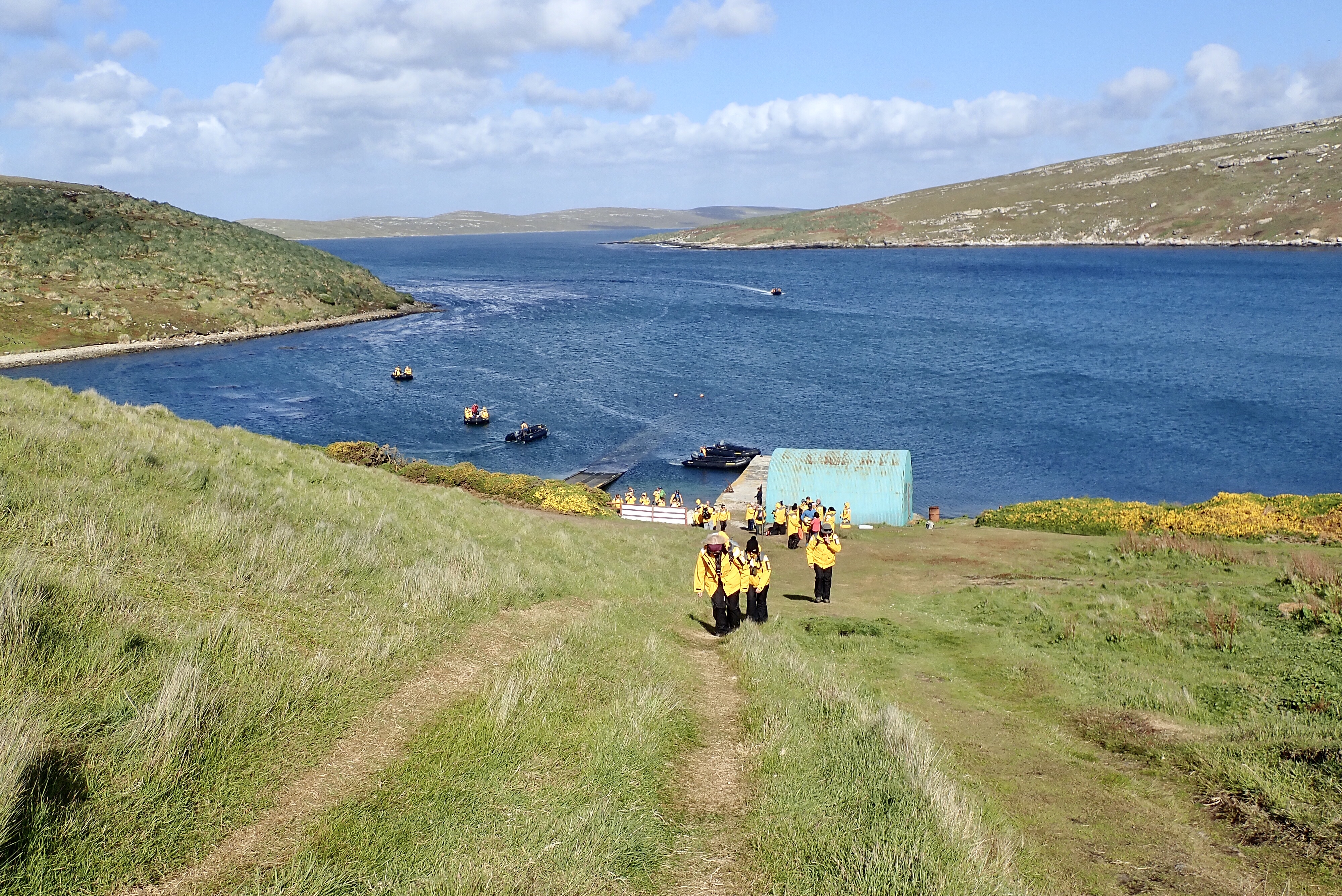
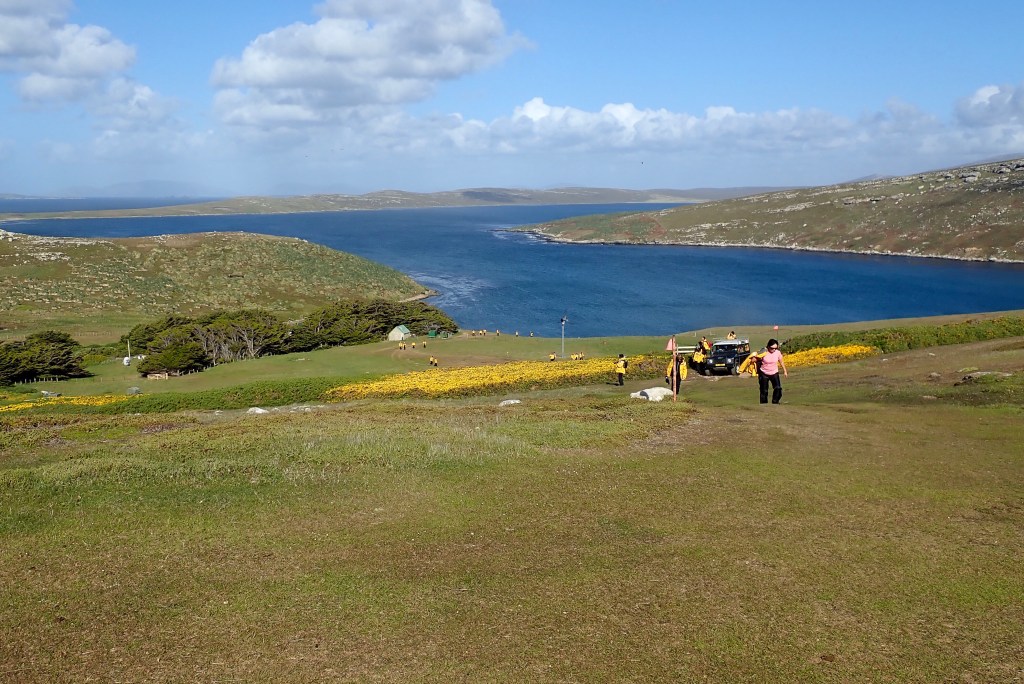
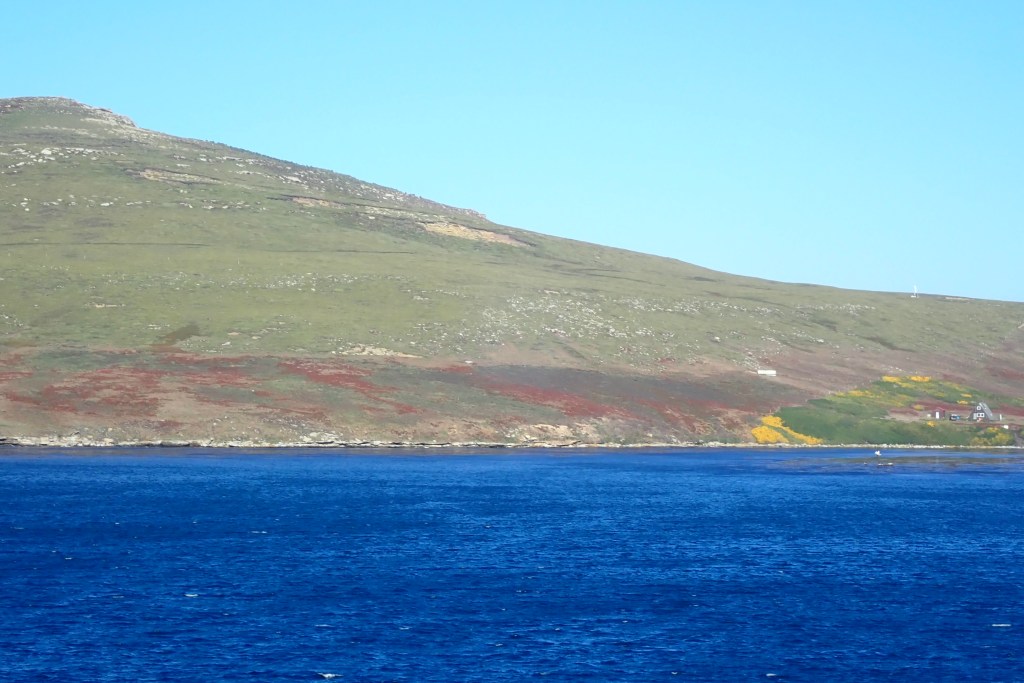
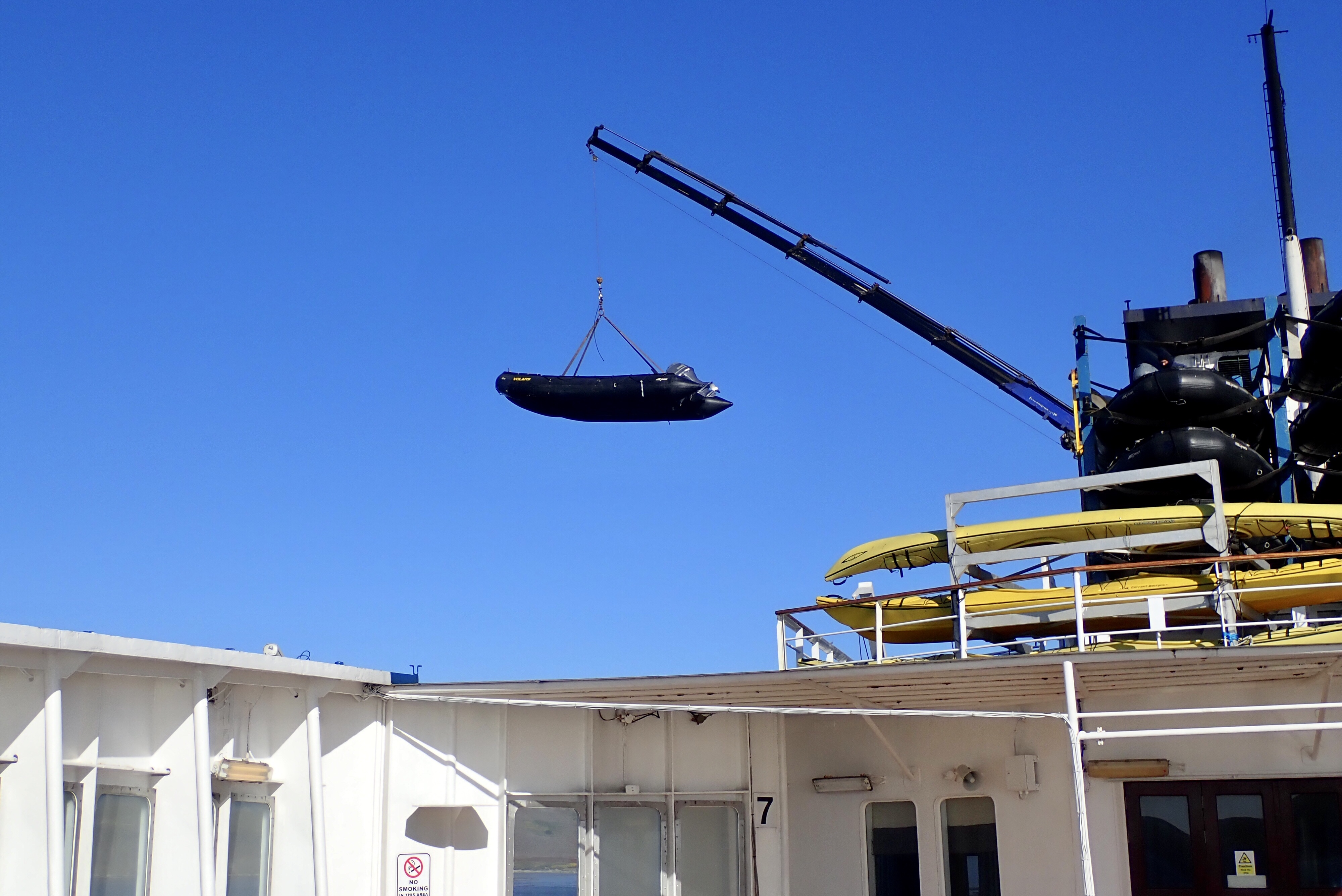
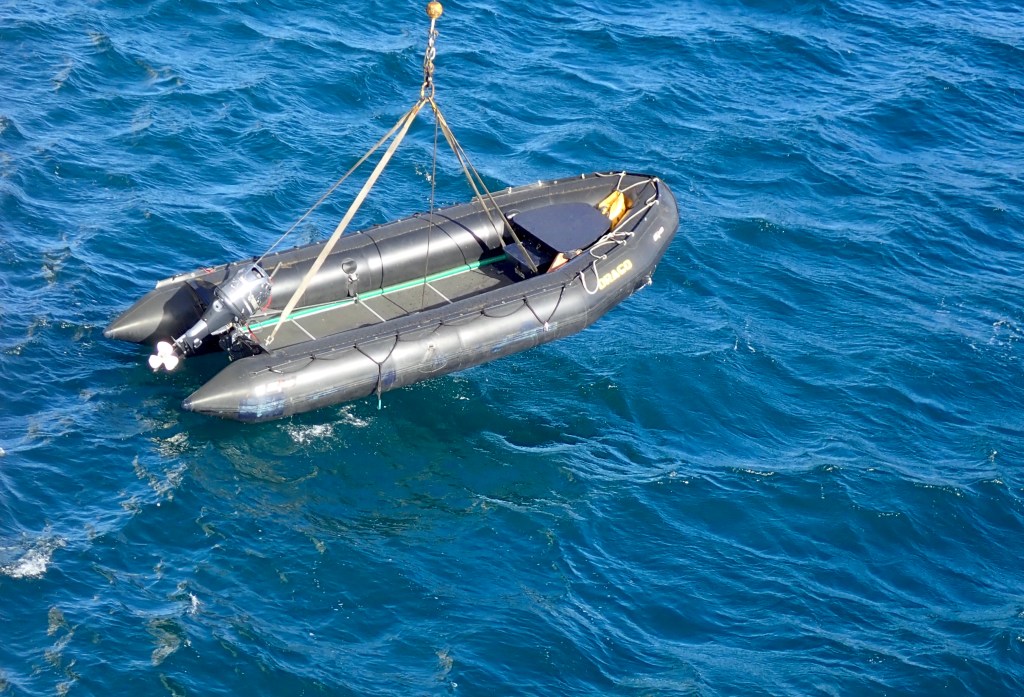
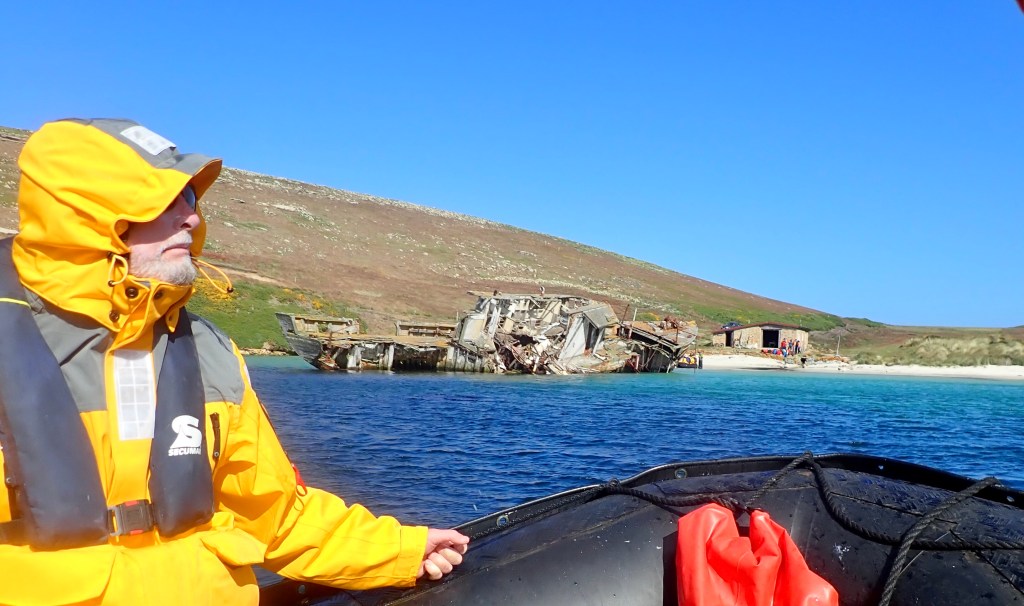
A beautiful place. I took a few shots from the boat, including one of our expedition crew getting ready to take out the zodiacs.
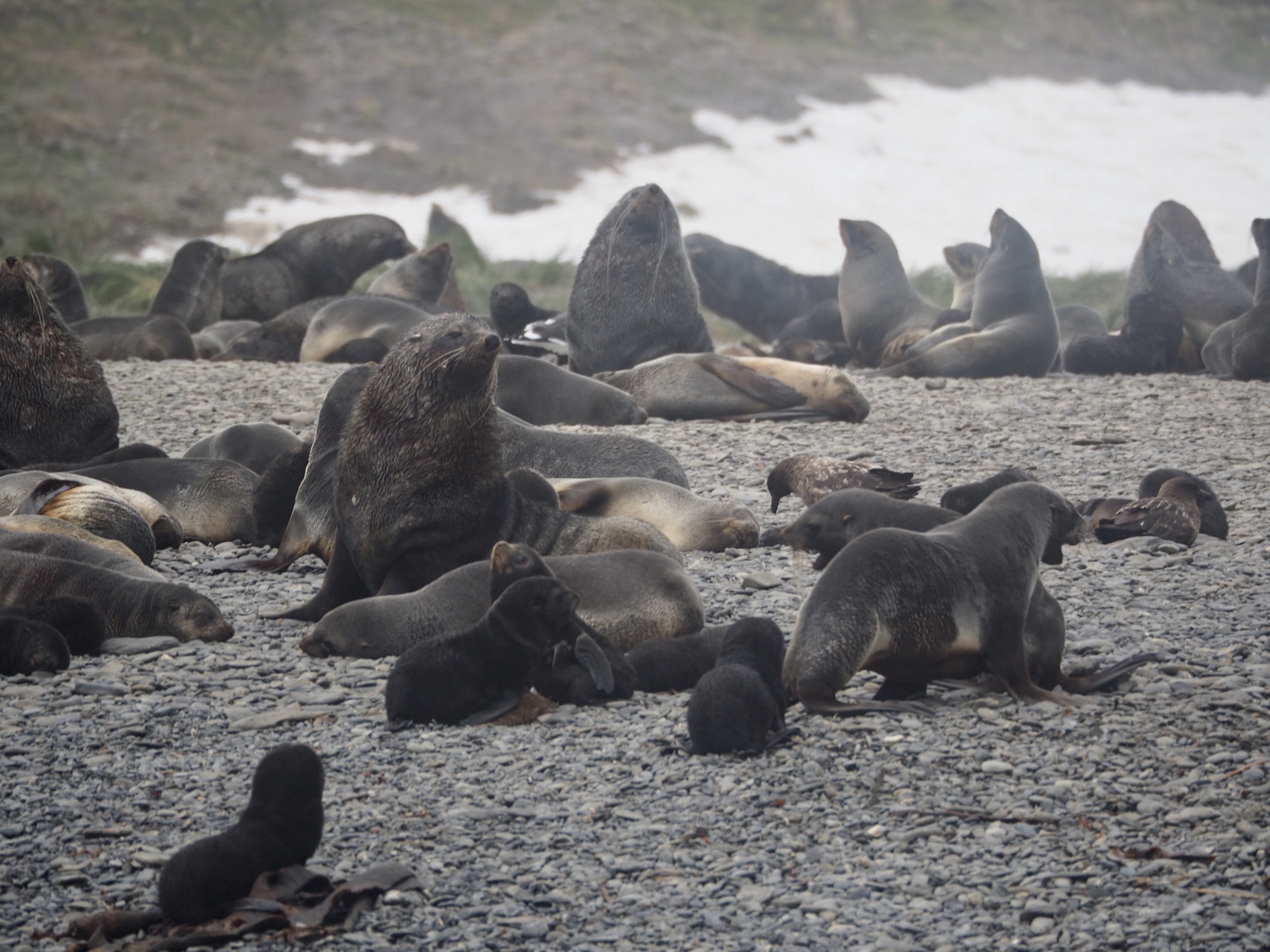
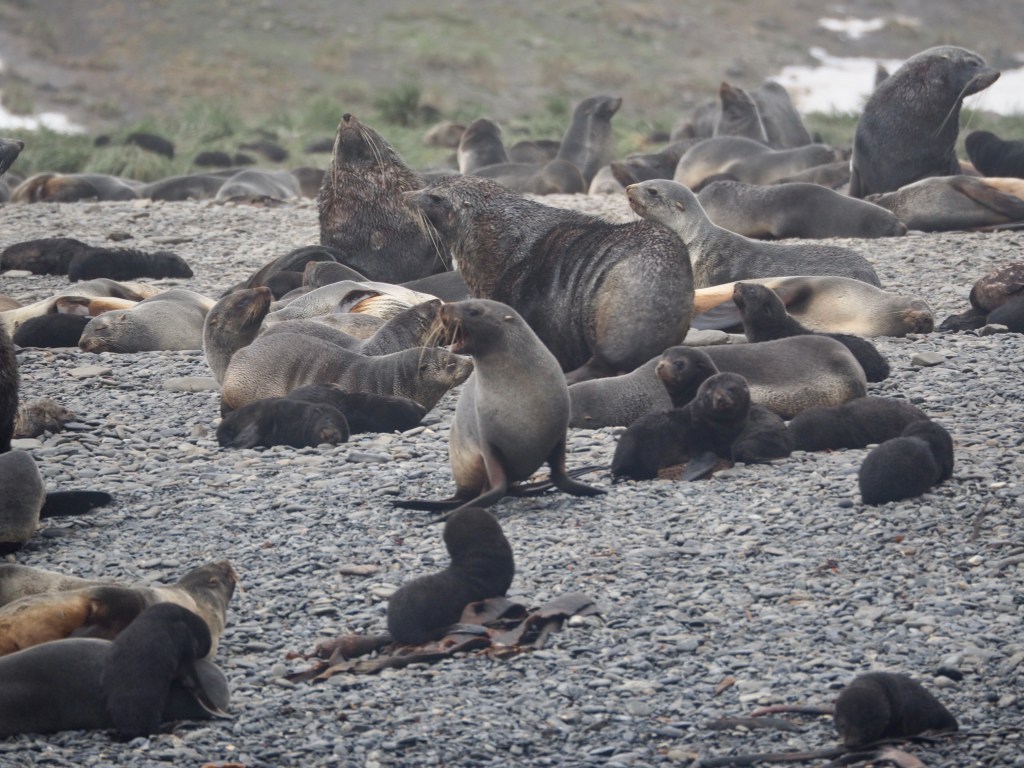
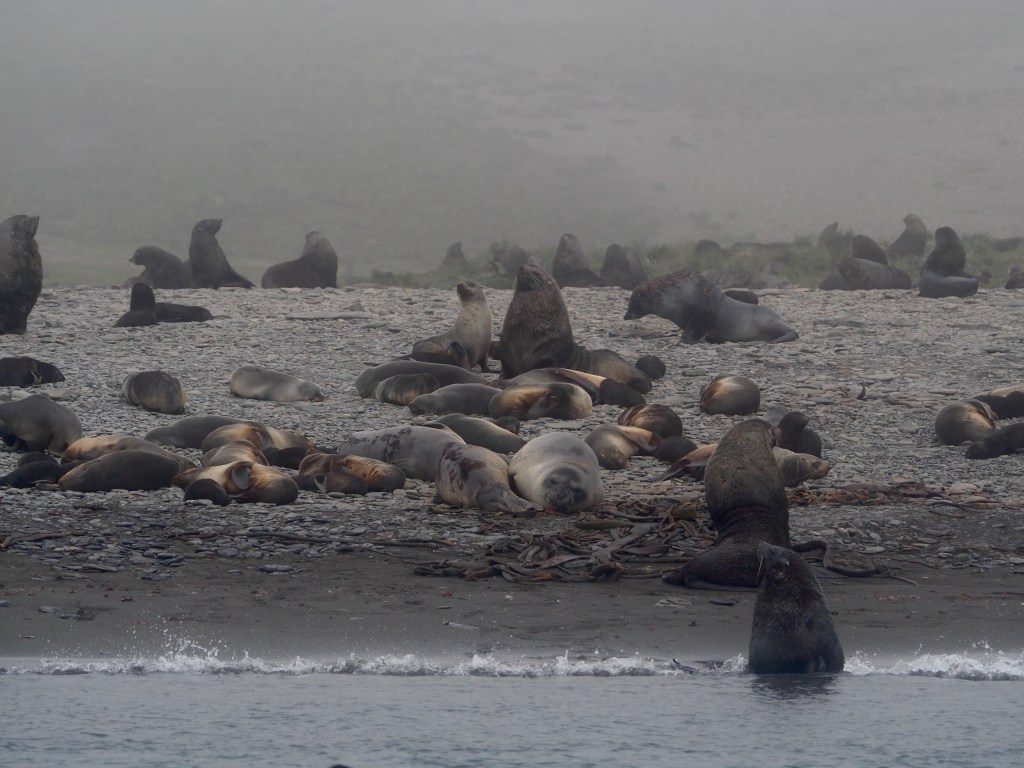
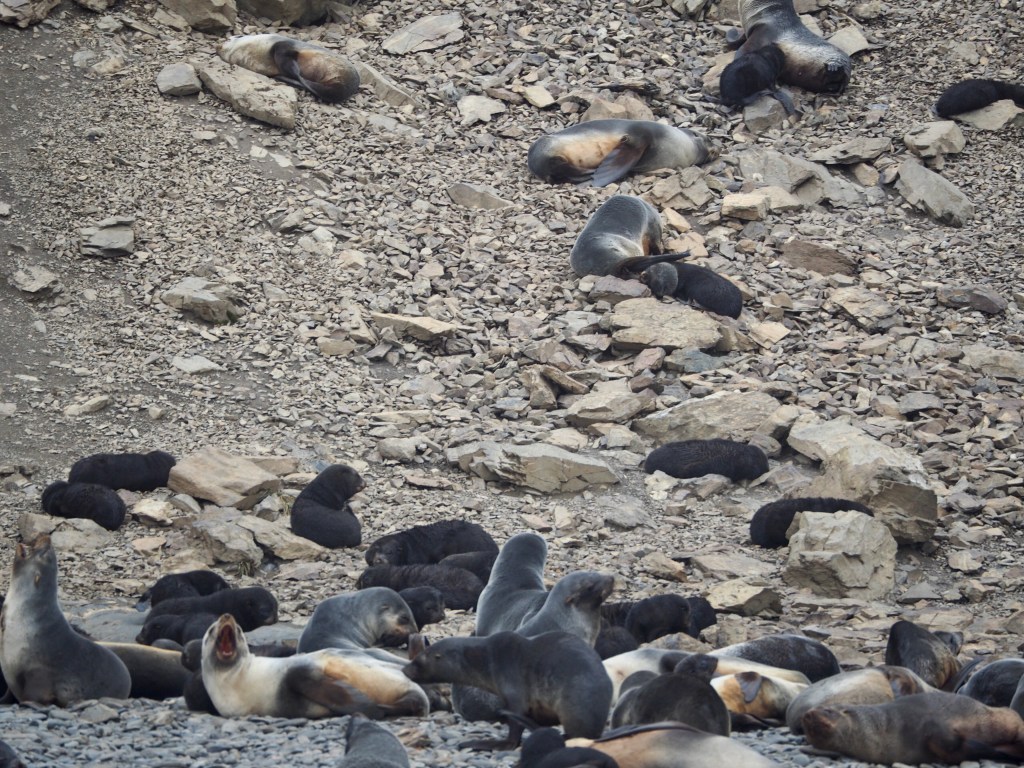
So many fur seals here. I took a bit of video footage of the shoreline. You can hear the wind but also the calls of the seals.
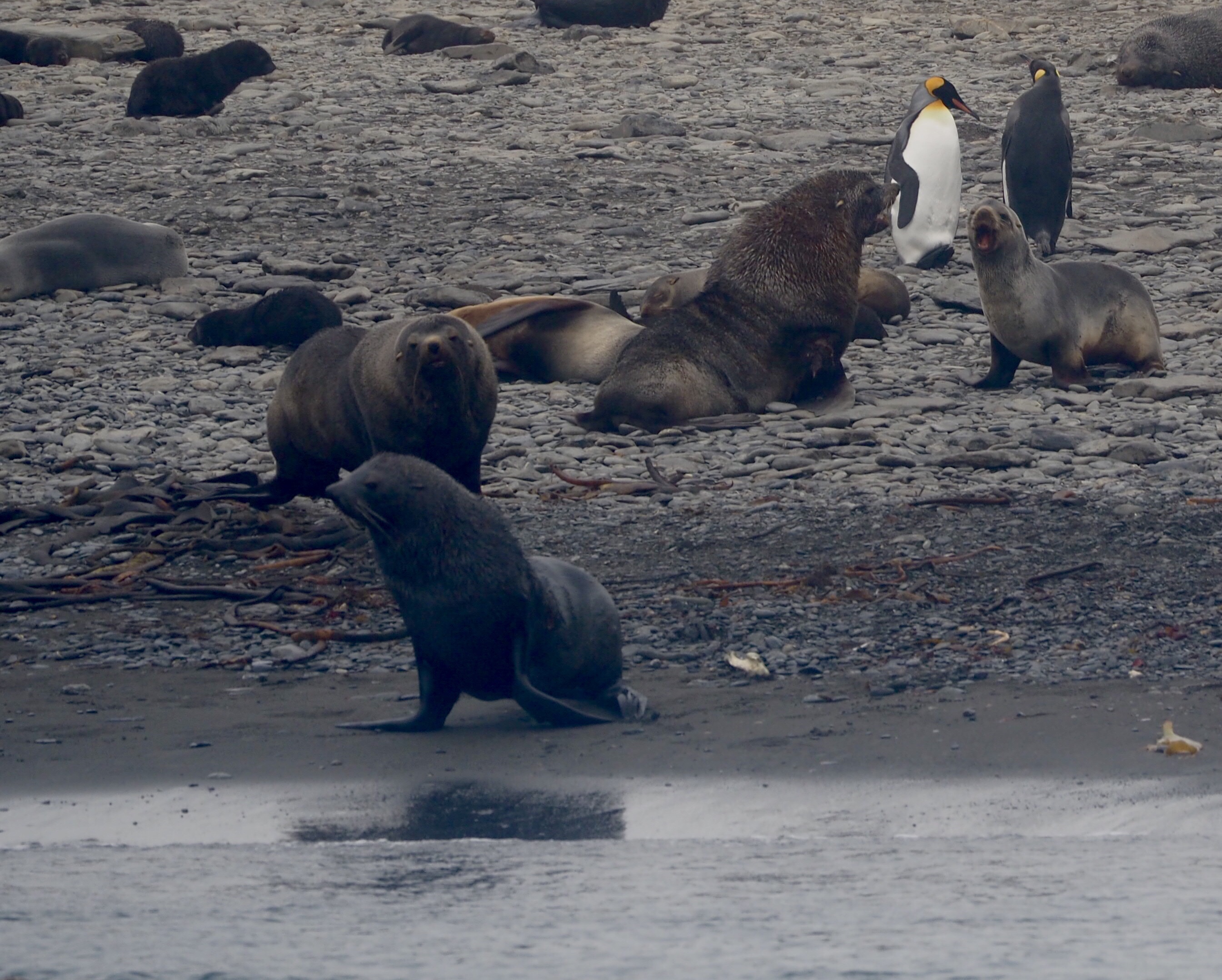
A couple of king penguins in amongst it all.
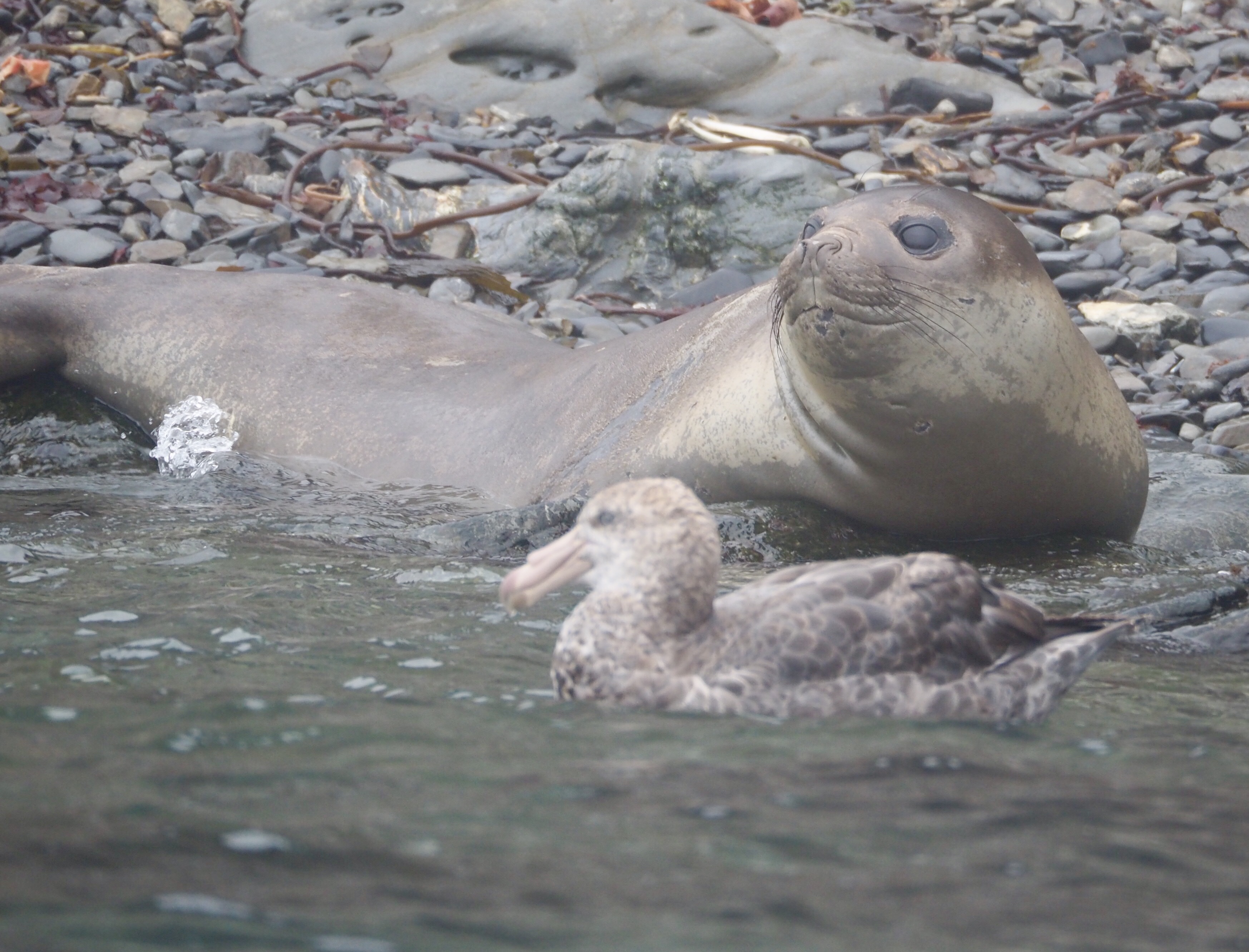
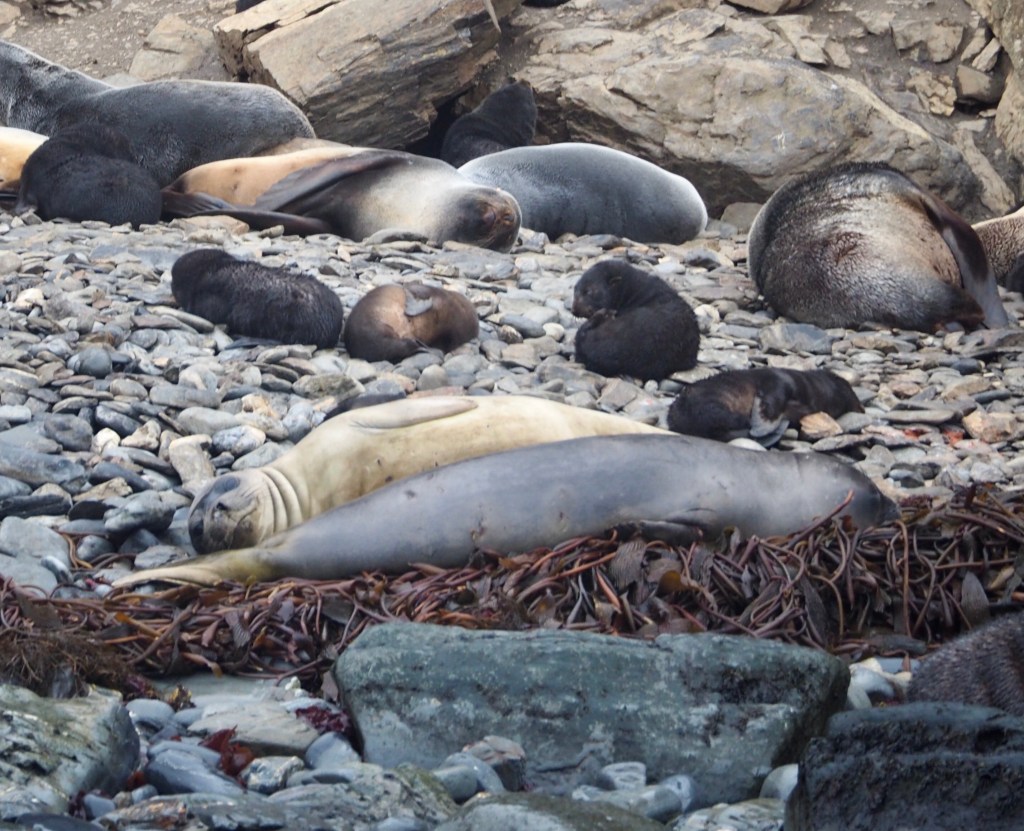
A lonely elephant seal resting.
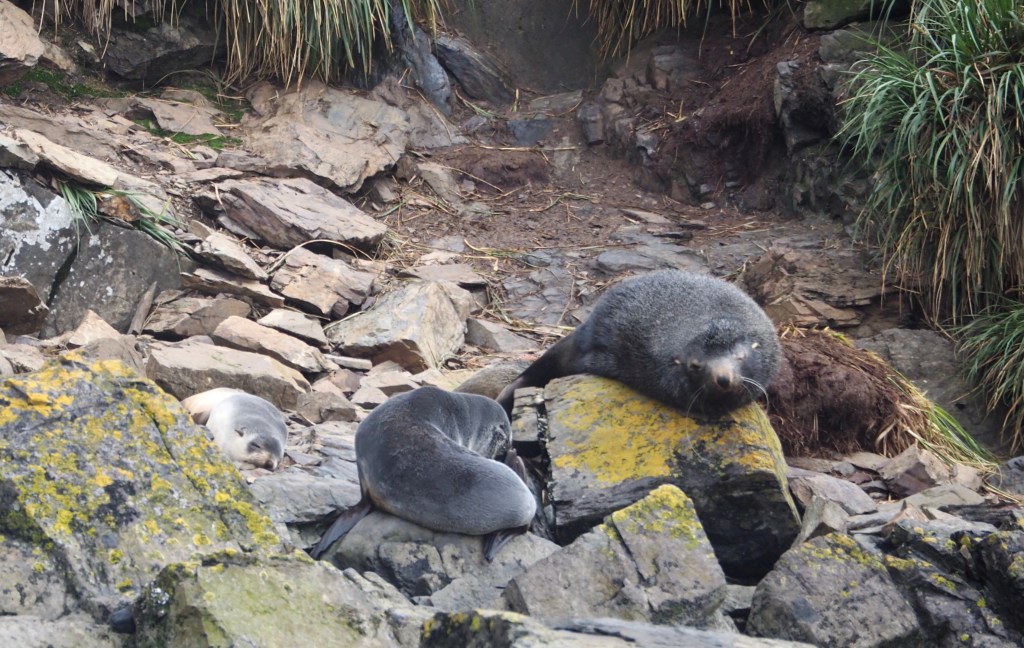
I could take seal pups all day long.
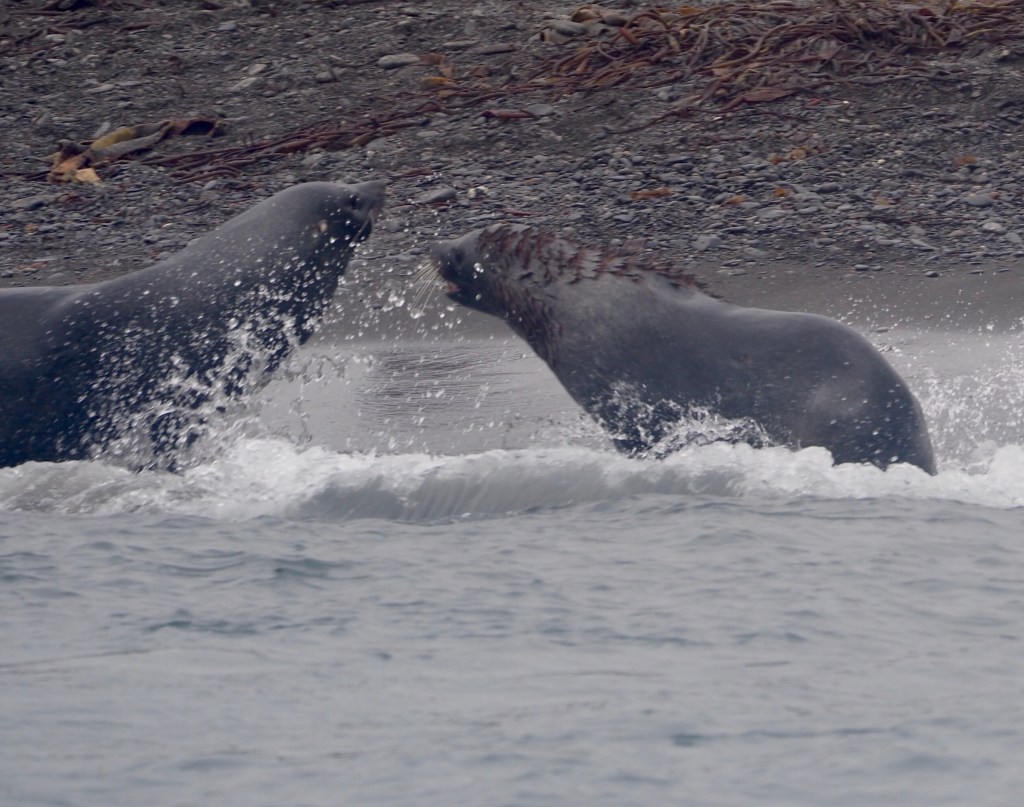
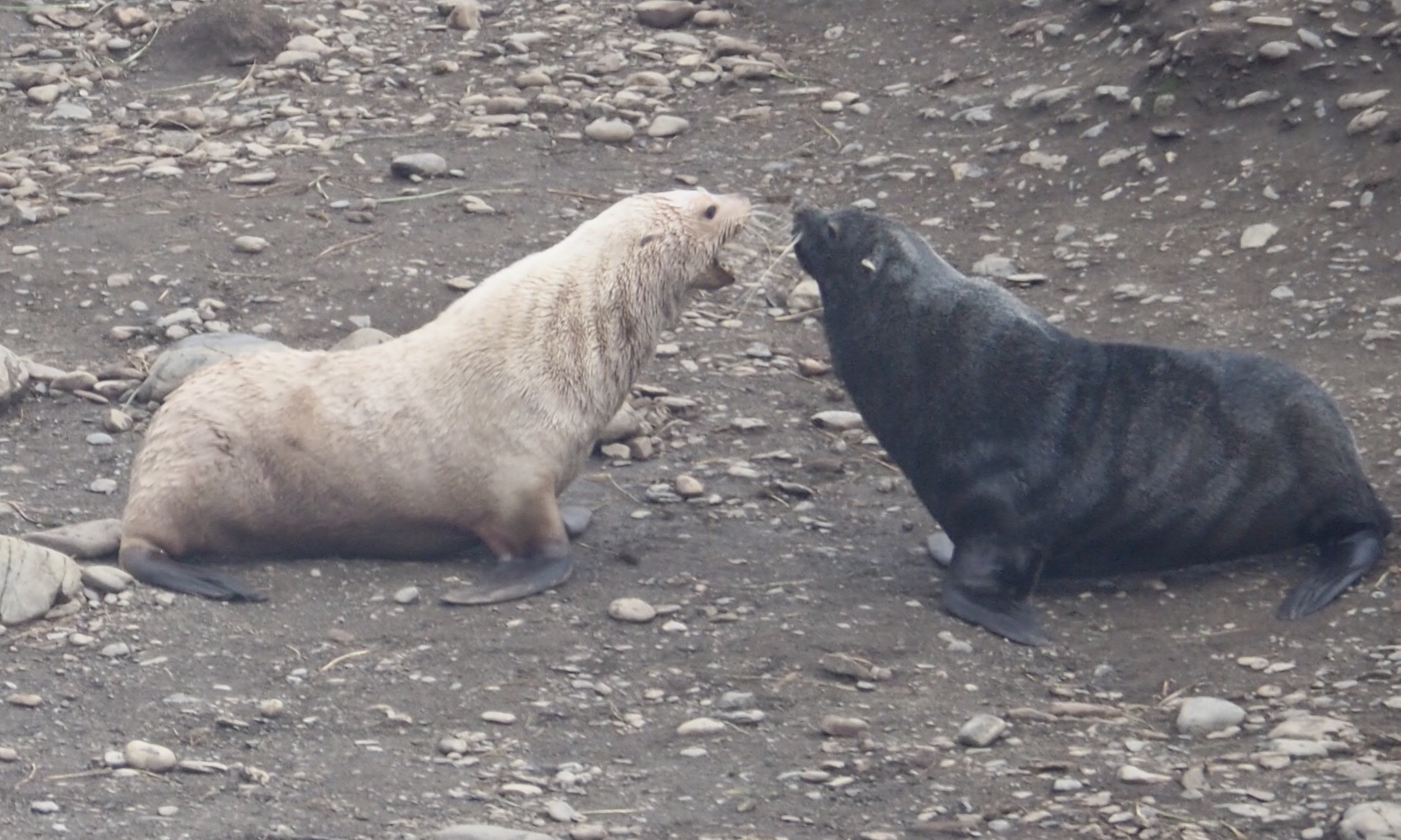
These guys were not happy with each other.
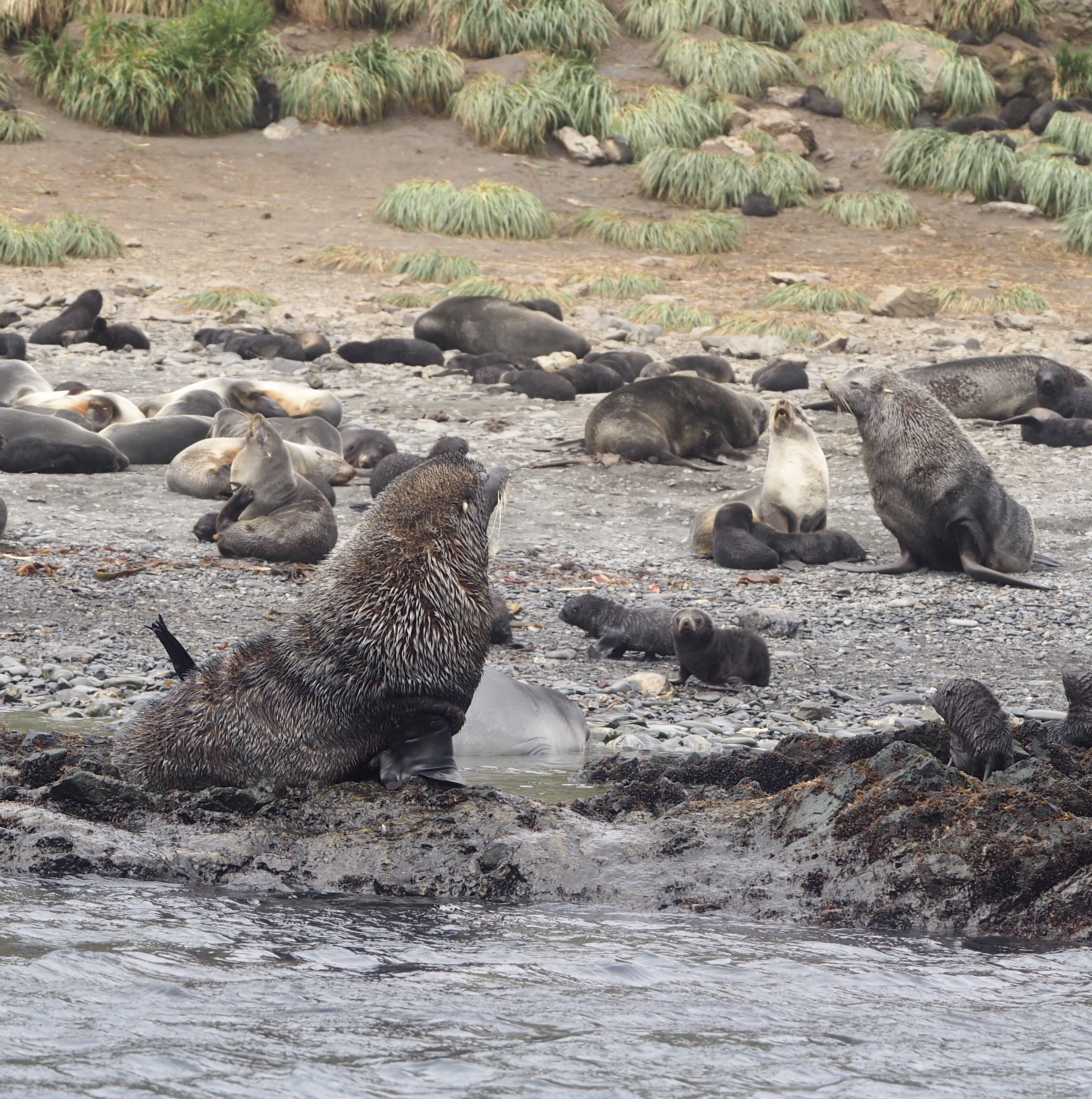
Another of those seals with the recessive gene.
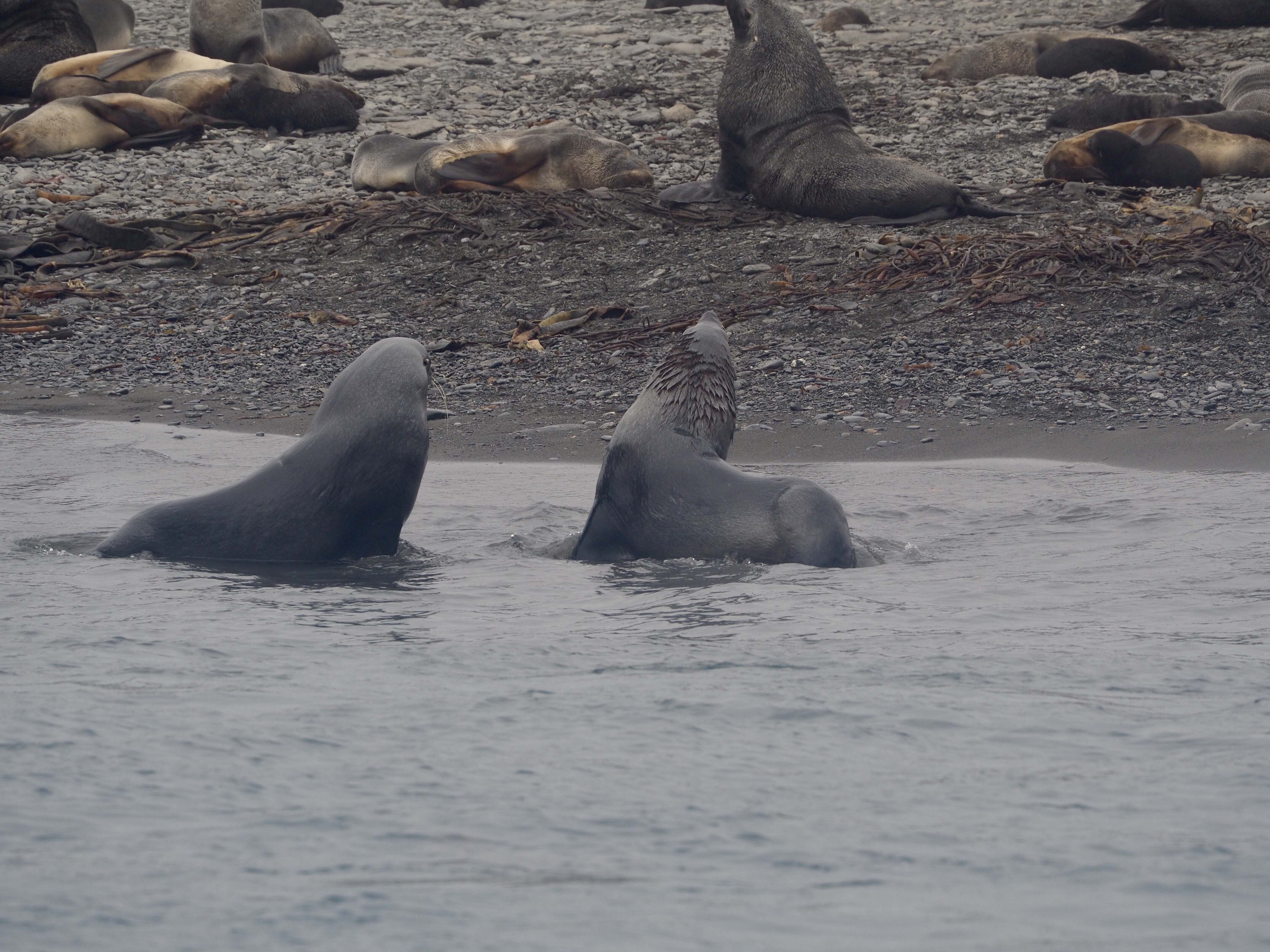
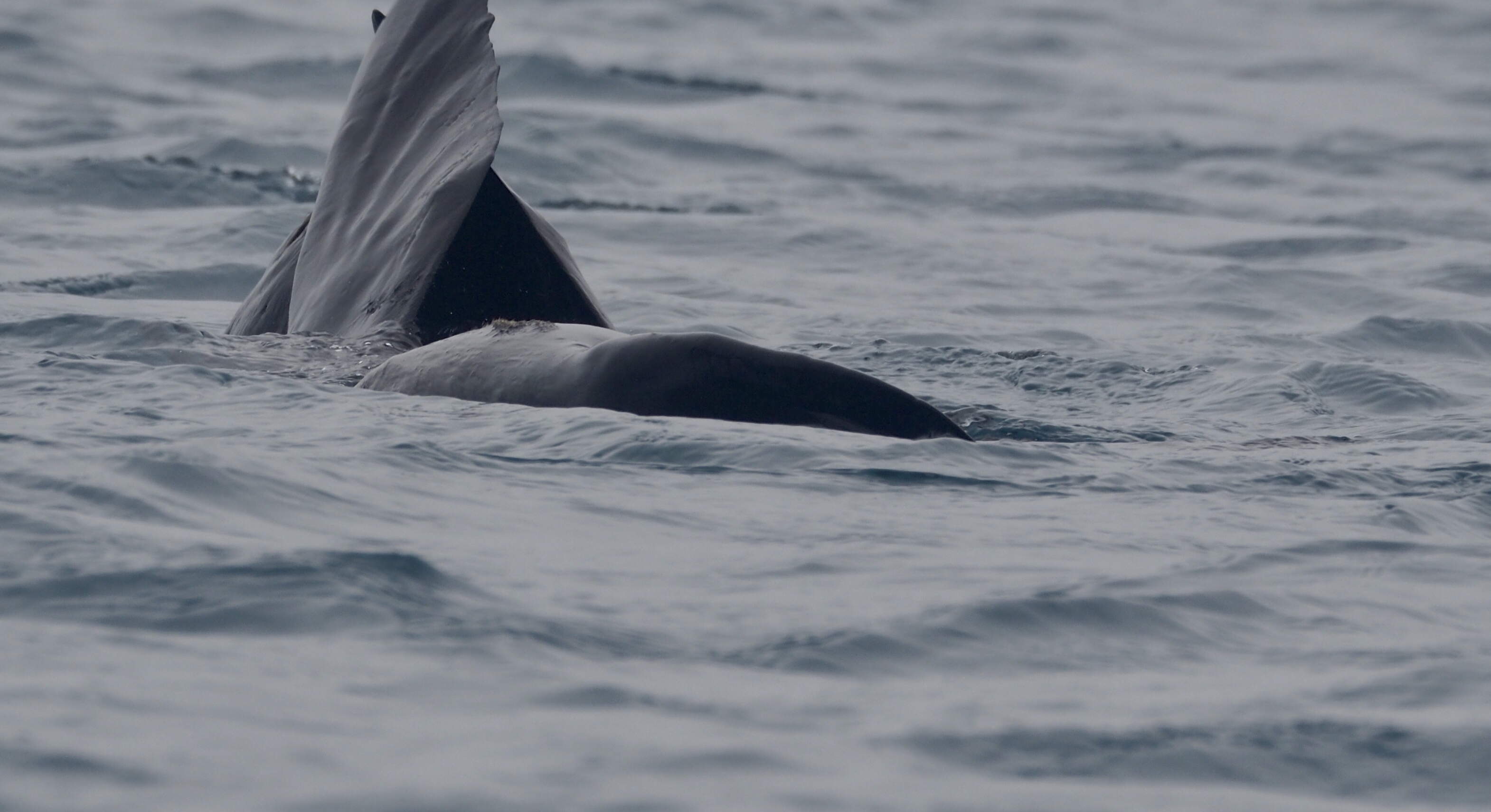
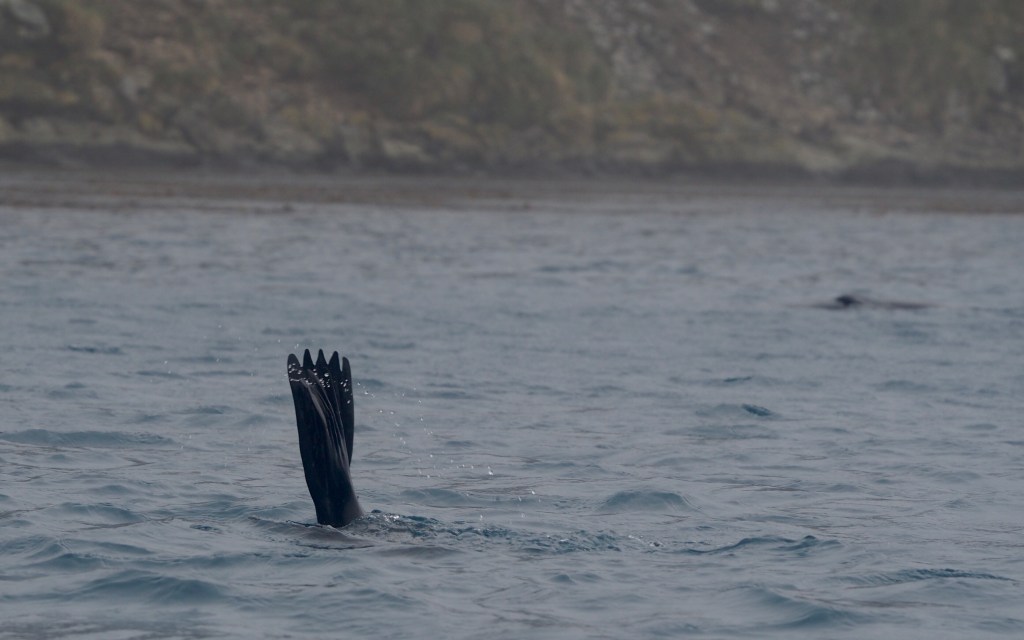
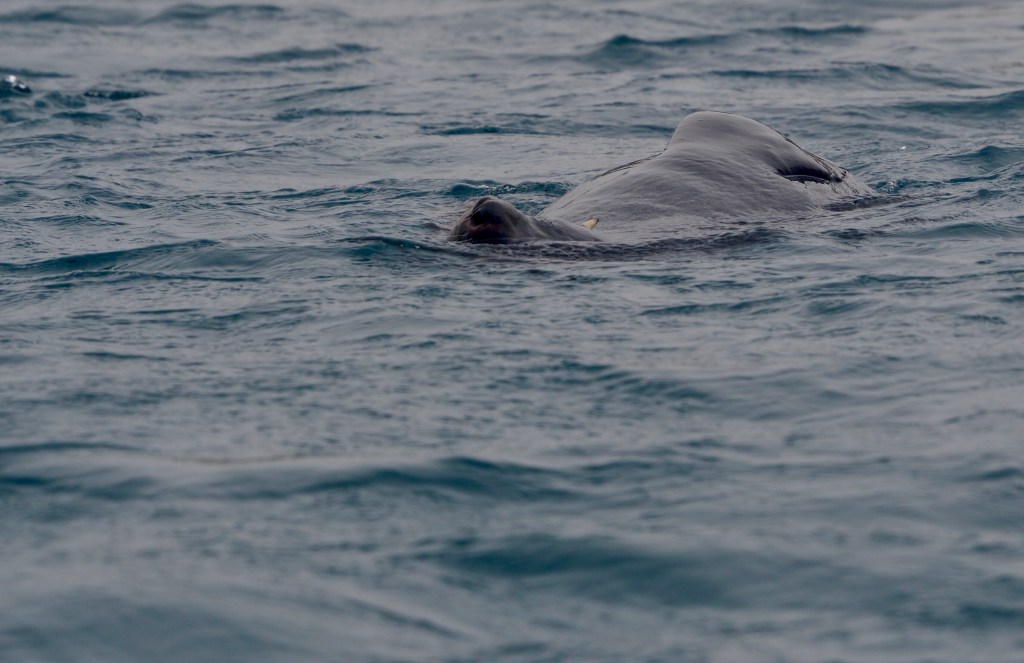
Seals in the water having fun.
Another elephant seal in the middle here.
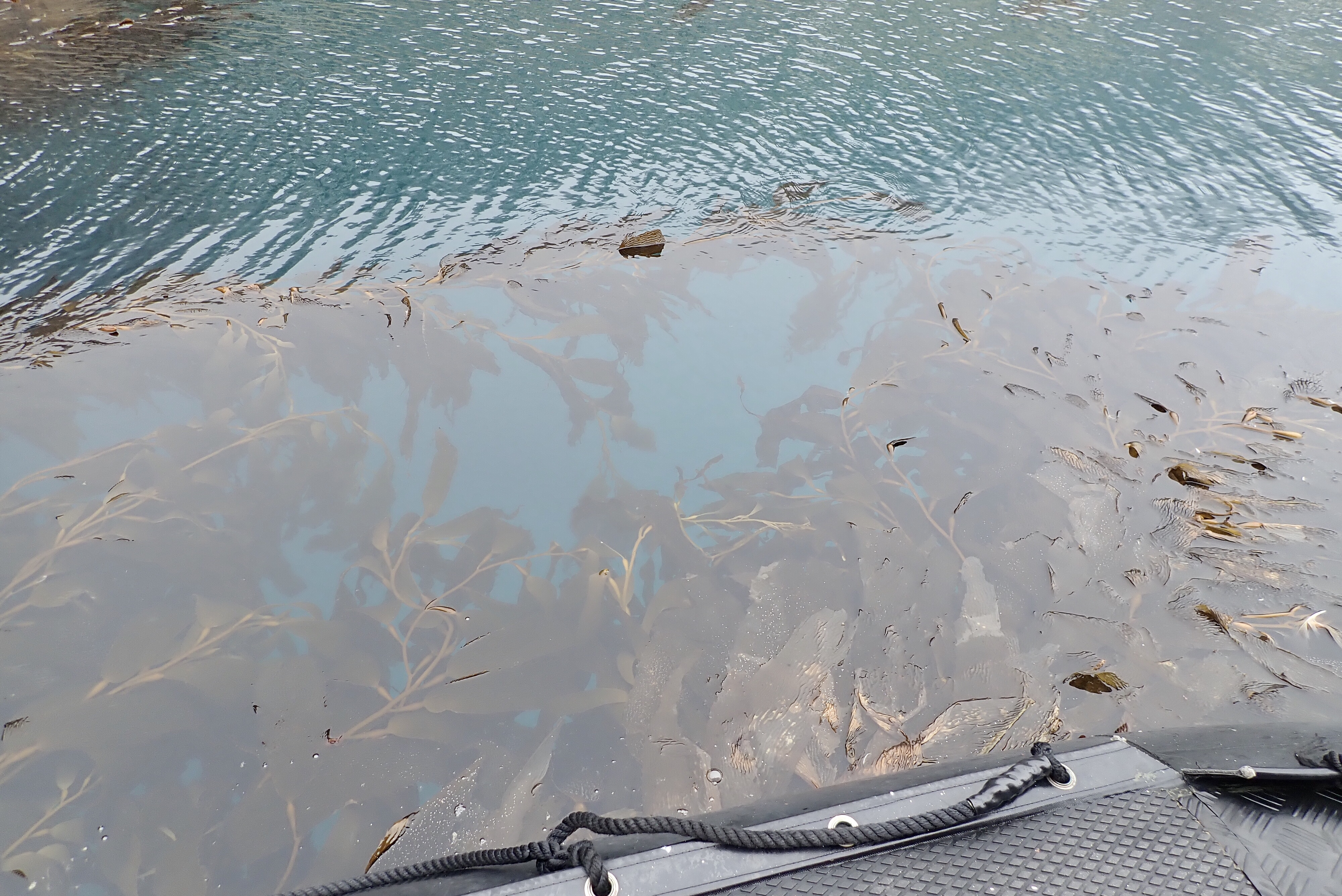
Plenty of giant kelp in the water.
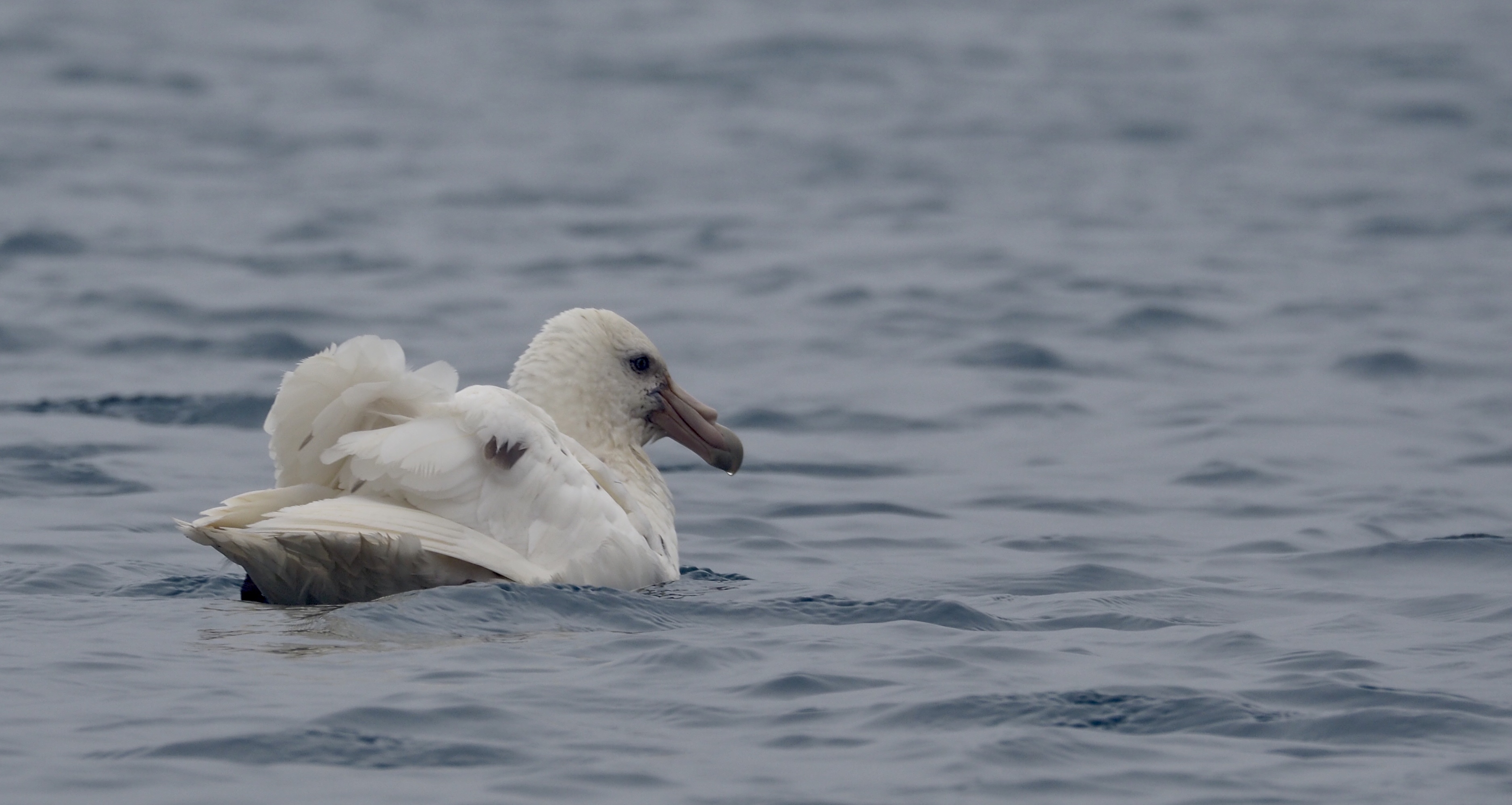
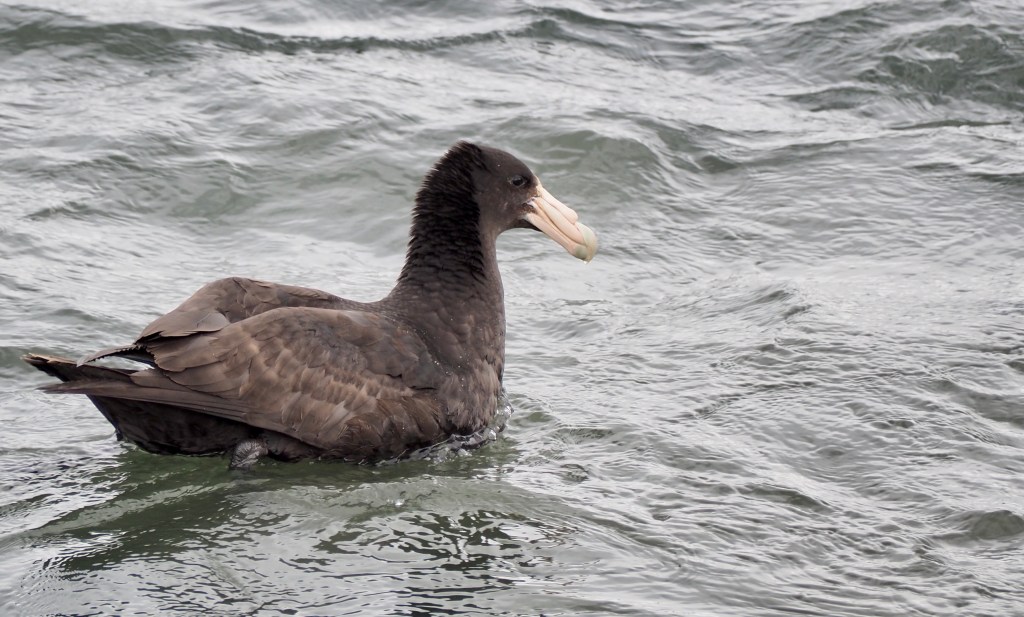
We also saw a rare albino giant petrel.
And one final seal pup shot for good measure.
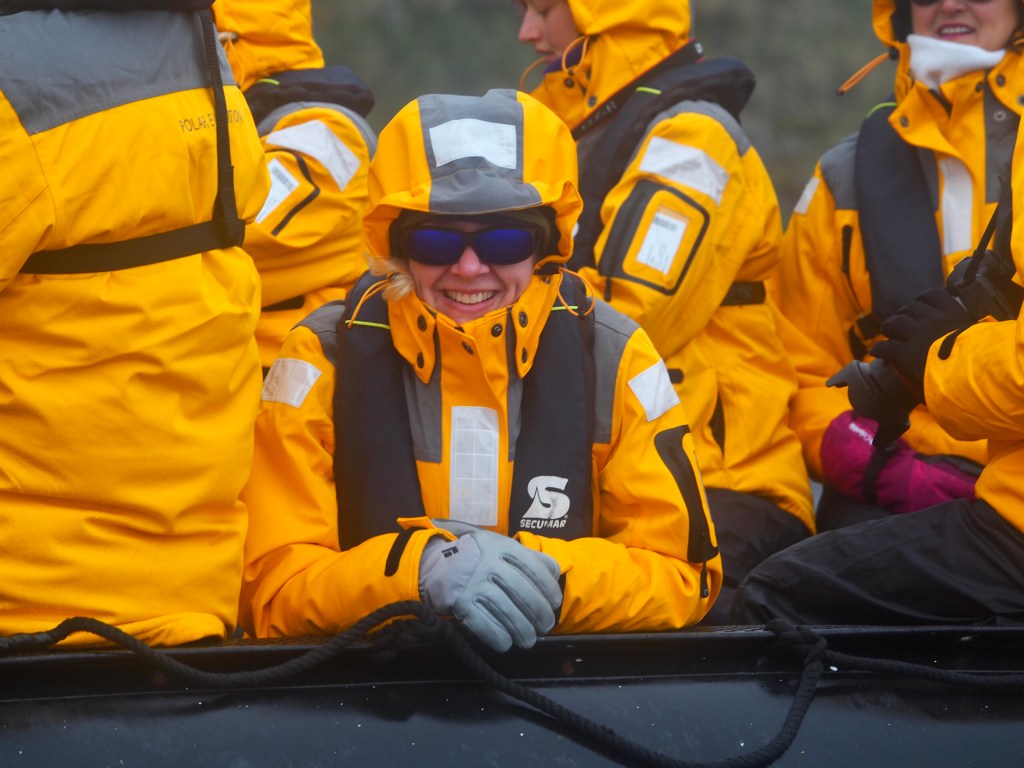
And finishing off with the lovely Linda on an adjacent zodiac.
Up earlier today, showered and out on deck. Another beautiful day but now with a distinct chill in the air. 5 degrees. Garrie spotted a whale spout. Some new small birds off the stern.
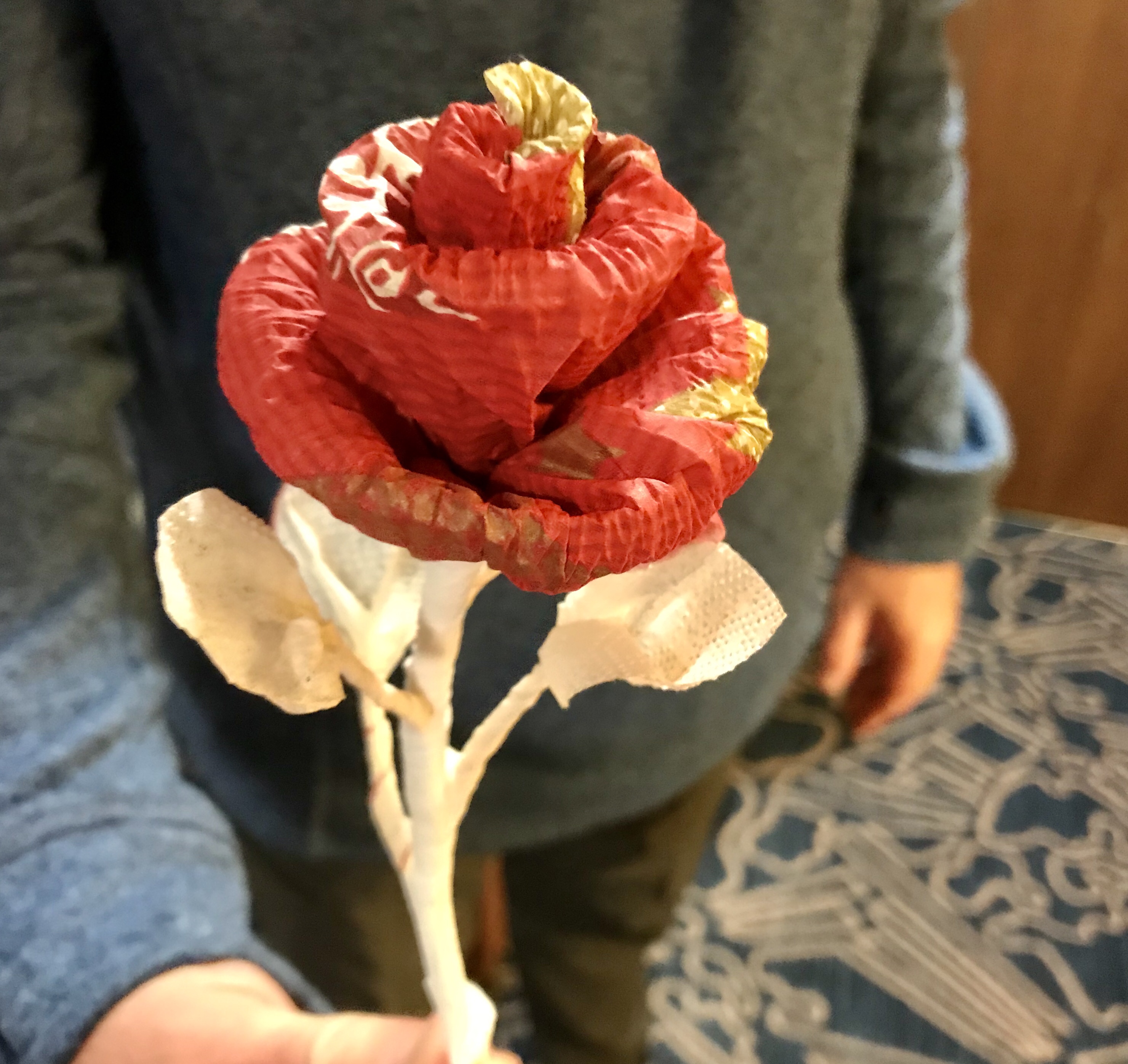
Down at breakfast Kevin, one of the supervisors, made a beautiful flower out of paper napkins.
We have slowed down due to the swell. This is the last year of this ship being with Quark as it is being sold to Intrepid an Aussie company who wants to get into Antarctic work.
So the first lecture of the day delivered by DJ.
Ice cores are history books.
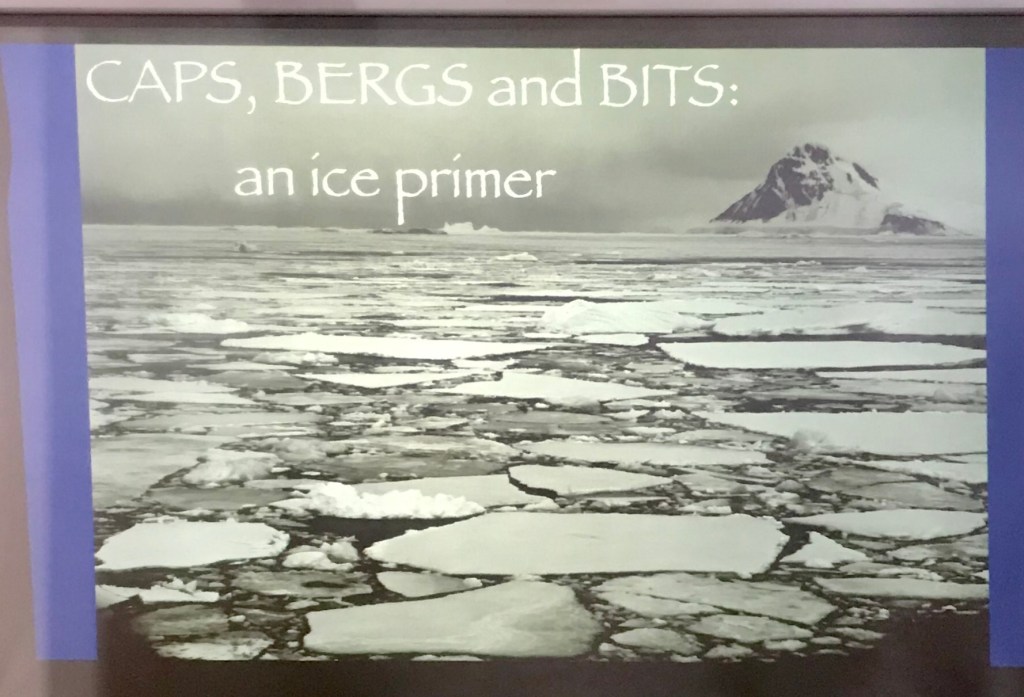
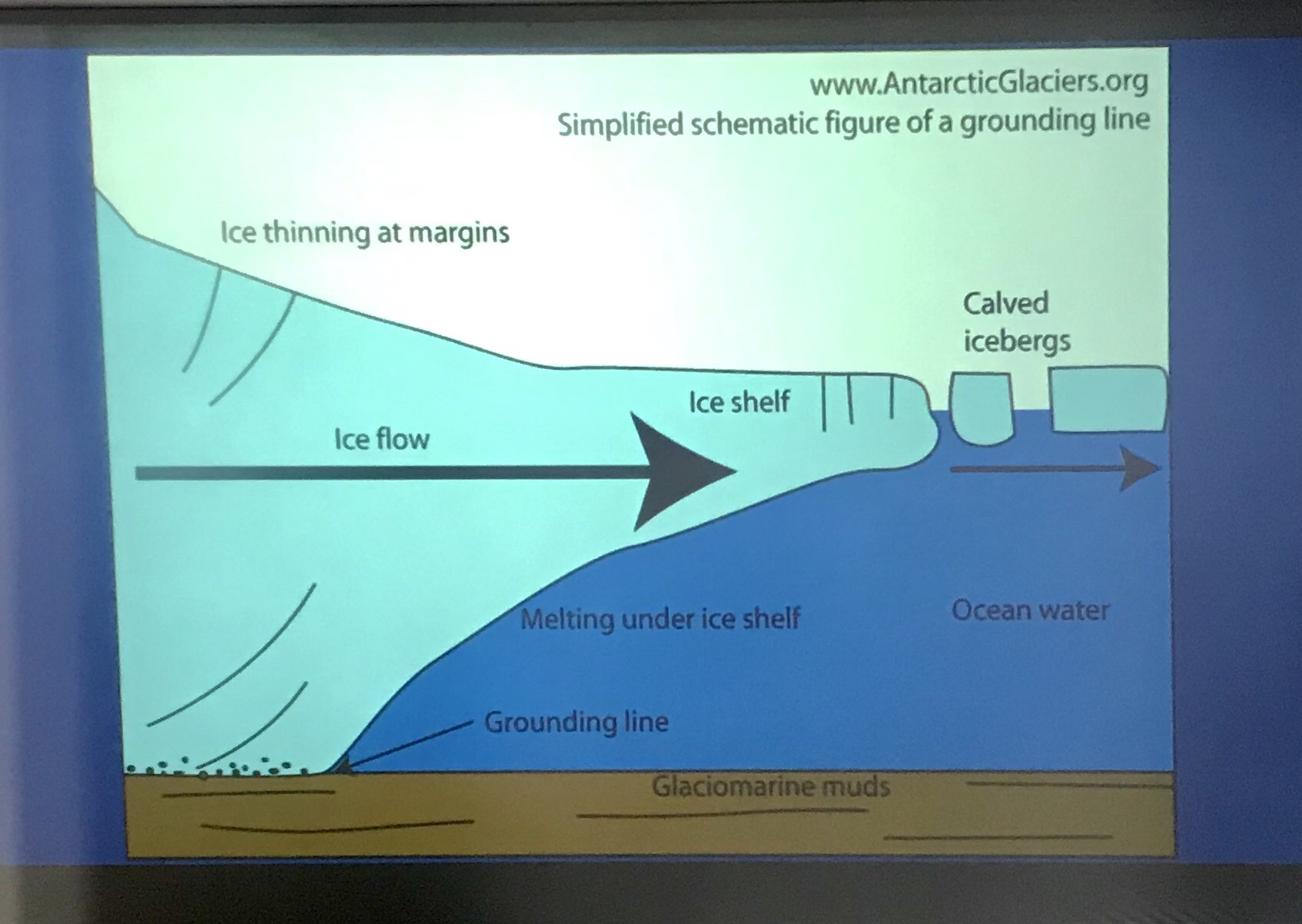
Types of glacier – valley glaciers. A river of ice. Cirque glacier – start in a basin – the one in Ushuaia. Ice sheet or continental glacier – only two currently greater than 25000 square kms Antarctica and Greenland. 90% of fresh water on earth stored here. Ice cap – lake on a dome feeding rivers. Ice shelves – flat top travels in sea. Can be thousands of square kms. When it moves under the force of its own weight it is then a glacier. Glacial ice is considered a rock. Some glaciers move gently some surge. 3-8x faster than normal. Ice fall. Steep areas. Tidewater glaciers. (Valley glacier meets the sea). Braided gravel bars. Next to teenagers glaciers are the most erosive force on the planet. Moraines are accumulation of glacial till.
Glacial recession. Popova glacier. Receded 1km between 1932 to 2002. Losing depth and length in Antarctica mainly in the west. 97%. – 99% consensus humans creating change. Almost all glaciers are shrinking. davidjeffphotos.com
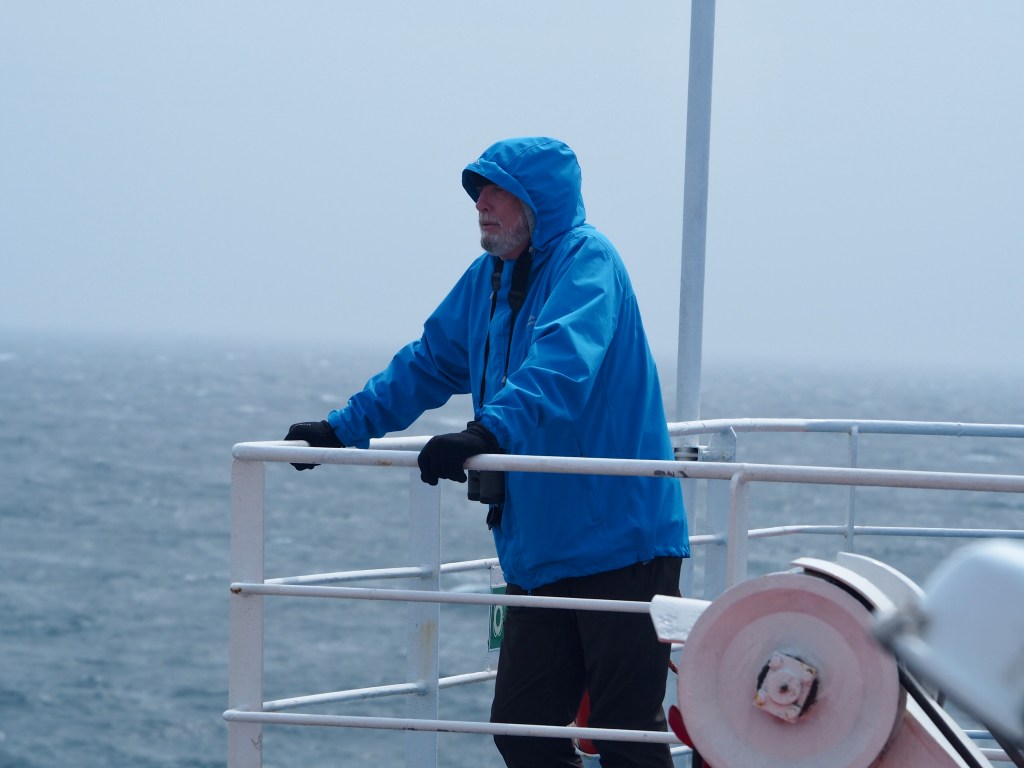
Back outside for more viewing. With the speed we are travelling whales are a fleeting glimpse.
Have I mentioned the toilets are like plane toilets – much more about air pressure than water. Highly interesting.
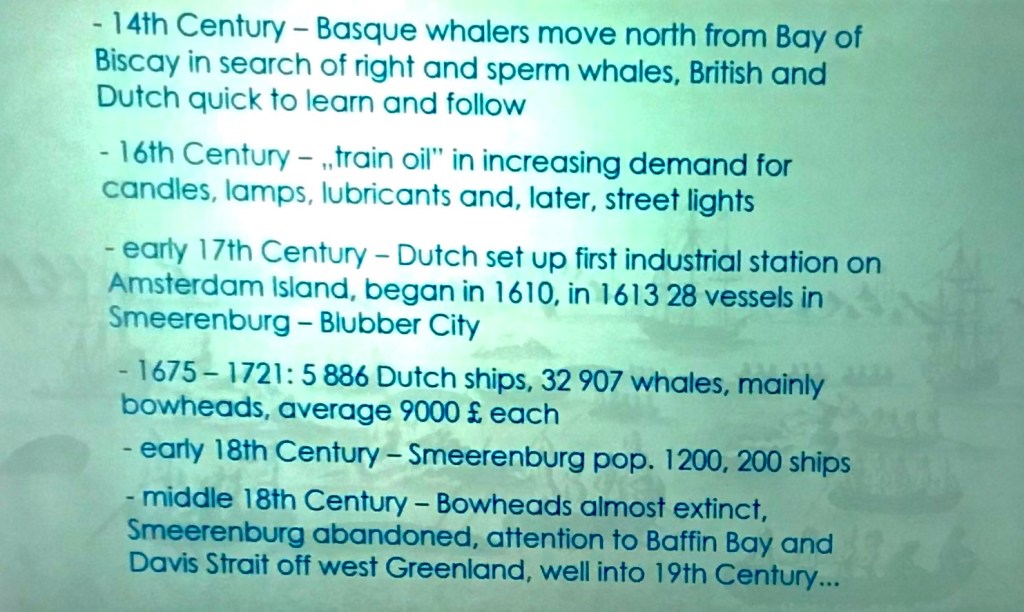
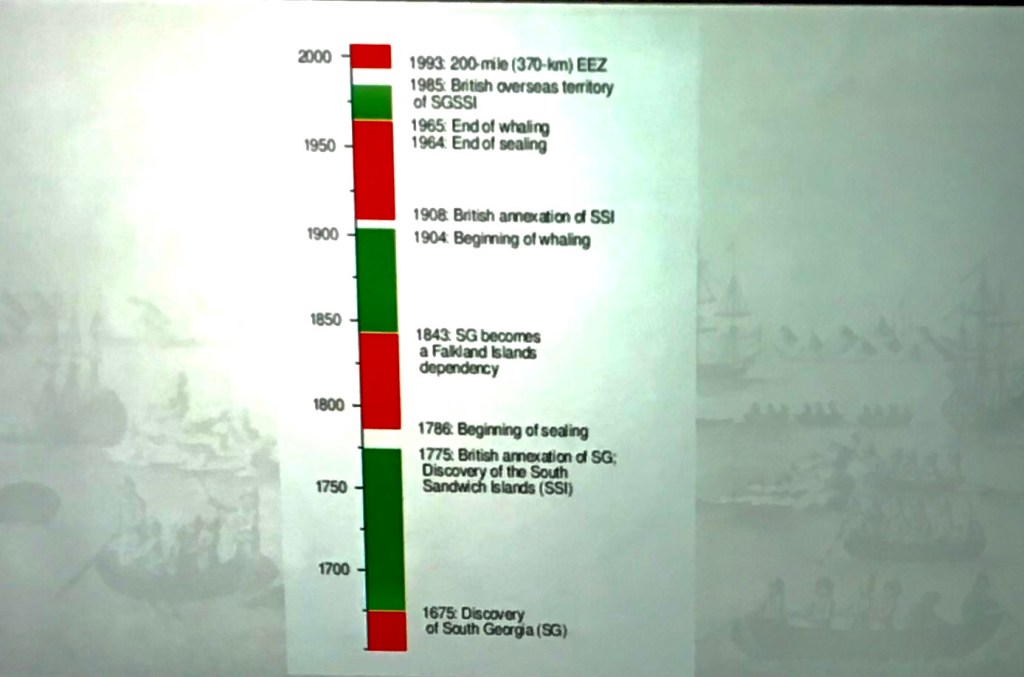
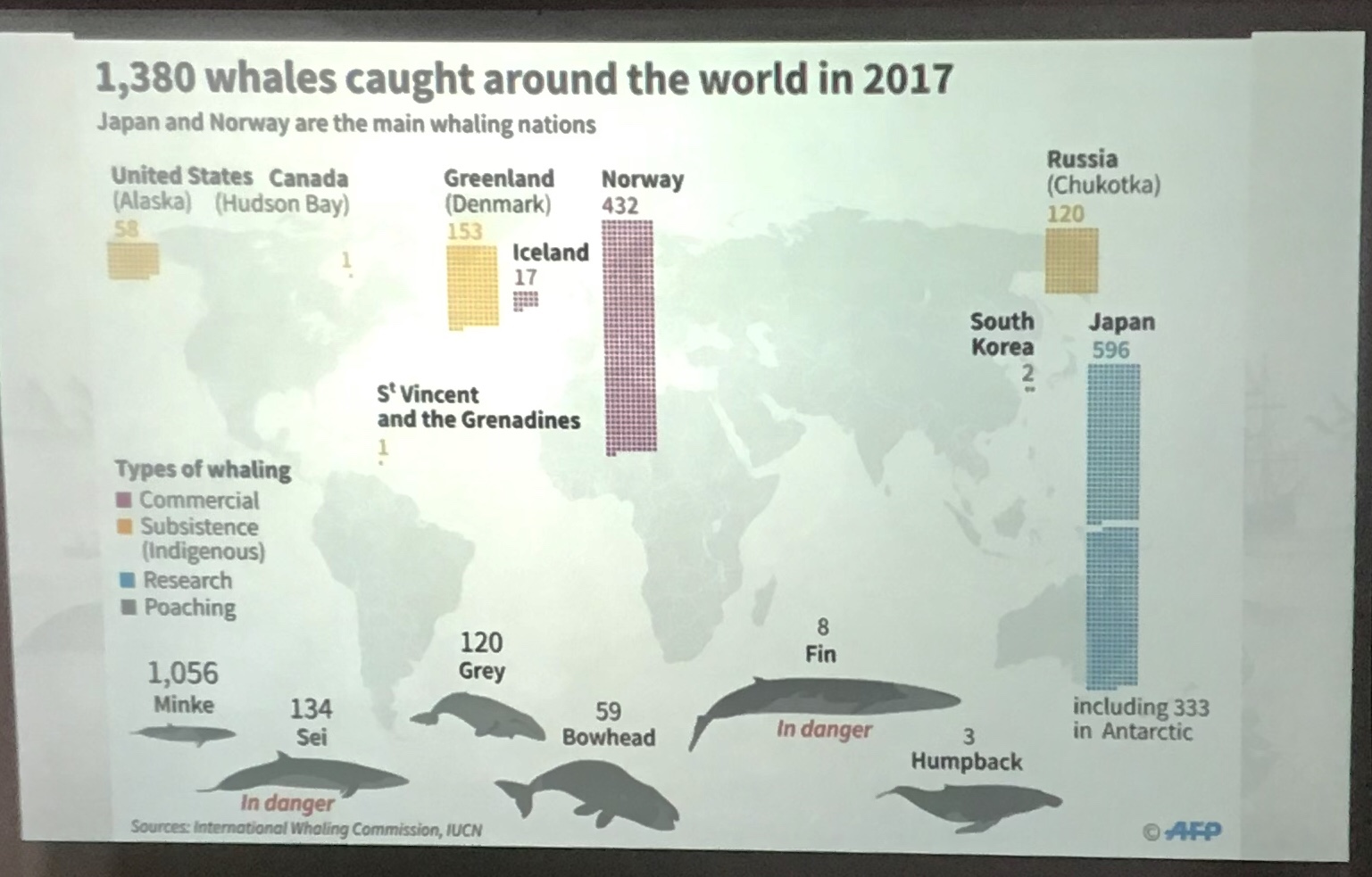
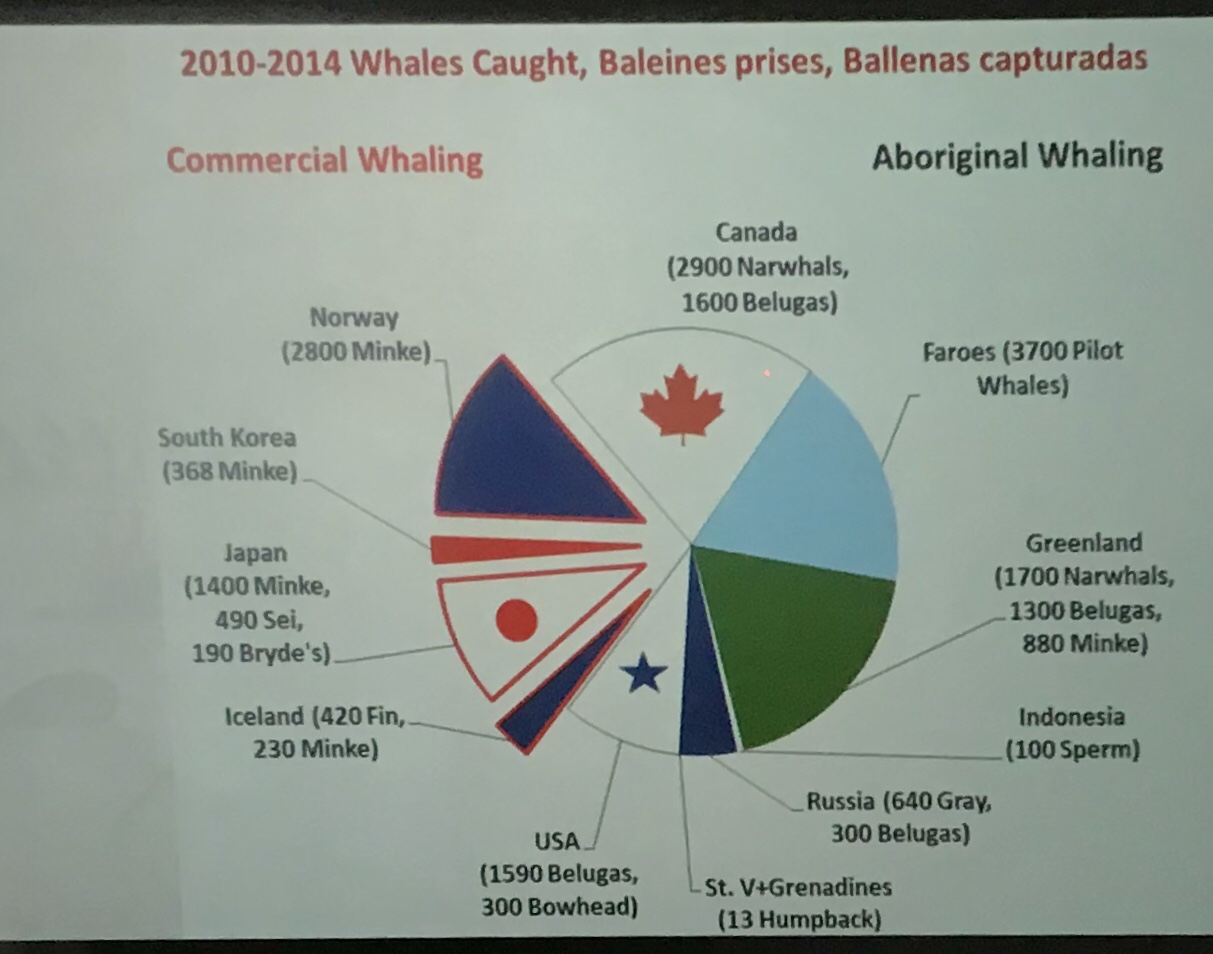
Lecture – centuries of exploitation – history of sealing and whaling with Miko.
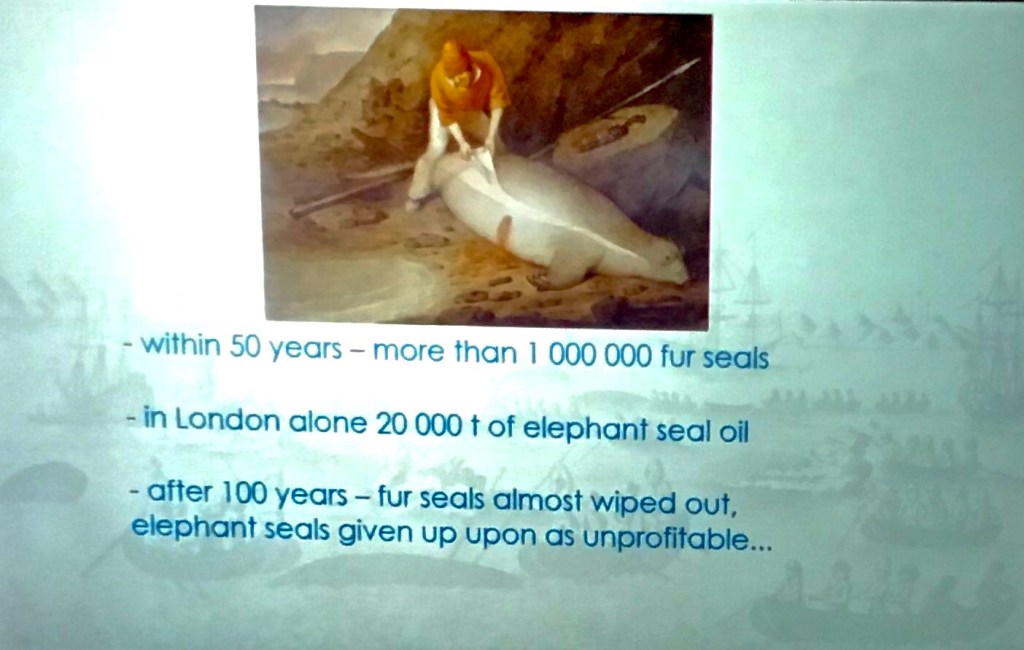
Some older illustrations that were very incorrect. Jonah could not have been swallowed by a whale. Selkie myth. Problem was they didn’t know what they looked like. The surface of the moon was filmed before a whale swimming underwater (only beached whales seen). In 20 years killed 70,000 sea otters and 1.25 million fur seals in 1740s Bering’s ship St. Peter in the north.
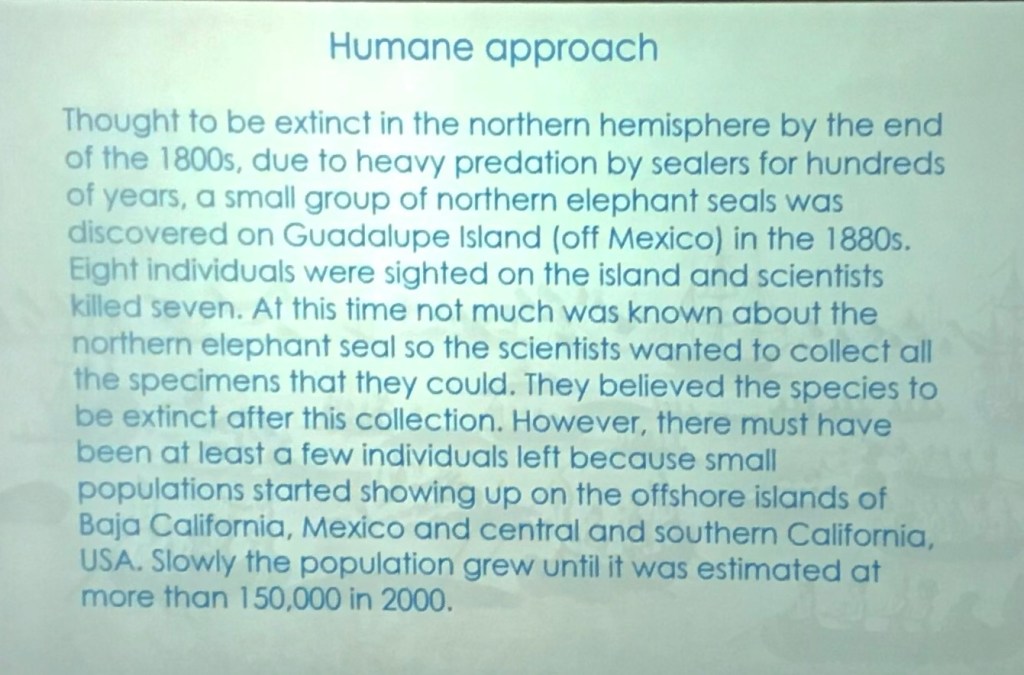
In the south elephant seals for blubber and fur seals for coats. 1819 south Shetland islands found. By 1825 they had killed all the seals. Within 50 years more than a million so a very few that managed to remain are the population so lacking genetic diversity and could be easily wiped out by a virus.
Whaling. Two first international industries were sealing and whaling. Right whale named as easy to kill as not fast and also big.
End of 19th century the explosive harpoon. Then mounted on steam boats so escalation and also other, faster whales targeted. Carl Larsen died in 1924 whale station Grytviken 1904 produced 70% of world’s oil. First two years caught everything in the bay directly in front of the station. Film of the old days with cruel practices. It’s uncomfortable to watch. 1930. On South Georgia. Not a film for vegans. Easy to judge now but thankfully times have changed (with a couple of exceptions). Next step was factory ships. 1936 one ship alone took over 900 whales. Almost 2 million whales killed in Antarctica in the 20th century. Many whales still rare.
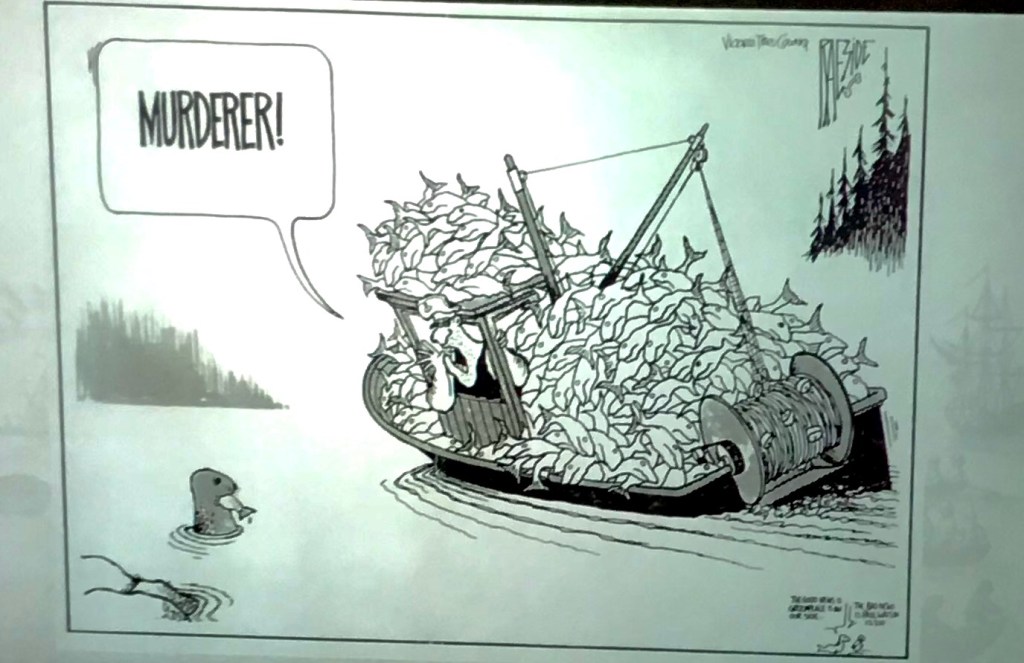
Still problems with whaling and the Canadian seal hunt continues… Our over fishing the problem.
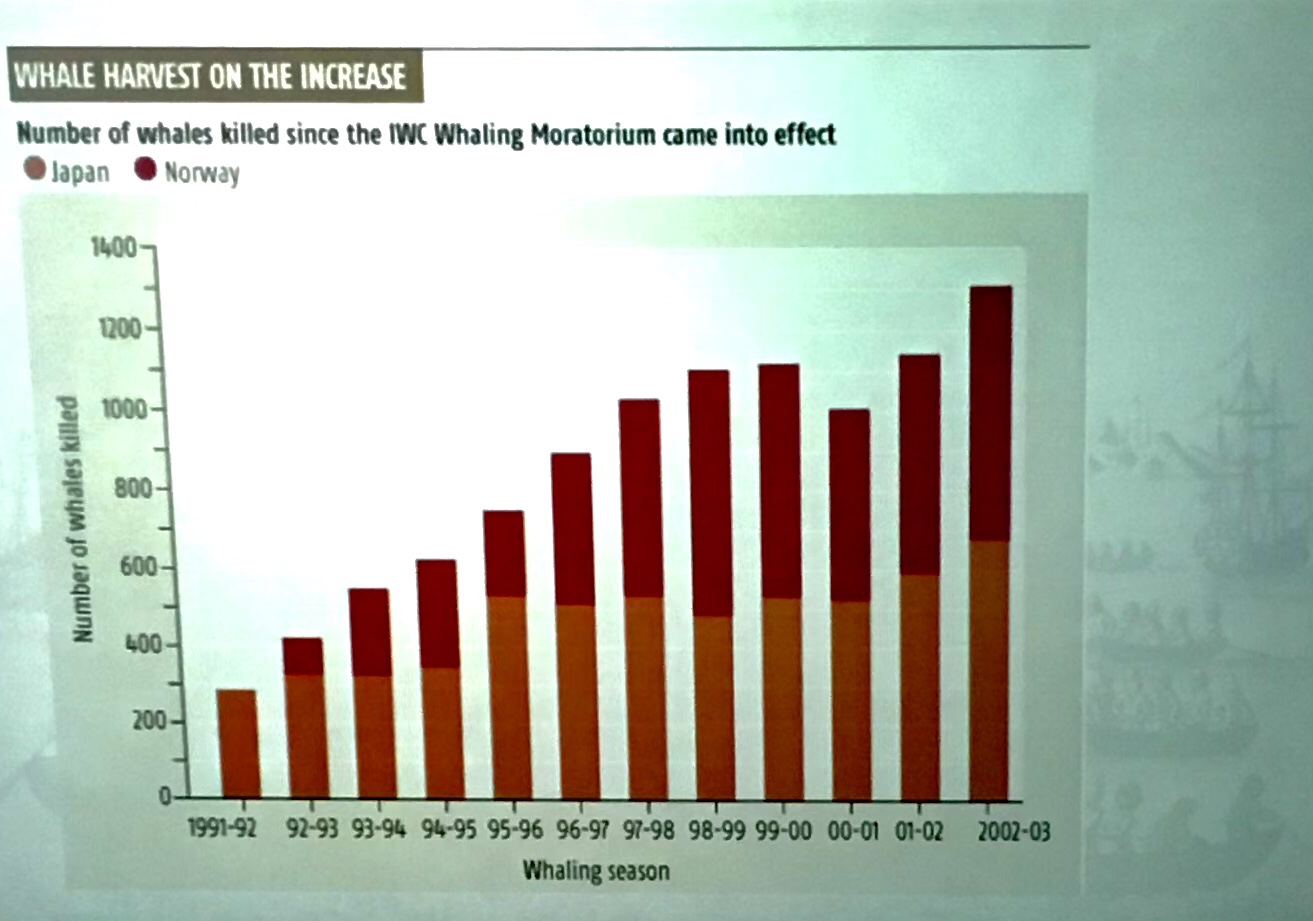
Commercial whaling Norway, Iceland and Japan. Faroe Islands claim tradition. Marine life also affected by plastic pollution. Also fishing net entanglement. If they live, we live. Sobering stuff.
It’s been relatively calm on this crossing but now starting to roll quite a bit more.
Lunch and an hour time change forward and suddenly it was 1pm.
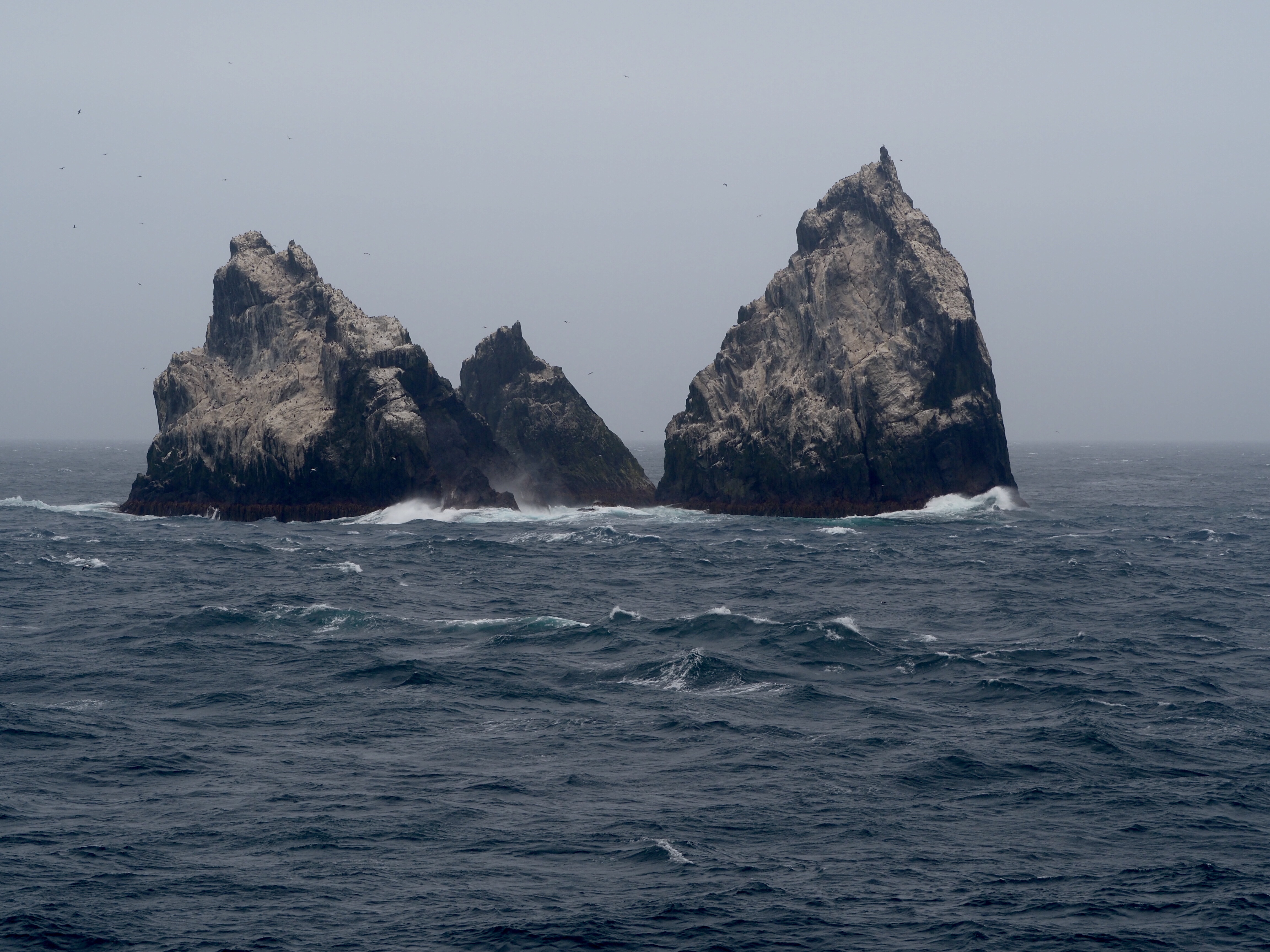
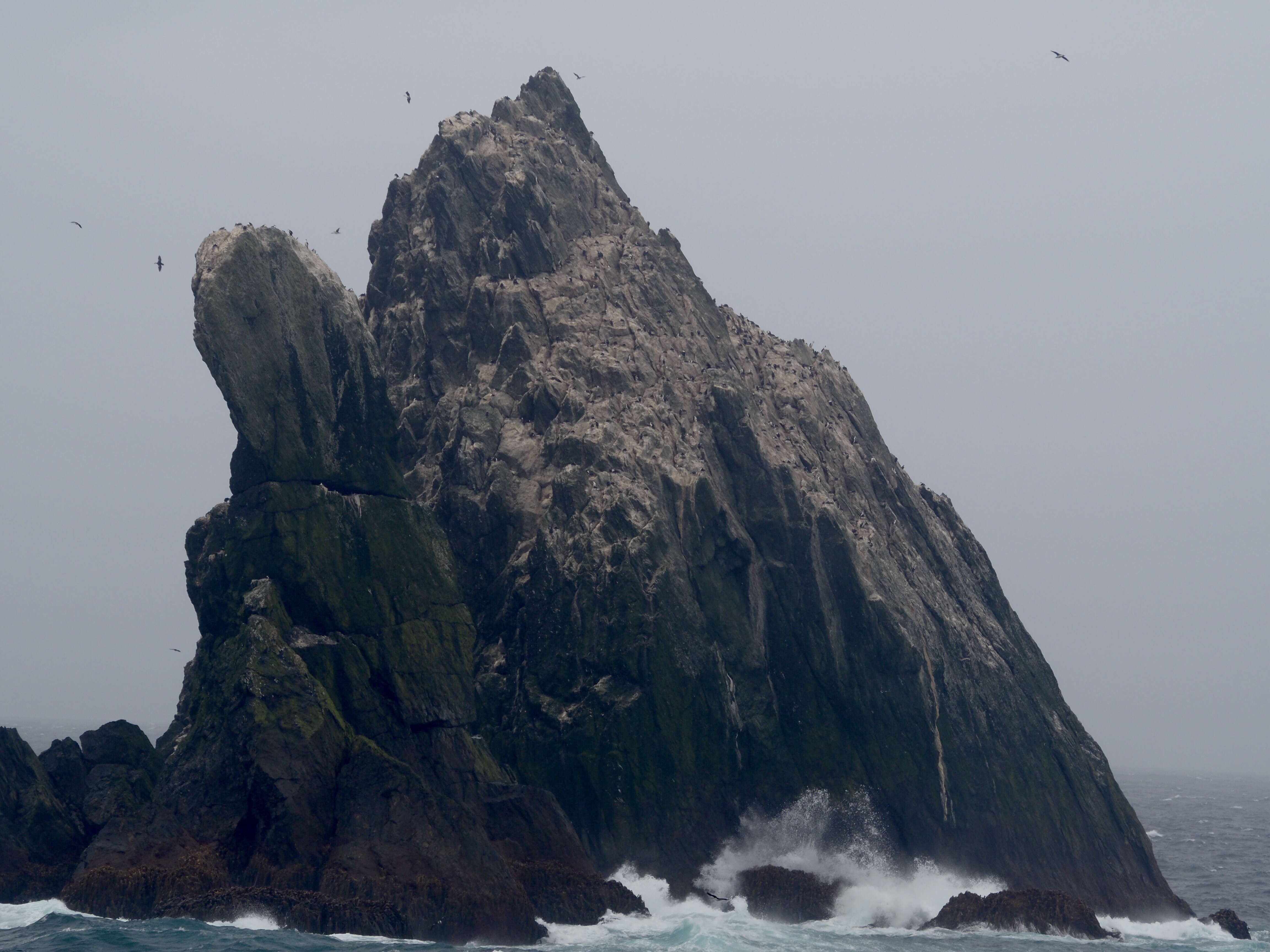
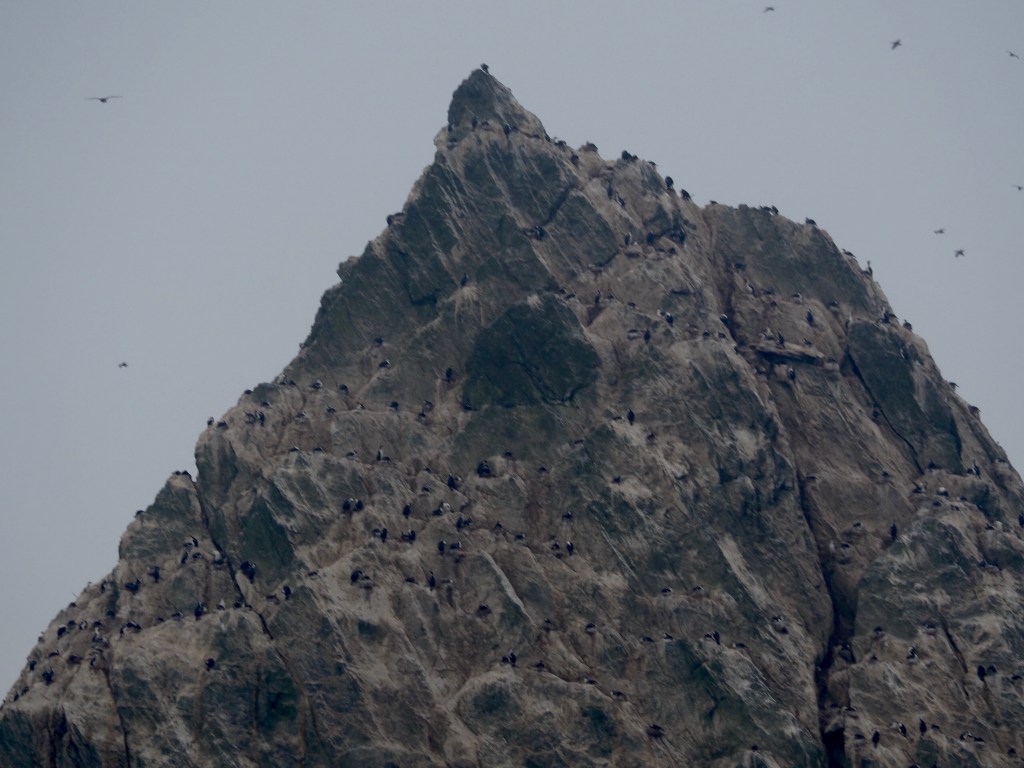
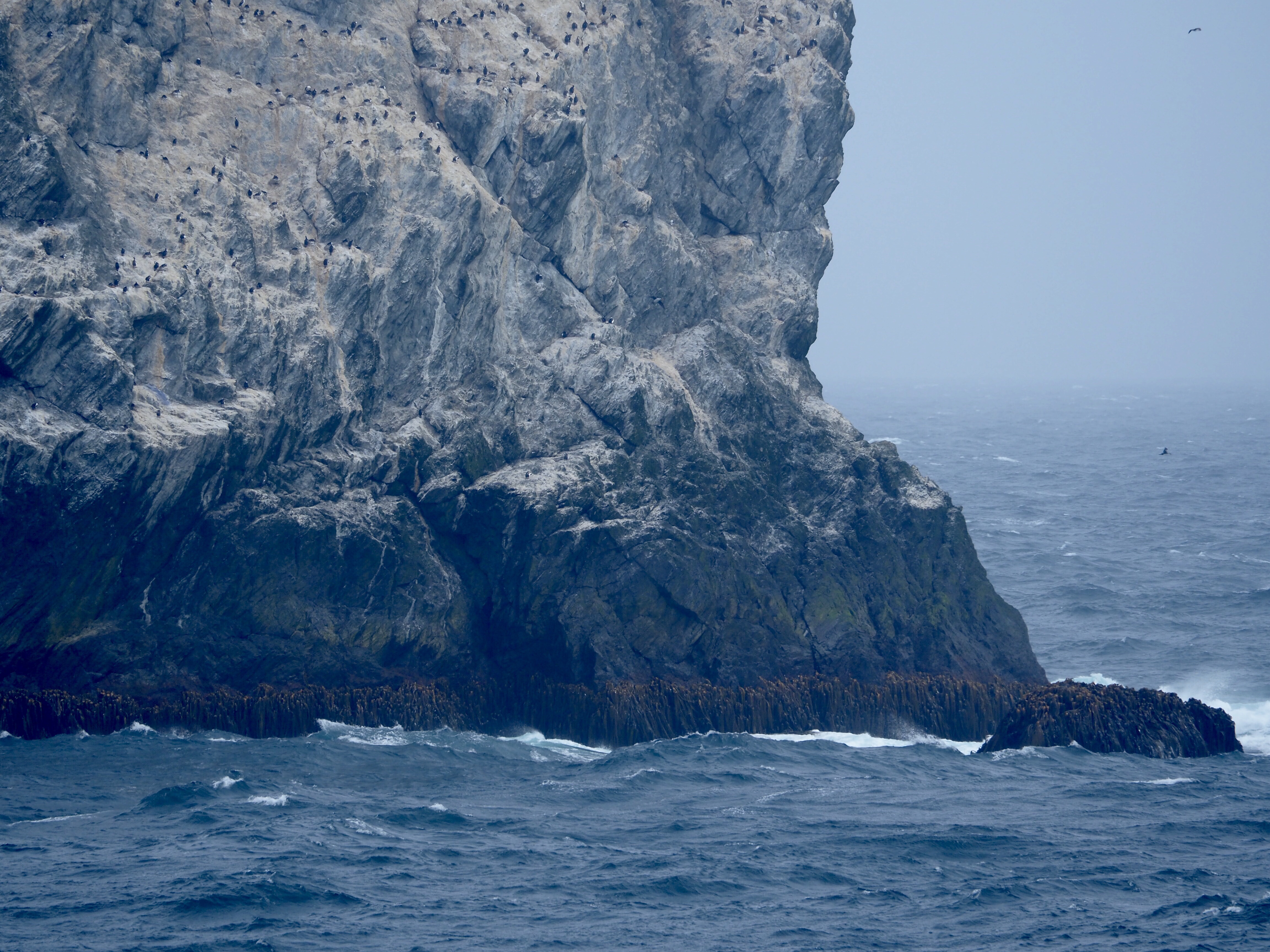
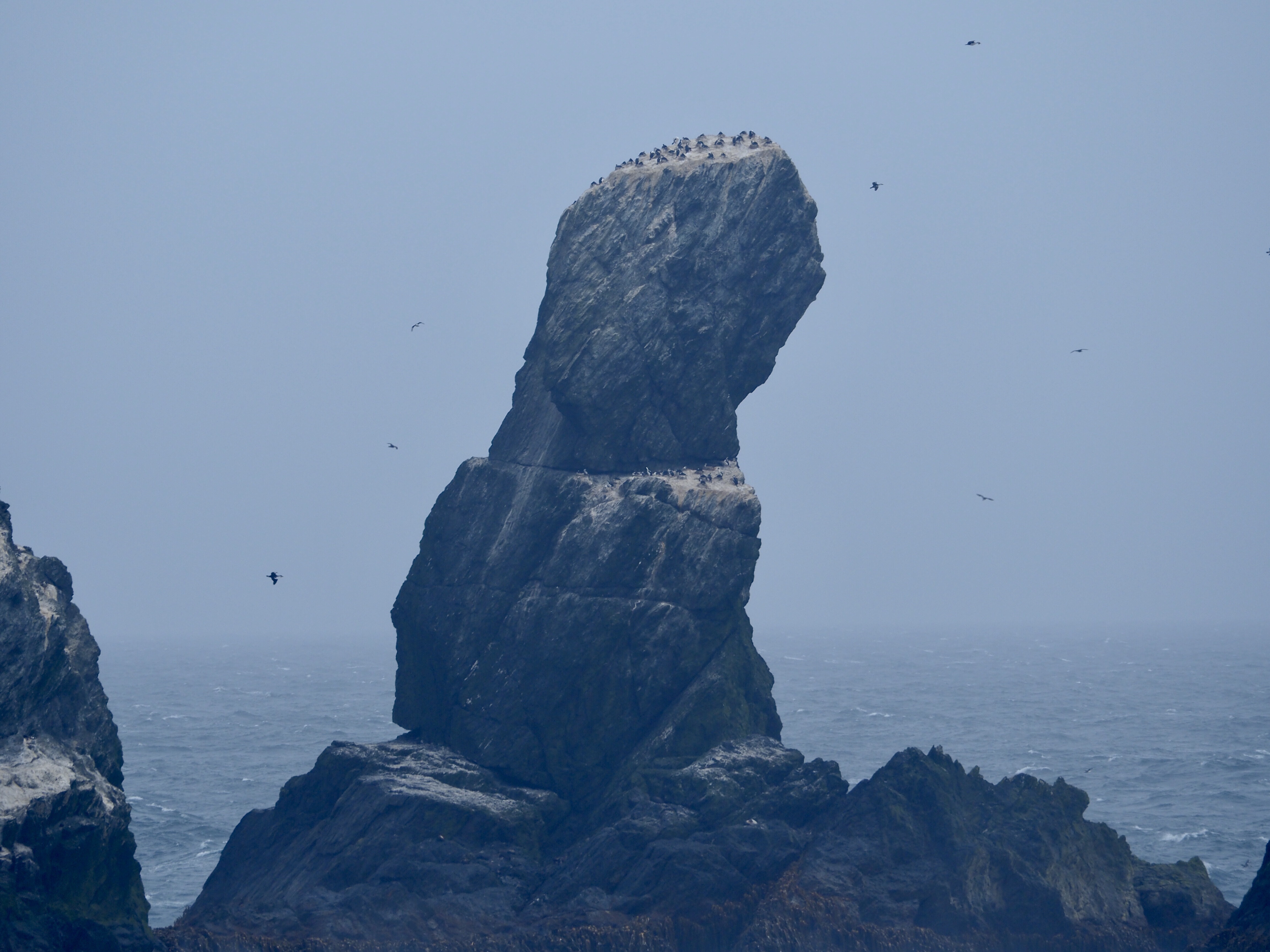
Shag Rock appeared about 2pm. These half a dozen rocks in the middle of no where are home to thousands of breeding cormorants. They take up every conceivable space on the rocks. Our Captain took a circuit around them which also meant we coped wild winds that almost took me off my feet and it was the coldest I can recall since the sleigh ride in Lake Louise. Eventually we were driven inside. Garrie saw a seal pop it’s head up too.
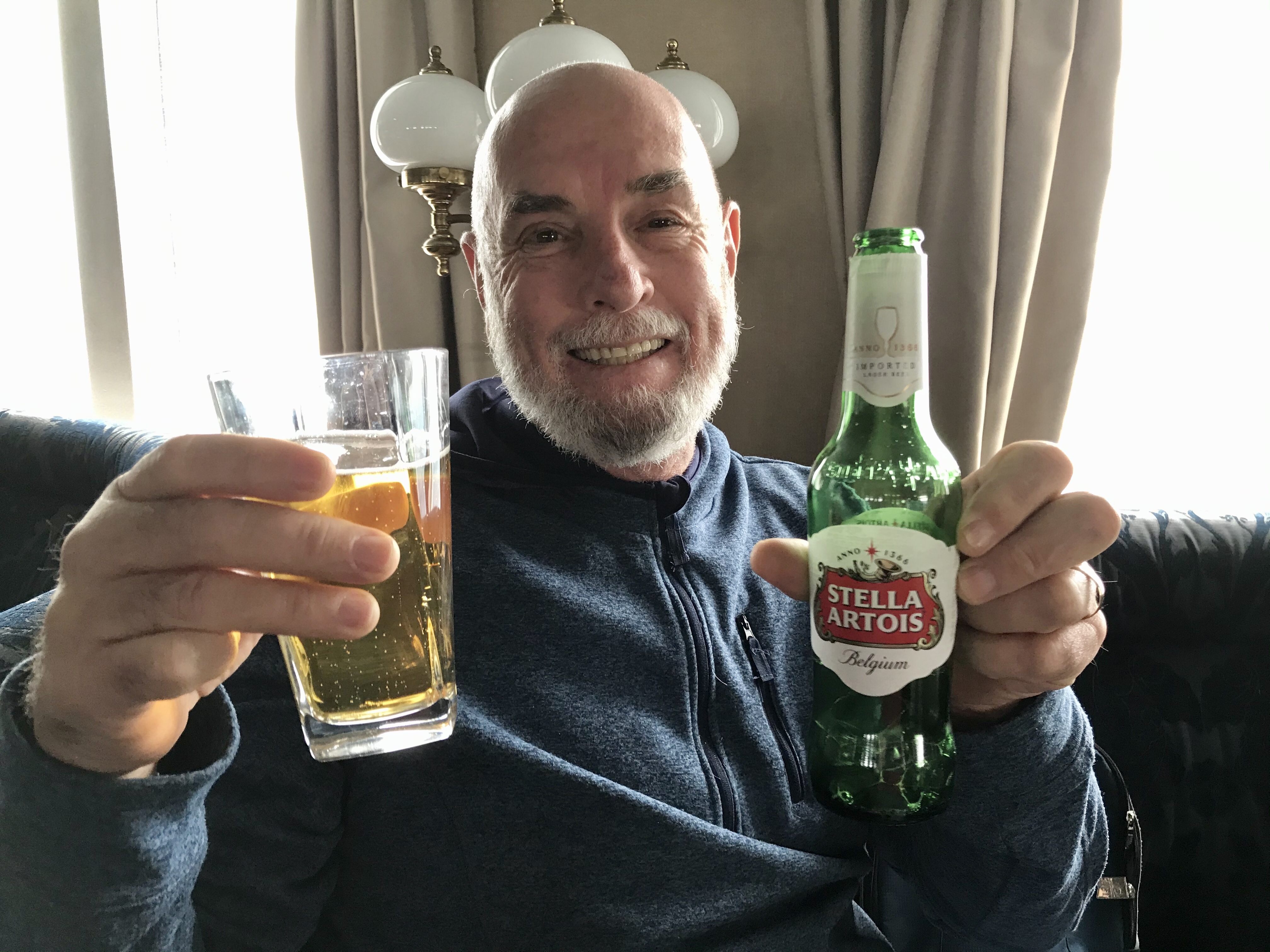
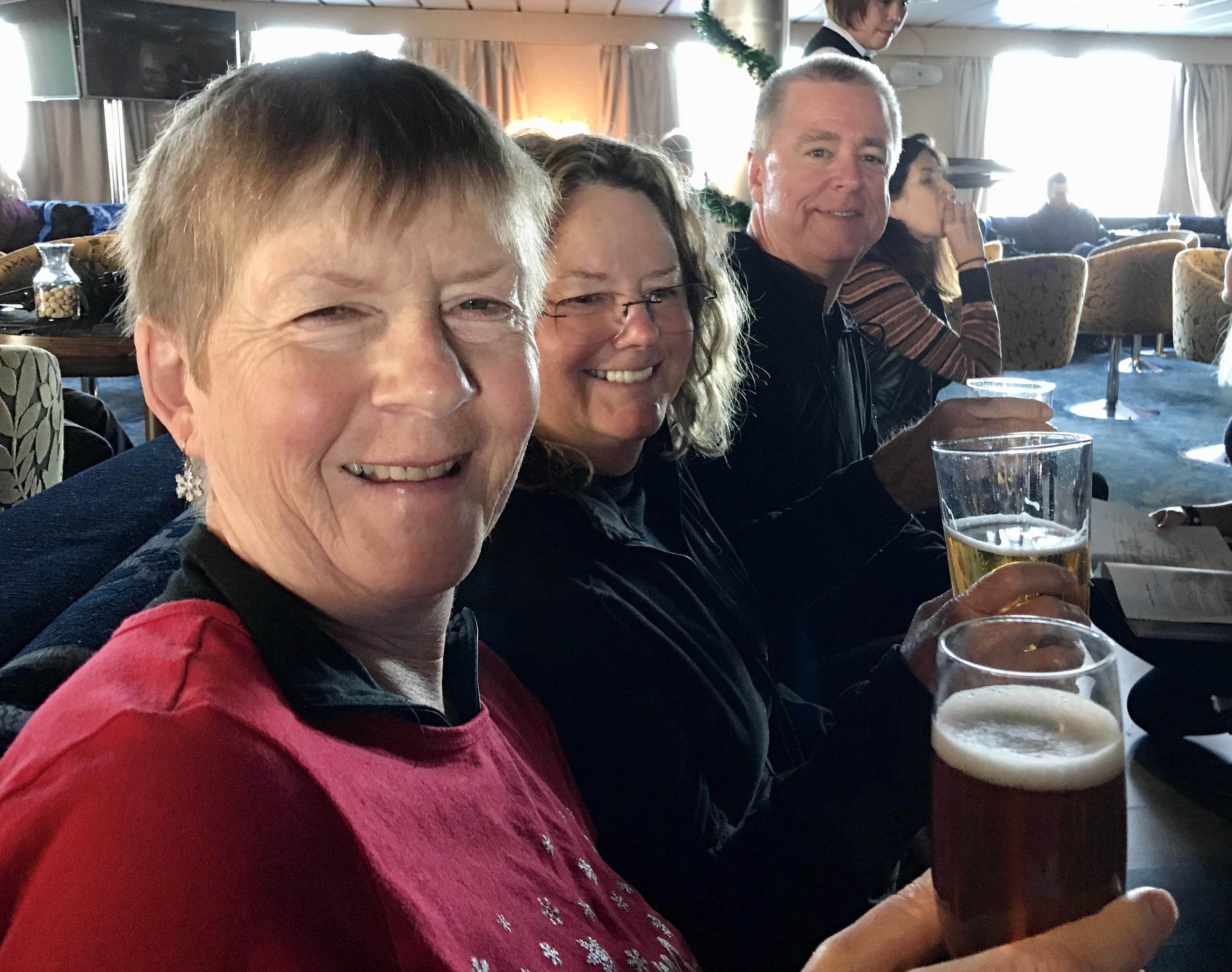
Beer of the day is a Stella Artois. Rating today is a 7. (Cheryl has been trying to tell him….Texan Cheryl that is) Square glass strange to drink from and Garrie does not like it. I ordered a Blue Whale which is supposed to be the equivalent to a blue moon. Not blue?!?
We decided to skip the Christmas cookie decoration event and just sat and chatted to Cheryl and Mike until the next event.
The Rise and Fall of Penguins and Seals: One Woman’s mission to Uncover Historical Ecology of South Georgia with Catie from Penguin Watch.
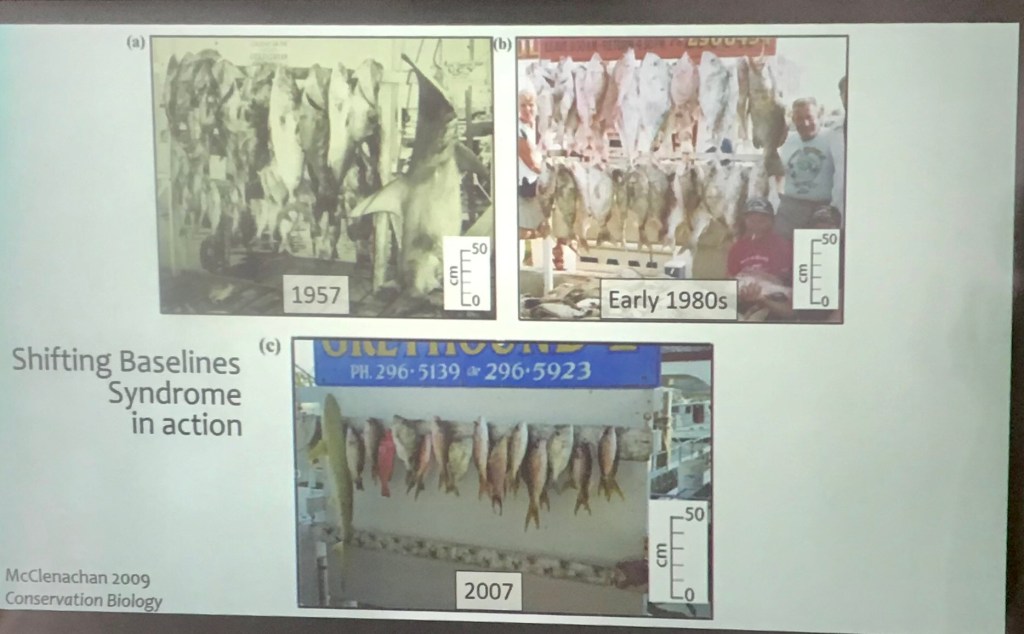
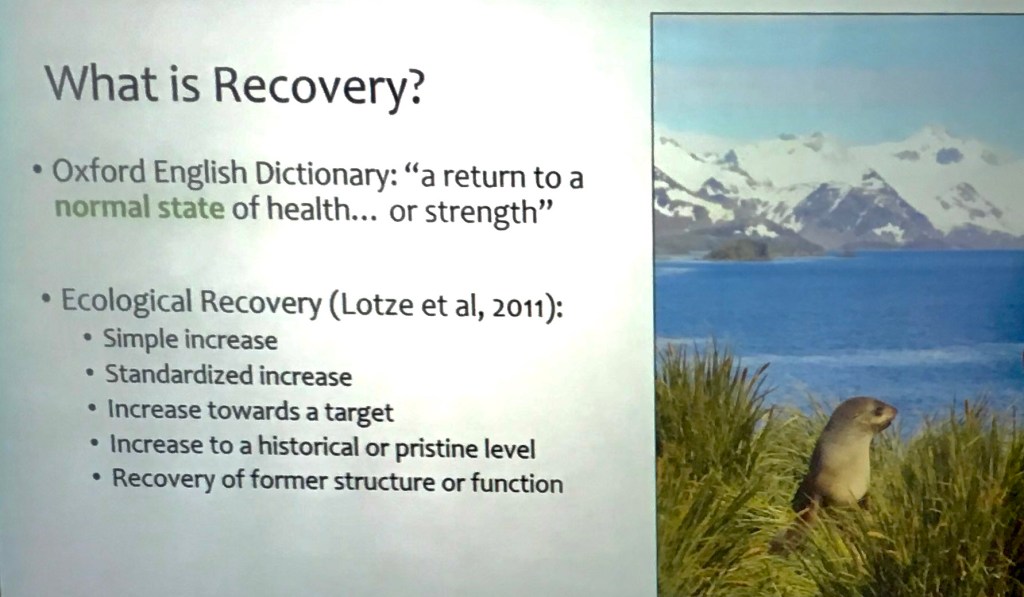
DR Catherine Foley. Shifting baselines syndrome. We think the environment is measured from the 10 year old perspective. This illustrates the reality.
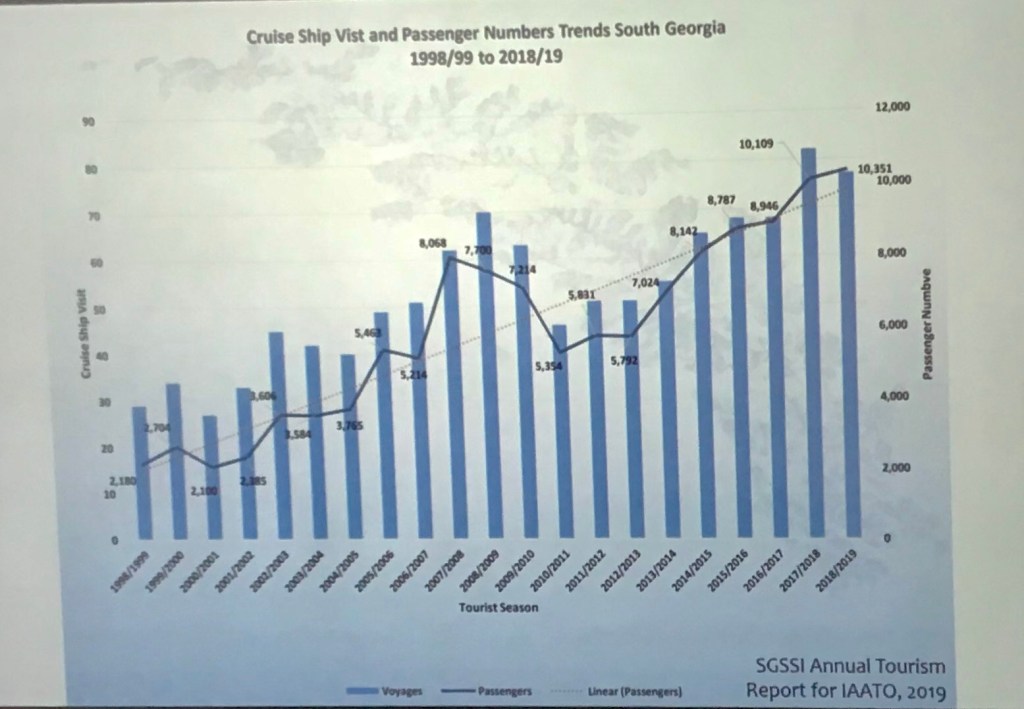
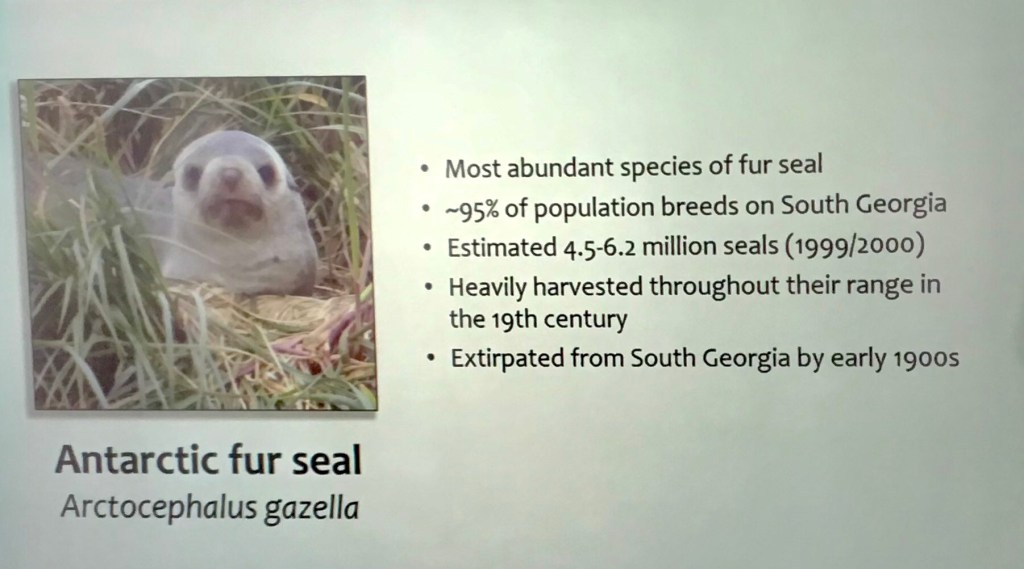
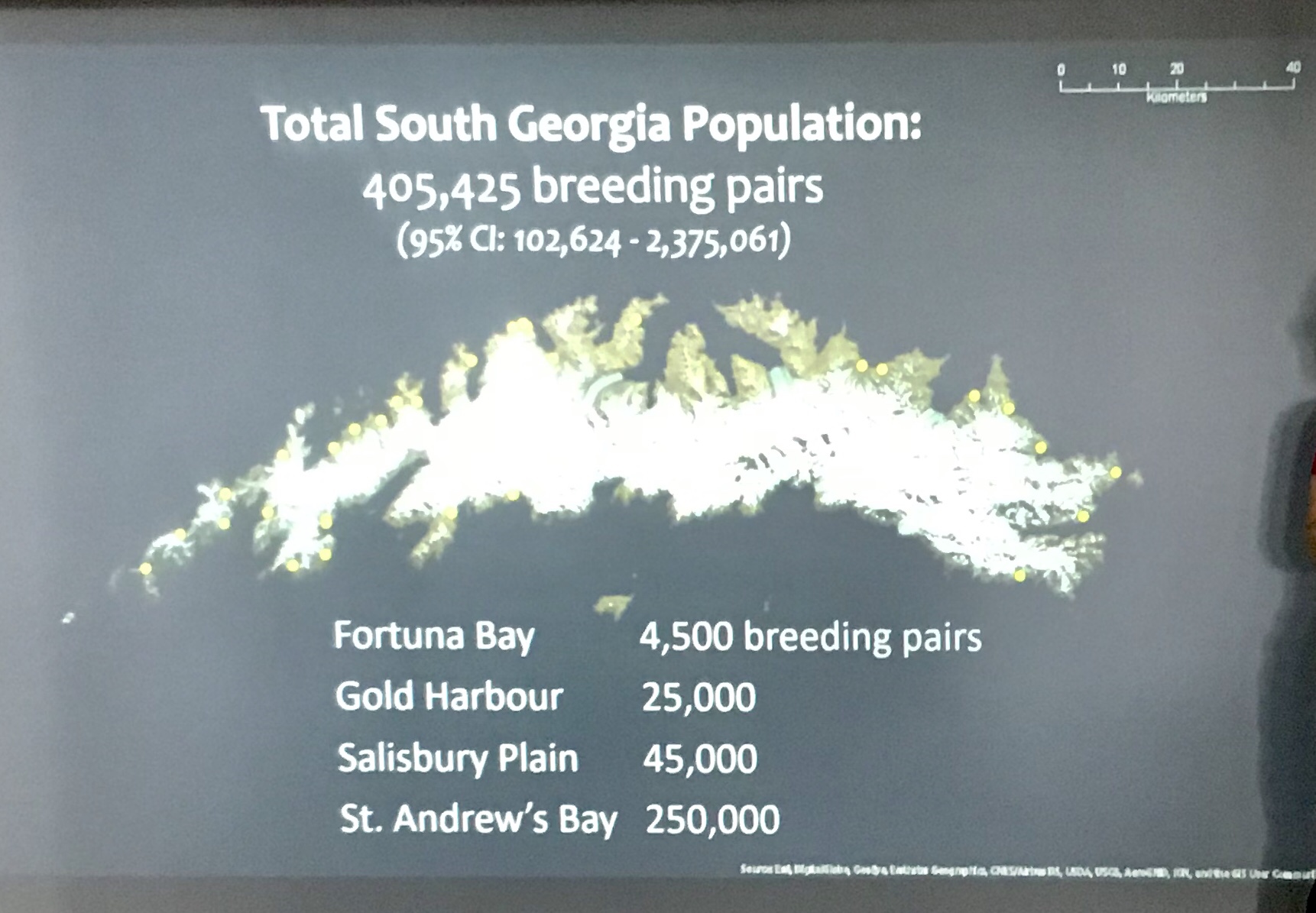
South Georgia first humans 1770s so only short human history. Capt Cook first. By 1910 killed off all seals. King penguins also exploited by humans. Used for fires as mentioned before. Used the yellow sections to decorate their shoes. The work Penguin Watch is doing uses time-lapse photography a pic taken every hour of every day. Ships of opportunity used to get where they need to be ie this ship and also use satellite imagery. How has historic sealing affected the population of seals. 1930s recovery began once humans stopped harvesting. They had been functionally extinct. Visitor numbers increasing.
So seal – human interactions an issue. Fur seals damage Tussoch grass. That destroys breeding places for flying birds. However what was the baseline before humans arrived?
Using log books, diaries, records of sales to try to discover the number. Model took 2 months to calculate. Number before sealing probably 2.5 million female fur seals in South Georgia and currently 500k female fur seals. So recovering but not yet recovered by a long way.
King penguins. Climate change shifting foraging ground away from their breeding grounds, a couple have decreasing distances one of these is South Georgia and herd island are the only two where Climate change is assisting, hunched and pouched means an egg. All breeding colonies in South Georgia increasing. Maybe population growth could be due to retreat of glaciers but isn’t necessarily.
Then we had the daily recap and briefing. I really enjoy these with a number of speakers.
Canapés again today as per yesterday. Great the way they use photos they have taken today for the recap titles. Rock man talked about Shag Rock. About plate tectonics. Shag rock and South Georgia used to be part of South America. Shag rock tip of one of the underwater peaks. Metamorphic rock.
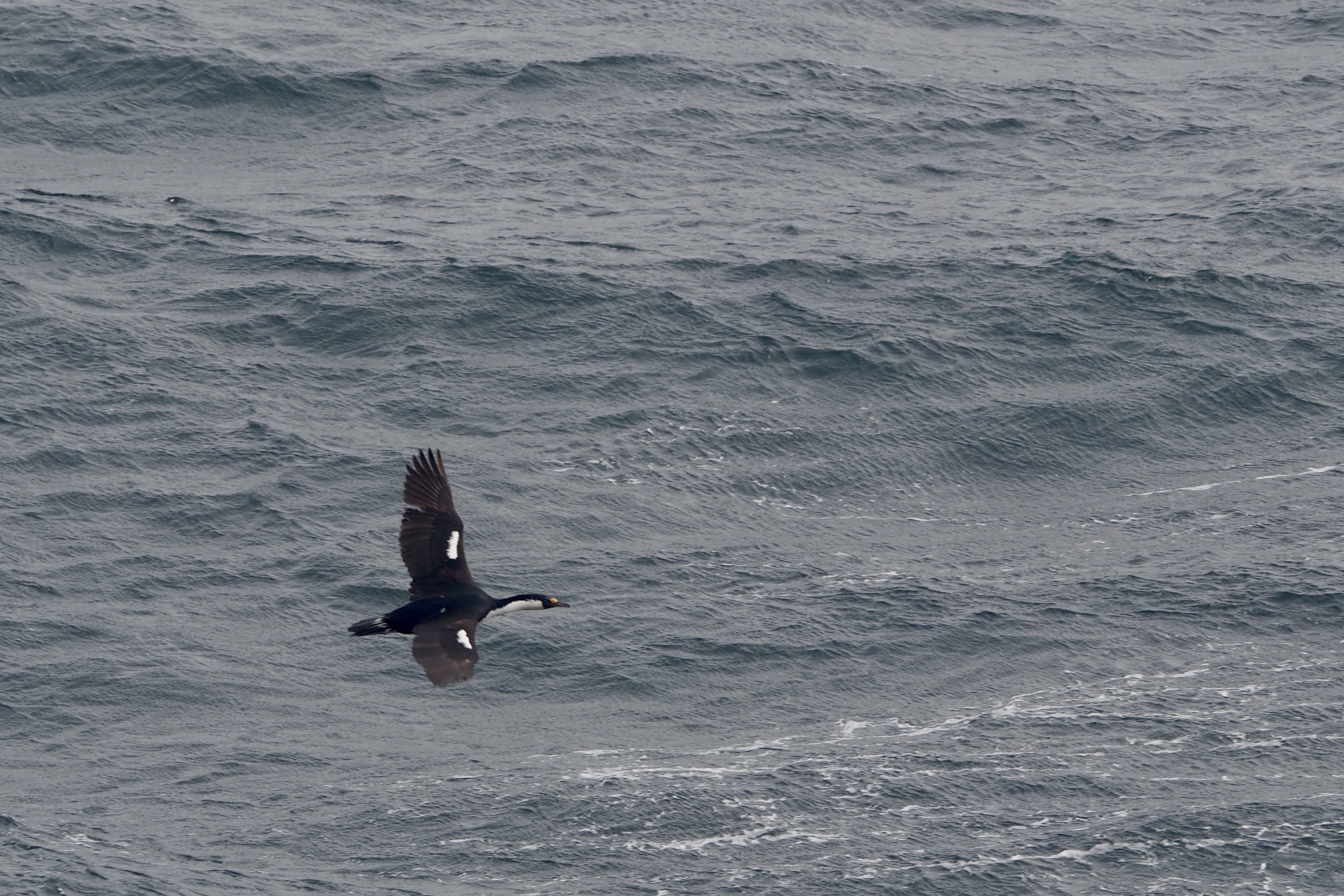
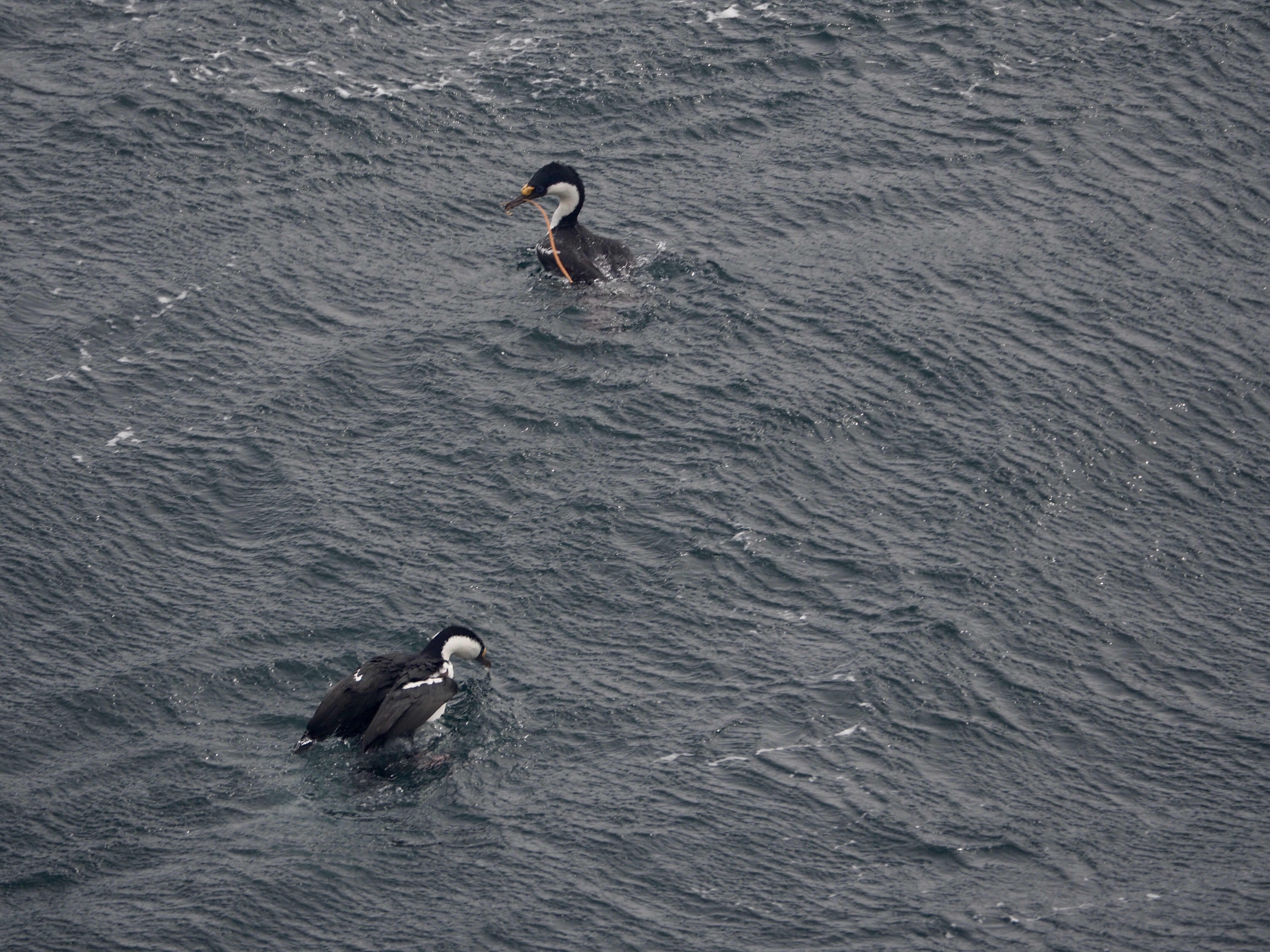
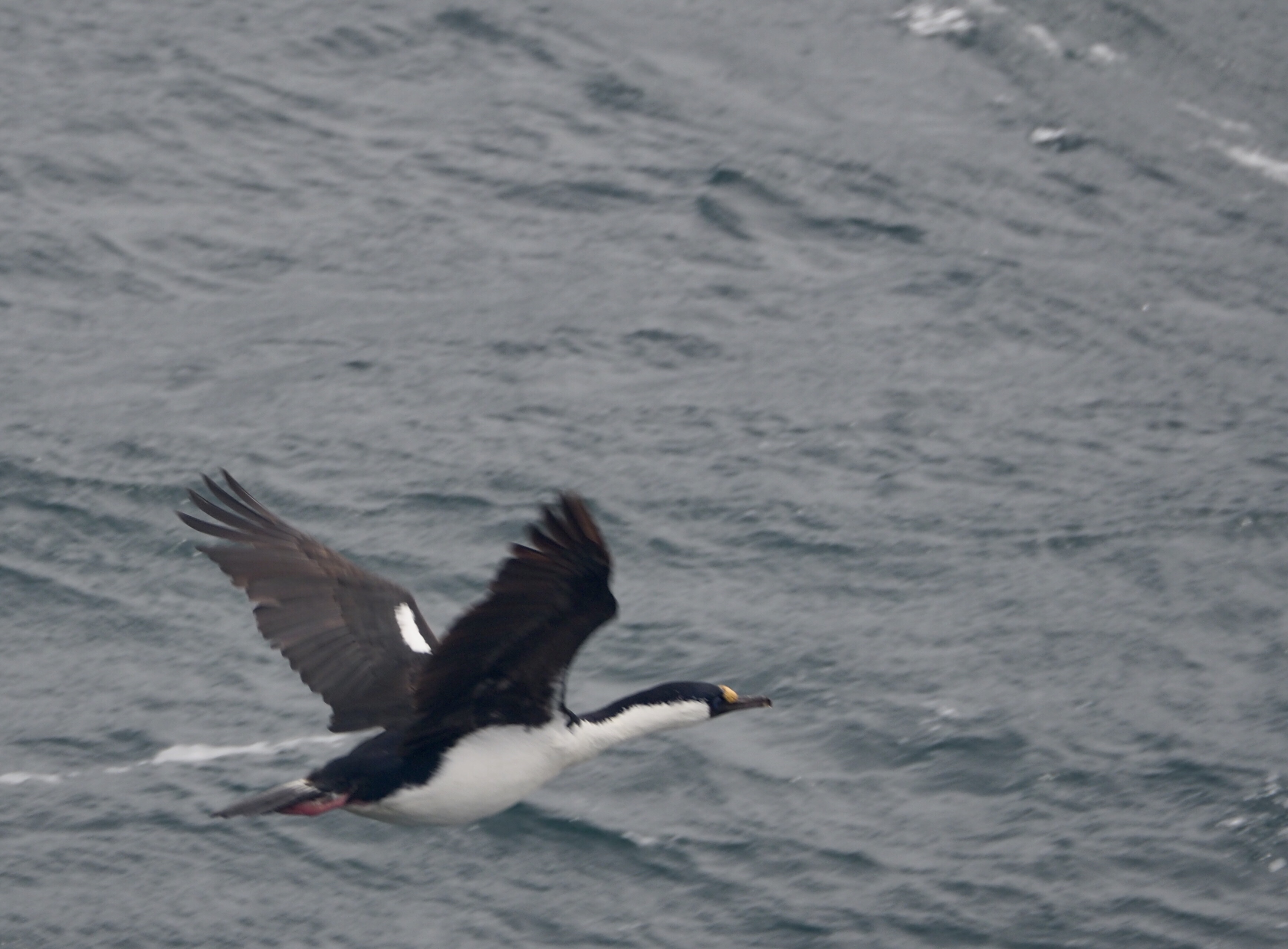
Fabrice. All cormorants on Shag Rock the South Georgia Cormorant. The crest, the yellow caruncle and blue skin around the eye are breeding plumage. They fade at the end of the season. Seaweed collected for the nests. You also know, if you see a cormorant, that land is nearby.
Continental shelf here really helps them. They are bottom feeders. They have four webbed toes. They use their feet as propulsion whereas penguins use flippers. Can dive to up to 145m depth for 7 minutes.
Operation fur seal. We are warned that fur seals can inflict a lot of damage. Always walk and take photos with a Buddy, with one of you keeping guard. Stand your ground. Clap say no. Don’t sit or lie down. (One guy who didn’t follow this instruction on a previous trip lost his bicep and caused them to have to return to Stanley.) Don’t run away.
Bio security vol 2 with Dagny (our Icelandic expedition team member). Dagny told us the self cleaning stations set up. Very funny video shown of the crew doing the initial cleaning and prep of the stations (which I have pictured before).
Solan – King Edward Point is where we go through customs clearance. 25-30 knots wind. Black out mode continues. Tomorrow we hope to zodiac cruise in bay of isles. Rosita Harbour. 4am South Georgia should be in view. Afternoon other side of Bay of Isles to Salisbury Plain king penguin colony.
Dinner. 4 courses offered always and extras if you want them. Unlimited 🍷.
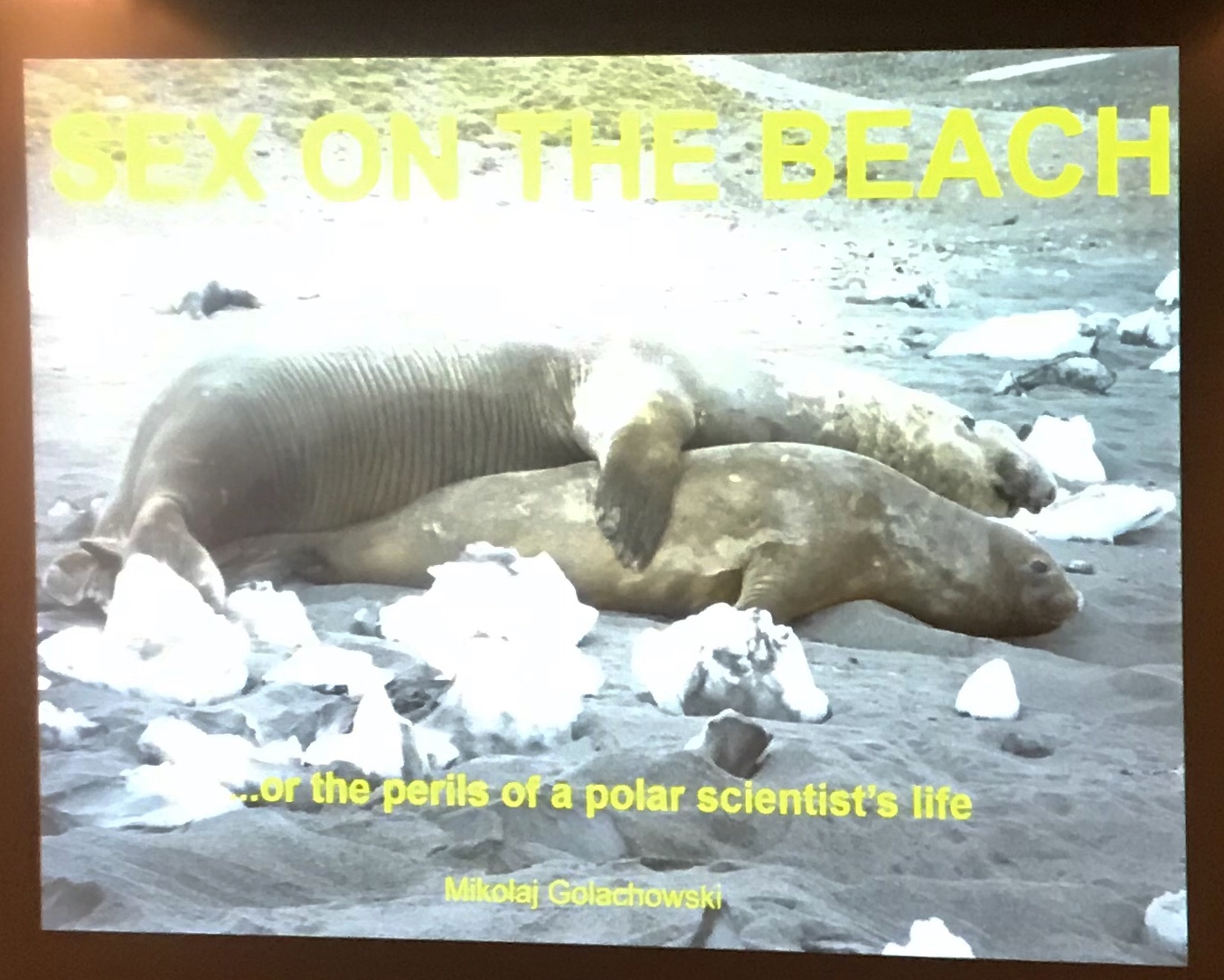
Bar Talk! Join Miko in the Nautilus Lounge for his talk Sex on the Beach about his research with elephant seals.
Great evolution of man and woman video. Will try and hook it in here.
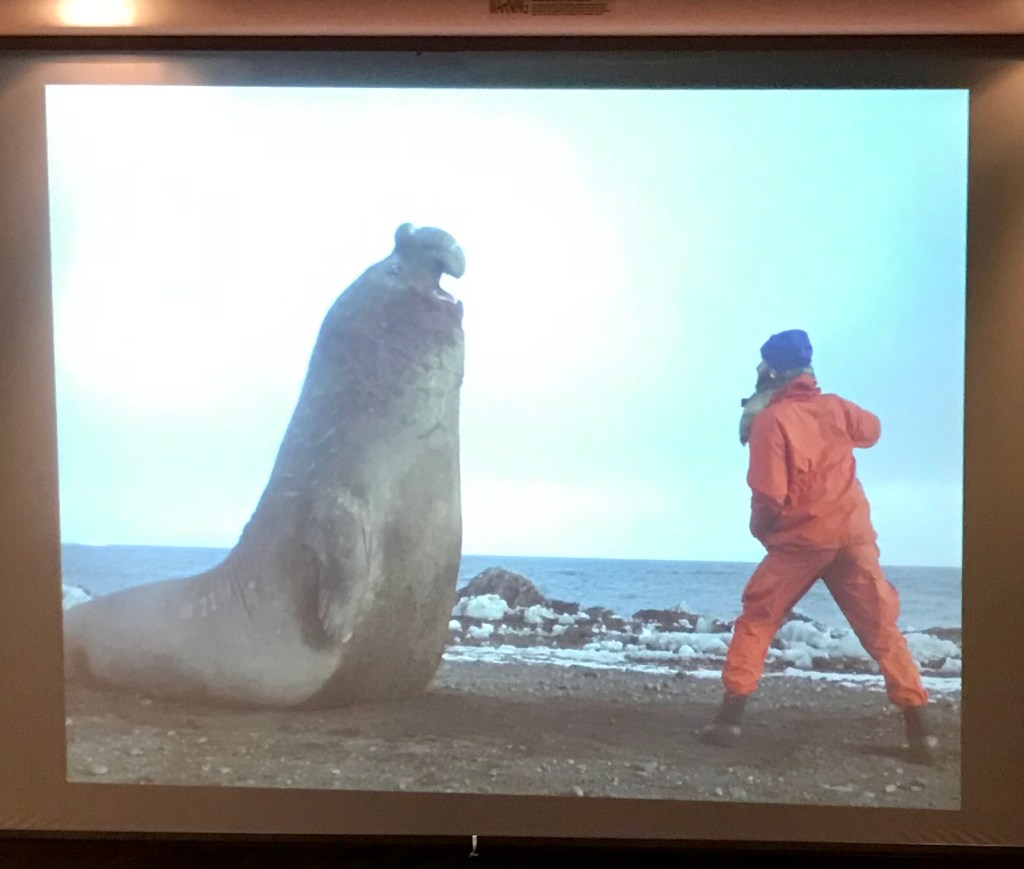
Elephant seals are the largest seal and the largest of the carnivores. Up to 5 tonne males. Females 7-800kg. Many wives. Up to 100. Miko is Polish and gets sent to the aggressive males – he thinks because poles are dispensable. He also swears at them in polish and they move away. Read body language well. Often they die at the end of the season after all the fighting and sex. This is a picture of his partner.
If they survive they take over twelve months to recover. Babies on the beach are not theirs so can be trampled. Females and males even numbers. Females mature at 2 and live to about 25. Males mature at 5 but keep growing until full size of 11 years and often die at the end of their main year. Younger males sneak in and try for a female when the beach master is not looking. Babies weigh 30-50kg at birth and in three weeks they are 150kg. Female losses up to 300kg in three weeks of suckling. They then leave the babies who are now moulting so they cannot go into water so not eating so we need to avoid disturbing them as they need what energy they have. Eyes designed for swimming. Not good eyesight on land. About 10% not related to the beach master. Same % for human babies!
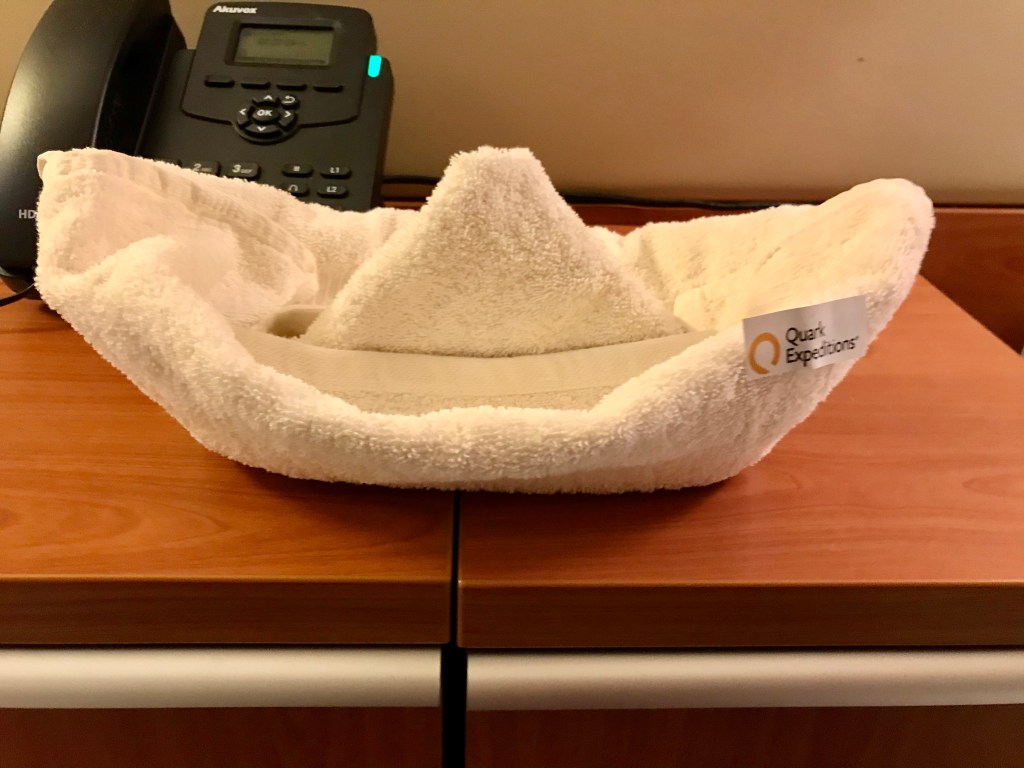
Our room person has started getting creative with the towels. Tonight was a boat. So tomorrow is South Georgia. Can’t wait.
Slept in until 8.15am. Continental breakfast as having a champagne brunch. Glorious clear blue day 10 degrees Celsius.
Off to the first lecture of the day.
You must believe in evolution to understand penguins. They used to fly. What makes a bird. Not eggs or flying just feathers. Originally feathers for insulation not flying. 10,000 species on the planet. Flight came from escaping predators. Penguins evolved in southern ocean where no land predators so lost their ability to fly. Flight costs energy so if not needed why use it? Penguins best divers as heavy due to not flying where you need to be light. Penguins go back 70 million years. Share a common ancestor with the albatross and the divers. Started looking a bit like a Shearwater. Black and white is camouflage. 18 species of penguins. 6 genus. Genus is to do with ancestor. Head is the difference. Helps them recognise each other. Rockhoppers are crested penguin. No difference in colour between male and female. Males are slightly bigger. Only in the Southern Hemisphere highest at the Galapagos. Only two connected to Antarctica most are sub Antarctic. Emperors breed in winter. Penguins evolved in New Zealand. South sandwich island has highest concentration of penguins. Propulsion from the flippers. 80% life in the ocean. Feet very reptilian and strong. Set back for swimming. 13 cervical vertebrae (humans 7, swan 22). Only 20% of king penguin keep their partner year on year but as high as 91% in macaroni so why so much change in kings? Making stone nests not easy – only king and emperors have no nest. Finding your partner again with no nesting spot and when not all penguins arrive to breed at the same time makes finding the same partner again difficult. Brood patch keeps egg warm. Most penguins eat krill. Kings eat fish. 30-65% chick mortality. Return to breed after 2-5 years, life expectancy 18 – 45 years. Most evolved of birds as far as seabirds. Whales don’t come back on land, birth in ocean. Challenge is penguin needs to come back on land to breed. Viviparity may be the next step – giving birth to live young. Look out for moulting and incubating penguins. Just an amazing presentation.
Then off to our Christmas brunch with mimosas (champagne and orange juice) and a huge array of food choices that was very breakfast come lunch with all the usual breakfast suspects plus lasagne, fish, quiche and a beautiful fruit cobbler or waffles for the sweet tooths. We shared it with Cheryl & Mike from Dallas Texas who are becoming friends with whom we are sharing meals regularly.
Then they had asked us to share a few of our photos each day for the photo journal that will be shared with us all after the end of the trip. So I popped down to the photo room and added a few for a couple of the days we have had so far. We are so hoping this perfect weather lasts for South Georgia but we are aware of a storm coming through but with any luck, though we expect some rough seas, it will clear before our landings.
Back to the cabin for a bit of Christmas movie watching. We also ate our Christmas gift which was Nougat.
2pm was a mandatory bio security briefing for South Georgia. South Georgia has been called the best place on earth by a couple of guides we read. 4am we will likely be inside the polar front. South Georgia catches the brunt of storms coming through the Drake Passage and therefore is always windy (windy is a key word for this trip). Reindeer introduced. Eradicated 10-12 years ago. King penguins. Risks of male seals and asbestos and structure issues so 200m limits for buildings. Fur seals bad bites and infections. Catabatic winds. Zodiac landings in surf. Stay seated. Swing the zodiac with rear up the beach. Reloading. Two lines of 5. Avoid the engine. 😱
As we are going into the breeding area we will black out the ship at night. Keep curtains closed. This helps stop bite strikes. If bird found on deck get staff.
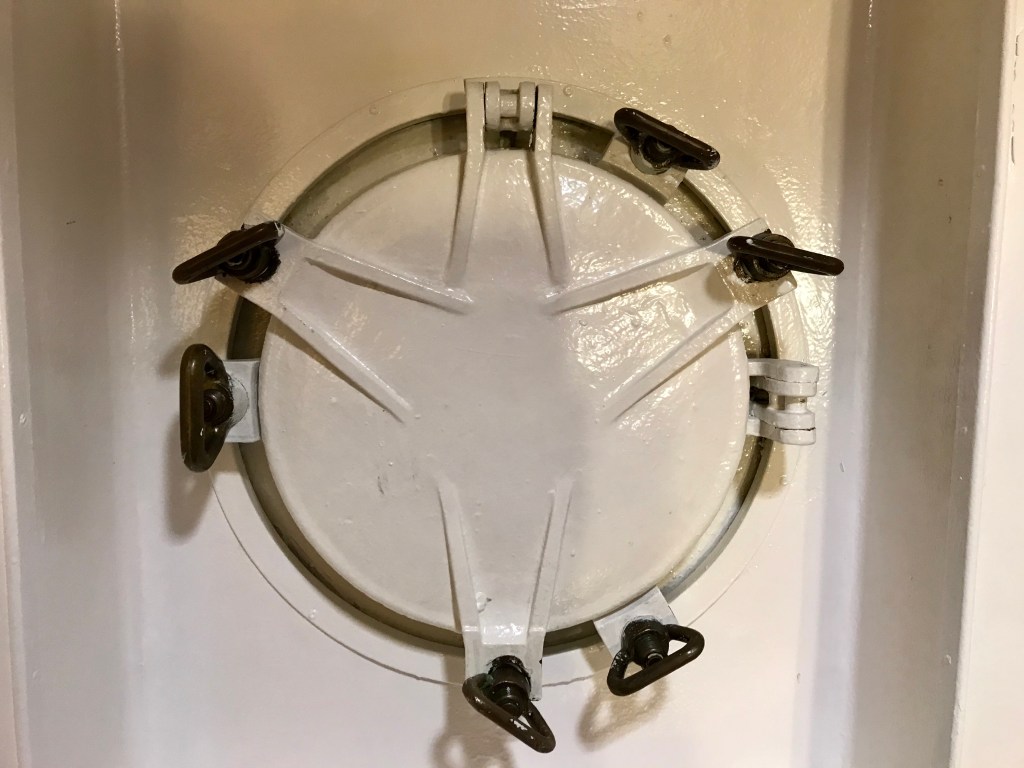
Closed portholes now the night thing.
South Georgia government briefing video. Even thinking about keeping bags closed at all times to ensure rats don’t sneak in. Doing an excellent job to educate and to preserve. Dandelions now a problem and a beetle brought in from the Falklands. Avalanches. Ozone hole so sunburn issue. Fur seals can be very aggressive. Also Falklands war leftover munitions. Stuck for 8 hours once due to a wind event. Take extra dry clothes. Always use sunscreen and bring water. Cleaning has to happen between every excursion. Virkon baths but also absolute scrubbing of anything prior to dipping into virkon bath. Velcro, footwear, tripods, in and out of backpacks and mesh pockets, seams, pockets, trouser cuffs and jacket hoods. Put found seeds into a tissue and into a bin. All garbage returned to Ushuaia.
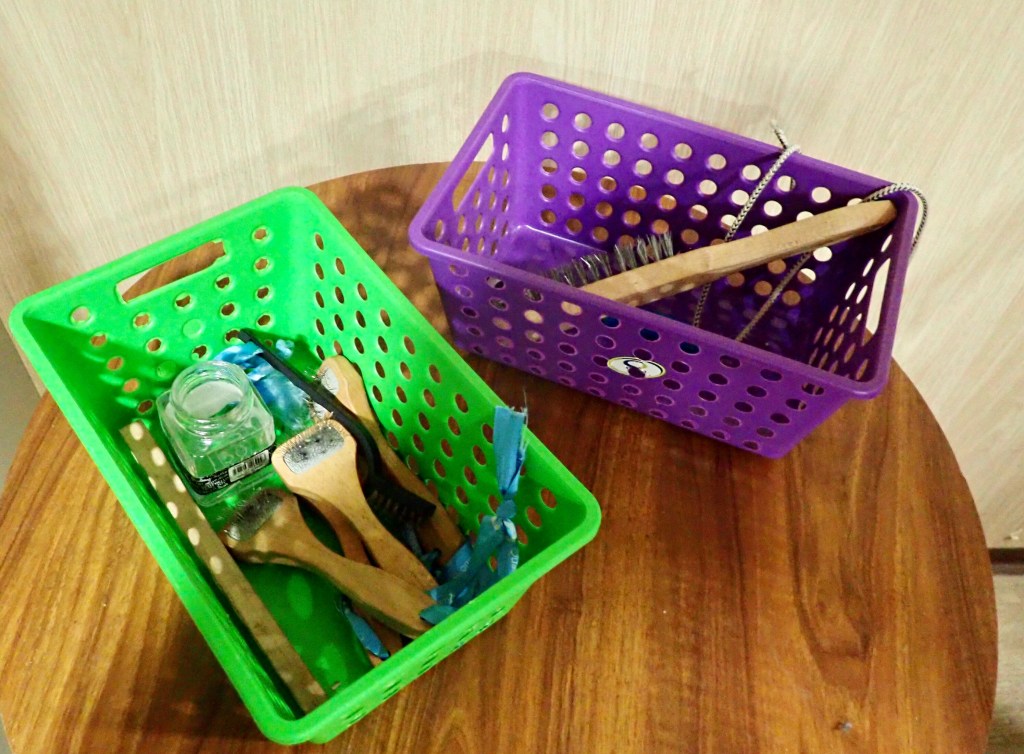
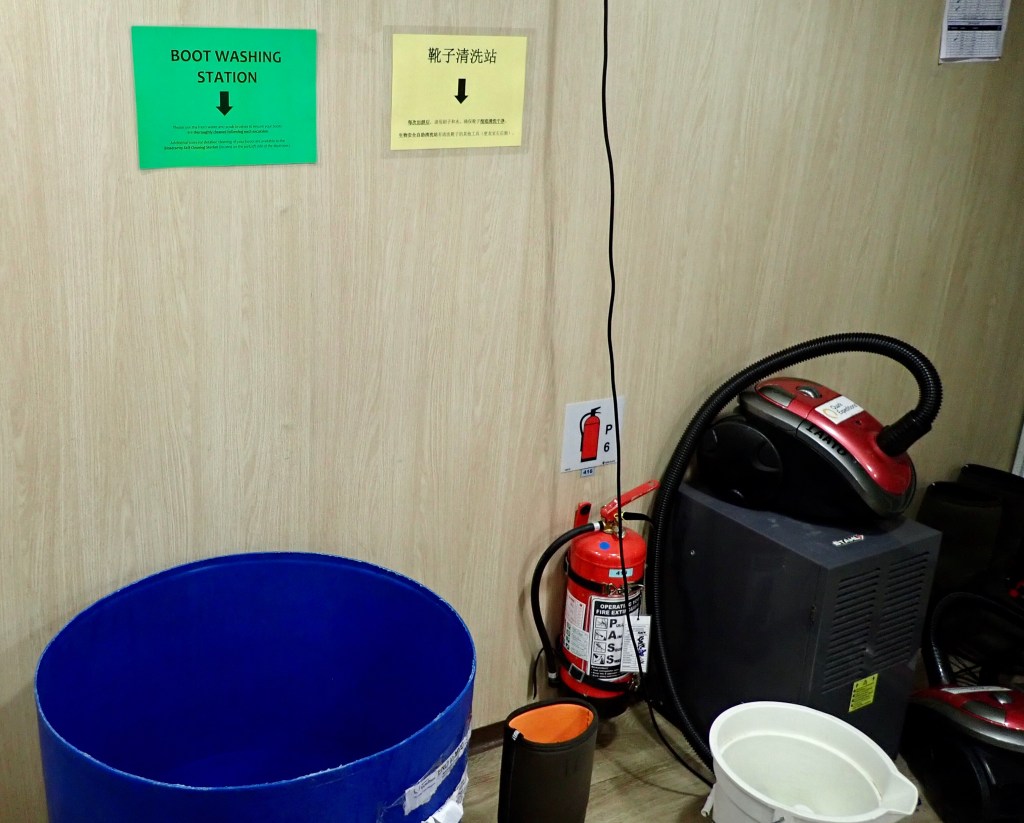
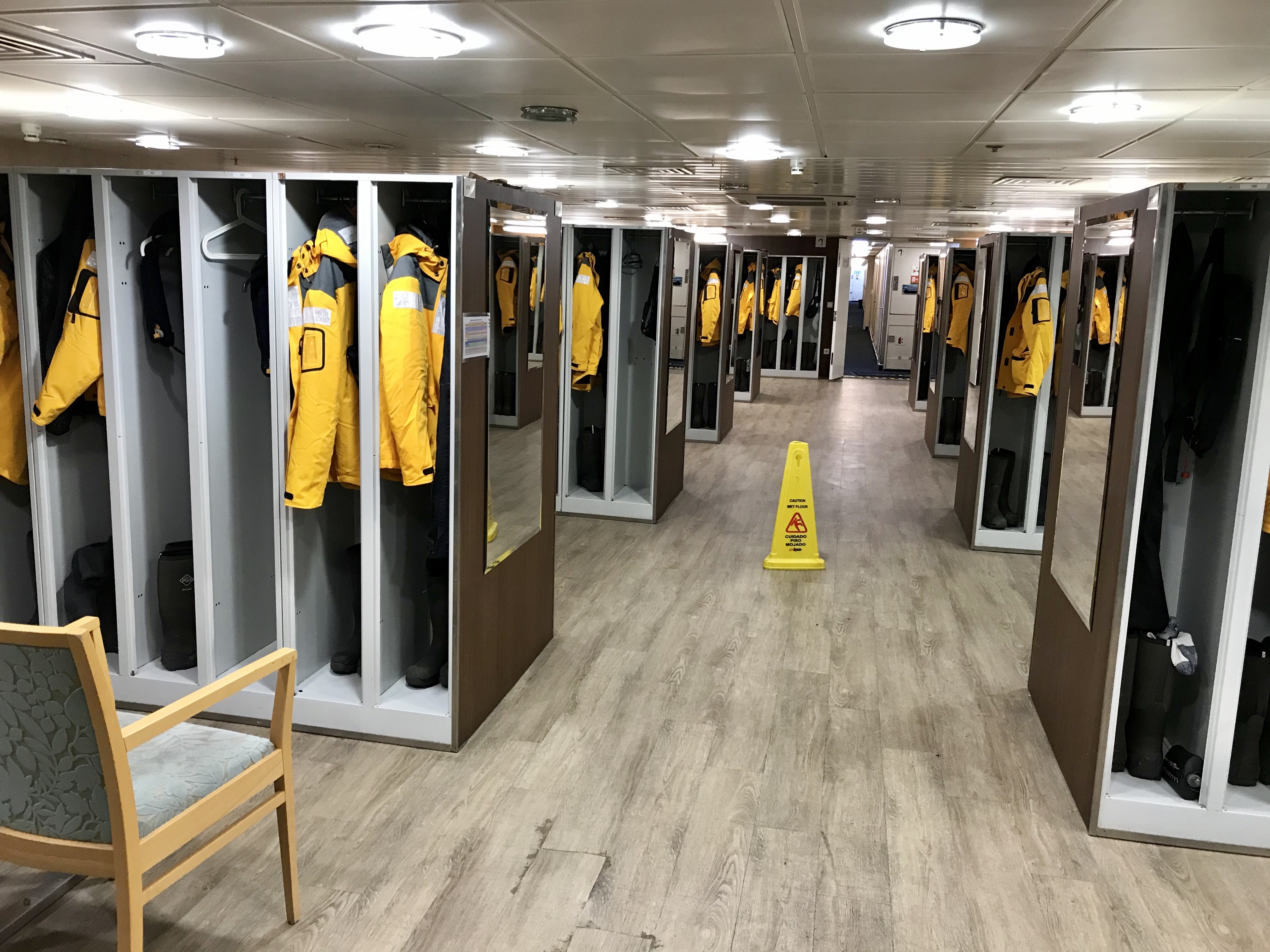
Back to cabin to clean everything and then to checkers who will send you to various checking centres and then sign off and then you can pick up a South Georgia booklet. Biosecurity cleaning stations set up in the mud room. It is our responsibility to clean our gear between each landing. Start at surf side with your boot and trouser bottom cleaning. Apart from one tiny bit of lint we passed with flying colours. The South Georgia booklet we were given was an added bonus.
Some of the cleaning tools.Water buckets and vacuum cleaner ready to go.
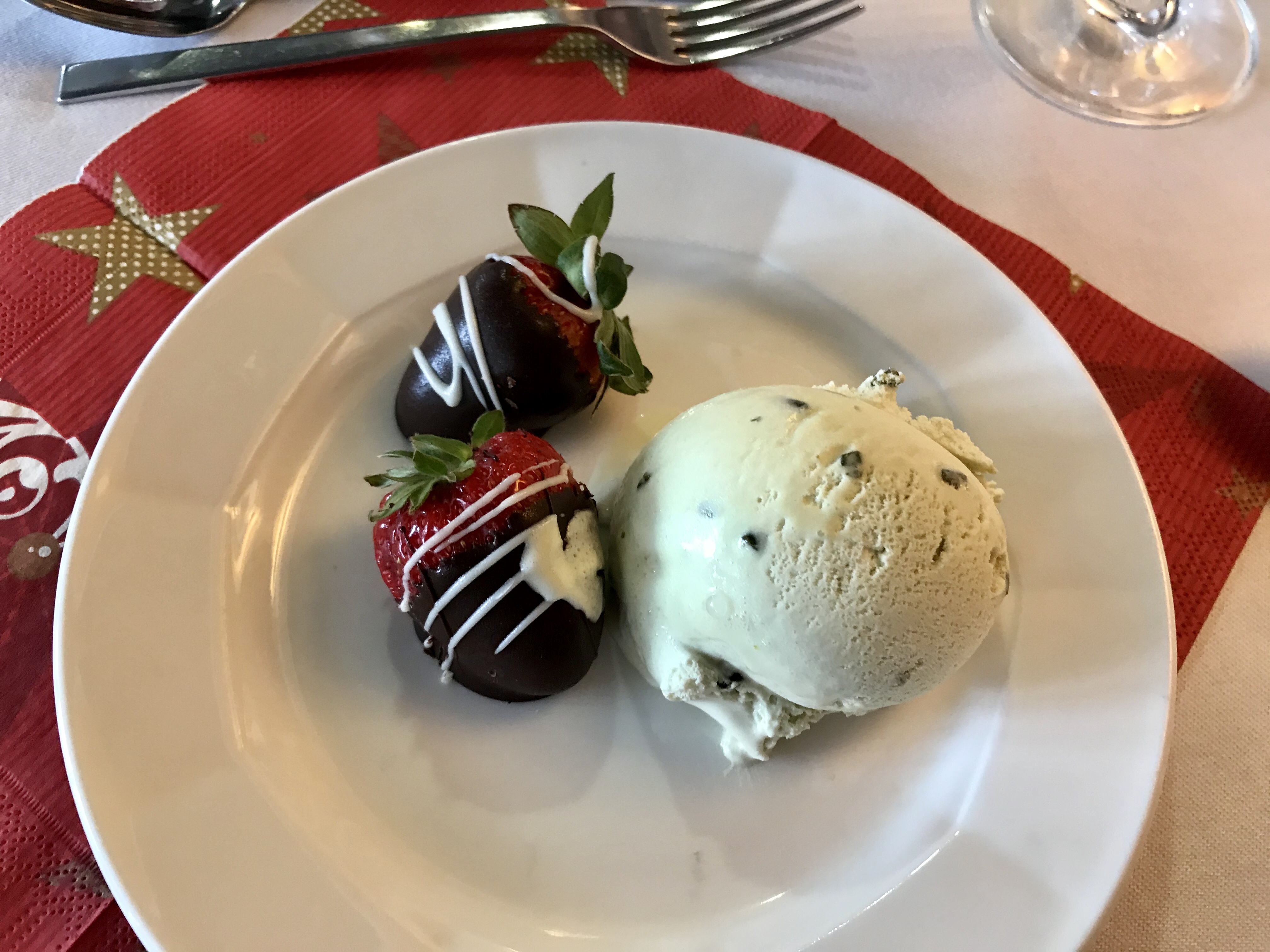
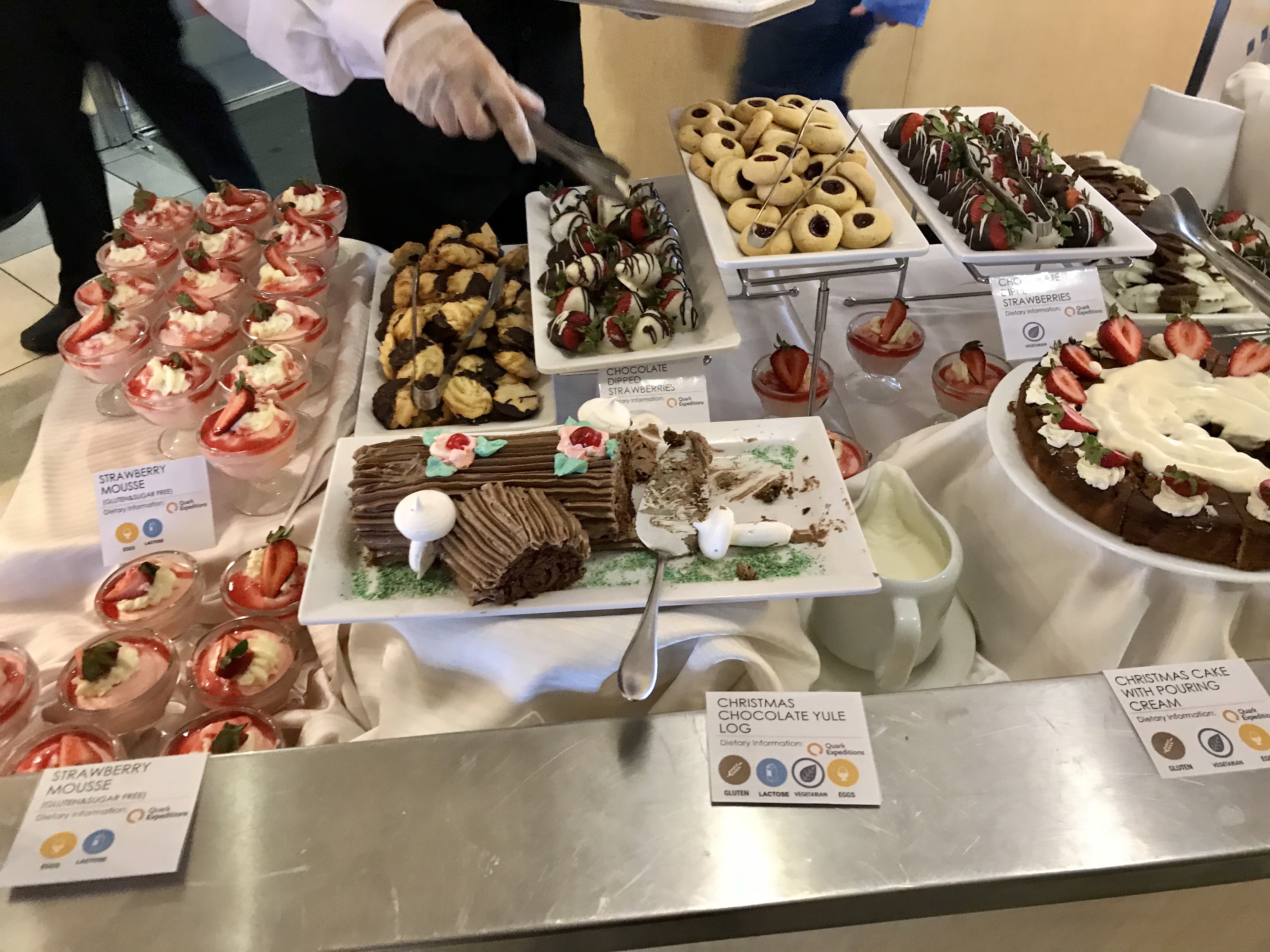
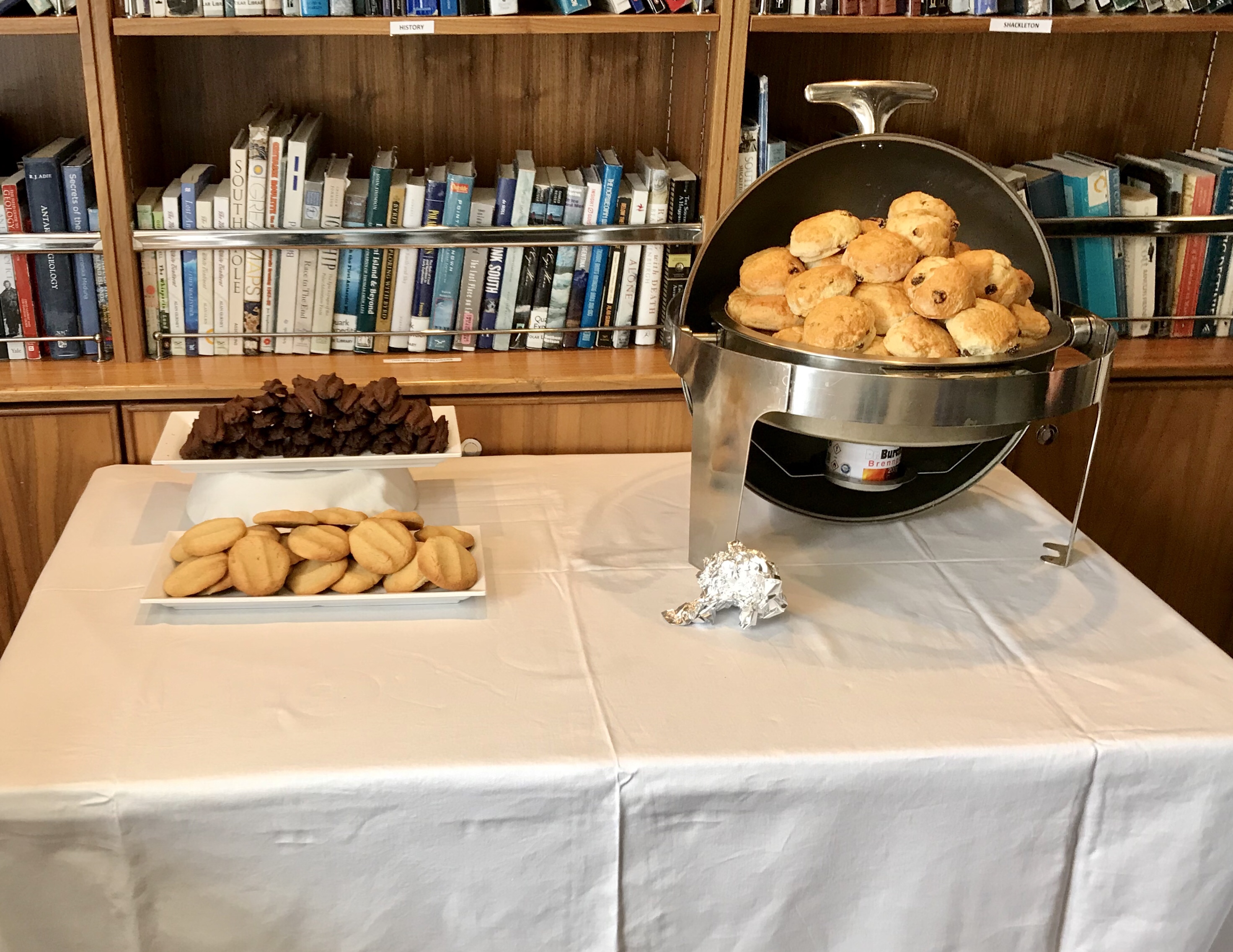
Afternoon tea – groan… chocolate covered strawberries – ok I have room.
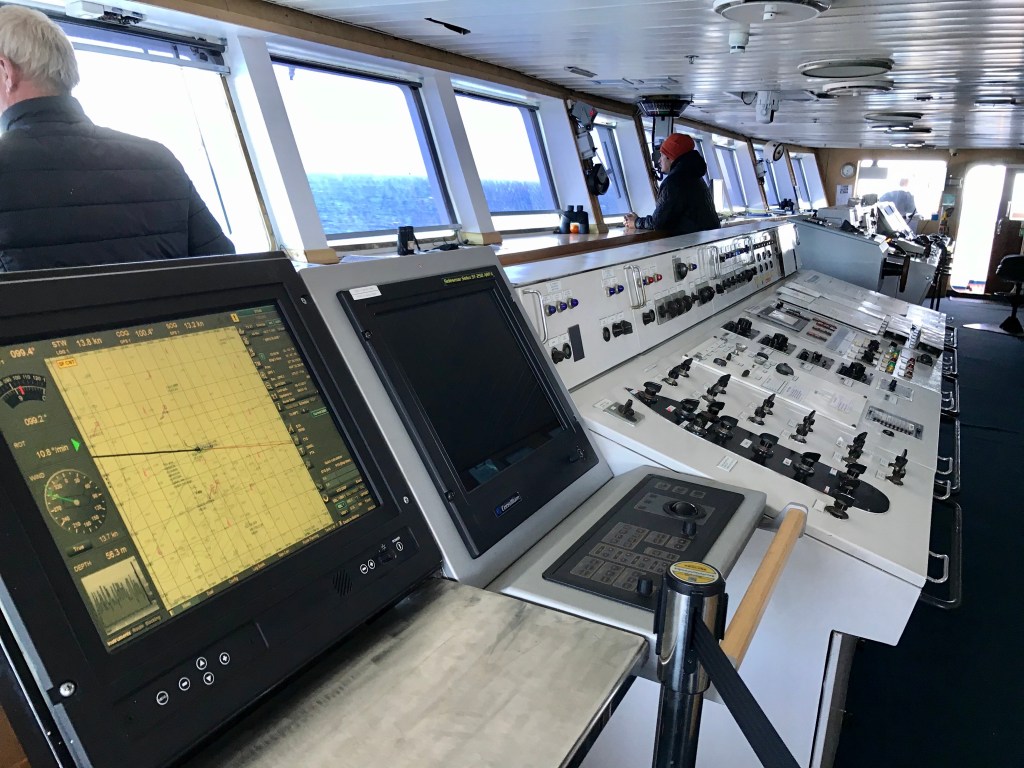
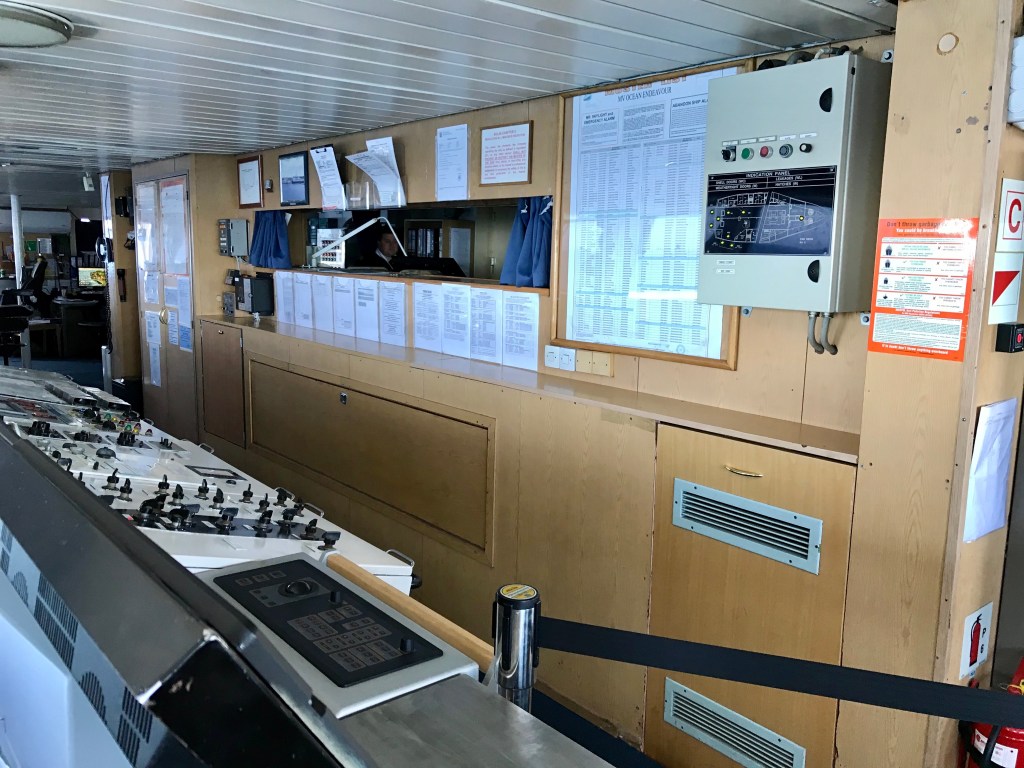
Our photo workshop was delayed so we thought we’d take a trip to the bridge. Whale seen. Fin whale. Binoculars to share up there and several wildlife manuals and great info on storm scales 😱
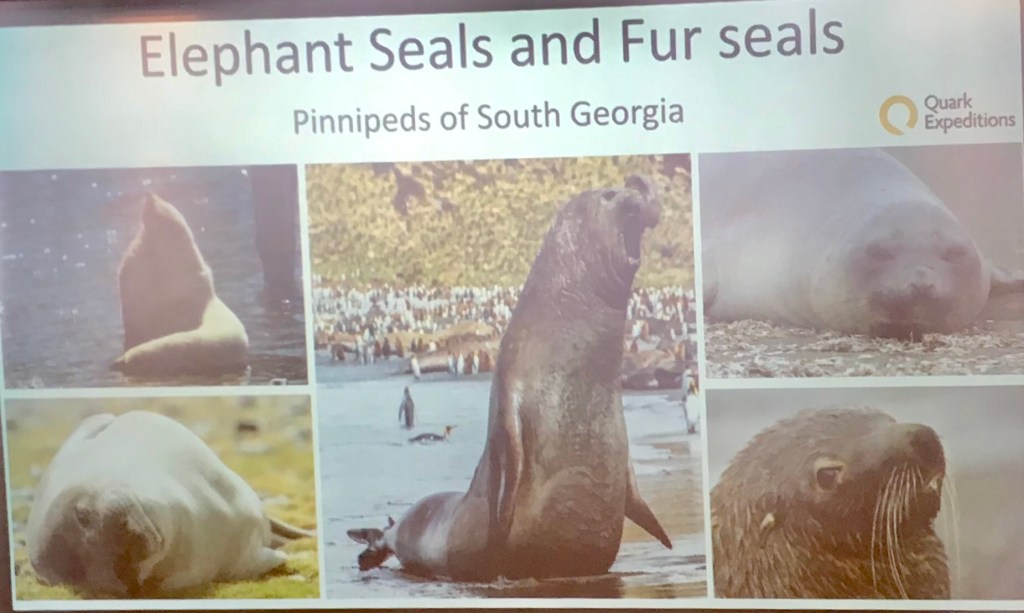
Our next great lecture, Elephant and fur seals with Johann, the marine biologist. We are so impressed with the range of knowledgeable people with us. The presentations and information have been excellent. Johann is a Columbian vet with a PhD. Seals are the deepest divers outside the whales. Pinniped includes all seals. Pinni is ear flap. Antarctic convergence – this is where the oceans mix and create currents and salinity differences so moves nutrients around – upwelling. Antarctic fur seal. Male 4-5 times mass of the female. External ear pin. Heavily hunted for their fur until the early 90s. Males also have a mane and are up to 1.8m length. 180kg weight. Long whiskers. External testicles can be seen at the rear. Females lighter chests and underbody. Dark at the top of the pectoral flipper. 25kg weight. Pups nursed for four months on the beach. First week mum stays with them but then will leave to fish. White one in one thousand. Not albino but guard hair only is white. A recessive gene creates this problem. South Georgia 95% pups born here. Fur seals will sometimes take penguins. Mostly krill and squid. Average 2 minutes down 8-20m. By 1926 banning of fur seal hunting they were down to only 100 individuals left. Now 4-6 million. Entanglement in fishing gear and fishing industry taking their food. Predators leopard seal and orcas for adults even skuas for pups are their main issues.
Southern elephant seal. Males 6x the mass of the females. Elephant seals rely on blubber to keep them warm rather than the fur. Again South Georgia one of main breeding areas. Proboscis is used for sound to mark territories. Amplifies the sound. Thick skin around the neck for fighting. Height 4.5 – 5.5m. Might need humans to show perspective. Can weigh 3 tonnes. Females no proboscis. 2.5-3m length. Side by side reproduction. (Just as well for the females!) Seal pups very cute. Weaned at 26 days. Moult by three months and go out for their own food. Sleep underwater. Female record dive was 1500m and length of time up to 2 hours. 75% squid and the rest fish.
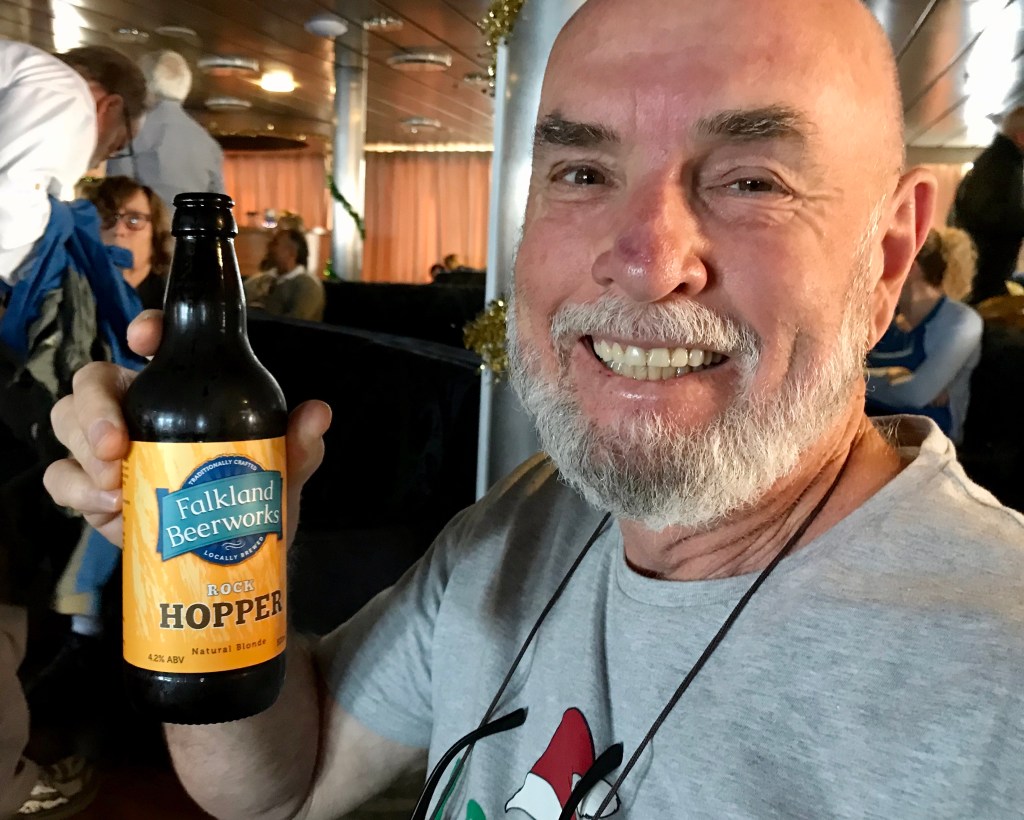
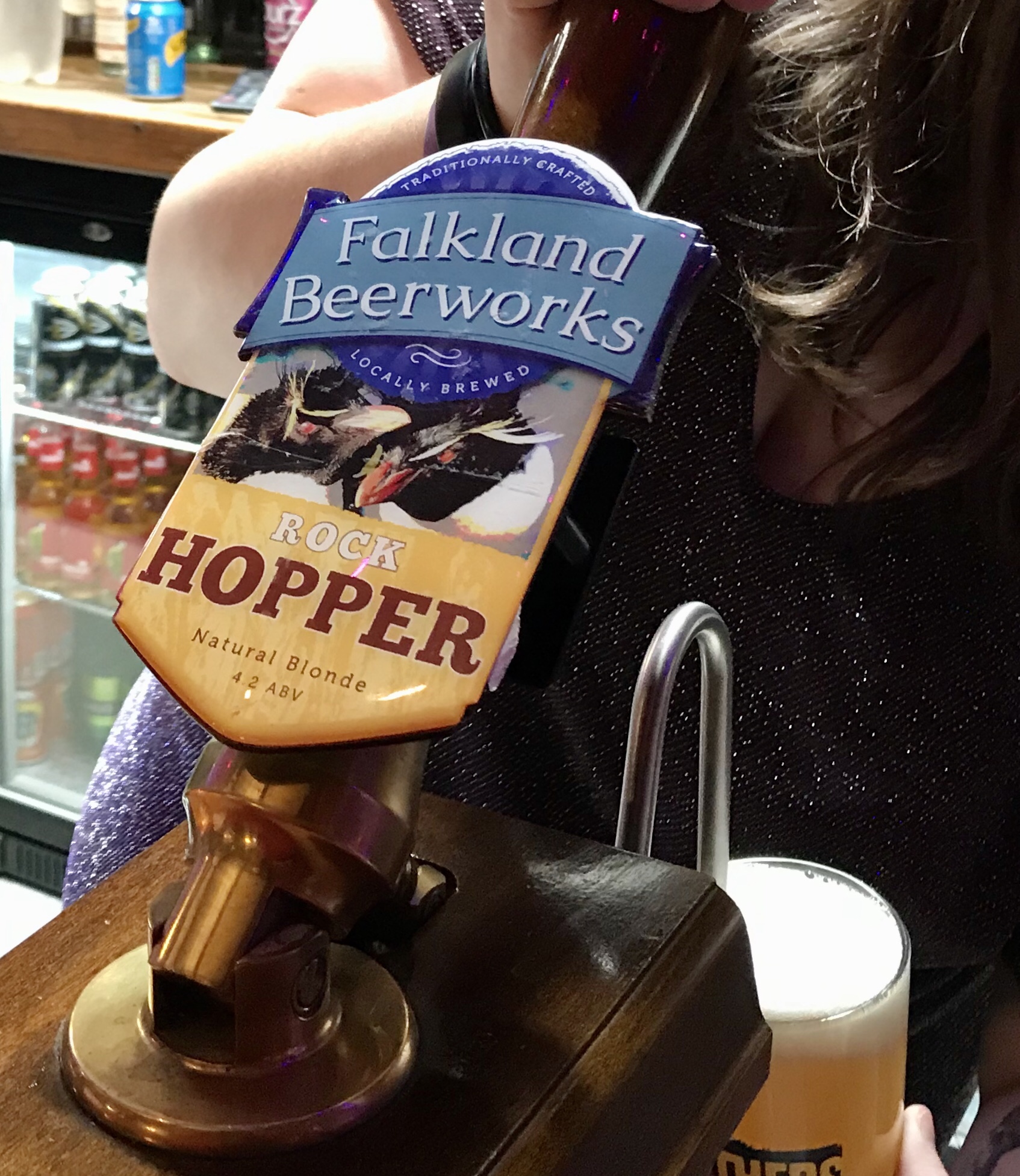
Beer of the day – oops another rock hopper. About the same. Wait for it. It’s growing on him.
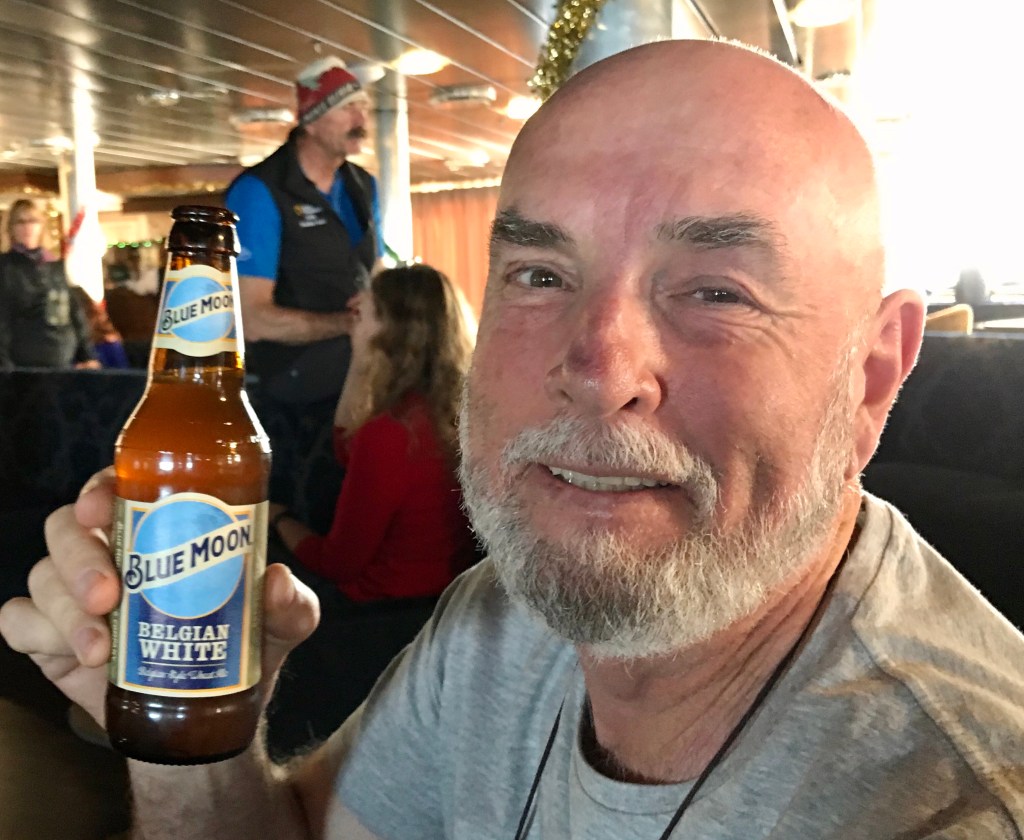
Much more bubbly than yesterday’s which was very flat. The pressure of 3 cruise ships in more than doubling the Stanley population perhaps? This bottle is up to 4. Yesterday was on tap. Went for a blue moon next. Rated a 5.
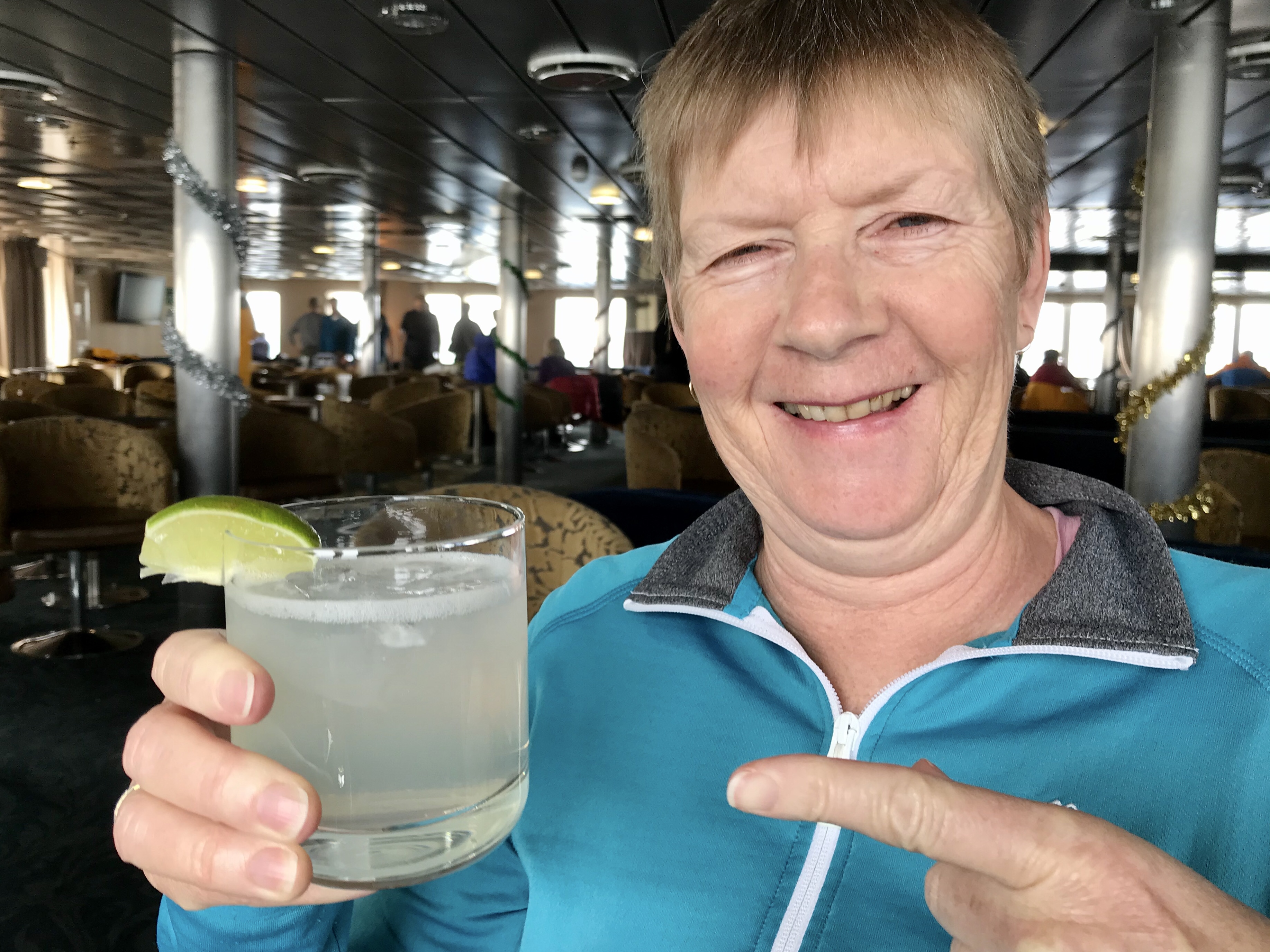
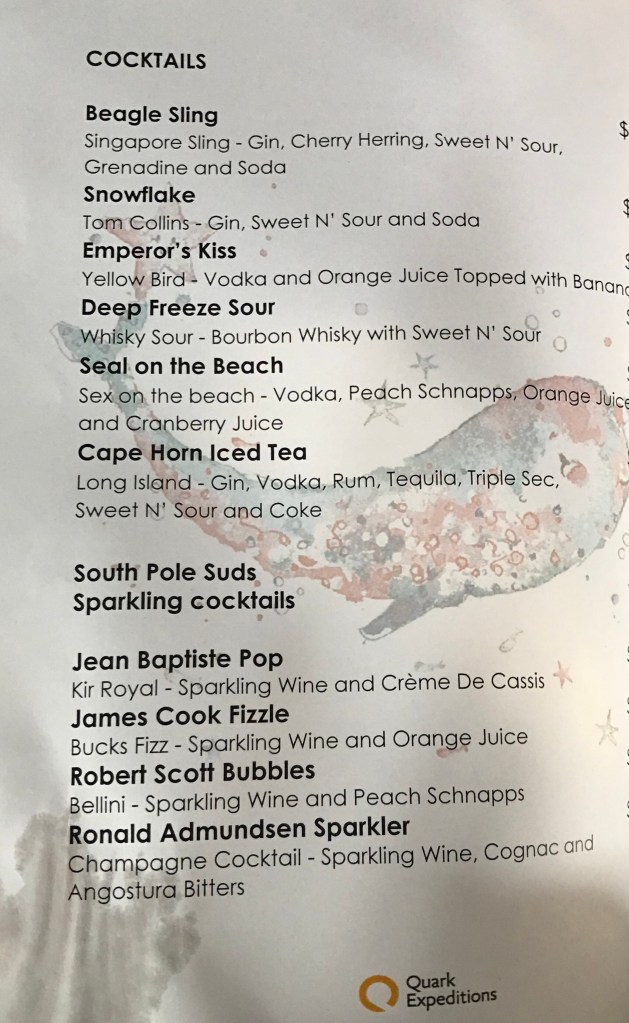
Jean Baptist’s POP was my cocktail. Not my favourite. Texan Cheryl is into the Stella!
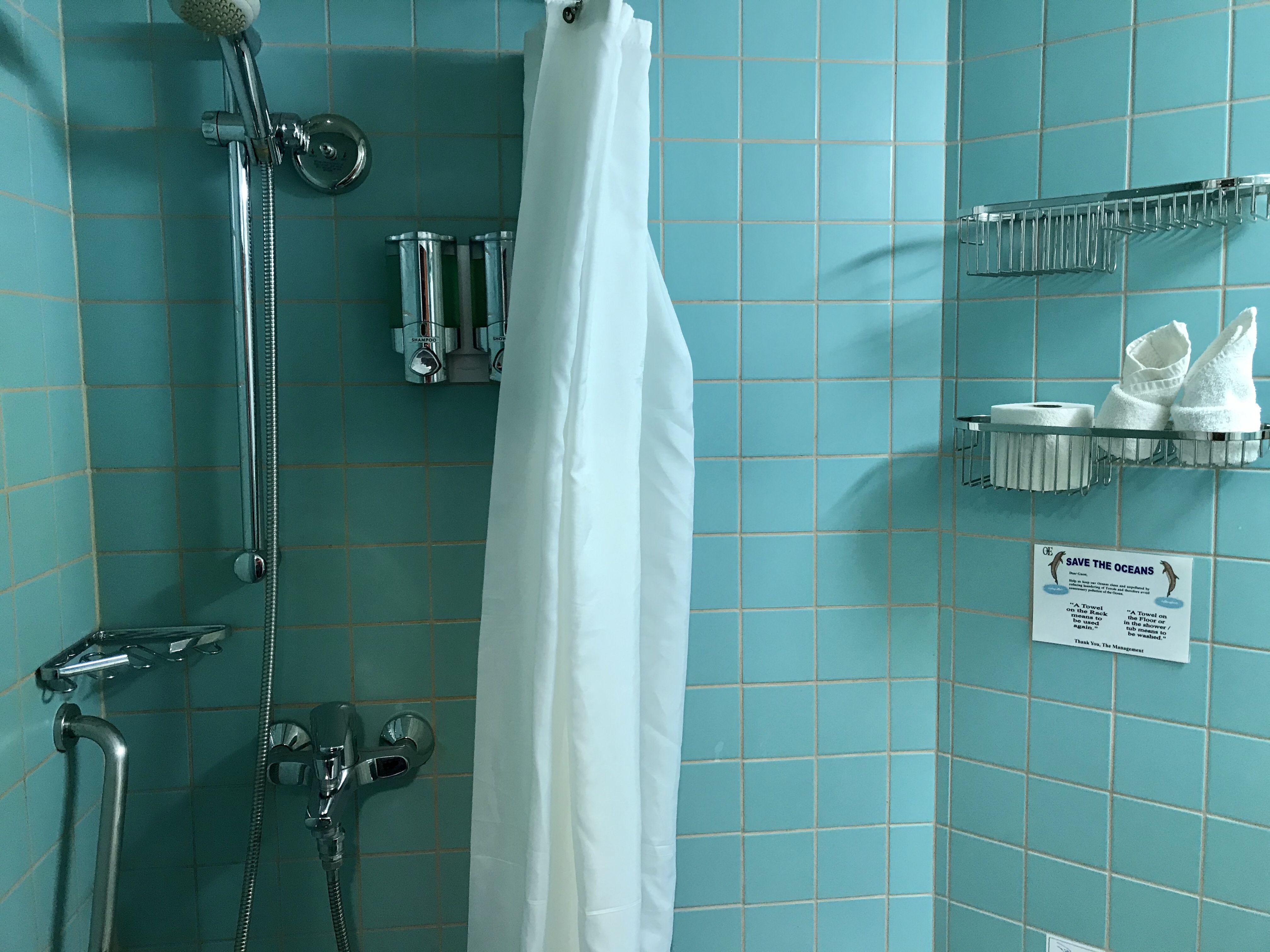
I am impressed with the fact they really don’t take the towels if hung up. So many places have the signs but take the towels anyway. Not on board the Ocean Endeavour where the environment comes first.
Canapés pre the briefing. Yummy won tons.
Briefing. Biosecurity procedure for Christmas. First talk about Velcro. George de Mestral invented it. Looked at burrs stuck in his dog and pants. Bio-mimicking. Loops on burrs attaching to fibres. Velcro is the company. Took a while to catch on. Nylon works best and NASA picked it up for the space age. It’s a real problem here and must be checked constantly for seeds and other materials. The things you learn on these trips.
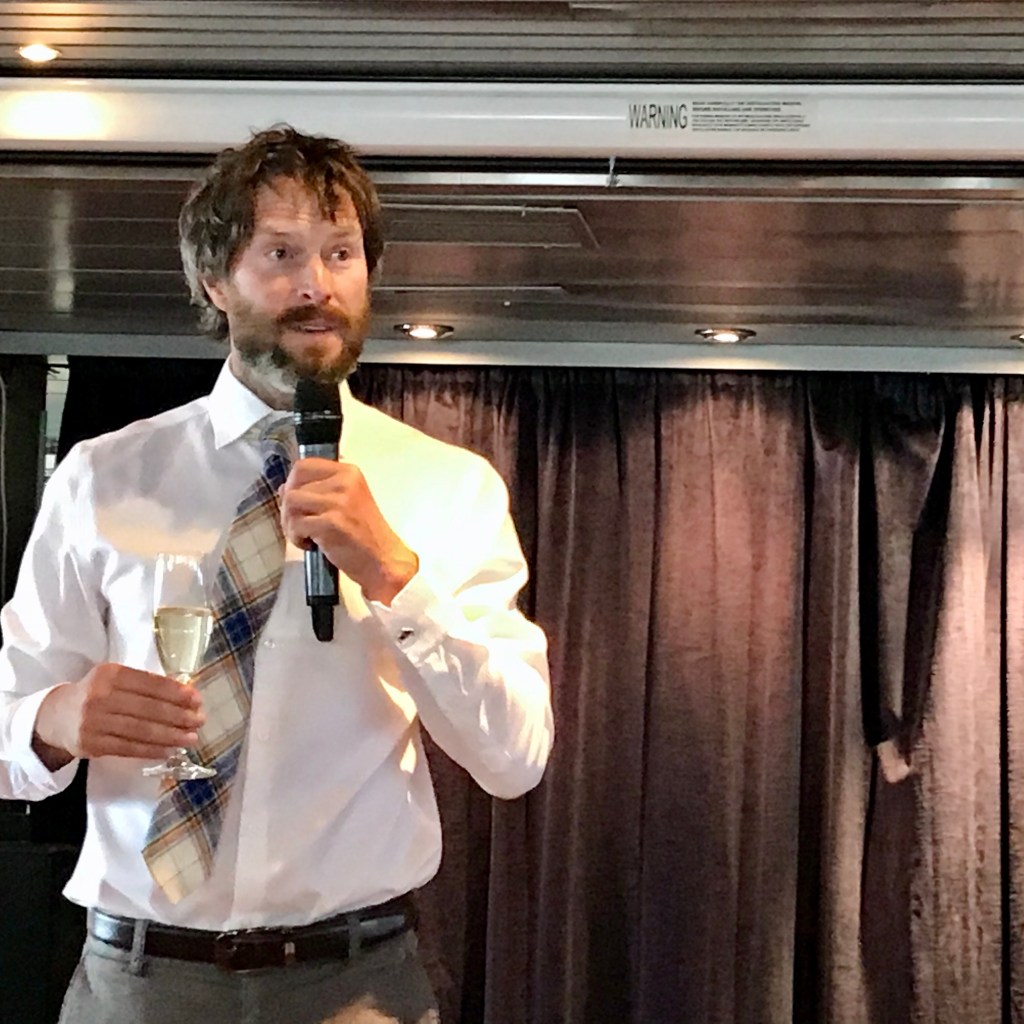
Fabrice (our ornithologist), talked polar front. Dotted line on the map if good map. This is the polar front – or convergence. Boundary between two big bodies of water. Outside about 6 degrees and inside 3 degrees. Communities in the water are different due to the temperatures. Krill only within the 3 degrees to 0 degrees, cold water a higher density and the colder water sinks beneath the warmer water. Creates the Humboldt, Benguela and NZ currents. Colder, less saline, more dense. Upwelling. Lots of productivity. South Georgia has diversity which is higher than Galapagos. We are 200 miles away from South Georgia at present. We are crossing west to east. Still north of Ushuaia. Happening between 9-1am takes about 3 hours to cross. Air temp will be lower tomorrow. Might see ice bergs. David DJ – ice berg competition – who will see the first. To be a berg it must be larger than a bus. Artie the bird nerd talked patience and positivity when looking for seabirds and water creatures. Travelling at 14 knots today. Spend time looking. Michelle (our photographer showed some of the photos that had been shared and. Cheryl and I (I’m sure having two Cheryl’s is frightening to some of you!) were thrilled to see some of ours picked out. Finally Solan. Weather good now, tonight rougher when asleep. Change still with us in the morning. 20-35km winds with some stronger gusts. Current feel is roll. Corkscrew might happen which is not quite so much fun. First event in South Georgia might be affected by this weather. Rosita Harbour and Salisbury plains. Fingers crossed.
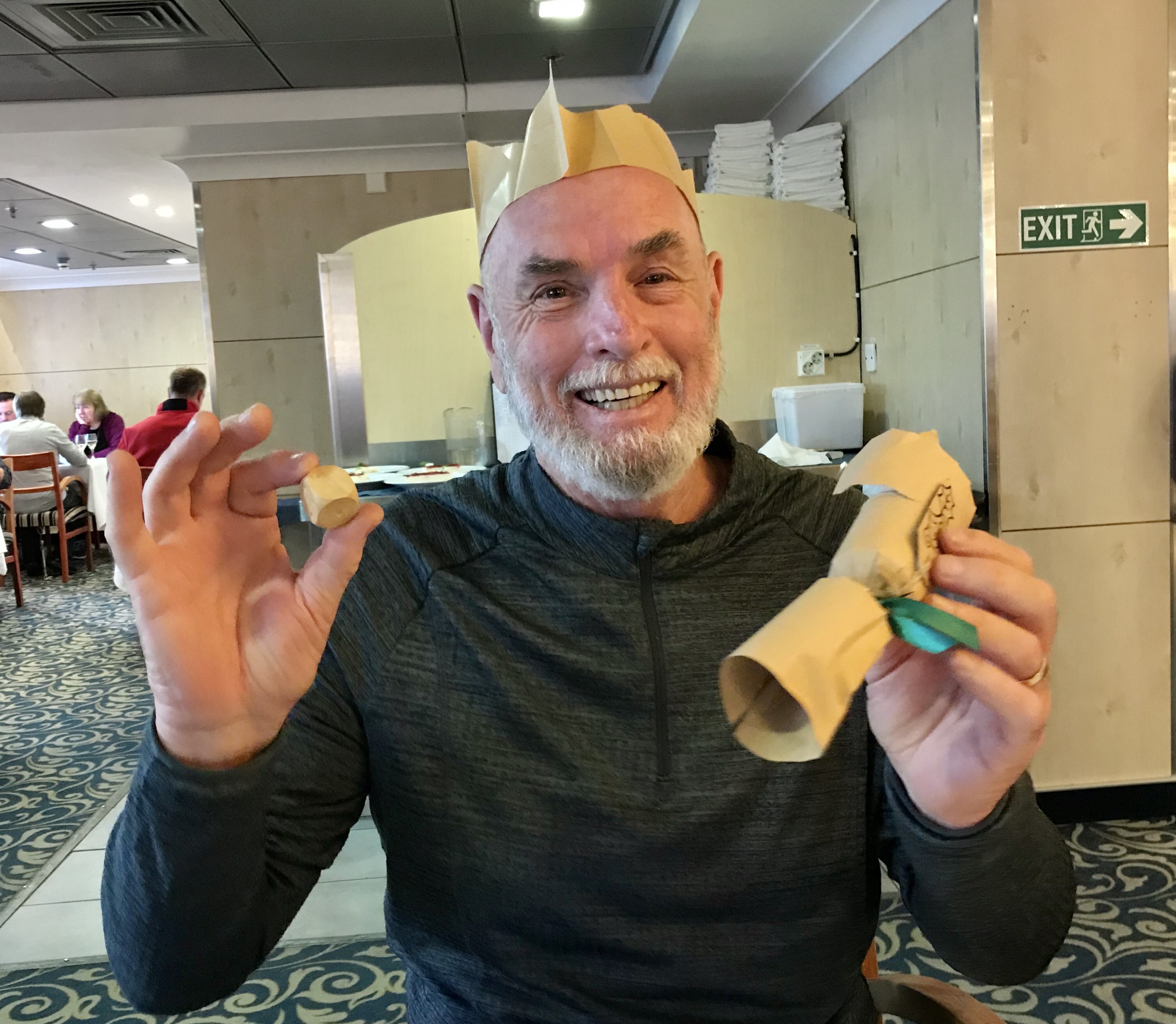
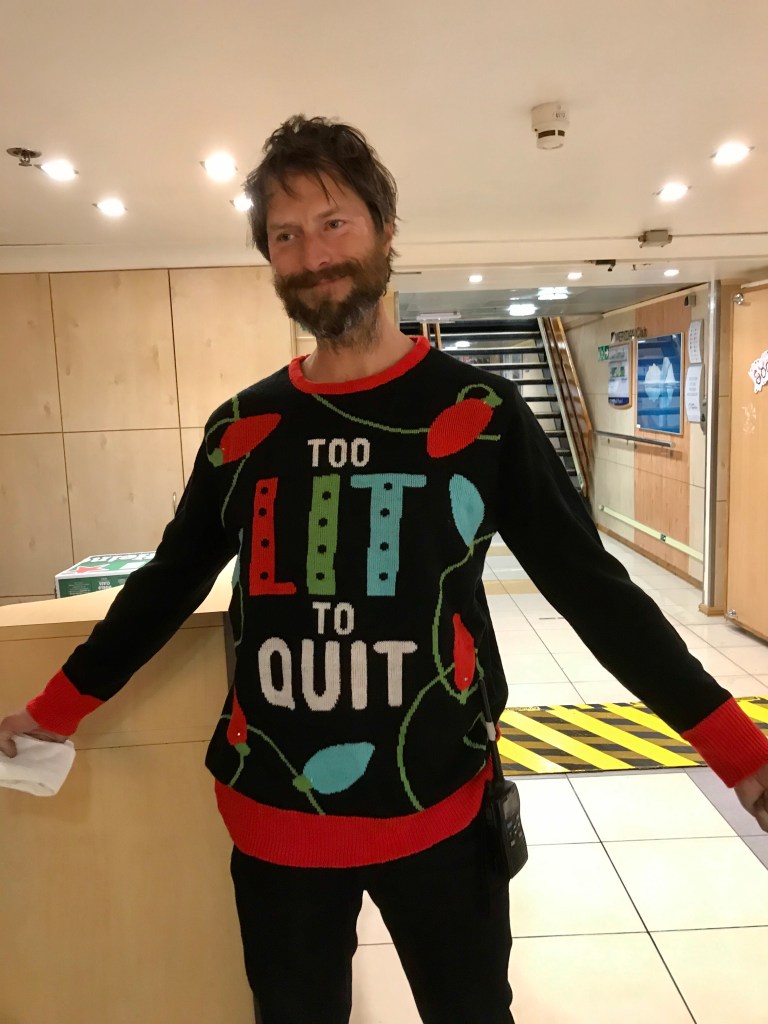
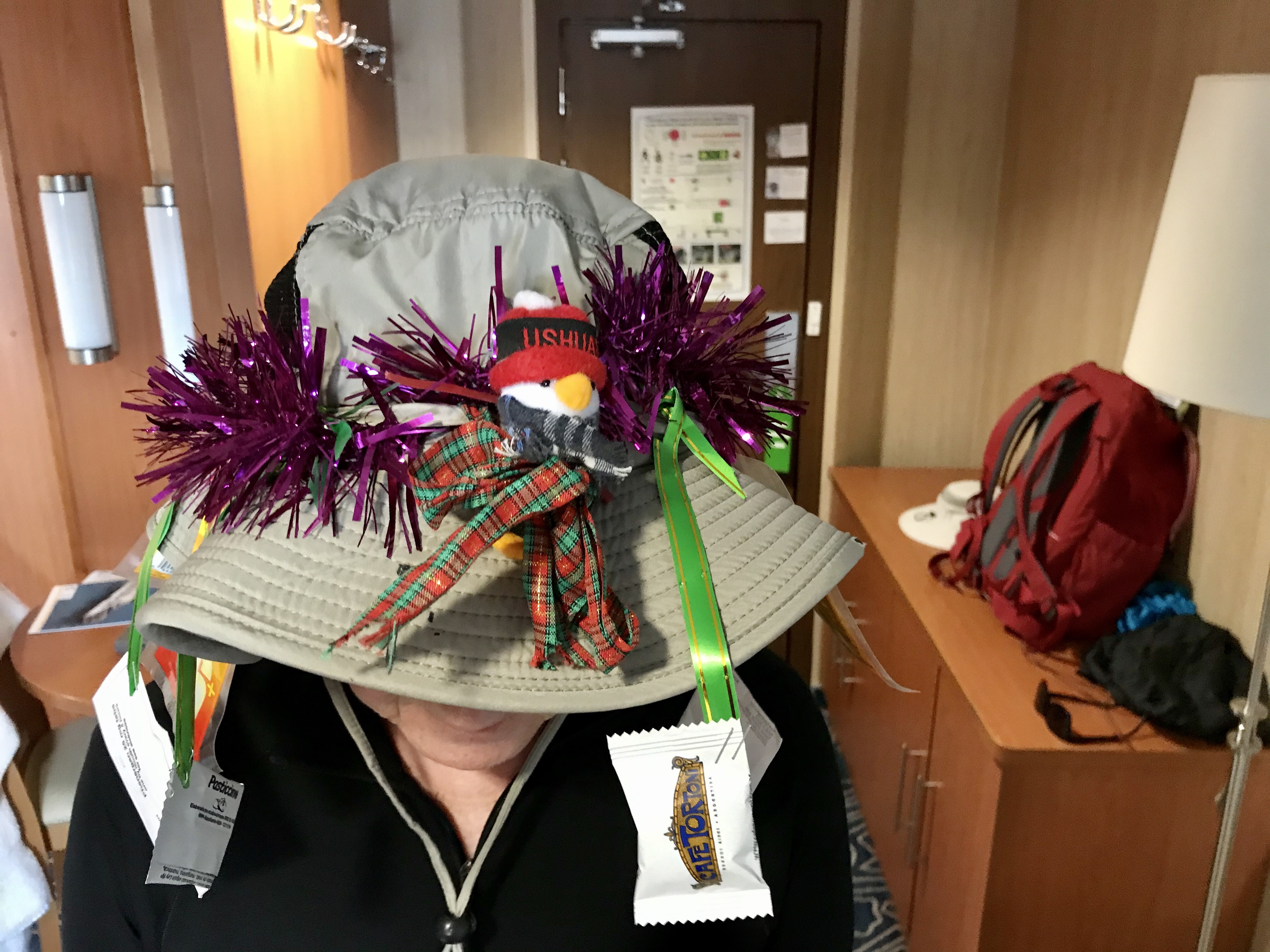
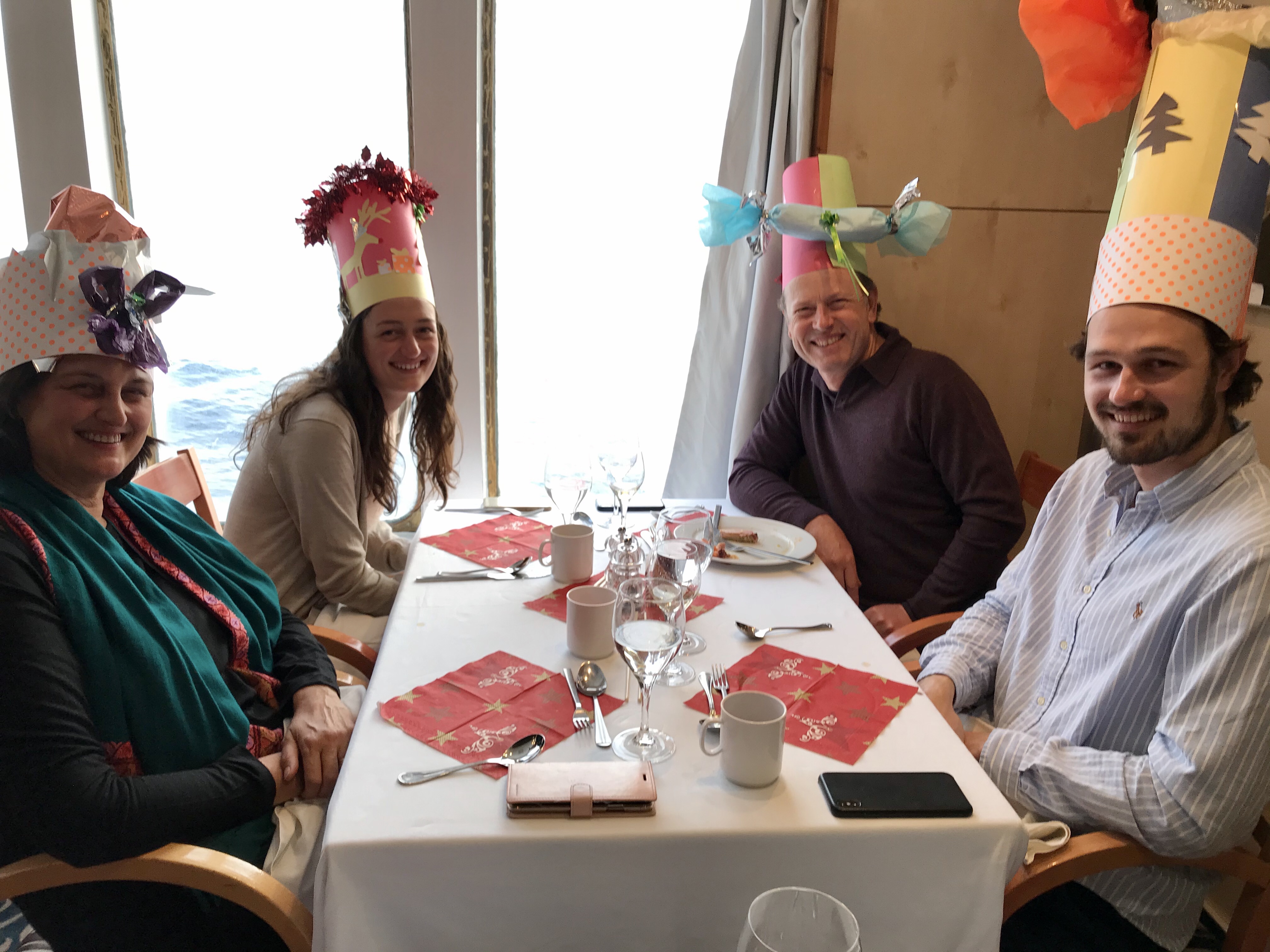
We had more decorations including Christmas crackers (bonbons) with dinner and I couldn’t help admiring Solan’s jumper. Oh and I have been asked where Garrie’s hat was – well he didn’t want to partake but did wear this one.
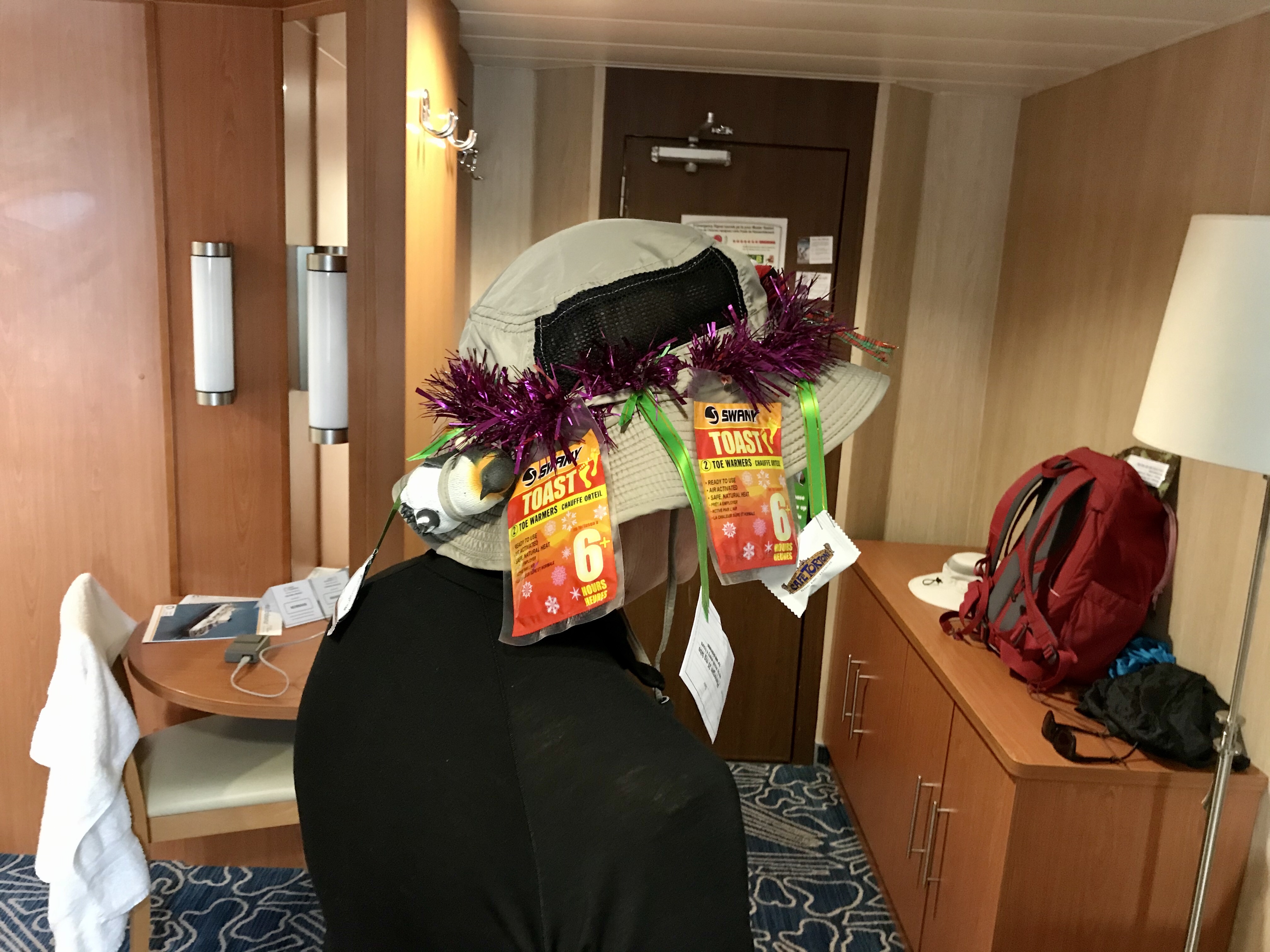
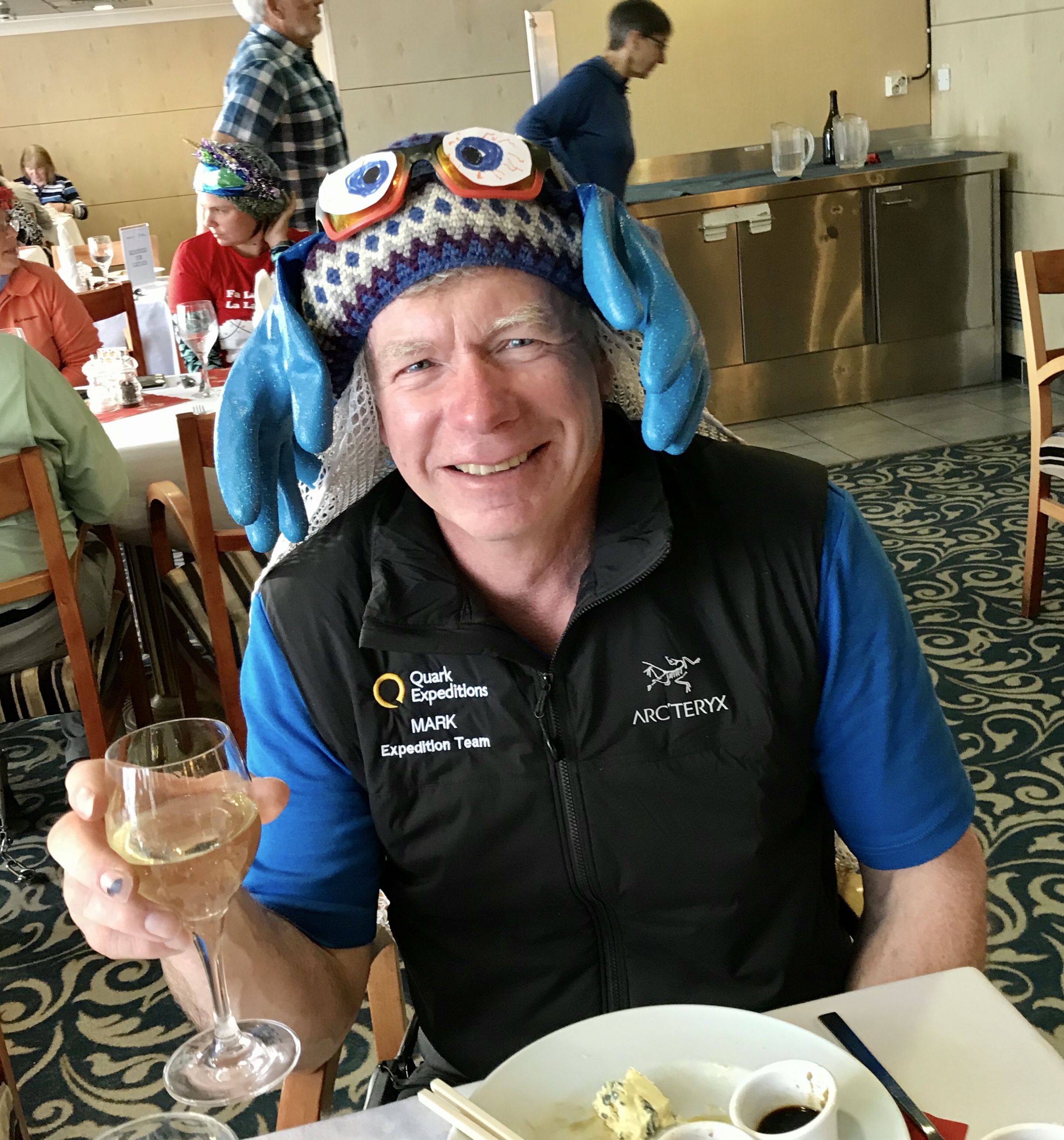
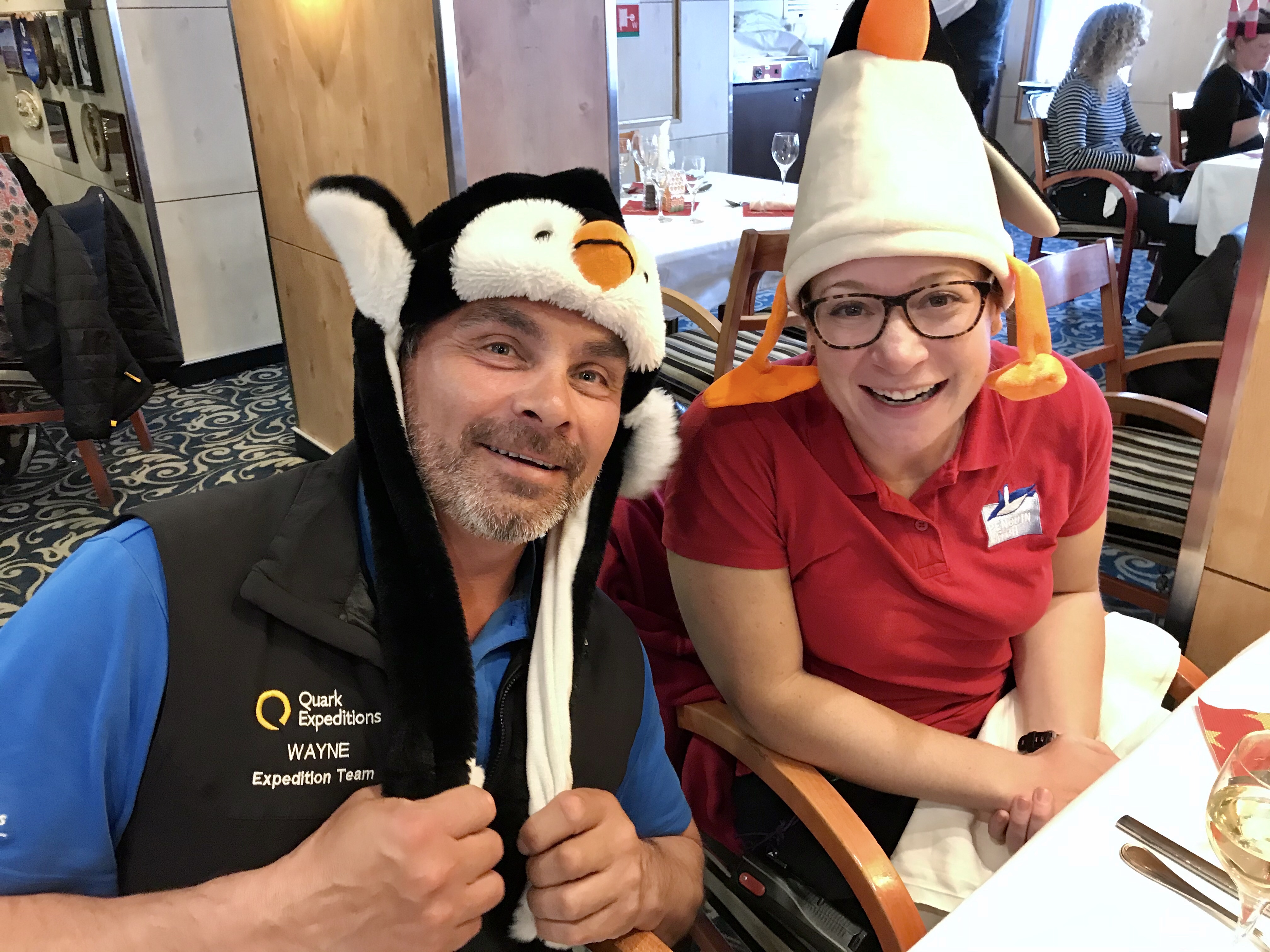
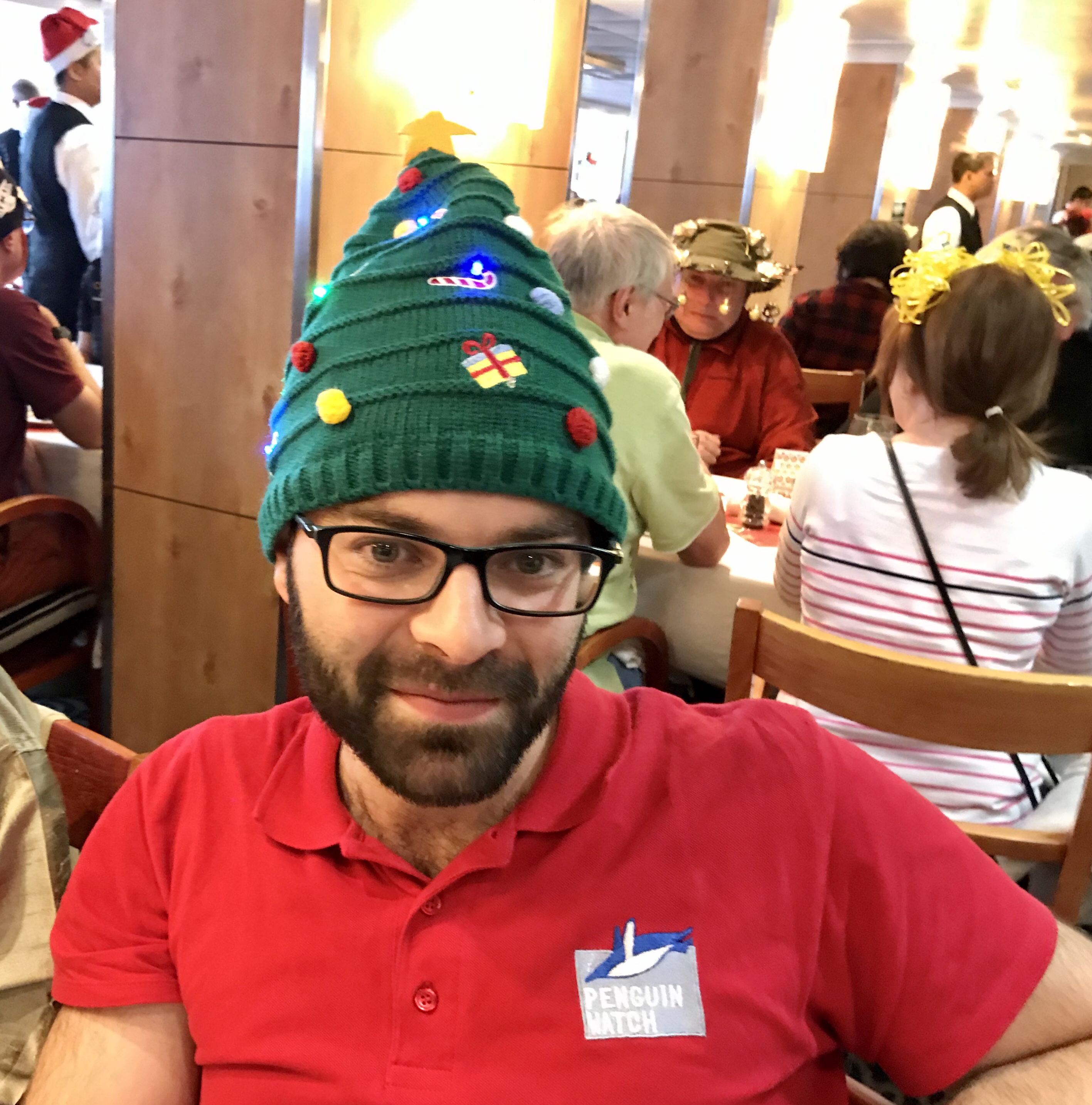
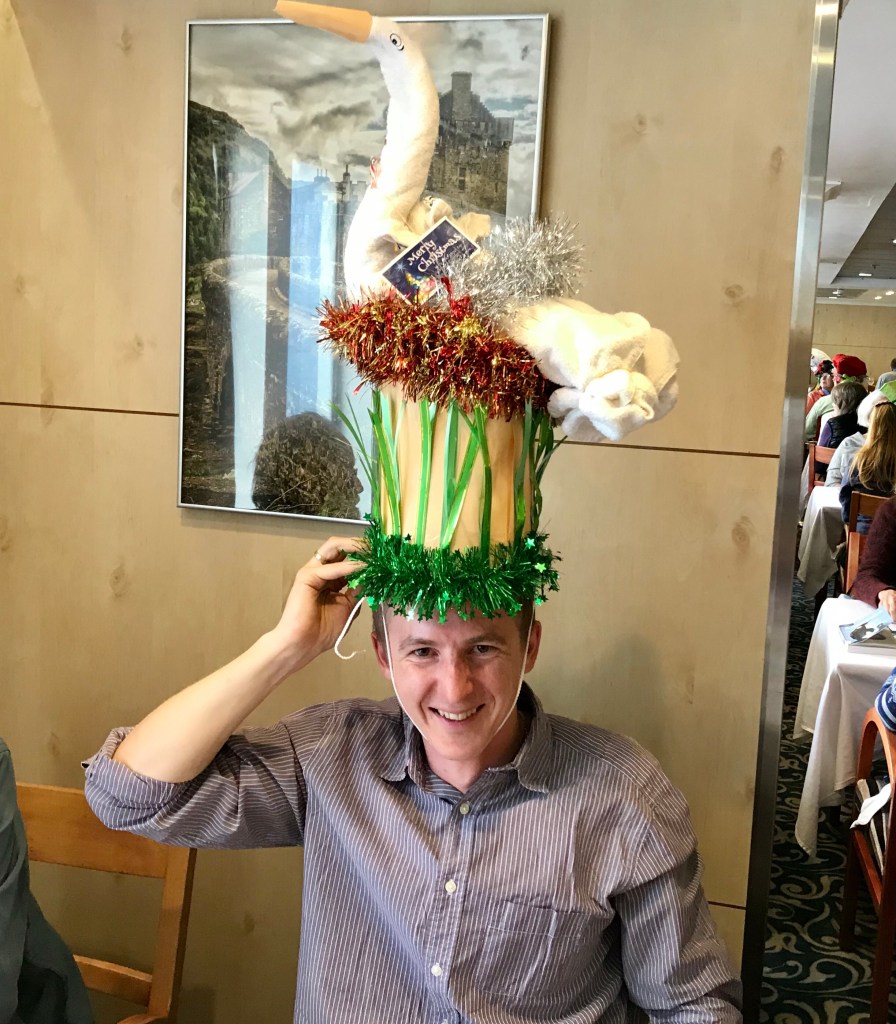
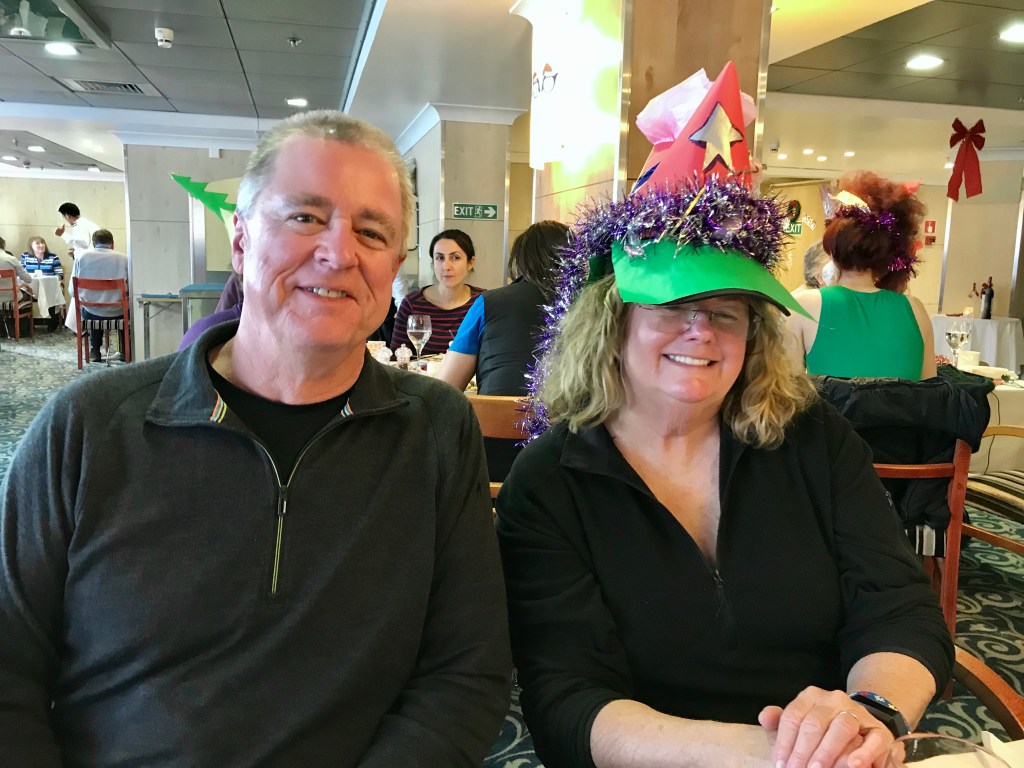
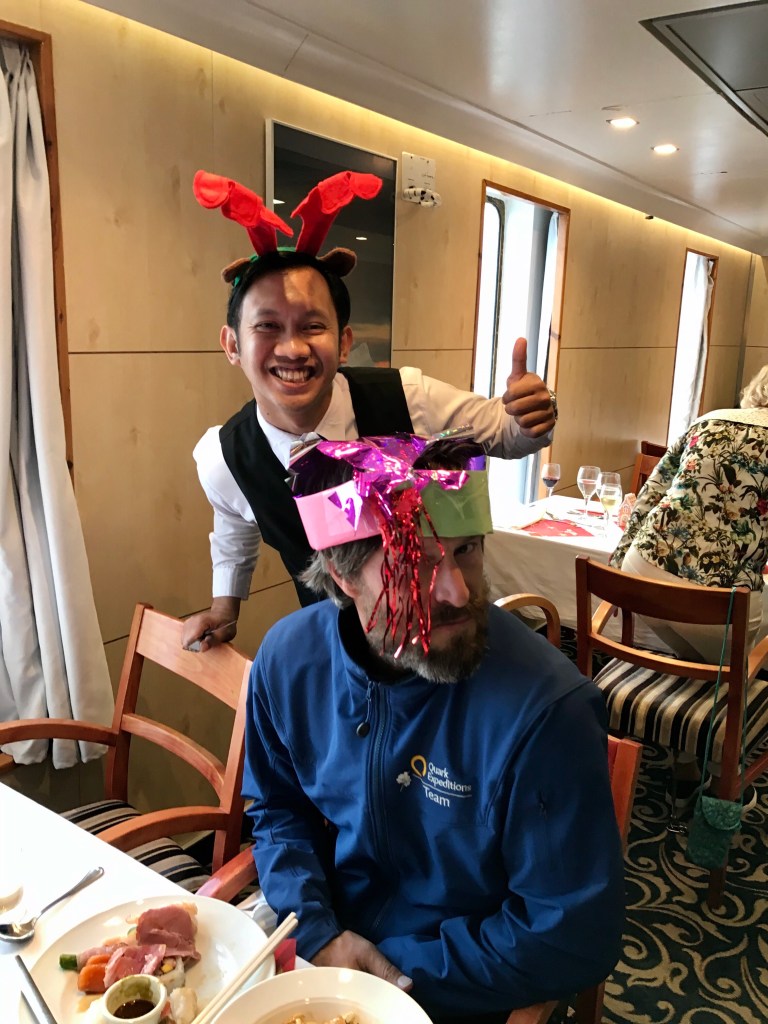
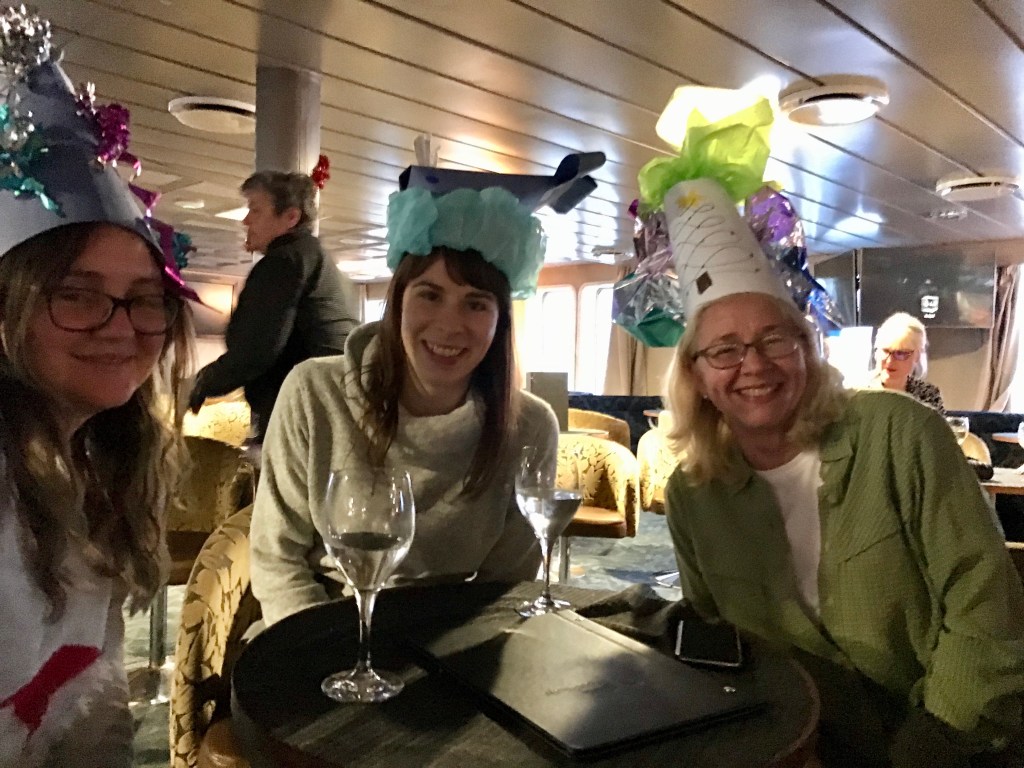
Time for the Christmas Eve market dinner and hat competition. (We have realised that it is already Christmas Day back home. ) We couldn’t believe the number of creative hats that appeared. As I mentioned, with Garrie’s help, I created an Antarctic version of the Aussie cork hat.
The hanging objects included hand and toe warmers, cookies and even sea sickness remedy. Plus a couple of penguins for good luck. Nothing in comparison to others.
Now that’s a hat!Cheryl number one also had a goRichard our wonderful waiter, and Solan our fearless leader.Linda and friends. As I recall the whale won a prize.
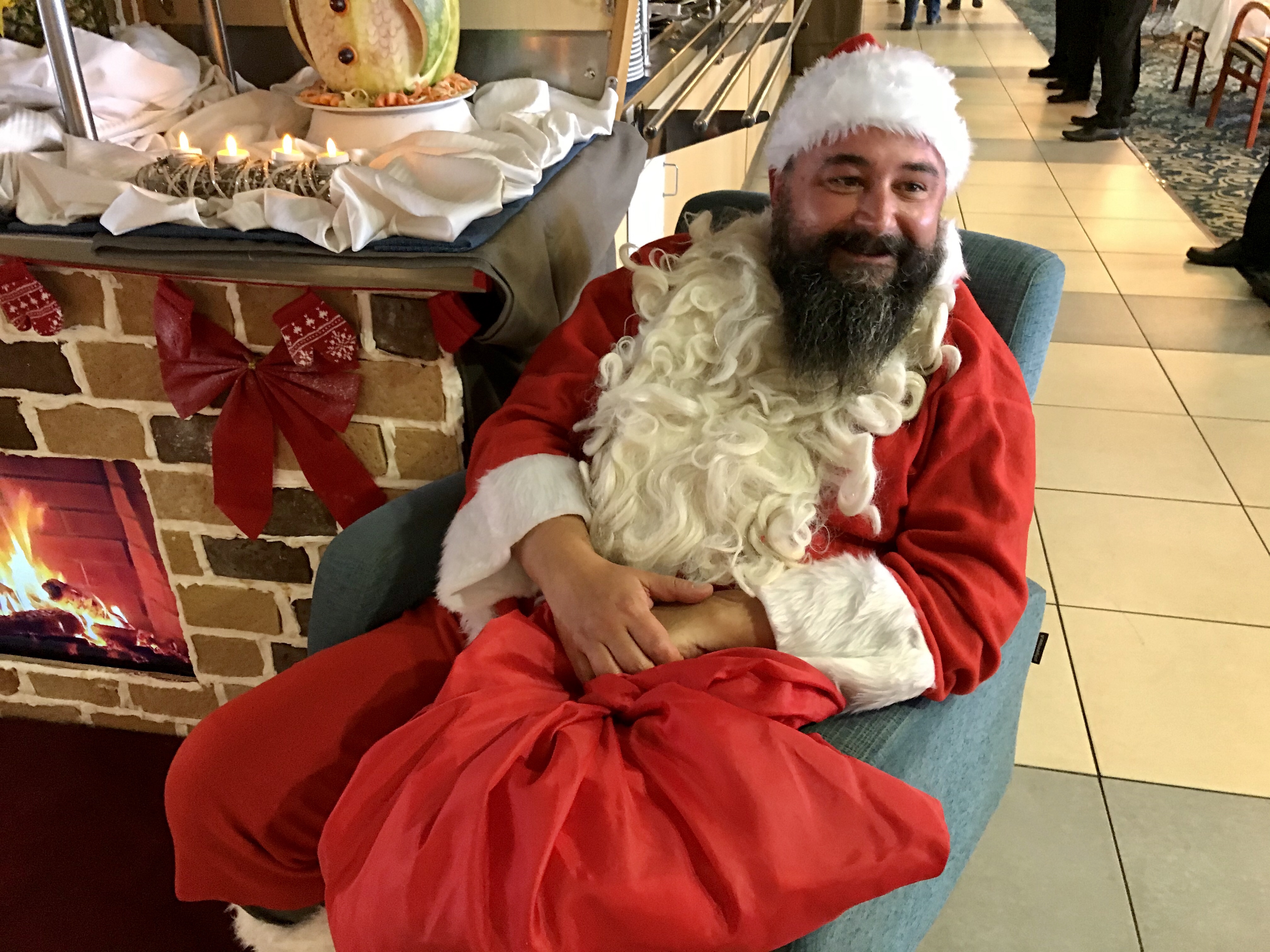
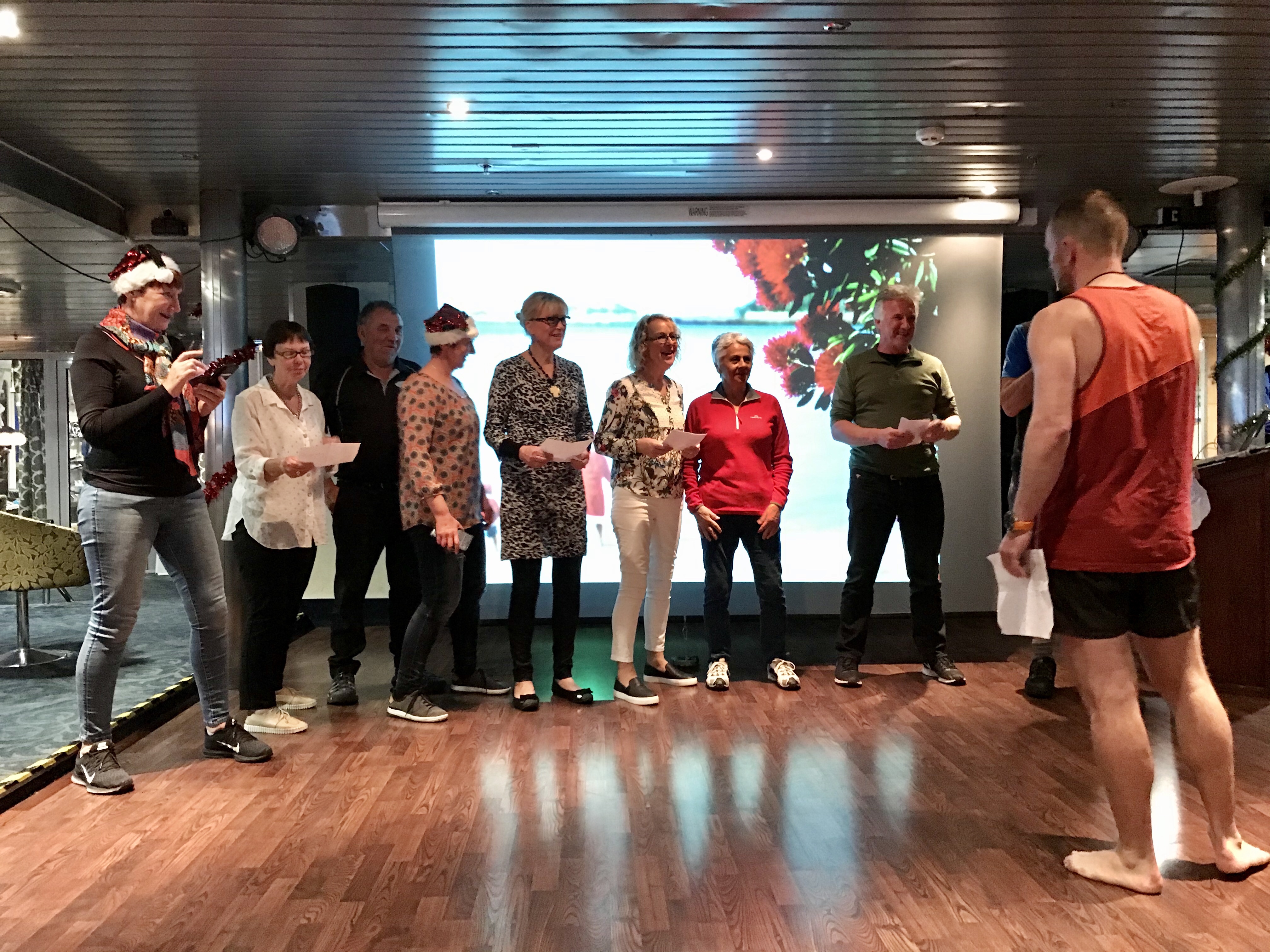
So Santa was also there – thanks to our Historian, Miko.
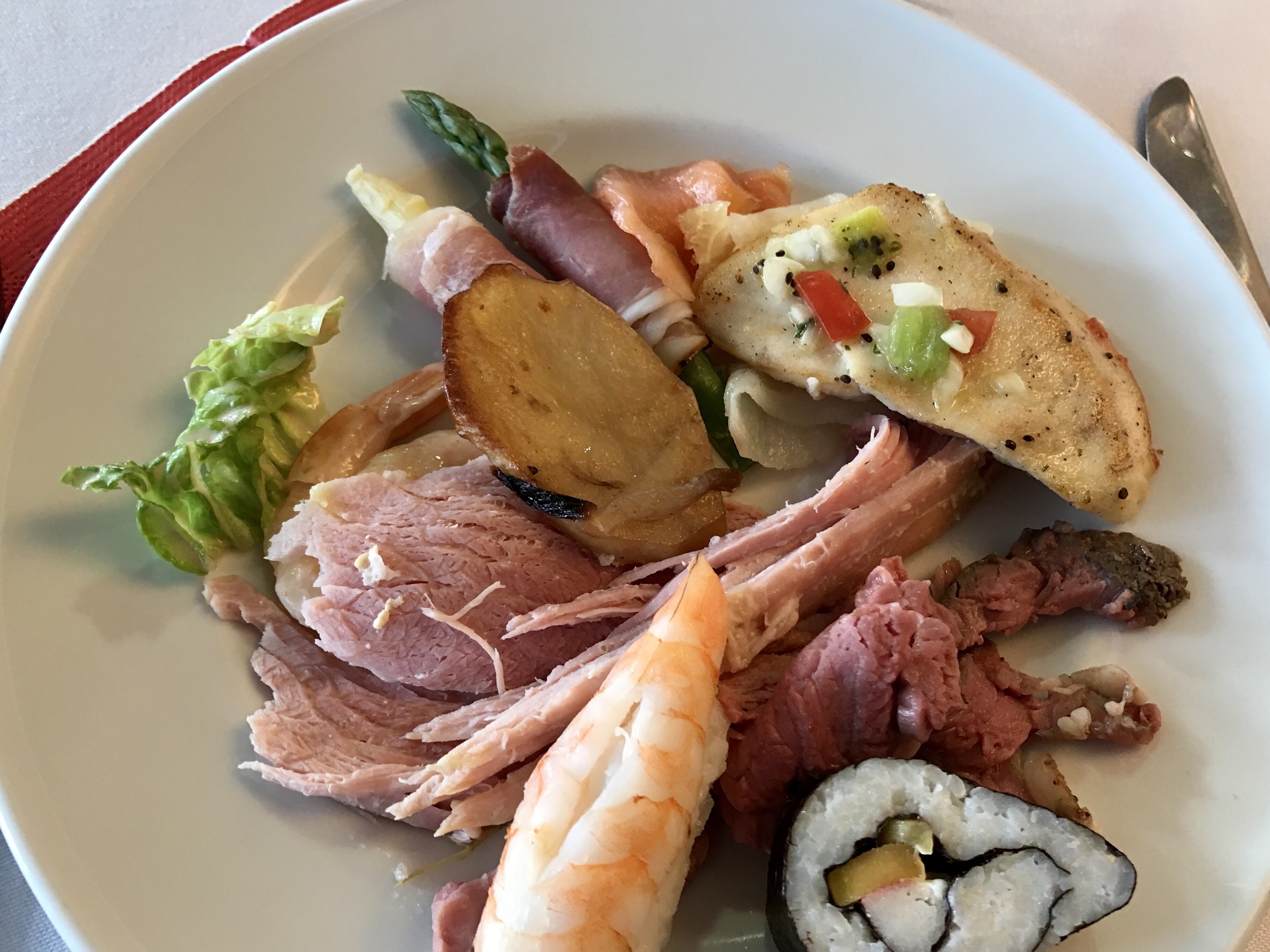
The food was glorious, as always.
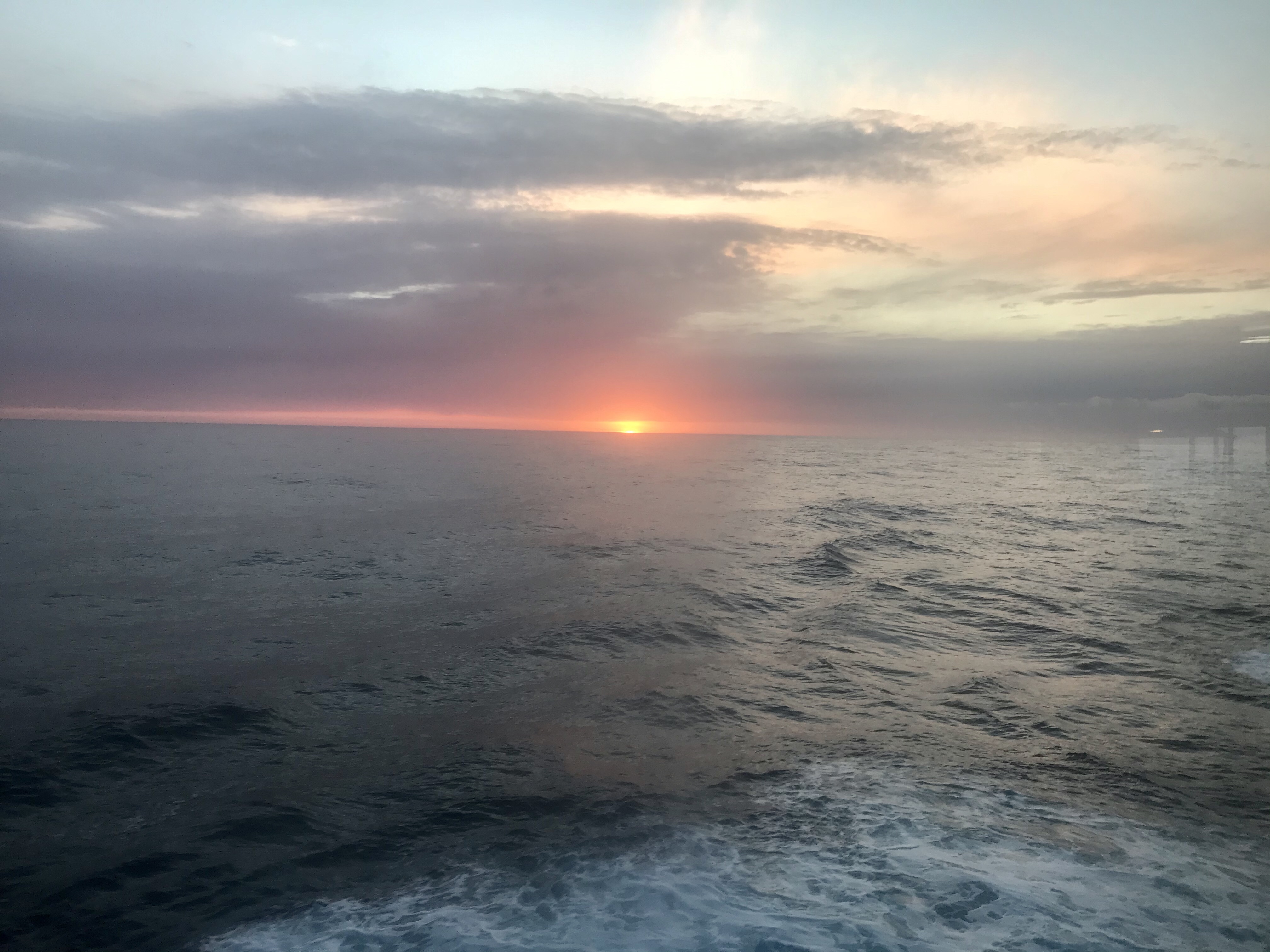
A lovely last view of the sun.
Then off to the lounge for a really interesting event.
Various crew members told how their countries celebrate Christmas. In Spain it’s about the three wisemen and they arrive 6th Jan. 28th December is innocence day and is like April fools day with farts and fire crackers. Christmas and New Year’s Eve very long dinners.
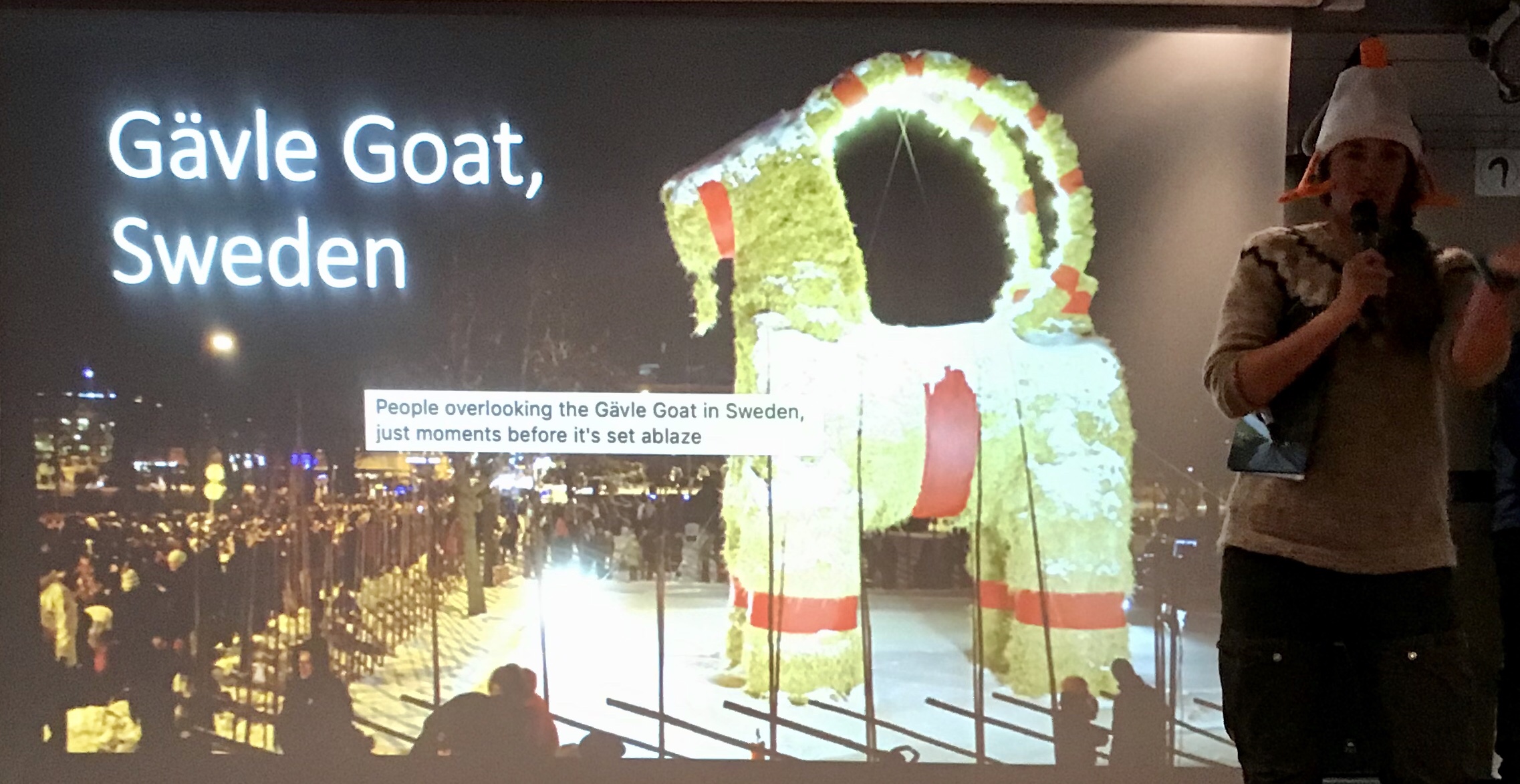
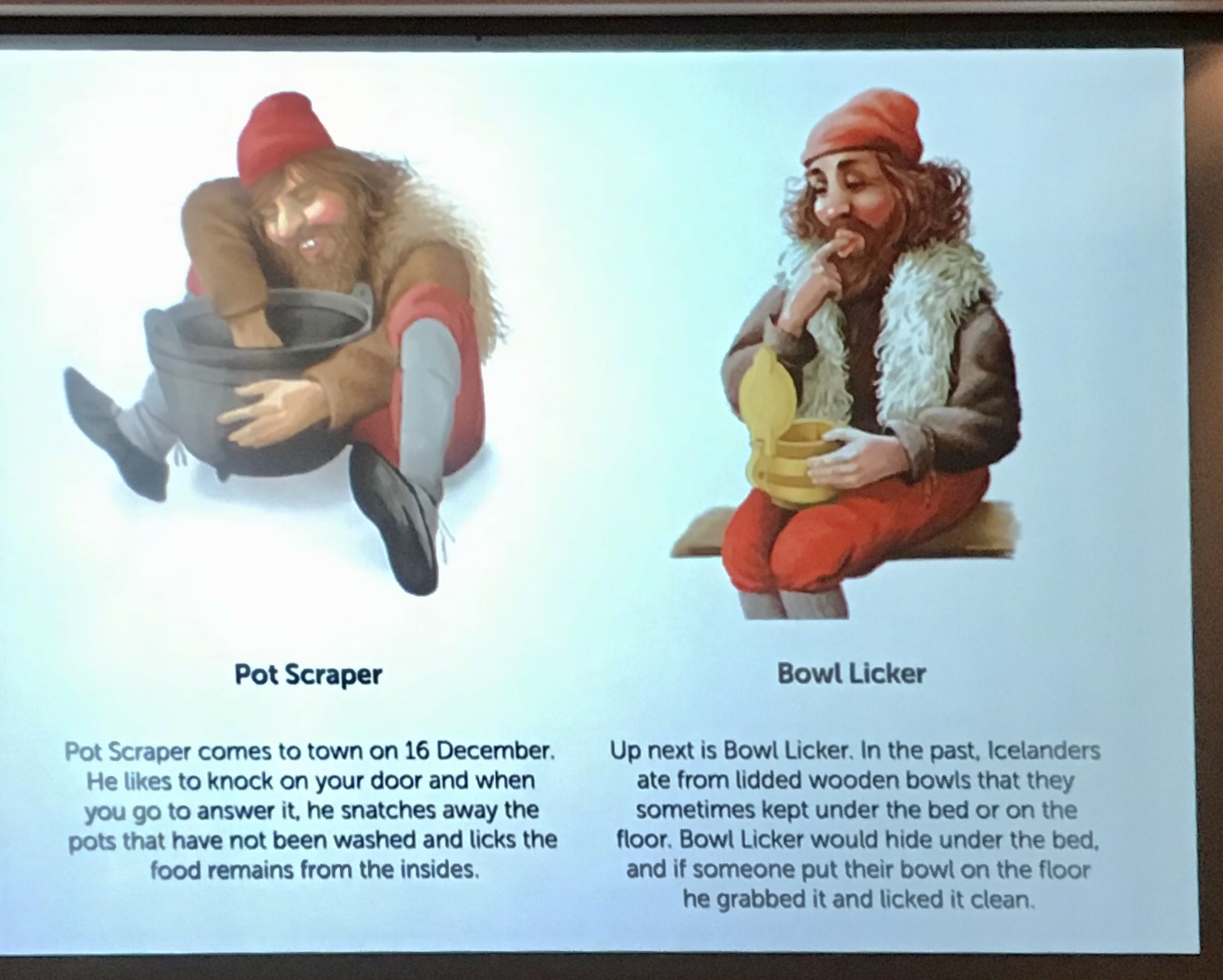
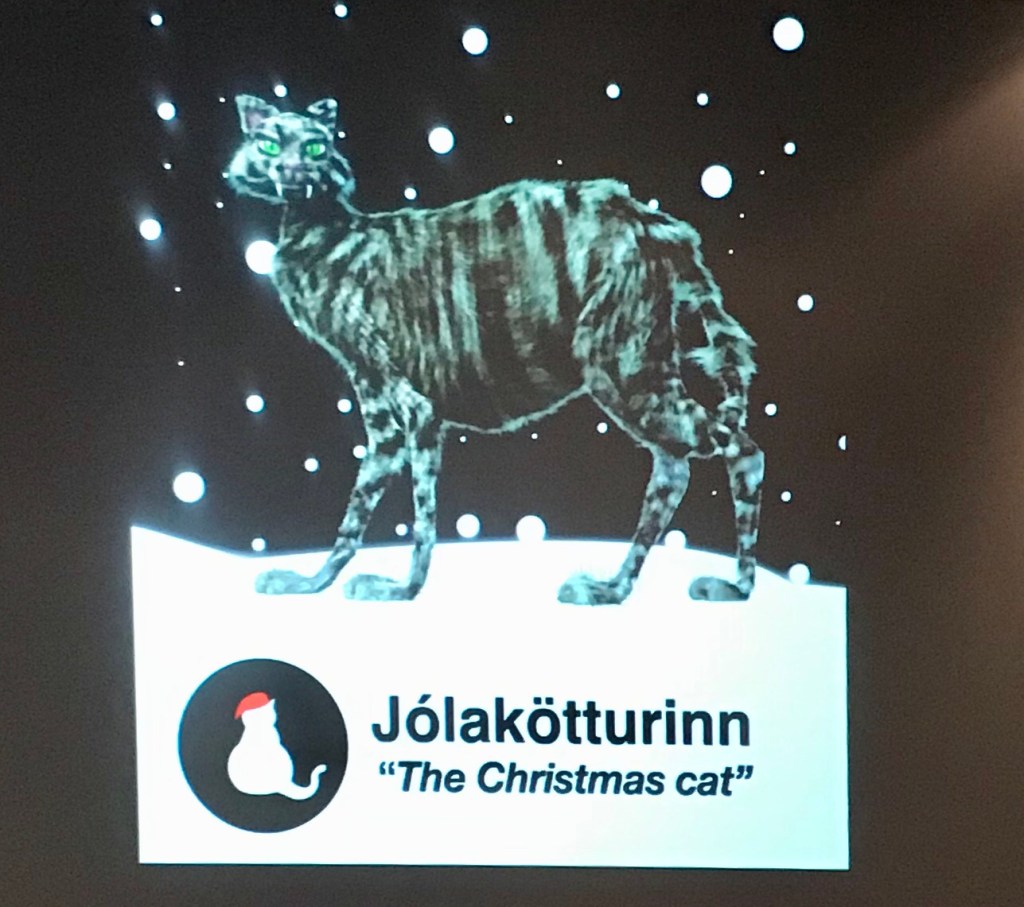
Iceland. Well frankly I suggest you avoid Iceland. Sounds pretty traumatising with goat burning, spooky trolls and other strange creatures. On the 23rd they eat stingray.
This guy eats you if you don’t receive something soft!
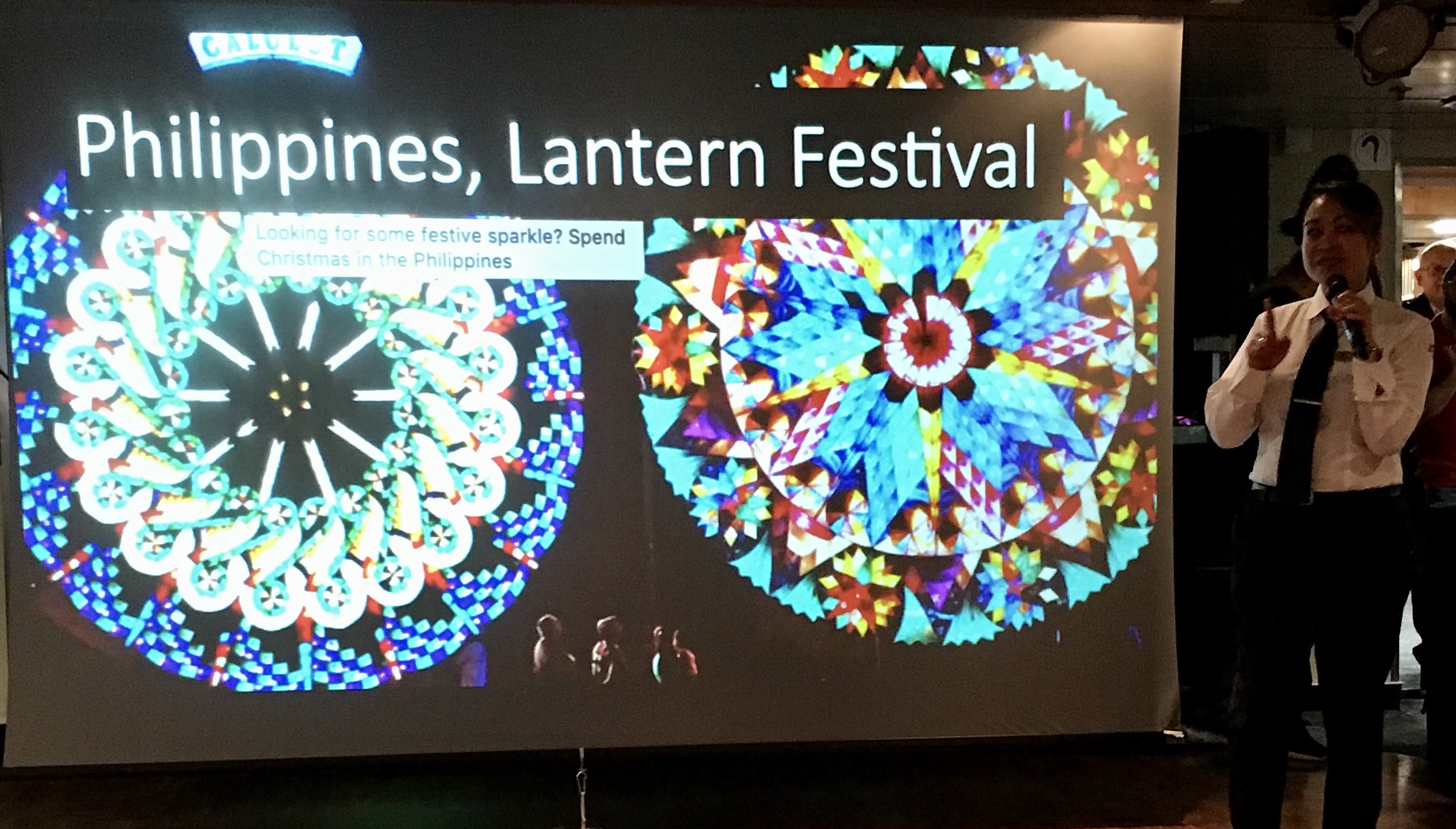
The Philippines has a lantern festival. Their festivities start in September. 80% Christian. 9 days celebration. Church on Christmas Eve. Midnight gift giving. Lanterns made of bamboo. It’s all about family and love and sharing.
However New Zealand totally stole the show with their kiwi choir. words included Stubbies and singlet go to a bitch(a beach) for a barbie (not a doll], kiwi choir. I’m not sure if my video will load but I’ll give it a go.
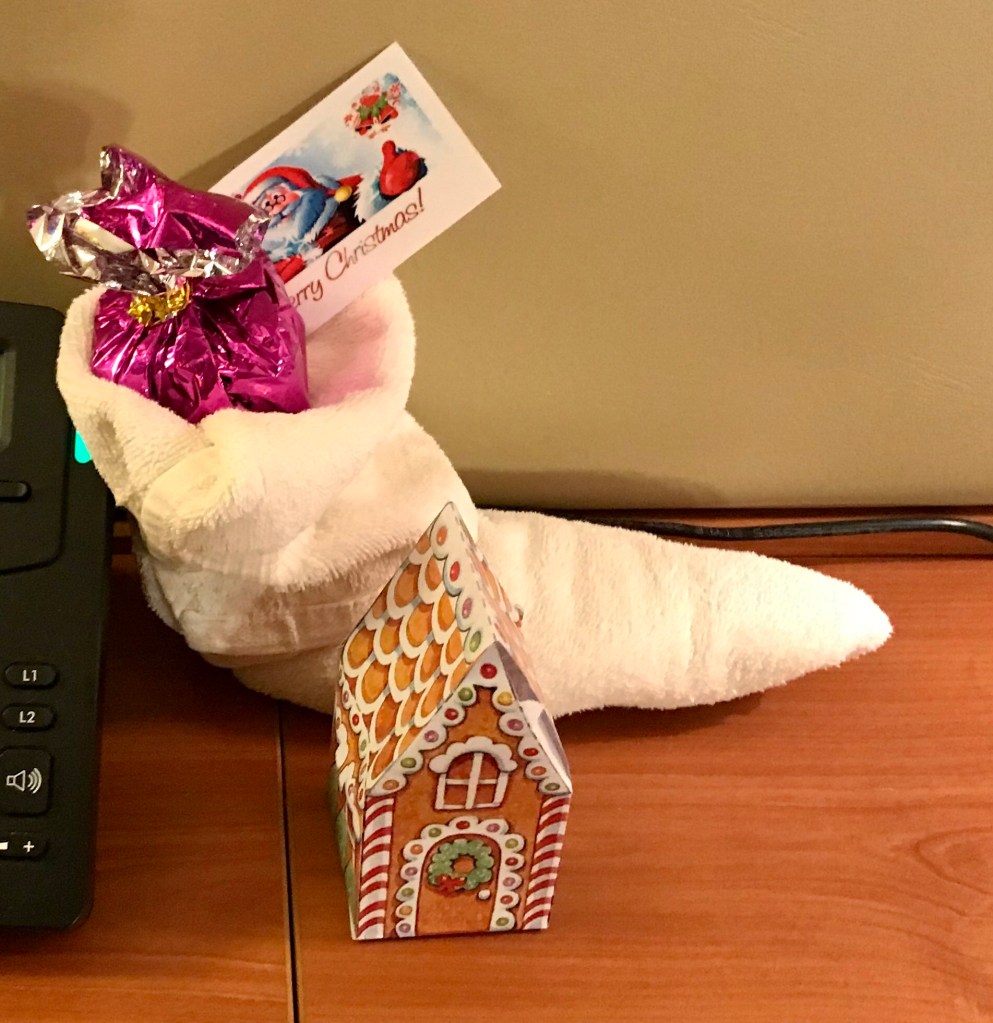
A lovely Christmas boot with gift in our room as we turned in. So tomorrow Christmas Day at sea!
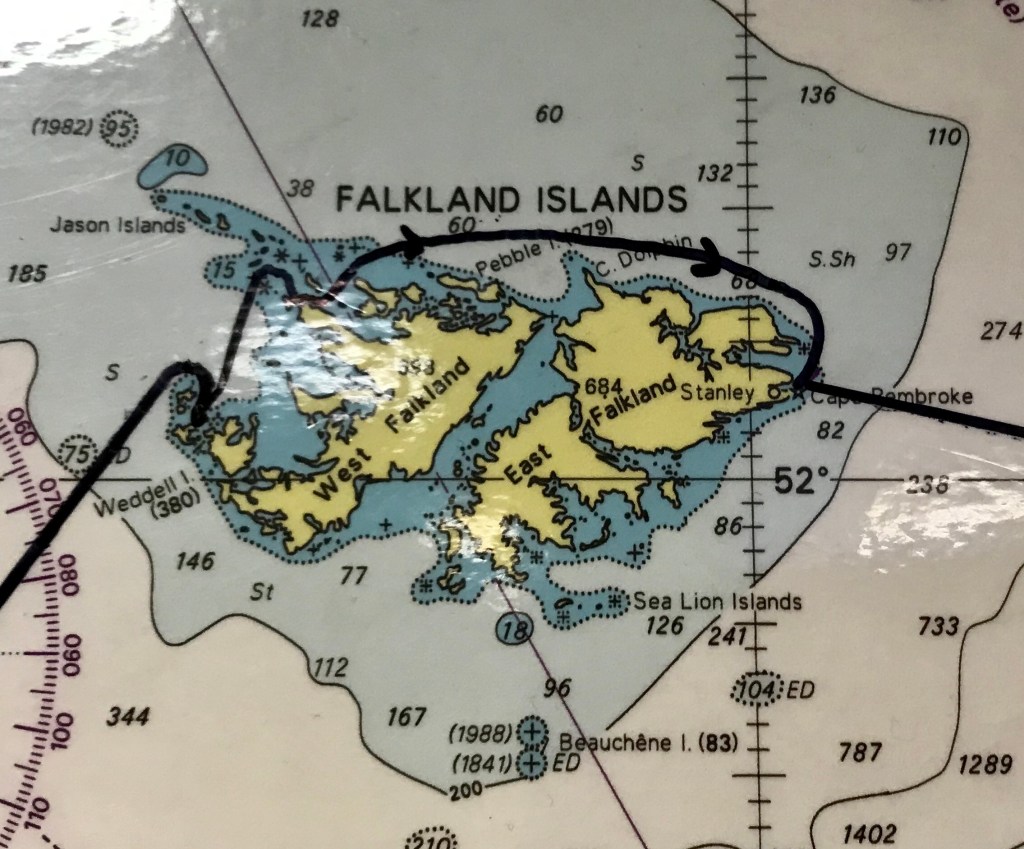
Our second day in the Falkland Islands and this time on the East island. A map might help.
So we are to spend most of our Christmas Eve in the capital, Stanley. A real treat in that we had been granted permission to dock, so no zodiacs needed. There were two other cruise ships visiting that day, but they had to use their tenders. This also meant we could simply walk into town – about forty minutes, or take the provided shuttle buses.
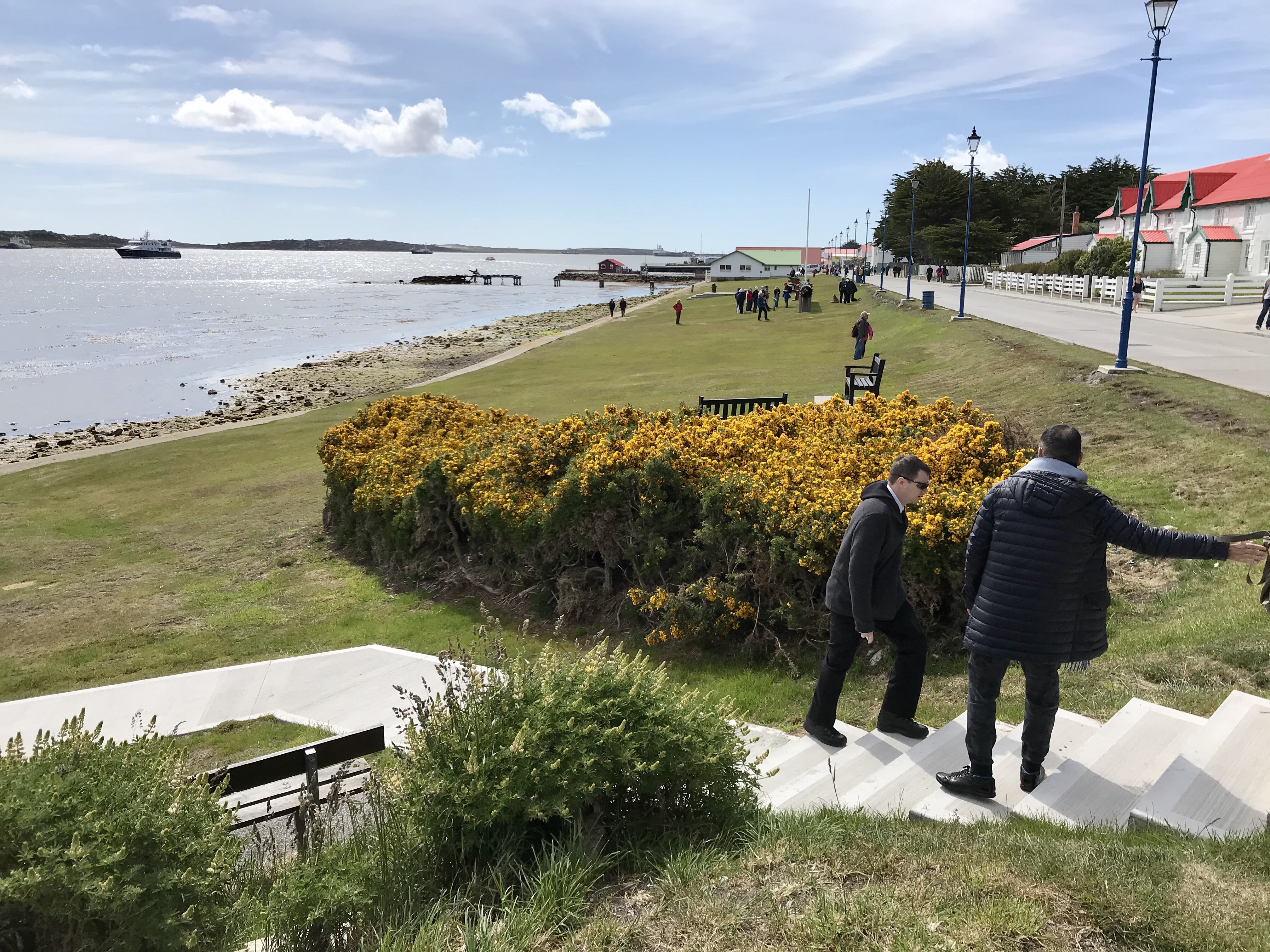
So a bit about Stanley. It has a population of approximately 2500 residents (total of the Falklands about 3000). Highlights include a superb museum, the war memorial, Government House with its botanic gardens and the cathedral with its whalebone arch. It has its own currency – The Falkland Islands pound however they also accept British pounds, US dollars and credit cards.
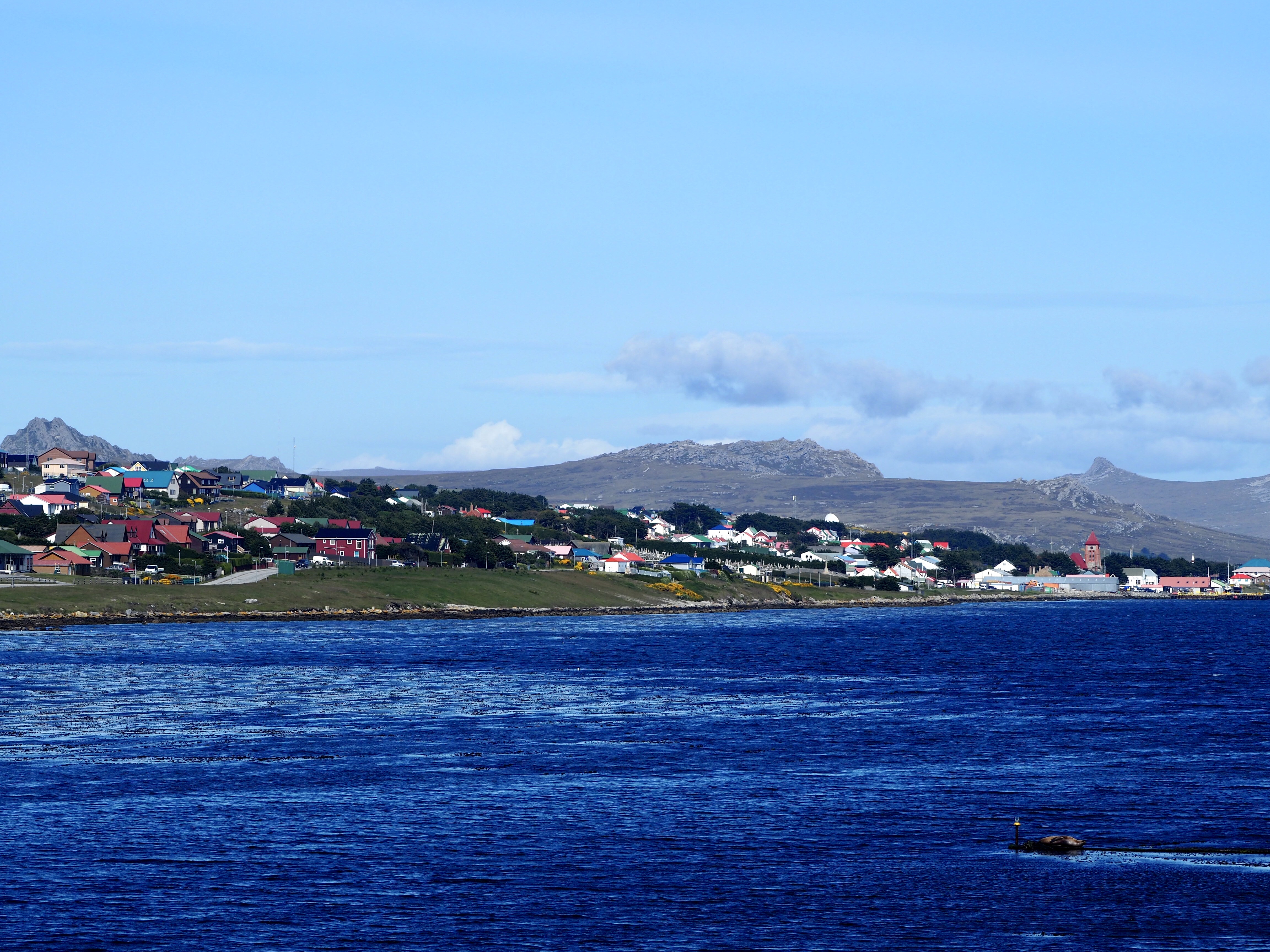
This was our view as we arrived.
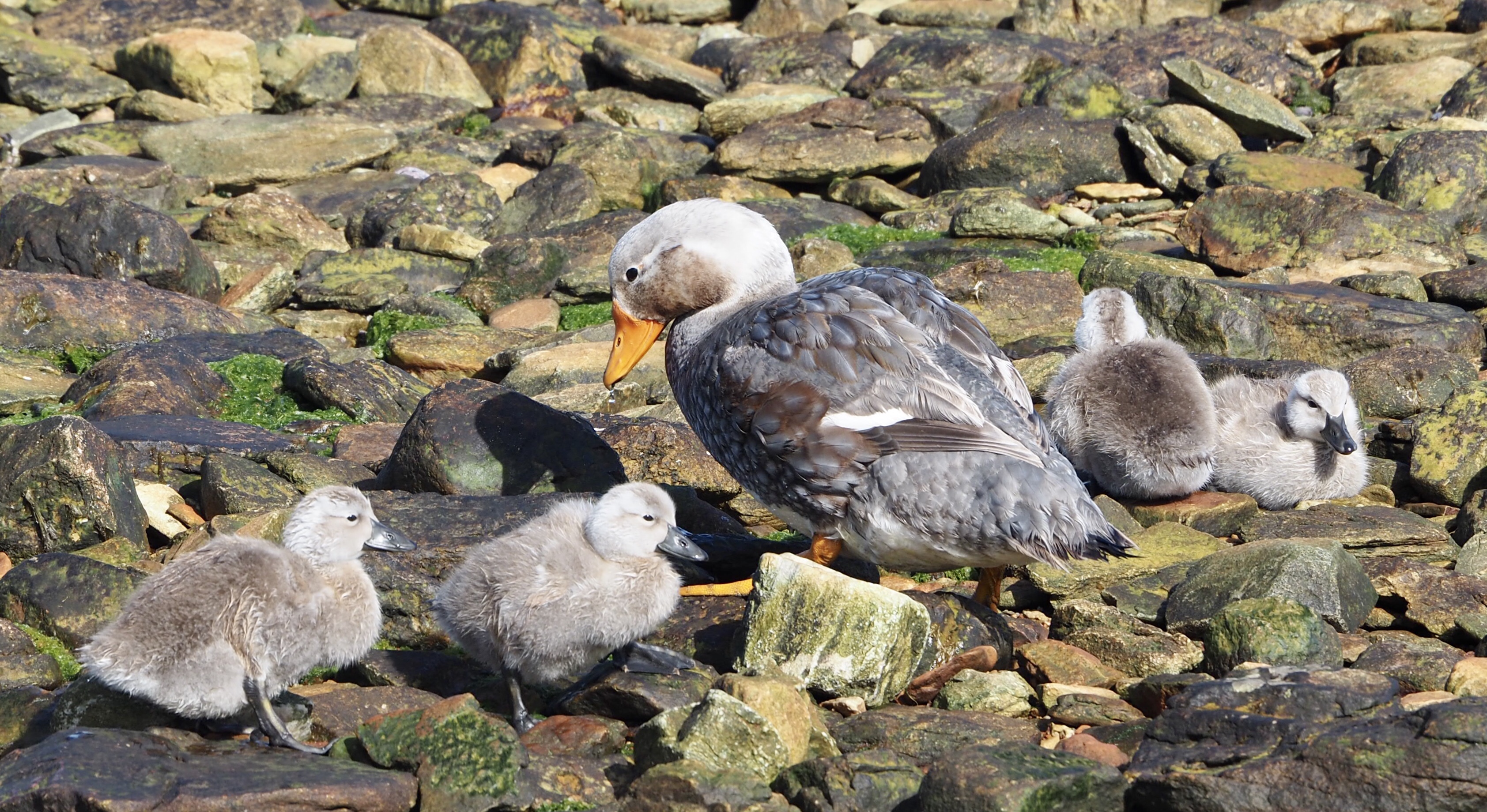
On our walk in we spotted a family of steamer ducks.
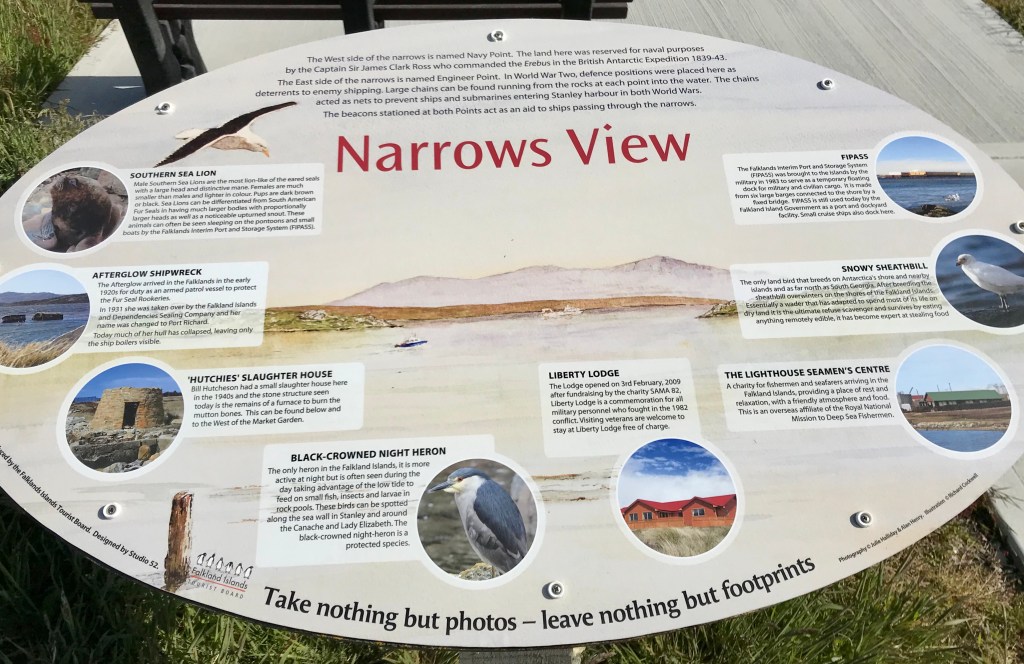
Signs tell you what is what around the place.
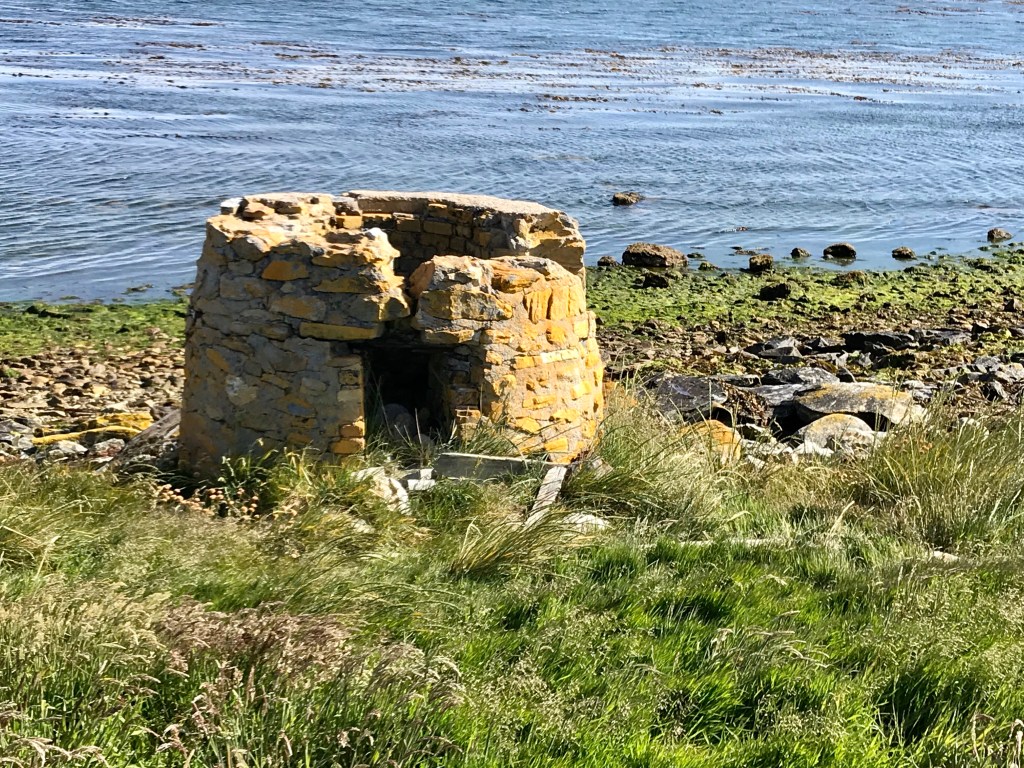
This is what remains of Hutchies Slaughter House mentioned on the sign.
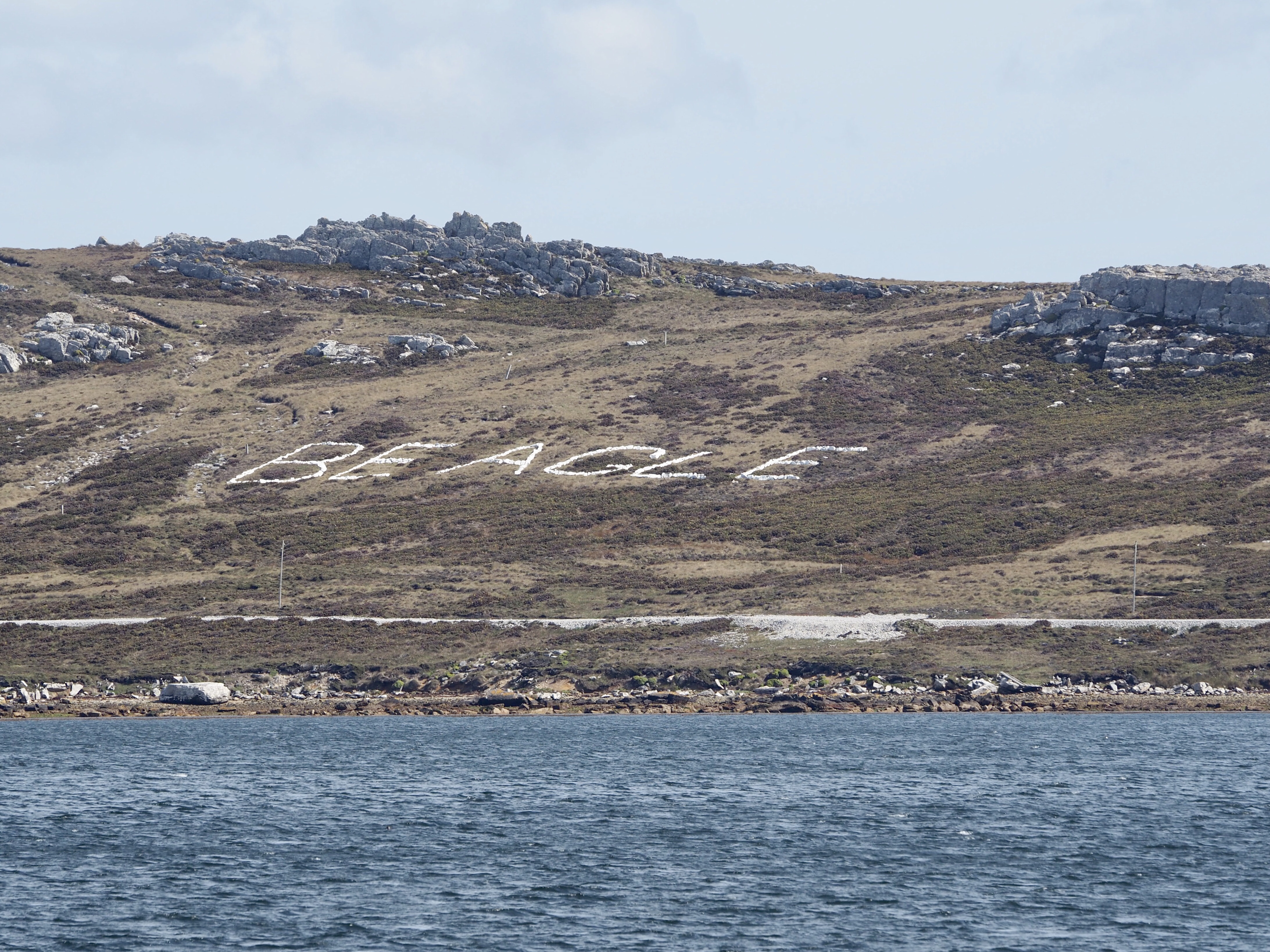
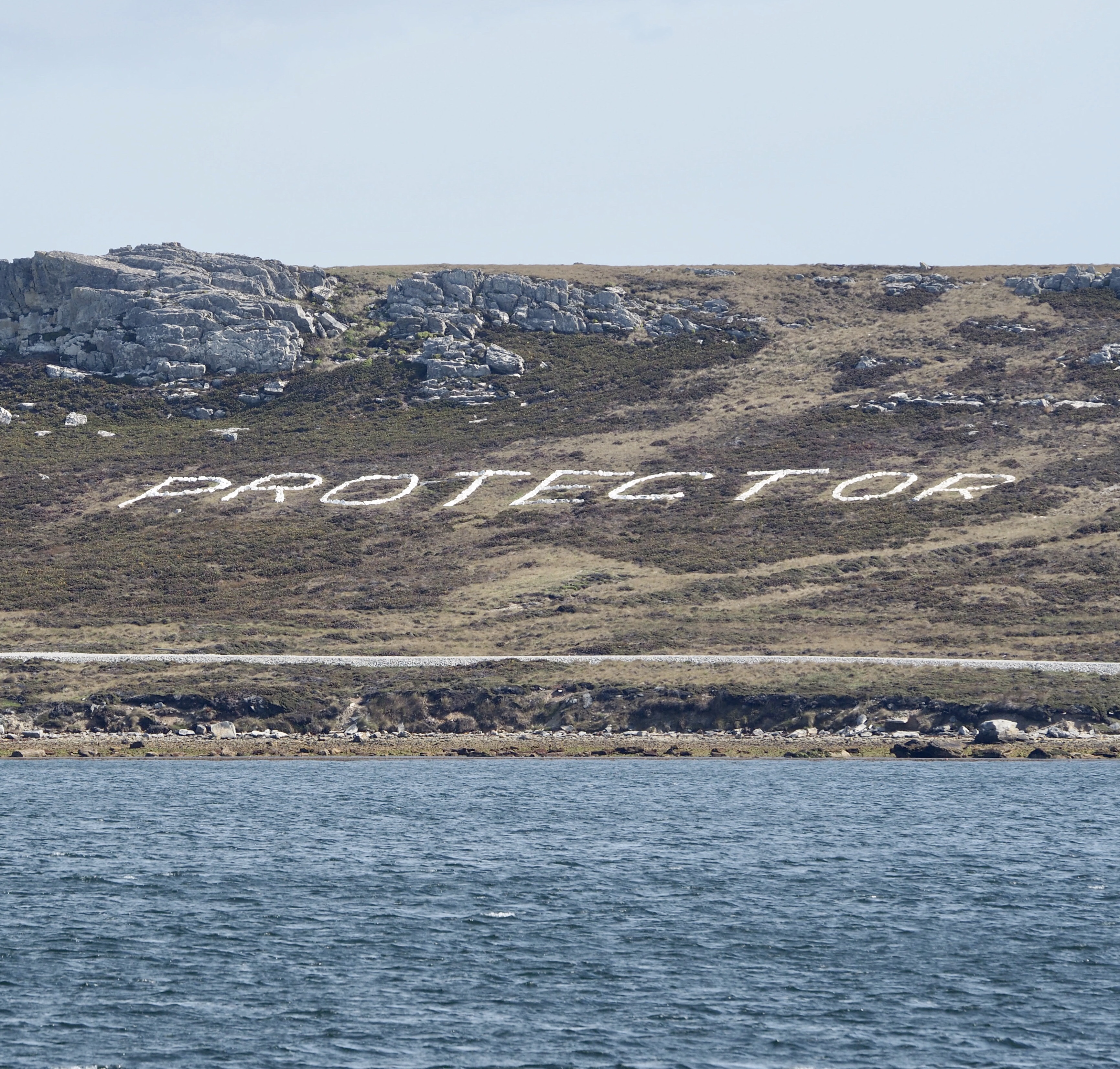
We were fascinated by the huge names on the hills opposite.
It took me some research to discover their meaning. (Had meant to ask our historian on board but totally forgot!) I found one site that discusses it and this is what it says:
Displayed prominently on the slopes of the Camber directly across from Stanley, these names honor the vessels of the Royal Navy which have served in either the Antartic Ice Patrol or have been directly assigned to protect the Falkland Islands. The letters average 10m/32ft high by 5m/16ft wide and are made out of white-painted stones, the names are laid out by the crew members of each ship once permission is granted by Falkland Islanders.
These names commemorate the following ships: HMS Barracouta – A Cruizer Class Brig-Sloop which patrolled the Falklands in the 1810’s to police and protect fishing interests around the islands. en.wikipedia.org/wiki/Cruizer-class_brig-sloop
HMS Beagle – A Cherokee Class Brig Sloop which stopped in the Falklands during her Second round-the-world voyage, which was accomplished with naturalist Charles Darwin aboard ship. en.wikipedia.org/wiki/HMS_Beagle
HMS Protector (A146) – The only ship of her class, converted to an Antarctic patrol vessel in the early 1950’s and deploying to the Falklands for the first time in the winter of 1955/56. The ship would make a further twelve deployments to the Falkland Islands and the British Antarctic Survey bases during her career. en.wikipedia.org/wiki/HMS_Protector_(A146)
HMS Endurance – This name honors the service of both Antarctic Ice Patrol/Icebreakers which have borne pennant number A171 for the Royal Navy from the period of 1967-1991 and again from 1991-2008. en.wikipedia.org/wiki/HMS_Endurance
HMS Dumbarton Castle (P265) – A Castle Class Patrol Vessel which served as South Atlantic Guard Ship based at Mare Harbor and assigned to patrols around the Falkland Islands and South Georgia Islands from the 1990’s through 2008. en.wikipedia.org/wiki/HMS_Dumbarton_Castle_(P265)
HMS Clyde (P257) – The current South Atlantic Guard Ship assigned to the Falkland Island, the Clyde is a River Class Patrol Vessel which is slated to be stationed in the Falkland Islands through 2018.
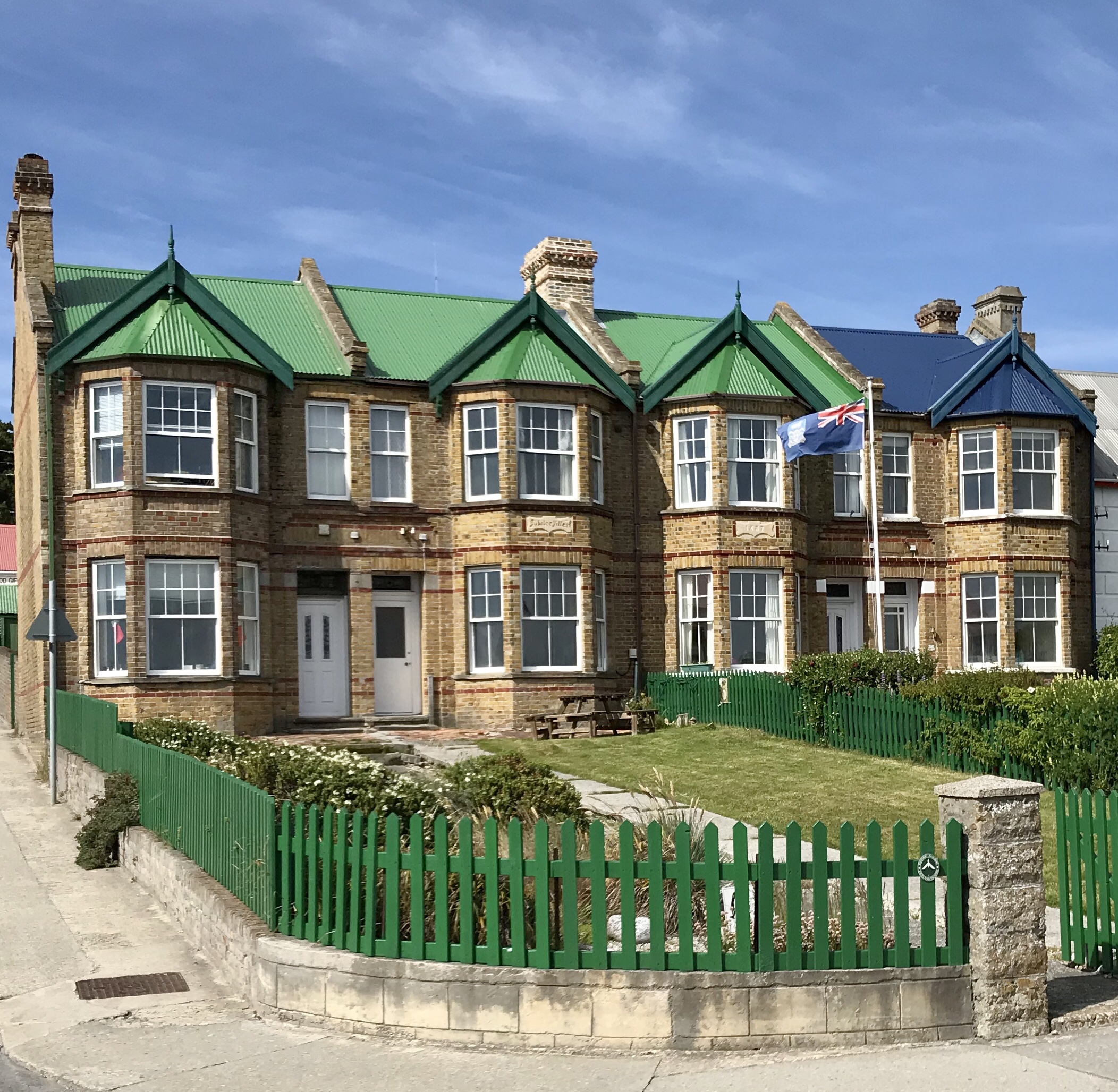
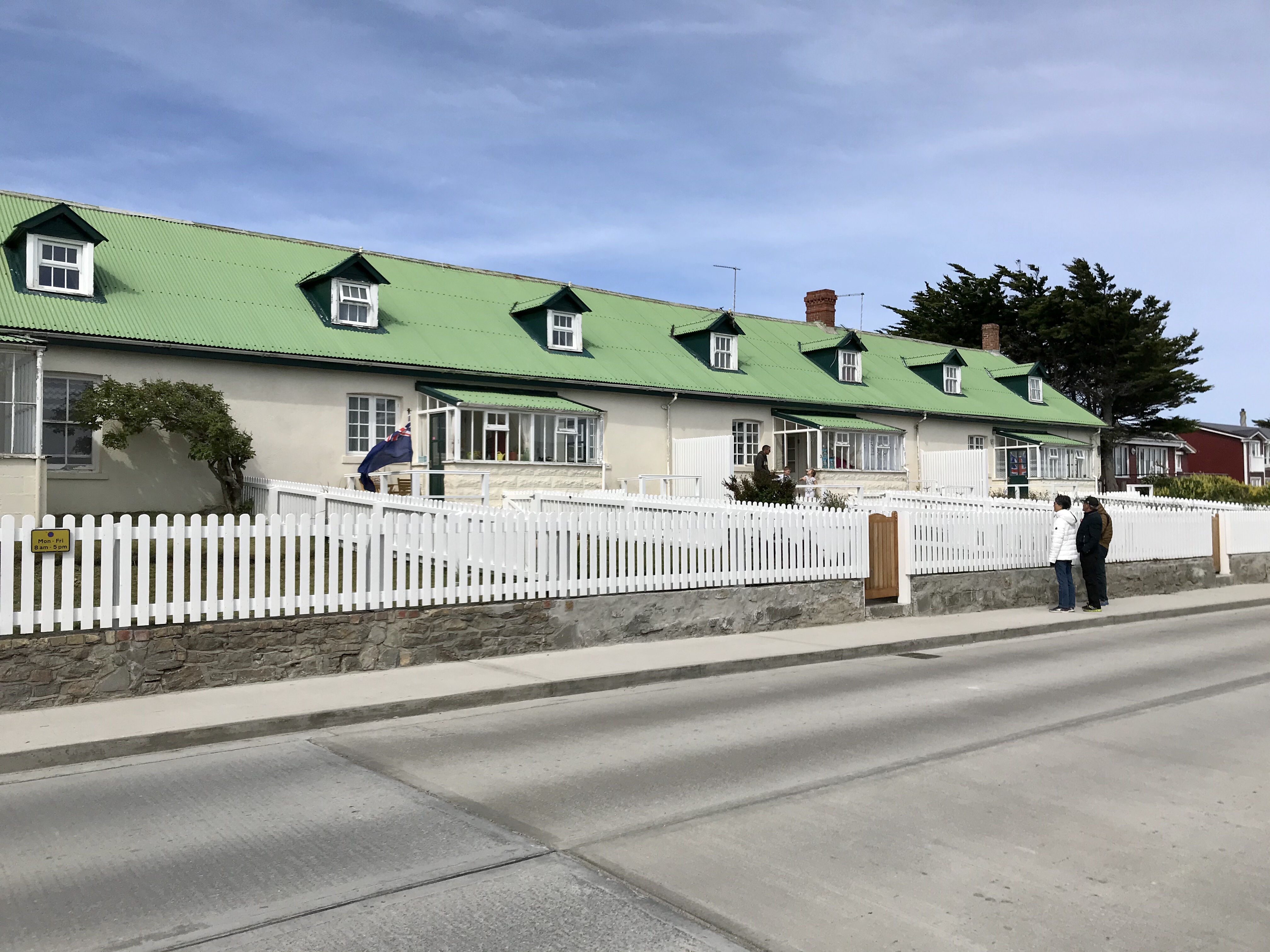
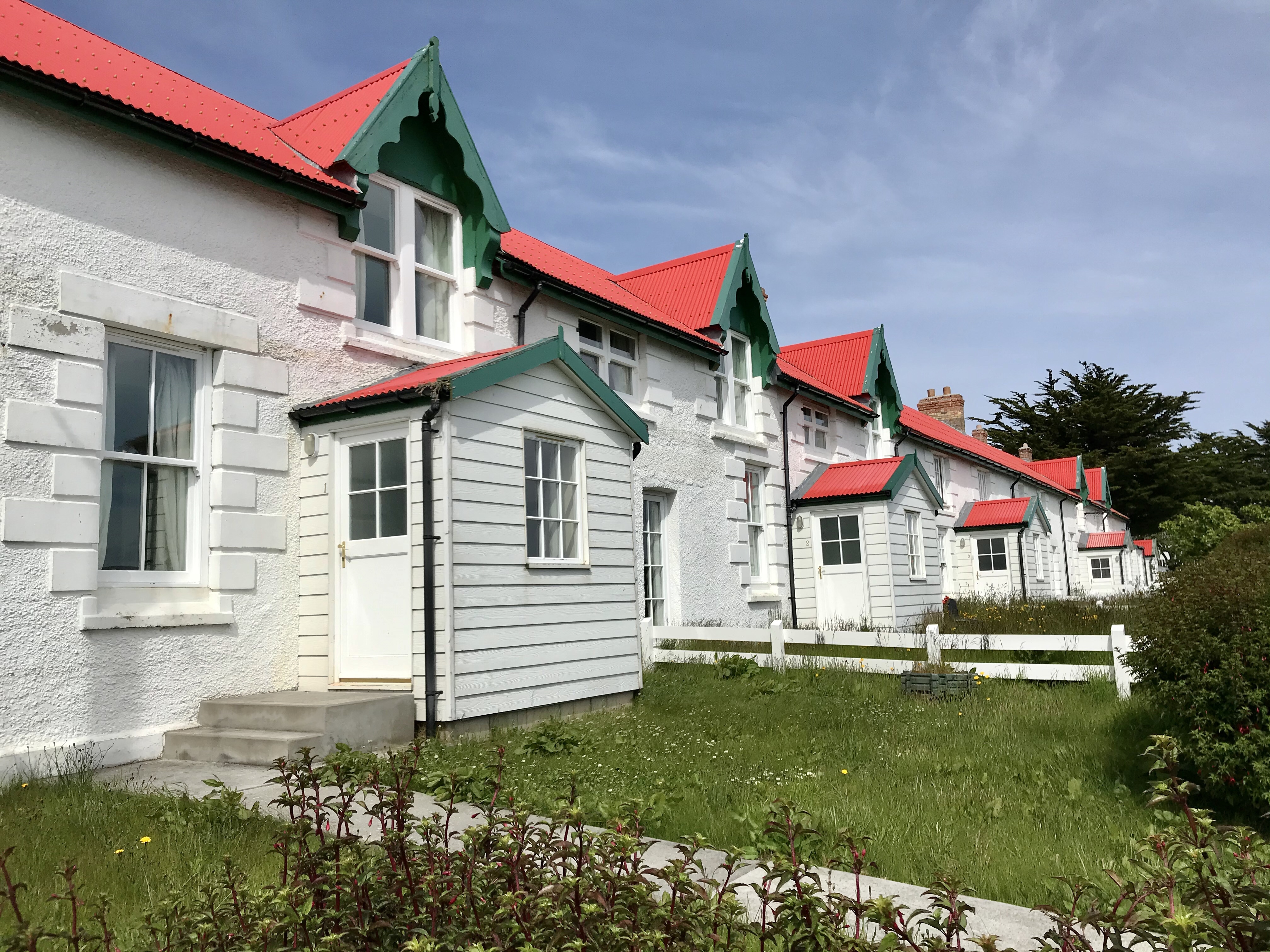
So there you have it. This row of houses had been mentioned as something to look out for. They are the jubilee villas and some of the oldest buildings in town.
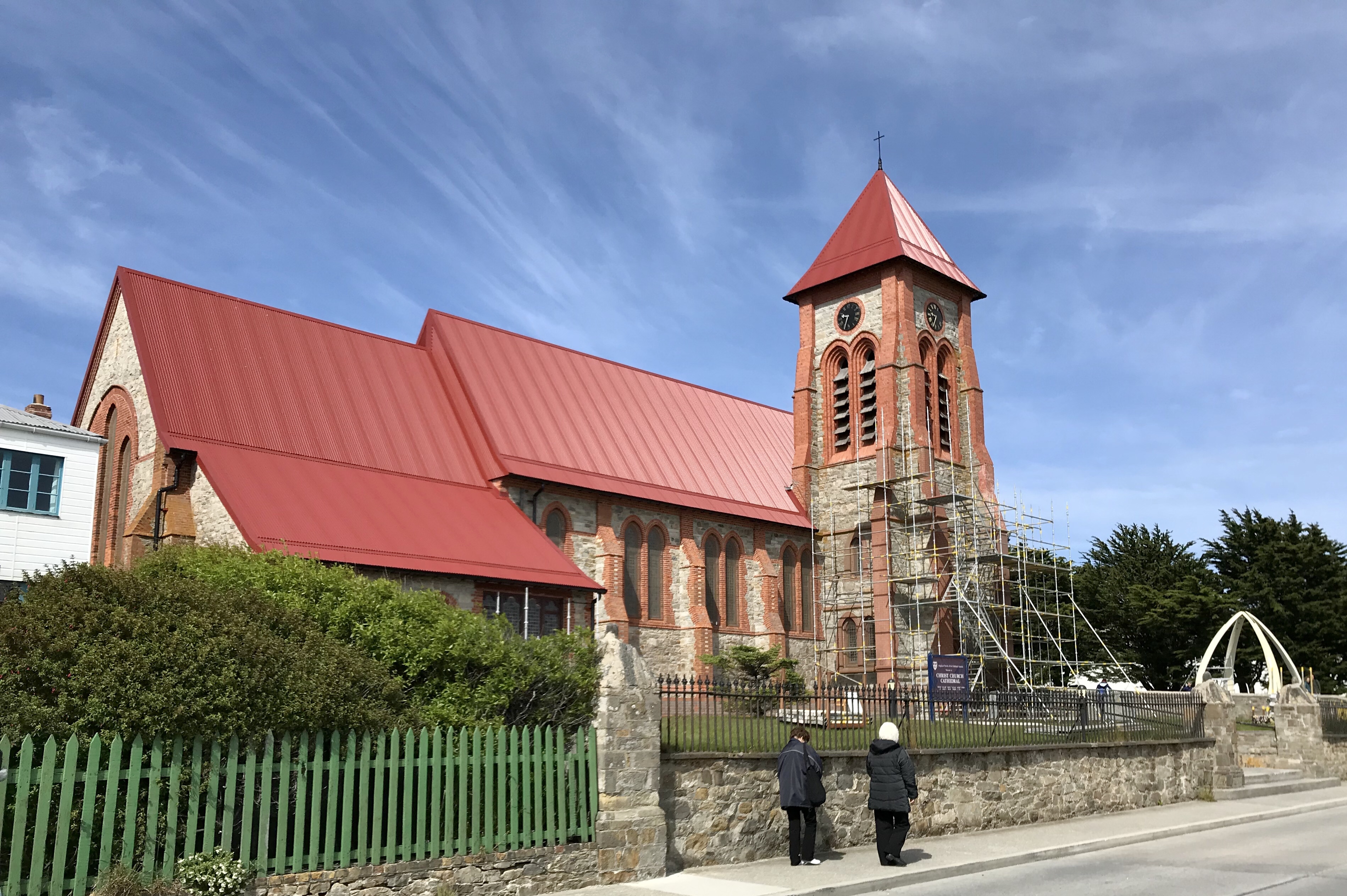
Next stop the Anglican Christ Church Cathedral – the southernmost church in the world.
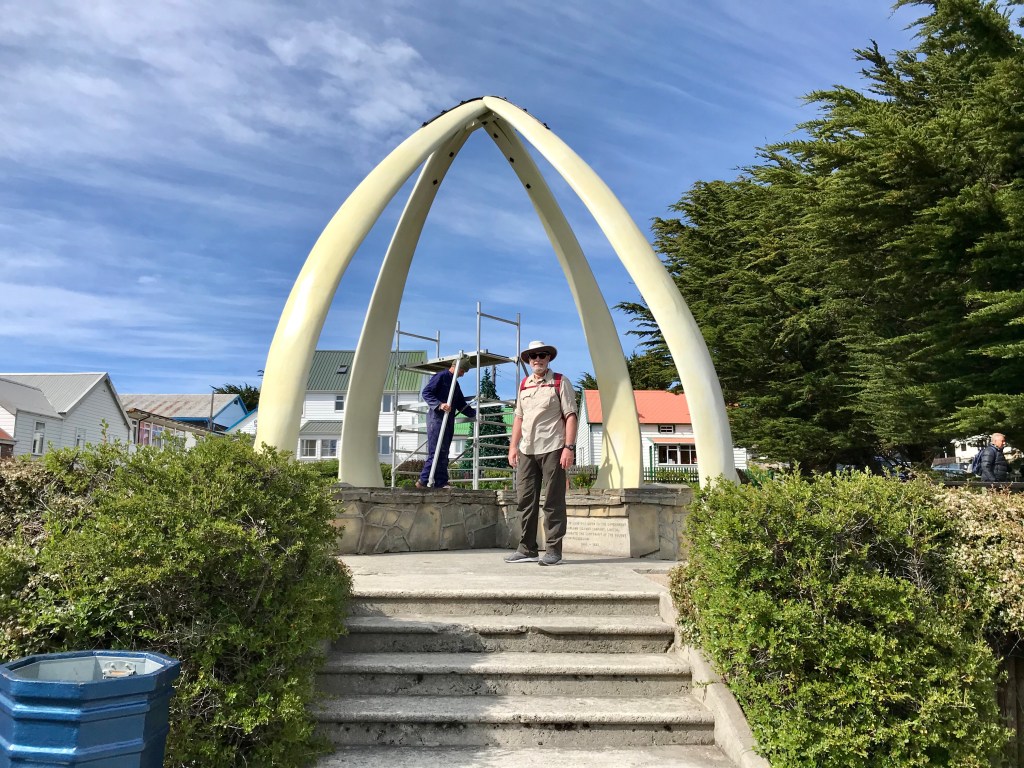
The whale bone arch is made from the jaw bones of blue whales.
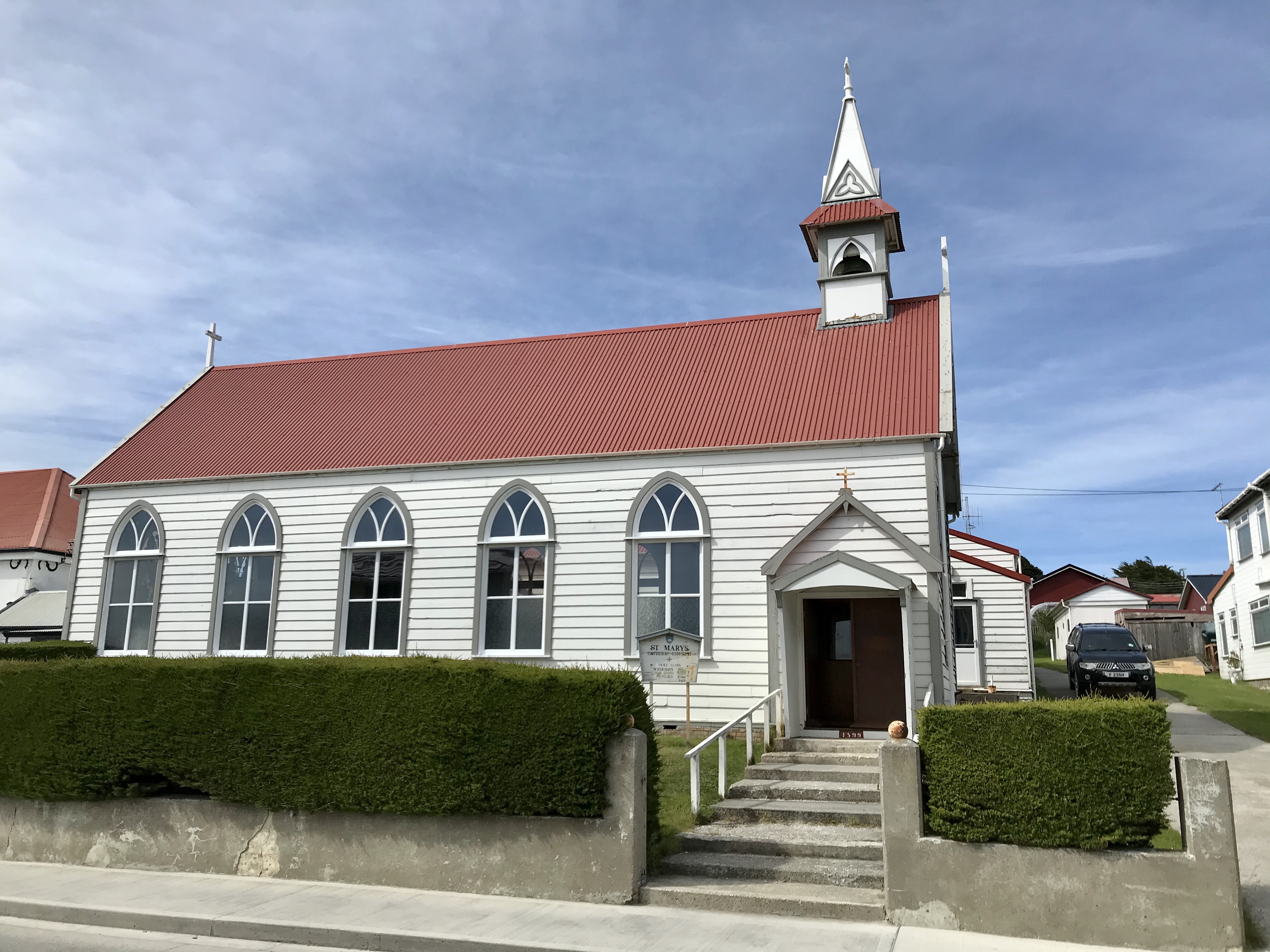
Not far away was the Catholic Church.
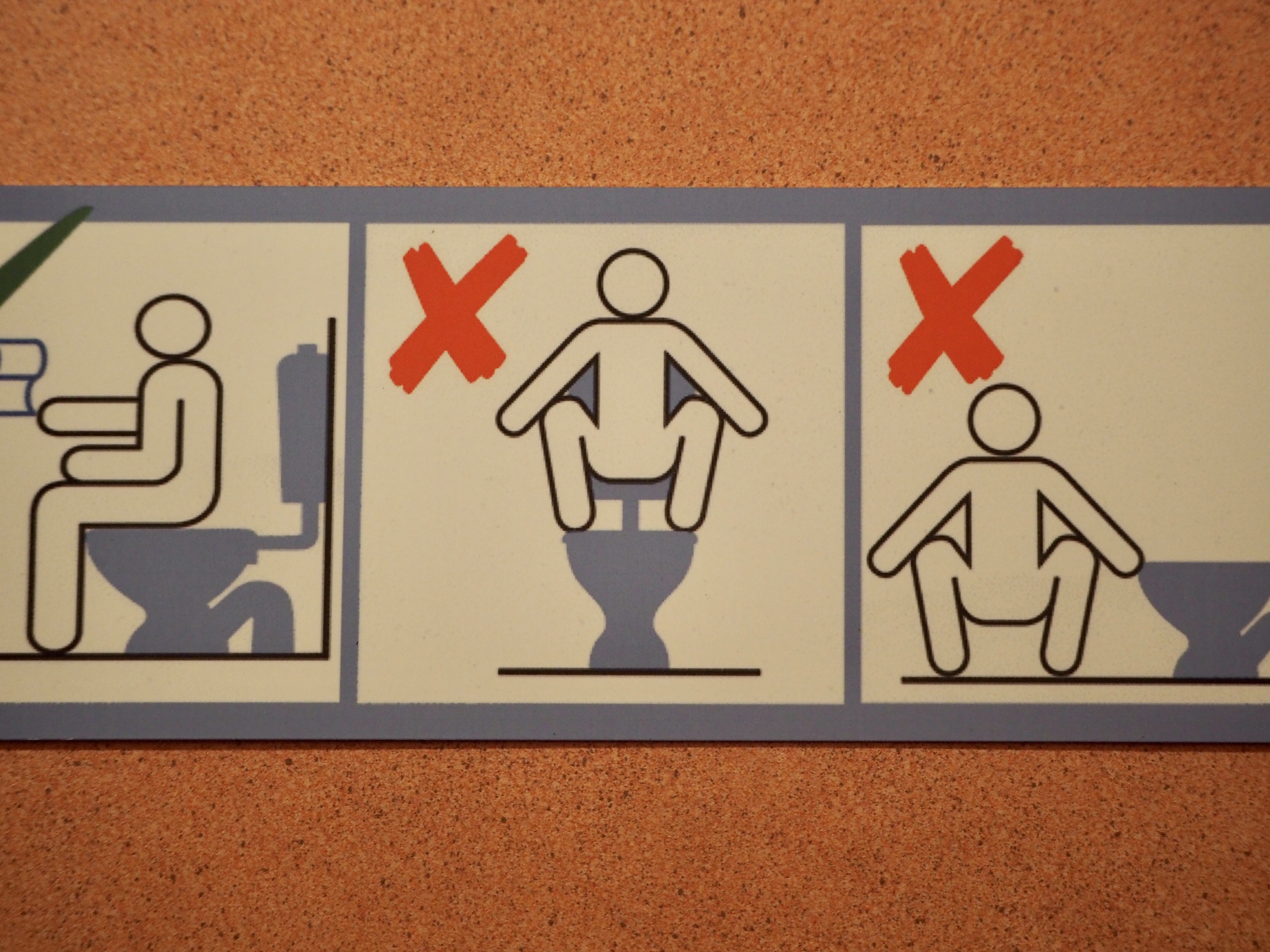
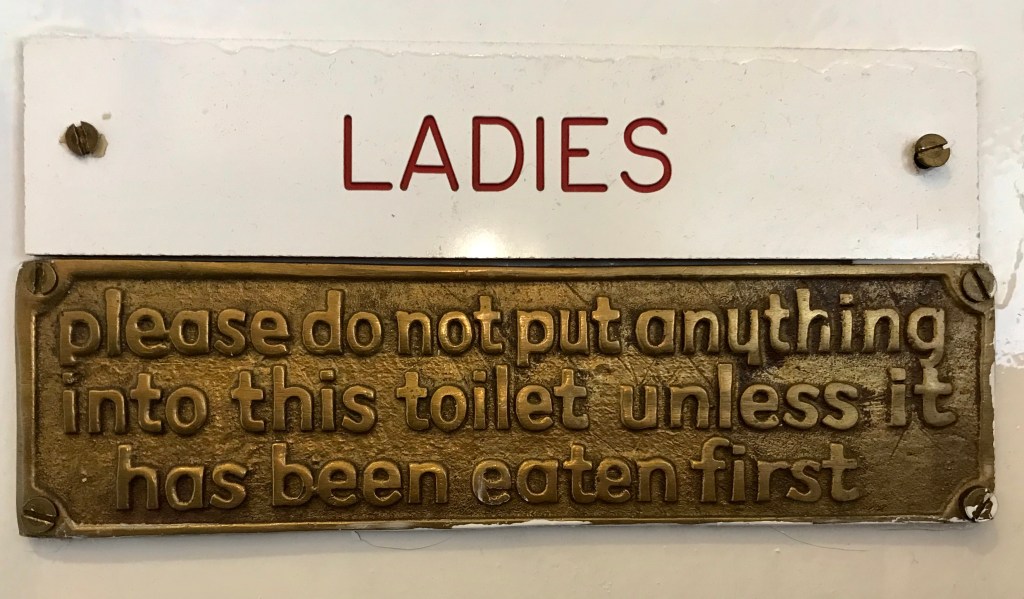
Today was also a day for interesting signs – mostly to do with toilets. Make of them what you will.
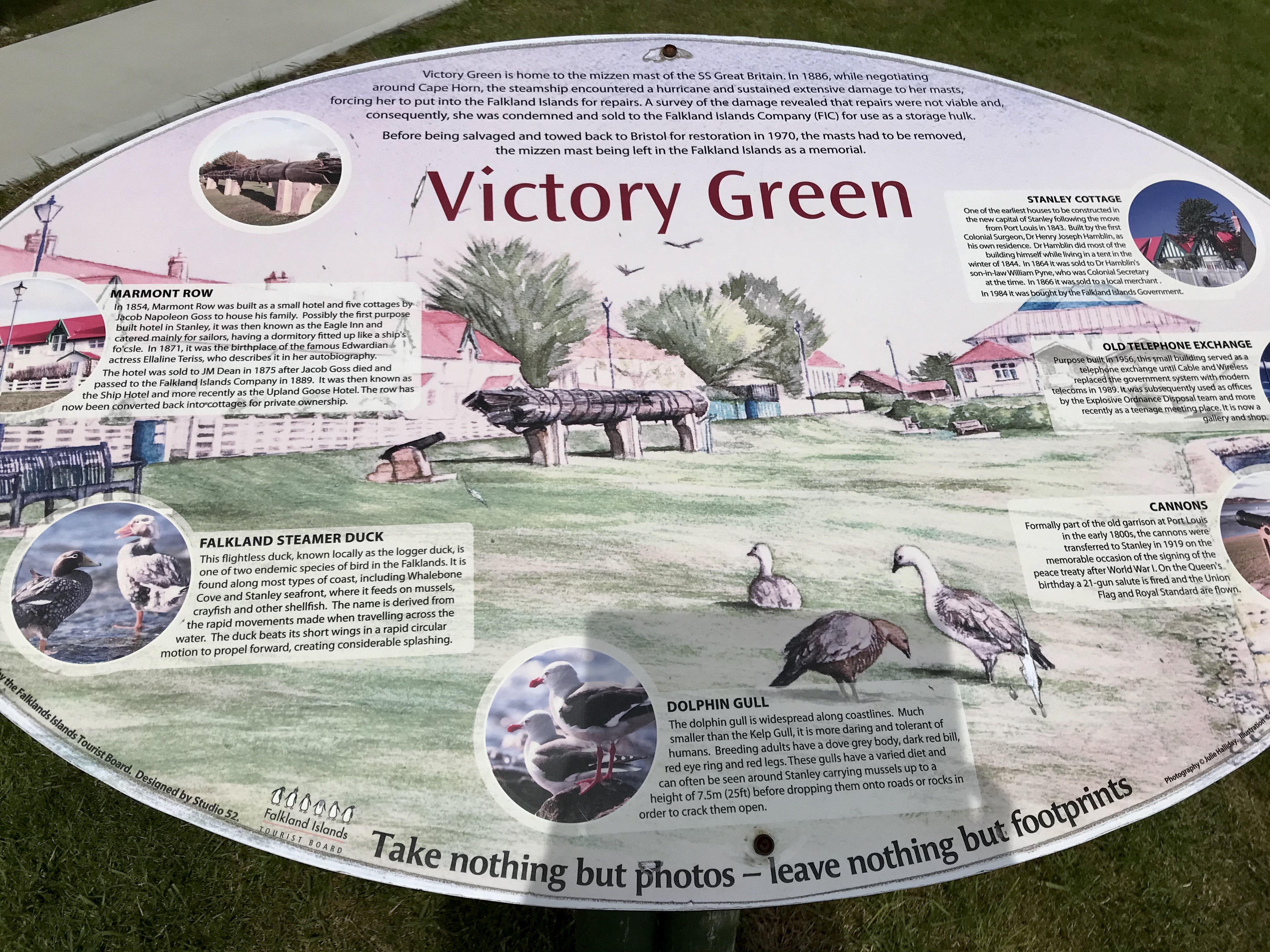
We headed to Victory Green.
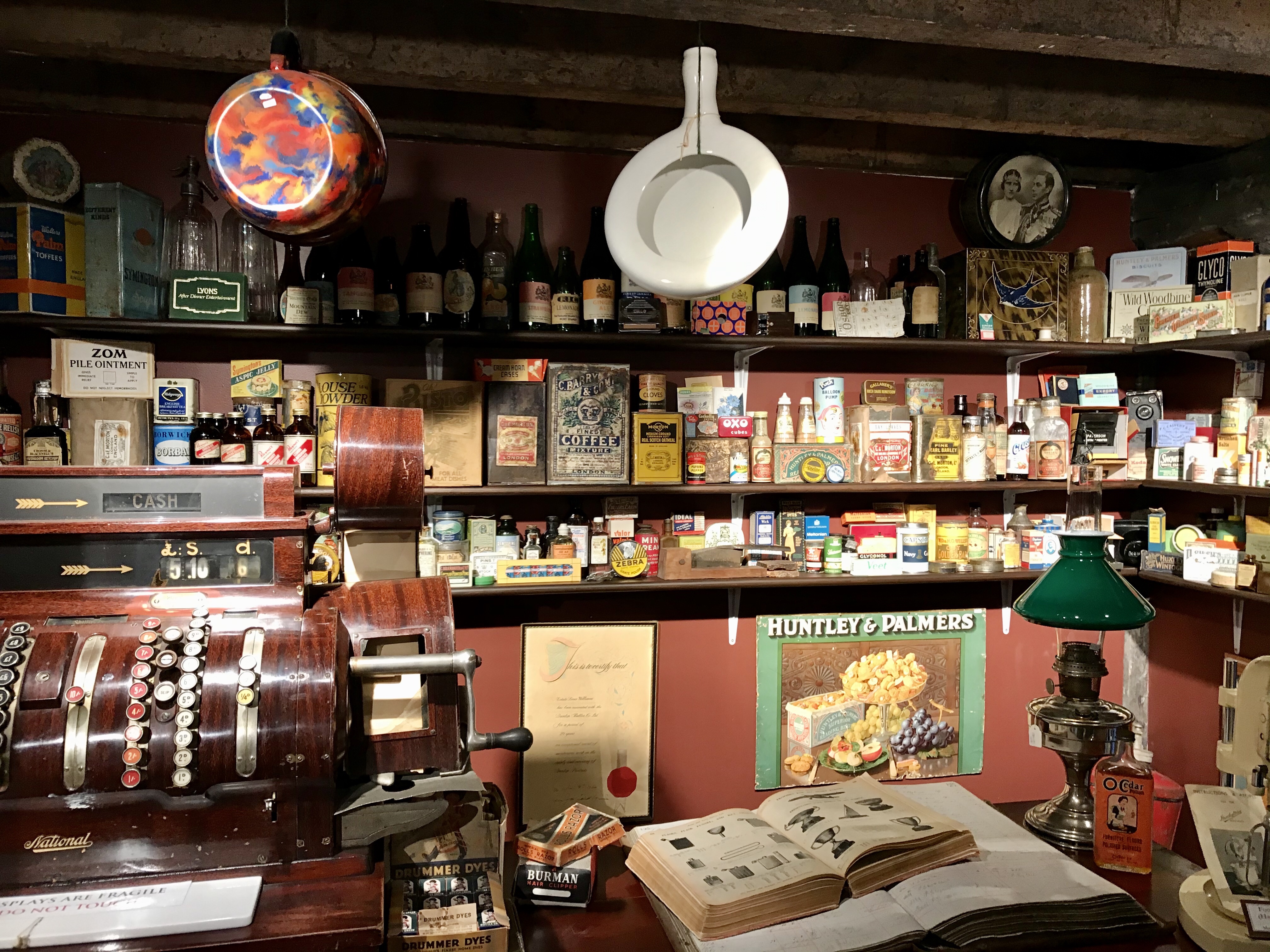
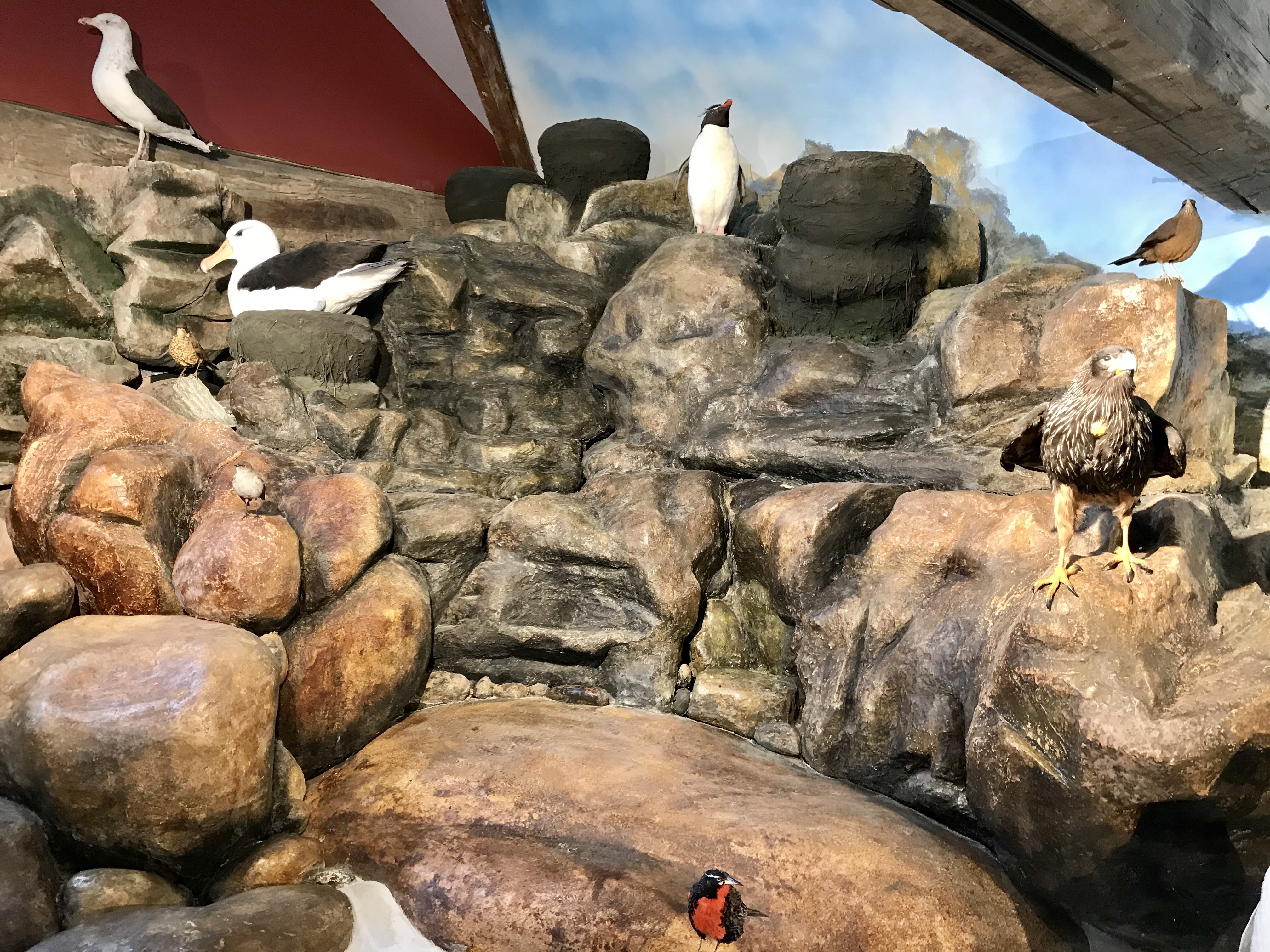
We spent quite a bit of time in the museum which covered the entire history, lots on the Falklands War and even natural history.
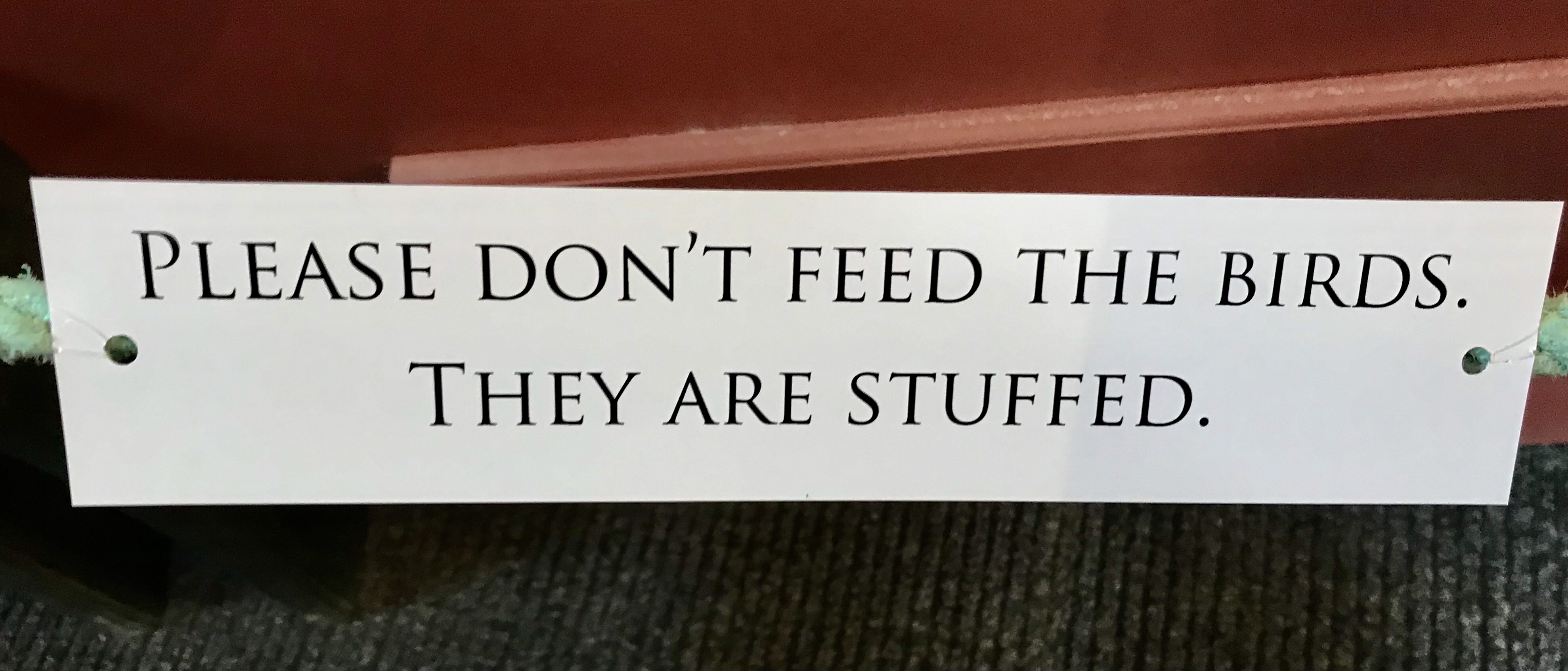
The bird display was excellent but the sign that went with it put me in hysterics.
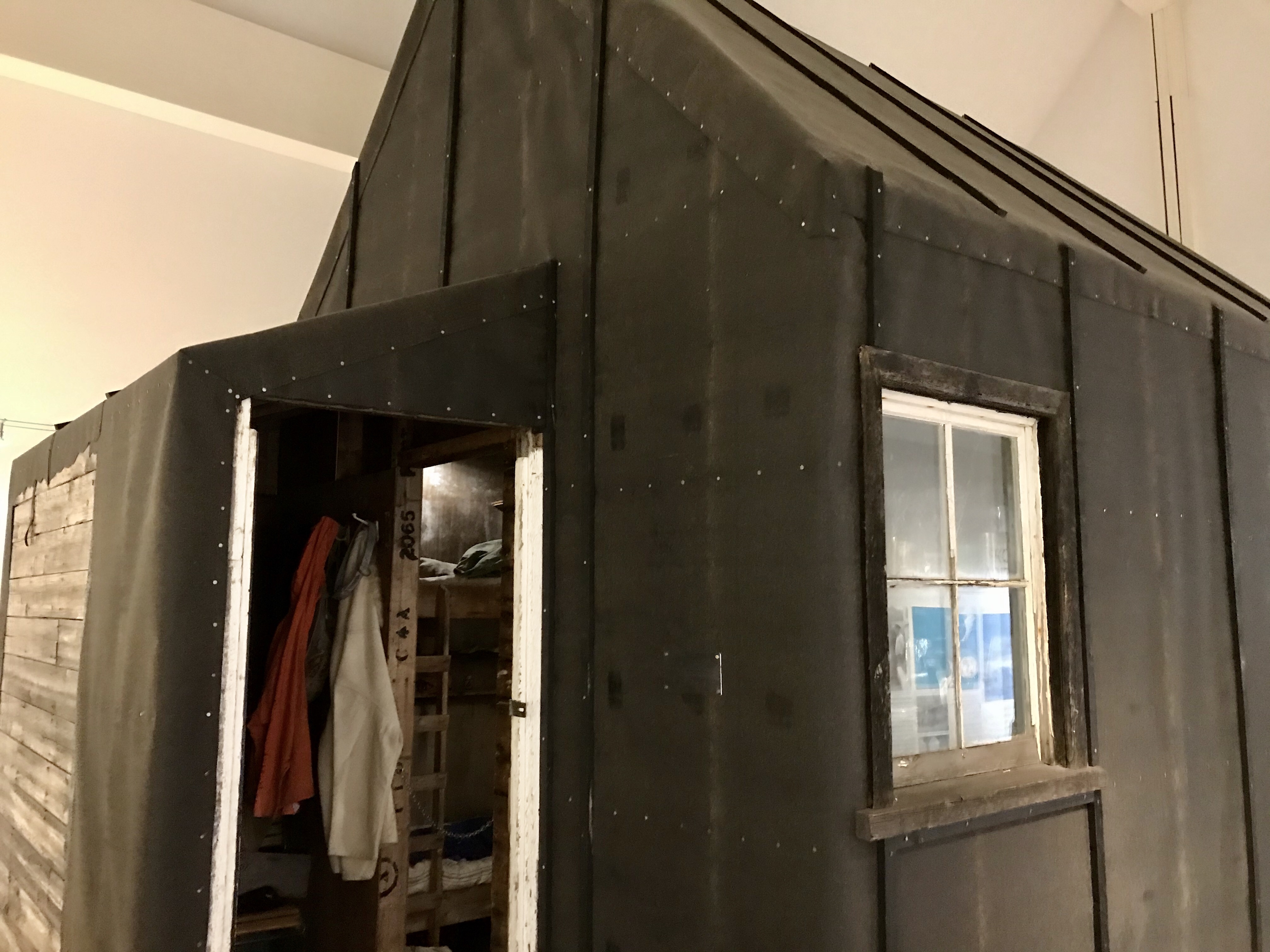
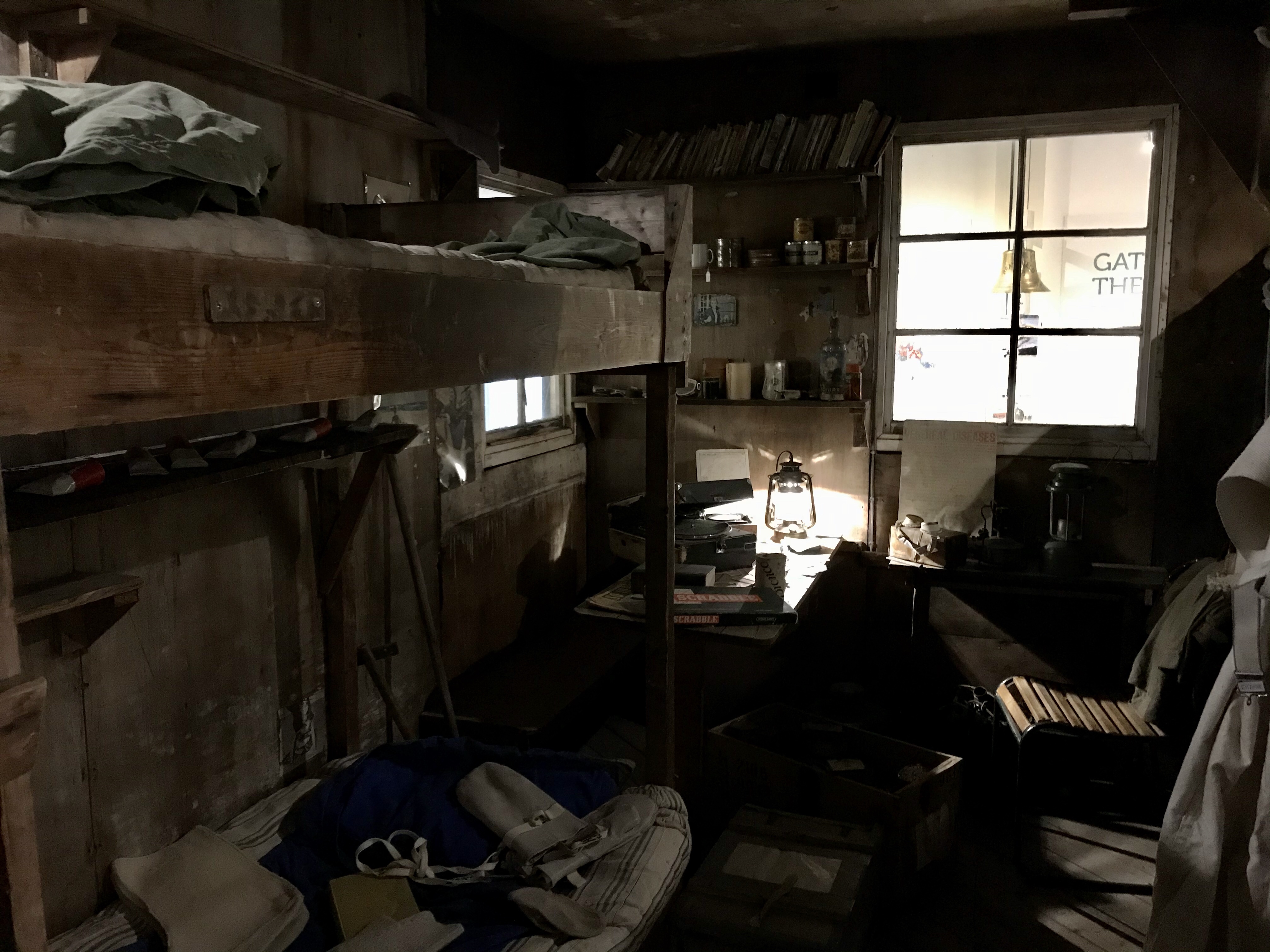
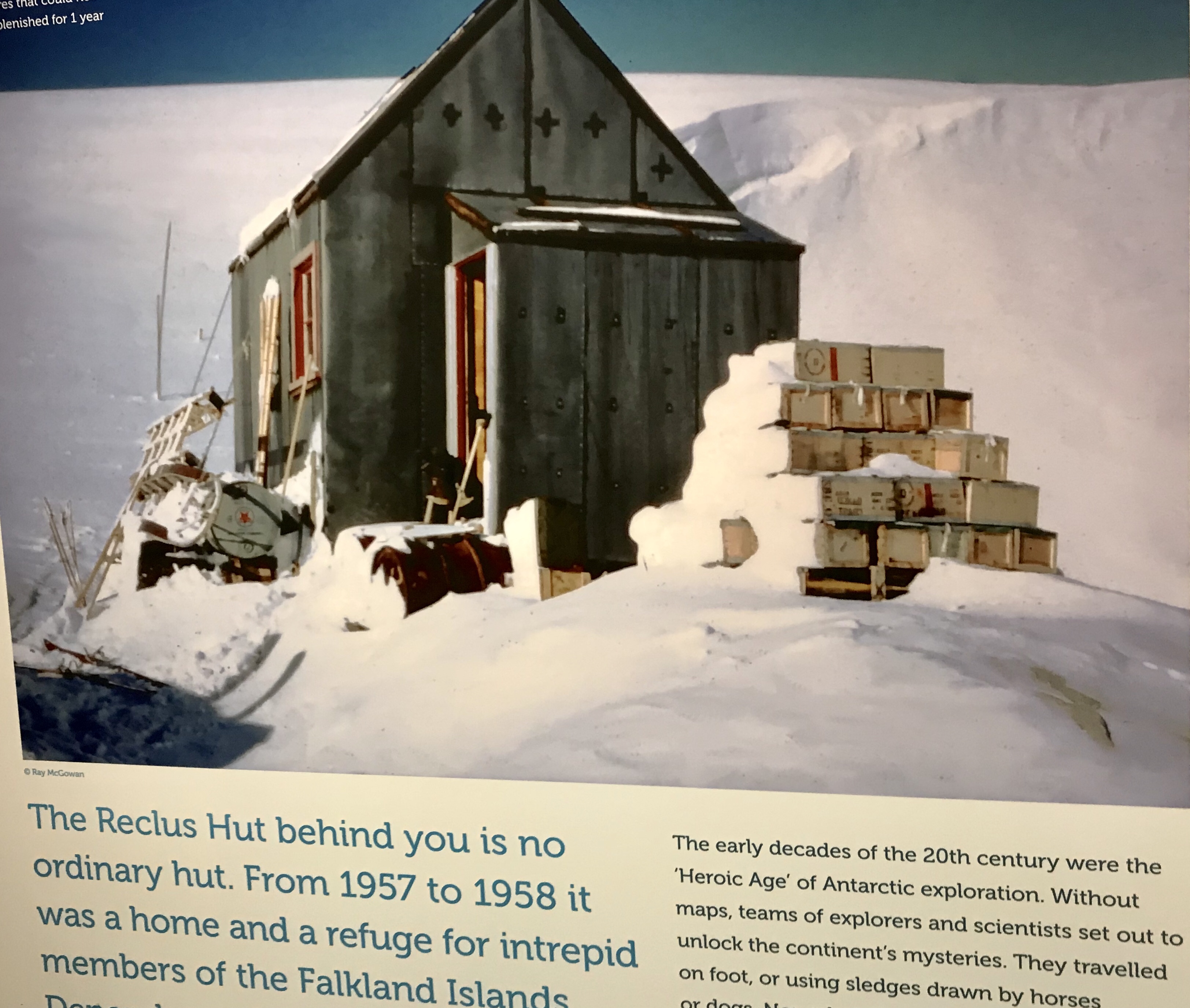
There is even a rebuilt Antarctic hut in the museum.
Back outside and here are a few places that caught our eye.
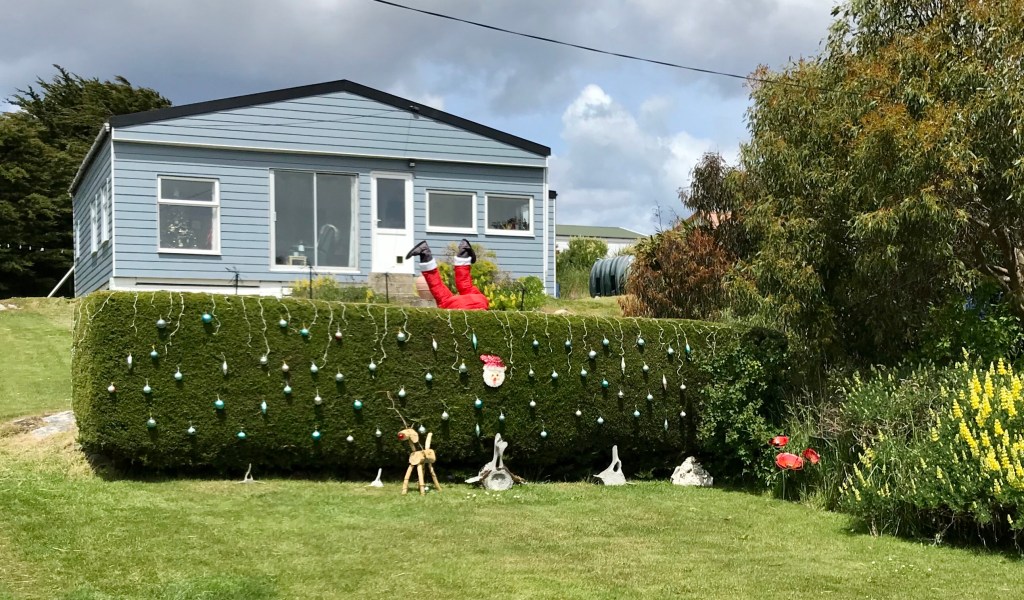
Christmas spirit wasn’t visible in many places, but those that had bothered had fun.
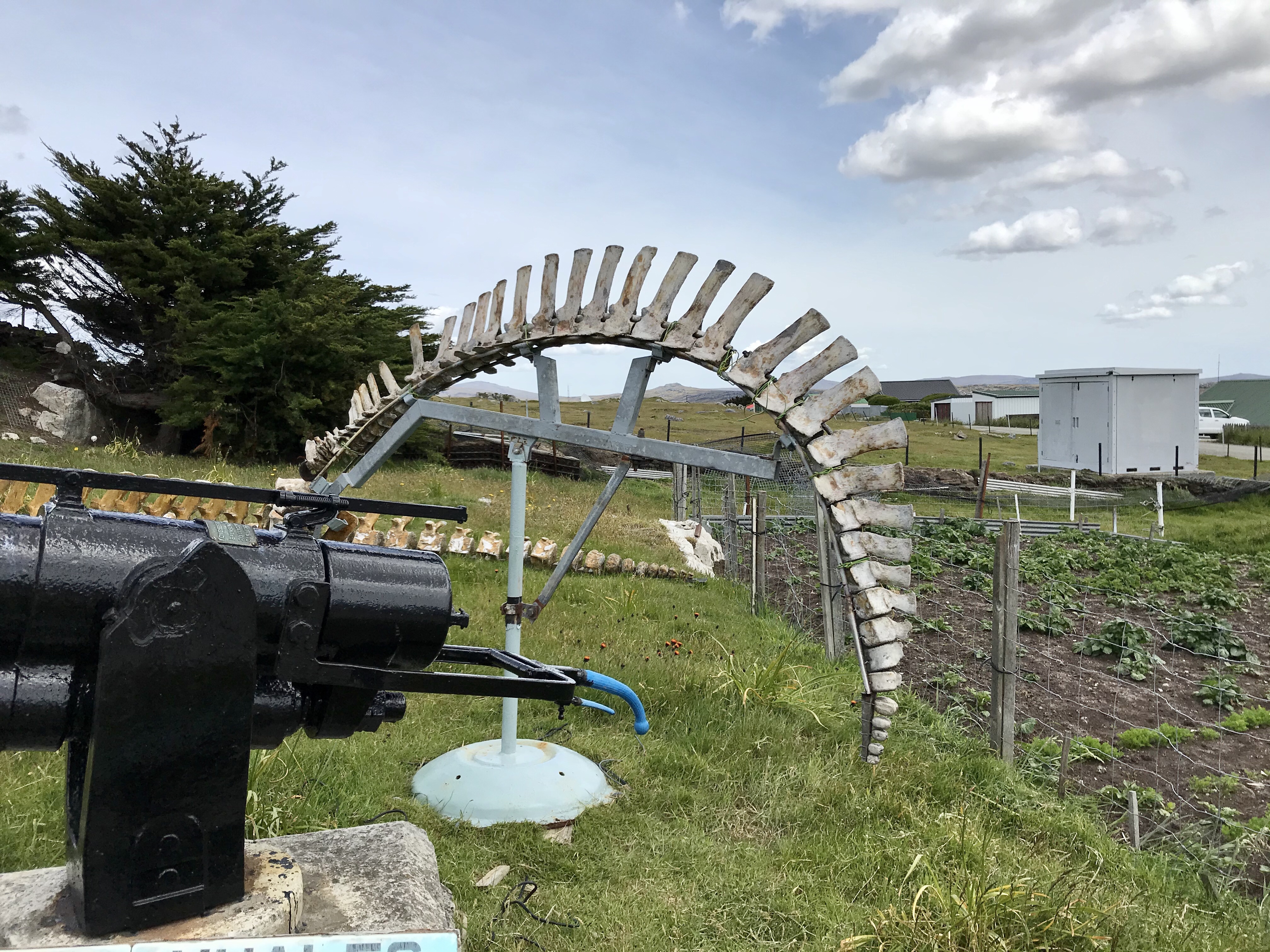
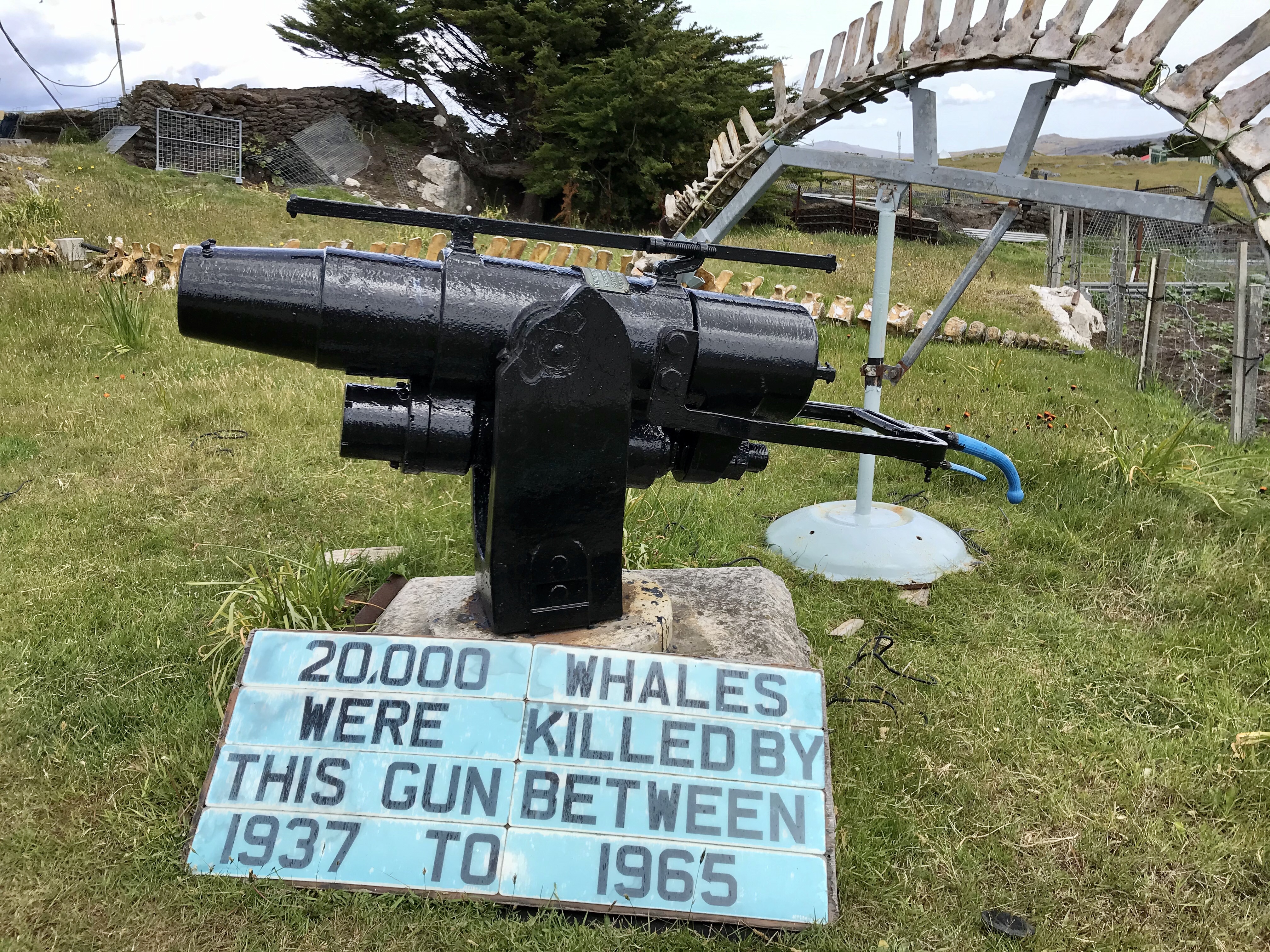
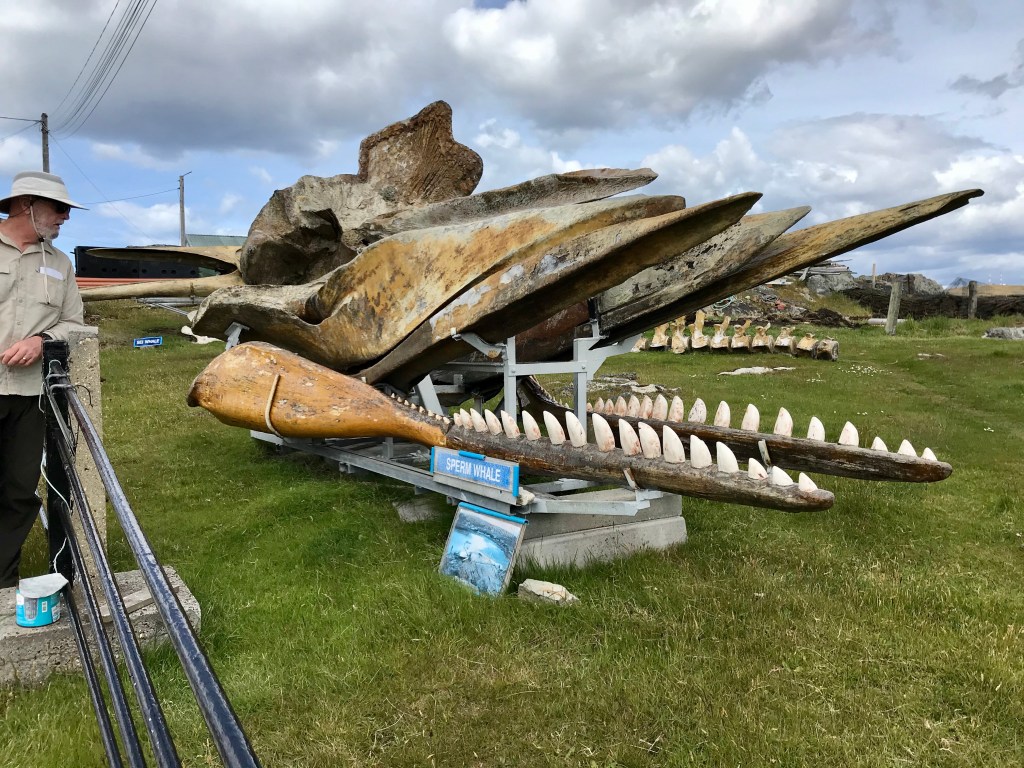
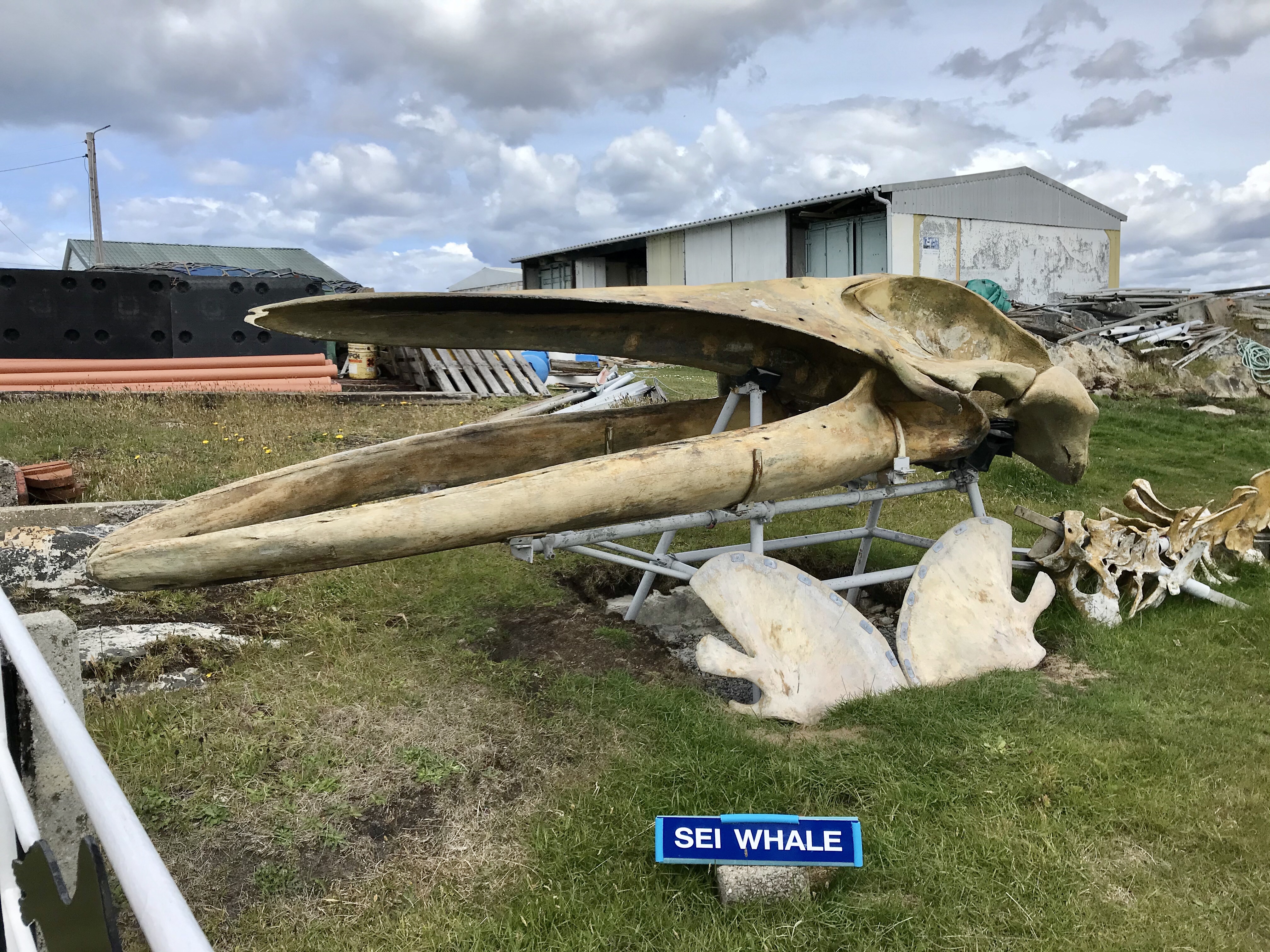
One resident has created a display of whale bones in an attempt to make people understand what we lose by whaling.
Interesting things in back yards here.
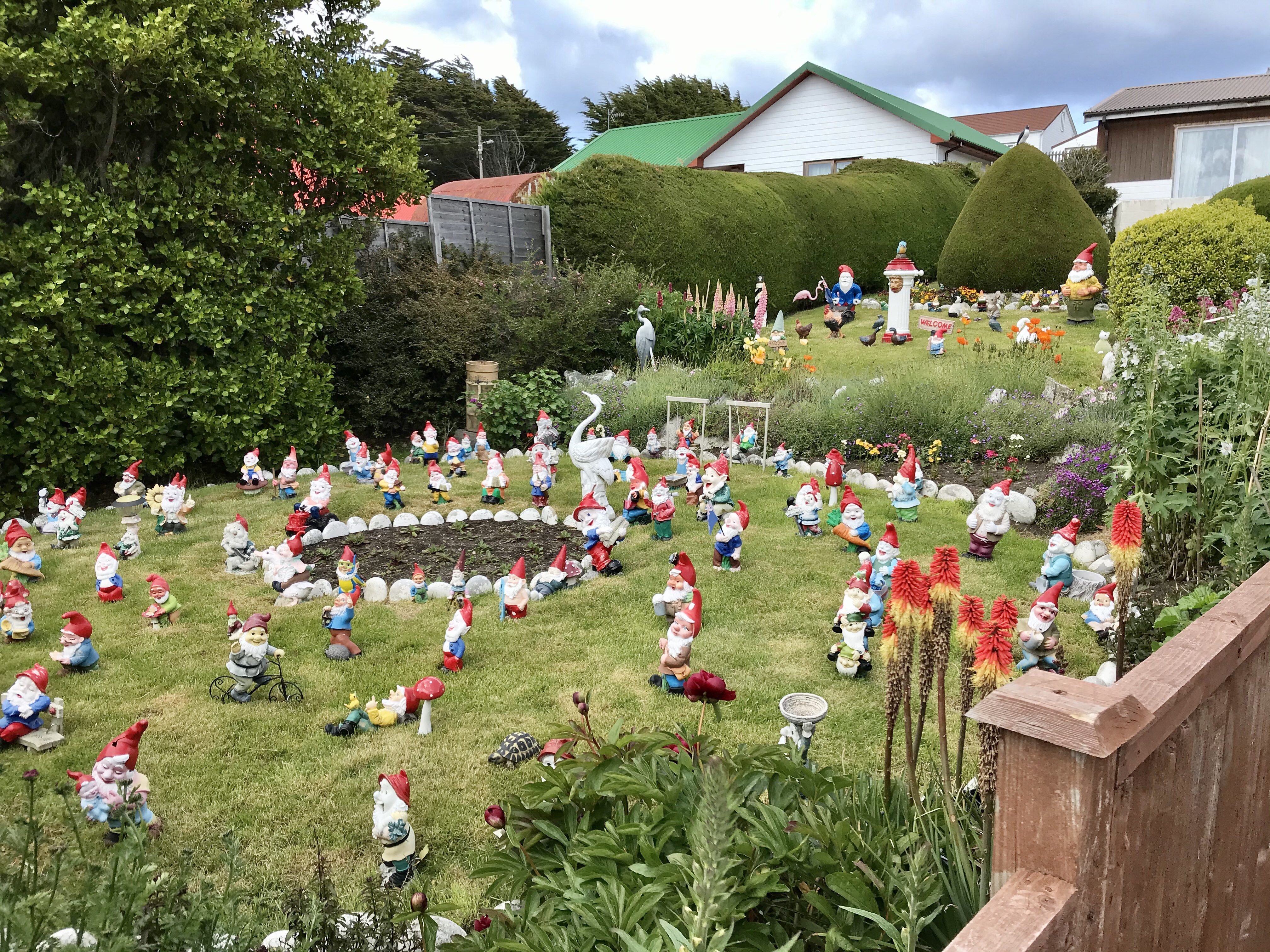
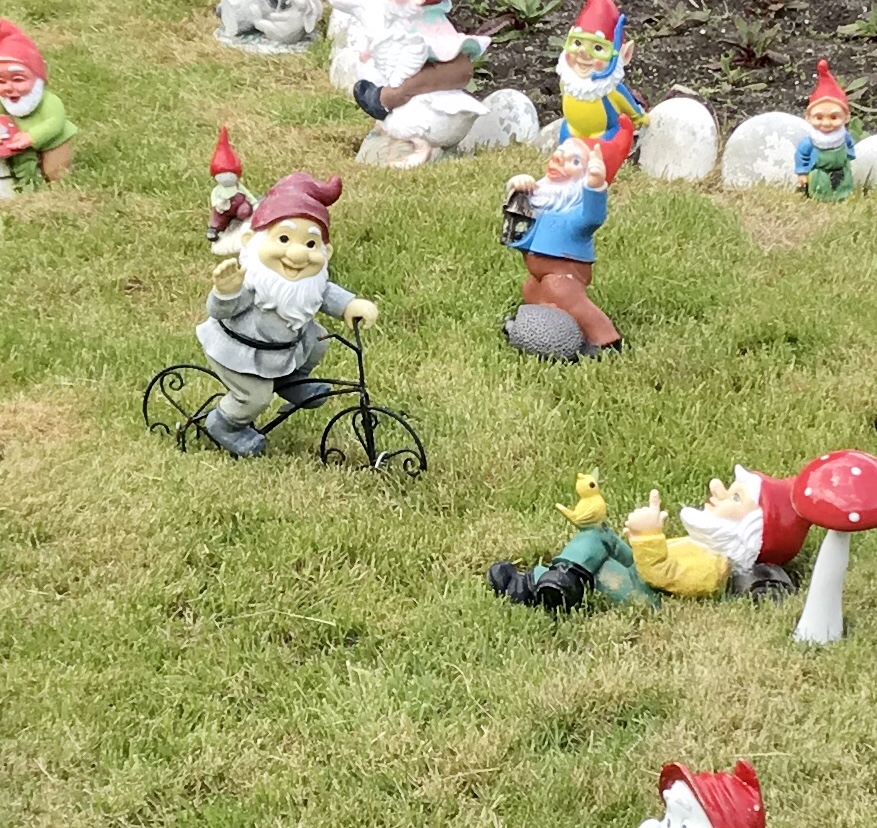
We had heard of the gnome garden so went looking for it. It was quite a find.
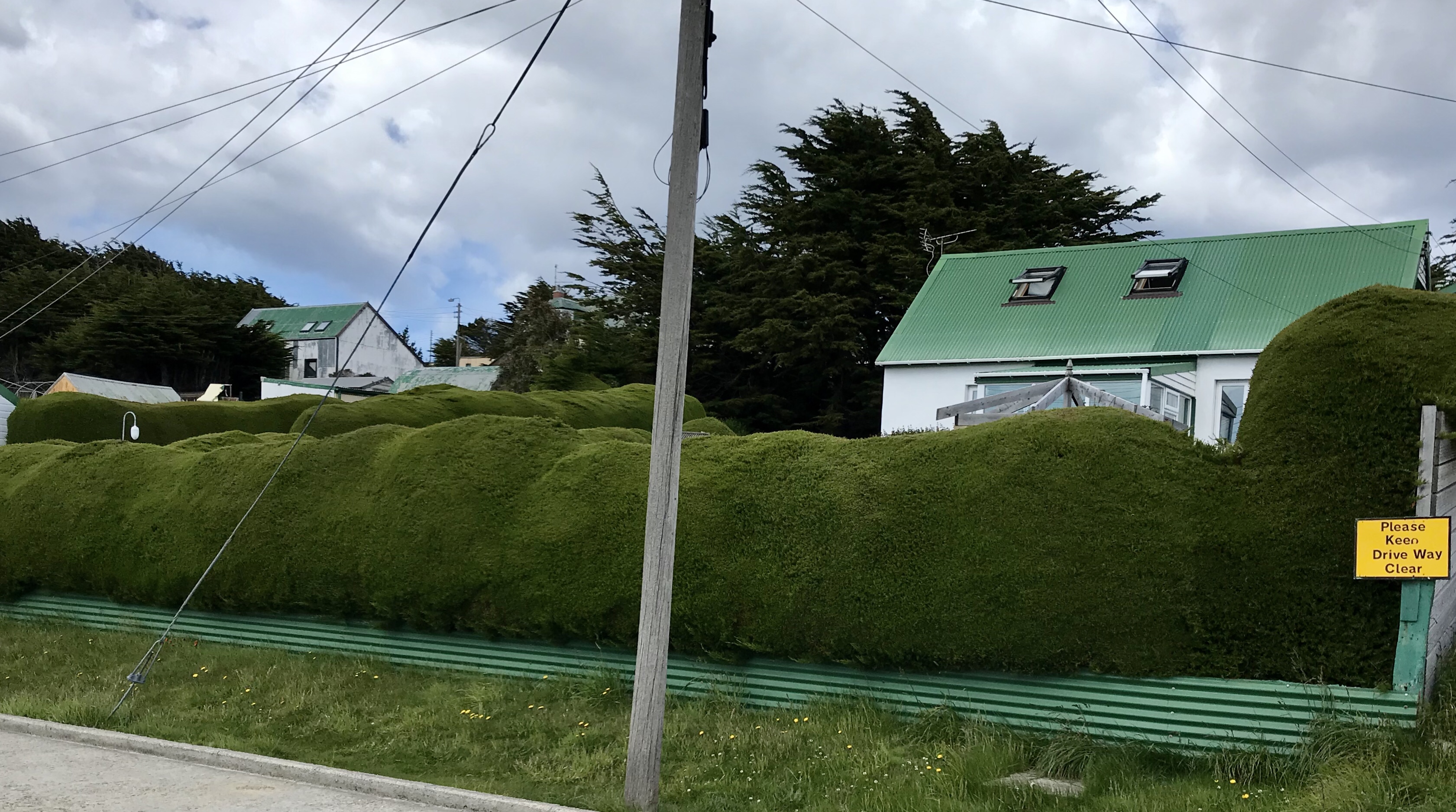
Interesting hedges.
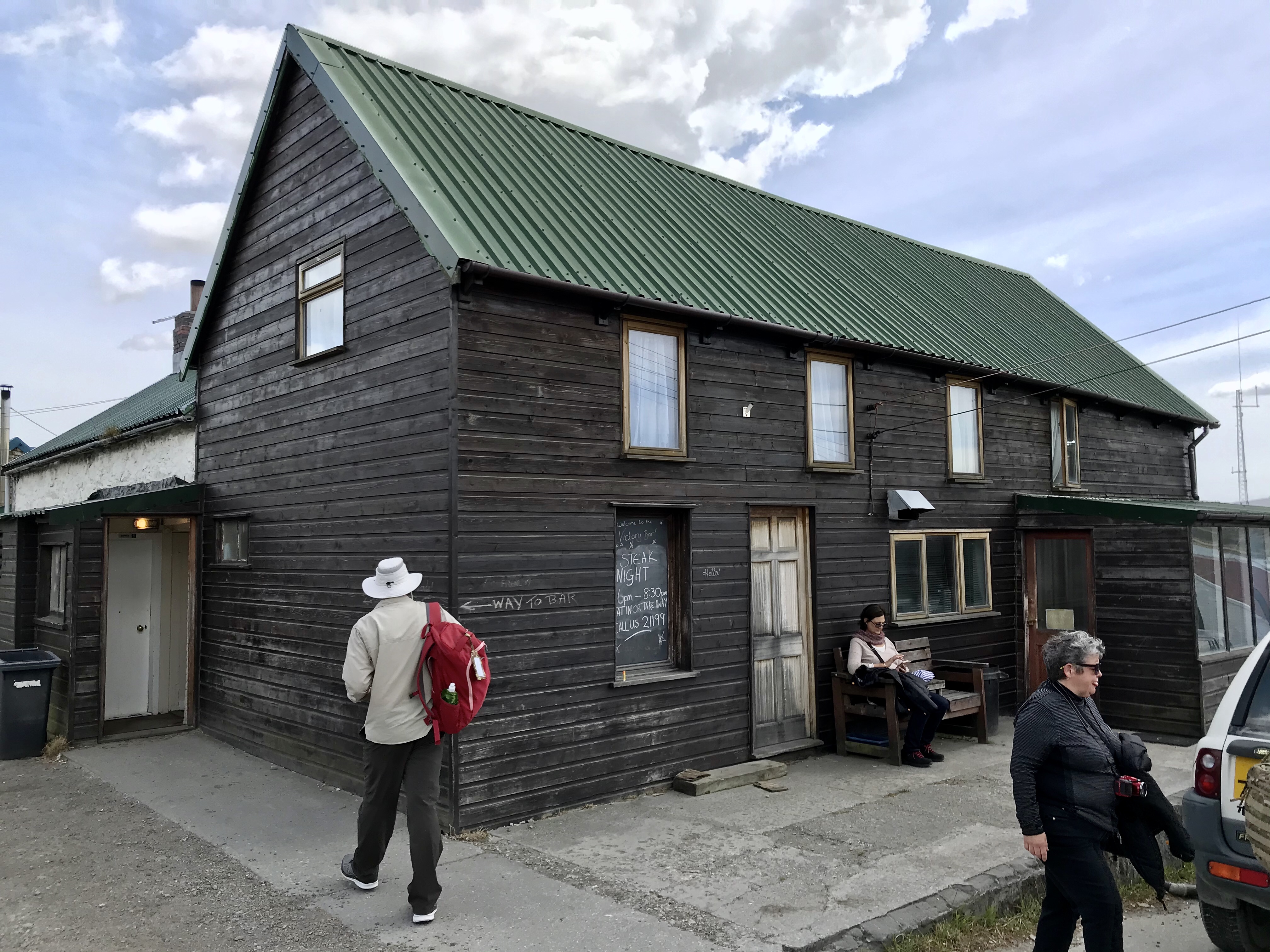
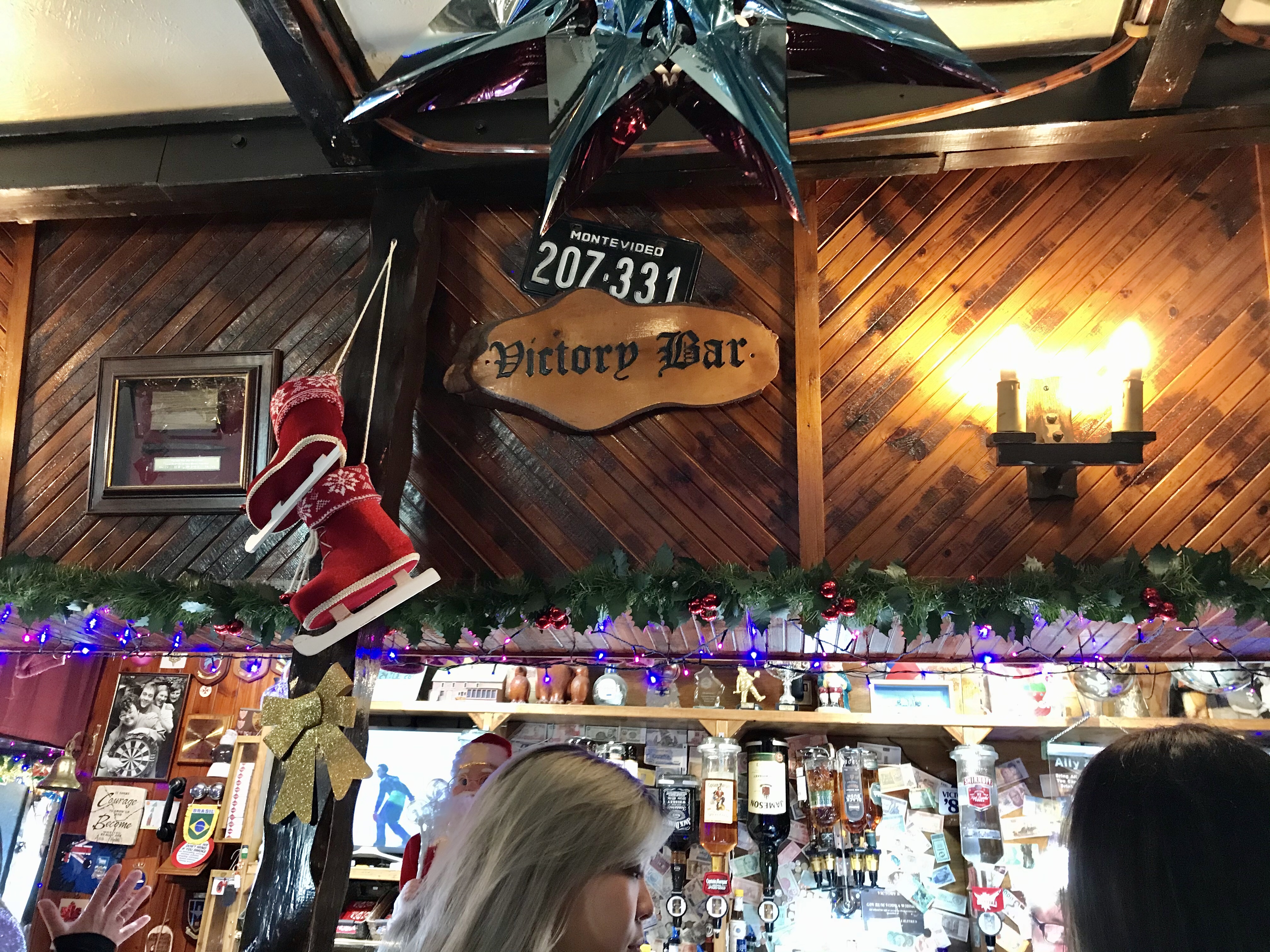
So time for lunch, fish and chips and the beer of the day. Not an obvious pub from the outside.
The beer rated a 3.5. Let’s face it, Garrie really is a lager man. Seems I was too busy chatting to new friends, Cheryl & Mike to take a pic of the fish and chips which were great.
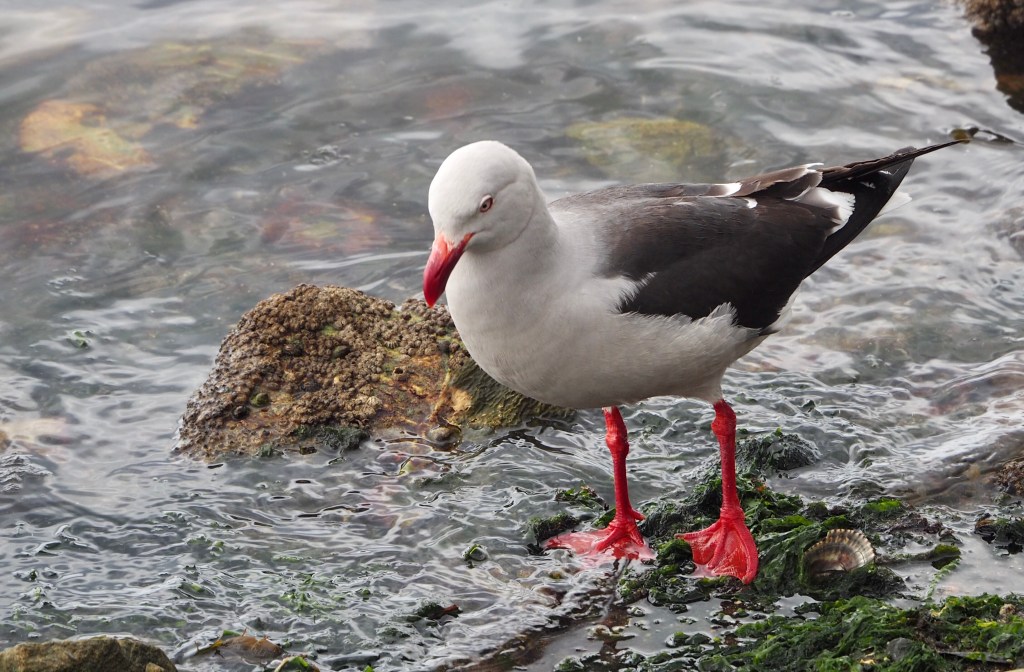
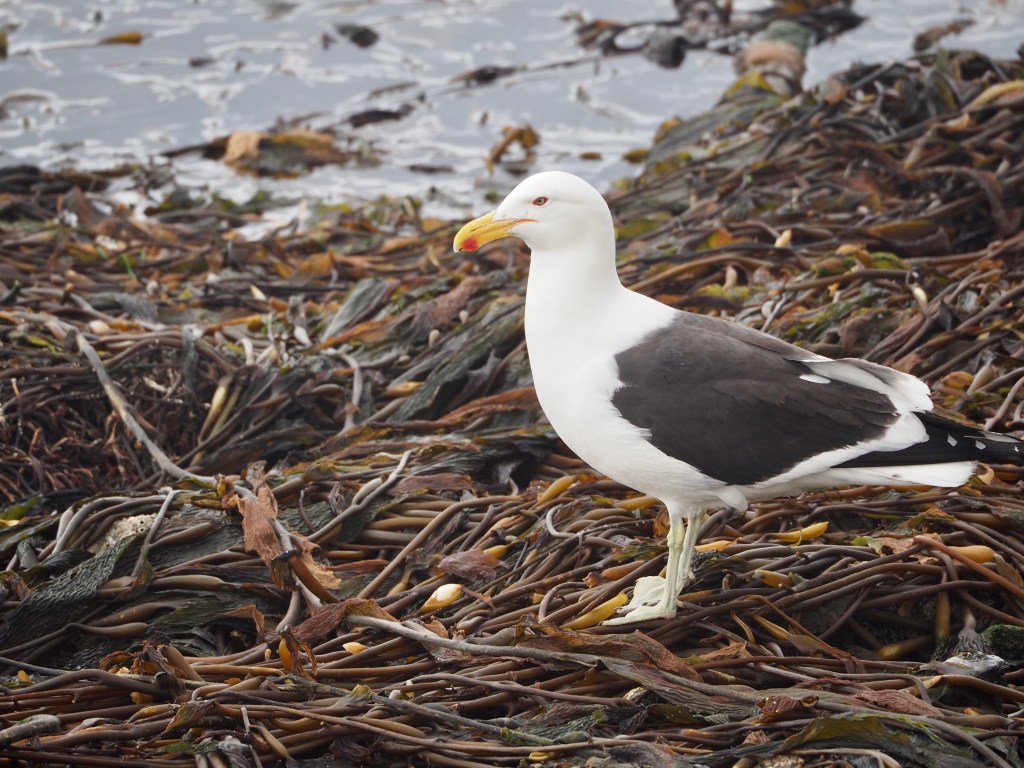
A couple of seagull types on the way back to the ship.
Dolphin GullKelp gull
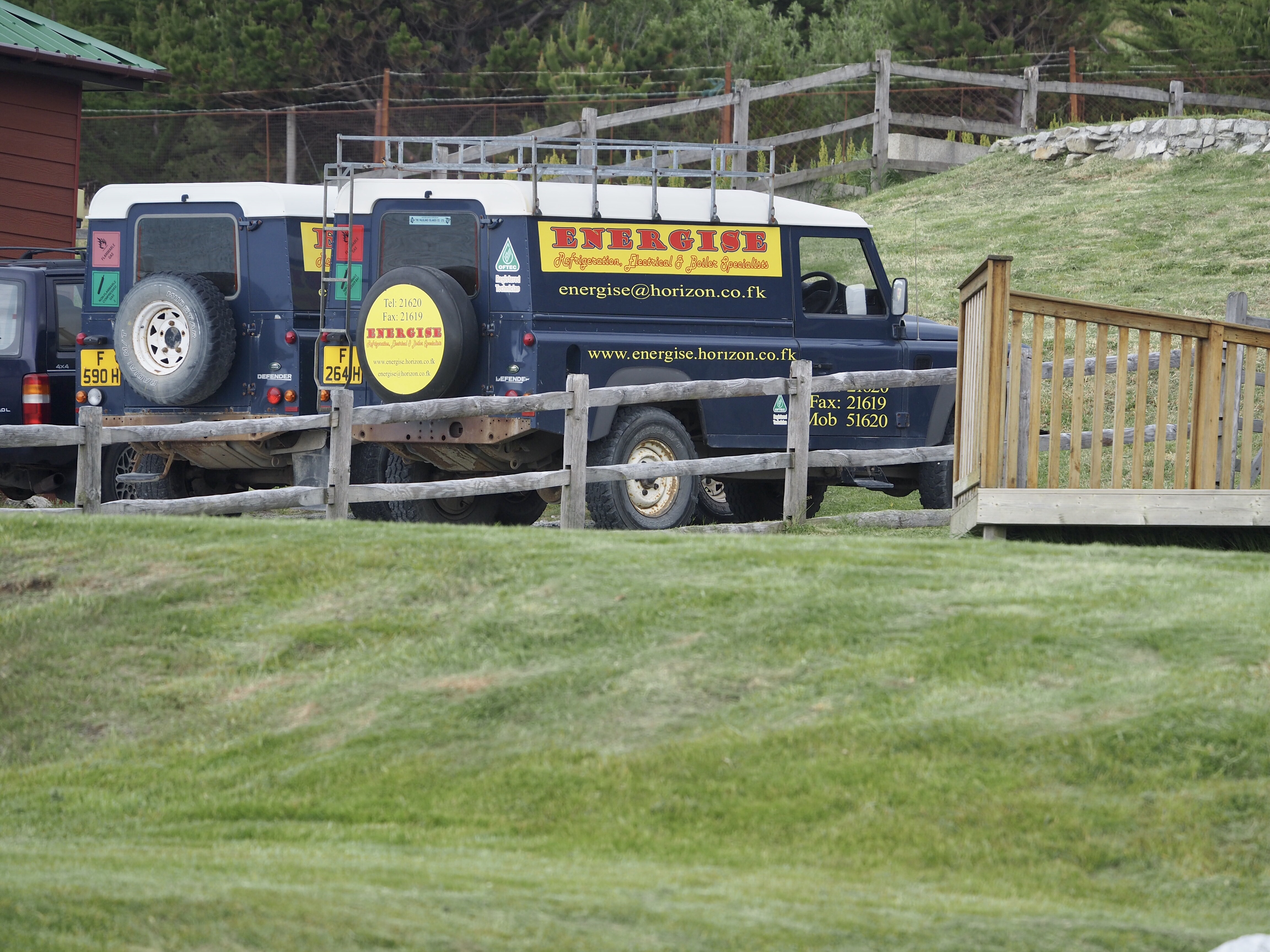
Oh and Dad would be thrilled by the number of land rovers on the island.
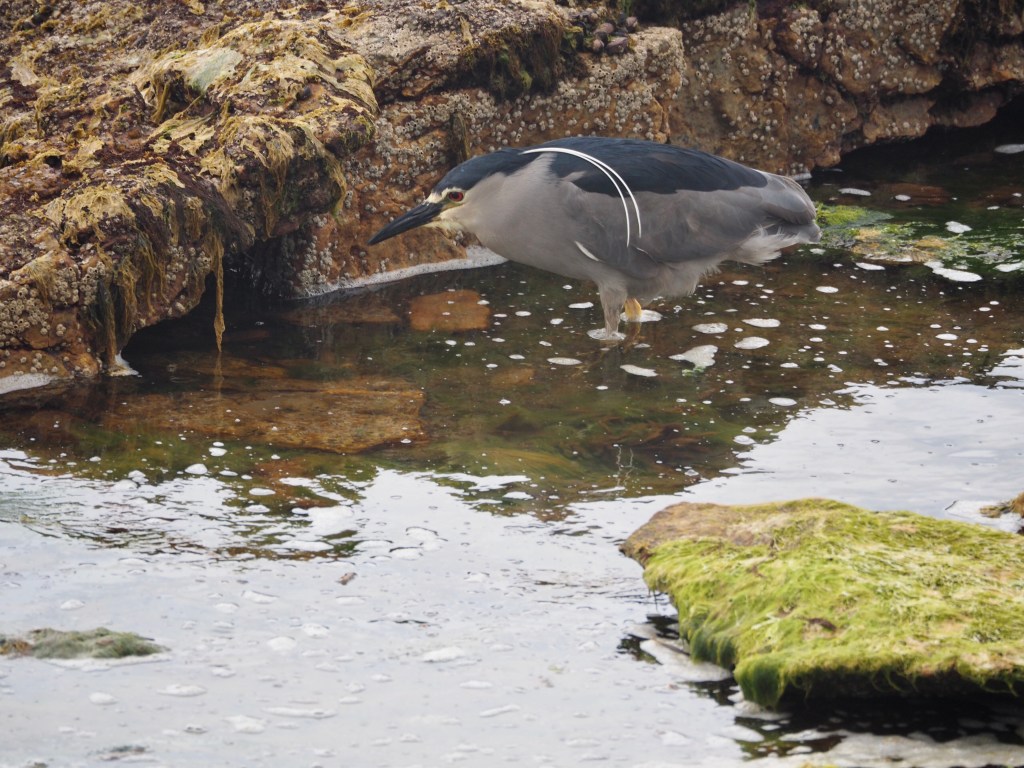
We also spotted a night heron. We certainly did some steps – well over 18,000 by day’s end.
Back on board, sorted photos again and then another afternoon craft session for those creating hats for this evening. I did need one or two bits to complete my Antarctic version of the Aussie cork hat.
Movie about the Falklands was shown in the lounge. A BBC 4 program – The Falklands Most Daring Raid. It was about the long distance raid – in fact the longest distance bombing raid in history – that disabled the runway in Stanley, stopping the Argentinians using the runway to attack the British Fleet after they had invaded the Falklands in 1982. Good documentary if you can find it. Popcorn was provided and also Falklands brewed beers available. We are looked after well but feeling pretty tired after such a big day.
We were told by a passenger that the cruise prior to ours had had an unbelievable experience. A group in a zodiac were watching an orca chasing a penguin when suddenly the penguin landed in the zodiac. Wow. I haven’t had this confirmed but what an experience that would be.
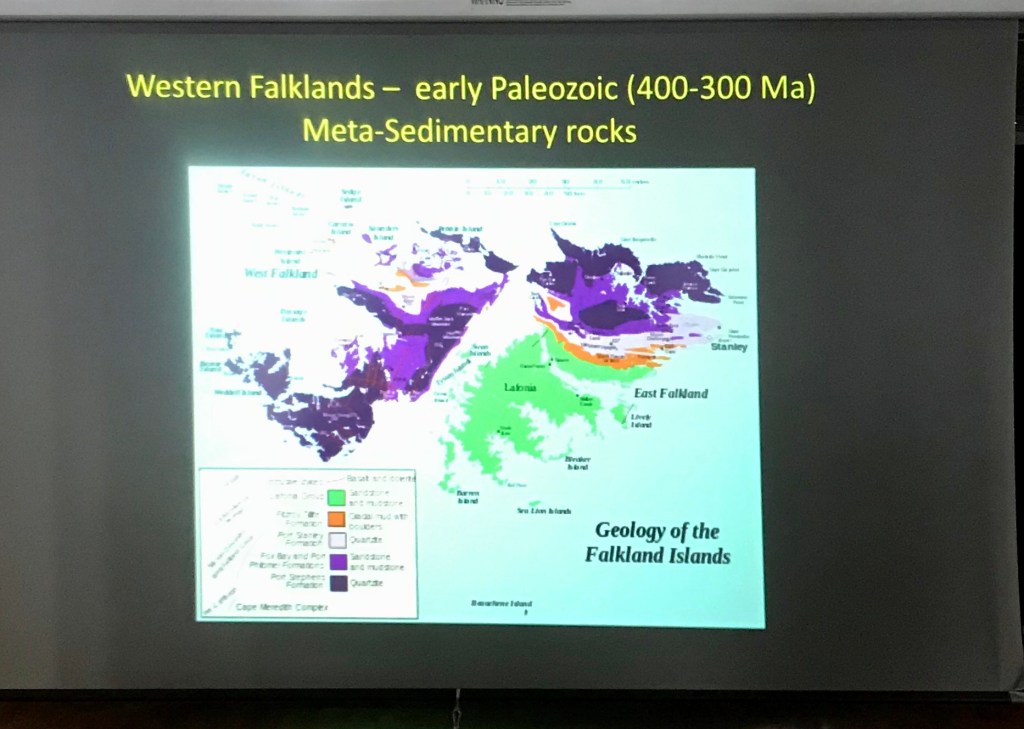
Time for the daily recap and briefing. Austin on rocks (thought of you Rod). Plate tectonics. The Scotia Plate. Pangea supercontinent. Falklands originally part of Africa. Fascinating stuff – took a pic for you Rod.
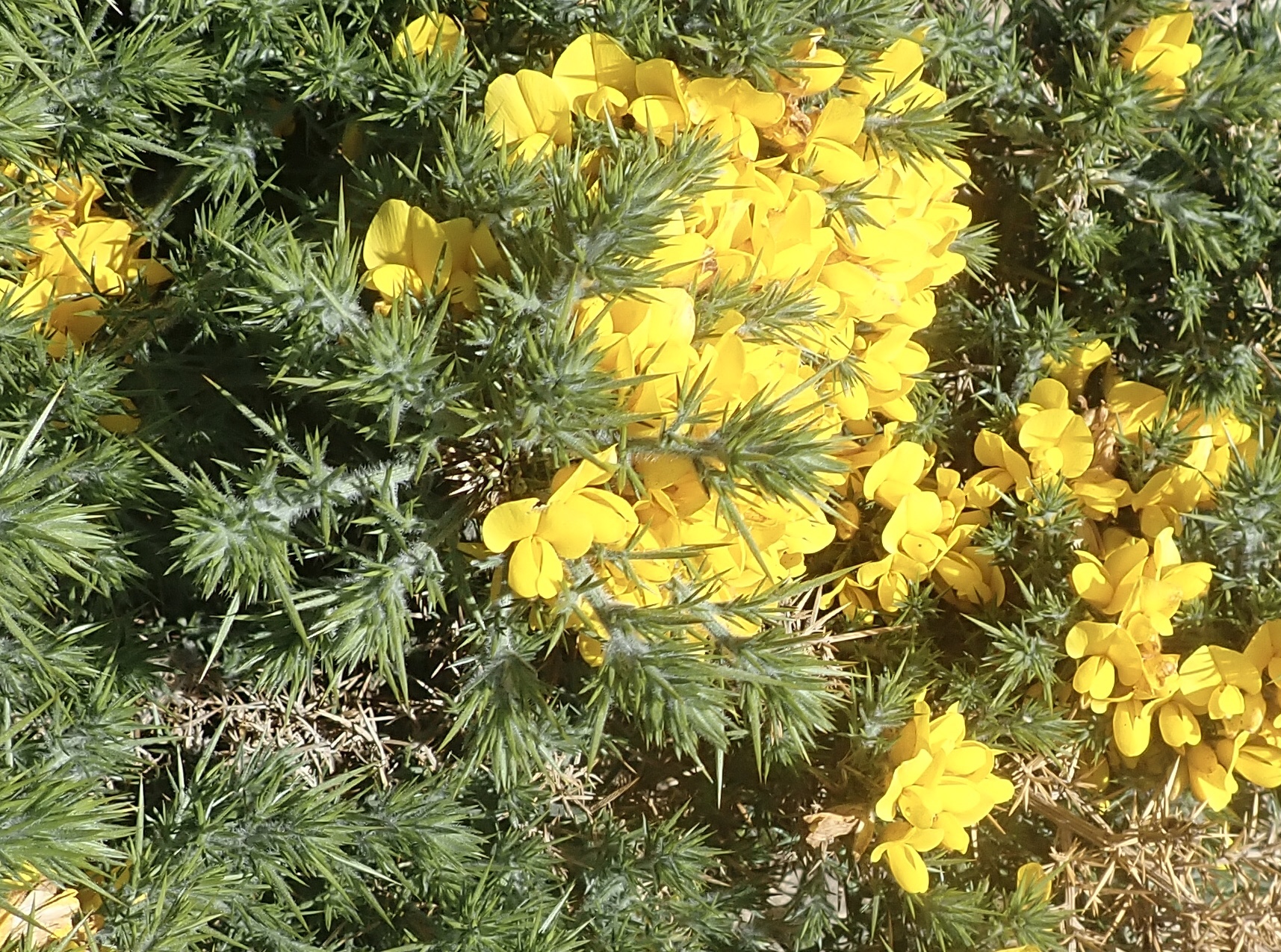
Rock hoppers love quartzite. Then DJ on plants. 348 species on the Falklands (177 introduced). Yellow gorse introduced. Marram grass (introduced). Tussock grass – native – yesterday afternoon. Up to 3m tall. Fabrice. Talking penguins. Sealers used penguins as a substitute for firewood. Then used for oils. 250 skins made only a small amount. The great auk was killed out. 3 million penguins killed. Stopped about 100 years ago after the great auk became extinct.
Claire geopolitics. Fishing the main industry in the Falkland Islands. Squid is big. 250 nautical miles from the islands is a British exclusive economic zone. The squid jiggers create bright light (which can be seen from space). 300,000 tonnes per year in illegal take which is more than the legal amount. Albatross with radar being used to try to stop this illegal fishing.
Finally our expedition leader Solan. 750 nautical miles to South Georgia. (900km). Tomorrow, (Christmas Day), there will be a deep clean operation to ensure we don’t transfer anything from the Falklands to South Georgia. Wind event moving past us. Should be gone by the time we get to South Georgia.
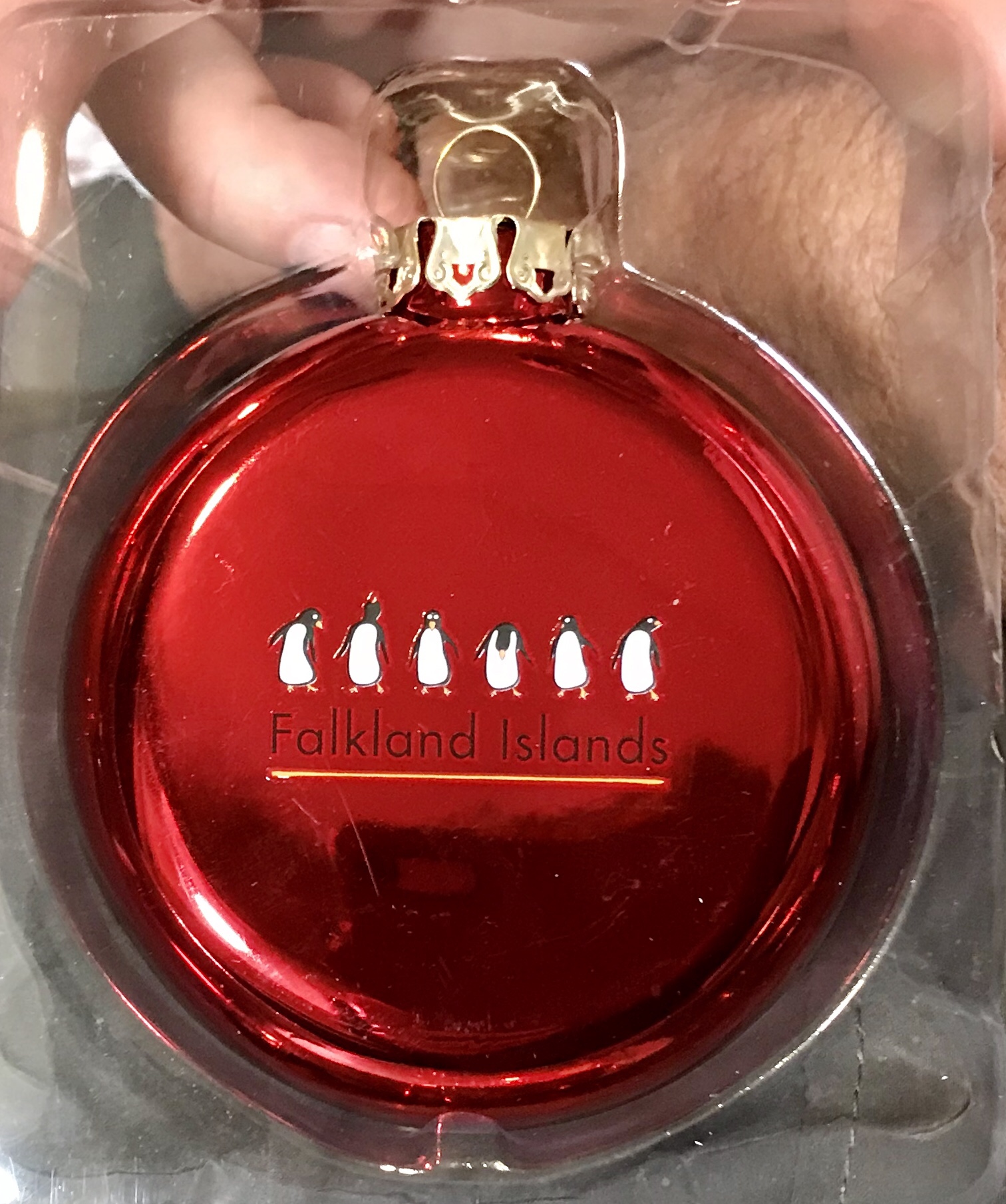
Oh I almost forgot that I picked up a second Christmas dec in the Falklands.
So now time for the Christmas Eve market dinner and hat competition. Still this post is already long enough so I think I’ll leave that until tomorrow. Ciao.
So I recall saying the morning excursion at New Island was a bit tough. Ha it was simply a warm up for West Point. As the blurb says: West Point Island is situated off the most northerly point of mainland West Falkland. It encompasses an area of 1255 ha (3,100 acres), and has a booming population of two people. A 2 km undulating walk will then take us from the settlement on the east side of the island to the Devil’s Nose and surrounding cliffs on the west side where black-browed albatross and rockhopper penguins nest. We plan to end of excursion with a final stop for afternoon tea, hosted by the island caretakers.
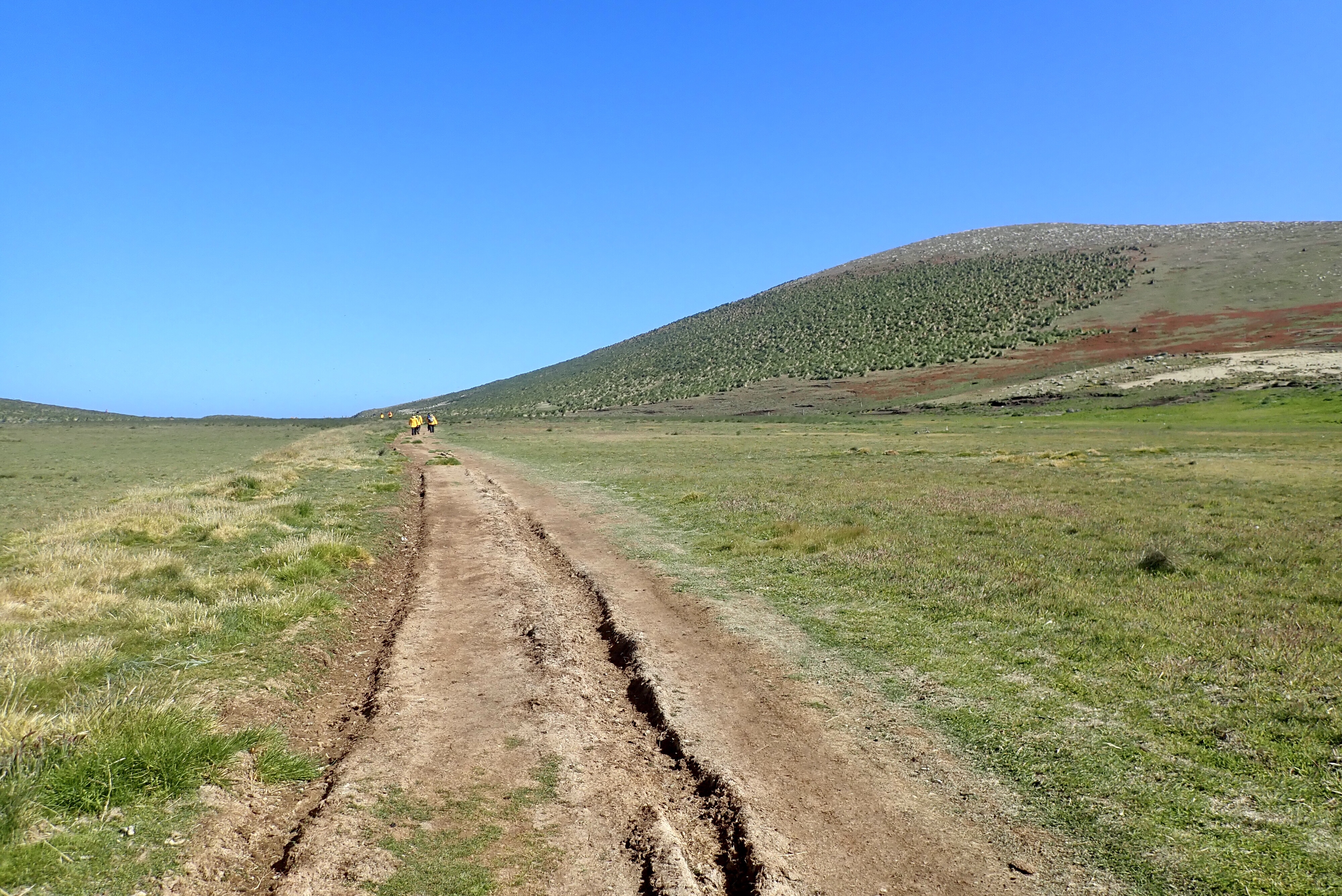
Sounds easy? The walk was more like 2.5 – 3km and was much steeper and windier than this morning. As we had arrived late, after 5pm, and thus had less time, (get back by 7.15pm), land rovers were made available for those less capable – we opted to walk to ensure we didn’t miss anything.
Not the homestead, which was further up the hill.Up we go.And up some more.
So those of you who have had enough of albatross chicks and rockhopper penguins can stop reading now… what we found at the end of the walk was certainly worth seeing.
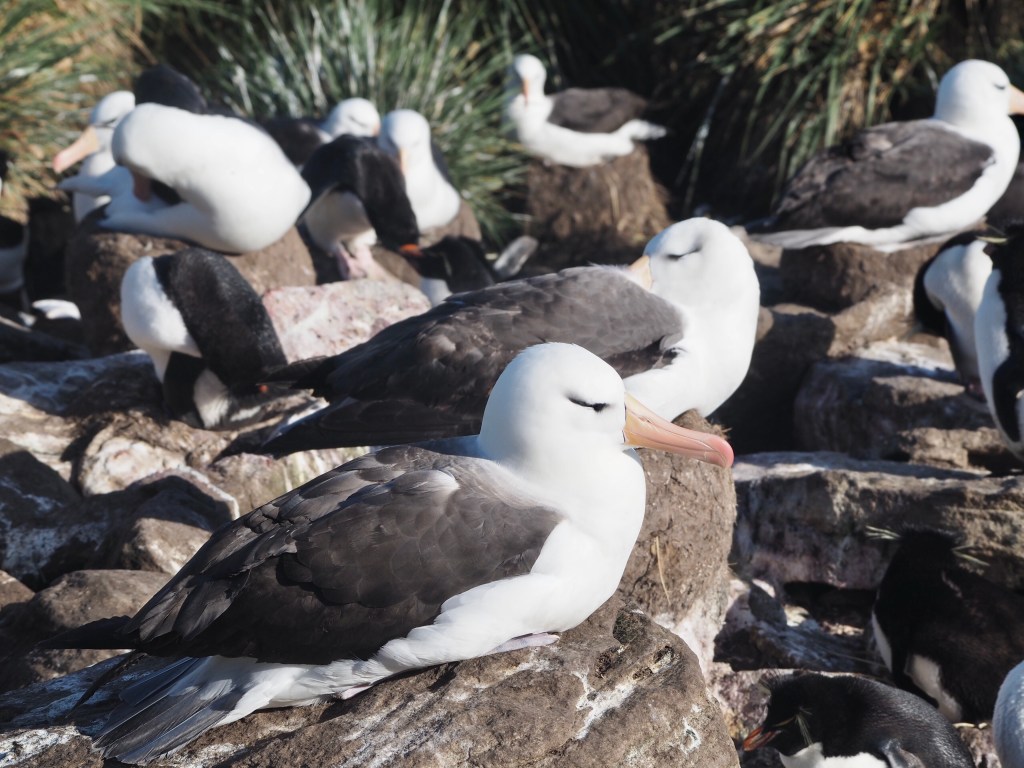
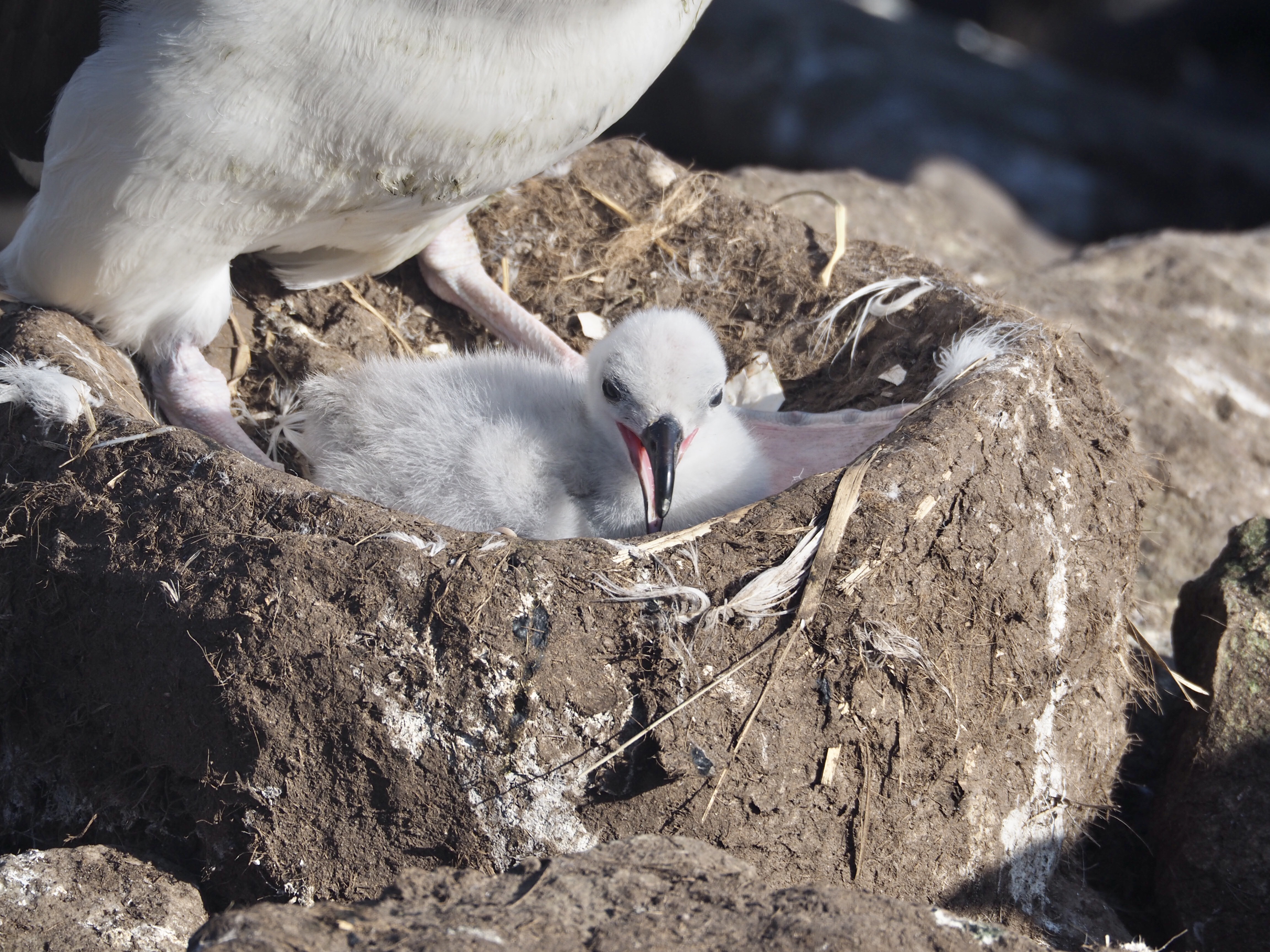
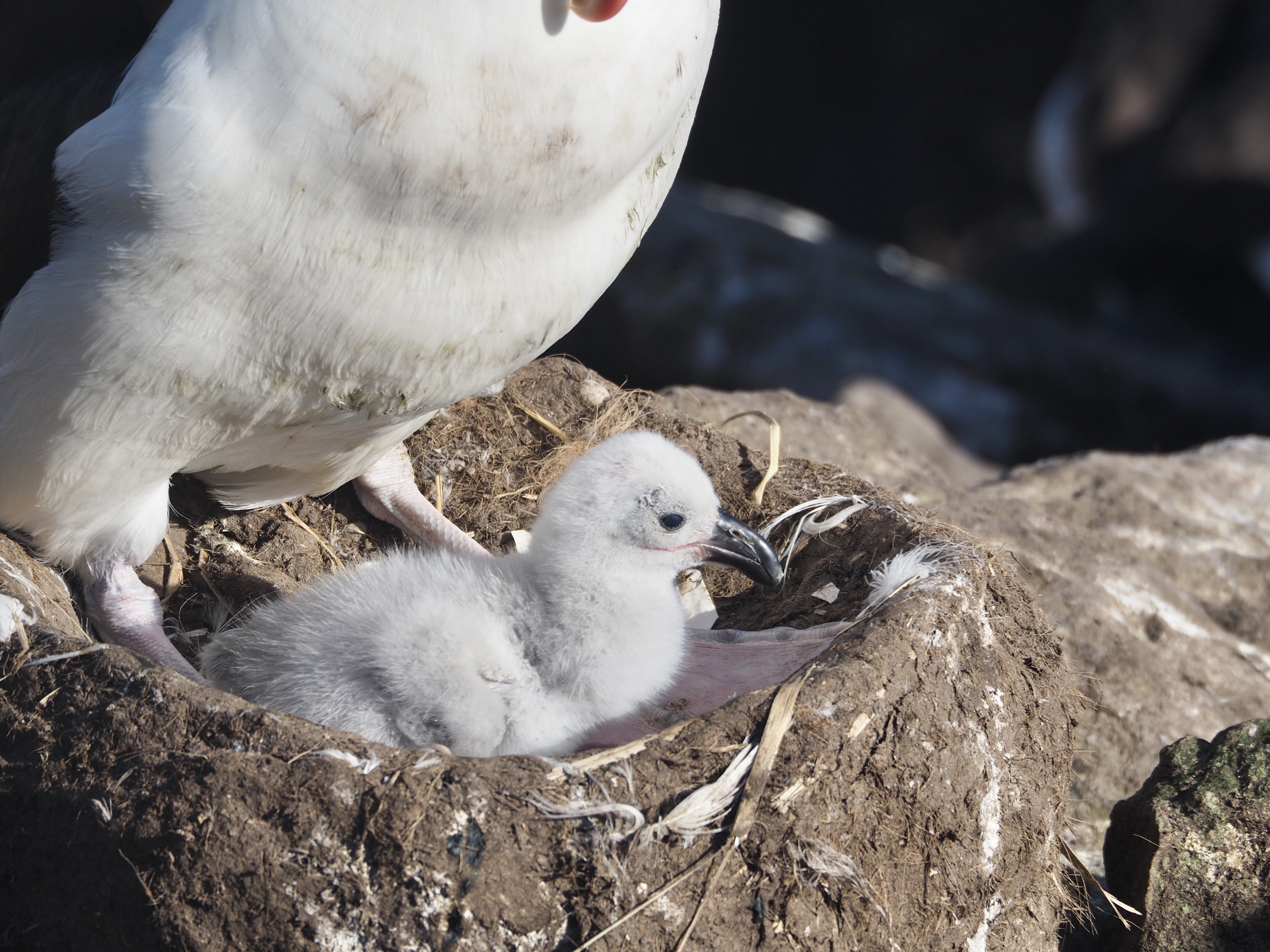
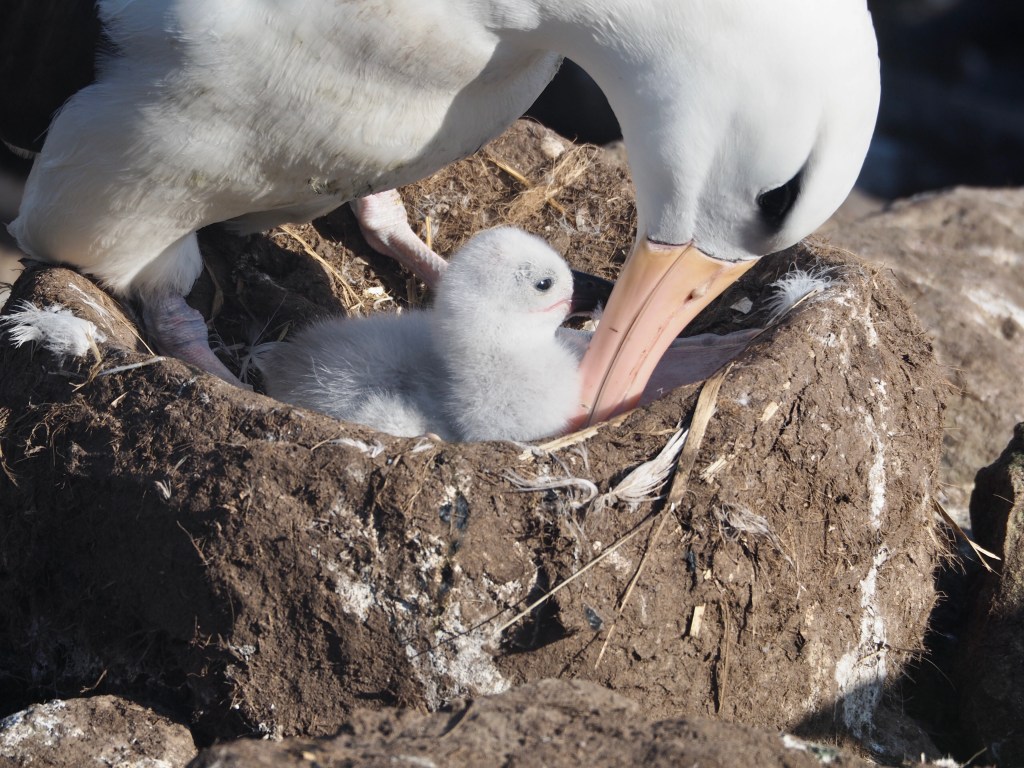
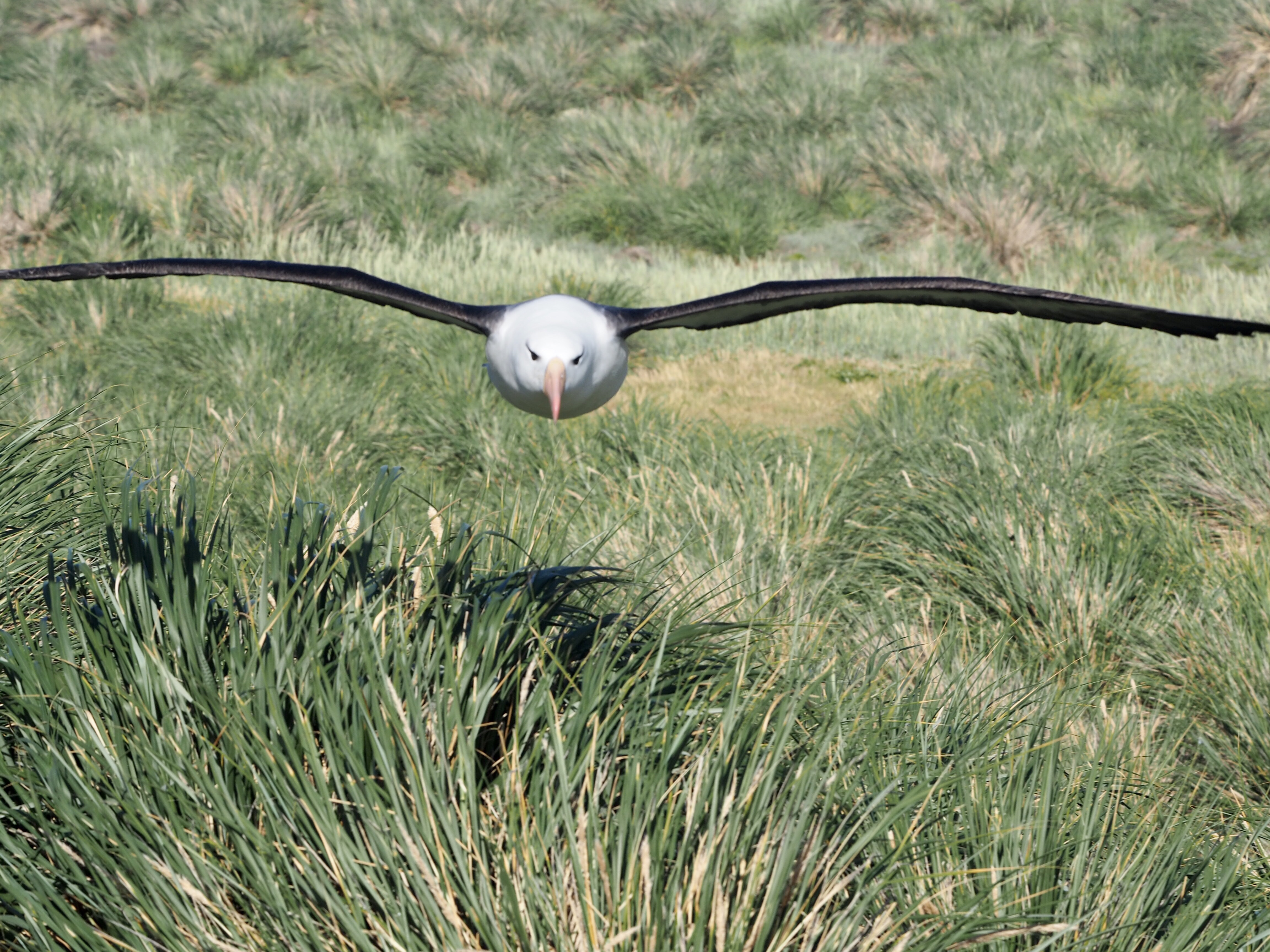
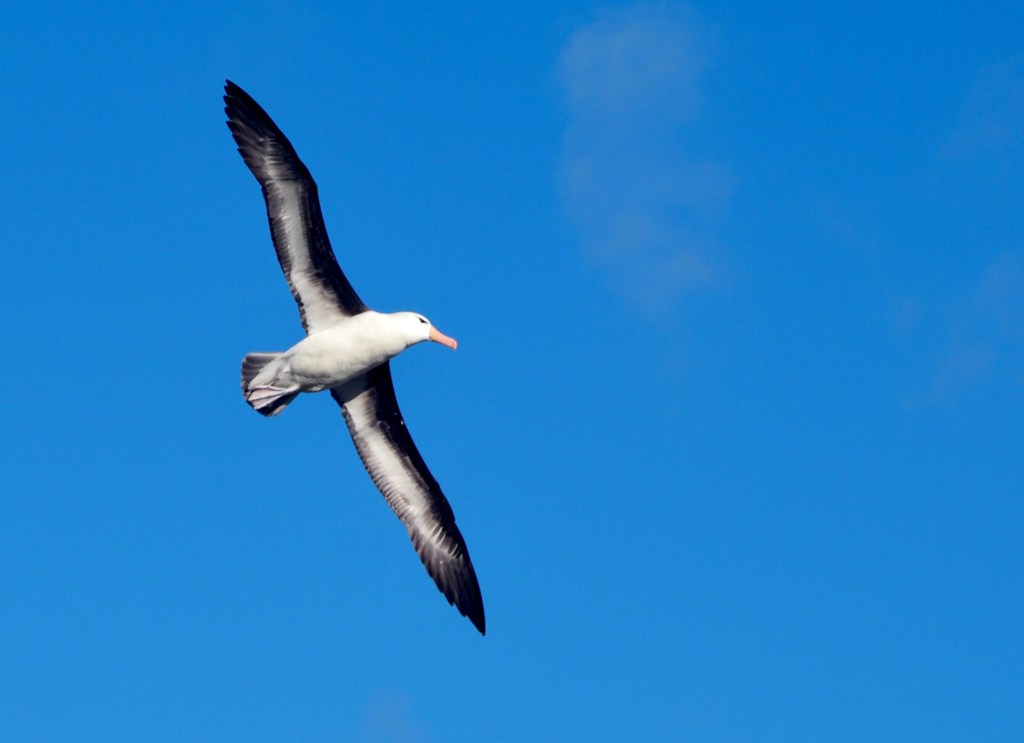
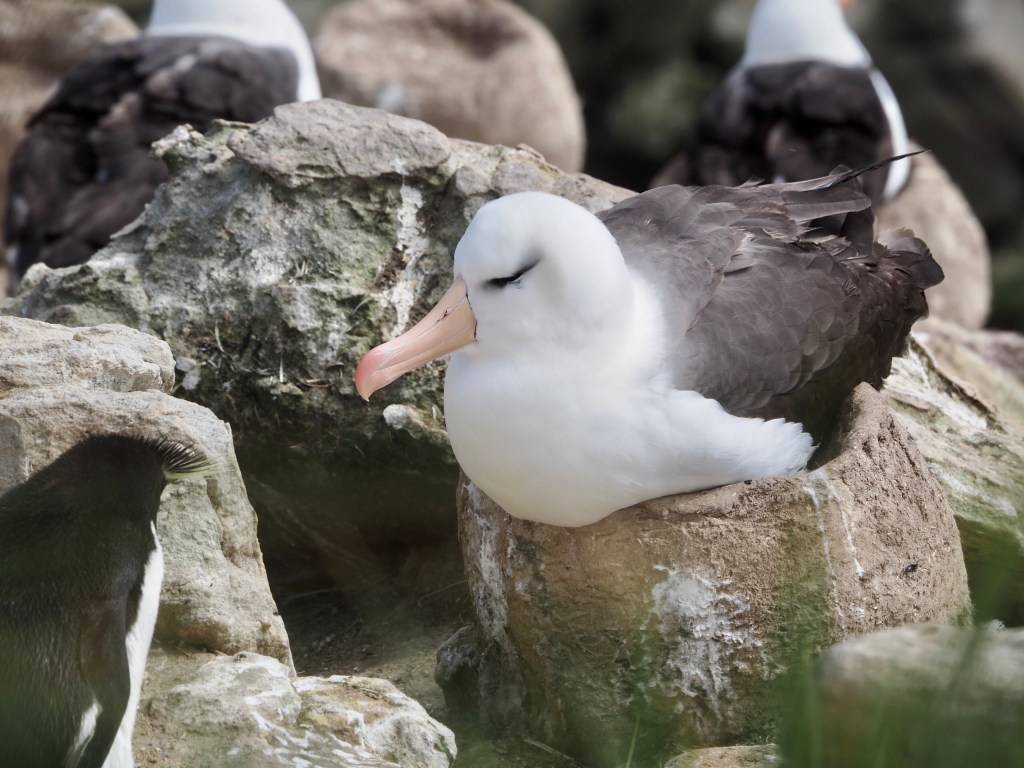
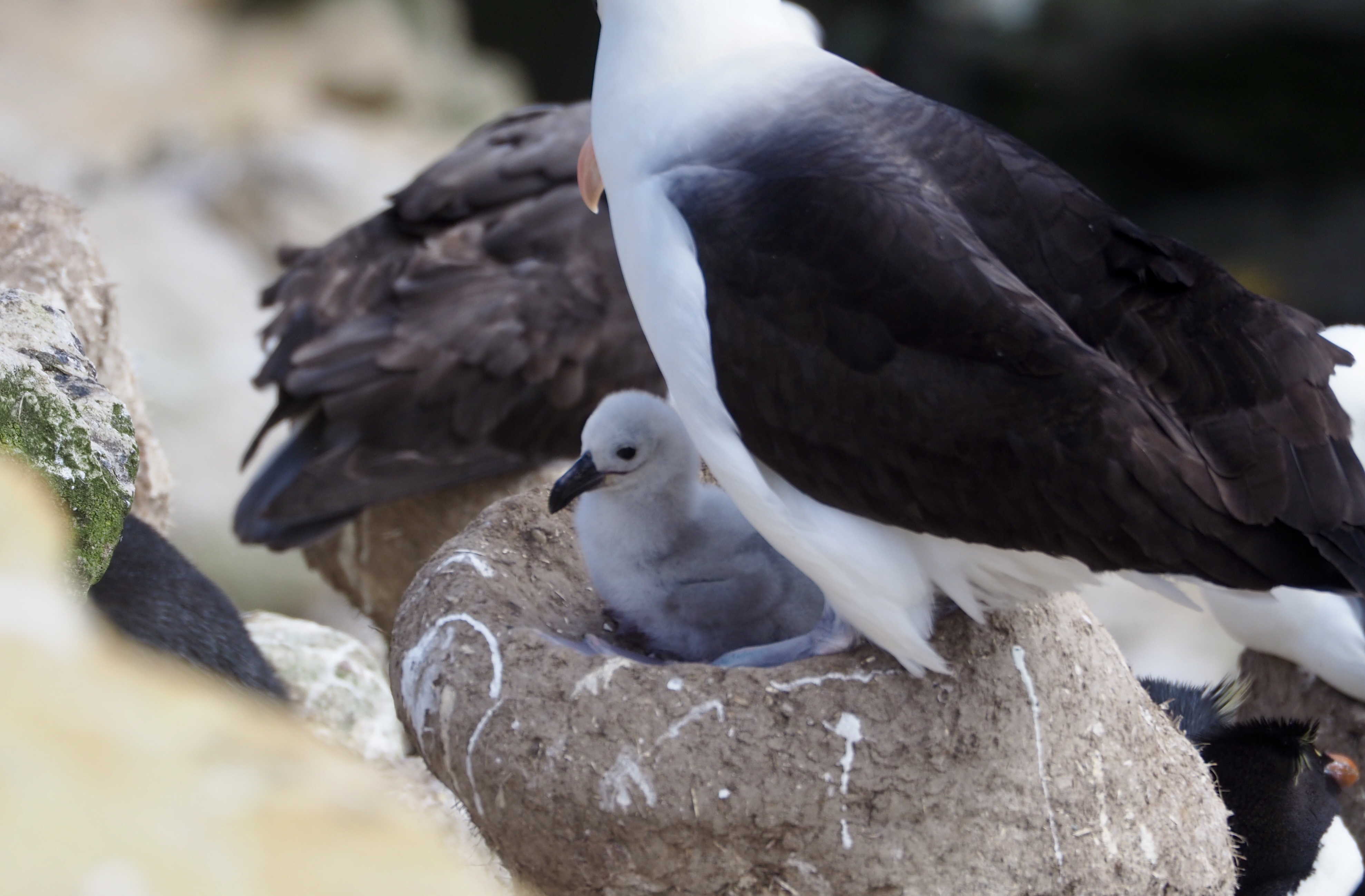
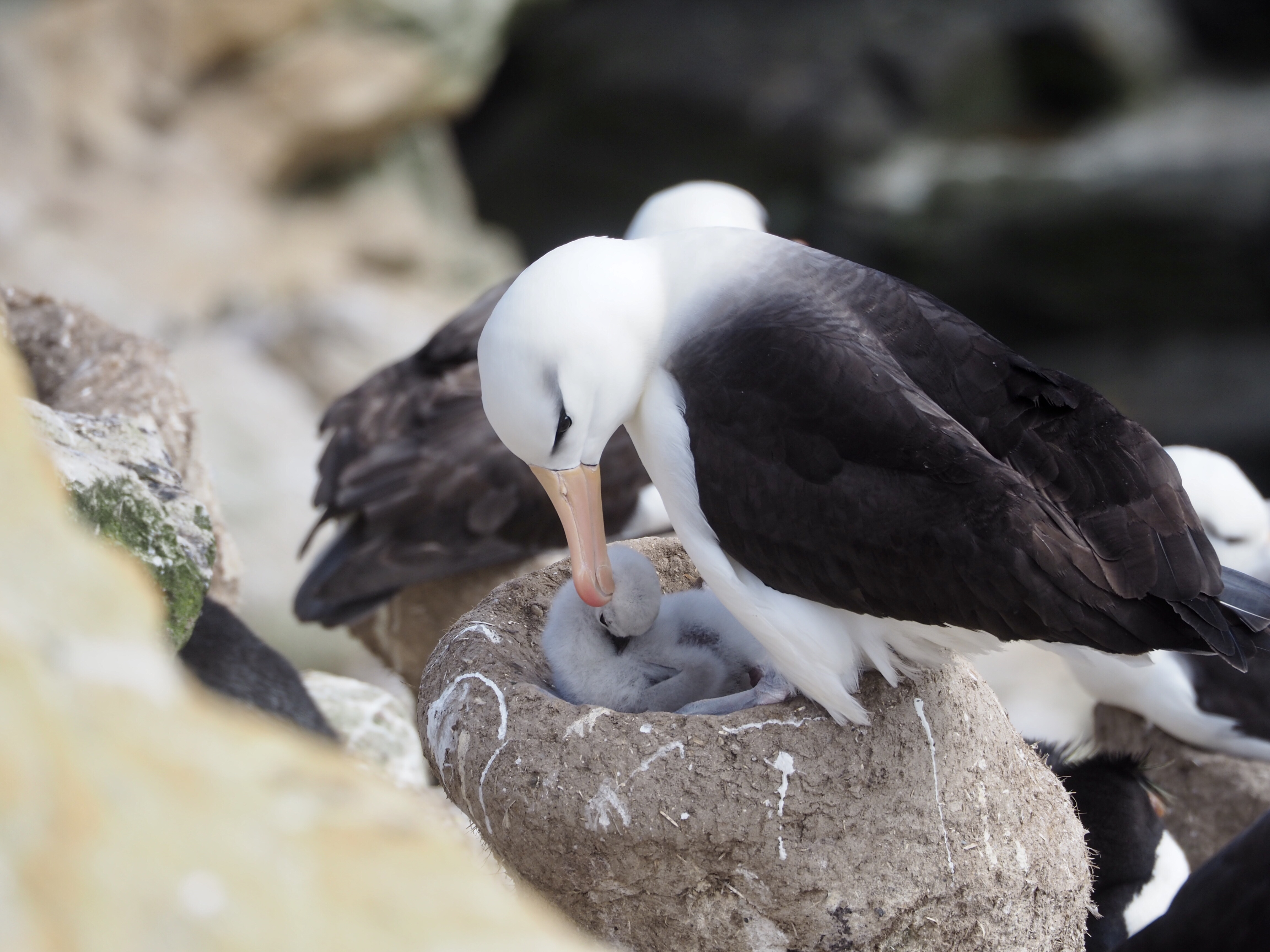
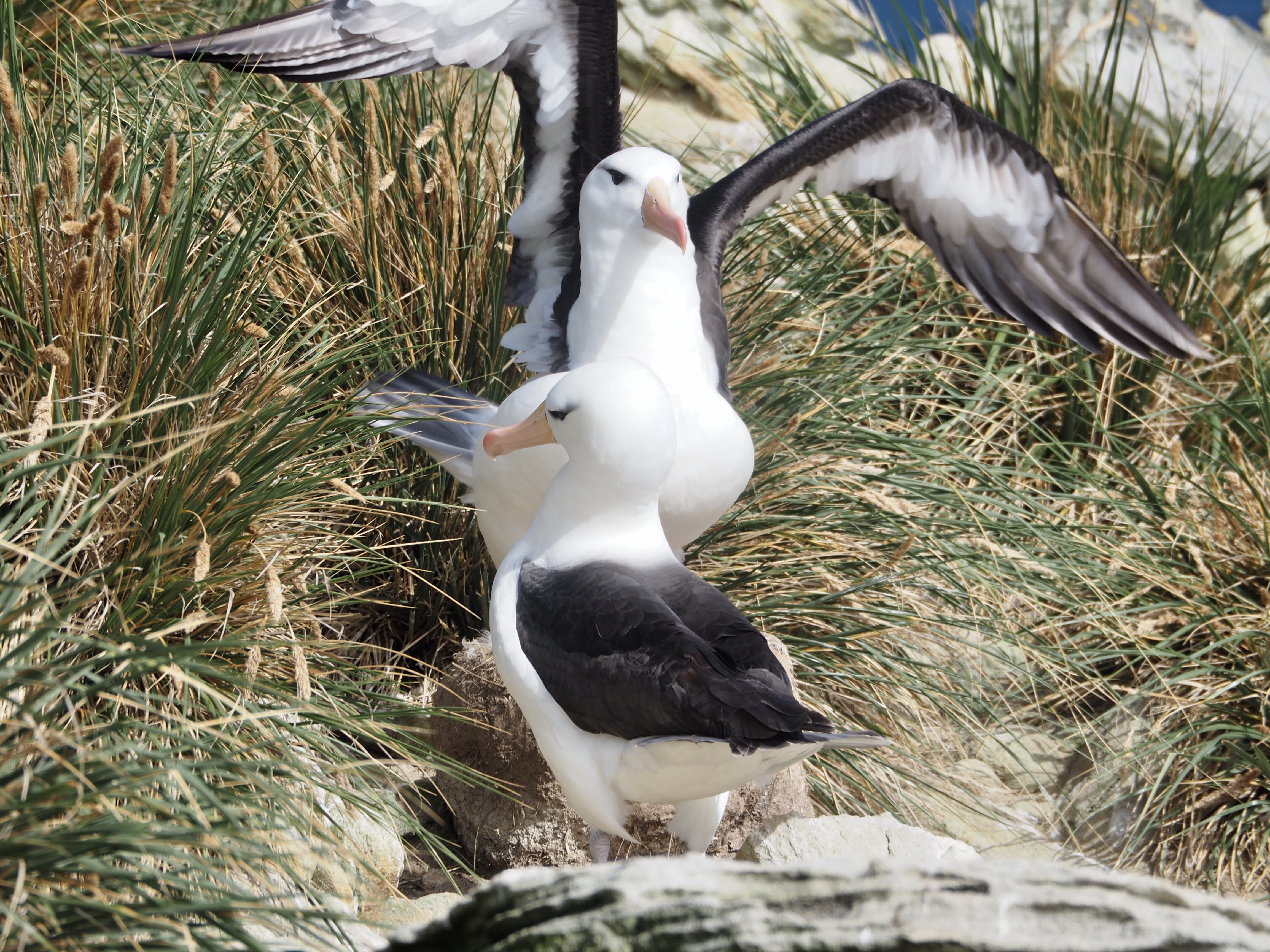
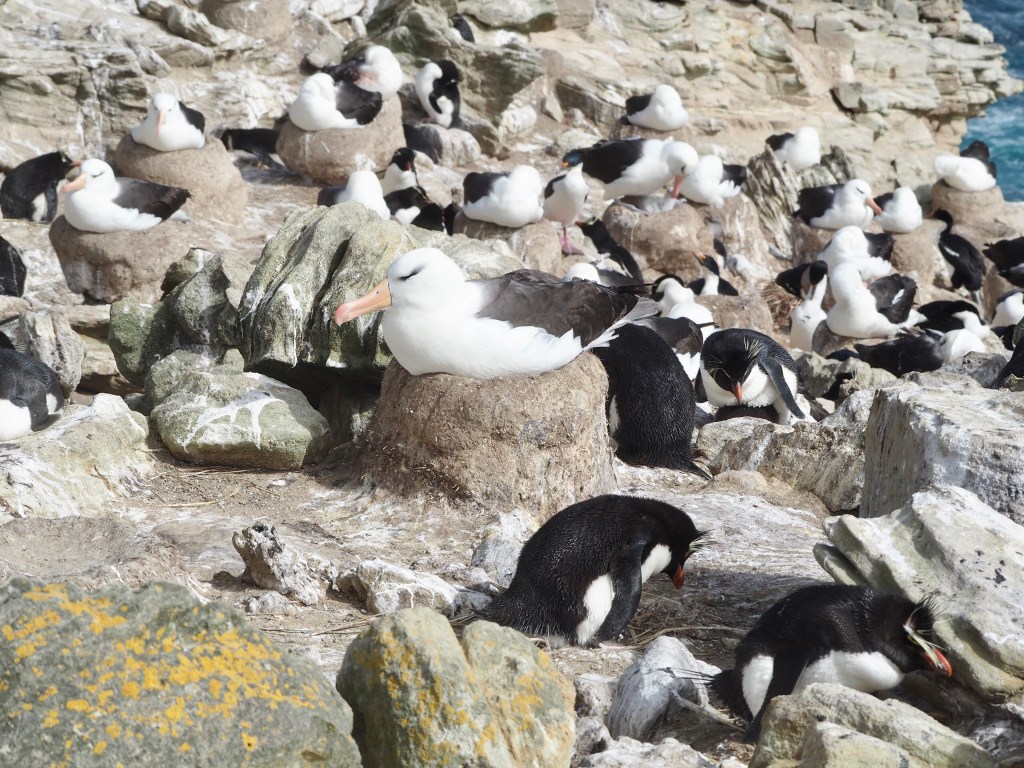
Albatross nest in the open as they need the wind and the ability to open their wings fully to take off. Chicks hatched about a week ago. Chicks fly away in April. Dark bills are immature and don’t breed until at least 5 years of age. Nests built with peat and their own saliva and guano. Biggest might be 30 years old.
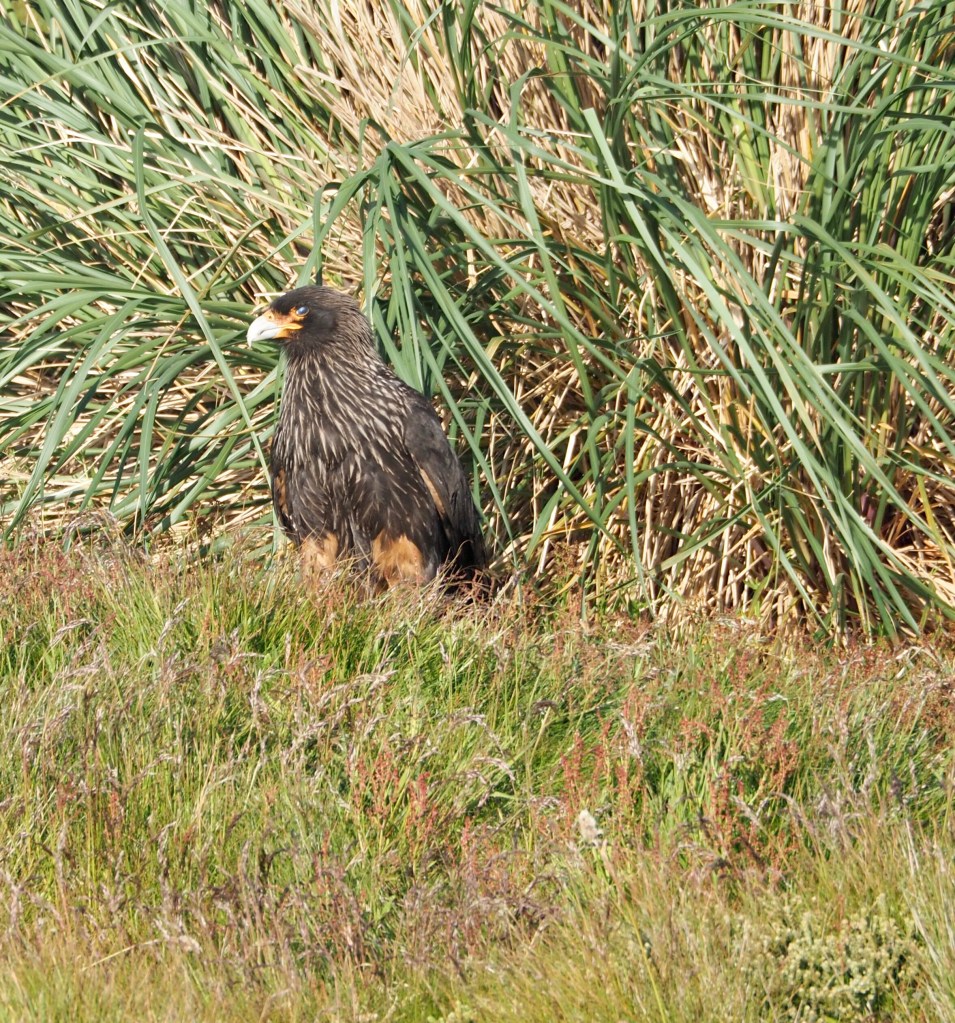
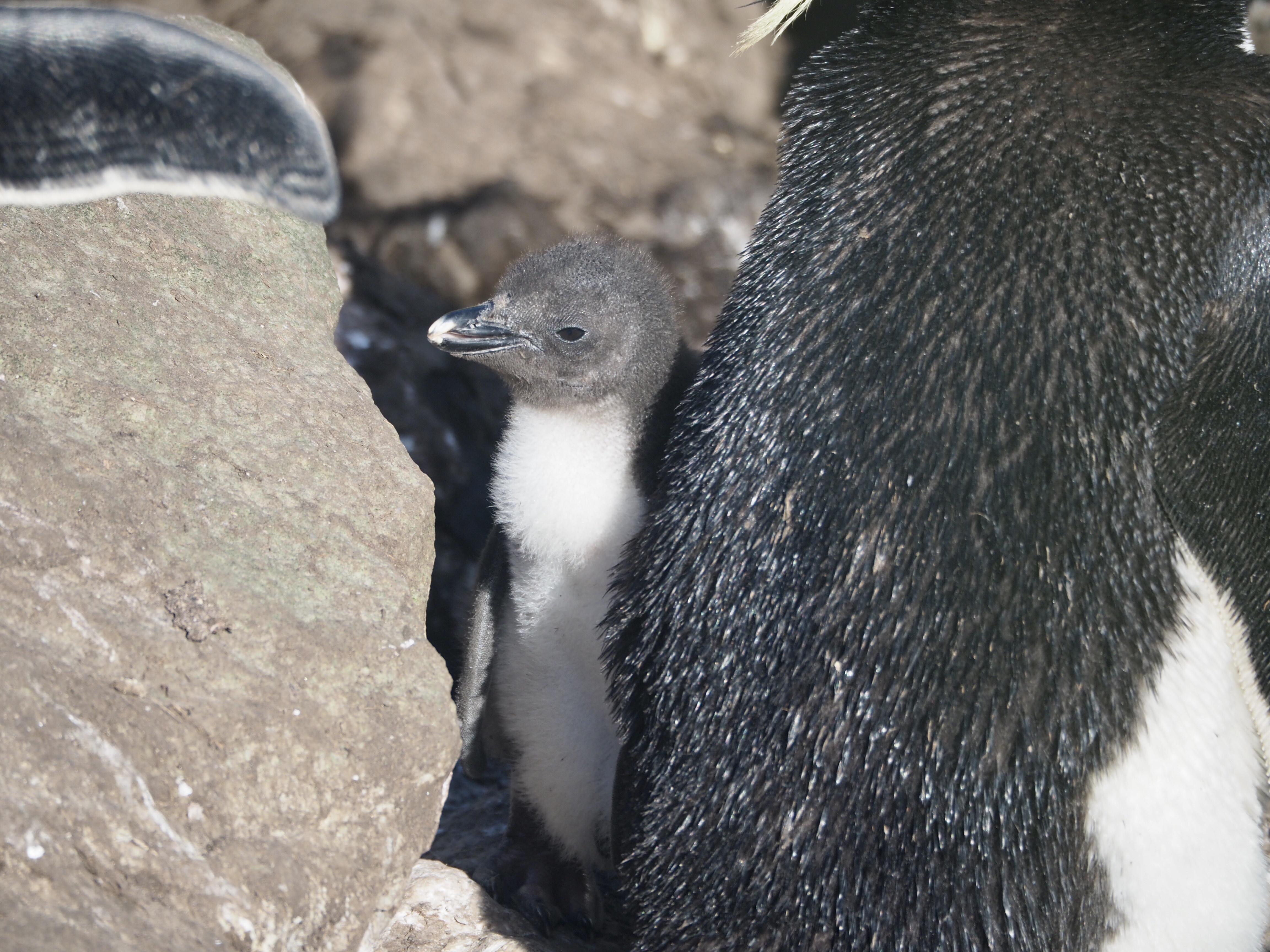
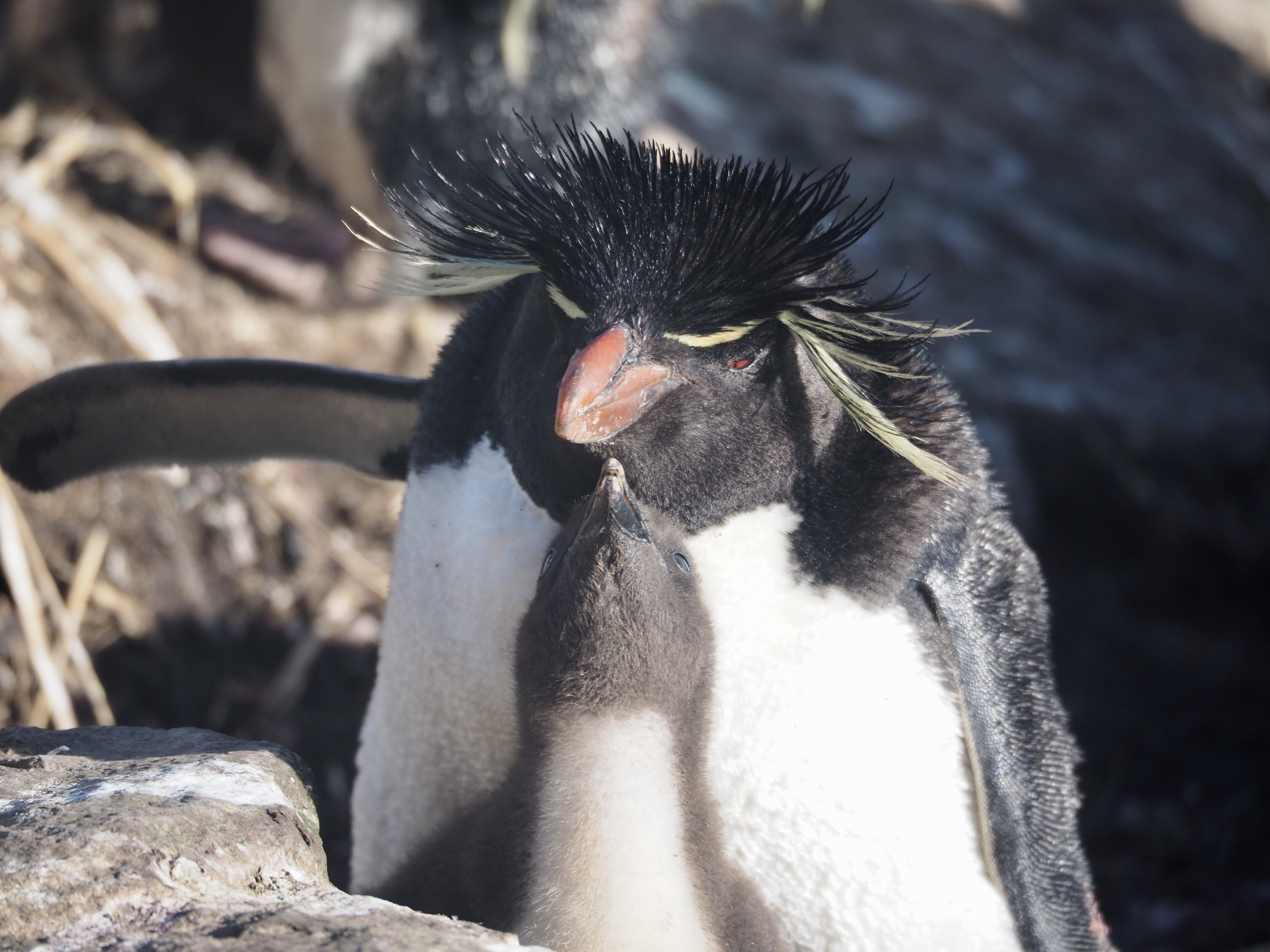
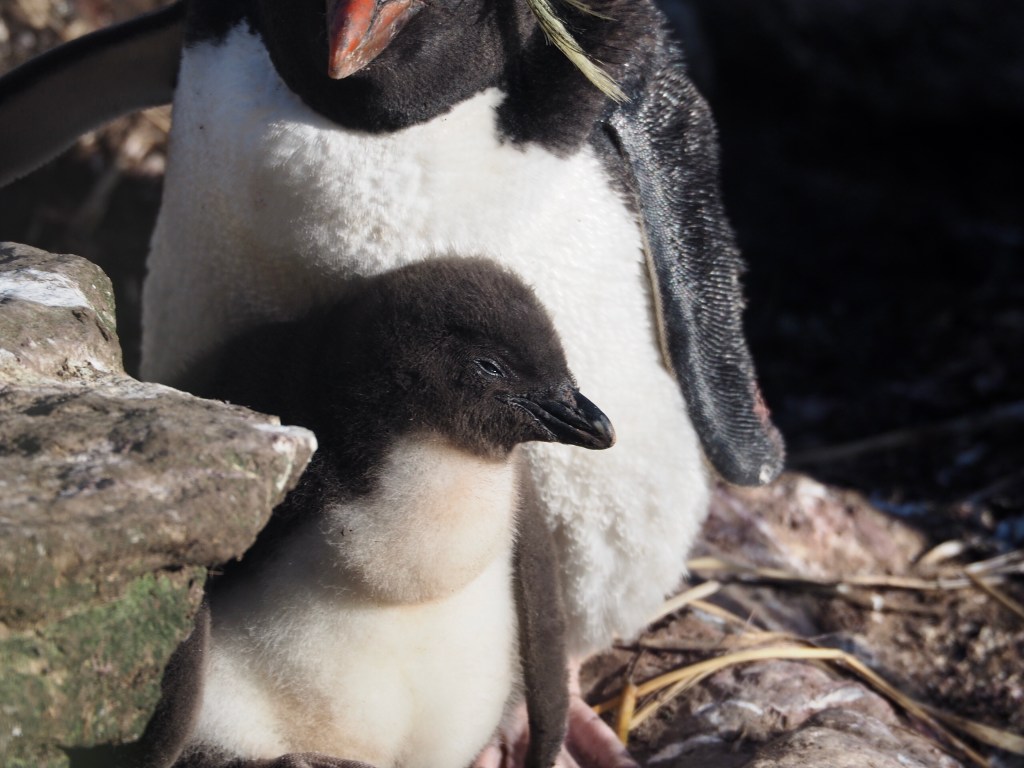
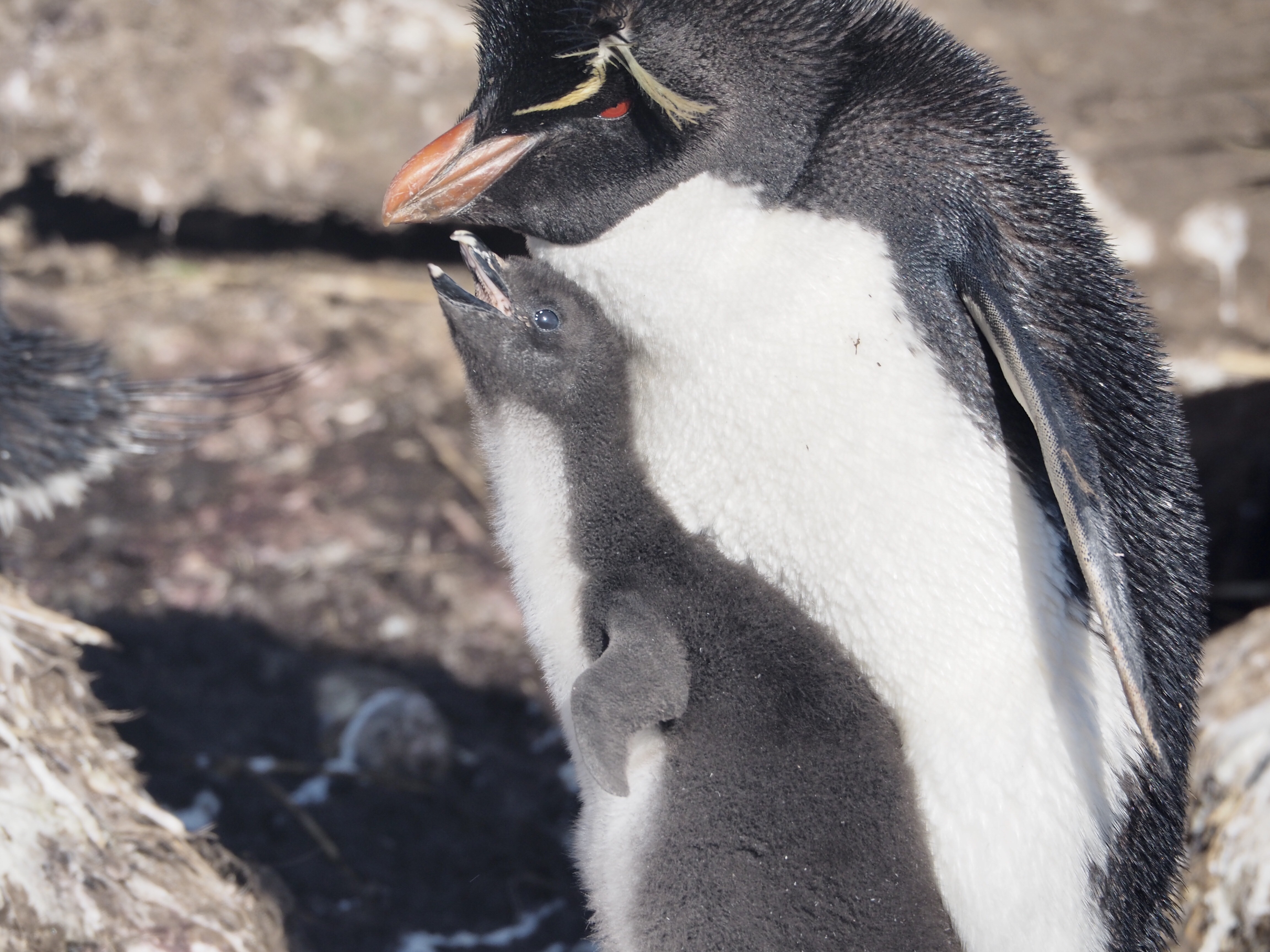
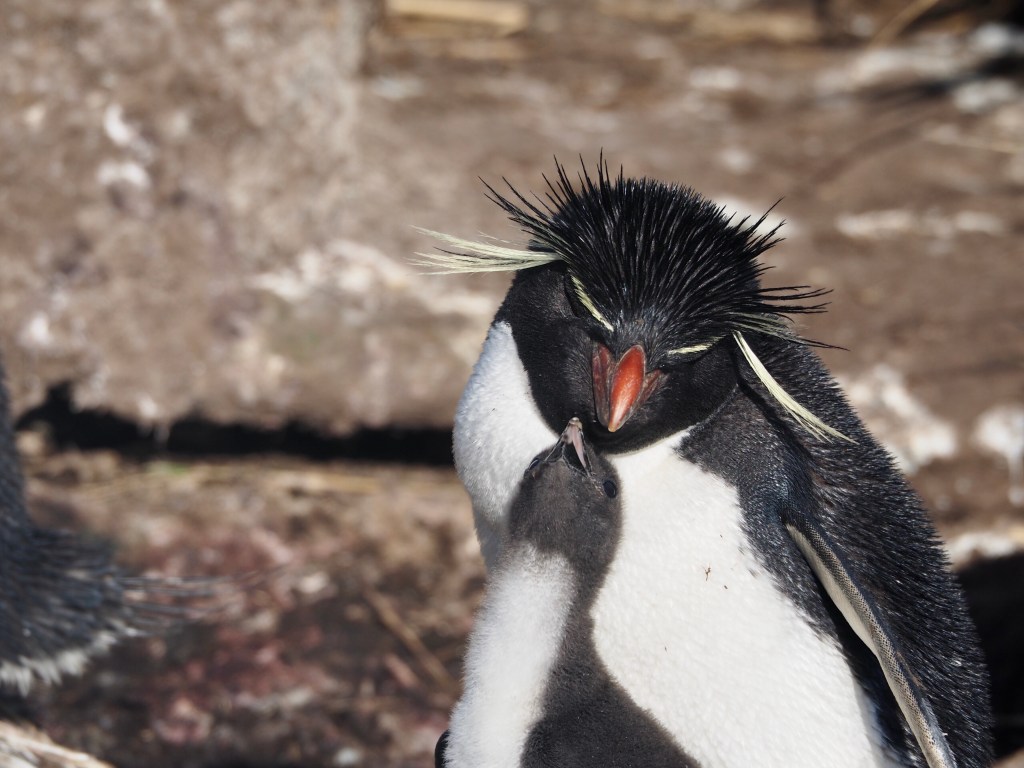
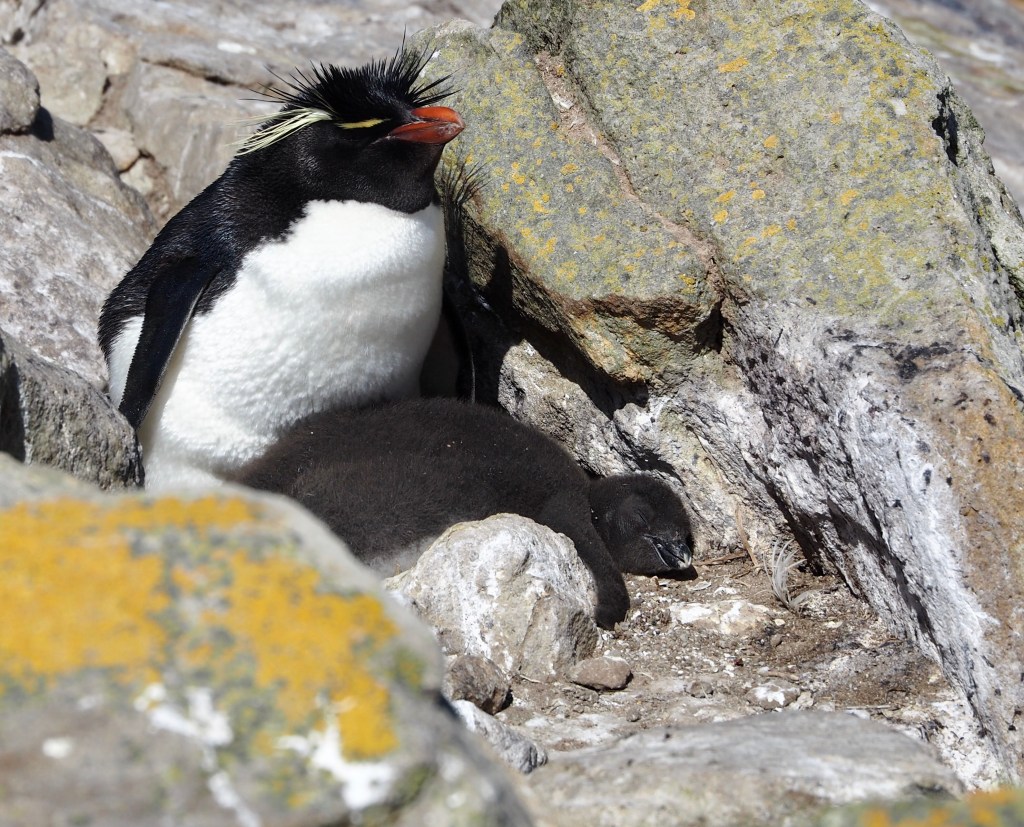
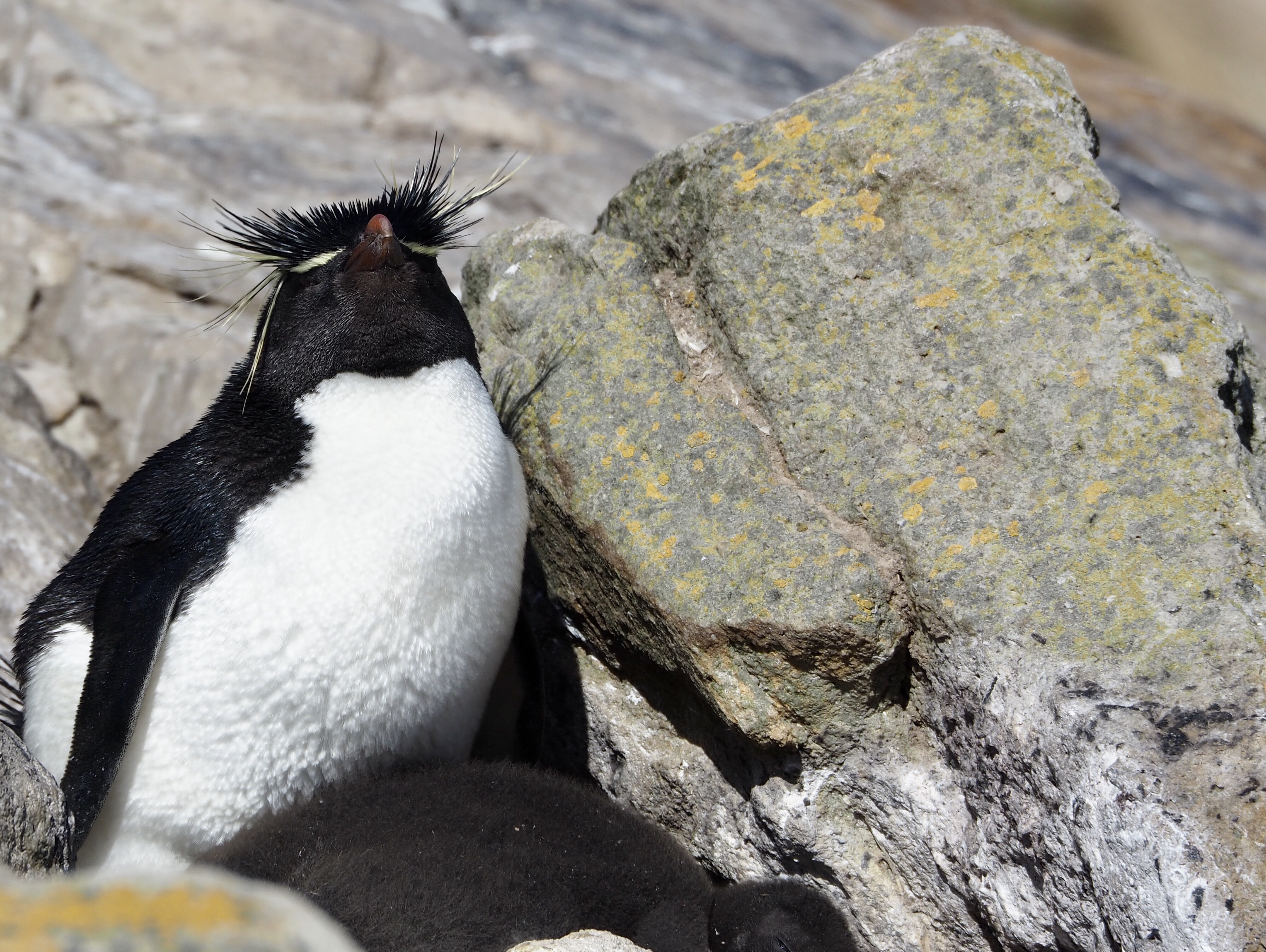
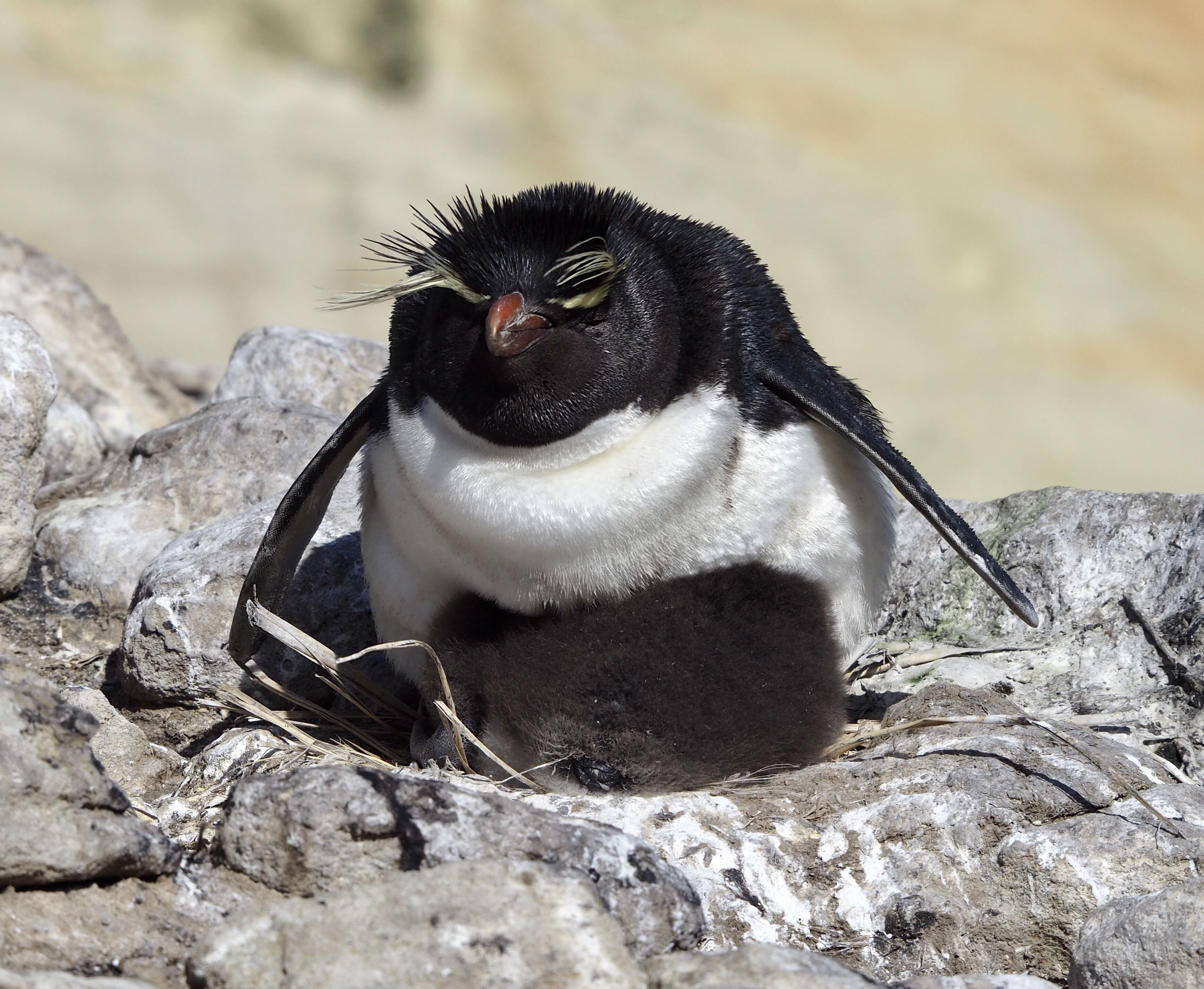
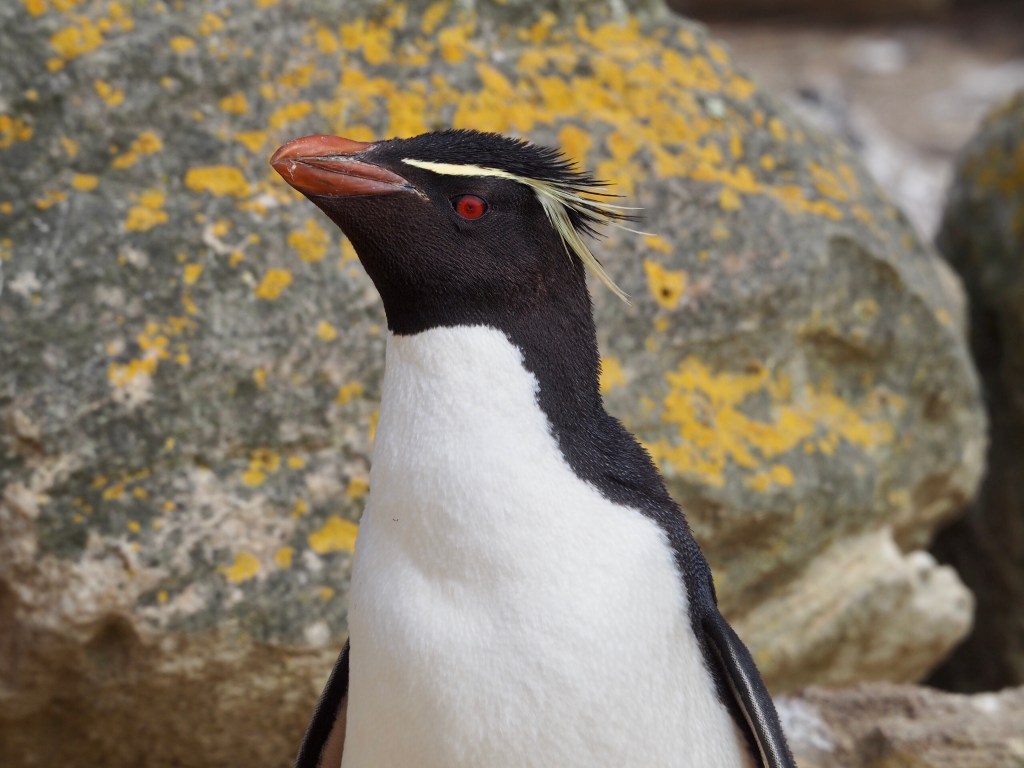
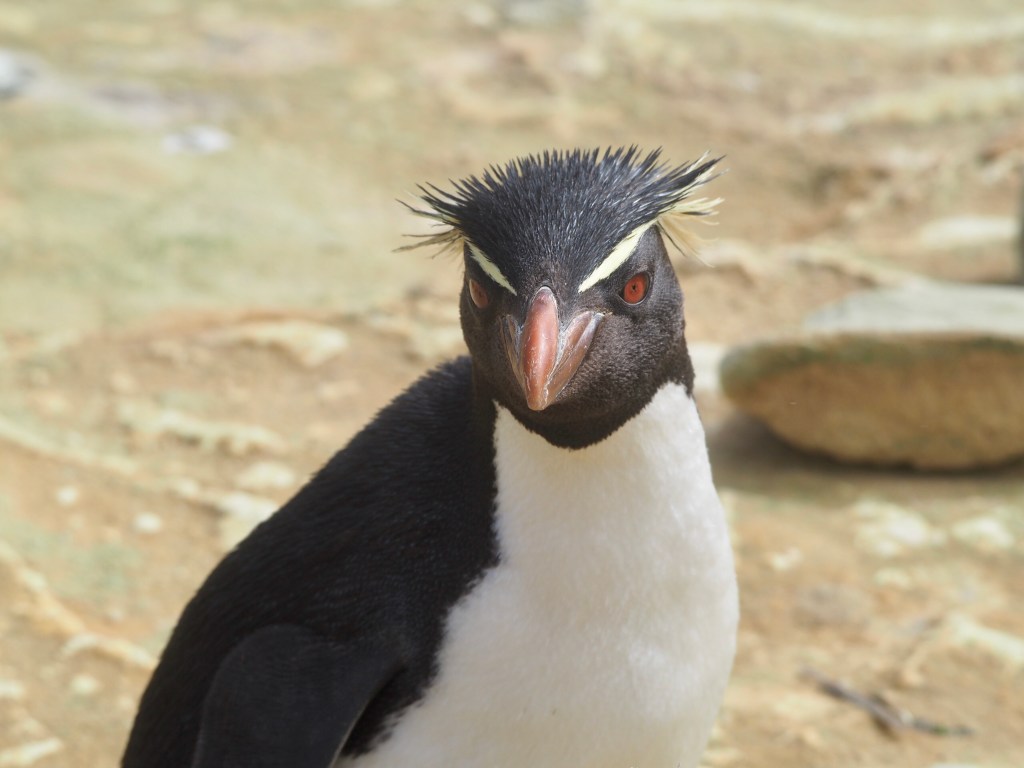
Rock hopper chicks about 3 weeks old. They lay two eggs. First egg is smaller and dirtier than the second. The second has the best chance of survival. Best crests best chance for breeding. Striated Caracara main predator of the chicks. Rockhoppers winter in the ocean for six to seven months. Penguins only come ashore to breed.
Striated caracara
14 degrees made things quite pleasant and reluctantly we turned for home. Sitting near these beautiful creatures was certainly a dream come true and another 150 or so photos had to be culled down.
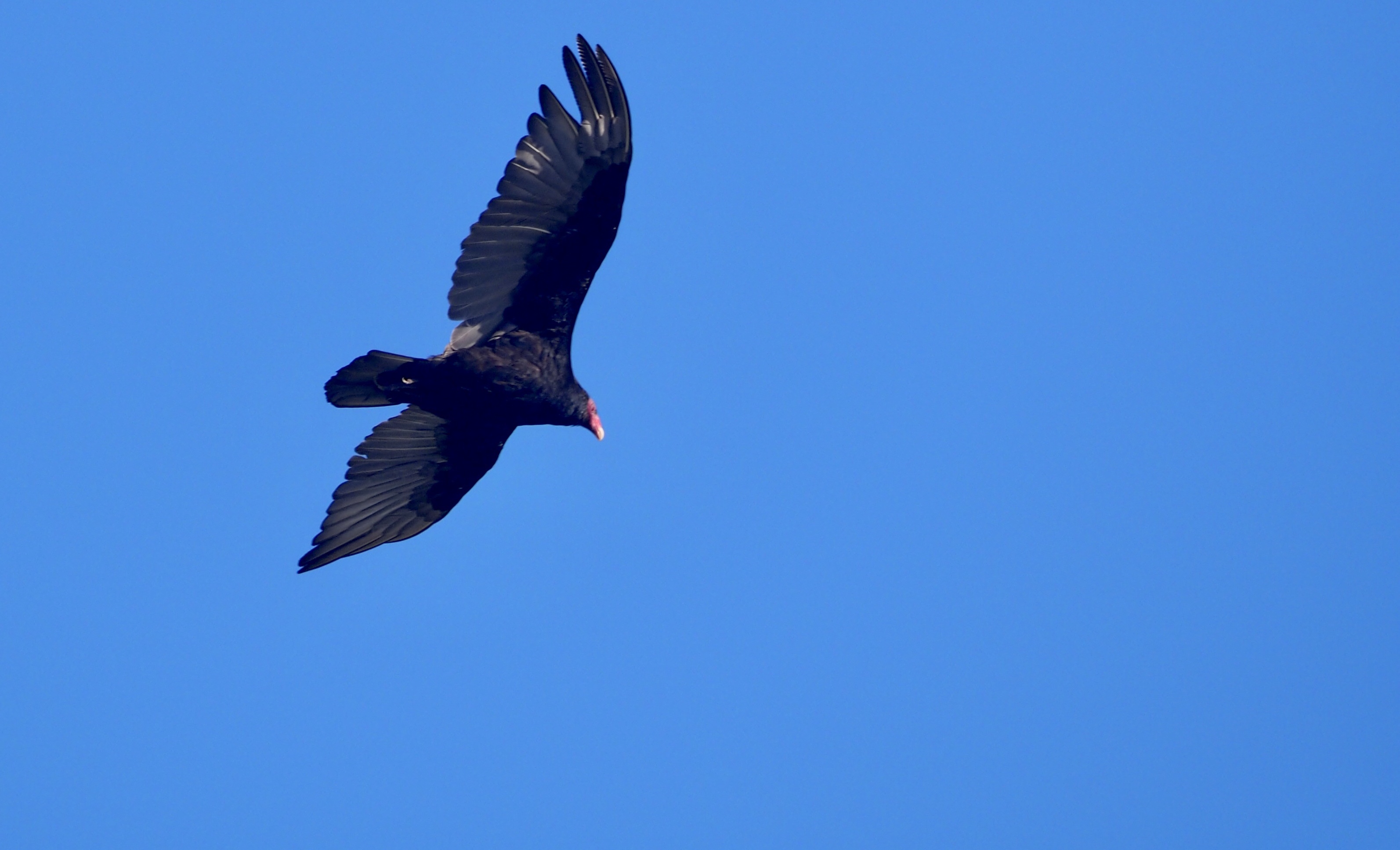
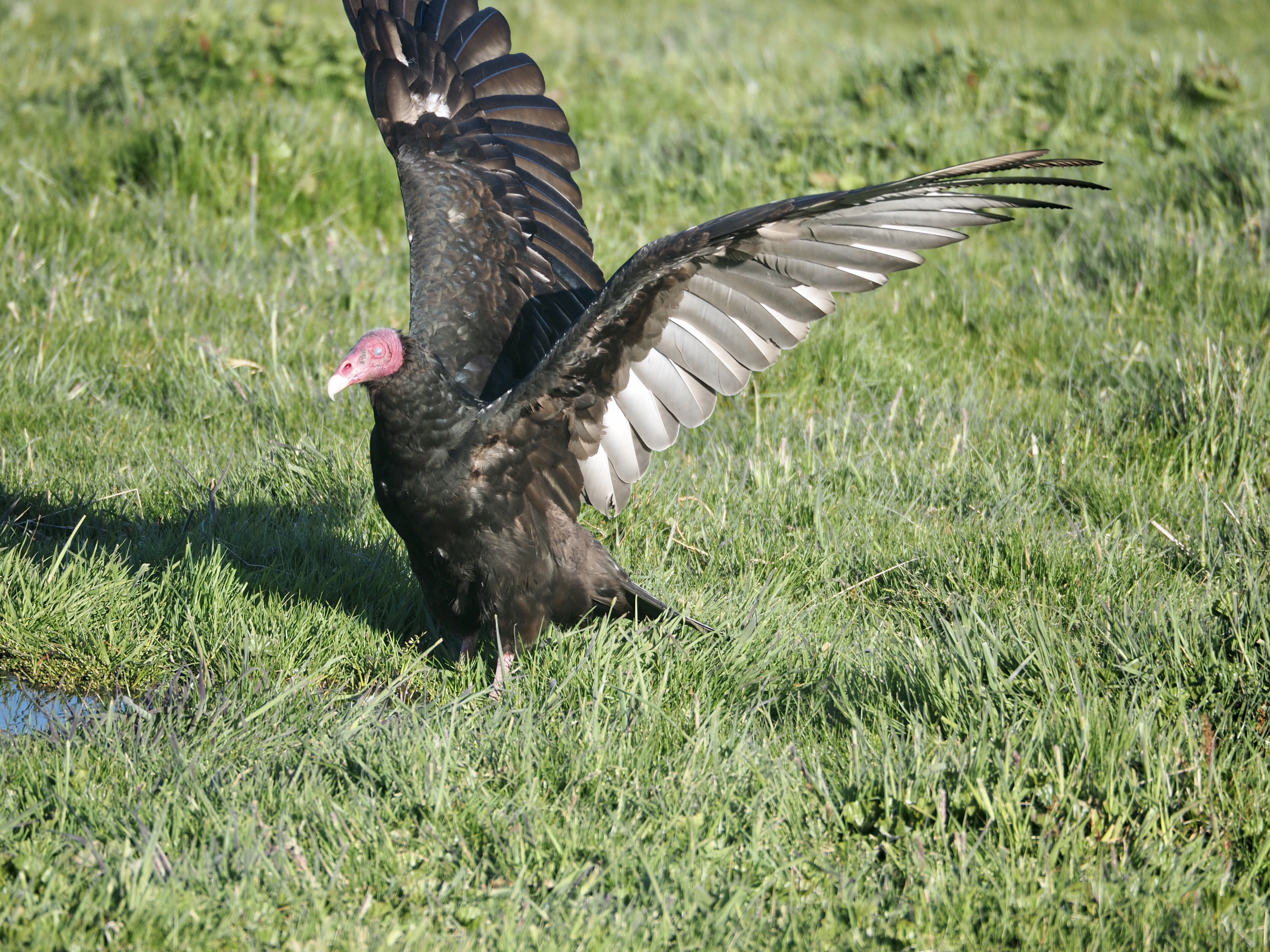
Again this island reminded us of North Devon, mind you I’m not sure we have seen a vulture there.
Also found some small birds around.
Correndera Pipit
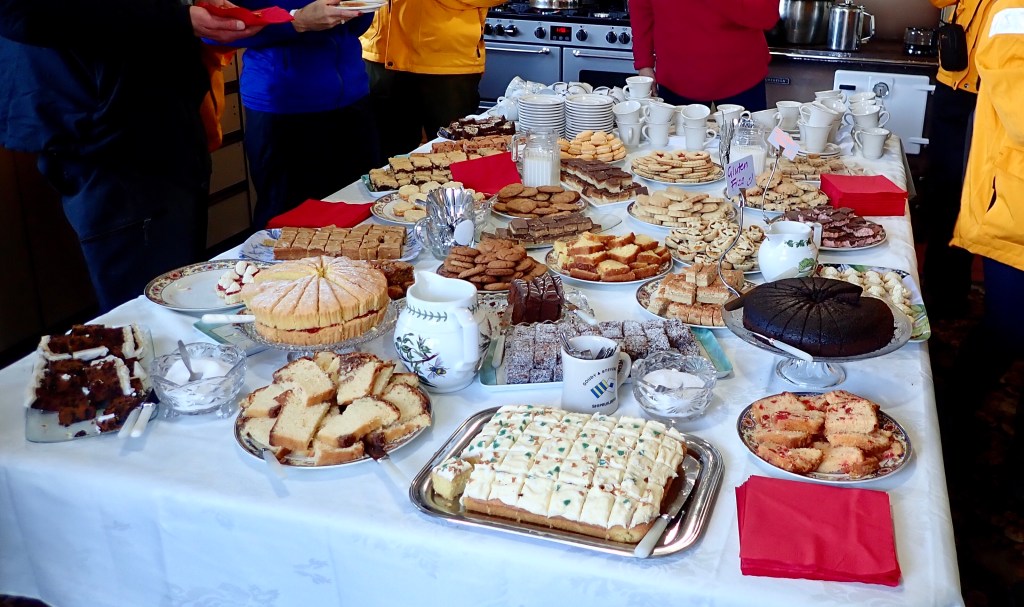
Then we arrived at the homestead and a spread that so reminded me of my Auntie Dot who used to create this kind of thing just after an enormous lunch. Felt a bit sad for them as we knew we were heading back to dinner so did not partake in too much.
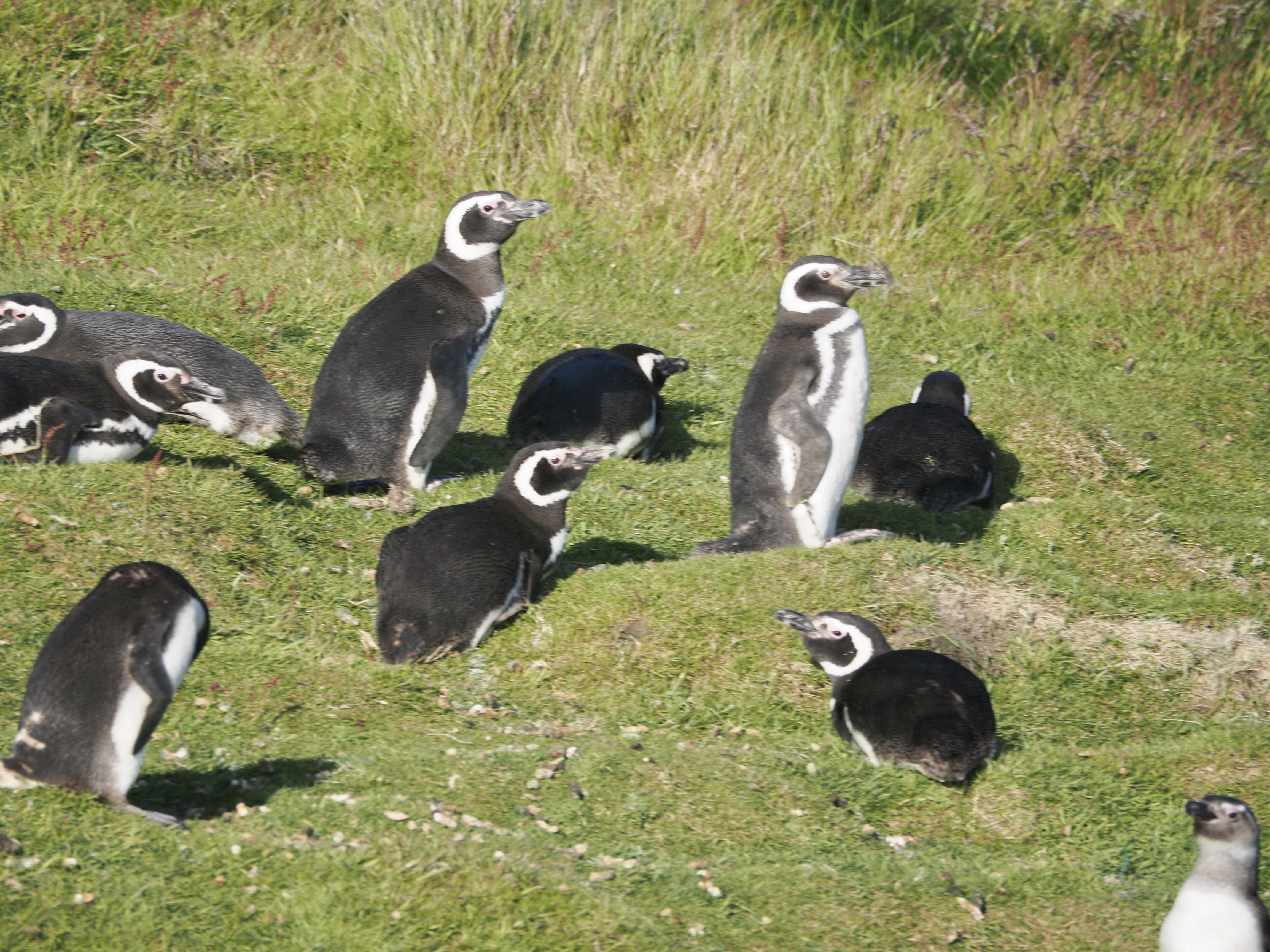
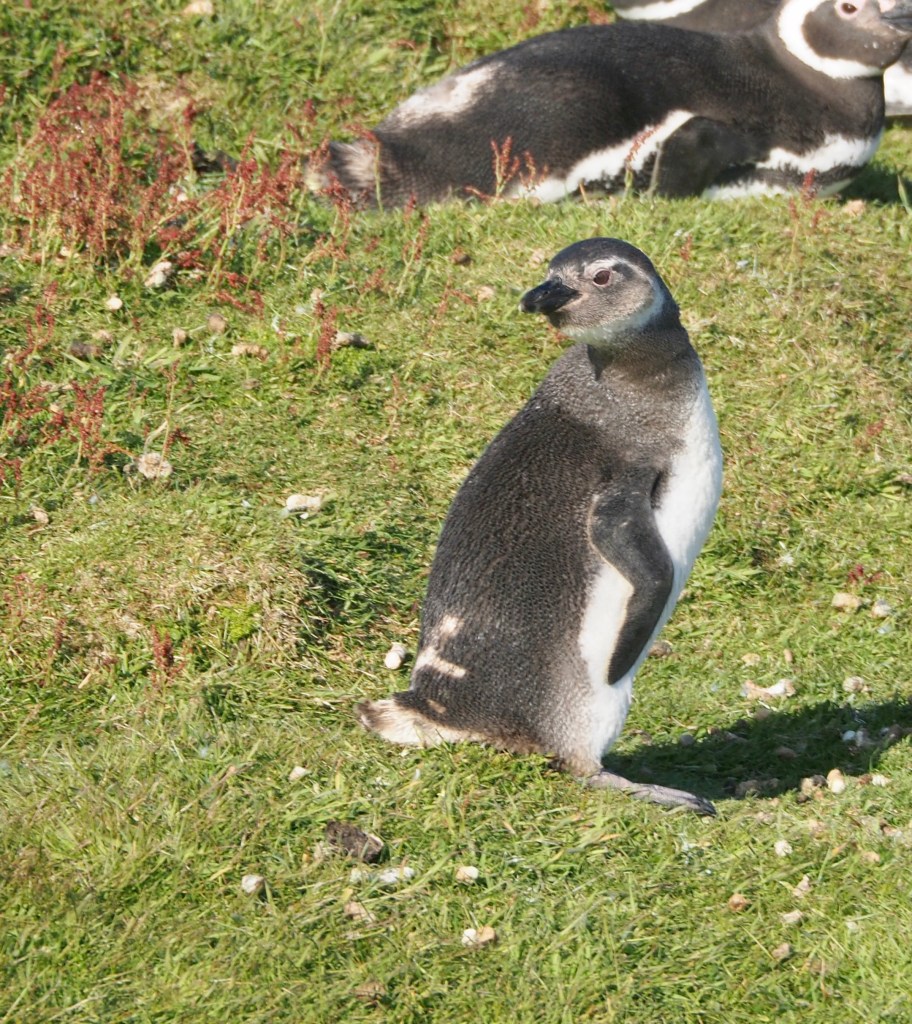
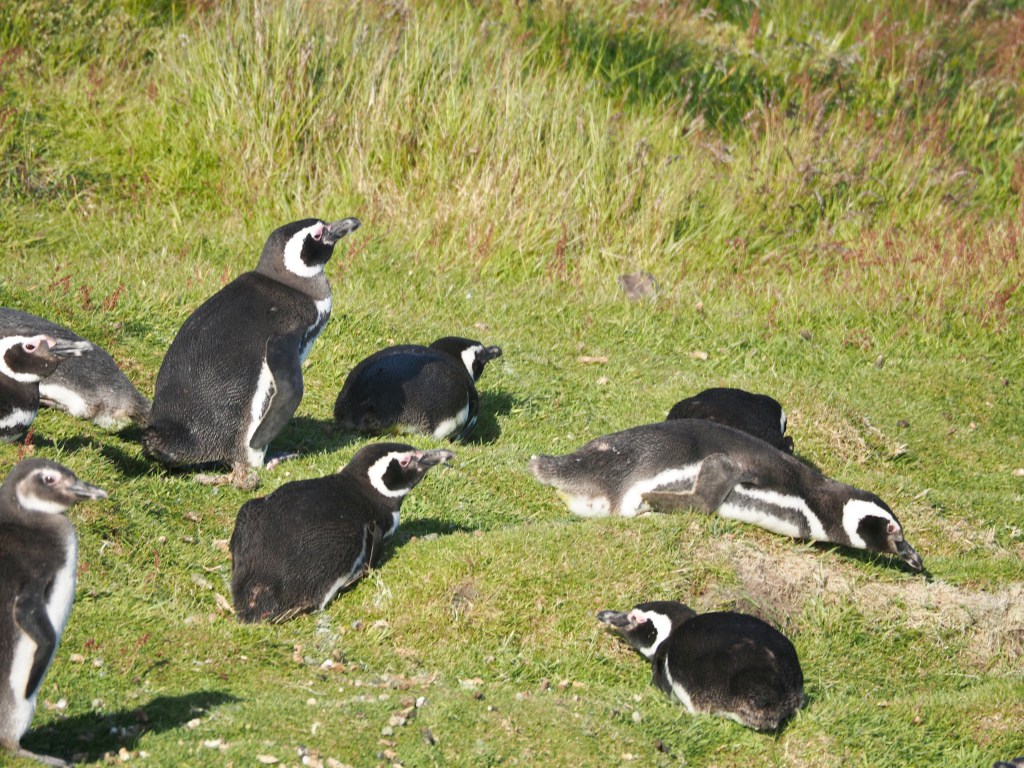
One final treat as Garrie spotted a different type of penguin – the Magellanic a little further down the island and our zodiac driver obliged by getting us as close as possible on the way back to the ship. Jasmyn this is your penguin.
A youngster
So two, of perhaps seven, types of penguin down and it’s only day one.
Back to the ship. Worked on my hat for the holiday & austral solstice hat competition. Some craft materials were available to add to anything you could find around the ship. We will be wearing them to dinner tomorrow.
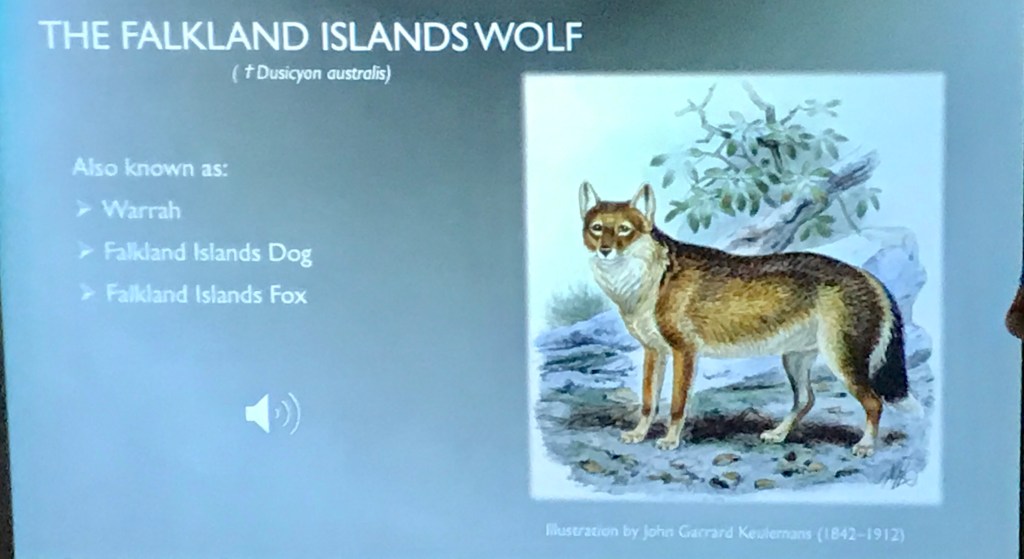
Finally the 9.15pm bar talk. The Warrah. (The extinct Falkland island wolf).
Called the foolish dog as it was so friendly it was too easy to kill. Last one taken to London zoo and died early. Not quite Fox or dog. A bit dingo like. The lecturer drank beer and told us that the great albatross told her that they loved sauerkraut, lived in burrows and beamed themselves up Scottie. Funny but a bit silly for me, maybe I hadn’t had enough Malbec. Darwin was puzzled by it so it became famous. A sad story really.
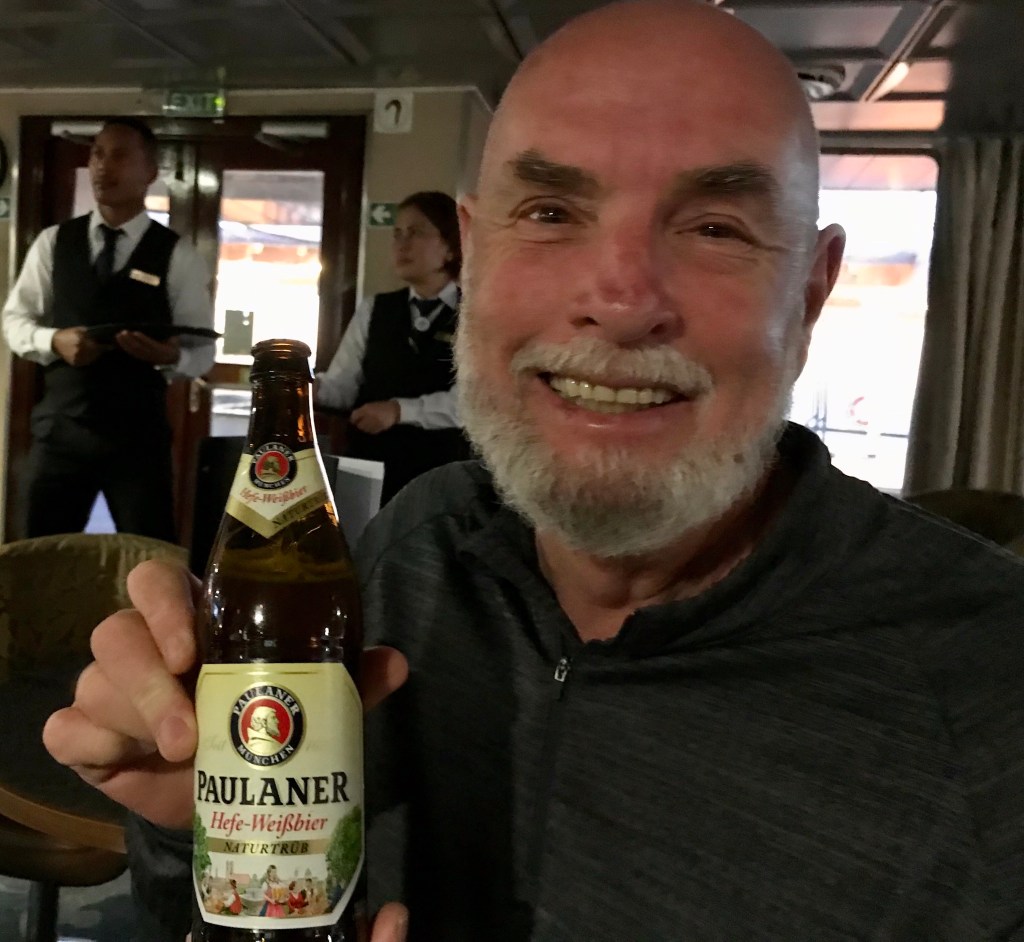
Beer of the day was a Paulaner. I have no notes telling me what Garrie thought so he’ll have to try another one another time. Tomorrow Stanley!
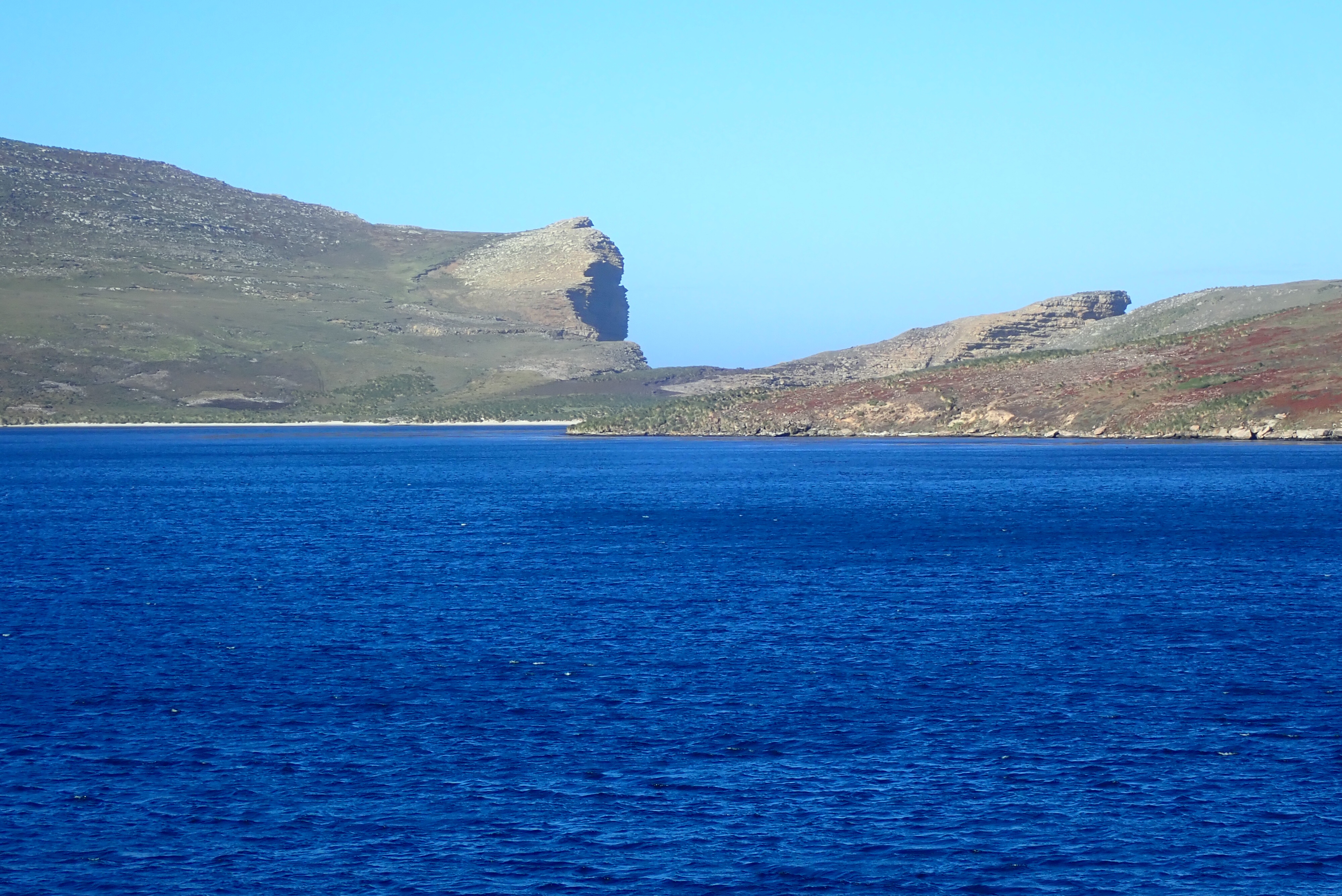
Arriving at New Island, it looked fairly windswept with not much to see.
We watched the unloading of the zodiacs with great anticipation.
So the Albatross group, ( which we are part of), were up first for our first excursion. We were anchored in the south harbour of the New island conservation trust. So off to the mud room to don our parkas and mud boots. We had been given a good briefing about how to get in and out and it all worked well, though, with the winds, it was certainly a wet trip and we were pleased to have invested in a dry bag backpack to keep the camera gear dry.
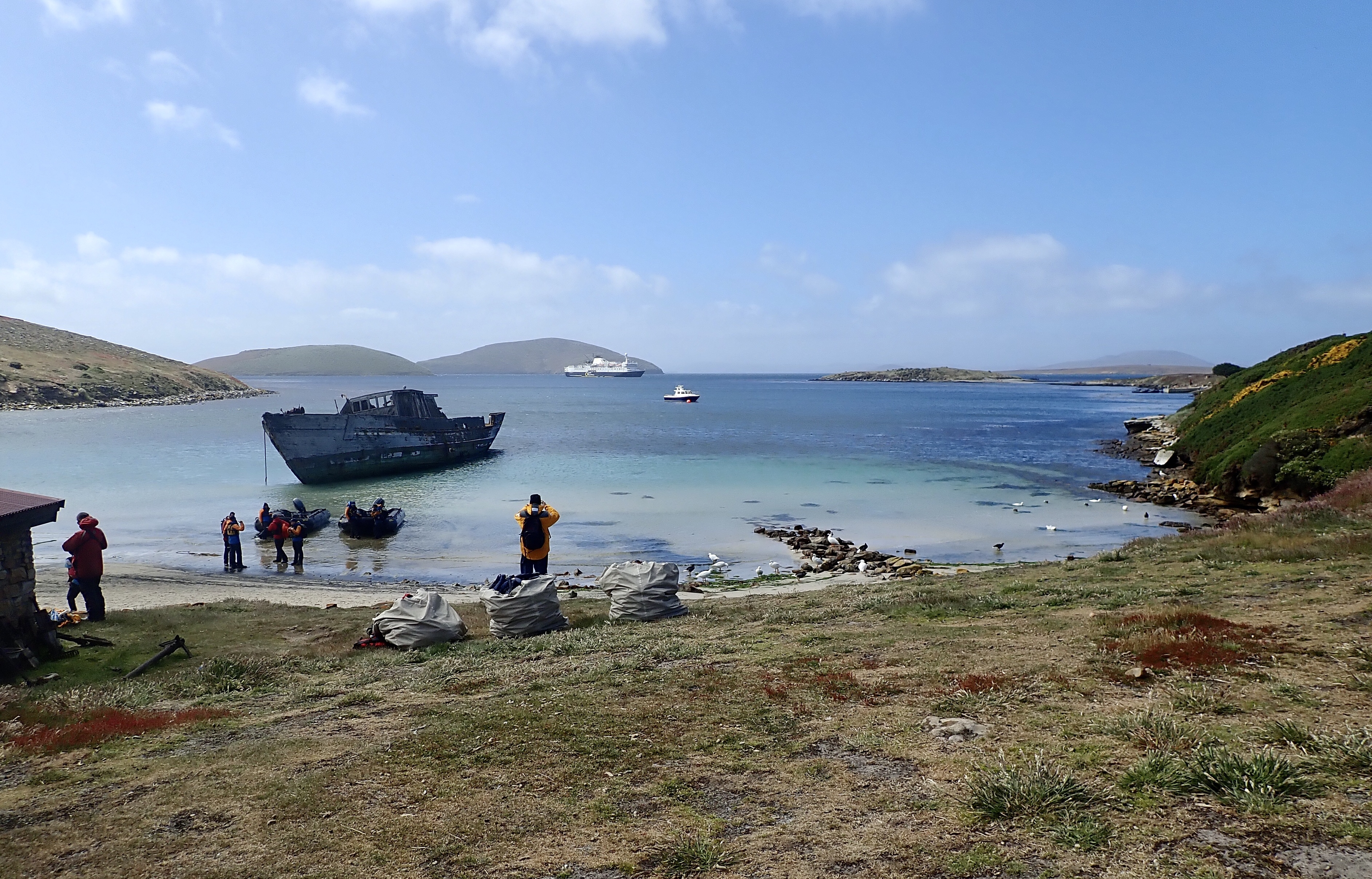
We arrived passing the remains of The Protector 3. Built in WW2 as a mine sweeper. Then used for hunting seals, transporting things like coal and even as a tourist vessel. Abandoned in 1969 exactly where we saw it.
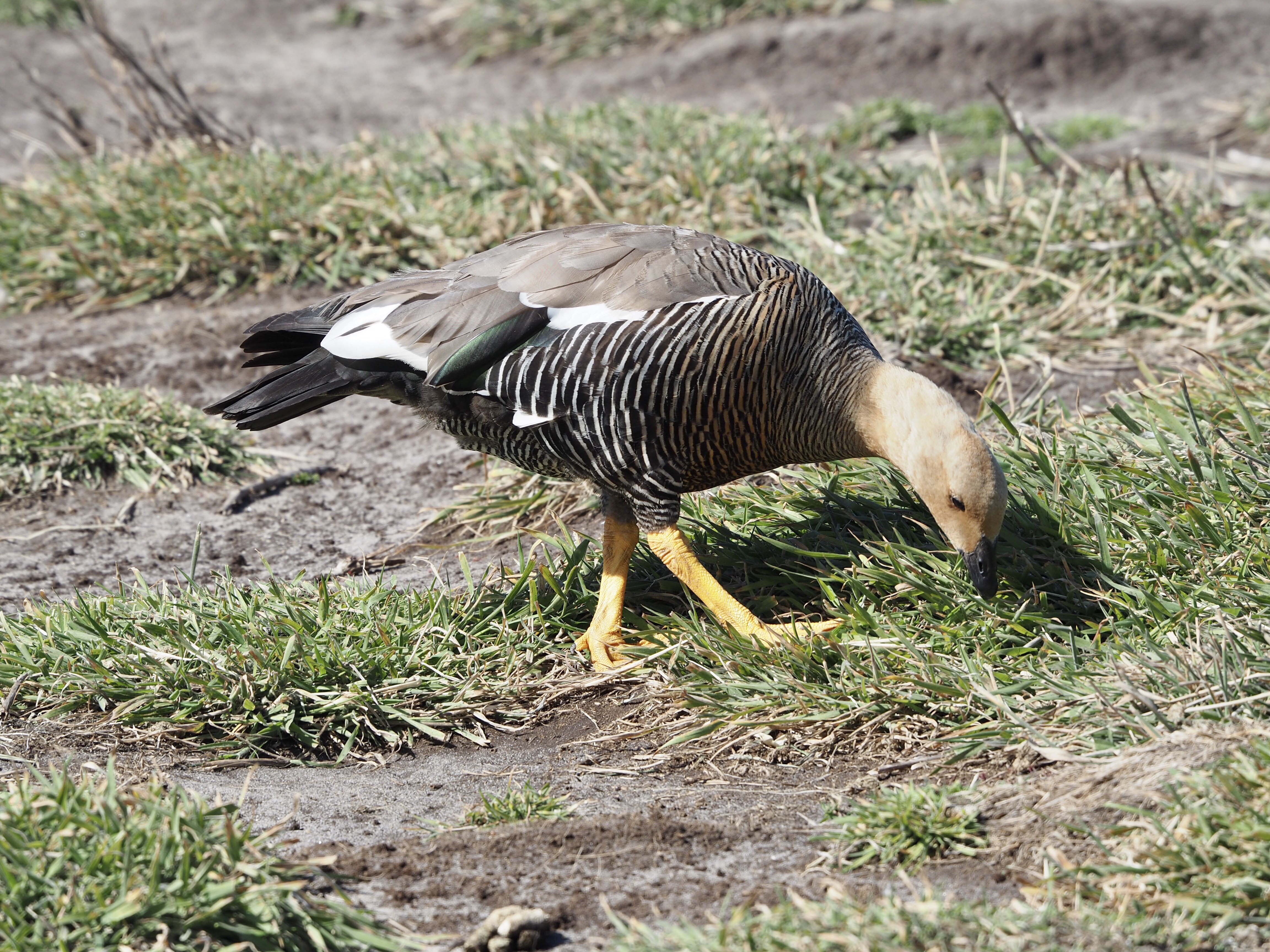
So then we disembarked – which means swivelling around on your bum towards the engine and then right around so you land in the shallow water. We had 2.5 hours to make a 0.6km trek to the rookeries on the very windy side of the island. It was a fairly tough trek across countryside that very much reminded us of North Devon. Plenty of geese about.
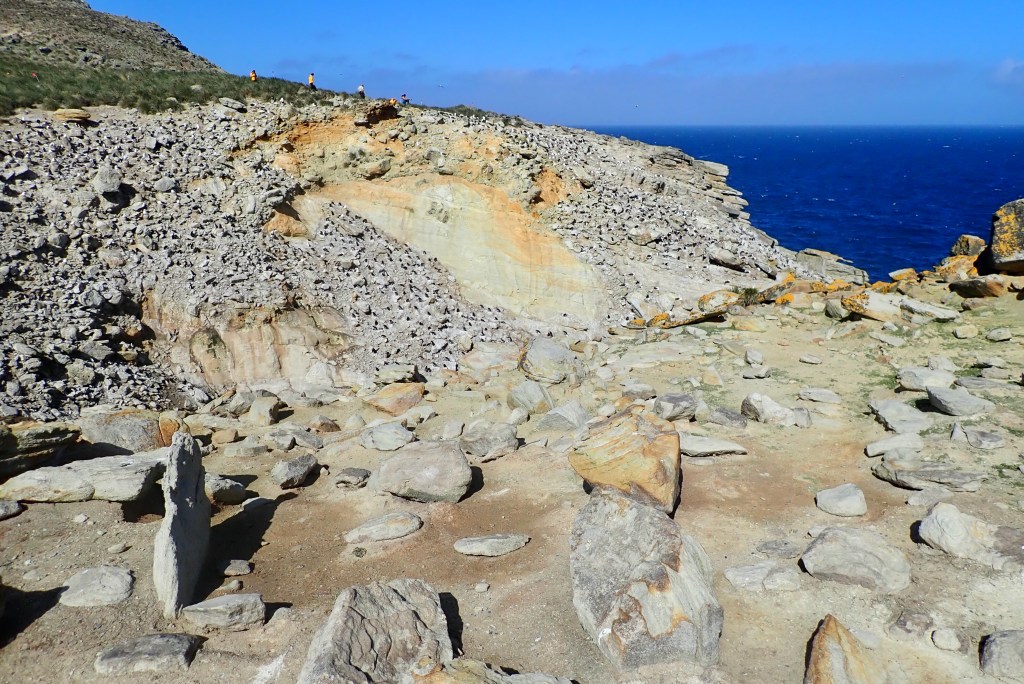
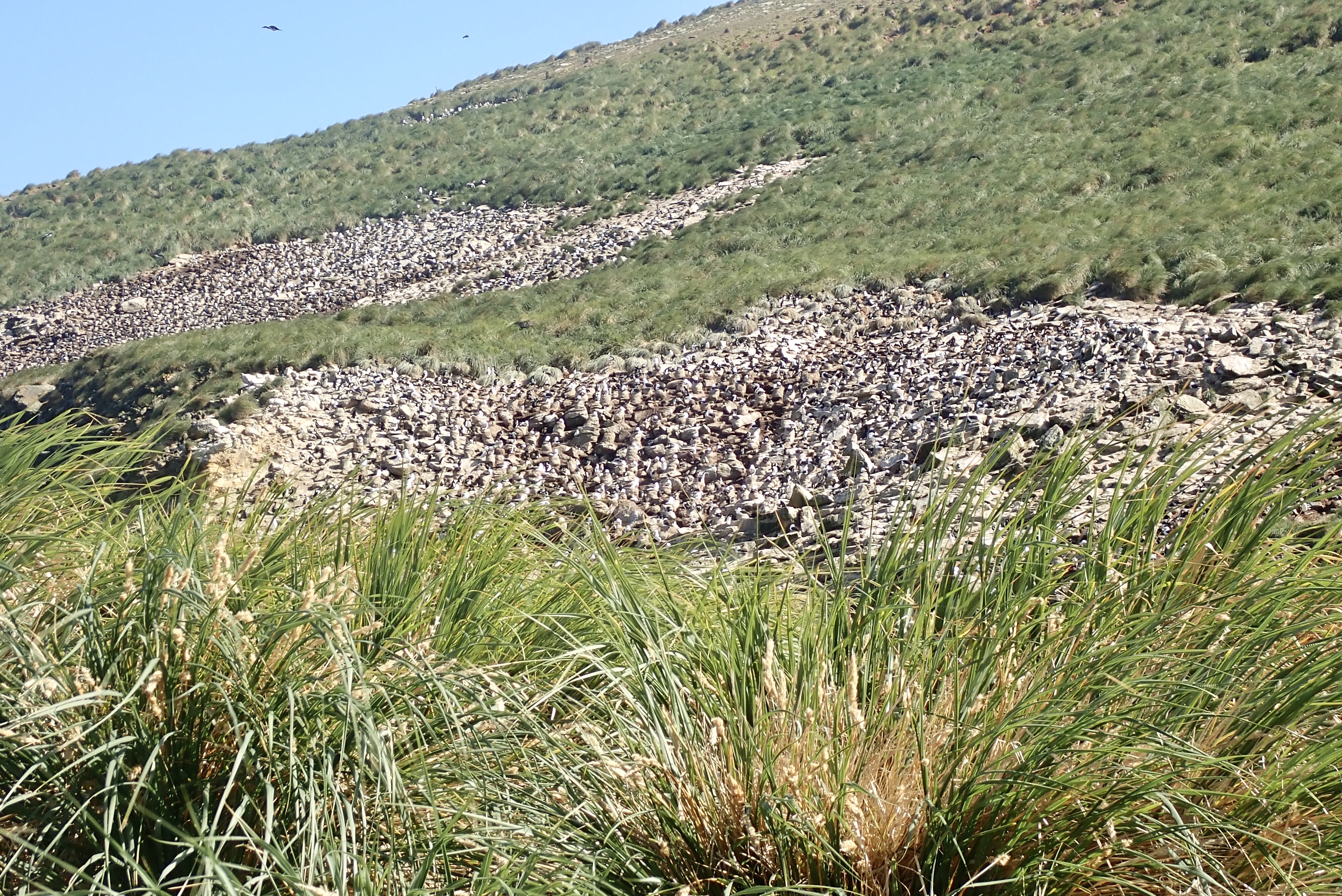
The Rookeries were simply amazing. We were to stay at least 5m away but some of the penguins hopped over to us. We could not believe how high they had come from the water to nest. The whole thing was fascinating and before I knew it I had taken 134 photos which we culled mercilessly when we came back to the ship.
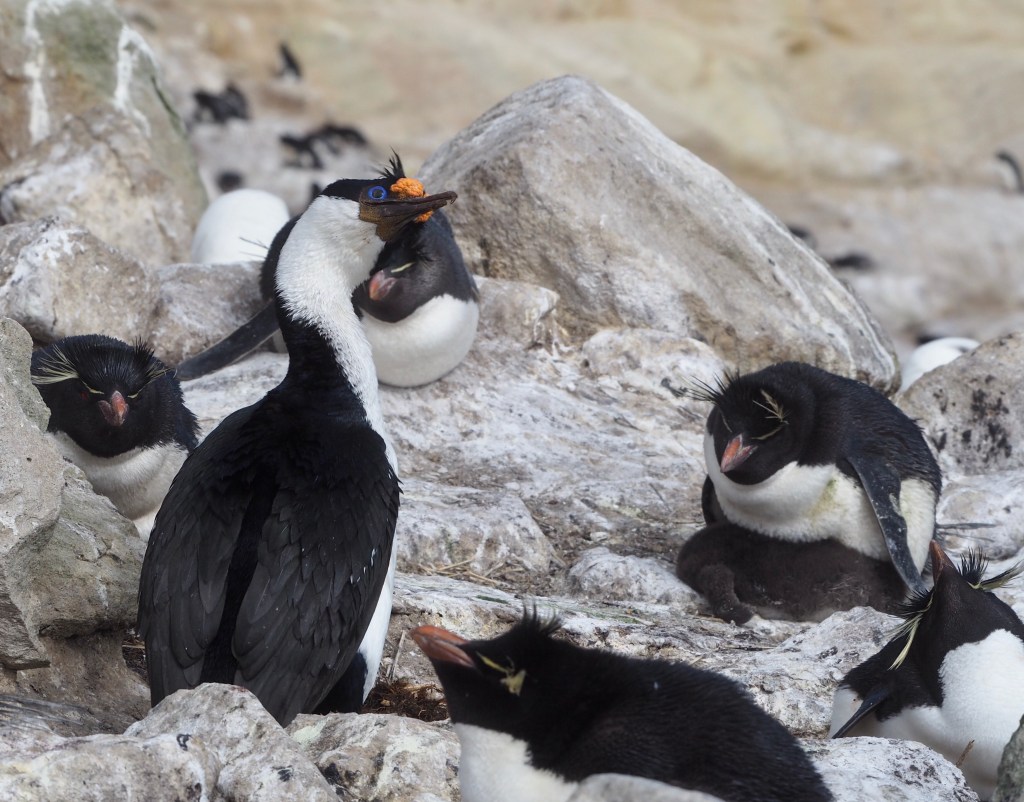
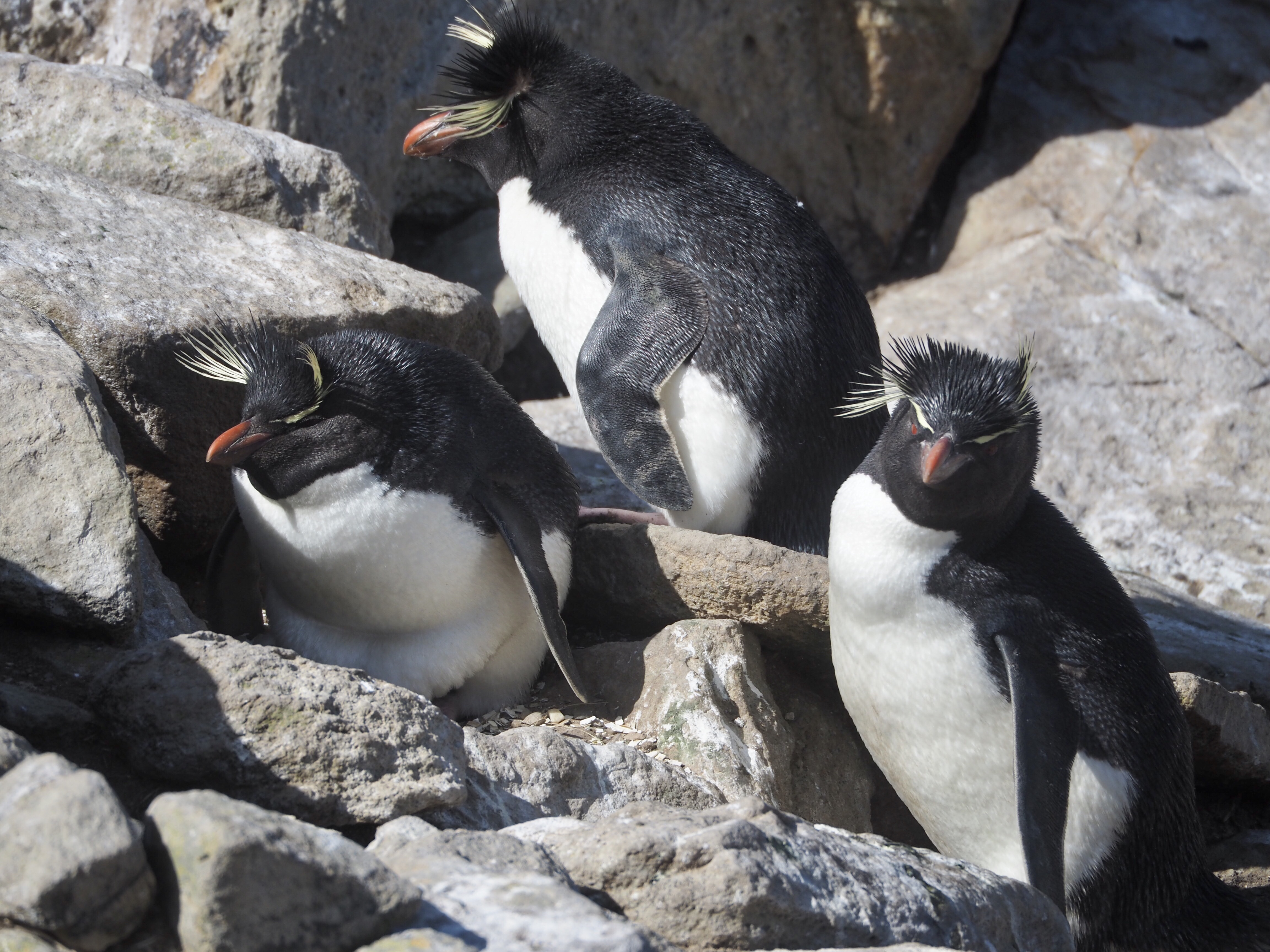
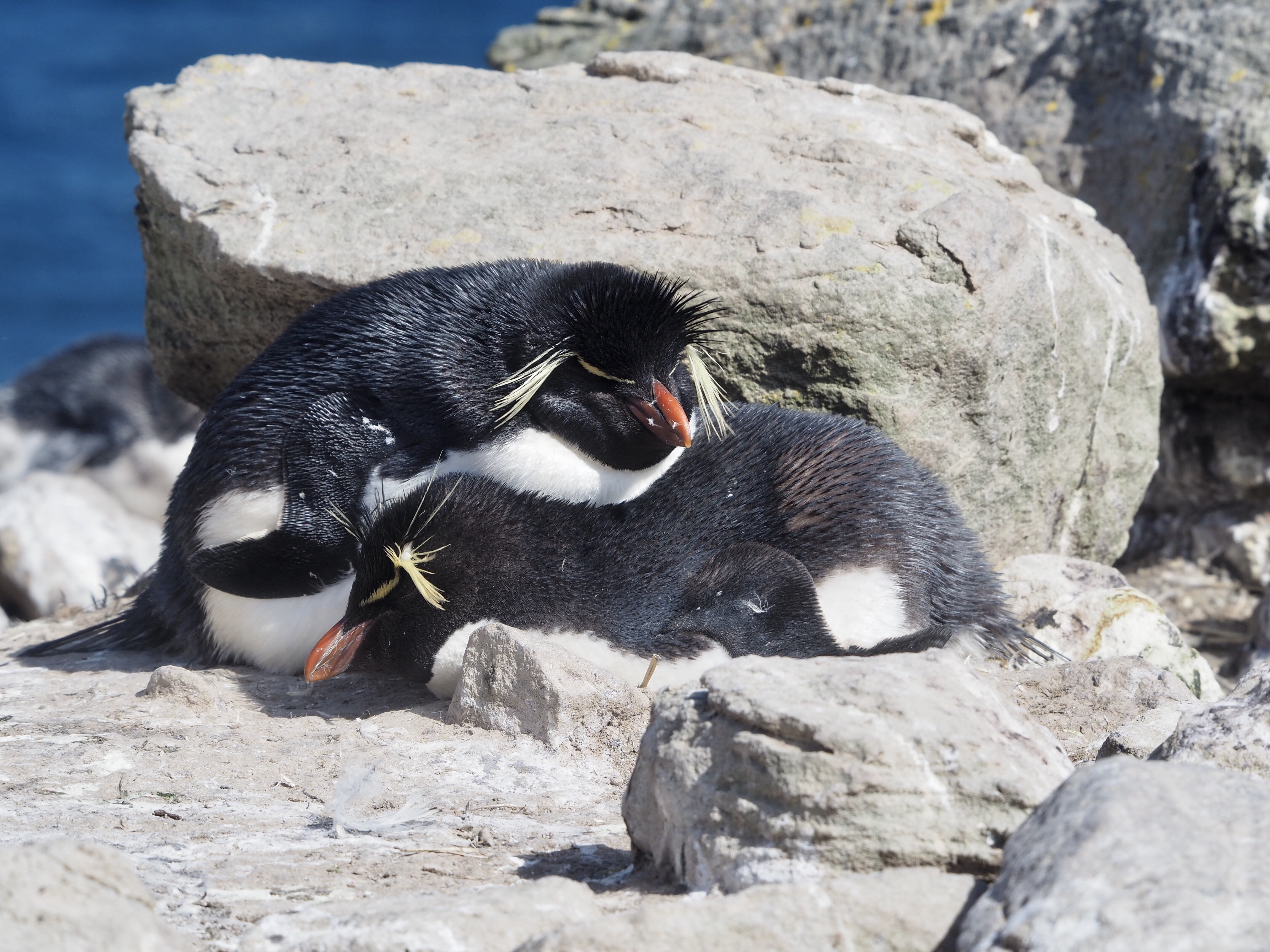
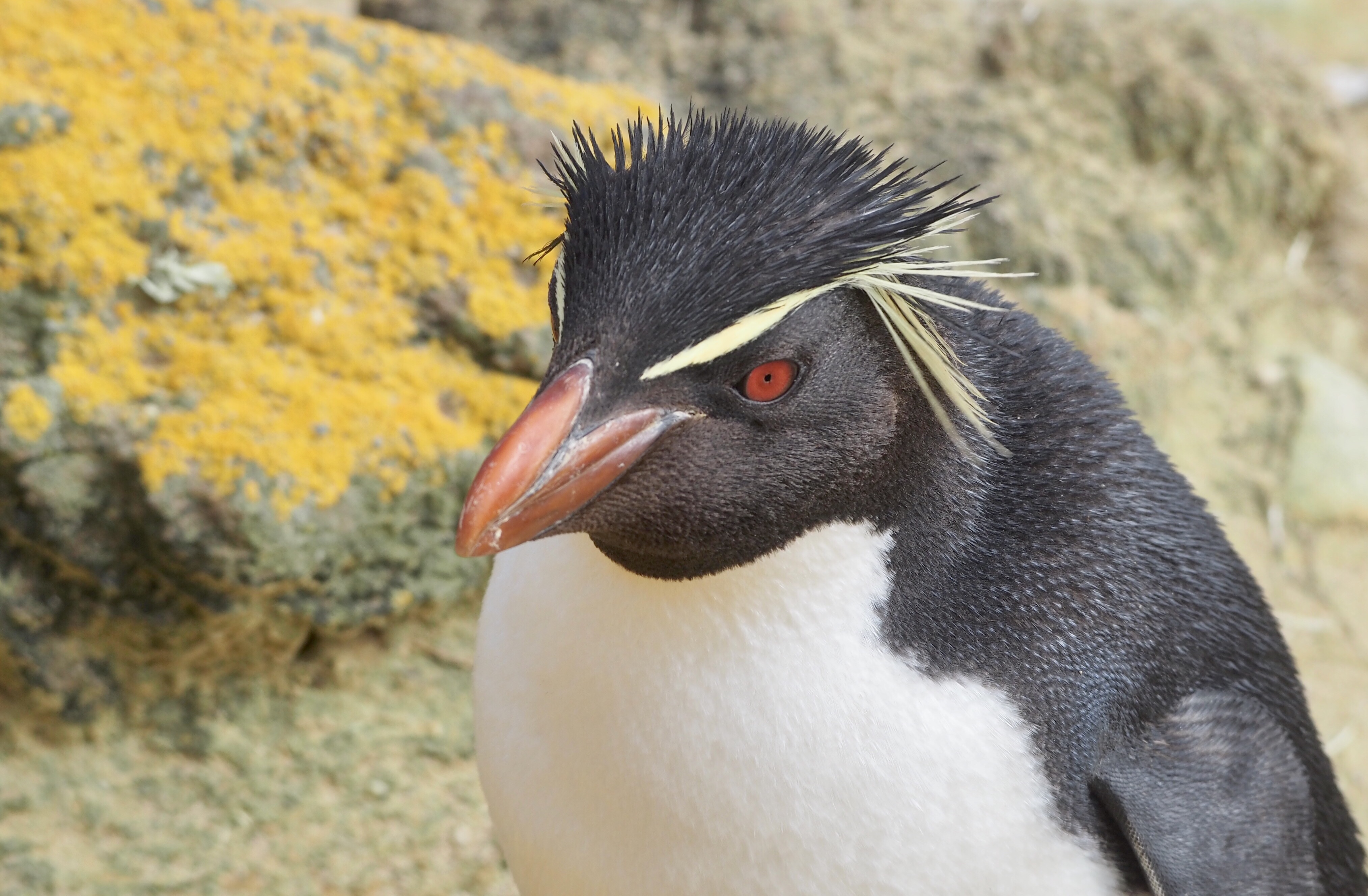
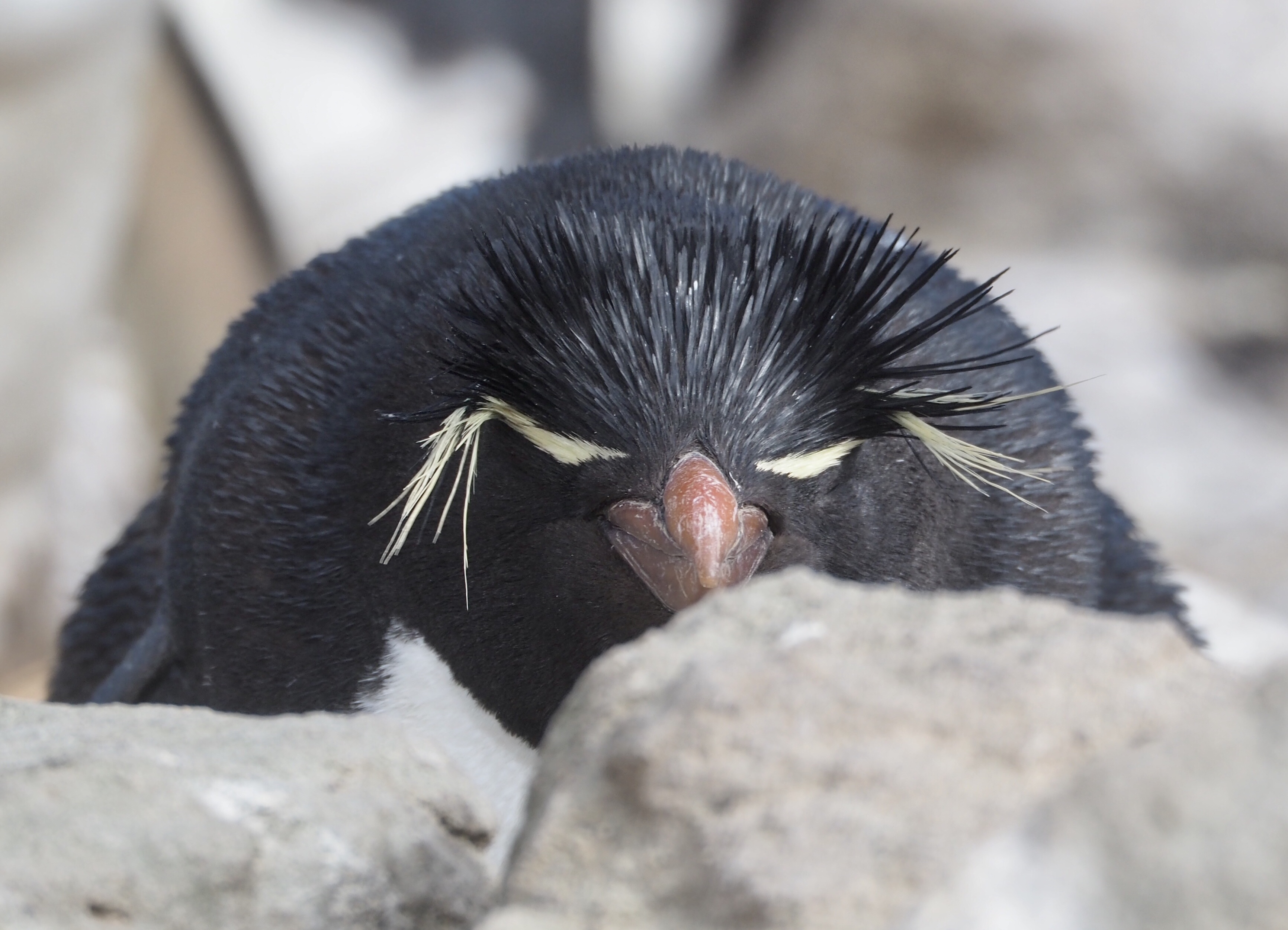
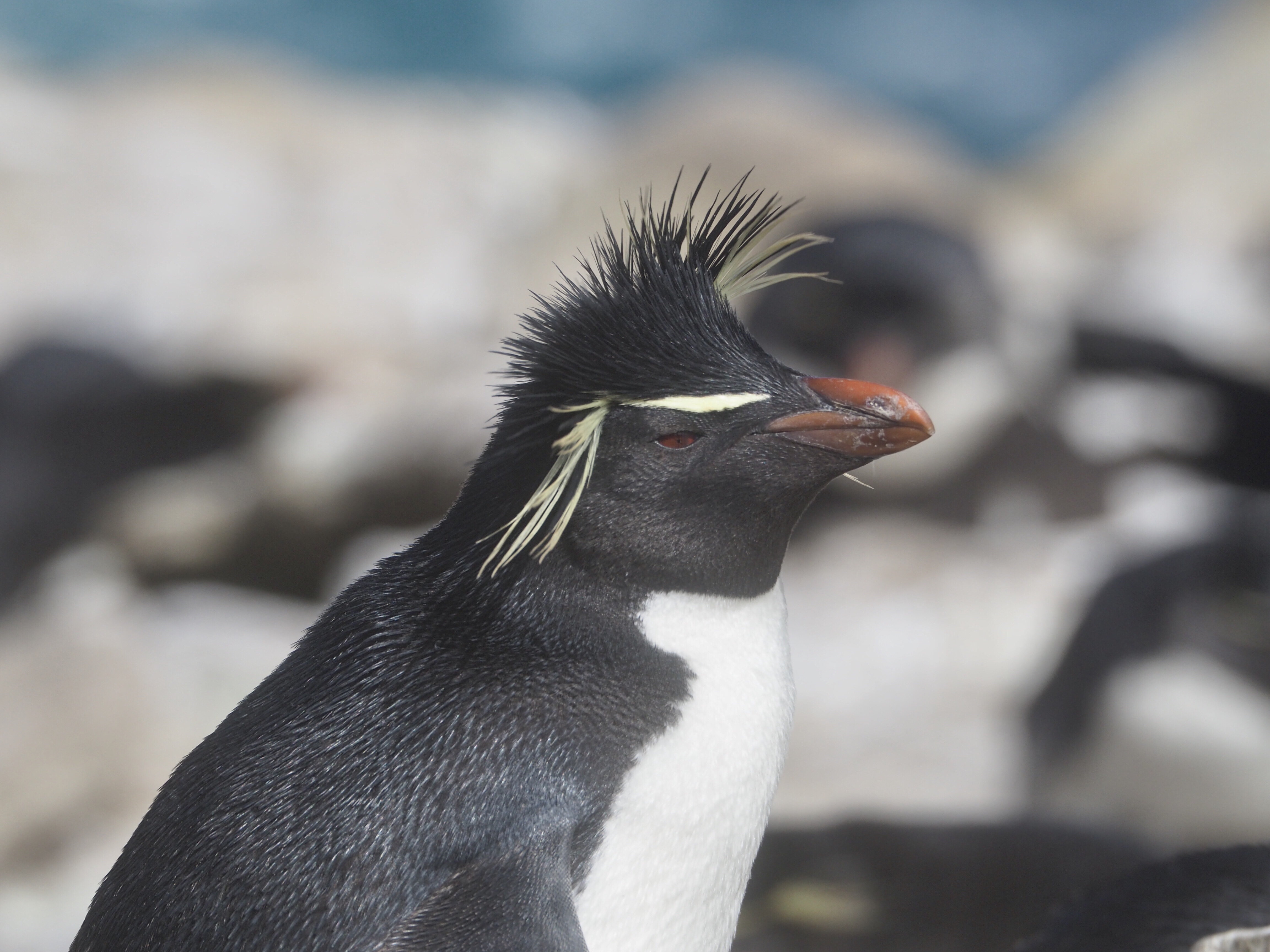
The rock hopper penguins are just gorgeous. They are about 39 cm (15 in) high and weigh 3.4 kg (7.5 lb). They are the smallest of the penguins in the Antarctic. They are rated as vulnerable with their numbers falling. It is estimated there are 272,000 pairs left in the world. Humans have harvested them for their skins, oils and eggs. They often nest with the black-browed albatross. These guys are rated as endangered as many are killed by longline fishing. They are about 87cm (34”) long, weigh about 3.5kg (7.7lb) with a wingspan of 2.5m (8ft). (The biggest albatross – the wandering albatross goes as wide as 3.5m). They are bigger than the rockhopper penguins as you can see.
Better give you some pictures and I truly have culled these down. Enjoy.
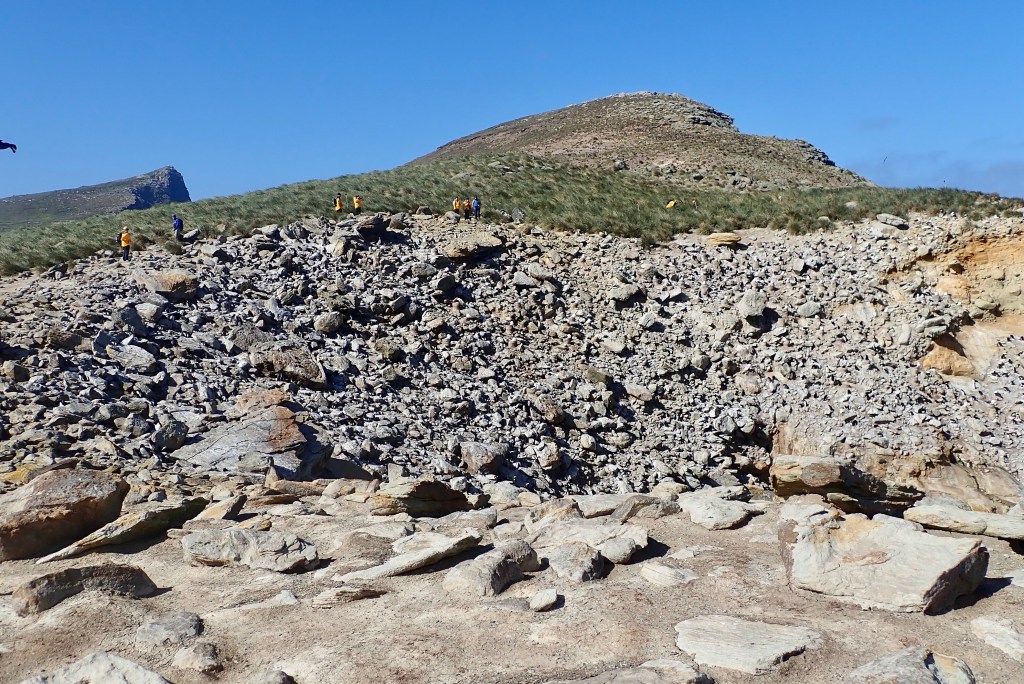
Parent and chick.Yes all those dots are penguins and albatross.The yellow people are from the ship to add some scale to it all.
Within the rookeries, odd species often join in and we spotted this Antarctic shag.
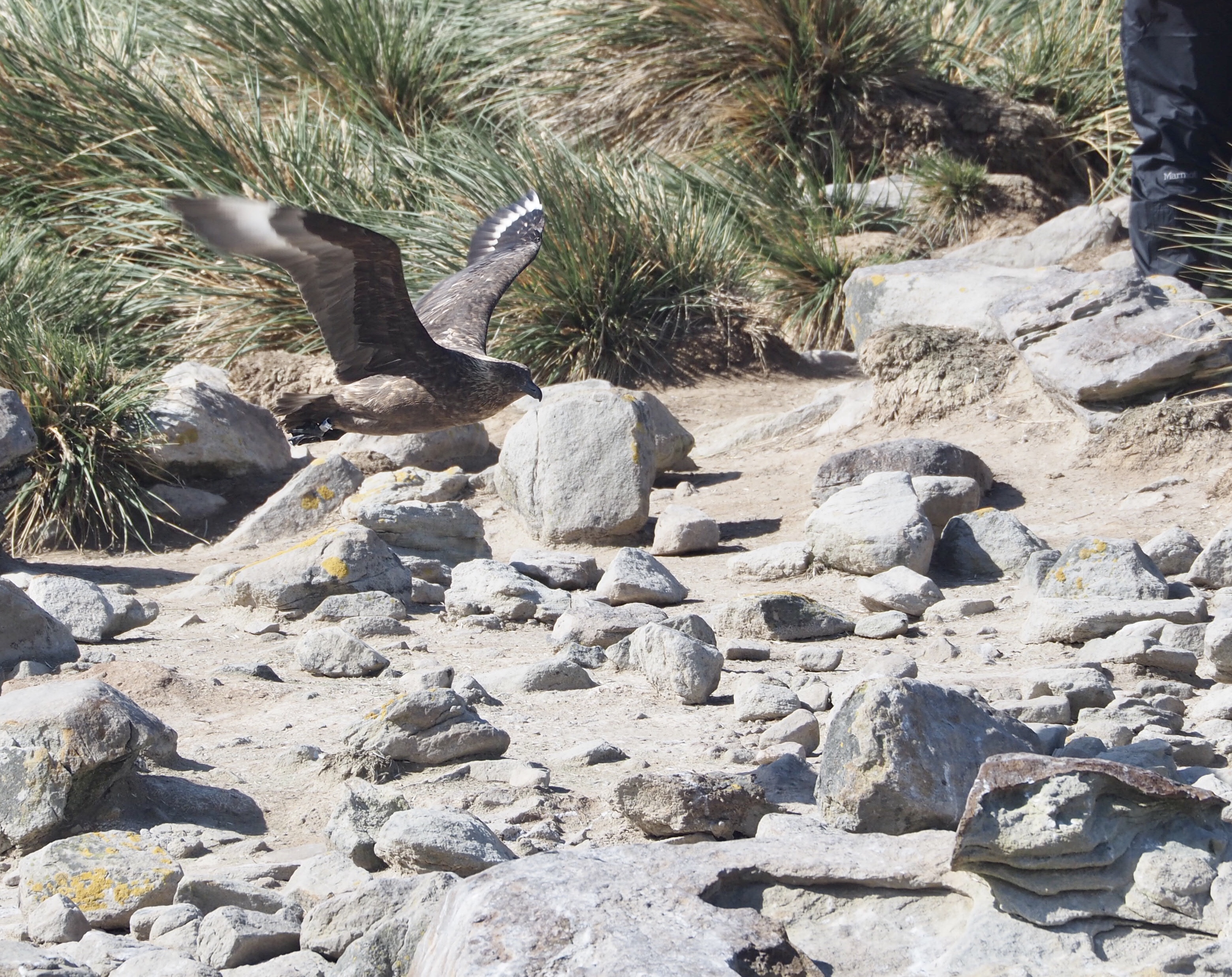
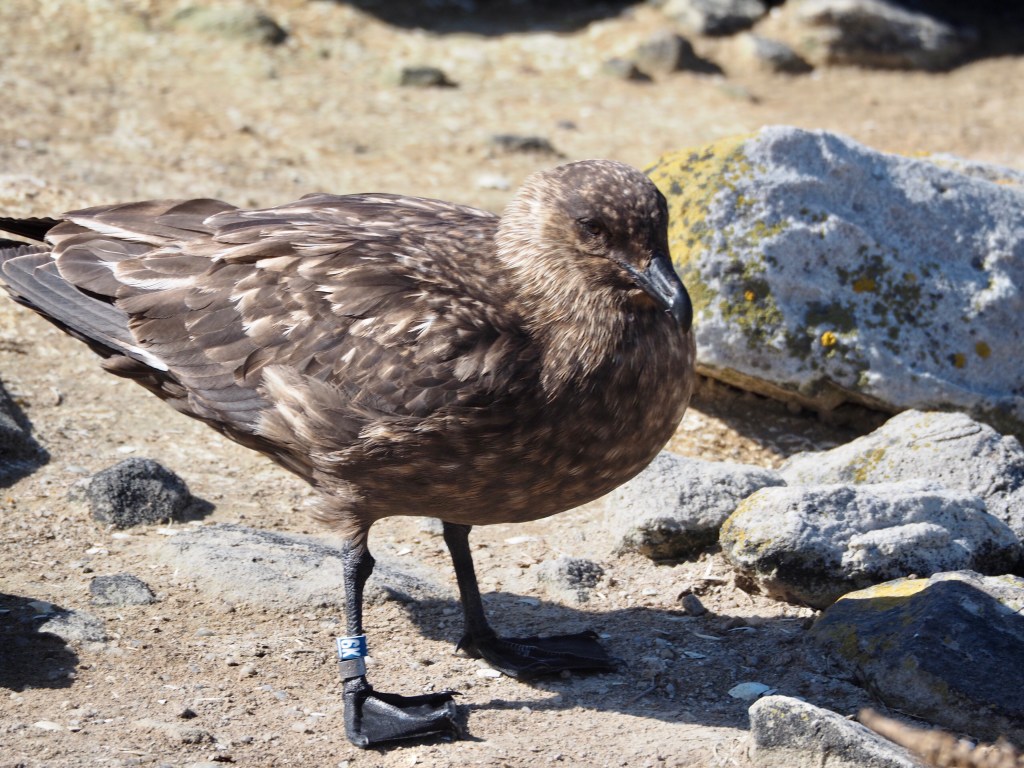
Skuas hang around, hoping for parents to leave so they can snatch the chicks. Thankfully we didn’t see that happen but I guess everyone has to live.
More penguins and albatross do I hear you say? OK here goes.
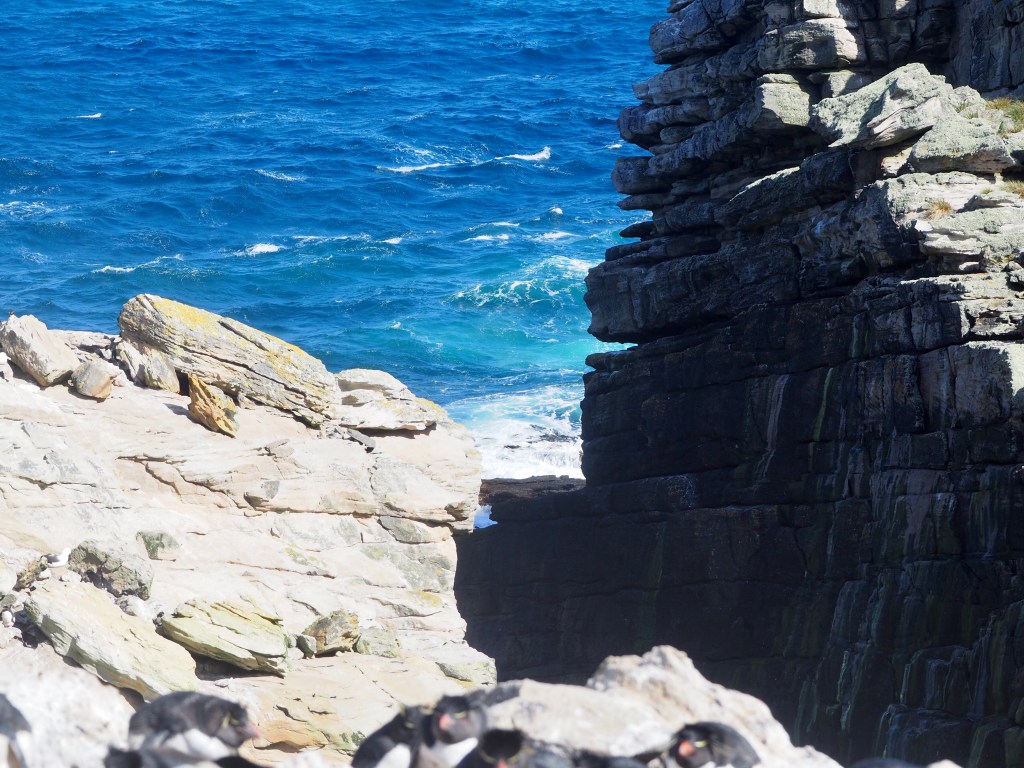
Can you believe they climb up here?
The albatross are just as wonderful.
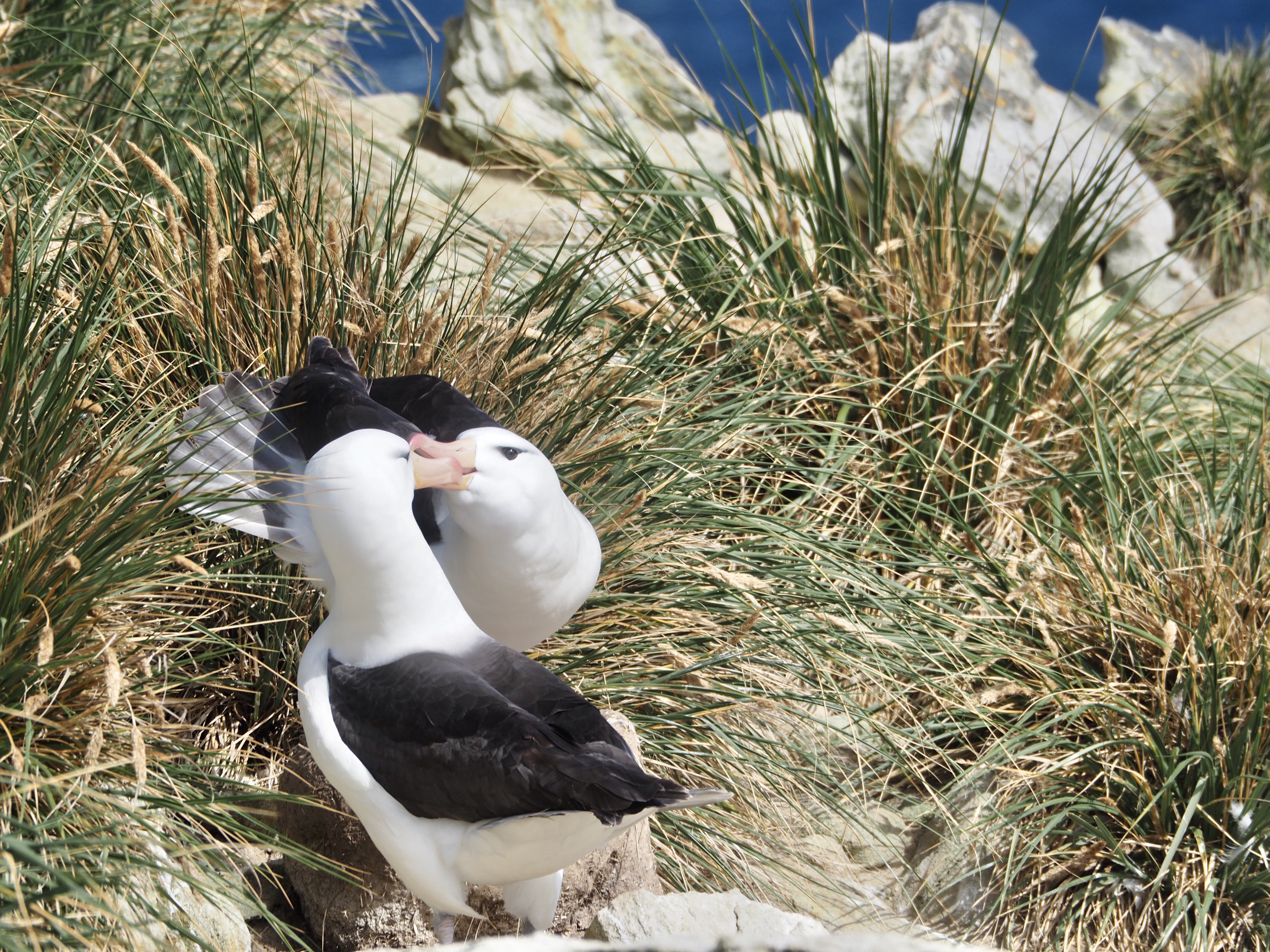
These two were courting.
Weather is being pretty kind with loads of sun and 12 degrees Celsius, though in the wind it seems colder until you snuggle into the new parka which is amazing.
We were warned to keep our bags closed at all times to ensure the rats that are still a problem on New Island couldn’t sneak in and be brought back to the ship. We also walked through a special solution going out and when coming back on board to ensure we keep everything sterile and don’t bring disease or pest species to these very vulnerable places.
This chap came to give us the once over.
Under here somewhere is a chick.
All too soon it was time to trek back to the ship.
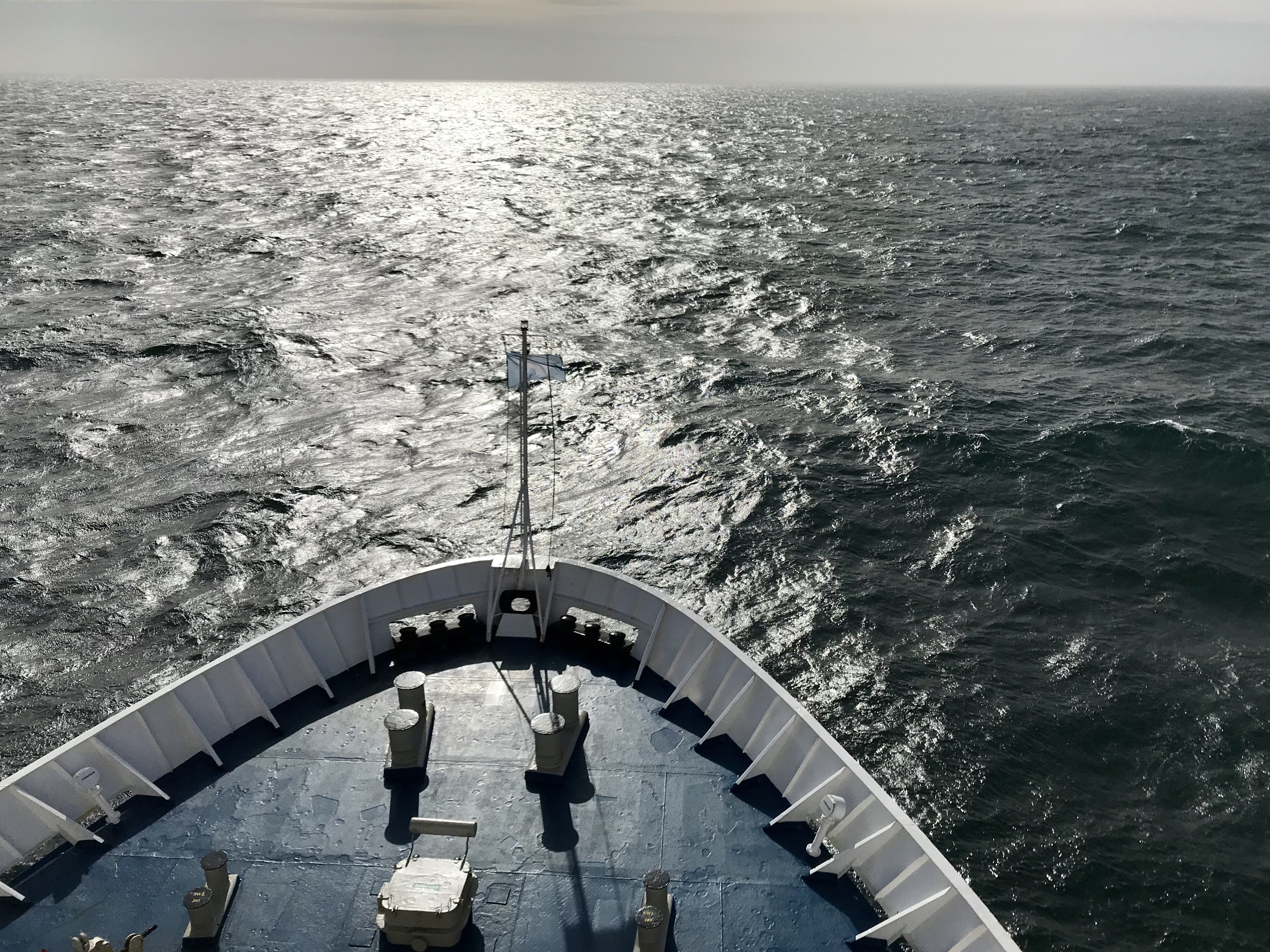
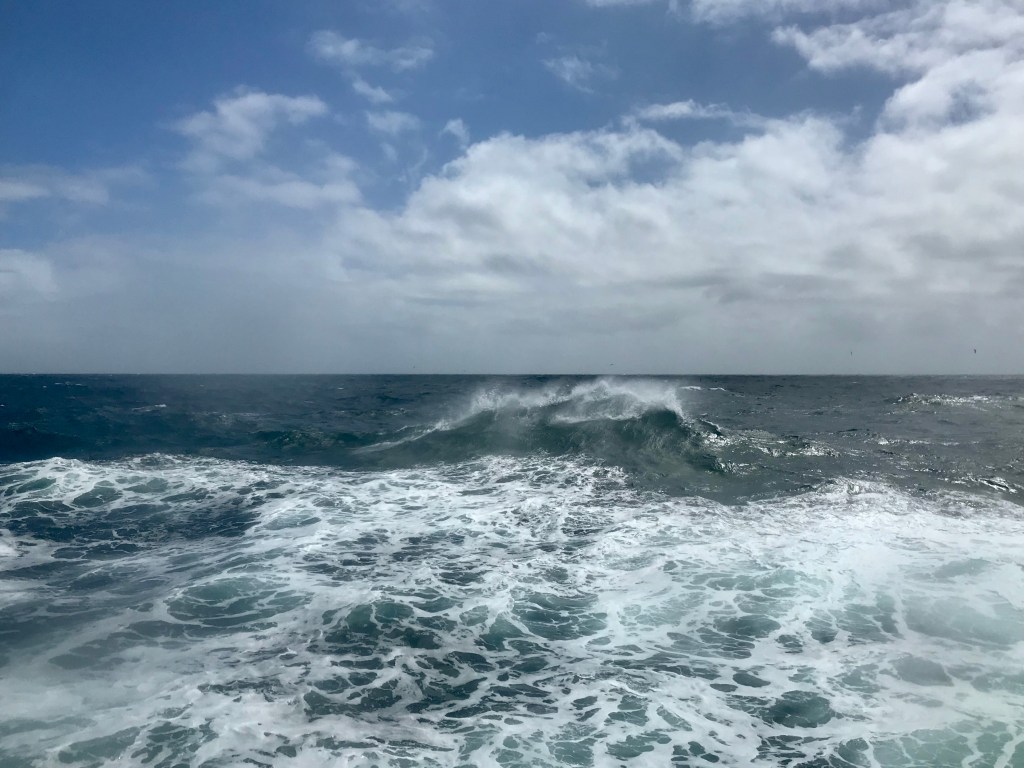
The Trip to our next excursion was to be approx. 3 hours and with 30 plus knot winds the seas were reasonably high though hard to capture on film from a porthole.
These small ships certain move more than the Celebrity Solstice but we are both coping fine – even enjoying it. I am sure I spotted two dolphins but then they were gone. The waves were getting so high that birds were disappearing flying between them. We had waves splash up our porthole a couple of times.
Today we had an afternoon recap and briefing instead of an evening version as we will be late into the next stop due to the sea and wind conditions. Here is a little of what we learned.
Sea lions down to 3% of what there used to be here in the Falklands. Reduced by them being killed for their oil and also reduction of their food supply by over fishing. It has now risen to 14 degrees.
So of 134 pictures taken this morning I have kept 45. Even some of those were good but you simply can’t keep them all.
I have also decided to blog excursion by excursion rather than day by day. I have to say that I felt I had my money’s worth just from this first excursion. It was simply breathtaking. Stand by for the afternoon excursion tomorrow, onwards to West Point.
Woke in the night to distinct movement but went straight back to sleep. Up at 7.30am and at 7.55am gentle music started over the PA and our leader, Solan’s voice in gentle tones giving us some information about the day, though he did say it was 8.55am which gave us a fright.
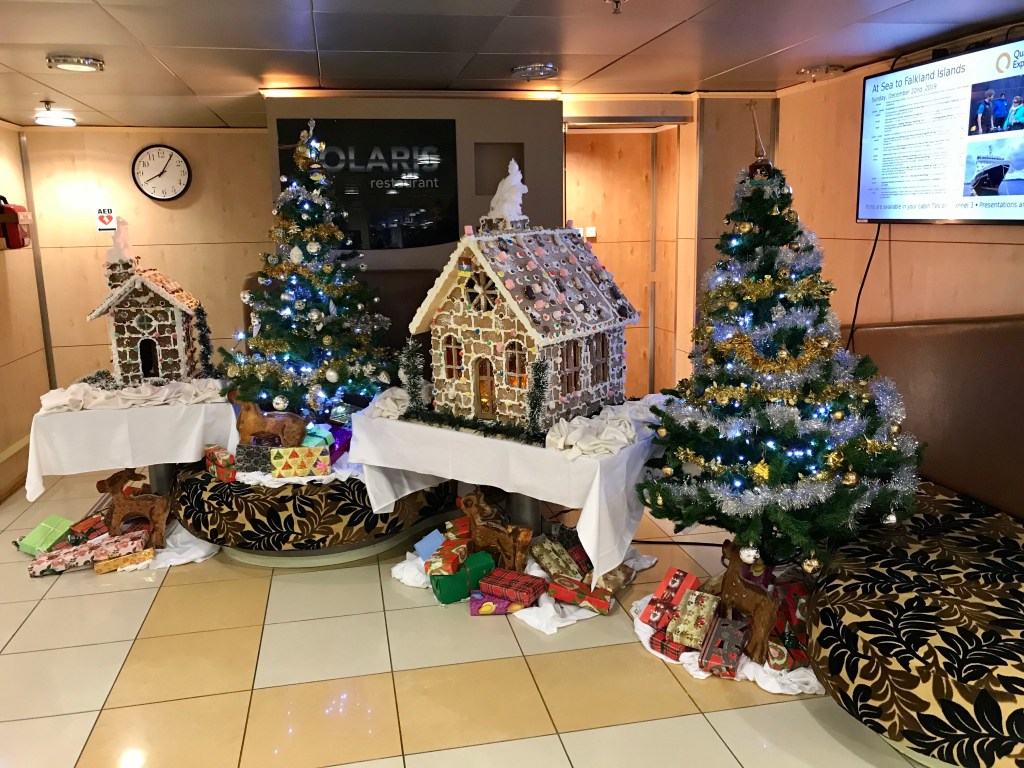
When we headed for breakfast we found the ship had been all dressed up for Christmas.
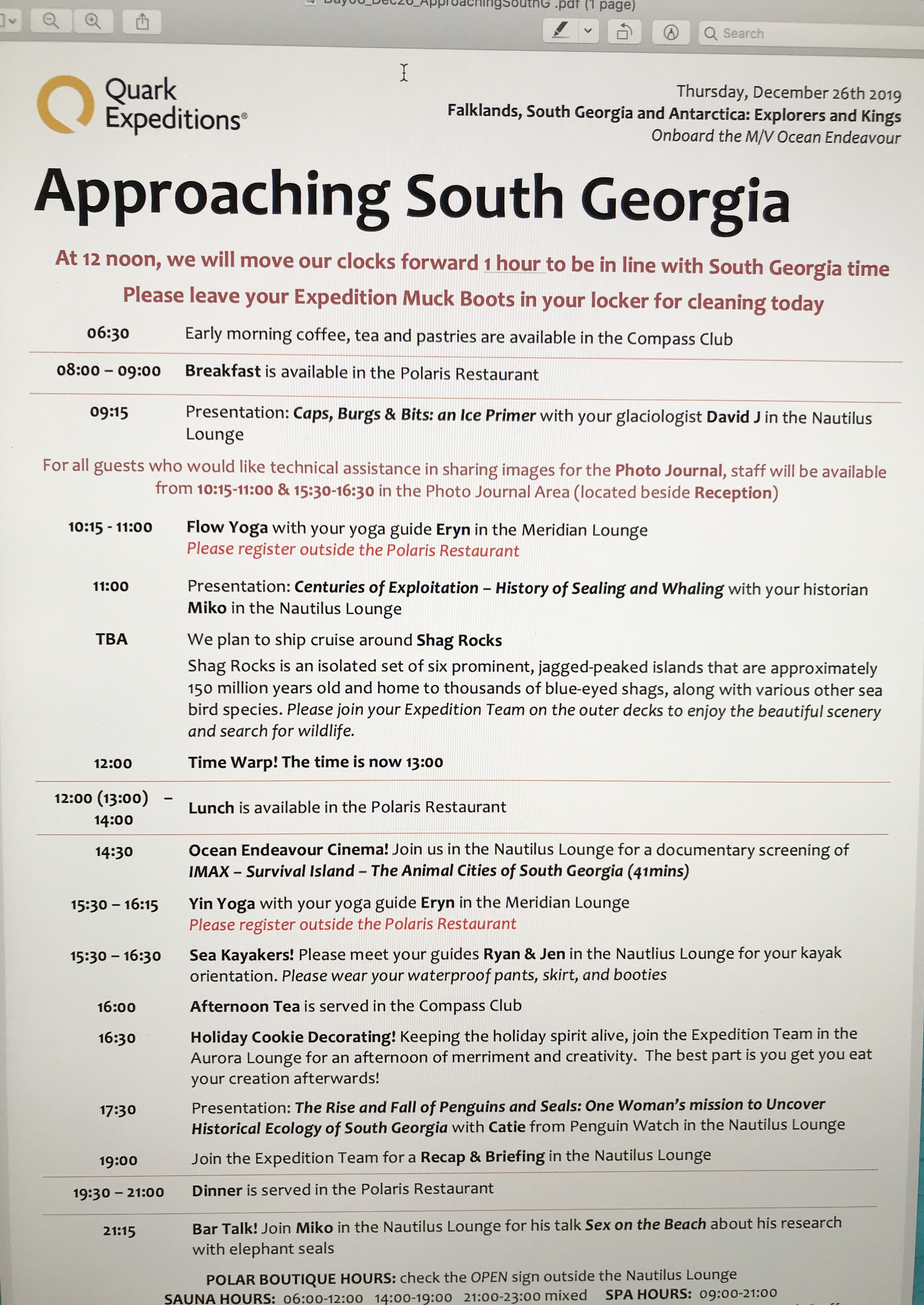
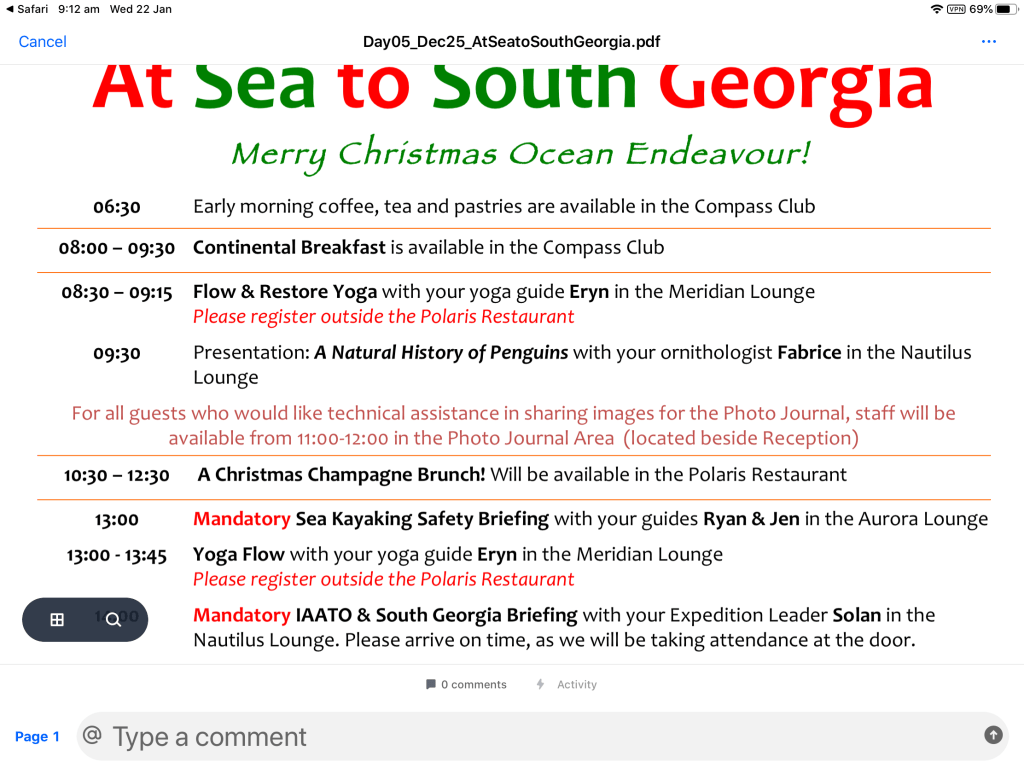
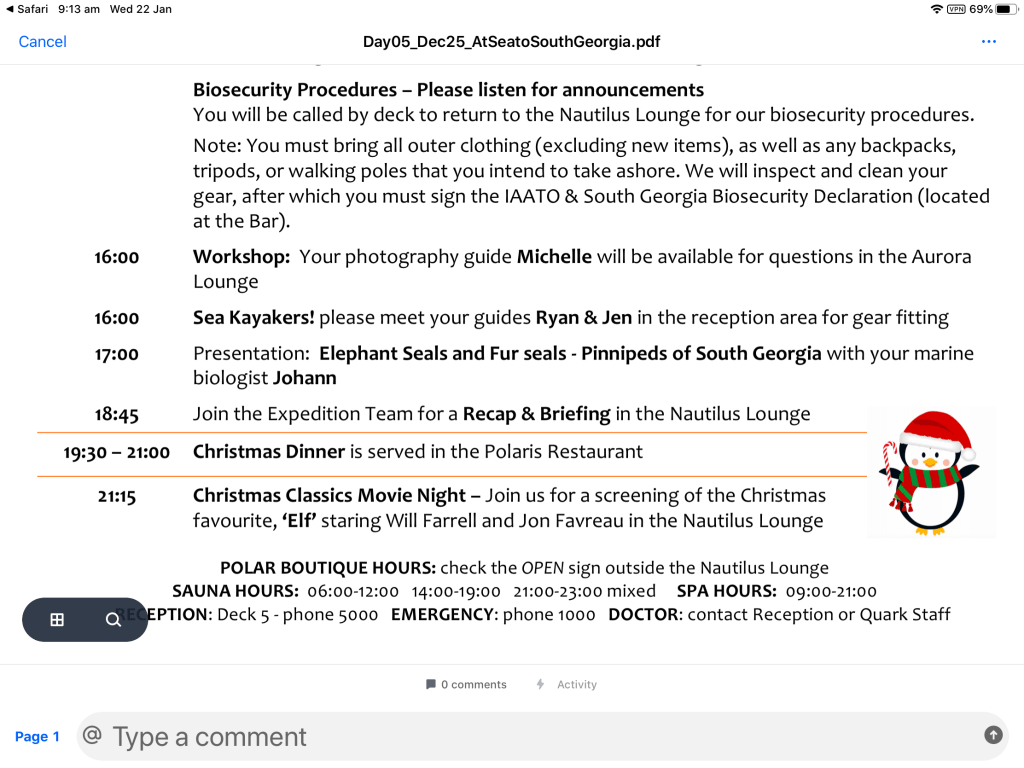
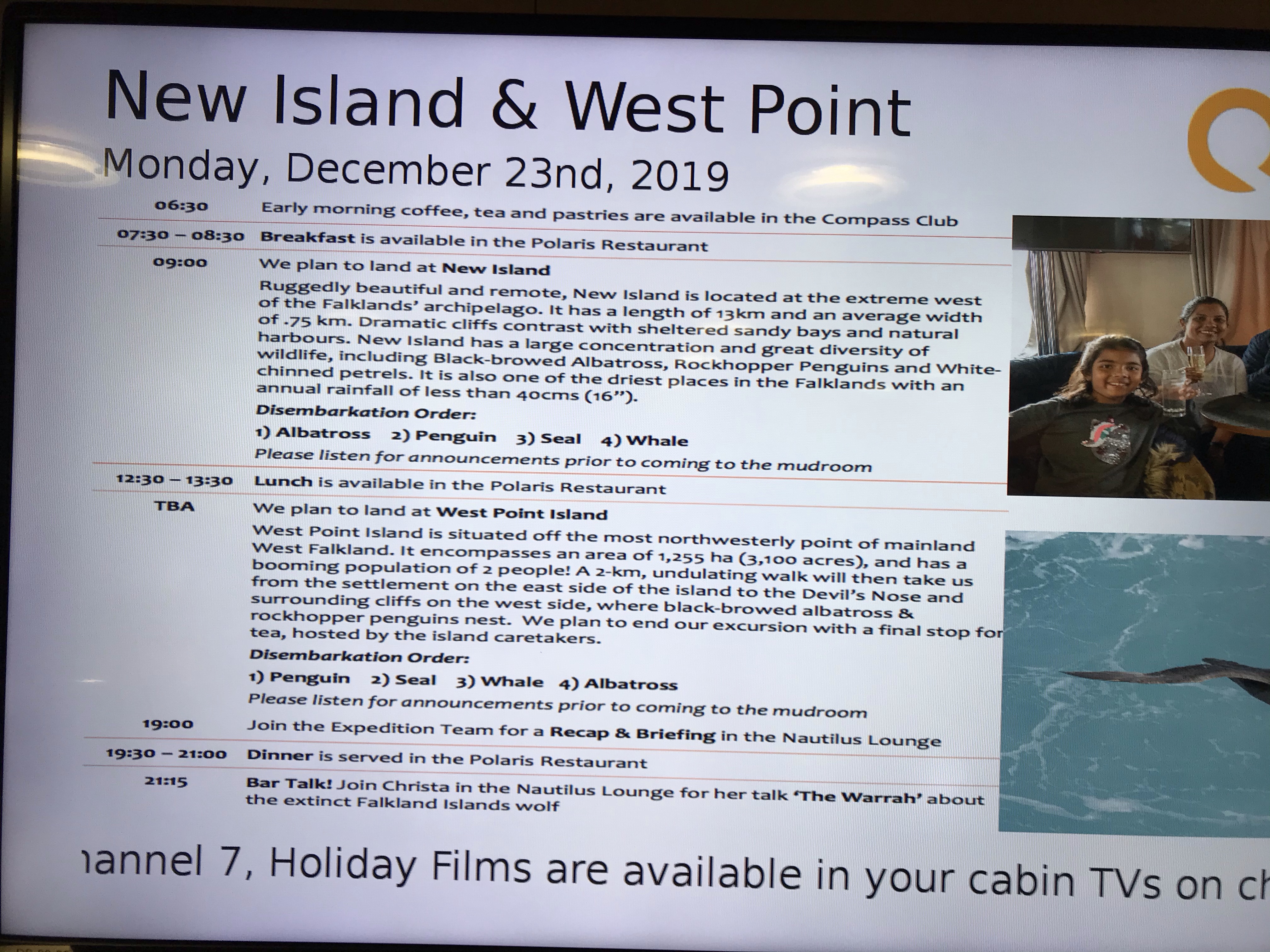
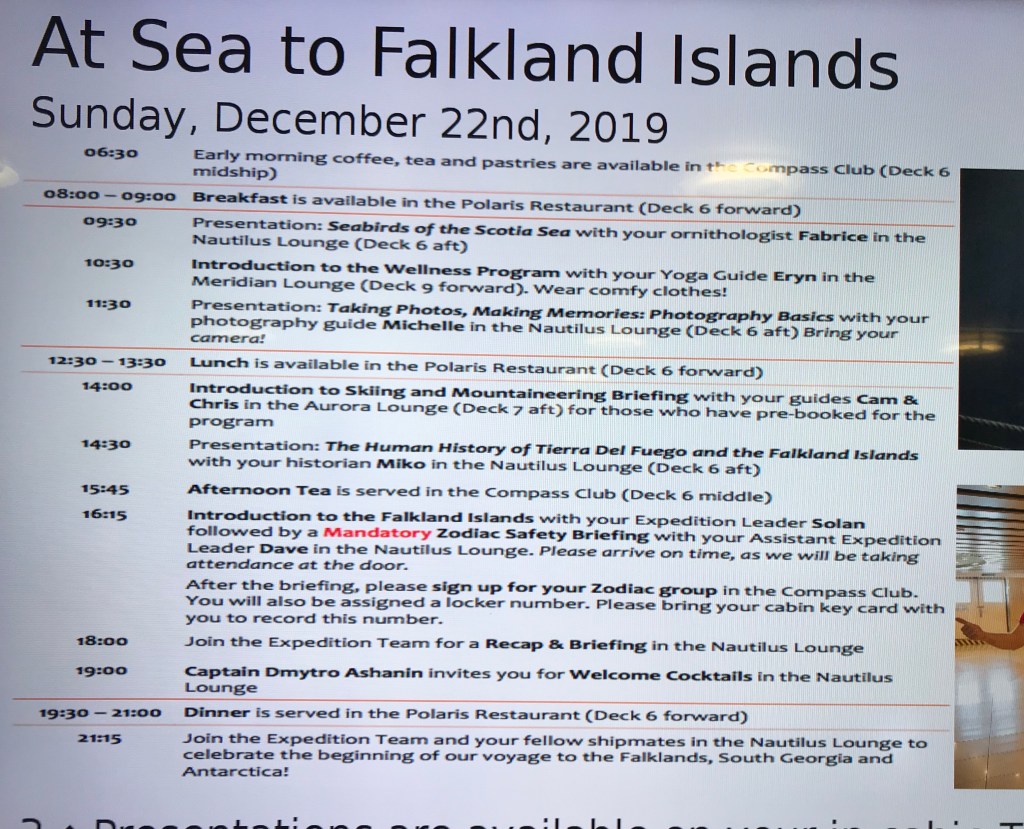
Each day a daily program appears on TV screens. I had hoped to share a better copy but the quark system has a glitch so here is a photo I took of a screen.
As you can see it’s a busy day. All the presenters were excellent so much to be learned. I took lots of notes but some may be more appropriate when we actually visit the places.
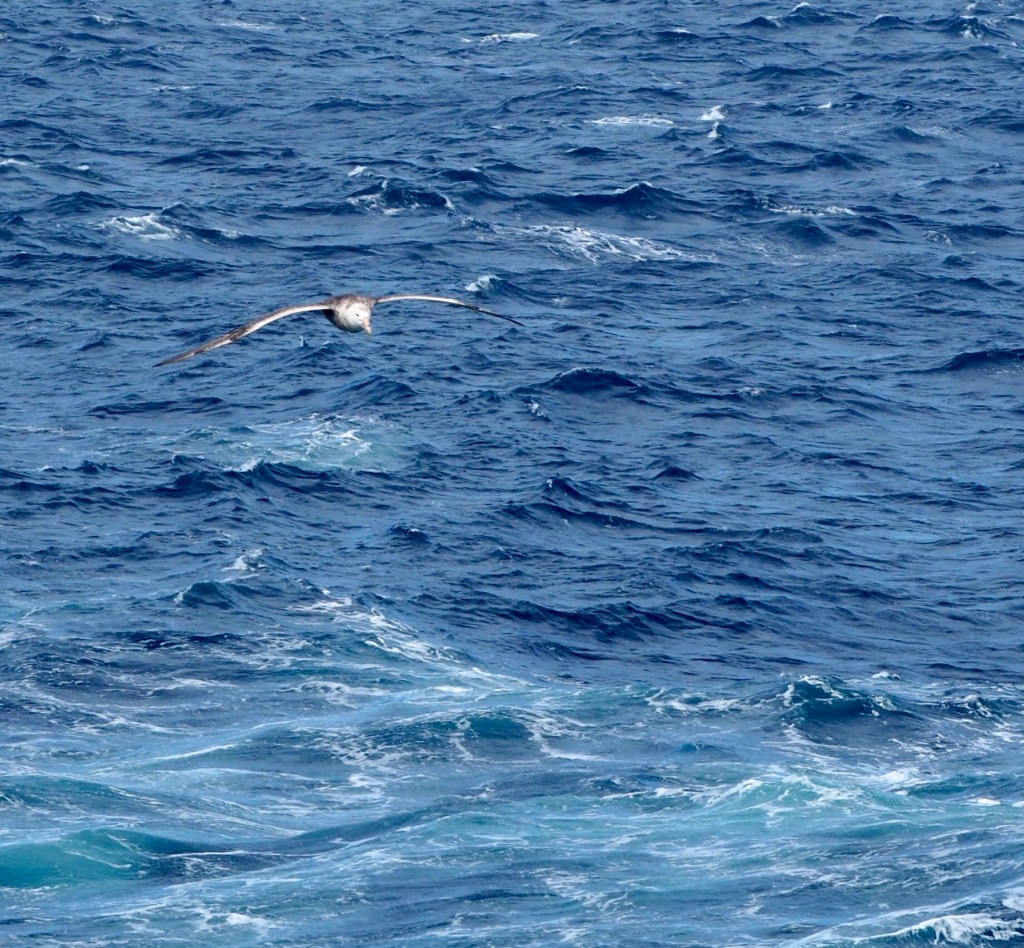
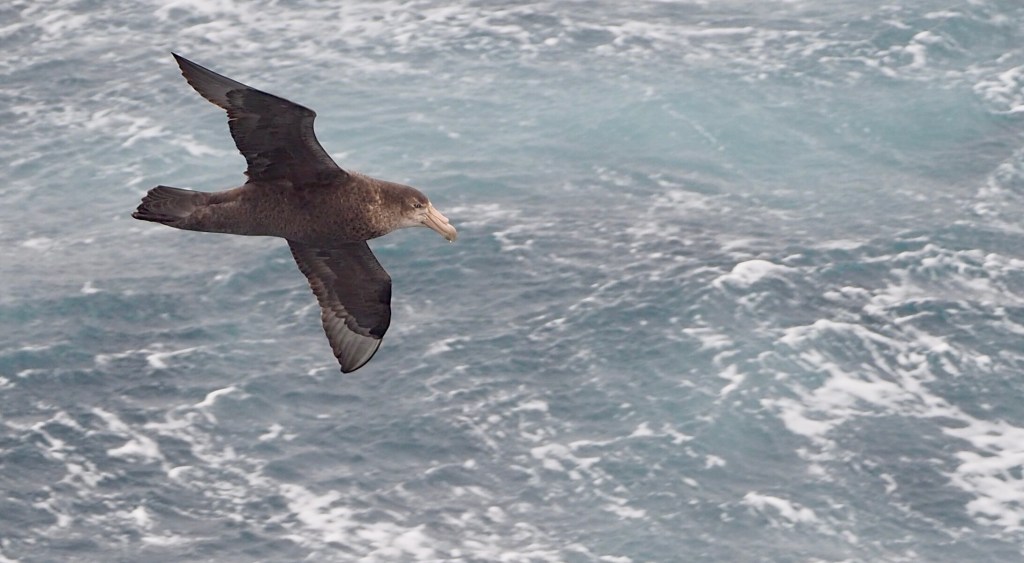
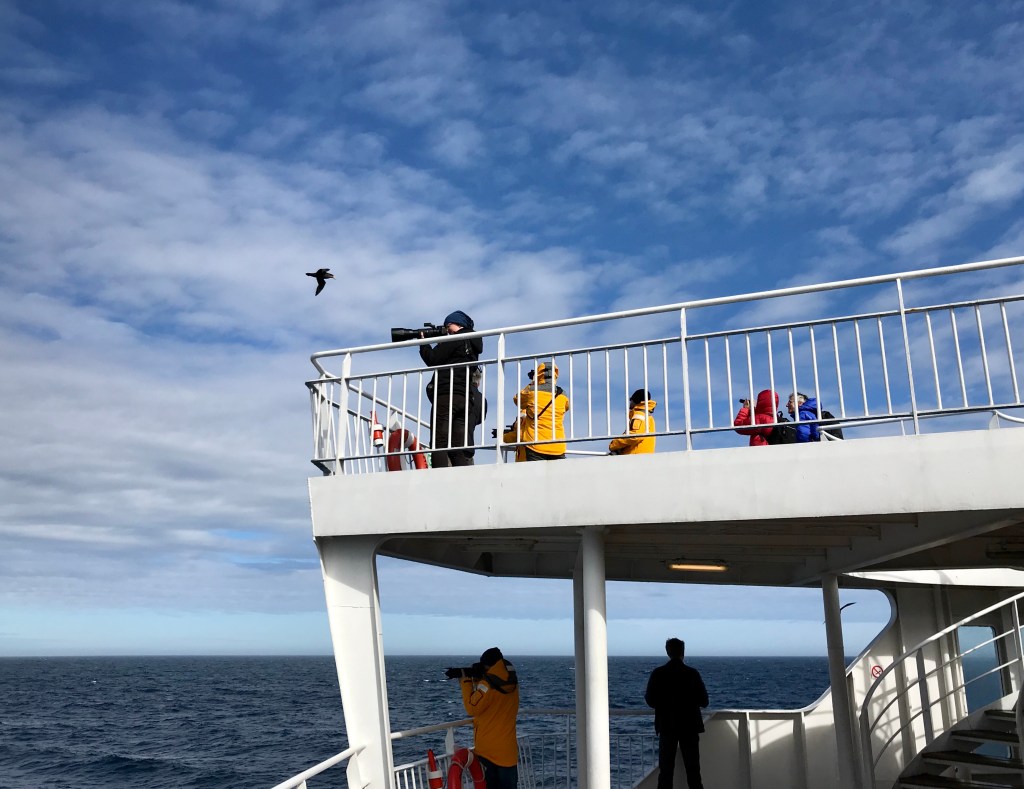
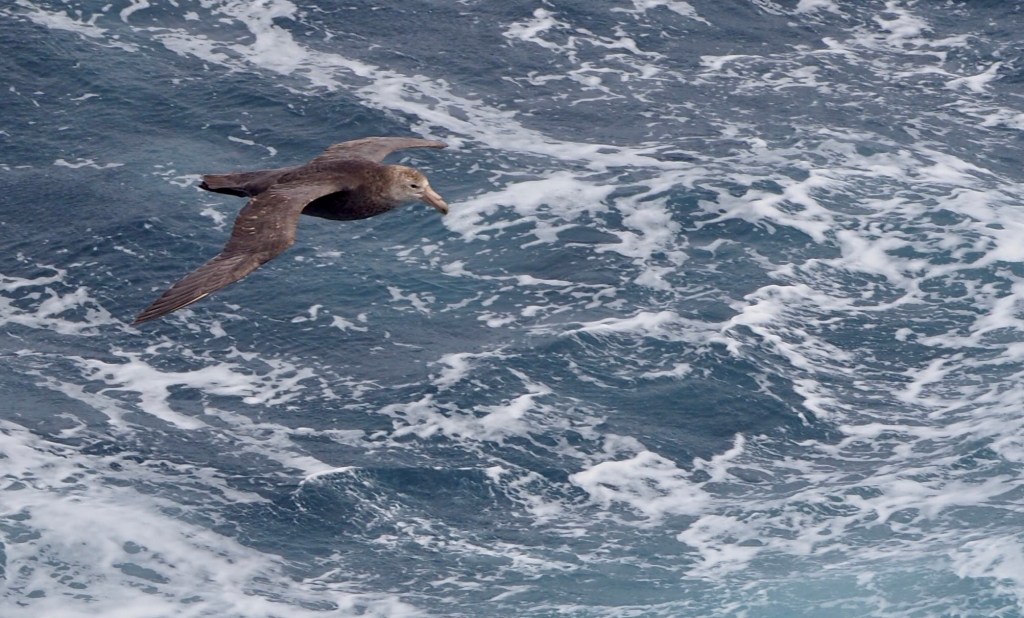
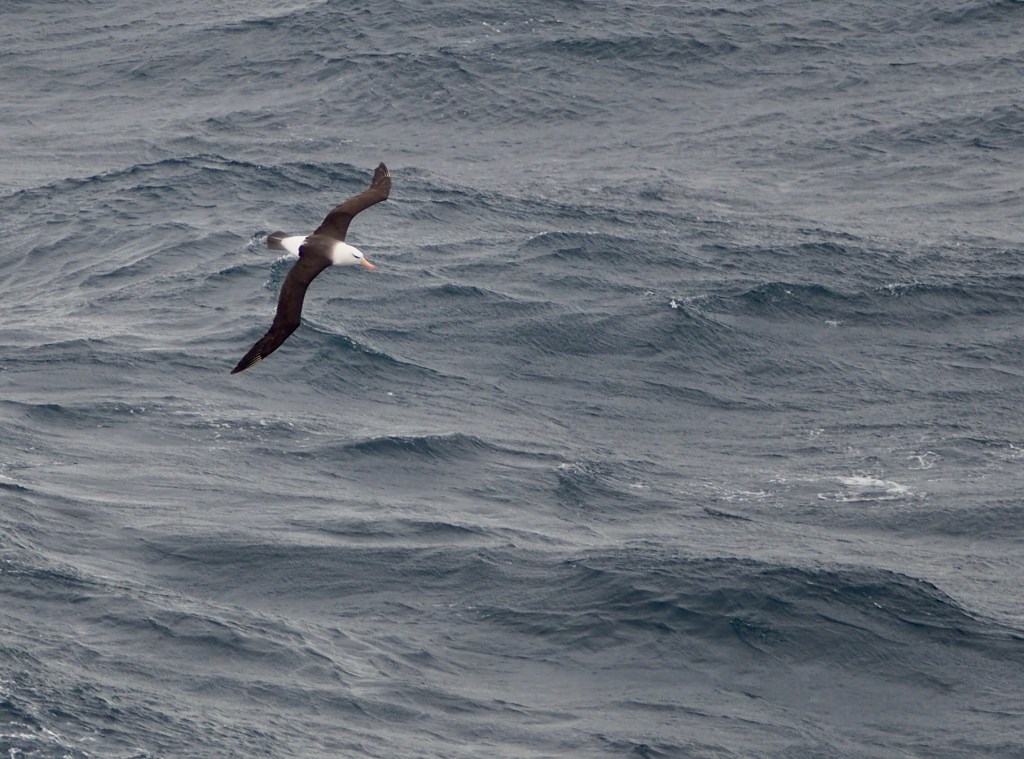
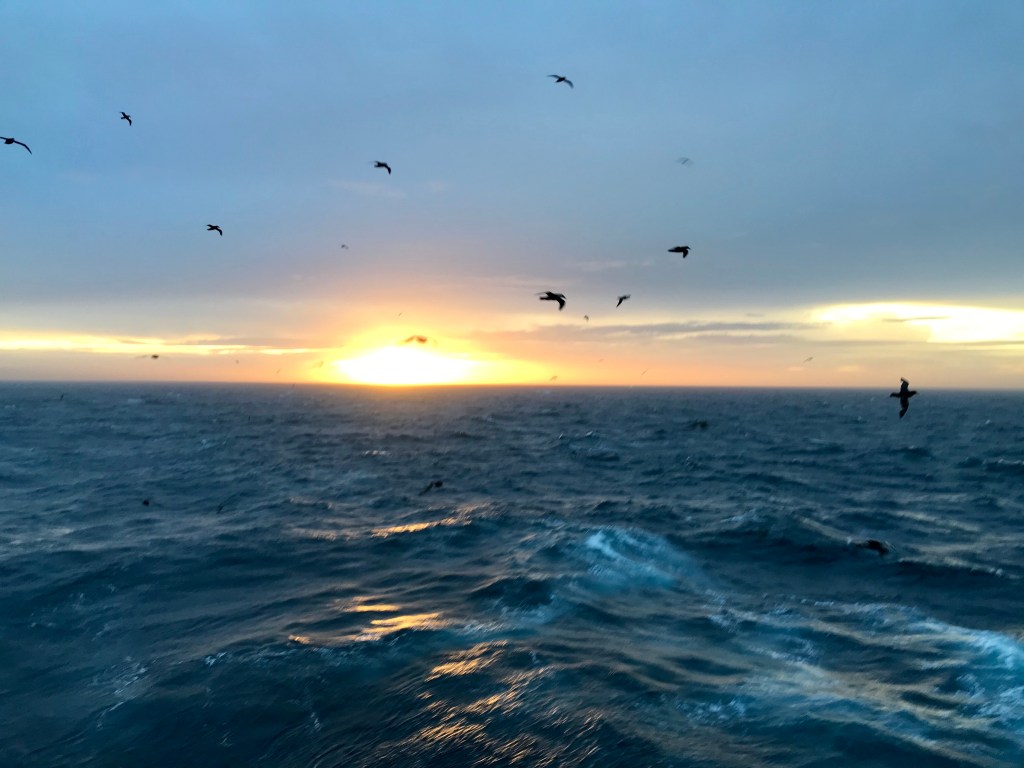
We spent a fair bit of time outside on deck as we were being followed by many sea birds. As my photographer friends know, taking moving objects from a moving object is fun! Here are my best efforts.
A couple of decks to choose from. Mostly black-browed albatross and great southern petrels.
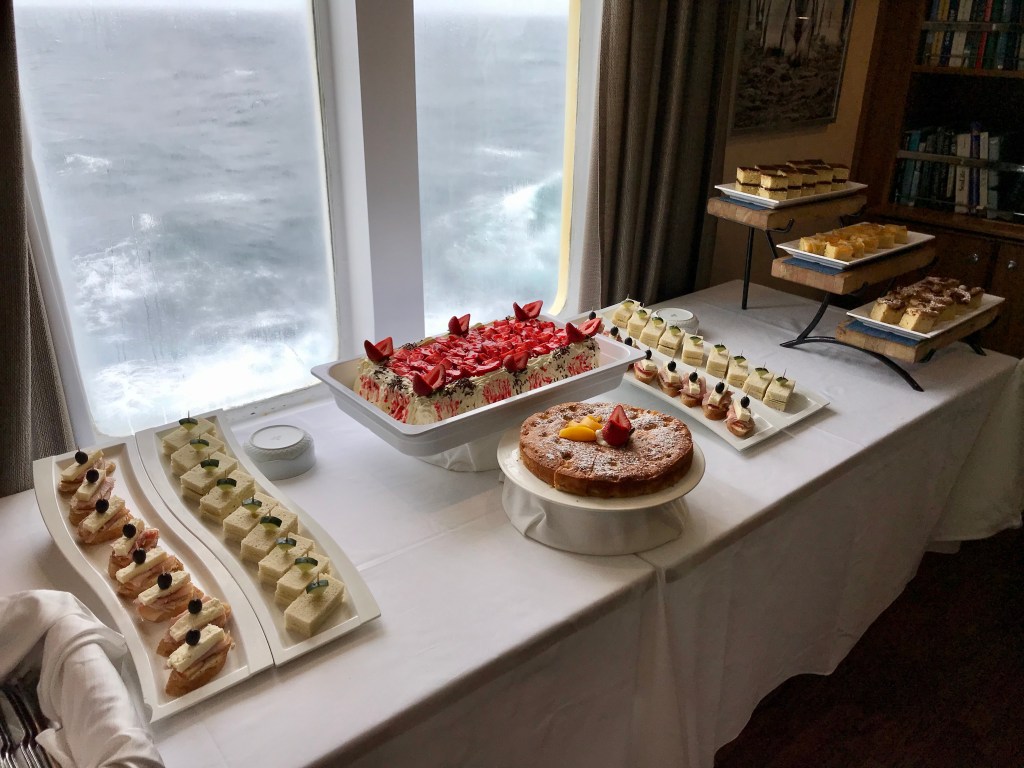
The food has been way beyond expectation for an expedition ship. Here is afternoon tea.
Diets clearly out the window and no sign of seasickness thus far. Though some fellow passengers are not to be seen.
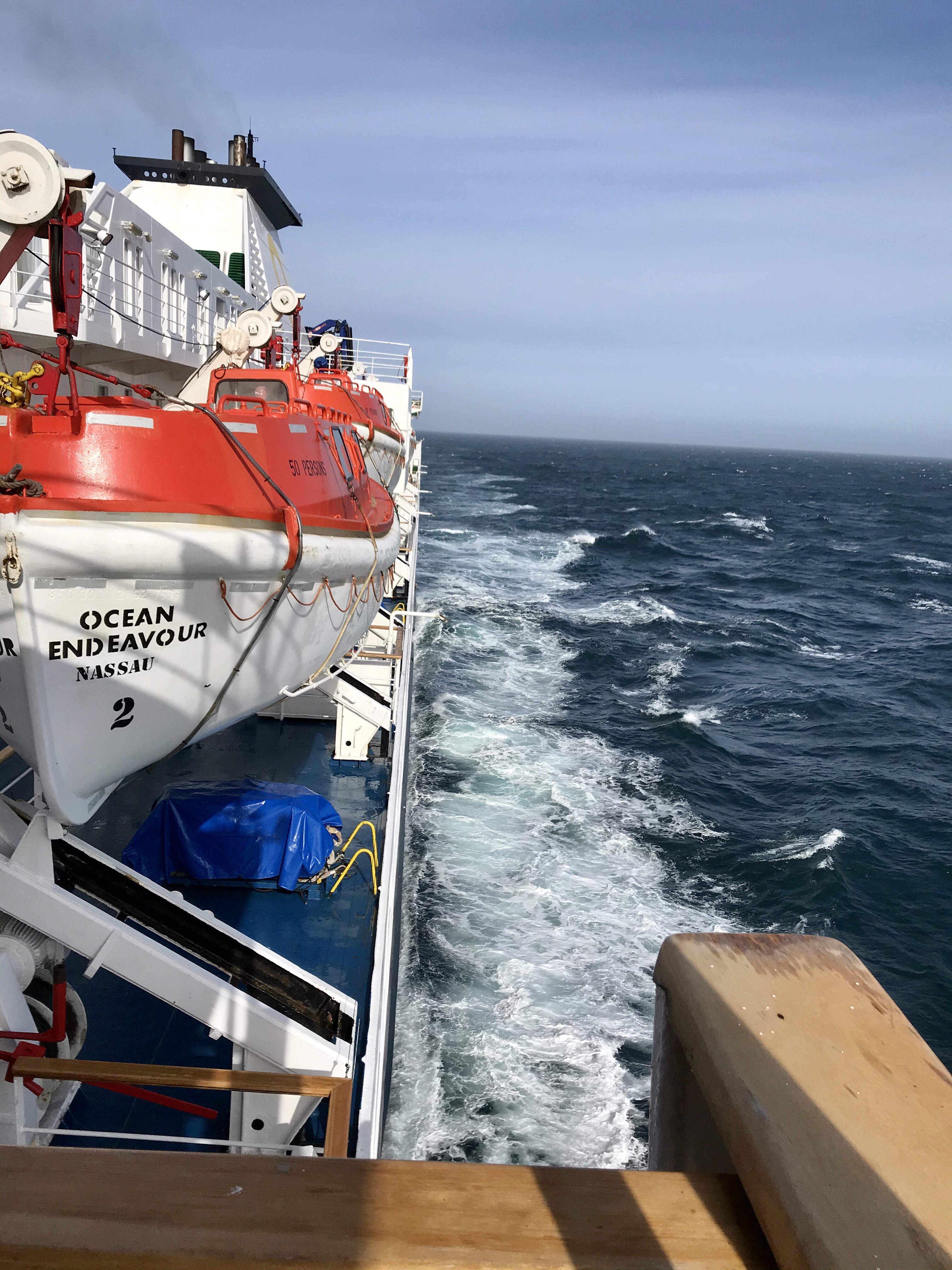
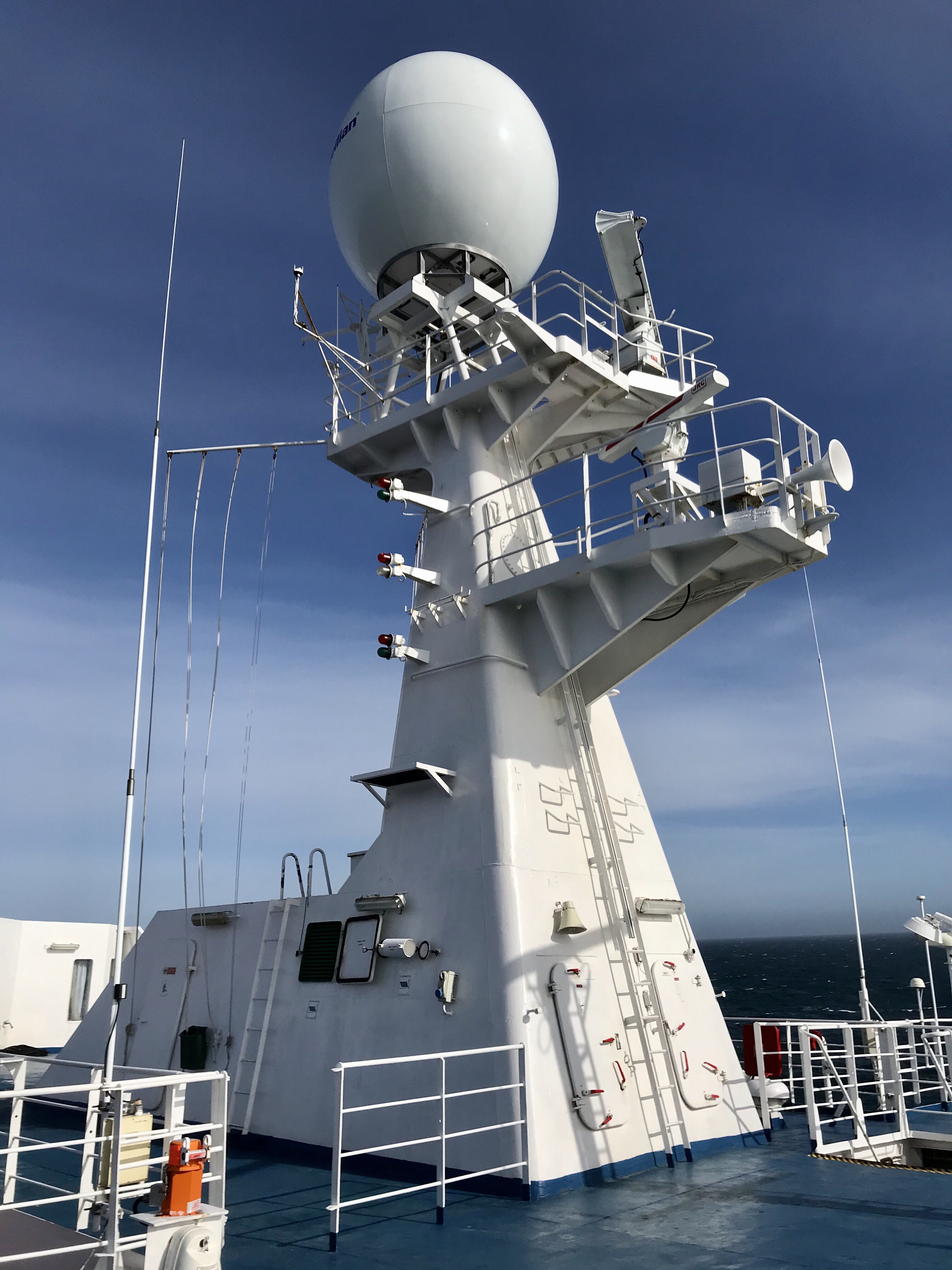
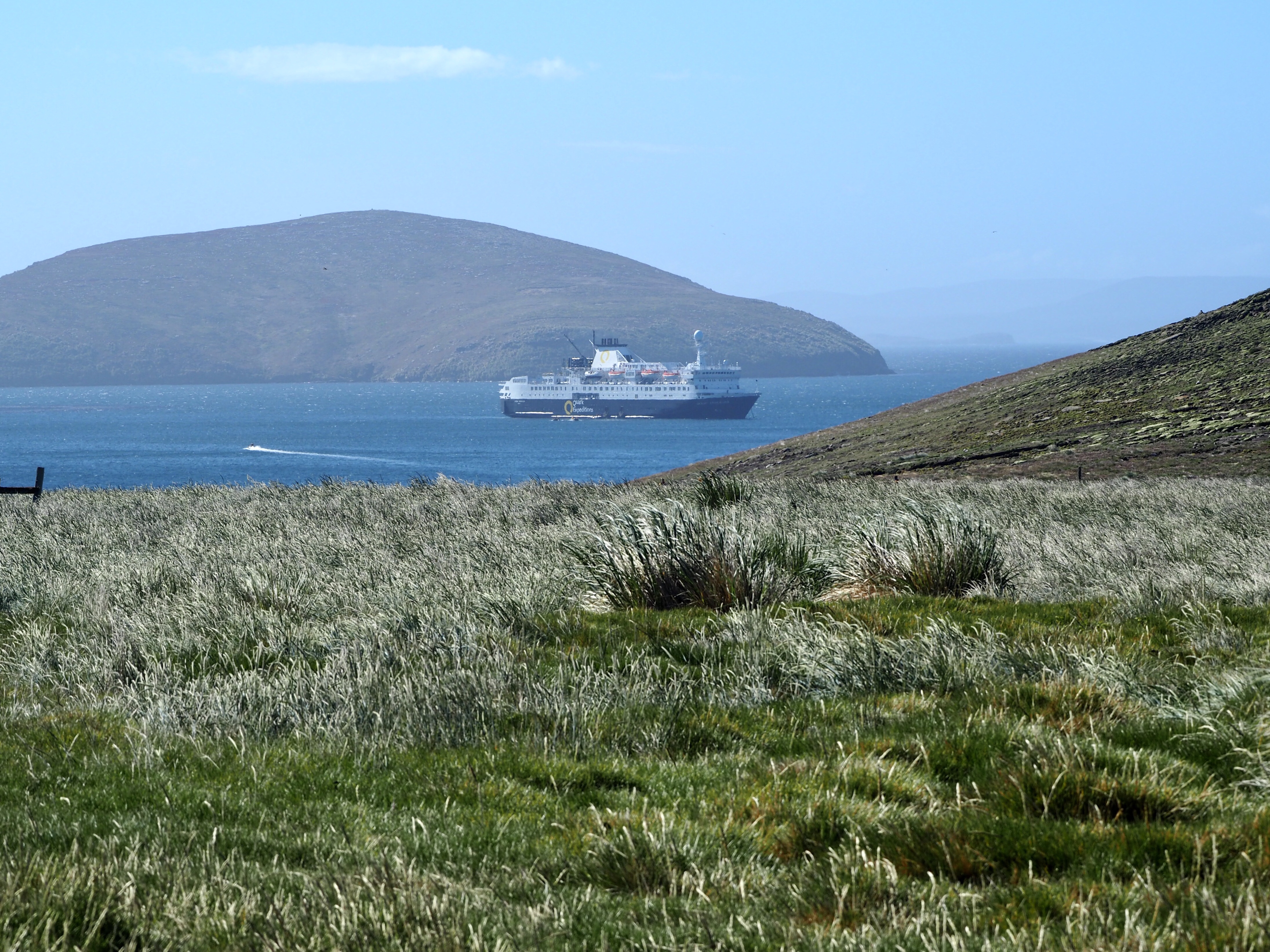
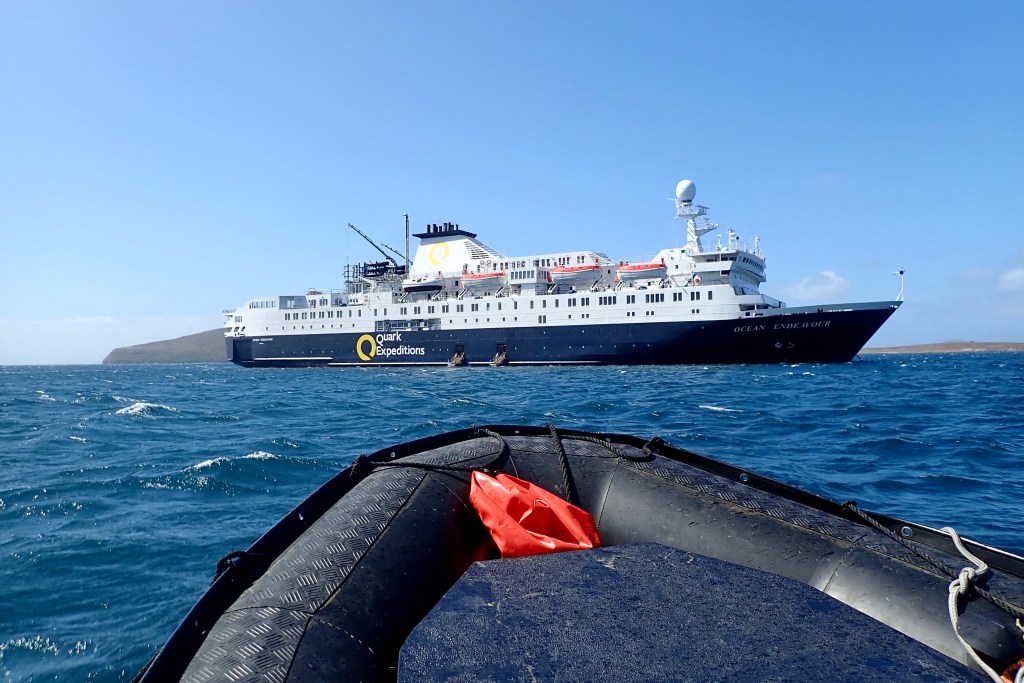
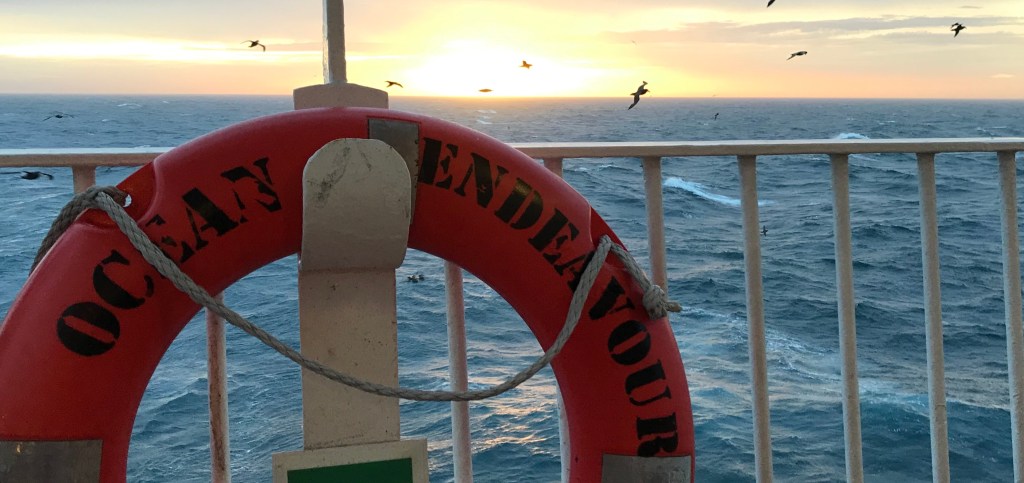
I also thought today would be a good one to introduce our ship – The Ocean Endeavour.
Originally built as a ferry and kitted to take 450 passengers, it was completely refurbished in 2015.
Here is what the Quark blurb says:
Ocean Endeavour is a comfortable, well-appointed small expedition ship expertly engineered to explore the Polar Regions. The ship has an ice-strengthened hull, Zodiacs for exploration and remote landings, and advanced navigation equipment. This refurbished vessel offers a superb guest experience with an expansive choice of cabin categories, large cabins and common areas, a sundeck and observation area, plenty of deck space for polar landscape viewing, and lounges for learning and reflection. The ship’s interiors have a contemporary aesthetic that provides a bright and spacious feel throughout.
Ocean Endeavour is also the only polar adventure ship in Antarctica focused on health and wellness and offers a contemporary approach to cuisine and newly-designed health and fitness features. Facilities include a spa serviced by organic spa provider VOYA, His and Hers saunas, a saltwater pool, a gym, and a juice and smoothie bar. Complimentary activities include yoga and stretching classes, an exclusive Polar Photography program, the Scientists in Residence program, and hosts more adventure options than any other Quark Expeditions vessel. The ship also has a polar library and a Polar Boutique for gifts and any needed gear.
Aboard
Chef-prepared meals with complimentary wine with dinner
Bar staffed by a professional bartender serving a selection of soft drinks, juices, liquors, spirits, and beer are also available and can be charged to your shipboard account
Nautical lounge
Polar library
Gym
Newly built saunas and spa facilities and wellness program
Lecture Theatre
Polar Boutique
Sundeck and plenty of deck space for observation
Activities
Snowshoeing (included)
Zodiac Cruising (included)
Kayaking (additional charge)
Stand-up Paddleboarding (additional charge)
Camping (additional charge)
Cross-Country Skiing (additional charge)
Mountaineering (additional charge)
Ship Specifications
Staff and Crew 124
Guests 199
Length 137
Draft 5.6
Ice Class 1B
Cruising Speed 15 knots
Registration Bahamas
Lifeboats 6
So what does Ice Class 1B mean? It seems to be a Finnish – Swedish classification.
Traffic restrictions in the Baltic Sea during winter months are based on the Finnish–Swedish ice classes. These restrictions, imposed by the local maritime administrations, declare the minimum requirements for ships that are given icebreaker assistance, for example “ice class 1A, 2000 DWT“.
In the Finnish-Swedish ice class rules, merchant ships operating in first-year ice in the Baltic Sea are divided into six ice classes based on requirements for hull structural design, engine output and performance in ice according to the regulations issued by the Swedish Maritime Administration and the Finnish Transport and Communications Agency (Traficom). International classification societies have incorporated the Finnish-Swedish ice class rules to their own rulebooks and offer equivalent ice class notations that are recognized by the Finnish and Swedish authorities.
Ships of the highest ice class, 1A Super, are designed to operate in difficult ice conditions mainly without icebreaker assistance while ships of lower ice classes 1A, 1B and 1C are assumed to rely on icebreaker assistance. In addition there are ice class 2 for steel-hulled ships with no ice strengthening that are capable of operating independently in very light ice conditions and class 3 for vessels that do not belong to any other class such as barges. In offical context and legislation, the ice classes are usually spelled with Roman numerals, e.g. IA Classification societies may sometimes use somewhat different distinguishing marks for Finnish-Swedish ice classes; for example, 1A Super is defined as Ice Class I AA by the American Bureau of Shipping (ABS) and ICE(1A*) by DNV GL.
Deck Plan
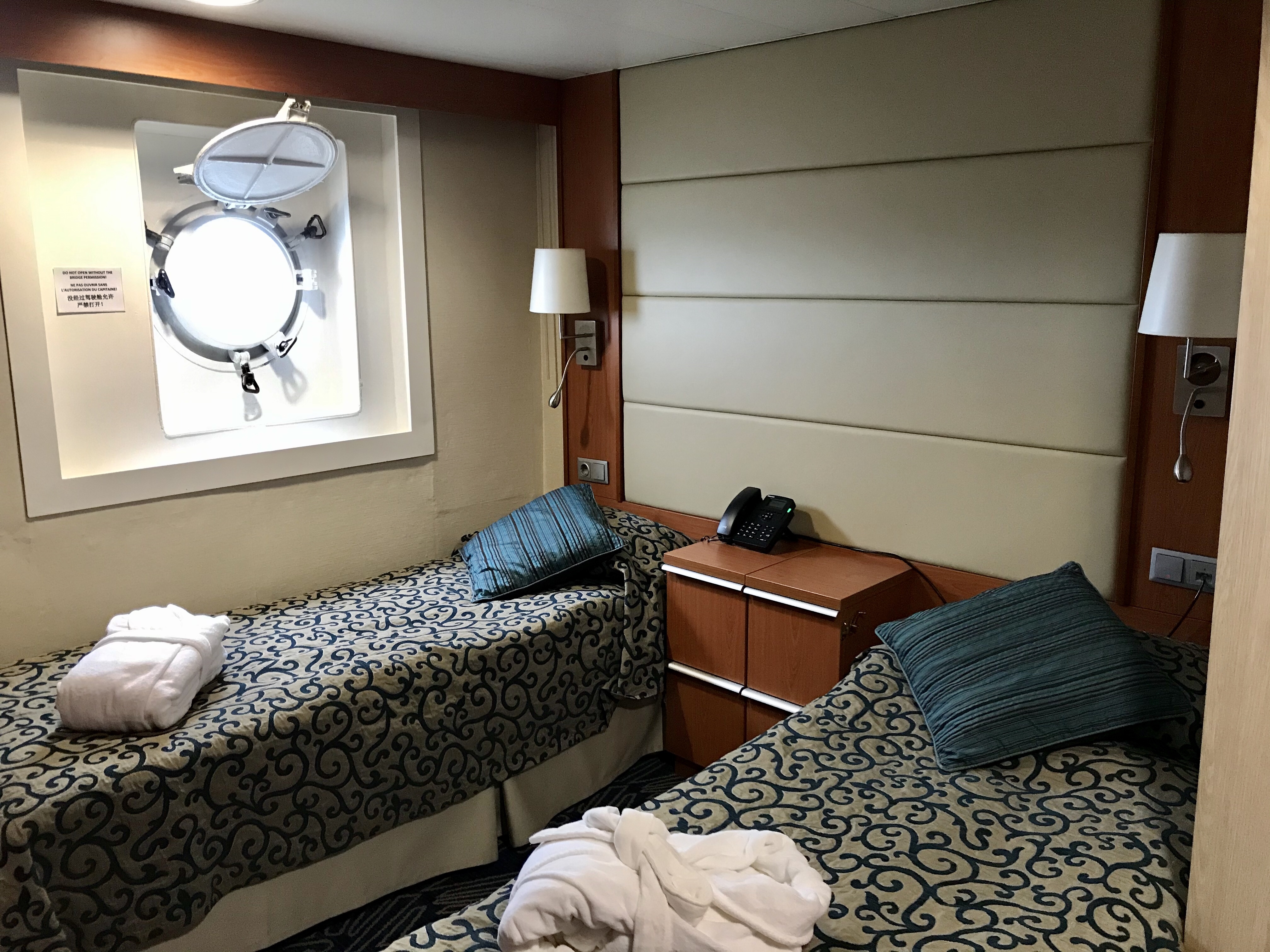
We were in cabin 4084. So deck 4 and on this diagram top left. As you can see there are many smaller cabins and many being shared by strangers so not sure how that goes. Here is the mud room.
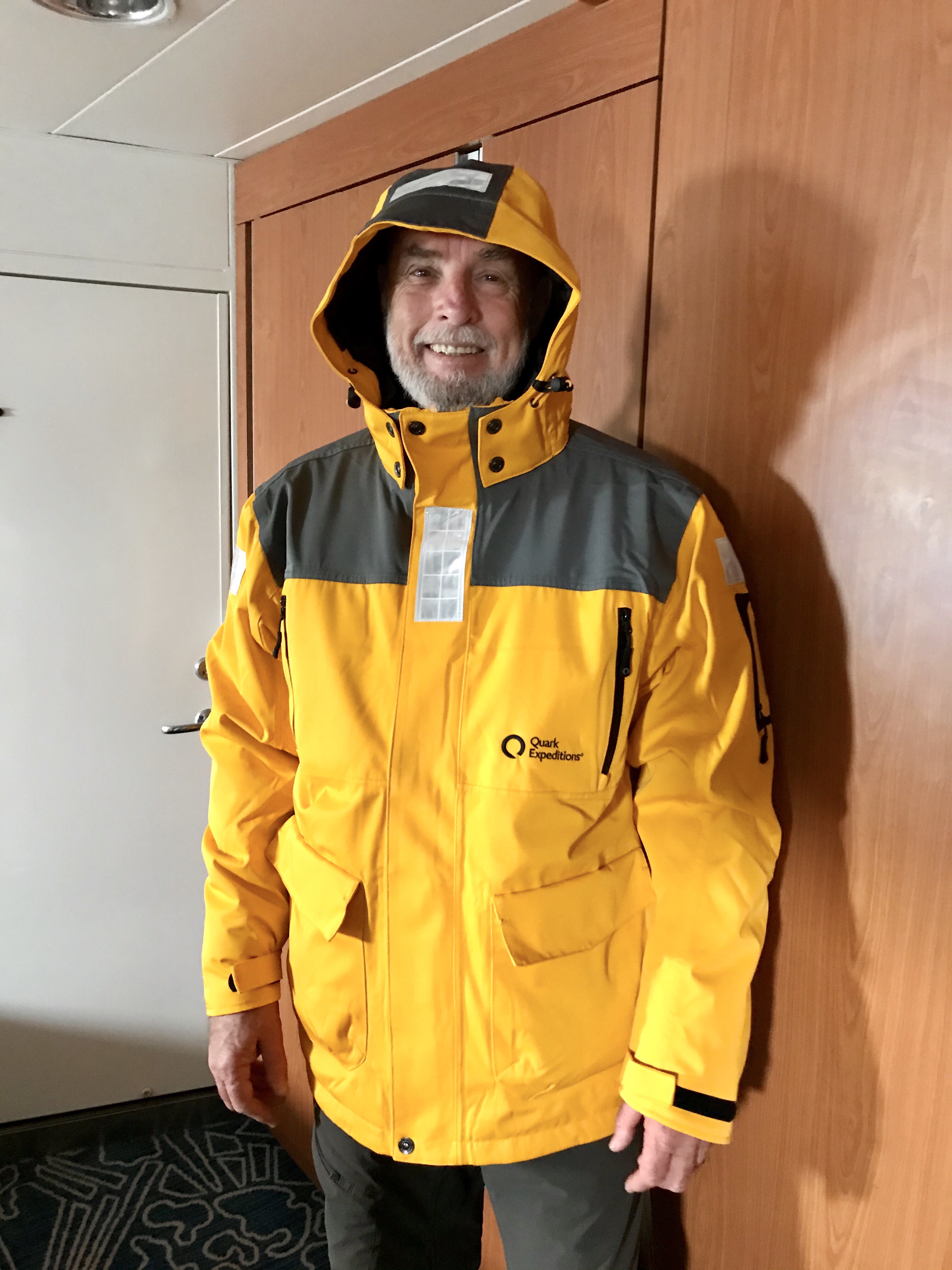
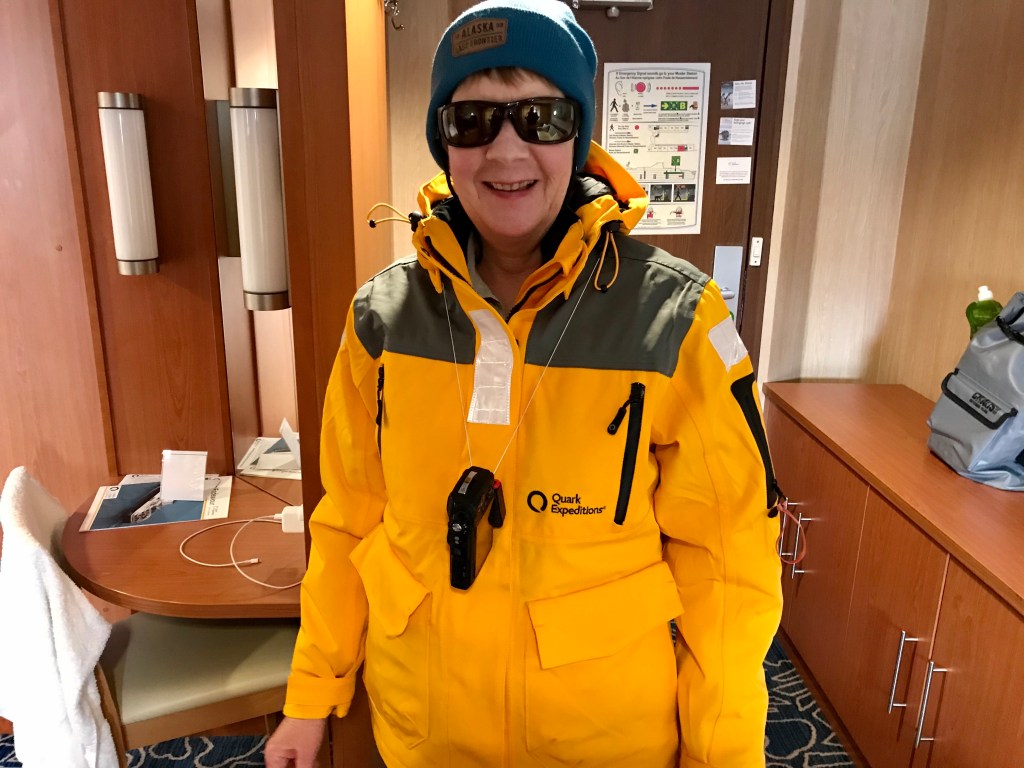
And we both love our new parkas.
Then mandatory zodiac safety briefing with assistant leader Dave Allcorn
No such thing as a “typical” excursion. Back pack over life jacket. Taught the Sailors grip. Sit and slide. Falklands and South Georgia two of the best places on earth (so don’t miss them to just do the Antarctic). Swing around from engine to front. Surf landings sound fun, glad we are relatively fit.
I found a great resource before we left on the birds we might see – check it out here.
Our briefing by Solan on the Falklands was excellent. IAATO, International Association of Antarctic Tour Operators, work together to keep this area as pristine as possible. 60 degrees south is official line to Antarctica. We must leave nothing behind eg tissues plus we must not take anything like rodents or seeds. Excellent bio security methods on board. No drones are allowed. No food. No peeing on shore. New island. Coffins Harbour has been picked as a landing point. This is a Privately owned island. West Point Island. Picked due to weather plus what is there. Look for leeward zodiac points.
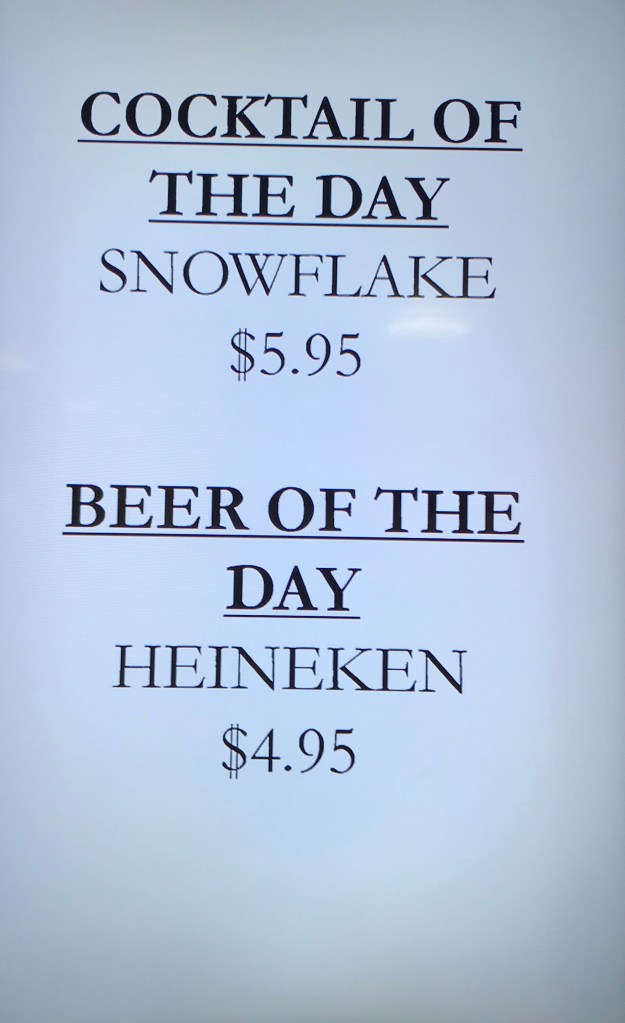
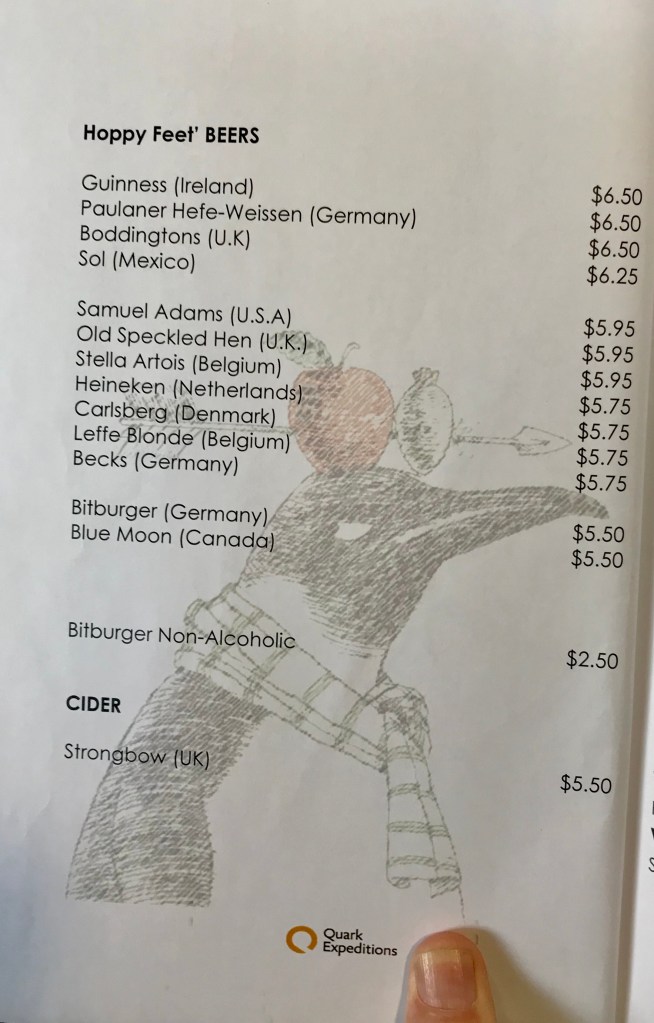
Drinks are reasonably priced on board. Wine is complimentary with dinner. They have their own “beer of the day” regime.
Here is the bar beer list.
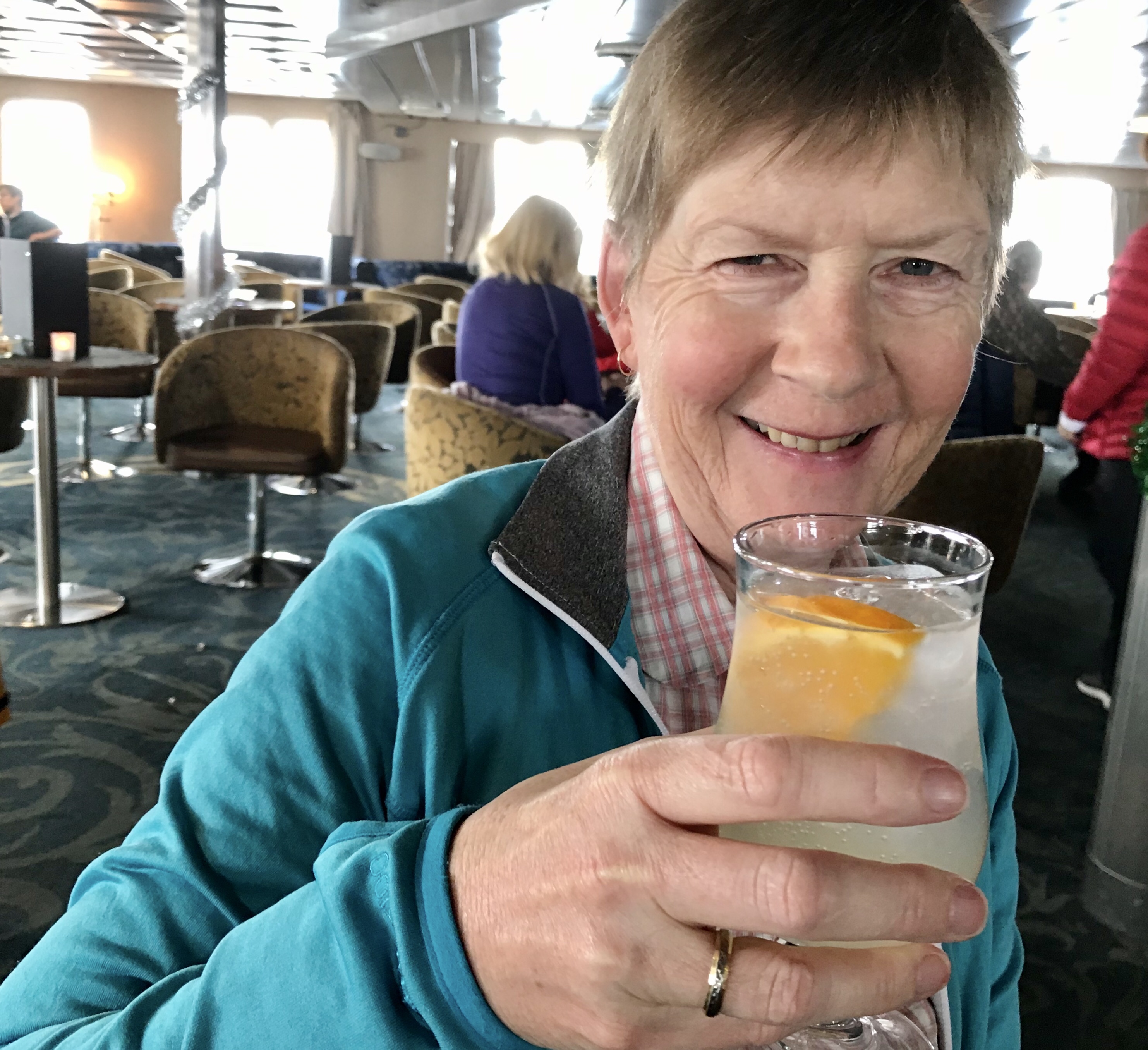
I tried a snowflake.
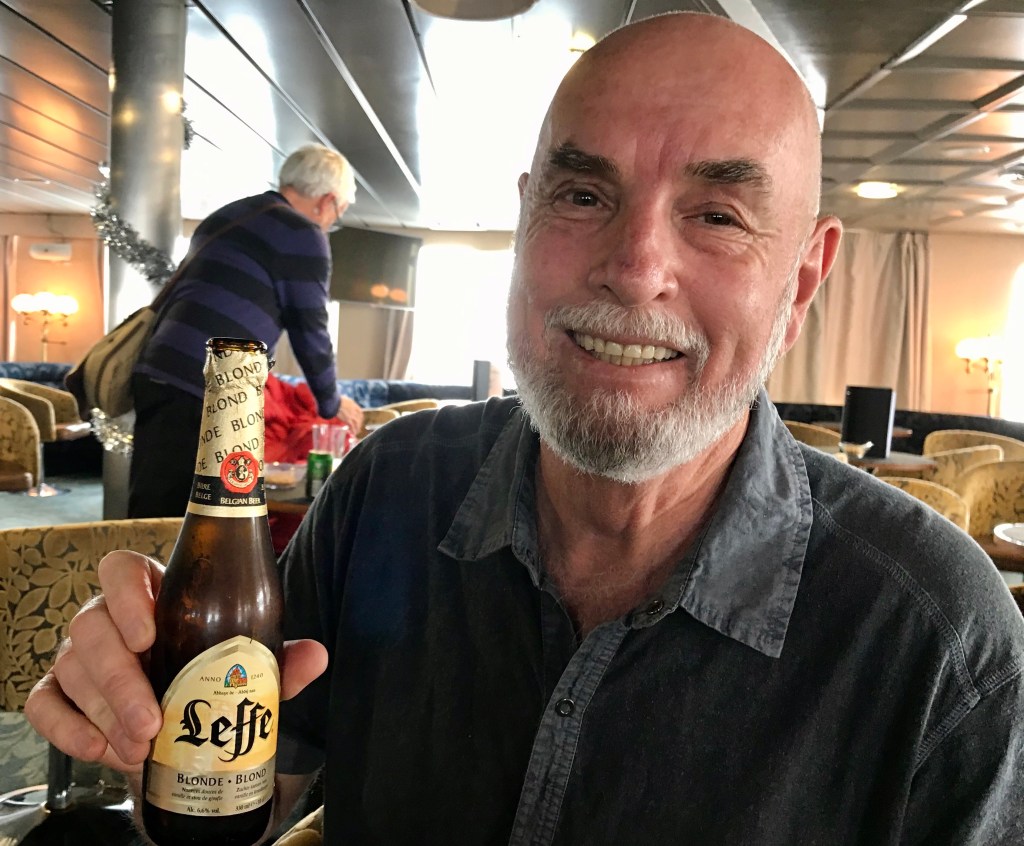
Garrie tried a Leffe.
The Leffe is from Belgium. Very sweet and bitter and rated a 4. My cocktail, on the other hand, was a delight and I think cousin Sue would have loved it too.
Our daily “Recaps and briefings” started. Always very interesting and presented by several members of the expedition team (there are 40 of them!)
Firstly the two scientists on board From Penguin Watch talked about their work. Falklands most diverse of places with 230 species of birds recorded. Fabrice, our ornithologist told us there are 5 types of penguins and 1 albatross. Major continent shelf here no more than 200m deep. Claire talked geopolitics. Falklands or Malvinas? Argentina claims inheritance from Spain. 1982 74 days of war, which we all remember. It is strategically important and also environmentally important. Trade routes changed once the Panama Canal was built. Also important as resources possibility. Oil and gas on the continental shelf. Also strategic when it comes to the Antarctic. 2013 Referendum to Falklands asking if they wanted to stay British or go to Argentina. Overwhelmingly voted to stay British. Communications talk. Satellites mostly on the equator hence not good coverage here.
Back to the cabin to dress. This is as fancy as this cruise gets.
So the Captain’s cocktail party where drinks and canapés were provided. (Canapés became a nightly event during our recap and briefings). This is our Expedition leader Solan.
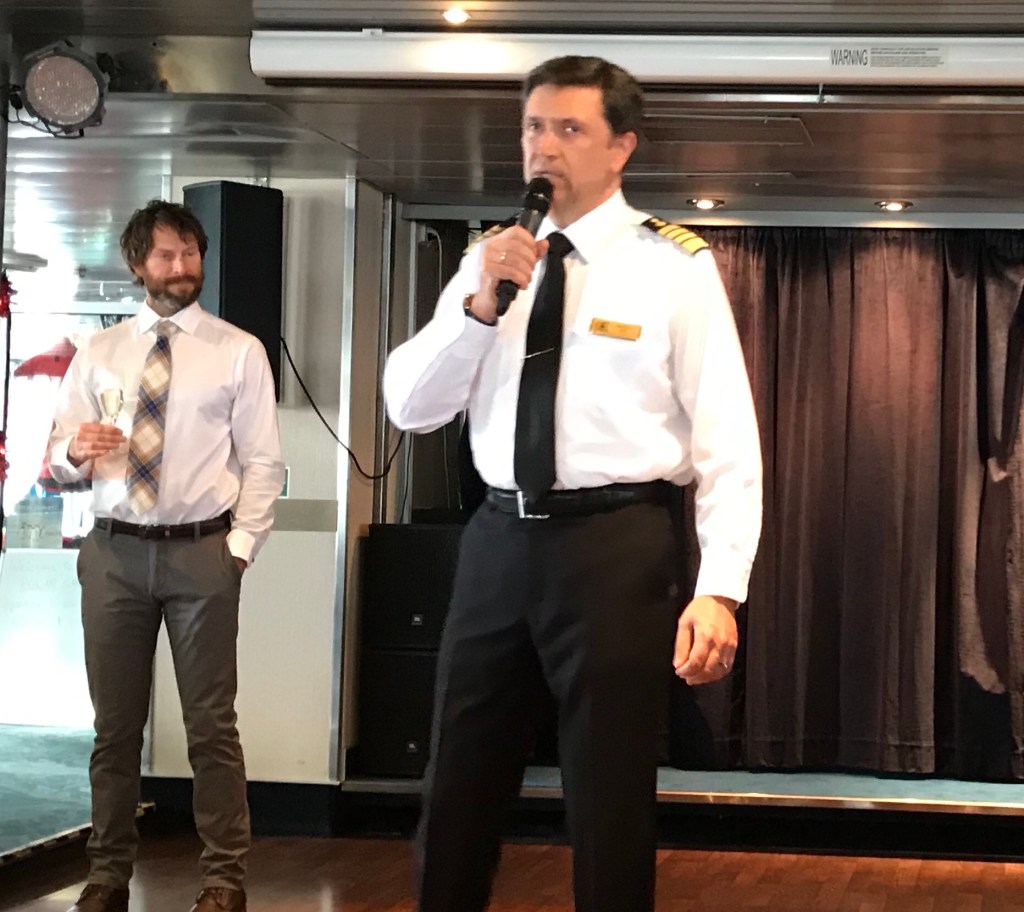
And our Captain Dmytro Ashanin who told us there are 115 crew members from 18 countries. 198 passengers. Plus 40 guides and scientists
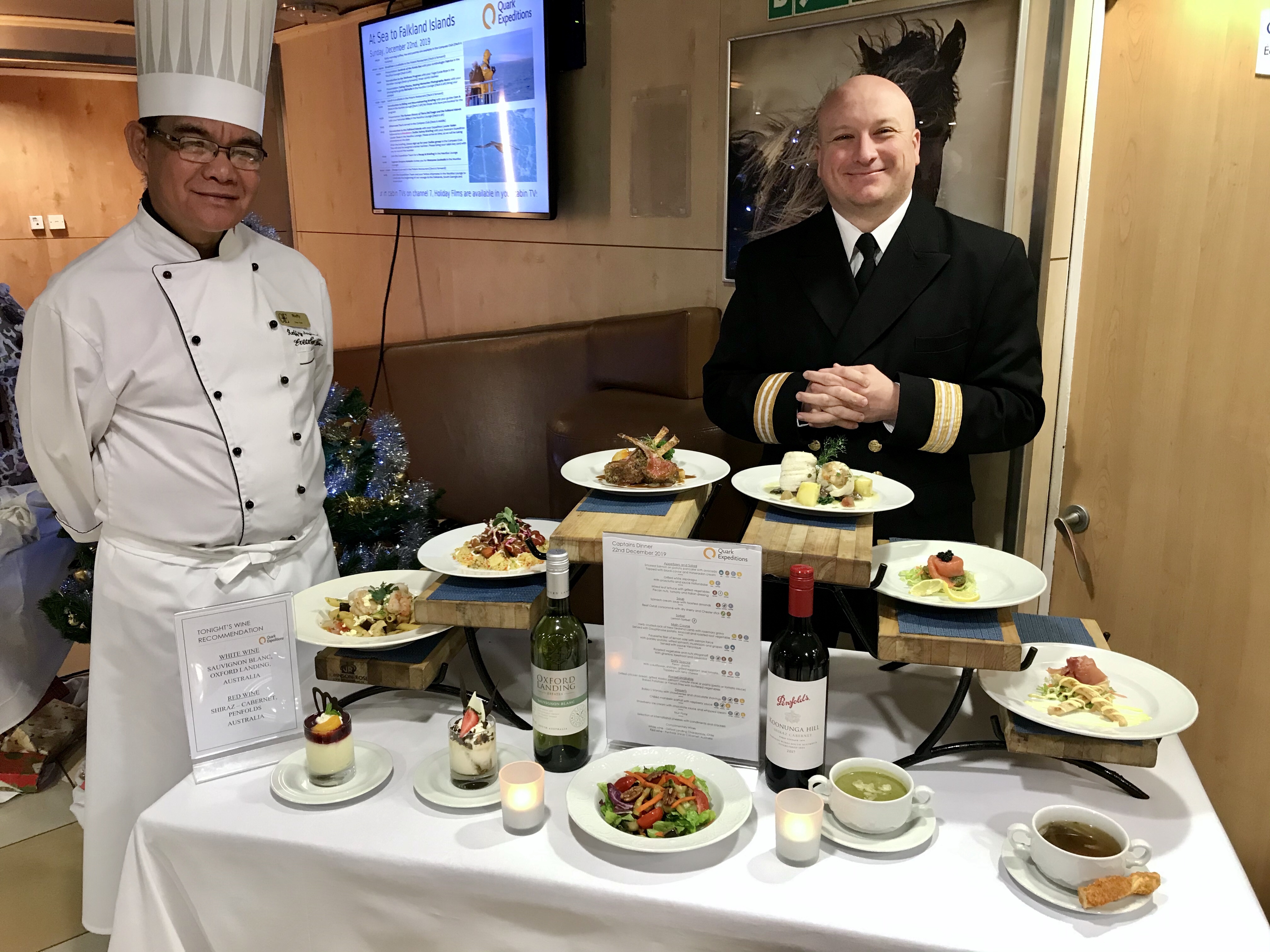
Heading for dinner we were greeted with a site we would see nightly from here on in. A full layout of the food we could chose from for our dinner. Head chef and head of hospitality there to explain it all.
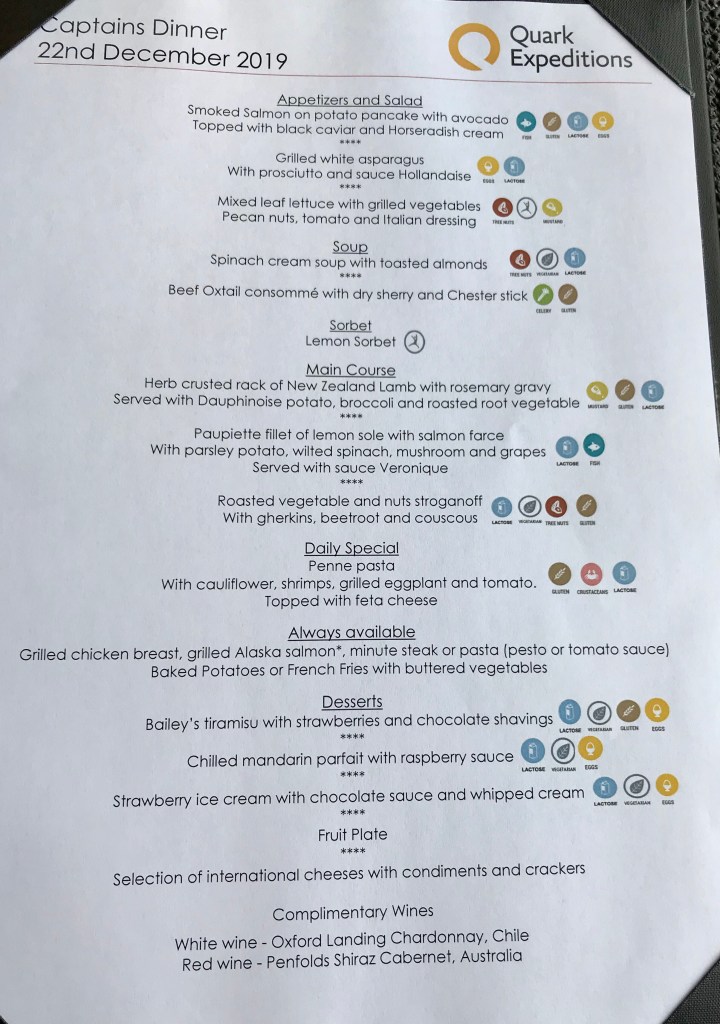
This was our first menu.
So a beautiful sunset and off to bed to await our first zodiac landings, tomorrow in the Falklands!
Travel really isn’t romantic! Up at 4.30am and down to breakfast at 5am. Check out and all aboard the bus to the airport at 6.30am. It had fallen cool in BA last evening and this morning’s 16 degrees had us shivering.
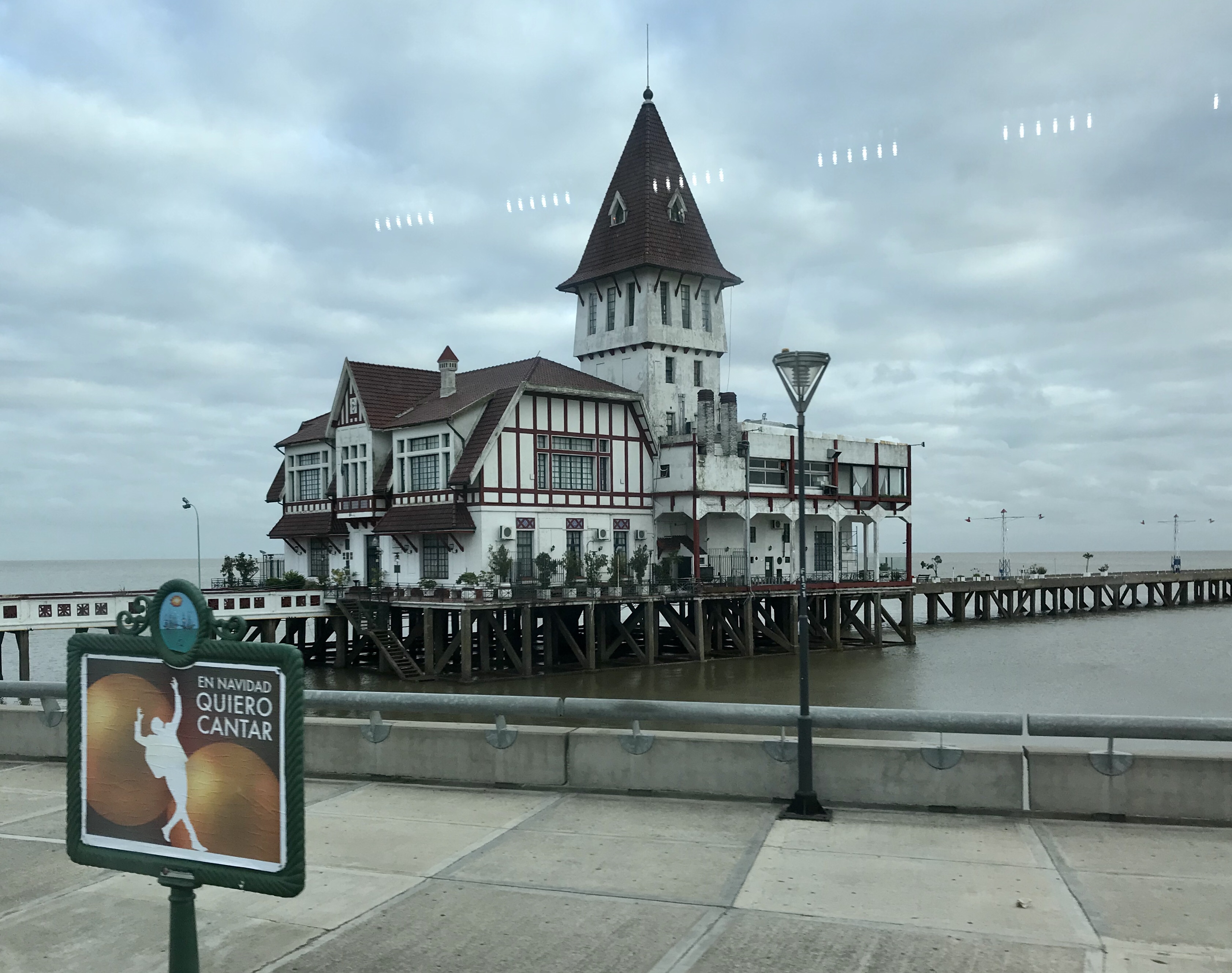
The river Plate. The widest river in the world at 240km, according to our guide. Cross it to find Uruguay.
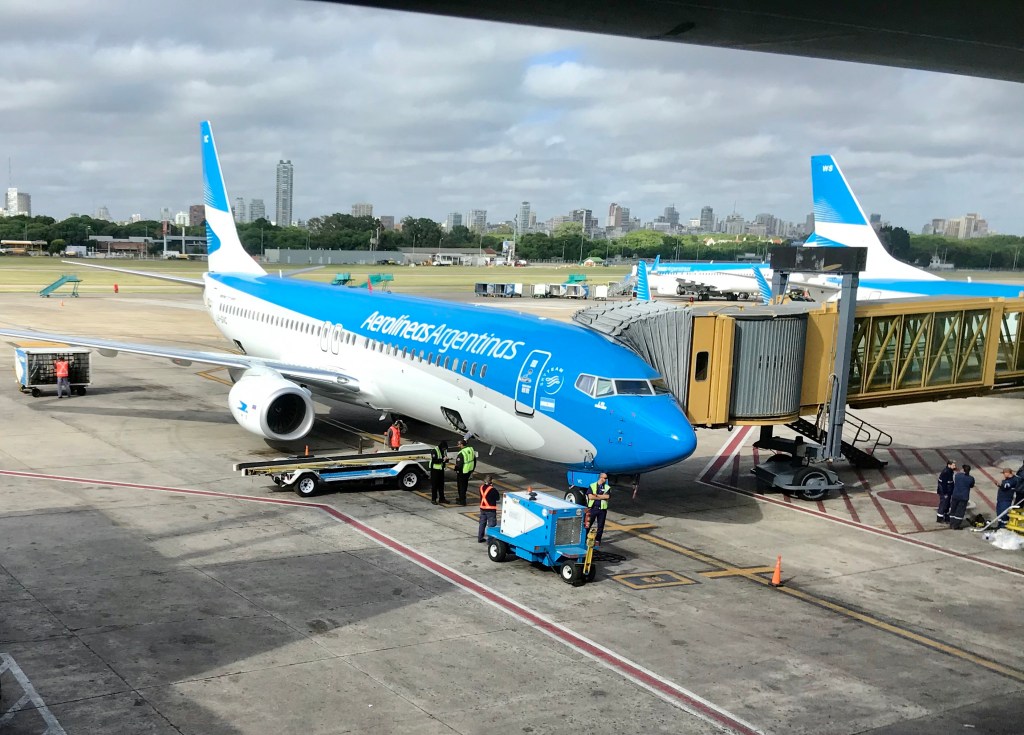
Here is our plane – well one just like it at any rate. Boeing 737-800. Think the pilot might have been in mig fighters at some point.
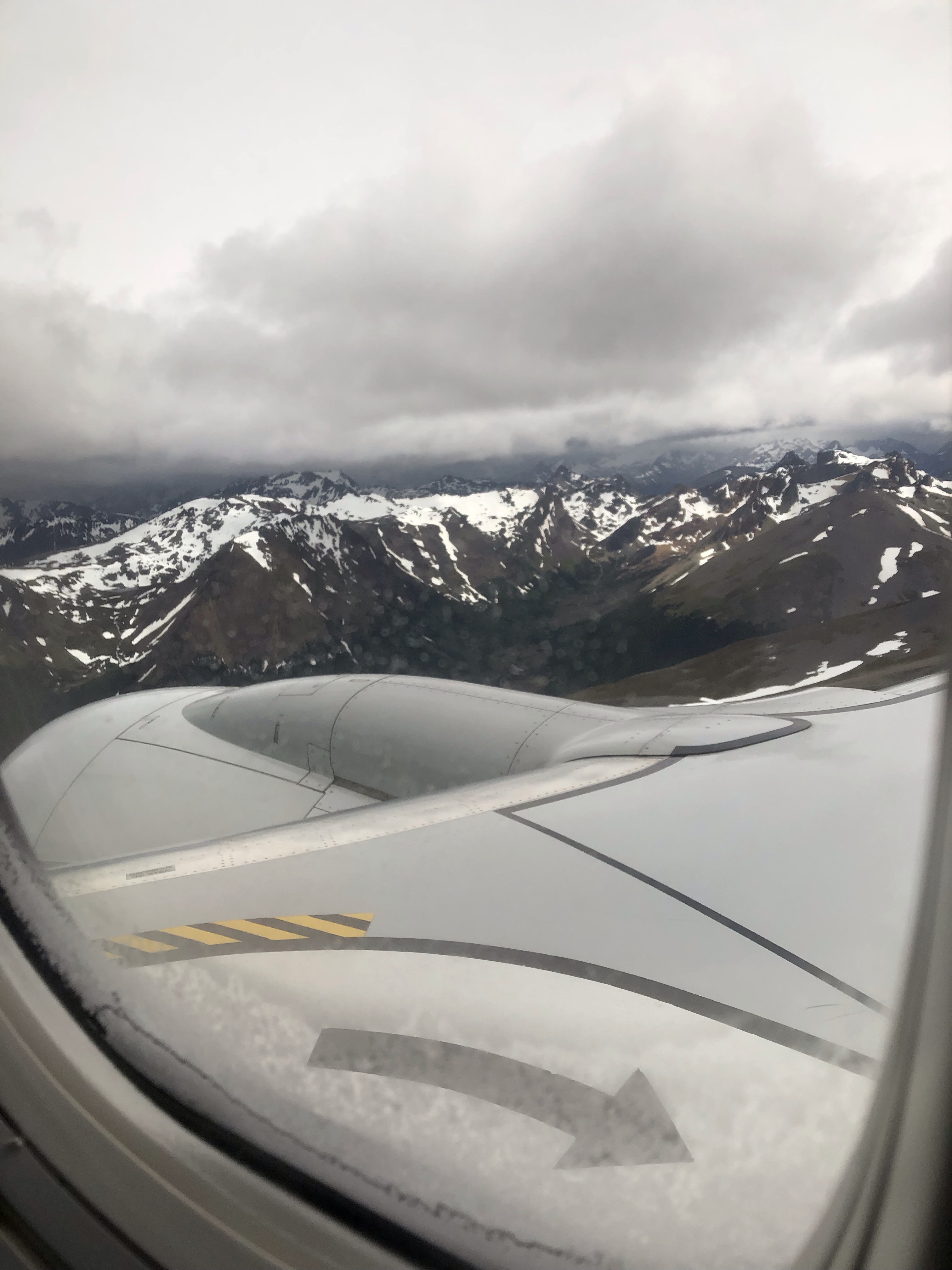
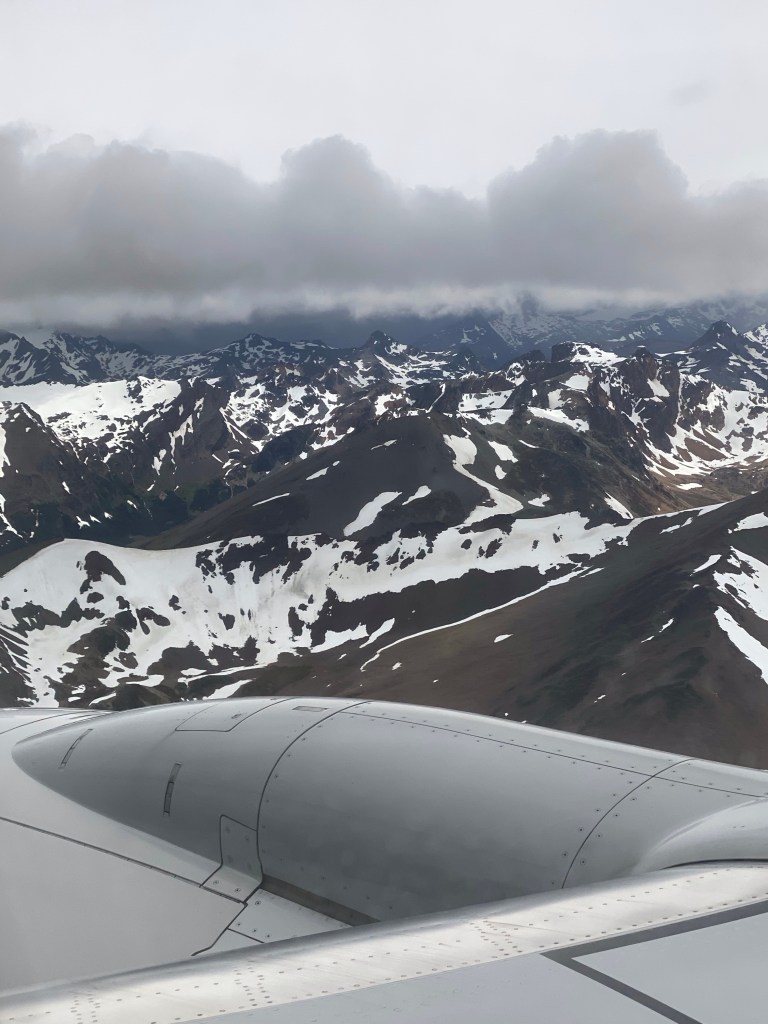
3 hours 20 mins later we descended into Ushuaia. Though I did not have a window seat a fellow passenger shared a couple of pics as we came in.
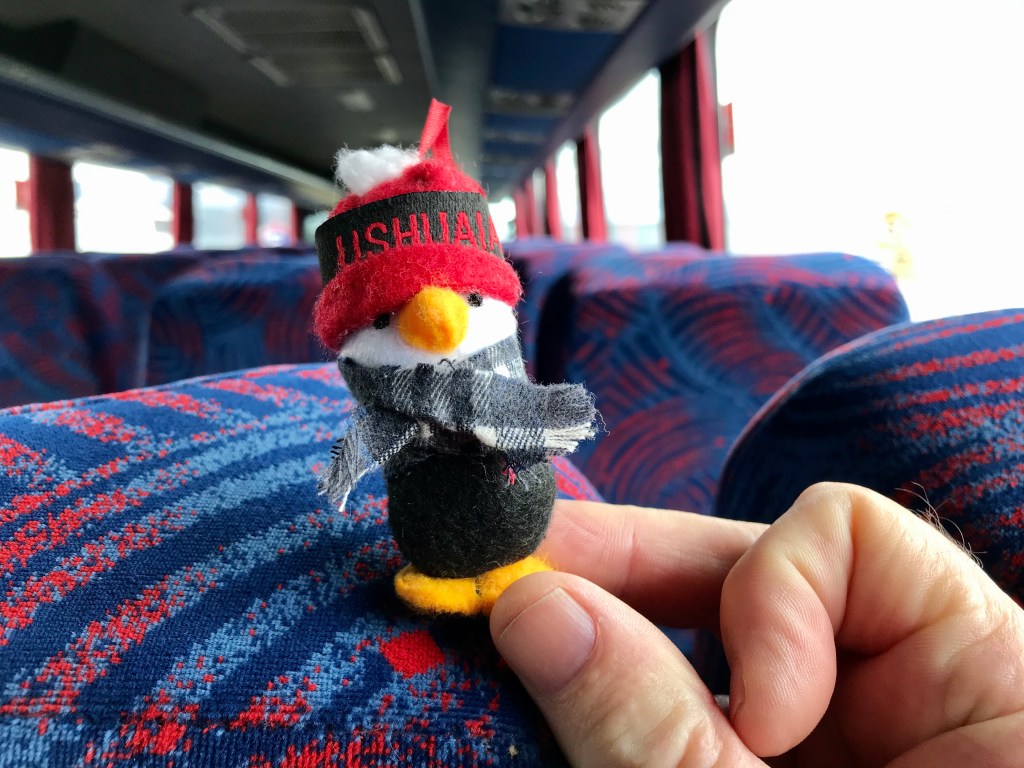
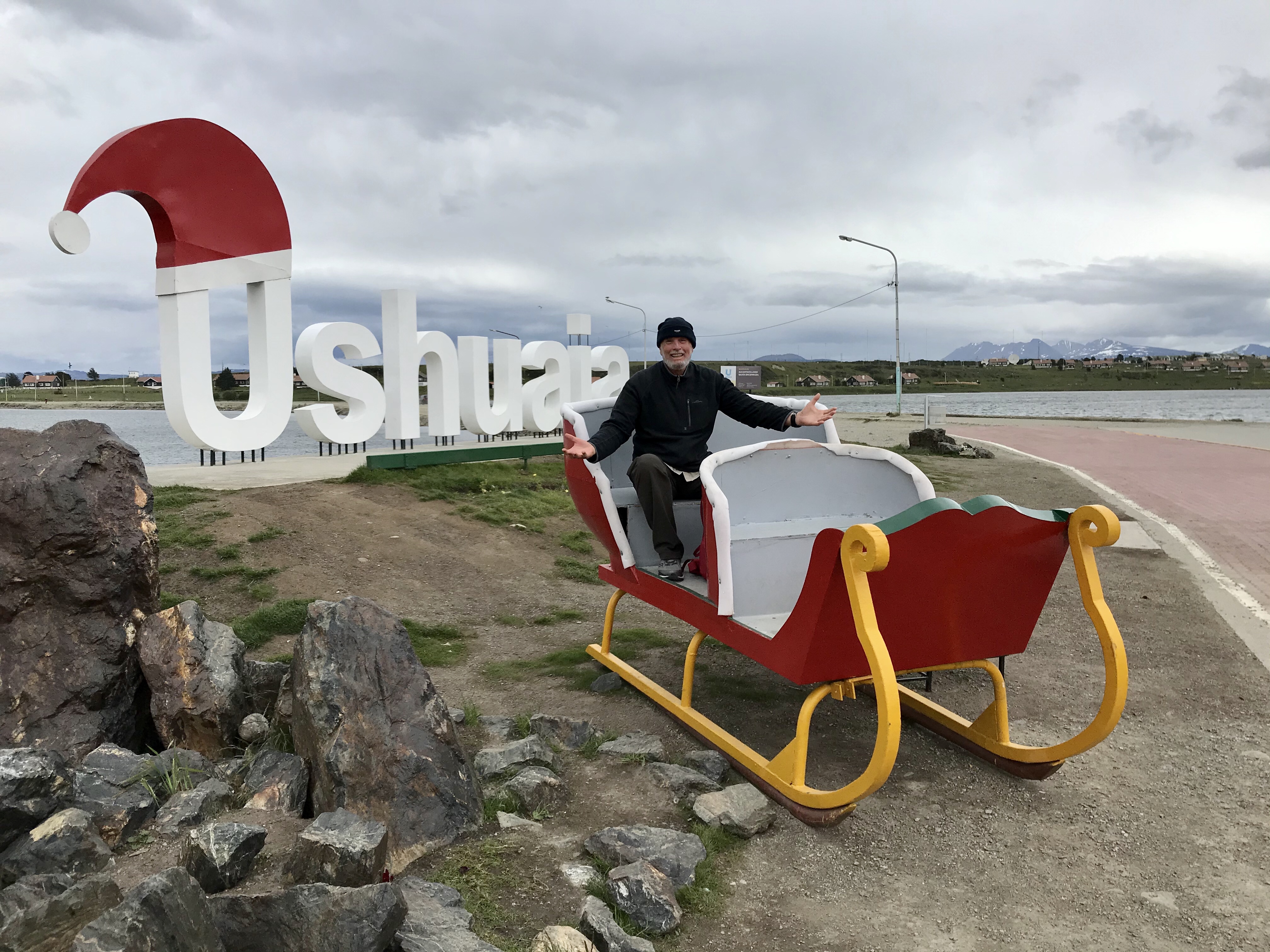
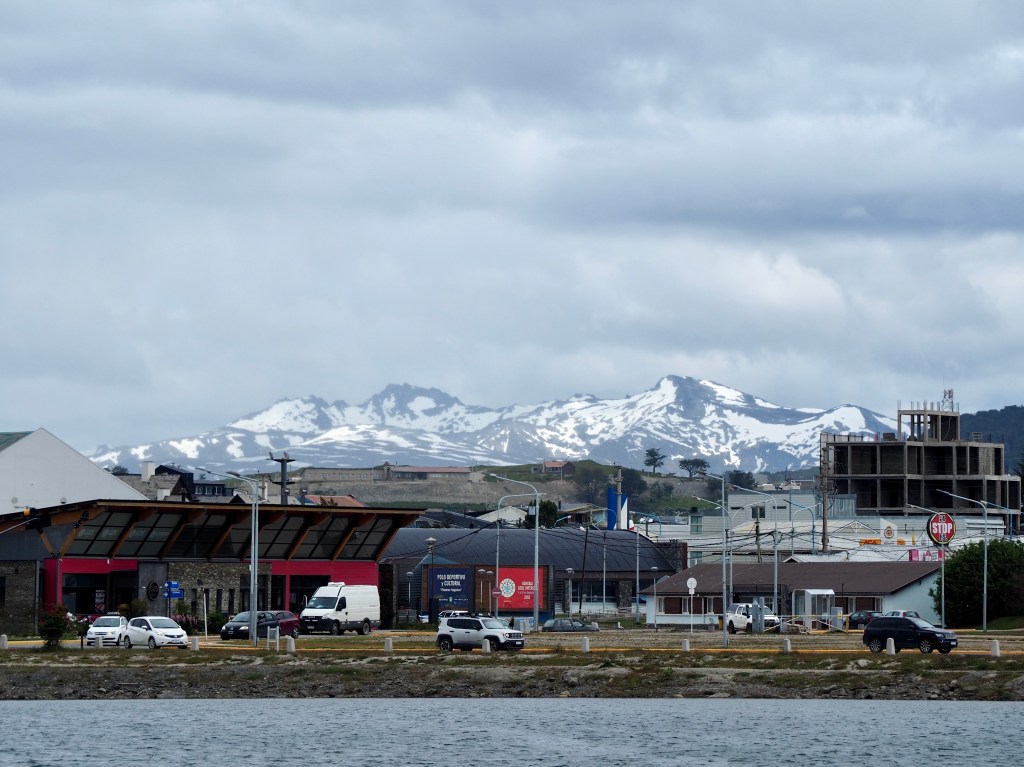
We were driven by bus into Ushuaia and given a few hours to explore. Today is the longest day of the year here, about 18 hours. Ushuaia has the same one way streets as Buenos Aires. Many shops were closed due to the siesta until 4pm but we did find a few open and I found my first Christmas decoration.
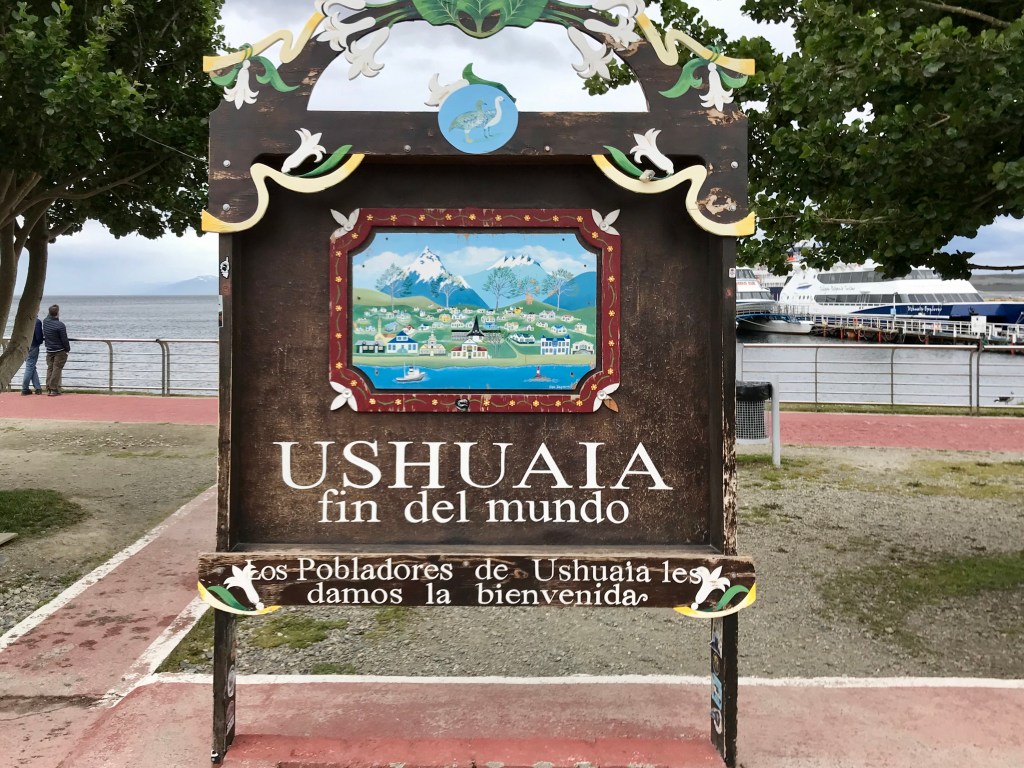
The end of the world.
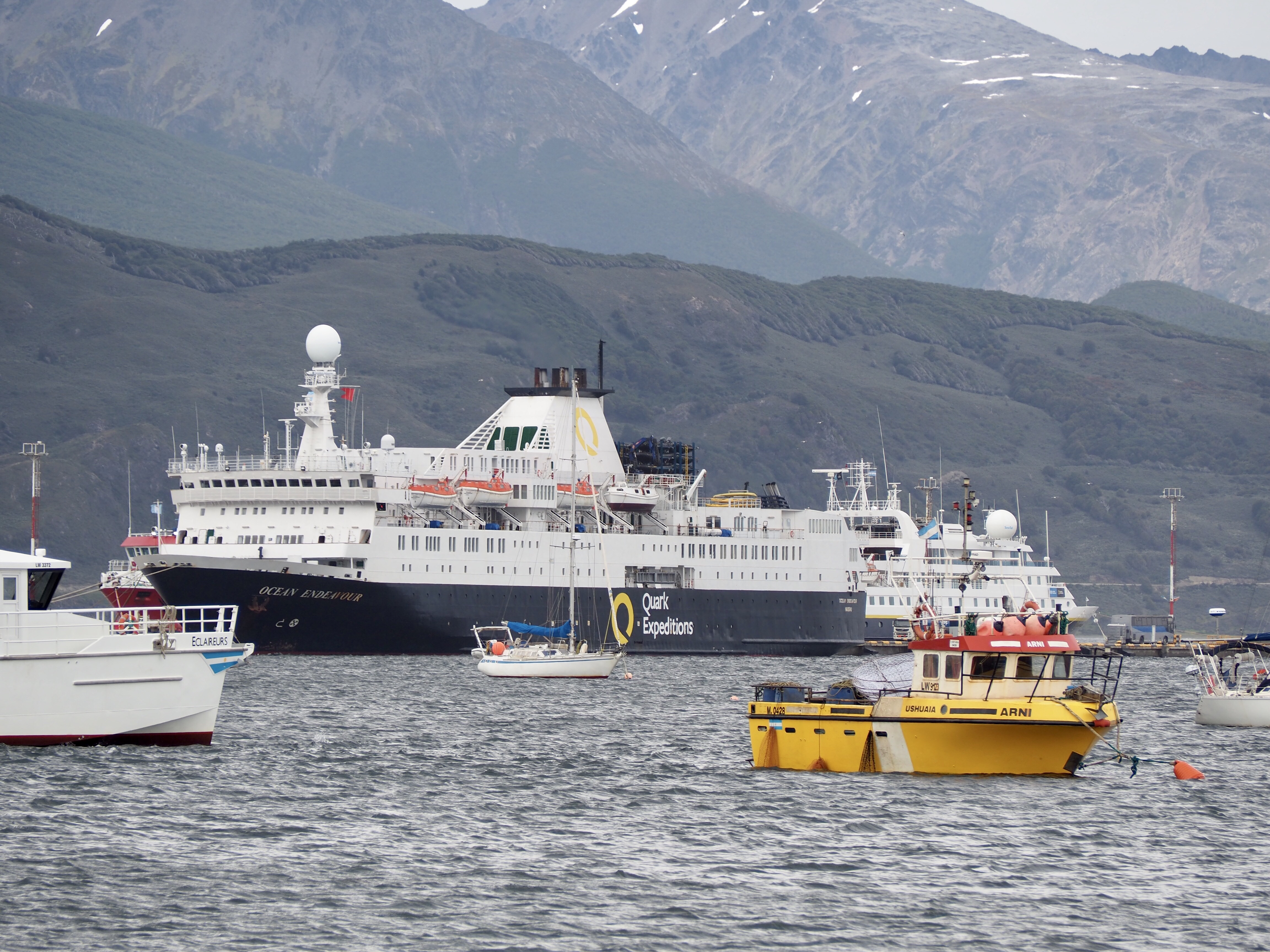
Our first glimpse of the Ocean Endeavour.
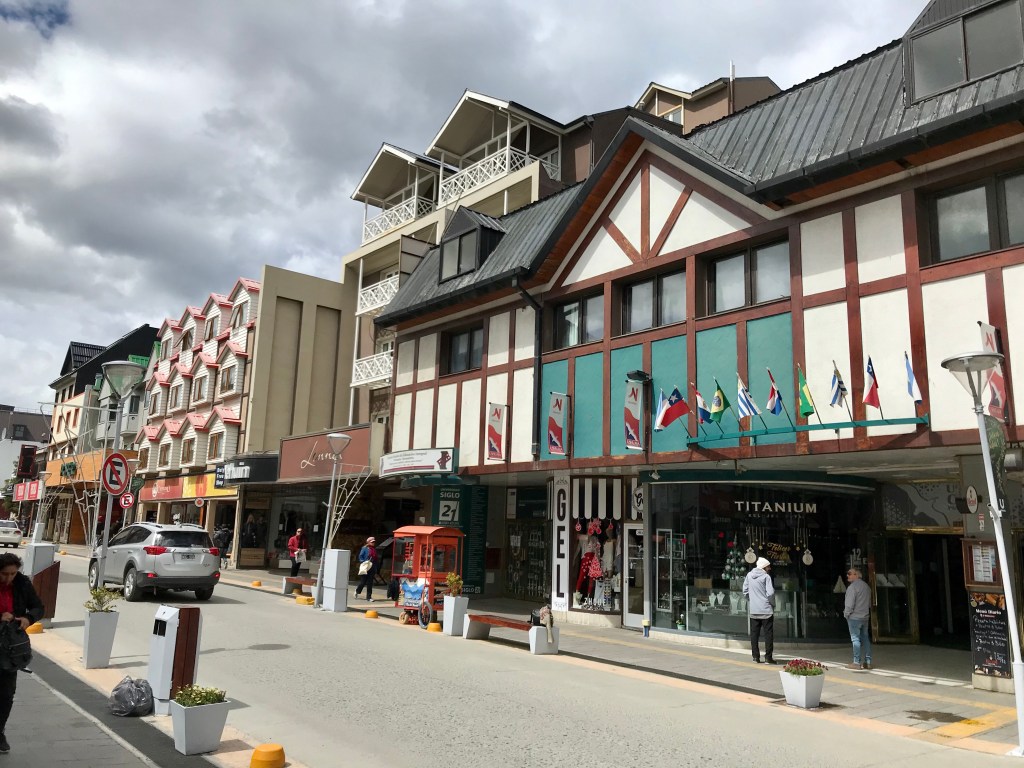
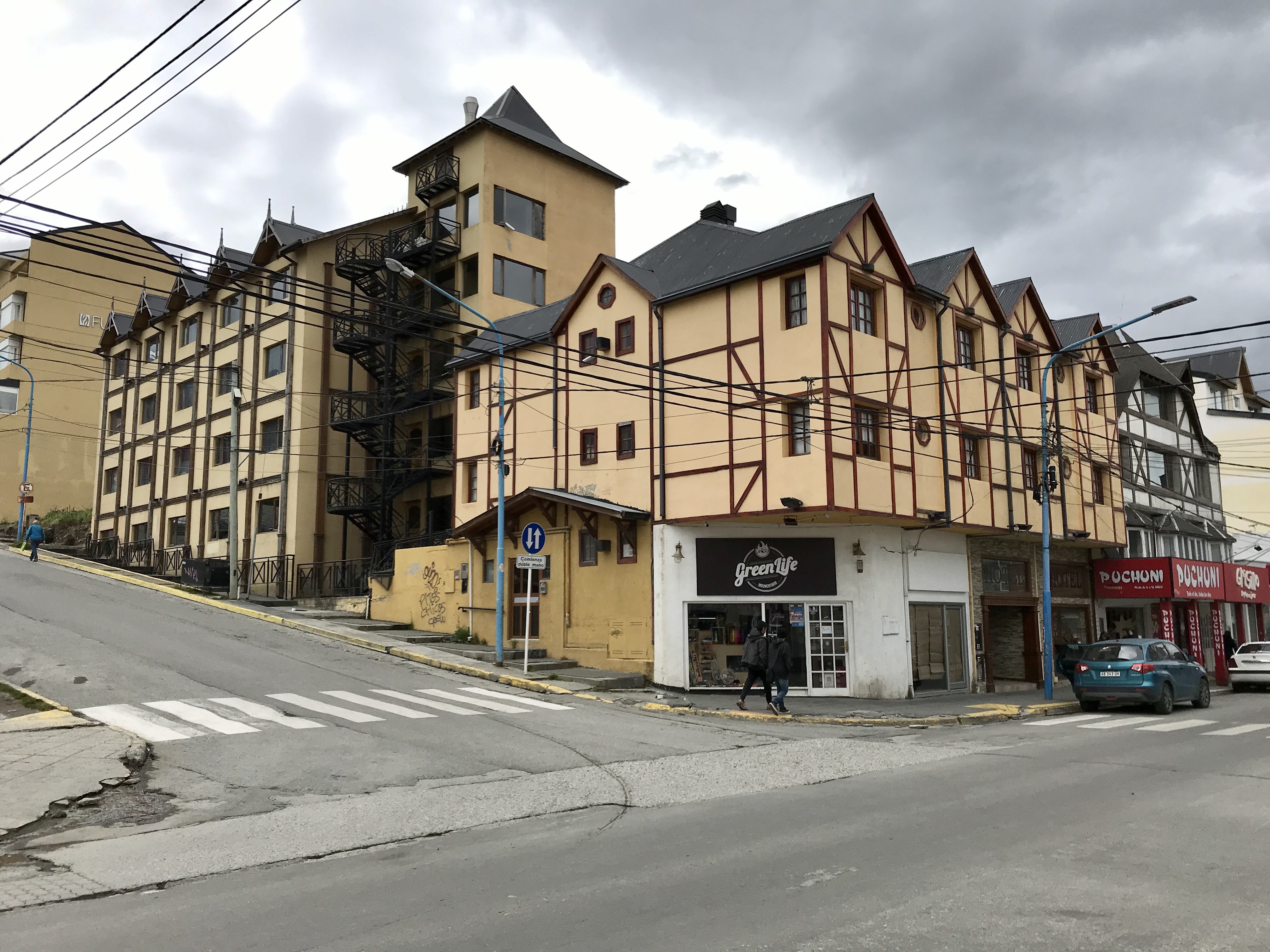
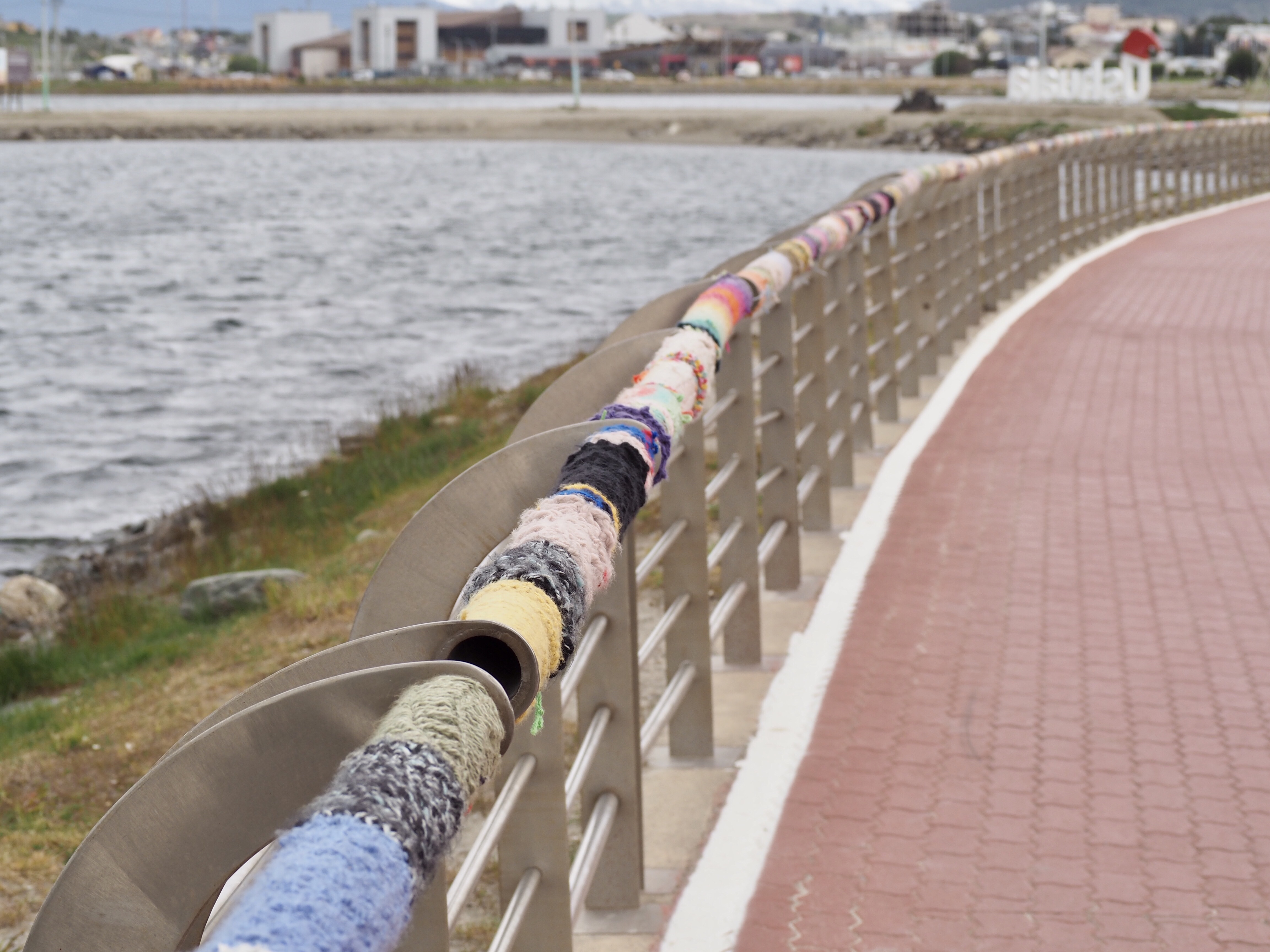
A few street pics and a knitted handrail – most likely to save fingers being frozen on in extreme temperatures.
Found our first wildlife.
Giant Petrel
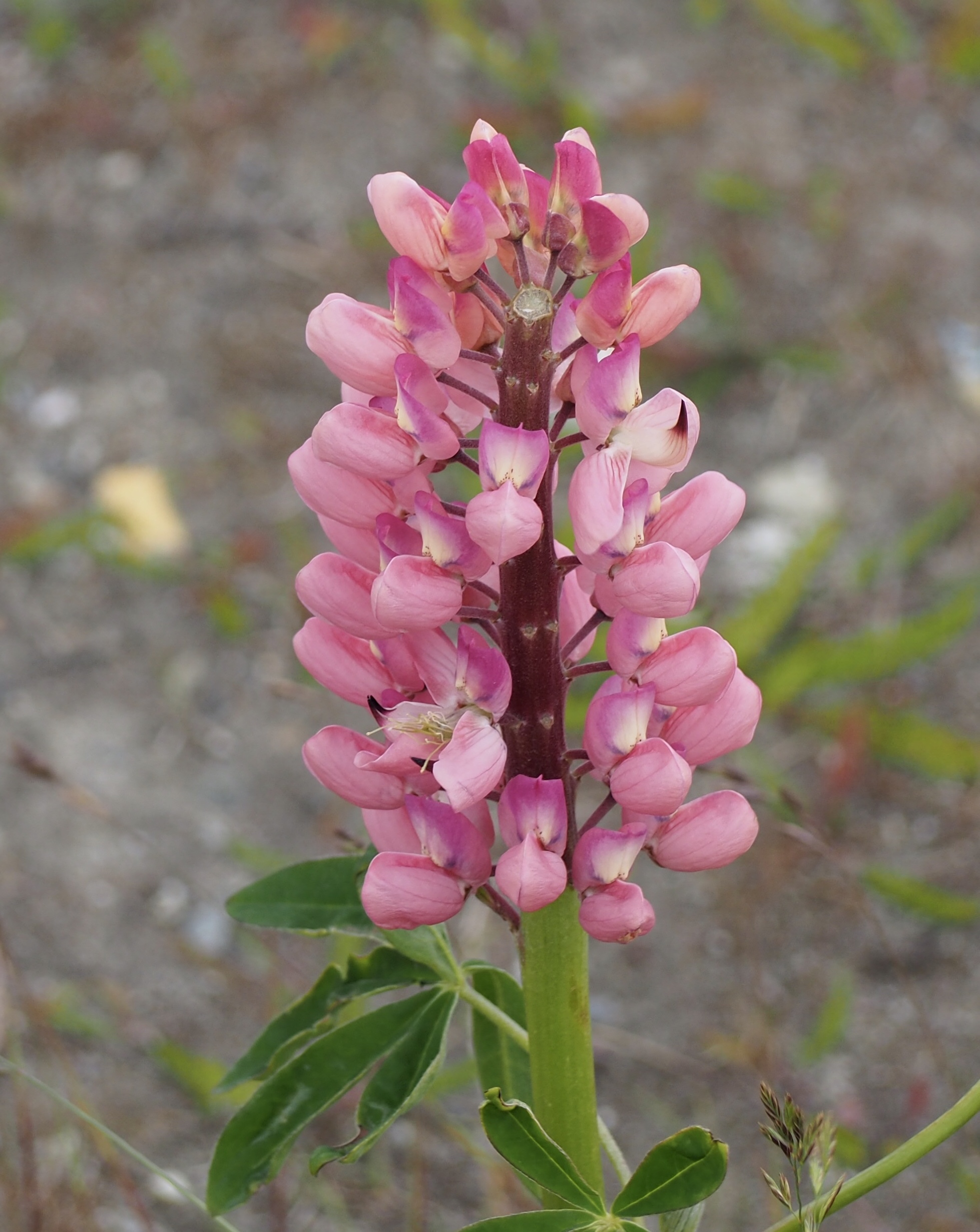
And some local flowers.
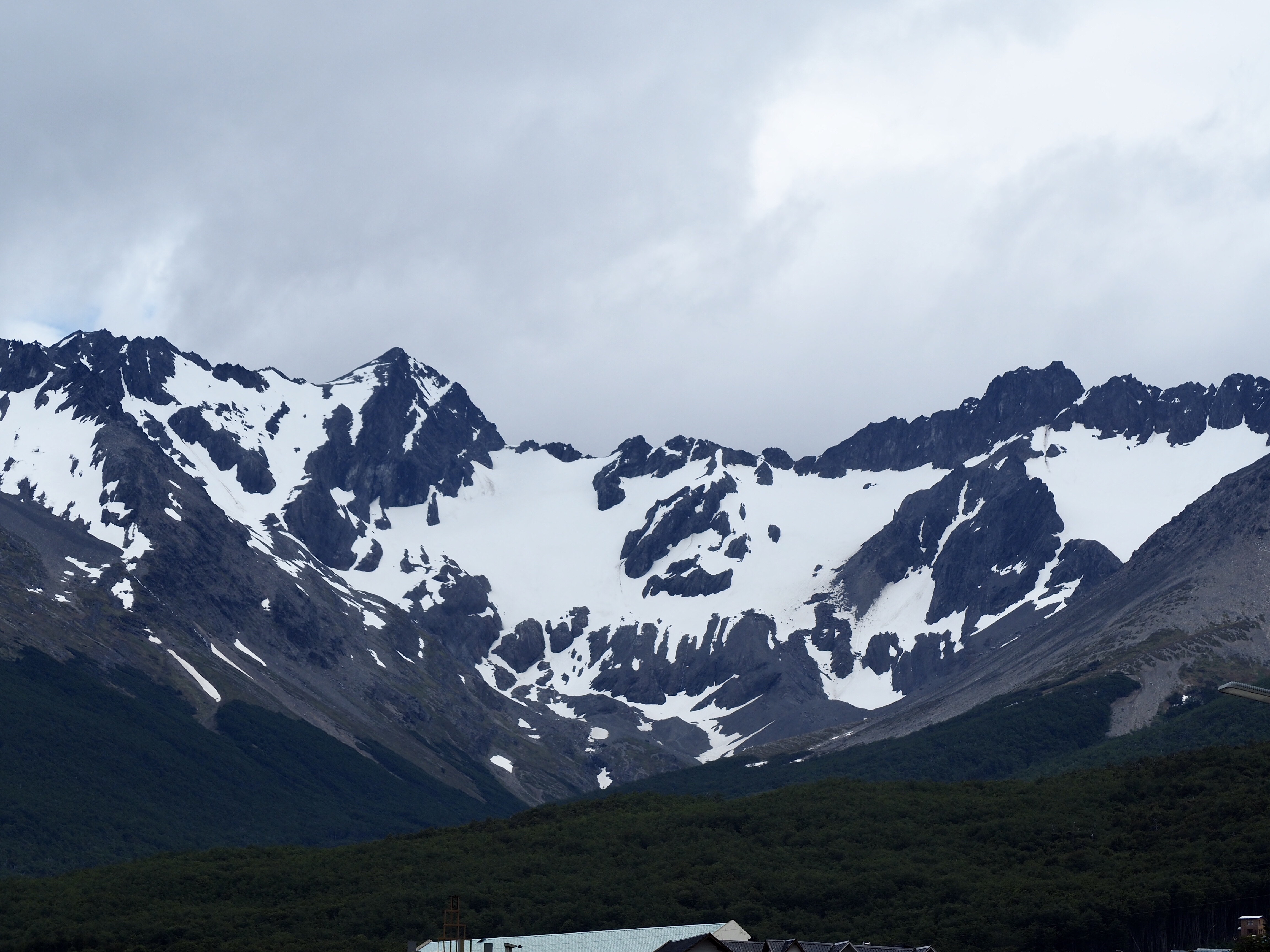
The surrounding mountains are magnificent and photos do not do them justice.
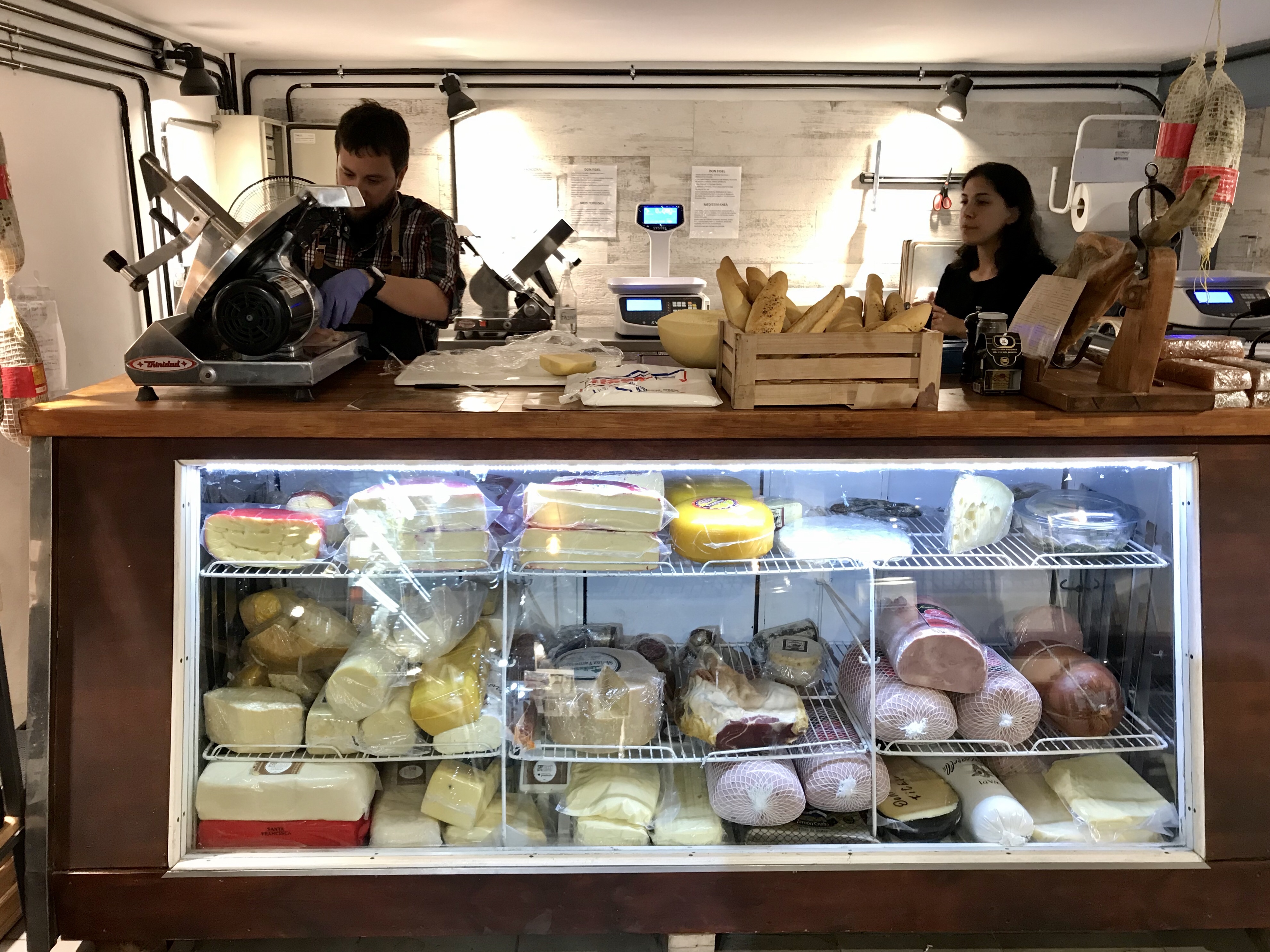
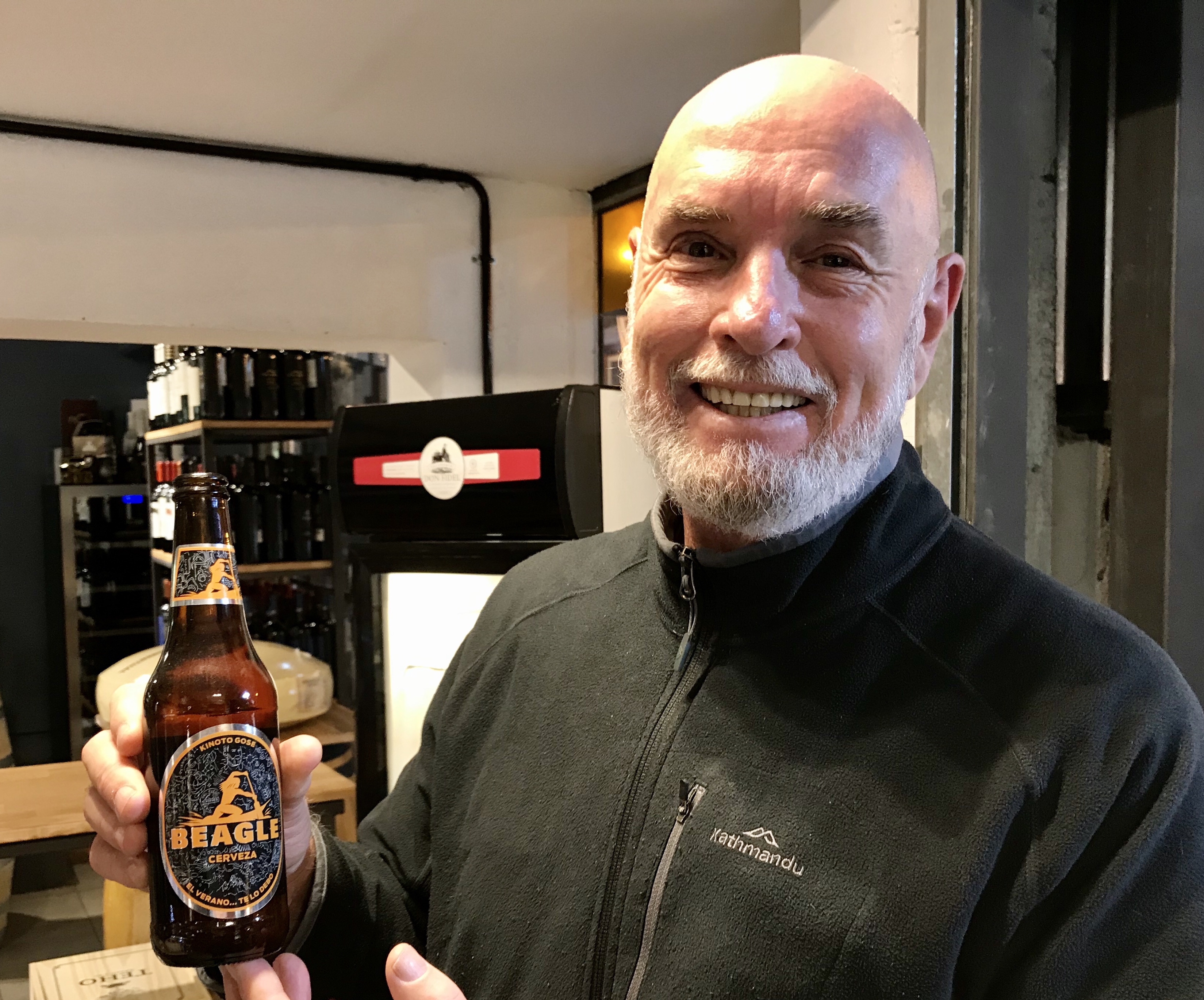
Time to find some food and the beer of the day which we found in a little deli type place tucked into an arcade.
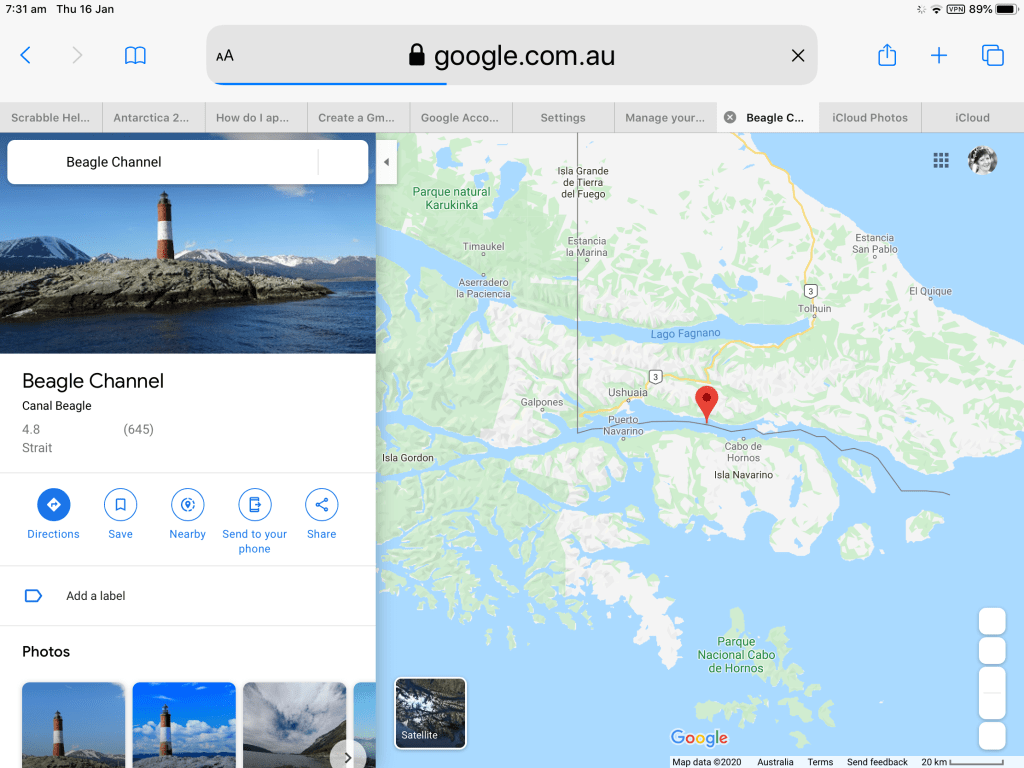
Beagle beer – well this one at least was rated a 4 – too sweet. Clearly named for the Beagle Channel which we will sail down later today.
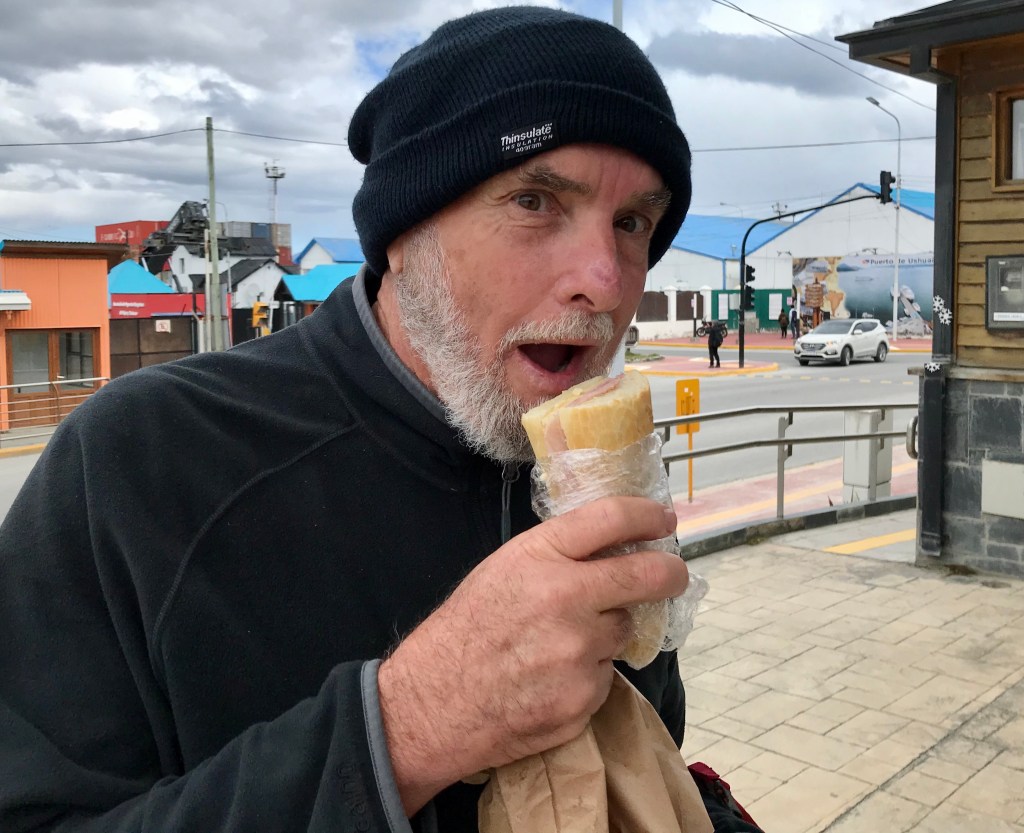
The sandwich was pretty good though.
We are both feeling pretty tired as we wait for the bus to head for the ship. Finally we climb aboard about four o’clock.
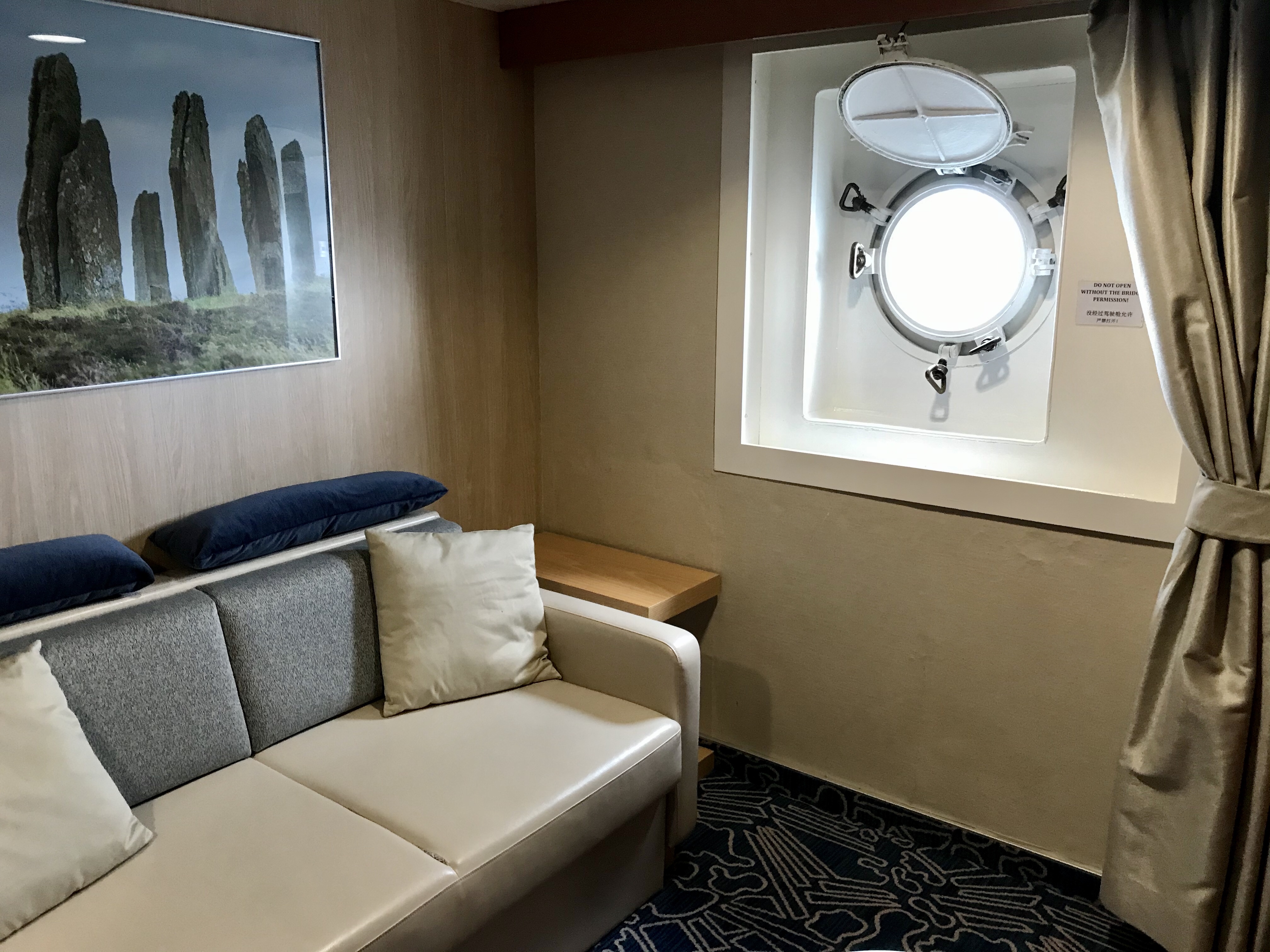
There is loads of space in our cabin. We have two portholes and two TVs and there are three rooms really so a suite.
We had our first briefing at 5pm. There are a huge amount of staff. The doctor was very somber about the potential for seasickness saying on one journey he pulled his mattress on the floor as he couldn’t stay in it. There is a Sea sick clinic tonight. Solan, our leader, discussed the weather Website called Windy. Blue is good. Green 10-15knots yellow 20-25 orange 30-35. Red purple not good at all. Going into orange to red in the evening tomorrow. We are heading to West Falklands first and then east to Stanley. Mandatory safety drill also took place.
Delayed departure due to high winds in the Beagle Channel. We finally left about 7.15pm.
Dinner in the restaurant at 7.30pm was superb. Pea and ham soup, beef, barramundi, chocolate tart to die for.
After dinner we had a boot and parka party. The parkas are fabulous.
Went out and watched our way down the Beagle Channel.
Saw out first penguin and first albatross. Wow!
So the end of an amazing day. Time for bed and then tomorrow out into open sea!
I’ll leave you with our trip overview:
This is a truly epic adventure through the remote Falkland Islands, the wildlife paradise of South Georgia and the extraordinary landscape of the Antarctic Peninsula. You’ll enjoy unforgettable encounters with untamed wildlife in a vast, dramatic and spectacular setting; you’ll take a step back in time at historically significant sites; and you’ll be mesmerized by the rich diversity and contrasts that make these regions so captivating and unique.
Watch a wild, isolated and extreme world come to life as scores of penguins dive for food, herds of elephant seals bathe in the sun, and pods of orcas pass you by. You’ll be transported to your own wildlife documentary, staged in a magnificent setting of mountains, sea and ice.
Your gateway for this expedition is Ushuaia, Argentina. Nestled within the Tierra del Fuego archipelago, Ushuaia has a small-town feel yet boasts many shops, museums, cafés and restaurants that you can enjoy before your voyage. The average temperature in Ushuaia in winter is zero. Patagonia has dry, almost desert like conditions being sheltered from the persistent westerly winds by the southern Andes.
Help Inspire Change
Are you interested in environmentalism? Learning first-hand from scientists, researchers and special guests onboard is an eco-tourist’s dream come true. Having a chance to meet these experts is truly inspirational. Our partnerships with international charities make for very rewarding and educational expeditions.
Penguin Watch identifies risk factors to the Antarctic penguin population, conducting long-term rookery monitoring, and genetic analysis to obtain information on how these populations are changing and declining
Their scientists will be participating in our Falklands, South Georgia & Antarctica voyages in 2018 and 2019.
Hopefully the expedition brochure can still be found here.
Well we really crashed last night, as expected, though Garrie was awake and restless early so breakfast a bit after 7am.
I had organised a shorter excursion today as we also had to meet our Quark person in the afternoon, (to say nothing of whether we could do that day twice in a row!)
The sky was overcast with rain promised so raincoats in the bag off we went in the exact opposite direction to yesterday.
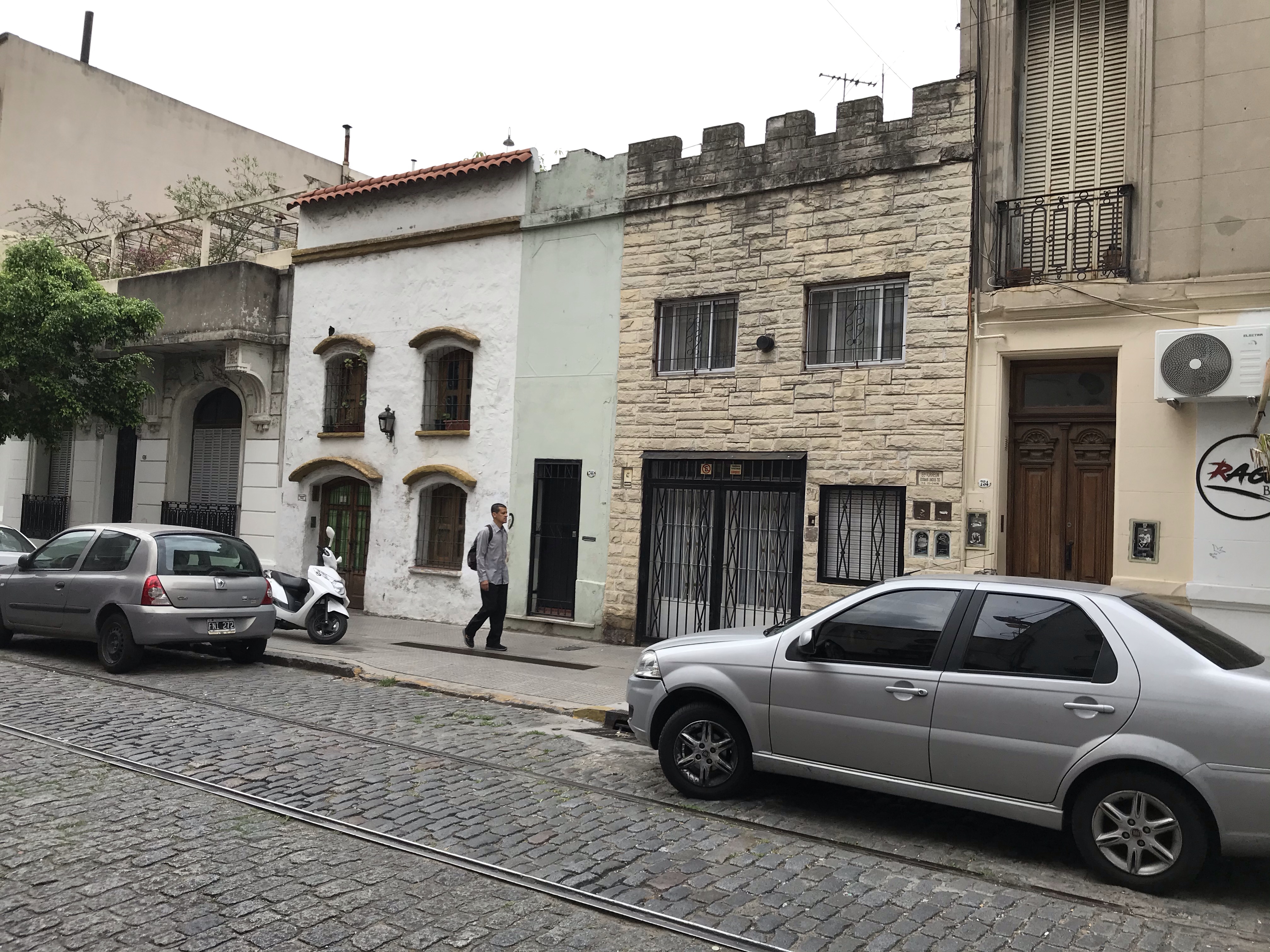
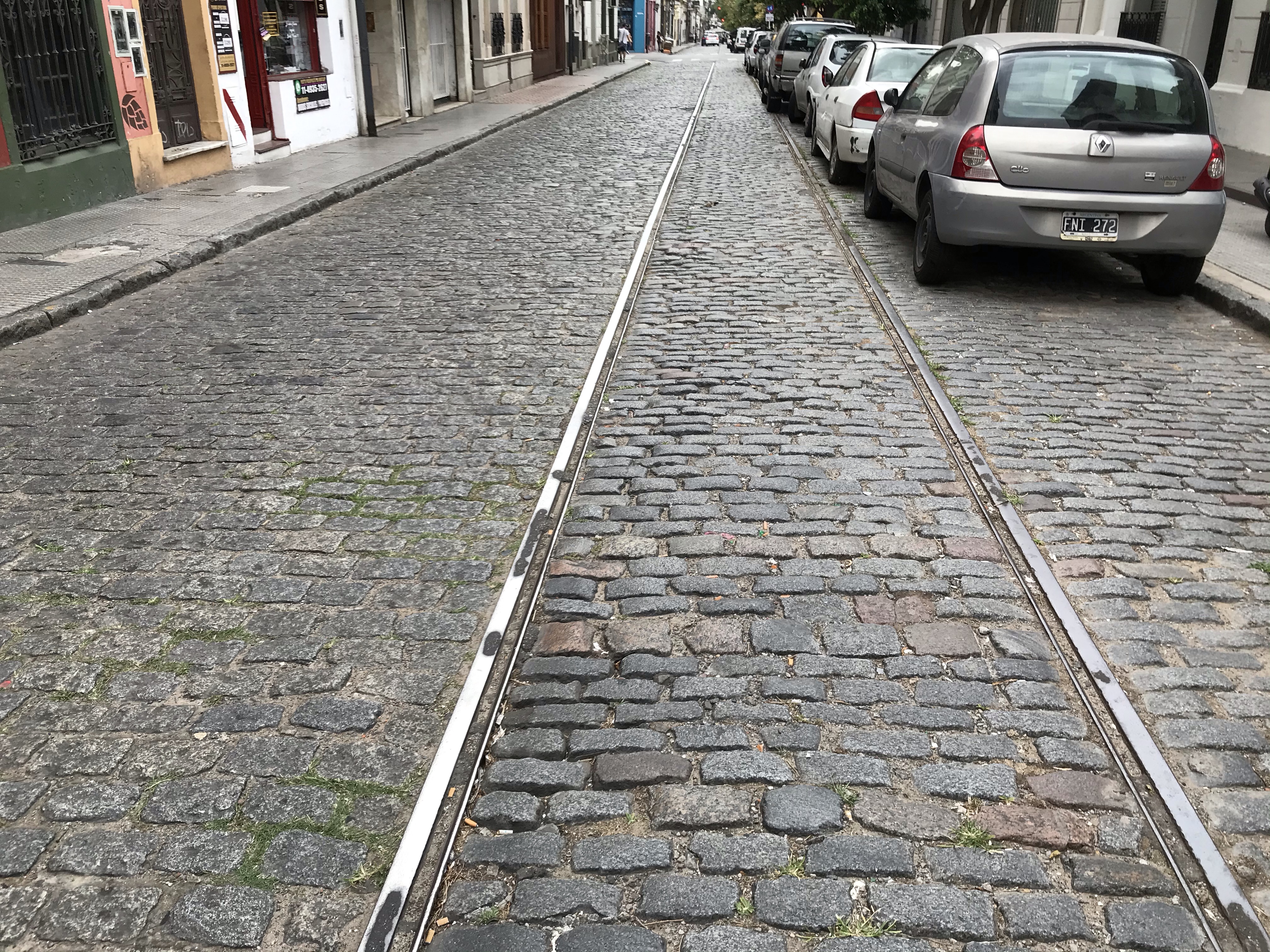
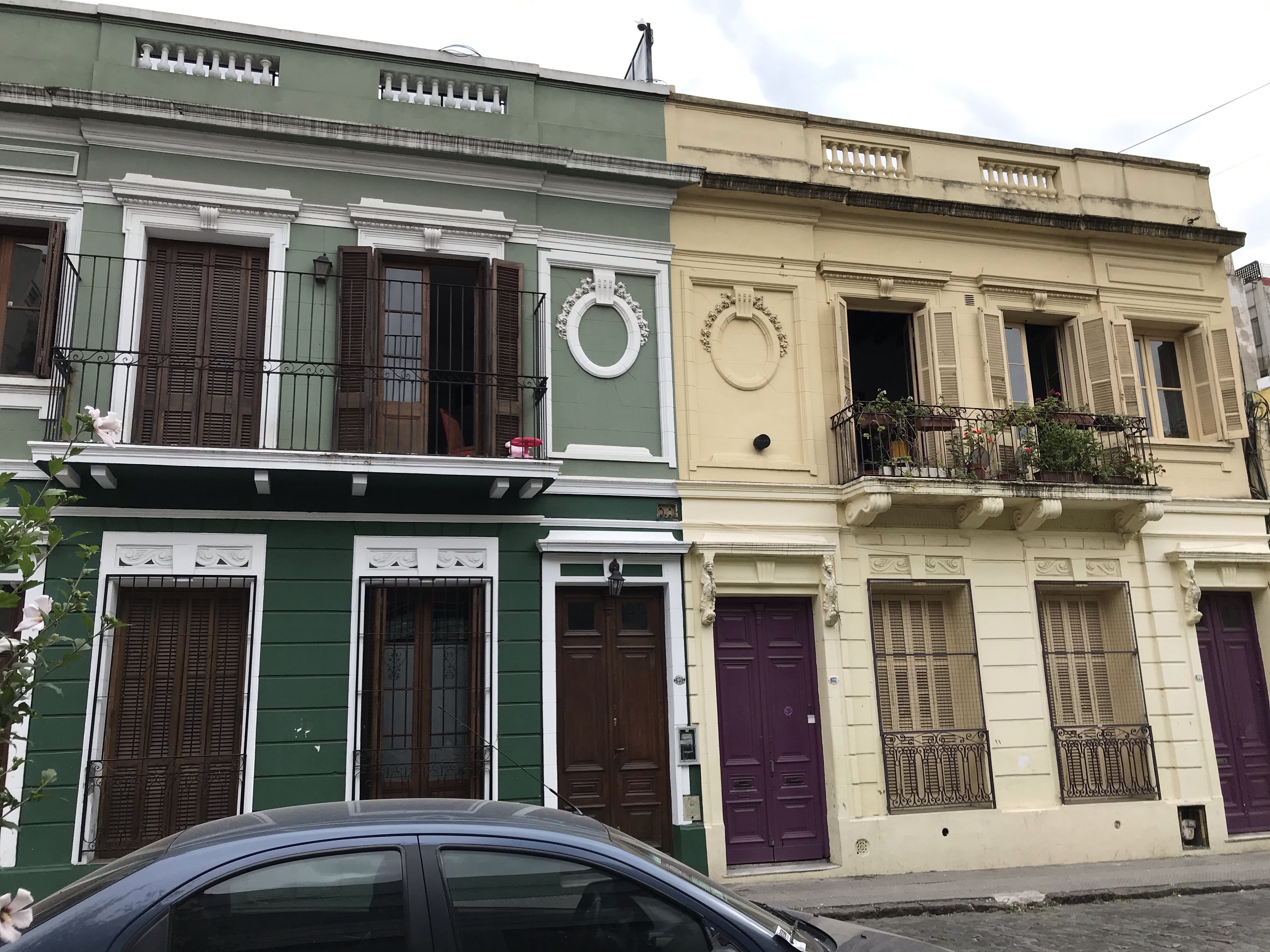
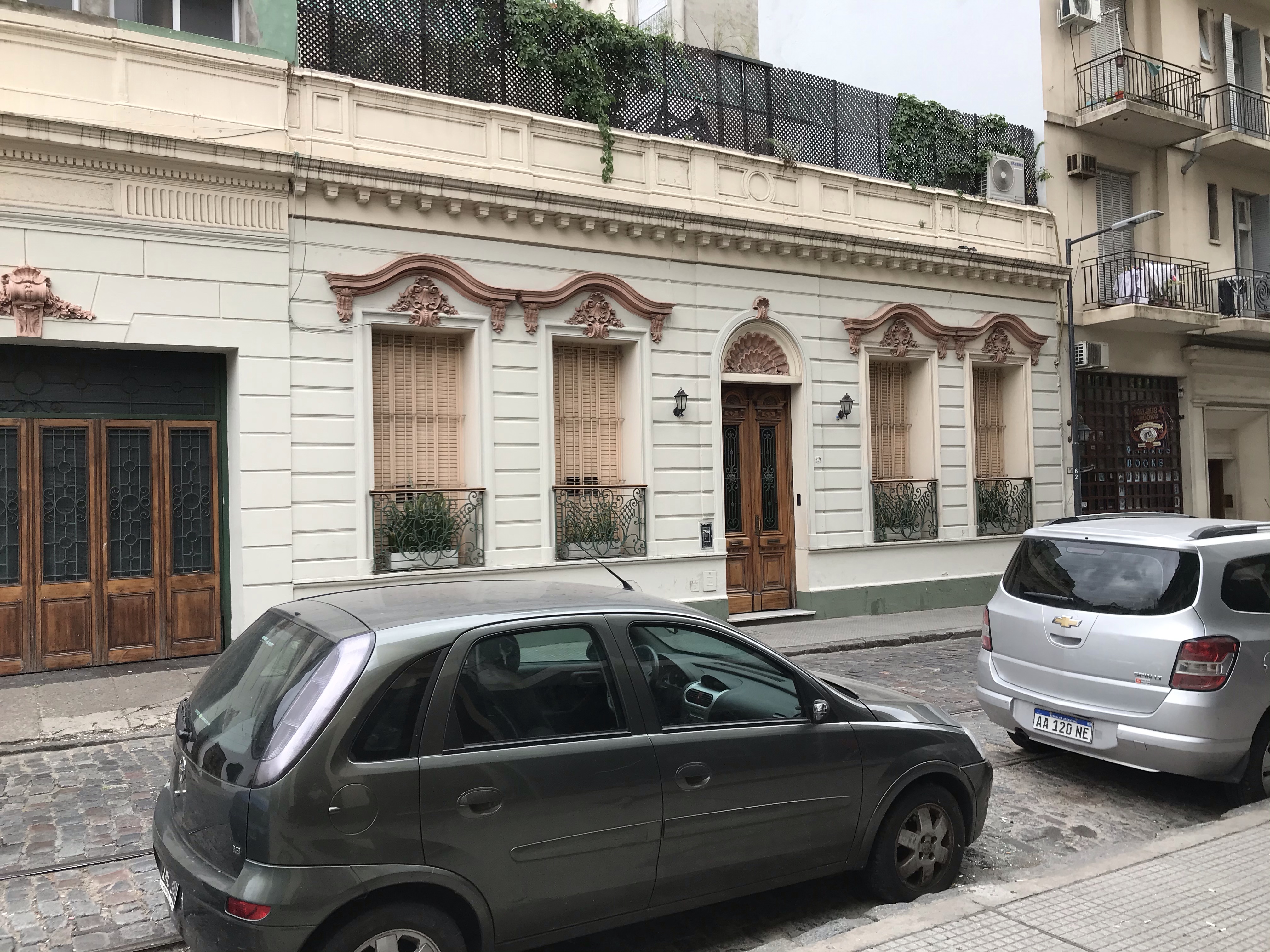
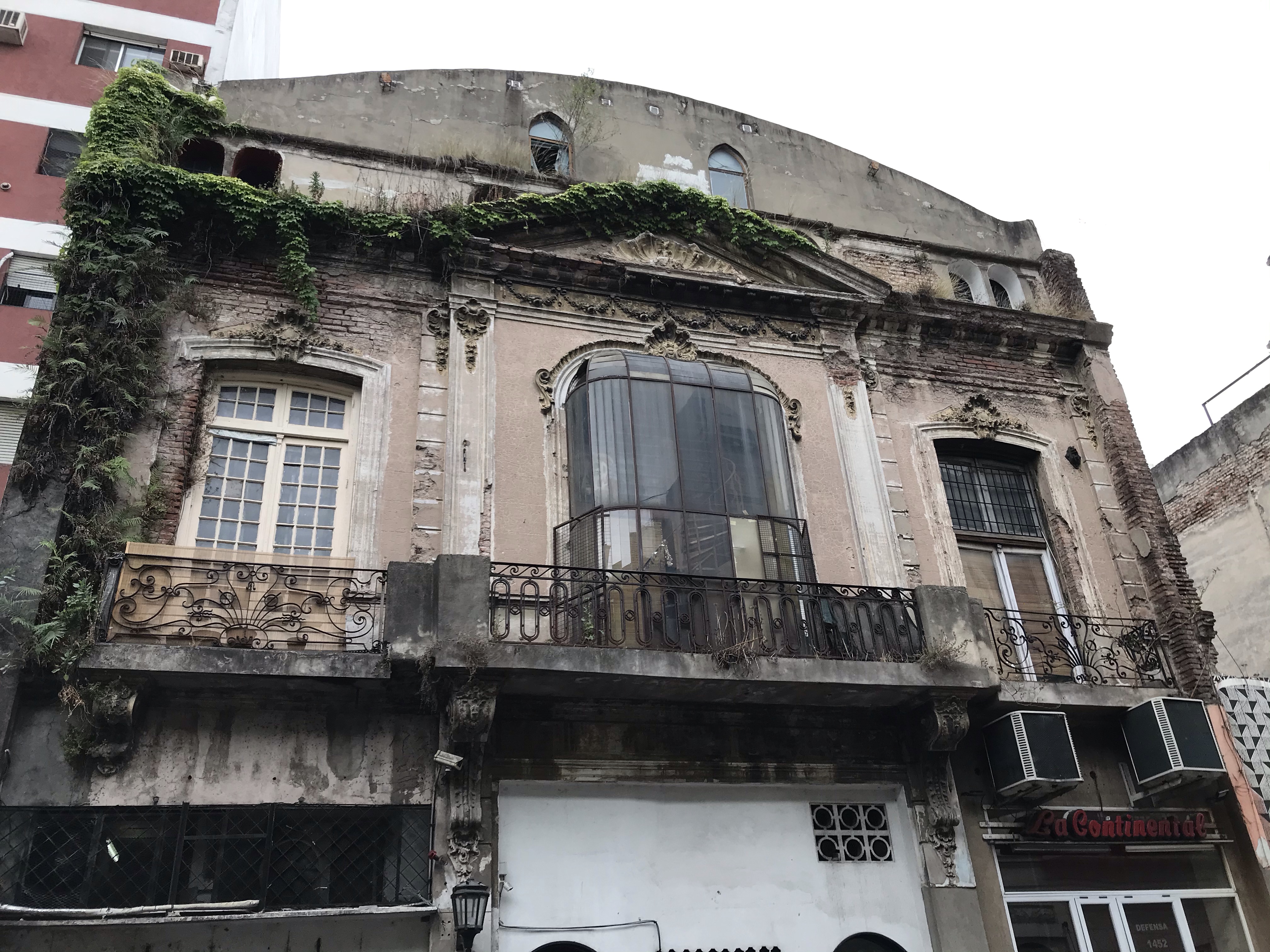
It was very much the contrast too. Yesterday wide tree lined boulevards, today narrow cobblestone streets with older houses – as we were heading through San Telmo, the oldest part of BA.
Pity it is Friday. The blurb reads: Every Sunday the beautiful streets of San Telmo turn in to a wonderful, bustling market come street party, full of local artisans, street performers, and of course antique stalls. This amazing display of local culture takes place in the Plaza Dorrengo, and is one of the area’s most famous attractions. This tradition originally began with only antique stalls in the main plaza, but quickly spread down the surrounding streets as local vendors and artist joined in the fun, becoming the energetic market you see today. This is the best place to pick up a hidden gem, a bargain antique, or shop for hand made souvenirs from your trip. After a long day of shopping you can relax and grab a bite to eat in the many restaurants on Calle Defensa, a lovely little street that runs along side the Market.
Though there were some beautiful old houses, our overwhelming memory will be dog poo. People love their dogs here but picking up after them is not something that has arrived here yet – surprising given I had a paper straw yesterday. Many try to get their pets to use the areas around small trees but many puppies are clearly not compliant, meaning you spend most of the time looking down to avoid barkers eggs.
You weren’t sure whether to look at the next pix – just in case I had illustrated the point with a pic. 😂.
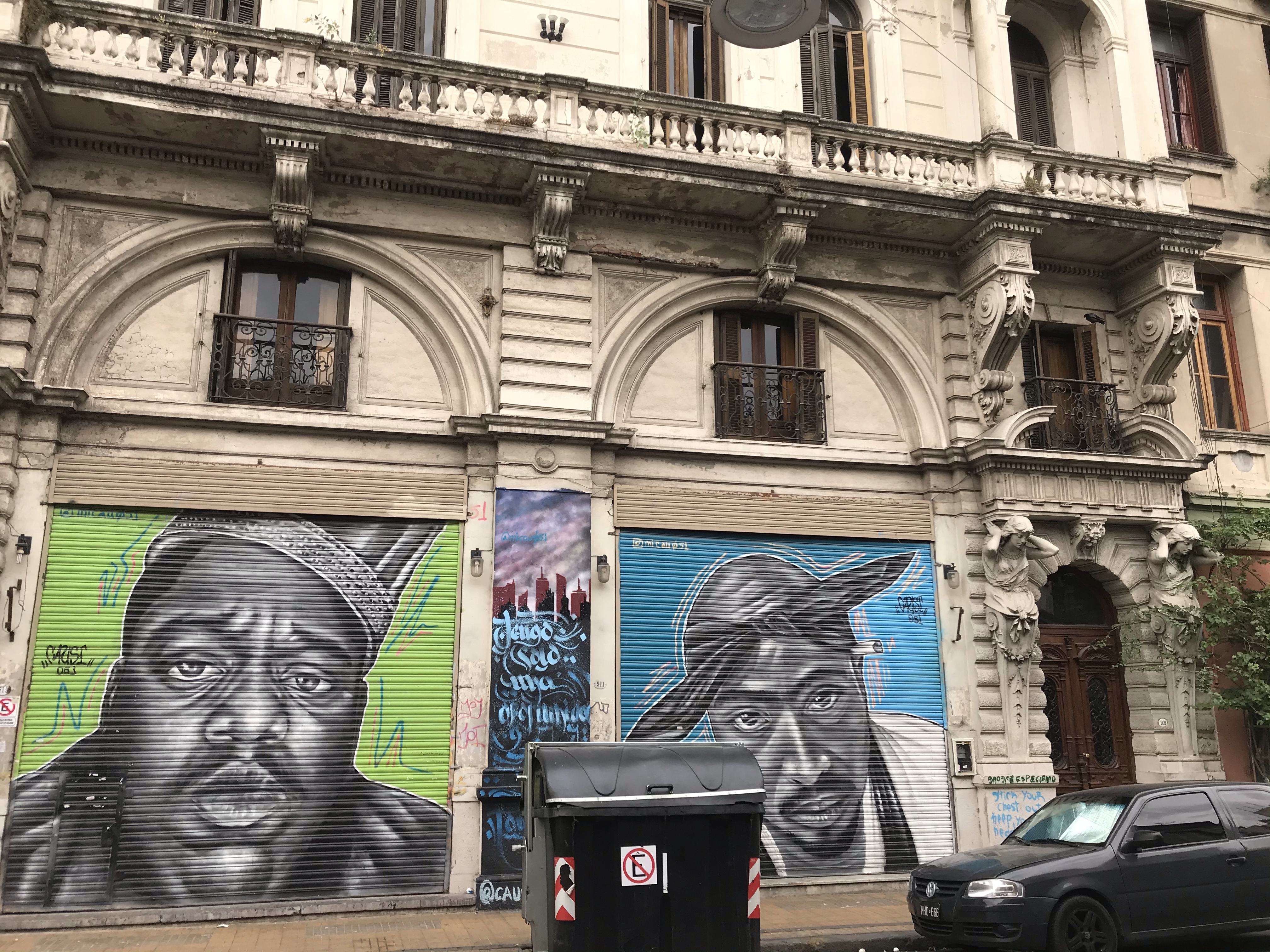
There is a lot of use of street art too.
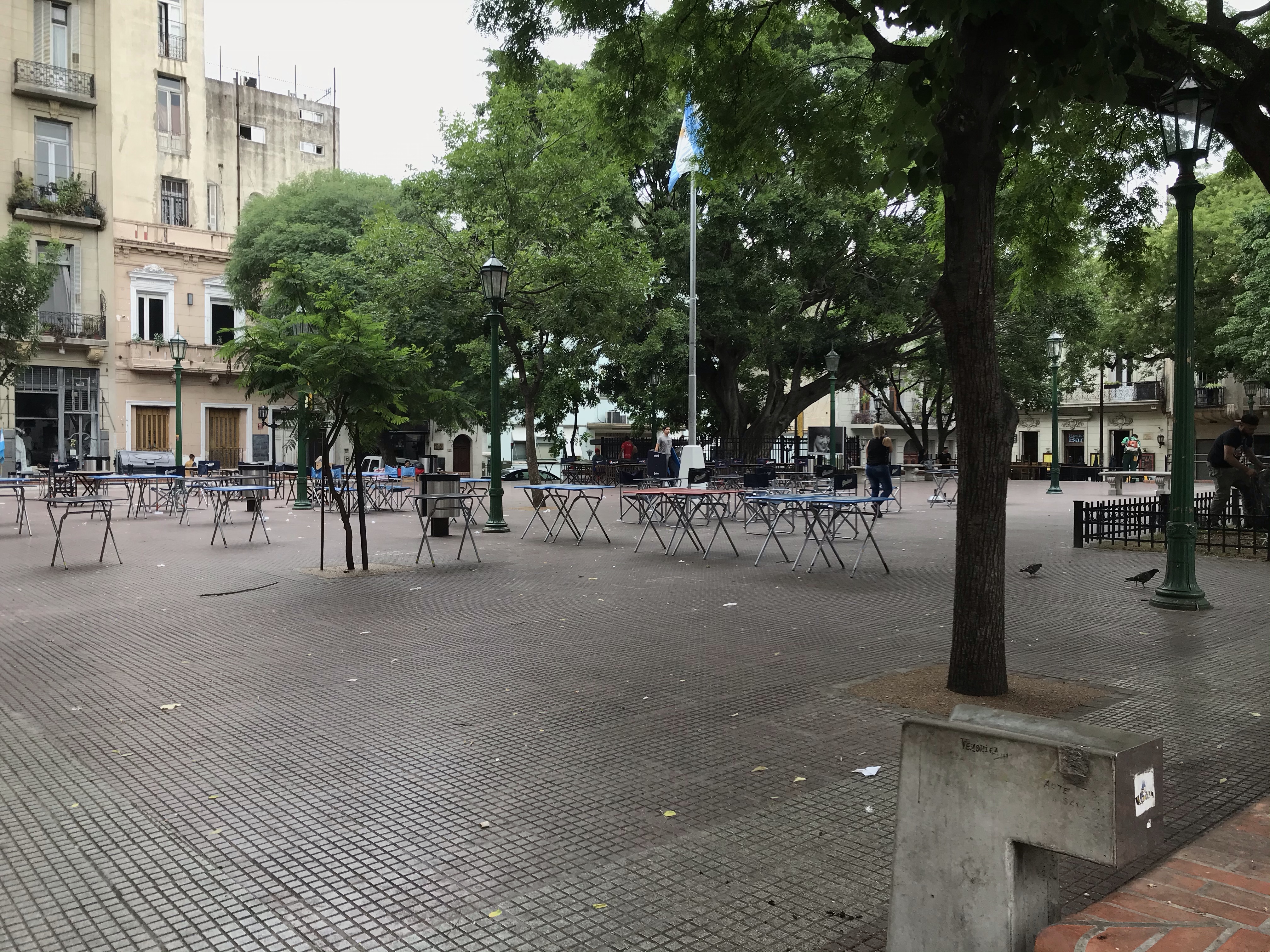
This may be the square that is used for the Sunday markets.
Not sure if I mentioned we are on our way to La Boca? Home to the big BA football, (soccer) stadium, La Bombeonera. Locals love football, coffee and wine! The face you see almost as often as Eva Peron is Maradona!
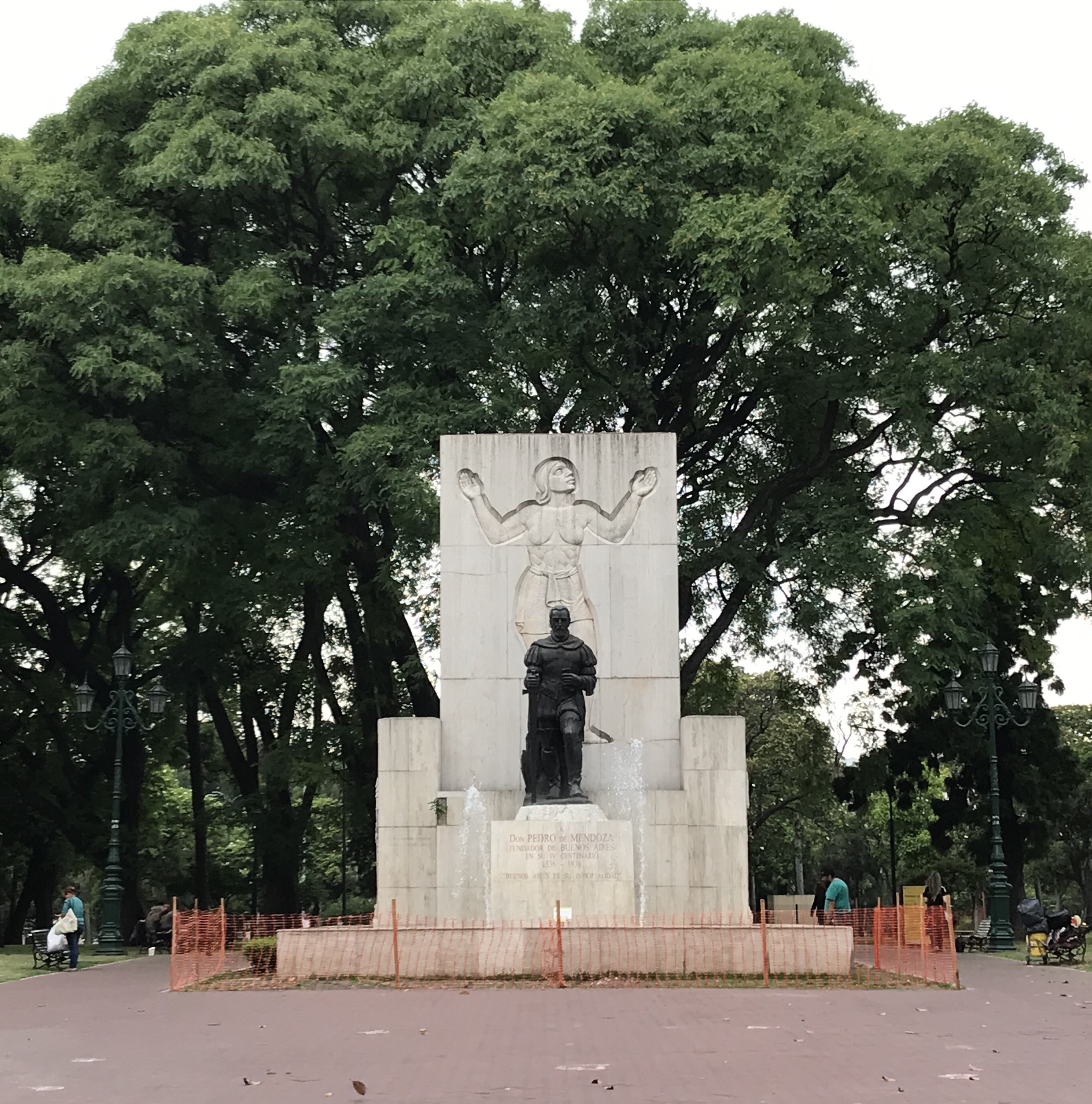
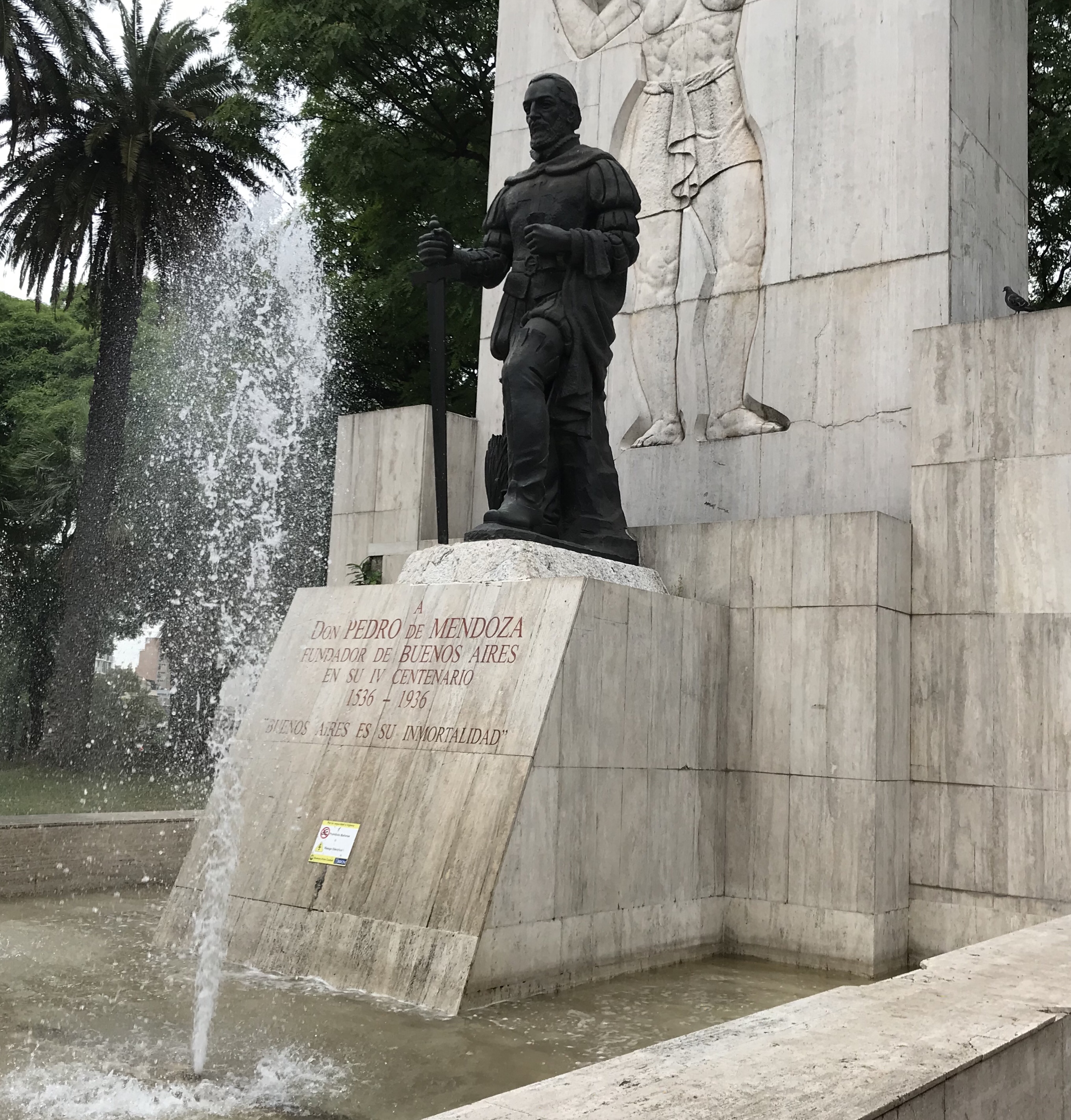
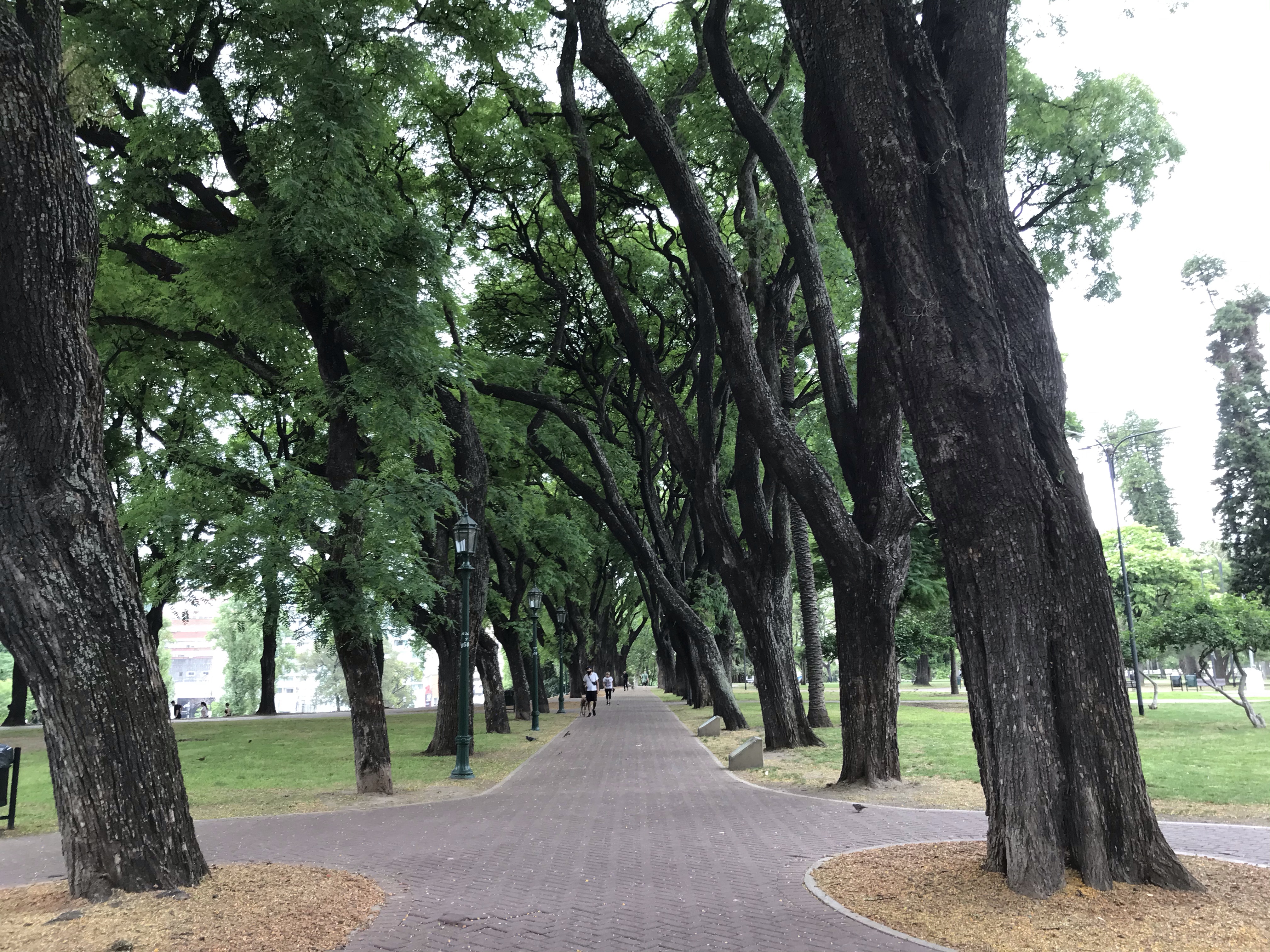
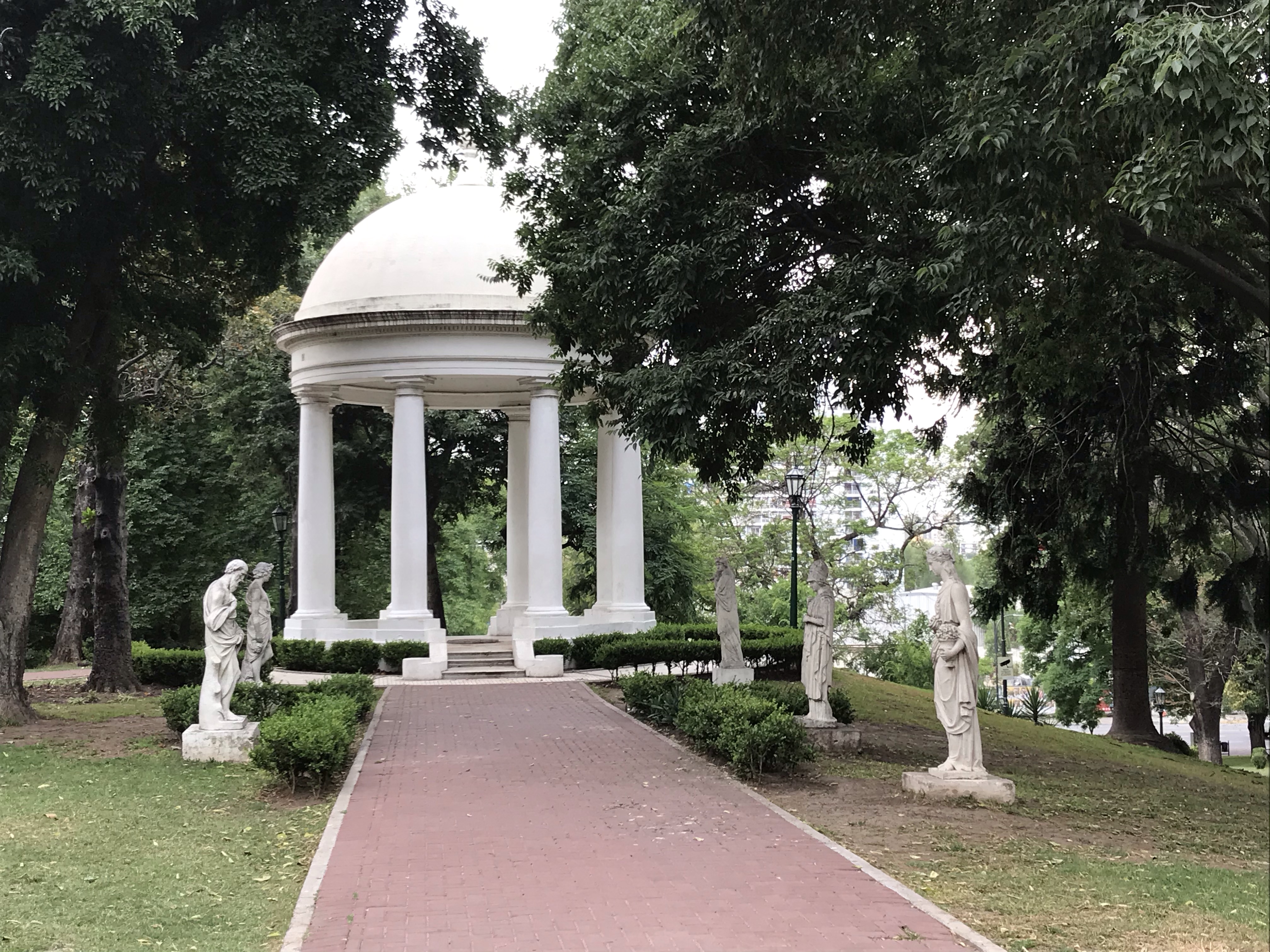
We cross a lovely park on our way.
Tree lined pathways but the prevailing winds are clearly strong.
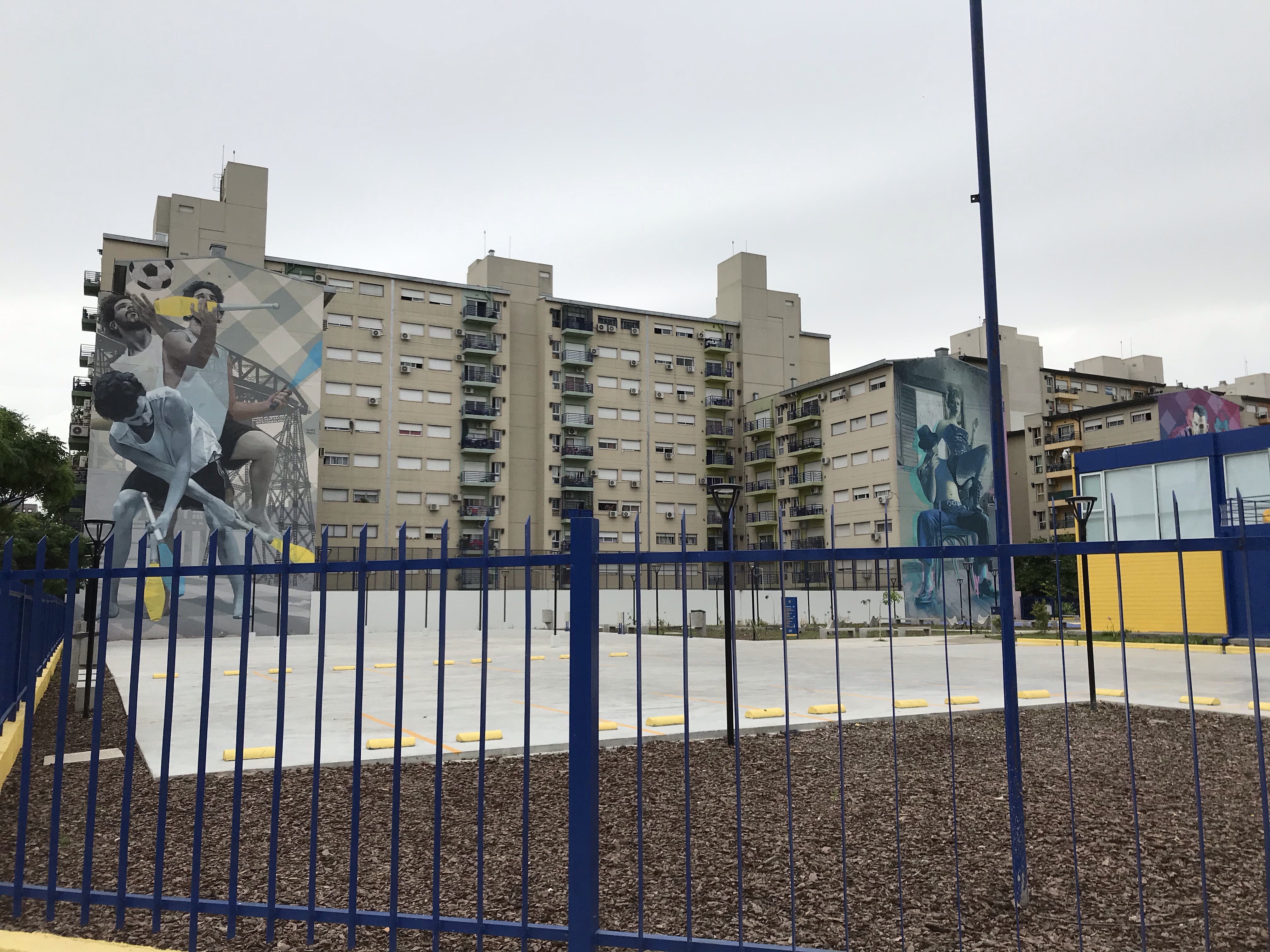
We arrive at the stadium but you can’t really take a decent photo but I did snap the apartments opposite and some of their art work.
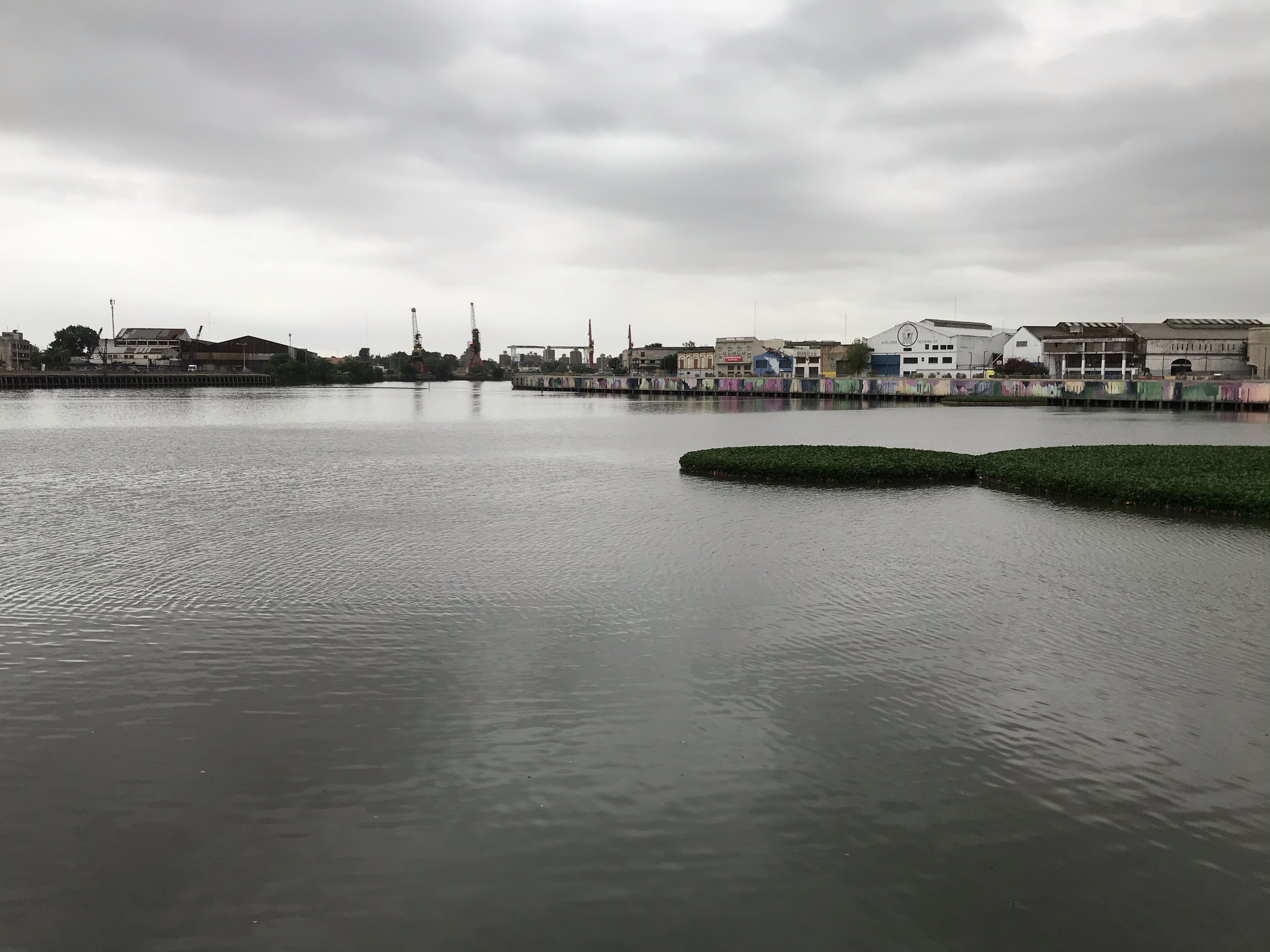
Then we arrive at water. The Matanza River
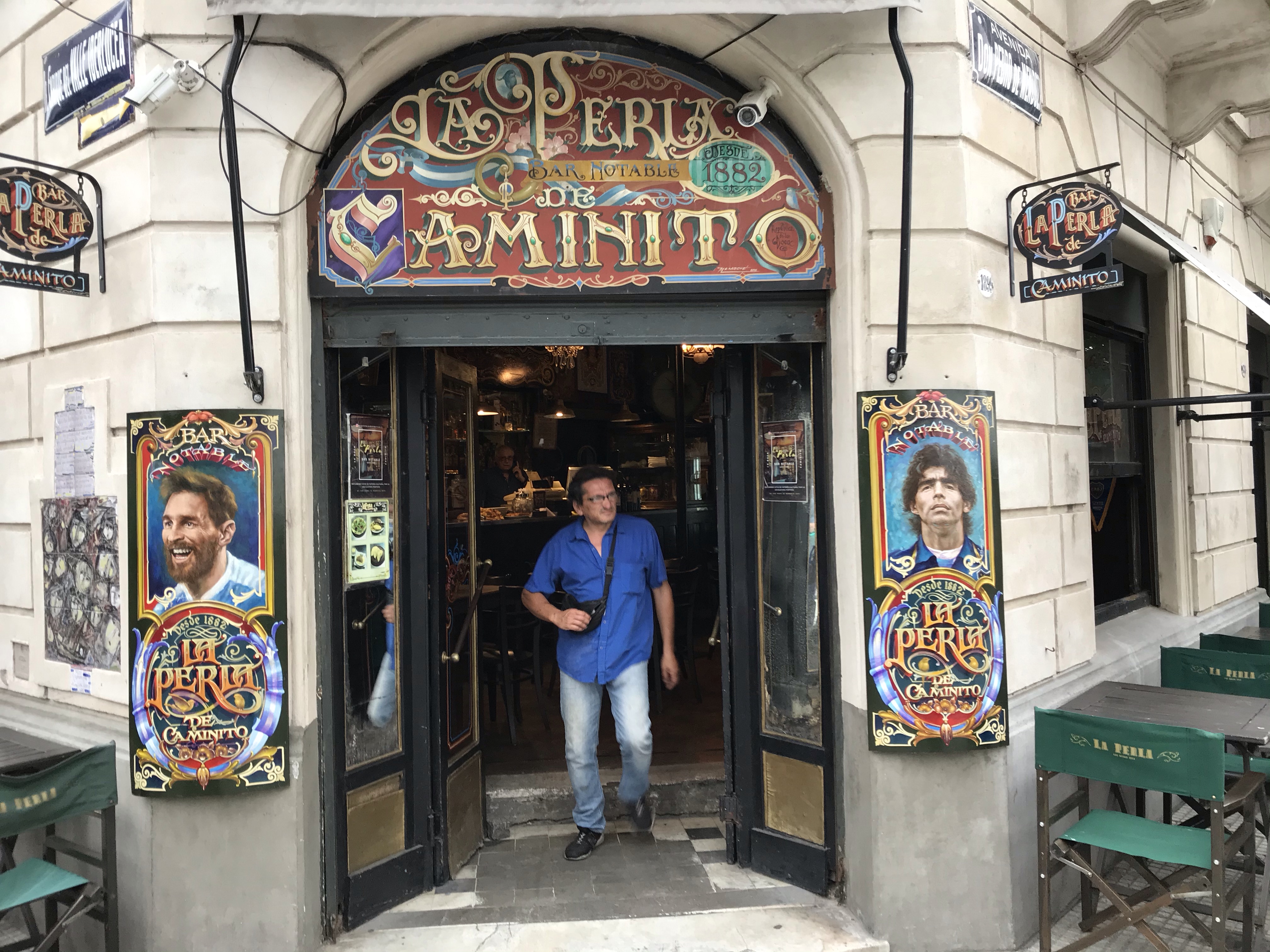
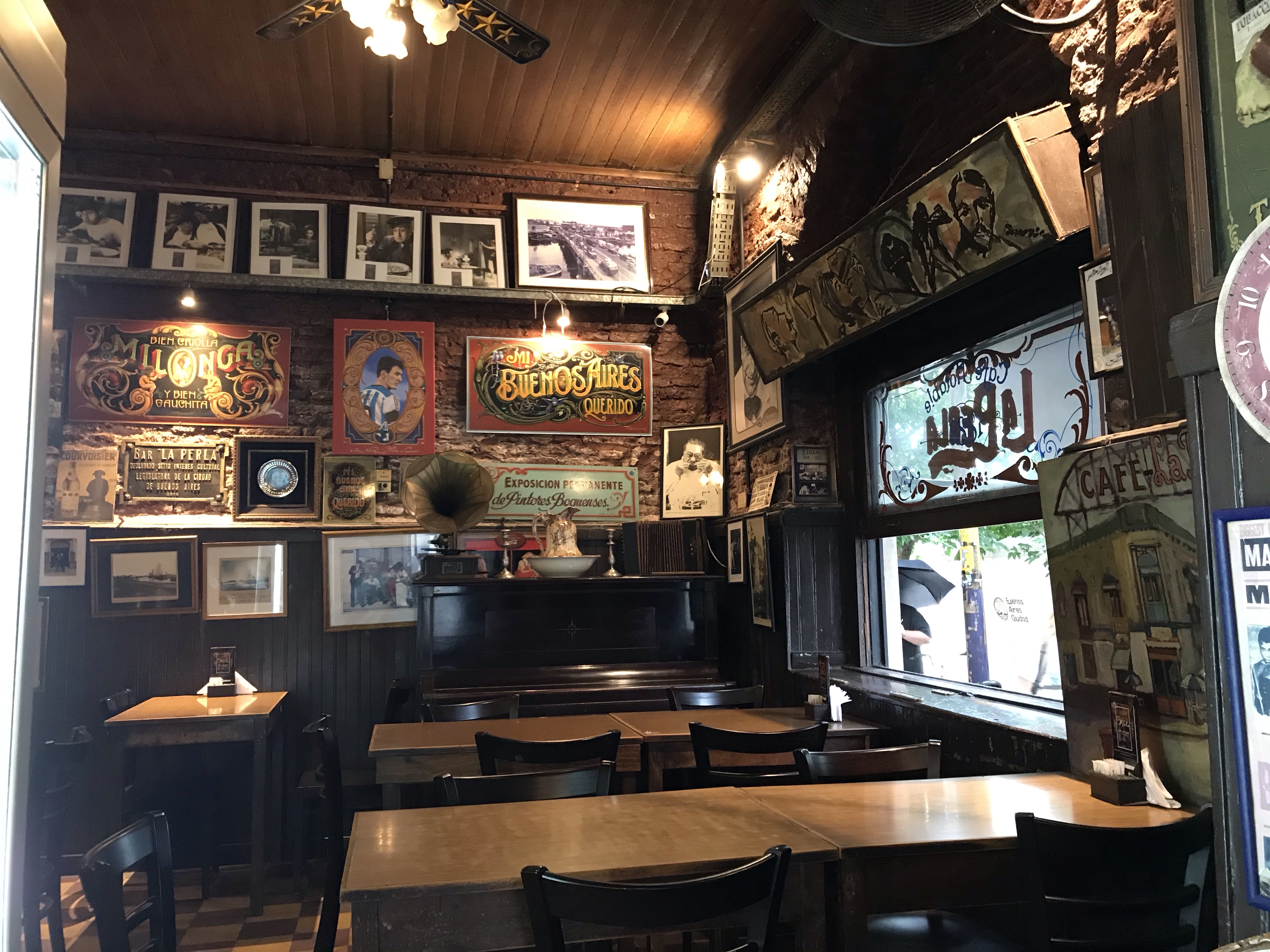
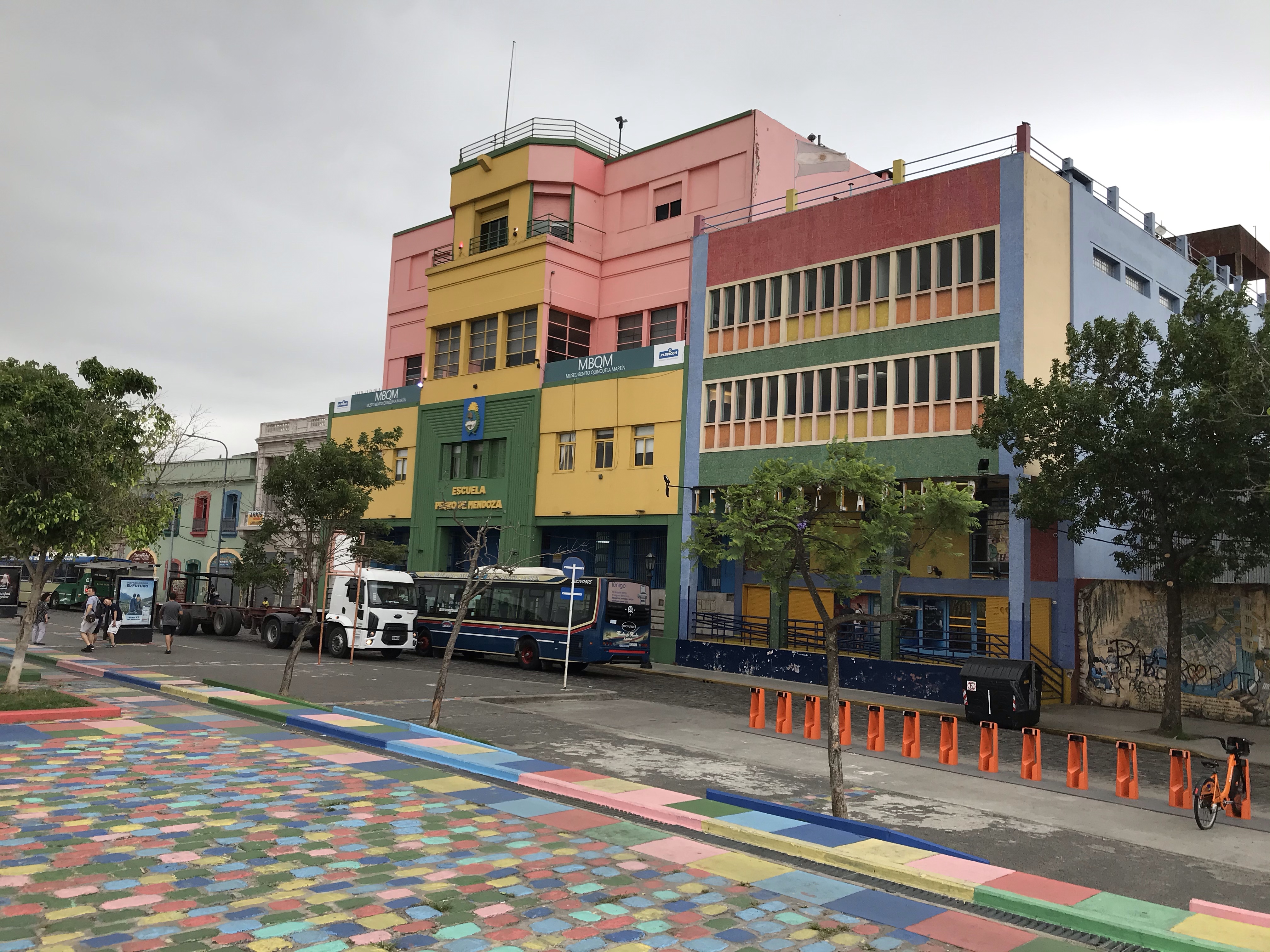
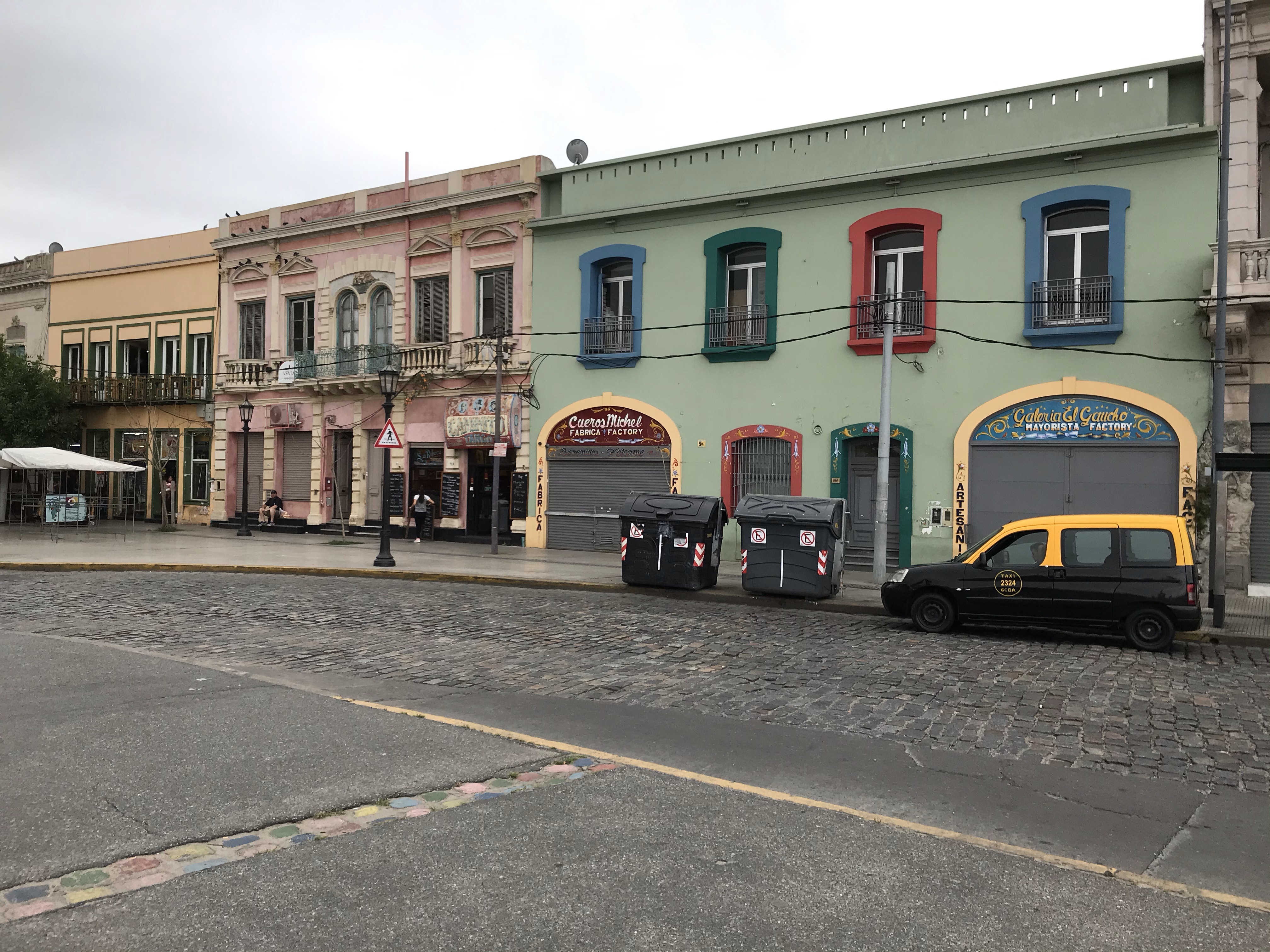
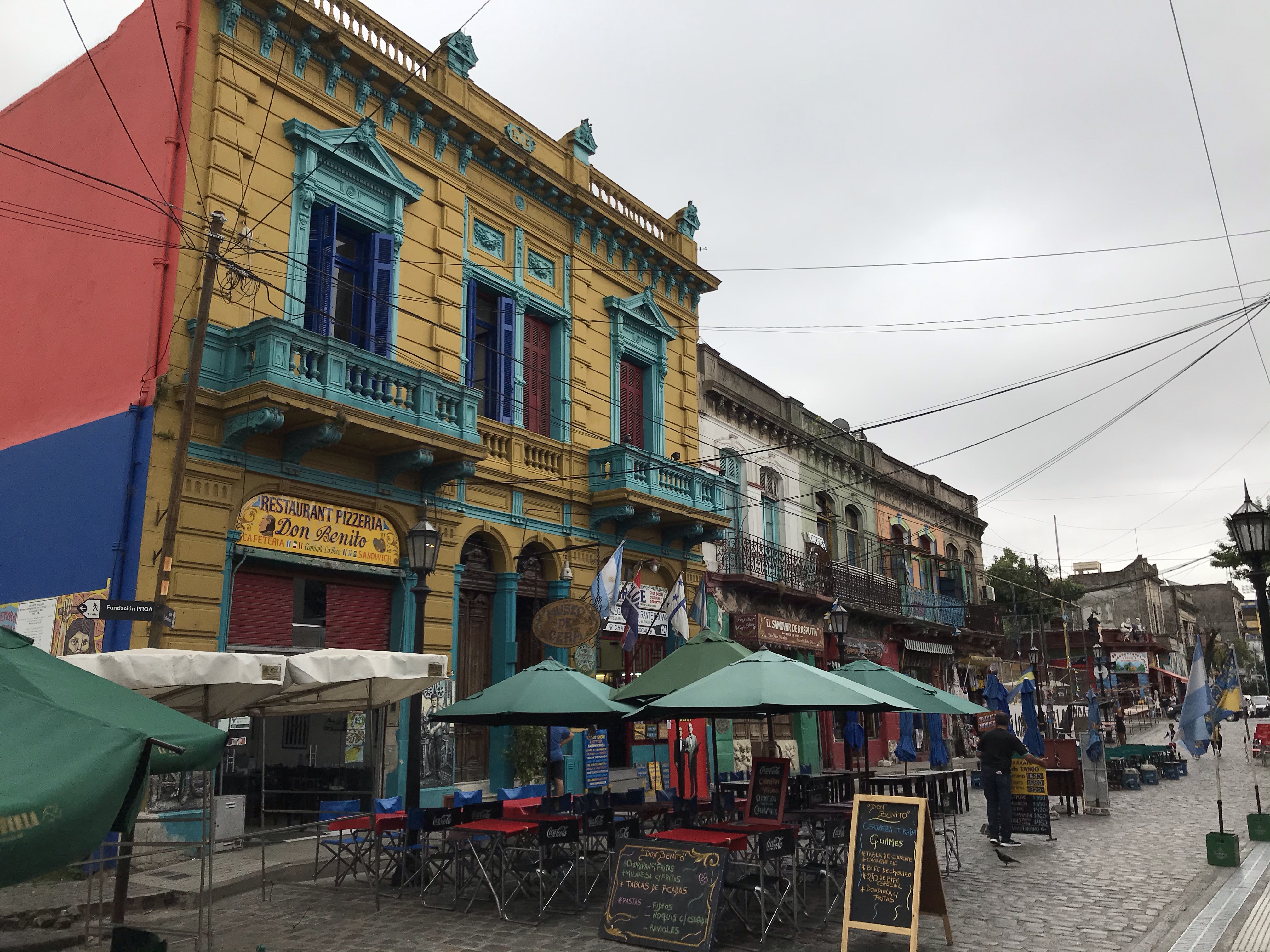
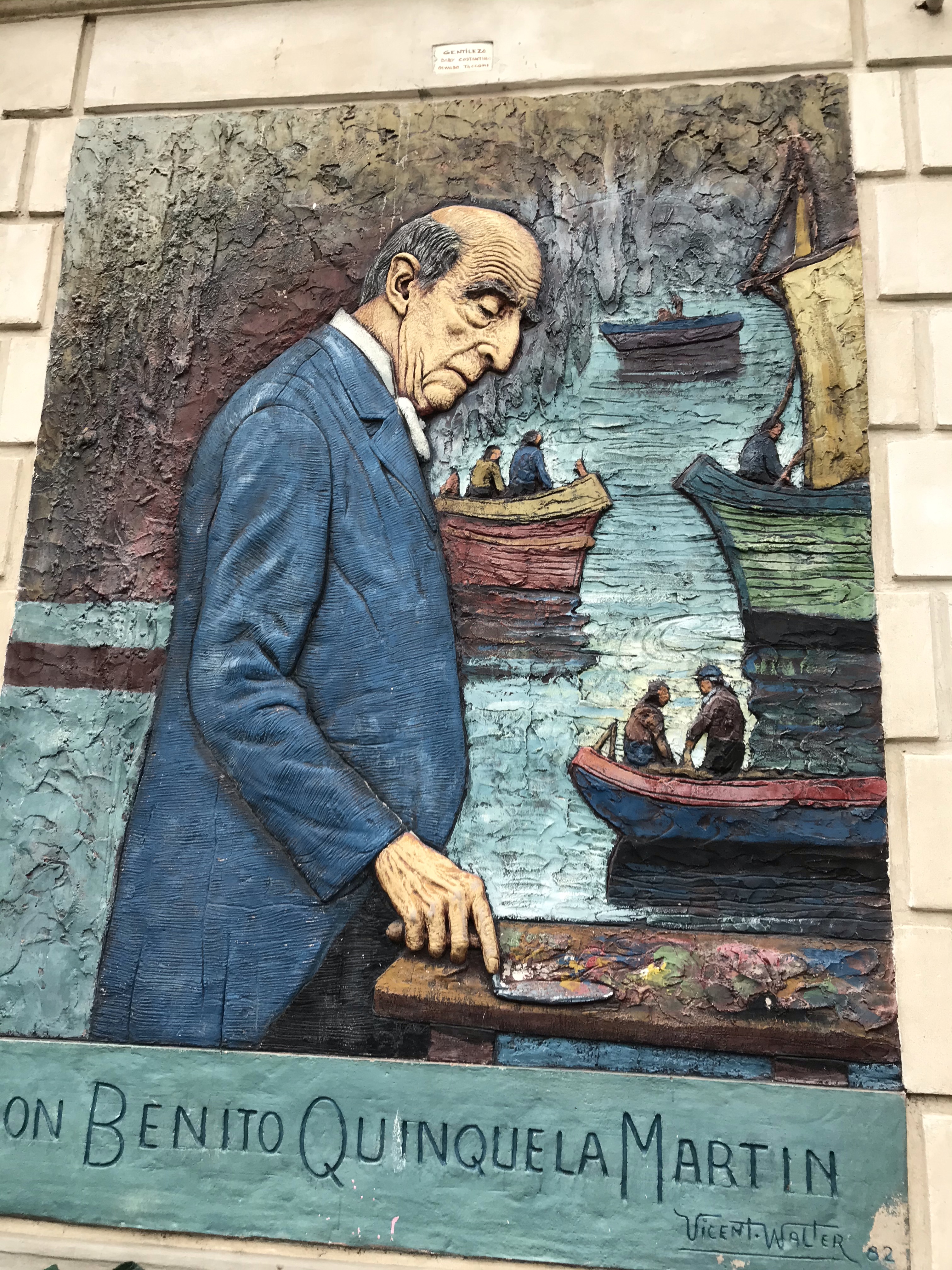
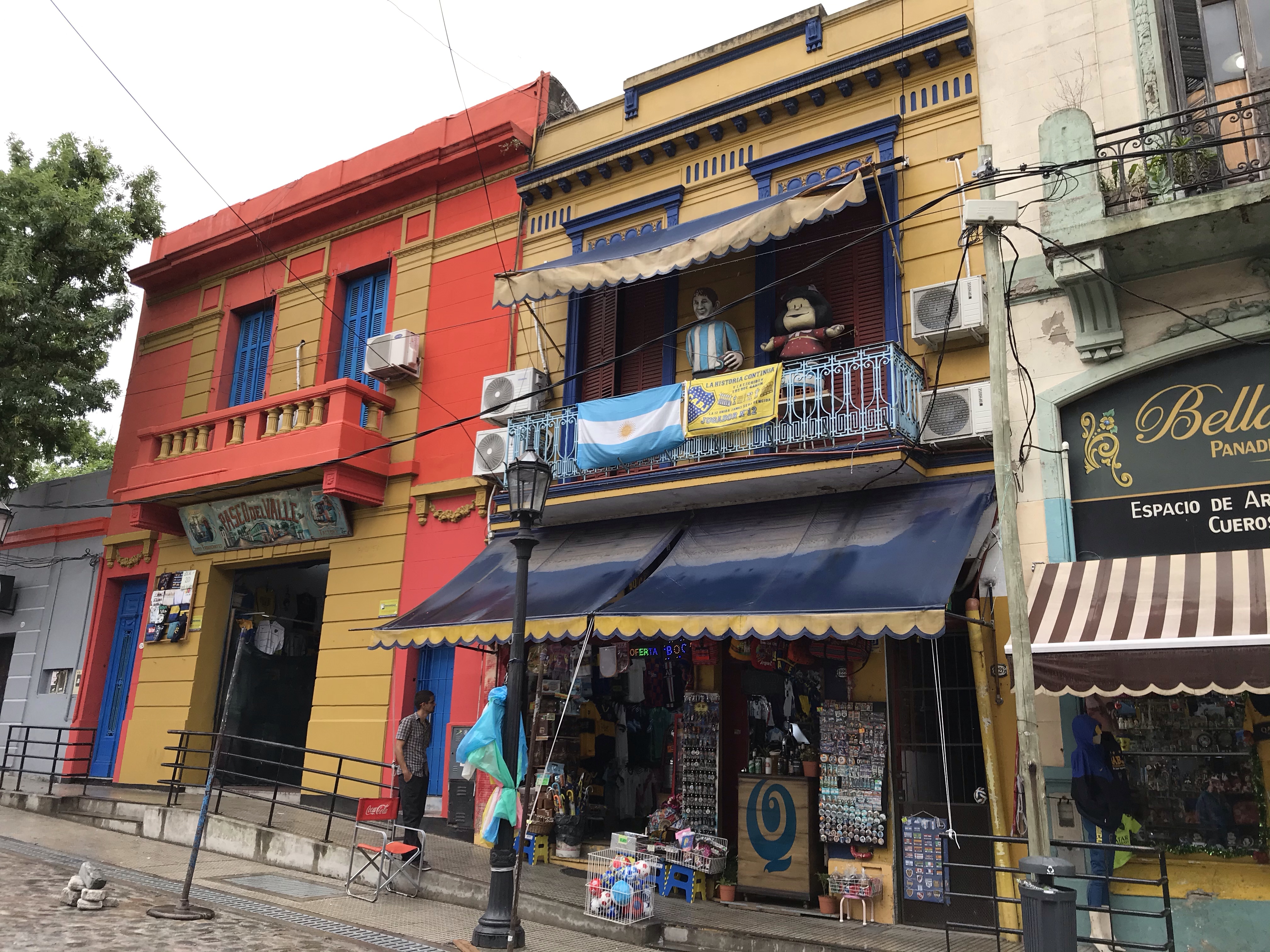
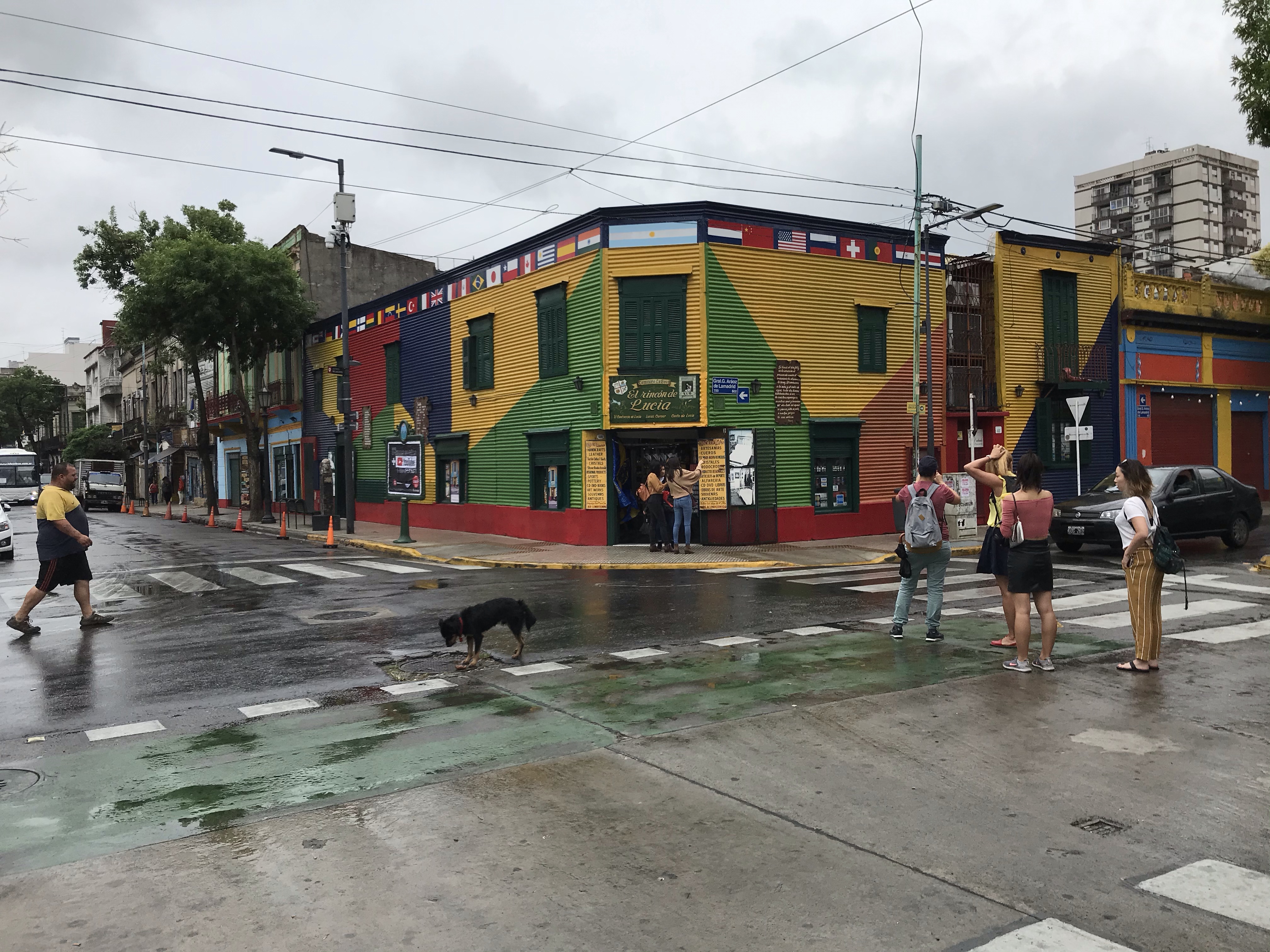
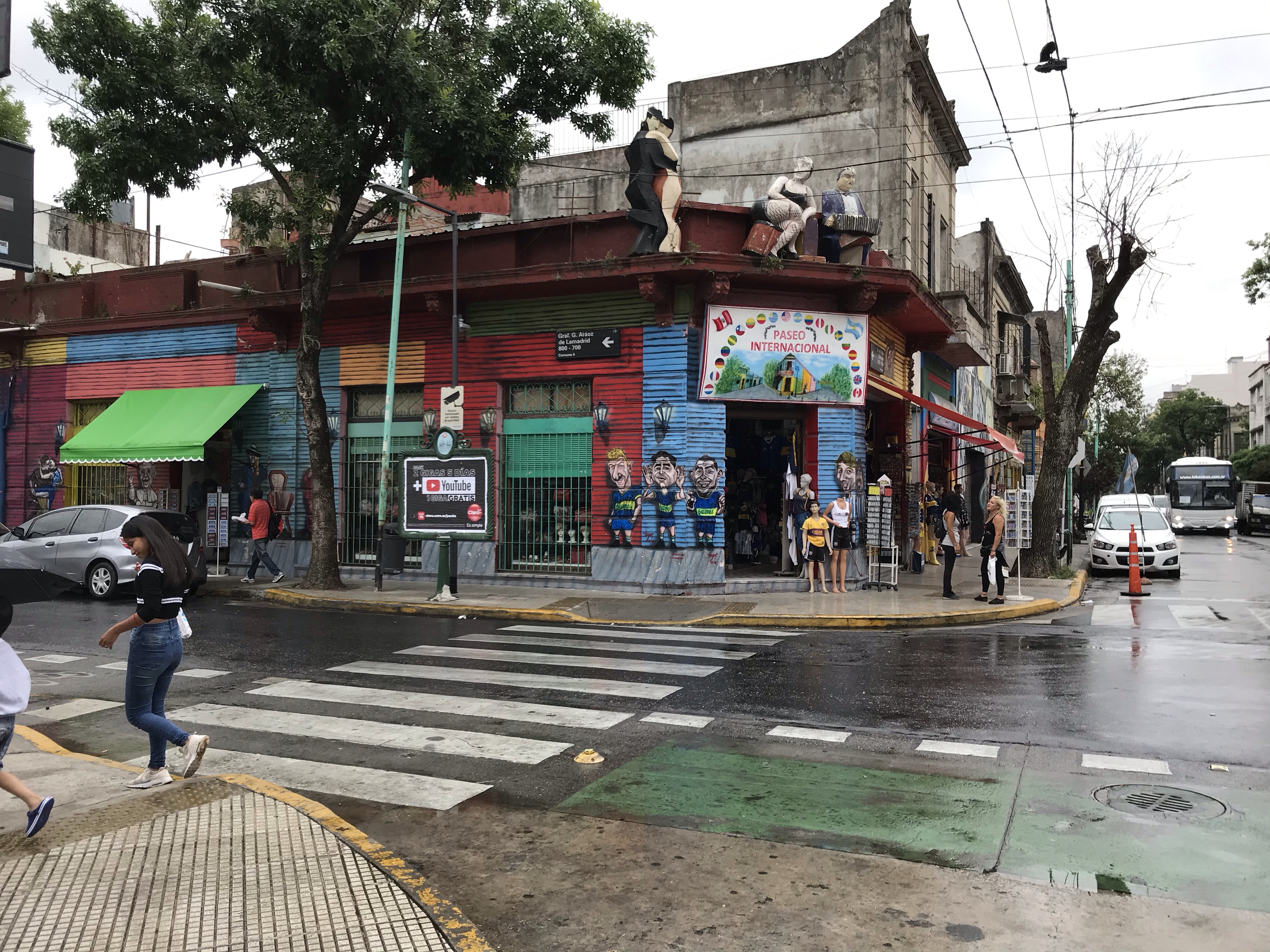
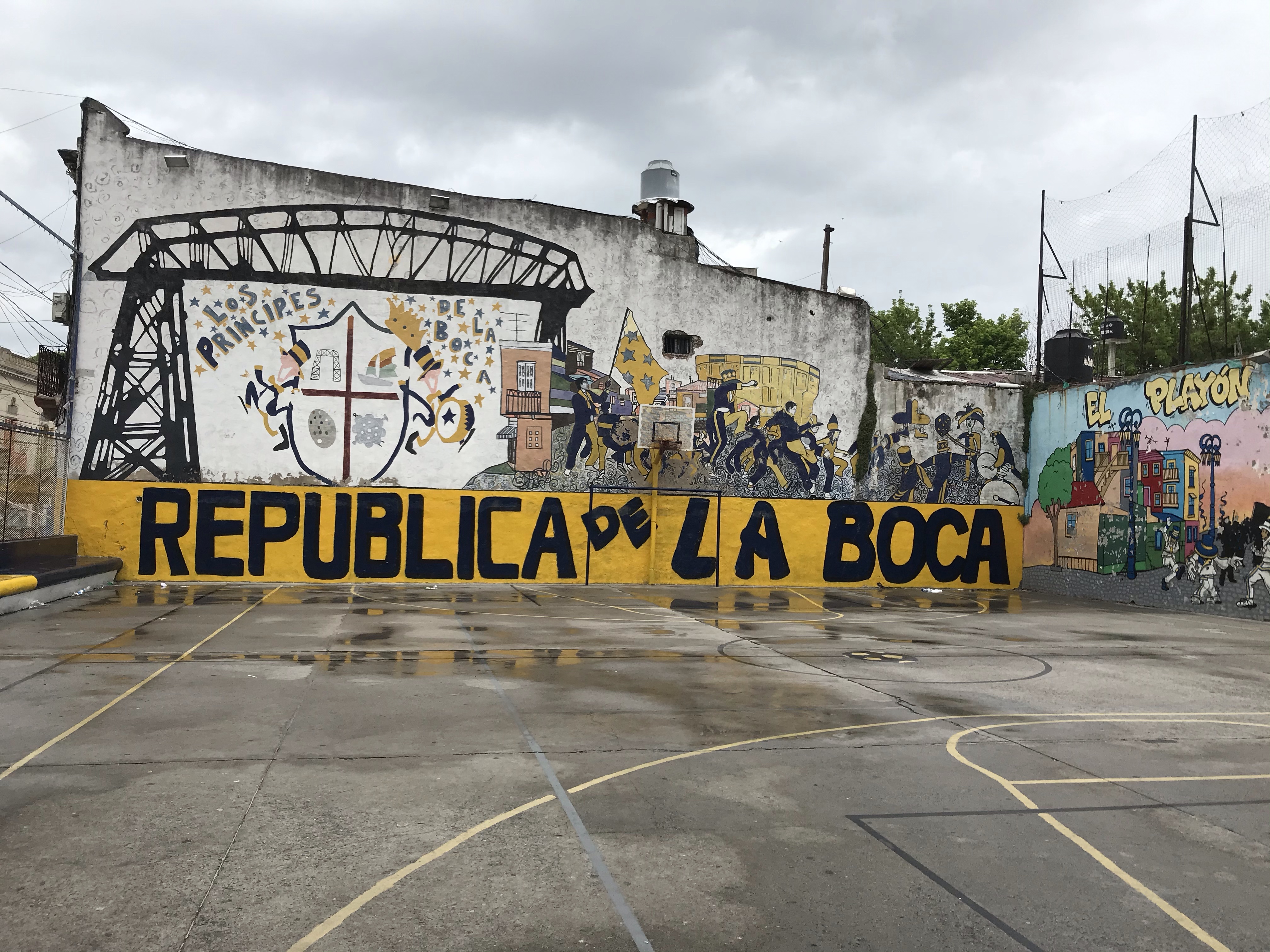
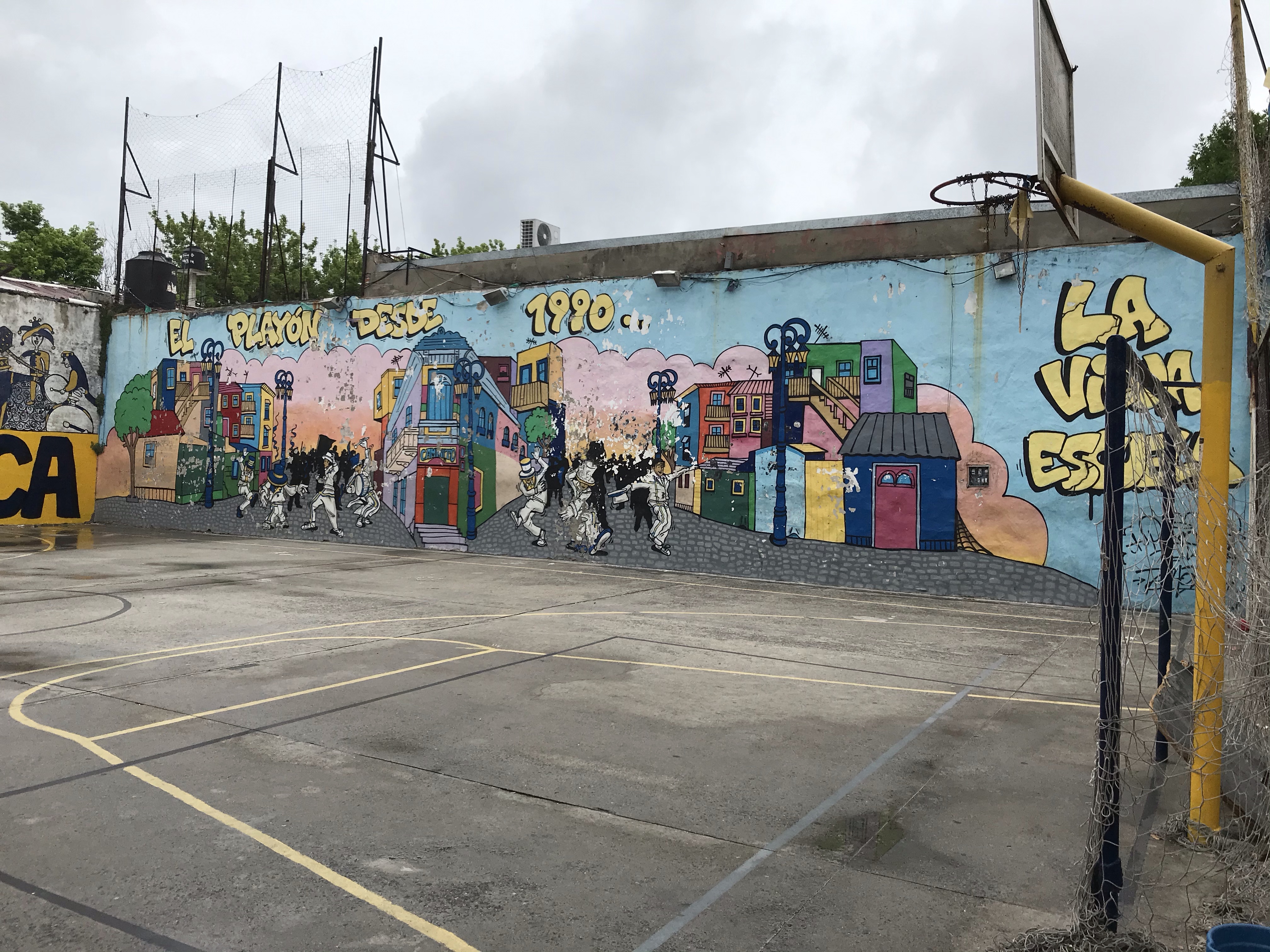
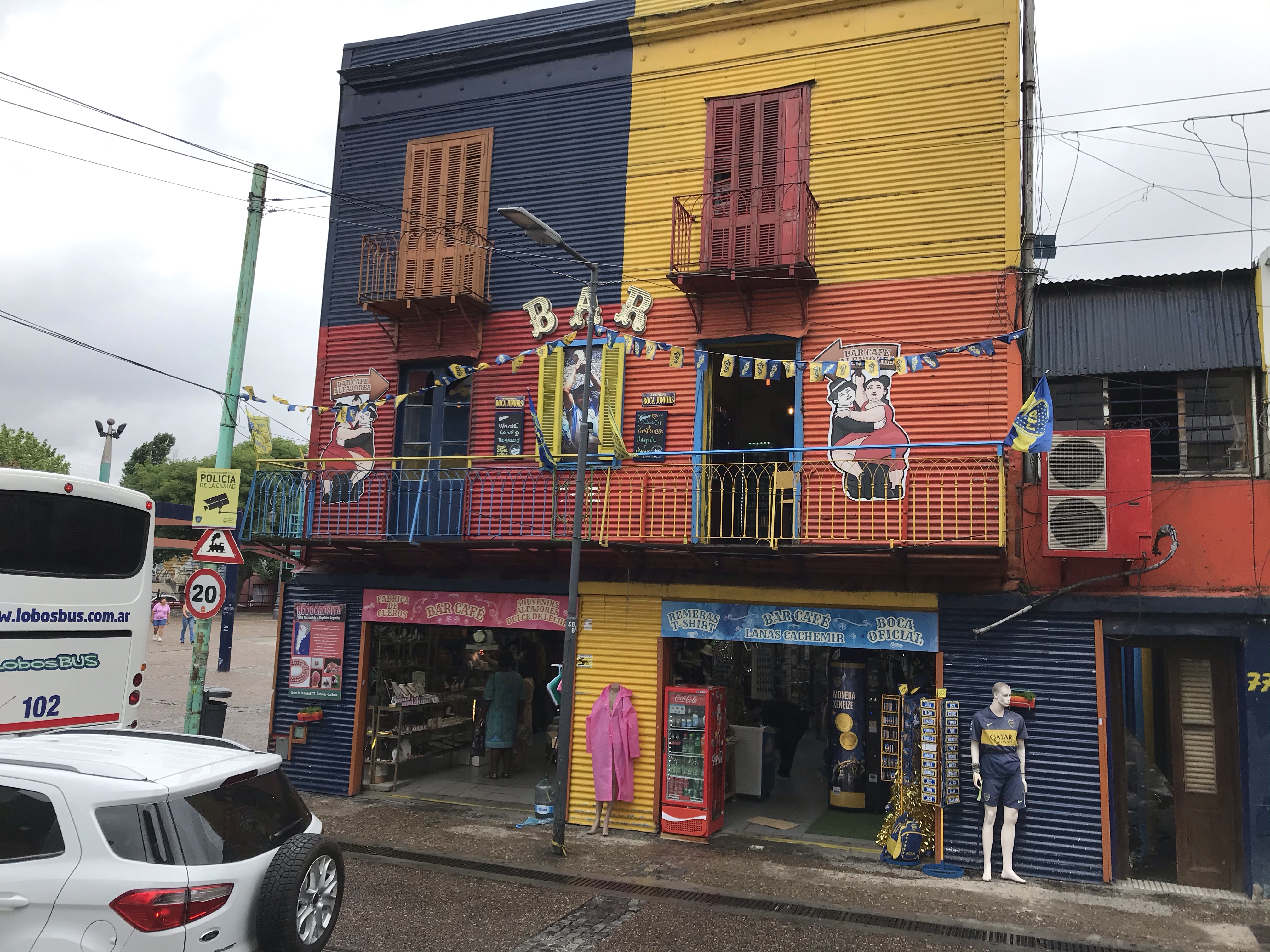
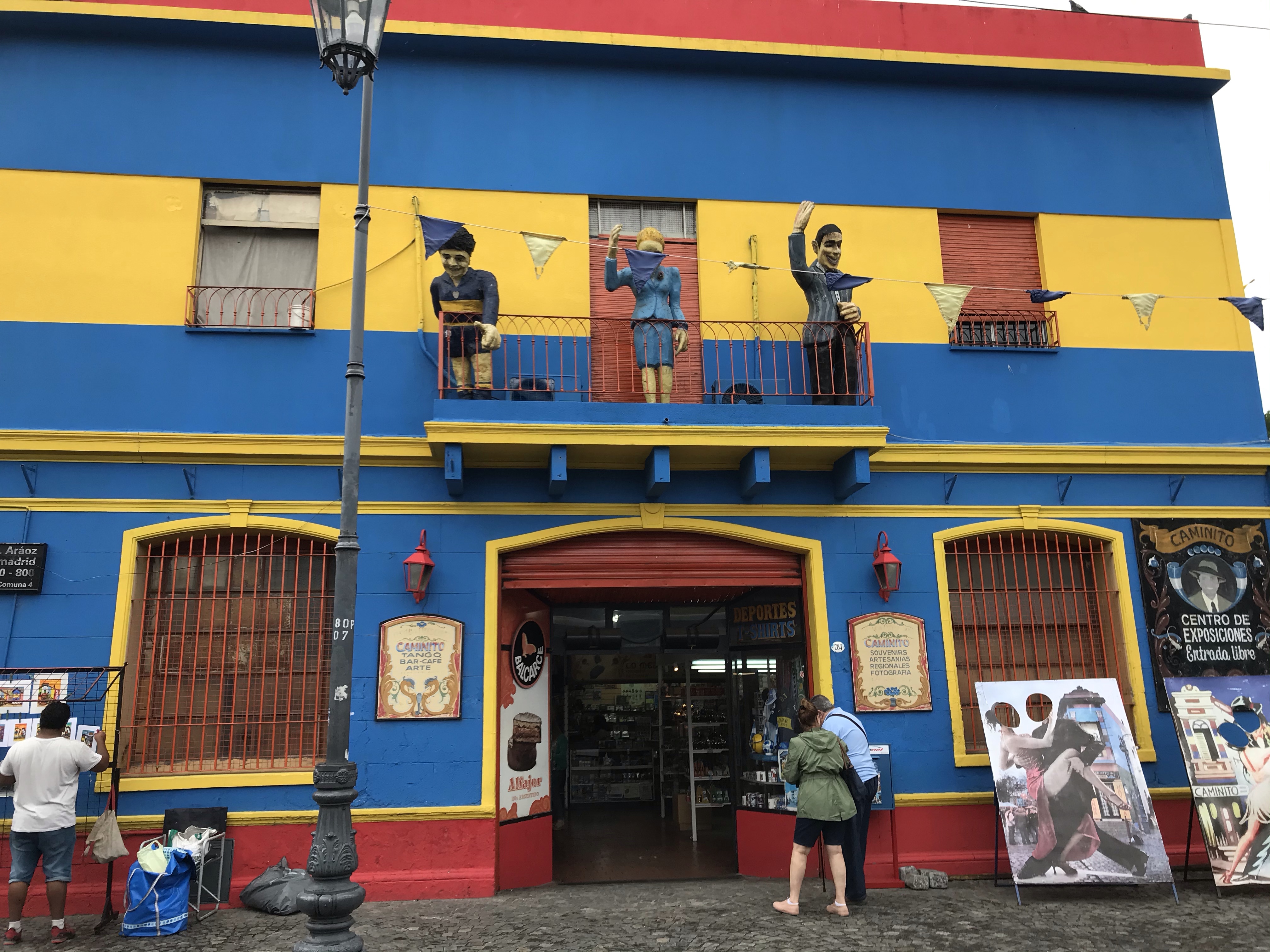
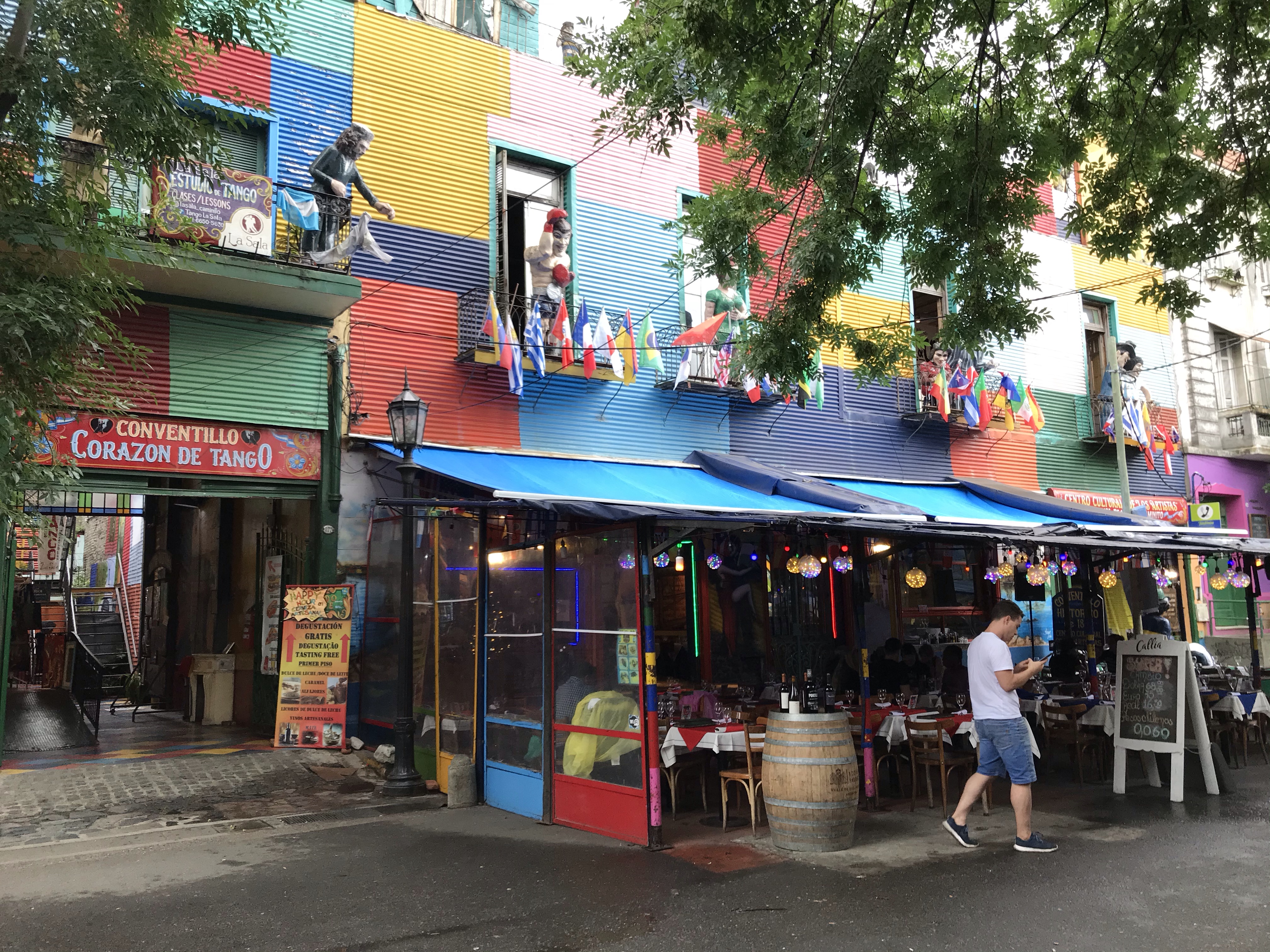
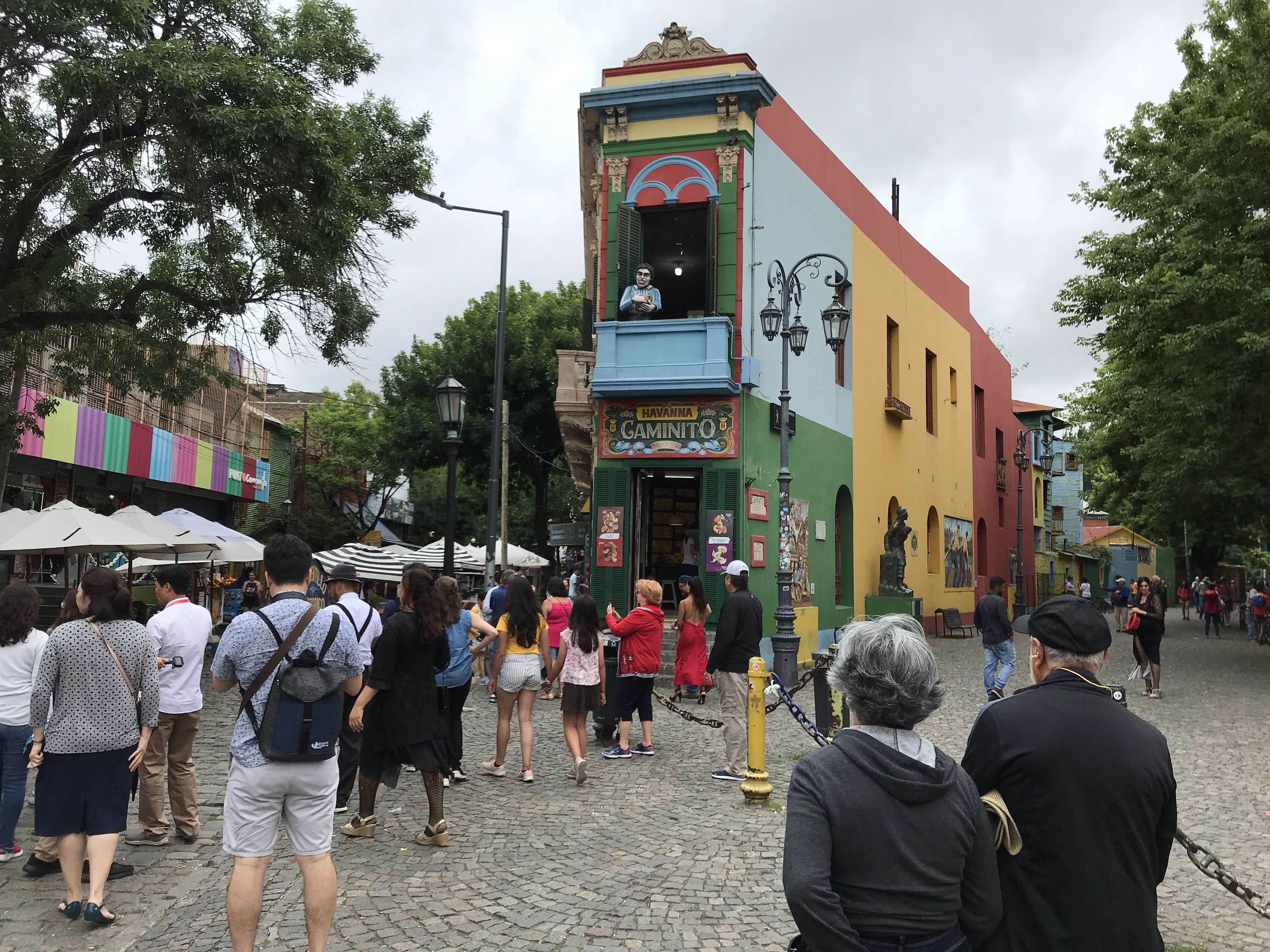
Then we walk up to the Caminito. The blurb I read said: a collection of streets so full of life and colour that it attracts people from all over the world. This brightly painted area was started by local artist Benito Quinquela Martín in 1960, as he wanted to express his artwork on the large canvas, that was then a collection of abandoned buildings. Since that time artists travel from far and wide to adjoin their work with Benito’s, showcasing their art on anything from cobble stones to walls, and door frames to roof tops. With it’s rich history and beautiful artwork a walk through Caminito is an experience of a life time, and one not to be missed.
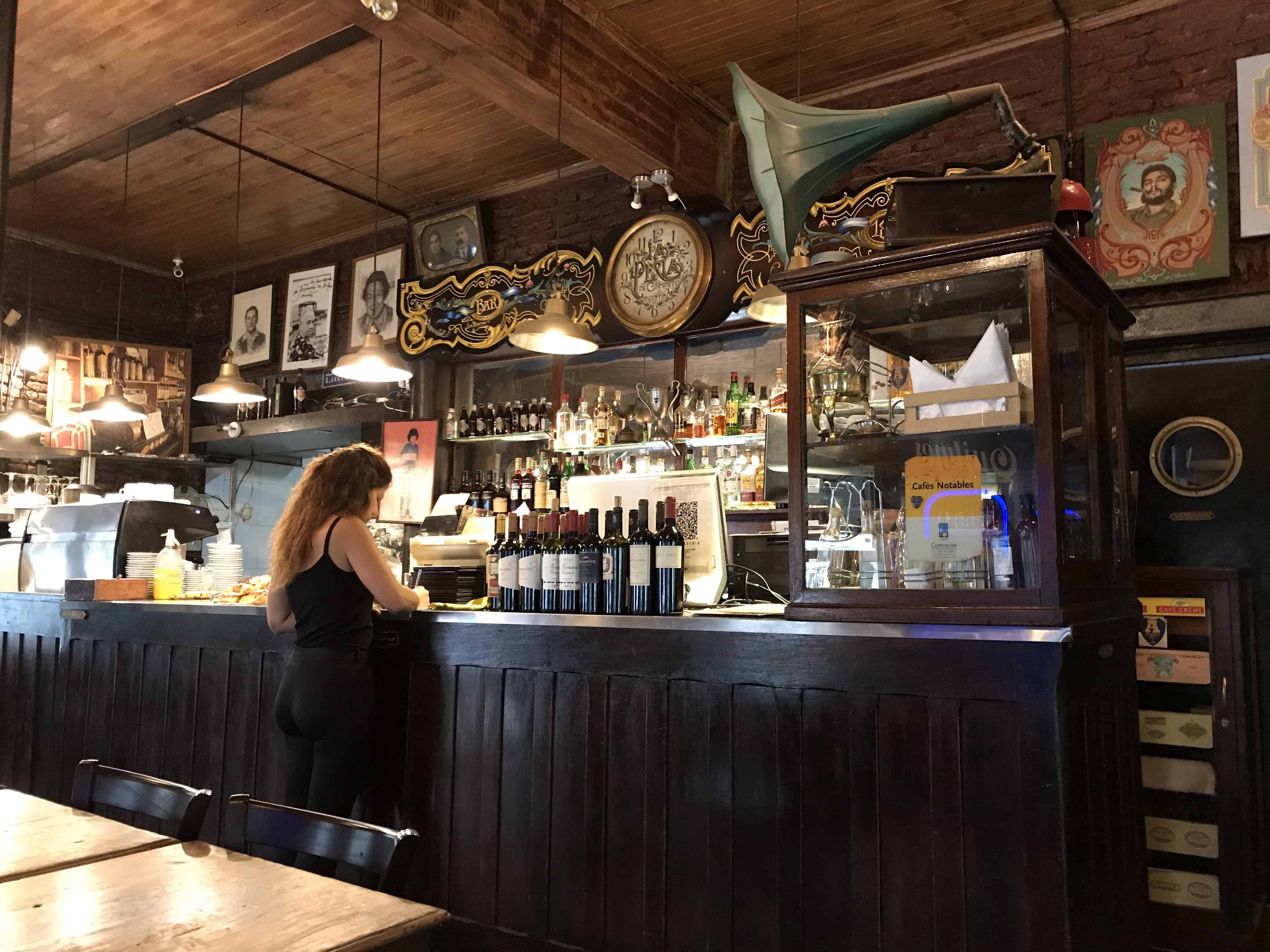
I have to agree. A fascinating place. We had just arrived when the rain came down so time for a cuppa in a very unique establishment.
Very enjoyable, though coffee was a tad bitter so only a rating of 4. My chamomile tea was perfecto.
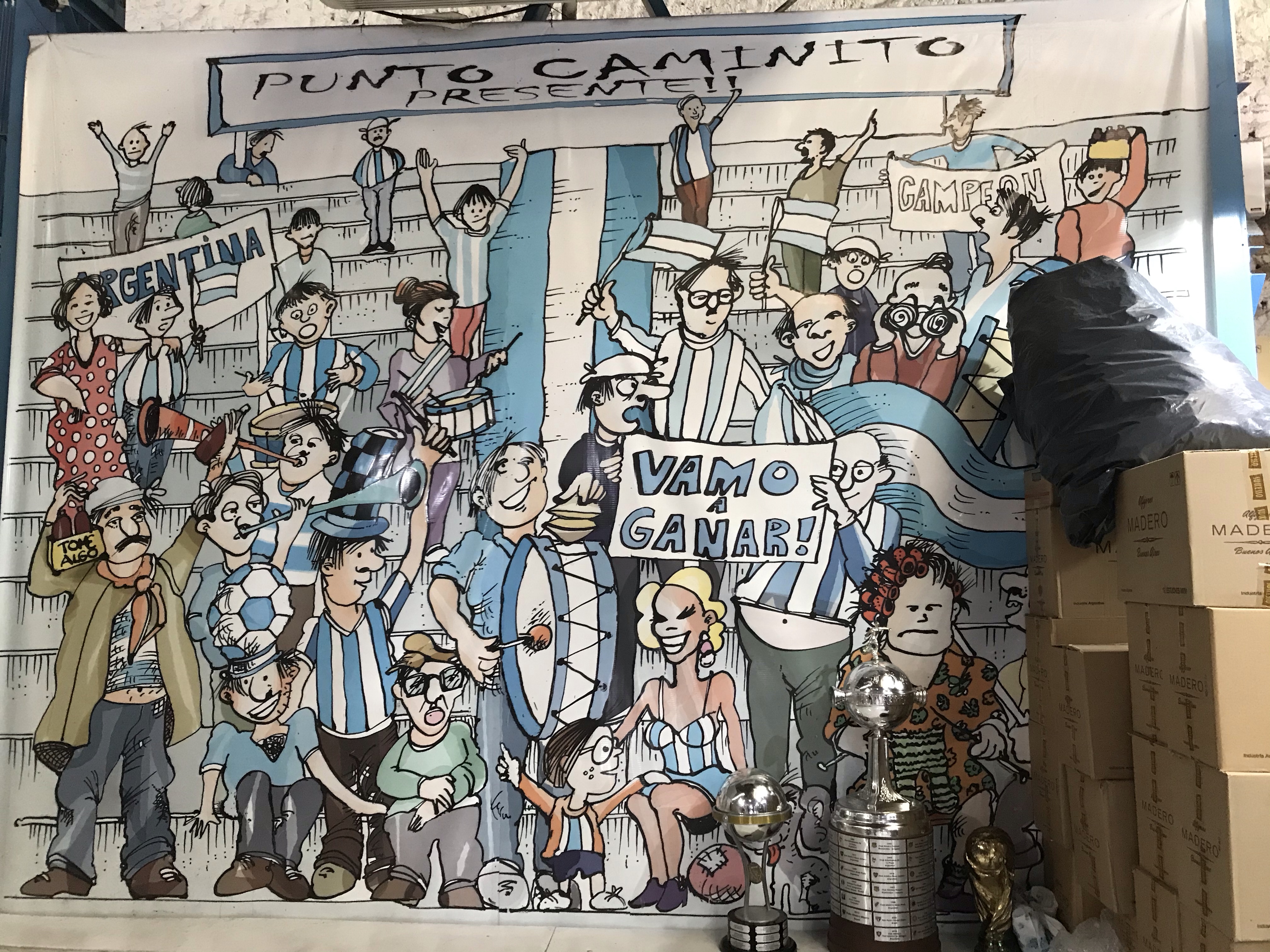
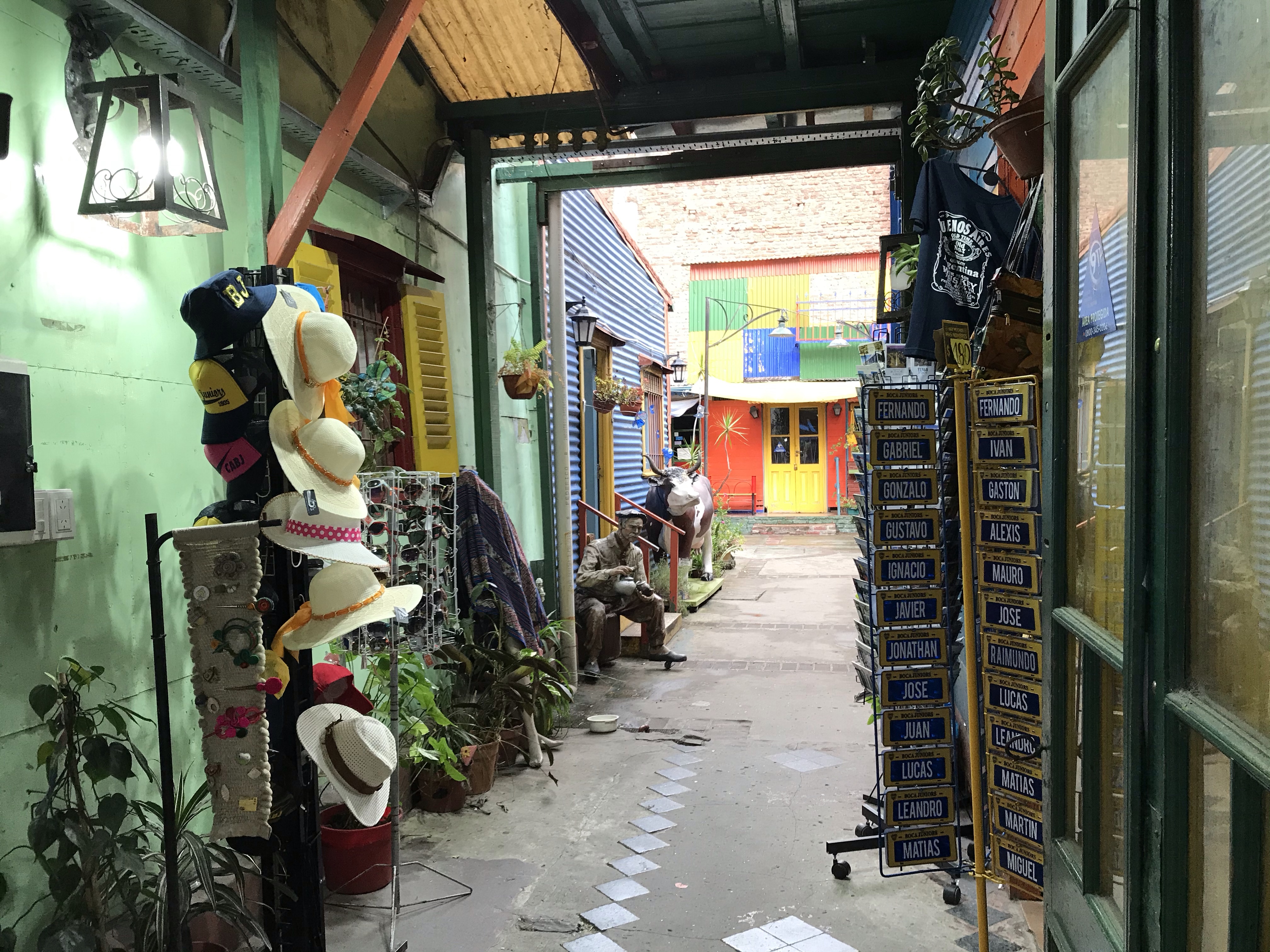
I availed myself of the ladies, (when you find one, use it, is my motto), and this one took me back to my time in China with a big notice, “NO Toilet paper to be flushed. Please use basket. Thankfully they empty their baskets more often than in Beijing in the 1990s where I would come out pretty green at times. So let’s show you more of Caminito as the rain had just about stopped when we emerged.
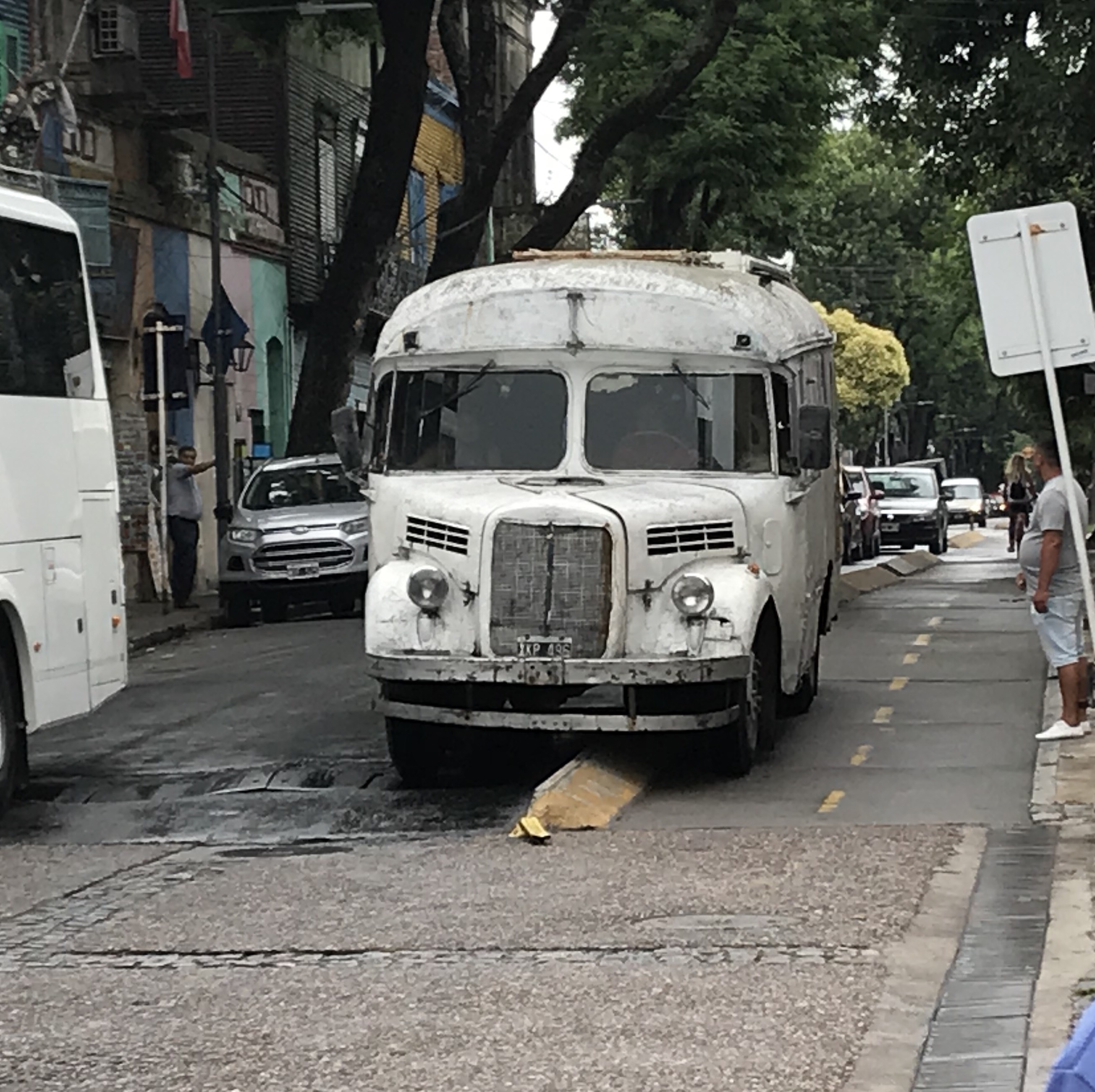
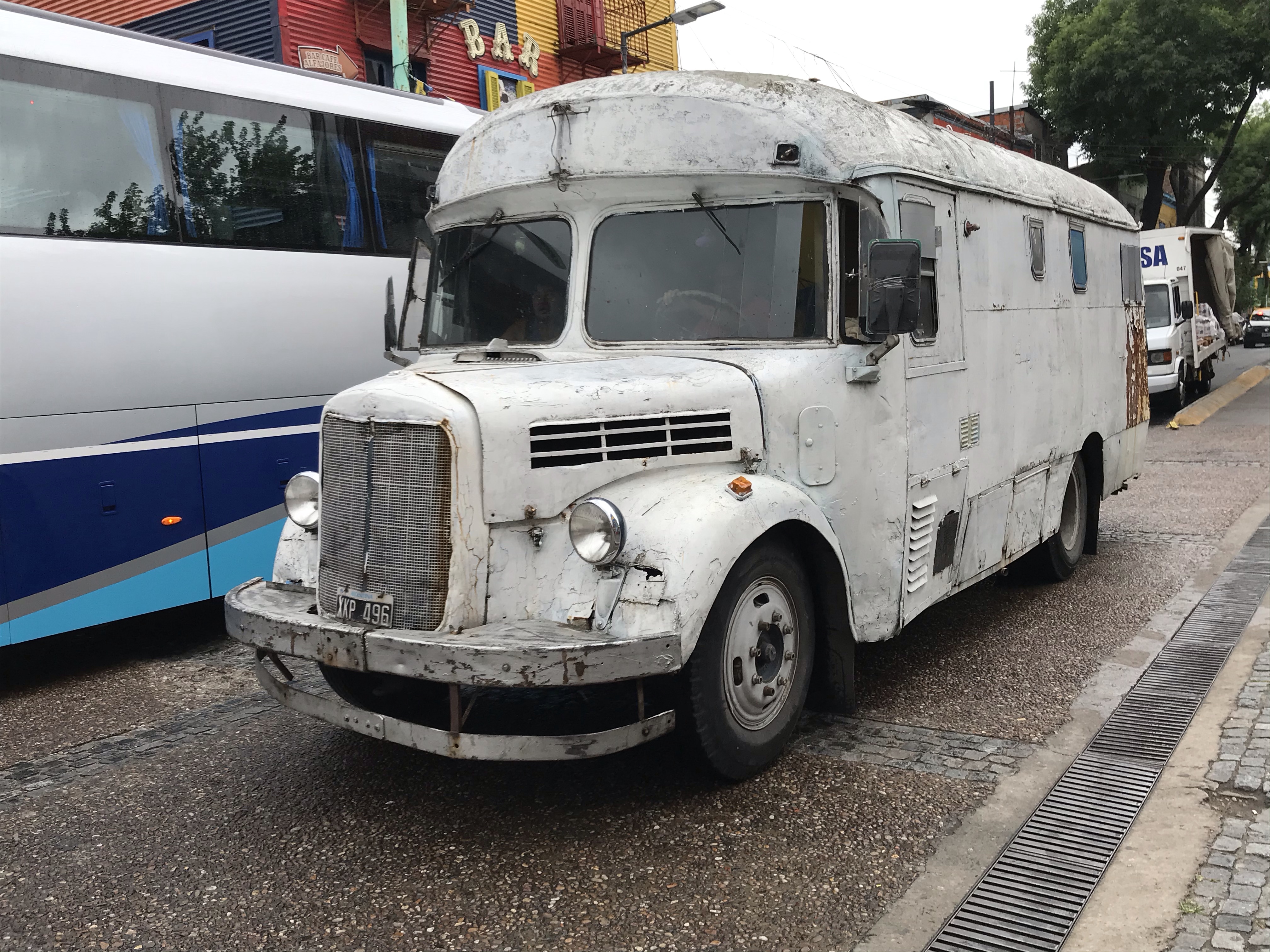
I haven’t said much about the traffic in BA. The streets are well organised in blocks, so finding your way around is relatively easy, but surviving it is another thing. Lanes are fairly free and easy and crossings are interesting to say the least. You don’t just go when someone goes as some pedestrians have a high regard for drivers to avoid them. Scooters also fly around everywhere and some vehicles are far from road worthy. We spotted this one in Caminito.
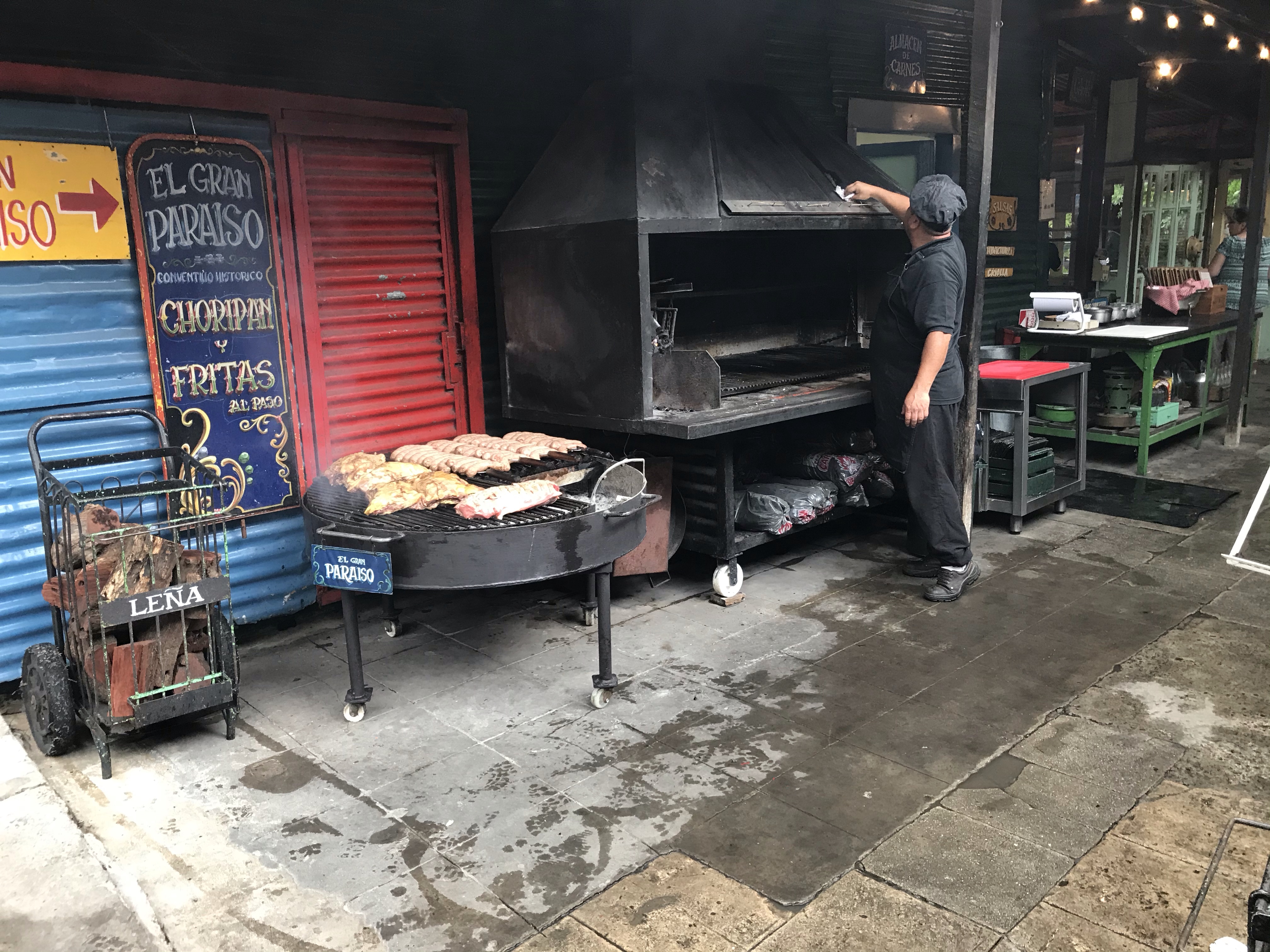
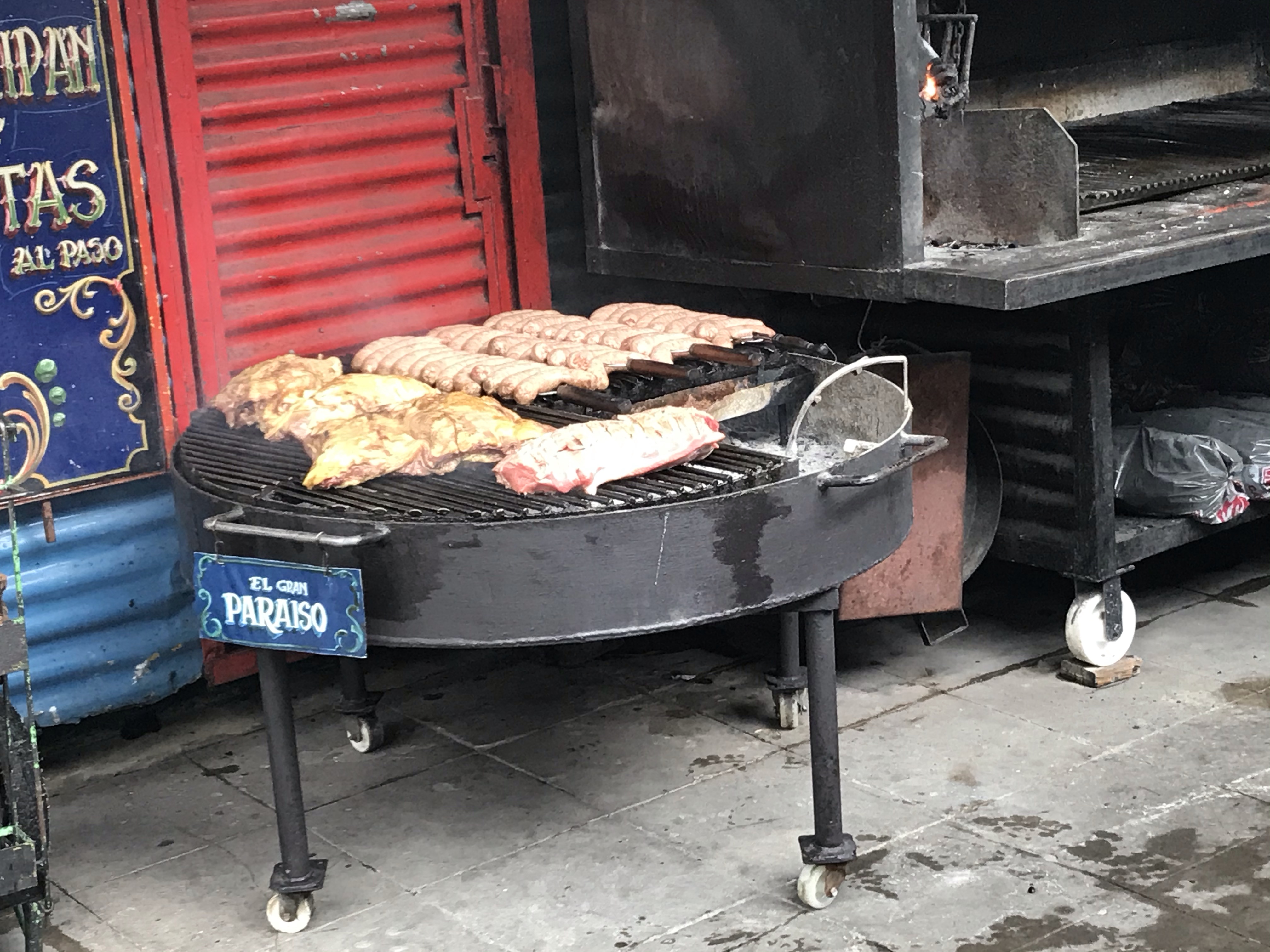
The back end of it was almost entirely rusted out. You’ll notice in the first pic of this vehicle that he is straddling the barrier meant to keep him out. Most street corners have three large bollards to stop cars encroaching on the pedestrians. Next we came across a BBQ on the go.
It really is an amazingly colourful place.
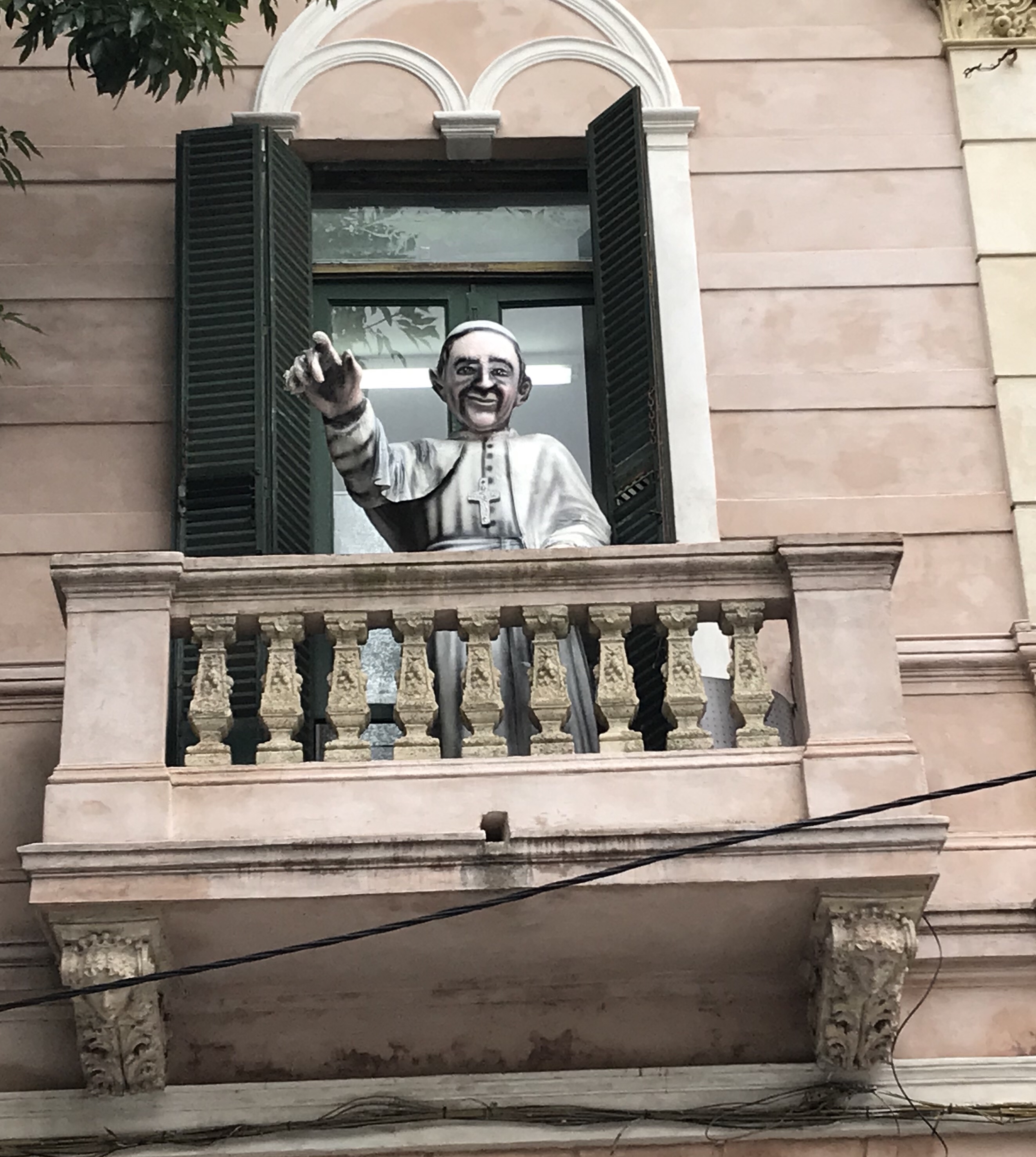
We stopped to commune with El Papa.
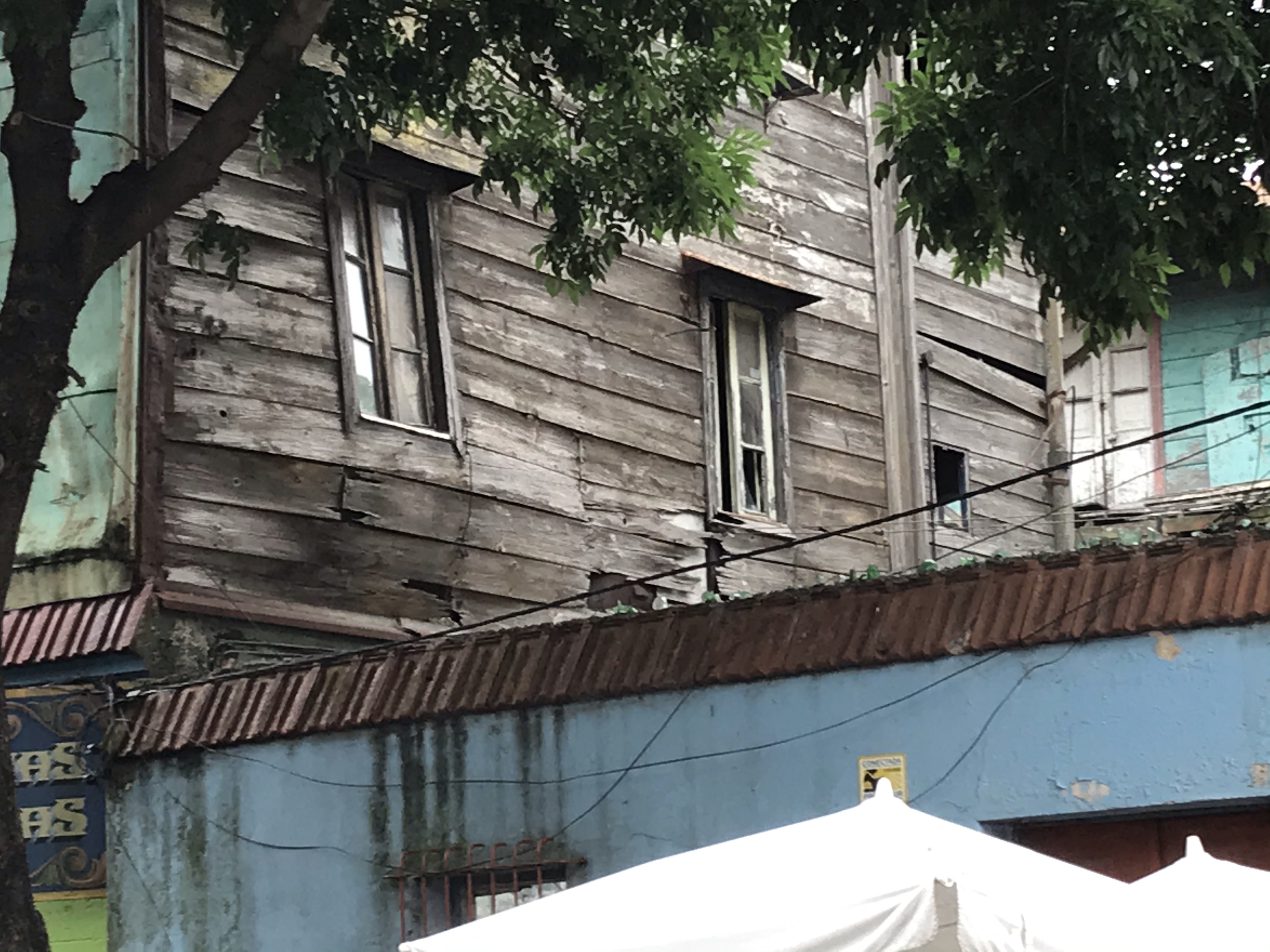
As the blurb mentioned, these were all derelict buildings at one point and that shows at times.
A great place to see for anyone visiting BA. So we then turned to head back to the hotel, taking a different route and, thankfully, it turned out not to be through a dog loving suburb. Only 16,226 steps so far today but my Fitbit finally decided to switch to local time and became confused so it is crediting me with 44,396!
Spent a good few hours just relaxing in our room, though reading Facebook about the awful bushfires etc. was depressing. Anyone reading this who hasn’t seen this clip, it is worth a watch. The BBC nails it. https://m.youtube.com/watch?v=SFAk16n7RCg&feature=youtu.be
Quite looking forward to three weeks without news and hoping we have a home to return to. Don’t forget that we will be going off air until around the 8th January. Internet of the penguins only really strong enough for emails so we aren’t paying for it, but I will go day by day on the posts when I return so you won’t miss a thing.
I should also mention that there is a very visible police presence in BA. We did see one argument with motor cyclists and one had a shot gun but we moved quickly around the corner so not sure what happened. Personally I am feeling as safe as in any city we’ve been in.
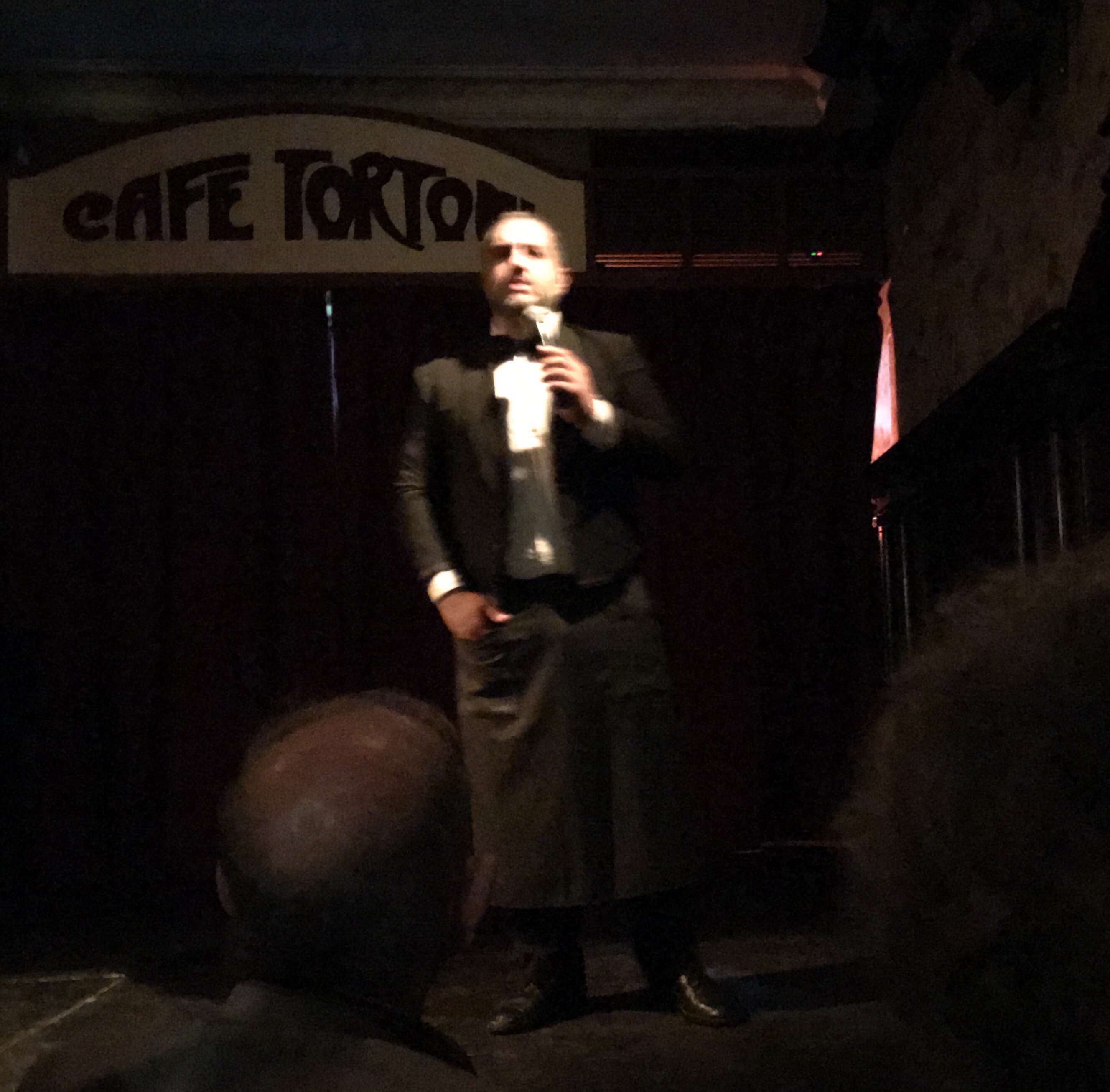
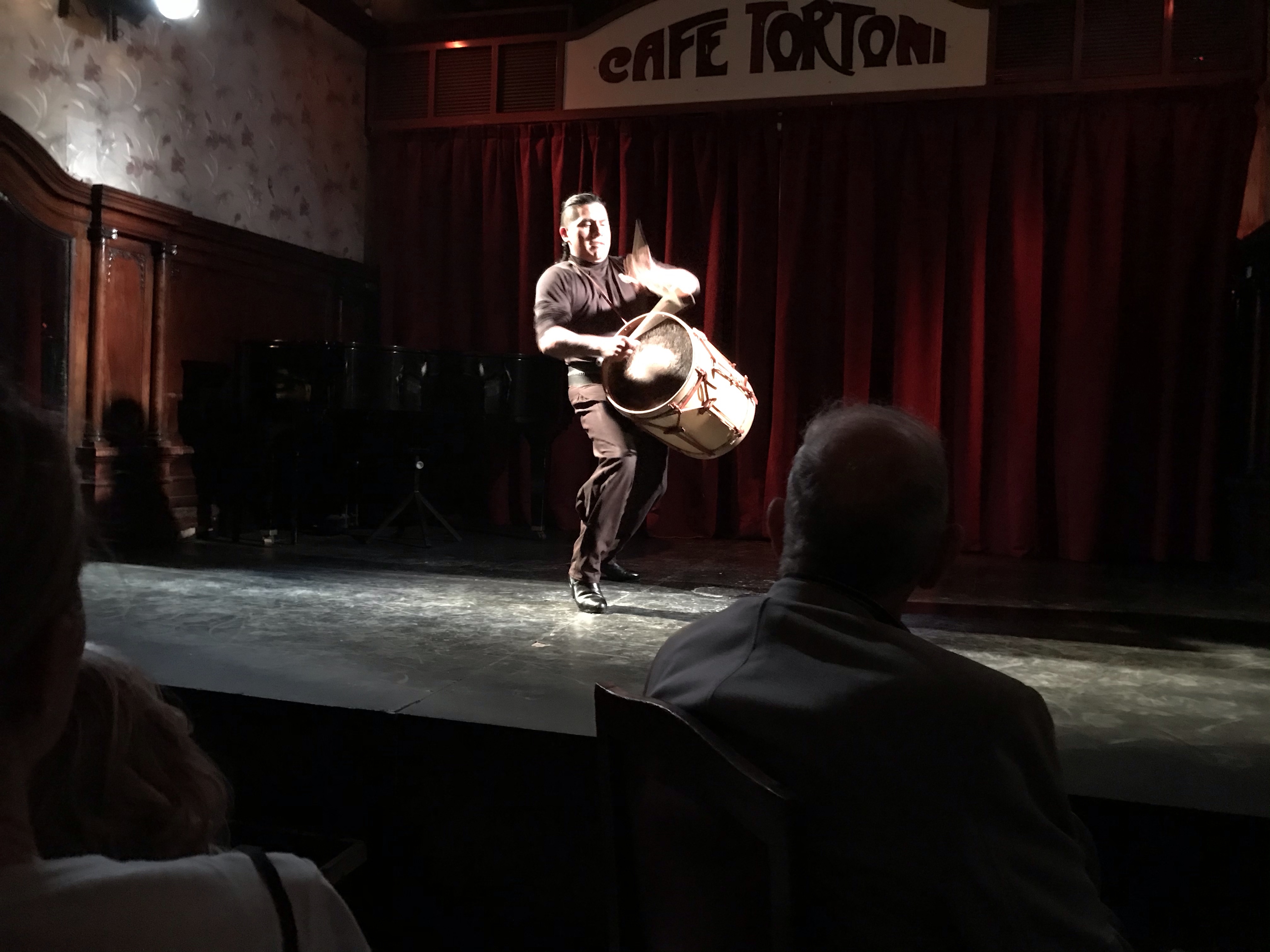
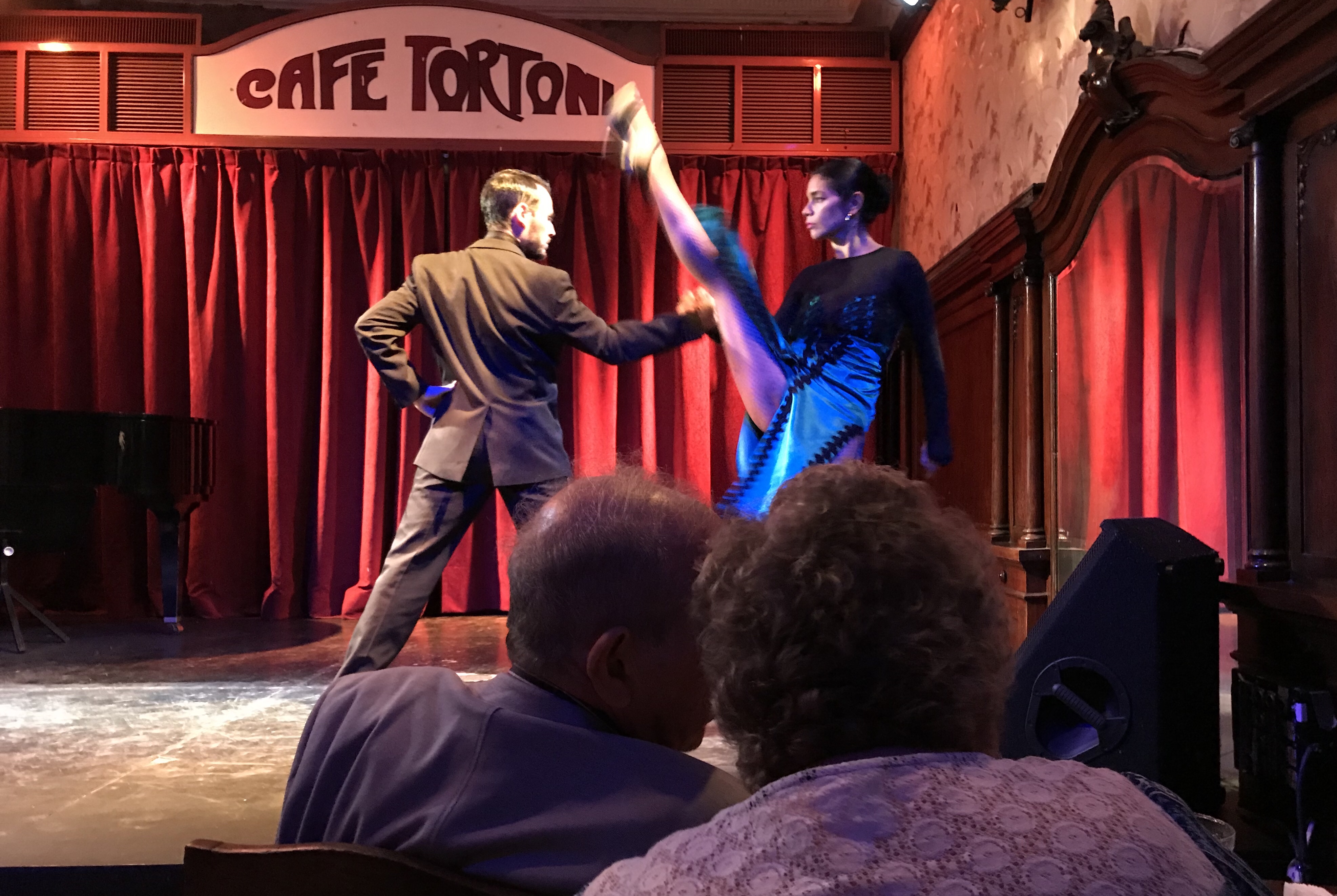
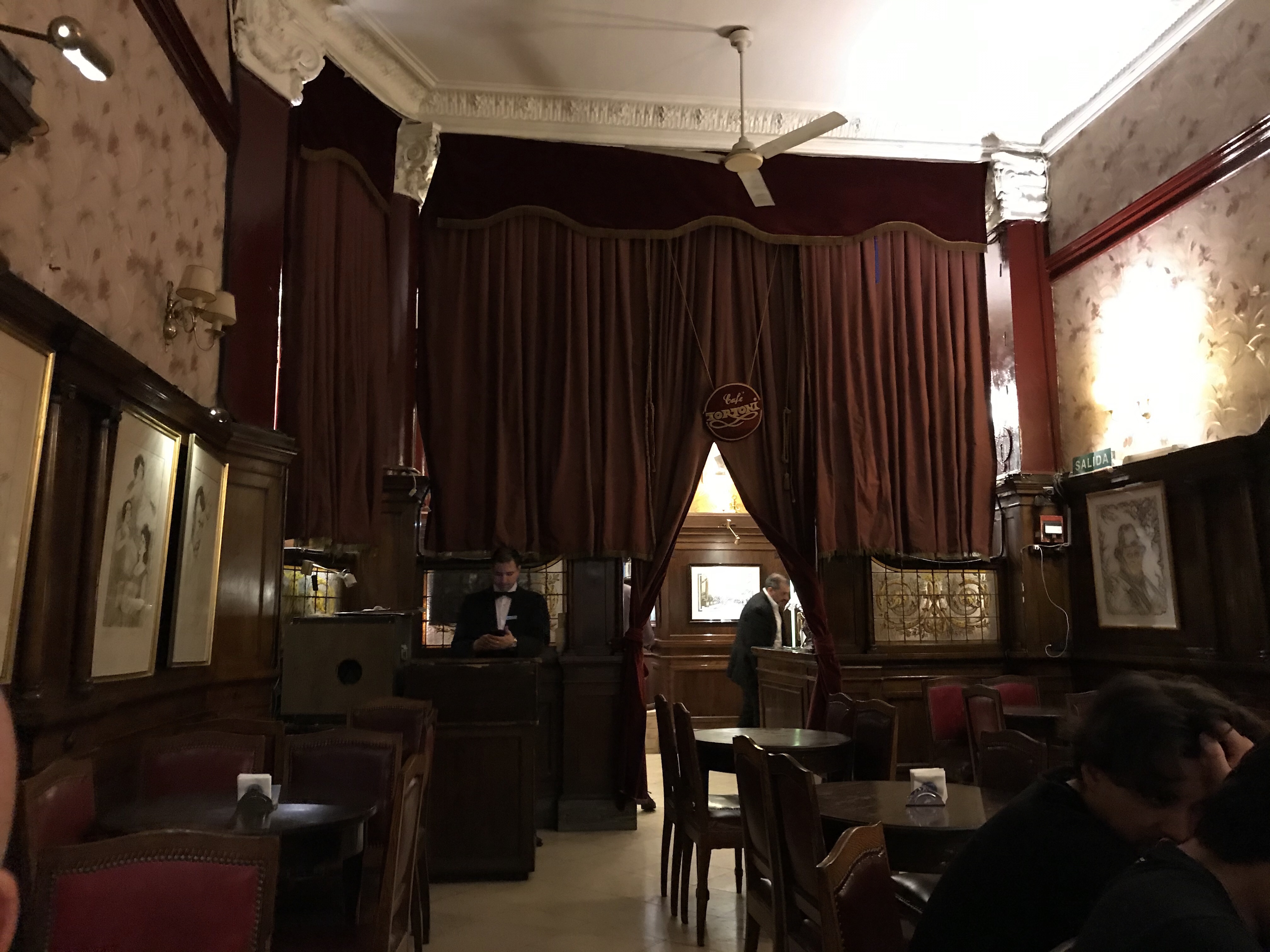
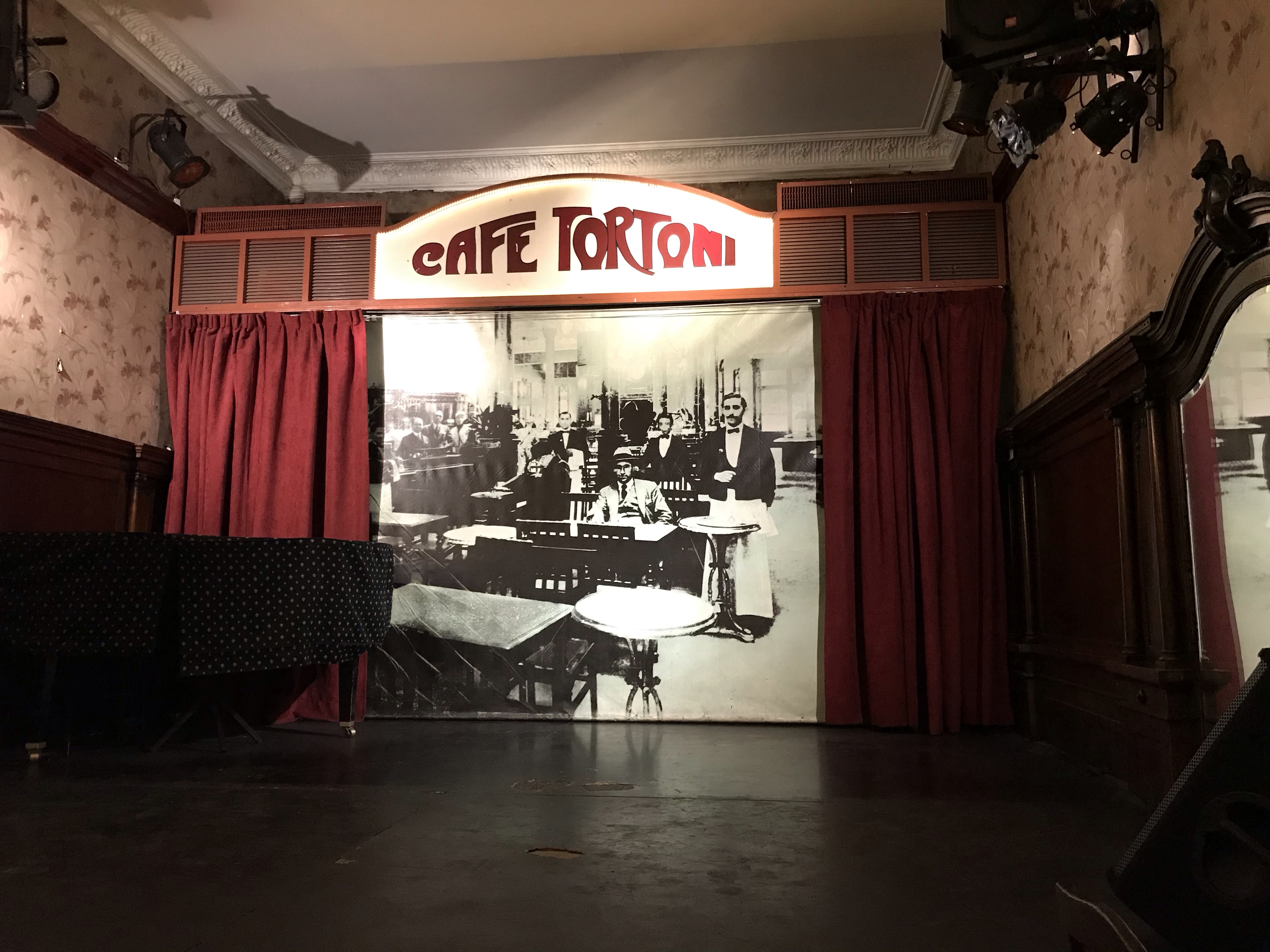
Back to Tortoni’s for dinner. Just so much better than last night and their olive oil is to die for! Tonight we were early enough to also enjoy the 6pm tango show. Interesting pricing scheme. Initially 800pesos each and she said cash only for the show. I told her we did not have enough peso. So US$40 was her next bid – not sure if that was each. I said I had some US$ but when I pulled them out I did not have $40. So then she wrote down $28. I asked if that was for two, she said yes. So that’s what we paid. Funnily enough it was just about all I had….
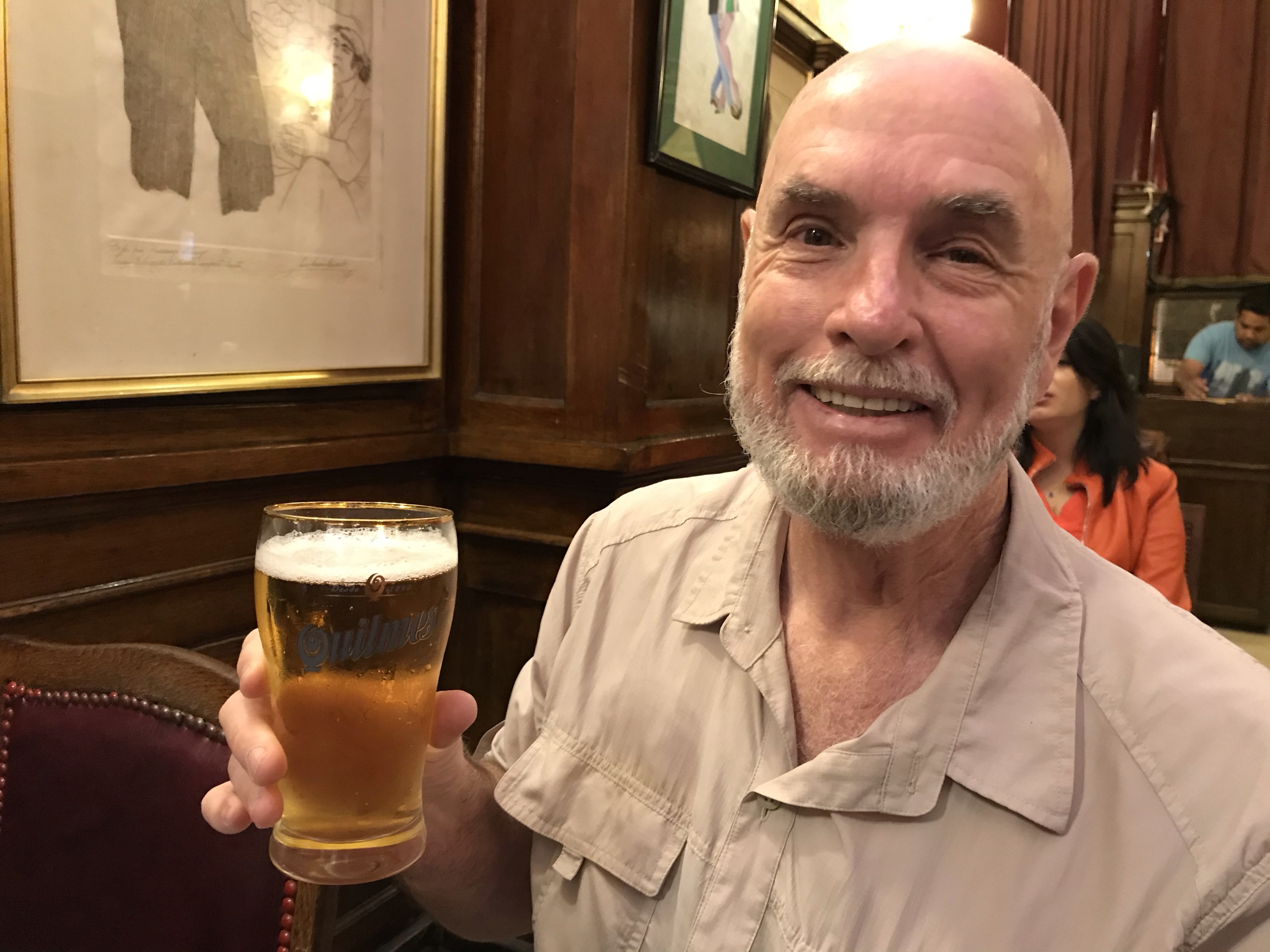
The Beer of the day a was a Quilmes Clasica. Garrie loves how cold this and also yesterday’s afternoon beer were served really cold. However he loves this one much more and it has been rated at an 8.5! Let’s hope there are some in the ship.
I stayed with the Malbec and went for a different pizza whilst Garrie had a sirloin steak sandwich with cheese and tomato. Both delicious with loads of their amazing olive oil!
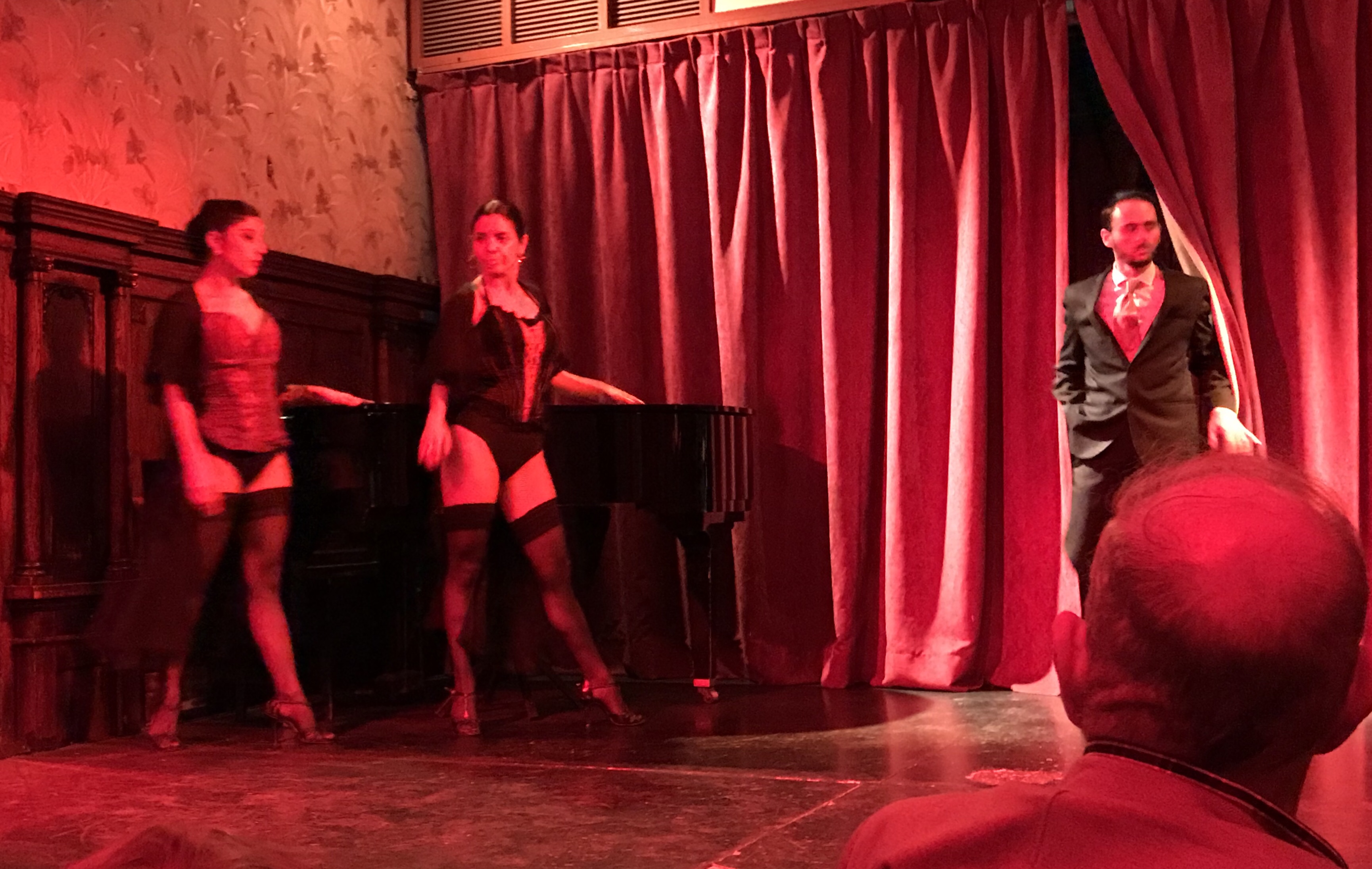
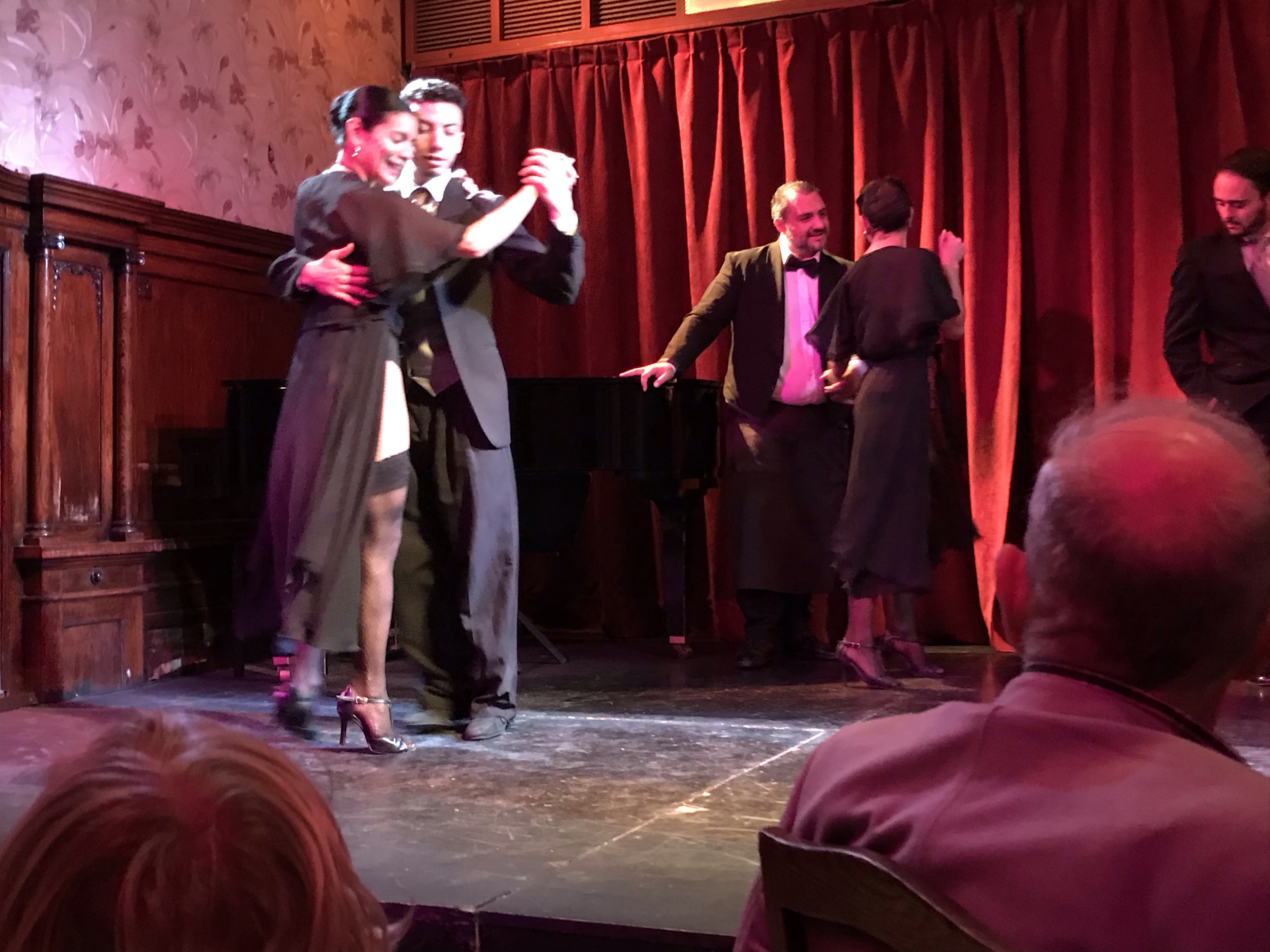
It was a great show with a reasonable tenor, some fabulous dancers and a Gaucho with first a drum and then a seriously good demonstration of Bolleadoras. This is not as good but gives you an idea. https://youtu.be/u3opqzMy1Ag
The singing and dancing had a bit of a story line to it. A bit hard to photograph but these will give you an idea.
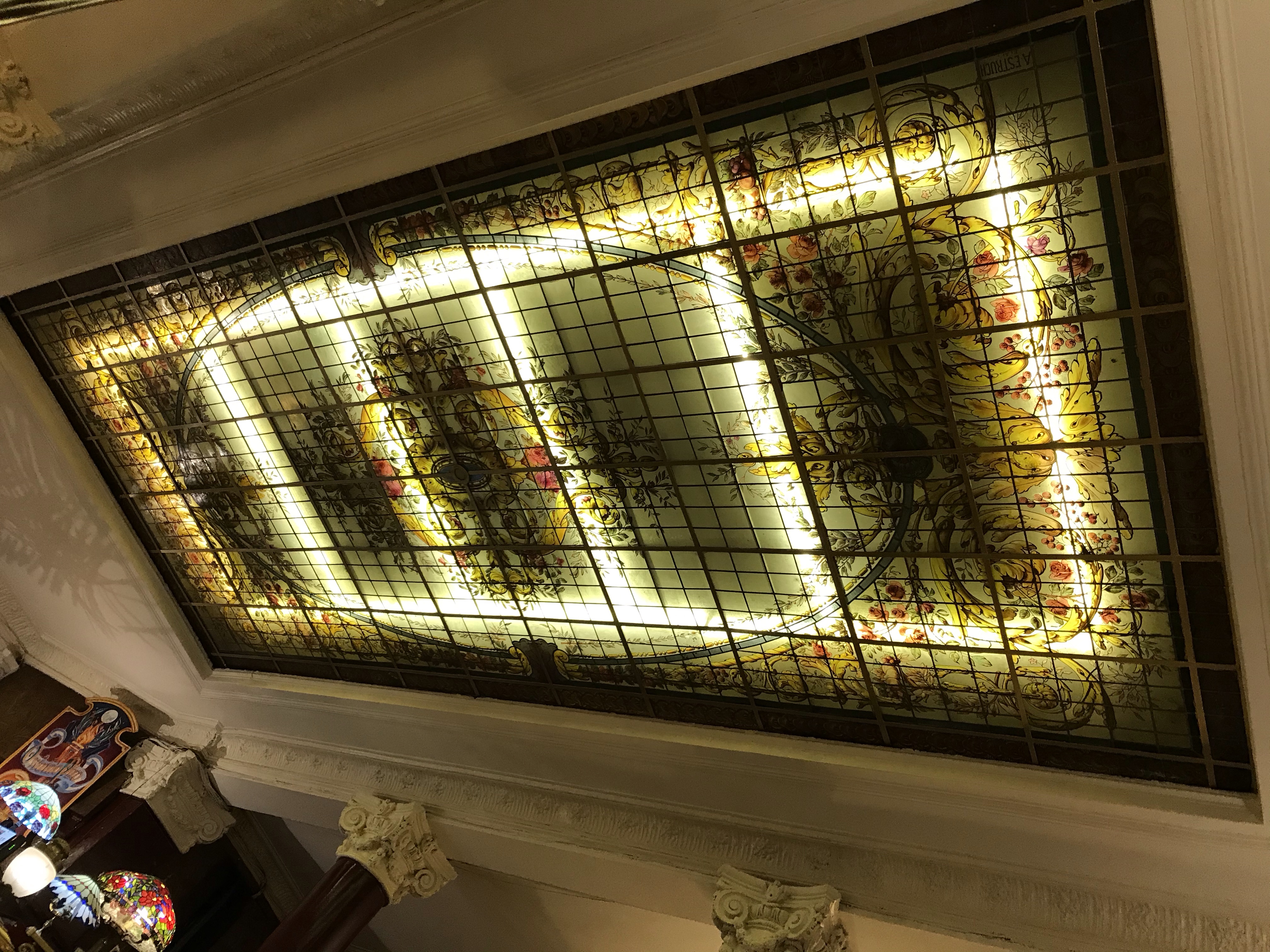
I also took some of the theatre and another superb ceiling panel.
So that’s it for now. See you on the other side of Antarctica! 🐧🐧🦥⛄️

 Antarctica 2019